World

Fleeing Ukrainians reach Moldova to escape Russian bombs

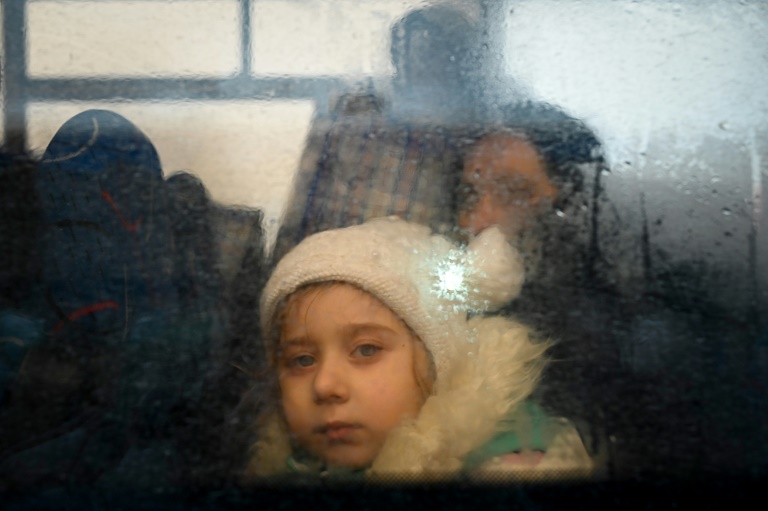
After spending several days in a basement in fear of Russian bombs in southern Ukraine, 15-year-old Arsen and his mother Irina reached Moldova. But the teenager is already longing to return home.

Arsen described the terror the family felt “holed up in the basement of a building” for three or four days before deciding to leave.

“This nightmare must end,” said Irina, tears in her eyes and trembling under the icy wind sweeping the Palanca border post in eastern Moldova.

But more than the cold, it was the fear that tormented her.

“The situation in Ukraine is deteriorating,” the teacher told AFP, hugging her two small dogs wrapped in blankets. “That’s why I had to make this difficult decision and leave.”  

Packing in a rush with only some documents and clothes for her two teenage sons, Irina left her mother behind as she did not want to leave the Black Sea port city of Odessa, some 40 kilometres (25 miles) from Palanca.

Even in Palanca, the sound of planes flying near the border could be heard throughout the night. The flow of refugees shows no sign of letting up.

Since the invasion began last week Moldova, a former Soviet republic landlocked between Romania and Ukraine, has seen nearly 80,000 refugees arrive according to figures from the UN refugee agency.

Nearly 875,000 people have fled Ukraine in total, the UNHCR said Wednesday, and the number are expected to rise.

– ‘Monster’ –

“I have spoken Russian since my childhood, but I am Ukrainian,” said Irina. Russian President Vladimir Putin she described as “a monster”.

“He says he wants to help the Ukrainians, but I don’t need his help,” said the 40-year-old, who declined to give her surname.

On the narrow road leading to the border post, a huge traffic jam formed late Tuesday with cars to pick up refugees coming and going.

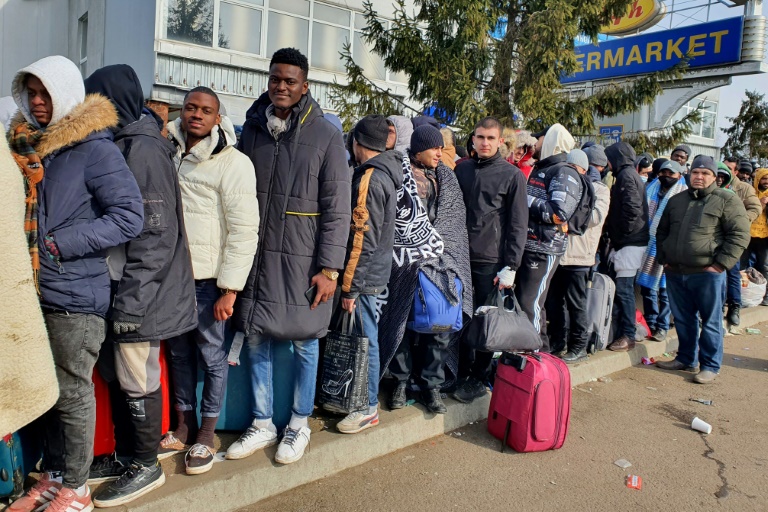
Hundreds of refugees, mostly with children, hugged and comforted each other there, as volunteers distributed tea, coffee and snacks.

“Your brother will come, you’ll see,” Lioudmila, in her 50s, reassured a friend who found herself alone at the post with her four-year-old son in her arms.

Like Lioudmila, many refugees needed transport to reach Moldova’s capital Chisinau or neighbouring Romania, squeezing into cars with volunteers or relatives between strollers, suitcases and other bundles of hastily packed belongings.

Others walked under the falling snow the five kilometres separating the border post from a camp of tents, which the Moldovan authorities erected on the muddy grounds of a village stadium.

– ‘Live without the Russian army’ –

Another of those who fled was 17-year-old Alexei who echoed the thoughts of many Ukrainians before boarding a bus to take him to Chisinau.

“We want to live in our country, free, without the Russian army.”

Moldova is among the poorest countries in Europe with some 2.6 million inhabitants.

Since the early 1990s, nearly a third of its population has left due to endemic unemployment, leading to one of the highest population declines in the world.

Moldovan President Maia Sandu was elected in 2020 on a pro-Western platform, and the country is embroiled in a dispute with Russian gas giant Gazprom over outstanding payments.

UN takes 'historic' step toward global treaty on plastic trash

The United Nations on Wednesday agreed to start negotiating a world-first global treaty on plastic pollution in what has been hailed as a watershed moment for the planet.

Nearly 200 nations at the UN Environment Assembly in Nairobi unanimously agreed to create an intergovernmental committee to negotiate and finalise a legally binding plastics treaty by 2024.

UNEA chair Espen Barthe Eide declared the resolution passed with a strike of the gavel — itself made from recycled plastic — as the assembly hall erupted into cheers and applause.

“We are making history today. You should all be proud,” said Eide, who is Norway’s climate and environment minister. 

Negotiators have been given a broad and robust mandate to target plastic trash in all its forms.

It addresses not just the bottles, straws and shopping bags floating in rivers and oceans, but invisible microplastics found in the deepest oceans and highest mountains, and within the air, soil and food chain.

– ‘Historic crossroad’ –

Supporters described the commitment as the most important environmental decision taken by the UN in years.

“We stand at a crossroad in history when ambitious decisions taken today can prevent plastic pollution from contributing to our planet’s ecosystem collapse,” said Marco Lambertini from WWF.

The broad treaty framework approved by 193 UN nations — among them major plastic producers like the United States and China — does not spell out specific measures but leaves particulars to negotiations.

But the scope covers pollution “from source to sea” — a key demand of many nations — and could for the first time introduce caps on the production of new plastic from fossil fuels.

Other regulations could require that industry redesign products to make recycling easier and stem the torrent of trash created by single-use items.

Less than 10 percent of plastic is recycled. Most of the 460 million tonnes of plastic produced in 2019 wound up in landfill and oceans.

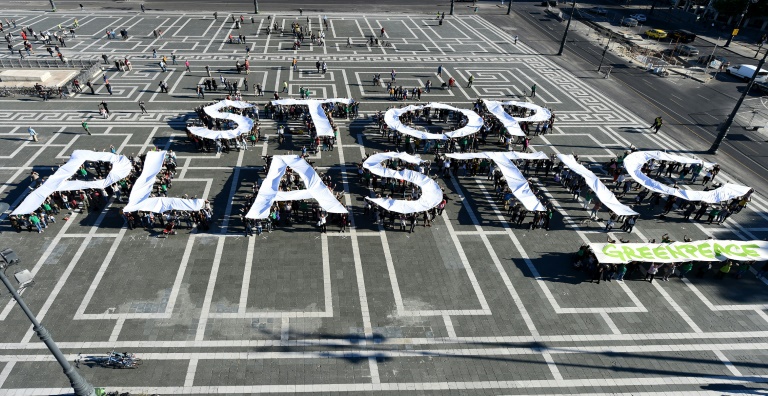
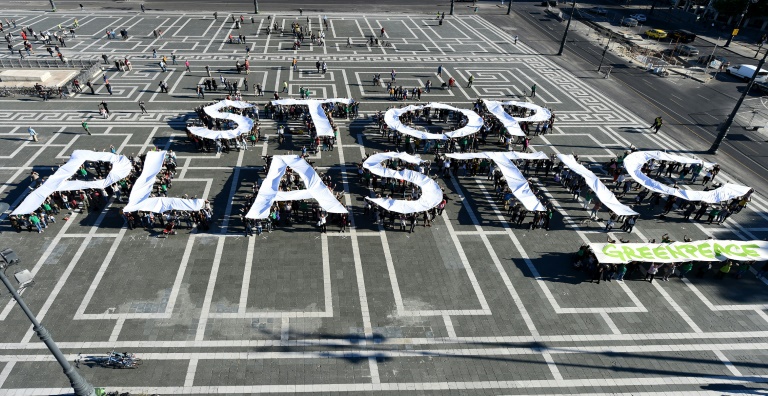
“This is a clear acknowledgement that the entire life cycle of plastic, from fossil fuel extraction to disposal, creates pollution that is harmful to people and the planet,” said Graham Forbes from Greenpeace.

– ‘Landmark’ decision –

The amount of plastic entering the oceans is forecast to triple by 2040, and governments have been under pressure to unite against the trash “epidemic”.

The rate of plastic production has also grown faster than any other material and is expected to double within two decades without urgent action.

By some estimates, a garbage truck’s worth of plastic is dumped into the sea every minute.

Large pieces of plastic are a notorious peril for sea birds, whales and other marine animals. But at the microscopic level, particles of plastic can also enter the food chain, eventually joining the human diet.

To address the urgency, talks toward concluding the treaty are being fast-tracked and the first round is slated for later this year.

Diplomats and conservationists cautioned that the strength of the treaty would be determined by the level of political will shown in these negotiations.

Setting targets, ensuring accountability, and monitoring success or otherwise could prove sticking points, said UN environment chief Inger Andersen.

Negotiators will need to establish what measures are binding or voluntary, and some countries are pushing for flexibility in setting their own goals through national action plans.

“There will be a number of thorny issues as there always is when we start a negotiation,” said Andersen, head of the UN Environment Programme.

Big corporations had expressed support for a binding agreement and negotiators were urged to engage industry players in the process.

Dozens of major businesses had called for a common set of rules around plastic to create a level playing field for competition.

“This is a landmark decision by UN member states,” said Richard Slater, chief research and development officer at British consumer goods group Unilever.

Trade group Plastics Europe said its products played a vital role in society and industry was doing its part to bolster recycling and invest in solutions.

“The UNEA resolution represents a major step towards the creation of a waste free future which is critical to achieving our collective climate ambitions,” said Plastics Europe president Markus Steilemann.

UN takes 'historic' step toward global treaty on plastic trash

The United Nations on Wednesday agreed to start negotiating a world-first global treaty on plastic pollution in what has been hailed as a watershed moment for the planet.

Nearly 200 nations at the UN Environment Assembly in Nairobi unanimously agreed to create an intergovernmental committee to negotiate and finalise a legally binding plastics treaty by 2024.

UNEA chair Espen Barthe Eide declared the resolution passed with a strike of the gavel — itself made from recycled plastic — as the assembly hall erupted into cheers and applause.

“We are making history today. You should all be proud,” said Eide, who is Norway’s climate and environment minister. 

Negotiators have been given a broad and robust mandate to target plastic trash in all its forms.

It addresses not just the bottles, straws and shopping bags floating in rivers and oceans, but invisible microplastics found in the deepest oceans and highest mountains, and within the air, soil and food chain.

– ‘Historic crossroad’ –

Supporters described the commitment as the most important environmental decision taken by the UN in years.

“We stand at a crossroad in history when ambitious decisions taken today can prevent plastic pollution from contributing to our planet’s ecosystem collapse,” said Marco Lambertini from WWF.

The broad treaty framework approved by 193 UN nations — among them major plastic producers like the United States and China — does not spell out specific measures but leaves particulars to negotiations.

But the scope covers pollution “from source to sea” — a key demand of many nations — and could for the first time introduce caps on the production of new plastic from fossil fuels.

Other regulations could require that industry redesign products to make recycling easier and stem the torrent of trash created by single-use items.

Less than 10 percent of plastic is recycled. Most of the 460 million tonnes of plastic produced in 2019 wound up in landfill and oceans.

“This is a clear acknowledgement that the entire life cycle of plastic, from fossil fuel extraction to disposal, creates pollution that is harmful to people and the planet,” said Graham Forbes from Greenpeace.

– ‘Landmark’ decision –

The amount of plastic entering the oceans is forecast to triple by 2040, and governments have been under pressure to unite against the trash “epidemic”.

The rate of plastic production has also grown faster than any other material and is expected to double within two decades without urgent action.

By some estimates, a garbage truck’s worth of plastic is dumped into the sea every minute.

Large pieces of plastic are a notorious peril for sea birds, whales and other marine animals. But at the microscopic level, particles of plastic can also enter the food chain, eventually joining the human diet.

To address the urgency, talks toward concluding the treaty are being fast-tracked and the first round is slated for later this year.

Diplomats and conservationists cautioned that the strength of the treaty would be determined by the level of political will shown in these negotiations.

Setting targets, ensuring accountability, and monitoring success or otherwise could prove sticking points, said UN environment chief Inger Andersen.

Negotiators will need to establish what measures are binding or voluntary, and some countries are pushing for flexibility in setting their own goals through national action plans.

“There will be a number of thorny issues as there always is when we start a negotiation,” said Andersen, head of the UN Environment Programme.

Big corporations had expressed support for a binding agreement and negotiators were urged to engage industry players in the process.

Dozens of major businesses had called for a common set of rules around plastic to create a level playing field for competition.

“This is a landmark decision by UN member states,” said Richard Slater, chief research and development officer at British consumer goods group Unilever.

Trade group Plastics Europe said its products played a vital role in society and industry was doing its part to bolster recycling and invest in solutions.

“The UNEA resolution represents a major step towards the creation of a waste free future which is critical to achieving our collective climate ambitions,” said Plastics Europe president Markus Steilemann.

US launches task force to pursue 'corrupt Russian oligarchs'

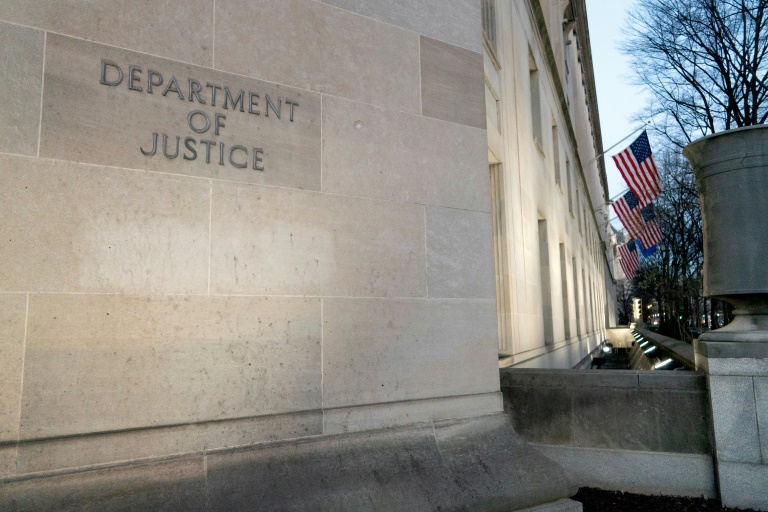
US Attorney General Merrick Garland announced the launch on Wednesday of a multi-agency task force to pursue “corrupt Russian oligarchs” and violators of sanctions imposed on Russia for its invasion of Ukraine.

“The Justice Department will use all of its authorities to seize the assets of individuals and entities who violate these sanctions,” Garland said in a statement announcing the launch of “Task Force KleptoCapture.”

“We will leave no stone unturned in our efforts to investigate, arrest, and prosecute those whose criminal acts enable the Russian government to continue this unjust war,” Garland said.

US President Joe Biden, in his State of the Union speech on Tuesday evening, warned Russia’s billionaires that the task force would “find and seize their yachts, their luxury apartments, their private jets.”

“We are coming for your ill-begotten gains,” he said.

Garland said the task force would be made up of more than a dozen prosecutors from the National Security and Criminal Divisions of the Justice Department as well as assets from other law enforcement agencies.

It will be led by Deputy Attorney General Lisa Monaco and include agents and analysts from the FBI, the Secret Service, the Department of Homeland Security and the Internal Revenue Service.

“To those bolstering the Russian regime through corruption and sanctions evasion: we will deprive you of safe haven and hold you accountable,” Monaco said. “Oligarchs be warned: we will use every tool to freeze and seize your criminal proceeds.”

Garland said Task Force KleptoCapture will work with the transatlantic task force announced by the United States and leaders of the European Commission, France, Germany, Italy, the United Kingdom and Canada in late February.

It will combat efforts to undermine restrictions taken against Russian financial institutions and target the use of cryptocurrency to evade US sanctions.

“Even if defendants cannot be immediately detained, asset seizures and civil forfeitures of unlawful proceeds — including personal real estate, financial, and commercial assets — will be used to deny resources that enable Russian aggression,” Garland said.

Despair, hope as Ukrainian refugees arrive in Prague

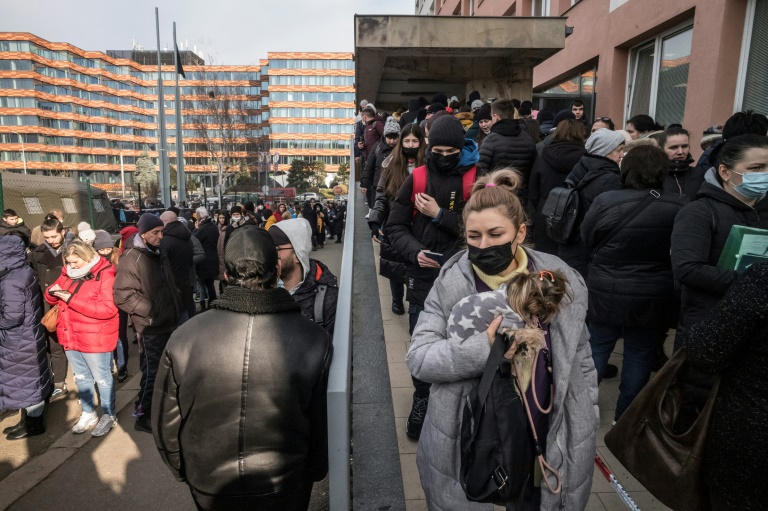
Ukrainian men with worried looks, weary women and restless children, many staring into the distance, wait patiently in the long queue as Czech volunteers call out instructions left and right.

“We left everything there as they came and ruined our lives. They’re bombing even civilian houses where there are kids, small kids, children, they die now,” Svitlana Mostepanenko told AFP.

The young woman travelled to Prague from Mykolaiv, a southern Ukrainian town near the larger Black Sea port city of Kherson which the Russian military claimed to control on Wednesday.

“We had to leave our own city, our native town. They’re bombing it,” Mostepanenko added.

She and other refugees await their turn at Prague’s foreigner registration centre, a drop in the sea of nearly 875,000 people who have fled Ukraine since Russia invaded last week.

The Czech Republic says it has so far welcomed around 20,000 Ukrainian refugees.

Some came on their own while others were brought via Poland and Slovakia — which neighbour Ukraine — by volunteers or trains sent by the Czech government.

– Sleeping bags, weapons –

The Czech Republic was already home to around 200,000 Ukrainians by the end of 2021, many of whom worked as construction workers, nurses or cleaners.

The onset of the Russian invasion has sparked a wave of solidarity in this country. Prague started offering free public transport to all Ukrainians and set up special information booths including at the main train station. 

Local humanitarian organisations have collected more than 40 million euros ($44 million) for Ukraine and the sum keeps growing, the CTK news agency has reported.

On Sunday, around 70,000 people rallied in support of Ukraine in Prague’s iconic Wenceslas Square, where student Jan Palach burnt himself to death in 1969, in the wake of the 1968 Soviet invasion of former Czechoslovakia. 

On Tuesday, a big charity concert for Ukraine was held in the square where thousands of people had rallied as Czechoslovakia toppled the Soviet-steered communist rule in the so-called Velvet Revolution in 1989.

An EU and NATO member of 10.7 million people, the Czech Republic was also among the first countries to send weapons to Ukraine.

Many Czechs have driven to the border between Ukraine and Slovakia to deliver sleeping bags, medicine or food and bring back refugees.

– Temporary shelter? –

At the registration centre — where a Red Cross crew is handing out fruit and water, plus sweets for children — Mostepanenko said she was just expecting temporary shelter.

“We’re hoping that it will be very soon like one week, two weeks that we will have an opportunity to come back to our native place,” she said.

“We’re not going to stay here for a long time, we have everything there, we have our houses, flats, we had jobs,” she added.

Eliza Ignatyuk, who came by bus from Ukraine’s Carpathian region on February 25, said she wanted “understanding and support” in Prague.

“I’m hoping the war will end and I’ll go back home, that’s what I really want.”

Russia silences independent media amid Ukraine conflict

Russia’s blocking of a liberal radio station and an independent TV channel has shaken remaining independent media in the country that see the invasion of Ukraine as opening up a “second front” against them.

Russia’s prosecutor general on Tuesday ordered the country’s media watchdog to “restrict access” to the Ekho Moskvy radio station and the Dozhd TV channel.

It said the ban stems from the “purposeful and systematic” posting of “information calling for extremist activity and violence” and “deliberately false information about the actions of Russian military personnel” in Ukraine.

The past year has seen an unprecedented crackdown on independent and critical voices in Russia.

Dozens of media workers and independent outlets — including Dozhd — have been designated “foreign agents” by authorities.

A term with Soviet-era undertones, the status obliges those hit with the label to disclose sources of funding and label publications — including social media posts — with a tag or face fines.

The day after the ban on Dozhd was handed down, the channel’s editor-in-chief Tikhon Dziadko announced on Telegram that he had fled Russia, like some of his colleagues, saying he was “in danger”.

The latest shutdowns were due to the independent media refusing to toe the official line on the war in Ukraine.

According to the Kremlin, the action in neighbouring Ukraine is a military operation, not invasion, designed to protect Russia from the West and to protect Russian speakers from “genocide.”

– ‘Censorship’ –

At the same time, the government is preparing to tighten its repressive legal arsenal.

A bill providing for up to 15 years in prison for any publication of “fake news” concerning the Russian armed forces will be examined in the Duma during an extraordinary session on Friday, parliamentarian Sergei Boyarsky told the state-run TASS news agency.

The prosecutor’s office stressed over the weekend that “providing financial, logistical, consultative or other assistance” to a foreign organisation or state for “their activities against the security of Russia” constitutes high treason, and is punishable by up to 20 years in prison. 

The vague wording of the law makes it applicable in a broad number of cases.

“There are enough laws in Russia to condemn a journalist for any reason. And enough tools to eliminate a media outlet,” said Galina Timchenko, director of the Meduza news website, which publishes in Russian and English and is based in EU-member Latvia.

“Censorship is already in place,” she added, after Russia’s ban in the media of the words “invasion,” “offensive” and “declaration of war” issued Saturday.

There is also a ban on mentioning civilian deaths caused by Russia’s invasion of Ukraine.

However, on Wednesday, Meduza welcomed its readers with the word “war” written in large letters.

“In any case (Russia’s media regulator Roskomnadzor) will soon pull the plug on us,” said a journalist on the site, speaking on condition of anonymity.

– Information war –

“Other media will soon be blocked,” echoed Lev Ponomarev, a respected human rights activist who has already been arrested for demonstrating against the war like thousands of other Russians at small gatherings across the country. 

There’s a “blanket ban coming down” said Jeanne Cavelier, Russian head of the Reporters Without Borders NGO.

In addition to Ekho Moskvy radio and Dozhd TV channel, at least six other Russian media outlets have been blocked by Roskomnadzor since the invasion of Ukraine began on February 24, she said.

Cavalier predicts that no independent media will survive in Russia, not even the opposition newspaper Novaya Gazeta, whose editor-in-chief Dmitry Muratov was awarded the Nobel Peace Prize in 2021.

The “war on the media” is “the second front” of the invasion of Ukraine, says Timchenko.

“The Kremlin is afraid of losing this information war”, adds Ponomarev.

Meanwhile state-run media are in overdrive. 

Dmitry Kiselyov, considered a Kremlin mouthpiece with a long-running Sunday TV programme, proclaimed during a presentation of Russia’s nuclear forces, “what’s the point of having a world in which Russia no longer exists?”

Kiselyov is on the EU sanctions list introduced over Russia’s actions in Ukraine.

“It’s as if we’re going back to the Soviet era, except that now the Internet exists,” said Cavelier, who expects independent websites to be blocked and journalists to be arrested.

Alexei Mukhin, director of the pro-Kremlin Centre for Political Information in Moscow, says “censorship is simply impossible in the Internet era” and denies any offensive against respectable media.

On the other hand, Russian authorities are facing “political opponents who have gone mad and are participating in an information war, spreading Ukrainian propaganda and generating panic”, he added.

For Meduza’s Timchenko, there is little doubt on the outcome of the Kremlin’s battle against independent media.

“I have the impression that Putin’s final goal is to keep only those who are in his favour. The rest will be forced to flee or be eliminated.”

In Israel, Germany's Scholz says Iran deal 'cannot be postponed'

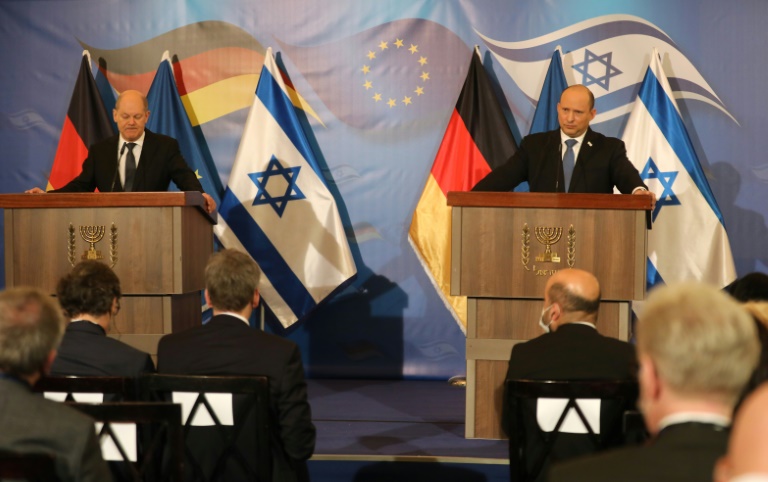
Germany’s Olaf Scholz said Wednesday that a new Iran nuclear agreement “cannot be postponed any longer”, during his first visit as chancellor to Israel, which staunchly opposes efforts to forge a deal with Tehran.

Scholz’s visit, which included a ceremony at Jerusalem’s Holocaust memorial Yad Vashem accompanied by Israeli Prime Minister Naftali Bennett, comes amid the geopolitical turmoil sparked by Russia’s invasion of Ukraine. 

The two heads of government — both relatively new in office following many years when their countries were ruled by veterans Angela Merkel and Benjamin Netanyahu — met as rapidly moving world events test their leadership.

Policy differences on Iran, long Israel’s arch foe, surfaced at a Jerusalem joint press conference, where Scholz said Berlin “would like to see an agreement reached in Vienna”.

The latest round of negotiations to salvage Iran’s 2015 nuclear deal started in late November in the Austrian capital and the talks are expected to reach a crunch point in the coming days.

The so-called Joint Comprehensive Plan of Action secured sanctions relief for Iran in return for strict curbs on its nuclear programme to prevent it acquiring an atomic weapon, a goal Iran has always denied pursuing.

“Now is the time to make a decision,” Scholz said. “This must not be postponed any longer and cannot be postponed any longer. Now is the time to finally say yes to something that represents a good and reasonable solution.” 

The original 2015 agreement unravelled when former US president Donald Trump withdrew from it, with Israeli encouragement. 

Israel’s Bennett has said he is “deeply troubled” by the outlines of a new deal taking shape, fearing it does too little to stop Iran from getting the nuclear bomb.

Bennett stressed that Israel is “following the talks in Vienna with concern” and warned that “Israel will know how to defend itself and ensure its security and future”.  

– ‘Permanent responsibility’ –

At the earlier visit to Yad Vashem, Scholz left a message in the guest book stressing Germany’s historical responsibility toward the Jewish state. 

“The mass murder of the Jews was instigated by Germany,” he wrote. “Every German government bears permanent responsibility for the security of the state of Israel and the protection of Jewish life.”

Bennett said the Holocaust “is the wound that forms the basis of ties between Germany and Israel. From this wound we have built significant and steadfast relations.”

When it comes to current events, the two leaders have also diverged on their responses to Russia’s war in Ukraine. 

Since the invasion started last week, Scholz’s coalition government has reversed a ban on sending weapons into conflict zones and halted the Nord Stream 2 gas pipeline project between Russia and Germany.

He also pledged 100 billion euros ($113 billion) this year to modernise Germany’s army and committed to spending more than two percent of Germany’s gross domestic product on defence annually, surpassing even NATO’s target.

Israel has taken a more conservative approach, citing its warm ties with both Kyiv and Moscow and security cooperation with Russian forces which have a large presence in Syria on Israel’s northern border. 

Bennett has resisted Kyiv’s request for weapons, according to Israeli media, and this week sent Ukraine 100 tons of non-military assistance, including blankets, water purification kits and medical supplies. 

“We have a very measured and responsible policy whose goal is both to help the Ukrainian people and to do what we can to help alleviate some of the pressures and the consequences of this horrific situation,” Bennett said as he stood beside Scholz. 

A short while later, Bennett and Ukrainian President Volodymyr Zelensky held a phone call, their second since the Russian invasion.

Zelensky said in a tweet they spoke about “Russian aggression,” while Bennett’s office noted that “they agreed to maintain continuous communication”.

A Russian attack Tuesday hit Kyiv’s Babi Yar, the scene of World War II’s biggest slaughter of the city’s Jews. Zelensky said later that “it is very important that millions of Jews around the world not remain silent right now”. 

Scholz, on a one-day trip, later met Foreign Minister Yair Lapid and visited the Knesset, or Israeli parliament. 

He postponed a scheduled meeting with Palestinian president Mahmud Abbas in Ramallah in the Israeli-occupied West Bank due to the events in Ukraine, the German Foreign Office in Ramallah told AFP. 

Saudi Arabia says cracking down on illegal Captagon drug

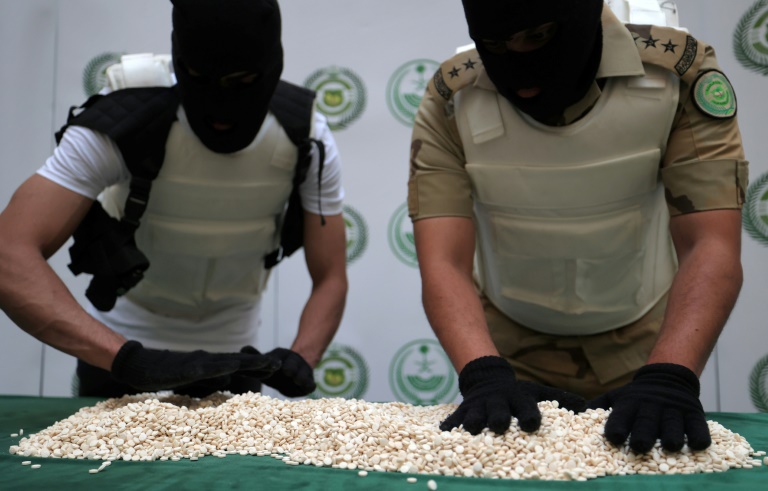
On a table covered in a green sheet, two Saudi officers pour out thousands of white amphetamine pills they have just seized from a neighbourhood in the kingdom’s Red Sea city of Jeddah. 

An AFP crew accompanied the anti-narcotics agents on their raid Tuesday when police officers arrested three people carrying 28,000 Captagon tablets. 

The operation — during which AFP was requested to turn off its cameras for security reasons — was part of the country’s efforts to crack down on dealers and smugglers of the amphetamine-type stimulant.

“The kingdom’s authorities have in the past six years foiled attempts to smuggle more than 600 million amphetamine pills” coming from Lebanon alone, Major Mohammed al-Nujaidi, spokesman for Saudi Arabia’s General Directorate of Narcotics Control, told AFP. 

He accused the “Hezbollah terrorist militia” of being “the main source smuggling them and manufacturing them.” The Lebanese Shiite militant group, which is backed by Iran, denies such accusations.

According to the UN Office on Drugs and Crime, Captagon has been manufactured mostly in Lebanon and Syria, where it fuelled jihadist fighters. Much of it is bound for Saudi Arabia.

The country of 35 million, more than half of whom are under the age of 35, is witnessing unprecedented social change and has long suffered from drugs.

According to an AFP count, more than 25 million Captagon pills have been seized across the region since the start of the year.

“There have been different smuggling methods, including in fruits and vegetables, tyres, rocks, building materials and furniture,” al-Nujaidi said.

– More seizures –

Last April, the Saudi government suspended fruits and vegetables from Lebanon after the seizure of more than five million Captagon pills hidden in fruit — one in a series of smuggling attempts foiled last year by the Saudi authorities.

“It came at the right time,” said the Saudi official, adding that the country seized more Captagon pills in the first quarter of last year than it did in all of 2019 and 2020. 

Lebanon is often criticised by Gulf countries for not cooperating in the war against drugs, particularly Captagon.

Beirut is embroiled in its worst ever economic crisis and is keen to mend ties with the kingdom and other Gulf nations, who have repeatedly voiced concern over Iran’s growing influence. 

In January, Lebanon said it intercepted a large quantity of Captagon hidden in a tea shipment bound for Saudi Arabia, which the UN Office on Drugs and Crime says from 2015-2019 reported the most amphetamine seizures in the Middle East/Southwest Asia region.

Shayaa al-Moussa, a customs agent at the Jeddah port, said that all shipments arriving in the kingdom are scanned via X-ray. 

“And, in case of suspicion, the containers are transferred to be searched manually,” he said.

Nujaidi said Saudi authorities seized more than 119 million amphetamine pills last year in cooperation with partners including Malaysia, Kuwait and the United Arab Emirates. 

Nigeria to airlift hundreds stranded by Ukraine crisis

Nigeria’s government on Wednesday planned to start airlifting more than 1,000 citizens stranded in countries neighbouring Ukraine after they fled the Russian invasion.

African countries have been scrambling to help citizens living in Ukraine who crossed over borders into Poland, Romania and Hungary, especially after reports some were mistreated or blocked at the frontier.

Three jets chartered from local carriers Max Air and Airpeace will leave on Wednesday, with the capacity to bring back nearly 1,300 people from Poland, Romania and Hungary, the foreign ministry said in a statement.

“The first batch of evacuees are expected to arrive in Nigeria on Thursday, March 3,” Gabriel Aduda, permanent secretary for the ministry, said in the statement.

“We assure Nigerians that we are working round the clock to see that our citizens are bought back home safely.”

Nigeria’s government approved $8.5 million (7.65 million euros) to help with the evacuation of around 5,000 citizens, the state ministry of foreign affairs said.

Ukraine’s ambassador to South Africa said this week the country has about 16,000 African students there, but many are from countries with no embassy in Ukraine, complicating the situation.

Nigeria, Africa’s most populous country, has 5,600 students in Ukraine, according to the ministry.

Ghana on Tuesday brought back its first group of 17 out of more than 500 students from Ukraine’s neighbouring countries.

– ‘Equal opportunities’ –

Governments from South Africa to Democratic Republic of Congo are working to help their citizens out, some dispatching diplomats to Ukraine’s borders to aid students who complain of being blocked in Ukraine.

Ukraine’s foreign ministry in a Tweet on Tuesday said: “There is no discrimination based on race, skin colour or nationality, including when it comes to the crossing of the state border by foreign citizens.”

Foreign Minister Dmytro Kuleba said they were working to resolve difficulties Africans have faced at Ukraine’s borders.

“Africans seeking evacuation are our friends and need to have equal opportunities to return to their home countries safely. Ukraine’s government spares no effort to solve the problem,” he said on Twitter.

The African Union on Monday condemned reports Africans had been mistreated and in some cases denied the right to cross Ukraine borders to safety, saying such treatment would be “shockingly racist.”

A group of around 30 students from Cameroon who until recently had been in the central Ukrainian city of Kirovograd said it was only in the last few days that they had experienced racism in Ukraine.

Before the war, they told AFP, all was fine, but after the invasion they said they were kept away from trains leaving the country.

Polish officials say everyone has been treated equally crossing the border.

As well as the nearly 680,000 refugees who have already left Ukraine for neighbouring states, an estimated one million have had fled their homes but are still inside the country.

Russia pounds Ukraine as Kyiv rejects 'ultimatums'

Russian forces shelled several Ukrainian cities on Wednesday as troops battled in the streets of Kharkiv and Ukraine’s president accused Moscow of wanting to “erase our country”.

Russia also said it had captured the Black Sea port of Kherson on the seventh day of Moscow’s invasion, while Russian artillery massed outside the capital Kyiv — raising fears of an imminent assault.

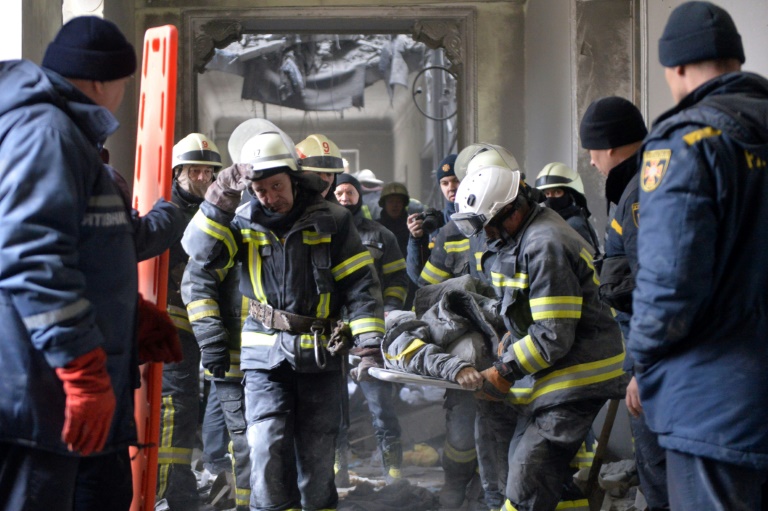
Several victims were reported killed by the shelling in southern and eastern Ukraine, adding to a civilian death toll of at least 350 people, including 14 children, according to Ukrainian authorities.

Russia has defied massive economic and diplomatic sanctions and growing global isolation to push on into pro-Western Ukraine, where its forces have encountered stiff resistance.

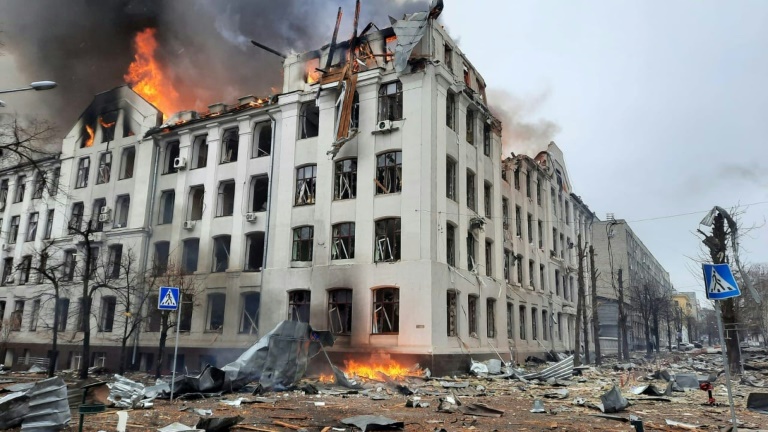
AFP saw the aftermath of apparent Russian bombing on a market and a residential area in Zhytomyr, around 150 kilometres (93 miles) from Kyiv, and in Kharkiv, Ukraine’s second biggest city.

“There is nowhere in Kharkiv where shells have not yet struck,” said Anton Gerashchenko, an adviser to Ukraine’s interior minister, after Russian airborne troops landed in the city before dawn.

In Kyiv, mayor Vitali Klitschko said that “the enemy is drawing up forces closer to the capital”.

“Kyiv is holding and will hold. We are going to fight,” the former champion boxer added.

Many residents have been hunkered down for a week and dozens of families could be seen sheltering on Wednesday in the Dorohozhychi metro station.

“What happens to us down here when the food runs out? Do we try to get out and run?” said Volodymyr Dovgan, a 40-year-old IT engineer.

– Possible talks? –

With the international community piling pressure on Russia to halt the conflict, the Kremlin said a Russian delegation would be ready to meet Ukrainian officials at an undisclosed location on Wednesday.

A Ukrainian delegation member, David Arakhamia, said there would be talks but did not specify a place, date or time.

Ukrainian Foreign Minister Dmytro Kuleba said Ukraine would not hear Russian “ultimatums”.

Initial talks on Monday between Russia and Ukraine failed to yield any breakthroughs.

In a video address on Wednesday, Ukraine’s President Volodymyr Zelensky said Russian forces wanted to “erase our country, erase us all”.

The leader said Tuesday’s strike on a television mast in the capital Kyiv demonstrated Russia’s threat to Ukrainian identity.

Five people were killed in the attack on the tower at Babi Yar, the site of a Nazi massacre in which over 33,000 people were killed — most of them Jews.

The 44-year-old Zelensky, who is himself Jewish, urged Jewish people around the world to speak up.

“Nazism is born in silence. So, shout about killings of civilians. Shout about the murders of Ukrainians,” he said.

In his first State of the Union address on Tuesday, US President Joe Biden called Russian President Vladimir Putin a “dictator” and warned of more sanctions to cripple Russia’s economy.

Russian troops rolled into Ukraine last week to achieve Putin’s mission of overthrowing Zelensky’s government and “denazifying” the pro-Western country.

The UN said nearly 875,000 people have fled since the conflict began, including thousands of students and migrant workers from Africa and the Middle East who had been living in Ukraine.

“We left everything there as they came and ruined our lives,” said Svitlana Mostepanenko, a refugee registering in Prague.

– ‘The city will die’ –

While Ukrainian forces have held Russian forces back from the country’s main cities, the Russian army said it was now in “full control” of Kherson, a city with a population of 290,000 people.

The claim was not confirmed by Kherson mayor Igor Nikolayev who appealed on Facebook for permission to transport the dead and wounded out of the city and for food and medicine to be allowed in.

“Without all this, the city will die,” he wrote.

Ukraine’s army also said there was a fierce battle under way in Kharkiv, in northeast Ukraine near the Russian border with a population of 1.4 million.

“There is an ongoing fight between the invaders and the Ukrainians,” the army said on the messaging app Telegram.

Shelling in Kharkiv on Tuesday drew comparisons to the massacres of civilians in Sarajevo in the 1990s and condemnation for what Zelensky called a “war crime”.

The city of Mariupol on the Azov Sea was also reportedly encircled by Russian forces.

In an important strategic victory, Russian troops attacking from the Crimean peninsula said they had linked up along the Azov Sea coast with pro-Moscow separatists in eastern Ukraine.

The separatists have been fighting Ukrainian government forces since 2014 in a conflict that has killed more than 14,000 people.

As the civilian death toll mounts, there is growing opposition to the conflict within Russia, with thousands detained for taking part in anti-war protests.

“I am urging everyone to take to the streets and fight for peace,” jailed Kremlin critic Alexei Navalny said in a statement posted on Facebook.

He called on Russians not to be afraid of going to prison.

“Everything has a price and now, in the spring of 2022, we should pay that price.”

– ‘Russia will be a pariah’ –

Western countries have imposed heavy sanctions on Russia’s economy and there have been international bans and boycotts against Russia in everything from finance to tech, from sports to the arts.

In the latest development, the EU banned broadcasts of Russian state media RT and Sputnik and excluded seven Russian banks from the global SWIFT bank messaging system.

The list did not name two major Russian banks, Sberbank and Gazprombank, which were left connected to SWIFT to allow EU countries to pay for Russian gas and oil deliveries.

EU and NATO members have also sent arms and ammunition to Ukraine, although they have made clear that they will not send troops and the EU has dampened Zelensky’s hopes of membership of the bloc.

In response to the invasion, Western companies have pulled out of projects in Russia, deepening the economic toll on Moscow that saw the ruble collapse this week.

German logistics giant DHL was one of the latest to announce a ban, saying it would stop deliveries to Russia and neighbouring Belarus, which has allowed the passage of Russian troops to attack Ukraine.

“Going forward, Russia will be a pariah, and it’s hard to see how they can restore anything resembling normal interactions in the international system,” said Sarah Kreps, professor at Cornell University.

The invasion has sent global markets into a spiral, with crude surging past $110 a barrel Wednesday and equities sinking.

Aluminium and gas prices hit record highs on supply fears and the Moscow Stock Exchange failed to open for a third day running.

burs-dt/dc/jm

Close Bitnami banner
Bitnami