World

Russia's king of diplomacy becomes sanctioned pariah

When Russia’s veteran Foreign Minister Sergei Lavrov hosted his British counterpart Liz Truss for talks in Moscow in February in a doomed attempt to avert war, he had a trick up his sleeve.

“Do you recognise the sovereignty of Russia over the Rostov and Voronezh regions?” he asked. The minister, on her first visit to Russia, duly replied the UK would “never recognise” Russia’s sovereignty of those regions.

The problem for Truss, in the incident first reported by the Kommersant daily, was that those regions are an integral part of Russia and she had to be hastily corrected by the British ambassador.

The incident prompted Lavrov to grumble in an acrimonious news conference that he was “disappointed” with their meeting and accused his British counterpart of being poorly prepared.

The ambush on his guest was symbolic of the transformation of Lavrov in the last years from a urbane master of diplomacy respected even by foes to a Kremlin attack weapon.

His increasingly cantankerous manner earned him the nickname Mr Nyet (Mr No) that Western commentators had originally given to Andrei Gromyko, who served as Soviet foreign minster for three decades as the height of the Cold War.

Named by Putin as foreign minister in 2004, Lavrov has now served almost two decades, although it remains unclear to what extent he has ever been part of the Kremlin’s inner circle.

– Putin’s ‘chief propagandist’ –

A staunch defender of Russia’s invasion of Ukraine, he now finds himself sanctioned by the EU, UK and US, and blocked from travelling to the West.

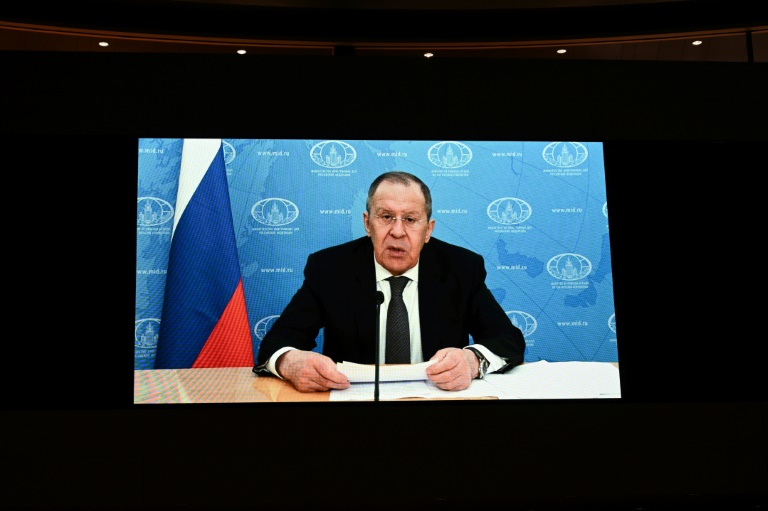
When he addressed conferences on human rights and disarmament in Geneva on Monday — by video conference due to the new travel bans — Western diplomats walked out of the room in protest.

“I have been forced to address you via videoconference,” he lamented. 

“The reason for this lies in the outrageous measures taken by the European Union, which has refused to respect one of the fundamental human rights –- the right to freedom of movement,” he added, before launching into a rambling diatribe against Ukraine and the West.

Only last week, Lavrov had been due to hold face-to-face talks with US Secretary of State Antony Blinken and French Foreign Minister Jean-Yves Le Drian to keep diplomacy alive.

But after Putin launched the invasion of Ukraine on February 24, it remains unclear if he will ever meet a Western foreign minister or travel to Europe or the US again.

The EU froze European assets linked to both Lavrov and Putin the day after the invasion and then added the two men to its sanctions list, a hugely unusual move for leaders.

The UK and US followed suit, with the American Treasury describing Lavrov as Putin’s “chief propagandist” who had “advanced the false narrative that Ukraine is the aggressor”. 

– ‘Watch my back’ –

But it was not always this way. Lavrov won respect from all sides for his command of the workings of the UN during his 10 year stint as UN ambassador from 1994.

While some have found him exasperating, he managed to build good relationships with counterparts notably with former US secretary of state John Kerry in building the 2015 Iran nuclear deal.

During marathon 2016 negotiations in Geneva on Syria also involving Kerry, Lavrov delighted journalists with a late night delivery of two bottles of vodka to the press room.

“The pizzas are on the American delegation and we bring the vodka,” said Lavrov, a fan of whisky and one-time chain smoker.

Lavrov, who along with English speaks fluent Sinhalese due to his past diplomatic work in Sri Lanka, has also enjoyed personal popularity and headed the ruling party’s list in elections last year.

Ahead of those elections the Russian investigative outlet istories alleged he was in a secret relationship with a woman who wielded considerable power in the Russian foreign ministry and whom he had showered with gifts including cars and property.

Former Russian foreign minister Andrei Kozyrev, who served under Boris Yeltsin in the 1990s, has launched a campaign urging Russian diplomats to resign in protest at the war.

“Lavrov, rightfully sanctioned by the US and EU, was my deputy in the 90s. Used to have my back. Today, I would watch my back if he was behind me,” he said.
UN agrees to create 'historic' global treaty on plastic trash

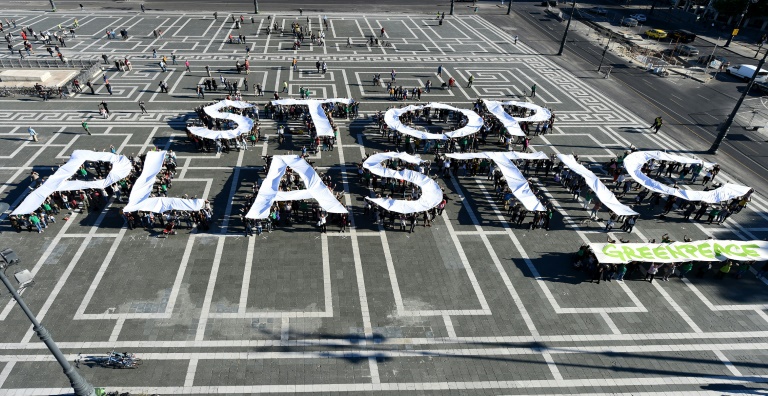
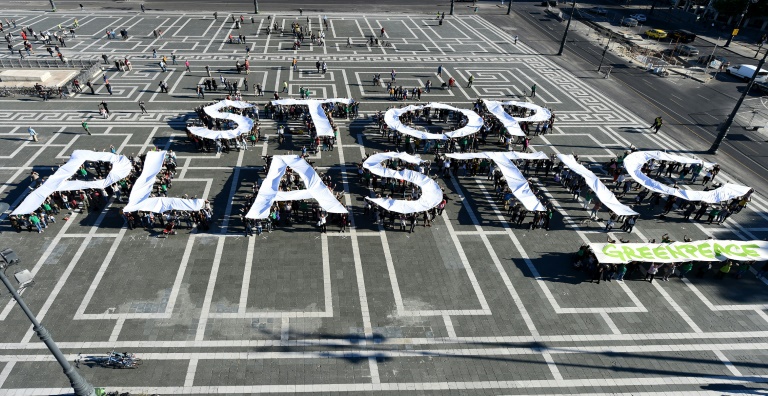
The United Nations on Wednesday agreed to start negotiating a world-first global treaty on plastic pollution in what has been hailed a watershed moment for the planet.

Nearly 200 nations at the UN Environment Assembly in Nairobi unanimously agreed to create an intergovernmental committee to negotiate and finalise a legally binding plastics treaty by 2024.

UNEA chair Espen Barthe Eide declared the resolution passed with a strike of the gavel as the assembly hall erupted into cheers and applause.

“We are making history today. You should all be proud,” said Eide, who is Norway’s climate and environment minister. 

Negotiators have been given a broad mandate to target plastic trash in all its forms -– not just bottles and straws in the ocean, but invisible microplastics polluting the air, soil and food chain.

– ‘Historic crossroad’ –

Supporters described the commitment to take united action on the plastic crisis as the most important environmental decision taken by the UN in years.

“We stand at a crossroad in history when ambitious decisions taken today can prevent plastic pollution from contributing to our planet’s ecosystem collapse,” said Marco Lambertini from WWF.

The broad treaty framework approved by nations — among them major plastic producers like the United States and China — does not spell out specific policies, with particulars to be negotiated later.

But the scope covers the entire life cycle of plastic — a key demand of nations, businesses and environment groups — and could for the first time introduce new rules on the production of new plastic.

It also allows for the negotiation of new rules around the design of plastic products — which are made from oil and gas — to make recycling easier, encourage sustainable use, and spur better waste disposal.

“This is a clear acknowledgement that the entire life cycle of plastic, from fossil fuel extraction to disposal, creates pollution that is harmful to people and the planet,” said Graham Forbes from Greenpeace.

The mandate allows for binding and voluntary measures, and the setting of global targets and obligations, the development of national action plans, and mechanisms for tracking progress and ensuring accountability.

It also calls for financial assistance to help poorer countries take action.

– ‘Landmark’ decision –

The amount of plastic trash entering the oceans is forecast to triple by 2040, and governments have been under pressure to unite behind a global response to the crisis.

The rate of plastic production has grown faster than any other material and is expected to double within two decades, the UN says.

But less than 10 percent is recycled and most winds up in landfill or oceans creating what Eide called an “epidemic” of plastic trash.

By some estimates, a garbage truck’s worth of plastic is dumped into the sea every minute.

Large pieces of plastic are a notorious peril for sea birds, whales and other marine animals. But at the microscopic level, particles of plastic can also enter the food chain, eventually joining the human diet.

Environment groups are buoyed by the broad scope given to negotiators but say the strength of the treaty is yet to be determined.

The first round of negotiations is set for the second half of this year. 

Big corporations have expressed support for a treaty that creates a common set of rules around plastic and a level playing field for competition.

“This is a landmark decision by UN member states. A legally binding treaty that addresses the full life cycle of plastic will make a dramatic difference in the fight against plastic pollution,” said Richard Slater, chief research and development officer at British consumer goods group Unilever.

Big plastic makers have underscored the importance of plastic in construction, medicine and other vital industries and warned that banning certain materials would cause supply chain disruptions.

UN agrees to create 'historic' global treaty on plastic trash

The United Nations on Wednesday agreed to start negotiating a world-first global treaty on plastic pollution in what has been hailed a watershed moment for the planet.

Nearly 200 nations at the UN Environment Assembly in Nairobi unanimously agreed to create an intergovernmental committee to negotiate and finalise a legally binding plastics treaty by 2024.

UNEA chair Espen Barthe Eide declared the resolution passed with a strike of the gavel as the assembly hall erupted into cheers and applause.

“We are making history today. You should all be proud,” said Eide, who is Norway’s climate and environment minister. 

Negotiators have been given a broad mandate to target plastic trash in all its forms -– not just bottles and straws in the ocean, but invisible microplastics polluting the air, soil and food chain.

– ‘Historic crossroad’ –

Supporters described the commitment to take united action on the plastic crisis as the most important environmental decision taken by the UN in years.

“We stand at a crossroad in history when ambitious decisions taken today can prevent plastic pollution from contributing to our planet’s ecosystem collapse,” said Marco Lambertini from WWF.

The broad treaty framework approved by nations — among them major plastic producers like the United States and China — does not spell out specific policies, with particulars to be negotiated later.

But the scope covers the entire life cycle of plastic — a key demand of nations, businesses and environment groups — and could for the first time introduce new rules on the production of new plastic.

It also allows for the negotiation of new rules around the design of plastic products — which are made from oil and gas — to make recycling easier, encourage sustainable use, and spur better waste disposal.

“This is a clear acknowledgement that the entire life cycle of plastic, from fossil fuel extraction to disposal, creates pollution that is harmful to people and the planet,” said Graham Forbes from Greenpeace.

The mandate allows for binding and voluntary measures, and the setting of global targets and obligations, the development of national action plans, and mechanisms for tracking progress and ensuring accountability.

It also calls for financial assistance to help poorer countries take action.

– ‘Landmark’ decision –

The amount of plastic trash entering the oceans is forecast to triple by 2040, and governments have been under pressure to unite behind a global response to the crisis.

The rate of plastic production has grown faster than any other material and is expected to double within two decades, the UN says.

But less than 10 percent is recycled and most winds up in landfill or oceans creating what Eide called an “epidemic” of plastic trash.

By some estimates, a garbage truck’s worth of plastic is dumped into the sea every minute.

Large pieces of plastic are a notorious peril for sea birds, whales and other marine animals. But at the microscopic level, particles of plastic can also enter the food chain, eventually joining the human diet.

Environment groups are buoyed by the broad scope given to negotiators but say the strength of the treaty is yet to be determined.

The first round of negotiations is set for the second half of this year. 

Big corporations have expressed support for a treaty that creates a common set of rules around plastic and a level playing field for competition.

“This is a landmark decision by UN member states. A legally binding treaty that addresses the full life cycle of plastic will make a dramatic difference in the fight against plastic pollution,” said Richard Slater, chief research and development officer at British consumer goods group Unilever.

Big plastic makers have underscored the importance of plastic in construction, medicine and other vital industries and warned that banning certain materials would cause supply chain disruptions.

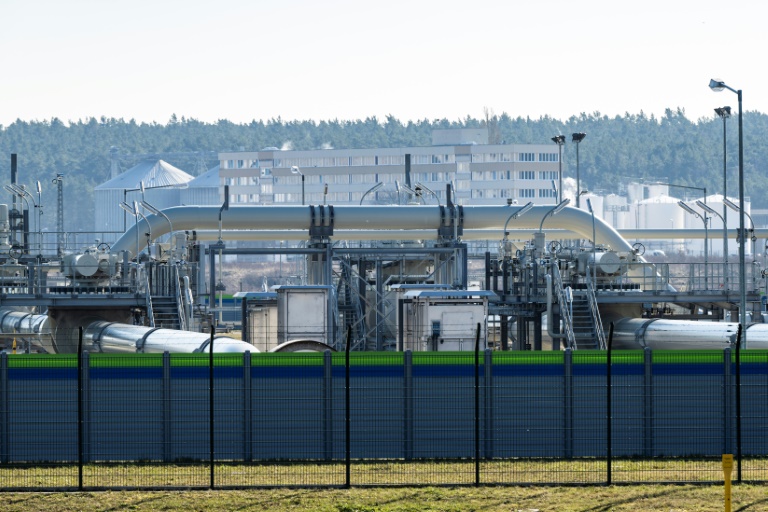
Pipe dreams: German village seeks future for Nord Stream 2

Once defended by the former chancellor Angela Merkel as a purely economic project that will bring cheaper gas to Europe, the controversial 10-billion-euro Nord Stream 2 pipeline has finally been canned by Germany over Russia’s invasion of Ukraine.

But the small German coastal village Lubmin where the pipeline comes to shore remains divided over Nord Stream 2, with some harbouring hopes that it could yet one day bring energy to Europe — though perhaps not Russian gas.

“I cannot imagine that such a huge and above all such an expensive project could just become industrial ruins,” Lubmin’s mayor Axel Vogt told AFP.

“I think there can be other solutions, if we look a little in the future, hydrogen is a major topic. Not only here in Germany, but in the whole of the European Union and also in other countries outside the EU,” he said, pointing out that it was technically possible for the pipeline to transport hydrogen fuel.

Vogt conceded, however, that it would take a while for the pipeline running under the Baltic Sea to find another life — with regulatory and legal procedures to run their course.

– Plagued by controversies –

Nord Stream 2, which is owned by Russian giant Gazprom, had sparked an outcry among Germany’s allies even in the planning stages several years back.

The US and especially former eastern bloc EU nations had repeatedly warned against the pipeline that bypasses Ukraine and which they say would increase Europe’s energy dependance on Russia.

Merkel’s government had obstinately pushed on with the project, viewing Russian gas as necessary in Germany’s transition to a zero-carbon future, and construction works completed in September 2021. 

But with warnings already rising of Russia’s impeding assault on Ukraine, the pipeline’s fate once again hung in the balance.

With Moscow refusing to withdraw its troops from the borders with Ukraine and instead pushing ahead with its invasion, Chancellor Olaf Scholz finally put a key certification process on ice on February 22. 

A week on, compounded by an onslaught of sanctions against Moscow from Western allies, the Swiss-based Nord Stream 2 filed for insolvency, laying off 106 workers.

Vogt said only about a dozen employees were based at the site in Lubmin, given it was a “highly technologised” operation.

His local authorities have also not budgeted in the expected taxes for the coming years.

But he conceded that the controversies over the years surrounding the pipeline have weighed on investor sentiments, making some question if it was safer just to stay away from a site associated with the Nord Stream project.

Economy and Climate Minister Robert Habeck was more strident about it, telling public television it “would have been smarter not to build Nord Stream 2”. 

– ‘Price of civilisation’ –

At the tranquil seaside village of just over 2,000 inhabitants, residents are still equally torn.

Kerstin Ahrens, 60, said she was opposed to stopping the pipeline despite Vladimir Putin’s war on Ukraine, “because it’s such a complete waste of money.”

“It’s all terrible with Russia but I don’t find it good that we’re stopping it now,” she told AFP at the white sandy beachfront.

“Everyone had hoped that gas will be cheaper and now everything is more expensive, and there’s not all that much money up in this region,” she said.

Unlike Ahrens, another resident in the north-eastern Mecklenburg-Western Pomerania region, Heike Schulte, said the pipeline had to be halted “simply because the dependency to Russia is too great.”

And the 66-year-old says she is prepared to fork out more if that is the price to pay for ditching cheaper Russian energy.

“It’s the price of civilisation, we must live with it,” she said.

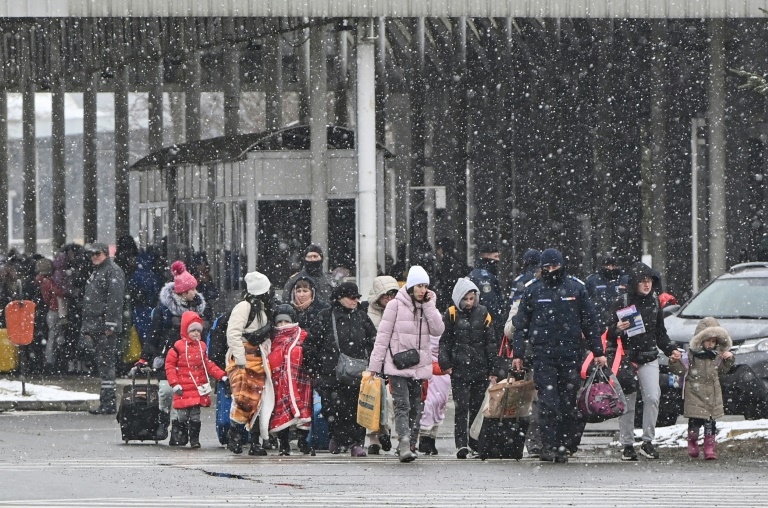
Nearly 875,000 refugees have fled Ukraine conflict: UN

The number of refugees fleeing the conflict in Ukraine has surged to nearly 875,000, UN figures showed on Wednesday, as fighting intensified on day seven of Russia’s invasion.

In all, 874,026 people have fled across the country’s borders, according to the website of UNHCR, the UN refugee agency.

That marks a huge jump of around 200,000 from the 677,000 announced almost 24 hours earlier by UNHCR chief Filippo Grandi.

Poland has welcomed around half of all those who have fled, according to combined tallies up to Tuesday.

UNHCR figures show that 454,000 had fled to Poland; 116,000 to Hungary; 79,000 to Moldova; 67,000 to Slovakia; 45,000 to Romania, 43,000 to Russia, and 350 to Belarus.

Meanwhile 70,000 have gone to other European countries.

Czech Prime Minister Petr Fiala said Wednesday that his country had welcomed around 20,000 Ukrainian refugees since the conflict started.

“The military offensive in Ukraine has caused destruction of civilian infrastructure and civilian casualties and has driven many thousands of people from their homes,” UNHCR said.

– ‘Refugee crisis’ –

“There is a clear indication that many more people are on the move. They are in need of protection and support.”

UNHCR projects that more than four million Ukrainian refugees may eventually need help in neighbouring countries.

The UN on Tuesday launched an emergency appeal for $1.7 billion to provide urgent humanitarian aid to people caught up in the Russian invasion and for the refugees fleeing the violence.

“We are looking at what could become Europe’s largest refugee crisis this century,” Grandi said.

The first wave of people fleeing across Ukraine’s borders were likely to be people with cars, resources and some connections in other European countries, he said.

But as Russia’s offensive continues, people who are “more vulnerable” could start to flee, he told reporters.

Russian forces said they had captured the Ukrainian port of Kherson on Wednesday, as Russian and Ukrainian troops battled in the streets of Kharkiv, Ukraine’s second-largest city, and President Volodymyr Zelensky said Moscow wanted to “erase” his country.

The UNHCR noted that an additional 96,000 people had crossed into Russia from the separatist eastern Donetsk and Luhansk regions between February 18 and 23, before the February 24 invasion.

Fighting rages in Ukraine as Russian troops claim city

Russian forces said they had captured a port on the Black Sea on Wednesday as Russian and Ukrainian troops battled for another city and Ukraine’s leader said Moscow wanted to “erase” his country.

The Russian army said it had taken control of Kherson, as its troops advanced and pounded cities across southern and eastern Ukraine, defying sanctions and international isolation.

Russian paratroopers also landed in Kharkiv, Ukraine’s second-biggest city, triggering clashes in the streets, Ukrainian forces said.

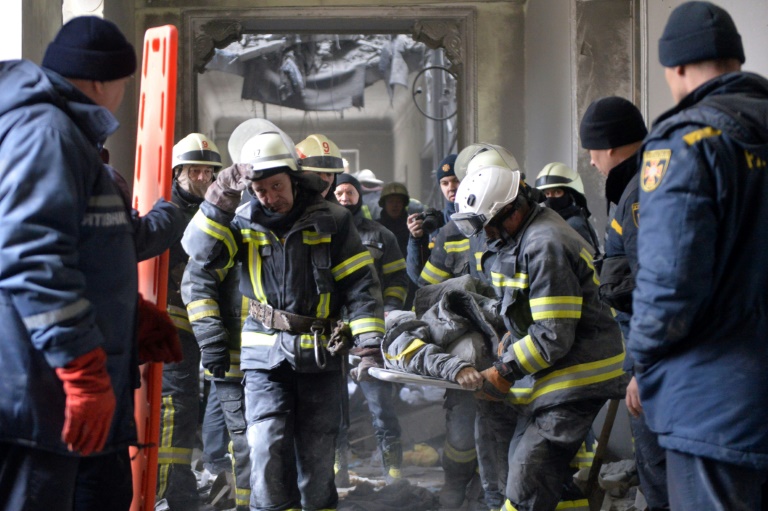
The emergency services said four people were killed in the city on Wednesday and there was now “mass shelling and bombing” in the centre.

In a video address, Ukrainian President Volodymyr Zelensky said Russian forces wanted to “erase our country, erase us all”.

Zelensky said Tuesday’s strike on a television mast in the capital Kyiv demonstrated Russia’s threat to Ukrainian identity.

Five people were killed in the attack on the tower at Babi Yar, the site of a Nazi massacre in which over 33,000 people were killed — most of them Jews.

The 44-year-old Zelensky, who is himself Jewish, urged Jewish people around the world to speak up.

“Nazism is born in silence. So, shout about killings of civilians. Shout about the murders of Ukrainians,” he said.

– ‘Russian dictator’ –

Ukraine says more than 350 civilians, including 14 children, have been killed in the conflict and the International Criminal Court has opened a war crimes investigation against Russia.

The UN said 836,000 people have fled since the conflict began seven days ago, including many students and migrant workers from Africa and the Middle East who had been living in Ukraine.

“We left everything there as they came and ruined our lives,” said Svitlana Mostepanenko, a refugee registering in Prague. 

“Our families, they’re bombing even… houses where there are kids, small kids, children, they die now,” she added.

In his first State of the Union address on Tuesday, US President Joe Biden warned the sanctions campaign to cripple Russia’s economy would escalate and its oligarchs were being targeted.

Biden hailed the resolve of the Western alliance and voiced solidarity with Ukraine as lawmakers in the US Congress gave a standing ovation to the Ukrainian people.

“A Russian dictator, invading a foreign country, has costs around the world,” Biden told lawmakers, promising “robust action to make sure the pain of our sanctions is targeted at Russia’s economy.”

– Fight for Kharkiv –

Russian troops rolled into Ukraine last week to achieve Putin’s mission of overthrowing Zelensky’s government and “denazifying” the pro-Western country.

But Ukrainian troops have fought back hard and prevented Russia from capturing any the country’s biggest cities.

On Wednesday, however, Russian defence ministry spokesman Igor Konashenkov said Russian forces were in now “full control” of Kherson, a city with a population of 290,000 people.

He said talks were under way between the Russian army and local authorities on maintaining order, protecting the population and keeping public services functioning.

Ukraine’s army said there was a battle in the country’s second city Kharkiv, in northeast Ukraine near the Russian border with a population of 1.4 million.

“There is an ongoing fight between the invaders and the Ukrainians,” the army said on messaging app Telegram.

AFP saw rocket damage on security, police and university buildings in Kharkiv.

Ukrainian forces said Russian strikes hit a residential block and a government building in the city on Tuesday killing 18 people, drawing comparisons to the massacres of civilians in Sarajevo in the 1990s and condemnation for what Zelensky called a “war crime”.

As the civilian death toll mounts, there is growing opposition to the conflict within Russia, with thousands detained for taking part in anti-war protests.

“I am urging everyone to take to the streets and fight for peace,” jailed Kremlin critic Alexei Navalny said in a statement posted on Facebook.

He called on Russians not to be afraid of going to prison.

“Everything has a price and now, in the spring of 2022, we should pay that price.”

– ‘Russia will be a pariah’ –

Western countries have imposed crippling sanctions on Russia’s economy and there have been international bans and boycotts against Russia in everything from finance to tech, from sports to the arts.

In the latest development, the EU banned broadcasts of Russian state media RT and Sputnik and excluded seven Russian banks from the global SWIFT bank messaging system.

The list did not name two major Russian banks, Sberbank and Gazprombank, which were left connected to SWIFT to allow EU countries to pay for Russian gas and oil deliveries.

Sberbank, Russia’s largest lender, said Wednesday it was leaving the European market after coming under pressure from Western sanctions.

The EU and NATO members have also sent arms and ammunition to Ukraine, although they have made clear that they will not send troops and the EU has dampened Zelensky’s hopes of membership of the bloc.

In response to the invasion, Western companies have also withdrawn from projects in Russia, deepening the economic toll on Moscow that saw the ruble collapse this week.

Apple, Boeing, Disney, ExxonMobil and Mastercard announced Tuesday in rapid succession steps to withdraw or freeze business in Russia.

German logistics giant DHL joined them on Wednesday, saying it would stop deliveries to Russia and Belarus, which has allowed the passage of Russian troops to attack Ukraine.

“Going forward, Russia will be a pariah, and it’s hard to see how they can restore anything resembling normal interactions in the international system,” said Sarah Kreps, professor at Cornell University.

The invasion has sent global markets into a spiral, with crude surging past $110 a barrel Wednesday and equities sinking.

Aluminium and gas prices hit record highs on supply fears and the Moscow Stock Exchange failed to open for a third day running.

– ‘We are going to fight’ –

Initial talks between Russia and Ukraine on Monday failed to yield any breakthrough.

Since then, strikes have been reported in Konstantinovka in eastern Ukraine, Bordodyanka near Kyiv and Zhytomyr in central Ukraine.

In an important strategic victory, Russian troops attacking from the Crimean peninsula said they had linked up along the Azov Sea coast with pro-Moscow separatists in eastern Ukraine.

The city of Mariupol was reportedly encircled.

The separatists have been fighting Ukrainian government forces since 2014 in a conflict that has killed more than 14,000 people.

US satellite images show that Russia has massed artillery and armoured cars near Kyiv, raising fears of an imminent assault. 

“The enemy is drawing up forces closer to the capital,” Kyiv’s mayor Vitali Klitschko said in a video address.

“Kyiv is holding and will hold. We are going to fight,” he said.

burs-dt/as/jm

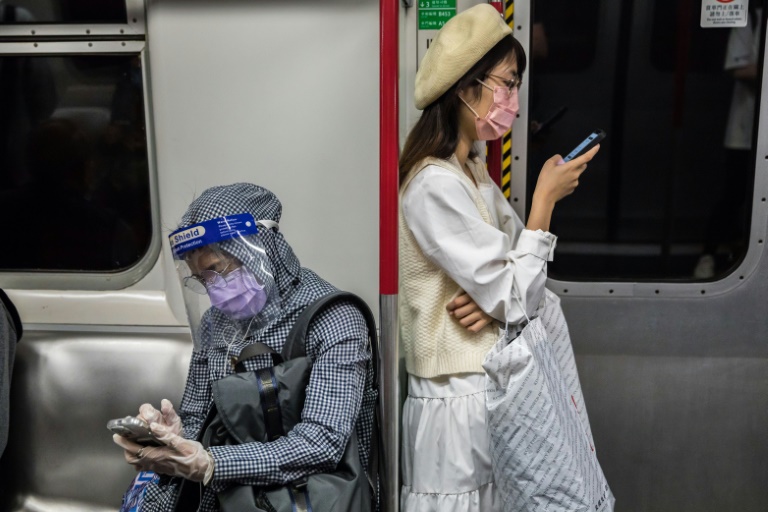
Two years into the pandemic, is the end in sight?

Two years after the official start of the pandemic, some countries are now trying to “live with Covid”, however scientists warn that potential new variants and unequal vaccination rates threaten any long-awaited return to normality.

When US global health researcher Christopher Murray wrote “Covid-19 will continue but the end of the pandemic is near”, in The Lancet medical journal in late January, he summed up the hopes of many national health authorities around the world.

In the weeks leading up to the two-year anniversary of the World Health Organization declaring a pandemic in March 2020, countries such as Britain and Denmark lifted all legal Covid restrictions. Many US states also relaxed mask and other rules.

British Prime Minister Boris Johnson said the change marked the beginning of learning “to live with Covid”, as the global death toll falls after the more transmissible though less severe Omicron variant swept the world.

The WHO has said that the “acute phase” of the pandemic could end by the middle of this year — if around 70 percent of the world is vaccinated.

– From pandemic to endemic? –

Spain has been among the nations calling for approaching Covid as having transitioned to an “endemic” phase, meaning it has milder seasonal outbreaks that humanity can live with, such as the flu. 

However some scientists worry governments could use the somewhat vague term to justify lifting life-saving measures.

University of Oxford evolutionary virologist Aris Katzourakis said “the word ‘endemic’ has become one of the most misused of the pandemic.”

“A disease can be endemic and both widespread and deadly,” he wrote in the journal Nature last week, pointing out that malaria killed more than 600,000 people in 2020, while 1.5 million died of tuberculosis.

There are also other options than just pandemic or endemic. The British government’s scientific advisory body SAGE has laid out four potential scenarios for the years to come.

Under the “reasonable best-case” scenario, there will be smaller regional or seasonal outbreaks, as the higher Covid numbers lead to fewer flu cases.

Under the worst-case scenario, new unpredictable variants build into repeated damaging virus waves, requiring the return of harsh restrictions.

The different outcomes hinge on two key uncertainties: the possible emergence of new variants, and the ability of vaccines to protect against the disease in the long term.

– The new variant threat –

When it comes to vaccines, Omicron has served as both a warning and a test.

Many epidemiologists say that simply letting Covid spread unchecked gives it a greater chance of mutating into new strains.

And there is no guarantee that such new variants will be less deadly.

“There is a widespread, rosy misconception that viruses evolve over time to become more benign,” Katzourakis said.

“This is not the case: there is no predestined evolutionary outcome for a virus to become more benign,” he said, pointing out that the Delta variant was deadlier than the first strain that emerged in Wuhan, China.

Omicron also partly evades protection from the currently available vaccines.

But they are very effective in preventing severe disease and death — particularly third booster shots which have been rolled out across the world.

– Vaccines to the rescue? – 

Countries such as Israel and Sweden have started administering fourth doses, but experts fear that an endless number of booster shots is a short-sighted strategy. An Israeli trial in January also found that a fourth dose was less effective against Omicron.

Pharma giants have raced to develop a vaccine that specifically targets Omicron, but none seem close to becoming available.

Several recent preliminary results of tests carried out on animals and not peer reviewed have suggested the targeted vaccines are no more effective against Omicron than their predecessors.

But there could be another way: broadening rather than narrowing the scope of the vaccine.

Three researchers including Anthony Fauci — US President Joe Biden’s chief medical adviser — have called for a “universal coronavirus vaccine” that would protect not just against Covid but also against future coronaviruses that could spread from animals and trigger another pandemic.

“We must now prioritise development of broadly protective vaccines,” the researchers wrote in the New England Journal of Medicine over the weekend.

However such a vaccine faces major hurdles and the first efforts have only just begun trials on humans.

In the meantime, the WHO emphasises that the best way to end the acute phase of the pandemic is for rich countries to share their doses rather than boost their populations again.

Only 13 percent of Africans had been fully vaccinated as of late last month, according to the WHO — far below the 70 percent target needed by mid-year. 

Japan willing to accept Ukrainian refugees: PM

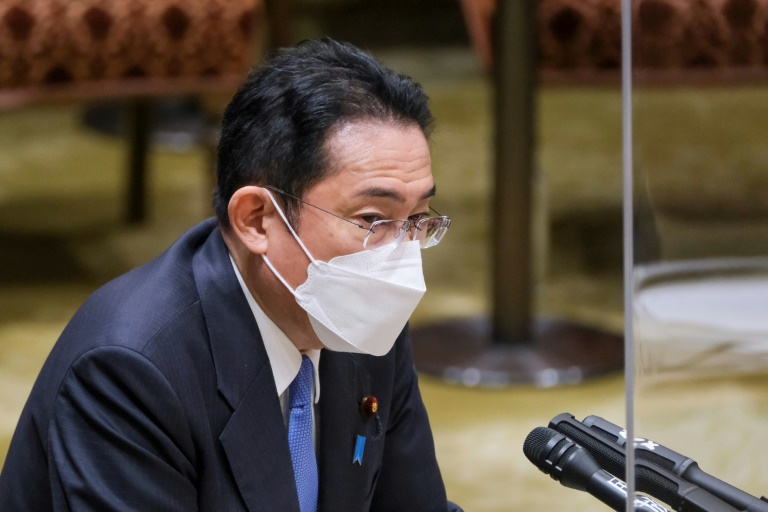
Japan will accept Ukrainian refugees fleeing Russia’s ongoing invasion, Prime Minister Fumio Kishida said Wednesday, in a break with the country’s usual reticence to accept humanitarian arrivals.

Japan typically accepts just a few dozen refugees a year out of thousands of applicants, and its borders are currently closed to virtually all foreign visitors to prevent Covid-19 infections.

But Kishida said the country would now “proceed with a plan to welcome people from Ukraine who have fled to third countries” in a bid to “demonstrate our solidarity with the Ukrainian people at such a crucial moment.”

Kishida’s remarks came after he held talks with the prime minister of Poland, which is hosting many of the more than 800,000 refugees who have fled Ukraine since the invasion began.

Kishida said Japan expected to first accept those with relatives or friends in the country, “but beyond that, we will respond from a humanitarian perspective,” he added without setting a specific cap on arrivals.

He said refugees would be processed outside of the current border regime that bars foreign tourists and limits overseas arrivals.

There were no immediate details on how long refugees might be able to stay.

In 2020, Japan accepted just 47 refugees and 44 people on humanitarian grounds out of nearly 4,000 applicants, and rights groups have long accused Tokyo of doing too little to help those fleeing conflict.

Kishida said he had informed countries neighbouring Ukraine that are currently receiving refugees of the decision.

Japan has also backed international moves to sanction Russian and Belarusian individuals, exports and financial institutions while offering Ukraine loans and emergency humanitarian aid.

In Israel, Germany's Scholz says Iran deal 'cannot be postponed'

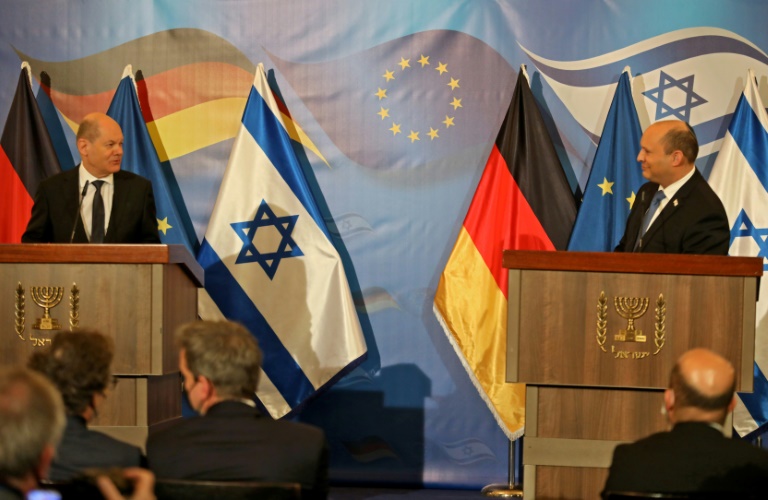
Germany’s Olaf Scholz said Wednesday that a new Iran nuclear agreement “cannot be postponed any longer”, during his first visit as chancellor to Israel, which staunchly opposes efforts to forge a deal with Tehran.

Scholz’s visit, which included a ceremony at Jerusalem’s Holocaust memorial Yad Vashem accompanied by Israeli Prime Minister Naftali Bennett, comes amid the geopolitical turmoil sparked by Russia’s invasion of Ukraine. 

The two heads of government — both relatively new to office following many years when their countries were ruled by veterans Angela Merkel and Benjamin Netanyahu — met as rapidly moving world events test their leadership.

Policy differences on Iran, long Israel’s arch foe, surfaced at a Jerusalem joint press conference, with Scholz saying Germany “would like to see an agreement reached in Vienna”.

The latest round of negotiations to salvage Iran’s 2015 nuclear deal started in late November in the Austrian capital and the talks are expected to reach a crunch point in the coming days.

The so-called Joint Comprehensive Plan of Action (JCPOA) secured sanctions relief for Iran in return for strict curbs on its nuclear programme to prevent it acquiring an atomic weapon, a goal Iran has always denied pursuing.

“Now is the time to make a decision,” Scholz said. “This must not be postponed any longer and cannot be postponed any longer. Now is the time to finally say yes to something that represents a good and reasonable solution.” 

The original 2015 agreement unravelled when former US president Donald Trump withdrew from it, with Israeli encouragement. 

Israel’s Bennett has said he is “deeply troubled” by the outlines of a new deal taking shape, fearing it does too little to stop Iran from getting the nuclear bomb, while granting it sanctions relief.

Bennett stressed on Wednesday that Israel is “following the talks in Vienna with concern” and warned that “Israel will know how to defend itself and ensure its security and future”. 

– ‘Permanent responsibility’ –

At the earlier visit to Yad Vashem, Scholz left a message in the guest book stressing Germany’s historical responsibility toward the Jewish state. 

“The mass murder of the Jews was instigated by Germany,” he wrote. “Every German government bears permanent responsibility for the security of the state of Israel and the protection of Jewish life.”

Bennett said the Holocaust “is the wound that forms the basis of ties between Germany and Israel. From this wound we have built significant and steadfast relations.”

When it comes to current events, the two leaders have also diverged on their responses to Russia’s war in Ukraine. 

Since the invasion started last week, Scholz’s coalition government has reversed a ban on sending weapons into conflict zones and halted the Nord Stream 2 gas pipeline project between Russia and Germany.

He also pledged 100 billion euros ($113 billion) this year to modernise Germany’s army and committed to spending more than two percent of Germany’s gross domestic product on defence annually, surpassing even NATO’s target.

Israel has taken a more conservative approach, citing its warm ties with both Kyiv and Moscow and security cooperation with Russian forces which have a large presence in Syria on Israel’s northern border. 

Bennett has resisted Kyiv’s request for weapons, according to Israeli media, and this week sent Ukraine 100 tons of non-military assistance, including blankets, water purification kits and medical supplies. 

“We have a very measured and responsible policy whose goal is both to help the Ukrainian people and to do what we can to help alleviate some of the pressures and the consequences of this horrific situation,” Bennett said as he stood beside Scholz. 

Scholz, one a one-day trip, was later due to meet Foreign Minister Yair Lapid and visit the Knesset, or Israeli parliament. 

He postponed a scheduled meeting with Palestinian president Mahmud Abbas in Ramallah in the Israeli-occupied West Bank due to the events in Ukraine, the German Foreign Office in Ramallah told AFP. 

On land and sea, climate change causing 'irreversible' losses: UN

Climate change has already caused “irreversible losses” for Nature, UN experts have said, warning that if emissions are not cut quickly, warming could trigger chain reactions with potentially catastrophic effects for all species, including humans. 

All forms of life on Earth are linked together by a vast web of causes and consequences, the Intergovernmental Panel on Climate Change (IPCC) said in a new report on the impacts of global warming published this week. 

Those effects are severe and wide ranging across the world’s natural habitats.  

“Climate change has caused substantial damages, and increasingly irreversible losses, in terrestrial, freshwater and coastal and open marine ecosystems,” the IPPC says in its key Summary for Policymakers.  

And “unsustainable development” is only increasing the vulnerability to danger.  

– ‘Tipping point’ –

Many natural systems have already reached or are close to the limit of their ability to cope with the effects of a warming planet. 

The oceans have absorbed huge quantities of carbon dioxide from the atmosphere as emissions have grown, but this has come at the cost of changing the water chemistry — ocean acidification — that harms sea life. 

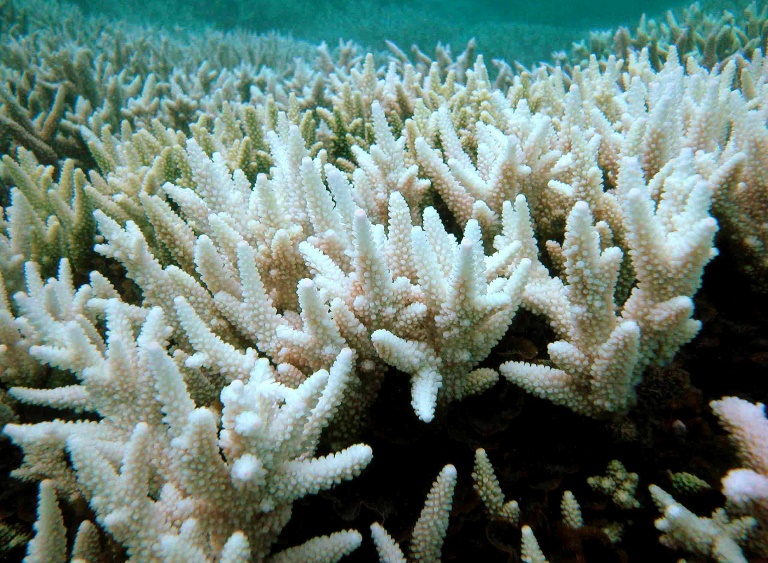
Warming is also linked to an increasing number of powerful marine heatwaves that drive harmful algal blooms, kill fish and cause coral bleaching.

Coral reefs are home to at least a quarter of all marine animals and plants.    

But battered by repeated marine heatwaves, the world’s shallow water corals are “unlikely to last the century”, the IPCC said, if global warming continues without a dramatic reduction in emissions. 

Forests, tropical or boreal, are also particularly threatened by rising temperatures, drought and fire. 

Mortality increases of 20 percent have been recorded for trees in some areas. 

At four degrees Celsius of warming, the IPCC report said, half of the Amazon could reach a “tipping point”, becoming a savannah and starting to release its vast store of C02, further accelerating warming.

At just 2C, the world’s permafrost could begin to thaw, releasing immense quantities of methane, a greenhouse gas much more powerful over the short term than CO2.

While the Paris agreement goal is to limit warming at 1.5C above pre-industrial levels, current international plans and pledges would see temperatures rise up to 2.7C. 

– Extinctions – 

The Earth is already believed to be entering its sixth mass extinction, driven by humanity’s overconsumption and comprehensive destruction of species and habitats. 

And global warming is increasingly adding to that threat, with two species —  the Golden Toad of Costa Rica and the Australian rodent Bramble Cays Melomys — recognised as extinct because of climate change, the IPCC said. 

A best case scenario is that nine percent of all the world’s species will likely be “at high risk” of extinction with 1.5C of warming, the IPCC said. 

At 4C the most pessimistic scenario is 39 percent imperilled.   

Even the very lowest estimates are a thousand times higher than the natural rate of extinctions.  

– Protection call –

On land or sea, for animal or plant, the threat is everywhere.

But the IPCC said only 15 percent of land, 21 percent of freshwater and eight percent of oceans are protected, throwing its weight behind calls to effectively safeguard 30 to 50 percent of the planet to maintain the “resilience of biodiversity and ecosystem services at a global scale”. 

That is because protecting nature is a virtuous circle: trees store carbon and provide shade, wetlands reduce flooding and protect coasts from erosion, insects participate in pollination. 

Conversely, enabling destruction multiplies the dangers.

“Exploitation of wildlife and degradation of natural habitats have increased opportunities for ‘spill over’ of pathogens from wildlife to human populations and increased emergence of zoonotic disease epidemics and pandemics,” the IPCC notes. 

Many of these risks are now unavoidable in the short term, regardless of the trajectory of emissions of greenhouse gases, warns the report. 

So the IPCC emphasises the need to fight global warming both by reducing emissions and preparing for its impacts. 

And “the best way to achieve this is to let nature do the job,” UN Environment Programme chief Inger Andersen told a press conference this week.  

“We need large scale ecosystem restoration from ocean to mountain top.”

Close Bitnami banner
Bitnami