World

UN to take first step towards 'historic' plastic treaty

The United Nations is to launch formal negotiations on Wednesday for a global treaty to address the planet’s “epidemic” of plastic trash, a moment that supporters describe as historic.

The UN Environment Assembly (UNEA), convening in Nairobi, is poised to adopt a resolution creating an intergovernmental committee to negotiate and finalise a legally binding agreement by 2024.

“This is a day for the history books,” said Norway’s climate and environment minister, Espen Barth Eide, who chairs UNEA.

“We are about to embark on an extremely important process of negotiating a solid treaty to ban plastic pollution.” 

The framework for a comprehensive accord also has the approval of major plastic-producing nations, including the US and China.

Officials say it gives negotiators a strong and broad mandate to consider new rules to target plastic pollution, ranging from the phase of raw material to product design and use and, finally, disposal.

This could include limits on making new plastic, which is mainly derived from oil and gas, although policy specifics will only be determined during later talks.

The mandate provides for the negotiation of binding global targets with monitoring mechanisms, the development of national plans and financing for poorer countries. 

Negotiators also have the scope to consider all aspects of pollution — not just plastic in the ocean but tiny particles in the air, soil and food chain — a key demand of many countries.

– ‘Monumental decisions’ –

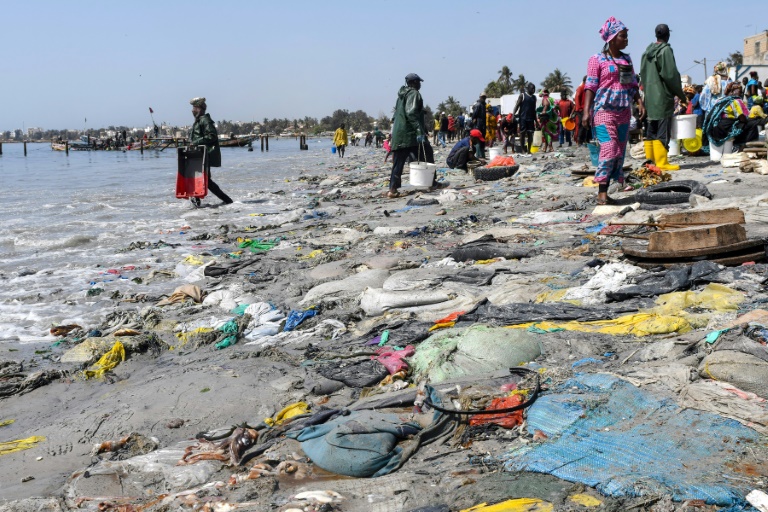
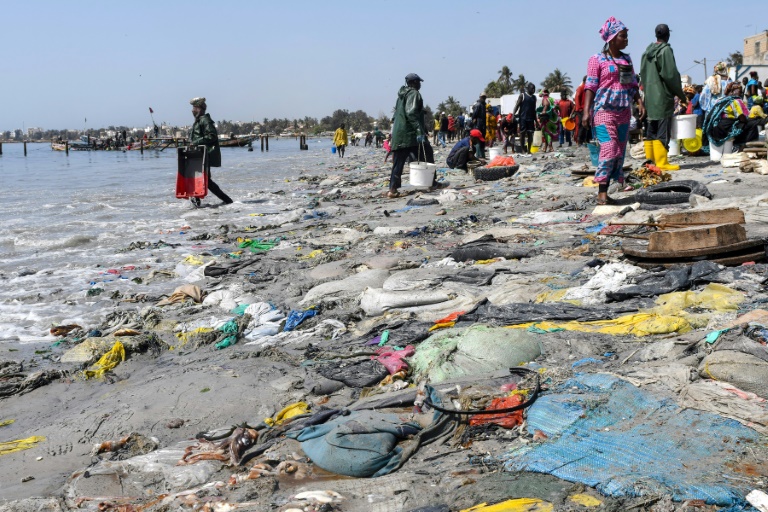
The amount of plastic trash entering the oceans is forecast to triple by 2040, and governments have been under pressure to unite behind a global response to the crisis.

“Today, no area on the planet is left untouched by plastic pollution –- from deep sea sediment, to Mount Everest,” said UN Deputy Secretary-General Amina Mohammed. 

“The planet deserves a truly multilateral solution to this scourge that affects us all.”

The rate of plastic production has grown faster than any other material and is expected to double within two decades, the UN says.

But less than 10 percent is recycled and most winds up in landfill or oceans creating what Eide called an “epidemic” of plastic trash.

By some estimates, a garbage truck’s worth of plastic is dumped into the sea every minute.

Large pieces of plastic are a notorious peril for sea birds, whales and other marine animals. But at the microscopic level, particles of plastic can also enter the food chain, eventually joining the human diet.

“The world is demanding action on plastic pollution,” said Inger Andersen, the head of the UN Environment Programme (UNEP), which is hosting the talks.

“Decisions that you take today will be monumental.”

But she cautioned that after this “crucial step” would come the hard work of negotiating a strong and binding treaty.

Environment groups are buoyed by the broad scope given to negotiators but say the strength of the treaty is yet to be determined.

The first round of negotiations is set for the second half of this year, according to sources involved in the process. 

Big corporations have expressed support for a treaty that creates a common set of rules around plastic and a level playing field for competition.

Big plastic makers have underscored the importance of plastic in construction, medicine and other vital industries and warned that banning certain materials would cause supply chain disruptions.
UN to take first step towards 'historic' plastic treaty

The United Nations is to launch formal negotiations on Wednesday for a global treaty to address the planet’s “epidemic” of plastic trash, a moment that supporters describe as historic.

The UN Environment Assembly (UNEA), convening in Nairobi, is poised to adopt a resolution creating an intergovernmental committee to negotiate and finalise a legally binding agreement by 2024.

“This is a day for the history books,” said Norway’s climate and environment minister, Espen Barth Eide, who chairs UNEA.

“We are about to embark on an extremely important process of negotiating a solid treaty to ban plastic pollution.” 

The framework for a comprehensive accord also has the approval of major plastic-producing nations, including the US and China.

Officials say it gives negotiators a strong and broad mandate to consider new rules to target plastic pollution, ranging from the phase of raw material to product design and use and, finally, disposal.

This could include limits on making new plastic, which is mainly derived from oil and gas, although policy specifics will only be determined during later talks.

The mandate provides for the negotiation of binding global targets with monitoring mechanisms, the development of national plans and financing for poorer countries. 

Negotiators also have the scope to consider all aspects of pollution — not just plastic in the ocean but tiny particles in the air, soil and food chain — a key demand of many countries.

– ‘Monumental decisions’ –

The amount of plastic trash entering the oceans is forecast to triple by 2040, and governments have been under pressure to unite behind a global response to the crisis.

“Today, no area on the planet is left untouched by plastic pollution –- from deep sea sediment, to Mount Everest,” said UN Deputy Secretary-General Amina Mohammed. 

“The planet deserves a truly multilateral solution to this scourge that affects us all.”

The rate of plastic production has grown faster than any other material and is expected to double within two decades, the UN says.

But less than 10 percent is recycled and most winds up in landfill or oceans creating what Eide called an “epidemic” of plastic trash.

By some estimates, a garbage truck’s worth of plastic is dumped into the sea every minute.

Large pieces of plastic are a notorious peril for sea birds, whales and other marine animals. But at the microscopic level, particles of plastic can also enter the food chain, eventually joining the human diet.

“The world is demanding action on plastic pollution,” said Inger Andersen, the head of the UN Environment Programme (UNEP), which is hosting the talks.

“Decisions that you take today will be monumental.”

But she cautioned that after this “crucial step” would come the hard work of negotiating a strong and binding treaty.

Environment groups are buoyed by the broad scope given to negotiators but say the strength of the treaty is yet to be determined.

The first round of negotiations is set for the second half of this year, according to sources involved in the process. 

Big corporations have expressed support for a treaty that creates a common set of rules around plastic and a level playing field for competition.

Big plastic makers have underscored the importance of plastic in construction, medicine and other vital industries and warned that banning certain materials would cause supply chain disruptions.
Iran deal can't be 'postponed any longer': Germany's Scholz

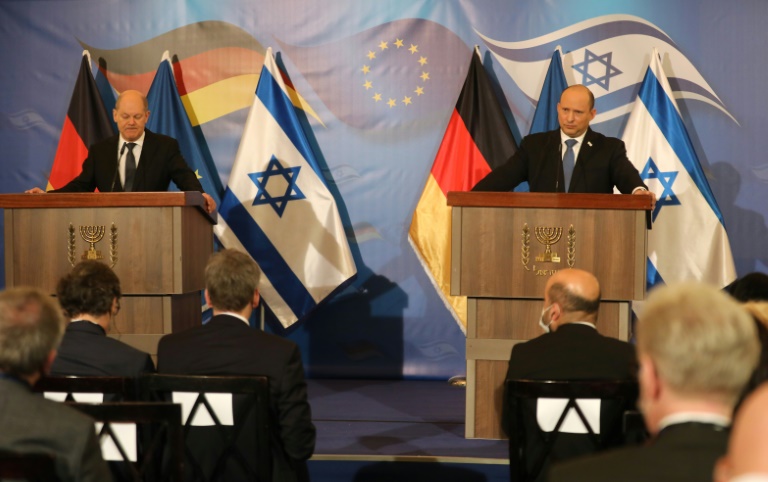
German Chancellor Olaf Scholz said Wednesday that a new Iran nuclear agreement “cannot be postponed any longer”, during a visit to Israel which staunchly opposes efforts to forge a deal.

“What we would like to see is that an agreement is reached in Vienna,” Scholz told reporters alongside Israeli Prime Minister Naftali Bennett, a vocal critic of the international talks in Austria’s capital. 

“Now is the time to make a decision,” Scholz said. “This must not be postponed any longer and cannot be postponed any longer. Now is the time to finally say yes to something that represents a good and reasonable solution.”   

The latest round of negotiations to salvage Iran’s 2015 nuclear deal started in late November and the talks are expected to reach a crunch point in the coming days.

The deal, known as the Joint Comprehensive Plan of Action (JCPOA), secured sanctions relief for Iran in return for strict curbs on its nuclear programme to prevent it acquiring an atomic weapon, a goal Iran has always denied pursuing.

Israel is a long-standing critic of the JCPOA, arguing that giving Tehran sanctions relief would boost state revenues that will buy weapons for Iranian proxies across the Middle East, notably the Lebanese Shiite Muslim group Hezbollah.  

Former Israeli prime minister Benjamin Netanyahu cheered when then-president Donald Trump withdrew the United States from the deal in 2018. 

Bennett on Wednesday reiterated that he was watching “the talks in Vienna with concern”.

“The possibility of them negotiating an agreement that will allow Iran to install centrifuges on a large scale within a few years is not acceptable to us,” he said, without detailing his source for the substance of the proposed deal.  

“Israel will know how to defend itself and ensure its security and future.”

The Jewish state has maintained that, regardless of any agreement that may be reached in Vienna, it would maintain full freedom to act against its arch enemy Iran.  

“We also expect our friends in the world not to put up with a situation of massive installation of centrifuges in two or three years,” the premier said. 

burs/bs/fz

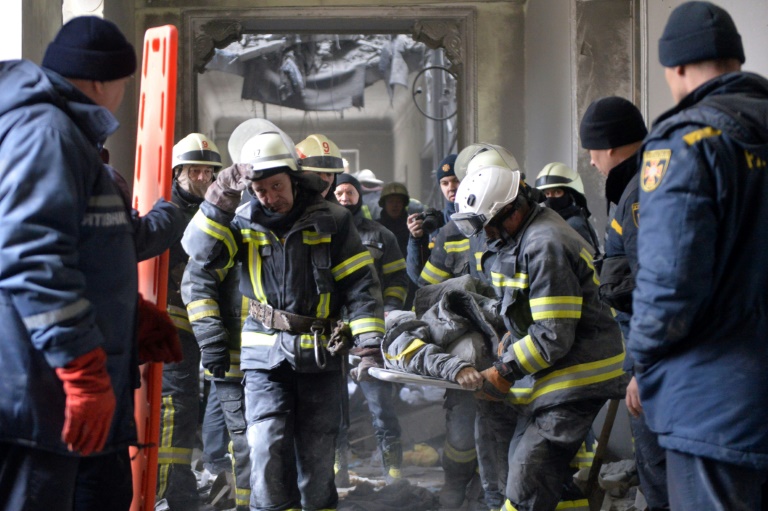
Fighting rages in Ukraine as Russian troops claim city

Russian forces said they had captured a Ukrainian port on Wednesday as Russian and Ukrainian troops battled for another urban centre and President Volodymyr Zelensky said Moscow wanted to “erase” his country.

As the conflict intensified further on the seventh day of the invasion, the Russian army said it had taken control of the Black Sea port of Kherson in southern Ukraine.

Russian paratroopers also landed in Kharkiv, Ukraine’s second-biggest city, triggering clashes in the streets, Ukrainian forces said.

After Washington branded Russian President Vladimir Putin a “dictator”, Ukraine’s leader said a strike on Tuesday on a television mast in the capital Kyiv demonstrated Russia’s threat to Ukrainian identity.

Five people were killed in the attack on the tower at Babi Yar, the site of a Nazi massacre in which over 33,000 people were killed — most of them Jews.

“They know nothing about our capital. About our history. But they have an order to erase our history. Erase our country. Erase us all,” Zelensky said in a video.

The 44-year-old, who is himself Jewish, urged Jewish people around the world to speak up.

“I am now addressing all the Jews of the world. Don’t you see what is happening? That is why it is very important that millions of Jews around the world not remain silent right now,” he said. 

“Nazism is born in silence. So shout about killings of civilians. Shout about the murders of Ukrainians.”

Ukraine says more than 350 civilians, including 14 children, have been killed in the conflict and the International Criminal Court has opened a war crimes investigation against Russia.

In his first State of the Union address on Tuesday, US President Joe Biden warned the sanctions campaign to cripple Russia’s economy would escalate and its oligarchs were being targeted.

Biden hailed the resolve of the Western alliance and voiced solidarity with Ukraine as lawmakers in the US Congress gave a standing ovation to the Ukrainian people.

“A Russian dictator, invading a foreign country, has costs around the world,” Biden told lawmakers, promising “robust action to make sure the pain of our sanctions is targeted at Russia’s economy.”

– Fight for Kharkiv –

Russian troops rolled into Ukraine last week to achieve Putin’s mission of overthrowing Zelensky’s pro-Western government, sending hundreds of thousands fleeing across Ukraine’s borders.

Russian forces have carried out a massive bombing campaign and encircled urban centres, but Ukrainian troops fought off the advance on major cities.

On Wednesday, however, Russian defence ministry spokesman Igor Konashenkov said Russian forces were in “full control” of Kherson, a city with a population of 290,000 people.

Konashenkov said in televised remarks that public services and transport were operating as usual.

“The city is not experiencing shortages of food and essential goods,” he said.

He said talks were under way between the Russian army and local authorities on maintaining order, protecting the population and keeping public services functioning.

Kherson’s mayor Igor Kolykhaiev said in a post on Facebook: “We are still Ukraine. Still firm.”

Apparently contradicting the Russian army’s claims, he said he needed to find a way to “collect the (bodies of the) dead” and “restore electricity, gas, water and heating where they are damaged.”

Ukraine’s army said Russian paratroopers had also landed in Kharkiv, a city in northeast Ukraine near the Russian border with a population of 1.4 million.

“There is an ongoing fight between the invaders and the Ukrainians,” the army said in a statement on messaging app Telegram.

AFP in Kharkiv saw rocket damage on security, police and university buildings.

Ukrainian forces said Russian strikes hit a residential block and a government building in the city on Tuesday killing 18 people, drawing comparisons to the massacres of civilians in Sarajevo in the 1990s and condemnation for what Zelensky called a “war crime”.

– ‘Putin was wrong’ –

Western countries have imposed crippling sanctions on Russia’s economy and there have been international bans and boycotts against Russia in everything from finance to tech, from sports to the arts.

The EU and NATO members have also sent arms and ammunition to Ukraine, although they have made clear that they will not send troops and the EU has dampened Zelensky’s hopes of membership of the bloc.

In his speech in Washington on Tuesday, Biden announced new measures against Russia and its wealthy elite with a new task force to go after the “crimes” of Russian oligarchs.

“And tonight I am announcing that we will join our allies in closing off American airspace to all Russian flights — further isolating Russia and adding an additional squeeze on their economy.”

The US leader said Putin’s aggression was “premeditated and totally unprovoked” — but hailed the resolve of the Western alliance in responding with brutal sanctions.

– ‘Russia will be a pariah’ –

In response to the invasion, Western companies have also withdrawn from projects in Russia, deepening the economic toll on Moscow that saw the ruble collapse this week.

Apple, ExxonMobil and Boeing announced Tuesday in rapid succession steps to withdraw or freeze business in Russia.

The moves followed earlier announcements by Disney, Ford and Mastercard among others.

“Going forward, Russia will be a pariah, and it’s hard to see how they can restore anything resembling normal interactions in the international system,” said Sarah Kreps, professor at Cornell University.

The invasion has sent global markets into a spiral, with crude surging past $110 a barrel Wednesday and equities sinking.

– No escape –

Initial talks between Russia and Ukraine on Monday failed to yield any breakthrough.

Since then, Russian forces have pounded Ukraine.

Strikes were reported in Konstantinovka in eastern Ukraine, Bordodyanka near Kyiv and Zhytomyr in central Ukraine.

In an important strategic victory, Russian troops attacking from the Crimean peninsula said they had linked up along the Azov Sea coast with pro-Moscow separatists in eastern Ukraine.

The separatists said the city of Mariupol on the Azov Sea was encircled.

Ukraine says almost 6,000 Russian troops had been killed. Moscow has not revealed any casualties.

As fears grew of an all-out assault on Kyiv, residents spent another night crammed into makeshift bomb shelters.

Teacher Irina Butyak, 38, sought safety in the basement of her apartment block sheltering with some 20 people. 

“We have train tickets for western Ukraine for tomorrow,” she told AFP as air raid sirens blared directly overhead.

“I don’t think we will make the train.”

burs-dt/as/spm

In Cameroon's arid north, climate stress boosts ethnic strife

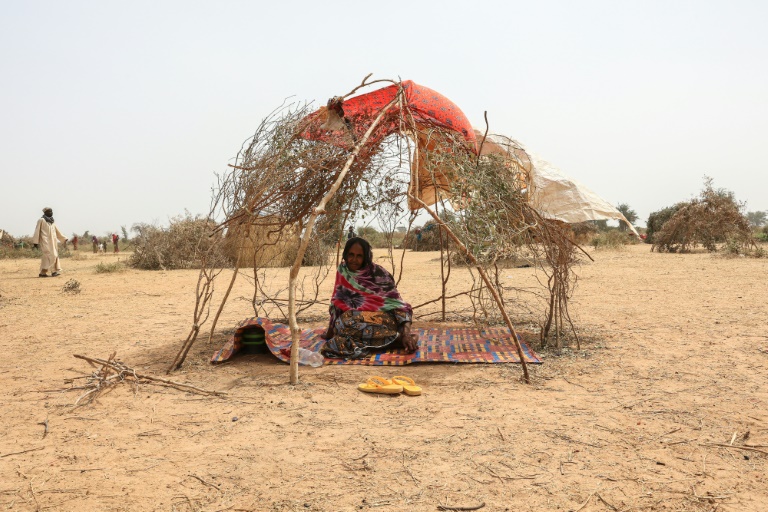
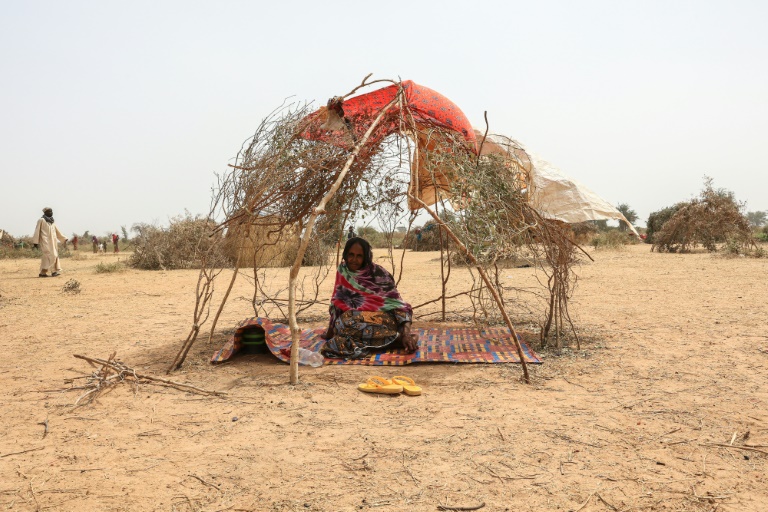
Their homes are a scattering of huts made of branches and dry leaves that seem to almost dissolve into the arid landscape.

A group of men sit on a rug, conversing in the shade of a tree, while women perching on stones under the scorching Sahel sun prepare a meal with the few ingredients they have to hand, as children play nearby.

These are some of the 4,000 ethnic Arabs in a makeshift camp at Bogo in Cameroon’s Far North region.

They fled after violence erupted near Kousseri, a river town about 100 kilometres (60 miles) from Lake Chad.

The fighting flared in August, then again in December, pitting Choa Arab herders against Mousgoum fishermen in a fight over access to water, a precious but dwindling resource in this region.

The Mousgoum dig pools to capture water and keep fish — a practice that often causes friction with Arab herders seeking water points for cattle, but which this time spiralled out of control.

At least 67 people died and hundreds were injured, the town’s cattle market was destroyed and around 100,000 people fled.

Many crossed into neighbouring Chad or headed towards Maroua, the Far North’s capital, lying more than 800 kilometres (500 miles) northeast of the capital Yaounde. 

Mahamat Sale, 60, is the leader of the group in Bogo, who say they walked some 175 kilometres (110 miles) to reach a place they consider safe. They have lost everything.

“We prefer to stay here rather than go back,” said Sale. “Here, we are tolerated. Over there, the Mousgoums consider us to be invaders.”

– Climate stress –

Rising temperatures and scarcer, more unpredictable rainfall are acknowledged factors in inflaming ancestral tensions in the Lake Chad area.

In a 2019 report, the Europe-based think tank Adelphi warned of “a feedback loop” — a vicious circle, in non-technical speech — between climate change and conflict dynamics.

Climate stress increases pressure on communities, which undermines their ability to cope.

This in turn makes those communities more vulnerable to climate impacts and heightens competition for resources.

Armel Sambo, a professor of history at the University of Maroua, said “When the economic situation deteriorates, people fall back on their ethnicity, religion and identity issues,” inflaming the risk of violence.

“Historically, the Mousgoums are the natives and the Arabs are nomadic herders, regarded as people who come along and occupy the land as intruders.”

Lake Chad is an expanse of shallow water and swamps that at one time was the size of Lake Erie, extending its shores to four countries — Cameroon, Chad, Niger and Nigeria.

But it has lost more than 90 percent of its surface area in six decades, reduced from 26,000 square kilometres (10,000 square miles) in 1963 to less than 1,500 square kilometres today.

Increased irrigation and human demand for freshwater, along with less rainfall, have driven the shinkage.

The lake basin and its countless islets have also become the main haven for jihadist fighters from Nigeria’s Boko Haram and its dissident branch, the Islamic State in West Africa Province (ISWAP), but the Kousseri area has thus far been spared from their attacks.

– Solutions –

At a village near Kousseri, Mahamat Djidda Mahamat, a 20-year-old resident, said the situation had calmed down after last year’s clashes.

“I don’t know if it’s over. I lost my father, my house, loved ones… I just want to live in peace,” he said, adding that he avoided the Arabs.

“People are going home. We have secured the area,” said Bakari Midjiyawa, the governor of the Far North region.

But, said Sambo, what was needed was a long-term system of water allocation and mediation so that disputes between herders and fishermen did not turn bloody.

“Efforts are being made but are not enough,” he said.

“Seasonal livestock trails should be marked out, water points should be created for each community and there should be monitoring to ensure proper application of these measures,” he said.

“The government must become more involved, ensure the safety of movements of people in this region and promote mediation by traditional chiefs.”

More widely, the disappearance of Lake Chad — a hypothesis deemed credible by experts — would deprive millions of water needed to survive through fishing, agriculture, livestock and trade.

“The effects of global warming and the problems of access to water have catalysed tensions,” said Xavier Bourgois, spokesperson for UNHCR, the UN’s refugee agency. 

“Now we must bring all the players around the table to find the roots of the problem and put in place solutions for adapting.”

In Cameroon's arid north, climate stress boosts ethnic strife

Their homes are a scattering of huts made of branches and dry leaves that seem to almost dissolve into the arid landscape.

A group of men sit on a rug, conversing in the shade of a tree, while women perching on stones under the scorching Sahel sun prepare a meal with the few ingredients they have to hand, as children play nearby.

These are some of the 4,000 ethnic Arabs in a makeshift camp at Bogo in Cameroon’s Far North region.

They fled after violence erupted near Kousseri, a river town about 100 kilometres (60 miles) from Lake Chad.

The fighting flared in August, then again in December, pitting Choa Arab herders against Mousgoum fishermen in a fight over access to water, a precious but dwindling resource in this region.

The Mousgoum dig pools to capture water and keep fish — a practice that often causes friction with Arab herders seeking water points for cattle, but which this time spiralled out of control.

At least 67 people died and hundreds were injured, the town’s cattle market was destroyed and around 100,000 people fled.

Many crossed into neighbouring Chad or headed towards Maroua, the Far North’s capital, lying more than 800 kilometres (500 miles) northeast of the capital Yaounde. 

Mahamat Sale, 60, is the leader of the group in Bogo, who say they walked some 175 kilometres (110 miles) to reach a place they consider safe. They have lost everything.

“We prefer to stay here rather than go back,” said Sale. “Here, we are tolerated. Over there, the Mousgoums consider us to be invaders.”

– Climate stress –

Rising temperatures and scarcer, more unpredictable rainfall are acknowledged factors in inflaming ancestral tensions in the Lake Chad area.

In a 2019 report, the Europe-based think tank Adelphi warned of “a feedback loop” — a vicious circle, in non-technical speech — between climate change and conflict dynamics.

Climate stress increases pressure on communities, which undermines their ability to cope.

This in turn makes those communities more vulnerable to climate impacts and heightens competition for resources.

Armel Sambo, a professor of history at the University of Maroua, said “When the economic situation deteriorates, people fall back on their ethnicity, religion and identity issues,” inflaming the risk of violence.

“Historically, the Mousgoums are the natives and the Arabs are nomadic herders, regarded as people who come along and occupy the land as intruders.”

Lake Chad is an expanse of shallow water and swamps that at one time was the size of Lake Erie, extending its shores to four countries — Cameroon, Chad, Niger and Nigeria.

But it has lost more than 90 percent of its surface area in six decades, reduced from 26,000 square kilometres (10,000 square miles) in 1963 to less than 1,500 square kilometres today.

Increased irrigation and human demand for freshwater, along with less rainfall, have driven the shinkage.

The lake basin and its countless islets have also become the main haven for jihadist fighters from Nigeria’s Boko Haram and its dissident branch, the Islamic State in West Africa Province (ISWAP), but the Kousseri area has thus far been spared from their attacks.

– Solutions –

At a village near Kousseri, Mahamat Djidda Mahamat, a 20-year-old resident, said the situation had calmed down after last year’s clashes.

“I don’t know if it’s over. I lost my father, my house, loved ones… I just want to live in peace,” he said, adding that he avoided the Arabs.

“People are going home. We have secured the area,” said Bakari Midjiyawa, the governor of the Far North region.

But, said Sambo, what was needed was a long-term system of water allocation and mediation so that disputes between herders and fishermen did not turn bloody.

“Efforts are being made but are not enough,” he said.

“Seasonal livestock trails should be marked out, water points should be created for each community and there should be monitoring to ensure proper application of these measures,” he said.

“The government must become more involved, ensure the safety of movements of people in this region and promote mediation by traditional chiefs.”

More widely, the disappearance of Lake Chad — a hypothesis deemed credible by experts — would deprive millions of water needed to survive through fishing, agriculture, livestock and trade.

“The effects of global warming and the problems of access to water have catalysed tensions,” said Xavier Bourgois, spokesperson for UNHCR, the UN’s refugee agency. 

“Now we must bring all the players around the table to find the roots of the problem and put in place solutions for adapting.”

US warns against Hong Kong travel over Covid rules, child separations

The United States warned citizens against travelling to Hong Kong on Wednesday, citing the risk of children being separated from parents as the Chinese city imposes controversial coronavirus isolation policies.

The State Department upgraded Hong Kong to its highest “Do Not Travel” warning “due to COVID-19 related restrictions, including the risk of parents and children being separated”.

“In some cases, children in Hong Kong who test positive have been separated from their parents and kept in isolation until they meet local hospital discharge requirements,” the State Department added.

The Asian financial hub is in the grip of its worst coronavirus outbreak, registering tens of thousands of new cases each day, overwhelming hospitals and shattering the city’s zero-Covid strategy.

China has ordered local officials to stamp out the outbreak even as studies estimate as many as a quarter of the city’s residents may have been infected in the current wave.

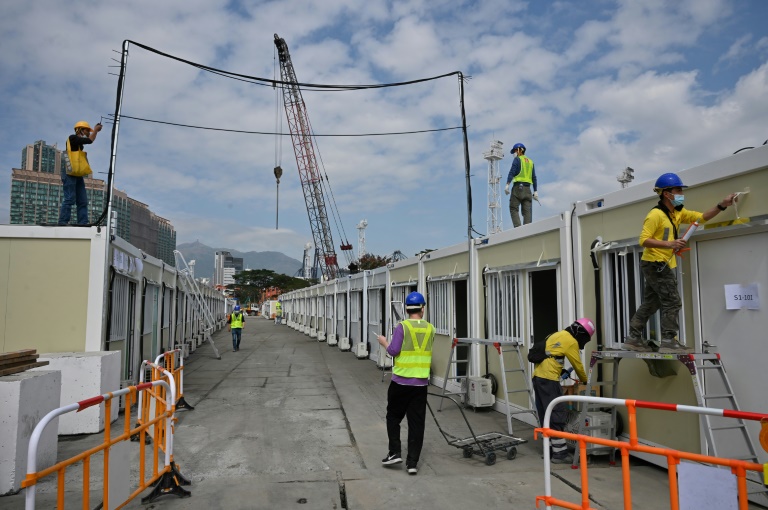
Authorities plan to test all 7.4 million residents later this month and are scrambling to build a network of isolation camps and temporary hospitals, with China’s help, to house the infected.

“It remains our policy objective to subject all confirmed people to isolation at places other than their places of accommodation so as not to infect others,” city leader Carrie Lam wrote in a progress report this week.

That has deepened anxieties about family separations in the months ahead and the warning by the United States is the first time the risk has been specifically cited in a travel advisory.

– Spiralling infections –

More than 280,000 infections have been recorded in the past two months, compared with just 12,000 for the rest of the pandemic — while Hong Kong’s death rate is currently four times that of Singapore.

Wednesday saw a record official tally of 55,353 cases and 117 deaths, the first time the daily fatality rate has hit three figures. 

The real infection rate is believed to be far higher in part because residents are worried about coming forward.

For two years Hong Kong kept infections largely at bay using a strict zero-Covid strategy, but an outbreak of the highly infectious Omicron variant has torn through the city since January.

The government was caught flat-footed, with few plans in place to deal with a mass outbreak despite the two-year breathing room afforded by the initial zero-Covid success.

The city has since seen overflowing hospitals and morgues, shortages of medics and ambulances, panic buying and a frantic expansion of the city’s spartan quarantine camp system.

The vast majority of those dying are over 70 and unvaccinated after Hong Kong failed to raise its elderly vaccination rate despite ample supplies.

On Wednesday, officials said some 500 bodies would need to be stored temporarily in refrigerated truck containers.  

– UK, Australia fears –

Departures by foreign residents have spiked while businesses have voiced growing frustration over the city’s descent into further international isolation as well as repeated government policy u-turns. 

The outbreak has led to the imposition of the toughest restrictions yet, with more than a dozen types of businesses ordered to close and a ban on more than two people gathering in public.

Hong Kong health authorities have defended the policy of separating sick children from their uninfected parents, saying that rapidly filling hospital spaces should be reserved for patients.

Diplomats from Britain and Australia have previously voiced concern about separations. 

The United States, Britain and Australia are on a list of nine nations currently forbidden from flying to Hong Kong until late April because of their own coronavirus infections.

Details are currently scant on how this month’s mass testing will work and where the infected will be housed.

About 70,000 isolation units for mild cases are due to come online in the coming weeks, in requisitioned hotels, public housing units and camps.

At Hong Kong’s current official caseload, that would cover less than two days’ worth of new infections.

Lam on Wednesday said there will not be enough beds to isolate all infections but did not give further details. 

She also said there would be no “citywide lockdown” though some measures would be in place “limiting people from going out” during testing.

The government has said it is still “refining” its testing plan and has urged residents not to panic, adding food supplies remain stable. 

Several local health experts have publicly called for mass testing to be delayed given infections are set to peak at some 180,000 a day later this month.

Hundreds of thousands at risk as Australian floods spread to Sydney

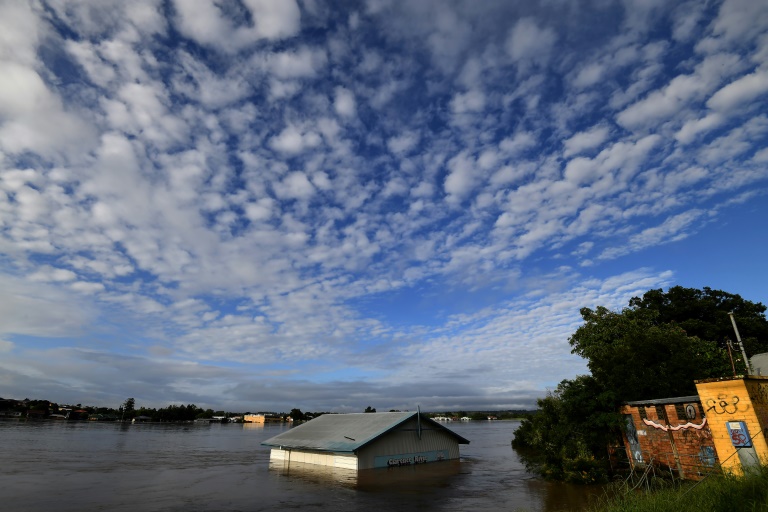
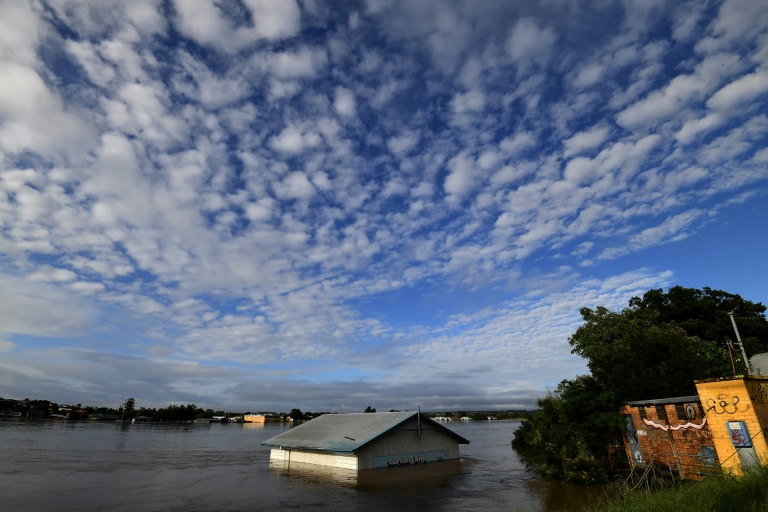
Emergency services ordered some Sydney residents to prepare to flee Wednesday as heavy rainfall barrelled down Australia’s east coast, burying towns in floodwater, killing 13 and putting hundreds of thousands at risk.

A week-long torrential downpour has swollen rivers and reservoirs past bursting point, causing chaos in an area 800 kilometres (500 miles) long.

From Brisbane to Sydney, more than 30 evacuation warnings are in place and several dams are overflowing, with some near Sydney under threat of bursting.

Terrified residents have sought refuge on higher ground, in make-shift evacuation centres, or by clambering into attics or onto rooftops praying for rescue by boat or helicopter.

In the hard-hit town of Lismore, Lucy Wise said the floods came much quicker and much higher than expected.

“The rain just wouldn’t stop and the water was just coming up so fast” she told AFP.

She huddled at home as the waters rose through the night before grabbing her sleeping two-year-old son, cloaking him in a lifejacket and scrambling into the roof space of their house for safety.

“We were just lying there, silently, and the rain was just pouring down. I’d never heard such heavy rain in my life.”

From outside neighbours watched as the house went under water.

“It was a few hours that I couldn’t move. I could barely breathe. I was just taking it one breath at a time.”

Wise and her family were eventually rescued by boat, but authorities say the floods have already claimed the lives of 13 others in Queensland and New South Wales.

The focus has now shifted to Sydney, Australia’s largest city and home to more than five million people.

The Warragamba Dam, which supplies 80 percent of the city’s water, began to spill over in the early hours of Wednesday.

Several western suburbs are under major flood and evacuation warnings, and authorities have told residents across the city to stop all “non-essential travel.”

“There are quite a few hundred thousand people affected by these warnings that we are putting out now,” said State Emergency Services commissioner Carlene York.

A La Nina weather pattern has caused Sydney to experience its wettest summer in 30 years. 

Meteorologist Ben Domensino of @Weatherzone described the current storm system as an “atmospheric river” featuring a “long area of airborne moisture that is going in one direction.”

Scientists say climate change is making Australia’s floods, bushfires, cyclones and droughts more frequent and more intense.

“Despite decades of warnings from scientists about climate change, Australia is unprepared for the supercharged weather that it is now driving, such as the current floods,” said environmental expert Hilary Bambrick of the Queensland University of Technology.

“Australia is at the forefront of severe climate change. Temperatures are rising faster in Australia than the global average, and higher temperatures mean the atmosphere holds more moisture, meaning rainfall events are becoming more extreme.”

– Long road back –

As the cleanup begins in northern areas which were hit first by the floods, many, like Mullumbimby resident Casey Whelan, predict a “long recovery” that could “take years.”

Whelan fled his home as the flooding worsened, but as water levels stabilised he used a kayak that had floated by and a broomstick as an oar to return. He found it “just destroyed.”

Water had risen up to the height of the kitchen bench, their furniture was submerged.

“Lots of people in my street can’t get flood insurance. Some insurers will quote $30,000 (US$22,000) a year… they will just be ruined. They will have no way to rebuild,” he said.

Fifty-three year-old farmer James Clark said it would take weeks just to assess the damage.

“I lost tools, I lost equipment, I have got farm machinery that’s underwater. I didn’t get it high enough. I guessed how high the flood was going to come and got gear up, but didn’t get it up enough,” he said.

“After a flood it could take months before things get back to normal. It’s weeks even before you can walk around without, without sort of things being too wet underfoot.”

Hundreds of thousands at risk as Australian floods spread to Sydney

Emergency services ordered some Sydney residents to prepare to flee Wednesday as heavy rainfall barrelled down Australia’s east coast, burying towns in floodwater, killing 13 and putting hundreds of thousands at risk.

A week-long torrential downpour has swollen rivers and reservoirs past bursting point, causing chaos in an area 800 kilometres (500 miles) long.

From Brisbane to Sydney, more than 30 evacuation warnings are in place and several dams are overflowing, with some near Sydney under threat of bursting.

Terrified residents have sought refuge on higher ground, in make-shift evacuation centres, or by clambering into attics or onto rooftops praying for rescue by boat or helicopter.

In the hard-hit town of Lismore, Lucy Wise said the floods came much quicker and much higher than expected.

“The rain just wouldn’t stop and the water was just coming up so fast” she told AFP.

She huddled at home as the waters rose through the night before grabbing her sleeping two-year-old son, cloaking him in a lifejacket and scrambling into the roof space of their house for safety.

“We were just lying there, silently, and the rain was just pouring down. I’d never heard such heavy rain in my life.”

From outside neighbours watched as the house went under water.

“It was a few hours that I couldn’t move. I could barely breathe. I was just taking it one breath at a time.”

Wise and her family were eventually rescued by boat, but authorities say the floods have already claimed the lives of 13 others in Queensland and New South Wales.

The focus has now shifted to Sydney, Australia’s largest city and home to more than five million people.

The Warragamba Dam, which supplies 80 percent of the city’s water, began to spill over in the early hours of Wednesday.

Several western suburbs are under major flood and evacuation warnings, and authorities have told residents across the city to stop all “non-essential travel.”

“There are quite a few hundred thousand people affected by these warnings that we are putting out now,” said State Emergency Services commissioner Carlene York.

A La Nina weather pattern has caused Sydney to experience its wettest summer in 30 years. 

Meteorologist Ben Domensino of @Weatherzone described the current storm system as an “atmospheric river” featuring a “long area of airborne moisture that is going in one direction.”

Scientists say climate change is making Australia’s floods, bushfires, cyclones and droughts more frequent and more intense.

“Despite decades of warnings from scientists about climate change, Australia is unprepared for the supercharged weather that it is now driving, such as the current floods,” said environmental expert Hilary Bambrick of the Queensland University of Technology.

“Australia is at the forefront of severe climate change. Temperatures are rising faster in Australia than the global average, and higher temperatures mean the atmosphere holds more moisture, meaning rainfall events are becoming more extreme.”

– Long road back –

As the cleanup begins in northern areas which were hit first by the floods, many, like Mullumbimby resident Casey Whelan, predict a “long recovery” that could “take years.”

Whelan fled his home as the flooding worsened, but as water levels stabilised he used a kayak that had floated by and a broomstick as an oar to return. He found it “just destroyed.”

Water had risen up to the height of the kitchen bench, their furniture was submerged.

“Lots of people in my street can’t get flood insurance. Some insurers will quote $30,000 (US$22,000) a year… they will just be ruined. They will have no way to rebuild,” he said.

Fifty-three year-old farmer James Clark said it would take weeks just to assess the damage.

“I lost tools, I lost equipment, I have got farm machinery that’s underwater. I didn’t get it high enough. I guessed how high the flood was going to come and got gear up, but didn’t get it up enough,” he said.

“After a flood it could take months before things get back to normal. It’s weeks even before you can walk around without, without sort of things being too wet underfoot.”

US warns against Hong Kong travel over Covid rules, child separations

The United States warned citizens against travelling to Hong Kong on Wednesday, citing the risk of children being separated from parents as the Chinese city imposes controversial Covid isolation policies.

The State Department upgraded Hong Kong to its highest “Do Not Travel” warning “due to COVID-19 related restrictions, including the risk of parents and children being separated”.

“In some cases, children in Hong Kong who test positive have been separated from their parents and kept in isolation until they meet local hospital discharge requirements,” the State Department added.

The Asian financial hub is in the grip of its worst coronavirus outbreak, registering tens of thousands of new cases each day, overwhelming hospitals and shattering the city’s zero-Covid strategy.

China has ordered local officials to stamp out the outbreak even as studies suggest as many as a quarter of the city’s residents may have been infected in the current wave.

Authorities plan to test all 7.4 million residents later this month and are scrambling to build a network of isolation camps and temporary hospitals, with China’s help, to house the infected.

“It remains our policy objective to subject all confirmed people to isolation at places other than their places of accommodation so as not to infect others,” city leader Carrie Lam wrote in a progress report this week.

That has deepened anxieties about family separations in the months ahead and the warning by the United States is the first time the risk has been specifically cited in a travel advisory.

– Spiralling infections –

More than 220,000 infections have been recorded in the last two months, compared with just 12,000 for the rest of the pandemic — while its death rate is currently four times Singapore’s.

The real figure is believed to be far higher in part because residents are worried about informing authorities they are infected.

For two years Hong Kong kept infections largely at bay using a strict zero-Covid strategy but an outbreak of the highly infectious Omicron variant has been tearing through the city since January.

The government was caught flat-footed with few plans in place to deal with a mass outbreak despite the two-year breathing room afforded by the zero-Covid success.

The city has since seen overflowing hospitals and morgues, shortages of medics and ambulances, panic buying and a frantic expansion of the city’s spartan quarantine camp system.

The vast majority of those dying are over 70 and unvaccinated after Hong Kong failed to raise its elderly vaccination rate despite ample supplies.

The outbreak has led to the imposition of the toughest restrictions yet with more than a dozen types of businesses ordered to close and a ban on more than two people gathering in public. 

– UK, Australia fears –

Departures by foreign residents have spiked while businesses have voiced growing frustration over the city’s descent into further international isolation as well as repeated government policy u-turns. 

Last week it emerged some parents were being separated from children — including babies — who had tested positive and were being treated in hospital.

Hong Kong health authorities have defended the policy of separating sick children from their uninfected parents, saying that rapidly filling hospital spaces should be reserved for patients.

Diplomats from Britain and Australia have previously voiced concern about separations. 

The United States, Britain and Australia are on a list of nine nations currently forbidden from flying to Hong Kong because of their own coronavirus infections. The ban was recently extended until late April.

Details are currently scant on how this month’s mass testing will work and where the infected will be housed.

About 70,000 isolation units for mild cases are due to come online in the coming weeks, in requisitioned hotels, public housing units and camps.

At Hong Kong’s current official caseload, that would cover roughly two days’ worth of new infections.

Several local health experts have publicly called for mass testing to be delayed given infections are set to peak at some 180,000 a day later this month. 

Reports of plans to bring in some sort of lockdown during the testing period have also fuelled panic buying this week. 

The government has said it is still “refining” its testing plan and has urged residents not to panic adding food supplies remain stable. 

Lam told public broadcaster RTHK on Wednesday that there would be no “citywide lockdown” but some measures will be in place “limiting people from going out” during testing.

Close Bitnami banner
Bitnami