World

Myanmar junta pardons actor jailed for dissent

A leading Myanmar actor, singer and model jailed for supporting pro-democracy protests has been pardoned and released, his legal team said on Wednesday.

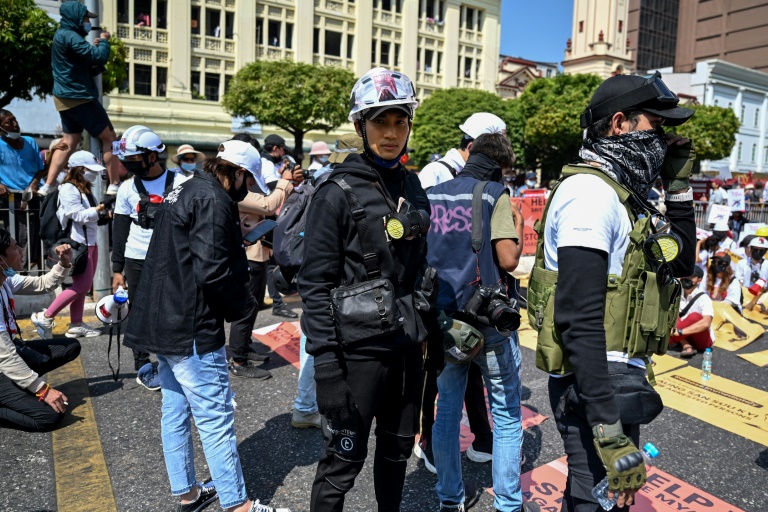
Paing Takhon, 25 — a star in both Myanmar and neighbouring Thailand — had been active in the mass protests that rocked the country following last year’s coup, leading rallies and advocating through his massive social media following.

He was arrested in a dawn raid at his mother’s home in Yangon in April and in December was jailed for three years with hard labour for spreading dissent against the military.

On Wednesday, he was pardoned and released and had arrived home, his lawyer told AFP, without giving details. 

In a statement, the junta confirmed his release, along with actors Lu Min, Pyi Ti Oo and Eaindra Kyaw Zin, “in order for them to participate in nation-building with their art.”

It did not give further details.

In February 2021, Paing Takhon — who had more than a million followers on Facebook and Instagram — posted pictures of himself in a white tracksuit with a megaphone, hard hat and a white fluffy dog strapped to his chest at a protest.

The heartthrob is also famous in Thailand, where he has appeared in TV shows and commercials.

Soon after the coup, the junta published a list of some 120 celebrities wanted for arrest.

Several are still on the run.

More than 1,500 people have been killed in the military’s crackdown on dissent following the ousting of Aung San Suu Kyi’s government last February, according to a local monitoring group. 

UN General Assembly to vote on demand Russia withdraw from Ukraine

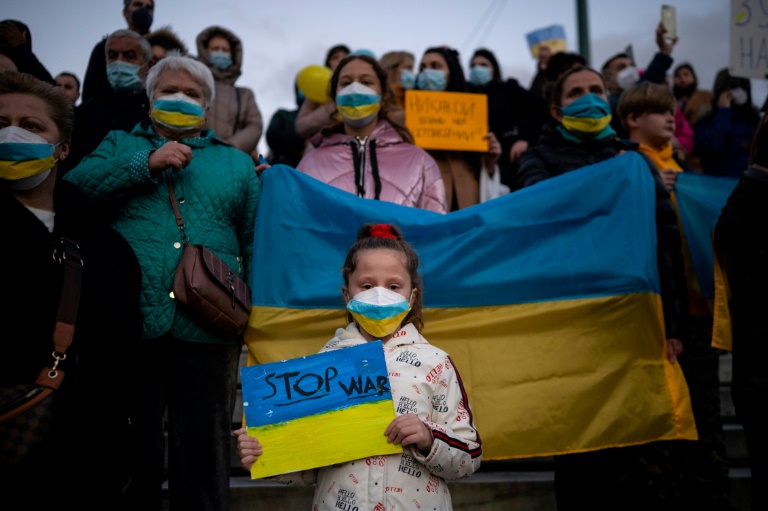
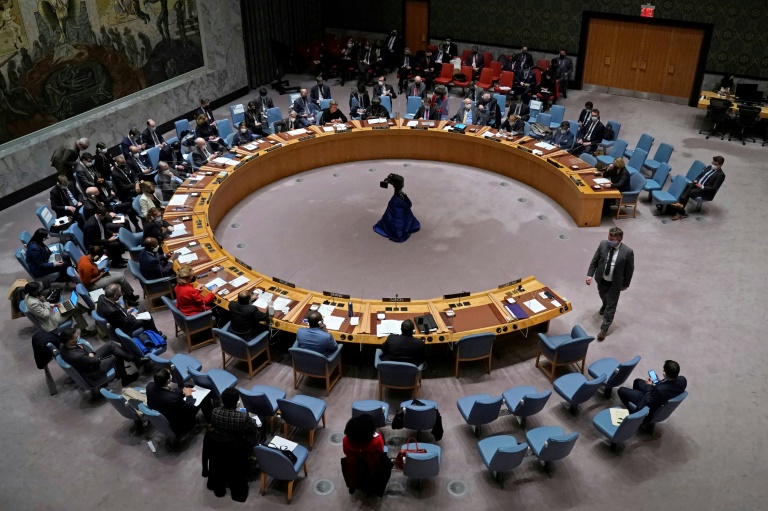
After more than 100 countries spoke during two days of extraordinary debate, the UN General Assembly was poised to vote Wednesday on whether it will vigorously deplore Russia’s invasion of Ukraine and demand Moscow withdraw troops immediately.

The vote on the draft resolution is being touted by diplomats as a bellwether of democracy in a world where autocracy is on the rise in countries from Myanmar to Venezuela, and comes as Russian President Vladimir Putin’s forces bear down on Kyiv while terrified Ukrainians flee.

The resolution is non-binding, but — if it passes — will serve as a powerful rebuke to Russia on the world stage and a marker of its isolation. The vote must reach a two-thirds threshold to pass.

Putin launched the full-scale invasion of Ukraine on February 24. Moscow has pleaded “self-defense” under Article 51 of the UN Charter.

But that has been roundly rejected by Western countries who accuse Moscow of violating Article 2 of the Charter, requiring UN members to refrain from the threat or use of force to resolve a crisis.

The text of the resolution — led by European countries in coordination with Ukraine — has undergone numerous changes in recent days.

It no longer “condemns” the invasion as initially expected, but instead “deplores in the strongest terms the Russian Federation’s aggression against Ukraine.”

It also makes clear the United Nations is “condemning” Putin’s decision to put his nuclear forces on alert, a move that ignited an immediate outcry from the West.

– ‘Empire’ – 

Nearly every General Assembly speaker Monday and Tuesday unreservedly condemned the war and the risks of military escalation.

Amid fears of a domino effect should Ukraine fall to Russia, Colombia rejected any return to “empire,” while Albania wondered: “Who will be next?”

From the Arab world it was Kuwait, itself the victim of an invasion by Iraq in 1990, whose denunciation of Moscow was the most explicit, with the rest of the Middle East remaining in the background.

Japan and New Zealand led condemnation from Asia, while India — close to Moscow militarily — remained cautious and China stressed the world had “nothing to gain” from a new Cold War.

But Russia was not entirely friendless, as Syria, Nicaragua, Cuba and North Korea all sided with Moscow and blasted what they saw as the double standards of Western nations who have invaded countries including Libya, Iraq and Afghanistan in recent years.

– ‘Putin was wrong’ –

Several countries are left to speak before Wednesday’s expected vote, among them Moscow’s ally Belarus — which allowed Russia to use its territory as a launchpad for part of the invasion — and the United States.

Washington, like Europe, has adopted a barrage of sanctions aimed at isolating Russia and stifling its economy so that it cannot finance the war. 

On the General Assembly sidelines, Washington has taken aim at Russians working at the United Nations, leveling accusations of espionage and demanding expulsions Tuesday for the second day running.

US President Joe Biden asserted Tuesday in his first State of the Union address that Putin had underestimated the West’s response to the invasion.

“He rejected efforts at diplomacy. He thought the West and NATO wouldn’t respond. And, he thought he could divide us here at home,” Biden said.

“Putin was wrong. We were ready.”

Taiwan leader warns against 'turning a blind eye' to aggression

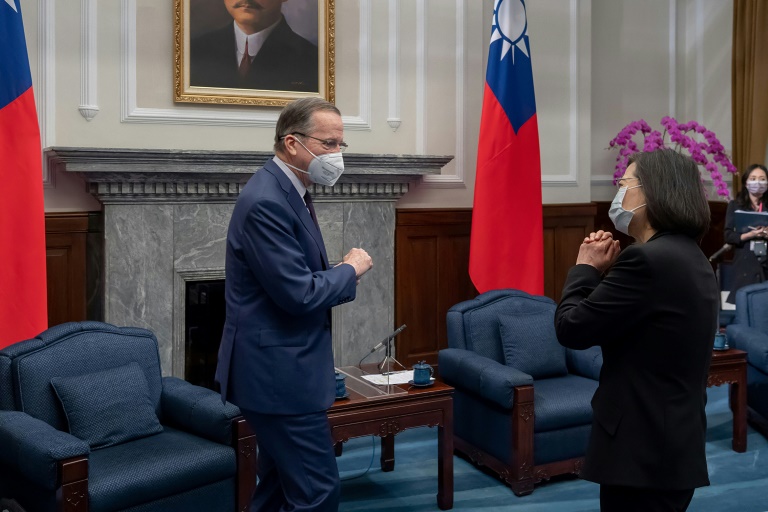
Democratic countries must not “turn a blind eye to military aggression”, Taiwan’s leader said Wednesday, warning her island faces threats similar to those confronted by Ukraine at a meeting with a delegation of former US security officials. 

The delegation, led by ex-chairman of the joint chiefs of staff and retired admiral Michael Mullen, arrived in Taiwan on Tuesday at a time of rising tensions between Washington and Beijing over the self-ruled island as well as the crisis sparked by Russia’s invasion of Ukraine. 

Democratic Taiwan has watched the Ukraine situation closely, as it lives under constant threat of a Chinese invasion, with Beijing claiming sovereignty over the island and vowing to seize it one day — by force if necessary. 

“History teaches us that if we turn a blind eye to military aggression, we only worsen the threat to ourselves,” Taiwanese leader Tsai Ing-wen told the delegation. 

“The Ukrainian people’s commitment to protect their freedom and democracy, and their fearless dedication to defending their country have been met with deep empathy from the people of Taiwan, as we too stand on the frontlines of the battle for democracy.” 

She warned of Beijing’s rising military threat to Taiwan and the region, including “using cognitive warfare tactics and disinformation to divide Taiwanese society”.

China has ramped up pressure on Taiwan since the 2016 election of Tsai, who rejects its stance that the island is part of Chinese territory. 

Its sabre-rattling has increased considerably over the past year, with warplanes breaching Taiwan’s air defence zone on a near-daily basis. 

Last year, Taiwan recorded 969 such incursions, according to a database compiled by AFP — more than double the roughly 380 in 2020. 

Just weeks before Moscow’s invasion of Ukraine, China and Russia signed a joint statement agreeing to a host of foreign policy goals, including Taiwan being “an inalienable part” of the mainland. 

“Facing threats to the security of the Taiwan Strait and the region, we look forward to working even more closely with the US and other stakeholders in the region,” Tsai said. 

The delegation’s visit reflects bipartisan support for a strong US-Taiwan partnership, Mullen said, adding it is aimed at reassuring regional allies that “the United States stands firm behind its commitments”. 

“Maintaining peace and stability across the Taiwan Strait is not just a US interest but also a global one,” he said. 

The delegation does not include current US officials but it is “in coordination with the White House and the Biden administration,” a senior official told AFP.

Last year, former senator Christopher Dodd and former deputy secretaries of state Richard Armitage and James Steinberg were asked by President Joe Biden to travel to Taipei — the first such delegation since he came to power.

Russian invasion of Ukraine upends international relations

Russia’s war against Ukraine is a week old, but its consequences are already reverberating across the globe: it has upended international relations, left Moscow isolated, united a previously divided West, and raised the specter of a nuclear standoff.

– Russia, a ‘pariah’ state –

Moscow’s offensive marks a turning point for the whole world.

Above all, Russia’s attack shattered “the hope that post-Cold War Europe would be spared a large-scale land war,” said Ali Wyne, Senior Analyst with Eurasia Group.

Europe, the United States and United Nations Secretary-General Antonio Guterres came together to denounce Russia’s attack on its neighbor as a flagrant violation of the international rules-based order built after World War II.

Punishment was quick and painful.

From crippling Russia’s financial system, to slapping penalties on its oligarchs and President Vladimir Putin himself, to banning Russia from European airspace and major sports competitions, the West has unleashed an unprecedented cascade of sanctions on Moscow.

“Going forward, Russia will be a pariah, and it’s hard to see how they can restore anything resembling normal interactions in the international system,” said Sarah Kreps, professor at Cornell University.

– NATO awakens –

In 2019, French President Emmanuel Macron declared that NATO was experiencing “brain death,” riven by disagreements between members and belittled by Donald Trump. 

When Joe Biden was elected, he sought to breathe new life into the alliance, hoping to rely on NATO in his standoff with China. That prompted more internal divisions, with some members saying that confronting Beijing was not part of NATO’s mission.

Born at the start of the Cold War with the aim of protecting Europe from the Soviet threat under the US nuclear umbrella, the transatlantic military alliance is now rediscovering its purpose — and its key enemy — by stepping up against Moscow.

“Russia’s invasion has strengthened NATO, deepened transatlantic alignment, and, perhaps most notably, compelled Germany to reverse its longstanding stance on shipping lethal weapons to conflict zones,” said Wyne. “Whether greater short-term Western cohesion yields a shared long-term approach to dealing with Moscow remains an open question.”

– Europe re-arming – 

French diplomat and economist Jean Monnet, who played a significant role in rebuilding Europe after World War II, famously said that Europe will be born out of crises as well as out of its solutions to those crises.

His words ring true today.

Heeding a longstanding call by Paris to beef up Europe’s military might, the European Union’s 27 members approved a total of half a billion euros in defense aid to Ukraine.

In a dramatic move, Berlin broke with its long-standing doctrine when it announced that it would send lethal aid to Ukraine.

And German Chancellor Olaf Scholz declared that his country, often criticized by the US as an understudy in NATO for its small defense budget, would significantly boost military spending to modernize its army.

– Neutrality picking sides –

“Neutrality is not indifference.”

This is what Swiss President Ignazio Cassis said when he announced that his country would back all of the EU sanctions against Russia, in a major break with its longstanding tradition of neutrality and its reputation as an international banking center.

And Finland and Sweden, traditionally non-aligned with NATO, are moving closer in its direction.

Japan, South Korea and Singapore condemned Russia’s invasion, although India and the United Arab Emirates have not.

– China’s ‘awkward position’ –

But Russia has its own allies.

Moscow has the support of Venezuela’s Nicolas Maduro. And Chinese President Xi Jinping offered Putin his support shortly before Russia invaded Ukraine.

It remains to be seen to what extent China will help Russia offset the effect of Western sanctions. 

And China remains cautious. It chose to abstain, rather than veto a UN Security Council resolution “deploring” Russian aggression in Ukraine while expressing “deep regret” to Kyiv over the war.

“Russia’s invasion has placed China in an awkward position,” said Wyne, the Eurasia Group analyst.

“The more protracted and bloody the conflict becomes, the more challenging it will grow for China to balance its support for core Russian positions (such as opposing NATO expansion) and its desire to avoid incurring further transatlantic opprobrium.” 

– Nuclear weapons no longer taboo –

Last week Putin put his strategic nuclear forces on alert, causing ripples across the globe.

“Russian leaders have now repeatedly made not-so-veiled references to their nuclear arsenal in the hopes of deterring the West from bolstering Ukrainian defenses,” said Kreps from Cornell University.

“The problem is that its approach to doing so has eroded the nuclear taboo that’s been in place for decades.”

New Zealand protesters burn camp after riot police move in

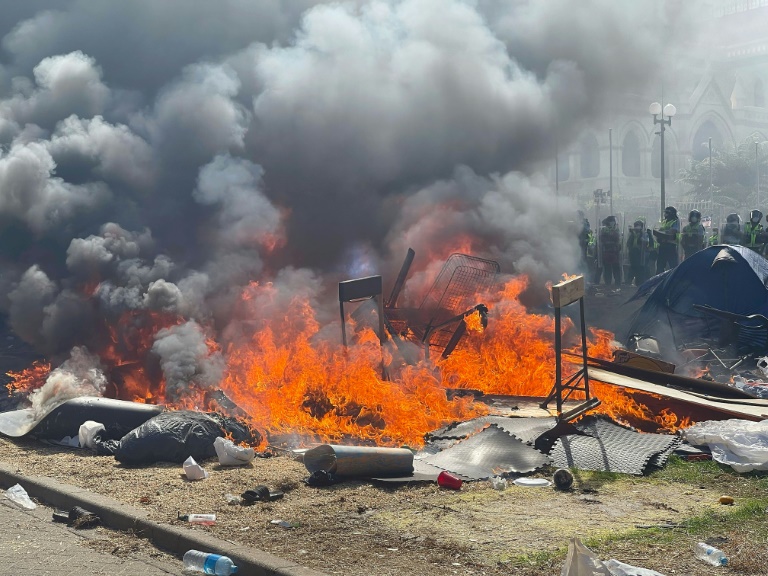
New Zealand anti-vaccination demonstrators set alight their own protest camp outside parliament Wednesday after riot police moved to end their weeks-long occupation of the legislative precinct.

Police abandoned their light-touch approach, with hundreds of officers using perspex shields, pepper spray and water jets to force back protesters, who responded by hurling bottles, bricks and paint bombs.

When it became clear police were winning control of the makeshift tent city that sprang up on parliament’s lawns three weeks ago, the demonstrators torched it themselves.

“This is not over,” one man yelled, while others chanted “Shame on you” at advancing officers as a thick pall of black smoke enveloped the area.

Police deployed an ear-splitting sonic cannon and high-pressure water hoses to help disperse the crowd, although a few dozen regrouped and fought running battles with police on nearby streets into the evening.

Prime Minister Jacinda Ardern backed the force’s tough tactics, angrily denouncing the violence as a “desecration” of parliament’s grounds.

“It was an attack on our frontline police, it was an attack on our parliament, it was an attack on our values, and it was wrong,” she told reporters in parliament as rioting continued a few hundred metres (yards) away.

She said what began as a movement against coronavirus vaccine mandates — inspired by similar protests in Canada — had turned toxic and the demonstrators’ conduct was “disgraceful”.

Ardern said the protesters represented a small group whose extremism was fuelled by conspiracy theories and misinformation.

“We have a difficult journey in front of us, to address the underlying cause of what we have seen here today — but in doing so, we will never, ever excuse it,” she said. 

– ‘It needs to end’ –

Police launched a pre-dawn push to clear roads around the legislature, using a large forklift truck to remove cars and campervans that arrived in the capital in a convoy on February 8 and were used to jam downtown streets.

In the afternoon, they turned to the protest’s epicentre on the lawns of parliament, where around 3,000 people congregated at the height of the demonstration about two weeks ago.

Numbers have since dwindled to a hard core of about 300 who police commissioner Andrew Coster said had shown a willingness to use violence not shared by legitimate demonstrators.

“We’ve seen tactics (from protesters) today including spraying fire extinguishers at the police line, the throwing of paint, early on we saw weapons,” he said.

He said police were not seeking confrontation but added: “This protest has now tipped over a balance and it now needs to end.”

At least three officers were hospitalised with “non-life threatening” injuries in the operation to clear the parliamentary precinct, which left a few dozen angry protesters milling on nearby streets hurling stones.

The show of force came after vocal criticism from Wellington locals about the hands-off approach previously adopted towards the demonstrators.

Residents have complained about being abused by anti-vax activists for wearing masks, while schools and businesses close to the camp have closed for safety reasons.

In recent weeks, police have accused protesters of hurling human faeces at them, spraying a “stinging substance” at officers and slashing tyres on police cars.

Parliamentary officials initially tried to clear the grounds by playing pop music and children’s song “Baby Shark” on a loop, but stopped after police criticised the tactic.

Coster said Wednesday’s operation came after efforts to “de-escalate” the situation and end the protest peacefully had stalled.

“We reached the stage where protest leaders were unwilling or unable to effect meaningful change,” he said.

Russian troops land in Ukraine's second city Kharkiv

Russian forces landed in Ukraine’s second biggest city on Wednesday and triggered immediate clashes in the streets of Kharkiv, the military said, following Moscow’s relentless air assault across the ex-Soviet state.

The airborne operation came as US President Joe Biden branded Vladimir Putin a “dictator”, warning the sanction campaign to cripple Russia’s economy would escalate and its oligarchs were being targeted.

In Biden’s first State of the Union address, he hailed the resolve of the Western alliance and voiced solidarity with Ukraine as lawmakers in the US Congress gave a standing ovation to the Ukrainian people.

“A Russian dictator, invading a foreign country, has costs around the world,” Biden told lawmakers in his annual State of the Union address, promising “robust action to make sure the pain of our sanctions is targeted at Russia’s economy.”

But as he spoke a Russian escalation was reported to be underway in Kharkiv, an apparent bid by Moscow to capture its first major Ukrainian city of the invasion.

Since Russian troops rolled into Ukraine last week to achieve Putin’s mission of overthrowing the pro-Western government of President Volodymyr Zelensky, hundreds of civilians have been reported killed.

Russian forces have carried out a massive bombing campaign and encircled urban centres, but Ukraine insists no major city has yet been overtaken.

“Russian airborne troops landed in Kharkiv… and attacked a local hospital,” the Ukrainian army said in a statement on messaging app Telegram. “There is an ongoing fight between the invaders and the Ukrainians.”

Russia hit a residential building in the city on Tuesday killing eight people, drawing comparisons to the massacres of civilians in Sarajevo in the 1990s and condemnation for what Zelensky called a “war crime”.

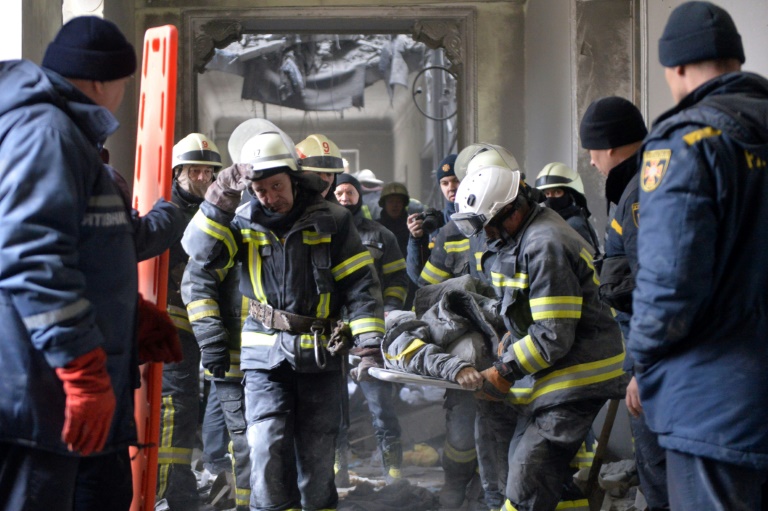
A fire broke out on Wednesday in the barracks of a flight school in Kharkiv following an airstrike, according to Anton Gerashchenko, adviser to the Ukrainian Interior Minister. 

“Practically there are no areas left in Kharkiv where an artillery shell has not yet hit,” he was quoted as saying in a statement on Telegram. 

Kharkiv, a largely Russian-speaking city near the Russian border, has a population of around 1.4 million.

– ‘Putin was wrong’ –

Biden, who had earlier spoken with Zelensky on the phone, announced new measures against Russia and its wealthy elite with a new task force to go after the “crimes” of Russian oligarchs.

“We are coming for your ill-begotten gains,” he said, prompting the rare sight of members of both parties standing to applaud.

“And tonight I am announcing that we will join our allies in closing off American air space to all Russian flights — further isolating Russia and adding an additional squeeze on their economy.”

The US leader said Putin’s aggression was “premeditated and totally unprovoked” — but hailed the resolve of the Western alliance in responding with brutal sanctions. 

“(Putin) thought he could divide us here at home,” Biden said. “But Putin was wrong. We are ready.”

He repeated his commitment that no American troops would be sent to Ukraine to confront the invading forces. 

A lack of will to send foreign troops into battle has given Russia space to press on with its assault on Ukrainian cities. 

A strike on the main TV tower in Kyiv killed five people Tuesday and knocked out some state broadcasting, Ukrainian officials said, but left the structure intact.

Fresh explosions were heard late Tuesday in Kyiv and Bila Tserkva, 50 miles (80 kilometres) to the south, according to local media.

News outlets also reported Russian missiles damaging residential buildings and a hospital in Zhytomyr, citing the major transport hub’s mayor Sergei Sukhomline.

The International Criminal Court has opened a war crimes investigation against Russia. Ukraine says more than 350 civilians, including 14 children, have been killed in the conflict.

– Belarus attack fears –

The Ukrainian Ministry of Defence also said overnight that it feared an attack from Belarus over its northern border. 

“Belarusian troops have been put on high alert and are concentrated in areas closest to the border with Ukraine,” the ministry said Tuesday in a statement on Facebook. 

Ukrainian intelligence noted “significant activity” of aircraft in the border area, it said.

Belarusian President Alexander Lukashenko said Tuesday he had ordered more troops to the south of the country, the Belta news agency reported.

But forces of Belarus, a close ally of Russia, would not be taking part in the attack on Ukraine, he added.

In southern Ukraine, the city of Mariupol on the Azov Sea was left without electricity after Russian bombardment, while Kherson on the Black Sea reported Russian checkpoints encircling the city.

In a key victory for Moscow, Russia’s defence ministry said its troops had linked up with pro-Moscow rebel forces from eastern Ukraine along the Azov Sea coast.

– Companies exit Russia –

Russia has defied international bans, boycotts and sanctions to press ahead with an offensive it says is aimed at defending Ukraine’s Russian speakers and toppling the leadership.

In response, more Western companies have withdrawn from projects in Russia, deepening the economic toll on Moscow that saw the ruble collapse this week.

Apple, ExxonMobil and Boeing announced Tuesday in rapid succession steps to withdraw or freeze business in Russia.

The moves followed earlier announcements by Disney, Ford and Mastercard among others.

The invasion has sent global markets into a spiral, with crude surging past $110 a barrel Wednesday and equities sinking.

On top of sanctions, Germany has promised arms for Ukraine, while the EU said, in a first, that it will buy and supply arms to the country.

Zelensky has reiterated an urgent appeal for Ukraine to be admitted to the European Union.

– No escape –

More than 660,000 people have fled abroad, the UN refugee agency said, and as battles rage for control of major cities many more are expected to follow.

Residents of capital Kyiv are crammed into makeshift bomb shelters awaiting their own fight, with a massive Russian military convoy stationed just north of the city.

Teacher Irina Butyak, 38, has spent two days in the basement of her apartment block sheltering with some 20 people. 

“We have train tickets for western Ukraine for tomorrow,” she told AFP as air raid sirens blared directly overhead. 

“I don’t think we will make the train.”

Australians flee floods as toll rises to 12, Sydney on alert

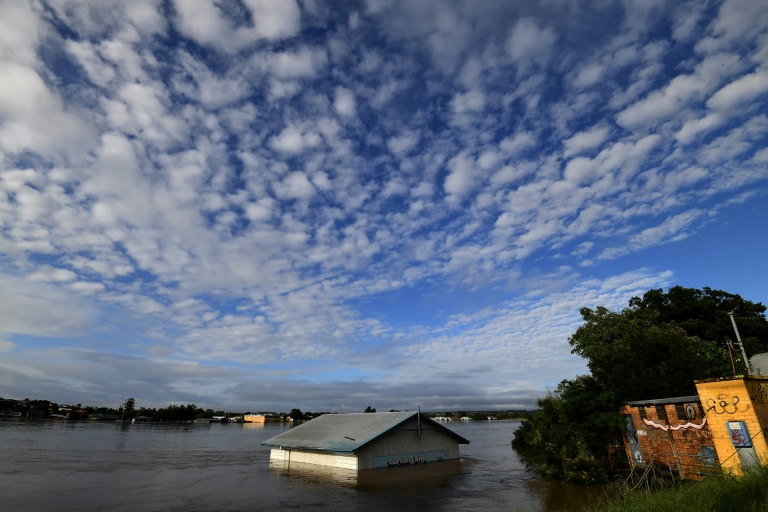
Floodwaters crashed into more towns on Australia’s east coast as a deadly storm front barrelled south on Wednesday towards Sydney, where the main dam began to spill water.

The death toll rose to 12 in a week-long disaster that has washed cars from roads and forced tens of thousands of people to evacuate their homes as waters lapped at balconies and roofs.

“This is terrible. This is terrible. One life lost is too many,” said New South Wales deputy premier Paul Toole after confirming a third death in the flood-hit town of Lismore.

After bringing havoc to Queensland, the storm front moved southwards, dumping vast quantities of water and sparking a string of flood alerts in New South Wales including Sydney, Australia’s largest city.

“Today, the focus is on Sydney. We are expecting heavy rainfall over the afternoon into the night and into tomorrow,” Toole warned in a news conference.

Sydney’s main Warragamba dam, lying southwest of the city, had reached capacity and started spilling water in the early hours of Wednesday morning, Toole said.

He told residents at risk to flee if they are told to do so.

“If you are getting a knock on the door, if you are asked to leave, please leave,” Toole told a news conference.

“We are looking at substantial rainfall over the coming days. We don’t want to see those images where people were standing on the roofs of their houses, not leaving and then having to be rescued.”

In the coastal town of Ballina in New South Wales, some 55 hospital patients were evacuated overnight — hours before a high tide from the sea combined with waters overflowing the banks of Richmond River.

A “makeshift emergency department” was set up in a Catholic college for urgent cases, regional health officials said.

– ‘Eerie’ –

An hour inland from the coast, water levels in Lismore were falling but resident Tom Wolff prepared to head out for rescues.

“It all feels kind of eerie now, is how I would describe it,” he said.

The hardest part was trying to navigate around power lines and other hazards in a boat, Wolff said.

“We know the streets of Lismore, but it’s just totally different when you’re 10-12 metres above them,” he said. 

“There are signs around town for the ’74 flood levels, but they were underwater.”

At one house, they rescued a sausage dog that had been left at the highest point of the house. 

“She must have just been treading water for god knows how long, maybe hours. Her heart rate was through the roof when we found her,” he said.

In an airfield in Grafton — where residents saw buildings submerged almost to roof level this week — flight club president Bob King rowed out in a metal dingy to check on his aircraft as the smell of fuel hung in the air. 

Most of the 25 aircraft at the field were now underwater, he said. 

Flight instructor Peter Clement surveyed the damage done to his planes — four light aircraft each worth Aus$100,000 ($73,000) — sitting half-submerged in a hangar where the mud-brown waters came up to his waist. 

“I’m hoping it’s not a total loss,” he said.

“This is the biggest flood I’ve ever seen and I’ve been here 20 years.”

Australia has been on the sharp end of climate change.

Droughts, deadly bushfires, bleaching events on the Great Barrier Reef and floods have become more common and intense.

Because a warmer atmosphere holds more water, scientists say climate change increases the risk and intensity of flooding from extreme rainfall.

Australians flee floods as toll rises to 12, Sydney on alert

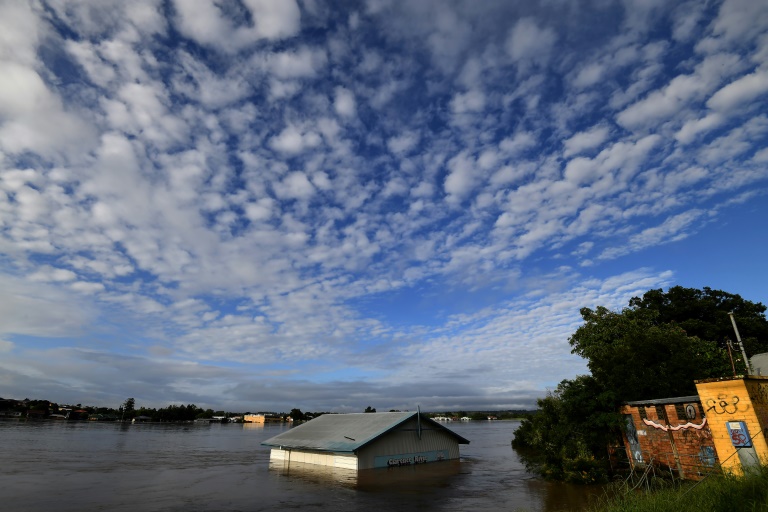
Floodwaters crashed into more towns on Australia’s east coast as a deadly storm front barrelled south on Wednesday towards Sydney, where the main dam began to spill water.

The death toll rose to 12 in a week-long disaster that has washed cars from roads and forced tens of thousands of people to evacuate their homes as waters lapped at balconies and roofs.

“This is terrible. This is terrible. One life lost is too many,” said New South Wales deputy premier Paul Toole after confirming a third death in the flood-hit town of Lismore.

After bringing havoc to Queensland, the storm front moved southwards, dumping vast quantities of water and sparking a string of flood alerts in New South Wales including Sydney, Australia’s largest city.

“Today, the focus is on Sydney. We are expecting heavy rainfall over the afternoon into the night and into tomorrow,” Toole warned in a news conference.

Sydney’s main Warragamba dam, lying southwest of the city, had reached capacity and started spilling water in the early hours of Wednesday morning, Toole said.

He told residents at risk to flee if they are told to do so.

“If you are getting a knock on the door, if you are asked to leave, please leave,” Toole told a news conference.

“We are looking at substantial rainfall over the coming days. We don’t want to see those images where people were standing on the roofs of their houses, not leaving and then having to be rescued.”

In the coastal town of Ballina in New South Wales, some 55 hospital patients were evacuated overnight — hours before a high tide from the sea combined with waters overflowing the banks of Richmond River.

A “makeshift emergency department” was set up in a Catholic college for urgent cases, regional health officials said.

– ‘Eerie’ –

An hour inland from the coast, water levels in Lismore were falling but resident Tom Wolff prepared to head out for rescues.

“It all feels kind of eerie now, is how I would describe it,” he said.

The hardest part was trying to navigate around power lines and other hazards in a boat, Wolff said.

“We know the streets of Lismore, but it’s just totally different when you’re 10-12 metres above them,” he said. 

“There are signs around town for the ’74 flood levels, but they were underwater.”

At one house, they rescued a sausage dog that had been left at the highest point of the house. 

“She must have just been treading water for god knows how long, maybe hours. Her heart rate was through the roof when we found her,” he said.

In an airfield in Grafton — where residents saw buildings submerged almost to roof level this week — flight club president Bob King rowed out in a metal dingy to check on his aircraft as the smell of fuel hung in the air. 

Most of the 25 aircraft at the field were now underwater, he said. 

Flight instructor Peter Clement surveyed the damage done to his planes — four light aircraft each worth Aus$100,000 ($73,000) — sitting half-submerged in a hangar where the mud-brown waters came up to his waist. 

“I’m hoping it’s not a total loss,” he said.

“This is the biggest flood I’ve ever seen and I’ve been here 20 years.”

Australia has been on the sharp end of climate change.

Droughts, deadly bushfires, bleaching events on the Great Barrier Reef and floods have become more common and intense.

Because a warmer atmosphere holds more water, scientists say climate change increases the risk and intensity of flooding from extreme rainfall.

New Zealand protesters burn camp after riot police move in

New Zealand anti-vaccination demonstrators set alight their own protest camp outside parliament Wednesday after riot police moved to end their weeks-long occupation of the legislative precinct.

Ending a previous light-touch approach, hundreds of officers used perspex shields and pepper spray to force back protesters, who responded by pelting them with chairs, bottles and paint bombs.

When it became apparent that police were winning the battle for control of the makeshift tent city that sprang up on parliament’s lawns three weeks ago, the demonstrators torched it themselves.

“This is not over,” one man yelled, while others chanted “Shame on you” at advancing officers as a thick pall of black smoke enveloped the area.

Police deployed an ear-splitting sonic cannon to help disperse the crowd and made dozens of arrests in an operation that began just before dawn.

Speaking to reporters in parliament after initial skirmishes took place just a few hundred metres (yards) away, Prime Minister Jacinda Ardern backed the force’s tough tactics.

She said what began as a movement against coronavirus vaccine mandates — inspired by similar protests in Canada — had turned toxic, describing demonstrators’ conduct as “disgraceful”.

“The protest has been at times violent. Increasingly we find misinformation and sadly conspiracy theories,” she said, also labelling the camp a health risk for Wellington residents. 

“It has become a location of interest, we know Covid has circulated within the protest and there have been hospitalisations as a result.”

– ‘It needs to end’ –

Police spent the morning clearing roads around the legislature, using a large forklift truck to remove cars and campervans that arrived in the capital in a convoy on February 8 and were used to jam downtown streets.

In the afternoon, they turned to the protest’s epicentre on the lawns of parliament, where around 3,000 people congregated at the height of the demonstration about two weeks ago.

Numbers have since dwindled to a hard core of about 300 and police commissioner Andrew Coster said they had shown a willingness to use violence.

“We’ve seen tactics (from protesters) today including spraying fire extinguishers at the police line, the throwing of paint, early on we saw weapons,” he said.

He said police were not seeking confrontation but added: “This protest has now tipped over a balance and it now needs to end.”

At least three officers received minor injuries in the operation to clear the parliamentary precinct, which left a few dozen angry protesters milling on nearby streets yelling insults.

The operation came after vocal criticism from Wellington locals about the hands-off approach previously adopted towards the demonstrators.

Residents have complained about being abused by protesters for wearing masks, while schools and businesses close to the camp have closed for safety reasons.

In recent weeks, police have accused protesters of hurling human faeces at them, spraying a “stinging substance” at officers and slashing tyres on police cars.

Parliamentary officials initially tried to clear the grounds by playing pop music and children’s song “Baby Shark” on a loop, but stopped after police criticised the tactic.

Coster said efforts to “de-escalate” the situation and end the protest without resorting to force had stalled.

“We reached the stage where protest leaders were unwilling or unable to effect meaningful change,” he said.

Biden seeks US unity through Russia crisis

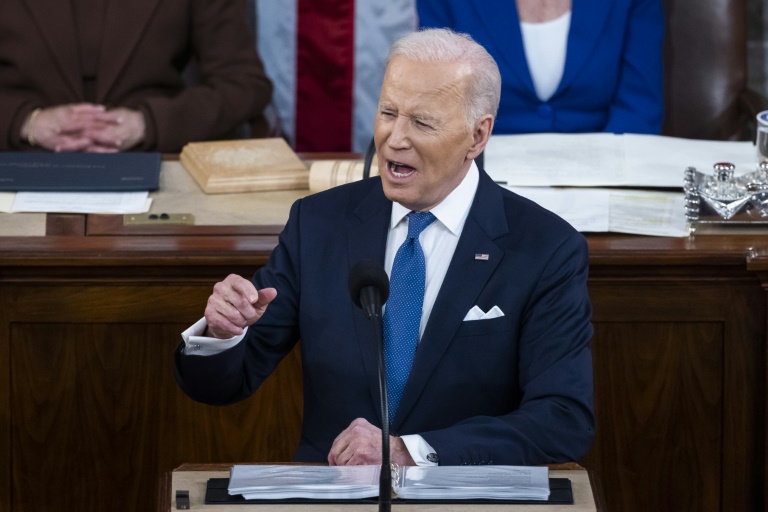
President Joe Biden won standing ovation upon standing ovation Tuesday in a rousing State of the Union speech seeking to transform bipartisan support for confronting Russia into momentum for broader unity as the United States finally emerges from the Covid pandemic.

The entire first section of Biden’s one hour speech to the joint session of Congress was devoted to the bloody Russian invasion of pro-Western Ukraine.

As Biden branded President Vladimir Putin “a Russian dictator,” pledged to help Ukraine’s fighters, and vowed to confiscate Russian oligarchs’ “ill-begotten” yachts,  members of both parties stood  to applaud — a sight so rare in today’s Congress that it is all but forgotten.

After working for weeks to unite Western allies behind unprecedented economic sanctions against Russia and torrents of military aid to non-NATO Ukraine, Biden painted the picture of what he said was revived global US leadership.

“In the battle between democracy and autocracy, democracies are rising to the moment,” he said.

With many in Congress wearing yellow and blue in tribute to the Ukrainian flag, this was the easy part of the speech for Biden.

But the 79-year-old, who faces rock bottom approval ratings and bitter opposition from Republicans still in thrall to Donald Trump, also hoped to try and ride the positive wave into trickier domestic territory.

– Acknowledging inflation pain –

One year into his presidency, the Democrat faces an increasingly disappointed and often outright angry electorate, largely due to the highest inflation in four decades.

Things are set to get even harder for his administration with polls pointing to Republican victory in November’s midterm congressional elections. This time next year, the chances are high that a Republican majority will face him when he takes the podium for the State of the Union.

“It feels like President Biden and his party have sent us back in time to the late 70s and early 80s, when runaway inflation was hammering families, a violent crime wave was crashing our cities, and the Soviet army was trying to redraw the world map,” said Iowa Governor Kim Reynolds in the official rebuttal from the Republicans.

But after months of trying to persuade Americans that inflation is on the verge of receding, Biden this time reached out, stressing that he understands voters’ pain.

“Too many families are struggling to keep up with their bills,” Biden said. “That’s why my top priority is getting prices under control,” he said.

To do this, Biden relaunched his idea for a “make it in America” policy that he said would resolve global supply chain issues driving up prices, while restoring US manufacturing power.

This is the kind of centrist thinking that Biden emphasized during his successful battle to defeat populist rightwinger Trump in the 2020 election.

He was back at it in another section of the speech where he shot down leftists of his own party, saying that the solution to police violence is “not to defund the police.”

“It’s to fund the police,” Biden said in a message clearly aimed at middle-of-the-road voters alarmed at soaring violent crime rates across American cities.

Then, in a nod to the left’s criticism of racism and abuse among the ranks, Biden said the secret was better training and tactics to “restore trust.”

– Winning against Covid –

Although embattled as he enters his second year in the White House, Biden did come to the State of the Union with two strong cards.

Last Friday he nominated Judge Ketanji Brown Jackson to be the first African American woman in history to sit on the Supreme Court.

And amid plummeting infection rates, Biden was able to use his speech to try and pivot the country to a more optimistic, post-pandemic future.

Just days after the Centers for Disease Control finally eased mask recommendations for most Americans, Biden said the long nightmare was just about over.

“Thanks to the progress we have made this past year, Covid-19 need no longer control our lives,” he said to a chamber that was not only packed but all but entirely unmasked.

The United States will “never just accept living with Covid,” Biden said.

As he left the chamber, the veteran former senator embraced that post-Covid reality with one of his favorite activities — extended and energetic handshaking and chatting with massed politicians.

sms/ec

Close Bitnami banner
Bitnami