World

Philippines celebrates Ash Wednesday as Covid rules lift

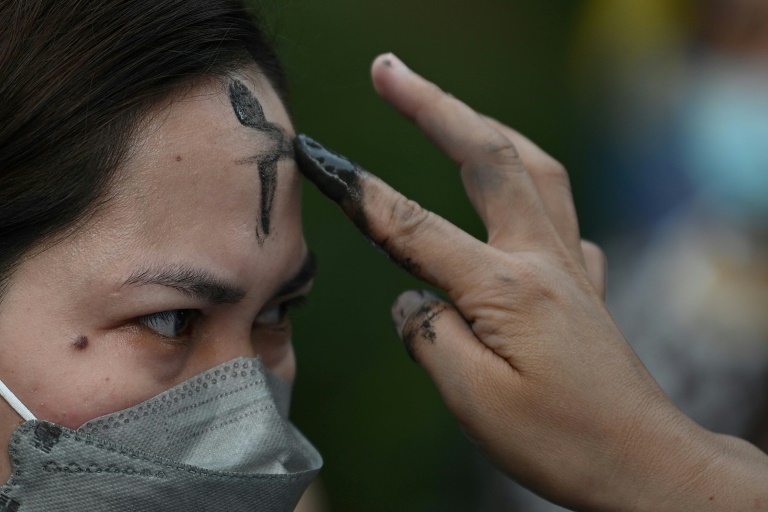
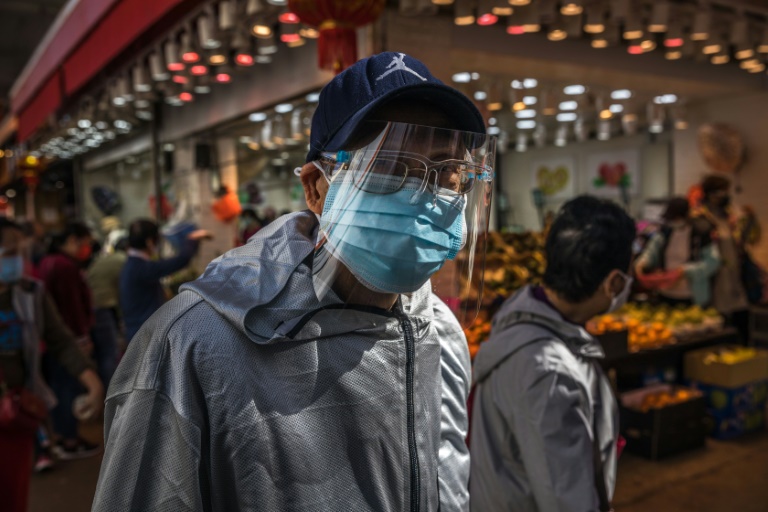
Thousands of Filipinos flocked to churches to observe Ash Wednesday, with Catholic priests and nuns daubing their foreheads with a cross for the first time since the start of the coronavirus pandemic. 

Most Covid-19 restrictions were scrapped this week after a sharp drop in infections and increased vaccinations, allowing churches to pack their pews and physical contact to resume.

Devotees wearing masks began lining up outside Baclaran Church in Manila before dawn to receive the ash cross on their foreheads — a ritual that signals the beginning of Lent.

Churches have in the past two years sprinkled it in people’s hair due to anti-Covid measures.

“I feel like I am in heaven,” Lydia Smith, 76, told AFP outside the church where several thousand of the faithful stood in long queues waiting their turn. 

“I am really happy even if it’s very crowded. It’s like the joy of the church has returned.”

The Philippines is overwhelmingly Catholic, with some 80 percent of its people said to be believers.

Since early 2020 most devotees have been forced to follow church services online and major religious festivals have been curtailed or cancelled due to strict social-distancing rules.

But Tuesday marked the beginning of the “new normal” in the national capital region and 38 other areas. 

Most restrictions have been removed, allowing places of worship, restaurants and public transport to operate at full capacity.

Local church officials gave the green light for the “imposition of ashes on the forehead” to resume on Wednesday, but sprinkling the powdery residue in hair was still allowed. 

“One of the tragedies of Covid-19 is it separated us,” said Father Victorino Cueto, the rector of Baclaran Church.

“When we put the ash on the forehead, it means that we are really reaching out to one another, in faith and in love.”

Hotel safety officer Radito Mendoza, 62, welcomed the resumption of the tradition.

“I’m so happy that we are slowly going back to normal and those who want to go to church are now able to do so,” he said.

UN to take first step towards 'historic' plastic treaty

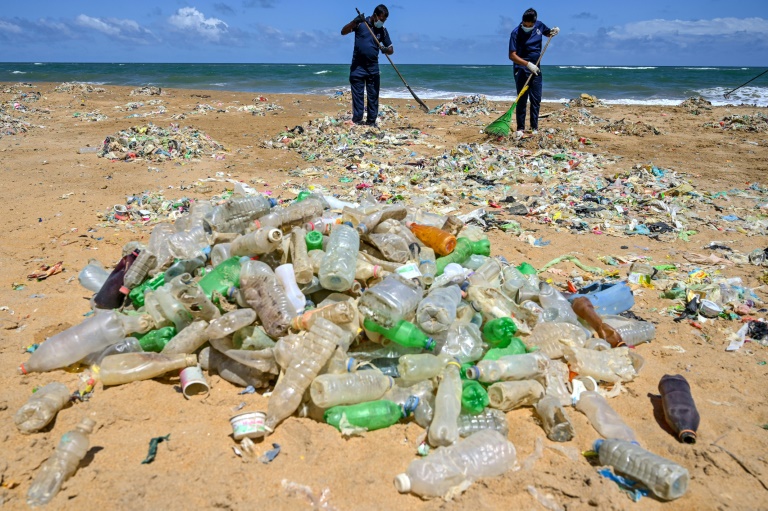
The United Nations is to launch formal negotiations on Wednesday for a global treaty to address a plastic trash “epidemic” that supporters say is a historic moment for the planet.

The UN Environment Assembly (UNEA), convening in Nairobi, is poised to adopt a resolution creating an intergovernmental committee to negotiate and finalise a legally binding agreement by 2024.

The amount of plastic trash entering the oceans is forecast to triple by 2040, and governments have been under pressure to unite behind a global response to the crisis.

The framework for a comprehensive treaty has been approved by UN member states, including major plastic producers like the US and China, according to sources close to the negotiations.

Officials say it gives negotiators a broad and robust mandate to consider new rules that target plastic pollution from its birth as a raw material to its design, use and safe disposal.

This could include limits on making new plastic, which is derived from oil and gas, though policy specifics will only be determined during later talks.

The mandate provides for the negotiation of binding global targets with monitoring mechanisms, the development of national plans and financing for poorer countries. 

Negotiators also have the scope to consider all aspects of pollution — not just plastic in the ocean but tiny particles in the air, soil and food chain — a key demand of many countries.

– ‘One for the history books’ –

“We are 100-percent happy with the outcome,” said Ana Teresa Lecaros, director of environment in the foreign ministry of Peru, a country that co-signed one of the draft resolutions.

Inger Andersen, the head of the UN Environment Programme, said a plastics treaty would be “one for the history books” and the most important pact for the planet since the Paris climate agreement. 

The rate of plastic production has grown faster than any other material and is expected to double within two decades, the UN says.

But less than 10 percent is recycled, with most winding up in landfill or oceans.

By some estimates, a garbage truck’s worth of plastic is dumped into the sea every minute.

“Plastic pollution has grown into an epidemic of its own,” said Norway’s climate and environment minister, Espen Barth Eide, who chairs UNEA.

He said he was “quite optimistic” about bringing down the gavel on a strong resolution in Nairobi.

Environment groups are also buoyed by the outcome of the talks but like officials and diplomats, caution that the strength of any treaty will only be determined by rigorous negotiations to come.

The first round of discussions is set for May, according to sources involved in the process. 

Big corporations have expressed support for a treaty that creates a common set of rules around plastic and a level playing field for competition.

Big plastic makers have underscored the importance of plastic in construction, medicine and other vital industries and warned that banning certain materials would cause supply chain disruptions.

UN to take first step towards 'historic' plastic treaty

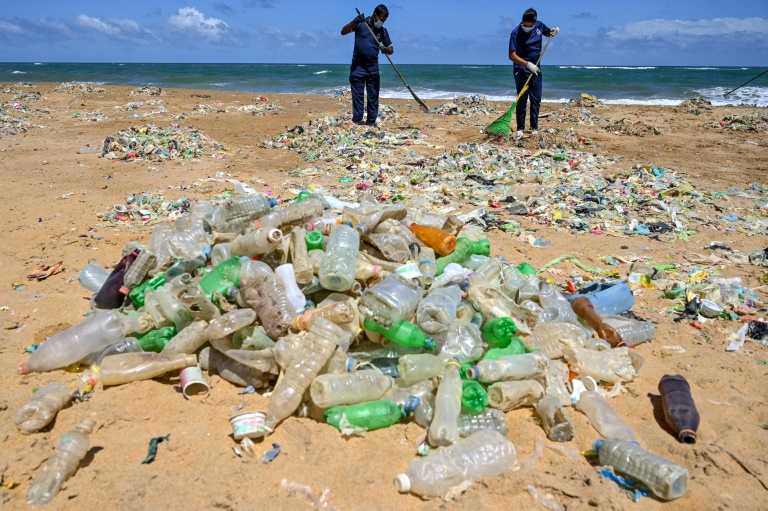
The United Nations is to launch formal negotiations on Wednesday for a global treaty to address a plastic trash “epidemic” that supporters say is a historic moment for the planet.

The UN Environment Assembly (UNEA), convening in Nairobi, is poised to adopt a resolution creating an intergovernmental committee to negotiate and finalise a legally binding agreement by 2024.

The amount of plastic trash entering the oceans is forecast to triple by 2040, and governments have been under pressure to unite behind a global response to the crisis.

The framework for a comprehensive treaty has been approved by UN member states, including major plastic producers like the US and China, according to sources close to the negotiations.

Officials say it gives negotiators a broad and robust mandate to consider new rules that target plastic pollution from its birth as a raw material to its design, use and safe disposal.

This could include limits on making new plastic, which is derived from oil and gas, though policy specifics will only be determined during later talks.

The mandate provides for the negotiation of binding global targets with monitoring mechanisms, the development of national plans and financing for poorer countries. 

Negotiators also have the scope to consider all aspects of pollution — not just plastic in the ocean but tiny particles in the air, soil and food chain — a key demand of many countries.

– ‘One for the history books’ –

“We are 100-percent happy with the outcome,” said Ana Teresa Lecaros, director of environment in the foreign ministry of Peru, a country that co-signed one of the draft resolutions.

Inger Andersen, the head of the UN Environment Programme, said a plastics treaty would be “one for the history books” and the most important pact for the planet since the Paris climate agreement. 

The rate of plastic production has grown faster than any other material and is expected to double within two decades, the UN says.

But less than 10 percent is recycled, with most winding up in landfill or oceans.

By some estimates, a garbage truck’s worth of plastic is dumped into the sea every minute.

“Plastic pollution has grown into an epidemic of its own,” said Norway’s climate and environment minister, Espen Barth Eide, who chairs UNEA.

He said he was “quite optimistic” about bringing down the gavel on a strong resolution in Nairobi.

Environment groups are also buoyed by the outcome of the talks but like officials and diplomats, caution that the strength of any treaty will only be determined by rigorous negotiations to come.

The first round of discussions is set for May, according to sources involved in the process. 

Big corporations have expressed support for a treaty that creates a common set of rules around plastic and a level playing field for competition.

Big plastic makers have underscored the importance of plastic in construction, medicine and other vital industries and warned that banning certain materials would cause supply chain disruptions.

Biden warns 'dictator' Putin, oligarchs as Russia bombards Ukraine

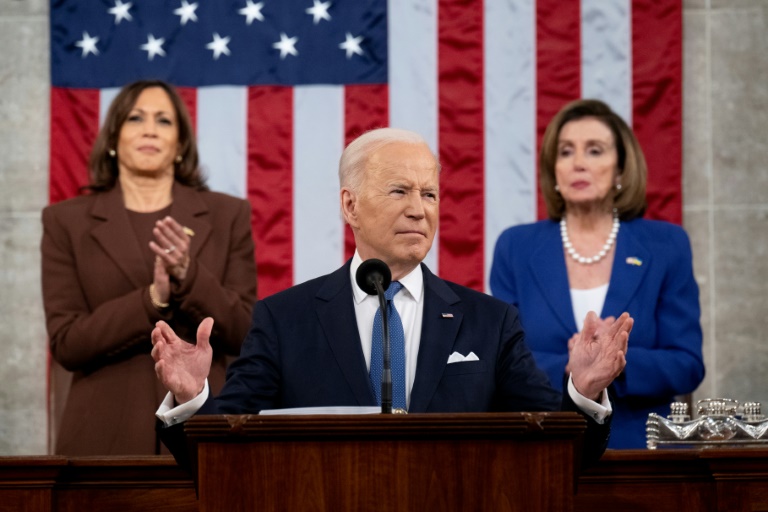
President Joe Biden branded Vladimir Putin a “dictator” Tuesday and warned Russia’s billionaires that he was coming after their yachts and private jets, as Russian air strikes pummeled Ukraine in a bid to crush the US ally’s resistance.

Despite sanctions and warnings of a humanitarian crisis, Moscow launched a fresh assault on a residential block in Ukraine’s second city of Kharkiv as the US leader sought to steel the American public’s resolve for the turmoil ahead.

“A Russian dictator, invading a foreign country, has costs around the world,” Biden told lawmakers in his annual State of the Union address, promising “robust action to make sure the pain of our sanctions is targeted at Russia’s economy.”

Biden had planned to tout his policy successes during his speech, discuss how the United States had turned a corner on the pandemic and outline what he wanted to accomplish in the coming months.

But much of that was upended by one of the most significant geopolitical crises since the end of the Cold War, as Putin’s nuclear saber-rattling sent shockwaves through the international community.

In an emotional start to Biden’s address, lawmakers packed into the US Congress gave a standing ovation to the Ukrainian people as the president voiced solidarity with the ex-Soviet country.

Speaking on day six of Russia’s invasion, Biden said Putin’s aggression was “premeditated and totally unprovoked” — but hailed the resolve of the Western alliance in responding with brutal sanctions. 

“(Putin) thought he could divide us here at home,” Biden said. “But Putin was wrong. We are ready.” 

Biden said he had tasked the Department of Justice with assembling a task force to go after the “crimes” of the Russian oligarchs “to find and seize their yachts, their luxury apartments their private jets.”

“We are coming for your ill-begotten gains,” he promised.

“And tonight I am announcing that we will join our allies in closing off American air space to all Russian flights — further isolating Russia and adding an additional squeeze on their economy.”

Earlier Biden had spoken on the phone to Ukrainian President Volodymyr Zelensky, who accused Moscow of “state terrorism” over the bombardment of Kharkiv.

Although Russia has denied targeting civilian infrastructure, British Prime Minister Boris Johnson called the assault “absolutely sickening” and reminiscent of massacres of civilians in Sarajevo in the 1990s.

– ‘Shattered peace’ –

Eight people were reported dead in a residential building in the city and officials said 10 had been killed by Russian shelling on a local government complex.

A strike on the main TV tower in Kyiv also killed five people and knocked out some state broadcasting, Ukrainian officials said, but left the structure intact.

Fresh explosions were heard late Tuesday in Kyiv and Bila Tserkva, 50 miles (80 kilometers) to the south, according to local media.

News outlets also reported Russian missiles damaging residential buildings and a hospital in Zhytomyr, citing the major transport hub’s mayor Sergei Sukhomline.

The International Criminal Court has opened a war crimes investigation against Russia. Ukraine says more than 350 civilians, including 14 children, have been killed in the conflict.

In southern Ukraine, the city of Mariupol on the Azov Sea was left without electricity after bombardment, while Kherson on the Black Sea reported Russian checkpoints encircling the city.

In a key victory for Moscow, Russia’s defense ministry said its troops had linked up with pro-Moscow rebel forces from eastern Ukraine along the Azov Sea coast.

But Ukrainian forces say despite incursions by “sabotage groups,” Russian forces have yet to capture a major city.

During a visit to an airbase in Poland, NATO chief Jens Stoltenberg said Putin had “shattered peace in Europe.”

Zelensky meanwhile reiterated an urgent appeal for his country to be admitted to the European Union.

More than 660,000 people have fled abroad, the UN refugee agency said, estimating that a million people are displaced within ex-Soviet Ukraine, which has a population of 44 million.

– ‘All-out assault’ –

Russia has defied international bans, boycotts and sanctions to press ahead with an offensive it says is aimed at defending Ukraine’s Russian speakers and toppling the leadership.

Germany has already promised arms for Ukraine, while the EU said, in a first, that it will buy and supply arms to the country.

But fears are growing of an all-out assault to capture Kyiv, a city of 2.8 million.

Satellite images provided by US firm Mazar showed a 40-mile build-up of Russian armored vehicles and artillery north of the capital.

Inside Kyiv, makeshift barricades dotted the streets and residents lined up outside the few shops open to buy essentials.

Russia’s invasion has triggered a widening international sporting ban and Western nations have moved to further isolate Russia, responding with an intensifying diplomatic, economic and cultural backlash.

Apple on Tuesday stopped all sales in Russia. And the European Union banned Russian state media outlets RT and Sputnik from broadcasting in the bloc while also barring some Russian banks from the SWIFT bank system.

burs-ft/ec

ExxonMobil, Apple, Boeing latest US giants to cut ties with Moscow

Apple, ExxonMobil and Boeing announced Tuesday in rapid succession steps to withdraw or freeze business in Russia as more US corporate giants take action after the Ukraine invasion.

The moves — in diverse industries and following earlier announcements by Disney, Ford, Mastercard and others — highlight the rising economic toll on Russia after its assault on Ukraine unleashed massive sanctions across Western governments.

ExxonMobil will begin a phased withdrawal from the giant Sakhalin offshore oilfield that it has operated since 1995, saying “we deplore Russia’s military action that violates the territorial integrity of Ukraine and endangers its people.”

The US company operates in Russia on behalf of a consortium including Russian, Indian and Japanese companies, its only major project in Russia, after it pulled out of two joint ventures during the previous round of sanctions against Russia following its annexation of Crimea in 2014.

ExxonMobil’s move follows earlier decisions by British energy group BP and Shell to pull out of joint projects in Russia. France’s TotalEnergies said it would stay in Russia, but refrain from investing more money there.

ExxonMobil stressed that “the process to discontinue operations will need to be carefully managed and closely coordinated with the co-venturers in order to ensure it is executed safely.”

– Focus on security of staff –

Earlier, Apple said it would halt all product sales in Russia and limit the use of Apple Pay and other services in the country.

“We are deeply concerned about the Russian invasion of Ukraine and stand with all of the people who are suffering as a result of the violence,” Apple said.

Ukraine’s defiant government, which has urged its people to battle Russian forces, has asked for help from all quarters, including Apple’s CEO Tim Cook.

“I appeal to you… to stop supplying Apple services and products to the Russian Federation, including blocking access to the Apple Store!” Ukraine’s digital minister Mykhailo Fedorov wrote in a letter he posted to Twitter Friday.

Boeing for its part said it was suspending its support for Russian airlines and its operations in Moscow, saying it was “focused on ensuring the safety of our teammates in the region.”

The action could weigh heavily on flag carrier Aeroflot, which flies the Boeing 737 and 777, and last week announced it was suspending flights to Europe in response to the flight ban.

The United States and European allies have put tough sanctions on Moscow in recent days, including by cutting selected Russian banks from the SWIFT messaging system, while Washington has announced measures specifically targeting the country’s central bank.

There has also been a stampede of large US companies in recent days away from Russia affecting nearly every sector.

Disney and WarnerMedia were among the entertainment giants to suspend new film releases in Russia, while tech heavyweights such as Facebook, TikTok and Microsoft moved to curb the reach of Russian state-linked news outlets, which stand accused of pushing misinformation about Moscow’s invasion of Ukraine.

General Motors suspended vehicle exports to Russia, while Detroit rival Ford aid it was suspending its remaining operations in Russia, including commercial van manufacturing.

Credit card companies including Visa, Mastercard and American Express announced they were blocking Russian banks from their payment networks following international sanctions.

On Tuesday, Moscow announced plans for presidential decree aimed at preventing foreign investment exiting the country.

“In the current sanctions situation, foreign investors will be guided not by economic factors, but by political pressure,” Prime Minister Mikhail Mishustin said. 

“To enable businesses to make informed decisions, a draft presidential decree has been prepared to introduce temporary restrictions on exiting Russian assets.” 

He added: “We still consider foreign business as potential partners.” 

Disarray grips Hong Kong ahead of mass Covid testing, isolation

Overflowing hospitals, empty supermarket shelves and grim quarantine camps — Hong Kong is in chaos battling a ballooning Covid outbreak in a business hub once renowned for its efficiency.

Many locals are fuming at the government’s failure to prepare after winning rare breathing room with two years of an economically painful but largely successful zero-Covid strategy.

Other countries that deployed zero-Covid such as Australia, New Zealand and Singapore are now learning to live with the virus, but China remains committed to stamping it out and has ordered Hong Kong to do the same.

The financial centre is now preparing to test its entire 7.4 million population and isolate everybody infected as it clings to the policy even as cases spiral out of control.

Morgues are running full, ambulances are in short supply and patients are enduring long spells in basic quarantine facilities isolated from loved ones.

Emily, a 40-year-old mother of two, is convinced her family became infected when they spent hours in queues for two rounds of compulsory tests last month after a case was discovered in their building.

The results took 10 days and showed that all except the youngest child were negative. But by that point, the whole family were displaying symptoms.

“I never thought I would harm my dearest when I was merely trying to cooperate with the government,” she told AFP, asking to use just her first name. 

“It’s traumatic.”

– Test and isolate –

Hong Kong is now embarking on an audacious mass testing and isolation plan despite registering 190,000 infections in the last two months. 

That is more than three times the number recorded in Wuhan, where the virus first emerged in 2020 and was only brought under control by confining millions to their homes for weeks. 

The Omicron variant pummelling Hong Kong is also far more infectious but Chinese officials nonetheless appear adamant they can succeed.

Liang Wannian, one of the key architects of China’s lockdown strategy, arrived in Hong Kong on Monday as the city’s health chief revealed Hong Kongers may be confined to their homes for part or all of the mass testing period.

That revelation has prompted panic-buying in the last two days.

Few details have emerged about what authorities will do with tens, possibly hundreds, of thousands of cases uncovered by mass testing.

But city leader Carrie Lam has said they do not want people recovering at home. 

About 70,000 isolation units are due to come online in the coming weeks, some in requisitioned hotels and public housing blocks, others in hastily erected camps being built with Chinese help.

Local experts however warn that the facilities are still a fraction of what is needed.

“If we do not have a plan on how to quarantine the confirmed cases, then mass testing will not be useful at all,” pandemic adviser Ivan Hung told reporters this week.

– ‘Very scary’ –

Those who have spent time in the quarantine camps say conditions are grim and chaotic. 

“You can call it a concentration camp instead of a quarantine camp,” Samuel Ho, an IT professional who spent a week at the Penny’s Bay facility on the outlying Lantau Island, told AFP.

Ho, asking to use a pseudonym, said he was given no instructions for his first two days and his only contact with the outside world was the cold meals placed outside his cabin.

He said calls to a government health line he was meant to report to often went unanswered.

“It was very chaotic, very scary and it could easily crash one’s mind,” Ho said. 

“All the government’s arrangements have rendered Hong Kong an unlivable place.” 

Last week detainees at the same camp held a protest accusing authorities of keeping them beyond their discharge days.

Cyan, 25, was held at a different camp last month on Hong Kong Island alongside her grandmother and younger sister.

“The whole thing feels unreasonable and meaningless,” Cyan said, adding they felt they could take better care of themselves at home. 

“I am wasting public resources when others in more urgent need cannot get any.” 

Both Hung and Ben Cowling, an epidemiologist at the University of Hong Kong, have called for the mass testing to be postponed to build enough units to isolate all cases and their contacts. 

Hung is opposed to a lockdown and said energy would be better spent getting Hong Kong’s dangerously under-vaccinated elderly population inoculated. 

Cowling told AFP a short lockdown could “slow down transmission”.

169 potential graves found at Canada Indigenous school site

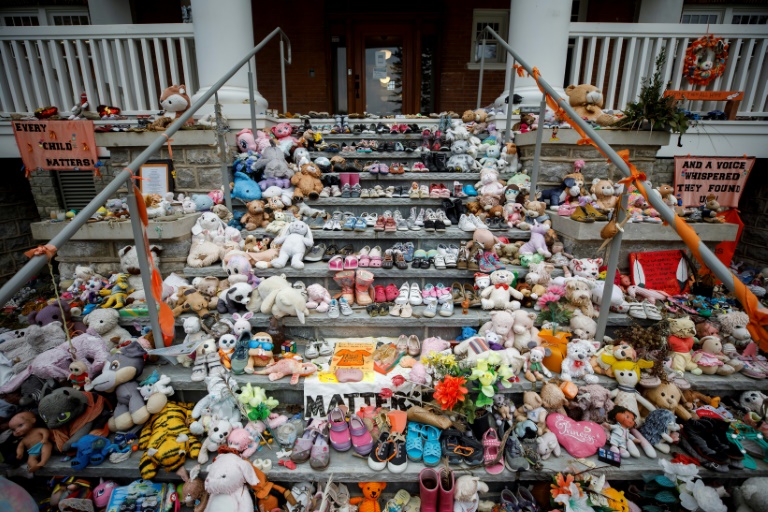
An Indigenous community in Canada said Tuesday it has identified 169 “potential” unmarked graves at a former residential school site, adding to a growing tally of such gruesome discoveries that first rocked the country last year.

The Kapawe’no First Nation in northern Alberta province posted on its website the results of a six-day survey, using ground-penetrating radar, of the Grouard Mission site, about 370 kilometers northwest of Edmonton.

The school, also known as the St. Bernard Mission School, was opened by the Catholic Church in 1894 and ran until 1961.

The University of Alberta’s Institute of Prairie and Indigenous Archaeology led the search.

In a report it said its findings are “the beginning of a long journey to find answers to what happened to the children who never came home from the residential school at St. Bernard’s Mission.”

“There remains a lack of justice and accountability for what happened,” it said. “There is more work to be done to find those answers.”

Numerous investigations into former residential schools are underway across the country, with more than 4,000 children believed to be missing, according to authorities. 

The Kapawe’no First Nation discovery brings the total number of unmarked graves found so far to more than 1,500.

In total, about 150,000 Indigenous children were enrolled from the late 1800s to the 1990s in 139 residential schools across Canada, spending months or years isolated from their families, language and culture.

Many were physically and sexually abused by headmasters and teachers, and thousands are believed to have died of disease, malnutrition or neglect.

A truth and reconciliation commission concluded in 2015 the failed government policy amounted to “cultural genocide.”

In Texas, probes target parents of transgender minors

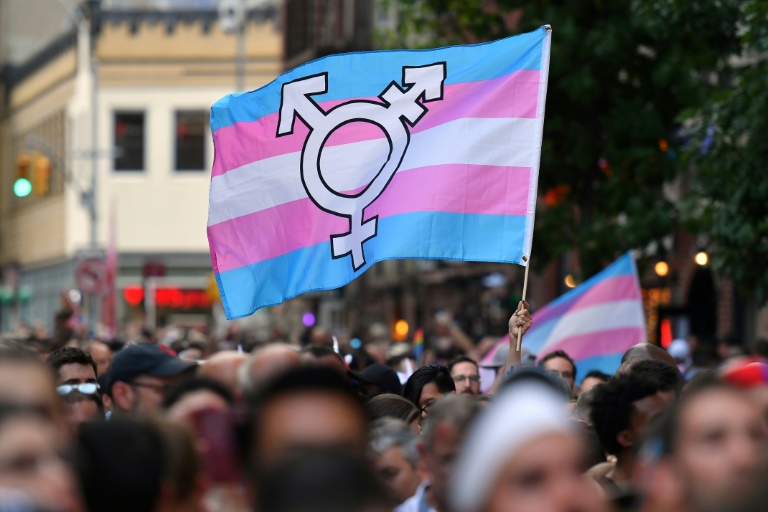
Parents of transgender American minors are under investigation in Texas as part of a controversial new order by conservative Governor Greg Abbott, who has deemed the transitioning procedures “child abuse,” according to a complaint filed Tuesday.

The mother of a transgender teen was suspended by her employer, a Texas family services agency, and visited by a Child Protective Services investigator who was seeking to learn whether the 16-year-old daughter was “currently transitioning from male to female,” the court document said.

The family, backed by the powerful US civil rights organization ACLU, took legal action to block Abbott’s probe, and more broadly to invalidate his directive on the issue from February 22.

Abbott’s letter to the Texas Department of Family and Protective Services (DFPS), published in the middle of an election campaign, states that “‘sex change’ procedures constitute child abuse under existing Texas law.”

He cites reassignment surgeries that he says can cause sterilization and mastectomies, and mentions puberty blockers which slow the body’s changes during adolescence.

The DFPS is duty bound to “investigate the parents of a child who is subjected to these abusive gender-transitioning procedures,” the Republican governor writes.

The unidentified plaintiffs in the petition against the initial investigation said their family has suffered anxiety and fear, and that their daughter has been “traumatized” by the prospect that she “could lose access to the medical treatment that has enabled her to thrive.”

The family was joined in their complaint by a licensed psychologist with many LGBT and transgender clients, who expressed concern that the Abbott directive would force her to report those clients to authorities.

Such care to transgender minors, much like participation by transgender athletes in sports competitions or the use of toilets according to the gender with which they identify, is the subject of extensive debate in the United States, where many conservative states have moved to adopt restrictive regulations.

European subsidiary of Russia's Sberbank to enter bankruptcy

The European subsidiary of Russia’s Sberbank will be wound up after coming under pressure from Western sanctions levelled against the bank in response to Moscow’s invasion of Ukraine, European banking regulators said Tuesday.

The Austrian subsidiary of Russia’s biggest lender Sberbank Europe AG would be allowed to enter “normal insolvency proceedings” while branches in Croatia and Slovenia were sold to local banks, the Single Resolution Board, part of the European Union’s system to maintain financial stability, said in a statement.

Depositors at the Austrian subsidiary would be protected up to 100,000 euros ($111,265), in line with European legislation, while those in Croatia and Slovenia would be covered “with no limits”.

Sberbank AG suffered financing issues following the announcement of tough European Union sanctions aimed at choking off Russian banks’ access to capital markets.

The European Central Bank reported Monday that the European affiliate was “failing or likely to fail” after it “experienced significant deposit outflows as a result of the reputational impact of geopolitical tensions”.

Support for the Austrian subsidiary from its parent was not possible since the Russian central bank prohibits financial institutions from sending cash to countries that have imposed sanctions.

Sberbank Europe AG — which is 100 percent owned by the bank’s Russian parent company — also has subsidiaries in Bosnia and Herzegovina, the Czech Republic, Hungary and Serbia, which are not overseen by European regulators.

In the case of the Austrian subsidiary, the SRB determined letting the bank fail would “not have a negative impact on financial stability”. The subsidiaries in Croatia and Slovenia would open again as normal on Wednesday. 

4 dead in rare Syria-Kurdish clash: monitor

Clashes in Syria’s northeast between regime troops and forces aligned with the Kurdish-led Syrian Democratic Forces killed two from each side on Tuesday, a war monitor said.

Syria’s Kurds set up a semi-autonomous administration in the country’s northeast in 2013 after government troops withdrew. The SDF, a key US partner in fighting the Islamic State jihadist group, is the Kurdish administration’s de-facto army.

Clashes between Kurdish and regime forces are rare in the region. 

“Two regime soldiers were killed and others were wounded” while two members of an SDF-affiliated “military council” in Tal Tamr died after an “armed clash” in the area, the Syrian Observatory for Human Rights said.

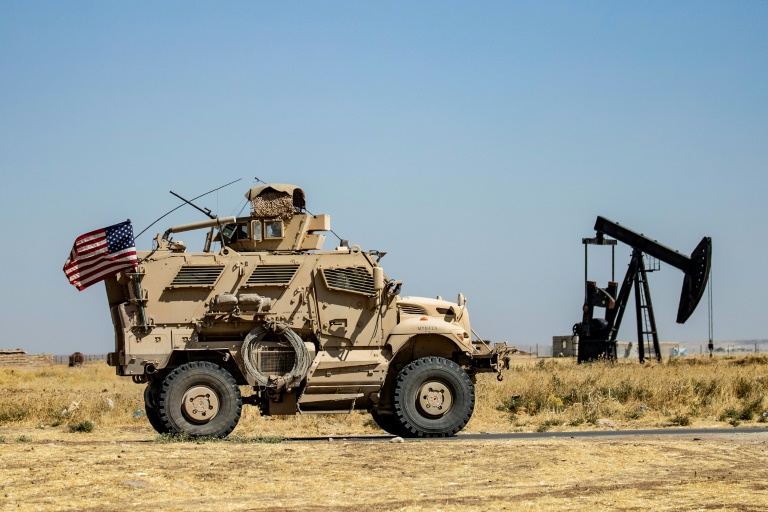
The official SANA news agency said that a “patrol of US forces accompanied by members of the SDF militia tried to penetrate points controlled by the Syrian army” in Hasakeh province.

It did not mention whether there were victims but said the SDF attacked after soldiers blocked the patrol’s passage.

US troops are in Syria as part of an anti-jihadist coalition.

The SDF confirmed the toll in a statement. It did not mention the presence of Americans, and called the incident “a dangerous provocation by the Syrian regime”.

The war in Syria is estimated to have killed nearly half a million people and displaced millions more since it began with a brutal crackdown on anti-government protests in 2011.

It quickly spiralled into a complex conflict that pulled in numerous actors, including jihadist groups and foreign powers.

Russia intervened militarily in Syria more than six years ago to shore up President Bashar al-Assad.

Neighbouring Turkey views some Syrian Kurdish fighters as “terrorists” and has launched several operations against them.

Close Bitnami banner
Bitnami