World

Ukraine accuses Russia of air strikes on housing block, TV tower

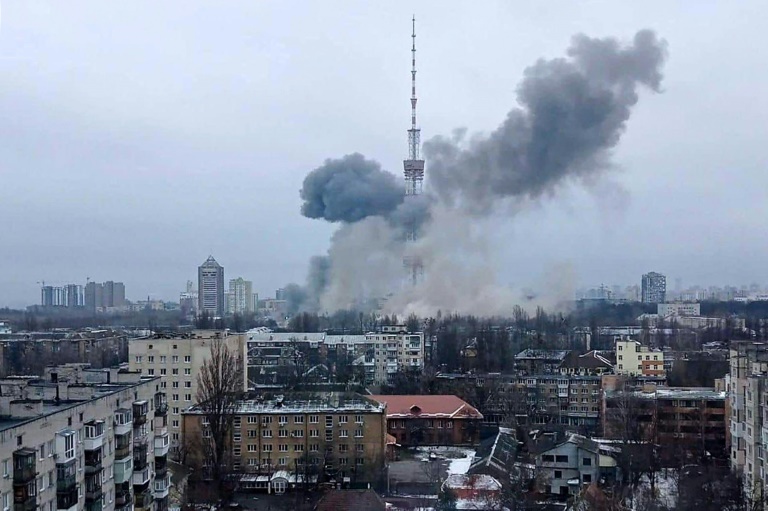
Russian air strikes hit a residential block in Kharkiv and the main TV tower in the capital Kyiv, Ukraine said on Tuesday, as Moscow stepped up attacks despite sanctions and warnings of a humanitarian crisis.

Eight people were reported killed in the strike in Kharkiv, Ukraine’s second biggest city, on day six of Russia’s invasion of its pro-Western neighbour.

Kharkiv officials said 10 more people had been killed by Russian shelling on a local government building, and 10 more were found alive under the rubble.

Ukrainian officials said the strike on the TV tower strike in Kiev killed five people, knocked out some state broadcasting but left the structure intact.

It came after Russia warned Kyiv residents living near security infrastructure to leave their homes.

“This is state terrorism on the part of Russia,” said Ukrainian President Volodymyr Zelensky, accusing Moscow of committing a “war crime”.

Russia has denied targeting civilian infrastructure.

Visiting Estonia on Tuesday, British Prime Minister Boris Johnson called the bombardment of Kharkiv “absolutely sickening” and reminiscent of massacres of civilians in Sarajevo in the 1990s.

“It has that feel to me of an atrocity committed against a civilian centre,” he said.

An AFP reporter in Kharkiv, which is in northeast Ukraine near the Russian border, saw rescue workers carrying a body out of the government building.

– Strategic win along Azov Sea –

The International Criminal Court has already opened a war crimes investigation against Russia since Moscow began its invasion on Thursday.

Ukraine says more than 350 civilians, including 14 children, have been killed in the conflict so far.

New Delhi said an Indian student was among the victims, killed by shelling in Kharkiv.

There was no breakthrough in initial talks between Russia and Ukraine Monday and Russian forces have pressed further into the country.

In southern Ukraine, the city of Mariupol on the Azov Sea was left without electricity after bombardment, while Kherson on the Black Sea reported Russian checkpoints encircling the city.

In a key victory for Moscow, Russia’s defence ministry said its troops had linked up with the forces of pro-Moscow rebels from eastern Ukraine in a region along the Azov Sea coast.

But Ukrainian forces say that despite incursions by “sabotage groups” into the cities, Russian forces have yet to capture a major settlement.

– ‘Shattered peace in Europe’ –

During a visit to an airbase in Poland, NATO chief Jens Stoltenberg said Russian President Vladimir Putin had “shattered peace in Europe”.

Zelensky meanwhile reiterated an urgent appeal for his pro-Western country to be admitted to the European Union.

“Prove you are with us,” he told MEPs in a video address to the European Parliament. “Prove you are not abandoning us and you are really Europeans.”

More than 660,000 people have already fled abroad, the UN refugee agency said, estimating that a million people are displaced within ex-Soviet Ukraine, which has a population of 44 million.

The UN estimates that up to four million refugees may need help in the coming months and 12 million more will need assistance within the country.

It has asked for $1.7 billion in urgent aid, while the EU pledged 500 million euros.

Russia has defied international bans, boycotts and sanctions to press ahead with an offensive it says is aimed at defending Ukraine’s Russian speakers and toppling the leadership.

Defence Minister Sergei Shoigu said Russia would continue “until set goals are achieved”.

He vowed to “demilitarise and de-Nazify” Ukraine and protect Russia from a “military threat created by Western countries”.

Western powers are planning more sanctions in response, with French Finance Minister Bruno Le Maire said they would “bring about the collapse of the Russian economy”.

Russia’s former president Dmitry Medvedev, the deputy head of Russia’s Security Council, hit back, warning that “economic wars quite often turned into real ones” in the past.

– ‘Bombing kept us up all night’ –

Fears are growing of an all-out assault to capture Kyiv — a city of 2.8 million people.

Satellite images provided by US firm Mazar showed a 65-kilometre (40-mile) long build-up of armoured vehicles and artillery north of the city.

Zelensky said defending the city was now “the key priority for the state”.

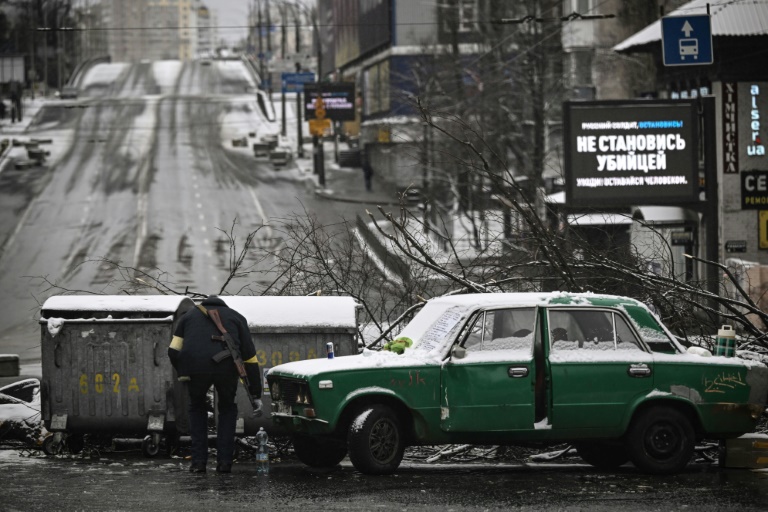
Inside Kyiv, makeshift barricades dotted the streets and residents formed long queues outside the few shops that remained open to buy basic essentials.

In the village of Shaika near Kyiv, Natasha, 51, opened a canteen in the local church to feed soldiers and volunteers.

“The shelling and the bombing kept us up all night,” she said.

– Sanctions hit Russians –

Western nations have moved to further isolate Russia, responding with an intensifying diplomatic, economic, cultural and sporting backlash.

US Secretary of State Antony Blinken on Tuesday suggested Russia should be stripped of UN rights council membership.

Germany has already promised arms for Ukraine, while the EU also said it will buy and supply arms to Ukraine, the first such move in its history.

Turkey said it would implement an international treaty to limit ships passing through the Dardanelles and Bosphorus straits, a move requested by Ukraine to block the transit of Russian warships.

Within Russia, sanctions imposed by the West have begun to bite.

Putin announced emergency measures intended to prop up the Russian ruble, including banning Russians from transferring money abroad, after the currency crashed to a record low.

Many ordinary Russians have raced to withdraw cash.

– Russian conductor sacked –

The response from the world of sports also gathered steam.

Russia was expelled from the World Cup and the country’s clubs and national teams suspended from all international football competitions.

The International Olympic Committee on Monday urged sports federations and organisers to exclude Russian and Belarusian athletes and officials from international events.

In the arts, the Munich Philharmonic said it was parting ways with star Russian conductor Valery Gergiev “with immediate effect” after he failed to respond to a request to denounce the invasion.

Russian soprano Anna Netrebko said she was stepping back from performing “until further notice” amid controversy over her pro-Kremlin stance despite her condemnation of the war in Ukraine.

The Cannes Film Festival meanwhile banned Russian delegations from this year’s event.

burs-dt/jj
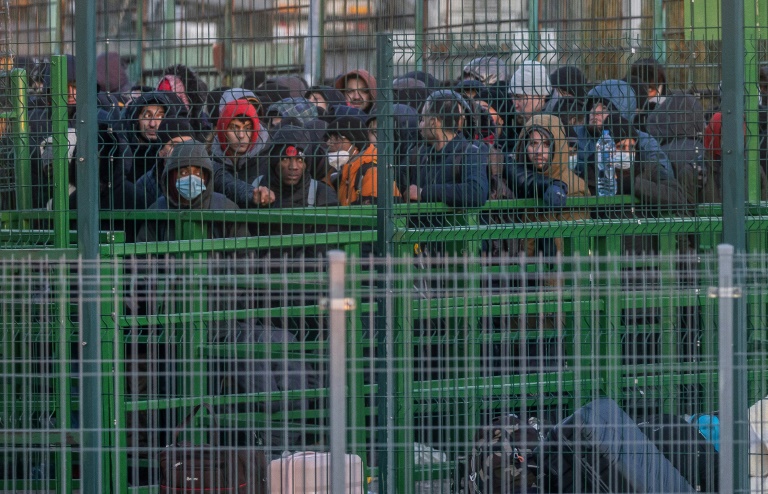
Ghana, Nigeria to fly home citizens stranded by Ukraine crisis

A first group of Ghanaian students evacuated from Ukraine arrived home on Tuesday as African governments stepped up efforts to extract stranded citizens following the Russian invasion.

Nigeria plans to start using chartered planes to evacuate hundreds of its citizens on Wednesday from neighbouring Poland, Romania and Hungary, where they have fled the conflict.

More than 660,000 people have fled Ukraine while around one million people are internally displaced, the United Nations said on Tuesday.

Nigeria’s government and the African Union (AU) on Monday condemned reports that Africans had been mistreated and in some cases denied the right to cross Ukraine’s borders to safety.

Looking cheerful after finally reaching the capital Accra, the Ghanaian students said they wanted to get back together with their families after the difficult journey.

Ghanaian officials said the 17 students were the first batch of over 500 students expected to be brought home. They arrived on commercial flights paid by the government.

“I was afraid for my life, that is why I decided to leave. Some cities were being bombed close to my place and I spoke to my parents who asked that I should leave,” Priscilla Adjai, one of the students, told AFP in the capital Accra.

“It has not been easy but thank God we managed to move out and have finally made it to Ghana.” 

Another student, Esther Edze, said her group had been helped by the Church of Pentecost to leave Ukraine and meet up with Ghanaian diplomats on the other side of the border.

“It’s not an experience I would wish for anyone,” Edze said.

The deputy minister for foreign affairs, Kwaku Ampratwum-Sarpong, said the government would help the students reintegrate and reunite with their families. 

Foreign Minister Shirley Ayorkor Botchwey said 527 Ghanaians had crossed the Ukrainian border to various European countries and would soon be evacuated if they wanted.

– ‘Not moving an inch’ –

Nigeria’s minister of foreign affairs, Geoffrey Onyeama, said there were plans to start evacuating more than 1,500 Nigerians from countries neighbouring Ukraine from Wednesday.

There are about 5,600 Nigerian students in Ukraine and maybe a total of 8,000 Nigerian citizens in the country, the minister said.

He said he had spoken to Ukrainian and Polish officials to get assurances that Nigerians would not be stopped from crossing the border.

AU leaders on Monday voiced concern at the reports of mistreatment of Africans trying to flee the conflict and said such conduct would be “shockingly racist”.

Poland’s ambassador to Nigeria had earlier said all people crossing the frontier from Ukraine get equal treatment.

But some Africans and other foreigners at the Ukraine-Poland border said they were still struggling to get across.

Several African students said they had been bypassed to allow Ukrainians to cross over the frontier first.

“It is stuck, nobody is telling us anything. They call 20 people there to let them pass, but we are still there, we are not moving an inch,” said Ghanaian student Richard Adjei Kusi at the Polish border.

“If you look at the queue, our friends, some of them have been here for more than four days now.”

Governments from South Africa to DR Congo were making preparations this week to help their citizens who have crossed Ukraine’s borders to other nations.

Senegal’s secretary of state for citizens abroad, Moise Sarr, said more than 20 Senegalese had crossed into Poland and were being looked after by the embassy in Warsaw.

Sarr also said a dozen African embassies had “pooled their resources and efforts” to improve support for African nationals in Ukraine.

Fear and solidarity for refugees stuck at Polish border

They recount fears of a war they never imagined would happen and the kindness of strangers. The cars queue as far as the eye can see: thousands of Ukrainians desperate to cross into Poland and to safety.

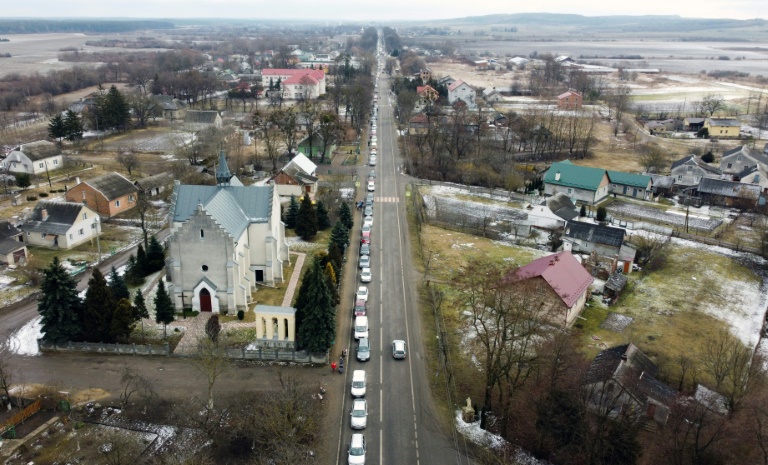
Tvirzha is a tiny Ukrainian village 24 kilometres (15 miles) from the Shegyni border post. It is here that the line of vehicles ended, mainly filled with women and children, as they crawled to Poland.

Heaps of rubbish and some abandoned cars were the only pieces of evidence that the queue was even several kilometres longer at the end of last week.

It was in Tvirja, in front of the school she leads that Ivana Shcherbata set up a stand offering hot drinks and food with the help of some women in the village.

“We stood up and did all that with our own hands,” Shcherbata said, presiding over everything that a freezing passenger could dream of.

Tea, coffee, sandwiches and large pots of borscht, a beetroot soup whose origins Ukraine and Russia dispute, were all prepared in the school’s kitchens, which were overflowing with cans and jars of pasta.

On the second floor, the nursery’s dormitory welcomed mothers and their children in need of a warm space for the night.

– ‘Really touched’ –

“I started this spontaneously then these women came to offer help, to bring food,” said Shcherbata in the kitchen.

Arriving from Kryvyi Rih in central Ukraine, Daria, with her son in her arms, had no words to describe the solidarity she saw on her journey.

“I am really touched that we have such people. Everywhere, we were given food, clothes, they did everything to help us,” said the 32-year-old government employee.

“We are on the road for three days now, in a traffic jam for one day,” Daria added, evacuating with her sister who returned from Canada where she had spinal surgery the day before the Russian invasion.

According to the UN, more than 660,000 people have already fled to bordering countries, mainly to Poland, which has welcomed nearly 300,000 Ukrainians.

The country’s roads have been overwhelmed, making journeys longer and volunteers have set up checkpoints fearing Russian “provocations” and adding to bottlenecks.

– ‘Really scary’ –

“The trip was really hard. It’s calmer here, but the drive was really scary,” said Katerina Zaporozhets, a laboratory worker from the central city of Cherkassy.

It took her 24 hours to arrive at the Shegyni border post — and she will likely wait another 48 hours before crossing.

The six children whom she and two friends brought with them were already crossing the border where the local municipality arranged buses to take them directly to Shegyni.

For these future refugees, they were not prepared for what awaited them.

“These past two weeks, I suspected something like this could happen. But I never thought it would be so terrible,” Zaporozhets said, with no plan for what happens after she leaves her children in the shelter.

Some cars moved in the opposite direction. On board were men who had brought their families to the border and who are not allowed to leave the country, having been called up instead to fight.

Russia's war on Ukraine: Day six situation on the ground

On the sixth day of fighting in Ukraine Tuesday, Russia is striking cities and building up its forces near the capital Kyiv, vowing not to stop until “set goals are achieved”.

Here is a summary of the situation on the ground, based on statements from the warring sides, Western defence and intelligence sources and international organisations.

The military situation:

– Russia says will continue “until set goals are achieved”.

– Satellite images show 65-kilometre (40-mile) column of Russian trucks, armoured vehicles and artillery north of Kyiv.

– Citizens build barricades in city centre.

– Russia tells residents near Kyiv intelligence structure to evacuate.

– Ukraine says Russian strike targets Kyiv main TV tower and knocks out some state broadcasts.

– Russian troops and pro-Moscow rebels link up in a key region in eastern Ukraine, Moscow says.

– Ukraine says has taken out hundreds of Russian pieces of weaponry, including 29 aircraft, 29 helicopters and 198 tanks.

– Ukraine says Russia firing rockets into residential areas after failing to take Kharkiv and Chernihiv.

– A Russian missile attack on a government building in Kharkiv kills 10 or more and wounds 20, Ukraine says. 

– Eight more die in a subsequent air strike on a Kharkiv residential building, Ukraine says. 

– Russian army sets up checkpoints at southern city of Kherson, mayor says.

– Russia says fired long-range high-precision weapons from the sea, hitting two unspecified airfields and three air defence radars.

– Russian forces made little progress in past 24 hours and don’t control Ukraine’s airspace, British intelligence says.

– France sends hundreds more troops into Romania.

– NATO will “defend every inch” of its territory, alliance chief says.

The civilian/humanitarian situation:

– UN says 12 million people in Ukraine will need aid.

– One million people are displaced within Ukraine, and more than 677,000 have fled abroad, UN says. 

– China begins evacuating nationals from Ukraine.

burs-jh/ach 

Climate crisis: Indigenous groups both victims and saviours

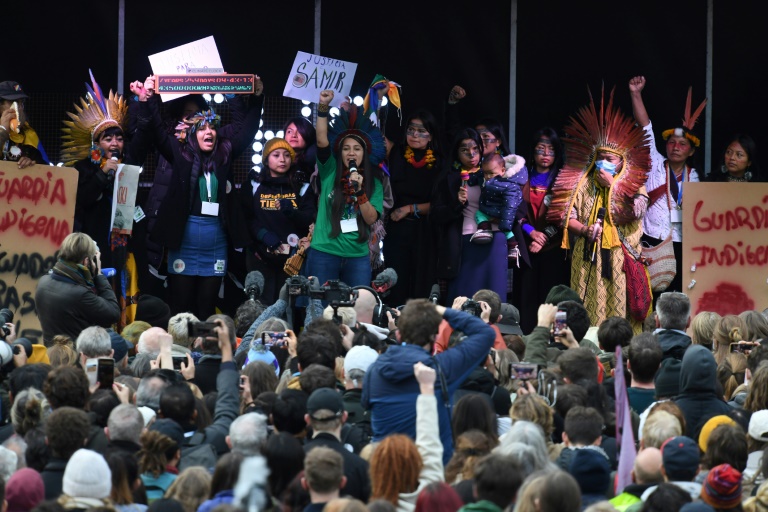
Long portrayed as victims of climate change, indigenous peoples who have struggled for years to protect ancestral lands and ways of life from destruction are finally being recognised as playing an important role in defending precious environments. 

“In the face of climatic, economic and health catastrophes, reality forces the recognition of indigenous peoples’ knowledge, and a new relationship of respect,” said Gregorio Mirabal, head of the COICA indigenous organisation. 

“Now we are not victims, we are the solution!”

That message was reinforced in a sweeping report by UN climate experts on the impacts and adaptation to global warming, released on Monday, that outlined in harrowing detail the challenges facing humanity and the planet they depend upon for survival. 

It highlights that many indigenous peoples are on the frontlines of global warming, such as those in the Arctic whose communities and traditions are threatened by melting sea ice and rising waters.

But it also underscores what these communities and their intimate knowledge of nature — transmitted from generation to generation — can bring to the fight against climate change, in particular to limiting its impacts. 

That is crucial since indigenous communities, who number less than half a billion people worldwide, steward land home to 80 percent of Earth’s remaining biodiversity, notes the IPCC. 

From the Amazon to Siberia, these communities have been forced to develop methods of coping with external challenges “for centuries and have developed strategies for resilience in changing environments that can enrich and strengthen other adaptation efforts”, it said.

A major cause of their vulnerability acknowledged for the first time by the IPCC in this report is colonialism. 

“I think it’s a huge advancement,” said Sherilee Harper, of the University of Alberta, Canada, adding that this is a crucial context that helps not only understand the problems facing indigenous groups, but also to frame solutions.   

Harper was among the authors of the IPCC report, which also included indigenous contributors and peer reviewers for the first time.  

Previously, she told AFP, “there was a tendency to paint them as victims of climate change” without the agency to act.

“Of course, that is not true.”

– ‘Arrogance’ – 

Indigenous groups have welcomed the IPCC’s recognition of ancestral knowledge, but say the situation requires more than words. 

“We need to come up with some kind of action-oriented strategy,” said Rodion Sulyandziga, of the International Indigenous Peoples Forum on Climate Change. 

“We need to combine all our efforts. We can bring to the table indigenous knowledge not just on prevention, but on new technology too.”

Crucially, leveraging traditional knowledge for adapting to climate change depends on restoring rights to ancestral lands, said Sulyandziga, who represents the Indigenous Udege People of Russia — Udege means “forest people”. 

“Without our land, we cannot adapt,” he said.  

IPCC scientists also stress the importance of “self-determination” and recognising indigenous rights. 

Chapter after chapter, region after region, the thousands of pages of the report give multiple examples of adaptation practices that could serve as inspiration for the climate threats that scientists warn are already starting to have a severe impact across the world. 

Take wildfires. Indigenous communities know how to fight fire with fire, burning certain plots at specific times of the year to prevent blazes from getting out of control later. 

IPCC experts also mention the attention paid to the diversification of crops, like in the agroforestry system of the Kichwas of Ecuador who grow food crops and medicinal plants under the canopy of the Amazon rainforest. 

Or even the use of traditional knowledge in Fiji to identify endemic plant species that can help limit coastal erosion. 

Harper said everyone can benefit from learning this wisdom, once people — especially in the West — set aside their “arrogance”. 

“We have understood for thousands of years when there is balance and imbalance; it is our home and we recognise the limits,” said COICA’s Mirabal. 

“Our bond with mother nature allows us to take care of what really matters — water, earth, life.”

But the IPCC warned that given the scale of climate change impacts, there are hard limits to adaptation. 

While some communities may have to leave their homes, others have seen climate change fundamentally alter the land around them such that what was once familiar becomes strange. 

Like the Inuit communities in and around the Arctic, where warming is faster than almost anywhere on Earth and the once-dependable snow and sea ice are now fragile and fleeting.  

Ashlee Cunsolo, another author of the IPCC report, said colonialist regimes inflicted terrible injuries over generations — from the erosion of language and culture to forced relocation.  

People said they had “finally entered into this period of indigenous self-determination,” said Cunsolo. They were “reclaiming culture” and lands. 

“And then climate change comes in.”

Taliban row back comments saying Afghans barred from leaving

The Taliban’s chief spokesman on Tuesday rowed back comments he made suggesting Afghans would be barred from leaving the country, saying he had been misunderstood.

Zabihullah Mujahid sparked alarm at the weekend when he told a press conference that Afghans would need “an excuse” to travel abroad, and confirmed Afghanistan’s new rulers had put a stop to any more evacuation flights.

After seizing power in August, the Taliban promised Afghan citizens would be allowed to come and go as they pleased — as long as they had passports and visas for their destinations.

But on Sunday he told a press conference: “I have to say clearly that persons who leave the country along with their families and have no excuse… we are preventing them.”

On Tuesday he tweeted that his “meaning” was: “Our compatriots who have legal documents and invitations can travel outside the country and can return to the country confidently.”

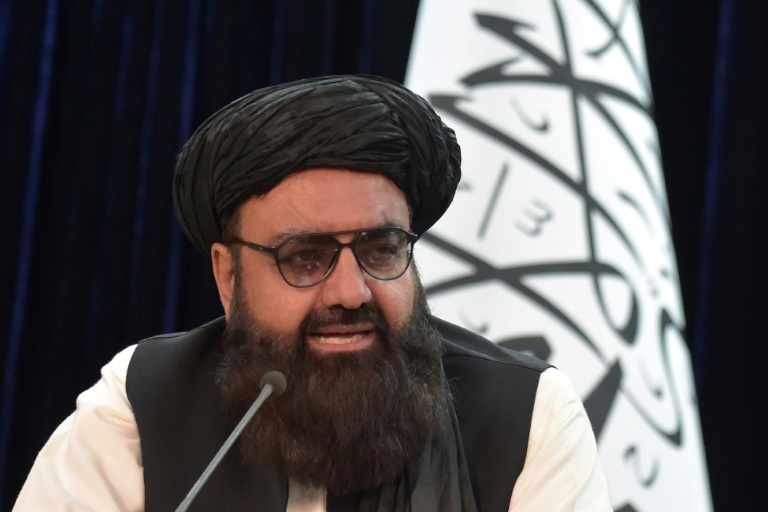
The Taliban’s deputy minister for refugees and repatriations, however, said Tuesday it was “not appropriate” for Western nations to invite Afghans abroad, or facilitate their departure.

“To a larger extent, the international community is interfering in Afghanistan’s affairs and are inviting people promising asylum,” Mohammad Arsala Kharutai told a press conference.

“This is interference and against international law and we condemn it.”

Mujahid’s Sunday announcement alarmed many Afghans who have been promised asylum abroad after working with US-led foreign forces or other Western organisations during the Taliban’s 20-year insurgency.

More than 120,000 Afghans and dual nationals were evacuated up to August 31 when the last US-led troops withdrew, two weeks after the hardline Islamists seized Kabul.

Thousands with similar links are still in Afghanistan, however, desperate to leave and fearful they may be targeted by the Taliban as “collaborators”.

The last official evacuation by air was on December 1, although organised road convoys to Pakistan have taken place as recently as last week.

Hugo Shorter, Britain’s top envoy to Afghanistan, but based outside the country, said barring Afghans from leaving amounted to “unacceptable restrictions on freedom of movement”.

“I call on the Taliban to clarify their remarks urgently,” he tweeted.

“The world is still watching the Taliban’s behaviour.”

European embassies pressure Pakistan over UN vote on Ukraine war

The ambassadors of European Union nations to Pakistan appealed Tuesday for Islamabad to support an emergency resolution condemning the Russian invasion of Ukraine after the country abstained from an earlier vote on the crisis.

Pakistan Prime Minister Imran Khan is attempting a balancing act in relations with the world’s superpowers — particularly as Islamabad’s value to the United States has slipped following the withdrawal of foreign forces from neighbouring Afghanistan.

“We urge Pakistan to join us in condemning Russia’s actions and to voice support for upholding the UN charter and the founding principles of international law,” said a statement signed by the envoys from EU member states, as well as Britain, Canada, Japan, Norway and Switzerland.

Pakistan on Monday abstained from a UN Human Rights Council vote calling for an urgent debate on the war, which was nevertheless pushed through and is due to take place on Thursday.

Pakistan has repeatedly stressed it favours “dialogue” as a solution to the crisis.

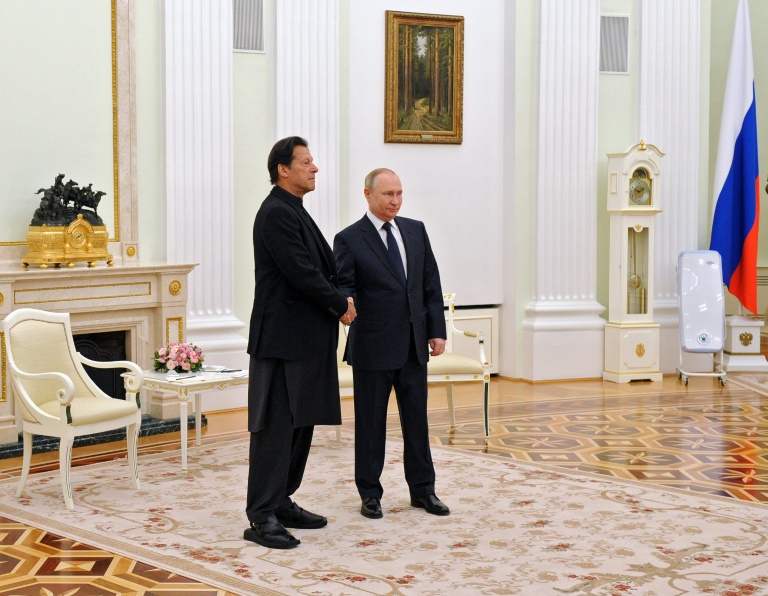
The day Russia invaded Ukraine, Khan was in Moscow meeting President Vladimir Putin in what was widely considered an ill-timed visit.

On Monday, Khan defended the trip — the first by a Pakistani leader to Russia in more than two decades.

“My foreign policy is independent and visits to China and Russia will prove beneficial for Pakistan in the future,” he said in a televised address. 

China — both a close ally of Russia and Pakistan — has poured billions of dollars into Pakistan in recent years to boost the country’s infrastructure. 

Russian-European Mars rover 'very unlikely' to launch this year

A Russian-European mission to land a rover on Mars is “very unlikely” to launch this year due to sanctions over Moscow’s invasion of Ukraine, the European Space Agency said.

The launch of the Rosalind Franklin rover, whose mission is to drill into Martian soil to seek out signs of life, was originally planned for 2020 but postponed due to Covid-19 and technical delays.

In January the ESA declared the ExoMars mission was ready to launch this September, with Russia providing the launcher, descent module and landing platform.

However after Russia shocked the world by invading Ukraine last week and the European Union responded by targeting Moscow with a massive package of economic punishments, the ESA said “the sanctions and the wider context make a launch in 2022 very unlikely”.

“We are fully implementing sanctions imposed on Russia by our member states,” the ESA said in a statement on Monday.

“We deplore the human casualties and tragic consequences of the war in Ukraine. We are giving absolute priority to taking proper decisions, not only for the sake of our workforce involved in the programmes, but in full respect of our European values.”

The ESA also said it took note of the Russian space agency Roscosmos’ decision over the weekend to suspend launches and withdraw its workers from Europe’s spaceport in Kourou, French Guiana, over the EU sanctions.

It will “consequently assess” future planned operations using Russian launchers, including the deployment of two satellites for Europe’s Galileo GPS system planned for this year.

The invasion of Ukraine and responding Western sanctions have raised a question mark over joint space programmes with Russia, most notably for the International Space Station, where astronauts and cosmonauts work side-by-side.

After Moscow raised the prospect of withdrawing from the ISS over US sanctions, NASA said Monday it was exploring ways to keep the space station in orbit without Russian help.

At least 17 feared dead in Myanmar jade mine landslide

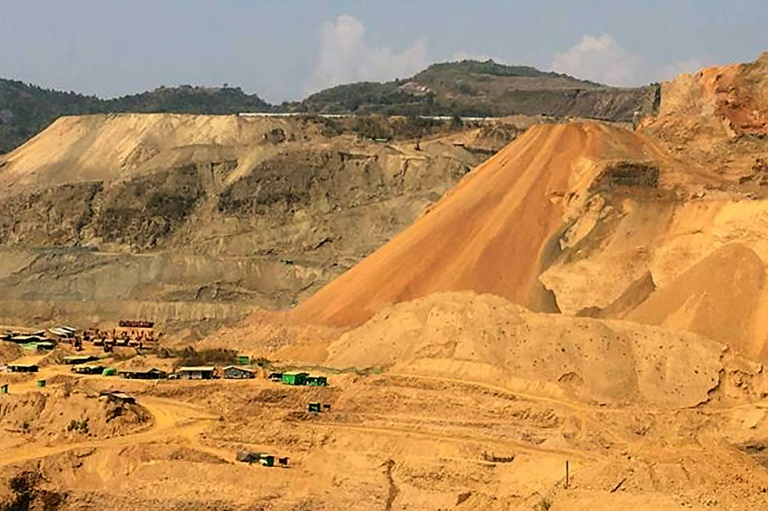
At least 17 people are feared dead after a landslide trapped dozens of workers inside a Myanmar jade mine, sources and local media said Tuesday.

The incident came on Monday evening near Hpakant township in northern Kachin state — the same region where a massive landslide in 2020 entombed 300 workers in the country’s worst ever mine disaster.

Pictures of the scene showed the aftermath of the landslide, with a broad swathe of brown earth and rock covering the pockmarked side of a hill.

A local source said “17 bodies were found so far”, but AFP was unable to independently confirm these figures. 

The source added that the mine’s owners — Yangon Technical and Trading Co., a firm linked to the country’s military which took power last year in a coup that sent the country into turmoil — had so far prevented rescue teams from entering the area.

Local media and sources in the area said that 40 people were buried in the landslide, which struck around 10:30 pm (1630 GMT). 

Dozens die annually while working in Myanmar’s highly lucrative but poorly regulated jade industry, which uses low-paid migrant workers to scrape out a gem highly coveted in neighbouring China.

Jade and other abundant natural resources in the country’s north — including timber, gold and amber — have helped finance both sides of a decades-long civil war between ethnic Kachin insurgents and the military.

Civilians are frequently trapped in the middle of the fight for control of the mines and their lucrative revenues, with a rampant drug and arms trade further curdling the conflict.

“The workers’ rights in jade mines are never ensured by law — whenever they die in a landslide, they get a small compensation in the end,” said one local environmental activist, who declined to be named.

The military coup in February 2021 also effectively extinguished any chance of reforms to the dangerous and unregulated industry, watchdog Global Witness said in a report this year.

Queen Elizabeth II returns to duties after Covid scare

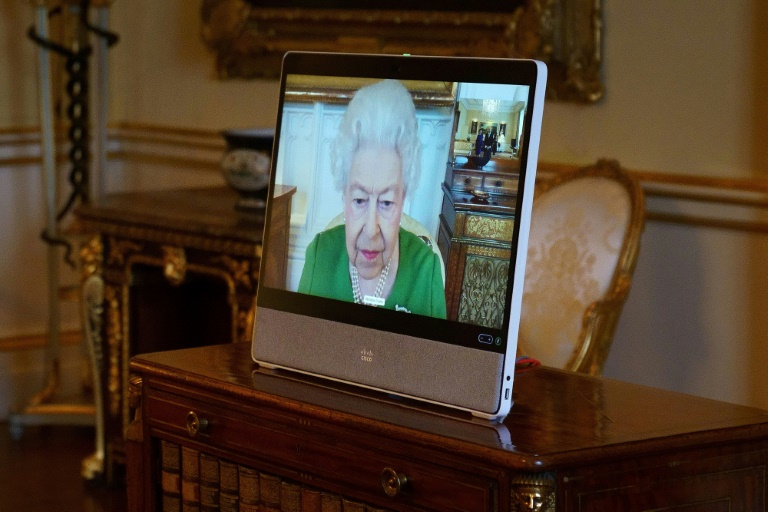
Queen Elizabeth II held two virtual audiences on Tuesday, Buckingham Palace said, after she was forced to cancel engagements last week due to Covid.

Concerns have mounted for the 95-year-old monarch’s health since she tested positive on February 20, overshadowing the start of her record-breaking 70th year on the throne.

But a palace statement indicated she was now well enough to hold engagements, hosting the new ambassadors of Andorra and Chad from her home at Windsor Castle.

The Queen last week cancelled similar scheduled engagements with new ambassadors as she was suffering from what were described as “mild” Covid symptoms.

A diplomatic reception she was also due to attend on Wednesday this week was cancelled on the advice of Foreign Secretary Liz Truss, due to Russia’s invasion of Ukraine.

Buckingham Palace has said it will not give a running commentary on the head of state’s health, but confirmation she is undertaking duties again will be seen as a positive.

She was forced to slow down on medical advice after spending a night in hospital following unspecified tests in October last year.

She has rarely been seen in public since.

The Queen became the first monarch in British history to reign for 70 years on February 6, and public celebrations are planned to mark the event in early June.

Senior members of the royal family are due to visit eight of the 14 Commonwealth countries outside the UK where she is also queen and head of state in the coming weeks.

Her grandson Prince William and his wife Catherine are due to tour Belize, Jamaica and The Bahamas in a visit likely to be keenly watched for republican sentiment.

Barbados became the world’s newest republic in November last year, ending its three centuries of association with the UK and the queen as head of state.

Both main political parties in Jamaica back the idea of becoming a republic, and could be spurred into emulating their Caribbean counterparts, royal experts say.

The Platinum Jubilee year has also been overshadowed by the Queen’s second son, Prince Andrew, who settled a US civil case for sexual assault.

Her eldest son and heir, Prince Charles, is meanwhile under scrutiny after police in London announced a probe into “cash for honours” claims connected to one his charities.

Close Bitnami banner
Bitnami