World

Arabs, Afghans decry 'racist' double standard in Ukraine media commentary

The world has been stunned by Russia’s invasion of Ukraine, but shock quickly gave way to indignation in other strife-torn parts of the world over media commentary many saw as racist against them.

“This isn’t a place — with all due respect, you know — like Iraq or Afghanistan that has seen conflict raging for decades,” said Charlie D’Agata of US network CBS News.

“This is a relatively civilised, relatively European — I have to choose those words carefully too — city where you wouldn’t expect that or hope it is going to happen.”

A day later, after much online furore, D’Agata apologised for his “poor choice of words”.

This was just one of many remarks on reputable media outlets drawing a line between the conflict unfolding in Ukraine and those in other parts of the world.

Many Arabs were quick to point out the double standard, noting that while the toll of war may be similar in the respective conflicts, the media treatment is not.

Some also drew a comparison between Europe’s welcoming of Ukrainian refugees and the influx of Syrians, Iraqis and Afghans, which was declared a “migrant crisis”.

Political scientist Ziad Majed said that, while there was “magnificent solidarity” from the world over the Ukraine conflict, it also revealed a “shocking distinction”.

The discrepancies in media treatment revealed the “dehumanisation of refugees from the Middle East”, said Majed, a professor at the American University of Paris.

“We can understand that the Ukrainians are Europeans, and that the memory of war in Europe can revive a lot of emotions,” he said.

But he stressed that “when we hear some commentators speaking about ‘people like us’, this suggests that those coming from Syria, Iraq, Afghanistan or Africa are not (like them)”.

– ‘Racist coverage’ –

The Qatari channel Al Jazeera English was also not immune to the controversy.

“These are not, obviously, refugees trying to get away from areas in the Middle East that are still in a big state of war,” said one of its anchors. “They look like any European family that you would live next door to.”

The network later issued an apology, describing the remarks as “insensitive and irresponsible”.

Salem Barahmeh, director of the pro-Palestinian platform Rabet, was quick to point out seeming discrepancies in the commentary.

“Refugees are welcome depending where they come from,” he wrote on Twitter, adding that “resistance to occupation is not only legitimate but a right”.

The Arab and Middle Eastern Journalists’ Association condemned “examples of racist news coverage that ascribes more importance to some victims of war than others”.

“This type of commentary reflects the pervasive mentality in Western journalism of normalising tragedy in parts of the world such as the Middle East, Africa, South Asia and Latin America.”

– ‘Civilised’ –

For Syrians, the disparity in media treatment is particularly striking as Russia launched a bloody intervention to prop up Bashar al-Assad’s regime more than six years ago.

Before the war in Ukraine, Majed said, Syrian territory served as a “laboratory” for the Russian army, on which it “tested its arsenal and tactics”.

Journalist Philippe Corbe referenced that conflict when he spoke about the Ukraine refugee flow on French broadcaster BFM TV.

“We are not talking about Syrians fleeing the bombardment of the Syrian regime, supported by Vladimir Putin,” he said.

“We are talking about Europeans who are leaving in their cars, that look like our cars… and who are just trying to save their lives.”

Contacted by AFP, the broadcaster said Corbe’s remarks were “clumsy but taken out of context… (and) led to the mistaken belief that he was defending a position opposite to the one he wanted to emphasise, and he regrets this”.

AdeelaOfficial, an Instagram account dedicated to humorous commentary on celebrity news, took a break from the jokes to decry media “racism”.

“The Western media claims to protect human rights and defend democracy, when in reality it is ignorant, racist and cannot see beyond its own nose,” it charged.

Afghans have also expressed exasperation over Ukraine coverage, just six months after the Taliban seized control in a lightning offensive that sent the country spiralling into chaos and hundreds of thousands of people into exile.

Many have highlighted what they saw as an emphasis media has put on Christian Europeans with “blond hair and blue eyes” becoming refugees, marking them out as different from other victims of war.

“It is the same point being made again and again: people in all other conflicts were half humans, of lesser worthy origin and race, but Europeans are full humans. So this war matters,” said Muska Dastageer, a university lecturer.

The normalisation of war in the Middle East and so-called third world countries and “the assumption that they deserve war is just one of the reasons why those wars lasted so long,” added Aisha Khurram, a former youth representative to the United Nations.

burs-tgg/ecl/fox/fz/pjm

Russia strikes Ukrainian cities as troops mass near capital

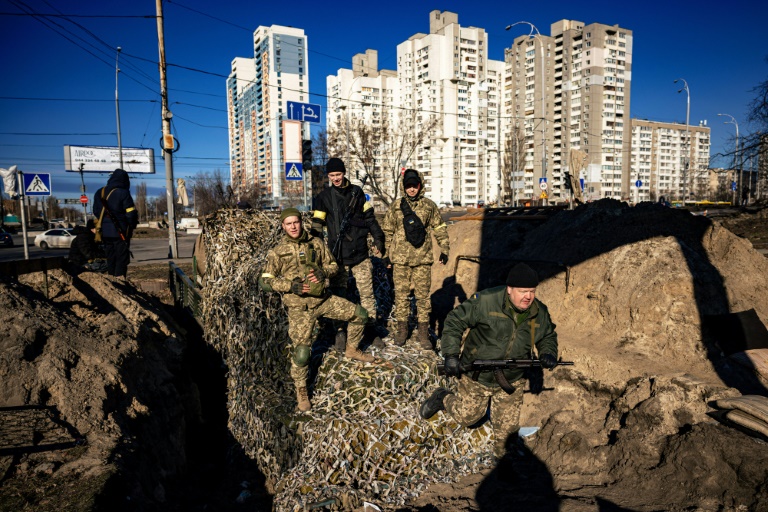
Russian forces struck cities in eastern Ukraine and massed armoured vehicles and artillery near the capital Kyiv on Tuesday, as Western powers promised further sanctions to bring down Russia’s economy.

On the sixth day of Russia’s invasion, officials in Ukraine’s second city, Kharkiv, said the Russian army had shelled the local administration building, killing at least 10 people. 

An AFP reporter saw emergency services carrying a body out of the building, which was surrounded by rubble and whose windows were completely shattered.

“This is state terrorism on the part of Russia,” Ukrainian President Volodymyr Zelensky said in a video statement in which he called the defence of Kyiv “the key priority for the state”.

Ukrainian emergency services said at least 10 people were killed and more than 20 wounded, with 10 peple discovered alive under the rubble as rescue workers cleared debris.

EU foreign policy chief Joseph Borrell said the shelling of Kharkiv “violates the rules of war”.

Armed clashes and bombings were also reported in various cities in southern Ukraine.

Mariupol on the Azov Sea was left without electricity, while Kherson on the Black Sea reported Russian checkpoints around the city.

– ‘Shattered peace in Europe’ –

Russian President Vladimir Putin has “shattered peace in Europe”, NATO chief Jens Stoltenberg said during a visit to an airbase in neighbouring Poland.

“Russia’s aim is clear — mass panic, civilian victims and the destruction of infrastructure. Ukraine is valiantly fighting back,” Mykhailo Podolyak, an adviser to Zelensky, said on Twitter.

More than 350 civilians have been killed since the Russian invasion began, including 14 children.

New Delhi said an Indian student was among the victims, killed by shelling in Kharkiv on Tuesday.

More than 660,000 people have already fled abroad, the UN refugee agency said, estimating that a million people are displaced within Ukraine.

Russia has defied international bans, boycotts and sanctions to press ahead with an offensive which it says is aimed at defending Ukraine’s Russian speakers and toppling the leadership.

Defence Minister Sergei Shoigu said Russia would continue “until set goals are achieved” after initial ceasefire talks between Moscow and Kyiv failed to secure a breakthrough.

He vowed to “demilitarise and de-Nazify” Ukraine and protect Russia from a “military threat created by Western countries”.

Western powers are planning ever more stringent sanctions. 

“We will bring about the collapse of the Russian economy,” French Finance Minister Bruno Le Maire told the Franceinfo broadcaster.

The British government said Western sanctions would remain “for as long as it takes” and warned Putin himself could face prosecution for war crimes.

– ‘Bombing kept us up all night’ –

As the conflict intensifies, fears are growing of a possible Russian assault to capture Kyiv — a city of 2.8 million in normal times.

Satellite images showed a long build-up of armoured vehicles and artillery starting 29 kilometres (18 miles) north of the city.

The column is more than 65 kilometres long and covers the entire road from near Antonov airport outside Kyiv to the town of Prybirsk, US satellite imaging company Maxar said.

“Some vehicles are spaced fairly far apart while in other sections military equipment and units are travelling two or three vehicles abreast on the road,” Maxar said.

In the city, makeshift barricades dotted the streets and residents formed long queues outside the few shops with essentials that remained open.

“We will greet them with Molotov cocktails and bullets to the head,” bank employee Viktor Rudnichenko told AFP. “The only flowers they might get from us will be for their grave.”

In the village of Shaika near Kyiv, Natasha, 51, opened a canteen in the local church to feed soldiers and volunteers.

“The shelling and the bombing kept us up all night,” she said.

Of the hundreds of thousands of people who have fled abroad, neighbouring Poland alone has taken in nearly 400,000 people.

Iryna Plakhuta, a pregnant 43-year-old executive, had to leave her family behind in the capital because of fears over her safety.

“Our husbands stayed in Kyiv,” she said. “They are protecting Ukraine. It’s so hard.”

Badr Tawil, 23, a student, was among a group of Israelis evacuated from Ukraine who landed on Tuesday at Ben Gurion airport outside Tel Aviv.

“We just woke up once and we heard the sounds around us. Bombs everywhere. So we decided to leave, just to leave Ukraine,” he said.

– War crimes probe –

Putin announced his demands to bring the war to an end in a phone call with his French counterpart Emmanuel Macron on Monday.

They included recognition of Russian sovereignty over Crimea and Ukraine’s demilitarisation.

Instead, Western nations have moved to increasingly isolate Russia, responding with an intensifying diplomatic, economic, cultural and sporting backlash.

The weekend featured a momentous series of announcements from Europe, with Germany unveiling a historic change to its defence policies.

The EU also said it would buy and supply arms to Ukraine, the first such move in its history.

Moscow came under fire on Monday at the UN General Assembly and the International Criminal Court (ICC), which opened a war crimes investigation.

At the UN Human Rights Council in Geneva on Tuesday, numerous diplomats walked out of the room when a pre-recorded video message by Russian Foreign Minister Sergei Lavrov was played.

And Turkey said it would implement an international treaty to limit ships passing through the Dardanelles and Bosphorus straits, a move requested by Ukraine to block the transit of Russian warships.

– Race to withdraw cash –

Within Russia, sanctions imposed by the West began to bite.

The Russian ruble crashed to a record low and the central bank to more than double its key interest rate to 20 percent.

Putin also announced emergency measures intended to prop up the ruble, including banning Russians from transferring money abroad.

Many raced to withdraw cash.

Retired soldier Edward Sysoyev, 51, fidgeted impatiently while in line at a bank in Moscow.

“Ninety percent of Russians are going to rush to withdraw their rubles and change them into dollars, property or even gold… it’ll be ordinary people who pay for this military bun-fight,” he said.

– Russian conductor sacked –

The response from the world of sports also gathered steam, as Russia was expelled from the World Cup and the country’s clubs and national teams were suspended from all international football competitions.

The International Olympic Committee on Monday urged sports federations and organisers to exclude Russian and Belarusian athletes and officials from international events.

Authorities in badminton, rugby, ice hockey, basketball and Formula One have all moved to act against Russia, either banning Russian national teams and clubs, or suspending events in Russia.

In the latest developments, Russia was stripped of hosting the 2022 Volleyball World Championships, YouTube said it was blocking Russian channels RT and Sputnik in Europe and shipping giant Maersk said it would stop deliveries to Russian ports.

In the arts, the Munich Philharmonic said it was parting ways with star Russian conductor Valery Gergiev “with immediate effect” after he failed to respond to a request to denounce the invasion.

burs-dt/jm

Poorer nations need $60 bn a year to protect nature: NGOs

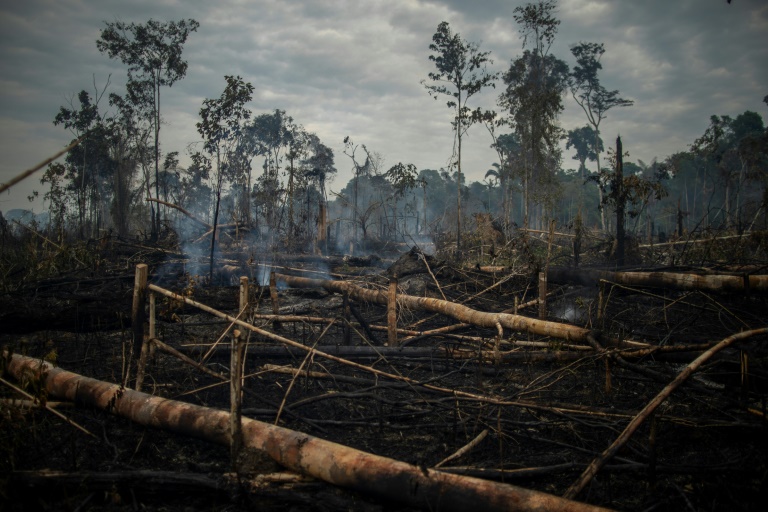
Wealthy countries should provide at least $60 billion every year to the world’s poorest nations to combat biodiversity loss, an alliance of environment groups said Tuesday.

The appeal by WWF, the International Union for Conservation of Nature (IUCN) and other green groups was launched on the sidelines of a major UN environment meeting in Nairobi.

It comes ahead of key talks for a UN biodiversity summit to be held in China that will see nations hammer out conservation targets for the next decade.

The $60 billion (53.67 billion euros) would address “the disproportionate impact of wealthy country consumption habits on biodiversity,” the signatories said in a joint statement.

“Wealthy nations are driving much of the loss of nature in developing countries through imported goods and have a responsibility to address this impact,” said Brian O’Donnell, director of Campaign for Nature.  

Some $844 billion annually is needed to address the loss of biodiversity and nature — some $711 billion more than is being spent today, the NGOs said.

An boost in financial assistance should go hand in glove with an end to public and private investment that damages the environment, said Marco Lambertini from WWF.

“It is feasible. It requires political will to make it happen,” Lambertini said of the $60 billion target.

“It is not a tax for biodiversity. This is an investment” and made clear business sense, he added.

A pledge by wealthy nations to provide the developing world with $100 billion annually to deal with the climate crisis has not been fulfilled.

A major UN report on climate change released Monday stressed the protection of biodiversity and ecosystems in the fight against global warming and its impacts.

“Ending the biodiversity crisis is as important to the future of humanity as stopping climate change,” said Patricia Zurita from Birdlife International, a signatory of the funding appeal.

UK warns Putin of indefinite sanctions, war crimes

The UK government warned Tuesday that Russian President Vladimir Putin and his commanders in Ukraine could face prosecution for war crimes and that Western sanctions would remain “for as long as it takes”.

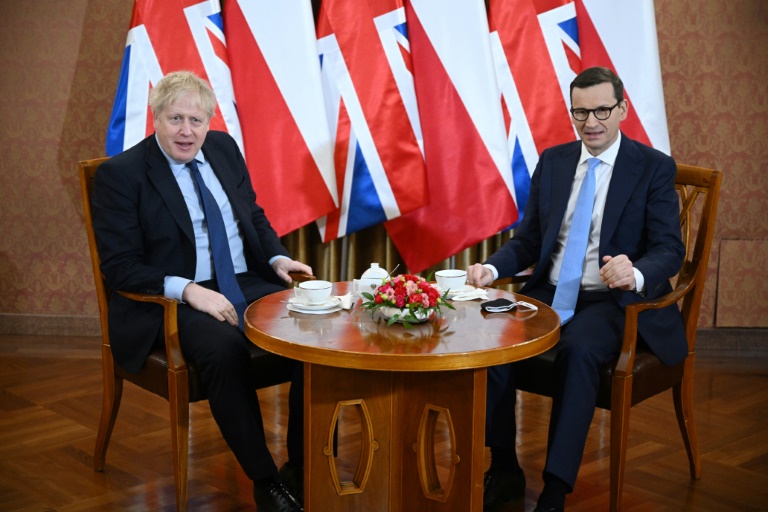
On a visit to Poland, Prime Minister Boris Johnson condemned Putin’s “barbaric, indiscriminate” tactics against Ukrainian civilians, after shelling hit one city.

The attack on Kharkiv has destroyed a school and, according to its mayor, killed at least 11 civilians. 

The front pages of British newspapers carried photographs of two young girls killed by Russian attacks in Ukraine and the words of a doctor as he tried to save one of them: “Show this to Putin.”

Johnson said Russia had underestimated the “passionate desire” of Ukraine’s people to defend themselves, as well as “the unity and resolve of the West and of the rest of the world”.

“And we will keep up the economic pressure,” he said, after Britain on Tuesday joined the European Union and United States in sanctioning Russia’s biggest lender Sberbank.

The move came after the government on Monday said it would freeze the UK assets of all Russian banks and ordered British ports to turn away Russian ships.

“It is plainly already having a dramatic effect,” Johnson said, with the Russian ruble and stock market in freefall, and customers queueing to withdraw their savings from banks.

“We are ready to intensify and to keep going for as long as it takes.”

– Cluster bombs –

Justice Secretary Dominic Raab, a former war crimes prosecutor, said Britain and its allies would also be patient in bringing any violators to heel, pointing to the 1990s wars in the former Yugoslavia.

“That’s why we’re making it clear both to Putin but also to commanders in Moscow, on the ground in Ukraine, that they will be held accountable for any violations of the laws of war,” he told Sky News.

The International Criminal Court in The Hague said Monday it was investigating after finding a “reasonable basis” to suspect alleged war crimes and crimes against humanity in Ukraine since Russia seized the Crimea peninsula in 2014.

For Putin, Russian generals and soldiers, “there’s a very real risk that they’ll end up in the dock of a court in The Hague”, Raab added on BBC television.

“If and when the ICC decides to take action, I’m sure the UK and allies will want to support them practically, logistically.” 

Amnesty International said Russian cluster bombs hit a pre-school in northeastern Ukraine last Friday that was being used to shelter civilians, killing three people including a child.

Agnes Callamard, who heads the global rights monitor, said the “stomach-turning” attack in the town of Okhtyrka “should be investigated as a war crime”.

Raab added that the Western sanctions would cause Russian oligarchs to intensify pressure on Putin, as many of them suffer personal asset freezes.

“But it’s inevitable that Russia’s and Putin’s misadventure, his catastrophic decision, will be disastrous for the Russian people,” the British minister said.

“It will show them the economic cost to them of getting bogged down in this unwarranted, unjustifiable war.”

Father kills three children, self in US church shooting

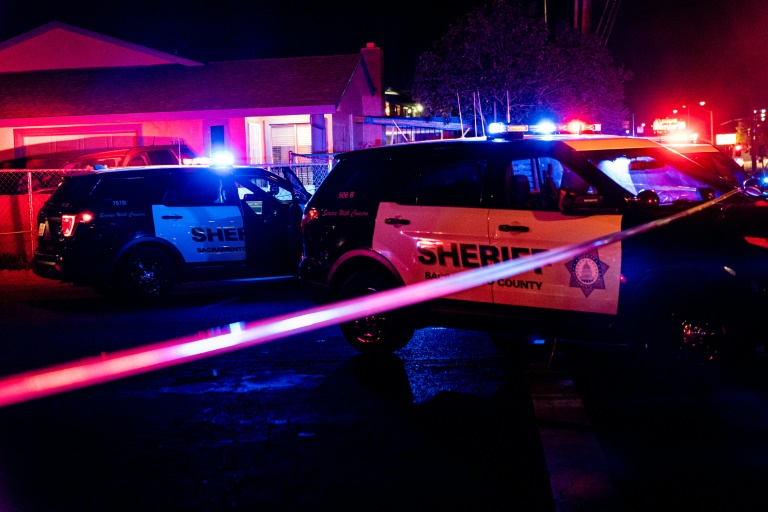
A father shot dead three of his own children Monday before turning the gun on himself in a US church, police said.

A fifth person also died in the shooting in Sacramento, California, though it was not clear if that person was related to what police said was a domestic incident.

“The suspect in this case, who ended up killing himself, had a restraining order out against him by his estranged wife, the mother of the three children victims,” Sacramento County Sheriff Scott Jones told NBC Bay Area.

All three children who died were under the age of 15, police said. Local reports said they were three girls aged 9, 10 and 13.

Jones said the children had gone to The Church of Sacramento, in the Arden Arcade area of the city, for a supervised visit with their father.

Local media reported that authorities thought the fifth victim, whose identity was still unknown, was the person overseeing the visit.

“At 5:07 this afternoon, we received a call that there was a shooting inside the church,” Sergeant Rod Grassmann of Sacramento County Sheriff’s Office told reporters.

“This is as far as I can see, at this point, a domestic violence-related sort of incident,” he said.

Police said they were not looking for anyone else involved in the shooting.

California Governor Gavin Newsom called the murders “senseless” in a Twitter posting.

“Another senseless act of gun violence in America –- this time in our backyard. In a church with kids inside,” he said.

“Absolutely devastating. Our hearts go out to the victims, their families and their communities.”

Mass killings involving firearms are a distressingly common occurrence in the United States.

Lax gun laws and an insistence on the right to bear arms have repeatedly stymied attempts to clamp down on the number of weapons in circulation, despite greater controls being favored by the majority of Americans.

China should eventually 'co-exist' with Covid: top scientist

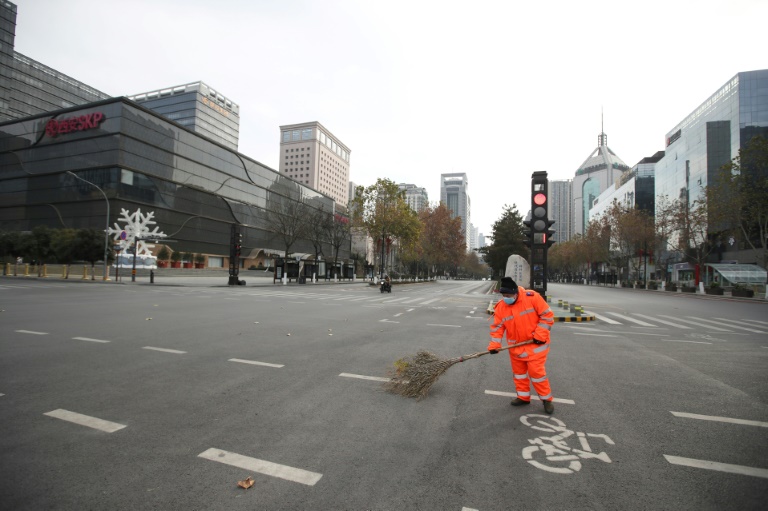
China should aim to co-exist with the virus and could move away from its zero-Covid strategy “in the near future,” a top Chinese scientist said in a possible sign that the country’s leadership is rethinking its strict approach.

The country where the coronavirus was first detected in 2019 is now one of the last places still clinging to a zero-tolerance approach, responding to small outbreaks with snap lockdowns and cutting off most international travel.

But fatigue over disruptions to everyday life as well as semi-autonomous Hong Kong’s struggle to contain a mass Omicron outbreak have raised questions about the sustainability of Beijing’s approach.

China’s strategy against Covid-19 cannot “remain unchanged forever” and “it is the long-term goal of humanity to co-exist with the virus” at tolerable death and illness rates, Zeng Guang wrote on social media platform Weibo on Monday.

Zeng is the former chief scientist of China’s Center for Disease Control and Prevention and one of the experts behind the country’s initial Covid response. 

Zeng said that while China’s approach had prevented the early chaos of widespread infection experienced by many Western countries, its low infection rate was now a “soft spot” as far fewer people had built up natural immunity.

He said Western countries were now showing “commendable courage” in exploring how to live with the virus and that China should “observe and learn” even though there was still “no need to open the country’s doors at the peak of the global pandemic”.

“In the near future, at the right time, the roadmap for Chinese-style co-existence with the virus should be presented,” Zeng said.

His comments are unusual for an official in China’s government, which has touted its low infection rates to the Chinese public as a sign of the superiority of its approach.  

Experts who previously questioned “zero Covid” have faced a backlash, including prominent scientist Zhang Wenhong who was attacked by online trolls and probed for plagiarism after a similar Weibo post in July.

Zeng’s post did not appear to make as much of a splash online, attracting only a few thousand responses on a platform where trending topics normally engage millions of users.

His comments come after authorities said in February that they would crack down on “excessive” Covid-19 measures by local governments, including arbitrary quarantines and business shutdowns.

The problems associated with a zero-Covid approach have been laid bare in Hong Kong, which is in the midst of its worst outbreak yet and has seen panic buying following mixed messaging from the government over whether it would impose strict mainland-style measures.

Authorities plan to test all 7.4 million residents this month and isolate all infections either at home or in a series of camps that are still being constructed with mainland help.

But experts from the University of Hong Kong published new modelling data on Tuesday which estimated the current number of infections at 1.7 million and suggested delaying mass testing to avoid overwhelming the financial hub’s ability to isolate and care for those infected.

Lockdown fears spark panic buying in Hong Kong

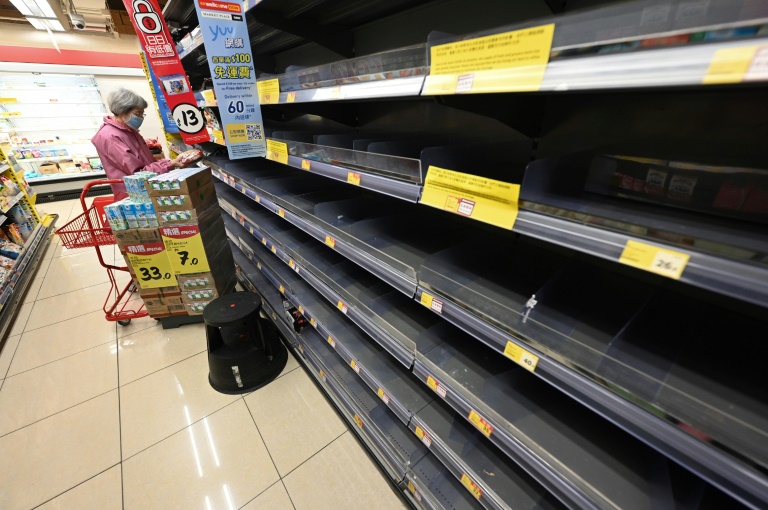
Hong Kongers stripped shop shelves bare Tuesday as panic buying set in following mixed messaging from the government over whether it plans a China-style hard lockdown this month.

The latest disarray came as the city’s top medical school estimated just under a quarter of all residents had been infected with Covid-19 since the start of the year.

Photos circulating on social media showed people had trouble finding a variety of items including meat, vegetables, frozen food, noodles, paracetamol and testing kits. 

“We are like ants going home, grabbing a bit at one spot at a time,” a woman, who gave her surname Wu, told AFP on Tuesday in a supermarket where most vegetables and meat had been snapped up.

One of the most densely populated cities on Earth, Hong Kong has supermarkets with limited backroom storage space.

Apartments are also some of the smallest in the world, leaving little space to stock up. 

The vast majority of Hong Kong’s food is imported from mainland China and the current supply crunch has been worsened by cross-border truckers getting infected by the highly transmissible Omicron variant.

– Delay testing appeal –

The financial hub is in the grip of its worst coronavirus outbreak, registering tens of thousands of new cases each day, overwhelming hospitals and shattering the city’s zero-Covid strategy.

More than 190,000 infections have been recorded in the last two months, compared with just 12,000 for the rest of the pandemic.

Authorities plan to test all 7.4 million residents this month and isolate all infections either at home or in a series of camps that are still being constructed with mainland help.

City leader Carrie Lam had initially ruled out a mainland-style lockdown, where people are confined to their homes during the testing period.

But on Monday, health chief Sophia Chan confirmed it was still on the table.

Multiple Hong Kong media said authorities were planning a variety of lockdown options for the test period, citing sources.

The South China Morning Post said the current favoured option was a nine-day “large-scale lockdown” where most residents would only be allowed out to buy food.

Experts from the University of Hong Kong published new modelling data on Tuesday which estimated the current number of infections at 1.7 million.

They warned that mass testing should be delayed a month rather than under current plans when the wave would be at its peak with as many as 183,000 daily cases. 

“Doing so earlier, especially when case numbers will still be too high to properly and appropriately isolate and care for, paying particular attention to population mental and emotional wellbeing in HK’s unique context, would not be recommended,” Gabriel Leung, dean of HKU’s medical school, wrote on Twitter.

– ‘So many questions’ –

The government says food supplies are stable and that residents will soon be informed of plans.

“We will notify everyone in advance so you can be well prepared,” number two official John Lee told reporters at the opening of a 3,900-bed isolation facility where mild infections will be treated.

But analysts said uncertainty and distrust were fuelling consumer habits.

“We have so many questions but all answers are ‘to be confirmed’,” Chan Ka-lok, an international politics scholar at Baptist University, wrote on social media.

Faith in government assurances is low in Hong Kong, where authorities have carried out a two-year crackdown on dissent after huge democracy protests, and have a history of back-pedalling on promises.

The decision on mass tests was itself a U-turn.

It is not yet clear when testing will take place and what the government will do with all the cases it finds.

Some 70,000 isolation units for mild cases are due to come online in the coming weeks, in requisitioned hotels, public housing units and camps.

At Hong Kong’s current official caseload, that would cover roughly two days’ worth of new infections.

Australia tells tens of thousands to flee floods

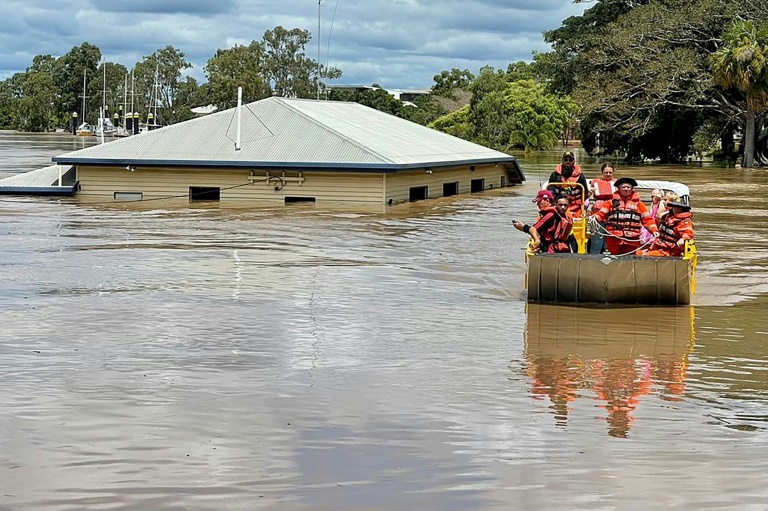
Deadly floods swept Australia’s east coast Tuesday, stranding people on bridges and rooftops and forcing tens of thousands to flee their homes.

Dozens of emergency warnings are in effect across the states of Queensland and New South Wales, where a week-long “rain bomb” has dumped a metre (3.2 feet) of water on some areas.

Several waterways have burst their banks or broken through levees, inundating towns and forcing residents to evacuate or seek safety on higher ground.

Nine people have died and more than a thousand people have been rescued. Authorities have warned that more fatalities are likely.

The latest victim was a woman in her 80s whose body was found by police inside a home in the country town of Lismore. 

“She is yet to be formally identified,” said New South Wales Police. 

In the usually laid back surf town of Byron Bay, Hannah Leser had enjoyed the weekend celebrating her wedding with 150 guests.

But the new bride and groom are now rescuing friends stranded in the nearby towns of Ballina and Mullumbimby in a borrowed four-wheel-drive.

About 30 people are camped at a house where the couple were to spend their honeymoon.

“It’s chaos but all of our friends and family are safe,” she told AFP. “This is not quite the honeymoon I expected but it is what it is.”

Australia’s military has deployed two MRH-90 Taipan helicopters to aid the rescue effort.

In one daring aerial rescue, the crew plucked two people to safety as muddy waters lapped at the corrugated metal roofing of their home.

Live television images on public broadcaster ABC showed a rescuer sitting on the roof with the pair, preparing to strap them to the chopper’s winch.

“We’ve seen people stranded on roofs for hours, we’ve seen children being rescued, we’re seeing people stranded on bridges,” said New South Wales Premier Dominic Perrottet.

– Sailing past roofs –

Emergency services were overwhelmed by calls for help and flotillas of makeshift rescue boats fanned out across towns as people tried to ferry their neighbours to safety.

In Lismore, local member of parliament Janelle Saffin had to swim to safety after she was stranded in the floodwaters.

“We went to the verandah, hanging on to the rafters,” she told Nine Newspapers.

Local resident Danika Hardiman was rescued Monday after she woke up to find floodwaters had reached the balcony of her second-floor apartment in the town’s main street.

She and her partner managed to climb up to the roof and were eventually rescued by “two guys in a boat, two locals”, she told AFP, describing the scenes in Lismore as “horrific”.

“Imagine you’re in a boat sailing past people’s roofs,” she said.

Makeshift evacuation centres have been set up in primary schools, recreation centres and retired service members’ clubs.

Travis Lavdaras headed for Ballina Airport, where the departure lounge was filled with families, holidaymakers and the elderly trying to escape.

“There were big lakes’ worth of water on either side of the highway” on the way to the terminal, he said, with many flights cancelled and an evacuation ordered for the area nearby.

Near the town of Grafton, the scale of the disaster was thrown into stark relief by the sight of buildings submerged almost to roof level, roads washed away and cattle roaming abandoned.

Further south in Sydney, residents endured another day of torrential downpours and were warned to brace for “major flooding”.

Australia has been on the sharp end of climate change, with droughts, deadly bushfires, bleaching events on the Great Barrier Reef and floods becoming more common and intense as global climate patterns change.

Close Bitnami banner
Bitnami