World

Ukrainians in 'Moscow on the Med' look on in horror

Ukrainians living alongside fellow expats from “brother” Russia in the Mediterranean seaside town of Limassol in Cyprus looked on in horror Thursday at the Russian assault on their homeland.

“This is the worst-case scenario we could have imagined. They are bombing all regions of Ukraine, attacking all our airports and bases,” said Evgeny Staroselskiy, a director of Russian Radio Cyprus based in Limassol.

He said nationals from both countries had awoken in shock to hear of the full-blown conflict unfolding between Ukraine and its giant neighbour.

“A lot of people have family on both sides of the border,” said the 60-year-old native of Kharkiv, a mainly Russian-speaking city in eastern Ukraine considered in the “red zone” because of its proximity to the border with Russia.

But Staroselskiy stressed the influence of Russian media on the attitude of citizens from their side, even in sunny Limassol, also known as “Limassolgrad” or “Moscow on the Med” as being home to tens of thousands of people from ex-Soviet republics as well as a favourite holiday destination.

“We are all brothers but we are now receiving telephone calls from some Russians who actually support this crazy (Russian President Vladimir) Putin. We are very surprised.”

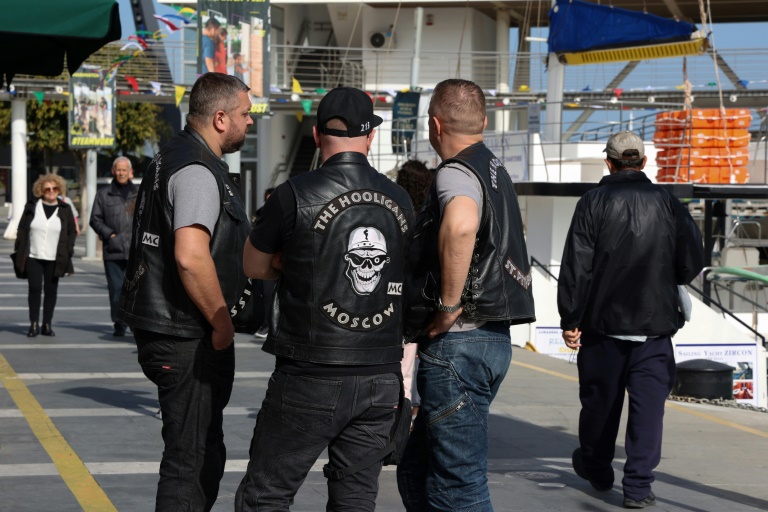
A group of Russian bikers, clad in leather waistcoats with Moscow and Saint Petersburg “hooligans” emblazoned on the back, gathered at Limassol’s gleaming marina tried to play things down.

“This is all bullshit; it’s all politics,” said Grigori, declining to give a surname. “We are family.”

Ksenia, a 36-year-old Ukrainian yacht stewardess whose mother’s family hails from Siberia, said she used to celebrate the Soviet Union’s February 23 “Defender of the Fatherland Day” holiday until Russia’s 2008 war in Georgia, a harbinger of its 2014 annexation of Crimea, seized from Ukraine.

“Talking to Russians, Crimea is the one issue we’ve never been able to agree on,” she said of the peninsula located some 1,000 kilometres (600 miles) due north of Cyprus.

For many ordinary Ukrainians, said Oksana, a mother from Kherson, a Russian-speaking city close to the hotspot Crimean Peninsula, an immediate concern for family back home was rapidly rising food and utility prices as well as access to the banking system.

As for security, “people don’t know where to go, what to do. Bridges are being bombed,” she said.

– Fallout fears –

Cyprus itself, whose economy is heavily dependent on tourism revenues, to which Russia and Ukraine are both major contributors, fears the fallout from the war, with flights already cancelled, and the mounting sanctions being slapped on Moscow.

More than 780,000 Russian tourists visited Cyprus in 2019 before Covid struck, out of a total of some 3.9 million, making it the holiday island’s second largest market after Britain. Over 95,000 Ukrainian arrivals were recorded the same year.

Cyprus has since counted on tourists from Russia and Ukraine for a revival.

Ethnically divided, Cyprus is a close friend of Russia, but Nicosia has defended Ukraine’s independence.

In response to Russia’s attack on Ukraine, Cypriot President Nicos Anastasiades, himself a native of Limassol, on Thursday condemned “any actions which violate the sovereignty and territorial integrity of an independent country”.

The eastern Mediterranean island has been split since 1974 when Turkish forces occupied its northern third in response to a military coup sponsored by the junta then in power in Greece.

Russian Radio’s CEO, Stanislav Andonov, a 58-year-old from Moscow, said relations on the island between Ukrainians and Russians had at least until Thursday been unaffected.

“I have not felt any friction and doubt there will be any,” he said.

Andonov said the “Defender of the Fatherland Day”, as previously celebrated across the Soviet Union to mark the 1918 foundation of the Red Army, was treated by Russian-speaking expats simply as a “men’s day”.

Staroselskiy’s wife, Yuliya Vertova, a DJ at Russian Radio, pointed out that many of the Russians living in Cyprus were “not supporters of Putin in any case”, reducing a source of tension with their Ukrainian fellow expats.
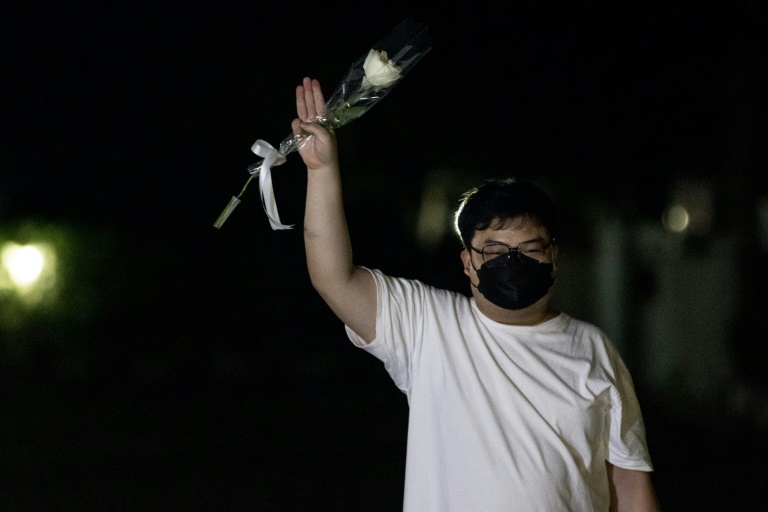
Thai protest leader freed on bail

A Thai court on Thursday freed a prominent pro-democracy protest leader on bail after almost 200 days in detention.

Student-led demonstrations in 2020, calling for Prime Minister Prayut Chan-O-Cha’s resignation and making unprecedented calls for reform to Thailand’s untouchable monarchy, drew tens of thousands at their peak.

But the movement petered out as Covid-19 case numbers surged and the authorities detained most of the leaders.

Nearly 160 activists, including 13 juveniles, have been hit with criminal charges under Thailand’s tough royal defamation laws, which carry a jail sentence of up to 15 years per charge.

On Thursday a Bangkok court granted bail to university student Parit Chiwarak, better known in Thailand by his nickname “Penguin”, who is facing 23 lese majeste charges.

The 23-year-old, who last year went on a 57-day hunger strike in jail, was freed on a 200,000 baht ($6,000) bond, according to Thai Lawyers for Human Rights, which represented him.

As he walked free, wearing a white T-shirt and holding a white rose, Parit gave the three-fingered salute adopted as a gesture of defiance by the protest movement from the “Hunger Games” movies.

“Truth never dies and will continue to live on… what we told is the truth,” he told reporters and well-wishers.

“The fight of the people will continue.”

Fellow protest leader Anon Numpa, 37, was denied bail as the court feared he would cause more trouble if released, according to a post on his Facebook page.

Fellow protest leader Panusaya “Rung” Sithijirawattanakul, who is out on bail and facing 10 royal defamation charges, sent messages of support to Parit and Anon.

UN expert urges Sudan forces stop shooting anti-coup protesters

A UN expert on Thursday urged Sudanese forces to stop firing live ammunition and tear gas at anti-coup protesters in a crackdown that has killed more than 80 people. 

Demonstrations have continued in the northeast African country since army chief Abdel Fattah al-Burhan led a military takeover on October 25, sparking international condemnation and suspension of aid.

The putsch derailed a fragile power-sharing agreement between the army and civilians negotiated after the 2019 ouster of longtime autocrat Omar al-Bashir.

“Firing live ammunition on the people is a huge violation against human rights,” said the United Nations expert, Adama Dieng.

“I’m concerned about the violations (committed by) the authorities and the use of live ammunition against protesters,” he said, putting the toll at 82 dead and 2,000 wounded.

Both the UN and the United States have made similar appeals before, with Washington threatening further “consequences” if violence continues. A Sudanese man shot dead on Sunday was the latest fatality.

The Senegalese envoy has been in Sudan for the past four days, meeting with leaders, diplomats and civil society members in a bid to shed light on the crackdown.

“I am calling for fair, independent and professional investigation on the violence against protesters,” he told journalists in Khartoum.

Dieng also expressed concern about sexual violence and ongoing raids against anti-coup groups as well as the fate of around 100 detainees who “have never met their lawyers”.

As he spoke, an AFP correspondent reported that security forces fired more tear gas at demonstrators protesting the coup.

Sudanese authorities have said they arrested several police and soldiers who fired at demonstrators with Kalashnikov rifles, disobeying orders.

Human Rights Watch has quoted witnesses detailing how both “live ammunition” and tear gas canisters were shot “directly” at crowds, a tactic that can be deadly at close quarters.

Biden meets with G7, addresses US on response to Russia

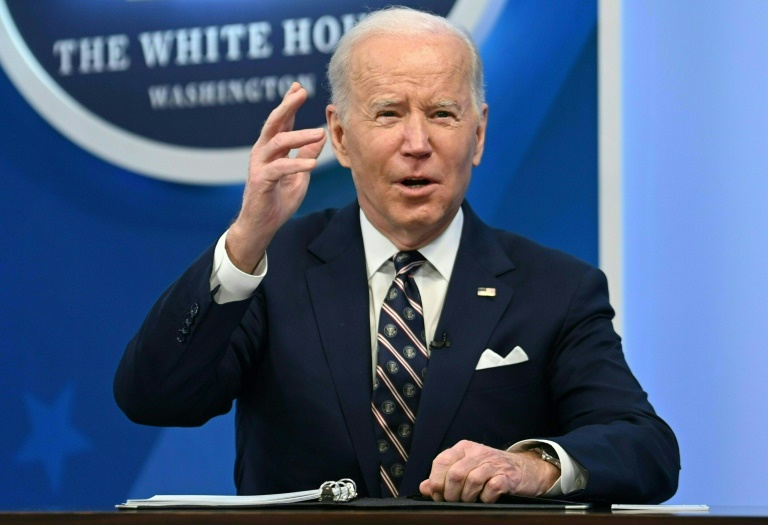
US President Joe Biden was meeting with G7 allies Thursday to hammer out a raft of new sanctions against Russia after it invaded Ukraine, and will later speak to the American people on a crisis that he warns will cause “catastrophic loss of life.”

The virtual, closed-door meeting of G7 leaders — Britain, Canada, France, Germany, Italy, Japan and the United States — was set to start at 9:00 am (1400 GMT), with Biden’s White House speech scheduled for early afternoon.

For weeks, as Russia built up tens of thousands of troops and heavy weapons on Ukraine’s border, Biden has led NATO and other European allies in trying to craft a package of what Washington says are “unprecedented” sanctions as a deterrent.

Now that the deterrent has failed, the effort is likely to see rapid escalation to inflict real pain on Russia’s already shaky economy.

“The United States and its allies and partners will respond in a united and decisive way. The world will hold Russia accountable,” Biden said in his first comments late Wednesday in Washington, after Russian missiles began to rain down on Ukraine.

Biden also held a phone call with his Ukrainian counterpart Volodymyr Zelensky, saying afterwards that he had promised to “provide support and assistance to Ukraine and the Ukrainian people.”

The US president noted that Zelensky had requested him to “call on the leaders of the world to speak out clearly” against Putin’s “flagrant aggression.”

On Tuesday, after Putin first announced he would send troops as “peacekeepers” to two small areas already controlled by Moscow-backed separatists, Western countries swung into action.

The US government joined European allies in imposing sanctions on two Russian banks, Moscow’s sovereign debt, several oligarchs and other measures.

And on Wednesday, as the Russian invasion force became clearly primed to attack, Biden announced he was imposing sanctions on the Nord Stream 2 natural gas pipeline from Russia to Germany — one of energy-rich Moscow’s highest-profile geopolitical projects.

Germany had earlier announced it would block the pipeline from opening for deliveries.

US officials say tougher new sanctions will include targeting other, bigger banks, more oligarchs close to Putin and, crucially, a ban on exports to Russia of high-tech equipment and components. It was not clear how many of these measures would be announced Thursday.

Some measures also risk serious economic fallout for Western countries and could imperil the global economy recovery after the Covid pandemic. Already stock markets are tumbling and oil prices are soaring over $100 a barrel.

– ‘Death and destruction’ –

Soon after the Russian attacks began, US senators from both parties indicated support for a tough response.

“Tonight, the entire post-World War international order sits on a knife edge. If Putin does not pay a devastating price for this transgression, then our own security will soon be at risk,” Democratic Senator Chris Murphy said.

Another Democrat, Senator Mark Warner, said “President Biden has already imposed an initial tranche of sanctions, and it is now time for us to up the pain level for the Russian government.”

Russians “will pay a steep cost for Putin’s reckless ambition, in blood and in economic harm,” he said.

Republican Senator Mitt Romney warned against “the peril of again looking away from Putin’s tyranny” and urging “the harshest economic penalties” and “expelling them from global institutions.”

In his statement, Biden said “the prayers of the entire world are with the people of Ukraine tonight as they suffer an unprovoked and unjustified attack by Russian military forces. President Putin has chosen a premeditated war that will bring a catastrophic loss of life and human suffering.”

Eight polio vaccinators killed in series of Afghan attacks: UN

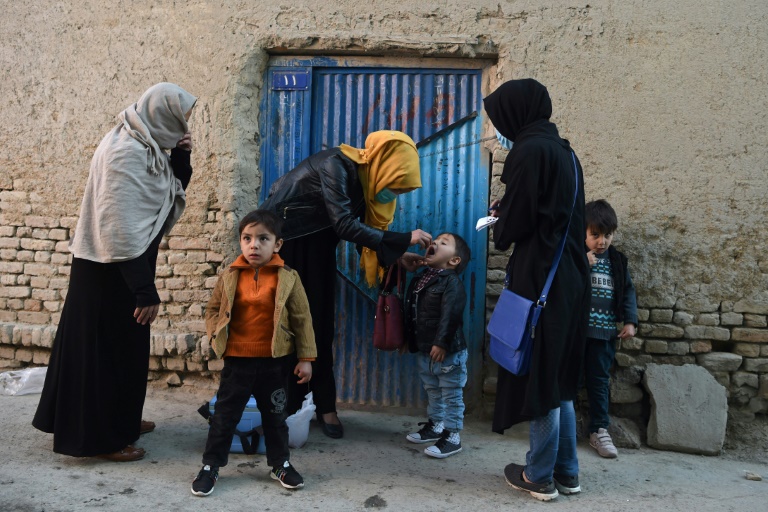
Eight members of polio vaccination teams working to eradicate the crippling virus in Afghanistan were killed on Thursday in four separate attacks, the United Nations said.

Polio teams were frequently targeted by insurgent groups in Afghanistan until the Taliban’s takeover of the country last year, when the hardline Islamist group said it wanted to work with the UN to stamp out the disease.

In the past polio campaigns in Afghanistan — and neighbouring Pakistan — were accused of being fronts for spying, while some clerics said the vaccine was a conspiracy to sterilise Muslims.

“We are appalled by the brutality of these killings, across four separate locations,” the UN said in a statement.

“This senseless violence must stop immediately, and those responsible must be investigated and brought to justice. These attacks are a violation of international humanitarian law.”

The Taliban said they had “received the news” of the incidents and were trying to get more information.

“Our policy is clear, we want to vaccinate and protect all the children in Afghanistan under the age of five,” Javid Hajir, a spokesman for the Ministry of Health, told AFP.

The UN said one person was killed in Takhar province in the far north, and seven in neighbouring Kunduz province — including four in the provincial capital Kunduz city.

They were engaged in house-to-house visits or on their way to begin campaigns, the UN said.

Afghanistan and Pakistan are the only two countries in the world where polio has not been eradicated, although Pakistan last month reported a year without a case for the first time in history.

Russia invades Ukraine, dozens killed

Russian President Vladimir Putin launched a full-scale invasion of Ukraine on Thursday, killing dozens and forcing hundreds to flee for their lives in the pro-Western neighbour.

Russian air strikes hit military facilities across the country and ground forces moved in from the north, south and east, triggering condemnation from Western leaders and warnings of massive sanctions.

Weeks of intense diplomacy failed to deter Putin, who massed over 150,000 troops on Ukraine’s borders in what the West said was the biggest military build-up in Europe since the Second World War.

“I have decided to proceed with a special military operation,” Putin said in a television announcement in the early hours of Thursday.

Shortly afterwards, the first bombardments were heard in Ukraine’s capital, Kyiv, and several other cities, according to AFP correspondents.

At least 68 people were killed, including both soldiers and civilians, according to an AFP tally from various Ukrainian official sources.

In the deadliest single strike reported by the authorities, 18 people were killed at a military base near Ukraine’s Black Sea port city of Odessa.

Ukraine’s border guards said Russian forces had reached the region around the capital, Kyiv.

An AFP reporter in the northern part of the city saw several low-flying helicopters overhead amid reports that an airfield was under attack.

Ukrainian Foreign Minister Dmytro Kuleba said a “full-scale invasion” was underway.

President Volodymyr Zelensky declared martial law and said Russia was attacking his country’s “military infrastructure” but urged citizens not to panic and vowed victory.

He accused Russia of acting like “Nazi Germany”, saying it had attacked in a “cowardly and suicidal way”.

Ukrainian forces said they had killed “around 50 Russian occupiers” while repulsing an attack on a town on the frontline with Moscow-backed rebels, a toll that could not be immediately confirmed by AFP.

– ‘Sounds of bombing’ –

Kyiv’s main international airport was hit in the first bombing of the city since World War II and air raid sirens sounded over the capital at the break of dawn.

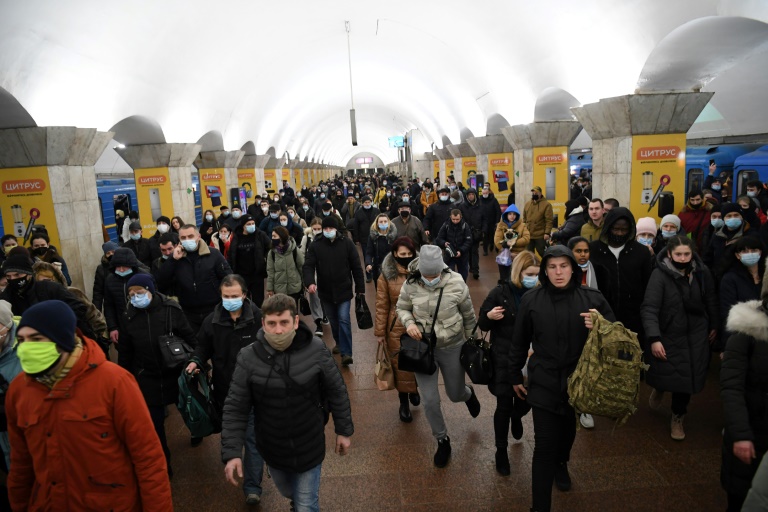
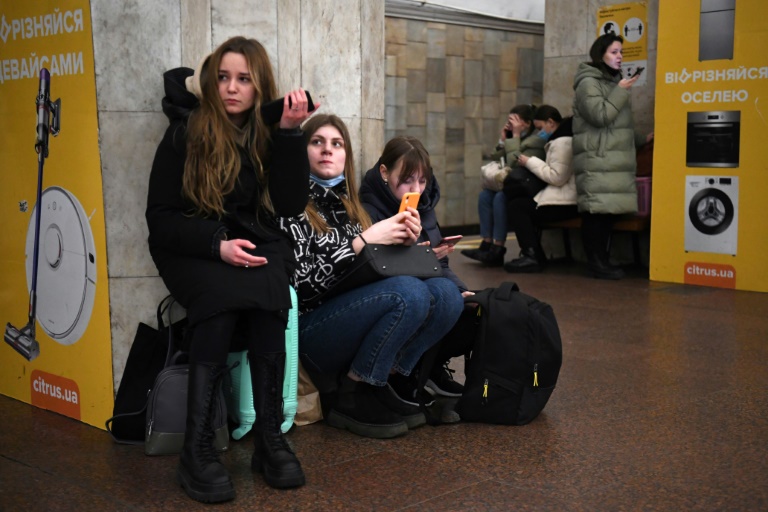
“I woke up because of the sounds of bombing. I packed a bag and tried to escape,” Maria Kashkoska told AFP, as she sheltered inside the Kyiv metro station.

In the eastern Ukrainian town of Chuguiv, a son wept over the body of his father among the wreckage of a missile strike in a residential district.

“I told him to leave,” the man sobbed repeatedly, next to the twisted ruins of a car.

Kuleba said the worst-case scenario was playing out.

“This is a war of aggression. Ukraine will defend itself and will win. The world can and must stop Putin. The time to act is now,” he said.

Within a few hours of Putin’s speech, Russia’s defence ministry said it had neutralised Ukrainian military airbases and its air defence systems.

Ukraine said Russian tanks and heavy equipment crossed the border in several northern regions, in the east as well as from the Kremlin-annexed peninsula of Crimea in the south.

Kremlin spokesman Dmitry Peskov said the operation would last as long as necessary, saying there were “goals that need to be achieved”.

“Ideally, Ukraine needs to be liberated and cleansed of Nazis,” he told reporters, repeating unfounded claims made by the Kremlin.

– ‘Unprovoked and unjustified’ –

The fighting roiled global financial markets, with stocks plunging and oil prices soaring past $100.

European wheat prices also hit a record high on expectations of lower supplies as Ukraine and Russia are two of the world’s biggest producers.

In his televised address, Putin justified the assault by claiming the government was overseeing a “genocide” in the east of the country.

The Kremlin earlier said the leaders of two separatist territories in eastern Ukraine had asked Moscow for military help against Kyiv after Putin recognised their independence on Monday.

A conflict between the self-proclaimed Donetsk and Lugansk republics and government forces has dragged on since 2014, killing more than 14,000 people.

US President Joe Biden spoke with Zelensky after the Russian assault began to vow US “support” and “assistance”.

He condemned the “unprovoked and unjustified attack by Russian military forces,” and vowed Russia would be held accountable.

Biden was due to join a virtual meeting of G7 leaders — Britain, Canada, France, Germany, Italy, Japan and the United States — on Thursday, likely to result in more sanctions against Russia.

In Brussels, EU foreign policy chief Josep Borrell said Russia faced “unprecedented isolation” and would be hit with the “harshest sanctions” the European Union has ever imposed.

NATO said it would also hold a virtual summit and activate “defence plans” for allied countries.

But NATO chief Jens Stoltenberg said: “We don’t have any plans to send NATO troops into Ukraine”.

The Russian invasion also rattled eastern NATO members once dominated by Moscow during the Cold War.

Poland called for urgent NATO consultations and said it was preparing for a large influx of refugees, while Lithuania imposed a national state of emergency.

– Drop NATO ambitions –

Ukraine has around 200,000 military personnel, and could boost that with up to 250,000 reservists.

Moscow’s total forces are much larger — around a million active-duty personnel — and have been modernised and re-armed in recent years.

But Ukraine has received advanced anti-tank weapons and some drones from NATO members. More have been promised as the allies try to deter a Russian attack or at least make it costly.

Russia has long demanded that Ukraine be forbidden from ever joining the NATO alliance and that US troops pull out from Eastern Europe. 

Putin this week set out a number of stringent conditions if the West wanted to de-escalate the crisis, saying Ukraine should drop its NATO ambition and become neutral.

“Putin’s aim is to end the existence of Ukraine as it was yesterday,” said Tatyana Stanovaya, founder of the political consultancy R.Politik Center and a non-resident scholar at the Carnegie Moscow Center.

“It is possible that the east of Ukraine will come under Russian control,” she said, adding: “I cannot see anything that would stop Russia now”.

burs-dt/jbr/yad

UK warns of unprecedented sanctions against Russia's 'dictator'

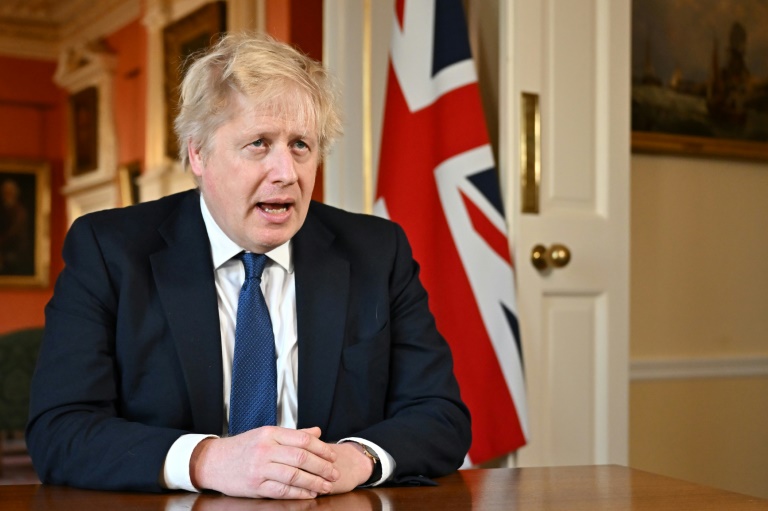
British Prime Minister Boris Johnson on Thursday said Russian President Vladimir Putin was a “dictator” who now faced “massive” Western sanctions for invading Ukraine.

“We cannot and will not just look away,” Johnson said in a televised address to the nation, after phoning Ukraine’s President Volodymyr Zelensky just after 4:00 am (0400 GMT) as Russian forces moved in.

Ukraine can be assured of continued UK support given that “our worst fears have now come true and all our warnings have proved tragically accurate”, the prime minister said.

Ahead of an emergency virtual meeting of G7 leaders, Johnson said the West “will agree a massive package of economic sanctions designed in time to hobble the Russian economy”.

“And to that end we must also collectively cease the dependence on Russian oil and gas that for too long has given Putin his grip on Western politics,” he added.

“Diplomatically, politically, economically — and eventually, militarily — this hideous and barbaric venture of Vladimir Putin must end in failure.”

Johnson was unusually direct in highlighting Putin’s personal role in bringing war back to Europe, calling it “an attack on democracy and freedom in east Europe and around the world”.

The “flame of freedom” would return in time to Ukraine, he said.

“Because for all his bombs and tanks and missiles, I don’t believe that the Russian dictator will ever subdue the national feeling of the Ukrainians and their passionate belief that their country should be free.”

Johnson summoned his security chiefs for an early-morning meeting in response to the Russian invasion, and was also to address parliament at 5:00 pm (1700 GMT).

– ‘Unprecedented’ sanctions –

UK Foreign Secretary Liz Truss, who spoke to her US counterpart Antony Blinken Wednesday evening before Putin announced the start of military operations, joined Johnson in condemning the attack.

The foreign ministry has deployed teams to five countries in eastern Europe to support Britons leaving Ukraine, she noted. 

Meanwhile Transport Secretary Grant Shapps said he had instructed the UK Civil Aviation Authority to ensure airlines avoid Ukraine airspace “to keep passengers and crew safe”.

The UK slapped sanctions Tuesday on five Russian banks and three billionaires, in what Johnson called “the first barrage” of measures in response to the Kremlin’s actions in Ukraine.

Leading members of Johnson’s ruling Conservatives, as well as the main opposition Labour party, have urged him to hit the Kremlin as hard as possible with the new sanctions.

Foreign office minister James Cleverly vowed London would respond with “unprecedented” steps “to punish this aggression”.

“Those sanctions will be laid today and over forthcoming days to really prevent Russia from funding this invasion,” he told the BBC.

“The sanctions package that will be put in response to this is already actually having an effect,” Cleverly added, noting record falls Thursday on the Russian stock market and a slump in the ruble’s value. 

Despite West's help, Ukraine forces vastly outnumbered by Russia

Ukraine’s armed forces find themselves vastly outnumbered and outmatched in firepower by their Russian opponents, despite growing military assistance for Kyiv’s troops by the West.

Russian President Vladimir Putin, whose country had massed some 150,000 troops on the border in recent months, on Thursday ordered military operations against Ukraine.

There are also, according to Western estimates, some 30,000 Russian troops deployed in Belarus, ostensibly for exercises, who could also attack Ukraine from the north.

And Russia has massed naval forces in the Black Sea and closed to navigation the Sea of Azov between Russia and Ukraine.

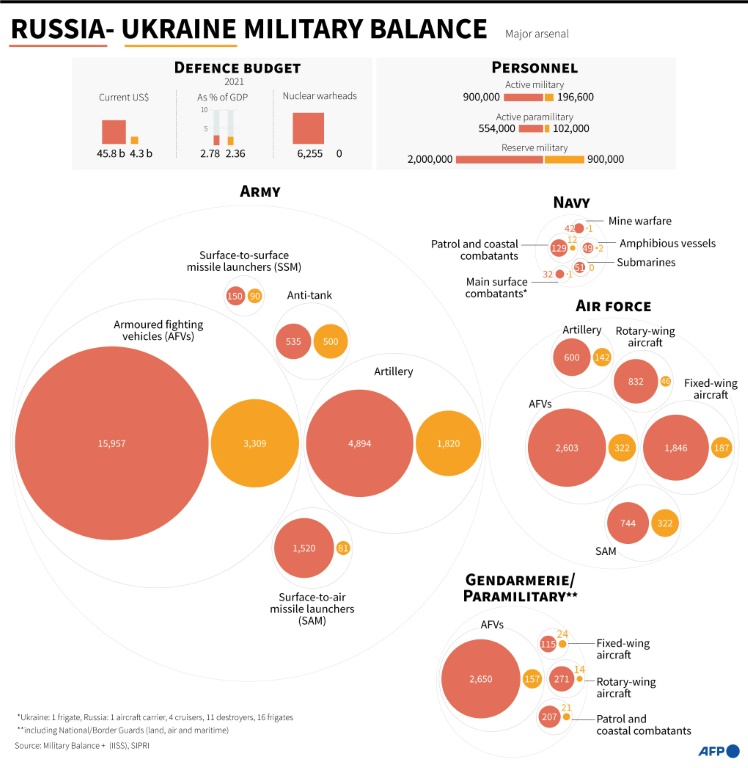
According to the London-based International Institute for Strategic Studies (IISS), Russia’s armed forces amount to 900,000 troops, plus some two million reserves and more than half a million other forces.

Ukraine’s forces meanwhile amount to barely more than the number of troops Russia had amassed around its borders, with a standing army of 145,000, 45,000 in the air force and 11,000 in the navy, according to the IISS.

It has some 100,000 other forces and 900,000 reserve soldiers.

Analysts also note that the gulf in firepower is even wider in terms of military hardware, with Russia’s almost 16,000 armoured fighting vehicles — including tanks — dwarfing the Ukrainian fleet of 3,300.

Artillery numbers show a similar difference, while the Ukrainian air force is a tenth the size of its Russian counterpart.

“The military balance of power is totally overwhelming” in favour of Moscow, said Francois Heisbourg, special advisor to the Foundation for Strategic Research (FRS) in Paris.

– ‘Firmly against Ukraine’ –

Ukraine has benefited from substantial Western military aid since the onset of the conflict in its east from 2014, including $2.5 billion worth from the United States, $400 million of that in 2021 alone.

Until the current tensions erupted, some US troops had been training Ukrainian forces to use American equipment, notably light weaponry, patrol vessels and Javelin anti-tank missiles.

Britain has also been involved in training Ukrainian troops for several years and in January said it was sending offensive anti-armour weaponry to Ukraine, the first time it has supplied lethal arms to the country. 

But Russia’s armed forces have also undergone significant reforms in recent years, following the military’s perceived lacklustre performance in the 2008 conflict with Georgia.

The reform “has made Russia a far more capable military power today than at any time since the dissolution of the Soviet Union”, IISS analysts said.

Commanders have also been able to garner valuable experience in war theatres notably during the Russian deployment of troops in Syria to support Bashar al-Assad’s regime.

Analysts at the Royal United Services Institute (RUSI) said in a report earlier this month that Ukraine’s air defences were “woefully deficient” both in terms of quality and quantity.

Meanwhile the country also faces the problem of sharing a land border of almost 2,000 kilometres (1,250 miles) with Russia, most of which is exposed to attack, and a 1,000-kilometre border with Moscow’s ally Belarus.

“The conventional military balance is stacked firmly against Ukraine,” the RUSI analysts said.

Ukraine has also been the target of repeated cyberattacks which the West has blamed on Russia and experts say have the potential to cripple the country.

But the RUSI analysts also noted that the “threat of unconventional resistance” should concern Moscow, which would want to avoid a drawn-out and bloody conflict especially in urban centres.

Ukraine’s government has invested a lot in promoting national unity, they said, and Kyiv would want to “protract the fighting to the point where Moscow will be denied anything but an embarrassing, messy and attritional struggle”, they said.

Virus-hit Hong Kong invokes emergency powers to allow in China medics

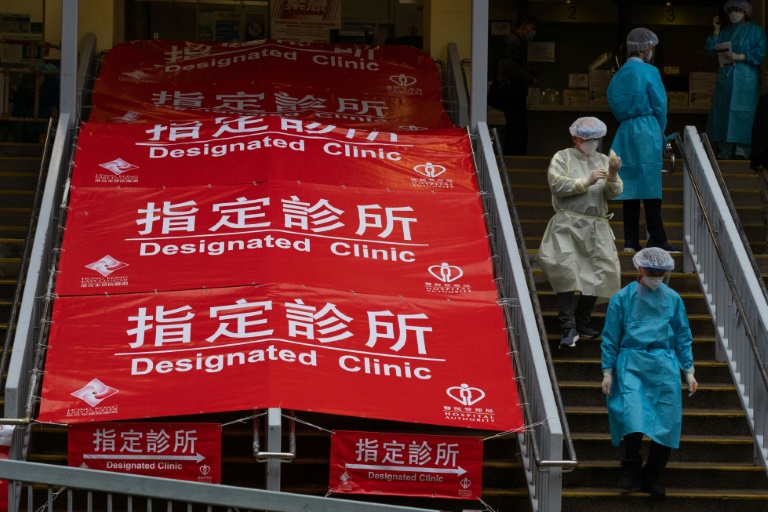
Hong Kong’s government invoked emergency powers on Thursday to allow doctors, nurses and other personnel from the Chinese mainland to help combat a spiralling coronavirus outbreak.

The densely populated metropolis is in the throes of its worst-ever Covid wave, registering thousands of cases every day, which are overwhelming hospitals and government efforts to isolate all infected people in dedicated units.

Hong Kong authorities have followed a zero-Covid strategy similar to mainland China’s, which has kept infections mostly at bay throughout the pandemic. 

But they were caught flat-footed when the highly infectious Omicron variant broke through those defences, and have since increasingly called on the mainland for help.

“Hong Kong is now facing a very dire epidemic situation which continues to deteriorate rapidly,” the government said in its statement announcing the use of emergency powers.

Mainland medics are not currently allowed to operate in Hong Kong without passing local exams and meeting licensing regulations.

The emergency powers “exempt certain persons or projects from all relevant statutory requirements… so as to increase Hong Kong’s epidemic control capacity for containing the fifth wave within a short period of time,” the statement said.

The move came after Chinese President Xi Jinping last week ordered Hong Kong to take “all necessary measures” to bring the outbreak under control, signalling the city would not be allowed to move towards living with the virus like much of the rest of the world. 

Allowing mainland medics to work in Hong Kong has been a source of debate for years.

Even before the pandemic, supporters argued it could alleviate shortages in the city’s stretched healthcare system.

Local medical practitioners in the past have objected, citing issues such as language and cultural barriers -– though critics have dismissed such talk as protectionism.

Hong Kong was supposed to operate as a semi-autonomous region from China, after the territory returned from British colonial rule in 1997. 

But that autonomy was eroded in recent years as China crushed a democracy movement. 

– Manpower ‘exhausted’ –

Hong Kong has recorded more than 62,000 Covid cases in the current wave, compared with just 12,000 during the two years before.

Health experts fear the real number is far higher because of a testing backlog and people avoiding testing for fear of being forced into isolation units if they are positive.

Over the last fortnight, stories have emerged of parents being separated from children and babies who test positive, as well as elderly patients lying on gurneys outside hospitals.

British Consul General Brian Davidson said Thursday his team had “robustly challenged” the Hong Kong government over the practice of separating infants from parents, while the Australian consulate said it had also spoken to local authorities about the issue.

Around 1,200 healthcare workers have been infected as of Wednesday, according to the Hospital Authority.

The authority’s chairman Henry Fan told state media Monday he hoped the mainland government would send over doctors and nurses, because local manpower had been “exhausted”.

Hong Kong has ordered all 7.4 million residents to go through three rounds of mandatory coronavirus testing next month.

China is helping to build a series of isolation units and temporary hospital wards but it is unclear whether enough can be constructed in time.

Local modelling predicts the city might see as many as 180,000 infections and 100 deaths daily by mid-March.

Local authorities have increasingly resorted to emergency orders in recent years.

During the 2019 protests, authorities used such powers to ban mask-wearing. 

The following year, emergency orders were used to make mask-wearing mandatory during the pandemic.

The city’s disease prevention law has also been invoked, to forbid public gatherings and to bring in a host of strict social distancing measures and business closure orders that have been in place on and off for two years.

City leader Carrie Lam has defended her approach, citing the intensity of the virus crisis.

“In an environment as urgent as this, we cannot let existing laws stop us from doing what we should do,” she said Tuesday.

“This is not the mentality for fighting a war.”

'Unprovoked and unjustified:' world reacts to attack on Ukraine

World leaders on Thursday swiftly condemned Russia’s military attack on Ukraine, with Western capitals vowing to escalate sanctions against Moscow while the head of the United Nations demanded the conflict end immediately.

Key reactions:

– US President Joe Biden – 

“The prayers of the entire world are with the people of Ukraine tonight as they suffer an unprovoked and unjustified attack by Russian military forces,” the US president said shortly after the operation began.

He warned “Russia alone is responsible for the death and destruction this attack will bring.”

“The world will hold Russia accountable,” he declared.

– Ukrainian President Volodymyr Zelensky –

Zelensky compared Russia’s invasion of his country to Nazi Germany’s military campaigns during World War II.

“Russia has attacked Ukraine in a cowardly and suicidal way, like Nazi Germany did during World War II,” Zelensky said in an online briefing.

– UN chief Antonio Guterres – 

Guterres made a direct and personal plea to Russian President Vladimir Putin after an emergency Security Council session, urging him to stop the attack “in the name of humanity.”

“In the name of humanity, do not allow to start in Europe what could be the worst war since the beginning of the century,” he said.

“The conflict must stop now,” added the UN chief, who said it was the “saddest day” of his tenure.

– NATO head Jens Stoltenberg – 

The Atlantic alliance’s secretary general said Russia had “chosen the path of aggression against a sovereign and independent country.”

The attack “puts at risk countless civilian lives,” Stoltenberg said in a statement, describing it as a “grave breach of international law, and a serious threat to Euro-Atlantic security.”

NATO ambassadors were to hold an emergency meeting to discuss the attack.

– British Prime Minister Boris Johnson – 

“I am appalled by the horrific events in Ukraine and I have spoken to President Zelensky to discuss next steps,” the British leader tweeted.

“President Putin has chosen a path of bloodshed and destruction by launching this unprovoked attack on Ukraine. The UK and our allies will respond decisively.”

– EU chiefs – 

“In these dark hours, our thoughts are with Ukraine and the innocent women, men and children as they face this unprovoked attack and fear for their lives,” European Union chiefs Ursula von der Leyen and Charles Michel said on Twitter. “We will hold the Kremlin accountable.”

Foreign policy chief Josep Borrell said Russia faced “unprecedented isolation” and would be hit with the “harshest sanctions” the EU has ever imposed.

“This is not a question of blocs. This is not a question of diplomatic power games. It’s a matter of life and death. It is about the future of our global community,” he said.

– German Chancellor Olaf Scholz – 

The German leader lashed out at an “unscrupulous act” by Putin and spoke to Zelensky to express his country’s “full solidarity.”

Putin is “endangering the lives of countless innocent people in Ukraine… (and) jeopardising peace in our continent,” Scholz said.

Foreign Minister Annalena Baerbock warned the world “will not forget this day of shame.”

– French President Emmanuel Macron – 

“Russia must immediately put an end to its military operations,” Macron wrote on Twitter, saying Russia had made the decision to “wage war” on Ukraine.

“France stands in solidarity with Ukraine. It stands by Ukrainians and is working with its partners and allies to end the war,” he added.

– Canadian Prime Minister Justin Trudeau – 

“These unprovoked actions are a clear further violation of Ukraine’s sovereignty and territorial integrity, and of Russia’s obligations under international law and the Charter of the UN,” Trudeau said in a statement.

He said he would meet with partners from the Group of Seven to shape a collective response, “including by imposing sanctions additional to those announced earlier this week.”

“These reckless and dangerous acts will not go unpunished.”

– OSCE – 

The Organization for Security and Co-operation in Europe (OSCE), of which Russia is a member, said “this attack on Ukraine puts the lives of millions of people at grave risk and is a gross breach of international law and Russia’s commitments.”

The statement was issued by the OSCE’s current chairman, Polish Foreign Minister Zbigniew Rau, and the organisation’s secretary general, Helga Maria Schmid.

– China –

The world’s second-biggest economy, which shares a long border with Russia, said it was monitoring the crisis and urged restraint.

“China is closely watching the latest situation, and we call on all parties to maintain restraint and prevent the situation from getting out of control,” foreign ministry spokeswoman Hua Chunying said at a regular press briefing.

– Japanese Prime Minister Fumio Kishida – 

“The latest Russian invasion shakes the foundation of the international order, which does not permit unilateral attempts to change the status quo,” Japan’s leader said after a meeting of his national security council.

– Italian Prime Minister Mario Draghi –

The leader of G7 member Italy’s government called Russia’s invasion of Ukraine “unjustified and unjustifiable.”

“Italy is close to the Ukrainian people and institutions in this dramatic moment,” Draghi said in a statement.

– Turkey –

Turkey, a NATO member with a history of fractious relations with Russia, said the invasion was “unjust an unlawful”.

“We consider the military operation… unacceptable and reject it,” Turkey’s foreign ministry said in a statement.

President Recep Tayyip Erdogan denounced Moscow’s move as a “heavy blow” to regional peace and stability.

burs-sah/imm/yad

Close Bitnami banner
Bitnami