World

One dead, 10 feared missing in Australia floods

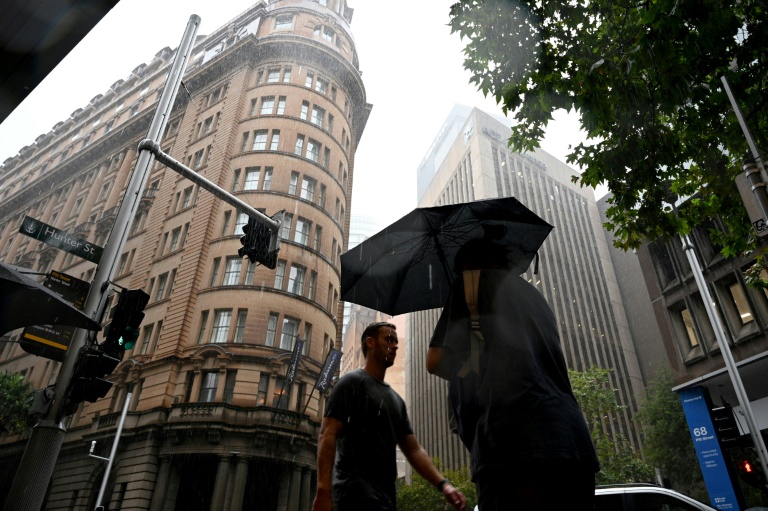
One person was found dead in a submerged car and 10 others were reportedly missing on Wednesday after heavy rain caused flash flooding in eastern Australia and set off a string of emergency warnings up and down the Pacific coast. 

The body of the drowned 60-year-old was found early Wednesday in the state of Queensland, premier Annastacia Palaszczuk told parliament, describing the incident as a “tragedy”.

Almost half a meter (1.5 feet) of rain has fallen on some parts of her state in the last 24 hours, causing multiple road closures and transport chaos.

Emergency services received more than a hundred calls for help and swift water rescue crews have been despatched to assist dozens of stranded residents.

Emergency services have received more than a hundred calls for help and swift water rescue crews have been despatched to rescue dozens of stranded residents.

“This has the potential to be a significant rainfall event for south-east Queensland,” Palaszczuk said.

A freight train overturned near the town of Gympie, although the driver was said to have minor injuries.

Local media quoted Sunshine Coast Police District Superintendent Craig Hawkins as saying 10 people were also missing.

Fifteen Queensland dams are at capacity and more rain is expected in the coming days.

“Locally intense rainfall is possible and since many catchments are now saturated there is an increased risk of dangerous and life-threatening flash flooding over the coming days,” said Palaszczuk.

Police warned motorists to avoid driving through flooded roads and to stay at home.

“Flash flooding is occurring on roads and bridges – Re-consider your need to travel today,” police told residents.

Heavy rain has also pelted the state of New South Wales, where parts of Sydney were briefly submerged Tuesday.

After several years of drought and climate-worsened bushfires, Australia’s east is wrapping up an extraordinarily wet antipodean summer, thanks to a La Nina weather pattern.

La Nina increases the chances of tropical cyclones off Australia’s Pacific coast and brings above-average rainfall, according to the country’s Bureau of Meteorology. 

Mexican town toasts tequila fish saved from extinction

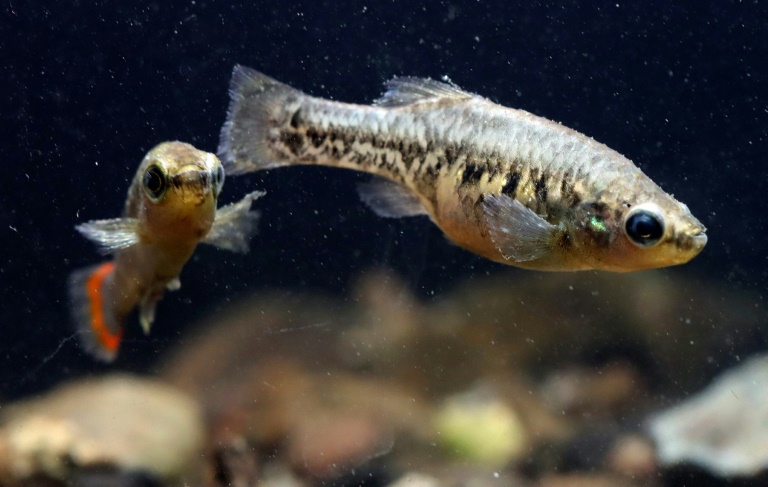
Residents of a small town in western Mexico are celebrating the reintroduction into the wild of the tequila fish — an endemic species saved from the brink of extinction.

The fish, whose scientific name is Zoogoneticus Tequila, was rescued in the 1990s by US and British conservationists who kept it in aquariums and helped it return to its original habitat in the Teuchitlan river.

Children in Teuchitlan, home to about 10,000 people, have been at the forefront of efforts to inform visitors not only about the importance of keeping their habitat clean, but also about the tequila fish.

“The children are the ones who approach people on the river bank and tell them that in this river lives a little fish that is unique in the world… and that they participated in its reintroduction,” said Consuelo Rivera, a 70-year-old retired teacher.

The tequila fish was reported to be extinct in 1998, possibly due to fragmentation of its habitat, pollution and competition from non-native species, according to the International Union for the Conservation of Nature (IUCN).

The species survived only in captivity for several years until conservationists, led by Michoacan University, began the process in 2014 to reintroduce it into the wild.

Since then the fish has gone from strength to strength, helped by the last major release of fish in 2018, said project leader Omar Dominguez.

– ‘Little rooster’ resurrected –

The tequila fish grows to around seven centimeters (2.7 inches) and the male has a bright reddish-orange tail.

It shares the name of the world-renowned Mexican liquor originating in the town of Tequila, which like Teuchitlan is located in the state of Jalisco.

The species has unique characteristics such as giving birth to well-developed fetuses, which it feeds through a kind of umbilical cord similar to that of humans, Dominguez said.

“It’s an important part of the ecosystem. It’s a carnivorous species and it feeds, for example, on mosquito larvae, which keeps ecosystems healthy for humans,” he added.

There are now estimated to be between 1,500 and 2,000 tequila fish in the wild, and the species is listed as endangered by the IUCN.

The civil society group Guardians of the River carries out educational campaigns and workshops for children and adults to shown them the flora and fauna of the area.

Tourism also plays an important role in the initiative.

Local visitors bathe in spa pools around the river said to have therapeutic properties, and swim with the fish — also known as “gallito” (little rooster) because of its colorful tail.

“There are a lot of little fish. They swim together with people and sometimes the little fish also start to bite people, to caress them,” said Maria Aurea Martinez, a spa employee.

Jaime Navel, a local parish priest, sees the species as “the little fish that was resurrected, that came back to life.”

“There’s awe and joy in the community,” he said.

Mexican town toasts tequila fish saved from extinction

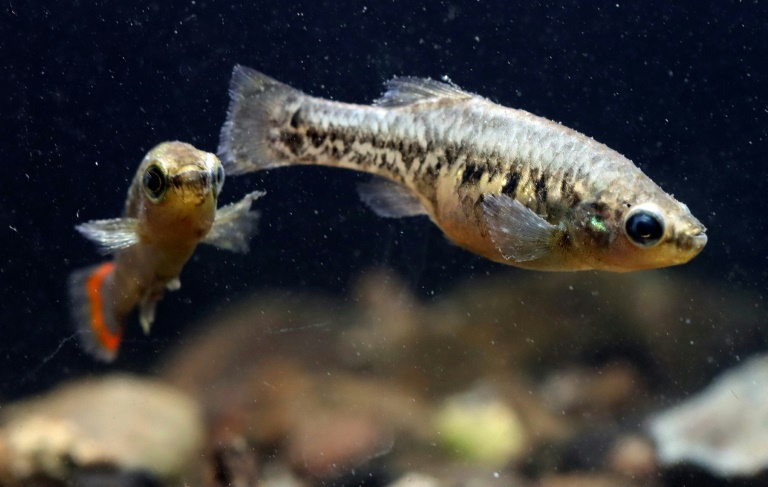
Residents of a small town in western Mexico are celebrating the reintroduction into the wild of the tequila fish — an endemic species saved from the brink of extinction.

The fish, whose scientific name is Zoogoneticus Tequila, was rescued in the 1990s by US and British conservationists who kept it in aquariums and helped it return to its original habitat in the Teuchitlan river.

Children in Teuchitlan, home to about 10,000 people, have been at the forefront of efforts to inform visitors not only about the importance of keeping their habitat clean, but also about the tequila fish.

“The children are the ones who approach people on the river bank and tell them that in this river lives a little fish that is unique in the world… and that they participated in its reintroduction,” said Consuelo Rivera, a 70-year-old retired teacher.

The tequila fish was reported to be extinct in 1998, possibly due to fragmentation of its habitat, pollution and competition from non-native species, according to the International Union for the Conservation of Nature (IUCN).

The species survived only in captivity for several years until conservationists, led by Michoacan University, began the process in 2014 to reintroduce it into the wild.

Since then the fish has gone from strength to strength, helped by the last major release of fish in 2018, said project leader Omar Dominguez.

– ‘Little rooster’ resurrected –

The tequila fish grows to around seven centimeters (2.7 inches) and the male has a bright reddish-orange tail.

It shares the name of the world-renowned Mexican liquor originating in the town of Tequila, which like Teuchitlan is located in the state of Jalisco.

The species has unique characteristics such as giving birth to well-developed fetuses, which it feeds through a kind of umbilical cord similar to that of humans, Dominguez said.

“It’s an important part of the ecosystem. It’s a carnivorous species and it feeds, for example, on mosquito larvae, which keeps ecosystems healthy for humans,” he added.

There are now estimated to be between 1,500 and 2,000 tequila fish in the wild, and the species is listed as endangered by the IUCN.

The civil society group Guardians of the River carries out educational campaigns and workshops for children and adults to shown them the flora and fauna of the area.

Tourism also plays an important role in the initiative.

Local visitors bathe in spa pools around the river said to have therapeutic properties, and swim with the fish — also known as “gallito” (little rooster) because of its colorful tail.

“There are a lot of little fish. They swim together with people and sometimes the little fish also start to bite people, to caress them,” said Maria Aurea Martinez, a spa employee.

Jaime Navel, a local parish priest, sees the species as “the little fish that was resurrected, that came back to life.”

“There’s awe and joy in the community,” he said.

Fears grow for Cuban artist 7 months after arrest

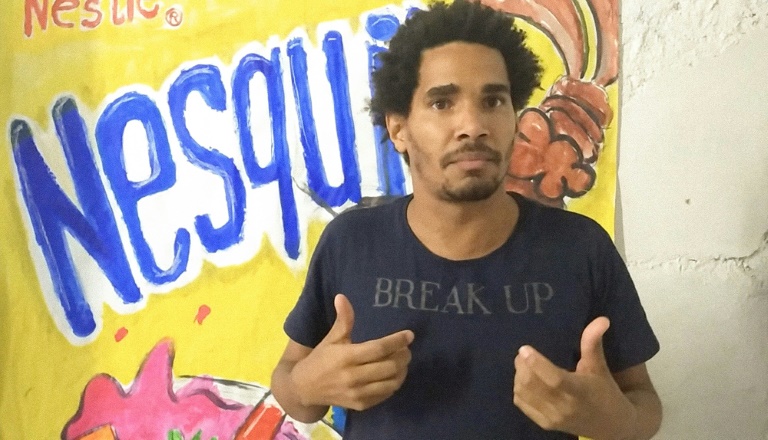
Seven months after his arrest, loved ones of Cuban dissident artist Luis Manuel Otero Alcantara worry for his health, locked away mostly incommunicado in a high-security prison.

Named one of Time magazine’s most influential people of 2021, the government in Havana considers the 34-year-old a mercenary in the service of the United States, which is calling for his release.

The last time his girlfriend Claudia Genlui could speak to Alcantara, by telephone, was on January 18. Since then, he has started a hunger strike. It’s not his first.

Then earlier this month, Genlui got a telephone call from a family member of a fellow inmate who reported that Alcantara “was not doing well, that he has lost a lot of weight, that he has almost no strength left to walk and that he hardly speaks,” she told AFP.

Alcantara is the leader of the San Isidro protest movement (MSI) of artists and intellectuals pressing for free speech and other rights in the communist island nation.

The Cuban government accuses him of political revolt funded by the United States, which has had sanctions in place against Cuba for six decades.

– ‘Extremely concerned’ –

On July 11 last year, when thousands of Cubans spilled onto the streets in a spontaneous outburst of anger against economic hardship and repression, Alcantara set out to join them.

But, already in the government’s sights, he was arrested shortly after leaving Genlui’s home, before he could even participate in the protest.

Since then, he has been held at the Guanajay maximum security jail 40 kilometers (25 miles) west of Havana.

The charges against him include incitement to commit an offense, aggravated contempt and public disorder — all allegedly committed before last year’s mass protests.

Last week, US Secretary of State Antony Blinken tweeted: “Seven months after peacefully standing up for human rights and fundamental freedoms, @LMOAlcantara awaits a trial that never seems to come.”

And the State Department said in a statement to AFP: “We are extremely concerned that Cuban authorities have unjustly made an example of Otero Alcantara.”

Alcantara, who defines himself as an “artivist,” has for years been a thorn in the side of the Cuban government with his provocative displays.

To protest a decree governing the work of artists in 2018, he sought to cover himself in human excrement outside parliament, but was arrested before the work was complete.

Once, he wore the Cuban flag over his shoulders for a month and was sued for insulting state symbols.

Last year, he spent almost a month in hospital following an eight-day hunger strike after authorities seized several of his works when he was arrested during a demonstration.

He was freed but rearrested several times for trying to leave his home, which had been surrounded by police who cut off his internet service and kept visitors away.

The entry in Time magazine calling Alcantara one of the most influential people of 2021 was written by Chinese dissident artist Ai Weiwei, who said Alcantara’s “art, his unignorable fight for freedom of expression and his uncompromising stance against autocracy reveal the power of resistance.”

According to Genlui, the Cuban authorities have repeatedly offered Alcantara his freedom in exchange for exile, but he refuses.

“What motivates him, his goal, which is all of ours, is the freedom of Cuba,” she said.

Amnesty International has declared Alcantara a prisoner of conscience.

US sanctions Russia for 'beginning' invasion of Ukraine

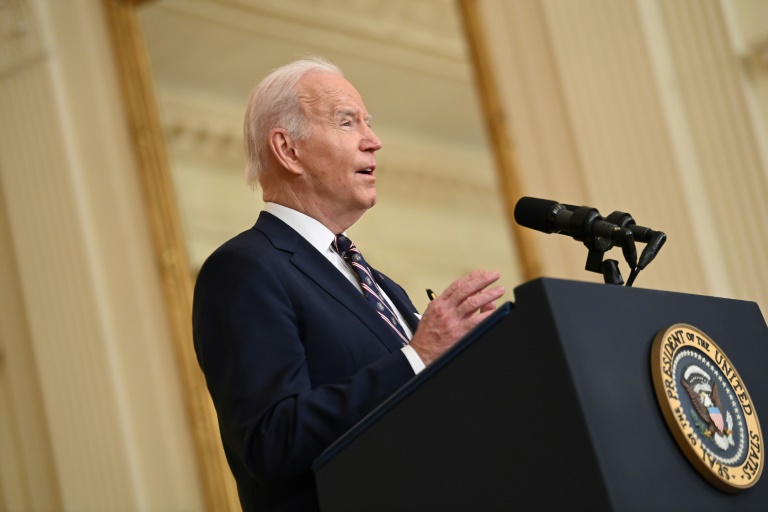
US President Joe Biden on Tuesday announced tough new sanctions on Russia for “beginning” an invasion of Ukraine but said there was still time to avoid war, even as Vladimir Putin signaled plans to send troops beyond Russia’s borders.

Russia’s upper house, the Federation Council, gave Putin unanimous approval to deploy “peacekeepers” to two breakaway Ukrainian regions now recognized by Moscow as independent, and potentially into other parts of Ukraine.

Biden announced what he called the “first tranche” of sanctions, including steps to starve Russia of financing and target financial institutions and the country’s “elites.”

But he left the door open to a final effort at diplomacy to avert a full-scale Russian invasion.

“There’s no question that Russia is the aggressor, so we’re clear eyed about the challenges we’re facing,” the president said.

“Nonetheless, there is still time to avert the worst case scenario that will bring untold suffering to millions of people.”

Biden’s address followed a wave of sanctions announced by Britain and the European Union, after Putin recognized the self-declared Donetsk and Lugansk rebel republics.

Germany also announced it was halting certification of the Nord Stream 2 gas pipeline from Russia.

Putin’s plans remained unclear, but Western officials have been warning for weeks he has been preparing an all-out invasion of Ukraine, a move that could spark a catastrophic war in Europe. 

– ‘Rejection of diplomacy’ –

The Biden administration signaled it no longer believes Russia is serious about avoiding conflict, as Secretary of State Antony Blinken said he had canceled a meeting with Russian Foreign Minister Sergei Lavrov scheduled for Thursday.

“Now that we see the invasion is beginning and Russia has made clear its wholesale rejection of diplomacy, it does not make sense to go forward with that meeting,” Blinken said.

Speaking to journalists, Putin said the Minsk peace agreements on Ukraine’s conflict no longer existed and he recognized claims by the separatists to more territory than they currently control.

But he added that the deployment of Russian troops would “depend on the specific situation… on the ground” and appeared to offer Ukraine a way out by giving up on its hopes to join the US-led NATO military alliance.

“The best solution… would be if the current Kyiv authorities themselves refused to join NATO and maintained neutrality,” Putin said.

NATO chief Jens Stoltenberg said the alliance had “every indication” that Moscow “continues to plan for a full-scale attack on Ukraine.”

Kyiv showed no sign of backing down, with Ukrainian Foreign Minister Dmytro Kuleba meeting Biden to appeal for more military aid.

Russia’s recognition move prompted an emphatic condemnation from United Nations chief Antonio Guterres, who called it “a death blow to the Minsk Agreements endorsed by the (UN) Security Council.”

– ‘Further military aggression’ –

Biden said in his White House address the United States would continue to supply “defensive” weapons to Ukraine and deploy more US troops to reinforce NATO allies in Eastern Europe.

Kyiv recalled its top diplomat from Moscow as President Volodymyr Zelensky warned that Putin’s recognition of the breakaway regions heralded “further military aggression” against Ukraine.

French Foreign Minister Jean-Yves Le Drian said EU foreign ministers “unanimously agreed on an initial sanctions package,” as he also canceled a meeting with his Russian counterpart.

“The sanctions will hurt Russia and will hurt a lot,” EU foreign policy chief Josep Borrell told reporters.

Britain slapped sanctions on five Russian banks and three billionaires, and Canada followed suit with similar measures. 

In some capitals there has been debate over whether Moscow sending troops into an area that was already controlled by Russian-backed rebels amounts to the kind of all-out invasion that would justify imposing the harshest sanctions.

But Putin’s rhetoric was sure to raise concerns.

Russia said it had established diplomatic relations “at the level of embassies” with the separatist-controlled regions, which broke away from Kyiv in 2014 in a conflict that cost 14,000 lives.

Lavrov sent congratulations to his counterparts in the Donetsk People’s Republic and the Lugansk People’s Republic.

– ‘We weren’t expecting this’ –

A Ukrainian soldier died Tuesday and six suffered injuries in clashes with Moscow-backed rebels in the east, the army said.

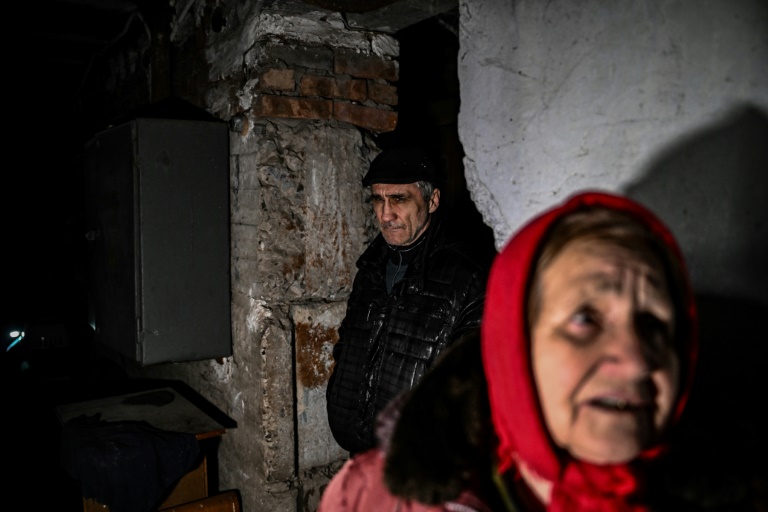
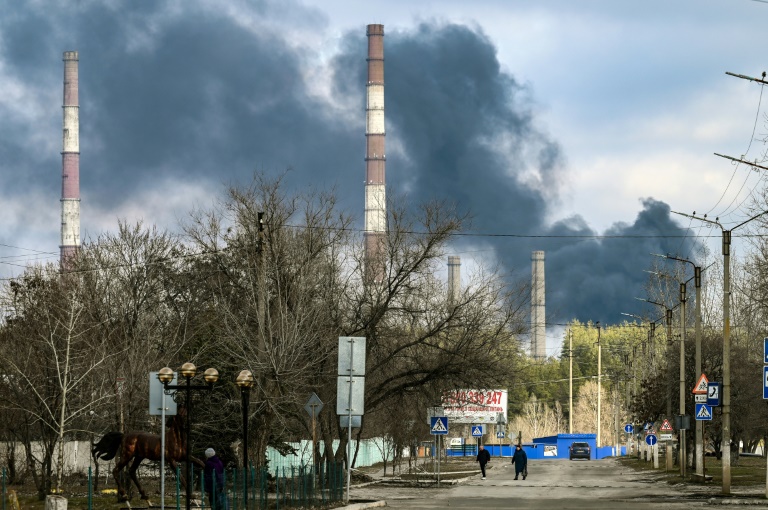
In the frontline town of Shchastya, shellfire rang out around an electric power station as fearful residents awaited the Russian deployment.

A shell hit the roof of 59-year-old Valentyna Shmatkova’s apartment block overnight, shattering all the windows in her two-room apartment.

“We spent the war in the basement,” she said, referring to the 2014 fighting. 

“But we weren’t expecting this. We never thought Ukraine and Russia wouldn’t end up agreeing.”

After a dramatic televised meeting with his top officials, Putin spoke to the Russian people Monday in an often angry hour-long address from his Kremlin office.

He railed against Ukraine as a “puppet” of the West, accusing Kyiv of preparing a “blitzkrieg” to retake the separatist regions.

US and Asian stocks sank Tuesday on war fears and concerns over sanctions.  

Hostage drama at Amsterdam Apple store ends, gunman overpowered

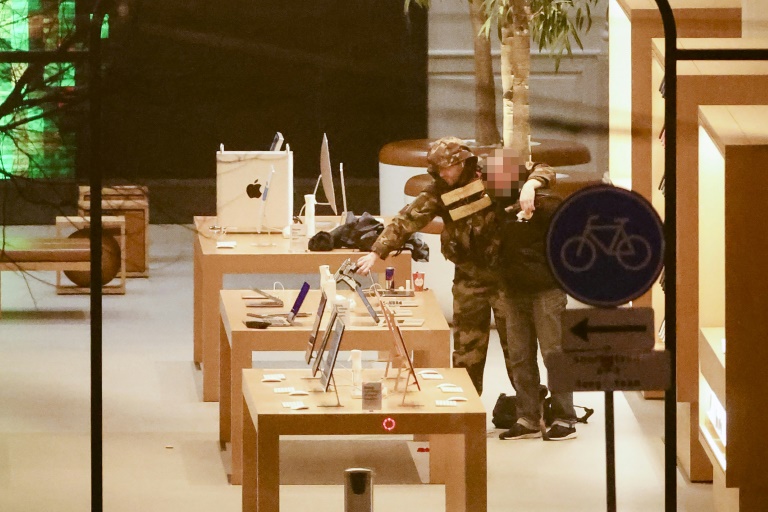
A man with a firearm who held several people hostage at Apple’s flagship store in central Amsterdam was overpowered late Tuesday after a siege lasting several hours, police said, adding that the last of the hostages had been freed.

Police had deployed several special units to “get the situation under control” after being alerted of an armed robbery at 5:40 pm (1640 GMT) which had rapidly transformed into a hostage situation.

Police said the gunman was “lying on the street and a robot was examining him for explosives” in front of the store in Leidseplein in the heart of the Dutch city.

“We managed to stop the hostage-taker by hitting him with a car the moment he ran outside”, a tweet said later.

“We now know that the suspect had no explosives on his body and medical staff are now taking care of him.”

The last hostage held in the store was safe, they added. 

“Since the start of the hostage taking… several people have managed to leave the store,” they said earlier.

Leidseplein is popular with tourists and known for its lively bars and cafes. The area was quickly closed and the restaurants, bars and theatres were shut after the hostage taking.

The police were monitoring images circulating on social media which would eventually be used in an investigation, they added.

Dutch public television NOS said the hostage taker was injured and was driven away in an ambulance.

Tim Wagemakers, an independent journalist who was in a nearby building, tweeted there were heavily armed police at the site, adding that locals had been asked to remain inside and stay away from their windows.

The building he was in was evacuated during the hostage-taking.

Images on social media showed an assailant holding a man at gunpoint, local media reported. Several witnesses heard gunshots inside the Apple Store, according to the AT5 outlet.

US restricts import of Afghan cultural items to prevent 'pillage'

The United States has restricted the import of  cultural and historical items from Afghanistan, hoping to prevent “terrorists” from profiting, the State Department said Tuesday, but experts voiced fears about the unintended consequences.

The decree, which was implemented on an “emergency” basis and took effect on Friday, includes restrictions on bringing ceramics, paintings, glass, ivory, ancient textiles, tiles and wood pieces, among others into the country, according to a government list. 

The restrictions “are intended to prevent illicitly trafficked materials from entering the US art market, thus reducing the incentive for pillage of Afghanistan’s cultural heritage and combatting profit from the sale of these cultural objects by terrorists and criminal organizations,” the State Department said. 

But they come after an April 2021 request from the US-backed Afghan government — which fell to the Taliban in August.

“Can the State Department act based on a ‘request’ of a government that no longer exists?” ancient coin collector and advocate Peter Tompa asked in a post on his blog the Cultural Property Observer.

“The real question is how these restrictions are going to be enforced and if any material that may be seized will be repatriated to the Taliban once diplomatic relations (with the United States) are restored,” he wrote. 

– Taliban ‘investigating’ looting –

Restricted archaeological material dates from the year 50,000 BC through 1747, and restricted cultural material includes items from the ninth century through 1920, the government said.

The new regulations could create logistics issues for collectors or curators who already have items on their way to the United States as auction houses prepare to sell pieces during Asia Week New York next month, art publication The Art Newspaper pointed out. 

For Tompa, one upside to the import rules, which are set to remain in force until April 2026 and could be extended, is that they do not seem to include bans on modern textiles. 

“If it did, such import restrictions would potentially devastate the livelihoods of Afghan women who make a living weaving textiles for export,” he wrote. 

Last year, UNESCO called on the Taliban to help preserve Afghanistan’s cultural heritage.

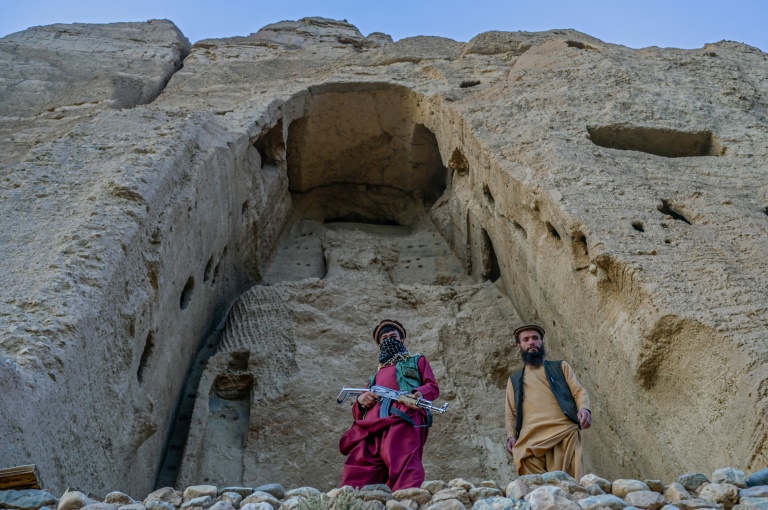
Shortly before their first stint in power came to an end in 2001, the Taliban destroyed two giant centuries-old Buddha statues carved out of a cliff face in Bamiyan, sparking global outrage.

And local officials and former UNESCO employees formerly based in Afghanistan told AFP that around a thousand priceless artifacts once stored in warehouses near the statutes were stolen or destroyed following the 2021 Taliban takeover.

“I confirm that looting did take place, but it was before our arrival,” local Taliban member Saifurrahman Mohammadi told AFP in October, blaming the thefts on the vacuum left by the old authorities after they fled.

“We are investigating and we are trying to get them back,” he added.

The group has promised a softer version of rule this time around, and Taliban fighters now guard what remains of the Buddhist statues.

Ukraine running out of options as Putin orders in troops

Ukraine and its leader Volodymyr Zelensky are running out of options as they try to withstand Russian military advances that could shrink their country for the second time since 2014.

Russia President Vladimir Putin defied Western warnings and approved sending troops into eastern Ukraine on Monday to support two rebel regions’ independence claims.

World powers are still trying to decide whether Putin’s deployment of so-called “peacekeepers” constitutes the feared invasion they warned would trigger potentially crippling sanctions.

The danger of punishing Russia too severely now is that this would leave the West with few means of reprisal should Putin order in the bulk of the 150,000 soldiers now said by Kyiv and Washington to be encircling Ukraine.

But analysts say Kyiv’s Western-backed leader faces an even bigger dilemma.

Pundits believe Zelensky cannot be seen by the public to be bowing before Putin’s unilateral decision to take a chunk of Ukraine under his wing.

But he can also ill afford to challenge Russia’s far superior armed forces or risk an even bigger war breaking out across his vast former Soviet state.

“Zelensky’s options have seriously narrowed,” said Kyiv’s Penta political studies centre director Volodymyr Fesenko

“The main objective now is to avert a big war. The main goal is to keep the war from spreading beyond the current front.”

– Memories of Crimea –

Ukrainians are still haunted by how Putin secretly sent soldiers — dubbed “little green men” because they wore no insignia — into Crimea in a stealth annexation in 2014.

The Kremlin urged Ukrainian troops stationed on the peninsula at the time to either switch sides or get out.

Ukraine lost almost its entire Black Sea fleet and the whole region without firing a shot.

Independent political analyst Mykola Davydyuk said Zelensky’s political career would end quickly should Ukraine capitulate to Russian forces in the same way.

“If he now starts making concessions to Russia, he will not be able to hold on to the presidency,” Davydyuk said.

Zelensky delivered a punchy message on Tuesday in which he pledged to immediately review breaking off diplomatic relations with Moscow.

He also impassionately argued that the West had every reason to sanction Russia with full force today.

“Legally, I believe the aggression has already started,” Zelensky told reporters.

“We should not wait for it to start, because the first steps of this aggression have already been taken.”

– ‘A real war’ –

It is less clear what Ukraine can do against Russia on the battlefield.

Ukraine’s forces are positioned across a frontline that splits the rebel-run parts of the Donetsk and Lugansk regions from those under government control.

Putin implied on Tuesday that his recognition covered the broader region that included the Kyiv-controlled areas.

That could potentially set the stage for the first direct clash between Russian and Ukrainian forces since the two became independent post-Soviet countries in 1991.

But Putin stressed that he wanted “all contentious issues” revolving around the border resolved through talks.

Few genuinely expect Ukraine to launch an offensive should Russian forces flood into rebel-held lands.

But the Ukrainian army has been bolstered by years of Western backing that has turned into a more muscular force than the one that first started fighting the insurgents eight years ago.

“There will not be a repeat of what happened in Crimea. There will be no retreat or concession of land,” Fesenko said.

“Yes, this would be a real war. It is sad but something that everyone must understand.”

– ‘Raising the stakes’ –

Putin preceded his independence proclamation with a remarkable television address that at various points questioned Ukraine’s right to be called an independent state.

“A stable statehood has never developed in Ukraine,” Putin declared.

Democracy House think tank analyst Anatoliy Oktysyuk said Putin was delivering a blunt message to Kyiv that he will not accept its pro-Western course.

“It is now clear that Putin will not let go of Ukraine,” said Oktysyuk. “He is raising the stakes.”

Analysts believe Ukraine’s long-term response to this lingering threat could define the shape of European security and Western relations with Moscow in the years to come.

“Putin’s address was a declaration of war, not a declaration of the separatists’ independence,” said Davydyuk.

Russian lawmakers give Putin green light for troops to Ukraine

Russian lawmakers on Tuesday gave Vladimir Putin the green light to deploy forces abroad, paving the way for the Russian leader to send troops into Ukraine despite a fierce global backlash.

The unanimous approval by Russia’s upper house, the Federation Council, allows Putin to deploy “peacekeepers” to two breakaway Ukrainian regions now recognised by Moscow as independent, and potentially into other parts of Ukraine.

It came in the face of a wave of new sanctions announced by the United States, Britain and European Union, after Putin recognised the self-declared Donetsk and Lugansk rebel republics — including an announcement that Germany was halting certification of the Nord Stream 2 gas pipeline from Russia.

Putin’s plans remained unclear, but Western officials have been warning for weeks he has been preparing for an all-out invasion of Ukraine, a move that would spark a catastrophic war in Europe.

Speaking to journalists shortly after the approval, Putin said the Minsk peace agreements on Ukraine’s conflict no longer existed and he recognised claims by the separatists to more territory than they currently control.

He left the door open to a solution, saying the deployment of Russian troops would “depend on the specific situation… on the ground” and appearing to offer Ukraine a way out by giving up on its hopes to join the US-led NATO military alliance.

“The best solution… would be if the current Kyiv authorities themselves refused to join NATO and maintained neutrality,” Putin said.

– ‘Every indication’ of invasion –

The Russian foreign ministry said it would soon evacuate its diplomatic staff from Moscow to “protect their lives”.

NATO chief Jens Stoltenberg said the alliance had “every indication” that Moscow “continues to plan for a full-scale attack on Ukraine”.

Kyiv showed no sign of backing down to Moscow, with Ukrainian Foreign Minister Dmytro Kuleba in Washington calling on the EU to promise his country membership and for the West to supply it with more weapons.

“Our best guarantees will be our diplomacy and arms. We will mobilise the whole world to get everything we need to strengthen our defences,” Kuleba said.

Kyiv recalled its top diplomat from Moscow as President Volodymyr Zelensky warned Putin’s recognition of the breakaway regions heralded “further military aggression” against Ukraine.

Kuleba had earlier called on Kyiv’s Western allies to impose “tough sanctions” over Russia’s actions and many were moving quickly.

French Foreign Minister Jean-Yves Le Drian said EU foreign ministers on Tuesday “unanimously agreed on an initial sanctions package”, as he cancelled a meeting with his Russian counterpart planned for Friday.

“The sanctions will hurt Russia and will hurt a lot,” EU foreign policy chief Josep Borrell told reporters, adding that targets for asset freezes and visa bans included 351 members of Russia’s lower house State Duma.

– Biden to speak –

With US President Joe Biden due to speak, the White House said it would reveal its own “severe” measures later in the day.

Britain slapped sanctions on five Russian banks and three billionaires.

In some capitals there has been debate over whether sending troops into an area that was already controlled by Russian-backed rebels amounts to the kind of all-out invasion that would justify imposing the harshest sanctions.

But Putin’s rhetoric about the borders of the separatist regions was sure to raise concerns.

Putin said that by recognising the rebel regions, Russia was also recognising “the borders within the Donetsk and Lugansk regions at the time when they were part of Ukraine.”

Separatist-controlled territories cover only about a third of the total area of Ukraine’s Donetsk and Lugansk regions, and several cities in the regions, including the Black Sea port of Mariupol, are outside rebel territory.

In the frontline town of Shchastya on Tuesday, shellfire rang out around an electric power station as fearful residents awaited the Russian deployment.

A shell hit the roof of 59-year-old Valentyna Shmatkova’s apartment block overnight, shattering all the windows in her two-room apartment.

“We spent the war in the basement,” she said, referring to the 2014 fighting that saw the region break away from Ukraine. 

“But we weren’t expecting this. We never thought Ukraine and Russia wouldn’t end up agreeing.”

– Political theatre –

Most Western officials were not yet describing Putin’s moves as an invasion, but US officials say there is a 150,000-strong Russian force poised to launch an all-out assault.

Putin announced he was recognising the territories, which broke away from Kyiv’s control in 2014 in a conflict that cost 14,000 lives, in a day of political theatre in Moscow.

After a dramatic televised meeting with his top officials, Putin spoke to the Russian people in a 65-minute address from his Kremlin office.

In the often angry speech, Putin railed against Ukraine as a failed state and “puppet” of the West, accusing Kyiv of preparing a “blitzkrieg” to retake the separatist regions.

He was then shown signing “friendship” agreements with rebel leaders that allowed for the official deployment of Russian forces to “maintain peace” and the sharing of military bases and border protection.

Fighting appeared to have eased slightly on Tuesday, with the Ukrainian military saying there had been 47 ceasefire breaches between midnight and 5:00 pm, with two soldiers wounded.

On Monday there had been 84 violations, with two soldiers killed and 18 wounded.

Israel court freezes eviction order of Palestinian family

An Israeli court on Tuesday froze the planned eviction of a Palestinian family in the flashpoint east Jerusalem neighbourhood of Sheikh Jarrah, pending an appeal.

The Salem family had been ordered to surrender the property to Jewish settlers who have claimed ownership of the plot.

Sheikh Jarrah has become a symbol of Palestinian resistance against Israeli control of Jerusalem, and the Salem family’s imminent eviction made them a growing focus of the tensions there.

The land rights battle between Jewish settlers and Palestinians in the neighbourhood has sparked clashes and partly fuelled the 11-day war in May between Israel and armed groups in the Gaza Strip. 

The Palestinian family received their eviction order in November, with a deadline to vacate by March 1. 

A lawyer for the family, Medhat Diba, said the Jerusalem Magistrate’s court agreed to suspend the eviction until it ruled on an appeal launched by the Palestinians. 

The court also released a decision confirming the freeze. 

Khalil Salem, a member of the family, told AFP the decision was “a positive step because we were on the verge of losing our house.”

Earlier this month clashes broke out when far-right Israeli lawmaker Itamar Ben Gvir opened a tent “office” near the family’s house after an alleged Palestinian arson of a settler’s home nearby. 

The United Nations said its personnel visited the Salem family on February 18.

Israel annexed east Jerusalem, which Palestinians claim as their future capital, following the 1967 Six-Day War in a move not recognised by most of the international community. 

Jewish settlers groups have won legal victories claiming ownership of various plots where Palestinians live, using an Israeli law that allows Jews to reclaim land lost during the conflict that coincided with Israel’s creation in 1948. 

But no equivalent land reclamation law exists for Palestinians who lost homes in west Jerusalem.  

Seven Palestinian families in Sheikh Jarrah have challenged their planned evictions at Israel’s Supreme Court, with highly-anticipated decisions pending. 

More than 200,000 settlers now live in east Jerusalem, alongside about 300,000 Palestinians. The Jewish settlements in the city are considered illegal under international law. 

Close Bitnami banner
Bitnami