World

Mining firms targeting Brazil indigenous lands: report

Major mining companies are seeking to expand to currently protected indigenous lands in the Amazon rainforest, bolstered by billions of dollars in financing from international banks and investment firms, a report found Tuesday.

Nine mining giants including Brazil’s Vale, Britain’s Anglo American and Canada’s Belo Sun have filed applications seeking authorization to mine on indigenous reservations in Brazil — even though that is currently illegal, said the report by the environmental group Amazon Watch and the Association of Brazil’s Indigenous Peoples (APIB).

The firms appear to be betting Brazilian President Jair Bolsonaro, who has pushed to open protected lands to mining and agribusiness, will succeed in passing legislation introduced by his government that would allow them to operate on indigenous territories, it said.

As of November, the companies had a total of 225 active mining applications to Brazil’s National Mining Agency (ANM) that overlap 34 indigenous lands, for a total area more than three times the size of London, it said.

“The environmental damages and threats against the lives of forest peoples by mining activities are brutal and have only worsened under Bolsonaro’s administration,” Ana Paula Vargas, Brazil program director at Amazon Watch, said in a statement.

“With the rainforest at the tipping point of ecological collapse, we need to involve all the actors behind this industry.”

Experts say preserving indigenous lands is among the best ways to protect the world’s biggest rainforest, a vital resource in the race to curb climate change.

– Alleged violations –

The report found the mining firms, which also included Glencore, AngloGold Ashanti, Rio Tinto, Potassio do Brasil and Grupo Minsur, received a total of $54.1 billion in financing from international investors over the past five years for their Brazilian operations.

It urged banks and financial firms backing such companies to pull out of them, saying many also had a history of human rights violations and environmental destruction.

Major backers of the nine mining companies include US firms BlackRock, Capital Group and Vanguard, which invested $14.8 billion in them over the past five years, it said.

Banks including France’s Credit Agricole, US-based Bank of America and Citigroup and Germany’s Commerzbank are also major financiers of the companies, with a total of $2.7 billion in loans and underwriting, it said.

Many of the companies denied the report’s findings.

Anglo American said it had “legacy tenure applications” for indigenous lands that it had “fully and formally withdrawn several years ago.”

Vale said it had done the same last year.

South Africa-based AngloGold Ashanti said it “does not operate nor have interest in operating on indigenous lands.”

It said it had applied in the 1990s for mining licenses for three areas that were later declared indigenous reservations. It withdrew those applications more than two decades ago, but the mining agency’s database “was not updated,” it said.

Belo Sun, Peru’s Minsur and Potassio do Brasil said they had no activity relating to indigenous territory, and defended their social and environmental records.

A spokesperson for Vanguard meanwhile said the firm “regularly engages with mining companies” to promote sound environmental and social practices.

And Credit Agricole said it financed no mines in the Amazon.

“We have contacted Anglo American and Vale, which both confirmed they had no exploration permits for indigenous lands,” it said.
'We are expecting war', say Ukraine frontline residents

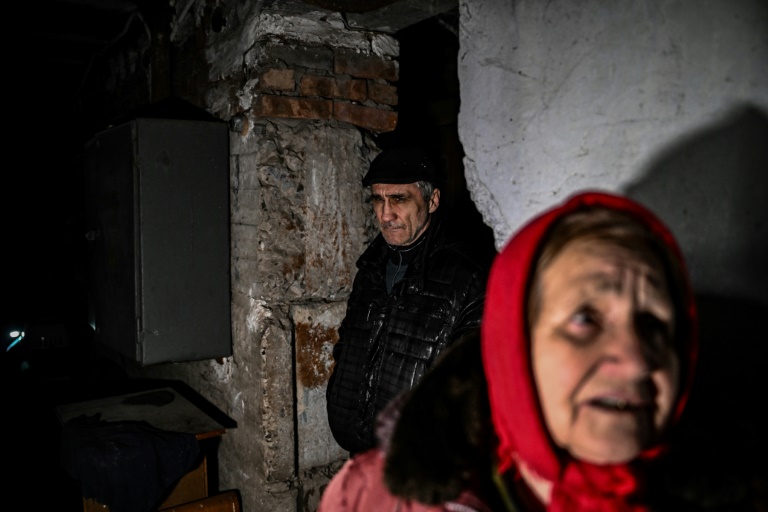
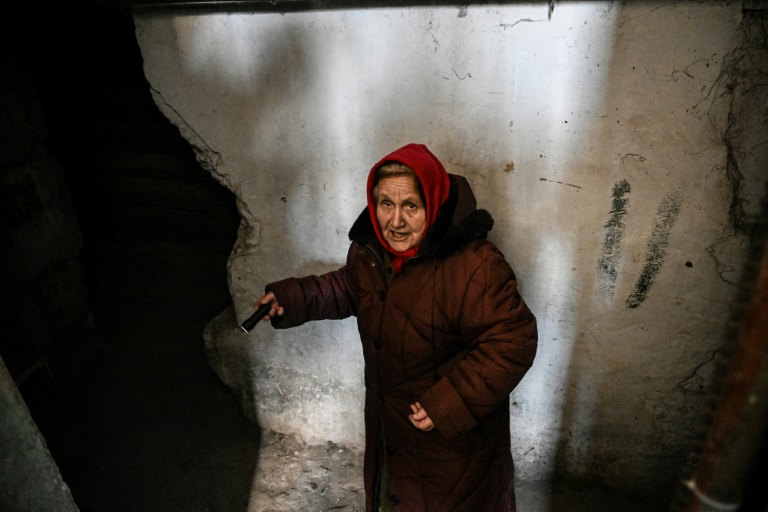
Ninety-year-old Raisa Simanovna still sleeps in her flat on the frontline in eastern Ukraine but goes down into the cellar in the daytime to shelter from the ever more intense shelling and mortar fire.

Located in territory held by Ukrainian forces on the border with the separatist Lugansk republic backed by Russia, the town of Schastya — which means “happiness” — has been a symbol of promise in a conflict which began in 2014.

Before it was closed down due to Covid restrictions, the bridge over the Donetsk, the river that flows through the town, was one of the rare crossing points between the two sides.

The town is once again on a volatile frontline following President Vladimir Putin’s move to recognise the separatist self-proclaimed republics of Lugansk and Donetsk and order Russian troops in.

And the Soviet-era apartment block in which Simanovna lives is on a canal that connects to the river, right on that frontline.

“We are expecting war any hour, any minute,” said the pensioner, her face wrapped in a scarlet-coloured kerchief as she descended into the cellar with an electric torch in hand.

The electricity, heating and water in her building have been cut off after shelling hit the town’s power supply.

Like the few neighbours she has left, Simanovna has nowhere to go. Out of the 10 flats in her part of the building, only three are occupied.

– ‘We weren’t expecting this’ –

In the night between Monday and Tuesday, the area came under fire and residents could be seen cleaning up the damage.

Valentina Shmatkova, 59, said she was woken up by all the windows in her two-room apartment shattering.

“We spent the war in the basement,” she said while clearing up her flat, referring to the most intense years of the conflict between 2014 and 2016.

“But we weren’t expecting this. We never thought Ukraine and Russia wouldn’t end up agreeing.

“I didn’t think there would be a conflict. I thought our president and the Russian president were intelligent and reasonable people,” she said.

“I have one request: that they sort this out and we can forget about this misunderstanding!”

Asked what she thought of Putin’s decision to recognise the separatists, Shmatkova laughed: “I have no idea what’s going on, we have no light, no electricity, nothing!”

– ‘We have to leave’ –

The shelling and mortar fire gradually intensified as the day progressed. Deafening explosions began shaking the walls and set off car alarms.

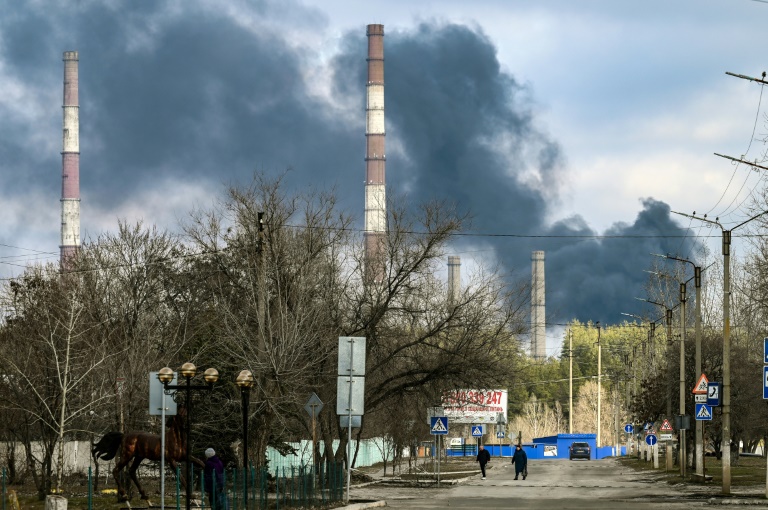
Black smoke could be seen billowing from the local power station after it took a hit.

“They’re aiming for the bridge,” one man said calmly as the ground shook under him, before lugging a heavy box to his 4×4.

Nearby, Daniil and his father sat smoking on a bench outside their home.

The younger man, who is unemployed, said he wanted to stay in Schastya despite the lack of jobs but Putin’s speech would change things.

“They recognised the republics and, if they recognised the republics, that means there will be an escalation. And if there is an escalation, that means we have to leave.”

US women's soccer reaches landmark $24 mn settlement in equal pay dispute

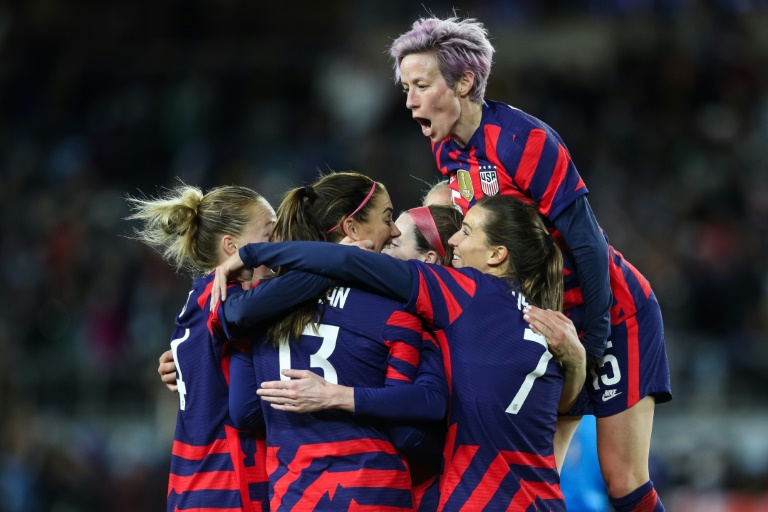
The US national women’s team has won a $24 million payout and a promise of equal pay in a landmark settlement with US Soccer, the two sides announced Tuesday in a joint statement.

“US Soccer has committed to providing an equal rate of pay going forward for the Women’s and Men’s National Teams in all friendlies and tournaments, including the World Cup,” the terms of the deal, sent to AFP, said.

The question of World Cup prize money had formed a prominent part of the lawsuit filed by the US women’s soccer team in 2019, which accused the federation of “stubbornly refusing” to pay its men and women’s players equally.

“I think we’re going look back on this day and say this is the moment that, you know, US Soccer changed for the better,” women’s star Megan Rapinoe said in an interview with ABC after the deal was announced.

“Obviously we can’t go back and undo the injustices that we faced but … we know that something like this is never gonna happen again,” she continued, adding she hopes that they can now “move forward” with “setting up the next generation so much better than we ever had it. So it’s a great day.”

Her teammate Alex Morgan, also speaking on ABC, called the deal “a monumental step forward in feeling valued, feeling respected and just mending our relationship with US Soccer.”

The agreement stipulates that $22 million will be distributed to the players, while $2 million will go into an account to benefit them “in their post-career goals and charitable efforts related to women’s and girls’ soccer.”

The settlement is contingent on a new collective bargaining agreement, which needs to be ratified before the deal can be finally approved by a court.

A federal judge had rejected the claim of pay discrimination, but the US women then launched an appeal.

The 2019 lawsuit cited the discrepancy in World Cup prize money payments paid to the two teams in 2014 and 2015.

The US men received $5.375 million for reaching the round of 16 at the 2014 World Cup, while the women received $1.725 million for winning the 2015 tournament.

– ‘Not easy’ –

The US Soccer Federation had argued that its hands were tied because the prize money is set by FIFA, which awarded $38 million to France for winning the 2018 men’s World Cup in Russia, but only $4 million to the American women for winning the 2019 Women’s World Cup.

“Getting to this day has not been easy,” both sides admitted in a statement announcing the deal.

“The US Women’s National Team players have achieved unprecedented success while working to achieve equal pay for themselves and future athletes… We look forward to continuing to work together to grow women’s soccer.”

In September last year USSF president Cindy Parlow Cone said the body hoped to equalize the World Cup prize money for its players.

“Until FIFA equalizes the prize money that it awards to the Men’s and Women’s World Cup participants, it is incumbent upon us to collectively find a solution,” she wrote in an open letter addressed to fans.

She said the gulf in prize money paid out by FIFA was “by far the most challenging issue” facing US Soccer in pay negotiations with men’s and women’s teams.

US set to impose sanctions after Russian 'invasion' of Ukraine

The United States said Tuesday that Russia’s move into eastern Ukraine amounts to the “beginning of an invasion” and warned that “severe” sanctions would be announced shortly.

President Joe Biden will address the nation at 1:00 pm (1800 GMT) on Russia’s actions, the White House said.

The sterner message followed an initially more hesitant US response to Russian President Vladimir Putin’s recognition of two rebel-held enclaves in Ukraine as independent, along with reluctance to say that “invasion” was underway after Putin ordered troops there.

For weeks, the United States and its allies have said that a full invasion of Ukraine by massing Russian forces would trigger devastating economic sanctions. 

But with doubts continuing over Putin’s ultimate intentions, it took some 12 hours for the Biden administration to shift to a harsher tone.

“We think this is, yes, the beginning of an invasion, Russia’s latest invasion into Ukraine, and you’re already seeing the beginning of our response, that we said will be swift and severe,” deputy national security advisor Jonathan Finer told CNN.

The White House also welcomed Germany’s earlier decision to halt the mammoth Nord Stream 2 pipeline project meant to deliver Russian natural gas to Europe.

Biden “made clear that if Russia invaded Ukraine, we would act with Germany to ensure Nord Stream 2 does not move forward… We will be following up with our own measures today,” Press Secretary Jen Psaki tweeted.

Putin sharply escalated the crisis on Monday when he announced recognition of the enclaves that Moscow supports in Ukraine — and said Russia’s military would be responsible for what he called “peacekeeping.”

But it was not immediately clear what the scope and timing of Russian “peacekeeping” troop movements would be and, crucially, whether Russia will now openly support the separatists in their goal to seize even more Ukrainian territory across the Donbas region.

While the United States and other Western allies condemned a violation of pro-Western Ukraine’s territorial integrity, Washington initially struck a cautious posture.

Biden immediately imposed economic sanctions on the two enclaves, but on the question of any further sanctions against Russia itself, a US official told reporters, “We are going to assess what Russia’s done.”

The official stressed that Russian forces have already been deployed covertly in the separatist areas for eight years.

“Russian troops moving into Donbas would not be a new step,” the official said. “We’ll continue to pursue diplomacy until the tanks roll.”

Later Monday a White House spokesperson first revealed that new sanctions would be announced, indicating that the position was hardening.

– Beyond Nord Stream 2 –

Secretary of State Antony Blinken slammed Russia’s recognition of the separatist areas as a sign Putin had no interest in negotiating, saying it “directly contradicts Russia’s claimed commitment to diplomacy, and is a clear attack on Ukraine’s sovereignty.”

Putin’s announcement also sparked intense phone diplomacy between Washington, European capitals and Ukraine as the United States tries to maintain unity among dozens of partners over how to respond to Russia, which supplies much of the European Union’s energy needs.

After announcing a stop to the near-completed Nord Stream 2 pipeline project, German Chancellor Olaf Scholz warned Russia “there are also other sanctions that we can introduce if further measures are taken.”

On Friday, the deputy US national security advisor for international economics, Daleep Singh, warned that the full set of sanctions under preparation would turn Russia into an international “pariah.”

Russian lawmakers lavish Putin with praise after rebel recognition

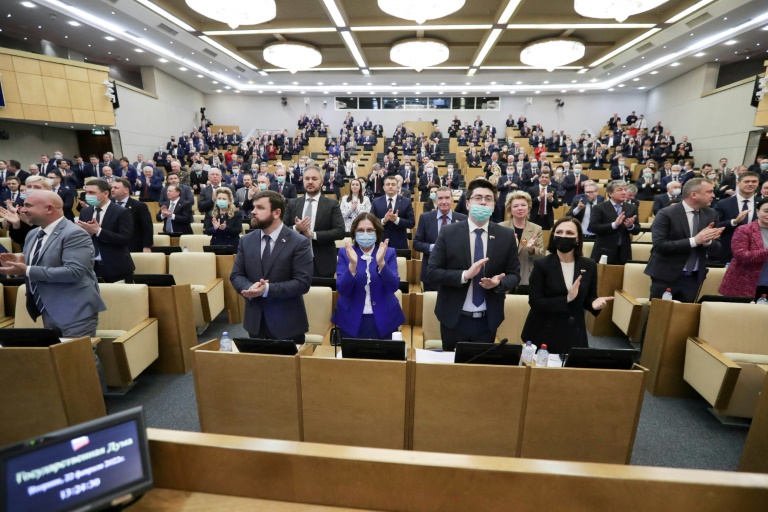
Russian lawmakers lined up Tuesday to lavish President Vladimir Putin with praise for recognising east Ukraine’s rebel territories, in a show of loyalty as they unanimously voted to ratify the Kremlin’s deals with the separatists.

Lawmakers took to the tribunes to defend Putin’s move in ultra-patriotic speeches and broke into applause as they approved the agreements, which give legal cover for Russian troops to be sent in to Ukraine.

Not a single lawmaker in the lower or upper houses of parliament — the Duma and the Federation Council — voted against the deals with the Donetsk and Lugansk separatists.

In scenes reminiscent of Russia’s 2014 annexation of Crimea, the lawmakers presented Putin’s move as a major victory and backed dubious historical theories made in his national address the night before.

“Let’s thank the president for his bravery, for his responsible position,” Duma speaker Vyacheslav Volodin said as he opened the voting session. 

A day earlier, Putin announced he was recognising the rebel republics. 

The longtime leader did so at the end of an hour-long speech heavy in murky historical references.

He claimed Ukraine was “entirely created by Russia” and  questioned Kyiv’s right to statehood throughout his address.

Several hours later, he ordered the Russian army to send troops to eastern Ukraine to “maintain peace”.

– ‘Not scared of sanctions’ –

As Western countries announced new sanctions against Moscow throughout the day, lawmakers said Moscow was being unfairly punished for correcting a historical injustice.

“Moscow is not scared of any sanctions,” Deputy Foreign Minister Andrei Rudenko told lawmakers as he presented the deals in parliament. 

Even as Russian stock markets were hit and the ruble tanked to almost 80 to a dollar, Duma speaker Volodin called on Russians to “believe in our national currency.” 

At one point, it seemed that one lawmaker had not voted in favour of ratifying a deal with the Lugansk People’s Republic, with the Duma’s voting results screen showing 399 out of 400 for it. 

But soon afterwards, Communist MP Oleg Smolin owned up that he had not pressed the button in time and that he was indeed in favour.

The sessions included some of Russia’s most vehemently anti-Western public speakers that have sat in parliament for years — even decades — within the so-called “systemic opposition” that challenges Putin domestically but supports his foreign policy.

“NATO holds us by the throat,” 77-year-old Communist leader Gennady Zyuganov said in an angry speech defending Putin.

– ‘What has Russia done wrong?’ – 

Among those who took the floor was Andrei Lugovoi — a nationalist MP who British police believe is a suspect in the 2006 poisoning of former agent Alexander Litvinenko in London. 

Lugovoi, who the UK has tried and failed to extradite to London, said that Russia “spits on the opinion of the West”.

When the vote went from the Duma to the Federation Council, the upper chamber’s speaker Valentina Matvienko seemed to have tears in her eyes as the deals were ratified.

“I assure you that we are ready for (Western) sanctions,” she said after the vote.

A day earlier, she had been the only woman to participate in a highly unusual Kremlin security council meeting, in which officials made impassioned speeches to Putin to recognise the rebels. 

When it was her turn, 72-year-old Matvienko, who was born in Ukraine, asked: “What has Russia done wrong to Ukraine in 30 years?”

Ukraine running out of options as Putin orders in troops

Ukraine and its leader Volodymyr Zelensky are running out of options as they try to withstand Russian military advances that could shrink their country for the second time since 2014.

Russia President Vladimir Putin defied Western warnings and approved sending troops into eastern Ukraine on Monday to support two rebel regions’ independence claims.

World powers are still trying to decide whether Putin’s deployment of so-called “peacekeepers” constitutes the feared invasion they warned would trigger potentially crippling sanctions.

The danger of punishing Russia too severely now is that this leaves the West with few means of reprisal should Putin order in the bulk of the 150,000 soldiers now said by Kyiv and Washington to be encircling Ukraine.

But analysts say Kyiv’s Western-backed leader faces an even bigger dilemma.

Pundits believe Zelensky cannot be seen by the public to be bowing before Putin’s unilateral decision to take a chunk of Ukraine under his wing.

But he can also ill afford to challenge Russia’s far superior armed forces or risk an even bigger war breaking out across his vast former Soviet state.

“Zelensky’s options have seriously narrowed,” said Volodymyr Fesenko, director of Kyiv’s Penta political studies centre.

“The main objective now is to avert a big war. The main goal is to keep the war from spreading beyond the current front.”

– Memories of Crimea –

Ukrainians are still haunted by how Putin secretly sent soldiers — dubbed “little green men” because they wore no insignia — into Crimea in a stealth annexation in 2014.

The Kremlin urged Ukrainian troops stationed on the peninsula at the time to either switch sides or get out.

Ukraine lost almost its entire Black Sea fleet and the whole region without firing a shot.

Independent political analyst Mykola Davydyuk said Zelensky’s political career would end quickly should Ukraine capitulate to Russian forces in the same way.

“If he now starts making concessions to Russia, he will not be able to hold on to the presidency,” Davydyuk said.

Zelensky delivered a punchy message on Tuesday in which he pledged to immediately review breaking off diplomatic relations with Moscow.

He also impassionately argued that the West had every reason to sanction Russia with full force today.

“Legally, I believe the aggression has already started,” Zelensky told reporters.

“We should not wait for it to start, because the first steps of this aggression have already been taken.”

– ‘A real war’ –

It is less clear what Ukraine can do against Russia on the battlefield.

Ukraine’s forces are positioned across a frontline that splits the rebel-run parts of the Donetsk and Lugansk regions from those under government control.

Putin’s independence declaration did not spell out where he drew the Russian-backed statelets’ boundaries.

Moscow’s recognition of the entire region could set the stage for the first direct clash between Russian and Ukrainian forces since the two became independent post-Soviet countries in 1991.

Few genuinely expect Ukraine to launch an offensive should Russian forces flood into rebel-held lands.

But the Ukrainian army has been bolstered by years of Western backing that has turned into a more muscular force than the one that first started fighting the insurgents eight years ago.

“There will not be a repeat of what happened in Crimea. There will be no retreat or concession of land,” Fesenko said.

“Yes, this would be a real war. It is sad but something that everyone must understand.”

– ‘Raising the stakes’ –

Putin preceded his independence proclamation with a remarkable television address that at various points questioned Ukraine’s right to be called an independent state.

“A stable statehood has never developed in Ukraine,” Putin declared.

Democracy House think tank analyst Anatoliy Oktysyuk said Putin was delivering a blunt message to Kyiv that he will not accept its pro-Western course.

“It is now clear that Putin will not let go of Ukraine,” said Oktysyuk. “He is raising the stakes.”

Analysts believe that Ukraine’s long-term response to this lingering threat could define the shape of European security and Western relations with Moscow in the years to come.

“Putin’s address was a declaration of war, not a declaration of the separatists’ independence,” said Davydyuk.

Russia faces sanctions blitz as Putin orders troops into east Ukraine

Russia faced a furious global diplomatic and economic backlash Tuesday after President Vladimir Putin ordered his forces into Ukraine to secure two breakaway regions.

Germany announced it was halting certification of the Nord Stream 2 gas pipeline from Russia and said the European Union would adopt “robust and massive” economic sanctions.

The White House welcomed Germany’s decision on the pipeline, and said it would reveal its own measures later. Britain slapped sanctions on five Russian banks and three billionaires.

Kyiv, meanwhile, recalled its top diplomat from Moscow as President Volodymyr Zelensky warned Putin’s recognition of the breakaway regions heralded “further military aggression” against Ukraine.

Putin’s move — which came with tens of thousands of Russian soldiers on Ukraine’s borders and amid warnings of an all-out invasion — was quickly and widely denounced by Kyiv’s allies in the West.

“We strongly condemn all military and hybrid actions against Ukraine,” Estonia’s President Alar Karis declared after flying in to Kyiv to stand in solidarity with Zelensky.

“Indeed it is a decisive moment in European history. President Putin will answer to the future generations for his violent actions,” he vowed.

The Kremlin order requires the Russian military to secure the breakaway republics, but Deputy Foreign Minister Andrei Rudenko insisted that no units had yet crossed the frontier.

“For now, no one is planning to send anything anywhere. If there is a threat, then we will provide assistance in accordance with the ratified treaties,” he said.

– ‘Robust and massive’ –

In some capitals there has been debate over whether sending troops into an area that was already controlled by Russian-backed rebels amounts to the kind of all-out invasion that would justify imposing the harshest sanctions.

Nevertheless, in a statement issued during a visit to Washington, Ukrainian Foreign Minister Dmytro Kuleba said he was working with Kyiv’s friends “to impose tough sanctions against the Russian Federation”.

In Moscow the lower house of the Russian parliament, the Duma, voted to approve Putin’s friendship deals with the so-called Donetsk People’s Republic (DNR) and Lugansk People’s Republic (LNR).

This will give Putin legal cover for the deployment of forces into the rebel-held territories, but will not protect Moscow from the diplomatic consequences of his actions.

Zelensky said he would decide immediately after his talks with Karis whether to cut diplomatic ties with Moscow.

Kremlin spokesman Dmitry Peskov said that if Kyiv did so, it would be “an extremely undesirable scenario that would make everything even more difficult”.

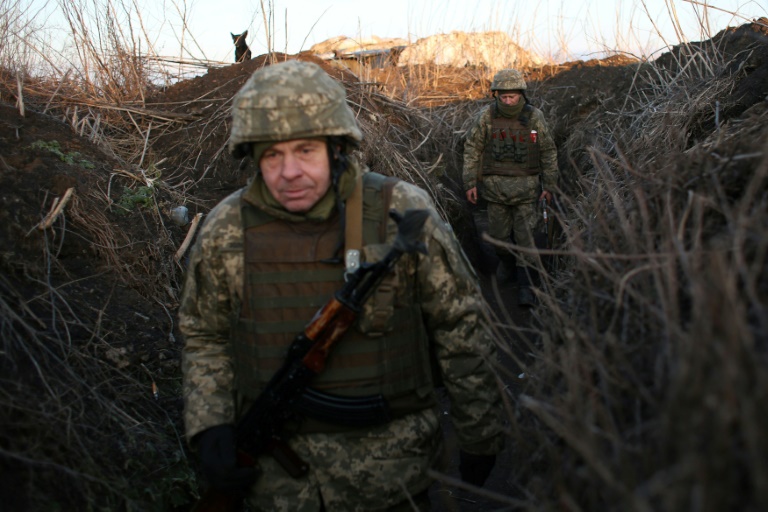
Meanwhile, in the frontline town of Shchastya, shellfire rang out around an electric power station as fearful residents awaited the Russian deployment.

A shell hit the roof of 59-year-old Valentyna Shmatkova’s apartment block overnight, shattering all the windows in her two-room apartment.

“We spent the war in the basement,” she said, referring to the 2014 fighting that saw the region break away from Ukraine. 

“But we weren’t expecting this. We never thought Ukraine and Russia wouldn’t end up agreeing.”

Asked what she thought of Putin’s decision to recognise the republics, Shmatkova laughed: “I have no idea what’s going on, we have no light, no electricity, nothing!”

Most Western officials were not yet describing Putin’s moves as an invasion, but US officials say there is a 150,000-strong Russian force poised to launch an all-out assault.

– ‘Outrageous, false claims’ –

Putin announced he was recognising the territories, which broke away from Kyiv’s control in 2014, in a day of political theatre in Moscow.

After a dramatic televised meeting with his top government, military and security officials, Putin spoke to the Russian people in a 65-minute address from his Kremlin office.

In the often angry speech, Putin railed against Ukraine as a failed state and “puppet” of the West, accusing Kyiv of preparing a “blitzkrieg” to retake the separatist regions.

The move to recognise them, Putin said, was “a long overdue decision”.

He was then shown signing “friendship” agreements with rebel leaders that allowed for the official deployment of Russian forces to “maintain peace” and the sharing of military bases and border protection.

Within hours the UN Security Council held an emergency meeting, where US ambassador Linda Thomas-Greenfield described as “nonsense” Putin’s reference to the troops as “peacekeepers”.

“We know what they really are,” Thomas-Greenfield said, saying Putin’s address amounted to a “series of outrageous, false claims” that were aimed at “creating a pretext for war”.

Fighting appeared to have eased overnight Tuesday, with the Ukrainian military saying there had been only nine violations of the ceasefire between midnight and 11:00 am. 

On Monday there had been 84 violations, with two soldiers killed and 18 wounded.

Mining firms targeting Brazil indigenous lands: report

Major mining companies are seeking to expand to currently protected indigenous lands in the Amazon rainforest, bolstered by billions of dollars in financing from international banks and investment firms, a report found Tuesday.

Nine mining giants including Brazil’s Vale, Britain’s Anglo American and Canada’s Belo Sun have filed applications seeking authorization to mine on indigenous reservations in Brazil — even though that is currently illegal, said the report by the environmental group Amazon Watch and the Association of Brazil’s Indigenous Peoples (APIB).

The firms appear to be betting Brazilian President Jair Bolsonaro, who has pushed to open protected lands to mining and agribusiness, will succeed in passing legislation introduced by his government that would allow them to operate on indigenous territories, it said.

As of November, the companies had a total of 225 active mining applications to Brazil’s National Mining Agency (ANM) that overlap 34 indigenous lands, for a total area more than three times the size of London, it said.

“The environmental damages and threats against the lives of forest peoples by mining activities are brutal and have only worsened under Bolsonaro’s administration,” Ana Paula Vargas, Brazil program director at Amazon Watch, said in a statement.

“With the rainforest at the tipping point of ecological collapse, we need to involve all the actors behind this industry.”

Experts say preserving indigenous lands is among the best ways to protect the world’s biggest rainforest, a vital resource in the race to curb climate change.

– Alleged violations –

The report found the mining firms, which also included Glencore, AngloGold Ashanti, Rio Tinto, Potassio do Brasil and Grupo Minsur, received a total of $54.1 billion in financing from international investors over the past five years for their Brazilian operations.

It urged banks and financial firms backing such companies to pull out of them, saying many also had a history of human rights violations and environmental destruction.

Major backers of the nine mining companies include US firms BlackRock, Capital Group and Vanguard, which invested $14.8 billion in them over the past five years, it said.

Banks including France’s Credit Agricole, US-based Bank of America and Citigroup and Germany’s Commerzbank are also major financiers of the companies, with a total of $2.7 billion in loans and underwriting, it said.

Many of the companies denied the report’s findings.

Anglo American said it had “legacy tenure applications” for indigenous lands that it had “fully and formally withdrawn several years ago.”

Vale said it had done the same last year.

Belo Sun, Peru’s Minsur and Potassio do Brasil said they had no activity relating to indigenous territory, and defended their social and environmental records.

A spokesperson for Vanguard meanwhile said the firm “regularly engages with mining companies” to promote sound environmental and social practices.

And Credit Agricole said it financed no mines in the Amazon.

“We have contacted Anglo American and Vale, which both confirmed they had no exploration permits for indigenous lands,” it said.

UN experts slam online attacks on Indian journalist

UN rights experts have called for an end to “misogynistic and sectarian” online attacks against a Muslim Indian woman journalist, asking the authorities to investigate the harassment.

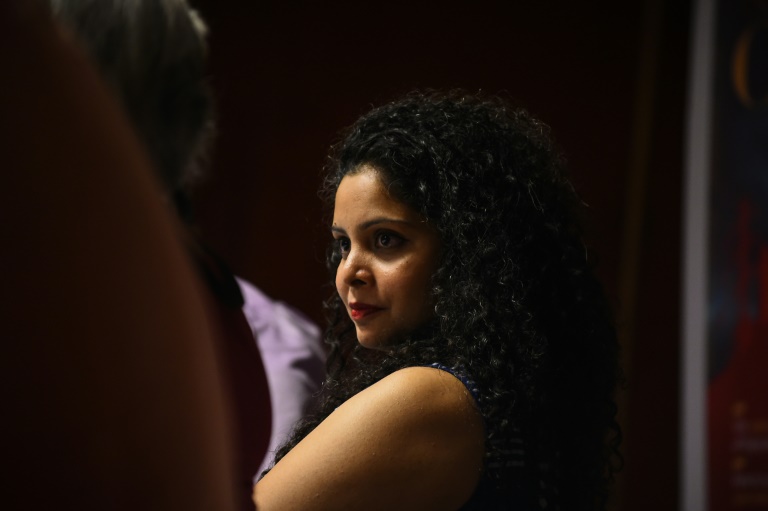
Rana Ayyub, a fierce critic of Prime Minister Narendra Modi and the Hindu nationalist government of his Bharatiya Janata Party (BJP), has been the target of a relentless campaign of online abuse — including death and rape threats.

She is the “victim of intensifying attacks and threats online by far-right Hindu nationalist groups”, the independent rapporteurs, who do not speak for the United Nations but are mandated to report to it, said in a statement Monday.

They said these attacks were in response to Ayyub’s reporting on issues affecting India’s minority Muslims, her criticism of the government’s handling of the Covid-19 pandemic, and her commentary on the recent hijab ban at schools in the southern state of Karnataka.

The rapporteurs added that the Indian government had failed to condemn or investigate the attacks.

She “has been subjected to legal harassment by the Indian authorities in relation to her reporting”, they said, including the freezing of her bank account and other assets.

– Sectarian riots –

Ayyub, 37, began as an investigative journalist and wrote a book accusing Prime Minister Narendra Modi of being complicit in deadly sectarian violence in Gujarat in 2002, when he was state premier.

Investigators cleared Modi of involvement.

She has since become a commentator for The Washington Post and other media.

This week, the Post put out a full-page advert saying Ayyub faces threats almost daily and that the free press is “under attack” in India.

The Indian mission at the UN in Geneva tweeted in response to the rapporteurs’ statement that allegations of “so-called judicial harassment are baseless & unwarranted”, and that advancing “a misleading narrative only tarnishes” the UN’s reputation.

Ayyub told AFP she was not surprised by this dismissal of the experts’ findings.

“If I had not had the global support, I would possibly not have been alive (these past years),” she said, calling mainstream Indian media “a complicit and silent bystander” in the abuse she has suffered.

Other journalists have also complained of increased harassment under Modi, whose government has been accused of trying to silence critical reporting.

Media rights group Reporters Without Borders (RSF) places India at a lowly 142 in its World Press Freedom Index, saying that under Modi, “pressure has increased on the media to toe the Hindu nationalist government’s line”.

“The coordinated hate campaigns waged on social networks against journalists who dare to speak or write about subjects that annoy Hindutva (hardline Hindu ideology) followers are terrifying and include calls for the journalists concerned to be murdered,” according to RSF.

“The campaigns are particularly violent when the targets are women.”

Russia faces massive sanctions as Putin orders troops into east Ukraine

Russia faced a furious global diplomatic and economic backlash Tuesday after President Vladimir Putin ordered his forces into Ukraine to secure two breakaway regions.

Germany announced that it was halting certification of the Nord Stream 2 gas pipeline from Russia and said the European Union would adopt “robust and massive” economic sanctions.

Kyiv recalled its top diplomat from Moscow as President Volodymyr Zelensky warned Putin’s recognition of the breakaway regions heralded “further military aggression” against Ukraine.

Putin’s move — which came with tens of thousands of Russian soldiers on Ukraine’s borders and amid warnings of an all-out invasion — was quickly and widely condemned by Kyiv’s allies in the West.

“We strongly condemn all military and hybrid actions against Ukraine,” Estonia’s President Alar Karis declared after flying in to Kyiv to stand in solidarity with Zelensky.

“Indeed it is a decisive moment in European history. President Putin will answer to the future generations for his violent actions,” he vowed.

– ‘Robust and massive’ –

But in some capitals there was debate over whether sending troops into an area that was already controlled by Russian-backed rebels amounts to the kind of all-out invasion that would justify imposing the harshest sanctions.

In a statement issued during a visit to Washington, Ukrainian Foreign Minister Dmytro Kuleba said he was working with Kyiv’s friends “to impose tough sanctions against the Russian Federation.”

In Moscow the lower house of the Russian parliament, the Duma, voted to approve Putin’s friendship deals with the so-called Donetsk People’s Republic (DNR) and Lugansk People’s Republic (LNR).

This will give Putin legal cover for the deployment of forces into the rebel-held territories, but will not protect Moscow from the diplomatic consequences of his actions.

Zelensky said he would decide immediately after his talks with Karis whether to cut diplomatic ties with Moscow.

Kremlin spokesman Dmitry Peskov that if Kyiv did so, it would be “an extremely undesirable scenario that would make everything even more difficult.”

And German Chancellor Olaf Scholz said that, when EU foreign ministers meet in Paris later in the day, he was confident that they would adopt a huge package of economic sanctions — in addition to the halted pipeline.

The United States and Britain were also expected to announce sanctions within hours, as European and Russian stocks tumbled and oil prices surged over news of the recognition.

Meanwhile, in the frontline town of Shchastya, shellfire rang out around an electric power station as fearful residents awaited the Russian deployment.

A shell hit the roof of 59-year-old Valentyna Shmatkova’s apartment block overnight, shattering all the windows in her two-room apartment.

“We spent the war in the basement,” she said, referring to the 2014 fighting that saw the region break away from Ukraine. 

“But we weren’t expecting this. We never thought Ukraine and Russia wouldn’t end up agreeing.”

Asked what she thought of Putin’s decision to recognise the republics, Shmatkova laughed: “I have no idea what’s going on, we have no light, no electricity, nothing!”

Social media posts suggested Russian troops were heading to Donetsk and Lugansk after Putin issued decrees ordering them to assume “peacekeeping” functions in the territories.

Western officials were not yet describing Putin’s moves as an invasion, but US officials say there is a 150,000-strong Russian force poised to launch an all-out assault.

– ‘Outrageous, false claims’ –

Washington took its first measures in the early hours of Tuesday, banning US persons from any financial dealings with the breakaway territories, and said more sanctions would be announced Tuesday.

But it was unclear how far the West would go, after warning repeatedly of sanctions that would do severe damage to the Russian economy in the event of an invasion.

Russian troops were already known to be inside the two rebel regions and ordering more to deploy is unlikely to be enough for the West to trigger its worst-case response.

Putin announced he was recognising the territories, which broke away from Kyiv’s control in 2014, in a day of political theatre in Moscow.

After a dramatic televised meeting with his top government, military and security officials, Putin spoke to the Russian people in a 65-minute address from his Kremlin office.

In the often angry speech, Putin railed against Ukraine as a failed state and “puppet” of the West, accusing Kyiv of preparing a “blitzkrieg” to retake the separatist regions.

The move to recognise them, Putin said, was “a long overdue decision”.

He was then shown signing “friendship” agreements with rebel leaders that allowed for the official deployment of Russian forces to “maintain peace” and the sharing of military bases and border protection.

Within hours the UN Security Council held an emergency meeting, where US ambassador Linda Thomas-Greenfield described as “nonsense” Putin’s reference to the troops as “peacekeepers”.

“We know what they really are,” Thomas-Greenfield said, saying Putin’s address amounted to a “series of outrageous, false claims” that were aimed at “creating a pretext for war.”

Russia’s ambassador to the UN Vasily Nebenzya told the meeting that Moscow was still open to a diplomatic solution.

“Allowing a new bloodbath in the Donbas is something we do not intend to do,” he added, referring to the region encompassing Donetsk and Lugansk.

Moscow said Russian Foreign Minister Sergei Lavrov was still ready for talks with US Secretary of State Antony Blinken as planned for Thursday in Geneva.

Fighting appeared to have eased overnight Tuesday, with the Ukrainian military saying there had been only three violations of the ceasefire between midnight and 7:00 am. 

On Monday there had been 84 violations, with two soldiers killed and 18 wounded.

Close Bitnami banner
Bitnami