World

Only nine percent of plastic recycled worldwide: OECD

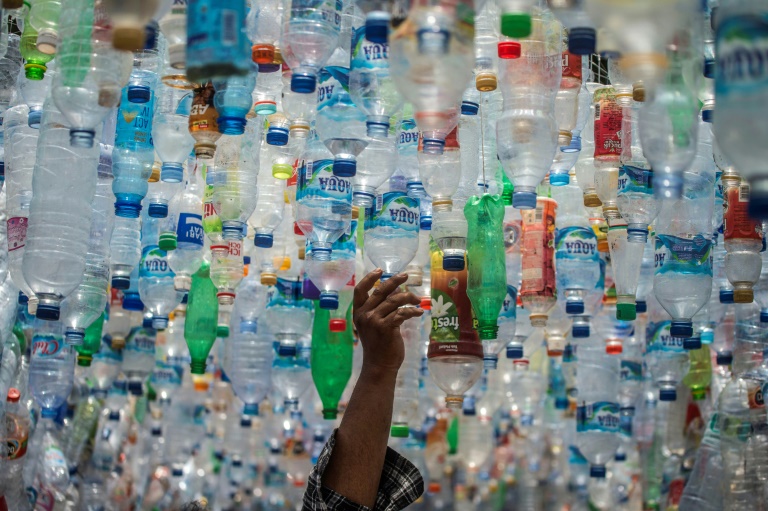
Less than 10 percent of the plastic used across the world is recycled, the OECD said Tuesday, calling for “coordinated and global solutions” ahead of expected talks on an international plastics  treaty.

A new report by the Organisation for Economic Co-operation and Development report found that 460 million tonnes of plastics were used in 2019, the number nearly doubling since 2000.

The amount of plastic waste had more than doubled during that time to 353 million tonnes, the Paris-based OECD said.

“After taking into account losses during recycling, only nine percent of plastic waste was ultimately recycled, while 19 percent was incinerated and almost 50 percent went to sanitary landfills,” it said in its Global Plastics Outlook.

“The remaining 22 percent was disposed of in uncontrolled dumpsites, burned in open pits or leaked into the environment.”

The Covid-19 pandemic saw the use of plastics drop by 2.2 percent in 2020 compared to the previous year. However single-use plastics rose and overall use is “projected to pick up again” as the economy rebounds.

Plastics contributed 3.4 percent of global greenhouse emissions in 2019, 90 percent of it from “production and conversion from fossil fuels”, the report said. 

In the face of rampant global warming and pollution, it is “crucial that countries respond to the challenge with coordinated and global solutions”, OECD Secretary-General Mathias Cormann said in the report.

The OECD proposed a series of “levers” to address the issue, including developing the market for recycled plastics, which only represent six percent of the total — largely because they are more expensive.

It added that new technologies related to decreasing the environmental footprint of plastic represented only 1.2 percent of all innovation concerning the product.

While calling for “a more circular plastics lifecycle”, the OECD said that policies must also restrain overall consumption.

It also called for “major investments in basic waste management infrastructure”, including 25 billion euros ($28 billion) a year to go towards efforts in low and middle-income countries.

– Plastic treaty talks –

The report comes less than a week before the UN Environment Assembly begins on February 28 in Nairobi, where formal talks are expected to begin on a future international plastics treaty, the scope of which will be discussed.

Shardul Agrawala, the head of the OECD’s environment and economy integration division, said Tuesday’s report “further accentuates the need for countries to come together to start looking towards a global agreement to address this very important problem”.

Asked about the priorities of the treaty to be discussed in Nairobi, she said that “there is an urgent waste management problem which is responsible for the bulk of the leakage to the environment”.

“But we should not limit our focus just to the end of pipe solutions, there is a greater need in the long term to forge international cooperation and agreement towards alignment of standards,” she told an online press briefing Monday.

In a survey published Tuesday by polling firm Ipsos for the World Wildlife Fund, 88 percent of respondents stressed the importance of an international treaty to combat plastic pollution.

In the 28 countries surveyed, 23 percent of the respondents said such a treaty was “fairly important”, 31 percent said it was “very important” and 34 percent found it “essential”.
Only nine percent of plastic recycled worldwide: OECD

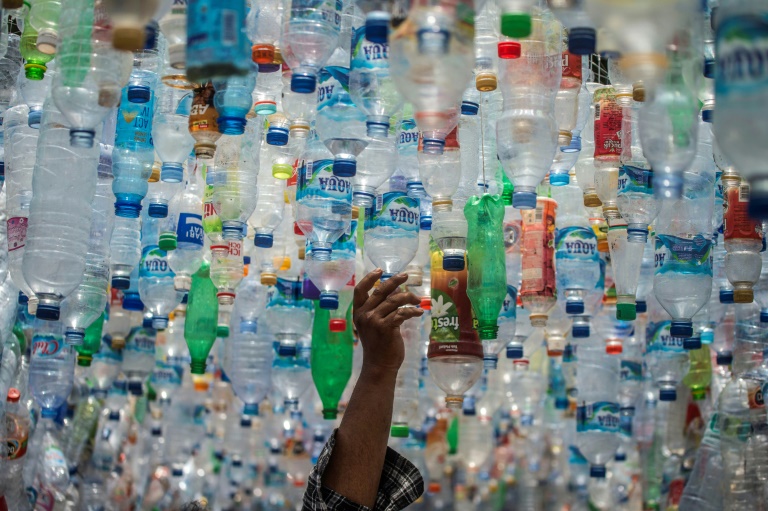
Less than 10 percent of the plastic used across the world is recycled, the OECD said Tuesday, calling for “coordinated and global solutions” ahead of expected talks on an international plastics  treaty.

A new report by the Organisation for Economic Co-operation and Development report found that 460 million tonnes of plastics were used in 2019, the number nearly doubling since 2000.

The amount of plastic waste had more than doubled during that time to 353 million tonnes, the Paris-based OECD said.

“After taking into account losses during recycling, only nine percent of plastic waste was ultimately recycled, while 19 percent was incinerated and almost 50 percent went to sanitary landfills,” it said in its Global Plastics Outlook.

“The remaining 22 percent was disposed of in uncontrolled dumpsites, burned in open pits or leaked into the environment.”

The Covid-19 pandemic saw the use of plastics drop by 2.2 percent in 2020 compared to the previous year. However single-use plastics rose and overall use is “projected to pick up again” as the economy rebounds.

Plastics contributed 3.4 percent of global greenhouse emissions in 2019, 90 percent of it from “production and conversion from fossil fuels”, the report said. 

In the face of rampant global warming and pollution, it is “crucial that countries respond to the challenge with coordinated and global solutions”, OECD Secretary-General Mathias Cormann said in the report.

The OECD proposed a series of “levers” to address the issue, including developing the market for recycled plastics, which only represent six percent of the total — largely because they are more expensive.

It added that new technologies related to decreasing the environmental footprint of plastic represented only 1.2 percent of all innovation concerning the product.

While calling for “a more circular plastics lifecycle”, the OECD said that policies must also restrain overall consumption.

It also called for “major investments in basic waste management infrastructure”, including 25 billion euros ($28 billion) a year to go towards efforts in low and middle-income countries.

– Plastic treaty talks –

The report comes less than a week before the UN Environment Assembly begins on February 28 in Nairobi, where formal talks are expected to begin on a future international plastics treaty, the scope of which will be discussed.

Shardul Agrawala, the head of the OECD’s environment and economy integration division, said Tuesday’s report “further accentuates the need for countries to come together to start looking towards a global agreement to address this very important problem”.

Asked about the priorities of the treaty to be discussed in Nairobi, she said that “there is an urgent waste management problem which is responsible for the bulk of the leakage to the environment”.

“But we should not limit our focus just to the end of pipe solutions, there is a greater need in the long term to forge international cooperation and agreement towards alignment of standards,” she told an online press briefing Monday.

In a survey published Tuesday by polling firm Ipsos for the World Wildlife Fund, 88 percent of respondents stressed the importance of an international treaty to combat plastic pollution.

In the 28 countries surveyed, 23 percent of the respondents said such a treaty was “fairly important”, 31 percent said it was “very important” and 34 percent found it “essential”.
Hong Kong to see three rounds of compulsory virus tests

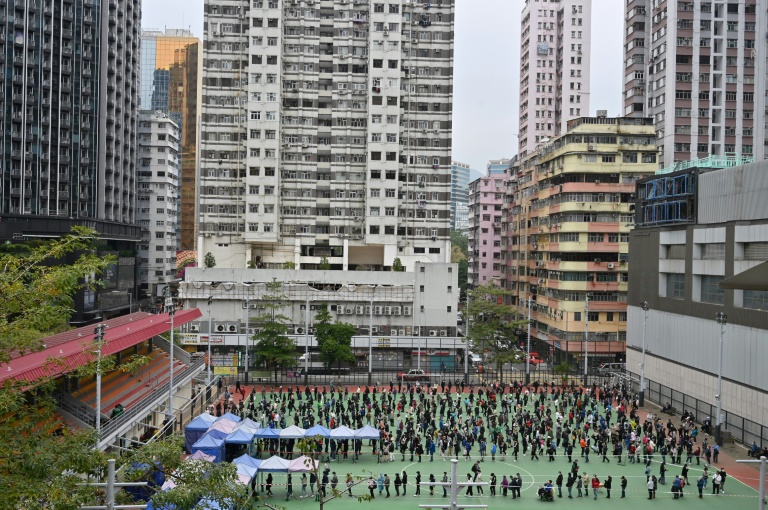
Hong Kong’s population must undergo three rounds of compulsory coronavirus testing, the city’s leader said Tuesday, as she confirmed mainland Chinese officials were stepping up oversight of the financial hub’s response to its worst outbreak yet.

The densely populated metropolis is in the throes of a record virus surge with thousands of confirmed cases every day threatening to overwhelm hospitals and the city’s strict isolation system.

On Tuesday, Chief Executive Carrie Lam revealed a doubling down of the city government’s zero-Covid approach to bring the response much closer to mainland China’s as she admitted local authorities had failed to stamp out the current surge.

“This quickly worsening epidemic has far exceeded the Hong Kong government’s ability to tackle it, so there is great need for the central government’s support in fighting the virus,” she told reporters.

Xia Baolong, Beijing’s Hong Kong and Macau affairs chief, was coordinating the mainland’s response from the border city of Shenzhen, she added.

Under the new rules, all 7.4 million residents will have to go through three rounds of compulsory testing in March, although Lam did not give a start date.

The tests will be spread out over a number of days with residents also having to take multiple rapid antigen tests every day at home in between.

“Those who do not take the universal test will be held liable,” Lam warned, adding that there was no guarantee the steps would fully stamp out the current outbreak.

Schools and multiple businesses such as gyms, bars and beauty salons will remain closed into late April with education facilities turned into local testing centres.

Flights from nine countries including Britain and the United States will remain banned.

– Isolation units –

Lam also confirmed that Hong Kong would continue trying to isolate all coronavirus patients, including asymptomatic patients, in temporary facilities which are being built with the help of mainland authorities. 

“We reiterate that isolation is still our policy objective,” she said.

Hong Kong’s strict, China-style zero-Covid policy successfully kept the virus mostly at bay the last two years at the expense of marooning the city internationally. 

But when the highly contagious Omicron variant eventually broke through earlier this year, authorities were caught flat-footed with few preparations in place and a dangerously under-vaccinated population.

Hospital wards were overwhelmed, testing capacity limits were quickly reached and there has been a massive shortfall in isolation units. 

As many rival cities reopened, many public health experts and business leaders argued that Hong Kong should move to a mitigation strategy that planned for living with the coronavirus.

But China, the only major economy still sticking with zero-Covid, made clear last week that was not an option.

During the pandemic’s early stages, Beijing used citywide lockdowns and mass testing to stamp out cases. But it has never managed to tackle an outbreak the size of the one facing Hong Kong, even in Wuhan where the coronavirus first emerged. 

Lam said that, with mainland help, Hong Kong expected to boost daily testing capacity to one million a day.

Tens of thousands of isolation units and treatment beds would be built in the coming weeks, she added.

But cases in Hong Kong continue to rise exponentially, and it is not clear whether enough units will be available when more cases are discovered during mass testing.  

Before the current wave hit in late December, Hong Kong had recorded just 12,000 infections and some 200 deaths. 

In the current outbreak it has seen 54,000 cases and 145 deaths.

A new model from the University of Hong Kong estimated that the current outbreak will peak in March with some 180,000 daily infections and nearly 100 deaths per day.

Despite ample supplies, Hong Kong has poor vaccination rates among the elderly.

Only 43 percent of people aged 80 or over have received even one dose. 

On Tuesday health officials revealed that, of 102 recent deaths in the current wave, only seven had two doses of a vaccine, while 63 were from care homes for the elderly.

What election? World role delays Macron's bid for second term

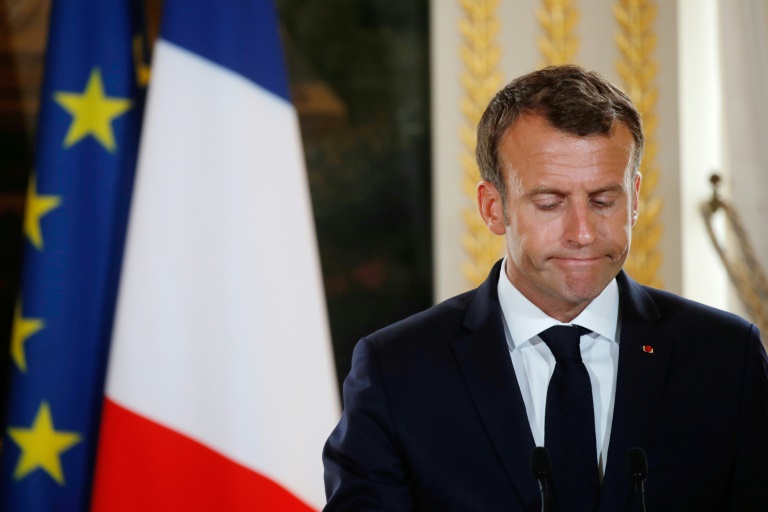
In normal times, Emmanuel Macron would have hit the campaign trail by now to try for a second term in a presidential election only seven weeks away, plotting strategy, appearing in TV debates and firing up supporters at rallies.

But times are far from normal, and none of this is happening.

Instead, the French president seems chained to his desk, a five o’clock shadow growing into a stubble, brows furrowed, his attention focused east, as he hopes to dissuade Russian leader Vladimir Putin from waging all-out war in Ukraine.

Macron hasn’t even told the nation whether he plans to run for re-election in the April vote, though few doubt that he will.

In the past few days, he has spent countless hours on the telephone to nearly every leader with a stake in the Ukraine crisis: Putin, US President Joe Biden, German Chancellor Olaf Scholz, Ukraine’s Volodymyr Zelensky and EU leaders.

The opposition at home accuses him of putting on “a show” as he hugs the world headlines with his diplomacy instead of engaging with other presidential hopefuls at home.

Some say he is living dangerously by pinning his chances of scoring diplomatic points on someone as unpredictable as Putin.

– Credit for ‘having tried’ –

But the downside appears limited, as Macron will be given credit for “having tried” even if Russian tanks end up rolling towards Kyiv, according to Philippe Moreau Chevrolet, who heads MCBG, a public relations firm.

“Even is he fails with the Russians, he will have emerged as leading the European effort,” he told AFP. This, he said, was all the more significant as Macron is acting “without the guiding role of Angela Merkel”, the former German chancellor.

The strategy’s upside is that the international crisis places Macron firmly at the centre of media attention and public debate, “completely removing the opposition from view”, Moreau Chevrolet said.

Macron’s efforts appeared to be paying off in the small hours of Monday when he got Biden and Putin to agree, in principle, to a summit meeting.

But within 24 hours, things were tensing up again with Putin recognising eastern Ukraine’s breakaway republics as independent.

Macron condemned the move, and his office said Putin had “failed to keep his word”, but the president’s advisers were also quick to shield their man from the fallout of what they called Putin’s “paranoid” behaviour.

“We took this as far as we could” by asking Putin to decide whether he wanted to meet with Biden or not, one Elysee adviser said. “We invited President Putin to make a choice, and he made his choice.”

The presidential PR machine has, unusually, made sure that Macron’s actions are visible. Over the past month, the Elysee has communicated in real time about whom Macron is talking to and when, and organised prompt background briefings for French and foreign reporters.

– ‘Positive energy’ –

Macron’s personal photographer even posted a series of pictures of the president at his desk at the weekend, unshaven and his face lined with fatigue.

“The president has a lot of positive energy,” one adviser said, describing Macron as “more of a facilitator than a mediator”.

Macron “accepts risk”, the adviser added, using one of the president’s own favourite terms.

This proactive approach had already been evident in his role in other tense situations, in Lebanon, Libya, the Armenia-Azerbaijan conflict, and the Iranian nuclear question — not always with success.

This time, Macron’s advisers admit freely, the risk is that any slip-up over Ukraine may be hard to rectify before French voters cast their first-round vote on April 10.

Already his opponents are coming after him, not least by accusing him of naivete towards Putin.

“This is the kind of political show that the president loves,” said Thierry Mariani, spokesman for far-right candidate Marine Le Pen. “There is no concrete result, because the Americans and the Russians are the ones calling the shots.”

Eric Zemmour, another extreme-right hopeful, said Macron was “doomed to fail” because Russia viewed France “as Washington’s little messenger boy”.

Hard-left firebrand Jean-Luc Melenchon said Macron lacked credibility when he promised to defend Ukraine’s integrity. “The Russians know very well that we can’t,” he said.

Commentators in France mostly agree that Macron will announce his run for re-election some time next week, only days before the official deadline of March 4.

The latest opinion polls continue to predict that he will win a second term, regardless of which other candidate he faces in the second-round run-off.

Scholz says Germany halting Nord Stream 2 project

German Chancellor Olaf Scholz said Tuesday that he was suspending the Nord Stream 2 pipeline project with Russia in response to Moscow’s recognition of two breakaway regions in Ukraine.

Scholz said he had ordered a halt to the review process by the German regulator for the pipeline, seen by Western partners and Kyiv as a crucial bargaining chip in the increasingly fraught standoff with Russia.

“That sounds technical, but it is the necessary administrative step so there can be no certification of the pipeline and without this certification, Nord Stream 2 cannot begin operating,” he said.

The Nord Stream 2 project has long been a source of tension with Berlin’s allies, who have argued that it would give Moscow too much leverage by increasing Germany’s energy dependence.

Earlier Tuesday Ukrainian leader Volodymyr Zelensky had demanded an immediate halt to Nord Stream 2, which is set to deliver Russian natural gas to Germany via the Baltic Sea.

Zelensky told Scholz while he visited Kyiv last week that Russia was wielding the pipeline as a “geopolitical weapon”.

Scholz said Tuesday that the decision to halt the project was only one “concrete” step and that further sanctions against Russia could follow.

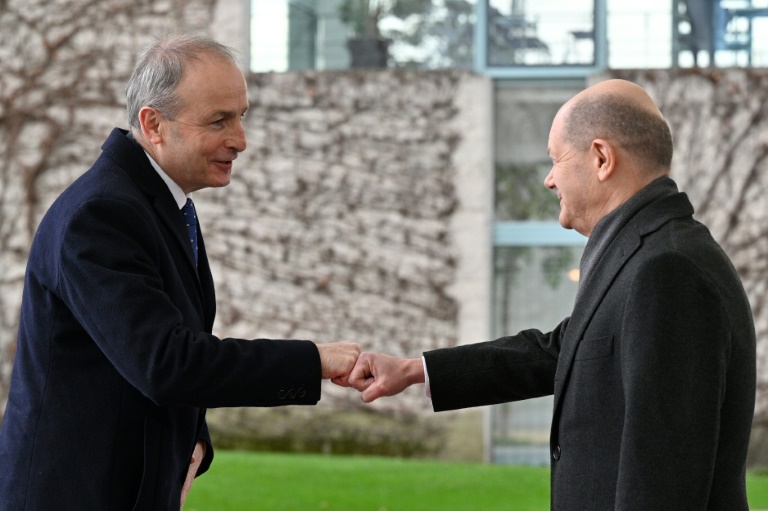
“There are also other sanctions that we can introduce if further measures are taken, but for now, it’s a matter of doing something very concrete,” he said at a joint press conference with visiting Irish prime minister Micheal Martin.

Scholz voiced confidence that the European Union would agree “robust and massive” sanctions package targeting Russia after Moscow recognised rebel-held districts in eastern Ukraine as independent. 

“I am confident that we will succeed,” he said in response to a question on whether the 27-nation bloc would agree unanimously to the embargo.

Nord Stream 2, set to double natural gas supplies from Russia to Germany, has become a key lightning rod for the West in its bid to stop Moscow from invading Ukraine.

The pipeline’s construction is complete but German regulators had not yet approved its use.

US President Joe Biden had warned after talks with Scholz in Washington this month that he would find a way to “bring an end” to the project should Russia invade Ukraine.

Only nine percent of plastic recycled worldwide: OECD

Less than 10 percent of the plastic used across the world is recycled, the OECD said Tuesday, calling for “coordinated and global solutions” ahead of expected talks on an international treaty on the issue.

A new report by the Organisation for Economic Co-operation and Development report found that 460 million tonnes of plastics were used last year, the number nearly doubling since 2000.

The amount of plastic waste had more than doubled during that time to 353 million tonnes, the Paris-based OECD said.

“After taking into account losses during recycling, only nine percent of plastic waste was ultimately recycled, while 19 percent was incinerated and almost 50 percent went to sanitary landfills,” it said in its Global Plastics Outlook.

“The remaining 22 percent was disposed of in uncontrolled dumpsites, burned in open pits or leaked into the environment.”

The Covid-19 pandemic saw the use of plastics drop by 2.2 percent in 2020 compared to the previous year. However single-use plastics rose and overall use is “projected to pick up again” as the economy rebounds.

Plastics contributed 3.4 percent of global greenhouse emissions in 2019, 90 percent of it from “production and conversion from fossil fuels”, the report said. 

In the face of rampant global warming and pollution, “it will also be crucial that countries respond to the challenge with coordinated and global solutions”, OECD Secretary-General Mathias Cormann said in the report.

The OECD proposed a series of “levers” to address the issue, including developing the market for recycled plastics, which only represent six percent of the total — largely because they are more expensive.

It added that new technologies related to decreasing the environmental footprint of plastics was only 1.2 percent of all innovation concerning the product.

While calling for “a more circular plastics lifecycle”, the OECD said that policies must also restrain overall consumption.

It also called for “major investments in basic waste management infrastructure”, including 25 billion euros ($28 billion) a year to go towards efforts in low and middle-income countries.

The reports comes less than a week before the UN Environment Assembly begins on February 28 in Nairobi, where formal talks are expected to begin on a future plastics treaty, the scope of which is still unclear.

According to a survey published Tuesday by polling firm Ipsos for the World Wildlife Fund carried out in 28 countries, an average of 88 percent of respondents said an international treaty to combat plastic pollution was “fairly important (23 percent), “very important” (31 percent) or “essential (34 percent). 

Only nine percent of plastic recycled worldwide: OECD

Less than 10 percent of the plastic used across the world is recycled, the OECD said Tuesday, calling for “coordinated and global solutions” ahead of expected talks on an international treaty on the issue.

A new report by the Organisation for Economic Co-operation and Development report found that 460 million tonnes of plastics were used last year, the number nearly doubling since 2000.

The amount of plastic waste had more than doubled during that time to 353 million tonnes, the Paris-based OECD said.

“After taking into account losses during recycling, only nine percent of plastic waste was ultimately recycled, while 19 percent was incinerated and almost 50 percent went to sanitary landfills,” it said in its Global Plastics Outlook.

“The remaining 22 percent was disposed of in uncontrolled dumpsites, burned in open pits or leaked into the environment.”

The Covid-19 pandemic saw the use of plastics drop by 2.2 percent in 2020 compared to the previous year. However single-use plastics rose and overall use is “projected to pick up again” as the economy rebounds.

Plastics contributed 3.4 percent of global greenhouse emissions in 2019, 90 percent of it from “production and conversion from fossil fuels”, the report said. 

In the face of rampant global warming and pollution, “it will also be crucial that countries respond to the challenge with coordinated and global solutions”, OECD Secretary-General Mathias Cormann said in the report.

The OECD proposed a series of “levers” to address the issue, including developing the market for recycled plastics, which only represent six percent of the total — largely because they are more expensive.

It added that new technologies related to decreasing the environmental footprint of plastics was only 1.2 percent of all innovation concerning the product.

While calling for “a more circular plastics lifecycle”, the OECD said that policies must also restrain overall consumption.

It also called for “major investments in basic waste management infrastructure”, including 25 billion euros ($28 billion) a year to go towards efforts in low and middle-income countries.

The reports comes less than a week before the UN Environment Assembly begins on February 28 in Nairobi, where formal talks are expected to begin on a future plastics treaty, the scope of which is still unclear.

According to a survey published Tuesday by polling firm Ipsos for the World Wildlife Fund carried out in 28 countries, an average of 88 percent of respondents said an international treaty to combat plastic pollution was “fairly important (23 percent), “very important” (31 percent) or “essential (34 percent). 

Hong Kong to see three rounds of compulsory virus tests

Hong Kong’s population must undergo three rounds of compulsory coronavirus testing, the city’s leader said Tuesday, as she confirmed that mainland Chinese officials were now coordinating the response to the financial hub’s worst outbreak.

The densely populated metropolis is in the throes of a record virus surge with thousands of confirmed cases every day as hospitals and isolation units run out of space.

On Tuesday, Chief Executive Carrie Lam revealed a doubling down of the city’s strict zero-Covid approach to bring the response much closer to mainland China’s as she admitted that local authorities had failed to stamp out the current surge.

“This quickly worsening epidemic has far exceeded the Hong Kong government’s ability to tackle it, so there is great need for the central government’s support in fighting the virus,” she told reporters.

The head of Beijing’s Liaison Office Xi Baolong was coordinating the mainland’s response from the border city of Shenzhen, she added.

Under the new rules, all 7.4 million residents will have to go through three rounds of compulsory testing in March, although Lam did not give a start date. 

The tests will be spread out over a number of days with residents also having to take multiple rapid antigen tests every day at home in between.

“Those who do not take the universal test will be held liable,” Lam warned. 

Schools and multiple businesses such as gyms, bars and beauty salons will remain closed into late April with education facilities turned into local testing centres.

Flights from nine countries including Britain and the United States will remain banned.

Lam also confirmed that Hong Kong will continue to aim for isolating all coronavirus patients, including asymptomatic patients, in temporary facilities which are being built with the help of Chinese authorities. 

“We reiterate that isolation is still our policy objective,” she said.

Women workers must cover up 'even with a blanket', say Afghan Taliban

Women working in Afghan government departments must cover up — even with a blanket if necessary — or they may lose their jobs, the Taliban’s religious police said Tuesday.

Most women have been barred from their government jobs, since the Taliban retook power in August, though Afghanistan’s new rulers claim they will be allowed to return once some conditions are in place — such as segregated offices.

On Tuesday, the Ministry for the Promotion of Virtue and Prevention of Vice issued a statement saying women should not go to work unless they were properly covered, and they could be fired if they did not follow guidelines.

The ministry earned notoriety during the Taliban’s first stint in power from 1996 to 2001 for policing the leadership’s strict interpretation of Islam.

It was unclear why they issued Tuesday’s statement, as most women in Afghanistan have always covered their heads in public — with a loose shawl at least.

“They can follow the hijab the way they want,” ministry spokesman Mohammad Sadeq Akif Muhajir told AFP when reached for clarification.

But when asked if this meant they had to wear the all-covering burqa that the Taliban made compulsory during their previous rule, he demurred. 

They can wear “any other sort of hijab, it is up to them, but they must (cover up) properly… even wear a blanket”, he said.

During the Taliban’s previous stint in power, a strict interpretation of Islam meant policing people’s day-to-day habits, actions, and clothing.

Western clothing was prohibited, men were ordered not to shave, and people were thrashed if they did not hurry along to prayers.

Despite promising a softer version of their rule this time around, some strict prohibitions have crept back in — including banning TV dramas featuring women unless they have an Islamic theme, and forbidding music in public.

There have been few national edicts issued, however, and regulations appear to have been introduced around the country based largely on the whim of local officials, or according to traditional customs in conservative areas.

Close Bitnami banner
Bitnami