World

Defying West, Putin orders troops to Ukraine rebel regions

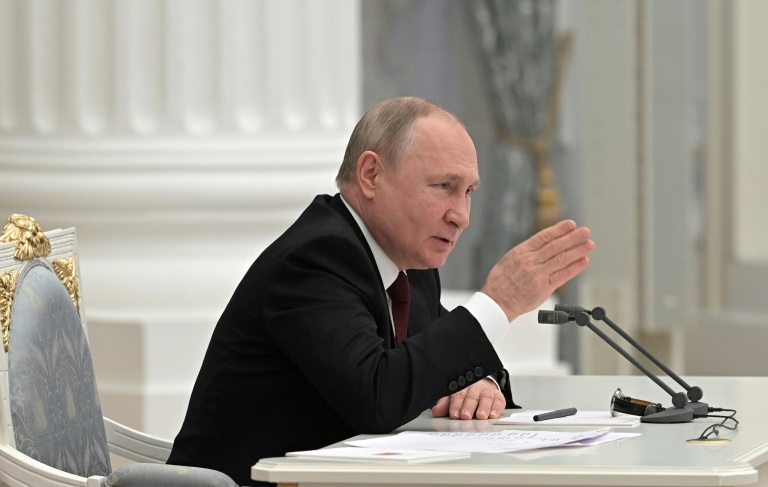
President Vladimir Putin ordered Russian troops into two Moscow-backed rebel regions of Ukraine Monday, prompting a furious response from the West with the United States denouncing the move at the UN Security Council as a “pretext for war”.

After weeks of massing troops around Ukraine, Putin recognised the independence of the former Soviet state’s rebel-held Donetsk and Lugansk regions —  paving the way for the deployment of a potential invasion force.

In an often angry 65-minute televised national address from his office, Putin railed against Ukraine as a failed state and “puppet” of the West.

Putin said it was necessary to “take a long overdue decision, to immediately recognise the independence” of the two regions.

In two official decrees, the Russian president instructed his defence ministry to assume “the function of peacekeeping” in the separatist-held regions.

Moscow’s gambit triggered international condemnation and a promise of targeted sanctions from the United States and the European Union — with a broader package of economic punishment to come in the event of further incursion into Ukraine’s territory. 

The UN Security Council held an emergency meeting, where US ambassador Linda Thomas-Greenfield described as “nonsense” Putin’s reference to peacekeepers.

“We know what they really are,” Thomas-Greenfield said, adding Putin’s speech amounted to a “series of outrageous, false claims” that were aimed at “creating a pretext for war.”

Russia’s ambassador to the UN Vasily Nebenzya told the meeting that Moscow was still open to a diplomatic solution.

“However, allowing a new bloodbath in the Donbas is something we do not intend to do,” he added, referring to the region encompassing Donetsk and Lugansk.

Putn’s move triggered panic on financial markets, with equities tumbling in Asian trade while the price of oil spiked.  

– ‘We are on our own land’ –

As news of the late-night recognition hit the streets of Kyiv, many were in disbelief but said they were ready to defend their country if called on.

“I am very shocked,” Artem Ivaschenko, a 22-year-old cook originally from Donetsk, told AFP in the capital, calling the recognition the “scariest news” he had heard since he had fled the region eight years ago.

“I live here, I already lost a part of my homeland, it was taken away, so I will protect it.”

Ukraine’s President Volodymyr Zelensky convened a meeting of his national security council and held telephone calls with several world leaders in a bid to shore up support.

“We expect clear support steps and effective support steps from our partners,” he declared in a late night televised address, vowing that Kyiv was not afraid of anyone.

“It is very important to see now who is our true friend and partner, and who will continue to scare the Russian Federation with words,” he said. 

“We are on our own land.”

– ‘Blitzkrieg’ –

In his address, Putin repeatedly suggested Ukraine was essentially part of Russia.

He accused Kyiv of persecuting Russian speakers and of preparing a “blitzkrieg” against the breakaway regions of Donetsk and Lugansk in Ukraine’s east.

“As for those who seized and hold power in Kyiv, we demand an immediate end to their military operations,” Putin said.

“Otherwise, all responsibility for the possible continuation of bloodshed will be fully on the conscience of the regime in power in Ukraine.”

And he made clear the stakes were bigger than Ukraine, whose efforts to join NATO and the European Union have deeply angered Moscow.

“The use of Ukraine as an instrument of confrontation with our country poses a serious, very big threat to us,” Putin said.

British Prime Minister Boris Johnson called Putin’s move “a flagrant violation of the sovereignty and integrity of the Ukraine”, with his foreign minister promising new sanctions on Russia. 

EU chiefs Ursula von der Leyen and Charles Michel vowed the bloc “will react with sanctions against those involved in this illegal act”.

At the UN Security Council meeting, China called for restraint from all sides and for a diplomatic solution to the crisis.

The announcement came after weeks of tensions between Moscow and the West over Ukraine.

Russia had massed more than 150,000 troops on the borders of Ukraine, prompting warnings from the West that Russia would invade — claims Moscow repeatedly denied.

Tensions then spiked this week after an outbreak of heavy shellfire on Ukraine’s eastern frontline with the separatists and a series of reported incidents on the border with Russia. 

Ukrainian officials said two soldiers and a civilian died in more shelling of frontline villages Monday.

The fear of conflict has sparked evacuations from the Ukrainian capital, with the United States late Monday saying it was sending all of its diplomats remaining in the country to Poland out of security fears.

A correspondent for France’s Le Figaro daily posted video of columns of tanks, artillery, and armoured vehicles heading in the direction of the city of Donetsk.

burs-mm-dc-kma/oho
Chilean film 'Bestia' depicts torture with animation

Nominated for this year’s Oscars, Chilean short film “Bestia” (Beast) uses animation, an art form more often associated with children’s movies, to deal with a macabre topic: the sexual torture of women.

The 15-minute film about the life of Ingrid Olderock — a particularly cruel agent of the dictatorship of Augusto Pinochet — took 20 people three years to make.

It tells a story of the inner struggles of Olderock, the daughter of German Nazi sympathizers, who made it her life’s work to psychologically break women prisoners, including using dogs to sexually assault them.

Olderock (1944-2001) worked at a detention center that specialized in the sexual torture of leftist Pinochet opponents.

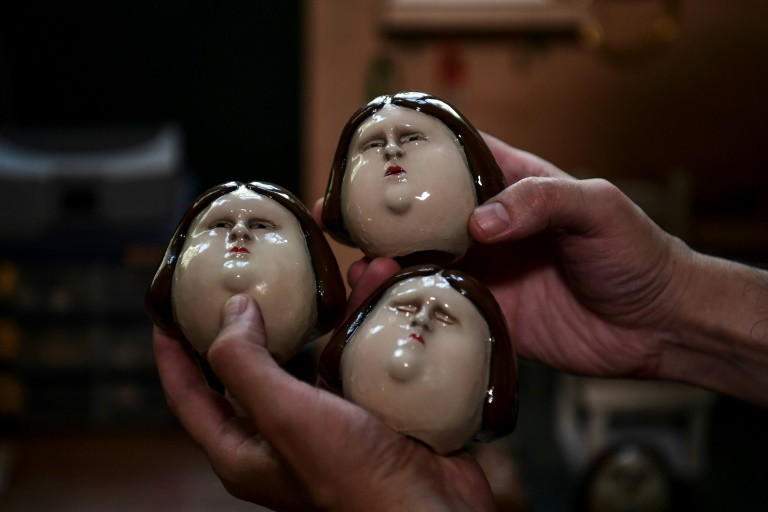
“Bestia” employs the “stop motion” technique of photographing objects — in this case dolls — which are physically manipulated between frames. Those frames are then strung together in a series to create the impression of independent movement.

“Bestia” director Hugo Covarrubias, 44, talked to AFP about how he chose the topic — and the medium — to tell the story of one of the most sinister chapters of the Chilean dictatorship.

Q: Why Olderock?

A: She embodies the evil that reigned in Chile during the dictatorship… As a woman, she trained women to torture women.

A person so dedicated to breaking souls obviously has to have had her own broken at some point.

Olderock had many mental problems. She was a very paranoid woman, with a lot of trauma.

It (the film) is a psychological fiction, where we get inside her mind and try to show how all this mental trouble ends up representing an entire country. The trauma of a country (is seen) through the evil this woman represents.

Q: What is the role of her dog in the film?

A: One of the aspects we wanted to touch on was the intimate relationship with her dog. 

She had three dogs, but we “fictionalized” that part and wanted to show the most important dog, which was Volodya, and little by little the film reveals what she does with the dog.

In reality, what she was doing was training dogs to commit torture, mainly to rape women.

Q: Why use stop-motion?

A: I’ve been working on this technique since 2005. It is basically what I know how to do. We like it because there is a plastic component, manual and analog, that allows us to create worlds that would be very difficult to create digitally. 

We use miniature sets made of cardboard, and characters about 25 centimeters (10 inches) tall made with articulated steel, fabric and polyurethane.

Q: Why do you think the film has found acclaim abroad?

A: “Beast” stands out for the theme, the aesthetics, for the way in which this political topic is handled. 

Also the genre: a psychological and political thriller that ended up being a short film that was quite different from the rest, which does not have a happy ending… 

It is quite raw and powerful.

From time to time, people want this kind of power in a movie… 

It causes different kinds of sensations, emotion and repulsion, it is a very strange experience. I think that the… sensations people experience with this short film — I think it is what has made us get where we are.

Q: What does the Oscar nomination mean for you?

A: It gives more credibility to your film and obviously opens career doors for the film director and the team. 

But the most important thing is the topic and the people who suffered this type of harassment.

Chile has three Oscars to date: Claudio Miranda won best photography for “Life of Pi” (2013), “Bear Story” (2014) won best animated short film, and “A Fantastic Woman” (2017) best foreign-language film.

“Bestia” has won prizes at the Clermont-Ferrand International Short Film Festival, the Annecy International Animation Film Festival and the Guadalajara International Film Festival.

'Suisse Secrets' puts Swiss banking back in spotlight

The “Suisse Secrets” data leak claiming to reveal how Credit Suisse handled billions of dollars in dirty money has renewed pressure on Switzerland’s financial sector, which has spent years trying to clean up its image.

Switzerland’s second largest bank was rocked Sunday by a vast investigation by dozens of media organisations into leaked data they said showed Credit Suisse held more than $8 billion in accounts of criminals, dictators and rights abusers.

The bank flatly rejected the “allegations and insinuations” in the investigation, coordinated by the non-profit journalism group the Organized Crime and Corruption Reporting Project (OCCRP).

It stressed in a statement that many of the issues raised in the probe were historical, some dating back more than 70 years, and that 90 percent of the accounts in question had been closed.

The allegations, it said, “appear to be a concerted effort to discredit not only the bank but the Swiss financial marketplace as a whole.”

The investigation was only the latest blow to the scandal-plagued bank, which was rocked last year by the implosions of financial firms Greensill and Archegos.

Last month saw its chairman resign for having breached Covid quarantine rules.

But it could also hit Switzerland’s powerful financial sector as a whole, which for years has strived to improve its image on the international stage.

– Switzerland ‘high risk’? –

Following the Suisse Secrets investigation, the European People’s Party (EPP) — the largest political group in the European Parliament — said the findings “point to massive shortcomings of Swiss banks when it comes to the prevention of money laundering.

“When the list of high-risk third countries in the area of money laundering is up for the revision the next time, the European Commission needs to consider adding Switzerland to that list,” Markus Ferber, the EPP group’s spokesman in the EU parliament’s economic and monetary affairs committee, said in a statement.

Switzerland buckled to international pressure nearly a decade ago to begin weaning its powerful financial sector off the banking secrecy laws that had made it so attractive to the ultra wealthy around the world.

Switzerland signed a deal with the United States in 2014 and another with the European Union a year later on exchanging bank data, making it easier to uncover ill-begotten fortunes and crack down on tax cheats.

“Efforts in the battle against money laundering have been continuously boosted and strengthened in recent years,” the Swiss Bankers Association told AFP in an email.

“Dubious money is not of interest to the Swiss financial sector, which sees its reputation and integrity as key.”

– ‘Judicial risk’ –

While acknowledging the role banking secrecy once played in creating the Swiss banking powerhouse, Swiss daily NZZ stressed that a number of the cases revealed by Suisse Secrets “would no longer be possible” under today’s legislation.

A report published last October by the Swiss finance ministry found that banks had reported four times more suspected cases of money laundering to authorities between 2015 and 2019 than during the preceding decade.

Its authors suggested that banks were keeping a far closer eye on their clients and were quicker to report irregularities, after having witnessed the fallout from large-scale financial data leaks such as the Panama Papers and Paradise Papers.

But while Switzerland’s secrecy laws have largely been dismantled for the banks, they have been tightened for the media, making it an offence to reveal leaked banking information. 

Experts say the laws effectively silence insiders or journalists who may want to expose wrongdoing within a Swiss bank.

So while 48 media companies from around the world participated in the Suisse Secrets investigation, no Swiss news media took part due to the risk of criminal prosecution.

“The judicial risk is simply too big,” acknowledged the Tamedia media group, which has taken part in previous international data leak investigations. 

Riot police clash with New Zealand anti-vax protesters

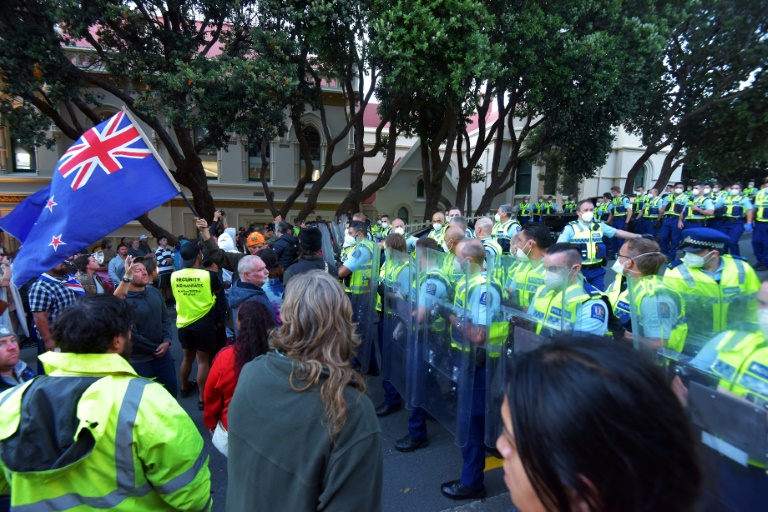
New Zealand anti-vaccine protesters pelted police with a “stinging substance” sending three to hospital with injuries Tuesday, as tensions spilled over in an angry weeks-long protest.

Prime Minister Jacinda Ardern decried “absolutely disgraceful” scenes after the suspected acid attack, and a startling incident that saw one protester speed a car toward police lines before coming to a quick halt just centimetres away. 

The brief but intense confrontations erupted near New Zealand’s parliament early Tuesday, as police moved roadblocks used to contain a protest camp that has clogged downtown Wellington for two weeks.

The Wellington protest began as a movement against vaccine mandates — inspired by similar protests in the Canadian capital Ottawa.

It has since grown to around 1,500 people and encompasses a range of grievances, with some far-right messaging among the anti-government and anti-media slogans on display. 

Assistant Commission Richard Chambers said three officers who were taken to hospital were “recovering well”.

He blamed a “certain group within the protest” for the “appalling” attack.

“Police officers are going about their work as best they can to bring peace to the situation… there’s a group (of protesters) determined to bring violence and aggression — we can’t tolerate that.”

On Monday police reported demonstrators hurled human faeces at them, prompting officers to protect themselves with riot shields during the latest clashes.

Ardern said she was concerned the protest was becoming increasingly violent.

“The attacks on the police have been absolutely disgraceful,” she said.

“To anyone down there who thinks they’re part of a peaceful protest, that’s not what we’ve seen today — I would encourage them to leave.”

Authorities had been taking a largely hands-off approach to the demonstration, trying to persuade protesters to voluntarily move on.

But Chambers said recent events showed “genuine protesters are no longer in control of the behaviour in and around parliament”.

– ‘Leave now’ –

The protesters, inspired by Canada’s “Freedom Convoy”, have jammed roads with around 900 cars, trucks and campervans, then set up camp on the lawns of parliament.

They have erected tents and shelters, and organised portable toilets, food distribution points and childcare facilities. 

Wellington residents have complained about being abused by protesters for wearing masks, while schools and businesses close to the camp have closed.

“Wellingtonians have had enough of this,” Deputy Prime Minister Grant Robertson said. 

“Our streets have been blocked, our people have been harassed, our environment has been trashed.”

Robertson said those involved in the protest had crossed the line into illegal activity.

“This is a protest that has gone well beyond what I think most New Zealanders would see as a peaceful protest — you’ve made your point, please leave now,” he said.

Chambers said some moderate protesters had left because they were concerned about the behaviour of more extreme elements and police still hoped for a negotiated end to the demonstration.

“We continue to work really hard with leaders among the group to de-escalate the situation and ensure everyone is safe,” he said.

New Zealand authorities have also been in contact with their counterparts in Ottawa, where police in riot gear dislodged the trucker protest over the weekend after more than three weeks.

Chambers said police, who have received criticism from locals for not doing enough to stop disruption, would have a “highly visible” presence around the protest.

“Police do not wish to interfere with lawful protest, but the behaviours we are seeing are unlawful and will result in enforcement action,” he said.

Colombia decriminalizes abortion up to 24 weeks of pregnancy: court

Colombia’s high court decriminalized abortion up to 24 weeks of pregnancy on Monday in a landmark ruling for the majority-Catholic country, one of only a few in Latin America that currently allows the procedure. 

“The performance of an abortion will only be punishable when it is carried out after the 24th week of gestation,” the Constitutional Court said in a statement.

After that point, abortion will only be permitted in certain circumstances already established by the court, such as in cases of rape, if the health of the mother is in danger or if the fetus has a fatal condition.

Before Monday’s ruling, abortion was only allowed under those three conditions, per a 2006 decision by the Constitutional Court.

Apart from those exceptions, both women and the doctors who performed their abortions would face prison sentences ranging from 16 to 54 months.

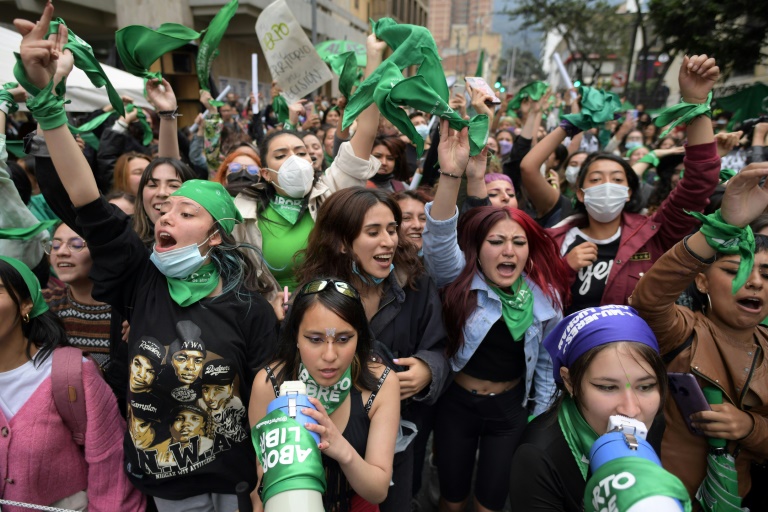
Hundreds of pro- and anti-abortion protesters gathered outside the court building in the capital Bogota.

Women wearing green scarves, the color of the pro-abortion movement, celebrated as it was announced the court voted 5-4 to decriminalize abortion. Nearby, anti-abortion protesters waved blue flags and knelt on the ground, praying.

“After the right to suffrage, this is the most important historic achievement, for the life, autonomy and full and equal realization of women,” Bogota mayor Claudia Lopez tweeted.

Colombia is now the fifth Latin American country to decriminalize abortion access, along with Argentina, Uruguay, Cuba and Guyana.

In Mexico, the procedure is authorized for up to 12 weeks in the southern state of Oaxaca, the eastern state of Veracruz, the central state of Hidalgo and in Mexico City.

“Colombia is at the forefront of reproductive rights both regionally and globally,” Catalina Martinez, a lawyer for the Causa Justa organization, told AFP.

Causa Justa sued Colombia over the unconstitutionality of the punishments for abortion. The Constitutional Court studied the group’s arguments for its ruling.

– Obstacles to abortion –

According to information gathered by Causa Justa, about 5,500 investigations into alleged abortions have been conducted since 1998. About 250 women have been arrested as a result of the probes.

The feminist collective Mesa por la Vida y la Salud de las Mujeres said that, since the initial decriminalization in 2006 until 2019, 346 women have been punished for having an abortion, including 85 minors.

There are 24 women currently in prison for having an abortion, according to the prison authority.

The Catholic church and other religious groups in Colombia have repeatedly pushed back against decriminalizing abortion access.

“It is a decision that goes against life, against the family, against society,” Marlene Herrera, one of the anti-abortion protesters outside the courthouse, told AFP.

Women’s groups say that there are many obstacles to getting the procedure, even if a pregnancy falls into one of the categories allowed by the 2006 ruling.

Among the difficulties they allege are delays in health centers authorizing the procedure. Some doctors also object to performing abortions, forcing many women to get an illegal surgery.

No organization has an official figure on how many illegal abortions are performed in Colombia per year. A 2014 study by the health ministry estimates that 70 women die and 132,000 suffer complications annually from “unsafe abortions.” 

US to announce Russia sanctions after initial caution on Ukraine

The United States said it will impose sanctions on Moscow Tuesday, following an initially cautious response to President Vladimir Putin’s order for Russian troops to deploy in two Kremlin-backed separatist areas of Ukraine.

“We plan to announce new sanctions on Russia tomorrow in response to Moscow’s decisions and actions today. We are coordinating with allies and partners on that announcement,” a White House spokesperson told AFP on Monday.

This came after President Joe Biden had already imposed limited sanctions on the two Russian-backed areas in eastern Ukraine’s Donbass region that were earlier recognized as independent by Putin.

The United States and other Western allies are condemning Putin’s move as a violation of pro-Western Ukraine’s territorial integrity.

But a senior US official earlier declined to characterize whether Putin’s order for Russian armed forces to conduct “peacekeeping” there counted as an actual invasion, which would trigger much wider and more severe Western sanctions against Moscow.

“We are going to assess what Russia’s done,” the official told reporters, stressing that Russian forces have already been deployed covertly in the separatist areas for eight years.

“Russian troops moving into Donbass would not be a new step,” he said.

“We’ll continue to pursue diplomacy until the tanks roll.”

The Kremlin has for weeks denied plans to attack Ukraine, while at the same time building up an enormous force of troops and heavy weaponry on three sides of the country.

In a speech accusing the West of turning Ukraine into an anti-Russian bastion, Putin said he was granting recognition of independence to the self-declared Donetsk and Lugansk enclaves. 

Putin then tasked the Russian military with “peacekeeping” in the region, although no detail was given as to what this meant in terms of troop movements. 

The United States and its multiple Western allies warn that a full Russian invasion of Ukraine would prompt crippling economic sanctions.

With his initially restrained response, Biden signed an executive order to “prohibit new investment, trade, and financing by US persons to, from, or in the so-called DNR and LNR regions of Ukraine,” White House Press Secretary Jen Psaki said Monday.

The order will “provide authority to impose sanctions on any person determined to operate in those areas of Ukraine,” Psaki said, adding that the measures are separate from wider Western sanctions ready to go “should Russia further invade Ukraine.”

The two self-proclaimed republics already have extremely limited dealings with US citizens.

– Making Russia a ‘pariah’ –

US officials continued on Monday to warn that heavy sanctions on Russia could be imposed at any time.

Secretary of State Antony Blinken slammed Russia’s recognition of the separatist areas as a sign Putin had no interest in diplomacy.

Blinken said in a statement that recognizing the territories’ independence “directly contradicts Russia’s claimed commitment to diplomacy, and is a clear attack on Ukraine’s sovereignty.”

On Friday, the deputy US national security advisor for international economics, Daleep Singh, warned that the full set of sanctions under preparation would turn Russia into an international “pariah.”

Following Putin’s speech, the White House said that Biden talked by phone with Ukrainian President Volodymyr Zelensky for 35 minutes to “reaffirm” the US commitment to Ukrainian sovereignty. He also detailed the plan for sanctions.

Biden also spoke for half an hour with two key European allies — French President Emmanuel Macron and German Chancellor Olaf Scholz, an official said. The three leaders “strongly condemned” Putin’s decision and discussed how to coordinate their response.

The White House did not respond immediately to questions about whether there was still any consideration being given to a suggested summit between Biden and Putin.

Blinken and Russian Foreign Minister Sergei Lavrov were scheduled to meet this Thursday to discuss the possible summit.

Australia wants 'eyes on Antarctica' with funding boost

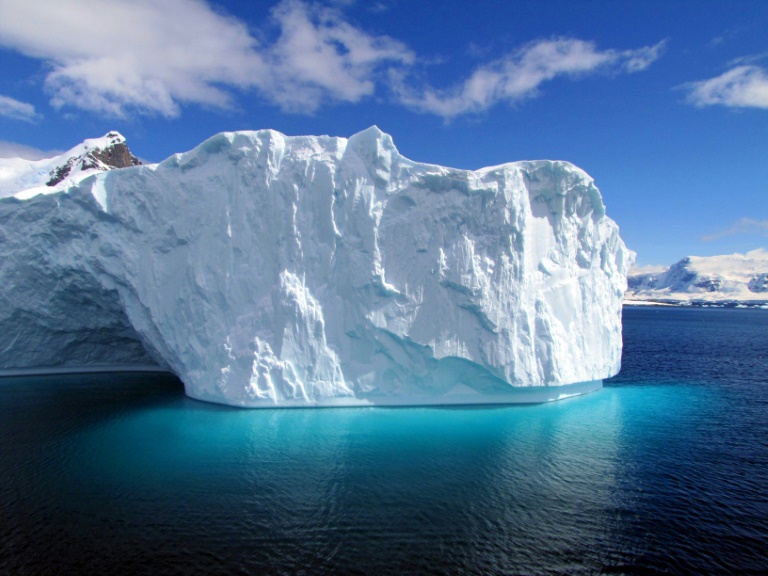
Australia on Tuesday announced plans to boost its presence and surveillance operations on Antarctica, unveiling a US$575 million package designed to match China’s growing interest in the pole.

Prime Minister Scott Morrison said the ten-year funding plan would give Australia “eyes on Antarctica” — by increasing the country’s ability to survey and monitor the frozen tundra and surrounding waters using drones, helicopters and autonomous vehicles.

Australia has territorial claims on 42 percent of Antarctica, the largest of any nation, but has lacked the capability to reach far-flung corners of the continent.

There has been concern in Canberra that the void could be exploited by Beijing or Moscow, both of which are becoming more active on the continent.

Nearly half of Australia’s new funding will be spent on capabilities to move around inland areas, map Antarctica’s remote east from the air using drones and the purchase of four new medium lift helicopters.

There are also a handful of environmental projects in the announcement, including US$5 million for research into climate change’s impact on Antarctic ice sheets and supporting Pacific nations in monitoring rising sea levels.

Morrison refused to be drawn on his specific concerns about China’s growing interest in Antarctica beyond saying, “They don’t share the same objectives as Australia does.”

China has built two year-round stations on Antarctica and its spending on Antarctic programmes has steadily increased.

But Beijing’s footprint is dwarfed by the United States, which maintains the largest presence in Antarctica with about 1,400 personnel staffing its three all-year stations in summers before the pandemic.

The influential Australian Strategic Policy Institute recently warned in a report that Antarctica has become a venue for “geopolitical competition” and recommended steps to uphold a ban on military and mining activities.

Evan Bloom, the report’s author and a Polar expert at the Woodrow Wilson Center, noted that while China and Russia are “heedless at times of calls to compromise” it was important for the US and Australia to “carefully manage relations with strategic competitors.”

He said when it comes to the management of Antarctica, co-operation remained vital.

“Excluding China from science cooperation has the danger of giving credence to those within the Chinese Government who wish to argue that the ATS [Antarctic Treaty System] doesn’t benefit it and doesn’t deserve a long-term commitment,” Bloom said.

Trudeau: Canada blockades lifted, but 'emergency is not over'

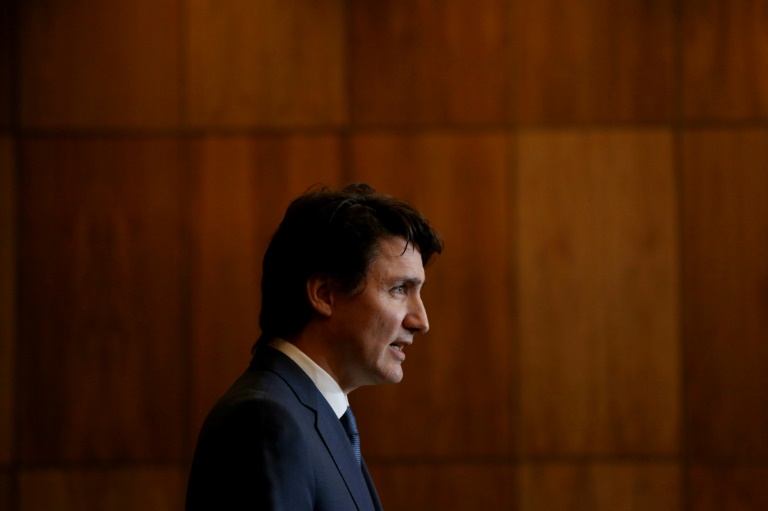
Canadian Prime Minister Justin Trudeau on Monday defended his use of emergency powers to end weeks-long trucker-led protests and argued that lingering threats require the measures to remain in force for now.

Trudeau’s decision earlier this month to invoke the Emergencies Act — for only the second time in Canada’s history — has been criticized as overreach by his political opponents. The Canadian Civil Liberties Union is suing the government.

“This state of emergency is not over,” Trudeau said in his first appearance before reporters since authorities at the weekend broke up what the prime minister called “dangerous and unlawful” protests that brought the capital Ottawa to a standstill and blocked border crossings into the United States. 

“There continues to be real concerns about the coming days,” he added.

Canada has been in the international spotlight for weeks as thousands of protesters, led by truck drivers furious over Covid-19 vaccination requirements for driving freight across the border with the United States, converged on Ottawa and hunkered down for a siege.

Initially dismissed by authorities, the protesters later expanded their demands to a broader rejection of Covid restrictions in Canada.

Truckers and their supporters also blocked a bridge for days between the Canadian city of Windsor and the US city of Detroit, freezing a major trade route critical for industry including automobile manufacturing.

– ‘Tools to restore order’ –

The last big rigs were towed away Sunday from Canada’s capital, where the streets were quiet for the first time in almost a month following a massive police operation to end the drawn-out siege.

Trudeau stressed his government did not want to use the measure but felt it had been boxed into a corner.

“After weeks of dangerous and unlawful activities, after weeks of people being harassed in the neighborhoods, (and) after evidence of increased ideologically motivated violent extremism activity across the country,” local authorities needed “more tools to restore order,” Trudeau said.

He received a boost when the House of Commons later Monday approved use of the Act in a vote after days of debate. It must now be debated by the Senate.

The prime minister has been criticized by supporters of the protests for heavy-handed tactics, but Trudeau shot back that the movement — which started as a home-grown protest — had been infiltrated by foreign elements.

“A flood of misinformation and disinformation washed over Canada” during the protests, including from foreign sources, he said, and the blockades and occupations “received disturbing amounts of foreign funding to destabilize Canada’s democracy.”

Canadians have every right to disagree with him, Trudeau said.

“But you can’t harass your fellow citizens who disagree with you. You can’t hold a city hostage. You can’t block a critical trade corridor and deprive people of their jobs.”

On Monday, Ottawa police said in a statement that they had arrested a total of 196 protesters and towed 115 vehicles. They also said businesses that had closed their doors “should feel safe to reopen.”

Shelter for traumatised apes in DR Congo's strife-torn east

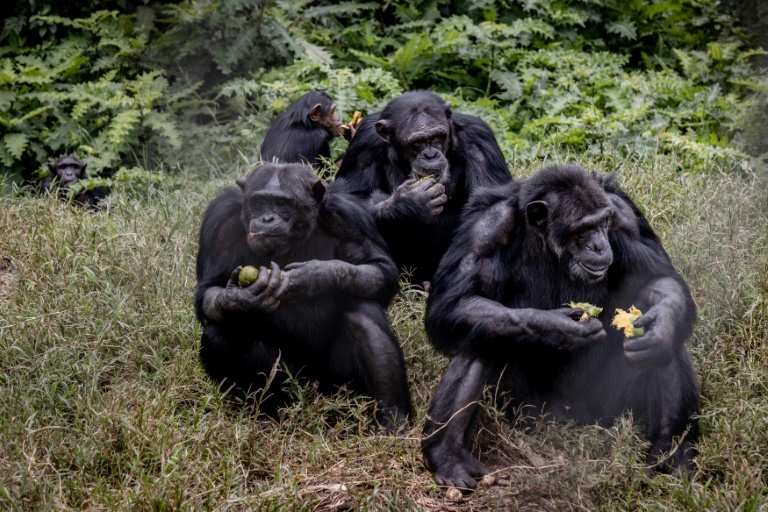
Beyond the reach of bloody conflicts in eastern Democratic Republic of Congo, rescued apes swing from one branch to another under the leafy canopy at a wildlife sanctuary.

On the edge of a national park that is home to endangered gorillas, the Lwiro Ape Rehabilitation Centre (CRPL) has for two decades nursed wounded and traumatised animals to recovery and taken in orphans.

The centre houses scores of chimpanzees, gorillas and bonobos among its wards, often saved from poachers in a region where illegal activities go largely unchallenged in the insecurity caused by many armed groups.

During a recent visit, half a dozen apes gathered behind a fence to choose the best banana to peel and eat after a fresh food delivery.

Female chimpanzees walked around, carrying their babies on their backs.

Each of the 110 chimpanzees at the sanctuary in South Kivu province eats six kilogrames (13.2 pounds) of fruit, cereals and vegetables a day, its staff say. The infants are bottle-fed.

“These orphaned baby chimps are coming to us because of insecurity and war,” centre manager Sylvestre Libaku said, urging the government to secure the region to “let the animals live peacefully in their natural habitat”.

– ‘Unhealed wounds’ –

Weeks or even months of effort are needed to stabilise an animal in its new home. Tarzan, a chimpanzee collected last June in Bunia in the troubled Ituri province to the north, still lives in quarantine.

The ape has unhealed wounds on his skull, but “is doing better. The hair is starting to grow [but] he is still kept in his cage, waiting for him to be able to mix with the others”, Libaku said.

However, Byaombe, another injured chimpanzee picked up more than a year ago, is a source of worry. The animal receives care every day but “without success — its future is not reassuring”, he said.

In his laboratory, Damien Muhugura handles samples taken from sick animals.

“We do parasitological analyses to search for intestinal worms, for example,” among other bacteriological and biochemical risks, he explained.

The facility extends over four hectares (almost 10 acres) inside the Kahuzi-Biega National Park, named after two extinct volcanoes and listed as a UN World Heritage Site.

Animals brought in from large forests where they roamed freely “feel trapped” on the small territory, said Assumani Martin, a veterinarian for the CRPL.

In November 2020, 39 grey parrots were released into the Kahuzi-Biega forest, after a stay for adaptation at the Lwiro facility, founded in 2002 by the Congolese Institute for the Conservation of Nature and the Centre for Research in Natural Sciences.

Since then, no animals have been introduced to the reserve because of the insecurity in and around the protected domain, Libaku says.

Covering 600,000 hectares, the national park lies between the extinct Kahuzi and Biega volcanoes. It provides a sanctuary to a remarkable diversity of wildlife, including some 250 eastern lowland gorillas, the last of their kind.

UNESCO describes the park as “one of the ecologically richest regions of Africa and worldwide”, but it is also one of 52 sites on the World Heritage endangered list for the planet.

Chile museum to return Easter Island 'head'

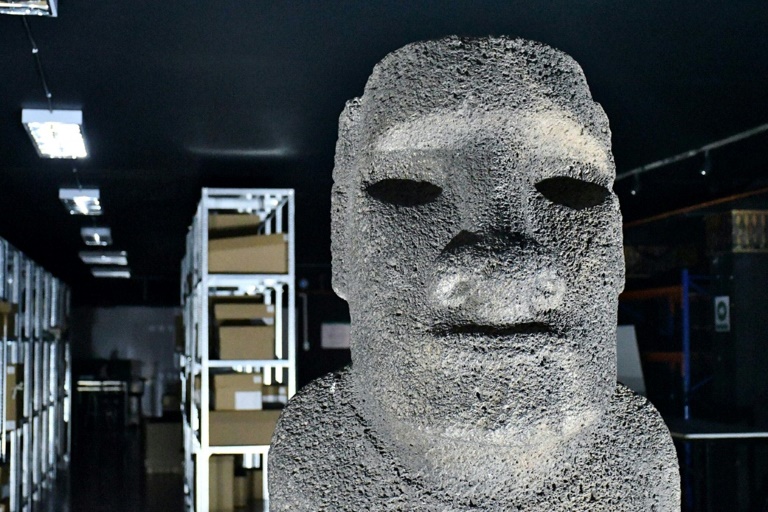
Chile’s National Museum of Natural History said Monday it will return to Easter Island an enormous stone statue taken from the Rapa Nui people and brought to the mainland 150 years ago.

The monolith is one of hundreds, called Moai, carved by the Rapa Nui in honor of their ancestors and sometimes referred to as the Easter Island heads. 

The statues are today the island’s greatest tourist attraction, sculpted from basalt more than 1,000 years ago. 

The one being returned, dubbed Moai Tau, is a 715-kilogram (1,500-pound) giant brought by the Chilean navy some 3,700 kilometers (2,300 miles) across the Pacific in 1870.

Eight years later, it was moved to the natural history museum to be displayed.

The Rapa Nui, for whom the Moai represent the spirits of their ancestors, have been asking for the statue’s return for years — as well as other cultural treasures taken from their island. 

“For the Rapa Nui, their ancestors, funerary objects and ceremonial materials may be as alive as members of their communities themselves,” said a museum statement.

The return of the monolith “is profoundly significant as a gesture towards our indigenous peoples,” said museum curator Cristian Becker.

With delays due to the coronavirus epidemic, the statue will finally depart from the port of Valparaiso next Monday on a trip of about five days to Easter Island, said the museum, “after a complex technical and diagnostic process” to guarantee its structural integrity.

A traditional ceremony was held at the museum Monday to send the statue safely on its way.

“It is essential that the Moai return to my homeland. For them (the community) and for me, this day is very much awaited,” said Veronica Tuqui, a Rapa Nui representative.

Back on Easter Island, the Moai will be exhibited at the Father Sebastian Englert Anthropological Museum.  

The Rapa Nui community has also asked the British Museum in London to return another Moai, dubbed Hoa Hakananai’a, that was taken in 1868 from Orongo, a ceremonial village on Easter Island. 

The Rapa Nui in 2017 gained self-administration over their ancestral lands on Easter Island, a special territory of Chile.

Close Bitnami banner
Bitnami