World

Odebrecht graft trial starts for Peru ex-president Humala

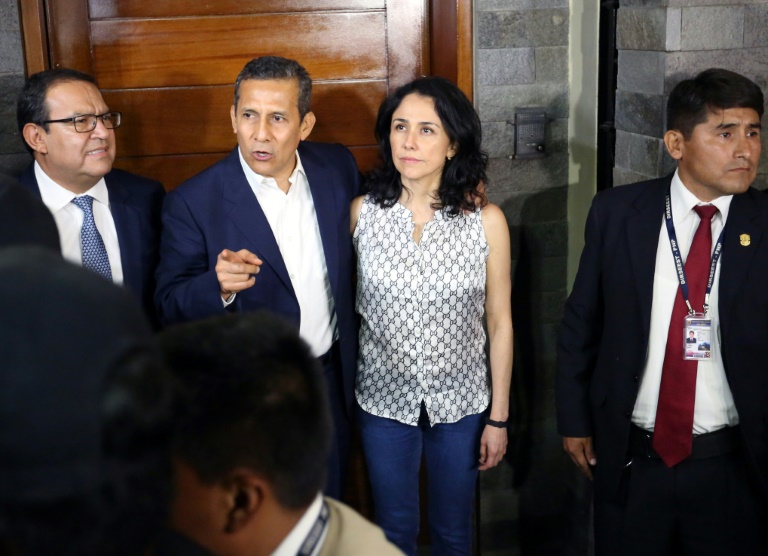
Ollanta Humala on Monday became the first ex-president of Peru to go on trial in a vast corruption case involving Brazilian construction group Odebrecht and bribes paid to politicians.

Humala, 59, appeared virtually in the dock with his wife Nadine Heredia, 45, on money laundering charges for allegedly accepting $3 million in illegal contributions to the campaign that brought him to power.

Both are also accused of “concealment of real estate purchases” made with some of the money.

Prosecutors are seeking a prison term of 20 years for the former army officer who served as Peru’s president from 2011 to 2016, and 26 years for his wife.

Humala is one of four former presidents implicated in a massive investigation targeting Odebrecht, which admitted in 2016 having paid at least $29 million in bribes to Peruvian officials between 2005 and 2014.

Two-term leader Alan Garcia committed suicide in 2019 when police came to his house to arrest him, while two other former presidents: Pedro Pablo Kuczynski (2016-18) and Alejandro Toledo (2001-06), are under investigation.

Kuczynski, 83, stepped down in March 2018 ahead of likely impeachment over the Odebrecht scandal, and is under house arrest.

Toledo, 75, is under arrest in the US state of California pending a decision on his requested extradition to Peru.

Humala is out on bail pending trial, while Heredia is under house arrest. Both had spent nine months in detention in 2017-18. 

Three judges will hear the case against the couple and nine other defendants, including Heredia’s brother and mother.

The prosecution has presented a list of 285 witnesses, which include jailed former Odebrecht president Marcelo Odebrecht and executives Luiz Mameri and Jorge Barata.

The trial is taking place via videoconference in the country with the world’s highest Covid-19 death rate per capita.

Leftist Humala came to the presidency in 2011 after beating rightwing candidate Keiko Fujimori in a runoff election.

Fujimori herself spent 13 months of detention in a case linked to Odebrecht, before being freed ahead of a presidential vote last year which she lost to leftist Pedro Castillo. 

Victory would have temporarily shielded her from prosecution on charges of receiving money from Odebrecht to fund failed presidential bids in 2011 and 2016. Her trial has yet to start.

New name, little hope, in New York, Ukraine

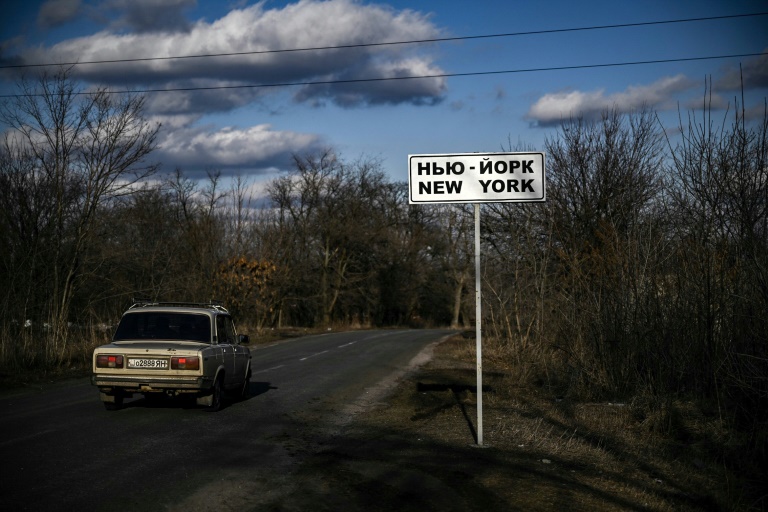
The local billionaire’s chemical plant stands on the edge of the frontline in New York, eastern Ukraine.

The only renovated building of this war-bruised town, called Novgorodske (“new city” in Ukrainian) until last year, is the local cultural centre.

Tetyana Krasko proudly pushes open its metal door and shows off an exhibit paying homage to Ukrainian soldiers fighting Russia-backed rebels for the past eight years.

But the centre offers few clues as to how a group of German settlers decided to call their new home in what was then part of the Russian empire New York in the 1800s.

Soviet officials switched the name to Novgorodske in 1951, only for the locals to flip it back to New York last year.

“It’s a mystery that still hasn’t been solved,” Krasko says about all the name changes.

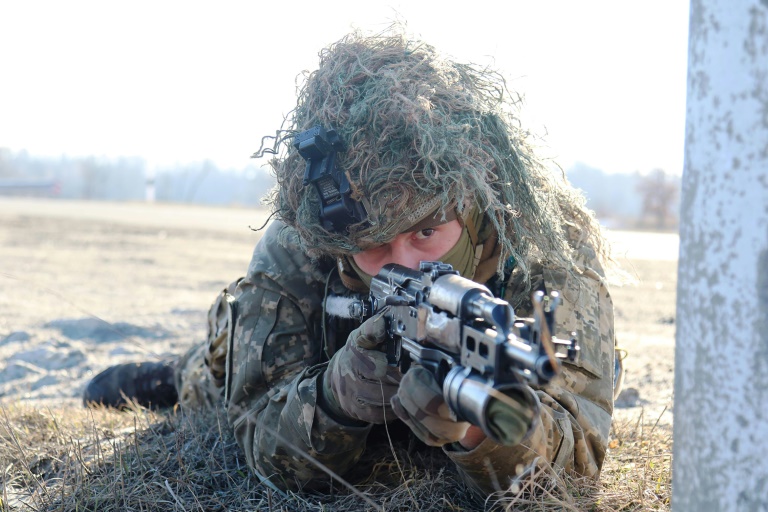
The name could very well change again should the masses of Russian forces encircling Ukraine on almost every side follow through with their feared invasion.

For now, New York’s empty streets echo with the sounds of exploding shells from a new escalation in a separatist conflict that has claimed more than 14,000 lives and pushed 1.5 million from their homes.

Many of the houses in this town of what was once 10,000 people stand empty today. And those who remain have dark thoughts about the days ahead.

“We tell ourselves that they would be too afraid to bomb New York,” Krasko says with a bitter laugh, before turning gravely serious.

“It’s not funny. There have already been shellings. New York has already suffered.”

– Generational divide –

Novgorodske became New York after a campaign launched by young activists in 2016, when the separatist war was just turning quieter after months in which dozens of people were dying each day.

“There was no desire from the local officials for the name change,” said Krasko.

“Maybe they were afraid it would cause a scandal. Maybe they thought that having a New York on the frontline would sound weird.”

The officials were supported by the older generation who felt personally attached to the old Soviet name.

“But the young people, those with an active social life, were all in favour of change,” she said.

Sergiy and Angela, two 16-year-old interns at a college about 40 kilometres (25 miles) from New York, are not terribly bothered about the new name.

In fact, perhaps more than anything, they are thinking of leaving. There is just not that much to do in New York.

The town’s main employer is a chemical plant owned by Rinat Akhmetov, a billionaire who has been viewed for years as one of Ukraine’s most powerful men.

Akhmetov spends little time in this New York, which is the final stop on a train running from Kramatorsk, a city 45 kilometres to the north that serves as Kyiv’s administrative centre for the war-torn east.

About 25 kilometres south lies Donetsk, the rebel stronghold.

“When I grow up, I don’t know if it would make sense for me to stay,” Sergiy says. “I don’t know how long the war will last. We will probably have to leave.”

– ‘They are fools!’ –

The war is on everyone’s mind. A sharp escalation at the end of last week has locals fearing the worst.

“Is there going to be a war?” Klava Blynska, 90, shouts down from her balcony.

“I don’t want a war! I’ve seen it before,” she says, clearly in no mood to give serious thought to her town’s name change.

“They are fools! Why did they do that,” she fumes, before returning to the subject at hand: “If (Vladimir) Putin goes to war, he’s a moron!”

But for her, as seemingly for many other Russian speakers in New York, the main culprits are the Ukrainian leaders who came to power after a 2014 pro-EU revolution.

“They would judge me in Kyiv if I told you what I think about all this,” one middle-aged man said before slamming shut his gate in a huff.

Ella Pylipenko, a 29-year-old mother, contradicted most of her neighbours by saying, in a hushed voice, that she wanted “our land to remain in Ukraine”, rather than become Moscow-run.

“But it’s very difficult to live here,” she added. “There’s nowhere to work, the wages are small and there is this shelling.”

Gaza construction workers find 31 Roman-era tombs

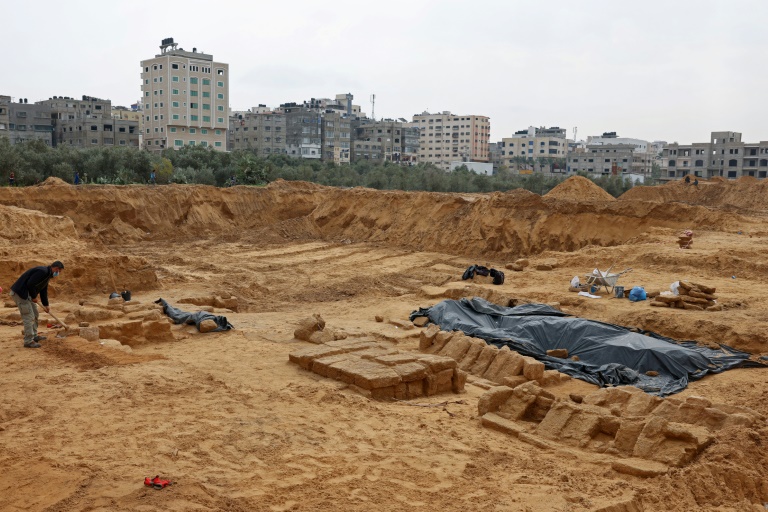
Construction workers at a building site in northern Gaza have uncovered 31 Roman-era tombs dating from the first century AD, the Palestinian territory’s Islamist rulers Hamas said Monday.

The tombs were discovered near the town of Beit Lahia as work began on an Egyptian-funded residential area, part of the $500 million reconstruction package Cairo pledged after the 11-day war in May between Israel and armed groups in the Gaza Strip.

Naji Sarhan, an official at Gaza’s Ministry of Public Works, confirmed the find and said there is “evidence that there are other graves” at the site.

Construction work has been halted and technicians from Gaza’s Ministry of Antiquities and Tourism have been sent to the site to catalogue gravestones and artefacts, officials said.

One technician, who requested anonymity, said the tombs were believed to be part of a cemetery linked to a nearby Roman site in Balakhiya.

The find was the latest in Gaza, where tourism to archaeological sites is limited due to an Israeli blockade imposed since Hamas took over the strip in 2007.

Israel and Egypt, which shares a border with Gaza, tightly restrict the flow of people in and out of the impoverished strip, which is home to about 2.3 million Palestinians.  

Last month, Hamas reopened the remains of a fifth-century Byzantine church following a years-long restoration effort backed by foreign donors. 

Gaza construction workers find 31 Roman-era tombs

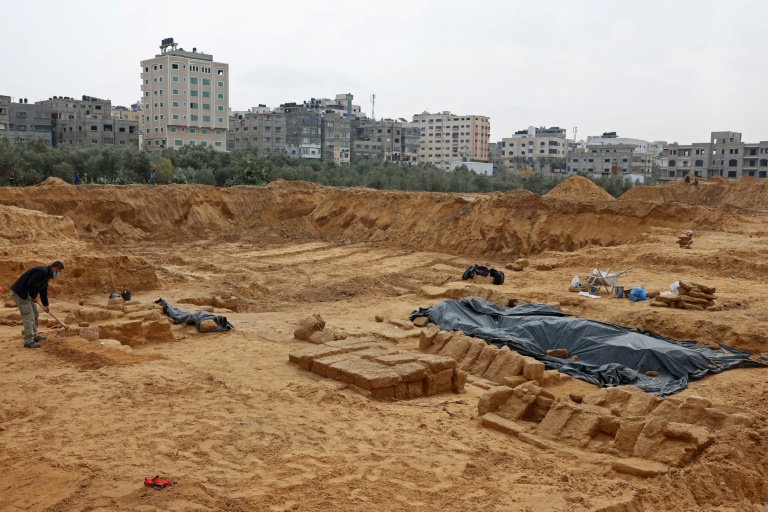
Construction workers at a building site in northern Gaza have uncovered 31 Roman-era tombs dating from the first century AD, the Palestinian territory’s Islamist rulers Hamas said Monday.

The tombs were discovered near the town of Beit Lahia as work began on an Egyptian-funded residential area, part of the $500 million reconstruction package Cairo pledged after the 11-day war in May between Israel and armed groups in the Gaza Strip.

Naji Sarhan, an official at Gaza’s Ministry of Public Works, confirmed the find and said there is “evidence that there are other graves” at the site.

Construction work has been halted and technicians from Gaza’s Ministry of Antiquities and Tourism have been sent to the site to catalogue gravestones and artefacts, officials said.

One technician, who requested anonymity, said the tombs were believed to be part of a cemetery linked to a nearby Roman site in Balakhiya.

The find was the latest in Gaza, where tourism to archaeological sites is limited due to an Israeli blockade imposed since Hamas took over the strip in 2007.

Israel and Egypt, which shares a border with Gaza, tightly restrict the flow of people in and out of the impoverished strip, which is home to about 2.3 million Palestinians.  

Last month, Hamas reopened the remains of a fifth-century Byzantine church following a years-long restoration effort backed by foreign donors. 

US climate envoy Kerry in Egypt to discuss COP27 summit

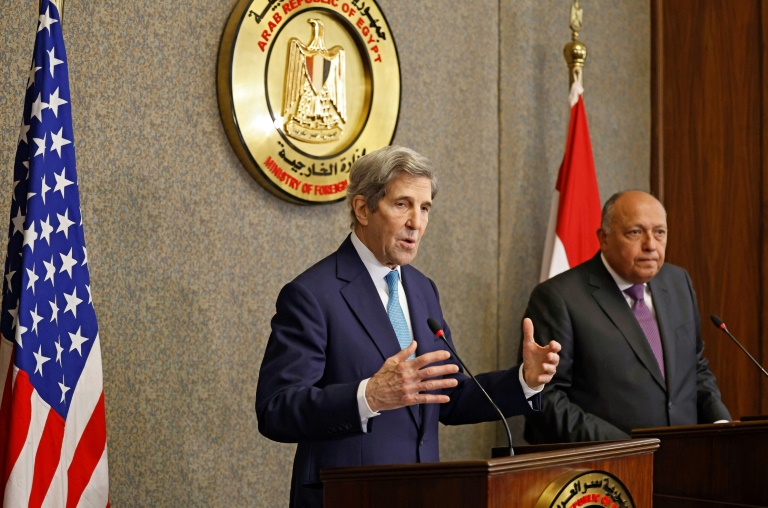
The United States and Egypt on Monday launched a working group to prepare for the COP27 climate summit this year, with US envoy John Kerry urging more countries to come on board.

The meeting will take place in November in the Egyptian Red Sea resort of Sharm el-Sheikh, seeking to build on gains made at the previous conference in Glasgow last year.

“In Glasgow, we made significant progress… we now need to bring more countries on board,” Kerry told reporters in Cairo.

“This is about a threat to our planet and it is driving our considerations and our thoughts about how to deal with that,” he said alongside Egyptian Foreign Minister Sameh Shoukry.

Pledges were made at the COP26 to phase down coal-fired power, curb methane emissions and boost financial aid to developing countries. 

Kerry, who arrived in Cairo on Sunday, launched with Shoukry the US-Egypt Climate Working Group, to advance bilateral and multilateral climate goals ahead of COP27.

Egypt, with 102 million people, is the most populous Arab country, and its northern coast has in recent years faced the threat of rising sea levels due to climate change.

The country’s coral reefs have also begun to gradually perish due to rising temperatures.

The Egyptian government has said it aims to increase renewable energy sources to 42 percent of its mix by 2035. 

Shukri told reporters that talks with Kerry focused “in details about the priority of the Egyptian presidency for the next COP27”.

Some rights groups have argued that Egypt should not have been allowed to host the upcoming climate summit due to the “repressive” policies of the government of President Abdel Fattah al-Sisi.

Iran hails nuclear talk 'progress' but Raisi insists US sanctions end

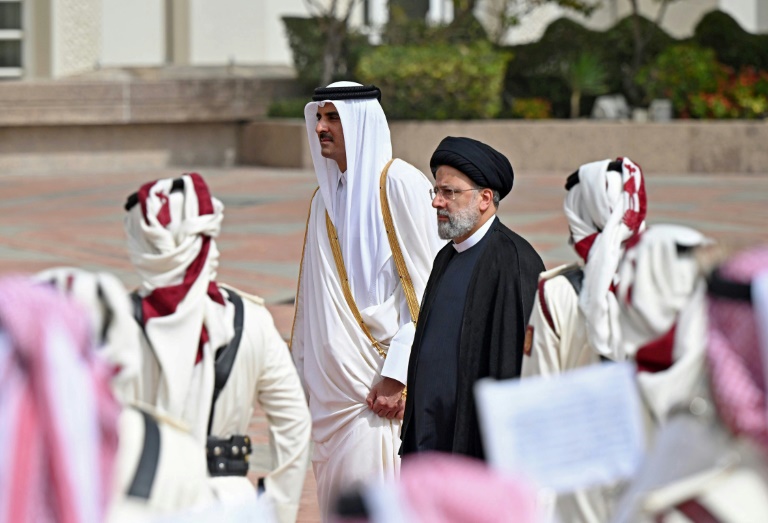
Iran on Monday signalled “significant progress” in talks on reviving a stalled accord on its nuclear programme but President Ebrahim Raisi, on his first visit to a Gulf state, again insisted that the United States must lift its crippling sanctions.

Iran’s ultraconservative leader, a personal target of the US sanctions, spoke out ahead of a summit of natural gas exporting nations in Qatar. The summit will take place against the backdrop of mounting tensions in Ukraine and reported advances in resuming a deal limiting Iran’s nuclear programme.

The United States under former president Donald Trump withdrew from the 2015 accord in 2018, saying it was not tough enough in curtailing Iran’s weapons ambitions. Tehran has always denied seeking an atomic bomb.

But months of negotiations in Vienna have brought the two sides closer to a new deal.

Iran’s foreign ministry said Monday that “significant progress” has been made and the number of outstanding obstacles had been “considerably reduced”.

“But the problems that remain are most difficult, the most difficult and most serious to be resolved,” it added.

Talks on reviving the Joint Comprehensive Plan of Action (JCPOA) have been held in the Austrian capital since November, involving Britain, China, France, Germany and Russia directly and the United States indirectly.

After arriving in Doha and meeting Qatar’s emir, Sheikh Tamim bin Hamad al-Thani, a close US ally who has encouraged the two sides to narrow their differences, Raisi again took aim at the US sanctions that have ravaged his country’s economy.

– ‘Lift the main sanctions’ –

“The United States must show their desire to lift the main sanctions,” he said.

“To reach an accord, it is necessary to guarantee the interests of the Iranian people, in particular the lifting of sanctions, (give) a strong guarantee and end dossiers of a political character.”

Raisi was named in US Treasury sanctions in 2019 before he became president last year. The trip to Qatar is only his fourth abroad since he took office in August.

Qatar has added the Iran nuclear dispute to its list of diplomatic hotspots where it has taken a behind-the-scenes mediation role and the emir called for more dialogue to settle the showdown.

This month, Qatar’s Foreign Minister Sheikh Mohammed bin Abdulrahman al-Thani went on an unannounced visit to Tehran after the emir met US President Joe Biden in Washington. 

Sanctions have badly hit Iran’s oil and gas revenues and the Tehran government is anxious to get new investment and customers.

The exporters’ summit has been dominated by Ukraine tensions that have raised prices and European fears that its supplies of Russian gas may be cut. 

The United States has asked Qatar to help Europe by preparing emergency supplies if the Ukraine crisis worsens.

But producing nations say they will not be able to provide substantial amounts of replacement gas if sanctions against Russia do affect Western Europe.

Raisi and the Qatari emir will be joined at Tuesday’s summit by Algeria’s President Abdelmadjid Tebboune and Trinidad and Tobago’s Prime Minister Keith Rowley. Energy ministers from the other seven forum members, who include Russia, will also take part.

Ministers from the 11-member group met on Monday to approve a summit statement that industry analysts predicted would touch on the lack of spare supplies that could help Europe, where consumers are already paying record prices for gas.

Qatar and other countries have insisted that massive investment is needed in gas infrastructure, and that they need the certainty of long-term contracts to be able to guarantee supplies to Europe. 

The European Union has long resisted the 10, 15 and 20-year contracts signed by other major customers for Qatar’s gas, which include China, Japan and South Korea.

Taliban aiming to create 'grand army' for Afghanistan

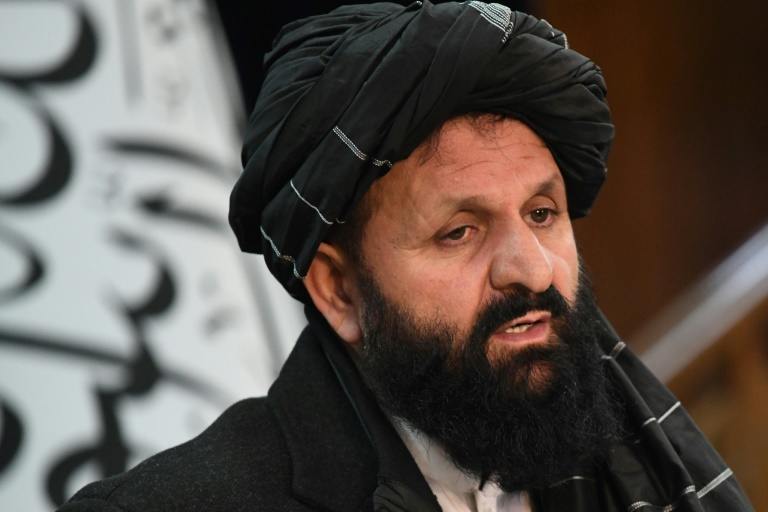
The Taliban are creating a “grand army” for Afghanistan that will include officers and troops who served the old regime, the official tasked with overseeing the military’s transformation said Monday.

Latifullah Hakimi, head of the Taliban’s Ranks Clearance Commission, also told a news conference they had repaired half the 81 helicopters and planes supposedly rendered unserviceable by US-led forces during last year’s chaotic withdrawal.

He said Taliban forces took control of more than 300,000 light arms, 26,000 heavy weapons and around 61,000 military vehicles during their lightning takeover of the country.

Afghanistan’s armed forces disintegrated last summer in the face of a Taliban onslaught ahead of the August 31 US-led force withdrawal — often abandoning their bases and leaving behind all their weapons and vehicles.

The Taliban have promised a general amnesty for everyone linked to the old regime, but almost all senior government and military officials were among the more than 120,000 people who evacuated by air in the final days.

Many of the rank and file remained, however, melting back into civilian life and keeping a low profile for fear of reprisals.

The United Nations said in January more than 100 people linked to the old armed forces have been killed since August.

Hakimi insisted, however, that the Taliban amnesty had worked well.

“If it hadn’t been issued, we would have witnessed a very bad situation,” he said.

“The suicide bombers who were chasing a person to target him, are now the same suicide bombers protecting him,” he added.

There has been little evidence the Taliban have absorbed former troops into their ranks, but over the weekend they named two senior ex-Afghan National Army officers to top posts in the defence ministry.

Both are specialist surgeons attached to the country’s main military hospital.

“Our work on the formation of an army is going on,” Hakimi said.

“Professionals including pilots and engineers, service persons, logistical and administrative staff (from the previous regime) are in their places in the security sector.”

Hakimi said they would form “a grand army… according to the country’s needs and the national interests”, although he did not specify a size.

He said the army would only be one that the country could afford.

Afghanistan is, however, effectively bankrupt, with the country’s $7 billion in overseas assets seized by the United States.

Washington said half will be reserved for a fund to compensate victims of the September 11, 2001 attacks, and half gradually released as part of a carefully monitored humanitarian aid fund.

Hakimi told the news conference the Taliban had purged nearly 4,500 “unwanted people” from its ranks — mostly new recruits who joined in the aftermath of their takeover and were blamed for a spate of crime.

Kremlin rebuffs Ukraine peace summit plan

The Kremlin warned Monday there are no concrete plans for a summit between the Russian and US leaders, as diplomats scrambled to head off the threat of a Russian invasion of Ukraine.

The idea of a meeting between presidents Vladimir Putin and Joe Biden has been championed by France and cautiously welcomed by Ukraine as a way to avert a catastrophic war in Europe.

But Putin’s spokesman Dmitry Peskov said: “It’s premature to talk about any specific plans for organising any kind of summits” adding that no “concrete plans” had been put in place.

A French presidential official later called on Putin to make a decision on the meeting, calling the situation “very dangerous”. 

“It is today possible to move towards a summit… it is up to President Putin to make his choice,” the source said, asking not to be named.

Separately, Moscow’s FSB security service stirred tensions by claiming that Ukrainian forces had shelled a Russian border facility, an allegation dismissed as “fake news” by Kyiv’s military.

France’s President Emmanuel Macron called Putin on Sunday and afterwards his office said that both the Russian leader and Biden were open to the idea. 

But in Washington, a senior US administration official told AFP: “Timing to be determined. Format to be determined. So it’s all completely notional.”

Germany’s Chancellor Olaf Scholz plans to talk to Putin later Monday and his call would be “closely coordinated” with the French efforts, his spokesman said.

Visiting Brussels, Ukraine’s foreign minister welcomed the French effort.

“We believe that every effort aimed at a diplomatic solution is worth trying,” Dmytro Kuleba said ahead of a meeting with EU counterparts.

“We hope that the two presidents will walk out from the room with an agreement about Russia withdrawing its forces from Ukraine,” he said.

Defence Minister Oleksiy Reznikov said there was no sign of Russian forces withdrawing from the border, and that Moscow-backed rebels continue to shell Ukrainian positions. 

“As of 09:00 am, 14 attacks have already been recorded, 13 of them from weapons prohibited by the Minsk agreements,” he told reporters in Kyiv.

“One of our soldiers was wounded,” he said.

Russia annexed the Ukrainian region of Crimea in 2014 and Moscow-backed separatists hold an enclave in the eastern distracts of Lugansk and Donetsk.

In recent weeks, according to US intelligence, Moscow has massed more than 150,000 troops and sailors around Ukraine’s borders in Belarus, Russia, Crimea and the Black Sea.

Biden has said that US intelligence believes that Putin has made a decision to invade Ukraine and that commanders are readying units to attack within days.

Russia has long denied this, but state media accuse Kyiv of preparing a murderous assault against the rebel enclave, and has started evacuating civilians from the area.

Kyiv and Washington accuse the Russians of plotting a “false flag” operation to fake Ukrainian atrocities in order to serve as a pretext for an all-out assault.

Meanwhile, Ukraine and Russia continue to blame each other for a spike in shellings on the frontline separating Kyiv’s forces from Moscow-backed separatists.

The bombardments have sent Ukrainians fleeing to cellars and other shelters, while some civilians have been evacuated. 

The idea for a summit came moments after Macron held his second marathon call with Putin of the day.

During their first, 105-minute discussion, Putin blamed the increase in violence on the front line on “provocations carried out by the Ukrainian security forces”, according to a Kremlin statement.

Putin repeated a call for “the United States and NATO to take Russian demands for security guarantees seriously”.

But Macron’s office also said the two had agreed on “the need to favour a diplomatic solution to the ongoing crisis and to do everything to achieve one”.

The second time the pair spoke, late Sunday evening, it was for an hour, the French presidency said. The announcement of the summit came shortly after.

– ‘Shelling again’ –

In Zolote, a frontline village in the Lugansk region, an AFP reporter found residents hiding in an earth-floored cellar roughly furnished when the separatist conflict erupted in 2014.

“These weeks they started shelling harder. Now they are shelling again,” said 33-year-old handyman Oleksiy Kovalenko.

Fears of escalation mounted Sunday when Belarus said Russian forces would remain on its soil after Sunday’s scheduled end to joint drills, within striking distance of Ukraine.

The Moscow-backed separatists have accused Ukraine of planning an offensive into their enclave, despite the huge Russian military build-up on the frontier.

Kyiv and Western capitals ridicule this idea, and accuse Moscow of attempting to provoke Ukraine and of plotting to fabricate incidents to provide a pretext for Russian intervention.

The rebel regions have made similar claims about Ukraine’s forces and ordered a general mobilisation, evacuating civilians into neighbouring Russian territory.

burs-dc/jbr/jv

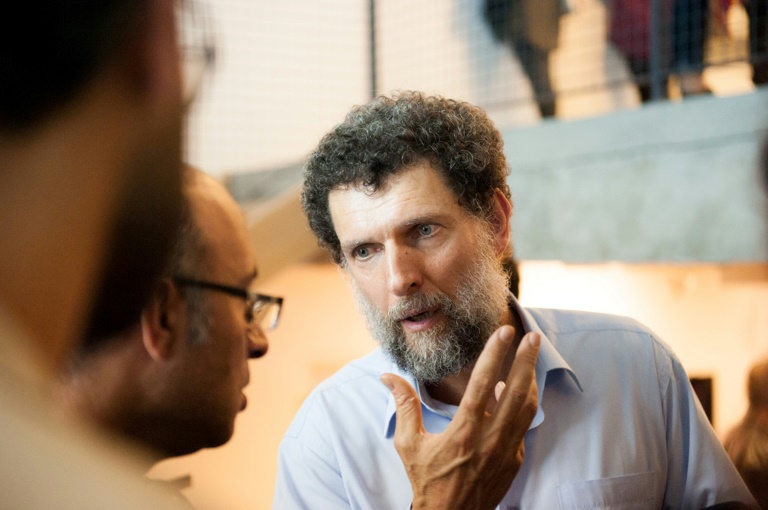
Turkey court extends detention of top activist

A Turkish court ordered leading activist Osman Kavala to remain in prison Monday, amid fresh calls for his release in the high-profile case that has drawn widespread rebuke.  

The 64-year-old philanthropist has been held without conviction since October 2017, accused of financing 2013 anti-government protests and playing a role in a coup plot against President Recep Tayyip Erdogan. 

The European Court of Human Rights (ECHR) has called for Kavala’s release, which Turkey has refused to comply with. 

This month, the Council of Europe (COE) launched disciplinary action over Turkey’s failure to free him. 

A three-judge panel on Monday refused to release Kavala and set the next hearing for March 21.  

Kavala did not appear in court, and his lawyers questioned the tribunal’s impartiality. 

“Kavala is not being tried in this tribunal, but in political party meetings,” defence lawyer Tolga Aytore told the court. 

Western diplomats, including from France and Germany, attended the hearing on Monday, according to an AFP reporter. 

The COE ruled this month that Turkey had failed to comply with a 2019 ruling by the ECHR to release Kavala.

Under the rules of the Strasbourg-based COE, the case has been referred back to the ECHR, which will examine if Turkey has complied with its 2019 ruling.

Turkey has been a member of the COE since 1950 and is party to the European Convention on Human Rights. 

It denounced the COE’s decision as “interference” in domestic court proceedings. 

The COE’s verdict could prompt action against Ankara from the committee of ministers, including suspension of Turkey’s voting rights or even expulsion from the body.

Ahead of the hearing on Monday, the European Parliament’s Turkey rapporteur slammed Ankara for its apparent refusal to comply with the ruling. 

“It’s not easy to understand what the rationale is of the Turkish authorities, simply not complying with the court ruling,” Nacho Sanchez Amor told AFP. 

“This is not about any kind of interfering from abroad, this is about the Turkish constitution, the European Court of Human Rights is part of the judiciary system of Turkey.”

He added that Turkey’s refusal to comply with the court ruling would “damage the image of the country”. 

Erdogan has repeatedly accused Kavala of being an agent of George Soros, a billionaire financier and pro-democracy campaigner.

Kavala’s supporters view his plight as a symbol of the purges Erdogan unleashed after the coup attempt, and his case has become a growing irritant on Turkey’s complex ties with the West.

Government critics say Turkey’s standoff with the COE underscores the profound erosion of human rights under Erdogan’s two-decade rule.

Greece resumes search for ferry fire survivors

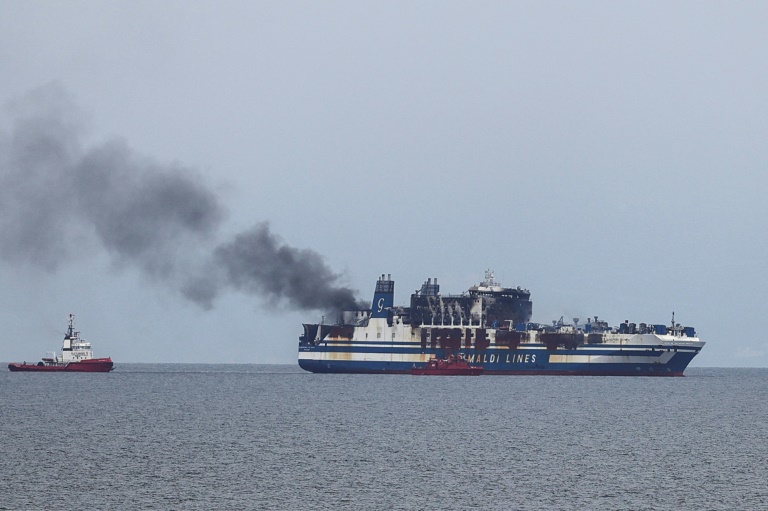
Greek rescuers on Monday resumed the search for 10 people still missing from a ferry fire that has killed at least one truck driver, with three survivors still in hospital.

Television footage showed smoke still billowing from the Italian-flagged Euroferry Olympia, more than three days after a fire ripped through the vessel as it sailed from Igoumenitsa in Greece to Brindisi in Italy with nearly 300 people aboard.

Most of the passengers were quickly evacuated within an hour on Friday, and a 21-year-old Belarussian truck driver emerged alive on Sunday.

The Belarussian and two other men from Bulgaria and Romania remained hospitalised Monday with breathing difficulty, Corfu hospital director Leonidas Roumbatis told reporters.

But 10 other truck drivers — seven Bulgarians, two Greeks and one Turk — remain unaccounted for.

The body of a 58-year-old Greek truck driver was recovered Sunday, the first confirmed fatality of the accident.

On Monday, more than 40 firefighters were taking part in the search and rescue operation with tugboats and coastguard vessels on close standby, amid reports that the weather was due to deteriorate later on Monday.

“It is a very difficult operation,” a fire department spokeswoman told AFP. “There is major thermal stress and a lot of smoke.”

Rescue coordinator Dimitris Kontogiannis told Greek public television ERT that temperatures on board the smouldering ferry “are over 400 degrees Celsius (752 Fahrenheit) in some areas.”

Two of those rescued were Afghan nationals not on the passenger list, sparking fears that more undocumented passengers might also have been aboard. 

– ‘Many complaints’ –

The missing drivers reportedly slept in their vehicles because cabins on the ferry were unsuitable, according to the Greek truck drivers’ union.

“We had many complaints about living conditions for the drivers,” union chairman Akis Dermatis told ERT.

“They’ve been saying this for years, they can’t all be crazy or liars,” he said.

Speaking to Greek media, drivers have complained of bug bites and signs of rodent infestation in cabins.

“The cabins are, to put it mildly, like stables,” the wife of one of the missing Greek truckers, Vana Bekiari, told reporters at Corfu harbour as she waited for news on the rescue operation.

“Four drivers are placed in a single cabin in the midst of a pandemic,” she said.

With the vehicles parked ten centimetres (four inches) apart, survivors said it was nearly impossible for someone inside to escape once docking was completed.

The ferry’s owner, Grimaldi Lines, rejected the accusations, saying in a statement on Sunday that there was plenty of cabin room, and that an inspection by the authorities in the port of Igoumenitsa two days before the fire had been “satisfactory”. 

Greek daily Kathimerini over the weekend said the Greek trucker union had since June 2017 warned about conditions on the Olympia as well as another ferry belonging to Grimaldi Lines. 

The last fire onboard a ship in the Adriatic occurred in December 2014 on the Italian ferry Norman Atlantic, in which 13 people died. 

Close Bitnami banner
Bitnami