World

Hong Kong to launch vaccine pass as Omicron outbreak rages

Hong Kong will launch a vaccine pass scheme this week, officials said Monday, as hospitals struggle under an Omicron-fuelled outbreak and the finance hub sees record-high departures.

The densely populated metropolis is currently in the throes of its worst-ever coronavirus outbreak, registering thousands of confirmed cases every day as hospitals and isolation units run out of space.

Starting Thursday, all residents aged 12 and above entering restaurants and clubhouses will be required to provide proof of having at least one Covid vaccine shot or a doctor’s exemption.

“Everyone should carry along their vaccine record or exemptions like their ID cards,” said Kevin Choi, deputy secretary of food and health, at a press conference on Monday.

Other public spaces — including wet markets, supermarkets, hospitals and government premises — will not require a show of proof, but will be subjected to spot checks by authorities and fines. 

Later phases of the scheme will include requiring eligible residents to have received three vaccine shots, they added.

City leader Carrie Lam had said last month she hopes the scheme could push the vaccine-hesitant to get the jab. 

“If you choose not to get vaccinated… you must bear some of the consequences,” she said.

Hong Kong, which follows China’s “zero-Covid” policy, enjoyed months of no local infections last year.

But few preparations were made for a mass outbreak and health policy experts say more efforts should have been spent boosting its meagre vaccination rate — particularly among the elderly, whose numbers remain below 50 percent for two jabs.

Authorities do not allow those with Covid to isolate at home and are now scrambling to build new isolation facilities with the help of mainland China and requisition hotel rooms.

But it is not clear if enough rooms can be provided. 

Cases are expected to rise to “literally hundreds of thousands” in the coming weeks, said Karen Grepin of the University of Hong Kong’s School of Public Health. 

“All of the data seems to suggest that we are very much at an early stage in this wave,” she told the city’s public broadcaster RTHK Monday.

The city is currently preparing to test all of its residents for Covid — with support from the mainland — a move that came after Chinese President Xi Jinping called for “all necessary measures” to control the virus.

Hong Kong has remained cut off from the world for much of the last two years and is also undergoing a political crackdown.

With little sign of that changing, departures have soared.

Government data showed that the one-time “Asia’s World City” saw a record 27,703 departures last week — the highest rate since the pandemic started more than two years ago. 

Charities on Friday also raised the alarm on the treatment of foreign domestic workers, who they say have been sacked after testing positive for Covid and forced to sleep outdoors.
China denies Australia's ship laser 'intimidation' claim

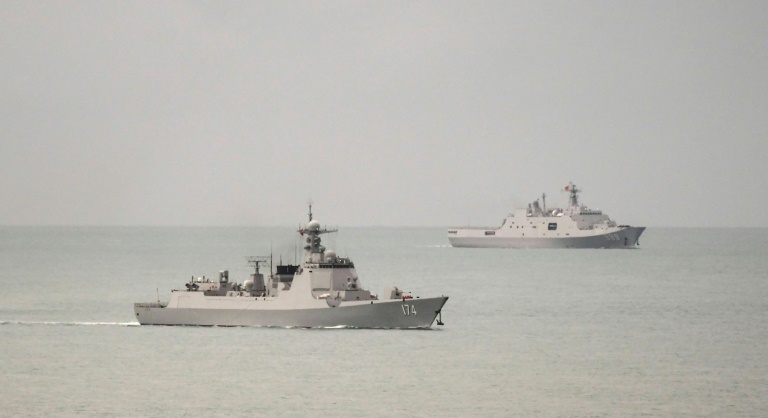
Beijing on Monday denied Australian allegations that a Chinese naval vessel shone a laser at one of the country’s surveillance aircraft in an incident that Prime Minister Scott Morrison termed an “act of intimidation”.

A Chinese ship sailing off Australia’s northern coast last week illuminated the plane, Canberra’s defence department said Sunday, adding that the act had “the potential to endanger lives.”

However, Beijing said the laser accusation was “not true” and defended the Chinese ship’s movements as “normal navigation … in line with relevant international law.”

“We urge Australia to respect the legitimate rights of Chinese ships in relevant sea areas in accordance with international law and stop spreading false information related to China,” foreign ministry spokesman Wang Wenbin said at a routine press briefing.

A spokesman for China’s defence ministry later said an Australian P-8 patrol aircraft had come within four kilometres (2.5 miles) of the vessel and engaged in “malicious provocations” that “posed a threat” to safety.

The ministry released photos it said showed sonar buoys dropped by the plane into the surrounding waters. AFP was unable to independently verify the images.

“I think the Chinese government is hoping that nobody talks about these aggressive bullying acts,” Australian Defence Minister Peter Dutton said previously, calling the incident “very aggressive”.

China also was accused of targeting Australian aircraft using military-grade lasers in 2019, when Australian Defence Force helicopters were illuminated over the South China Sea.

Relations between China and Australia have nosedived in recent years after Morrison called for an independent investigation into the origins of the coronavirus pandemic, which first emerged globally in the Chinese city of Wuhan.

China responded by placing tariffs on Australian goods worth billions of dollars, dragging both countries into a protracted trade standoff. 

Beijing also reacted with fury last year when Canberra joined a trilateral defence pact with the United States and Britain that would allow it to acquire nuclear-powered submarines, to counter China’s growing military might in the Asia-Pacific region.

Iran president makes maiden Gulf trip for gas, nuclear talks

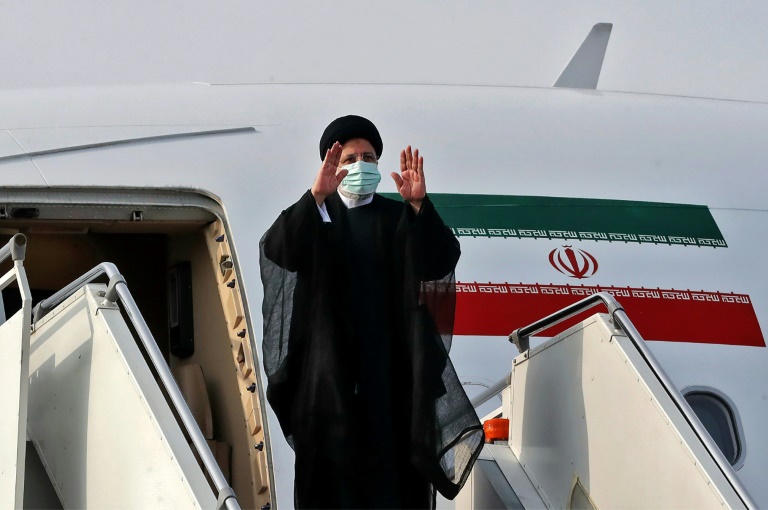
Iran’s President Ebrahim Raisi arrived in Qatar on his first visit to a Gulf Arab state Monday for a major gas summit that will be dominated by tensions over Ukraine.

Raisi and Qatar’s emir, Sheikh Tamim bin Hamad al-Thani, a close US ally, are also expected to discuss growing efforts to revive a stalled international deal to regulate Iran’s nuclear programme.

Tuesday’s Gas Exporting Countries Forum will be overshadowed by growing tensions around Ukraine which have boosted demand for gas as well as the price paid by consumers.

Producing nations say they will not be able to provide substantial amounts of gas to Europe if Russia, which has been accused of preparing an attack on Ukraine, cuts supplies in any sanctions showdown.

Raisi has not travelled in the Gulf region since taking office in June, and it is only his fourth trip abroad. Qatar authorities imposed stringent security for his arrival at Doha airport, where he was met by the emir.

Qatar has added the Iran nuclear dispute to its list of diplomatic hotspots where it has taken a behind-the-scenes mediation role. 

Earlier this month Qatari Foreign Minister Sheikh Mohammed bin Abdulrahman Al-Thani went on an unannounced visit to Tehran after the emir met US President Joe Biden in Washington. 

– ‘Common concern’ –

The Qatar government said that the emir and Raisi would discuss issues of “common concern” without giving details. Diplomats said, however, that the nuclear talks would be on the agenda.

In 2015, Iran and six world powers including the United States reached a landmark nuclear agreement that offered Tehran sanctions relief in exchange for curbs on its atomic programme.

The United States unilaterally withdrew from the deal in 2018 under then president Donald Trump and reimposed heavy economic sanctions.

Talks on reviving the deal known as the Joint Comprehensive Plan of Action (JCPOA), have been held in the Austrian capital Vienna since late November, involving Britain, China, France, Germany and Russia directly and the United States indirectly.

Raisi and the Qatari emir will be joined at Tuesday’s summit by Algeria’s President Abdelmadjid Tebboune and Trinidad and Tobago’s Prime Minister Keith Rowley. Energy ministers from the other seven forum members who include Russia will also take part.

Ministers from the 11-member group were to meet later Monday to approve a summit statement that industry analysts predicted would touch on the lack of spare supplies that could help Europe, where consumers are already paying record prices for gas.

Qatar and other countries have insisted that massive investment is needed in gas, and that they need the certainty of long-term contracts to be able to guarantee supplies to Europe. 

The European Union has long resisted the 10, 15 and 20-year contracts signed by other major customers for Qatar’s gas, who include China, Japan and South Korea.

The United States has asked Qatar to help Europe by preparing emergency supplies if the Ukraine crisis erupts.

Information war rages ahead of feared Russian invasion

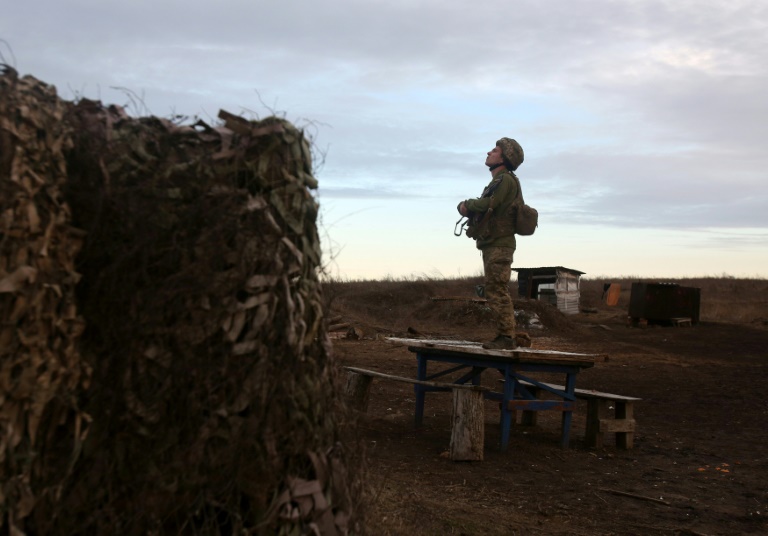
The Russian TV reporter stands in a flak jacket and helmet near some army barracks on a crisp and sunny afternoon.

“Are you ready,” an off-camera voice asks him.

The journalist nods and a burst of gunfire erupts as he starts running and shouting a breathless report into his microphone about “a group of saboteurs” attacking a Russian-backed position in east Ukraine.

“This is what Russian propaganda at ‘work’ looks like,” a Telegram account that follows Ukraine closely remarked next to a clip showing the makings of the evidently staged report.

The eight-year conflict in Ukraine’s Russian-backed east has been accompanied by a ferocious disinformation battle between Moscow and Kyiv that tries to implicate the other side in grave crimes.

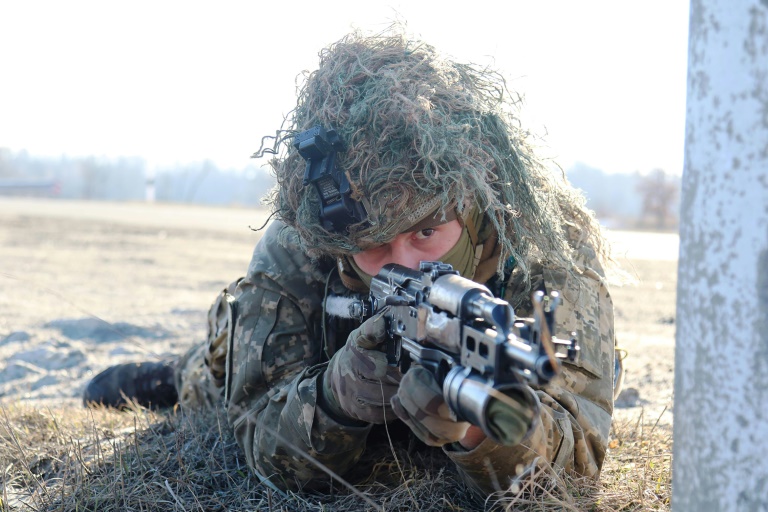
But the scale and breadth of this battle has reached epic proportions as Russian forces move en masse around Ukraine’s borders and the West warns of an imminent invasion threat.

Its importance is being heightened by fears that the Kremlin may use a staged attack as a pretext to order its feared assault.

“I think most of this fake news is aimed mostly at the international Russian audience,” said former Ukrainian education minister and Mohyla School of Journalism director Sergiy Kvit.

“It looks like they are preparing an invasion,” he told AFP.

– ‘Undoubtedly staged’ –

The explosion of open-source intelligence in the past decade has helped to debunk many reports that might otherwise have been taken at face value.

It exposed that a seemingly urgent call last Friday by Ukraine’s separatist leaders for locals to evacuate to Russia had actually been recorded two days in advance.

“The president of Ukraine, Volodymyr Zelensky, will soon issue an order for his forces to go on the attack,” Donetsk rebel chief Denis Pushilin says in his video message.

“Therefore today, on February 18, we are organising a large-scale evacuation of the civilian population into Russia,” he says.

Telegram metadata showed that both Pushilin’s message and one recorded by another separatist leader were uploaded on February 16 — one of the days Washington had originally suggested a Russian invasion might be launched.

“Everything that happens today is clearly and undoubtedly staged,” investigative journalist Mark Krutov tweeted as worries spread that the rebels were moving people out so that Russian tanks could move in.

– ‘Ukrainian spy’ –

Analysts from the likes of Bellingcat — an award-winning online investigations group that was designated a “foreign agent” by the Kremlin last year — have been particularly busy in the past few weeks.

Bellingcat and other disinformation warriors found visual evidence showing that a car bomb allegedly targeting a separatist police chief had actually been planted on a completely different vehicle.

They showed photographs of the police chief’s registered license plate on a shiny new model SUV.

That same plate then appears attached to the mangled remains of an older green army vehicle blown up in an empty parking last Friday.

No one was hurt but Russian state television soon aired what it claimed to be the confession of a “Ukrainian spy” involved in the purported bomb plot.

Other stories alleged the separatists had killed two Ukrainians who tried to blow up a chlorine storage tank, a story that echoed claims from Moscow that Kyiv was plotting a chemical weapons attack.

Ukrainian accounts do not emerge completely blameless in this information war.

Kyiv’s independent Stopfake organisation pointed to some accounts posting about a supposed large anti-war protest in Moscow using images of a gathering that in fact took place in 2014.

– ‘Panic’ –

Child and family psychologist Kateryna Goltsberg said this endless media bombardment has seen Ukrainians’ anxiety levels spike.

“In the last two months, the levels of panic have been particularly high. This is probably linked to even bigger information attacks,” Goltsberg said.

“People really are very worried,” she said. “They are worried for themselves, their children, their loved ones.”

Ukrainian newspaper editor Kateryna Kiselyova offered a case in point. She said her family had “emergency backpacks ready” and a clear plan in place in case of war.

“I talked to the children about what they would need to do,” she said while attending a memorial for more than 100 people killed in Kyiv during Ukraine’s 2014 pro-EU revolt.

“Now I want to make sure their school’s basement is prepared for an emergency.”

Others worried that this sense of impending peril might hang over Ukraine for some time.

“An existential threat — this will be the hallmark of our lives for the coming months, if not years,” the Ukrainska Pravda newspaper wrote.

Investigation claims Credit Suisse handled dirty money

Credit Suisse handled billions of dollars in dirty money for decades, an international media investigation based on a massive data leak claimed on Sunday, in the latest setback for Switzerland’s second-largest bank.

The bank held more than $8 billion (seven billion euros) in accounts of criminals, dictators and human rights abusers, among others, according to the investigation by a group comprising dozens of media organisations.

Credit Suisse rejected the “allegations and insinuations”, saying in a statement that many of the issues raised were historical, some dating back more than 70 years.

According to the Organized Crime and Corruption Reporting Project (OCCRP), a non-profit journalism group, the “Suisse Secrets” investigation began when an anonymous source shared bank data with German newspaper Suddeutsche Zeitung more than a year ago.

That information, covering accounts collectively worth $100 billion at their highest point, was trawled through by 48 media outlets worldwide, including The New York Times, Le Monde and The Guardian. 

Accounts identified as problematic held over $8 billion in assets, the investigation found.

The accounts included those held by a Yemeni spy chief implicated in torture, the sons of an Azerbaijani strongman, a Serbian drug lord and bureaucrats accused of looting Venezuela’s oil wealth.

It was the largest leak ever from a major Swiss bank, OCCRP said.

– ‘Tendentious interpretations’ –

The leak included information on more than 18,000 bank accounts, many of which “remained open well into the 2010s”, said the OCCRP.

In its statement Sunday, the bank said: “Credit Suisse strongly rejects the allegations and insinuations about the bank’s purported business practices.

“The matters presented are predominantly historical, in some cases dating back as far as the 1940s, and the accounts of these matters based on partial, inaccurate, or selective information taken out of context, resulting in tendentious interpretations of the bank’s business conduct.”

About 90 percent of the accounts reviewed were closed — or were in the process of being closed — before the press approached the bank, it added. And more than 60 percent of them had been closed before 2015.

The OCCRP, in a statement on its website, said: “We believe the dozens of examples we have cited raise serious questions about Credit Suisse’s effectiveness and commitment to meeting its responsibilities.”

It said the investigation had found dozens of “dubious characters” in the data, including some linked to government officials.

Among those listed as holding accounts with Credit Suisse were the sons of former Egyptian President Hosni Mubarak and Jordan’s King Abdullah II.

When asked why so many of these accounts existed, current and former Credit Suisse employees described a work culture that incentivised taking on risk to maximise profits, according to OCCRP. 

“I’ve too often seen criminals and corrupt politicians who can afford to keep on doing business as usual, no matter what the circumstances, because they have the certainty that their ill-gotten gains will be kept safe and always within their reach,” said OCCRP co-founder Paul Radu in a statement.

– A series of setbacks –

The international investigation is the latest in a series of setbacks that Credit Suisse has suffered recently.

In March 2021, the bank was hit by the collapse of Greensill Capital in which it had committed some $10 billion dollars through four funds. The implosion of the US fund Archegos cost it more than $5 billion.

And in Switzerland, a former Credit Suisse employee is among the defendants in a major corruption trial that has just started and involves alleged money laundering and organised crime in Bulgaria. The bank has said it will “defend itself vigorously in court”.

Experts say draconian banking secrecy laws in Switzerland effectively silence insiders or journalists who may want to expose wrongdoing within a Swiss bank, according to OCCRP. 

A Swiss media group was unable to participate in the investigation due to the risk of criminal prosecution, the organisation said. 

Indian conjoined twins vote in dark glasses for confidentiality

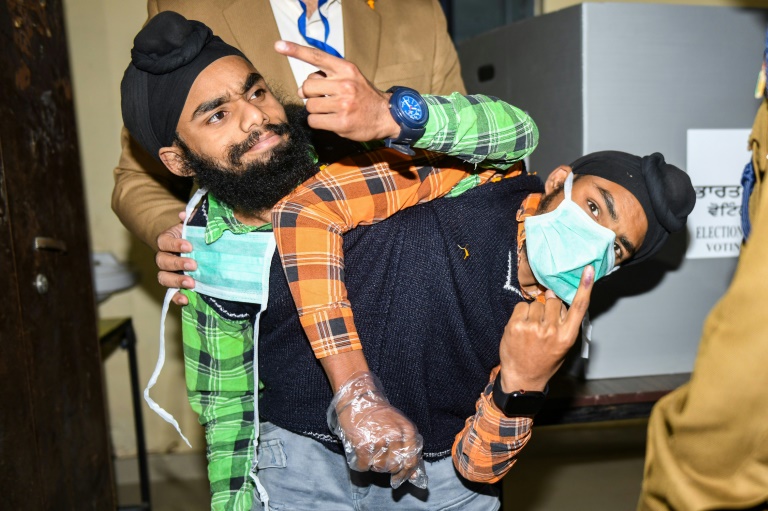
A pair of conjoined twins wore dark glasses so they could not see who the other voted for as they cast ballots for the first time in northern India.

Sohan and Mohan Singh, 19, are joined at the hip and share several organs as well as legs. They live in a charitable home after being abandoned at birth.

Wearing colourful checked shirts and matching black turbans, the brothers cast their votes on Sunday in state elections in Punjab.

“I felt really nice. They made good arrangements for us to vote,” Sohan told AFP on Monday from the holy city of Amritsar where they live.

“We were given dark glasses so that we could not see who we voted for inside the polling booth.” 

India, the world’s largest democracy, follows a secret ballot system to ensure free and fair elections, with all citizens above 18 years eligible to vote.

The duo, who were issued separate electoral cards, were garlanded and handed certificates by officials as they emerged from the polling station.

The teenagers flashed their inked fingers while encouraging others to come out and vote.

The Singh brothers work in the state power department but draw just one salary. 

They did not opt for surgery to separate them as there was risk of one of them dying, Sohan said.

“There is no choice. I can’t afford to lose him,” he said. 

Punjab is one of the five states where polling is being held to elect new assemblies.

Kremlin pours cold water on Ukraine peace summit plan

The Kremlin warned Monday there are no concrete plans for a summit between the Russian and US leaders, as diplomats scambled to head off the threat of a Russian invasion of Ukraine.

The idea of a meeting between presidents Vladimir Putin and Joe Biden has been championed by France and cautiously welcomed by Ukraine as a way to avert a catastrophic war in Europe.

But Putin’s spokesman Dmitry Peskov said: “It’s premature to talk about any specific plans for organising any kind of summits” adding that no “concrete plans” had been put in place. 

France’s President Emmanuel Macron called Putin on Sunday and afterwards his office said that both the Russian and Biden were open to the idea.

The summit would go ahead, however, only “on the condition that Russia does not invade Ukraine.”

“There is a diplomatic hope,” France’s minister for European affairs Clement Beaune told LCI television. 

“If there is still a chance to avoid war, to avoid a confrontation and build a political and diplomatic solution, then we need to take it,” he said.

But in Washington, a senior US administration official told AFP: “Timing to be determined. Format to be determined. So it’s all completely notional.”

Visiting Brussels, Ukraine’s foreign minister welcomed the French effort.

“We believe that every effort aimed a diplomatic solution is worth trying,” Dmytro Kuleba said ahead of a meeting with EU counterparts.

“We hope that the two presidents will walk out from the room with an agreement about Russia withdrawing its forces from Ukraine,” he said.

Defence Minister Oleksiy Reznikov said there was no sign of Russian forces withdrawing from the border, and that Moscow-backed rebels continue to shell Ukrainian positions. 

“Since the beginning of this day, as of 09:00, 14 attacks have already been recorded , 13 of them from weapons prohibited by the Minsk agreements,” he told reporters in Kyiv.

“One of our soldiers was wounded,” he said.

Russia annexed the Ukrainian region of Crimea in 2014 and Moscow-backed separatists hold an enclave in the eastern distracts of Lugansk and Donetsk.

In recent weeks, according to US intelligence, Moscow has massed more than 150,000 troops and sailors around Ukraine’s borders in Belarus, Russia, Crimea and the Black Sea.

Biden has said that US intelligence believes that Putin has made a decision to invade Ukraine and that commanders are readying units to attack within days.

Russia has long denied this, but state media accuse Kyiv of preparing a murderous assault against the rebel enclave, and has started evacuating civilians from the area.

Kyiv and Washington accuse the Russians of plotting a “false flag” operation to fake Ukrainian atrocities in order to serve as a pretext for an all out assault.

Meanwhile, Ukraine and Russia continue to blame each other for a spike in shellings on the front line separating Kyiv’s forces from Moscow-backed separatists.

The bombardments have sent Ukrainians fleeing to cellars and other shelters, while some civilians have been evacuated. 

The idea for a summit came moments after Macron held his second marathon call with Putin of the day. 

During their first, 105-minute discussion, Putin blamed the increase in violence on the front line on “provocations carried out by the Ukrainian security forces”, according to a Kremlin statement.

Putin repeated a call for “the United States and NATO to take Russian demands for security guarantees seriously”.

But Macron’s office also said the two had agreed on “the need to favour a diplomatic solution to the ongoing crisis and to do everything to achieve one”.

The second time the pair spoke, late Sunday evening, it was for an hour, the French presidency said. The announcement of the summit came shortly after.

– ‘Shelling again’ –

In Zolote, a frontline village in the Lugansk region, an AFP reporter found residents hiding in an earth-floored cellar roughly furnished when the separatist conflict erupted in 2014.

“These weeks they started shelling harder. Now they are shelling again,” said 33-year-old handyman Oleksiy Kovalenko.

In Moscow, the US embassy warned Americans of potential attacks in public places in Russia.

Fears of escalation mounted Sunday when Belarus said Russian forces would remain on its soil after Sunday’s scheduled end to joint drills, within striking distance of Ukraine.

The Moscow-backed separatists have accused Ukraine of planning an offensive into their enclave, despite the huge Russian military build-up on the frontier.

Kyiv and Western capitals ridicule this idea, and accuse Moscow of attempting to provoke Ukraine and of plotting to fabricate incidents to provide a pretext for Russian intervention.

The rebel regions have made similar claims about Ukraine’s forces and ordered a general mobilisation, evacuating civilians into neighbouring Russian territory.

“My husband told me: take the children and go!” 31-year-old nurse Anna Tikhonova told AFP from a camp at Veselo-Voznesenka, Russia. 

She and her children had fled from Gorlovka, Ukraine, to the sound of gunfire, she said.

burs-dc/jbr/

Sri Lanka completes return of illegal waste to Britain

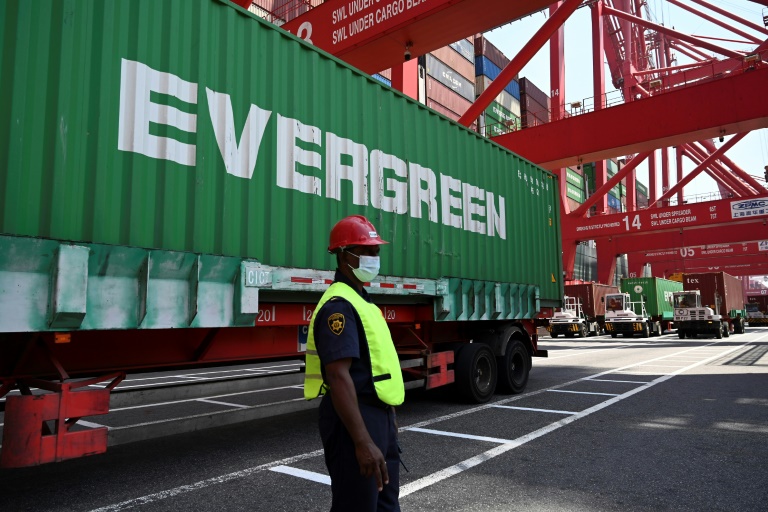
Sri Lanka shipped out to Britain on Monday the last of several hundred containers filled with thousands of tonnes of illegally imported waste, officials said.

Several Asian countries have in recent years been pushing back against an onslaught of refuse from wealthier nations and have started turning back unwanted shipments.

The waste from Britain arrived in Sri Lanka between 2017 and 2019 and was listed as “used mattresses, carpets and rugs”.

But in reality it also contained biowaste from hospitals including body parts from mortuaries, according to customs officials.

The containers were not chilled and some of them gave off a powerful stench. 

The 45 containers loaded onto a ship at a Colombo port on Monday were the final batch of 263 containers holding around 3,000 tonnes of waste.

“There could be fresh attempts to import such hazardous cargo, but we will be vigilant and ensure that this does not happen again,” customs chief Vijitha Ravipriya said.

The first 21 containers holding medical waste were returned to Britain in September 2020, according to customs.

A local company had imported the waste from Britain, saying it planned to recover the springs from used mattresses as well as cotton to be reshipped to manufacturers abroad.

But customs failed to find credible evidence of such “resource recovery”.

A local environmental activist group filed a petition demanding the waste be returned to its sender and Sri Lanka’s Court of Appeal upheld the petition in 2020.

Customs maintained that all the containers had been brought into the country in violation of international law governing the shipment of hazardous waste, including plastics.

A Sri Lankan investigation in 2019 found the importer had reshipped about 180 tonnes of waste brought into the island to India and Dubai in 2017 and 2018.

The Philippines, Indonesia and Malaysia have also returned hundreds of containers of refuse back to their countries of origin.

Sri Lanka completes return of illegal waste to Britain

Sri Lanka shipped out to Britain on Monday the last of several hundred containers filled with thousands of tonnes of illegally imported waste, officials said.

Several Asian countries have in recent years been pushing back against an onslaught of refuse from wealthier nations and have started turning back unwanted shipments.

The waste from Britain arrived in Sri Lanka between 2017 and 2019 and was listed as “used mattresses, carpets and rugs”.

But in reality it also contained biowaste from hospitals including body parts from mortuaries, according to customs officials.

The containers were not chilled and some of them gave off a powerful stench. 

The 45 containers loaded onto a ship at a Colombo port on Monday were the final batch of 263 containers holding around 3,000 tonnes of waste.

“There could be fresh attempts to import such hazardous cargo, but we will be vigilant and ensure that this does not happen again,” customs chief Vijitha Ravipriya said.

The first 21 containers holding medical waste were returned to Britain in September 2020, according to customs.

A local company had imported the waste from Britain, saying it planned to recover the springs from used mattresses as well as cotton to be reshipped to manufacturers abroad.

But customs failed to find credible evidence of such “resource recovery”.

A local environmental activist group filed a petition demanding the waste be returned to its sender and Sri Lanka’s Court of Appeal upheld the petition in 2020.

Customs maintained that all the containers had been brought into the country in violation of international law governing the shipment of hazardous waste, including plastics.

A Sri Lankan investigation in 2019 found the importer had reshipped about 180 tonnes of waste brought into the island to India and Dubai in 2017 and 2018.

The Philippines, Indonesia and Malaysia have also returned hundreds of containers of refuse back to their countries of origin.

Billionaire Icahn steps up campaign against McDonald's pig farm practices

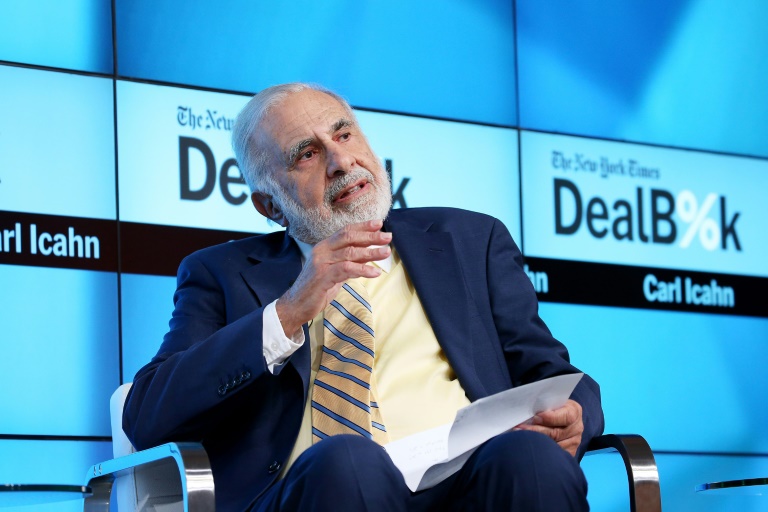
Billionaire Carl Icahn has nominated two allies to the board of McDonald’s, the company confirmed Sunday, part of the activist investor’s campaign against pig-farming practices used in the fast-food giant’s supply chains.

“Carl Icahn has nominated Leslie Samuelrich and Maisie Ganzler for the 2022 election,” McDonald’s said in a statement, adding that the board would “evaluate the nominees as it would any other candidates proposed to it.”

Icahn’s “stated focus in making this nomination relates to a narrow issue regarding the Company’s pork commitment”, it added, in a reference to the use of so-called gestation crates.

According to the Humane Society, the metal enclosures — used to contain sows for almost all of a pregnancy — are so small that the animal cannot turn around, and can lead to health issues such as infection or anatomical problems.

Icahn is known for taking stakes in companies to ask for radical measures before reaping huge profits, but he has said animal welfare concerns are behind his intervention.

“I really do feel emotional about these animals and the unnecessary suffering,” he told Bloomberg.

He said he had worked with the Humane Society a decade ago on the use of the crates, winning an agreement from McDonald’s that it would stop buying from suppliers using the cages within 10 years.

McDonald’s “did a little something but never delivered,” Icahn said.

But the fast-food giant has said that, since its 2012 commitment, “McDonald’s has led the industry, and today an estimated 30–35 percent of US pork production has moved to group housing systems.”

“By the end of 2022, the Company expects to source 85 percent to 90 percent of its US pork volumes from sows not housed in gestation crates during pregnancy,” it added.

The company noted that Icahn, “who states that he holds 200 shares of McDonald’s stock, is the majority owner of Viskase, a company that produces and supplies packaging for the pork and poultry industry.”

“It’s noteworthy that Mr. Icahn has not publicly called on Viskase to adopt commitments similar to those of McDonald’s 2012 commitment.”

Close Bitnami banner
Bitnami