World

'Fortress Australia' re-opens to tourists after two-year Covid closure

Jubilant visitors returned to Australia Monday as the country reopened its borders to vaccinated tourists, nearly two years after the island nation imposed some of the world’s strictest Covid-19 travel restrictions.

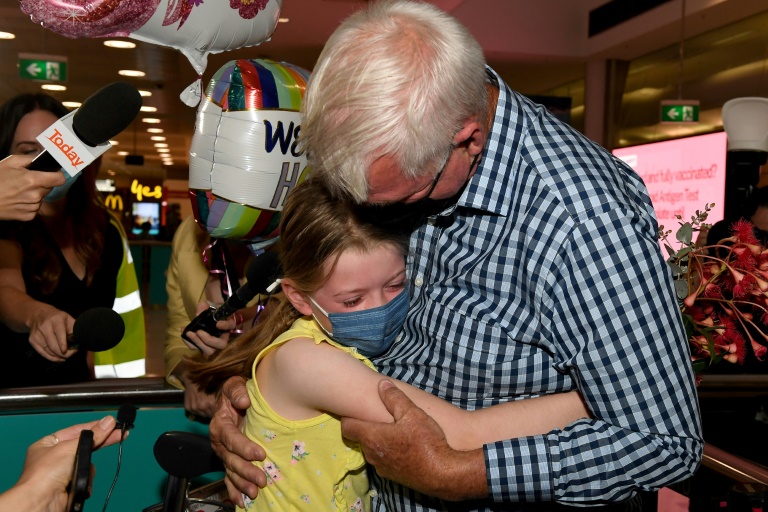
At the country’s two major international airports in Sydney and Melbourne, tired but elated family and friends rushed from gates to embrace loved ones after years apart.

Bernie Edmonds was emotional as he hugged his eight-year-old granddaughter, Charlotte, who had just landed in Sydney.

“It’s great to have her back,” he said. “She’s got to go again but we’ll get her back again.”

The country closed its borders to almost everyone except citizens and permanent residents in March 2020, trying to slow surging Covid-19 case numbers.

The travel ban — which also barred citizens from going overseas without an exemption and imposed a strict cap on international arrivals — earned the country the nickname “Fortress Australia”.

Sydneysider Jody Tuchin was excited to pick up her best friend, who she had not seen since 2018.

“He made it back just in time for my wedding in four days,” she told AFP. 

Meanwhile, Qantas pilot Paul Grant said it was “nice to have passengers back on again”.

A Qantas flight from Los Angeles was the first to touch down in Sydney at 6:20 am (1920 GMT) followed by arrivals from Tokyo, Vancouver and Singapore.

“It’s fair to say we’ve all been waiting a long time to welcome visitors back to Australia,” Qantas chief executive Alan Joyce said.

The national carrier expects to bring more than 14,000 passengers into Australia this week — the start of what many believe will be a long, slow recovery for a tourism sector devastated by the pandemic.

“I think we’re going to see a very, very strong rebound,” Tourism Minister Dan Tehan said at Sydney airport, wearing a t-shirt with the words: “Welcome Back”.

Attracting tourists from China, previously Australia’s biggest market, would be difficult while Beijing enforces a zero-Covid policy, Tehan admitted. 

“But as soon as that changes, Tourism Australia have been doing a lot of work to make sure that we will be ready to encourage those Chinese visitors to come.”

The Australian government has launched a AUS$40 million ($28.7 million) advertising campaign to lure tourists back, but only 56 international flights are scheduled to land in the country in the 24 hours after the re-opening — far below pre-pandemic levels. 

Prime Minister Scott Morrison said he had “no doubt” traveller numbers will scale up in time.

– ‘Fortress Australia’ –

Every month under “Fortress Australia” has cost businesses an estimated AUS$3.6 billion, according to the Australian Chamber of Commerce and Industry, with tourism particularly hard hit.

Tony Walker, managing director of Quicksilver Group, which operates cruises, diving excursions and resorts across the Great Barrier Reef, told AFP he was “very excited about being able to re-open”.

International tourists “make up around 70 percent” of business for tourism operators on the reef, Walker said, making the two-year border closure “incredibly difficult”.

During the pandemic, his company had to reduce its employees from 650 to the 300 it has today.

Key to Australia’s reopening is a government requirement that all overseas travellers must be fully vaccinated.

At Sydney Airport, American tourist Robert Landis said this had not dissuaded him from visiting.

“I’ve just been looking for any opportunity to get down here,” he said.

However, the Australian Tourism Export Council warned this week that “there are worrying signs consumers are wary of travelling” to Australia, with “confusion over our various state travel restrictions and concern about snap border closures” a key issue.

– No west just yet –

Western Australia will not re-open to international travellers on Monday, holding off until March 3.

Until recently, the state had pursued a strict Covid-zero policy, cutting itself off from the rest of the country.

The decision sparked lawsuits — and the observation that it was easier for Australians to travel to Paris than Perth — but proved popular with West Australians.

Russia has lists of Ukrainians 'to be killed or sent to camps', US warns UN

The United States has warned the United Nations it has information that Russia has lists of Ukrainians “to be killed or sent to camps” in the event of an invasion, according to a letter sent to the UN rights chief and obtained by AFP Sunday.

The letter, which came as Washington warned of an imminent invasion by Russian troops massed near the Ukrainian border, says the United States is “deeply concerned” and warns of a potential “human rights catastrophe.”

The United States has “credible information that indicates Russian forces are creating lists of identified Ukrainians to be killed or sent to camps following a military occupation,” the letter says.

“We also have credible information that Russian forces will likely use lethal measures to disperse peaceful protests or otherwise counter peaceful exercises of perceived resistance from civilian populations,” says the message, addressed to UN High Commissioner for Human Rights Michelle Bachelet.

The note, signed by Bathsheba Nell Crocker, US ambassador to the UN in Geneva, warns a Russian invasion of Ukraine could bring with it abuses such as kidnappings or torture, and could target political dissidents and religious and ethnic minorities, among others. 

Russia has placed more than 150,000 troops near Ukraine’s borders in recent weeks, the United States and Western allies have estimated.

Moscow denies it plans to attack its neighbor, but is seeking a guarantee that Ukraine will never join NATO and that the Western alliance will remove forces from Eastern Europe, demands the West has refused.

Police reclaim Canada capital after trucker siege ends

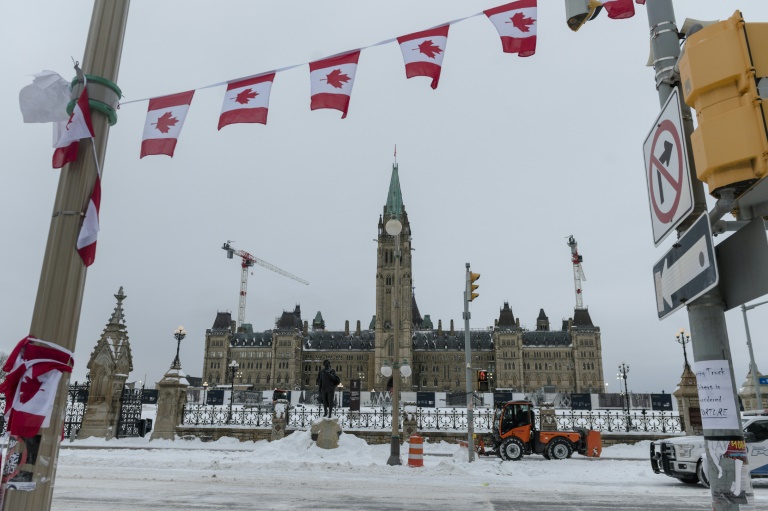
The last big rigs were towed Sunday out of Canada’s capital, where the streets were quiet for the first time in almost a month after a massive police operation ended a drawn-out siege by protesters opposing Covid health rules.

A major clean-up was underway in Ottawa’s snowy downtown, where police in riot gear had faced off with trucker-led demonstrators for two full days, finally driving them out of their protest hub outside parliament.

“I’m very happy to have my city back,” Jeff Lindley, who lives and works downtown, told AFP. “It’s so much better today, calmer and quieter without the ominous presence of all the trucks and protesters.”

Ottawa interim police Chief Steve Bell told a news conference “many of the unlawful protesters are gone.”

But he added, “We’re not done this operation yet,” explaining that authorities were on watch to “make sure that nobody returns to occupy our streets again.”

A few protesters stayed late into Saturday night, singing ’80s protest anthems and setting off fireworks outside a hastily erected four–meter-high (13-foot) security fence surrounding the parliamentary precinct.

But the last gasp protest-turned-street-party fizzled as a deep freeze gripped the city.

– ‘Cops everywhere’ –

Early Sunday, police were manning checkpoints restricting access to a 500-acre (200-hectare) downtown area, while a sizable force remained on standby to defend the ground reclaimed from the truckers.

An AFP journalist saw only a handful of protesters in the area, testing the perimeter.

One who gave his name only as John said he was packing it in after wandering for hours with a Canadian flag in hand.

“It’s pretty locked down, all I see is cops everywhere,” he told AFP.

Ottawa police issued a reminder that the core area remains off-limits except to local residents and workers, and advised any remaining protesters to leave or risk arrest.

Bell said four people had been arrested inside the security zone — for a total of 191, including protest leaders, since police moved in on Friday.

He said 79 vehicles had been towed out of the city center — paralyzed since January 29 when hundreds of trucks, RVs and other vehicles parked there in protest.

Meanwhile, crews took down the last tents, food stands and other makeshift structures erected by demonstrators, and cleared snow from streets in preparation for local businesses to reopen.

For the first time since the big rigs drove into the capital, Ottawa residents were not awakened by the incessant honking that had become a staple of the protests.

Dave Chapin, out and about for the first time in weeks after feeling “hemmed in,” gave a thumbs up to police patrolling his downtown neighborhood.

“People have a right to protest, but at the end of the day after you’ve made your point you go home,” he said. “These guys just stayed — honking and intimidating (locals) and disrupting our lives.”

“These past weeks have been absolute hell,” he added.

– Keep fighting –

Refusing to admit defeat after being dislodged, many protesters told AFP they would keep pressing their cause.

“The protest will go on forever in my heart,” Nicole Craig said as she headed home Saturday evening.

Although pandemic health rules in Canada have eased as case numbers trend downward, protesters continued calling for a full lifting of restrictions, which have been among the world’s strictest.

Prime Minister Justin Trudeau’s government is meanwhile facing a lawsuit from a civil liberties group and pushback from political rivals over the decision to invoke rarely used emergency powers to crack down on the unlawful protests.

This is despite polls showing Canadians, once sympathetic to the trucker-led movement, have turned against them.

Trudeau himself kept his distance as the police operation unfolded, refraining from public comment.

The convoy began a month ago as a protest against mandatory Covid-19 vaccines to cross the US border. It has inspired copycats in other countries, with Washington girding for a possible trucker protest to coincide with next week’s State of the Union address by President Joe Biden.

And it has triggered economically damaging blockades at the US border, including a bridge that is the key transit point between Windsor, Ontario and Detroit, Michigan. Police cleared that blockade a week ago.

Dozens there were arrested, and at other crossings including four people in Coutts, Alberta found with a cache of weapons and charged with conspiracy to murder police officers, and authorities froze Can$32 million ($25 million) in donations and bank accounts linked to the trucker movement.

Queen catches 'mild' Covid soon after 70th anniversary

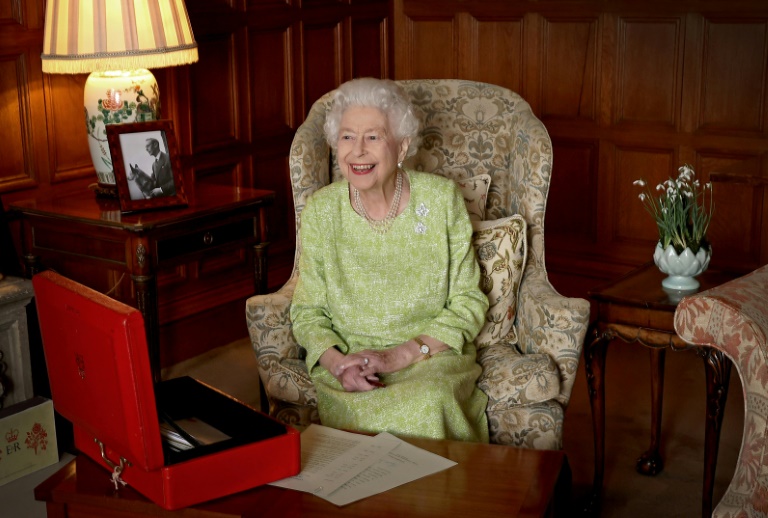
Queen Elizabeth II tested positive on Sunday for Covid-19 but aides said her symptoms were “mild”, as politicians wished Britain’s longest-serving monarch a rapid recovery in her 70th year on the throne.

In what is meant to be a banner year of Platinum Jubilee celebrations, the news comes at a stressful time for the 95-year-old queen with scandals stalking her two eldest sons, Charles and Andrew.

It is also ill-timed for the UK government, in a week when embattled Prime Minister Boris Johnson is expected to declare a victory of sorts over the pandemic by announcing the scrapping of remaining legal restrictions in England.

The queen’s heir Prince Charles, 73, tested positive for a second time for the coronavirus on February 10, two days after meeting his mother at Windsor Castle, west of London.

The queen — who is believed to be triple-vaccinated — resumed in-person audiences at the castle last week, but complained to one attendee of suffering from stiffness and was photographed holding a walking stick.

Announcing her first positive test, a Buckingham Palace statement said: “Her Majesty is experiencing mild cold-like symptoms but expects to continue light duties at Windsor over the coming week.

“She will continue to receive medical attention and will follow all the appropriate guidelines.”

It issued a later statement in which the monarch sent her “warmest congratulations” to the British women’s and men’s curling teams, after they won gold and silver medals respectively at the Beijing Winter Olympics.

“I’m sure I speak for everyone in wishing Her Majesty The Queen a swift recovery from Covid and a rapid return to vibrant good health,” Johnson tweeted, as members of his cabinet sent their own best wishes.

“My thoughts, and the thoughts of millions of Canadians, are with Her Majesty Queen Elizabeth II,” Canada’s Prime Minister Justin Trudeau posted on Twitter, sending wishes for a “fast and full recovery”.

– ‘Symbol of the nation’ –

Among well-wishers gathered outside Buckingham Palace in London, cancer scientist Pasquale Morese said it was “sad” news. 

“She’s a symbol of the nation,” he said. “She’s boosted and everything, so she should be alright, hopefully.”

With the infection coming two months before the queen turns 96, royal expert Richard Fitzwilliams said: “There will be concerns because of her age, no doubt about that.

“But the queen by nature is stoic. I think she’s someone who looks at things in a very, very positive way,” he told AFP, anticipating “reasonably regular updates” from the palace.

Queen Elizabeth has generally enjoyed robust health over her long life, but an unexplained issue saw her spend a night in hospital last October.

Nationwide celebrations to mark her Platinum Jubilee are due to be held in June, after she marked 70 years on the throne on February 6. 

The Covid scare comes with the royal family mired in difficulties, including tensions with Charles’s second son Prince Harry, who now lives in California with his wife Meghan.

– ‘Feisty and determined lady’ –

Prince Andrew settled a sexual assault civil lawsuit in the United States last week, reportedly for £12 million ($16.3 million, 14.3 million euros) — which reports say the queen will partly fund.

Meanwhile police in London are investigating claims that a Saudi tycoon was offered UK honours in return for donations to Charles’s charitable foundation.

The queen, whose husband Prince Philip died aged 99 last April, has spent much of the coronavirus pandemic at Windsor Castle, with a reduced number of household staff dubbed “HMS Bubble”.

Respecting the government’s rules on Covid distancing at the time, she sat alone at Philip’s funeral, while Johnson and his staff are under police investigation for apparent breaches of the rules during lockdown parties in Downing Street.

With the Omicron wave apparently under control, the government is expected to press ahead with an announcement Monday lifting pandemic legislation in England.

The optics have become “a little bit tricky” given the queen’s illness, Conservative MP Caroline Nokes told Times Radio.

But speaking on Sky News, royal commentator Alastair Bruce said the queen “would not want anyone to change any decisions on the basis of her state of health”.

Beijing Olympics closes after golden moments and doping storm

The Beijing Winter Olympics have closed with IOC chief Thomas Bach hailing a smoothly run event and a “safe Games” in the midst of the Covid pandemic, but the gold medals were overshadowed by a doping controversy. 

The Games ended on Sunday in the “Bird’s Nest” stadium, just as they had when the Chinese capital hosted the 2008 Summer Olympics, in a snowflake-themed closing ceremony attended by President Xi Jinping and a socially-distanced crowd.

As he declared the Games over and handed over to 2026 hosts Milano-Cortina, the International Olympic Committee president Bach hailed an “unforgettable Olympic experience”.

The Games produced bright new stars including China’s Californian-born freestyle skier Eileen Gu, who won two gold medals to cement her huge popularity in the host nation.

The future of 15-year-old Russian figure skating prodigy Kamila Valieva is less certain after she failed a drugs test but was allowed to continue competing.

Then, after a week of intense pressure, she fell apart in an error-strewn performance that will go down as one of the saddest in Olympic history.

Chinese organisers will be quick to hail the success of the vast Covid-secure “bubble” that enveloped the Games, with up to 70,000 people sealed off.

There was no mass outbreak of Covid at the Games or in the wider Chinese capital, but Bach said: “If we want to finally overcome this pandemic, we must be faster, we must aim higher, we must be stronger — we must stand together.

“In this Olympic spirit of solidarity, we call on the international community: give equal access to vaccines for everybody around the world.”

With tensions rising between Russia and Ukraine, Bach said the athletes had “given peace a chance”.

“May the political leaders around the world be inspired by your example of solidarity and peace,” he said.

China and its ruling Communist Party will look back on a soft-power success. 

The Global Times, a Chinese nationalist state-run tabloid, said on Monday the Olympics had shown the ‘true nature’ of China.

“The unexpected global popularity of the Beijing Winter Olympic Games declared the complete failure of the so-called diplomatic boycott, smashed the malicious slander of some Western media, and demonstrated the enduring charm of human resilience and unity,” it said.

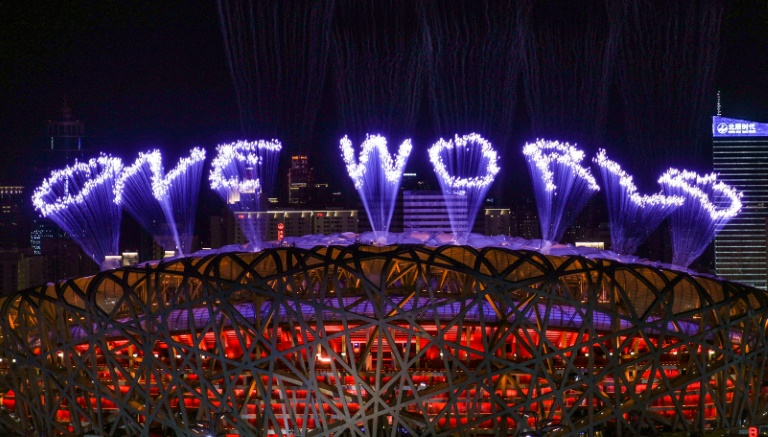
Echoing that theme, fireworks lit up the night sky at the ceremony, spelling out “ONE WORLD”.

– Valieva’s case dominated –

Gu, the 18-year-old who was born in California but switched to China in 2019, gave the hosts a significant medal bump, helping them finish third in the medals table with nine golds.

That was easily China’s best performance at a Winter Games, a place ahead of chief geopolitical rival the United States, who claimed eight golds.

For the second Games in a row, Norway topped the medals table, with 16 golds, mainly thanks to their peerless cross-country skiers. Germany were second on 12.

A new men’s figure skating champion emerged in 22-year-old Nathan Chen of the United States, who dethroned two-time Olympic champion Yuzuru Hanyu, in what could be the Japanese legend’s final Games appearance. 

Shaun White, the American who has defined snowboarding, bowed out after finishing without a medal. The 35-year-old three-time Olympic champion called the sport “the love of my life”.

There was bitter disappointment for his fellow American and one of the biggest names of the Games, the alpine skier Mikaela Shiffrin, who also went home empty-handed.

But it was Valieva’s story that dominated the Games, catapulting the teenage skater to the forefront of yet another Russian doping controversy to mar an Olympics.

After becoming the first woman in history to land a quadruple jump in Olympic competition to help Russia win the team event, it was revealed Valieva had tested positive for trimetazidine, a drug used to treat angina but which is banned for athletes because it can boost endurance.

To fury from the US team and others, the Court of Arbitration for Sport allowed her to continue competing at the Games, citing her young age, though without clearing her of doping.

In the final, Valieva fell several times, to audible gasps from the crowd, and was given a cold reception from her coach Eteri Tutberidze as she left the rink. 

Bach called that reaction “chilling” and ordered the young skater’s coaches and advisors be investigated.

Valieva’s doping case looks certain to drag on for months.

For the first time in Olympic history, the IOC ruled that the skating team medals cannot be awarded until her case is settled.

Ice skating’s governing body meanwhile said it would consider a proposal to raise the minimum competition age to 17.

– Rights protests muted –

While a Covid outbreak never materialised, some athletes did have the Olympics ruined by the virus and the pandemic was never far away — Russia and Canada’s women ice hockey teams played each other wearing medical masks after the results of their PCR tests failed to arrive in time.

Concerns about human rights had dominated the build-up, with the United States leading a diplomatic boycott by its closest allies over China’s rights record, especially the fate of the Muslim Uyghur minority in Xinjiang. 

China warned in the fraught lead-up that foreign athletes criticising the authorities could face consequences, but any protests against the hosts were extremely muted.

Brazil storm death toll rises to 165

The death toll from torrential rains that triggered flash floods and landslides in the scenic Brazilian city of Petropolis has risen to 165, authorities said Sunday, as more violent storms killed two people in another region nearby.

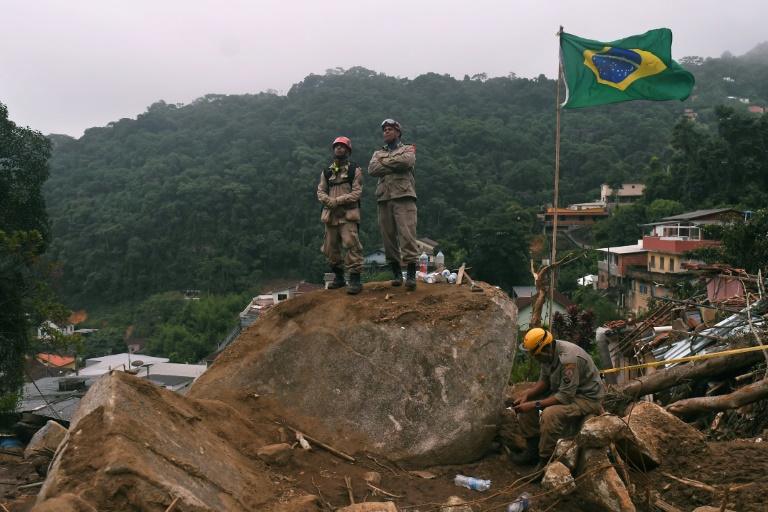
Rescue workers and residents searching for their missing relatives continued digging through mountains of mud and rubble in Petropolis, which President Jair Bolsonaro said Friday looked like it had been through a “war.”

It is unclear how high the steadily rising death toll will go. It is unlikely any more survivors will be found beneath the wreckage, authorities say.

The dead include at least 28 children, police said.

Weather chaos continued to batter Brazil as more violent rains lashed the southeastern state of Espirito Santo Sunday.

The new storms killed at least two people, said emergency officials in Espirito Santo, which borders Rio de Janeiro state, where Petropolis is located.

One person was crushed by a collapsing wall and killed in the city of Alegre, and another swept away trying to retrieve a car from severe flooding in the city of Nova Venecia, officials said.

The storms forced more than 1,200 people to evacuate their homes and destroyed another 43 people’s houses, they said.

They are the latest in a series of deadly storms to hit Brazil, which experts say are made worse by climate change.

In the past three months, at least 219 people have died in severe rainstorms, mainly in the southeastern state of Sao Paulo and the northeastern state of Bahia, as well as Petropolis and now Espirito Santo.

Pope Francis sent his latest message of condolences Sunday following his Angelus prayer at Saint Peter’s Square in the Vatican.

“I express my closeness to those people hit in previous days by natural calamities,” he said, mentioning “devastated” Petropolis as well as Madagascar, hit recently by deadly cyclones.

“Lord, welcome the dead in peace, comfort the family members and support those who offer aid,” he said.

– ‘Mega clean-up’ –

The storm turned streets in Petropolis into violent rivers that swept away trees, cars and buses, and triggered deadly landslides in poor hillside neighborhoods that ring the city of 300,000 people.

It dumped a month’s worth of rain in several hours on the picturesque tourist town, which was the 19th-century summer capital of the Brazilian empire.

The city held what it called a “mega clean-up operation” Sunday, aided by 370 sanitation workers sent in as reinforcements from the nearby cities of Rio de Janeiro and Niteroi.

The mayor’s office urged residents to stay home except in case of “extreme necessity” to let clean-up crews clear the piles of muck and debris still clogging streets.

Authorities have so far recovered more than 300 cars that were “strewn around the city, blocking streets and sidewalks or stuck in rivers,” they said.

“We need our streets clear so we can speed up the job of getting our city back on its feet,” Mayor Rubens Bomtempo said in a statement.

There is no word on when those who lost their homes or had to evacuate will be able to return to the hardest-hit areas, if at all.

At least 856 people are being housed in emergency shelters, according to officials.

A steady stream of funerals for victims meanwhile continued at the city’s main cemetery, where the local government brought in extra grave-diggers as reinforcements.

Brazil storm death toll rises to 165

The death toll from torrential rains that triggered flash floods and landslides in the scenic Brazilian city of Petropolis has risen to 165, authorities said Sunday, as more violent storms killed two people in another region nearby.

Rescue workers and residents searching for their missing relatives continued digging through mountains of mud and rubble in Petropolis, which President Jair Bolsonaro said Friday looked like it had been through a “war.”

It is unclear how high the steadily rising death toll will go. It is unlikely any more survivors will be found beneath the wreckage, authorities say.

The dead include at least 28 children, police said.

Weather chaos continued to batter Brazil as more violent rains lashed the southeastern state of Espirito Santo Sunday.

The new storms killed at least two people, said emergency officials in Espirito Santo, which borders Rio de Janeiro state, where Petropolis is located.

One person was crushed by a collapsing wall and killed in the city of Alegre, and another swept away trying to retrieve a car from severe flooding in the city of Nova Venecia, officials said.

The storms forced more than 1,200 people to evacuate their homes and destroyed another 43 people’s houses, they said.

They are the latest in a series of deadly storms to hit Brazil, which experts say are made worse by climate change.

In the past three months, at least 219 people have died in severe rainstorms, mainly in the southeastern state of Sao Paulo and the northeastern state of Bahia, as well as Petropolis and now Espirito Santo.

Pope Francis sent his latest message of condolences Sunday following his Angelus prayer at Saint Peter’s Square in the Vatican.

“I express my closeness to those people hit in previous days by natural calamities,” he said, mentioning “devastated” Petropolis as well as Madagascar, hit recently by deadly cyclones.

“Lord, welcome the dead in peace, comfort the family members and support those who offer aid,” he said.

– ‘Mega clean-up’ –

The storm turned streets in Petropolis into violent rivers that swept away trees, cars and buses, and triggered deadly landslides in poor hillside neighborhoods that ring the city of 300,000 people.

It dumped a month’s worth of rain in several hours on the picturesque tourist town, which was the 19th-century summer capital of the Brazilian empire.

The city held what it called a “mega clean-up operation” Sunday, aided by 370 sanitation workers sent in as reinforcements from the nearby cities of Rio de Janeiro and Niteroi.

The mayor’s office urged residents to stay home except in case of “extreme necessity” to let clean-up crews clear the piles of muck and debris still clogging streets.

Authorities have so far recovered more than 300 cars that were “strewn around the city, blocking streets and sidewalks or stuck in rivers,” they said.

“We need our streets clear so we can speed up the job of getting our city back on its feet,” Mayor Rubens Bomtempo said in a statement.

There is no word on when those who lost their homes or had to evacuate will be able to return to the hardest-hit areas, if at all.

At least 856 people are being housed in emergency shelters, according to officials.

A steady stream of funerals for victims meanwhile continued at the city’s main cemetery, where the local government brought in extra grave-diggers as reinforcements.

Myanmar to contest ICJ Rohingya case, without Suu Kyi

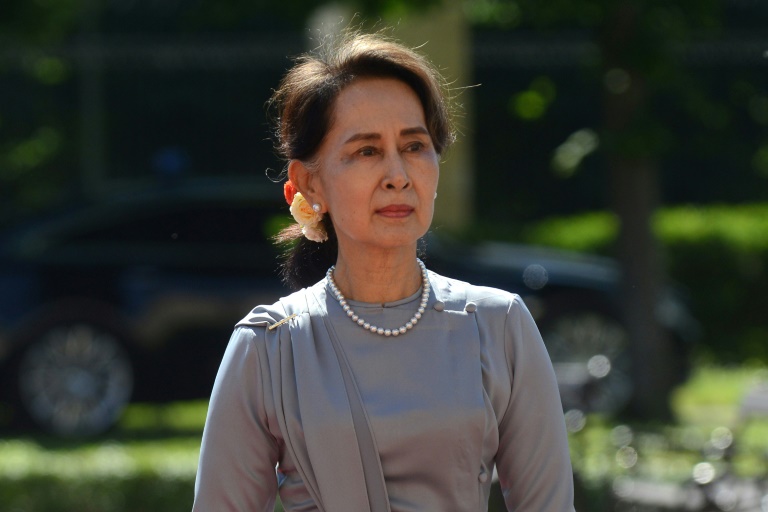
Myanmar’s junta is set to replace Aung San Suu Kyi at the UN’s top court Monday as it seeks to dismiss a case over the alleged genocide of Rohingya Muslims.

Suu Kyi personally presented Myanmar’s arguments at the International Court of Justice (ICJ) when the case was first heard in December 2019, but was ousted as civilian leader in a military coup last year.

The Nobel peace laureate, who faced criticism from rights groups for her involvement in the case, is now under house arrest and trial by the same generals she defended in The Hague.

In its “preliminary objections” on Monday, Myanmar will argue that the court has no jurisdiction over the case, and must throw it out before it moves on to substantive hearings.

Local Myanmar media said the junta has a new delegation led by Ko Ko Hlaing, international cooperation minister, and Thida Oo, attorney general, who will attend virtually. 

Both have been hit with US sanctions over the coup.

The case brought by the mainly Muslim African nation of The Gambia accuses predominantly Buddhist Myanmar of genocide against the Rohingya minority over a bloody 2017 military crackdown.

The ICJ made a provisional order in January 2020 that Myanmar must take “all measures” to prevent the alleged genocide of the Rohingya while the years-long proceedings are underway.

– Bloody crackdown –

Gambia will make its counter-arguments on Wednesday.

Around 850,000 Rohingya are languishing in camps in neighbouring Bangladesh while another 600,000 Rohingya remain in Myanmar’s southwestern Rakhine state. 

The ICJ was set up after World War II to rule on disputes between UN member states. Its judgments are binding but it has no real means to enforce them.

The Rohingya case at the ICJ has been complicated by the coup that ousted Suu Kyi and her civilian government, and triggered mass protests and a bloody military crackdown. More than 1,500 civilians have been killed, according to a local monitoring group.

Suu Kyi now faces trial herself in Myanmar on a raft of charges that could see her jailed for more than 150 years.

Ahead of the hearing, the shadow “National Unity Government” dominated by lawmakers from Suu Kyi’s ousted party said it, not the junta, “is the proper representative of Myanmar at the ICJ in the case”.

It also rejects Myanmar’s preliminary objections, saying the hearings for these should be cancelled and the court should quickly get down to the hearing of the substantive case.

The NUG holds no territory and has not been recognised by any foreign government, and has been declared a “terrorist” organisation by the junta.

The Gambia accuses Myanmar of breaching the 1948 UN genocide convention.

Its case is backed by the 57-nation Organisation of Islamic Cooperation, Canada and the Netherlands.

burs-dk/yad

Algeria's 60 years of complex relations with former occupier France

In the 60 years since Algeria won independence from France, it has gone through multiple crises with its former occupier, often fuelled by domestic politics.

Yet the two sides had surprisingly good relations for the first four decades, and it was only in the 1990s that things started to fall apart, experts say.

“Generally, despite appearances and criticism, there has been a stable, very balanced relationship,” said Luis Martinez, a Maghreb researcher at Sciences Po university in Paris.

That is despite the devastation caused by the eight-year war of independence that finally led to the signing of the Evian accords on March 18, 1962, ending the conflict.

French historians say half a million civilians and combatants died — 400,000 of them Algerian — while the Algerian authorities insist 1.5 million were killed.

Under French General Charles de Gaulle, whose administration signed the accords, and his successor Georges Pompidou, Paris had good relations with Algiers.

The same was true of the administration of Francois Mitterrand, even though he had been interior minister when Algeria’s armed independence struggle began in 1954 and remained opposed to the country’s independence.

“Mitterrand was surrounded by Socialist Party people, who were all pro-FLN,” said historian Pierre Vermeren, referring to the National Liberation Front, which led the revolt and has dominated Algerian politics ever since.

“(Mitterrand) was able to take a back seat” and let others deal with Algeria, said Vermeren, a professor at the Sorbonne University.

France was allowed to continue its nuclear tests in the Algerian Sahara until 1967, and de Gaulle managed to negotiate a secret deal with the new Algerian state to allow for chemical weapons tests until 1978.

But in 1992, Paris raised hackles by criticising Algiers for suspending elections, in which Islamist parties had won the first round.

Algeria withdrew its ambassador in response.

The polls’ cancellation sparked another decade of devastating conflict in the North African country, until Abdelaziz Bouteflika, who rose to the presidency in 1999, offered an amnesty that paved the way for peace.

Despite being close to France, Bouteflika made use of anti-French discourse, primarily for domestic consumption, Vermeren said.

“To win back control of the ideological and political sphere after the civil war, (the Algerian leadership) ‘forgot’ that France had helped them fight the Islamists,” he said.

“They went back to their traditional enemy.”

– ‘Good ties in secret’ –

Under Bouteflika, Algerian leaders used ever-stronger language, accusing France of “genocide” during its more than 130-year occupation of Algeria.

Then, in 2019, a vast protest movement toppled the autocratic leader after two decades in power — but the new regime has kept up the anti-French discourse.

Observers say however that cooperation behind closed doors has been surprisingly close.

In 2013, Algeria allowed French forces to use its airspace to reach Mali, where they were battling jihadists.

“French-Algerian relations are good when they’re in secret. They’re more hostile when they’re in public,” said Naoufel Brahimi El Mili, who has written a book on 60 years of “secret stories” between the two countries.

When Emmanuel Macron became president, he had good relations with Algeria.

Visiting Algiers during his campaign in February 2017, he described colonisation as a “crime against humanity”.

After his election, he made gestures aimed at healing past wounds on both sides of the Mediterranean.

But he refused to apologise for colonialism, a highly sensitive topic in France, which for decades saw Algeria as an integral part of French territory and where far-right discourse has been escalating.

Comments reported last October dampened hopes around reconciliation.

Macron accused Algeria’s “political-military system” of rewriting history and fomenting “hatred towards France”.

In remarks to descendants of independence fighters, reported by Le Monde, he also questioned whether Algeria had existed as a nation before the French invasion in the 1800s.

Once again, Algeria withdrew its ambassador.

– ‘Algeria votes Macron’ –

Now, weeks ahead of the French presidential election in April, relations appear to be looking up again.

Millions of French citizens of Algerian origin and descendants of Europeans who left after independence are among those casting votes.

“Algeria will vote for Macron,” said author El Mili. “Algerians are convinced that a Macron II will be bolder.”

Xavier Driencourt, a former French ambassador to Algeria, shared that view.

“They don’t want (candidate) Valerie Pecresse who has a fairly right-wing tone, and definitely not (Eric) Zemmour or Marine Le Pen,” he said, referring to conservative Pecresse and two far-right presidential hopefuls.

But much remains to be done. In recent years Algeria has diversified its international ties, with China becoming its main trade partner.

Martinez from Sciences Po said Macron’s comments had done a lot of damage.

“They’ll go back to the drawing board, and try to see what they can agree on,” he said.

Former envoy Driencourt said “it takes two sides to have a relationship”.

Would Algeria be interested after the election?

“I’m not very optimistic,” he said.

UK's Johnson to scrap all Covid legal curbs as criticism mounts

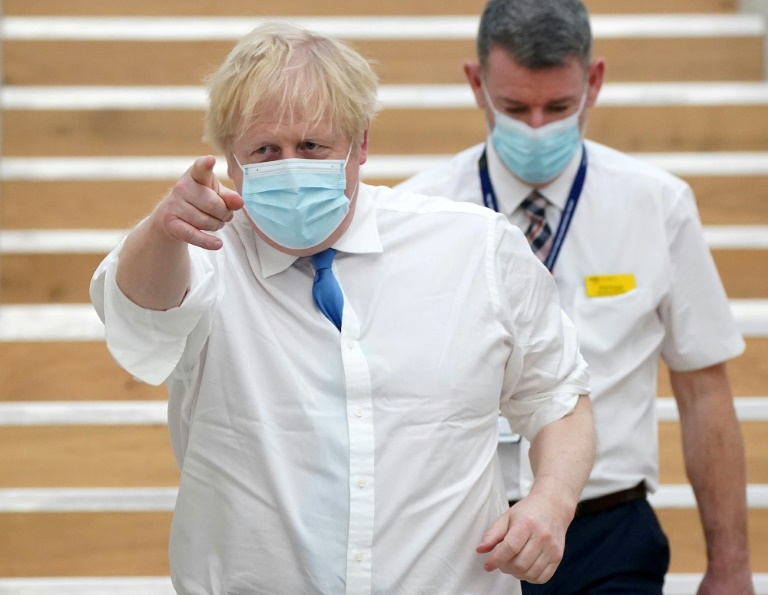
British Prime Minister Boris Johnson is set Monday to announce an end to all pandemic legal curbs in England, insisting it is time to move on despite political opposition and unease from the UN’s health agency.

Two years after Covid-19 sparked the worst health crisis in generations, Johnson will address parliament to outline his plan, pressing ahead despite news on Sunday that Queen Elizabeth II had tested positive for the first time.

However, he stands accused by opposition parties of seeking to distract public attention, with his premiership in peril as police investigate a series of lockdown-breaching parties in Downing Street.

“Today (Monday) will mark a moment of pride after one of the most difficult periods in our country’s history as we begin to learn to live with Covid,” Johnson said in a Downing Street statement.

“The pandemic is not over, but thanks to the incredible vaccine rollout we are now one step closer towards a return to normality and finally giving people back their freedoms while continuing to protect ourselves and others.”

Under the “living with Covid” plan, the government says it intends this week to end a legal requirement for people to self-isolate when infected with the coronavirus.

It says local authorities will be required to manage further outbreaks with pre-existing legal powers, and is expected to phase out free Covid testing for the general public.

The NHS Confederation, which represents senior managers in the state-run National Health Service, said internal polling showed a large majority of its members were opposed to ending self-isolation and free tests.

Matthew Taylor, the confederation’s chief executive, acknowledged that the government’s mass vaccination programme and the emergence of new Covid treatments offered “real hope”.

“But the government cannot wave a magic wand and pretend the threat has disappeared entirely,” he said.

– ‘Very unwise indeed’ –

David Nabarro, a World Health Organization special envoy for Covid, said that scrapping the law on self-isolation was “really very unwise indeed”. 

While the UK has suffered one of the world’s worst per-capita death tolls in the pandemic, it remains a country with “an enviable record for public health expertise”, the British official told BBC radio on Saturday.

“I really do worry that Britain is taking a line that is against the public health consensus — that other countries, other leaders will say if Britain is doing it, why can’t we, and this will create a bit of a domino effect around the world,” Nabarro added.

In the UK’s devolved system, Scotland, Wales and Northern Ireland set their own health policies and are largely staying more cautious than Johnson’s intentions for England.

The opposition Labour party said that ending free testing was akin to substituting “your best defender” with 10 minutes to go of a football match.

“Boris Johnson is declaring victory before the war is over, in an attempt to distract from the police knocking at his door,” Labour’s health spokesman Wes Streeting said.

Downing Street confirmed on Friday that Johnson had submitted a written response to police questions about parties held over the past two years, as detectives probe whether attendees violated strict social distancing and virus prevention rules in place at the time.

He stonewalled questions about the “partygate” affair in a weekend BBC interview, and declined to say if he would resign if he is fined by the police.

But Johnson insisted that despite the apparent party breaches by himself and his staff, the public would still follow guidance to self-isolate when necessary, even without a legal mandate.

“Look at the evidence, look at what the British people have done,” he said, referring to general compliance with the rules since the pandemic struck early in 2020.

Close Bitnami banner
Bitnami