World

Putin, Biden agree in principle to summit as Ukraine tensions soar

Russian President Vladimir Putin and his US counterpart Joe Biden have agreed to a summit — to be held only if Moscow does not invade Ukraine, France announced Monday following a frantic new round of diplomacy to avert an all-out war.

Both leaders have said yes in principle to the summit, proposed by French President Emmanuel Macron, his office said, with the White House confirming Biden’s willingness, though it was notably cautious.

A senior administration official told AFP: “Timing to be determined. Format to be determined so it’s all completely notional.”

The Elysee added that the summit will be expanded to “relevant stakeholders” and that preparations would start between Russia and the United States on Thursday. 

The possible breakthrough came after Washington warned of an imminent invasion and Ukraine and Russia blamed each other for a spike in shellings on the front line separating Kyiv’s forces from Moscow-backed separatists.

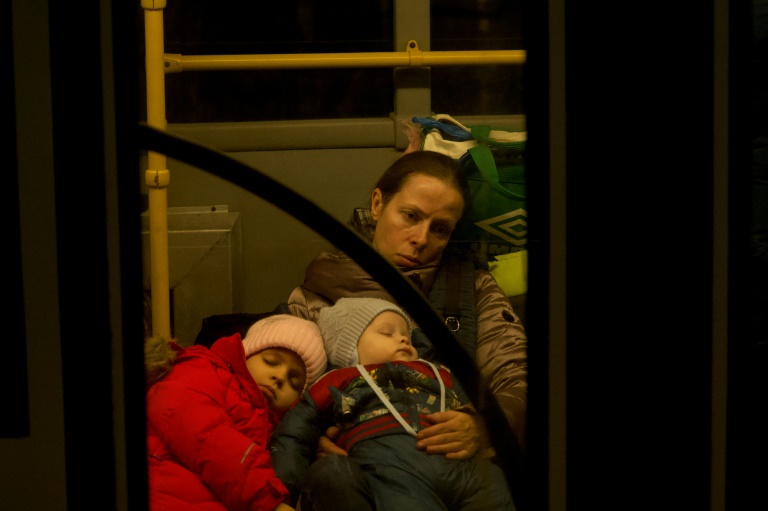
The bombardments have sent Ukrainians fleeing to cellars and other shelters, while some civilians have been evacuated. 

In its own statement, the White House warned that it was still ready “to impose swift and severe consequences” should Russia invade.

“And currently, Russia appears to be continuing preparations for a full-scale assault on Ukraine very soon,” US press secretary Jen Psaki said.

Washington and other Western capitals say that Russia has massed more than 150,000 troops on Ukraine’s borders and is ready to launch a full-scale assault.  

Moscow denies any intention to invade its neighbour, but has demanded that the NATO alliance permanently rule out Ukraine’s bid for membership and called for the withdrawal of Western forces deployed in eastern Europe since the end of the Cold War.

– Macron-Putin calls –

The announcement of the summit came moments after Macron held his second marathon call with Putin of the day. 

During their first, 105-minute discussion, Putin blamed the increase in violence on the front line on “provocations carried out by the Ukrainian security forces”, according to a Kremlin statement.

Putin repeated a call for “the United States and NATO to take Russian demands for security guarantees seriously”.

But Macron’s office also said the two had agreed on “the need to favour a diplomatic solution to the ongoing crisis and to do everything to achieve one”.

The second time the pair spoke, late Sunday evening, it was for an hour, the French presidency said. The announcement of the summit came shortly after.

Earlier, US Secretary of State Antony Blinken said Russia remained “on the brink” of invading Ukraine.

US media cited anonymous sources as saying that Washington received intelligence last week showing the Kremlin has given troops the order to attack. The White House, Pentagon and State Department did not confirm the reports when asked by AFP.

Satellite images from a US company also showed new Russian troop deployments along the border.

Macron also spoke with Ukraine’s Volodymyr Zelensky, who called for an immediate ceasefire and the resumption of talks.

“We stand for intensifying the peace process,” Zelensky tweeted, adding that he had informed Macron about “new provocative shelling” on the front line between Ukrainian forces and Russian-backed rebels.

That volatile front line has seen a “dramatic increase” in ceasefire violations, monitors from the Organization for Security and Cooperation in Europe (OSCE) have said.

Hundreds of artillery and mortar attacks were reported in recent days, in a conflict that has rumbled on for eight years and claimed more than 14,000 lives.

– ‘Shelling again’ –

AFP reporters heard more bombardments overnight close to the front line between government forces and the Moscow-backed rebels who hold parts of the eastern districts of Lugansk and Donetsk.

In Zolote, a frontline village in the Lugansk region, an AFP reporter found residents hiding in an earth-floored cellar roughly furnished when the separatist conflict erupted in 2014.

“These weeks they started shelling harder. Now they are shelling again,” said 33-year-old handyman Oleksiy Kovalenko.

In Moscow meanwhile, the US embassy warned Americans of potential attacks in public places in Russia.

– Screws tighten –

Earlier, fears of escalation mounted after Belarus announced that Russian forces would remain on its soil after Sunday’s scheduled end to joint drills, further tightening the screws on Ukraine.

Moscow had previously said the 30,000 troops it has in Belarus were carrying out readiness drills with its ally, to be finished by Sunday, allowing the Russians to head back to their bases. 

But Belarus said it had decided with Russia to “continue inspections”, citing increased military activity on their shared borders and an alleged “escalation” in east Ukraine. 

– Occupied enclave –

The Moscow-backed separatists have accused Ukraine of planning an offensive into their enclave, despite the huge Russian military build-up on the frontier.

Kyiv and Western capitals ridicule this idea, and accuse Moscow of attempting to provoke Ukraine and of plotting to fabricate incidents to provide a pretext for Russian intervention.

The rebel regions have made similar claims about Ukraine’s forces and ordered a general mobilisation, evacuating civilians into neighbouring Russian territory.

“My husband told me: take the children and go!” 31-year-old nurse Anna Tikhonova told AFP from a camp at Vesselo-Voznessenka, Russia. 

She and her children had fled from Gorlovka, Ukraine, to the sound of gunfire, she said.

burs-st/lb
The shadowy messengers delivering threats to Hong Kong civil society

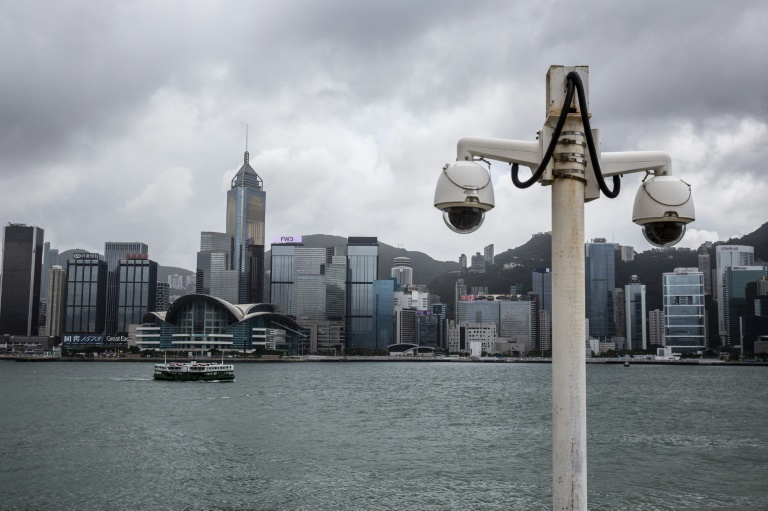
Covert meetings, whispered threats, and mysterious phone calls –- warnings of reprisals by authorities from shadowy messengers are hounding Hong Kong’s civil society as China flattens a pro-democracy movement.

Unlike the Chinese mainland, Hong Kong long hosted a vibrant landscape of citizens’ groups who cultivated rights advocacy, union mobilisation and civil disobedience as a key fabric of the once-outspoken city.

But a national security law imposed by Beijing in 2020 to snuff out dissent has knee-capped the sector, leaving people fearful that the law’s vaguely defined crimes will be used to target their work.

More than 50 civil society groups specialising on issues ranging from labour to education have since announced their closure or been shuttered after national security arrests.

Often the pre-emptive shutdowns came after staff were subjected to a shadowy campaign of threats and intimidation, according to five people AFP spoke to with firsthand knowledge.

The warnings typically arrived via phone calls and messages from so-called “middlemen”, who assumed a conversational tone while revealing knowledge of each recipient’s personal life. Some came face to face.

Veteran NGO worker Mario — using a pseudonym due to fears for his safety — said his colleagues received disconcerting messages from several middlemen last summer. 

“They would tell you different stories but at some point the conversation would reach the same conclusion: you must shut down,” he told AFP.

A month after first contact, Mario’s organisation made the decision to close.

– ‘We respect civil society’ –

Hong Kong’s civil society groups have in recent years been labelled “anti-China elements” by officials and state media.

Beijing has made clear it believes they were a key part of democracy protests that exploded in 2019 with huge rallies and frequent clashes with police. 

The national security law’s vague language, combined with the middlemen’s warnings, suddenly made the threat of lengthy jail terms very real for people like Mario.

“Every normal thing civil society did in the past three decades is now subject to political reprisal,” he said.

Shuttered organisations range from the city’s largest trade union to Amnesty International, as well as the Hong Kong Alliance — which used to organise the annual vigil remembering victims of China’s Tiananmen Square crackdown in 1989.

Hong Kong’s leader Carrie Lam has repeatedly denied that a deliberate campaign targeting organisations is taking place, insisting “we respect civil society”.

China’s ruling Communist Party and its Liaison Office in Hong Kong have openly accused some groups of violating the law, calling the collapse of these organisations “a choice of their own making”.

Both China’s Public Security Ministry and its Hong Kong and Macau Affairs Office did not respond to requests for comment from AFP.

The city’s Security Bureau and the Committee for Safeguarding National Security also declined to comment on what they called “allegations by individuals”.

– New sheriff in town –

Under a “One Country, Two Systems” principle that Beijing agreed to before the 1997 handover by Britain, Hong Kong was allowed to retain key freedoms and autonomy for 50 years.

These included the city being left to police itself using its own laws.

The national security law changed all that, toppling the legal firewall that existed between the financial hub and Beijing.

Among the legislation’s many precedent-setting provisions was a clause empowering the mainland’s security apparatus to operate openly in Hong Kong.

Days after the law’s enactment, mainland security officials requisitioned a hotel for their staff — unbound by local laws — as they conducted investigations on perceived threats to China.

The middlemen are regarded as an extension of this new sheriff in town, according to two sources who told AFP they had been contacted directly.

Both described similar face-to-face meetings but asked for key details to be omitted to maintain anonymity. 

The meetings were held in a pre-booked private room at public businesses and featured a Cantonese-speaking man claiming to be a mainland security agent. 

The conversations stayed largely polite but could flip — with one source saying the agent he met sounded at times “as if he was interrogating me”.

Another said the middleman asked what he thought about disbanding his group, citing various possible security law breaches. 

“At first I thought it would be silly to disband when we didn’t know what offences we have committed,” he told AFP. 

“But when he could name a very specific charge, we started to worry.”

The messengers possessed personal information, both recalled, dropping details of their relatives and daily habits into conversation.

AFP was not able to independently verify the sources’ accounts.

– ‘Approach of intimidation’ –

The use of middlemen to channel information and deliver political messages is not new. 

Beijing’s presence in Hong Kong is maintained through the Liaison Office, which has played an increasingly prominent advisory role in recent years — at times calling in local establishment politicians to be briefed by Chinese officials.

For opposition figures, Beijing preferred using middlemen, according to Ted Hui, a former opposition lawmaker now in Australia.

Such meetings were commonplace — mainly as intelligence-gathering for authorities’ decisions — until one year before the 2019 protests, he said.

“But after the security law came in, it became an approach of intimidation… So under the table, they can send those middlemen to say things the government cannot openly say.”

More than 160 people have been arrested under the national security law so far — most of them opposition politicians, journalists and rights workers.

Against the backdrop of these detentions, the slow-burn whisper campaign has been an effective tool to shut down organisations critical of the government.

“We are so inexperienced that many of us decided to disband under these threats,” said Connie, a rights worker who said she received a call from a stranger giving her a deadline to quit. 

Oliver, another rights worker, said he got a text message from someone posing as a “friend” warning he could be arrested.

With so many other groups shuttering and new arrests each month, Oliver felt compelled to take the threat seriously and decided to fold. 

“If all those big groups… were not spared, how could you be?”

'Fortress Australia' re-opens to tourists after two-year Covid closure

Australia reopened its borders to vaccinated tourists Monday, nearly two years after the continent nation imposed some of the world’s strictest Covid-19 travel restrictions.

The country closed its borders to almost everyone except citizens and residents in March 2020 in an attempt to slow surging Covid-19 case numbers.

The travel ban — which also barred citizens from going overseas without an exemption and imposed a strict cap on international arrivals — earned the country the nickname “Fortress Australia”.

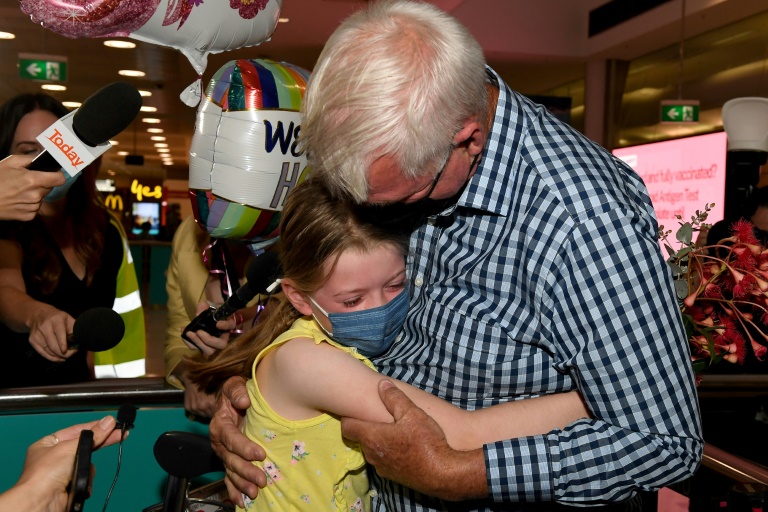
There were jubilant scenes at the country’s two major international airports in Sydney and Melbourne Monday as family and friends finally embraced at arrivals after years apart.

Bernie Edmonds was emotional as he hugged his eight-year-old granddaughter, Charlotte, who had just landed in Sydney.

“It’s great to have her back,” he said. “She’s got to go again but we’ll get her back again.”

Fellow Sydneysider Jody Tuchin was excited to pick up her best friend, who she had not seen since 2018.

“He made it back just in time for my wedding in four days,” she told AFP. 

Meanwhile, Qantas pilot Paul Grant said it was “nice to have passengers back on again”.

A Qantas flight from Los Angeles was the first to touch down in Sydney at 6:20 am (1920 GMT) followed by arrivals from Tokyo, Vancouver and Singapore.

“It’s fair to say we’ve all been waiting a long time to welcome visitors back to Australia,” Qantas chief executive Alan Joyce said.

The national carrier expects to bring more than 14,000 passengers into Australia this week — the start of what many believe will be a long, slow recovery for a tourism sector devastated by the pandemic.

“I think we’re going to see a very, very strong rebound,” Tourism Minister Dan Tehan said at Sydney airport, wearing a t-shirt with the words: “Welcome Back”.

Attracting tourists from China, previously Australia’s biggest market, would be difficult while Beijing enforces a zero-Covid policy, Tehan admitted. 

“But as soon as that changes, Tourism Australia have been doing a lot of work to make sure that we will be ready to encourage those Chinese visitors to come.”

The Australian government has launched a AUS$40 million ($28.7 million) advertising campaign to lure tourists back, but only 56 international flights are scheduled to land in Australia in the 24 hours after the re-opening — far below pre-pandemic levels. 

Prime Minister Scott Morrison said he had “no doubt” traveller numbers will scale up in time.

– ‘Fortress Australia’ –

Every month under “Fortress Australia” has cost businesses an estimated AUS$3.6 billion, according to the Australian Chamber of Commerce and Industry, with tourism particularly hard hit.

Tony Walker, managing director of Quicksilver Group, which operates cruises, diving excursions and resorts across the Great Barrier Reef, told AFP he was “very excited about being able to re-open”.

International tourists “make up around 70 percent” of business for tourism operators on the reef, Walker said, making the two-year border closure “incredibly difficult”.

During the pandemic, his company had to reduce its employees from 650 to the 300 it has today.

Key to Australia’s reopening is a government requirement that all overseas visitors must be fully vaccinated.

At Sydney Airport, American tourist Robert Landis said this had not dissuaded him from travelling Down Under.

“I’ve just been looking for any opportunity to get down here,” he said.

However, the Australian Tourism Export Council warned this week that “there are worrying signs consumers are wary of travelling” to Australia, with “confusion over our various state travel restrictions and concern about snap border closures” a key issue.

– No west just yet –

Western Australia will not re-open to international travellers on Monday, holding off until March 3.

Until recently, the state had pursued a strict Covid-zero policy, cutting itself off from the rest of the country.

The decision sparked lawsuits — and the observation that it was easier for Australians to travel to Paris than Perth — but proved popular with West Australians.

'Swissleaks' investigation targets Credit Suisse bank

Credit Suisse bank, still reeling from losing billions of dollars last year, faced a fresh challenge Sunday: allegations from an international investigation that it had handled dirty money for decades.

A cross-border media investigation broke Sunday claiming that Switzerland’s second-largest bank had held tens of billions of dollars of ill-gotten funds, claims based on an insider’s massive data leak.

Credit Suisse rejected the “allegations and insinuations” in a statement Sunday, saying that many of the issues raised were historical, some dating back as far as the 1940s.

The investigation, coordinated by the Organized Crime and Corruption Reporting Project (OCCRP), unites 47 different media outlets worldwide including France’s Le Monde and The Guardian in Britain.

This latest project, dubbed “SwissLeaks” by the OCCRP, arose out of a leak of data to Germany’s Suddeutsche Zeitung newspapers a little over a year ago.

Le Monde newspaper said the investigation showed that Credit Suisse had flouted international banking rules by holding funds linked to crime and corruption over several decades.

The leak included information on more than 18,000 bank accounts dating back to the 1940s and up to the 2010s belonging to 37,000 individuals or companies, said the OCCRP.

It was the largest leak ever from a major Swiss bank, it added.

– ‘Tendentious interpretations’ –

The bank, in its statement Sunday, said: “Credit Suisse strongly rejects the allegations and insinuations about the bank’s purported business practices.

“The matters presented are predominantly historical, in some cases dating back as far as the 1940s, and the accounts of these matters are based on partial, inaccurate, or selective information taken out of context, resulting in tendentious interpretations of the bank’s business conduct.”

About 90 percent of the accounts reviewed were closed — or were in the process of being closed — before the press approached bank, it added. And more than 60 percent of them had been closed before 2015.

The OCCRP, in a statement on its website, said: “We believe the dozens of examples we have cited raise serious questions about Credit Suisse’s effectiveness and commitment to meeting its responsibilities.”

It said the investigation had found dozens of “dubious characters” in the data.

They included a Yemeni spy chief implicated in torture, the sons of an Azerbaijani strongman, a Serbian drug lord, and bureaucrats accused of looting Venezuela’s oil wealth.

The sums identified in the leaked accounts amount to more than $100 billion, (88 billion euros), said Le Monde.

They involve mainly developing countries in Africa, the Middle East, Asia and South America. Only one percent of the accounts concerned clients based in western Europe.

– A series of setbacks –

The international investigation is the latest in a series of setbacks that Credit Suisse has suffered recently.

In March 2021, the bank was hit by the collapse of Greensill Capital in which it had committed some $10 billion dollars through four funds. The implosion of the US fund Archegos cost it more than $5 billion.

And in Switzerland, a former Credit Suisse employee is among the defendants in a major corruption trial that has just started involving alleged money laundering and organised crime in Bulgaria. The bank has said it will “defend itself vigorously in court”.

News media involved in the SwissLeaks investigation include The New York Times, Italy’s La Stampa, Africa Uncensored in Kenya and Argentina’s La Nacion.

Police reclaim Canada capital after trucker siege ends

The last big rigs were towed Sunday out of Canada’s capital, where the streets were quiet for the first time in almost a month after a massive police operation ended a drawn-out siege by protesters opposing Covid health rules.

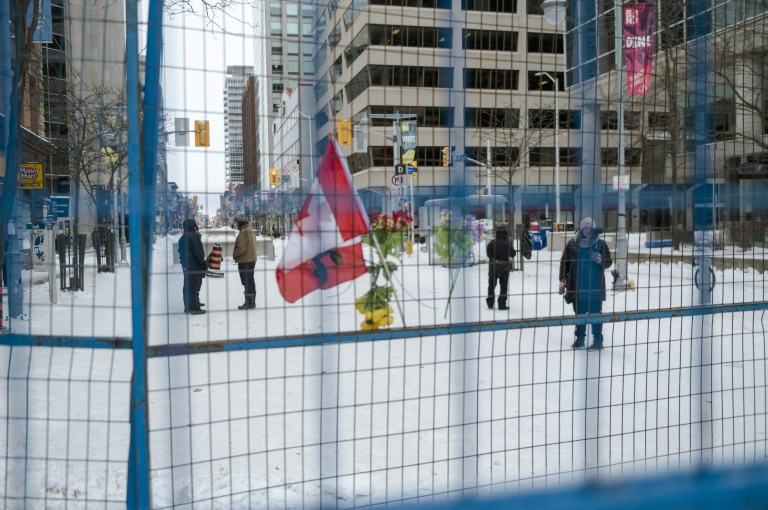
A major clean-up was underway in Ottawa’s snowy downtown, where police in riot gear had faced off with trucker-led demonstrators for two full days, finally driving them out of their protest hub outside parliament.

“I’m very happy to have my city back,” Jeff Lindley, who lives and works downtown, told AFP. “It’s so much better today, calmer and quieter without the ominous presence of all the trucks and protesters.”

Ottawa interim police Chief Steve Bell told a news conference “many of the unlawful protesters are gone.”

But he added, “We’re not done this operation yet,” explaining that authorities were on watch to “make sure that nobody returns to occupy our streets again.”

A few protesters stayed late into Saturday night, singing ’80s protest anthems and setting off fireworks outside a hastily erected four–meter-high (13-foot) security fence surrounding the parliamentary precinct.

But the last gasp protest-turned-street-party fizzled as a deep freeze gripped the city.

– ‘Cops everywhere’ –

Early Sunday, police were manning checkpoints restricting access to a 500-acre (200-hectare) downtown area, while a sizable force remained on standby to defend the ground reclaimed from the truckers.

An AFP journalist saw only a handful of protesters in the area, testing the perimeter.

One who gave his name only as John said he was packing it in after wandering for hours with a Canadian flag in hand.

“It’s pretty locked down, all I see is cops everywhere,” he told AFP.

Ottawa police issued a reminder that the core area remains off-limits except to local residents and workers, and advised any remaining protesters to leave or risk arrest.

Bell said four people had been arrested inside the security zone — for a total of 191, including protest leaders, since police moved in on Friday.

He said 79 vehicles had been towed out of the city center — paralyzed since January 29 when hundreds of trucks, RVs and other vehicles parked there in protest.

Meanwhile, crews took down the last tents, food stands and other makeshift structures erected by demonstrators, and cleared snow from streets in preparation for local businesses to reopen.

For the first time since the big rigs drove into the capital, Ottawa residents were not awakened by the incessant honking that had become a staple of the protests.

Dave Chapin, out and about for the first time in weeks after feeling “hemmed in,” gave a thumbs up to police patrolling his downtown neighborhood.

“People have a right to protest, but at the end of the day after you’ve made your point you go home,” he said. “These guys just stayed — honking and intimidating (locals) and disrupting our lives.”

“These past weeks have been absolute hell,” he added.

– Keep fighting –

Refusing to admit defeat after being dislodged, many protesters told AFP they would keep pressing their cause.

“The protest will go on forever in my heart,” Nicole Craig said as she headed home Saturday evening.

Although pandemic health rules in Canada have eased as case numbers trend downward, protesters continued calling for a full lifting of restrictions, which have been among the world’s strictest.

Prime Minister Justin Trudeau’s government is meanwhile facing a lawsuit from a civil liberties group and pushback from political rivals over the decision to invoke rarely used emergency powers to crack down on the unlawful protests.

This is despite polls showing Canadians, once sympathetic to the trucker-led movement, have turned against them.

Trudeau himself kept his distance as the police operation unfolded, refraining from public comment.

The convoy began a month ago as a protest against mandatory Covid-19 vaccines to cross the US border. It has inspired copycats in other countries, with Washington girding for a possible trucker protest to coincide with next week’s State of the Union address by President Joe Biden.

And it has triggered economically damaging blockades at the US border, including a bridge that is the key transit point between Windsor, Ontario and Detroit, Michigan. Police cleared that blockade a week ago.

Dozens there were arrested, and at other crossings including four people in Coutts, Alberta found with a cache of weapons and charged with conspiracy to murder police officers, and authorities froze Can$32 million ($25 million) in donations and bank accounts linked to the trucker movement.

Brazil storm death toll rises to 152

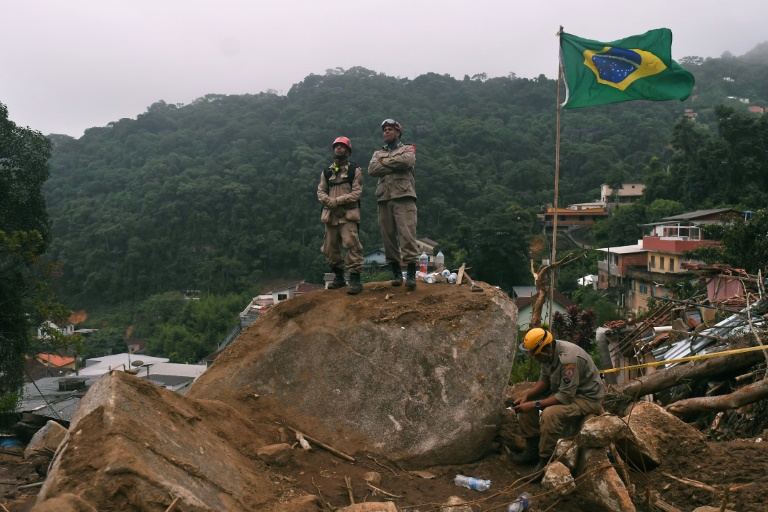
The death toll from torrential rains that triggered flash floods and landslides in the scenic Brazilian city of Petropolis has risen to 152, authorities said Sunday, as the pope sent his condolences.

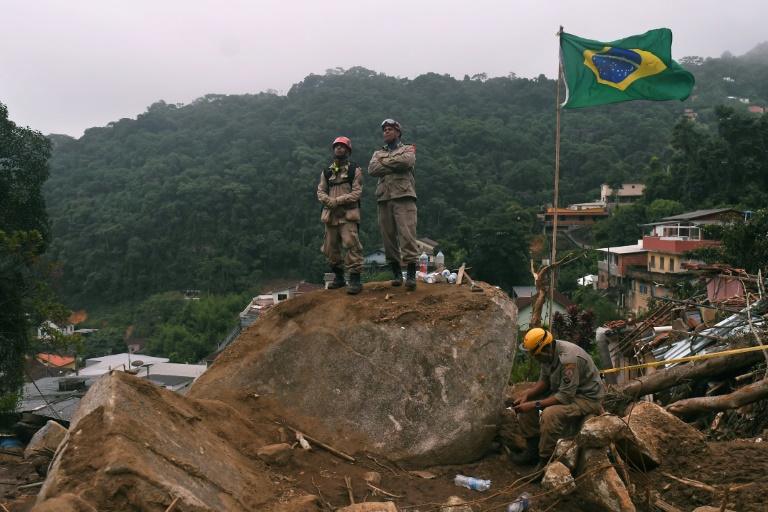
Rescue workers and residents searching for their missing relatives continued digging through mountains of mud and rubble in the southeastern city, which President Jair Bolsonaro said Friday looked like “scenes of war.”

Police said 165 people remain missing after Tuesday’s storm. It is unlikely any more will be found alive beneath the wreckage, authorities say.

It is unclear how high the steadily rising death toll will go.

The number of missing has fallen as more bodies are identified, and as families manage to find relatives alive and well whom they feared lost in the chaos after the storm, police said.

So far, 124 bodies have been identified, including 28 children, they said.

Pope Francis sent his latest message of condolences Sunday following his Angelus prayer at Saint Peter’s Square in the Vatican.

“I express my closeness to those people hit in previous days by natural calamities,” he said, mentioning “devastated” Petropolis as well as Madagascar, hit recently by deadly cyclones.

“Lord, welcome the dead in peace, comfort the family members and support those who offer aid,” he said.

Tuesday’s was the latest in a series of deadly storms to hit Brazil, which experts say are made worse by climate change.

In the past three months, more than 200 people have died in severe rainstorms, mainly in the southeastern state of Sao Paulo and the northeastern state of Bahia, as well as Petropolis.

– ‘Mega clean-up’ –

The storm turned streets in Petropolis into violent rivers that swept away trees, cars and buses, and triggered deadly landslides in poor hillside neighborhoods that ring the city of 300,000 people.

It dumped a month’s worth of rain in several hours on Petropolis, a picturesque tourist town that was the 19th-century summer capital of the Brazilian empire.

The city held what it called a “mega clean-up operation” Sunday, aided by 370 sanitation workers sent in as reinforcements from the nearby cities of Rio de Janeiro and Niteroi.

The mayor’s office urged residents to stay home except in case of “extreme necessity” to let clean-up crews clear the piles of muck and debris still clogging streets.

Authorities have so far recovered more than 300 cars that were “strewn around the city, blocking streets and sidewalks or stuck in rivers,” they said.

“We need our streets clear so we can speed up the job of getting our city back on its feet,” Mayor Rubens Bomtempo said in a statement.

There is no word on when those who lost their homes or had to evacuate will be able to return to the hardest-hit areas, if at all.

At least 856 people are being housed in emergency shelters, according to officials.

A steady stream of burials for victims meanwhile continued at the city’s main cemetary, where the local government brought in extra grave-diggers as reinforcements.

Brazil storm death toll rises to 152

The death toll from torrential rains that triggered flash floods and landslides in the scenic Brazilian city of Petropolis has risen to 152, authorities said Sunday, as the pope sent his condolences.

Rescue workers and residents searching for their missing relatives continued digging through mountains of mud and rubble in the southeastern city, which President Jair Bolsonaro said Friday looked like “scenes of war.”

Police said 165 people remain missing after Tuesday’s storm. It is unlikely any more will be found alive beneath the wreckage, authorities say.

It is unclear how high the steadily rising death toll will go.

The number of missing has fallen as more bodies are identified, and as families manage to find relatives alive and well whom they feared lost in the chaos after the storm, police said.

So far, 124 bodies have been identified, including 28 children, they said.

Pope Francis sent his latest message of condolences Sunday following his Angelus prayer at Saint Peter’s Square in the Vatican.

“I express my closeness to those people hit in previous days by natural calamities,” he said, mentioning “devastated” Petropolis as well as Madagascar, hit recently by deadly cyclones.

“Lord, welcome the dead in peace, comfort the family members and support those who offer aid,” he said.

Tuesday’s was the latest in a series of deadly storms to hit Brazil, which experts say are made worse by climate change.

In the past three months, more than 200 people have died in severe rainstorms, mainly in the southeastern state of Sao Paulo and the northeastern state of Bahia, as well as Petropolis.

– ‘Mega clean-up’ –

The storm turned streets in Petropolis into violent rivers that swept away trees, cars and buses, and triggered deadly landslides in poor hillside neighborhoods that ring the city of 300,000 people.

It dumped a month’s worth of rain in several hours on Petropolis, a picturesque tourist town that was the 19th-century summer capital of the Brazilian empire.

The city held what it called a “mega clean-up operation” Sunday, aided by 370 sanitation workers sent in as reinforcements from the nearby cities of Rio de Janeiro and Niteroi.

The mayor’s office urged residents to stay home except in case of “extreme necessity” to let clean-up crews clear the piles of muck and debris still clogging streets.

Authorities have so far recovered more than 300 cars that were “strewn around the city, blocking streets and sidewalks or stuck in rivers,” they said.

“We need our streets clear so we can speed up the job of getting our city back on its feet,” Mayor Rubens Bomtempo said in a statement.

There is no word on when those who lost their homes or had to evacuate will be able to return to the hardest-hit areas, if at all.

At least 856 people are being housed in emergency shelters, according to officials.

A steady stream of burials for victims meanwhile continued at the city’s main cemetary, where the local government brought in extra grave-diggers as reinforcements.

Police reclaim Canada capital after trucker siege ends

The last big rigs were towed Sunday out of Canada’s capital, where the streets were quiet for the first time in almost a month after a massive police operation ended a drawn-out siege by protesters opposing Covid health rules.

A major cleanup was underway in Ottawa’s snowy downtown, where police in riot gear had faced off with trucker-led demonstrators for two full days, finally driving them out of their protest hub outside parliament.

“I’m very happy to have my city back,” Jeff Lindley, who lives and works downtown, told AFP. “It’s so much better today, calmer and quieter without the ominous presence of all the trucks and protesters.”

A few protesters stayed late into Saturday night, singing ’80s protest anthems and setting off fireworks outside a hastily erected four–meter-high (13-foot) security fence surrounding the parliamentary precinct.

But the last gasp protest-turned-street-party fizzled as a deep freeze gripped the city.

Early Sunday, police were manning checkpoints restricting access to a 500-acre (200-hectare) downtown area, while a sizable force remained on standby to defend the ground reclaimed from the truckers.

An AFP journalist saw only a handful of protesters in the area, testing the perimeter.

One who gave his name only as John  said he was packing it in after wandering for hours with a Canadian flag in hand.

“It’s pretty locked down, all I see is cops everywhere,” he told AFP.

Ottawa police issued a reminder that the core area remains off-limits except to local residents and workers.

Police tweeted midmorning that two people had just been arrested — for a total of 191, including protest leaders, since police moved in on Friday.

They said 57 vehicles had so far been towed out of the city center — paralyzed since January 29 when hundreds of trucks, RVs and other vehicles parked there in protest.

Meanwhile, crews took down the last tents, food stands and other makeshift structures erected by demonstrators, and cleared snow from streets in preparation for local businesses to reopen.

For the first time in weeks, Ottawa residents were not awakened by the incessant honking that had become a staple of the protests.

Dave Chapin, out and about for the first time in weeks after feeling “hemmed in,” gave a thumbs up to police patrolling his downtown neighborhood.

“People have a right to protest, but at the end of the day after you’ve made your point you go home,” he said. “These guys just stayed — honking and intimidating (locals) and disrupting our lives.”

“These past weeks have been absolute hell,” he added.

– Keep fighting –

Refusing to admit defeat after being dislodged, many protesters told AFP they would keep pressing their cause.

“The protest will go on forever in my heart,” Nicole Craig said as she headed home Saturday evening.

Although pandemic health rules in Canada have eased as case numbers trend downward, protesters continued calling for a full lifting of restrictions, which have been among the world’s strictest.

Prime Minister Justin Trudeau’s government is meanwhile facing a lawsuit from a civil liberties group and pushback from political rivals over the decision to invoke rarely used emergency powers to crack down on the unlawful protests.

This is despite polls showing Canadians, once sympathetic to the trucker-led movement, have turned against them.

Trudeau himself kept his distance as the police operation unfolded, refraining from public comment.

The convoy began a month ago as a protest against mandatory Covid-19 vaccines to cross the US border. It has inspired copycats in other countries, with Washington girding for a possible trucker protest to coincide with next week’s State of the Union address by President Joe Biden.

The Canadian convoy triggered economically damaging blockades at the US border, including the bridge that is the key transit point between Windsor, Ontario and Detroit, Michigan. Police cleared that blockade a week ago.

Dozens there were arrested, including four people found with a cache of weapons and charged with conspiracy to murder police officers, and authorities froze Can$32 million ($25 million) in donations and bank accounts linked to the trucker movement.

Queen catches 'mild' Covid soon after 70th anniversary

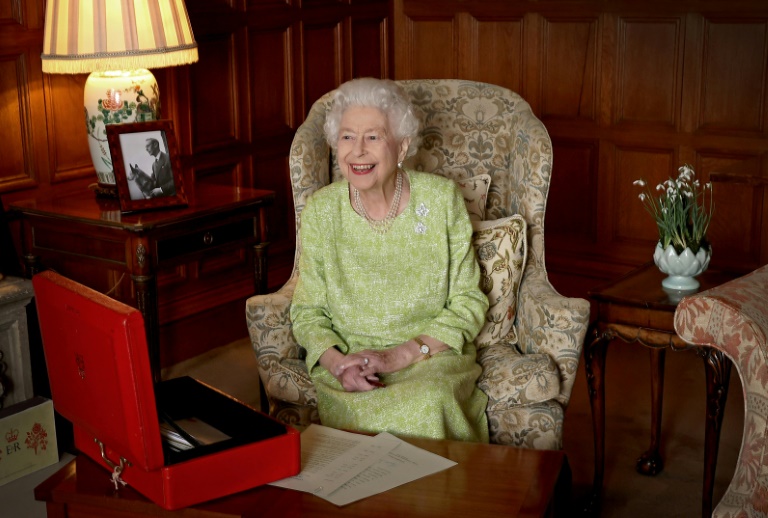
Queen Elizabeth II tested positive on Sunday for Covid-19 but aides said her symptoms were “mild”, as politicians wished Britain’s longest-serving monarch a rapid recovery in her 70th year on the throne.

In what is meant to be a banner year of Platinum Jubilee celebrations, the news comes at a stressful time for the 95-year-old queen with scandals stalking her two eldest sons, Charles and Andrew.

It is also ill-timed for the UK government, in a week when embattled Prime Minister Boris Johnson is expected to declare a victory of sorts over the pandemic by announcing the scrapping of remaining legal restrictions in England.

The queen’s heir Prince Charles, 73, tested positive for a second time for the coronavirus on February 10, two days after meeting his mother at Windsor Castle, west of London.

The queen — who is believed to be triple-vaccinated — resumed in-person audiences at the castle last week, but complained to one attendee of suffering from stiffness and was photographed holding a walking stick.

Announcing her first positive test, a Buckingham Palace statement said: “Her Majesty is experiencing mild cold-like symptoms but expects to continue light duties at Windsor over the coming week.

“She will continue to receive medical attention and will follow all the appropriate guidelines.”

It issued a later statement in which the monarch sent her “warmest congratulations” to the British women’s and men’s curling teams, after they won gold and silver medals respectively at the Beijing Winter Olympics.

“I’m sure I speak for everyone in wishing Her Majesty The Queen a swift recovery from Covid and a rapid return to vibrant good health,” Johnson tweeted, as members of his cabinet sent their own best wishes.

“My thoughts, and the thoughts of millions of Canadians, are with Her Majesty Queen Elizabeth II,” Canada’s Prime Minister Justin Trudeau posted on Twitter, sending wishes for a “fast and full recovery”.

– ‘Symbol of the nation’ –

Among well-wishers gathered outside Buckingham Palace in London, cancer scientist Pasquale Morese said it was “sad” news. 

“She’s a symbol of the nation,” he said. “She’s boosted and everything, so she should be alright, hopefully.”

With the infection coming two months before the queen turns 96, royal expert Richard Fitzwilliams said: “There will be concerns because of her age, no doubt about that.

“But the queen by nature is stoic. I think she’s someone who looks at things in a very, very positive way,” he told AFP, anticipating “reasonably regular updates” from the palace.

Queen Elizabeth has generally enjoyed robust health over her long life, but an unexplained issue saw her spend a night in hospital last October.

Nationwide celebrations to mark her Platinum Jubilee are due to be held in June, after she marked 70 years on the throne on February 6. 

The Covid scare comes with the royal family mired in difficulties, including tensions with Charles’s second son Prince Harry, who now lives in California with his wife Meghan.

– ‘Feisty and determined lady’ –

Prince Andrew settled a sexual assault civil lawsuit in the United States last week, reportedly for £12 million ($16.3 million, 14.3 million euros) — which reports say the queen will partly fund.

Meanwhile police in London are investigating claims that a Saudi tycoon was offered UK honours in return for donations to Charles’s charitable foundation.

The queen, whose husband Prince Philip died aged 99 last April, has spent much of the coronavirus pandemic at Windsor Castle, with a reduced number of household staff dubbed “HMS Bubble”.

Respecting the government’s rules on Covid distancing at the time, she sat alone at Philip’s funeral, while Johnson and his staff are under police investigation for apparent breaches of the rules during lockdown parties in Downing Street.

With the Omicron wave apparently under control, the government is expected to press ahead with an announcement Monday lifting pandemic legislation in England.

The optics have become “a little bit tricky” given the queen’s illness, Conservative MP Caroline Nokes told Times Radio.

But speaking on Sky News, royal commentator Alastair Bruce said the queen “would not want anyone to change any decisions on the basis of her state of health”.

Sudanese man killed in crackdown on anti-coup protests as UN expert arrives

A Sudanese man was shot dead Sunday as security forces cracked down on rallies against last year’s military coup, medics said, as a UN rights expert arrived in the country.

Regular protests have rocked the northeast African country since army chief Abdel Fattah al-Burhan led a military takeover in October, sparking international condemnation.

United Nations human rights expert Adama Dieng is visiting Sudan until Thursday, on a trip initially planned for last month but postponed at the request of Sudanese authorities.

A 51-year-old man was hit Sunday with “a live bullet to the chest”, the Sudanese Doctors’ Committee said, bringing the death toll in a crackdown on anti-coup protests to 82. 

“The martyr was a patient at a hospital in Khartoum North… and went out to get some air after struggling with shortness of breath due to the heavy firing of tear gas which filled the hospital ward,” the committee said, adding that he was then shot dead. 

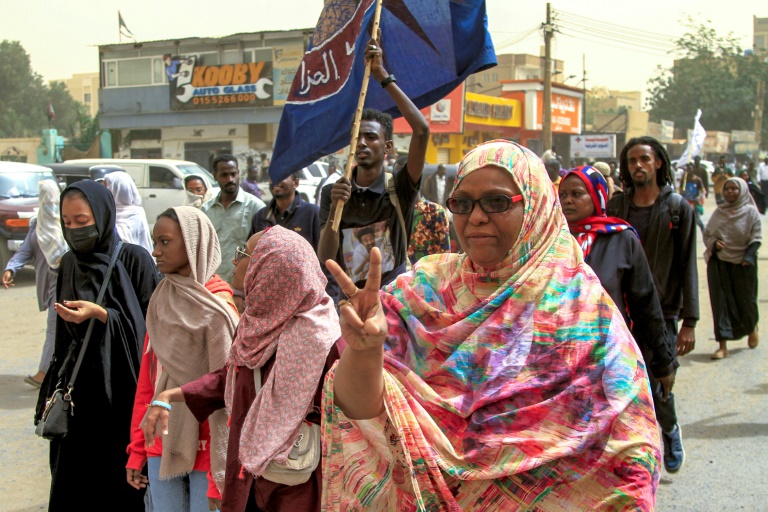
Thousands had rallied in the capital Khartoum on Sunday, carrying Sudanese flags and posters of others killed during demonstrations in recent months, an AFP correspondent said. 

Security forces fired tear gas and wounded several protesters who were heading toward the presidential palace, the correspondent said, while tear gas was also used in nearby Omdurman and North Khartoum. 

“We are ready to protest all year,” one demonstrator, 24-year-old Thoyaba Ahmed, told AFP, while another, Wadah Khaled, said: “We want to rectify our country’s situation to have a good future.”  

“We need to make sacrifices to resolve the country’s issues,” said 25-year-old Arij Salah, another demonstrator. 

The October takeover derailed a transition painstakingly negotiated between military and civilian leaders following the 2019 ouster of president Omar al-Bashir.

While Sudan has repeatedly denied opening fire on protesters, Human Rights Watch has quoted witnesses detailing how the security forces have used both “live ammunition” and fired tear gas canisters “directly” at crowds, a tactic that can be deadly at close quarters.

UN special representative Volker Perthes said on Twitter Sunday that he met with rights expert Dieng on “his first official visit” to Sudan. 

“Dieng will meet with senior Sudanese government officials, representatives of civil society organisations, human rights defenders, heads of UN entities, and diplomats,” the UN Office of the High Commissioner for Human Rights said in a statement this week. 

Separately, dozens rallied outside a court complex in Khartoum to protest against the trial of several Bashir-era figures, an AFP correspondent said.

Among those on trial is former foreign minister Ibrahim Ghandour, who faces charges over plotting a coup in 2020. 

Ghandour’s family said last month that he had begun a hunger strike in prison, along with several ex-regime officials. 

Close Bitnami banner
Bitnami