World

Greek rescuers find first ferry blaze victim

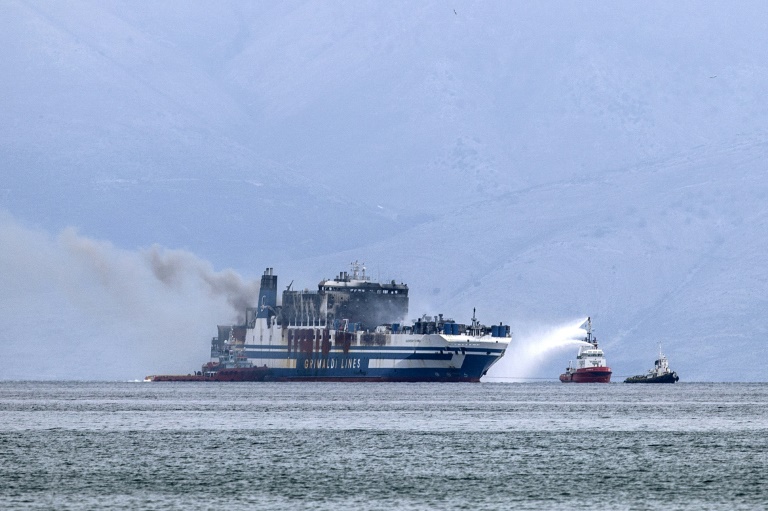
Rescuers searching a burning ferry off the Greek island of Corfu on Sunday recovered the body of a trucker, the first confirmed fatality, as a 21-year-old Belarussian man was found alive three days after the blaze began.

The 58-year-old Greek victim was one of 11 truck drivers — seven Bulgarians, three Greeks and one Turk — who had been unaccounted for on Sunday, three days after the fire struck, the Greek Coastguard told AFP.

Fire chief Dimitris Kontogiannis, who is coordinating the rescue operation, told Alpha tv on Sunday evening that the search for survivors would continue throughout the night. 

On Sunday morning, 50 hours after the fire broke out, a man spotted on the stern of the stricken vessel was rescued alive. 

The ferry was 1.5 miles (about two kilometres) off the northern part of Corfu, the coastguard said.

The smiling Belarussian was taken to Corfu on a coastguard boat wearing flip flops and put in an ambulance, television footage showed.

“I’m fine”, he told journalists before being transported to hospital where he is expected to stay at least until tomorrow. 

“Tell me I’m alive,” the truck driver, had told rescuers, according to the Proto Thema news website.

“I was in my cabin. I went to the lower deck. I heard voices. I did not see others,” the survivor told rescuers and doctors in the hospital where he was treated.

The news of the man’s “miraculous” survival, according to Greek media, had raised hopes further lives might be saved.

“The ship may still have safe parts for the passengers,” Andreas Korikis, who helped with the rescue on Friday told Athens News Agency (ANA).

“As we saw, one of them came out and the hope lives on. The search continues but in some places the access is impossible.” 

According to the fire brigade, at least 40 firemen were deployed in the area on Sunday morning to help with rescue efforts. Ten people now remain missing. 

“The thermal load and the toxicity on the vessel remain high. In some areas, fire is still burning. The operation is really delicate,” shipping deputy minister, Costas Katsafados told Skai.

– ‘Miserable’ conditions –

The blaze broke out on the Italian-flagged Euroferry Olympia late Thursday as it sailed from Igoumenitsa in Greece to Brindisi in Italy, with nearly 300 people aboard.

Rescuers had managed to save 280 passengers on Friday, evacuating them to Corfu.

The man rescued on Sunday was one of those drivers, the coastguard said.

The vessel was officially carrying 239 passengers and 51 crew, as well as 153 trucks and trailers and 32 passenger vehicles, the Grimaldi company has said.  

But the coastguard has said two of those rescued were Afghans not on the manifest, sparking fears that more undocumented passengers could also be missing. 

The missing truckers reportedly slept in their vehicles because cabins on the vessel were overcrowded.

Ilias Gerontidakis, the son of a missing Greek trucker, told the Proto Thema online newspaper the Olympia was “miserable from every point of view”.  

“It had bed bugs, it was dirty, it had no security systems,” he said as he waited at the port for news.

“It had 150 lorries inside. Normally it should have 70 to 75 cabins, but it only has 50. They force us to sleep four people in a cabin”, he said. 

“My father, from what I was told, slept in the truck.”

The vessel owner Grimaldi rejected the accusations, saying in a statement on Sunday that its ships, cabins and public spaces, are “regularly disinfected” and “the inspection of the Greek authorities on February 16, 2022 in the port of Igoumenitsa had satisfying results”. 

It added that its electronic booking system prevents overbooking and that no passenger is allowed on the vehicle decks.

Grimaldi added that “the 77 cabins (308 beds) and the 409 folding seats could easily accommodate the 239 passengers for a journey of nine hours”.

– Agony –

News of the rescue of the Belarussian rippled through the relatives of those still missing who have an agonising wait in the port of Corfu. 

Ert showed emotional scenes of a woman being carried away after fainting while others pleaded with the rescuers to hurry.  

“He is alive, I tell you. He is alive. Do what you can. Please. They will not be able to live any longer…,” Vana Bekiari, the wife of a missing Greek truck driver told ANA. 

The last shipboard fire in the Adriatic occurred in December 2014 on the Italian ferry Norman Atlantic. Thirteen people died in that blaze.
Moscow, Kyiv call for talks amid intense shellfire

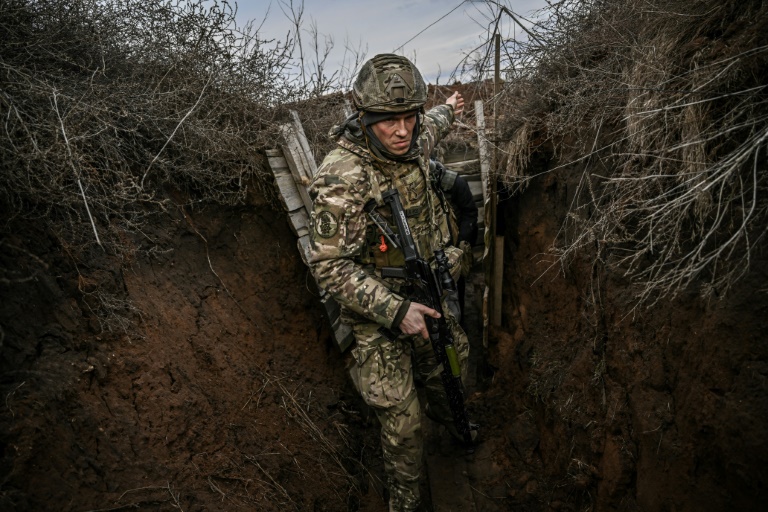
Ukraine and Russia both called Sunday for intensified diplomatic efforts to avert all-out war, but blamed each other for a sharp escalation in shelling on the frontline separating Kyiv’s forces from Moscow-backed separatists.

After separate calls with France’s President Emmanuel Macron, both Russian leader Vladimir Putin and Ukraine’s Volodymyr Zelensky pressed for more talks.

Washington is warning a Russian invasion of Ukraine is imminent, and Macron’s office had dubbed the calls “the last possible and necessary efforts to avoid a major conflict in Ukraine”.

US Secretary of State Antony Blinken said Russia remained “on the brink” of invading Ukraine, but promised that President Joe Biden was ready to talk to Putin and that Washington would seek a diplomatic solution until Russian “tanks are actually rolling”.

During his 105-minute discussion with Macron, Putin said “the cause of the escalation is provocations carried out by the Ukrainian security forces”, according to a Kremlin statement.

Putin repeated a call for “the United States and NATO to take Russian demands for security guarantees seriously”.

But he added that the two leaders “believe it is important to intensify efforts to find solutions through diplomatic means”.

Macron’s office also said the two had agreed on “the need to favour a diplomatic solution to the ongoing crisis and to do everything to achieve one”, adding that both countries’ foreign ministers would meet “in the coming days”.

Macon, Biden, German leader Olaf Scholz and other allied leaders were to hold calls later Sunday, the Elysee said.

Moscow has demanded that the NATO alliance permanently rule out Ukraine’s bid for membership and the withdrawal of Western forces deployed in eastern Europe since the end of the Cold War.    

Zelensky called for an immediate ceasefire and the resumption of talks under the Trilateral Contact Group of Russia, Ukraine and the Organization for Security and Cooperation in Europe (OSCE).

“We stand for intensifying the peace process,” he tweeted, adding that he had informed Macron about “new provocative shelling” on the frontline between Ukrainian forces and Russian-backed rebels.

Following the call, the OSCE said it would hold an extraordinary meeting on Monday to seek ways to de-escalate the situation.

Earlier, fears of escalation mounted after Belarus announced that Russian forces would remain on its soil after Sunday’s scheduled end to joint drills.

Moscow had previously said the 30,000 troops it has in Belarus were carrying out readiness drills with its ally, to be finished by Sunday, allowing the Russians to head back to their bases.

– Screws tighten –

But the Belarus defence ministry said Putin and Belarus leader Alexander Lukashenko had decided to “continue inspections”, citing increased military activity on their shared borders and an alleged “escalation” in east Ukraine. 

The French presidency nevertheless said Putin had once again told Macron that the Russian troops would eventually leave.

The extended drills will be seen as a further tightening of the screws on Ukraine, already facing increased shelling from Russian-backed separatist rebels and a force of what Western capitals says is more than 150,000 Russian personnel on its borders. 

More bombardments were heard by AFP reporters overnight close to the frontline between government forces and the Moscow-backed rebels who hold parts of the districts of Lugansk and Donetsk.

In Zolote, a frontline village in the Lugansk region, an AFP reporter found residents hiding from the shelling in a shelter under a housing block, an earth-floored cellar roughly furnished when the separatist conflict erupted in 2014.

“These weeks they started shelling harder. Now they are shelling again. This shelter, of course, is not equipped, but it saved people in 2014. There is no water here, people bring it with them,” said 33-year-old handyman Oleksiy Kovalenko.

Natalya Zibrova, a 48-year-old teacher, remained in her flat with her daughters, despite the shelling.

“We are all people. We all want to live normally. I want to get up in the morning and think about how I will spend the day. And not to think about whether I and my children will have time to escape,” she said, as shellfire rang out.

– Occupied enclave –

The Moscow-backed separatists have accused Ukraine of planning an offensive into their enclave, despite the huge Russian military build-up on the frontier.

Kyiv and Western capitals ridicule this idea, and accuse Moscow of attempting to provoke Ukraine and of plotting to fabricate incidents to provide a pretext for a Russian intervention.

“Russian military personnel and special services are planning to commit acts of terror in temporarily-occupied Donetsk and Lugansk, killing civilians,” alleged Ukraine’s top general Valeriy Zaluzhniy.

“Our enemy wants to use this as an excuse to blame Ukraine and move in regular soldiers of the Russian armed forces, under the guise of ‘peacekeepers’,” the military chief of staff said.

The rebel regions have made similar claims about Ukraine’s forces and ordered a general mobilisation, while staging an evacuation of civilians into neighbouring Russian territory.

Putin has also stepped up his rhetoric, reiterating demands for written guarantees that NATO roll back deployments in eastern Europe to positions from decades ago.

The volatile front line between Ukraine’s army and the Russian-backed separatists has seen a “dramatic increase” in ceasefire violations, monitors from the OSCE have said.

Hundreds of artillery and mortar attacks were reported in recent days, in a conflict that has rumbled on for eight years and claimed more than 14,000 lives.

burs-dc/zak/har

First body found aboard blazing ferry off Greece

Rescuers searching for missing passengers aboard a ferry ablaze off the Greek island of Corfu for three days, on Sunday recovered the body of a trucker from his charred vehicle, the first confirmed fatality.

The man was one of 11 truck drivers — seven Bulgarians, three Greeks and one Turk — who had been unaccounted for on Sunday, the Greek Coastguard told AFP.  

On Sunday morning, 50 hours after the fire broke out, a 21-year-old man spotted on the stern of the stricken vessel was rescued alive. 

The ferry was 1.5 miles (about two kilometres) off the northern part of Corfu, the coastguard said.

The smiling Belarussian was taken to Corfu on a coastguard boat wearing flip flops and put in an ambulance, television footage showed.

“I’m fine”, he told journalists before being transported to hospital where he is expected to stay at least until tomorrow. 

“Tell me I’m alive,” the truck driver, had told rescuers, according to the Proto Thema news website.

“I was in my cabin. I went to the lower deck. I heard voices. I did not see others,” the survivor told rescuers and doctors in the hospital where he was treated.

The news of the man’s “miraculous” survival, according to Greek media, had raised hopes further lives might be saved.

“The ship may still have safe parts for the passengers,” Andreas Korikis, who helped with the rescue on Friday told Athens News Agency (ANA).

“As we saw, one of them came out and the hope lives on. The search continues but in some places the access is impossible.” 

According to the fire brigade, at least 40 firemen were deployed in the area on Sunday morning to help with rescue efforts. Ten people now remain missing. 

“The thermal load and the toxicity on the vessel remain high. In some areas, fire is still burning. The operation is really delicate,” shipping deputy minister, Costas Katsafados told Skai.

– ‘Miserable’ conditions –

The blaze broke out on the Italian-flagged Euroferry Olympia late Thursday as it sailed from Igoumenitsa in Greece to Brindisi in Italy, with nearly 300 people aboard.

Rescuers had managed to save 280 passengers on Friday, evacuating them to Corfu.

The man rescued on Sunday was one of those drivers, the coastguard said.

The vessel was officially carrying 239 passengers and 51 crew, as well as 153 trucks and trailers and 32 passenger vehicles, the Grimaldi company has said.  

But the coastguard has said two of those rescued were Afghans not on the manifest, sparking fears that more undocumented passengers could also be missing. 

The missing truckers reportedly slept in their vehicles because cabins on the vessel were overcrowded.

Ilias Gerontidakis, the son of a missing Greek trucker, told the Proto Thema online newspaper the Olympia was “miserable from every point of view”.  

“It had bed bugs, it was dirty, it had no security systems,” he said as he waited at the port for news.

“It had 150 lorries inside. Normally it should have 70 to 75 cabins, but it only has 50. They force us to sleep four people in a cabin”, he said. 

“My father, from what I was told, slept in the truck.”

The vessel owner Grimaldi rejected the accusations, saying in a statement on Sunday that its ships, cabins and public spaces, are “regularly disinfected” and “the inspection of the Greek authorities on February 16, 2022 in the port of Igoumenitsa had satisfying results”. 

It added that its electronic booking system prevents overbooking and that no passenger is allowed on the vehicle decks.

Grimaldi added that “the 77 cabins (308 beds) and the 409 folding seats could easily accommodate the 239 passengers for a journey of nine hours”.

– Agony –

News of the rescue of the Belarussian rippled through the relatives of those still missing who have an agonising wait in the port of Corfu. 

Ert showed emotional scenes of a woman being carried away after fainting while others pleaded with the rescuers to hurry.  

“He is alive, I tell you. He is alive. Do what you can. Please. They will not be able to live any longer…,” Vana Bekiari, the wife of a missing Greek truck driver told ANA. 

“There is optimism. Given the fact this man managed to get to the upper deck in these conditions,” coastguard spokesman Nikos Alexiou told Skai television Sunday morning. 

The last shipboard fire in the Adriatic occurred in December 2014 on the Italian ferry Norman Atlantic. Thirteen people died in that blaze.
Queen catches 'mild' Covid soon after 70th anniversary

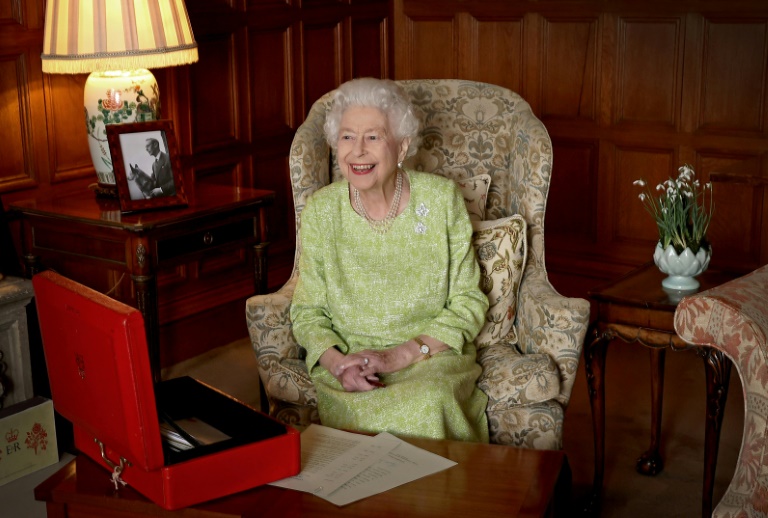
Queen Elizabeth II tested positive on Sunday for Covid-19 but aides said her symptoms were “mild”, as politicians wished Britain’s longest-serving monarch a rapid recovery in her 70th year on the throne.

In what is meant to be a banner year of Platinum Jubilee celebrations, the news comes at a stressful time for the 95-year-old queen with scandals stalking her two eldest sons, Charles and Andrew.

It is also ill-timed for the UK government, in a week when embattled Prime Minister Boris Johnson is expected to declare a victory of sorts over the pandemic by announcing the scrapping of remaining legal restrictions in England.

The queen’s heir Prince Charles, 73, tested positive for a second time for the coronavirus on February 10, two days after meeting his mother at Windsor Castle, west of London.

The queen — who is believed to be triple-vaccinated — resumed in-person audiences at the castle last week, but complained to one attendee of suffering from stiffness and was photographed holding a walking stick.

Announcing her first positive test, a Buckingham Palace statement said: “Her Majesty is experiencing mild cold-like symptoms but expects to continue light duties at Windsor over the coming week.

“She will continue to receive medical attention and will follow all the appropriate guidelines.”

It issued a later statement in which the monarch sent her “warmest congratulations” to the British women’s and men’s curling teams, after they won gold and silver medals respectively at the Beijing Winter Olympics.

“I’m sure I speak for everyone in wishing Her Majesty The Queen a swift recovery from Covid and a rapid return to vibrant good health,” Johnson tweeted, as members of his cabinet sent their own best wishes.

Keir Starmer, leader of the main opposition Labour party, tweeted: “Get well soon, Ma’am.”

– ‘Symbol of the nation’ –

Among well-wishers gathered outside Buckingham Palace in London, cancer scientist Pasquale Morese said it was “sad” news. 

“She’s a symbol of the nation,” he said. “She’s boosted and everything, so she should be alright, hopefully.”

With the infection coming two months before the queen turns 96, royal expert Richard Fitzwilliams said: “There will be concerns because of her age, no doubt about that.

“But the queen by nature is stoic. I think she’s someone who looks at things in a very, very positive way,” he told AFP, anticipating “reasonably regular updates” from the palace.

Queen Elizabeth has generally enjoyed robust health over her long life, but an unexplained issue saw her spend a night in hospital last October.

Nationwide celebrations to mark her Platinum Jubilee are due to be held in June, after she marked 70 years on the throne on February 6. 

The Covid scare comes with the royal family mired in difficulties, including tensions with Charles’s second son Prince Harry, who now lives in California with his wife Meghan.

– ‘Feisty and determined lady’ –

Prince Andrew settled a sexual assault civil lawsuit in the United States last week, reportedly for £12 million ($16.3 million, 14.3 million euros) — which reports say the queen will partly fund.

Meanwhile police in London are investigating claims that a Saudi tycoon was offered UK honours in return for donations to Charles’s charitable foundation.

The queen, whose husband Prince Philip died aged 99 last April, has spent much of the coronavirus pandemic at Windsor Castle, with a reduced number of household staff dubbed “HMS Bubble”.

Respecting the government’s rules on Covid distancing at the time, she sat alone at Philip’s funeral, while Johnson and his staff are under police investigation for apparent breaches of the rules during lockdown parties in Downing Street.

With the Omicron wave apparently under control, the government is expected to press ahead with an announcement Monday lifting pandemic legislation in England.

The optics have become “a little bit tricky” given the queen’s illness, Conservative MP Caroline Nokes told Times Radio.

But speaking on Sky News, royal commentator Alastair Bruce said the queen “would not want anyone to change any decisions on the basis of her state of health”.

“I think for a very feisty and determined lady of her mid-90s, she is more than ready to deal with what she faces,” he added.

Brazil storm death toll rises to 152

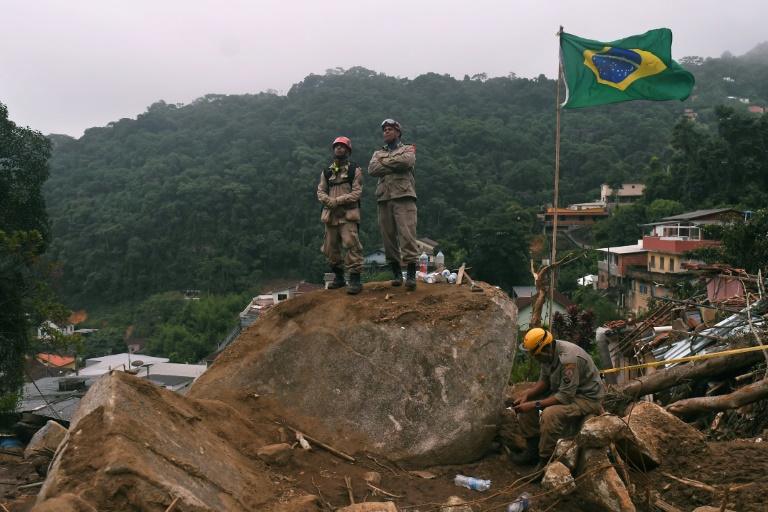
The death toll from torrential rains that triggered flash floods and landslides in the scenic Brazilian city of Petropolis has risen to 152, authorities said Sunday, as the pope sent his condolences.

Rescue workers and residents searching for their missing relatives continued digging through mountains of mud and rubble in the southeastern city, which President Jair Bolsonaro said Friday looked like “scenes of war.”

Police said 165 people remain missing after Tuesday’s storm. It is unlikely any more will be found alive beneath the wreckage, authorities say.

It is unclear how high the steadily rising death toll will go.

The number of missing has fallen as more bodies are identified, and as families manage to find relatives alive and well whom they feared lost in the chaos after the storm, police said.

So far, 124 bodies have been identified, including 28 children, they said.

Pope Francis sent his latest message of condolences Sunday following his Angelus prayer at Saint Peter’s Square in the Vatican.

“I express my closeness to those people hit in previous days by natural calamities,” he said, mentioning “devastated” Petropolis as well as Madagascar, hit recently by deadly cyclones.

“Lord, welcome the dead in peace, comfort the family members and support those who offer aid,” he said.

Tuesday’s was the latest in a series of deadly storms to hit Brazil, which experts say are made worse by climate change.

In the past three months, more than 200 people have died in severe rainstorms, mainly in the southeastern state of Sao Paulo and the northeastern state of Bahia, as well as Petropolis.

The latest storm turned streets in Petropolis into violent rivers that swept away trees, cars and buses, and triggered deadly landslides in poor hillside neighborhoods that ring the city of 300,000 people.

Petropolis sits about 60 kilometers (37 miles) north of Rio de Janeiro.

The city has so far recovered more than 300 cars washed away in the floods that were “strewn around the city, blocking streets and sidewalks or dumped in rivers,” the mayor’s office said.

The storm dumped a month’s worth of rain in several hours on Petropolis, a picturesque tourist town that was the 19th-century summer capital of the Brazilian empire.

Moscow and Kyiv call for talks amid intense shellfire

Ukraine and Russia both called Sunday for intensified diplomatic efforts to avert all-out war, but blamed each other for a sharp escalation in shelling on Kyiv’s frontline with Moscow-backed separatists.

After separate calls with France’s President Emmanuel Macron, both Russian leader Vladimir Putin and Ukraine’s Volodymyr Zelensky pressed for more talks.

Washington is warning a Russian invasion of Ukraine is imminent, and Macron’s office had dubbed the calls “the last possible and necessary efforts to avoid a major conflict in Ukraine”.

US Secretary of State Antony Blinken said Russia remained “on the brink” of invading Ukraine, but promised that President Joe Biden was ready to talk to Putin and that Washington would seek a diplomatic solution until Russian “tanks are actually rolling”.

During his 105-minute discussion with Macron, Putin said “the cause of the escalation is provocations carried out by the Ukrainian security forces,” according to a Kremlin account.

Putin repeated a call for “the United States and NATO to take Russian demands for security guarantees seriously”.

But he added that the two leaders “believe it is important to intensify efforts to find solutions through diplomatic means”.

Macron’s office also said the two had agreed on “the need to favour a diplomatic solution to the ongoing crisis and to do everything to achieve one”, adding that both countries’ foreign ministers would meet “in the coming days”.

Moscow has demanded that the NATO alliance permanently rule out Ukraine’s bid for membership and the withdrawal of Western forces that deployed in eastern Europe since the end of the Cold War.    

Zelensky called for an immediate ceasefire and the resumption of talks under the Trilateral Contact Group of Russia, Ukraine and the Organization for Security and Cooperation in Europe (OSCE).

“We stand for intensifying the peace process,” he tweeted, adding that he had informed Macron about “new provocative shelling” on the frontline between Ukrainian forces and Russian-backed rebels.  

Earlier, fears of escalation mounted after Belarus announced that Russian forces would remain on its soil after Sunday’s scheduled end to joint drills.

Moscow had previously said the 30,000 troops it has in Belarus were carrying out readiness drills with its ally, to be finished by February 20, allowing the Russians to head back to their bases.

– Screws tighten –

But the Belarus defence ministry said Putin and Belarus leader Alexander Lukashenko had decided to “continue inspections”, citing increased military activity on their shared borders and an alleged “escalation” in east Ukraine. 

Amid fears that Russia could use Belarus as a launch-pad for a lightning assault on Kyiv, exiled Belarus opposition leader Svetlana Tikhanovskaya said their extended stay was also a threat to the sovereignty of her own country.  

The extended drills will be seen as a further tightening of the screws on Ukraine, already facing increased shelling from Russian-backed separatist rebels and a force of what Western capitals says is more than 150,000 Russian personnel on its borders.  

More bombardments were heard by AFP reporters overnight close to the frontline between government forces and the Moscow-backed rebels who hold parts of the districts of Lugansk and Donetsk.

In Zolote, a frontline village in the Lugansk region, an AFP reporter found residents hiding from the shelling in a shelter under a housing block, an earth-floored cellar roughly furnished when the separatist conflict erupted in 2014.

“These weeks they started shelling harder. Now they are shelling again. This shelter, of course, is not equipped, but it saved people in 2014. There is no water here, people bring it with them,” said 33-year-old handyman Oleksiy Kovalenko.

Natalya Zibrova, a 48-year-old teacher, remained in her flat with her daughters, despite the shelling.

“We are all people. We all want to live normally. I want to get up in the morning and think about how I will spend the day. And not to think about whether I and my children will have time to escape,” she said, as shellfire rang out.

– Occupied enclave –

The Moscow-backed separatists have accused Ukraine of planning an offensive into their enclave, despite the huge Russian military build-up on the frontier.

Kyiv and Western capitals ridicule this idea, and accuse Moscow of attempting to provoke Ukraine and of plotting to fabricate incidents to provide a pretext for a Russian intervention.

“Russian military personnel and special services are planning to commit acts of terror in temporarily-occupied Donetsk and Lugansk, killing civilians,” alleged Ukraine’s top general Valeriy Zaluzhniy.

“Our enemy wants to use this as an excuse to blame Ukraine and move in regular soldiers of the Russian armed forces, under the guise of ‘peacekeepers’,” the military chief of staff said.

The rebel regions have made similar claims about Ukraine’s forces and have ordered a general mobilisation, while staging an evacuation of civilians into neighbouring Russian territory.

Putin has also stepped up his rhetoric, reiterating demands for written guarantees that NATO roll back deployments in eastern Europe to positions from decades ago.

The volatile front line between Ukraine’s army and the Russian-backed separatists has seen a “dramatic increase” in ceasefire violations, monitors from the OSCE have said.

Hundreds of artillery and mortar attacks were reported in recent days, in a conflict that has rumbled on for eight years and claimed more than 14,000 lives.

burs-dc/mm/kjm

Queen Elizabeth catches 'mild' Covid

Britain’s 95-year-old Queen Elizabeth II tested positive for Covid-19 on Sunday, a fortnight after marking 70 years on the throne, but aides said her symptoms were “mild”.

The news comes at a stressful time of scandal for the royal family and after Prince Charles, the queen’s eldest son and heir, tested positive on February 10, two days after meeting his mother at Windsor Castle. 

No information was given then on whether Queen Elizabeth had taken any Covid tests herself.

She resumed in-person audiences at the castle last week, but complained to one attendee of suffering from stiffness and was photographed holding a walking stick.

“Buckingham Palace confirm that the queen has today tested positive for Covid,” a statement from the palace said.

“Her Majesty is experiencing mild cold-like symptoms but expects to continue light duties at Windsor over the coming week,” it said.

“She will continue to receive medical attention and will follow all the appropriate guidelines.”

While normally secretive about the queen’s health, the palace has previously confirmed she is triple-vaccinated against Covid-19.

Britain’s Press Association said “it is understood a number of cases have also been diagnosed among the Windsor Castle team”.

Prime Minister Boris Johnson tweeted: “I’m sure I speak for everyone in wishing Her Majesty The Queen a swift recovery from Covid and a rapid return to vibrant good health.”

Members of Johnson’s cabinet joined in sending best wishes. Keir Starmer, leader of the main opposition Labour party, also tweeted his hopes for “a speedy recovery”, adding: “Get well soon, Ma’am.”

Nationwide celebrations to mark the queen’s Platinum Jubilee are due to be held in June, after she marked 70 years on the throne on February 6. 

– ‘Feisty and determined lady’ –

On the eve of the 70th anniversary, the monarch held a reception for locals at Sandringham, her estate in eastern England.

It was reportedly her largest in-person public engagement since an unexplained health issue saw her spend a night in hospital last October. 

The Covid scare comes with the royal family mired in scandals.

The queen’s second son, Prince Andrew, settled a sexual assault civil lawsuit in the United States last week, reportedly for £12 million ($16.3 million, 14.3 million euros) — which newspapers claim she will partly fund.

Meanwhile police in London have said they are investigating claims that a Saudi tycoon was offered UK honours in return for donations to Prince Charles’ charitable foundation.

The queen, whose husband Prince Philip died aged 99 last April, has spent much of the coronavirus pandemic at Windsor Castle, with a reduced number of household staff dubbed “HMS Bubble”.

Respecting the government’s then rules on Covid distancing, she sat alone at Philip’s funeral, while Johnson and his staff are under police investigation for apparent breaches of the rules during lockdown parties in Downing Street.

Johnson’s government intends this week to lift remaining legal mandates covering Covid restrictions in England, with infections and hospitalisations from the Omicron wave apparently under control.

The government’s move will be unaffected by the queen’s illness, royal commentator Alastair Bruce said.

“That’s not the nature of how this works. She is not in any way a decision maker or an influencer,” he told Sky News.

“She’ll be informed of them but she would not want anyone to change any decisions on the basis of her state of health.” 

Bruce added that the queen would be “very well looked after” by royal physicians.

“I think for a very feisty and determined lady of her mid-90s, she is more than ready to deal with what she faces,” he said.

'Fortress Australia' re-opens after two-year Covid closure

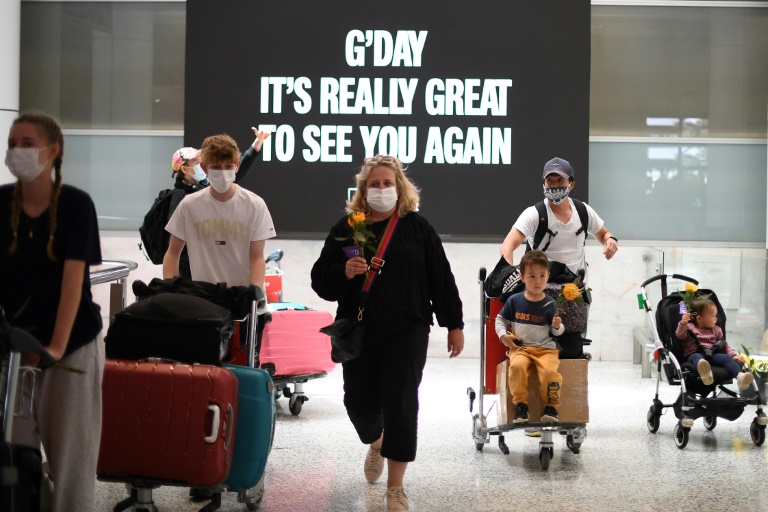
Australia opens its international borders to all vaccinated tourists Monday, nearly two years after the island nation first imposed some of the world’s strictest Covid-19 travel restrictions.

“The wait is over,” Australian Prime Minister Scott Morrison said during a press conference on Sunday ahead of the re-opening.

“Pack your bags,” he told potential visitors, adding, “Don’t forget to bring your money with you, because you’ll find plenty of places to spend it.”

The first flight into Sydney Airport will arrive from Los Angeles at 6 am (1900 GMT), followed by arrivals from Tokyo, Vancouver and Singapore.

Only 56 international flights are expected to land in Australia in the 24 hours after the re-opening — far below pre-pandemic levels — but Morrison said he had “no doubt” the number will scale up in time.

– ‘Fortress Australia’ –

Australia closed its borders to almost everyone except citizens and residents in March 2020 in an attempt to slow surging Covid-19 case numbers.

The travel ban — which also barred citizens from travelling overseas without an exemption and imposed a strict cap on international arrivals — earned the country the nickname “Fortress Australia”.

Every month under the policies has cost businesses an estimated Aus$3.6 billion (US$2.6 billion), according to the Australian Chamber of Commerce and Industry, with tourism particularly hard hit.

Tony Walker, managing director of Quicksilver Group, which operates cruises, diving excursions and resorts across the Great Barrier Reef, told AFP he was “very excited about being able to re-open”.

International tourists “make up around 70 percent” of business for tourism operators on the reef, Walker said, making the two-year border closure “incredibly difficult”.

During the pandemic, his company had to reduce its employees from 650 to the 300 it has today.

Morrison on Sunday said tourism had “really borne the brunt of this Covid pandemic” and he thanked the sector.

“It’s been tough, but Australia is pushing through,” he added.

– No west just yet –

Western Australia will not re-open to international travellers on Monday, holding off until March 3.

Until recently, the state had pursued a strict Covid-zero policy, cutting itself off from the rest of Australia.

The decision sparked lawsuits — and the observation it was easier for Australians to travel to Paris than Perth — but proved popular with West Australians.

Announcing the re-opening date for triple-vaccinated travellers, state Premier Mark McGowan said “there comes a point where the border is redundant, because we’ll already have the growth of cases here”.

Morrison welcomed Western Australia’s re-opening and defended his own decision to shut Australia’s borders to the world for two years.

He said it “was incredibly important and that helped us achieve in this country what few others could around the world. We have one of the lowest rates of death of Covid in the world.”

While the Australian government has launched a Aus$40 million advertising campaign to lure tourists back, the Australian Tourism Export Council warned this week that “there are worrying signs consumers are wary of travelling here with confusion over our various state travel restrictions and concern about snap border closures”.

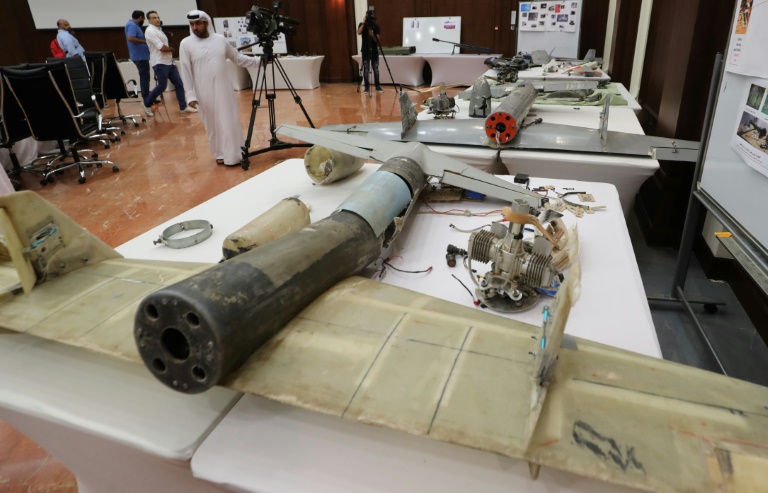
UAE drone conference warns of rising threat

The UAE and its allies warned Sunday of the rising threat of drone attacks, as Middle East militants rapidly acquire a taste for the cheap and easily accessible unmanned systems.

But while the countries called for a collective effort to protect airspaces against the small and often hard to detect targets, one question remained: how to easily stop a drone attack?

“We have to unite to prevent the use of drones from threatening civilian safety and destroying economic institutions,” Mohammed bin Ahmed al-Bowardi, United Arab Emirates’ Minister of State for Defence Affairs, said at a defence conference in Abu Dhabi.

The Unmanned Systems Exhibition (UMEX), running until Wednesday, began in the UAE capital with regional and Western military and industry representatives, including from the United States, Britain and France.

Speakers addressed the importance of developing such systems for civil and military uses but also acknowledged their dangers when used by groups deemed a threat to the region. 

While the event will showcase the latest in high-tech drone technology, the host country warned that such weapons are becoming cheaper and more widespread.

They are now part of the arsenals of “terrorist groups that use the systems to terrorise civilians or to impact the global system in a negative way,” said the UAE’s Minister of State for Artificial Intelligence, Omar bin Sultan al-Olama.

“That is a challenge that requires us to… work together to ensure that we can create a shield against the use of these systems.”

The UAE is part of a Saudi-led military coalition that has been fighting in Yemen since 2015 to support the government against Iran-backed Huthi rebels. 

While the Emirates announced it withdrew its troops from the country in 2019, it remains an influential player, backing fighters there. 

The UAE has been on heightened alert since a Huthi drone and missile attack killed three oil workers in Abu Dhabi on January 17. Authorities have since thwarted three similar attacks, including one claimed by a little-known militant group believed to have ties with pro-Iran armed factions in Iraq.

The UAE’s staunch ally the United States has deployed a warship and fighter planes to help protect the Middle East financial and leisure hub, usually a safe haven in the volatile region. 

France also said it would bolster its defence cooperation with the UAE, mostly in securing its air space. 

In December, the Saudi-led coalition said the Huthis had fired more than 850 attack drones and 400 ballistic missiles at Saudi Arabia in the past seven years, killing a total of 59 civilians.

That figure compares with the 401 coalition air raids carried out in January alone over Yemen, according to the Yemen Data Project, an independent tracker which reported around 9,000 civilian fatalities from the strikes in that country since 2015.

Last year the United States and Israel said an Iranian drone attacked a ship managed by an Israeli billionaire as it sailed off Oman. Two crew members were killed.

More recently, Israel’s military said its air defences fired at a drone that had crossed into its airspace from Lebanon on Friday, the second such intrusion in as many days.

– Integrating AI –

Such incidents have again raised concerns about the dangers of bomb-laden drones. Some are difficult for radars to detect and require a complex process to shoot down without causing casualties from falling shrapnel. 

These are concerns and challenges that “our adversaries” do not have, said Major General Sean A. Gainey, US Army director of the Joint Counter-Small Unmanned Aircraft Systems Office.

“They’re rapidly purchasing this stuff off the shelf, redesign it, taking the great technology that’s being developed for good, and then employing it” for other purposes, he said.

One way of countering a drone attack is to integrate artificial intelligence in air defense systems.  

“They can detect a target through some form of AI, track that target and ultimately defeat that target,” Gainey said, adding: “AI is going to be a key component to the counter-UAS fight.”

UK's PM denies end to Covid law is reckless

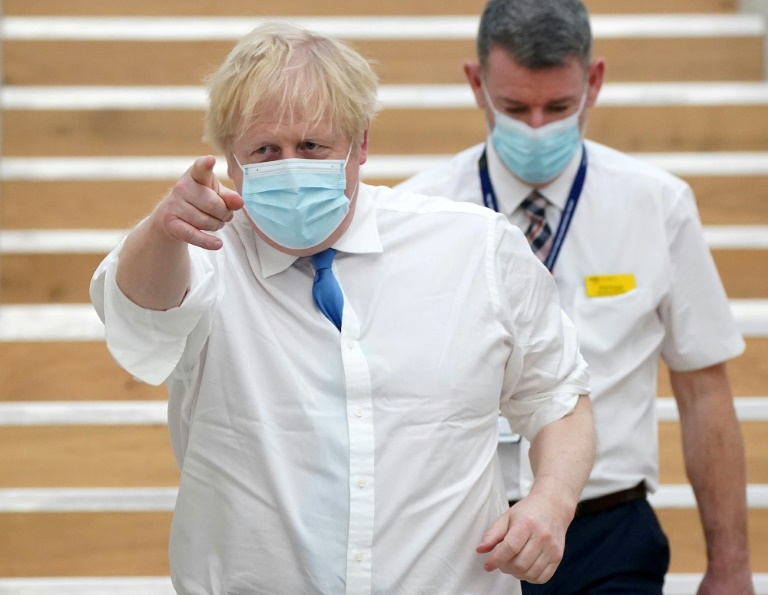
British Prime Minister Boris Johnson has denied throwing “caution to the wind” as he prepares to end all pandemic-related legal restrictions in England, amid a political backlash and scientific unease.

Johnson’s premiership is in peril as police investigate a series of lockdown-breaching parties in Downing Street, and he stands accused by opposition parties of seeking to distract public attention with the new Covid plan.

But in a BBC interview broadcast Sunday, he said that with case numbers and hospitalisations from the Omicron wave apparently under control, it was time to revert to “personal responsibility” rather than legal mandates.

“I’m not saying that we should throw caution to the wind. But it’s time for everybody to get their confidence back,” he said, after bringing forward the plan by a month from when the current law was due to expire in late March.

However, the prime minister also stressed: “I think it’s very important we should remain careful. Covid remains a dangerous disease, particularly if you haven’t been vaccinated.”

Under a “living with Covid” plan, the government says it intends this week to end a legal requirement for people to self-isolate when infected with the coronavirus. Johnson could address parliament as early as Monday.

The government says local authorities will be required to manage further outbreaks with pre-existing legal powers, and is expected to phase out free Covid testing for the general public, having already eliminated a mandate to wear masks in public settings.

The NHS Confederation, which represents senior managers in the state-run National Health Service, said its internal polling showed a large majority of health staff were opposed to ending self-isolation and free tests.

Matthew Taylor, the confederation’s chief executive, acknowledged that the government’s mass vaccination programme and emergence of new Covid treatments offered “real hope”.

“But the government cannot wave a magic wand and pretend the threat has disappeared entirely,” he said.

– ‘Very unwise indeed’ –

David Nabarro, the World Health Organization’s special envoy for Covid, said that scrapping the law on self-isolation was “really very unwise indeed”. 

While the UK has suffered one of the world’s worst per-capita death tolls in the pandemic, it remains a country with “an enviable record for public health expertise”, the British official told BBC radio on Saturday.

“I really do worry that Britain is taking a line that is against the public health consensus — that other countries, other leaders will say if Britain is doing it, why can’t we, and this will create a bit of a domino effect around the world,” Nabarro added.

In the UK’s devolved system, Scotland, Wales and Northern Ireland set their own health policies and are largely staying more cautious than Johnson’s intentions for England.

The opposition Labour party said that ending free testing was akin to substituting “your best defender” with 10 minutes to go of a football match.

“Boris Johnson is declaring victory before the war is over, in an attempt to distract from the police knocking at his door,” Labour’s health spokesman Wes Streeting said.

Downing Street confirmed on Friday that Johnson had submitted a written response to police questions over the parties held over the past two years, as detectives probe whether attendees violated strict distancing and virus prevention rules in place at the time.

He stonewalled questions about the “partygate” affair in the BBC interview, and declined to say if he would resign if he is fined by the police.

But Johnson insisted that despite the apparent party breaches by himself and his staff, the public would still follow guidance to self-isolate when necessary, even without a legal mandate.

“Look at the evidence, look at what the British people have done,” he said, referring to general compliance with the rules since the pandemic struck early in 2020.

Close Bitnami banner
Bitnami