World

Ukraine urges West to back 'shield' against Russia after invasion warning

Ukrainian President Volodymyr Zelensky said Saturday his country deserved more support in the face of a feared invasion, as NATO chief Jens Stoltenberg warned that everything indicated Russia was preparing a “fully-fledged attack”.

As Western politicians gathered in Germany to discuss the crisis, Russia test-fired nuclear-capable missiles in a show of force.

Zelensky condemned “a policy of appeasement” towards Moscow in his speech to the Munich Security Conference.

“For eight years, Ukraine has been a shield,” he said. “For eight years, Ukraine has been holding back one of the greatest armies in the world.”

Zelensky travelled to Munich despite shelling in his country’s conflict-torn east that left two Ukrainian soldiers dead.

Zelensky called for “clear, feasible timeframes” for Ukraine to join the US-led NATO military alliance — something Moscow has said is a red line for its security.

But the Ukrainian leader also said he was willing to meet with Vladimir Putin, to find out “what the Russian president wants”.

Western officials in Munich continued to raise the alarm about Moscow’s intentions towards Ukraine, after US President Joe Biden said Friday he was “convinced” Putin planned to invade, including with an attack on the capital Kyiv, within days.

They again warned of enormous sanctions if Russia attacks, with US Vice President Kamala Harris saying this would only see NATO reinforce its “eastern flank”.

“Every indication indicates that Russia is planning a full-fledged attack against Ukraine,” Stoltenberg told German broadcaster ARD on the sidelines of the conference.

Earlier however, Germany’s Foreign Minister Annalena Baerbock had warned against jumping to conclusions.

“In crisis situations, the most inappropriate thing to do is to somehow guess or assume,” Baerbock told reporters, after being repeatedly pressed on whether Germany shared Biden’s assessment.

“We do not know yet if an attack has been decided on,” Baerbock said.

Zelensky also pushed back against Washington’s dire predictions in Munich.

“We do not think that we need to panic,” Zelensky told the audience of top-level officials and security experts from around the world.

– Strategic missile tests –

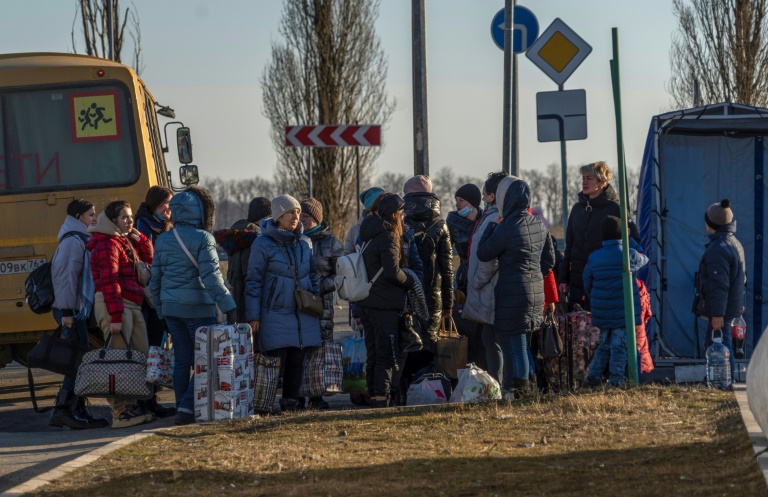
The increasingly fraught warnings of an invasion, intense clashes in Ukraine’s east and the evacuation of civilians from Russian-backed rebel regions have further heightened fears of a major conflict in Europe after weeks of tensions.

The Kremlin insists it has no plans to attack its neighbour, but Moscow has done little to reduce tensions, with state media accusing Kyiv of plotting an assault on rebel-held pro-Russia enclaves in eastern Ukraine.

Saturday’s exercises of strategic forces saw Russia test-fire its latest hypersonic, cruise and nuclear-capable ballistic missiles.

The United States insists that, with around 150,000 Russian troops on Ukraine’s borders — as many as 190,000, when including the Russian-backed separatist forces in the east — Moscow has already made up its mind to invade.

Around 30,000 Russian troops are in Belarus for an exercise which is due to end on Sunday. Moscow has said these forces will return to barracks, but US intelligence is concerned that they could take part in an invasion of Ukraine.

Russia has in recent days announced a series of withdrawals of its forces from near Ukraine, after what they said were regular military exercises. It has dismissed western claims of an invasion plan as “hysteria”.

But Putin has also stepped up his rhetoric, reiterating demands for written guarantees that Ukraine will never be allowed to join NATO and for the alliance to roll back deployments in eastern Europe to positions from decades ago.

– ‘Dramatic increase’ in clashes –

The volatile frontline between Ukraine’s army and separatists in the breakaway regions of Donetsk and Lugansk has seen a “dramatic increase” in ceasefire violations, international monitors from the OSCE European security body have said.

Hundreds of artillery and mortar attacks were reported in recent days, in a conflict that has rumbled on for eight years and claimed the lives of more than 14,000 people.

The OSCE said Saturday there had been 1,500 ceasefire violations in Donetsk and Lugansk in just one day.

Ukraine’s army and separatist forces traded accusations of fresh shellfire on Saturday, with Kyiv saying two of its soldiers had died in a shelling attack, the first fatalities in the conflict in more than a month.

A dozen mortar shells fell within a few hundred metres (yards) of Ukraine’s Interior Minister Denys Monastyrskiy Saturday as he met journalists on a tour of the frontline.

The rebels declared general mobilisations in the two regions, calling up men to fight even as they announced the mass evacuations of women and children into Russia.

Moscow and the rebels have accused Kyiv of planning an assault to retake the regions, claims fiercely denied by Ukraine and dismissed by the West as part of Russian efforts to manufacture a pretext for war.

Ukrainian Foreign Minister Dmytro Kuleba denounced reports of Ukrainian shells falling on Russian territory as “fake”.

Germany and France on Saturday urged their citizens to leave Ukraine. NATO said it was relocating staff from Kyiv to Lviv in the west of the country and to Brussels.

German airlines Lufthansa and Austrian Airlines said they would stop flights to Kyiv and Odessa from Monday until the end of February, but would maintain flights to western Ukraine.
16 dead as Storm Eunice, hits power, transport in W.Europe

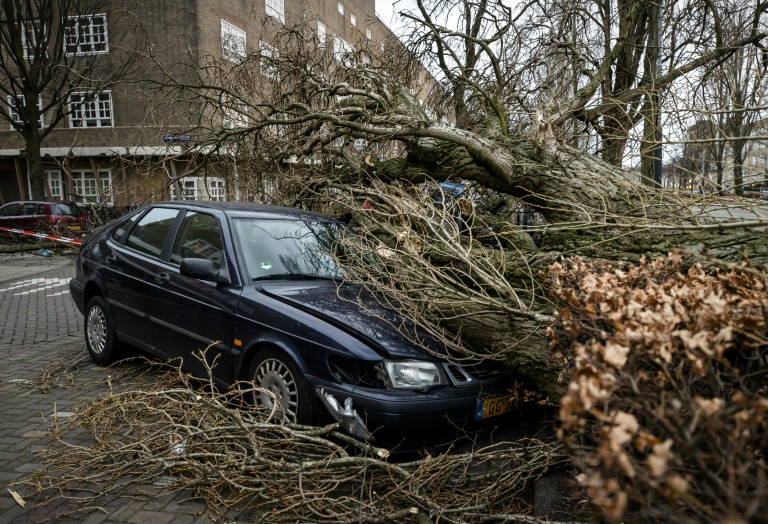
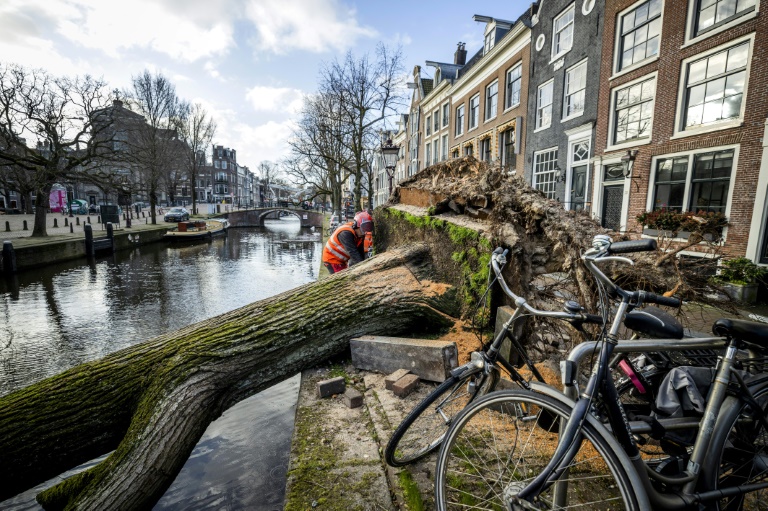
Emergency crews Saturday battled to restore power to more than one million homes and businesses a day after Storm Eunice carved a deadly trail across northwest Europe and left transport networks in disarray.

At least 16 people were killed by falling trees and flying debris caused by the fierce winds in Britain, Ireland, the Netherlands, Belgium, Germany and Poland, emergency services said.

Train operators in Britain urged people not to travel, after most of the network was shut down when Eunice brought the strongest wind gust ever recorded in England — 122 miles (196 kilometres) per hour.

In Brentwood, east of London, a 400-year-old tree crashed into a house where Sven Good was working from home, as millions of other Britons heeded government advice to stay indoors.

“I could feel the whole roof going above me. It was absolutely terrifying,” Good, 23, told Sky News, adding that none of the occupants was injured.

The train network in the Netherlands was paralysed, with no Eurostar and Thalys international services running from Britain and France after damage to overhead power lines.

France and Ireland were also grappling with rail disruption and power cuts, and Germany’s rail operator Deutsche Bahn said “more than 1,000 kilometres” (620 miles) of track had suffered damage.

– Explosive storms –

Poland still had 1.2 million customers without electricity on Saturday afternoon, officials said, after the country’s northwest took a battering.

“I appeal to you: please stay at home!” Polish Prime Minister Mateusz Morawiecki said in a Facebook post.

“We are constantly monitoring the situation and the appropriate services are at work. The fire brigade has already intervened more than 12,000 times,” he said.

In the UK, 226,000 homes and businesses remained without power after 1.2 million others were reconnected. 

The toll so far includes four each in the Netherlands and Poland; three in the UK, two dead each in Belgium and Germany, and one in Ireland.

Around 30 people in northern France were injured in storm-related road accidents, and in the Netherlands, dozens of people have to be evacuated from their homes because of fears that a church’s clock tower might collapse.

Eunice sparked the first-ever “red” weather warning for London on Friday. It was one of the most powerful tempests in Europe since the “Great Storm” hit Britain and northern France in 1987.

Scientists said both storms packed a “sting jet”, a rarely seen meteorological phenomenon borne out of an unusual confluence of pressure systems in the Atlantic that magnified the effects of Eunice.

– Hefty insurance bill –

The Met Office, Britain’s meteorological service, on Saturday issued a less severe “yellow” wind warning for much of the south coast of England and South Wales, which it said “could hamper recovery efforts from Storm Eunice”.

The UK’s total bill for damage could exceed £300 million ($410 million, 360 million euros), according to the Association of British Insurers, based on repairs from previous storms.

At the storm’s height, planes struggled to land in ferocious winds, as documented by the YouTube channel Big Jet TV, which streamed the attempts to a mass live following from London’s Heathrow airport.

Hundreds of other flights were cancelled or delayed at Heathrow and Gatwick, and Schiphol in Amsterdam. 

A section of the roof on London’s O2 Arena was shredded, and the spire of a church in the historic city of Wells, southwest England, toppled over.

Ferries across the Channel, the world’s busiest shipping lane, were suspended, before the English port of Dover reopened Friday afternoon. 

Experts said the frequency and intensity of the storms could not be linked necessarily to climate change.

But Richard Allan, professor of climate science at the University of Reading, said a heating planet was leading to more intense rainfall and higher sea levels.

Therefore, he said, “flooding from coastal storm surges and prolonged deluges will worsen still further when these rare, explosive storms hit us in a warmer world”.

Ukraine minister dives for cover as frontline heats up

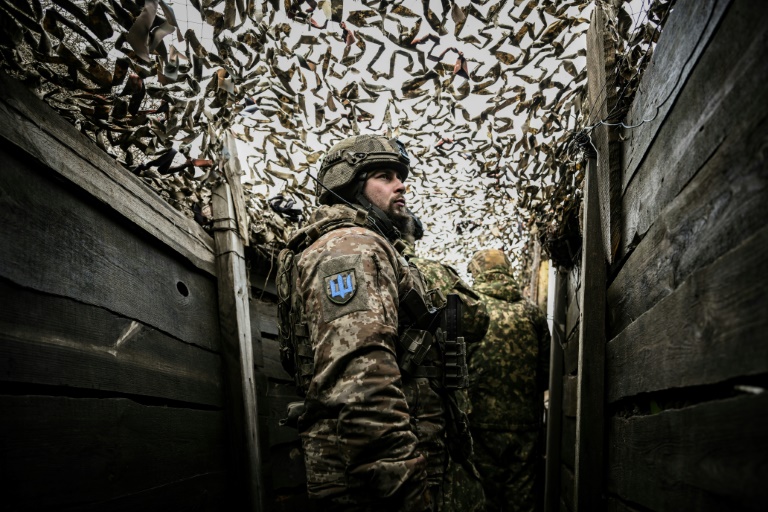
Bent in a semi-crouch Ukraine’s interior minister ran back from an exposed frontline position, as mortar shells crashed in the fields around him.

Just minutes earlier, Denys Monastyrsky had told reporters: “We are ready for any scenario at any time.”

On Saturday, the scenario was a surprise mortar barrage after he met troops and inspected trenches and bunkers outside Novoluganske, in the Donetsk region of eastern Ukraine.

The message for the accompanying journalists was that Moscow-backed forces are stepping up attacks along the eight-year-old frontline, amid the growing menace of a full-scale Russian invasion.

But the threat was obvious.    

As the minister, dressed in camouflage fatigues and a military helmet, walked back up an exposed road lined with abandoned vehicles, shells whistled through the air and exploded in nearby fields.  

Monastyrsky, his escorts and reporters scrambled for cover before running back up the road to their vehicles. No one was hurt, and the official would later say that he thought the army, not he, was the target.

But the incident underlined the danger of escalation in a conflict that has already left 14,000 dead and could now, if US intelligence is to be believed, become an international war.

The separatist rebels across the frontline from the position visited by Monastyrsky accuse Kyiv of plotting an offensive to recapture the enclave they hold in parts of Donetsk and Lugansk.

– Minefields, abandoned homes –

But it is Ukraine which complains that it is under attack — two soldiers were killed on Saturday — and President Joe Biden says US intelligence indicates that Russia plans to invade. 

One of the dead, 35-year-old Captain Anton Sidorov and father-of-three, was shot dead near Novoluganske, scene of the minister’s shelling incident.   

If the more than 150,000 Russian soldiers Kyiv and Washington say are massed on the border do launch an assault, they will have to pass through frontline communities like Novoluganske.  

Andriy, a 26-year-old infantryman from the city of Kharkiv, is based here, and confirmed that the situation is “heating up”.

“The situation is even worse than yesterday, they’ve been firing 152 mm heavy artillery,” he told AFP. “There are wounded in several battalions.” 

There were 4,000 people in the town before the conflict erupted, isolated by potholed roads and now by minefields marked by little painted red posts.

Only three kilometres (less than two miles) from the rebel frontline, the town lives in a sort of no-man’s land and many of the homes have been abandoned.

“We’re not afraid,” boasts 10-year-old Ruslan, wandering with his German Shepherd and a few friends between the ruined city stadium and the Ukrainian army command post.

Elena Valerievna, the 50-year-old owner of a small grocers store, is less afraid to admit that recent days have been a trial.

“It’s been a long time since there was such a bombardment,” she said. “I wish there was peace, calm, tranquility. That’s what I want, not war, but I fear that’s impossible.”

Ukraine urges West to back 'shield' against Russia after invasion warning

Ukrainian President Volodymyr Zelensky said Saturday his country was a “shield” against Russia and deserved more support in the face of a feared invasion, as Moscow test-fired nuclear-capable missiles in a show of force.

Addressing the Munich Security Conference, Zelensky condemned “a policy of appeasement” towards Moscow.

“For eight years, Ukraine has been a shield,” said Zelensky, who travelled to Munich despite shelling in his country’s conflict-torn east that left two Ukrainian soldiers dead.

“For eight years, Ukraine has been holding back one of the greatest armies in the world,” he added.

Zelensky called for “clear, feasible timeframes” for Ukraine to join the US-led NATO military alliance — something Moscow has said would be a red line for its security.

But the Ukrainian leader also said he was willing to meet with Vladimir Putin, to find out “what the Russian president wants”.

Western officials in Munich continued to raise the alarm about Moscow’s intentions towards Ukraine, after US President Joe Biden said Friday he was “convinced” Putin planned to invade, including with an attack on the capital Kyiv, within days.

They again warned of enormous sanctions if Russia attacks, with US Vice President Kamala Harris saying this would only see NATO reinforce its “eastern flank”.

Germany’s Foreign Minister Annalena Baerbock, however, warned against jumping to conclusions, toning down the rhetoric after Washington’s fierce warnings of an imminent invasion.

“In crisis situations, the most inappropriate thing to do is to somehow guess or assume,” Baerbock told reporters, after being repeatedly pressed on whether Germany shared Biden’s assessment.

“We do not know yet if an attack has been decided on,” Baerbock said on the sidelines of the Munich Security Conference.

Zelensky also pushed back against Washington’s dire predictions in Munich.

“We do not think that we need to panic,” Zelensky told the audience of top-level officials and security experts from around the world.

– Strategic missile tests –

The increasingly fraught warnings of an invasion, intense clashes in Ukraine’s east and the evacuation of civilians from Russian-backed rebel regions have further heightened fears of a major conflict in Europe after weeks of tensions.

The Kremlin insists it has no plans to attack its neighbour, but Moscow has done little to reduce tensions, with state media accusing Kyiv of plotting an assault on rebel-held pro-Russia enclaves in eastern Ukraine.

Saturday’s exercises of strategic forces saw Russia test-fire its latest hypersonic, cruise and nuclear-capable ballistic missiles.

The United States insists that, with around 150,000 Russian troops on Ukraine’s borders — as many as 190,000, when including the Russian-backed separatist forces in the east — Moscow has already made up its mind to invade.

Some of the Russian forces, around 30,000 troops, are in Belarus for an exercise which is due to end on Sunday. Moscow has said these forces will return to barracks, but US intelligence is concerned that they could take part in an invasion of Ukraine.

Russia has announced a series of withdrawals of its forces from near Ukraine in recent days, saying they were taking part in regular military exercises. It has dismissed western claims of an invasion plan as “hysteria”.

But Putin has also stepped up his rhetoric, reiterating demands for written guarantees that Ukraine will never be allowed to join NATO and for the alliance to roll back deployments in eastern Europe to positions from decades ago.

– ‘Dramatic increase’ in clashes –

The volatile frontline between Ukraine’s army and separatists in the breakaway regions of Donetsk and Lugansk has seen a “dramatic increase” in ceasefire violations, international monitors from the OSCE European security body have said.

Hundreds of artillery and mortar attacks were reported in recent days, in a conflict that has rumbled on for eight years and claimed the lives of more than 14,000 people.

The OSCE said Saturday there had been 1,500 ceasefire violations in Donetsk and Lugansk in just one day.

Ukraine’s army and separatist forces traded accusations of fresh shellfire on Saturday, with Kyiv saying two of its soldiers had died in a shelling attack, the first fatalities in the conflict in more than a month.

A dozen mortar shells fell within a few hundred metres (yards) of Ukraine’s interior minister Denys Monastyrskiy on Saturday as he met journalists on a tour of the frontline.

The rebels declared general mobilisations in the two regions, calling up men to fight even as they announced mass evacuations of women and children into Russia.

Moscow and the rebels have accused Kyiv of planning an assault to retake the regions, claims fiercely denied by Ukraine and dismissed by the West as part of Russian efforts to manufacture a pretext for war.

Ukrainian Foreign Minister Dmytro Kuleba denounced reports of Ukrainian shells falling on Russian territory as “fake”.

Germany and France on Saturday urged their citizens to leave Ukraine.

Both German airline Lufthansa and Austrian Airlines said they would stop flights to Kyiv and Odessa from Monday until the end of February, but would maintain flights to western Ukraine.
Show of force as Canada police close in on protesters

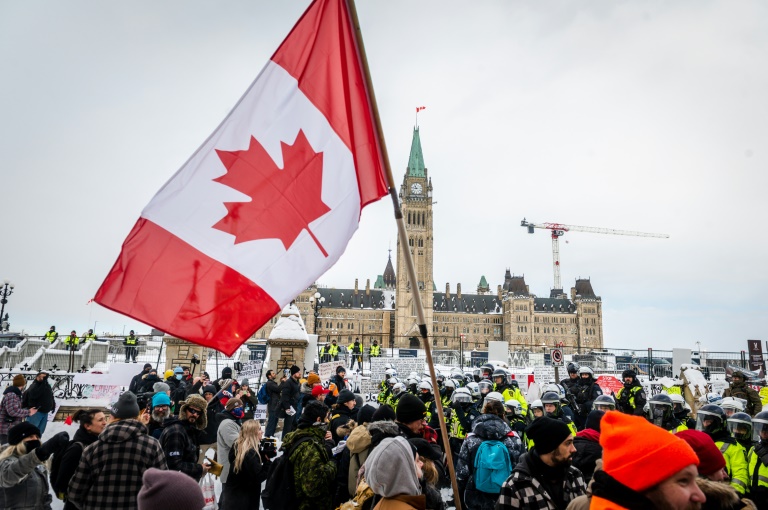
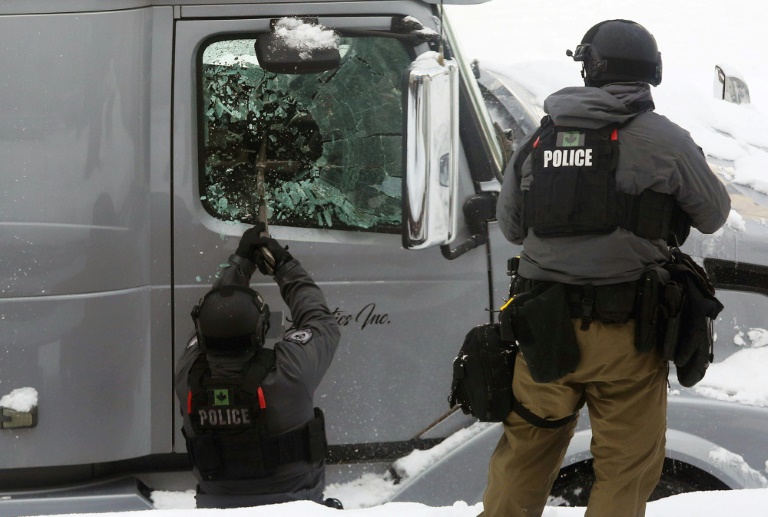
Police in riot gear cleared the main protest hub in downtown Ottawa Saturday, using batons and pepper spray, smashing truck windows and arresting dozens of die-hard protesters as they moved to finally end a weeks-long siege of the Canadian capital.

After a night marked by clashes, protesters — some in body armor — held firm, linking arms and hurling gas canisters and smoke grenades at advancing police, while chanting “freedom.”

But by midday police, backed by tactical vehicles and overwatched by snipers, said they had cleared Wellington Street in front of parliament — the epicenter of the trucker-led demonstrations which began almost a month ago in protest at Covid vaccine rules.

“We told you to leave,” Ottawa police tweeted to the demonstrators, announcing 47 new arrests in the largest police operation ever seen in the capital, drawing hundreds of officers from across the nation.

“We gave you time to leave,” tweeted police, “yet you were assaultive and aggressive.”

As tensions ratcheted up, Ottawa police accused protesters of launching gas canisters at officers.

And police said they used a “chemical irritant” — apparently pepper spray — against protesters “refusing to comply with orders to move,” adding that several protesters in body armor and carrying smoke grenades and fireworks were subdued and arrested.

Police said that 38 vehicles had been towed since Friday — many of the big rigs clogging the city center having already left when the police advance began.

– 150 arrested –

Within minutes of deploying, police had claimed a section of road in front of the prime minister’s office and a stage where demonstrators had rallied crowds of supporters, pointing guns as they smashed windows of trucks and ordered occupants out, with smoke filling the air.

A short time later, police had retaken much of the parliamentary precinct, although hundreds of protesters were holding out in nearby sidestreets.

As the operation unfolded outside parliament, inside the complex lawmakers resumed debating Prime Minister Justin Trudeau’s controversial use of emergency powers — for the first time in 50 years — to subdue the protests.

Prior to Friday, police had arrested 25 people blocking border crossings to the United States. Since then, at least 150 more protesters in Ottawa have been taken away in handcuffs, including three organizers.

“I’m not leaving,” Johnny Rowe had told AFP, dismissing threats of arrest.

“There’s nothing to go back to,” he said. “Everybody here, myself included, has had their lives destroyed by what’s happened in the past two years.”

Some truckers had chosen to depart on their own, driving their 18-wheelers away after three weeks of demonstrations that at their peak drew 15,000 to the capital. 

Vince Green was one of them — he said he and his wife, a former nurse who lost her job for refusing a mandatory Covid jab, had to return to Calgary, Alberta to check on their kids.

– Debate on emergency powers –

The so-called “Freedom Convoy,” which inspired copycat protests in other countries, began with truckers demonstrating against mandatory Covid-19 vaccines to cross the US border. Its demands grew, however, to include an end to all pandemic rules and, for many, a wider anti-establishment agenda.

At its peak, the movement also included blockades of US-Canada border crossings, including a key trade route across a bridge between Ontario and Detroit, Michigan — all of which have since been lifted after costing the economy billions of dollars, according to the government.

Criticized for failing to act decisively to end the protests, Trudeau this week invoked the Emergencies Act, which gives the government sweeping powers to deal with a major crisis.

It’s only the second time such powers have been invoked in peacetime.

Public Safety Minister Marco Mendicino said Saturday that Can$32 million (US$25 million) in donations and in truckers’ accounts had been frozen.

Canadian lawmakers have split over the use of emergency powers, with only a small leftist faction backing Trudeau’s minority Liberals — while a former opposition Conservative leader, Andrew Scheer, said it amounted to a “sledgehammer to crack down on dissent.” 

A final vote on extending use of the emergency measures is to be held on Monday.

Trudeau has said the act was not being used to call in the military against the protesters and denied restricting freedom of expression.

The objective was simply to “deal with the current threat and to get the situation fully under control,” he said. “Illegal blockades and occupations are not peaceful protests.”

Brazil hits back at US barbs on Bolsonaro Russia trip

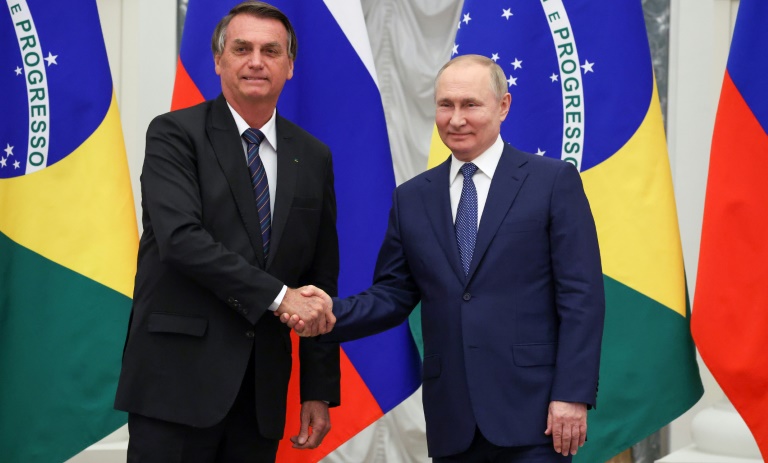
Brazil lashed out Saturday at US criticism of President Jair Bolsonaro’s recent trip to Russia, after Washington chided the far-right leader for visiting Vladimir Putin amid the escalating Ukraine crisis.

The Brazilian foreign ministry said it “regrets the tone” of statements Friday by White House Press Secretary Jen Psaki, who said the visit had left Brazil looking isolated from the “vast majority of the global community.”

The United States tried to dissuade Bolsonaro from visiting Russia, which has been massing troops on Ukraine’s borders, triggering US warnings of an imminent invasion.

But the Brazilian leader pressed ahead, meeting his Russian counterpart Wednesday and voicing Brazil’s “solidarity” with Russia.

A day later, the US State Department issued a rare rebuke to Brazil, typically seen as an ally.

“The timing of the president of Brazil expressing solidarity with Russia, just as Russian forces are preparing to launch attacks on Ukrainian cities, could not be worse,” it said.

Asked about Bolsonaro’s “solidarity” comment in a White House press briefing Friday, Psaki said: “The vast majority of the global community is united in their view, a shared view that invading another country, attempting to take some of their land, terrorizing their people, is certainly not aligned with global values.

“And so, I think Brazil may be on the other side of where the majority of the global community stands,” she added.

Brazil’s foreign ministry hit back that it “regrets the tone of the White House press secretary’s statement.”

The country “does not consider such extrapolations on the president’s comments to be constructive or useful.”

Bolsonaro, who took office in 2019, sought close ties with the United States under former president Donald Trump, Bolsonaro’s political role model.

But relations have chilled since Trump lost the White House to Joe Biden, who has taken Brazil to task for surging deforestation in the Amazon rainforest under Bolsonaro.

12 missing off Greece as ferry fire burns on

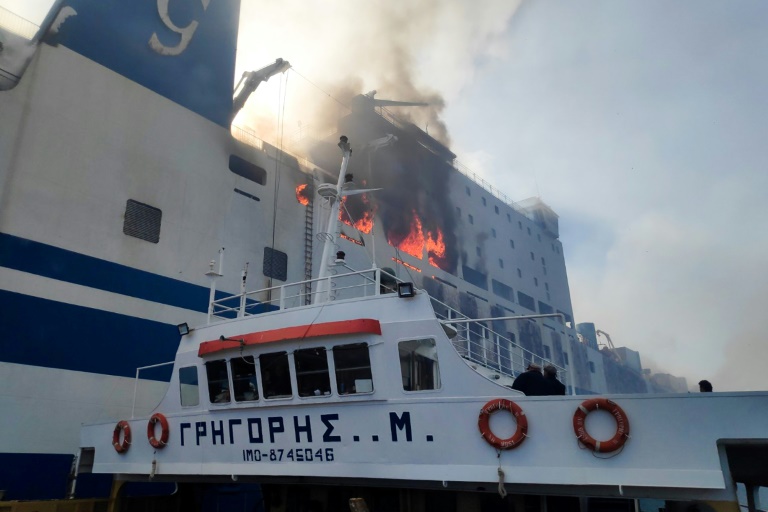
At least 12 truck drivers remained missing from an Italian-flagged ferry ablaze for a second day off Corfu Saturday, as criticism mounted over conditions onboard.

The blaze on the Euroferry Olympia prevented rescuers from boarding, but tugboats managed to tow the vessel closer to the island, ERT television said.

The ferry on Saturday afternoon was just some 6 nautical miles (around 11 km) north of Corfu, ERT said, after anxious relatives started arriving in the morning.

A thick cloud of black smoke billowed into the sky after wind rekindled the fire, with Greek state agency ANA reporting the heat onboard had reached 500 degrees Celsius.

The coastguard has said those missing were all lorry drivers — seven from Bulgaria, three from Greece, one from Turkey and one from Lithuania.

On Friday, 280 passengers were evacuated to Corfu after a blaze broke out the previous night as the Olympia was en route from Greece to Italy. 

Rescuers who boarded the burning vessel halted work Friday evening because of the intense heat, dense smoke and darkness, ANA said.

The cause of the fire remains unknown.

Shipping minister Giannis Plakiotakis said a team from the Maritime Accident and Incident Investigation Service was in the area to launch a probe.

ERT reported the vessel’s captain and two engineers had on Saturday been brought before a prosecutor.

Plakiotakis told Skai television that, after the fire is extinguished, the ferry would be towed to safety in order to pump out any fuel, and avoid marine pollution.

Italy’s environment ministry said a “possible spill” was detected after a fly-over by an Italian coastguard aircraft. 

The vessel was carrying an estimated 800 cubic metres of fuel and 23 tons of “corrosive dangerous goods” the ministry said.

– Overcrowded cabins –

The ferry was officially carrying 290 people, the ship’s owner, Grimaldi Lines, has said.

Rescued truckers told Greece’s public broadcaster some drivers had preferred to sleep in their vehicles because the cabins were overcrowded. 

According to the Kathimerini newspaper, the Greek trucker union had since June 2017 warned about conditions on the Olympia as well as another ferry belonging to Italian ferry and container operator, Grimaldi. 

Ilias Gerontidakis, the son of a missing Greek trucker, told the Proto Thema online newspaper the Olympia “miserable from every point of view”. 

“It had bed bugs, it was dirty, it had no security systems,” he said as he waited in the port for news.

“It had 150 lorries inside. Normally it should have 70 to 75 cabins, but it only has 50. They force us to sleep four people in a cabin”, he said. “My father, from what I was told, slept in the truck.”

Vassilis Vergis, the cousin of another missing driver, said he thought his relative too “was afraid of the cabins”.

“He probably stayed in the truck because he was afraid of coronavirus,” he added.

The ferry’s operator said the 27-year-old vessel had last completed a safety check on February 16.

– Undocumented travellers –

The ferry was officially carrying 239 passengers and 51 crew, as well as 153 trucks and trailers and 32 passenger vehicles, the company has said. 

But the coastguard has said two of the people rescued — both Afghans — were not on the manifest, sparking fears that more undocumented passengers could also be missing. 

The Bulgarian foreign ministry said 127 of its nationals were on the passenger list, including 37 truck drivers.  

Another 24 were from Turkey, the country’s NTV station said, while ERT said 21 Greeks were aboard.

Among the rescued, nine people remain in hospital with breathing difficulties.

Fahri Ozgen, a rescued passenger, recounted waiting for four hours for rescuers to arrive, as the flames roared around him.

“Two-hundred and fifty people were screaming, shouting, some of them were jumping into the sea,” he told AFP.

Turkish trucker Ali Duran said he had lost everything in the fire

“We lost our money, we lost our passports, we lost all our administrative documents,” he said.

“I don’t even have a shoe to wear.”

The last shipboard fire in the Adriatic occurred in December 2014 on the Italian ferry Norman Atlantic. Thirteen people died in that blaze.

Police close in to dislodge Canada capital protesters

Police pushed into downtown Ottawa Saturday in a bid to dislodge several hundred dug-in protesters and big rigs that have choked the Canadian capital for weeks, after a night marked by clashes and more than 100 arrests. 

There were tense scenes outside Parliament, with multiple protesters hurling gas canisters at police, who hardened their positions in a determined push to bring the weeks-long protest to an end.

New arrivals slipped past security barricades to join the remaining demonstrators, as police moved in.

“We told you to leave,” Ottawa police tweeted to the demonstrators. 

“We gave you time to leave. We were slow and methodical, yet you were assaultive and aggressive with officers and the horses. Based on your behaviour, we are responding by including helmets and batons for our safety.”

Inside Parliament, Prime Minister Justin Trudeau convened a crisis response group, as lawmakers resumed debating the government’s use of emergency powers for the first time in 50 years.

Outside, tensions escalated as police marched forward, reporting on Twitter that “protesters continue to launch gas at police.”

Within minutes police claimed a section of road in front of the prime minister’s office and a stage where demonstrators had rallied crowds of supporters.

Police said they did not use gas against any of the protesters as smoke filled the air.

Prior to Friday, police had arrested 25 people blocking border crossings to the United States. In the last two days, at least 100 more in Ottawa were taken away in handcuffs, including three organizers.

“I’m not leaving,” Johnny Rowe told AFP, dismissing threats of arrest.

“There’s nothing to go back to,” he said. “Everybody here, myself included, has had their lives destroyed by what’s happened in the past two years.”

Some truckers chose to depart on their own, driving their 18-wheelers away after three weeks of demonstrations that at their peak drew thousands to the capital. 

“I’m leaving today,” said Vince Green.

He said that he and his wife — a former nurse who lost her job for refusing a mandatory Covid jab — had to return to Calgary, Alberta to check on their kids.

– Debate on emergency powers –

The so-called “Freedom Convoy,” which inspired copycat protests in other countries, began with truckers demonstrating against mandatory Covid-19 vaccines to cross the US border. Its demands grew, however, to include an end to all pandemic rules and, for many, a wider anti-establishment agenda.

At its peak, the movement also included blockades of US-Canada border crossings, including a key trade route across a bridge between Ontario and Detroit, Michigan — all of which have been lifted after costing the economy billions of dollars, according to the government.

The truckers also won support from billionaire Elon Musk, several US Republican lawmakers as well as former president Donald Trump, and even Iran’s former leader Mahmoud Ahmadinejad.

Criticized for failing to act decisively to end the protests, Trudeau this week invoked the Emergencies Act, which gives the government sweeping powers to deal with a major crisis.

It’s only the second time such powers have been invoked in peacetime.

Canadian lawmakers, split over the move, with only a small leftist faction backing Trudeau’s minority Liberal government, were debating its use when Parliament was hastily shuttered Friday. 

It was to reopen Saturday, and a final vote on the emergency measures is to be held on Monday at 8:00 pm (0100 GMT Tuesday).

A former Conservative leader, Andrew Scheer accused the Liberal government of using a “sledgehammer to crack down on dissent.”

Trudeau has said the act was not being used to call in the military against the protesters and denied restricting freedom of expression.

The objective was simply to “deal with the current threat and to get the situation fully under control,” he said. “Illegal blockades and occupations are not peaceful protests.”

14 dead as Storm Eunice hits power, transport in Europe

Emergency crews Saturday battled to restore power to more than one million homes and businesses a day after Storm Eunice carved a deadly trail across Europe and left transport networks in disarray. 

At least 14 people were killed by falling trees, flying debris and high winds in Britain, Ireland, the Netherlands, Belgium, Germany and Poland, emergency services said.

The latest victim was confirmed by police in the Belgian city of Ghent: a 37-year-old man who was hit in the head by a flyaway solar panel, and died of his injuries on Saturday.

Train operators in Britain urged people not to travel, after most of the network was shut down when Eunice brought the strongest wind gust ever recorded in England — 122 miles (196 kilometres) per hour.

In Brentwood, east of London, a 400-year-old tree crashed into a house and bedroom where Sven Good was working from home, as millions of other Britons heeded government advice to stay indoors.

Good, 23, said he heard a “creak and then a massive bang and the whole house just shuddered”.

“I could feel the whole roof going above me. It was absolutely terrifying,” he told Sky News, adding that none of the occupants was injured.

The train network in the Netherlands was also paralysed, with no Eurostar and Thalys international services running from Britain and France after damage to overhead power lines.

France was grappling too with rail disruption and power cuts, as were Ireland and Germany, where rail operator Deutsche Bahn said “more than 1,000 kilometres” (620 miles) of track had suffered damage.

Poland still had 1.1 million customers without electricity on Saturday afternoon, officials said, after the country’s northwest took a battering.

“I appeal to you: please stay at home!” Polish Prime Minister Mateusz Morawiecki said in a Facebook post.

“We are constantly monitoring the situation and the appropriate services are at work. The fire brigade has already intervened more than 12,000 times,” he said.

In the UK, 226,000 homes and businesses remained without power after 1.2 million others were reconnected. 

– ‘Explosive storms’ –

Eunice sparked the first-ever “red” weather warning for London on Friday. It was one of the most powerful tempests in Europe since the “Great Storm” hit Britain and northern France in 1987.

Scientists said both storms packed a “sting jet”, a rarely seen meteorological phenomenon borne out of an unusual confluence of pressure systems in the Atlantic that magnified the effects of Eunice.

The Met Office, Britain’s meteorological service, on Saturday issued a less severe “yellow” wind warning for much of the south coast of England and South Wales, which it said “could hamper recovery efforts from Storm Eunice”.

The UK’s total bill for damage could exceed £300 million ($410 million, 360 million euros), according to the Association of British Insurers, based on repairs from previous storms.

At the storm’s height, planes struggled to land in ferocious winds, as documented by the YouTube channel Big Jet TV, which streamed the attempts to a mass live following from London’s Heathrow airport.

Hundreds of other flights were cancelled or delayed at Heathrow and Gatwick, and Schiphol in Amsterdam. 

A section of the roof on London’s O2 Arena was shredded, and the spire of a church in the historic city of Wells, southwest England, toppled over.

Ferries across the Channel, the world’s busiest shipping lane, were suspended, before the English port of Dover reopened Friday afternoon. 

Experts said the frequency and intensity of the storms could not be linked necessarily to climate change. 

But Richard Allan, professor of climate science at the University of Reading, said a heating planet was leading to more intense rainfall and higher sea levels.

Therefore, he said, “flooding from coastal storm surges and prolonged deluges will worsen still further when these rare, explosive storms hit us in a warmer world”.

Suicide bombing in Somalia town kills 14 on eve of vote

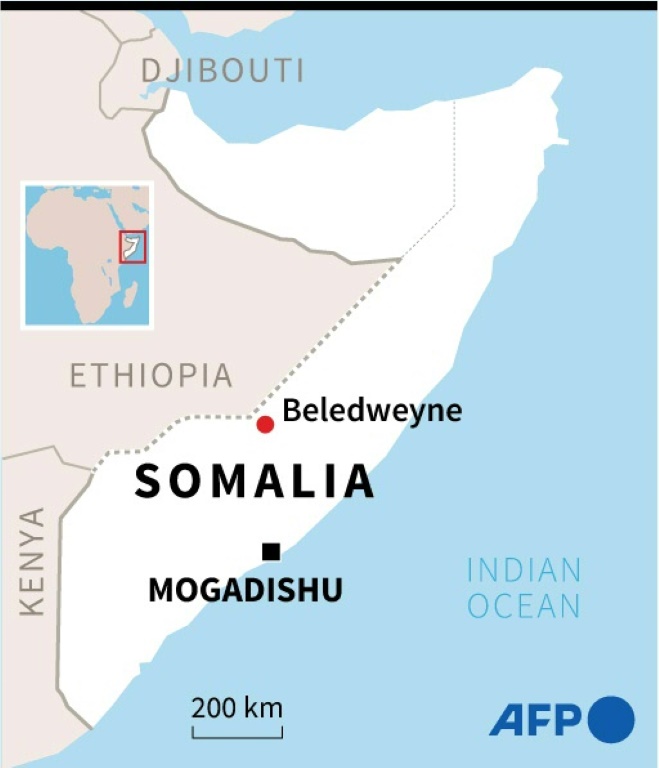
A suicide bomber killed 14 people in a popular restaurant in the central Somali town of Beledweyne on Saturday, on the eve of a round of voting there, police said.

The attack was claimed by the Al-Shabaab Islamist militant group, which has been waging an insurgency in the troubled Horn of Africa nation for years.

Security had been tightened in Beledweyne ahead of a first session of voting for parliamentary seats in the constituency, which lies about 340 kilometres (210 miles) north of the capital Mogadishu.

“The number of people who have died in the heinous terrorist attack in Beledweyne today has increased from 10 people to 14 as of now,” local police officer Mohamud Hassan told AFP by phone. 

He said some of the 16 civilians earlier reported wounded in the suicide bombing had died of their injuries in hospital. Among the dead were local government officials.

“This was the deadliest attack I can recall in this town,” he added.

Al-Shabaab said in a statement that one of its fighters carried out the bombing.

Somalia, particularly Mogadishu, has seen a spate of attacks in recent weeks as the country hobbles through a long-delayed election process.

Witnesses said the huge explosion tore through an open area of the Hassan Dhiif restaurant where people had gathered under trees to eat lunch.

“I saw dead bodies of several people and I could not count how many wounded that were rushed to hospital,” said one witness, Mahad Osman.

“Some of these people were waiting for their ordered meals to come while enjoying the fresh weather when the blast occurred,” he added. 

“I saw… shoes, sticks and hats strewn at the scene of the blast, there was also blood and severed parts of human flesh in the area.”

In another incident on Saturday, one person was killed and six others wounded when an explosive device went off in a teashop in Bosaso, the commercial capital of the northern state of Puntland, police said. 

No-one has yet claimed responsibility for that blast.

– Political impasse –

Somalia is due to wrap up voting for the lower house of parliament by February 25 under the latest timetable for the elections, which are already more than a year behind schedule.

President President Mohamed Abdullahi Mohamed, better known by his nickname Farmajo, has been at loggerheads with Prime Minister Mohamed Hussein Roble over the election delays, an impasse that has Somalia’s international backers worried.

Among those running for a seat in Beledweyne is Farhad Yasin, Somalia’s former intelligence chief who is now Farmajo’s national security adviser.

Somalia’s voting process follows a complex indirect model, whereby state legislatures and clan delegates pick lawmakers for the national parliament, who in turn choose the president.

Voting for the upper house concluded last year, while clan delegates have so far elected 159 of the 275 MPs who sit in the lower house.

Somalia’s international partners fear the election crisis distracts from the battle against Al-Shabaab, the Al-Qaeda-linked Islamist group fighting the weak central government.

Its fighters were driven out of Mogadishu in 2011 after an offensive by an African Union force, but they still control vast swathes of rural Somalia from where they launch regular attacks in the capital and elsewhere.

The United States issued a statement on Friday calling on Somalia’s leaders to complete the elections in a “credible and transparent manner” by February 25. 

“The United States will hold accountable those who obstruct or undermine the process,” it said.

Earlier this month, US Secretary of State Antony Blinken announced a decision to restrict visas to current or former Somali officials or others “believed to be responsible for, or complicit in, undermining the democratic process in Somalia”.

Close Bitnami banner
Bitnami