World

On Russia's border, evacuees from rebel-held Ukraine hope for quick return

The loud explosions and wailing sirens in rebel-held territory in eastern Ukraine were getting more frequent, so when the evacuation order came, Elena Sokela decided it was time to get her son to safety.

“We didn’t want to wait until it was too late. Better to get out now,” the 40-year-old told AFP Saturday at a border crossing between the rebel Donetsk region and Russia, a day after the order to evacuate came down.

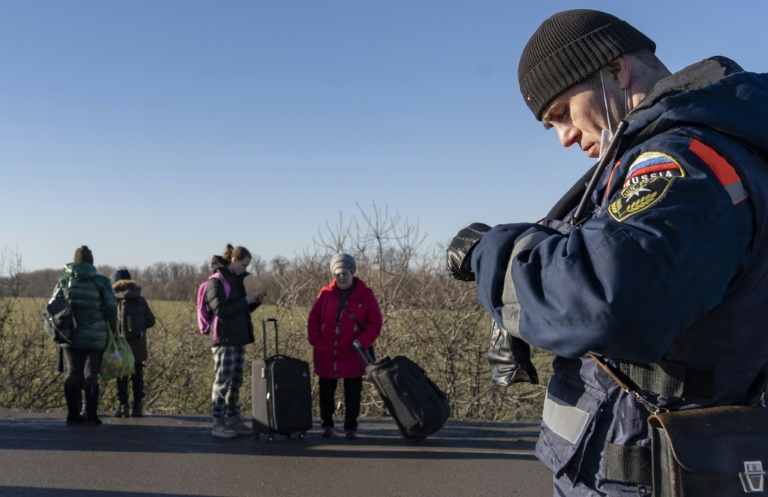
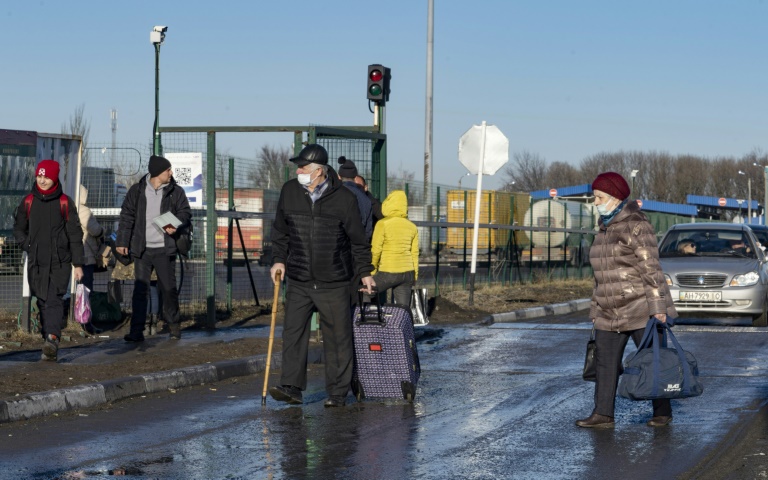
There was a steady flow of people acting on the order to leave, crossing between wire fencing topped with Russian flags on a bright morning at the Avila Uspenka checkpoint into Russia.

On Friday evening, leaders of two separatist republics in east Ukraine ordered women and children to flee and as soon as possible make their way to Russia.

Their poor and industrial rebel-controlled territories in Ukraine have been at the centre of weeks of tensions between Russia and the West.

Conflict monitors have warned of a sharp escalation in ceasefire violations in fighting between Ukraine’s army and the separatists, a trend Sokela herself could attest to.

In her hometown of Shakhtarsk, she said, “we can hear everything perfectly clearly. There were explosions on Thursday. Some heavy stuff was coming down.”

The US government earlier hit out at the orders, saying the move by Moscow-backed rebels was a “cynical” effort by Moscow to deflect from what the West fears is an imminent Russian invasion.

At the checkpoint Saturday there was a steady stream of elderly women and children, dressed in puffy coats on a crisp winter day and dragging wheelie bags.

Sokela was bringing her 16-year-old son to stay with his grandmother in Russia “where it’s calm” but planned to return herself.

“Let’s stay for a week and come back. Or maybe the school will be closed. No one has said anything yet,” Sokela said.

Separatist leaders have announced plans to get hundreds of thousands of people out of the territory and into Russia, but AFP journalists at the crossing Saturday witnessed no mass exodus.

– ‘Can’t abandon people’ –

Ten school buses waiting to ferry arrivals stood empty and 15 tents set up by the emergencies ministry on the Russian side of the crossing had no one to house.

So far, separatist officials have said fewer than 20,000 people have left, a fraction of the region’s estimated population of three million people.

Still, Russian authorities were readying for a large influx, with officials in the Rostov region bordering Ukraine declaring a state of emergency and saying places were being prepared for nearly 900,000 people.

The head of Russia’s emergencies ministry, who was dispatched by the Kremlin to Rostov, said Saturday some 400 people and 150 vehicles were in place to receive people arriving from separatist territory.

Several other nearby regions have announced they will house Donetsk and Lugansk residents.

President Vladimir Putin on Friday ordered handouts of 10,000 rubles (about 100 euros) to evacuees and health officials have said those entering Russia can be tested for the coronavirus and vaccinated.

Many, however, hope the displacement will be temporary.

The head of the so-called Donetsk People’s Republic Denis Pushilin met with residents leaving, Russian news agencies reported, to offer reassurances.

“I hope it won’t be for long,” he was cited as saying. “But safety is paramount.”

Lyubov Rodoman, a 57-year-old nurse also from Shakhtarsk, was crossing into Rostov in the morning but was only planning a short stay.

“I’ll be here in Russia today to do my errands and then I’ll come back later,” she said.

“I’m a medical professional. I can’t abandon people. I didn’t leave them in 2014, I won’t leave them now,” she added.
Ukraine urges West to back 'shield' against Russia after invasion warning

Ukrainian President Volodymyr Zelensky said Saturday that his country was a “shield” against Russia and deserved more support in the face of a feared Russian invasion, as Moscow test-fired nuclear-capable missiles in a defiant show of force.

In a speech at the Munich Security Conference, Zelensky condemned “a policy of appeasement” towards Moscow.

“For eight years, Ukraine has been a shield. For eight years, Ukraine has been holding back one of the greatest armies in the world,” said Zelensky, who travelled to Munich despite shelling in his country’s conflict-torn east that left two Ukrainian soldiers dead.

He demanded “clear, feasible timeframes” for Ukraine to join the US-led NATO military alliance — a prospect that Moscow has said would be a red line for its security.

But he said he was willing to meet with Vladimir Putin, to find out “what the Russian president wants”.

Western officials in Munich continued to raise the alarm about Moscow’s intentions towards Ukraine, after US President Joe Biden said Friday that he was “convinced” Putin planned to invade, including with an attack on the capital Kyiv, within days.

They again warned of enormous sanctions if Russia attacks, with US Vice President Kamala Harris saying this would only see NATO reinforce its “eastern flank” and British Prime Minister Boris Johnson urging the West to “stand strong together”.

– Strategic missile tests –

The increasingly fraught warnings of an invasion, intense clashes in Ukraine’s east and the evacuation of civilians from Russian-backed rebel regions have brought fears of a major conflict in Europe to their highest after weeks of tensions.

The Kremlin insists it has no plans to attack its neighbour, but Moscow has done little to reduce tensions, with state media accusing Kyiv of plotting an assault on rebel-held pro-Russia enclaves in eastern Ukraine.

Saturday’s exercises of strategic forces saw Russia test-fire its latest hypersonic, cruise and nuclear-capable ballistic missiles.

Russian television showed images of Putin and Belarusian leader Alexander Lukashenko sitting at a round table in the Kremlin situation room, in front of a bank of screens showing military commanders during the test.

“All the missiles hit their targets, confirming their performance objectives,” the Kremlin said, adding that the drills included ground launchers, Tu-95 bombers and submarines.

The United States insists that, with some 150,000 Russian troops on Ukraine’s borders — as many as 190,000, when including the Russian-backed separatist forces in the east — Moscow has already made up its mind to invade.

Some of the Russian forces, around 30,000 troops, are in Belarus for an exercise which is due to end on Sunday. Moscow has said that these forces will return to barracks, but US intelligence is concerned that they could take part in an invasion of Ukraine. 

Russia has announced a series of withdrawals of its forces from near Ukraine in recent days, saying they were taking part in regular military exercises and accusing the West of “hysteria” with claims of an invasion plan.

But Putin has also stepped up his rhetoric, reiterating demands for written guarantees that Ukraine will never be allowed to join NATO and that the alliance roll back deployments in eastern Europe to positions from decades ago.

– ‘Dramatic increase’ in clashes –

The volatile frontline between Ukraine’s army and separatists in the breakaway regions of Donetsk and Lugansk has seen a “dramatic increase” in ceasefire violations, international monitors from the OSCE said.

Hundreds of artillery and mortar attacks were reported in recent days, in a conflict that has rumbled on for eight years and claimed the lives of more than 14,000 people.

Ukraine’s army and separatist forces traded accusations of fresh shellfire on Saturday, with Kyiv saying two of its soldiers had died in a shelling attack, the first fatalities in the conflict in more than a month.

A dozen mortar shells fell within a few hundred metres (yards) of Ukraine’s interior minister on Saturday as he met journalists on a tour of the frontline.

The minister, Denys Monastyrskiy, was forced to seek cover as the shells exploded, shortly after he gave on camera interviews to international media, AFP correspondents saw.

The rebels declared general mobilisations in the two regions, calling up men to fight even as they announced mass evacuations of women and children into Russia.

Moscow and the rebels have accused Kyiv of planning an assault to retake the regions, claims fiercely denied by Ukraine and dismissed by the West as part of Russian efforts to manufacture a pretext for war.

Russian investigators said they had opened a probe into media reports that a shell fired by Ukrainian forces had exploded about a kilometre (0.6 miles) across the border in Russia’s Rostov region, without causing damage or injuries.

Ukrainian Foreign Minister Dmytro Kuleba denounced reports of Ukrainian shells falling on Russian territory as “fake”.

Germany and France on Saturday urged their citizens to leave Ukraine.

Both German airline Lufthansa and Austrian Airlines said they would stop flights to Kyiv and Odessa from Monday until the end of February, but would maintain flights to western Ukraine.

12 missing off Greece as ferry fire burns on

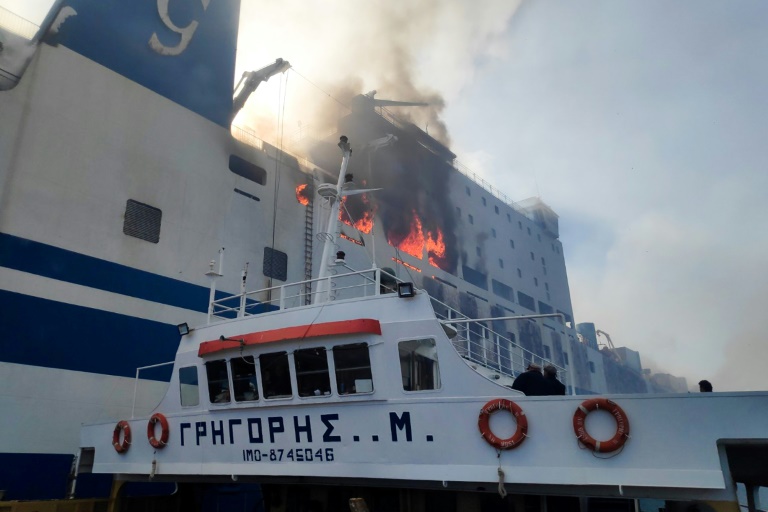
At least 12 truck drivers remained missing from an Italian-flagged ferry ablaze for a second day off Corfu Saturday, as criticism mounted over conditions onboard.

The blaze on the Euroferry Olympia prevented rescuers from boarding, but tugboats managed to tow the vessel closer to the island, ERT television said.

The ferry on Saturday afternoon was just some 6 nautical miles (around 11 km) north of Corfu, ERT said, after anxious relatives started arriving in the morning.

A thick cloud of black smoke billowed into the sky after wind rekindled the fire, with Greek state agency ANA reporting the heat onboard had reached 500 degrees Celsius.

The coastguard has said those missing were all lorry drivers — seven from Bulgaria, three from Greece, one from Turkey and one from Lithuania.

On Friday, 280 passengers were evacuated to Corfu after a blaze broke out the previous night as the Olympia was en route from Greece to Italy. 

Rescuers who boarded the burning vessel halted work Friday evening because of the intense heat, dense smoke and darkness, ANA said.

One of the rescuers was taken to hospital with respiratory problems but was released on Saturday, the fire brigade told AFP.

The cause of the fire remains unknown.

Shipping minister Giannis Plakiotakis said a team from the Maritime Accident and Incident Investigation Service was in the area to launch a probe.

– Overcrowded cabins –

ERT reported the vessel’s captain and two engineers had on Saturday been brought before a prosecutor.

Plakiotakis told Skai television that, after the fire is extinguished, the ferry would be towed to safety in order to pump out any fuel, and avoid marine pollution.

Rescued truckers told Greece’s public broadcaster some drivers had preferred to sleep in their vehicles because the cabins were overcrowded. 

According to the Kathimerini newspaper, the Greek trucker union had since June 2017 warned about conditions on the Olympia as well as another ferry belonging to Italian ferry and container operator, Grimaldi. 

Ilias Gerontidakis, the son of a missing Greek trucker, told the Proto Thema online newspaper the Olympia “miserable from every point of view”. 

“It had bed bugs, it was dirty, it had no security systems,” said the young truck driver, as he waited in the port for news.

“It had 150 lorries inside. Normally it should have 70 to 75 cabins, but it only has 50. They force us to sleep four people in a cabin”, he said. “My father, from what I was told, slept in the truck.”

Vassilis Vergis, the cousin of another missing driver, said he thought his relative too “was afraid of the cabins”.

“He probably stayed in the truck because he was afraid of coronavirus,” he added.

The ferry’s operator has claimed the 27-year-old vessel had last completed a safety check on February 16.

– Undocumented travellers –

The ferry was officially carrying 239 passengers and 51 crew, as well as 153 trucks and trailers and 32 passenger vehicles, the company has said. 

But the coastguard has said two of the people rescued — both Afghans — were not on the manifest, sparking fears that more undocumented passengers could also be missing. 

The Bulgarian foreign ministry said 127 of its nationals were on the passenger list, including 37 truck drivers.  

Another 24 were from Turkey, the country’s NTV station said, while ERT said 21 Greeks were aboard.

Among the rescued, nine people remain in hospital with breathing difficulties.

Fahri Ozgen, a rescued passenger, recounted waiting for four hours for rescuers to arrive, as the flames roared around him.

“Two-hundred and fifty people were screaming, shouting, some of them were jumping into the sea,” he told AFP.

“Some of our friends are still missing, we don’t know where they are.”

Turkish trucker Ali Duran said he had lost everything in the fire

“We lost our money, we lost our passports, we lost all our administrative documents,” he said.

“I don’t even have a shoe to wear.”

The last shipboard fire in the Adriatic occurred in December 2014 on the Italian ferry Norman Atlantic. Thirteen people died in that blaze.

Rescuers retrieve more bodies days after Brazil storm

Rescue workers pulled more bodies Saturday from the muddy wreckage left by devastating floods and landslides in the scenic Brazilian city of Petropolis, where the death toll stands at 138, including 26 children.

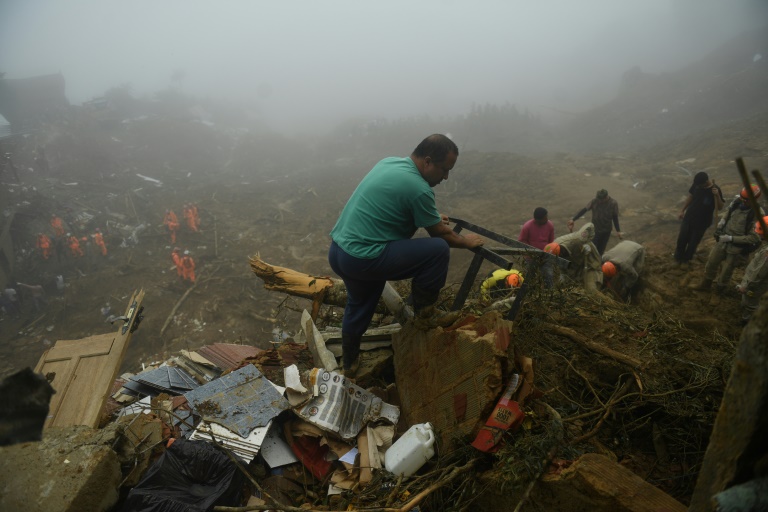
In a dense fog, workers dug with spades and shovels through the rubble and muck as the search entered its fifth day.

An AFP photographer saw rescuers carrying out two recovered corpses in body bags in the hard-hit neighborhood of Alto da Serra, as relatives sobbed in the street.

In the heart of the disaster zone, rescue workers occasionally blew loud whistles to call for silence and listen for signs of life.

But authorities say there is little hope at this point of finding survivors from Tuesday’s torrential rains, which turned streets to gushing rivers in the picturesque city in the southeastern mountains and triggered landslides in poor hillside neighborhoods that wiped out virtually all in their path.

Officials say 24 people have been rescued alive, but that came mostly in the early hours after the tragedy.

Rio de Janeiro state police said 218 people remained missing as of late Friday.

Meanwhile, 91 of the 138 bodies recovered so far have been identified.

Many of the missing may be among the unidentified bodies. But the numbers have been hazy, and it is difficult to know how high the death toll could go.

The dead include at least 26 minors, said the police.

President Jair Bolsonaro, who flew over the disaster zone Friday by helicopter, said the city was suffering from “enormous destruction, like scenes of war.”

Tuesday’s was the latest in a series of deadly storms to hit Brazil, which experts say are made worse by climate change.

In the past three months, at least 188 people have died in severe rains, mainly in the southeastern state of Sao Paulo and the northeastern state of Bahia, as well as Petropolis.

– ‘Like ants’ –

Normal life has been slow returning to central Petropolis, a charming tourist town that was the 19th-century summer capital of the Brazilian empire.

Staff were busy cleaning out shops in the city center, where little was open besides essential stores such as supermarkets and pharmacies.

City officials set up a new collection point for charitable donations on a highway outside town in a bid to lessen traffic chaos created by swarms of ambulances, heavy machinery and trucks loaded with donated food, water and clothing.

“There has been a very strong current of solidarity, for which we are immensely grateful,” said city social assistance secretary Karol Cerqueira in a statement.

Atop the worst landslide, in Alto da Serra, rescue workers in bright orange uniforms and exhausted residents looking for their missing loved ones kept up a slow, dogged search.

Authorities say the mountain of mud and rubble is unstable, so the search is being carried out with hand tools and chainsaws at the hardest-to-reach spots.

It would be too dangerous to bring in the excavators being used in less difficult zones near the bottom of the hillside, said Roberto Amaral, coordinator of the local fire department’s special rescue group.

“It’s impossible to bring in heavy machinery up here, so we basically have to work like ants, going little by little,” he told AFP.

A sobering series of funerals meanwhile continued at the city’s main cemetery, where 72 victims have been buried so far — 19 on Saturday morning alone.

Brother freed over 'honour killing' of Pakistani social media star

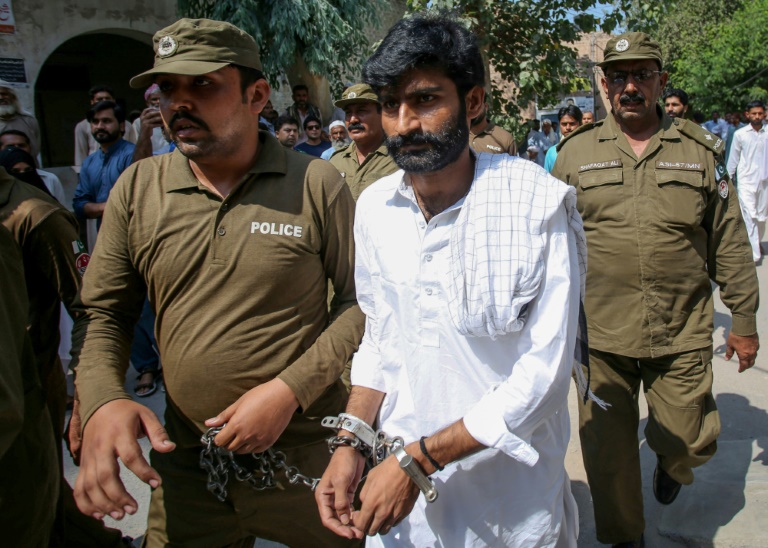
A Pakistani man who murdered his celebrity sister was freed on Saturday after a court ruled it was not an “honour killing”, allowing their mother to pardon him, lawyers said.

Qandeel Baloch was strangled to death in 2016 by her brother Muhammad Waseem, who described her suggestive behaviour on social media as “intolerable”.

In response to public outrage, Pakistan passed legislation supposedly closing a legal loophole that allowed family members to forgive those behind so-called “honour killings”, imposing a mandatory life sentence instead.

But after less than six years in prison, an appeal judge ruled that Baloch’s murder could not be defined as a crime of honour, dismissing his confession.

In line with Pakistan’s other laws on murder, the mother was allowed to grant his freedom.

“Waseem has been released from the prison in compliance with the order of honorable Lahore High Court,” his lawyer Sardar Mehboob told AFP. 

“He is a free man now,” he added.

Waseem, 38, was released from jail in the eastern city of Multan after being acquitted on Monday. 

Maleeka Bokhari a woman parliamentarian said the government was “undertaking a review of legal options” against the acquittal.

Earlier Pakistan’s information minister Fawad Chaudhry had said the government will challenge the verdict at Pakistan’s top court.

“We as a nation should be ashamed of such (legal) system,” Chaudhry said on Twitter.

Baloch became famous for her flirty and defiant posts which flew in the face of the nation’s deeply patriarchal mores.

Waseem was arrested immediately after her death and later sentenced to life in prison for strangling her — brazenly telling the media he had no remorse.

The case became the most high profile “honour killing” of recent years — where women are dealt lethal punishment by male relatives for purportedly bringing “shame” to the reputation of a family.

The court’s verdict published on Friday said had been “acquitted from the case on the basis of compromise”, saying a confession from the killer “cannot be considered more than a piece of paper”.

In Baloch’s case, her parents initially insisted their son would be given no absolution, but they later changed their minds and said they wanted him to be forgiven.

A lawyer for the mother said she had given “her consent” to pardon him, according to her lawyer Safdar Shah on Monday.

Ethiopia to start generating power from Nile dam Sunday

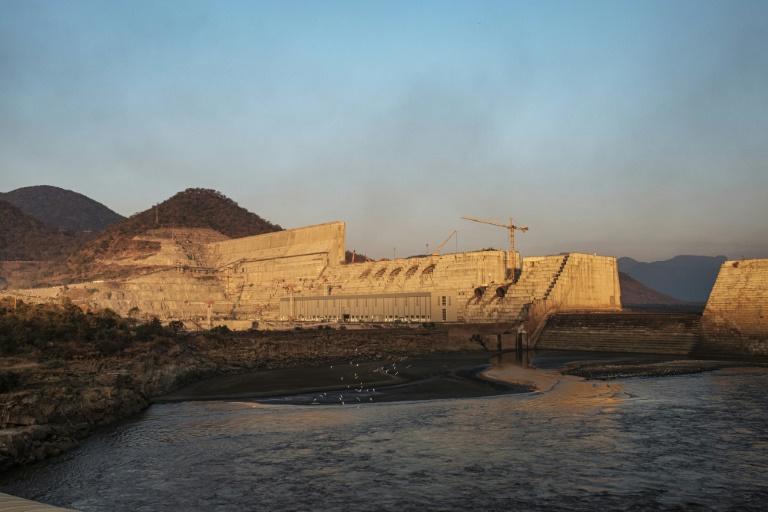
Ethiopia will start generating power from its mega-dam on the Blue Nile on Sunday, government officials told AFP, a major milestone for the controversial project.

The Grand Ethiopian Renaissance Dam (GERD), set to be the largest hydroelectric scheme in Africa, has been at the centre of a regional dispute ever since Ethiopia broke ground there in 2011. 

“Tomorrow will be the first energy generation of the dam,” an Ethiopian government official said on Saturday.

A second official confirmed the information. Both spoke on condition of anonymity because the development has not been officially announced.

Ethiopia’s downstream neighbours Egypt and Sudan view the dam as a threat because of their dependence on Nile waters, while Addis Ababa deems it essential for its electrification and development.

There was no immediate response from Cairo or Khartoum, which have been pressing Ethiopia to sign a binding agreement on the filling and operation of the dam ever since work first started.

The three governments have held multiple rounds of talks. but so far there has been no sign of any breakthrough.

The $4.2-billion (3.7-billion-euro) project is ultimately expected to produce more than 5,000 megawatts of electricity, more than doubling Ethiopia’s electricity output. 

Ethiopia had initially planned output of around 6,500 megawatts, but later reduced its target.

“The newly generated electricity from the GERD could help revive an economy that has been devastated by the combined forces of a deadly war, rising fuel prices and the Covid-19 pandemic,” said Addisu Lashitew of the Brookings Institution in Washington.

– Failed talks –

The 145-metre (475-foot) high dam lies on Blue Nile River in the Benishangul-Gumuz region of western Ethiopia, not far from the border with Sudan.

Egypt, which depends on the Nile for about 97 percent of its irrigation and drinking water, sees the dam as an existential threat.

Sudan hopes the project will regulate annual flooding, but fears its own dams could be harmed without agreement on the GERD’s operation.

Talks sponsored by the African Union (AU) have failed to yield a three-way agreement on the dam’s filling and operations, and Cairo and Khartoum have demanded Addis Ababa cease filling the massive reservoir until such a deal is reached. 

But Ethiopian officials have argued that filling is a natural part of the dam’s construction process and cannot be stopped.

The UN Security Council met last July to discuss the project, although Ethiopia later slammed the session as an “unhelpful” distraction from the AU-led process. 

In September the Security Council adopted a statement encouraging Egypt, Ethiopia and Sudan to resume negotiations under AU auspices.

Egypt claims a historic right to the Nile dating from a 1929 treaty that gave it veto power over construction projects along the river.

A 1959 treaty boosted Egypt’s allocation to around 66 percent of the river’s flow, with 22 percent for Sudan.

Yet Ethiopia was not party to those treaties and does not see them as valid.

The process of filling the GERD’s vast reservoir began in 2020, with Ethiopia announcing in July of that year it had hit its target of 4.9 billion cubic metres.

The reservoir’s total capacity is 74 billion cubic metres, and the target for 2021 was to add 13.5 billion. 

Last July Ethiopia said it had hit that target, meaning there was enough water to begin producing energy, although some experts had cast doubt on the claims.

Russia test fires missiles as US warns Moscow 'poised' to invade Ukraine

Russia test fired nuclear-capable missiles on Saturday as President Vladimir Putin oversaw a dramatic military exercise and as the United States again warned that it believes Moscow plans to invade Ukraine within days.

Ukrainian President Volodymyr Zelensky meanwhile arrived in Germany to shore up support among Western allies, despite a significant increase in shelling in the country’s east in which a Ukrainian soldier was killed.

The fierce US warnings and the evacuation of civilians from Russian-backed rebel regions in Ukraine have brought fears of a major conflict in Europe to their highest level after weeks of tensions.

The Kremlin insists it has no plans to attack its neighbour, which has angered Moscow by seeking closer ties with NATO and the European Union.

But Moscow is doing nothing to reduce fears, with state media accusing Kyiv of plotting an assault on the rebel-held pro-Russia enclave in eastern Ukraine.

Russian television showed images of Putin and Belarusian leader Alexander Lukashenko sitting at a round table in the Kremlin situation room, in front of a bank of screens showing military commanders as they test-fired their latest hypersonic, cruise and nuclear-capable ballistic missiles.

“All the missiles hit their targets, confirming their performance objectives,” the Kremlin said, adding that the drills included Tu-95 bombers and submarines.

Earlier, Kremlin spokesman Dmitry Peskov had made a reference to nuclear launch codes.

“Such test launches, of course, are impossible without the head of state. You know about the famous black suitcase and the red button,” he said. 

– ‘Poised to strike’ –

Russia’s defence ministry said the exercise involved nearly all branches of the armed forces, including its strategic rocket forces, as well the Northern and Black Sea fleets, which have nuclear-armed submarines.

The United States insists that, with some 150,000 Russian troops on Ukraine’s borders — as many as 190,000, when including the Russian-backed separatist forces in the east — Moscow has already made up its mind to invade.

Some of the Russian forces, around 30,000 troops, are in Belarus for an exercise which is due to end on Sunday. Moscow has said that these forces will return to barracks, but US intelligence is concerned that they could take part in an invasion of Ukraine. 

US President Joe Biden said Friday that he was sure Putin had made the call to invade, regardless of warnings that it would trigger huge Western sanctions, and the attack could come in the next days with targets that would include the capital Kyiv.

On Saturday, visiting NATO ally Lithuania, US Secretary of Defense Lloyd Austin said Russian forces “are now poised to strike” and “moving into the right kinds of positions to be able to conduct an attack”.  

Russia has announced a series of withdrawals of its forces from near Ukraine in recent days, saying they were taking part in regular military exercises and accusing the West of “hysteria” with claims of an invasion plan.

But Putin has also stepped up his rhetoric, demanding written guarantees that Ukraine will never be allowed to join NATO and that the US-led military alliance roll back deployments in eastern Europe to positions from decades ago.

– ‘Dramatic increase’ in clashes –

The volatile frontline between Ukraine’s army and separatists in the Moscow-backed breakaway regions of Donetsk and Lugansk has seen a “dramatic increase” in ceasefire violations, international monitors from the OSCE said.

Hundreds of artillery and mortar attacks were reported in recent days, in a conflict that has rumbled on for eight years and claimed the lives of more than 14,000 people.

Ukraine’s armed forces accused the rebels of a huge new wave of attacks on Saturday, saying there had been dozens of exchanges of fire by 7:00 am (0400 GMT), with one soldier dying from shrapnel wounds.

The soldier, a captain in an intelligence unit, was the fourth Ukrainian soldier to die in the first seven weeks of this year. At least 66 were killed in 2021, according to official sources.

The rebels, who also accused Ukrainian forces of new attacks on Saturday, declared general mobilisations in the two regions, calling up men to fight even as they announced mass evacuations of women and children into Russia.

The governor of the neighbouring Russian region of Rostov declared a state of emergency as the first busloads of several thousand crossed the border, followed by Russian state media camera crews.

Moscow and the rebels have accused Kyiv of planning an assault to retake the regions, claims fiercely denied by Ukraine and dismissed by the West as part of Russian efforts to manufacture a pretext for war.

Russia’s Investigative Committee, which probes major crimes, said it had opened an investigation into media reports that a shell fired by Ukrainian forces exploded about a kilometre across the border in Russia’s Rostov region.

Russian news agencies earlier quoted anonymous sources as saying the shell had landed in the region but had not caused any injuries or damage.

Despite the invasion warnings, Zelensky’s office said he would not change plans to personally attend Saturday’s Munich Security Conference.

“Volodymyr Zelensky expects concrete agreements concerning the delivery to our country of additional military and financial support,” his office said, adding that he would return to Kyiv later Saturday.

Ethiopia to start generating power from Nile dam Sunday

Ethiopia will start generating power from its mega-dam on the Blue Nile on Sunday, government officials told AFP, a major milestone for the controversial project.

The Grand Ethiopian Renaissance Dam (GERD), set to be the largest hydroelectric scheme in Africa, has been at the centre of a regional dispute ever since Ethiopia broke ground there in 2011. 

“Tomorrow will be the first energy generation of the dam,” an Ethiopian government official said on Saturday.

A second official confirmed the information. Both spoke on condition of anonymity because the development has not been officially announced.

Ethiopia’s downstream neighbours Egypt and Sudan view the dam as a threat because of their dependence on Nile waters, while Addis Ababa deems it essential for its electrification and development.

There was no immediate response from Cairo or Khartoum, which have been pressing Ethiopia to sign a binding agreement on the filling and operation of the dam ever since work first started.

The three governments have held multiple rounds of talks. but so far there has been no sign of any breakthrough.

The $4.2-billion (3.7-billion-euro) project is ultimately expected to produce more than 5,000 megawatts of electricity, more than doubling Ethiopia’s electricity output. 

Ethiopia had initially planned output of around 6,500 megawatts, but later reduced its target.

“The newly generated electricity from the GERD could help revive an economy that has been devastated by the combined forces of a deadly war, rising fuel prices and the Covid-19 pandemic,” said Addisu Lashitew of the Brookings Institution in Washington.

– Failed talks –

The 145-metre (475-foot) high dam lies on Blue Nile River in the Benishangul-Gumuz region of western Ethiopia, not far from the border with Sudan.

Egypt, which depends on the Nile for about 97 percent of its irrigation and drinking water, sees the dam as an existential threat.

Sudan hopes the project will regulate annual flooding, but fears its own dams could be harmed without agreement on the GERD’s operation.

Talks sponsored by the African Union (AU) have failed to yield a three-way agreement on the dam’s filling and operations, and Cairo and Khartoum have demanded Addis Ababa cease filling the massive reservoir until such a deal is reached. 

But Ethiopian officials have argued that filling is a natural part of the dam’s construction process and cannot be stopped.

The UN Security Council met last July to discuss the project, although Ethiopia later slammed the session as an “unhelpful” distraction from the AU-led process. 

In September the Security Council adopted a statement encouraging Egypt, Ethiopia and Sudan to resume negotiations under AU auspices.

Egypt claims a historic right to the Nile dating from a 1929 treaty that gave it veto power over construction projects along the river.

A 1959 treaty boosted Egypt’s allocation to around 66 percent of the river’s flow, with 22 percent for Sudan.

Yet Ethiopia was not party to those treaties and does not see them as valid.

The process of filling the GERD’s vast reservoir began in 2020, with Ethiopia announcing in July of that year it had hit its target of 4.9 billion cubic metres.

The reservoir’s total capacity is 74 billion cubic metres, and the target for 2021 was to add 13.5 million. 

Last July Ethiopia said it had hit that target, meaning there was enough water to begin producing energy, although some experts had cast doubt on the claims.

On Russia's border, evacuees from rebel-held Ukraine hope for quick return

The loud explosions and wailing sirens in rebel-held territory in eastern Ukraine were getting more frequent, so when the evacuation order came Elena Sokela decided it was time to get her son to safety.

“We didn’t want to wait until it was too late. Better to get out now,” the 40-year-old told AFP Saturday at a border crossing between the rebel Donetsk region and Russia, a day after the order to evacuate came down.

There was a steady flow of people acting on the order to leave, crossing between wire fencing topped with Russian flags on a bright morning at the Avila Uspenka checkpoint into Russia.

On Friday evening, leaders of two separatist republics in east Ukraine ordered women and children to flee and as soon as possible make their way to Russia.

Their poor and industrial rebel-controlled territories in Ukraine have been at the centre of weeks of tensions between Russia and the West.

Conflict monitors have warned of a sharp escalation in ceasefire violations in fighting between Ukraine’s army and the separatists, a trend Sokela herself could attest to.

In her hometown of Shakhtarsk, she said, “we can hear everything perfectly clearly. There were explosions on Thursday. Some heavy stuff was coming down.”

The US government earlier hit out at the orders, saying the move by Moscow-backed rebels was a “cynical” effort by Moscow to deflect from what the West fears is an imminent Russian invasion.

At the checkpoint Saturday there was a steady stream of elderly women and children, dressed in puffy coats on a crisp winter day and dragging wheelie bags.

Sokela was bringing her 16-year-old son to stay with his grandmother in Russia “where it’s calm” but planned to return herself.

“Let’s stay for a week and come back. Or maybe the school will be closed. No one has said anything yet,” Sokela said.

Separatist leaders have announced plans to get hundreds of thousands of people out of the territory and into Russia, but AFP journalists at the crossing Saturday witnessed no mass exodus.

– ‘Can’t abandon people’ –

There was only a small row of cars on the separatist side waiting to cross into Russia, and 10 school buses waiting to ferry arrivals stood empty.

Fifteen tents set up by the emergencies ministry on the Russian side of the crossing had no one to house.

So far, separatist officials have said fewer than 20,000 people have left, a fraction of the region’s estimated population of three million people.

Still, Russian authorities were readying for a large influx.

The head of the Rostov region bordering Ukraine Saturday announced a state of emergency pointing to “an increase in the number of citizens who cross the border.”

The head of Russia’s emergencies ministry, who was dispatched by the Kremlin to Rostov, said Saturday some 400 people and 150 vehicles were in place to receive people arriving from separatist territory.

Several other nearby regions have announced they will house Donetsk and Lugansk residents.

President Vladimir Putin on Friday ordered handouts of 10,000 rubles (about 100 euros) to evacuees and health officials have said those entering Russia can be tested for the coronavirus and vaccinated.

Many, however, hope the displacement will be temporary.

The head of the so-called Donetsk People’s Republic Denis Pushilin met with residents leaving, Russian news agencies reported, to offer reassurances.

“I hope it won’t be for long,” he was cited as saying. “But safety is paramount.”

Lyubov Rodoman, a 57-year-old nurse also from Shakhtarsk, was crossing into Rostov in the morning but was only planning a short stay.

“I’ll be here in Russia today to do my errands and then I’ll come back later,” she said.

“I’m a medical professional. I can’t abandon people. I didn’t leave them in 2014, I won’t leave them now,” she added.
Nearly 60 rebel fighters 'neutralised' in Mali: army

Eight soldiers and 57 “terrorists” were killed in clashes at a rebel base in northern Mali where rival jihadist groups, including the so-called Islamic State, are active, the Malian army said on Saturday.

Friday’s fighting followed an air raid and erupted just a day after France and its allies announced their military withdrawal from the African country.

The Malian army said it carried out the attack against the rebel base after its troops had been attacked by “unidentified armed men” in the Archam region in the conflict-plagued north, near the border with restive Burkina Faso and Niger. 

Eight soldiers died and 57 armed rebels were “neutralised” in the ensuing “violent clashes,” the army said. 

Mali, a landlocked nation of 21 million people, has struggled to contain a brutal jihadist insurgency that emerged in 2012, before spreading to neighbouring Burkina Faso and Niger.

Thousands of soldiers and civilians have been killed and two million people have been displaced by the Sahel-wide conflict, of which Mali remains the epicentre. 

About 40 civilians — believed to be loyal to rival jihadist groups, according to local sources — have been killed this week in the same area where the incident on Friday occurred. 

It took place in the so-called “three borders” area, a hotspot of jihadist violence where the Islamic State in the Greater Sahara (EIGS) and the Sahel’s largest jihadist alliance, the al-Qaeda-aligned GSIM group, are particularly active. 

The Mali army said it had been looking for “terrorist sanctuaries” in the area. 

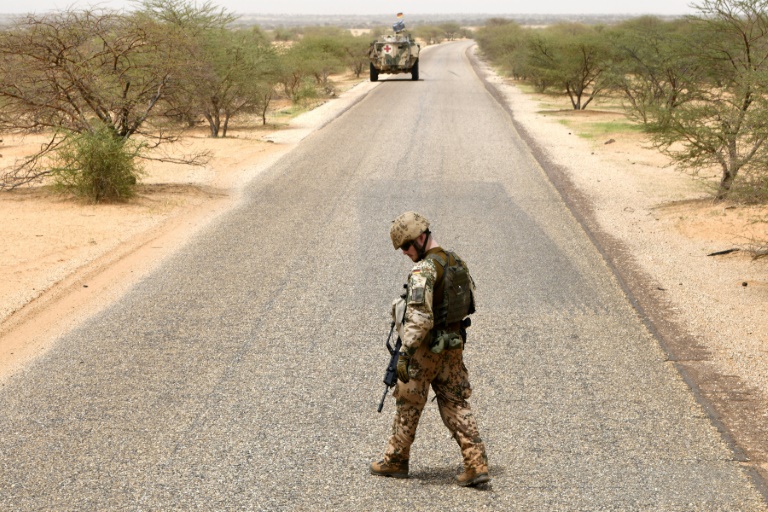
The forces deployed to the “three borders” area include Mali’s own army, as well as French and European troops and UN peacekeepers. 

— French pull-out —

Just a day before, French President Emmanuel Macron announced the withdrawal of French troops from Mali.

France first intervened in the country in 2013 and currently has around 4,600 troops stationed across the Sahel, 2,400 of them in Mali.

But relations between the two countries deteriorated sharply after Malian army officers led by Colonel Assimi Goita deposed elected president Ibrahim Boubacar Keita in August 2020. 

The army then deposed the civilian leaders of a transitional government last year, in a second coup. 

Mali’s international partners — including France and the Economic Community of West African States (ECOWAS) — insisted that the junta stick to a pledge to stage elections in February 2022 and restore civilian rule. 

But the junta then floated plans to stay in power for up to five years.  

On Friday, Mali’s army-led government asked France to withdraw its forces from the Sahel state “without delay”.

Mali has also asked the smaller European Takuba group of special forces, created in 2020, to depart quickly.

But Macron responded with a statement saying he would not compromise the safety of French soldiers and the withdrawal will take place “in orderly fashion”. 

Close Bitnami banner
Bitnami