World

13 die as Storm Eunice leaves thousands in Europe without power

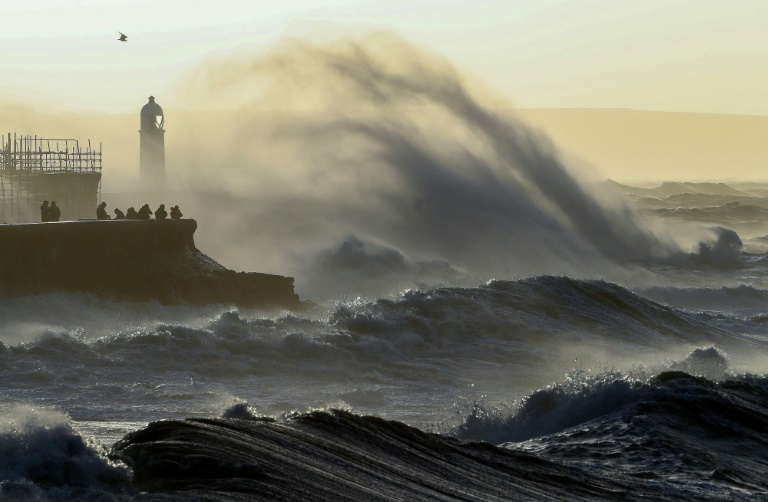
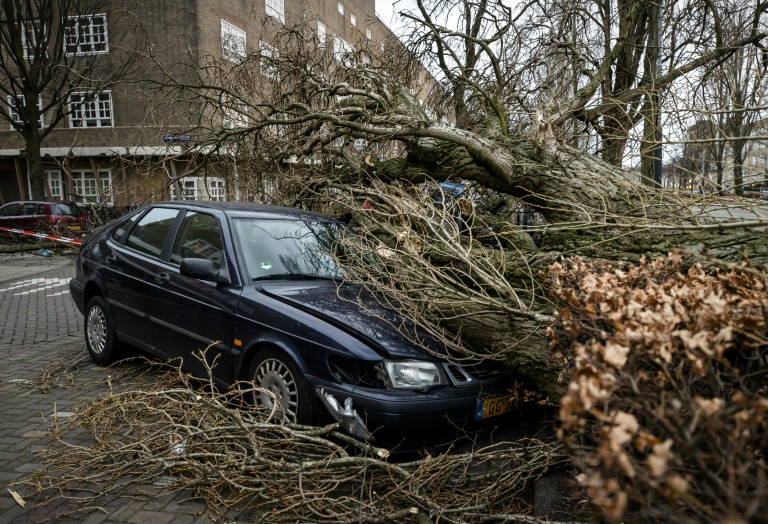
Emergency crews Saturday battled to restore power to hundreds of thousands of homes in Britain after Storm Eunice carved a deadly trail across Western Europe and left transport networks in disarray. 

At least 13 people were killed by falling trees, flying debris and high winds in Britain, Ireland, the Netherlands, Belgium, Germany and Poland, emergency services said.

Train operators in Britain urged people not to travel, with trees still blocking several lines after most of the network was shut down when Eunice on Friday brought the largest wind gust ever recorded in England — 122 miles (196 kilometres) per hour.

The train network in the Netherlands was also paralysed, with no Eurostar and Thalys international services running from Britain and France after damage to overhead power lines.

France was also grappling with rail disruption and about 37,000 households were without power, while some 8,000 remained cut off in Ireland and 194,000 in Poland.

The UK was worst hit by power cuts with nearly 400,000 homes cut off nationwide after one of the most powerful tempests since the “Great Storm” hit Britain and northern France in 1987, sparking the first-ever “red” weather warning for London on Friday.

The Met Office, Britain’s meteorological service, issued a less-severe “yellow” wind warning for much of the south coast of England and South Wales on Saturday, which it said “could hamper recovery efforts from Storm Eunice”.

Scientists said both the 1987 storm and Eunice packed a “sting jet”, a rarely seen meteorological phenomenon borne out of an unusual confluence of pressure systems in the Atlantic that magnified the effects on Friday.

Planes struggled to land in high winds, a section of roof on London’s O2 Arena was shredded, and the spire of a church in the historic city of Wells, southwest England, crashed to the ground.

The UK’s total bill for damage could exceed £300 million ($410 million, 360 million euros), according to the Association of British Insurers, based on repairs from previous storms.

– ‘Explosive storms’ –

Hundreds of flights were cancelled or delayed at London’s Heathrow and Gatwick airports and Schiphol in Amsterdam. 

One easyJet flight from Bordeaux endured two aborted landings at Gatwick — which saw wind gusts peak at 78 miles per hour — before being forced to return to the French city.

Ferries across the Channel, the world’s busiest shipping lane, were suspended, before the English port of Dover reopened Friday afternoon. 

London’s rush-hour streets, where activity has been slowly returning to pre-pandemic levels, were virtually deserted Friday as many heeded government advice to stay at home.

The London Fire Brigade declared a “major incident” after taking 550 emergency calls in just over two hours — although it complained that several were “unhelpful”, including one from a resident complaining about a neighbour’s garden trampoline blowing around.

The RAC breakdown service said it had received unusually low numbers of call-outs on Britain’s main roads, indicating that motorists were “taking the weather warnings seriously and not setting out”.

Experts said the frequency and intensity of the storms could not be linked necessarily to climate change. 

But Richard Allan, professor of climate science at the University of Reading, said a heating planet was leading to more intense rainfall and higher sea levels.

Therefore, he said, “flooding from coastal storm surges and prolonged deluges will worsen still further when these rare, explosive storms hit us in a warmer world”.
Russian troops 'poised to strike' Ukraine: US defence chief

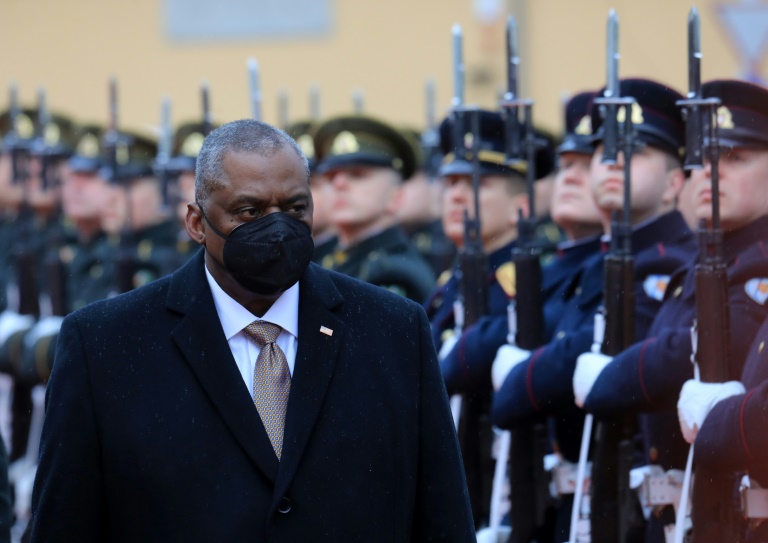
Russian troops on Ukraine’s border are “uncoiling” and “poised to strike”, US Secretary of Defense Lloyd Austin said on Saturday during a visit to Lithuania.

“They are uncoiling and are now poised to strike,” he said, adding that troops were “moving into the right kinds of positions to be able to conduct an attack”.

But he said conflict was “not inevitable”, adding that Russian President Vladimir Putin “can choose a different path”.

“The US, in lockstep with our allies and partners, have offered him an opportunity to pursue a diplomatic solution. We hope that he takes it. We hope that he steps back from the brink of conflict.”

Austin said he agreed with US President Joe Biden that Putin had “made the decision” to invade.

“There are significant combat forces forward, those forces are now beginning to uncoil and move closer to the border, that facilitates their onward movement,” he said.

“Having done this before, I can tell you that is exactly what you need to attack and the stance that you need to be in to attack,” said Austin, who served as US commander in Iraq.

Austin also assured the Baltic states of Estonia, Latvia and Lithuania that the US “stands with our allies” and its commitment to NATO’s collective defence was “iron-clad”.

The current security tensions in the region have rattled the formerly Soviet-ruled Baltic states, which all have borders with Russia.

Alongside Austin, Lithuanian Foreign Minister Gabrielius Landsbergis said the Russian troop build-up around Ukraine was “a direct military threat to Ukraine but it also poses a threat to the entire region”.

“The battle for Ukraine is a battle for Europe. If he is not stopped there, he will go further,” Landsbergis said, referring to Putin.

The Baltics have asked NATO allies to send reinforcements to their countries on top of the existing alliance battle groups deployed there after Russia’s annexation of Crimea in 2014.

Britain and Germany have pledged extra troops for the region, while the US has sent 4,700 reinforcements to neighbouring Poland, which also shares a border with Belarus and Russia.

The United States and Ukraine say there are now around 150,000 Russian troops massed on Ukraine’s borders in Russia and Belarus.

12 missing off Greece as ferry fire burns on

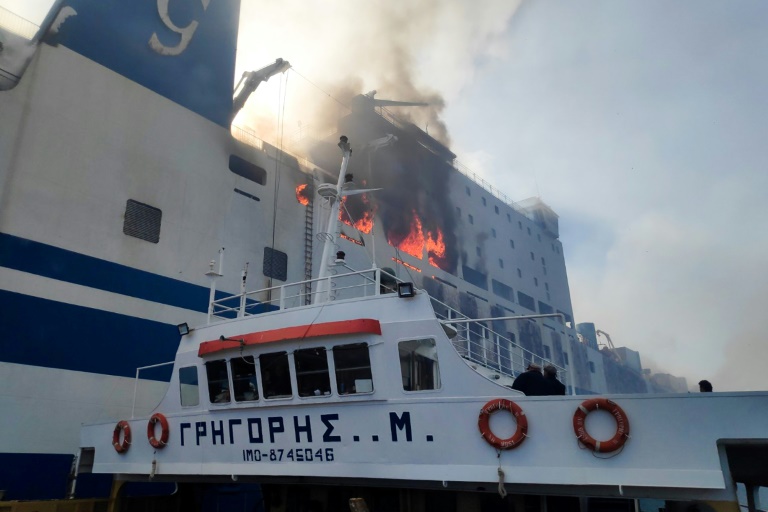
At least 12 truck drivers remained missing on Saturday from an Italian-flagged ferry still ablaze on the Ionian Sea off Corfu, Greece’s coastguard said.

Patrol ships were combing the area off the holiday island hoping to locate survivors.

The blaze on the Euroferry Olympia prevented rescuers from boarding on Saturday morning, but a helicopter, a frigate, a fire-fighting vessel and six tug boats were operating in the area more than 50 kilometres (30 miles) from Corfu.

According to ERT television, the wind had rekindled the fire by Saturday noon.

A thick cloud of black smoke was billowing into sky and the heat on board had reached 500 degrees Celsius.

On Friday, 280 passengers were evacuated to Corfu after the blaze on the Olympia broke out en route from Greece to Italy.

The cause of the fire remains unknown.

Shipping minister Giannis Plakiotakis said a team from the Maritime Accident and Incident Investigation Service was in the area to launch an  investigation.

ERT reported the vessel’s captain and two engineers had on Saturday been brought before a prosecutor.

Plakiotakis added in an interview with Skai television that after the fire is extinguished the ferry was expected to be towed to safety in order to pump out fuel and water and avoid marine pollution.

The coastguard said all of the missing are truck drivers — seven from Bulgaria, three from Greece, one from Turkey and one from Lithuania.

– Over-crowded cabins –

Truckers who were rescued from the vessel told Greece’s public broadcaster some drivers preferred to sleep in their vehicles because the cabins were over-crowded. 

According to the Kathimerini newspaper, since June 2017 the Syndicate of Greek Professional Truck Drivers had warned about the conditions on the Olympia as well Euroferry Egnazia, both belonging to Italy’s Grimaldi group ferry and container operator. 

In a letter to the Greek Marine Ministry they reported the air conditioning did not work in the cabins and there were not enough cabins for the number of passengers. 

They had also complained that the ventilation in the garage did not work. 

The 27-year-old ship’s latest safety check was at Igoumenitsa on February 16, Grimaldi said.

According to the company, the ferry was officially carrying 239 passengers and 51 crew, as well as 153 trucks and trailers and 32 passenger vehicles. 

But, raising concern for how many unofficial passengers could still be missing, the coastguard said two of the people rescued were not on the manifest. 

Both were Afghans, the coastguard told AFP.  

The Bulgarian foreign ministry said 127 of its nationals were on the passenger list, including 37 truck drivers.  

Another 24 were from Turkey, the country’s NTV station said, while ERT said 21 Greeks were aboard.

Among the rescued, nine people remained in hospital with breathing difficulties. 

– ‘Jumping in the sea’ –

“Two Bulgarians were hospitalised, one had very low saturation (levels) and was intubated,” deputy foreign minister Velislava Petrova told a briefing Saturday.

Families of the missing started arriving in Corfu on Saturday accompanied by a psychologist provided by the Greek shipping ministry.

Rescuers who boarded the burning vessel halted work Friday evening because of the intense heat, dense smoke and darkness, Athens News Agency said.

One was taken to hospital with respiratory problems but released on Saturday, the fire brigade told AFP.  

“We were waiting for four hours before the rescue came, we were in the fire, in the night, we felt only the fire underneath our feet,” Fahri Ozgen, a rescued passenger, told AFP.  

“250 people were screaming, shouting, some of them were jumping into the sea. Some of our friends are still missing, we don’t know where they are.”

Some passengers lost everything in the fire.

“We lost our money, we lost our passports, we lost all our administrative documents, I don’t even have a shoe to wear on my foot. We can’t make any phone call I can’t phone Turkey,” said trucker Ali Duran.  

The last shipboard fire in the Adriatic occurred in December 2014 on the Italian ferry Norman Atlantic. Thirteen people died in that blaze.

Purdue Pharma owners up opioid settlement offer to $6 bn

The owners of Purdue Pharma, maker of OxyContin, have offered to pay up to $6 billion to victims of the US opioid crisis to settle an avalanche of litigation, according to a report filed Friday by a federal mediator.

The Sackler family’s new offer would raise by at least a billion dollars a $4.5 billion bankruptcy settlement thrown out by a US judge in December over language that would have shielded the family from further lawsuits involving the highly addictive prescription painkiller.

Under the new proposal, the Sacklers “would be paying, in total, not less than $5.5 billion and up to $6 billion”, according to Friday’s filing to the US Bankruptcy Court in the Southern District of New York.

But while a “supermajority” of involved parties have agreed to the deal, all eight US states involved along with the District of Columbia would need to sign off for it to move forward, the report filed by US Bankruptcy Court Judge Shelley Chapman states.

The additional funds would be used “exclusively for abatement of the opioid crisis, including support and services for survivors, victims, and their families”, according to the report.

The opioid addiction crisis has caused more than 500,000 overdose deaths in the United States over the past 20 years.

Facing thousands of lawsuits, Purdue filed for bankruptcy in 2019, and it pled guilty to three criminal charges over its aggressive marketing of OxyContin in 2020.

In December, US Judge Colleen McMahon ruled that the federal judge who approved the original bankruptcy plan three months earlier had no authority to prevent future lawsuits against the Sacklers, except in cases of intentional misconduct.

While more than 40 states had signed off on the rejected deal, a group of eight, along with the District of Columbia, refused to accept it.

William Tong, the Connecticut attorney general who led the appeal against the earlier ruling, called its overturning a “seismic victory for justice and accountability”.

Putin oversees missile drills as US steps up Ukraine invasion warnings

Russia was staging another show of military might on Saturday with President Vladimir Putin overseeing drills involving nuclear-capable missiles, hours after the United States warned that it was now sure that Moscow is planning to invade Ukraine within days.

Ukrainian President Volodymyr Zelensky meanwhile was headed to Germany to shore up support among Western allies, despite a significant increase in clashes in the country’s east in which a Ukrainian soldier was killed.

The dramatic US warnings, increased shelling on the frontlines and evacuation of civilians from Russia-backed rebel regions in Ukraine have come together to raise the fear of a major conflict in Europe to its highest amid weeks of tensions.

The Kremlin insists it has no plans to attack its neighbour, which has angered Moscow by seeking long-term integration with NATO and the European Union.

But the United States insists that with some 150,000 Russian troops on Ukraine’s borders — as many as 190,000, when including the Russian-backed separatist forces in the east — Moscow has already made up its mind.

US President Joe Biden said Friday that he was sure Putin had made the call to invade, regardless of warnings that it would trigger huge Western sanctions.

“As of this moment I’m convinced he’s made the decision,” Biden said in televised remarks at the White House.

Biden said the attack could come in the next “week” or “days” and that targets would include the capital Kyiv, “a city of 2.8 million innocent people.”

– Ballistic, cruise missiles –

Russia has announced a series of withdrawals of its forces from near Ukraine in current days, saying they were taking part in regular military exercises and accusing the West of “hysteria” with claims of an invasion plan.

But Putin has also stepped up his rhetoric, demanding the West take Russian demands for security guarantees seriously, and is now personally overseeing drills involving nuclear-capable missiles.

Moscow is demanding written guarantees that Ukraine will never be allowed to join NATO, and for the US-led military alliance to roll back deployments in eastern Europe to positions from decades ago.

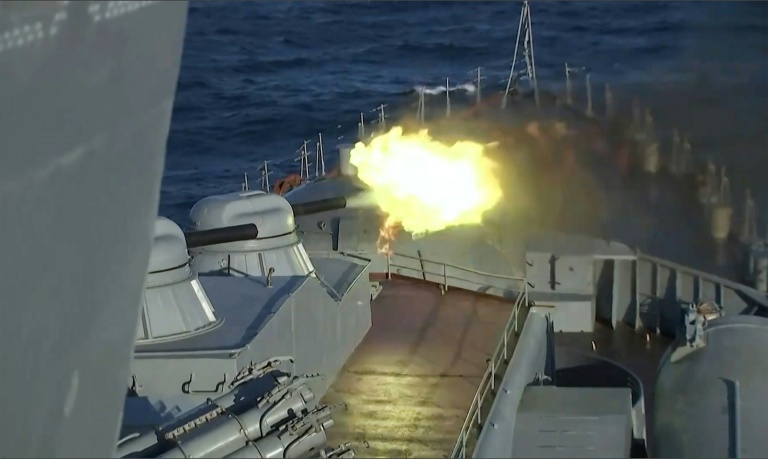
Russia’s defence ministry said Saturday’s “planned exercises” will test launches of ballistic and cruise missiles.

It said the exercises would involve nearly all branches of Russia’s armed forces, including its aerospace and strategic rocket forces, as well the Northern and Black Sea fleets, which have nuclear-armed submarines.

“Putin, most likely, will watch the exercises from the situation centre,” Kremlin spokesman Dmitry Peskov said.

“Such test launches, of course, are impossible without the head of state. You know about the famous black suitcase and the red button,” Peskov said in reference to nuclear launch codes.

– ‘Dramatic increase’ in clashes –

The volatile frontline between Ukraine’s army and separatists in the Moscow-backed breakaway regions of Donetsk and Lugansk has meanwhile seen a “dramatic increase” in ceasefire violations, international monitors from the OSCE said.

Hundreds of artillery and mortar attacks were reported in recent days, in a conflict that has already rumbled on for eight years and claimed the lives of more than 14,000 people.

Ukraine’s armed forces accused the rebels of a huge new wave of attacks on Saturday, saying there had been dozens of exchanges of fire by 7:00 am (0400 GMT), with one soldier dying from shrapnel wounds.

The rebels, who also accused Ukrainian forces of new attacks on Saturday, declared general mobilisations in the two regions.

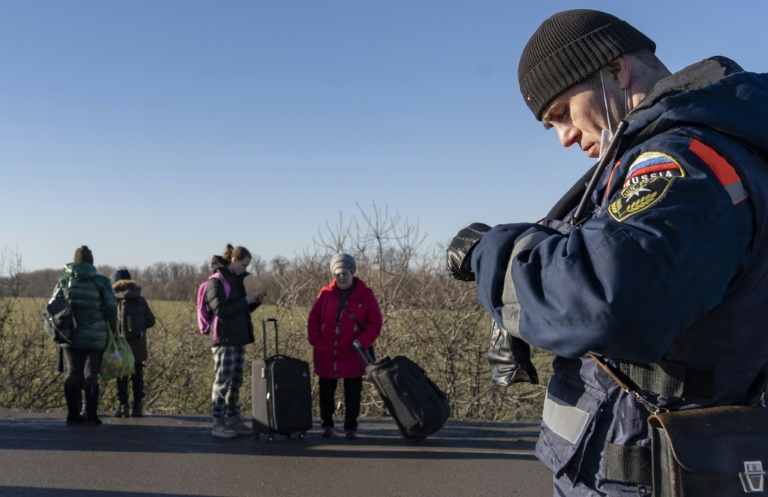
On Friday they had announced mass evacuations of civilians into Russia, where the governor of the neighbouring Rostov region on Saturday declared a state of emergency as several thousand crossed the border.

Moscow and the rebels have accused Kyiv of planning an assault to retake the regions, claims fiercely denied by Ukraine and dismissed by the West as part of Russian efforts to manufacture a pretext for war.

Despite the invasion warnings, Zelensky’s office said he would not change plans to personally attend Saturday’s Munich Security Conference.

The Ukrainian leader will meet with British Prime Minister Boris Johnson, German Chancellor Olaf Scholz and US Vice President Kamala Harris, his office said.

“Volodymyr Zelensky expects concrete agreements concerning the delivery to our country of additional military and financial support,” his office said, adding that he would return to Kyiv later Saturday.

At the conference, Jens Stoltenberg warned that Russia would only get a bolstered NATO on its borders if it invaded.

“If the Kremlin’s aim is to have less NATO on its borders, it will only get more NATO,” he vowed.

Accusing Russia of a “blatant attempt to rewrite the rules of the international order,” EU chief Ursula von der Leyen warned of a “robust package” of financial and economic sanctions against Moscow in case of any aggression.

13 die as Storm Eunice leaves many in Europe without power

Emergency crews Saturday battled to restore power to hundreds of thousands of homes in Britain after Storm Eunice carved a deadly trail across Western Europe and left transport networks in disarray. 

At least 13 people were killed by falling trees, flying debris and high winds in Britain, Ireland, the Netherlands, Belgium, Germany and Poland, according to emergency services.

Train operators in Britain urged people not to travel, with timetables in chaos after most of the network was shut down when Eunice on Friday brought the largest wind gust ever recorded in England — 122 miles (196 kilometres) per hour.

The train network in the Netherlands was also paralysed, with no Eurostar and Thalys international services running from Britain and France after damage to overhead power lines.

France was also grappling with rail disruption, and about 75,000 households were without power.

The UK was worst hit by power cuts with nearly 400,000 homes cut off nationwide after one of the most powerful tempests since the “Great Storm” hit Britain and northern France in 1987, sparking the first-ever “red” weather warning for London on Friday.

The Met Office, Britain’s meteorological service, issued a less-severe “yellow” wind warning for much of the south coast of England and South Wales on Saturday, which it said “could hamper recovery efforts from Storm Eunice”.

Scientists said both the 1987 storm and Eunice packed a “sting jet”, a rarely seen meteorological phenomenon borne out of an unusual confluence of pressure systems in the Atlantic that magnified the effects on Friday.

– ‘Explosive storms’ –

Ferries across the Channel, the world’s busiest shipping lane, were suspended, before the English port of Dover reopened Friday afternoon. 

Hundreds of flights were cancelled or delayed at London’s Heathrow and Gatwick airports and Schiphol in Amsterdam. One easyJet flight from Bordeaux endured two aborted landings at Gatwick — which saw wind gusts peak at 78 miles per hour — before being forced to return to the French city.

London’s rush-hour streets, where activity has been slowly returning to pre-pandemic levels, were virtually deserted Friday as many heeded government advice to stay at home.

The London Fire Brigade declared a “major incident” after taking 550 emergency calls in just over two hours — although it complained that several were “unhelpful”, including one from a resident complaining about a neighbour’s garden trampoline blowing around.

The RAC breakdown service said it had received unusually low numbers of call-outs on Britain’s main roads, indicating that motorists were “taking the weather warnings seriously and not setting out”.

Experts said the frequency and intensity of the storms could not be linked necessarily to climate change. 

But Richard Allan, professor of climate science at the University of Reading, said a heating planet was leading to more intense rainfall and higher sea levels.

Therefore, he said, “flooding from coastal storm surges and prolonged deluges will worsen still further when these rare, explosive storms hit us in a warmer world”.

Violence in Sudan's Darfur lays bare deepening crisis

Attacks on UN facilities, a surge in tribal clashes, lootings, rape, and anti-coup protests — Sudan’s Darfur region is reeling from a widening security gap after last year’s coup.

Sudan is one of the world’s poorest countries but the vast, arid Darfur region has for years suffered more than its share of the nation’s challenges.

When a coup took place in October hundreds of kilometres (miles) away in the capital Khartoum, Darfur was still reeling from the legacy of a conflict that broke out under former strongman Omar al-Bashir in 2003, and which left hundreds of thousands dead.

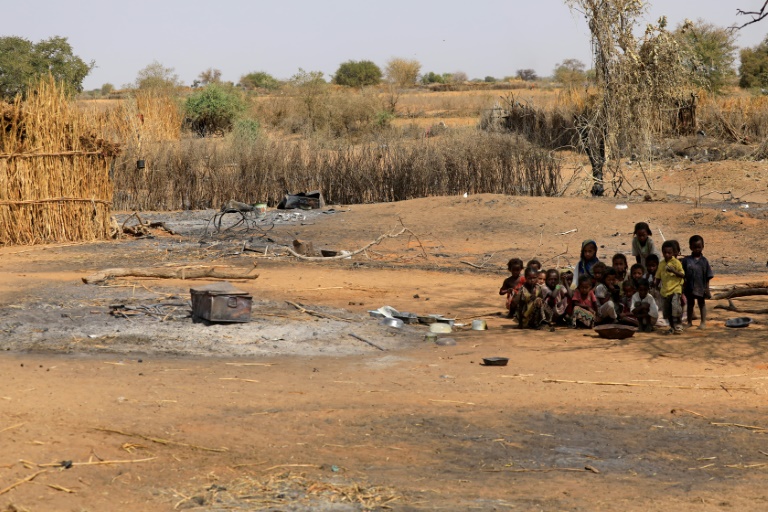
Though the main Darfur conflict subsided, the Darfur region bordering Chad is awash with guns and is home to most of Sudan’s three million displaced people.

Clashes broke out last week between government forces guarding a former United Nations peacekeeping base in North Darfur and members of an armed group that signed a peace deal with the government in 2020. There were multiple deaths on both sides. 

The same facility, which had been a logistics base for the now-disbanded UN and African Union peacekeeping mission, UNAMID, had already been looted in December.

– ‘Extremely dangerous’ –

Around the same time, the World Food Programme suspended operations following more than a day of looting at its warehouses in North Darfur, an act which “robbed nearly two million people of the food and nutrition support they so desperately need,” the agency said.

Disputes over land, livestock, access to water and grazing have since October triggered a spike in conflict that has left around 250 people killed in fighting between herders and farmers. 

At the same time Darfuris — like Sudanese across the country — held demonstrations against the October military coup in Khartoum led by army chief Abdel Fattah al-Burhan.

“The security situation has become extremely dangerous over the past four months, with armed men often stopping and looting cars and people’s belongings,” Mohammed Eissa, a Darfur resident, told AFP. 

Those living in camps since the 2003 Darfur conflict have again been gripped by fear.

“Lootings and rape of women have also become rampant,” said Abdallah Adam, a resident of Zamzam camp for displaced people near North Darfur’s El-Fasher town. 

Renewed violence since late last year has displaced thousands more people from their homes and forced others — already uprooted — to flee once more both within Darfur and over the border to Chad, the United Nations said. 

The unrest that began in 2003 pitted ethnic minority rebels, who complained of discrimination, against the Arab-dominated government of Bashir. Khartoum responded by unleashing the Janjaweed militia, blamed for atrocities including murder, rape, looting and burning villages.

Thousands of Janjaweed were later integrated into the paramilitary Rapid Support Forces led by Mohamed Hamdan Daglo, currently the number two in Sudan’s post-coup ruling council.

Bashir is wanted by the International Criminal Court on charges of genocide in Darfur. He was ousted by the military and detained in April 2019 after mass protests against his three-decade rule.

– ‘No trust’ –  

In a report early this month, UN experts said several of the main armed groups from Darfur “were receiving payments and logistical support” in return for sending thousands of mercenaries to Libya.

Military officials now running Sudan have blamed the latest spike in Darfur violence on delayed crucial security arrangements stipulated in the 2020 peace deal with rebel groups, including those in Darfur. The deal was hoped to end long-running unrest that occurred in various parts of the country under Bashir. It provided for disarming and demobilization of armed factions, and their integration within the army. 

On Thursday, Sudanese authorities said that the worsening economic crisis will not make it possible for such arrangements to be implemented. 

“We need the international community to support us,” said Abdelrahman Abdelhamid, the general in charge of overseeing disarmament, demobilization and reintegration. 

But in response to the coup, the World Bank and United States froze aid. Washington has vowed to apply further pressure if security forces continue to respond violently to anti-coup protesters, dozens of whom have been killed.

Earlier this month, demonstrations broke out against a North Darfur visit by Burhan and his deputy, Daglo. 

“There is no trust at all in the coup authorities,” said Adam Regal, spokesman for the General Coordination for Refugees and Displaced in Darfur, a local NGO.

“The ones in charge now have committed crimes in Darfur under Bashir. How can they protect the people now?” Regal told AFP, urging a return to the “civilian-led transition” disrupted by the putsch.

“Otherwise it will only get worse.” 

Rescue efforts resume for 12 missing in Greece ferry fire

Rescuers picked up the search for 12 missing people at the break of dawn on Saturday with the Italian-flagged ferry still burning on the Ionian Sea off Corfu. 

Overnight, patrol ships combed the area off the holiday island hoping to locate survivors, the Greek coastguard told AFP. 

The fire and the heat on the ferry prevented rescuers from boarding on Saturday morning, but a helicopter, a frigate, a fire-fighting vessel and six tug boats were operating in the area more than 50 kilometres (30 miles) from Corfu.  

Rescuers brought 280 passengers to Corfu after the blaze on the Euroferry Olympia broke out en route from Greece to Italy.

Officials say the cause of the fire remains unknown. 

The coastguard said all of the missing are truck drivers — seven from Bulgaria, three from Greece, one from Turkey and one from Lithuania. 

Truckers who were rescued from the vessel told Greece’s public broadcaster on Saturday that some drivers preferred to sleep in their vehicles because the ship’s cabins were over-crowded. 

According to the Kathimerini newspaper, since June 2017 the Syndicate of Greek Professional Truck Drivers had warned about the conditions on Euroferry Olympia as well Euroferry Egnazia, both belonging to Grimaldi. 

In a letter to the Greek Marine Ministry they reported the air conditioning did not work in the cabins and there were not enough cabins for the number of passengers. 

Also they had complained that the ventilation in the garage did not work. 

The 27-year-old ship’s latest safety check was at Igoumenitsa on February 16, the company said.

– Undocumented passengers –

Black smoke was still billowing into the air Saturday morning, according to the Ert state-run television station, while some explosions were heard. 

Grimaldi Lines, the owner of the vessel, said late last night the fire “is currently under control” but Greek Coast-Guard Saturday morning didn’t confirm. 

According to the company, the ferry was officially carrying 239 passengers and 51 crew, as well as 153 trucks and trailers and 32 passenger vehicles. 

But raising concern for how many unofficial passengers could still be missing, the coastguard said two of the people rescued were not on the manifest. 

Both were Afghans, the coastguard told AFP.  

The Bulgarian foreign ministry said 127 of its nationals were on the passenger list, including 37 truck drivers.  

Another 24 were from Turkey, the country’s NTV station said, while broadcaster ERT said  21 Greeks were onboard.

Among the rescued, nine people taken to hospital with breathing difficulties remained in hospital. 

“Two Bulgarians were hospitalised, one had very low saturation and was intubated,” deputy foreign minister Velislava Petrova told a briefing Saturday.

– ‘Jumping in the sea’ –

A specialised Greek rescue team that boarded the burning vessel halted work Friday evening because of the intense heat, dense smoke and darkness on the ship, Athens News Agency said.

One of the rescuers who went aboard the ferry on Friday was taken to the hospital with respiratory problems, the fire brigade told AFP.  

“We were waiting for four hours before the rescue came, we were in the fire, in the night, we felt only the fire underneath our feet,” Fahri Ozgen, one of the rescued passengers, told AFP.  

“250 people were screaming, shouting, some of them were jumping into the sea. Some of our friends are still missing, we don’t know where they are.”

Some of the passengers lost everything in the fire.

“We lost our money, we lost our passports, we lost all our administrative documents, I don’t even have a shoe to wear on my foot. We can’t make any phone call I can’t phone Turkey.”, trucker Ali Duran explained.  

There is heavy maritime traffic between the western Greek ports of Igoumenitsa and Patras and the Italy’s Brindisi and Ancona. 

The last shipboard fire in the Adriatic occurred in December 2014 on the Italian ferry Norman Atlantic. Thirteen people died in that blaze.

Ukraine showdown casts shadow over Qatar gas summit

Leading gas producers meet in Qatar from Sunday to discuss how to answer frantic world demand, but Russian President Vladimir Putin is expected to stay away as Ukraine tensions soar, diplomats said.

The 11-member Gas Exporting Countries Forum holds its summit as the Ukraine showdown sends prices ever higher while Europe fears for its supplies from Russia.

The group that includes Russia, Qatar, Iran, Libya, Algeria and Nigeria — accounting for more than 70 percent of proven gas reserves — has faced mounting pressure as Europe has sought alternative suppliers to Russia.

But most say they are already at or near maximum production and can only send short term relief supplies to Europe if existing customers agree.

Diplomats who took part in preparatory meetings said the group — which excludes key producers Australia and the United States — will discuss ways to increase production in the medium term.

“But their hands are tied, there is next to no spare gas,” said one, speaking on condition of anonymity.

After two days of ministerial meetings, Iran’s President Ebrahim Raisi, who has rarely left his country since taking office, is to join Qatar’s emir, Sheikh Tamim bin Hamad al-Thani, for the main summit on Tuesday. President Abdelmadjid Tebboune of Algeria will also be present with other government leaders.

Putin is not expected to take up his invitation despite his country’s importance, diplomats said.

Thierry Bros, a professor at the Institute of Political Studies in Paris who specialises in the gas industry, said Russia has a dominant role in the industry as its Gazprom giant is the only enterprise with spare capacity.

“So it is Putin who decides, and he decides at the Kremlin.”

– Contract demands –

Bros said the forum would probably reaffirm its message to Europe that it needs to sign long term contracts to secure a guaranteed supply.

All producing countries will have to make massive investments to increase their output, but the European Union has long resisted contracts of 10, 15 or 20 years. Now, however, it has vowed to transition to clean energies and also faces the Ukraine crisis.

“The meeting is interesting because there are the Russians, with whom we no longer like to speak, and the Qataris, who are big friends with the European Commission, again to try to get liquefied gas.

“For Russia and Qatar, the aim is to maximise revenues and guarantee a long term market for their gas commodity,” he said.

– Ukraine link –

Qatar has increasingly sought to boost its diplomatic sway as a mediator and facilitator, so the Ukraine crisis could also be discussed, according to Andreas Krieg, a security specialist at King’s College London.

“Qatar could use this forum to reach out to Russia over Ukraine as all parties are concerned over what an escalation in the crisis would mean to global gas supply security.”

He said Russia may want contacts with Qatar as European customers look to the emirate as an alternative supplier. Russia currently has a 40 percent share of the European market and Qatar five percent.

“It would be quite an opportunity if Qatar could use the forum to offer their good offices to the United States to mediate between them and Russia in this crisis.”

Qatar and Iran also have overlapping gas interests in the Gulf and the emirate has been seeking to help diplomatic efforts to revive a 2015 nuclear deal between Iran and major powers.

“Sanctions relief for Iran would ultimately also affect the gas sector and gas exports, which would be conducive to the forum’s overall objective of maintaining gas supply security,” Krieg said.

War fears mount as Putin to oversee drills, Zelensky to meet allies

Russia’s leader will oversee major military drills on Saturday, further escalating tensions after Washington said Moscow would invade within days, and Ukraine’s president headed to Europe to drum up support.

Artillery shelling in the east of Ukraine and orders from Russian-backed separatists for civilians to evacuate the region Friday inflamed an already febrile situation as Washington insisted Moscow was encircling its pro-Western neighbour.

The Kremlin continues to say it has no plans to attack.

US President Joe Biden said that the invasion would come in the next week or days and that his Russian counterpart President Vladimir Putin had “made the decision” to invade. But Biden left the door open for a diplomatic resolution.

“Russia has a choice between war and all the suffering it will bring or diplomacy that will make a future for everyone,” Biden said at the White House Friday.

Ukrainian President Volodymyr Zelensky was due to travel to Germany Saturday to meet Western leaders, with talks between him and US Vice President Kamala Harris expected.

Biden questioned whether it was a “wise choice” for Ukraine’s leader to leave his country as war fears reached a fever pitch.

The United States says that with an estimated 149,000 Russian troops on Ukraine’s borders — as many as 190,000, when including the Russian-backed separatist forces — an attack is inevitable.

The Russians have never given a figure for the deployment along the border with Ukraine nor how many are taking part in ongoing drills with neighbouring Belarus.

Compounding fears, Russia’s defence ministry announced that Putin would personally oversee previously scheduled drills involving missile launches on Saturday.

– ‘Change the dynamics’ –

“He’s focussed on trying to convince the world he has the ability to change the dynamics in Europe in a way that he cannot,” Bided added.

There were growing fears that a spark, which Washington warns could be a deliberate “false flag” incident orchestrated by Moscow, could set off the largest military confrontation in Europe since World War II.

NATO chief Jens Stoltenberg, attending the Munich Security Conference, warned the size of the assembled Russian force far exceeded that needed for military drills, and that Russia had the capacity to invade without warning.

France and Germany have urged Russia to use its influence on rebels in Ukraine’s disputed east to “encourage restraint and contribute to de-escalation”.

But on the ground, a spike in clashes has fed a growing sense of dread.

An AFP reporter near the front between Ukrainian government forces and pro-Russian separatists in the Lugansk region heard explosions and saw damaged civilian buildings on Kyiv’s side of the line.

Monitors from the Organization for Security and Co-operation in Europe said Saturday they had seen a significant rise in the number of attacks along the front line, particularly in the separatist areas of Donetsk and Lugansk.

Officials told local media that 25,000 people had left Lugansk and more than 6,000 had left Donetsk for Russia. There were reports of long car queues at checkpoints in Donetsk.

Seeking to reverse the aggressor narrative, Moscow-backed leaders have accused Kyiv of planning an offensive to retake the eastern territories. The evacuations of civilians there were said to be in response to worries about a government attack.

Russian news agencies quoted officials in Lugansk saying there had been two explosions within an hour on a gas pipeline but the fires were under control.

But US Secretary of State Antony Blinken, who will meet his Russian counterpart for talks Thursday according to Biden, accused the Kremlin of mounting a propaganda campaign to create an excuse for war.

Biden again ruled out sending US troops into Ukraine, but his administration reiterated that it would hit Moscow with costly sanctions that would transform Russia into “a pariah to the international community”.

burs-gw/lb/mm/ach 

Close Bitnami banner
Bitnami