World

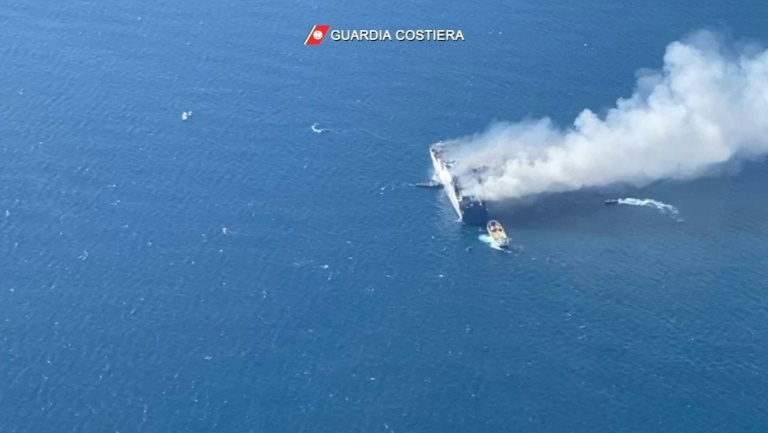
Rescue efforts continue for 12 missing in Greece ferry fire

Rescuers picked up the search for 12 missing people at the break of dawn Saturday after an Italian-flagged ferry caught fire on the Ionian Sea the previous day. 

Overnight, patrol ships combed the area off Corfu island hoping to locate survivors, the Greek coastguard told AFP.

Rescuers brought 278 passengers to Corfu after the blaze on the Euroferry Olympia broke out en route from Greece to Italy.

Officials have said the cause of the fire remains unknown. 

According to the coastguard, all of the still-missing people are truck drivers, nine from Bulgaria and three from Greece.

Truckers who were rescued from the vessel told Greece’s public broadcaster on Saturday that some drivers prefered to sleep in their vehicles because the ship cabins were overcrowded.  

Grimaldi Lines, the owner of the vessel, said late last night the fire “is currently under control” but Greek Coast-Guard Saturday morning didn’t confirm. 

According to the company, the ferry was officially carrying 239 passengers and 51 crew, as well as 153 trucks and trailers and 32 passenger vehicles. 

But raising concern for how many potential unofficial passengers could still be missing, the coastgaurd said two of the rescued people were not included on the manifest. 

Both were Afghans, the coastguard told AFP.  

The Bulgarian foreign ministry said 127 of its nationals were on the passenger list, including 37 truck drivers.  

Another 24 were from Turkey, the country’s NTV station said, while broadcaster ERT said there were 21 Greeks onboard.

Among the rescued, 10 were taken to hospital with breathing difficulties and minor injuries, ERT said.

A specialised Greek rescue team that boarded the burning vessel ceased its efforts Friday evening because of the high heat on the ship, the dense smoke and the darkness, according to Athens News Agency.

The 27-year-old ship’s latest safety check was at Igoumenitsa on February 16, the company said. 

There is heavy maritime traffic between the western Greek ports of Igoumenitsa and Patras and the Italian ports of Brindisi and Ancona. 

The last shipboard fire in the Adriatic occurred in December 2014 on the Italian ferry Norman Atlantic. Thirteen people died in that blaze.

Police move to clear last demonstrators in Canada's trucker-led protests

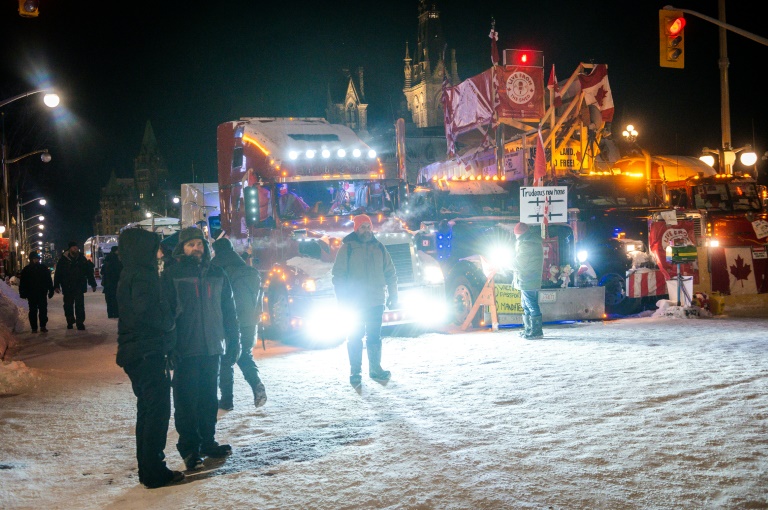
Police in Canada moved Friday to dislodge the final truckers and protesters from downtown Ottawa, in a mostly peaceful operation aimed at bringing an end to three weeks of demonstrations over Covid-19 health rules.

Late Friday night, Ottawa police, who pledged the operation would push ahead “until residents and citizens have their city back,” were still working to clear the capital’s streets.

Deployed by the hundreds, police said they made more than 100 arrests and towed about 20 vehicles. No one was seriously hurt, they added, with Ottawa interim police chief Steve Bell saying the operation was going as planned but would take time. 

Some truckers, who had led the protests that kicked off three weeks ago and choked Ottawa’s streets with big rigs and demonstators by the hundreds, chose to leave on their own, removing their 18-wheelers from the streets surrounding parliament.

Authorities continued to warn demonstrators to go. 

“You must leave. You must cease further unlawful activity and immediately remove your vehicle and/or property from all unlawful protest sites,” Ottawa police tweeted repeatedly, warning of possible arrests.

Throughout the day, heavily armed officers — including on horseback — lined up against protesters who locked arms, advancing slowly and methodically to push back the spirited crowd.

An AFP journalist saw several demonstrators led away in handcuffs as police and tow trucks moved in, although most simply surrendered.

A few demonstrators were wrestled to the ground, and at least one who refused to exit his truck had his windows smashed and was dragged out by police. 

The so-called “Freedom Convoy”, which inspired copycat protests in other countries, began with truckers demonstrating against mandatory Covid-19 vaccines to cross the US border. Its demands grew to include an end to all pandemic rules and, for many, a wider anti-establishment agenda.

At its peak, the movement also included blockades of US-Canada border crossings, including a key trade route across a bridge between Ontario and Detroit, Michigan — all of which have been lifted after costing the economy billions of dollars, according to the government.

– Leaders arrested –

Most of the protest’s leaders have been arrested. Far-right activist Pat King was taken into custody early Friday afternoon as he left town, live-streaming his own apprehension on Facebook.

Two other leaders, Tamara Lich and Chris Barber, were arrested Thursday evening. 

Lich, 49, was heard telling truckers as she was being led away by police to “hold the line.”

The movement’s Twitter account was still rallying supporters earlier on Friday: “If you disagree with unlawful and unprecedented government overreach, drop whatever you are doing, and make your voice heard,” it said.

Lawmakers Friday took the extraordinary move of canceling a parliamentary session. Speaker of the House Anthony Rota cited an “ever-changing” situation in the streets outside the seat of Canada’s democracy.

– Final warning –

Police on Thursday gave protesters a final warning to leave, as barricades went up to restrict access to the downtown protest zone and surrounding neighborhoods — encompassing more than 500 acres (200 hectares).

Criticized for failing to act decisively to end the protests, Prime Minister Justin Trudeau this week invoked the Emergencies Act, which gives the government sweeping powers to deal with a major crisis.

It’s only the second time such powers have been invoked in peacetime.

Lawmakers, split over the move, with only a small leftist party backing Trudeau’s minority Liberal government, were debating its use when parliament was hastily shuttered.

“The House will resume debate Saturday on the use of the Emergencies Act to respond to the illegal blockades,” Government House Leader Mark Holland tweeted.

Lawmakers are due to hold a final vote on the emergency measures legislation on Monday at 8 pm (0100 GMT).

Trudeau has said the act was not being used to call in the military against the protesters and denied restricting freedom of expression.

The objective was simply to “deal with the current threat and to get the situation fully under control,” he said. “Illegal blockades and occupations are not peaceful protests.”

Police this week also arrested dozens of protesters at border crossings, including four people charged with conspiracy to murder police officers at a checkpoint between Coutts, Alberta and Sweet Grass, Montana.

They seized dozens of vehicles as well as a cache of weapons that included rifles, handguns, body armor and ammunition.

Authorities also froze the bank accounts of protesters and chocked off crowdfunding and cryptocurrency transactions supporting the truckers.

Nine dead as Storm Eunice batters Europe

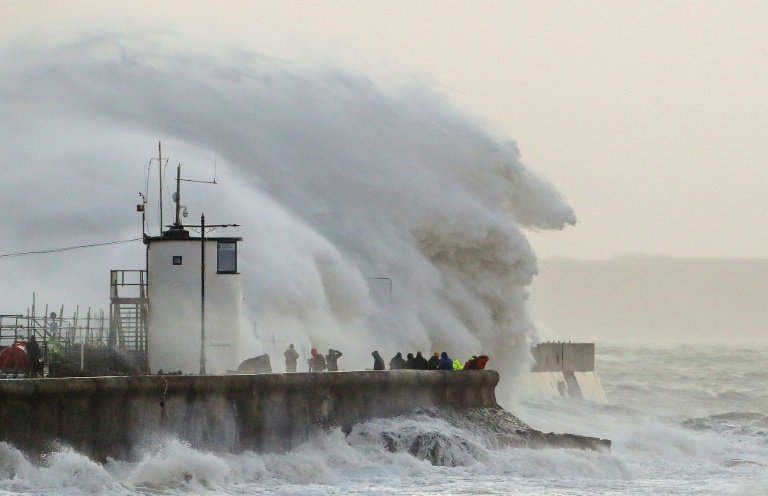
Storm Eunice killed at least nine people in Europe on Friday, pummelling Britain with record-breaking winds and forcing millions to take shelter as it disrupted flights, trains and ferries across Western Europe.

London was eerily empty after the British capital was placed under its first ever “red” weather warning, meaning there was “danger to life”. By nightfall, police there said a woman in her 30s had died after a tree fell on a car she was a passenger in.

Meanwhile a man in his 50s was also killed in northwest England after debris struck the windscreen of a vehicle he was travelling in, according to Merseyside Police.

Beyond Britain, falling trees killed three people in the Netherlands and a man in his 60s in southeast Ireland, while a Canadian man aged 79 died in Belgium, according to officials in each country.

A motorist was killed when their car crashed into a tree that had fallen across a road near Adorp in the Netherlands’ northern province of Groningen.

And in Germany, a motorist died after his car was hit by a tree near the town of Altenberge.

Dozens of homes were evacuated in The Hague amid fears a church steeple could collapse. Footage showed the steeple wobbling and a large piece of debris falling on a car.

As well as in London, the highest weather alert level was declared across southern England, South Wales and the Netherlands, with many schools closed and rail travel paralysed, as towering waves breached sea walls along the coasts.

Meanwhile Eunice’s winds knocked out power to more than 140,000 homes in England, mostly in the southwest, and 80,000 properties in Ireland, utility companies said.

Around London, three people were taken to hospital after suffering injuries in the storm, and a large section of the roof on the Millennium Dome was shredded by the gales.

One wind gust of 122 miles (196 kilometres) per hour was measured on the Isle of Wight off southern England, “provisionally the highest gust ever recorded in England”, the Met Office said.

At the Tan Hill Inn, Britain’s highest pub in Yorkshire, staff were busy preparing even if the winds remained merely blustery in the region of northern England.

“But with the snow coming in now, the wind’s increasing, we’re battening down the hatches, getting ready for a bad day and worse night,” pub maintenance worker Angus Leslie told AFP.

– ‘Sting jet’ –

Scientists said the Atlantic storm’s tail could pack a “sting jet”, a rarely seen meteorological phenomenon that brought havoc to Britain and northern France in the “Great Storm” of 1987. 

Eunice caused high waves to batter the Brittany coast in northwest France, while Belgium, Denmark and Sweden all issued weather warnings. Long-distance and regional trains were halted in northern Germany.

Ferries across the Channel, the world’s busiest shipping lane, were suspended, before the English port of Dover reopened in the late afternoon. 

Hundreds of flights were cancelled or delayed at London’s Heathrow and Gatwick airports and Schiphol in Amsterdam. One easyJet flight from Bordeaux endured two aborted landings at Gatwick — which saw wind gusts peak at 78 miles per hour — before being forced to return to the French city.

Prime Minister Boris Johnson, who has placed the British army on standby, tweeted: “We should all follow the advice and take precautions to keep safe.”

Environment Agency official Roy Stokes warned weather watchers and amateur photographers against heading to Britain’s southern coastline in search of dramatic footage, calling it “probably the most stupid thing you can do”.

– Climate impact? –

London’s rush-hour streets, where activity has been slowly returning to pre-pandemic levels, were virtually deserted as many heeded government advice to stay at home.

Trains into the capital were already running limited services during the morning commute, with speed limits in place, before seven rail operators in England suspended all operations.

The London Fire Brigade declared a “major incident” after taking 550 emergency calls in just over two hours — although it complained that several were “unhelpful”, including one from a resident complaining about a neighbour’s garden trampoline blowing around.

The RAC breakdown service said it was receiving unusually low numbers of callouts on Britain’s main roads, indicating that motorists are “taking the weather warnings seriously and not setting out”.

The storm forced Prince Charles, the heir to the throne, to postpone a trip to South Wales on Friday “in the interests of public safety”, his office said Thursday.

Another storm, Dudley, had caused transport disruption and power outages when it hit Britain on Wednesday, although damage was not widespread.

Experts said the frequency and intensity of the storms could not be linked necessarily to climate change. 

But Richard Allan, professor of climate science at the University of Reading, said a heating planet was leading to more intense rainfall and higher sea levels.

Therefore, he said, “flooding from coastal storm surges and prolonged deluges will worsen still further when these rare, explosive storms hit us in a warmer world”.

burs/ser/mtp

Ukraine showdown casts shadow over Qatar gas summit

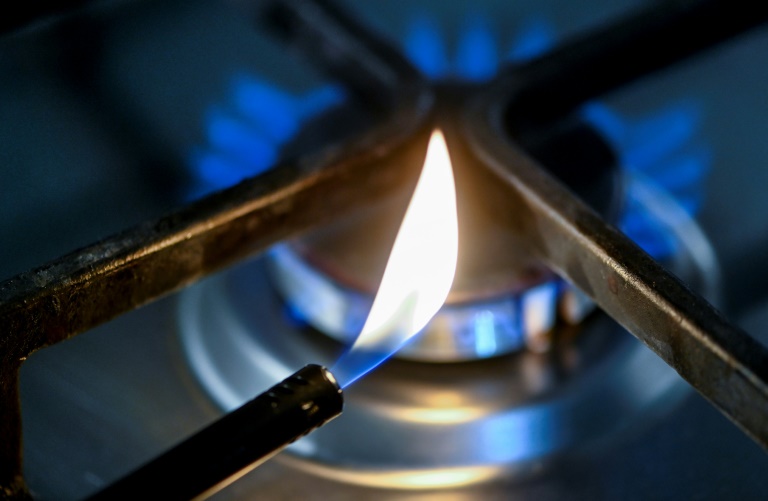
Leading gas producers meet in Qatar from Sunday to discuss how to answer frantic world demand, with Russian President Vladimir Putin expected to stay away as Ukraine tensions soar, diplomats said.

The 11-member Gas Exporting Countries Forum holds its annual summit as the Ukraine showdown sends prices ever higher while Europe fears for its supplies from Russia.

The group that includes Russia, Qatar, Iran, Libya, Algeria and Nigeria — accounting for more than 70 percent of proven gas reserves — has faced mounting pressure as Europe has sought alternative suppliers to Russia.

But most say they are already at or near maximum production and can only send short term relief supplies to Europe if existing customers agree.

Diplomats who took part in preparatory meetings said the group — which does not include key producers Australia and the United States — will discuss ways to increase production in the medium term. 

“But their hands are tied, there is next to no spare gas,” said one, speaking on condition of anonymity.

After two days of ministerial meetings, Iran’s President Ebrahim Raisi, who has rarely left his country since taking office, is to join Qatar’s emir, Sheikh Tamim bin Hamad al-Thani, for the summit on Tuesday.

Putin is not expected to take up his invitation to attend despite his country’s importance, diplomats said.

Thierry Bros, a professor at the Institute of Political Studies in Paris who specialises in the gas industry, said Russia has a dominant role in the industry as its Gazprom giant is the only enterprise with spare capacity.

“So it is Putin who decides and he decides at the Kremlin.”

– Contract demands –

Bros said the forum would probably reaffirm its message to Europe that it needs to sign long term contracts to secure a guaranteed supply.

All producing countries will have to make massive investments to increase their output but the European Union has long resisted contracts of 10, 15 or 20 years. Now, however, it has vowed to transition to clean energies and also faces the Ukraine crisis.

“The meeting is interesting because there are the Russians, with whom we no longer like to speak, and the Qataris, who are big friends with the European Commission, again to try to get liquefied gas.

“For Russia and Qatar, the aim is to maximize revenues and guarantee a long term market for their gas commodity,” he said.

– Ukraine link –

Qatar has increasingly sought to boost its diplomatic sway as a mediator and facilitator so Ukraine could also be discussed in talks, according to Andreas Krieg a security specialist at King’s College London.

“Qatar could use this forum to reach out to Russia over Ukraine as all parties are concerned over what an escalation in the crisis would mean to global gas supply security.”

He said Russia may want contacts with Qatar as European customers look to the emirate as an alternative supplier. Russia currently has a 40 percent share of the European market and Qatar five percent.

“It would be quite an opportunity if Qatar could use the forum to offer their good offices to the United States to mediate between them and Russia in this crisis.”

Qatar and Iran also have overlapping gas interests in the Gulf and the emirate has been seeking to help diplomatic efforts to revive a 2015 nuclear deal between Iran and major powers.

“Sanctions relief for Iran would ultimately also affect the gas sector and gas exports, which would be conducive to the forum’s overall objective of maintaining gas supply security,” Krieg said.

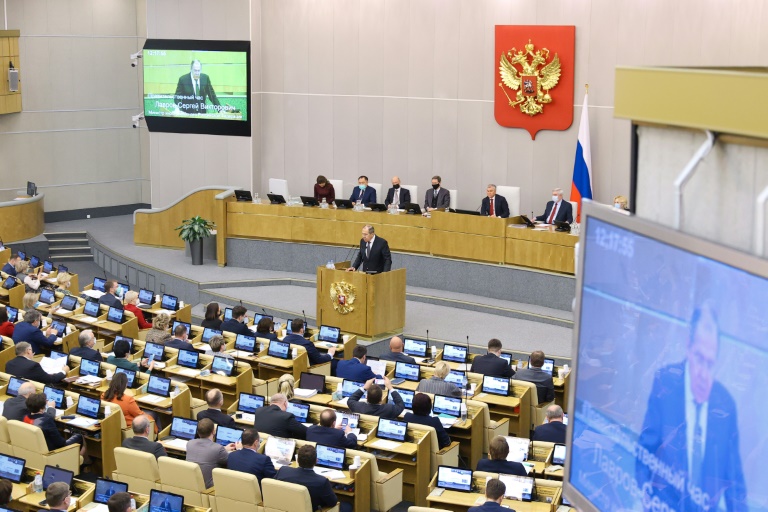
Russian parliament's call for east Ukraine independence sparks alarm

Possible Russian recognition of separatist “republics” independent from Kyiv is threatening to derail an already fragile peace process, as fears grow of large-scale conflict in eastern Ukraine. 

Tensions between the West and Russia over Ukraine have soared in recent months, after Moscow massed tens of thousands of troops near its neighbour’s border. 

Western leaders say Russia could launch an attack on Ukraine at any moment, though Moscow has denied such plans. 

But an appeal by Russia’s parliament to President Vladimir Putin to recognise the independence of the self-proclaimed “republics” of Donetsk and Lugansk in Ukraine’s industrial east has raised alarm.

Kyiv has been battling pro-Russia separatists in its eastern regions since 2014 in a conflict that has claimed around 14,000 lives.

Fighting has largely diminished since the 2014 and 2015 Minsk accords, under which Russia and Ukraine agreed to a ceasefire and a roadmap to a political settlement. 

But that process has hit a wall, with each side accusing the other of not fulfilling its end of the deal.

Ukraine’s foreign ministry told AFP that a Moscow recognition of the republics would make Russia “totally responsible for destroying the Minsk accords”.

France’s Foreign Minister Jean-Yves Le Drian has warned that any recognition would be tantamount to “an attack without weapons, and dismantling of the unity and integrity of Ukraine”.

– ‘Patience has limits’ –

The Minsk agreements provided for Donetsk and Lugansk to remain part of Ukraine, but for local elections to be held in the separatist regions under Ukrainian law, and for interim self-government in certain areas of them.

Foreign armed formations were to withdraw from those areas.

But Ukraine has not given the regions special status or held the polls, arguing that Russia must first end what it calls its covert military presence in the region.

It would not be the first time for Russia to recognise the independence of breakaway regions in a neighbouring country.

After a brief ground assault into southern neighbour Georgia in 2008, Russia recognised the independence of the country’s South Ossetia and Abkhazia regions, and established permanent Russian military bases there.

Putin has appeared to reject parliament’s demand on eastern Ukraine, saying he wanted to implement the Minsk accords “to the end”.

But he has also stressed that most Russians sympathised with Russian-speaking Donbas residents, whom he claims are the victims of a Kyiv-orchestrated “genocide”.

To further complicate matters, Moscow has distributed around 600,000 Russian passports to people living there.

Fyodor Lukyanov, a political analyst close to the Kremlin, said Moscow floating a possible recognition was a way for it to say: “Our patience has its limits.”

“If the Minsk accords are… not implemented, we will have to use other means,” Lukyanov said the Kremlin was signalling. 

Germany’s Chancellor Olaf Scholz this week urged Kyiv to draw up the laws necessary to fully enact the 2015 peace deal.

– Russian ‘obstruction’ –

Ukrainian negotiators however say Russia is itself hampering the peace process by insisting on a Moscow-brokered dialogue between Kyiv and the separatists.

Ukraine has refused to enter into such talks, arguing that Russia is an instigator of the conflict, not an impartial mediator.

“Sooner or later, Ukraine will introduce the draft laws” necessary to the peace process, said Sergiy Garmash, one of Kyiv’s negotiators. 

“But in view of the obstruction created by Russia’s demands, it will take years to examine them.” 

Lukyanov, the Russian analyst, said Russia was turning up the pressure for Ukraine to carry out its promises.

But parliament urging Putin to recognise the eastern regions as independent did not necessarily equal him doing so.

Moscow cannot afford to lose such “a means of influence on the future of Ukraine and, more widely, on the issue of European security”.

Ultimately, he said, Moscow’s end goal is to prevent NATO’s expansion eastwards.

Western diplomats have scrambled to respond to this and other demands from Russia in recent weeks, as they rush to counter what has been described as the worst threat to European security since the Cold War.

But so far, the only thing all agree on is that there have been “no results”.

Police move to clear last demonstrators in Canada's trucker-led protests

Police in Canada moved Friday to dislodge the final truckers and protesters from downtown Ottawa, in a mostly peaceful operation aimed at bringing an end to three weeks of demonstrations over Covid-19 health rules.

Deployed by the hundreds, the police said they made more than 100 arrests and towed approximately 20 vehicles.

The announcement came some 10 hours after the operation began — an affair that involved long standoffs with the protesters who have been choking the capital’s streets by the hundreds for three weeks, including using their big rig trucks.

No clashes or injuries were reported and Ottawa interim police chief Steve Bell said the operation was going as planned but would take time. 

By early evening, many protester vehicles remained downtown but multiple truckers who had blocked the streets surrounding Parliament had removed their 18-wheelers.

Authorities continued to warn demonstrators to go: “You must leave. You must cease further unlawful activity and immediately remove your vehicle and/or property from all unlawful protest sites,” the Ottawa Police tweeted, warning of possible arrests.

Throughout the day, heavily armed officers — including on horseback — lined up against protesters who locked arms, advancing slowly and methodically to push back the spirited crowd.

An AFP journalist saw several demonstrators led away in handcuffs as police and tow trucks moved in, although most simply surrendered.

A few demonstrators were wrestled to the ground, and at least one who refused to exit his truck had his windows smashed and was dragged out by police. 

The so-called “Freedom Convoy” started with truckers protesting against mandatory Covid vaccines to cross the US border, but its demands have grown to include an end to all pandemic rules and, for many, a wider anti-establishment agenda.

At its peak, the movement also included blockades of US-Canada border crossings, including a key trade route across a bridge between Ontario and Detroit, Michigan — all of which have been lifted after costing the economy billions of dollars, according to the government.

– Leaders arrested –

Most of the protest’s leaders have been arrested. Far-right activist Pat King was taken into custody early Friday afternoon as he left town, with his apprehension broadcast as he livestreamed on Facebook.

Two other leaders, Tamara Lich and Chris Barber, were arrested Thursday evening. 

Lich, 49, was heard telling truckers as she was being led away by police to “hold the line.”

The movement’s Twitter account was still rallying supporters earlier on Friday: “If you disagree with unlawful and unprecedented government overreach, drop whatever you are doing, and make your voice heard” it said.

Lawmakers Friday took the extraordinary move of canceling a parliamentary session. Speaker of the House Anthony Rota cited an “ever-changing” situation in the streets outside the seat of Canada’s democracy.

– Final warning –

Police on Thursday had given protesters a final warning to leave, as barricades went up to restrict access to the downtown protest zone and surrounding neighborhoods — encompassing more than 500 acres (200 hectares).

Criticized for failing to act decisively to end the protests, Prime Minister Justin Trudeau this week invoked the Emergencies Act, which gives the government sweeping powers to deal with a major crisis.

It’s only the second time such powers have been invoked in peacetime.

Lawmakers, split over the move with only a small leftist party backing Trudeau’s minority Liberal government, were debating its use when parliament was hastily shuttered.

Trudeau has said the act was not being used to call in the military against the protesters, and denied restricting freedom of expression.

The objective was simply to “deal with the current threat and to get the situation fully under control,” he said. “Illegal blockades and occupations are not peaceful protests.”

Police this week also arrested dozens of protesters at border crossings, including four people charged with conspiracy to murder police officers at a checkpoint between Coutts, Alberta and Sweet Grass, Montana.

They seized dozens of vehicles, as well as a cache of weapons that included rifles, handguns, body armor and ammunition.

Authorities also froze the bank accounts of protesters and chocked off crowdfunding and cryptocurrency transactions supporting the truckers.

War fears mount as Putin to oversee drills, Zelensky to meet allies

Russia’s leader will oversee major military drills along Ukraine’s borders on Saturday, further escalating tensions after Washington said Moscow would invade within days, and Ukraine’s president headed to Europe to drum up support.

Artillery shelling in the east of Ukraine and orders from Russian-backed separatists for civilians to evacuate the region Friday inflamed an already febrile situation as Washington insisted Moscow was encircling its pro-Western neighbour.

The Kremlin continues to say it has no plans to attack.

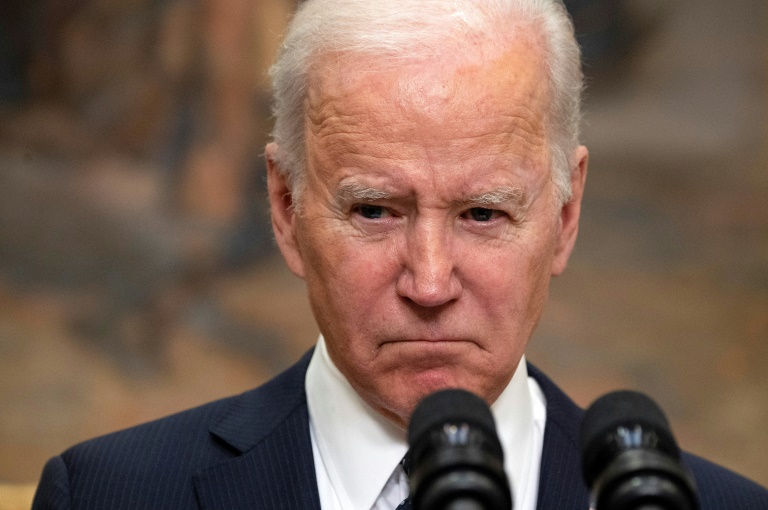
US President Joe Biden said that the invasion would come in the next week or days and that his Russian counterpart Vladimir Putin had “made the decision” to invade. But Biden left the door open for a diplomatic resolution.

“Russia has a choice between war and all the suffering it will bring or diplomacy that will make a future for everyone,” Biden said at the White House Friday.

Ukrainian President Volodymyr Zelensky was due to travel to Germany Saturday to meet Western leaders, with talks between him and US Vice President Kamala Harris expected.

Biden said it “may not” be wise for Ukraine’s leader to leave his country as war fears reached a fever pitch.

The United States says that with an estimated 149,000 Russian troops on Ukraine’s borders — as many as 190,000, when including the Russian-backed separatist forces — an attack is inevitable.

The Russians have never given a figure for the deployment along the border with Ukraine nor how many are taking part in ongoing drills with neighbouring Belarus.

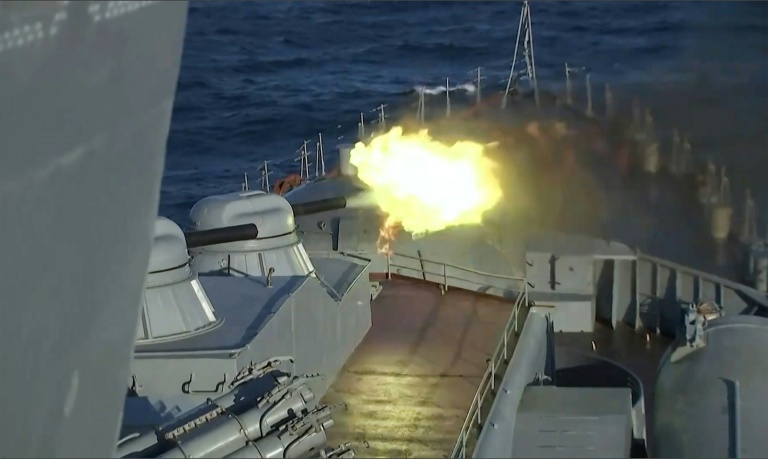
Compounding fears, Russia’s defence ministry announced that President Vladimir Putin would personally oversee previously scheduled drills involving nuclear-capable missiles on Saturday.

– ‘Change the dynamics’ –

“He’s focussed on trying to convince the world he has the ability to change the dynamics in Europe in a way that he cannot,” Bided added.

There were growing fears that a spark, which Washington warns could be a deliberate “false flag” incident orchestrated by Moscow, could set off the largest military confrontation in Europe since World War II.

NATO chief Jens Stoltenberg, attending the Munich Security Conference, warned the size of the assembled Russian force far exceeded that needed for military drills, and that Russia had the capacity to invade without warning.

France and Germany have urged Russia to use its influence on rebels in Ukraine’s disputed east to “encourage restraint and contribute to de-escalation”.

But on the ground, a spike in clashes has fed a growing sense of dread.

An AFP reporter near the front between Ukrainian government forces and pro-Russian separatists in the Lugansk region heard explosions and saw damaged civilian buildings on Kyiv’s side of the line.

Monitors from the Organization for Security and Co-operation in Europe said Saturday they had seen a significant rise in the number of attacks along the front line, particularly in the separatist areas of Donetsk and Lugansk.

Attempting to reverse the aggressor narrative, Moscow-backed leaders have accused Kyiv of planning an offensive to retake the eastern territories. The evacuations of civilians there were said to be in response to worries about a government attack.

There were also reports in Russian media that an oil pipeline had exploded in Lugansk.

But US Secretary of State Antony Blinken, who will meet his Russian counterpart for talks Thursday according to Biden, accused the Kremlin of mounting a propaganda campaign to create an excuse for war.

Biden again ruled out sending US troops into Ukraine, but his administration reiterated that it would hit Moscow with costly sanctions that would transform Russia into “a pariah to the international community”.

burs-gw/lb

How Covid-wracked Hong Kong is reeling two years into pandemic

Hong Kong is in the throes of its worst-ever coronavirus outbreak, as residents are suddenly confronted with a severely overstretched healthcare system and a tightening of restrictions even as much of the world opens up.

The city’s strict but successful “zero-Covid” policy had largely kept the virus out for months.

But when the highly transmissible Omicron variant broke through Hong Kong’s defences, authorities were caught flat-footed with a dangerously under-vaccinated population and few plans in place to deal with a mass outbreak.

– How prepared were they? – 

The extremely contagious Omicron variant was first discovered within Hong Kong’s local community in late December — far later than much of the rest of the world.

Authorities reacted quickly — banning flights, forbidding gatherings of more than two, and launching a mass hamster cull after coronavirus-positive pet store rodents were discovered.

But these measures did little to curb Omicron’s spread.

As of Friday, Hong Kong had recorded more than 20,200 infections in less than two months — outstripping its cumulative two-year total of about 12,000. 

City leader Carrie Lam admitted this week the fifth wave had “dealt a heavy blow”, and by Friday announced a postponement to the planned March selection of Hong Kong’s next chief executive.

The government is now scrambling to find a place to build a makeshift mega-hospital while seeking the mainland’s help with testing capacity and the speedy construction of quarantine facilities. 

“I don’t think (the government) was ever really prepared for an outbreak of this scale,” Karen Grepin from the University of Hong Kong’s School of Public Health said. 

“Our strategy to fight Covid really never evolved despite the fact that the virus… has become much more transmissible.”

– What’s happening now? – 

Hong Kong’s policy under previous outbreaks was to hospitalise all Covid-19 patients — even those with mild symptoms. 

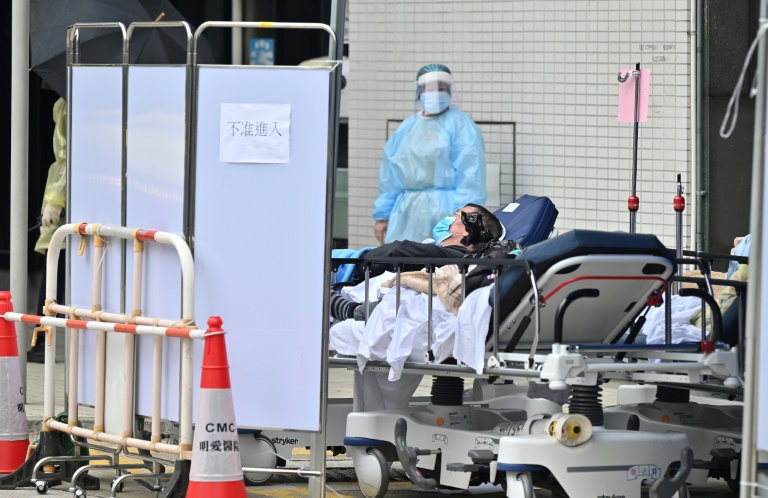
Bleak scenes this week showed an overrun hospital staff placing elderly patients on gurneys outdoors under dropping temperatures, as it ran out of isolation space. 

Worried patients also waited in long queues outside hospitals — potentially exposing them to the public.

But “only a small minority would actually need to be in hospital”, epidemiologist Ben Cowling told AFP. 

The government’s recent pivot to telling people with mild symptoms to remain home, however, has not stemmed the flow, with 12,000 waiting for beds Wednesday.

As numbers continue to climb, authorities need a new approach, said Cowling. 

“We would need to have a plan for…home quarantine that could be safe and sustainable.”

– What’s making it worse? – 

In a word, politics.

Hong Kong has long adhered to the mainland’s “zero-Covid” policy. 

Authoritarian China managed to eliminate outbreaks with citywide lockdowns, mass testing and stepped-up government oversight. 

Hong Kong officials clung to the same zero-tolerance approach even as health experts warned the walls would not hold forever. 

But “the cost of elimination (of the virus) exceeded the benefits to Hong Kong by mid to late 2021,” David Owens, founder of healthcare provider OT&P, wrote in an article. 

“Once effective vaccinations became available, the negative framing and policy around zero Covid adversely impacted vaccination rates.”

Today, Hong Kong has some of the lowest vaccination rates in the developed world, and critics say those in charge have done little to boost those numbers.

Especially vulnerable are the elderly — only 43 percent of those aged 70-79 and 27 percent of the city’s above-80s have received two jabs.

“Our speed to get booster shots failed the race with Omicron,” Kwok Kin-on of Chinese University’s public health school told AFP.

“So our community immunity had dropped to a low level, while our kids and elderly were unvaccinated when the new wave hit.”

All the government can do now is “buy time for children and the elderly to get vaccinated”, he said. 

– So what’s next? –  

On Friday, city leader Lam said the government was “making plans” to test all 7.5 million residents.

She also insisted a wholesale China-style lockdown is not currently in the cards — though it remains to be seen if citywide test results would change the government’s tune. 

Lam’s announcement came just two days after Chinese leader Xi Jinping urged Hong Kong to deploy “all necessary measures” — effectively ruling out the prospect of discarding China’s “zero-Covid” strategy.

“In Hong Kong’s political reality, we need to follow ‘One Country’ policy. I have no further comment,” Pierre Chan, Hong Kong’s former medical sector legislator, told AFP.

Authorities have begun exploring using hotels — long emptied of visitors to the now-isolated “Asia’s World City” — as quarantine facilities. 

A new plan was also launched for taxis to ferry Covid-positive patients to hospitals — raising eyebrows over the health risks for elderly drivers.

“Predominantly, it’s not a public health decision anymore,” Grepin of the University of Hong Kong said. “It’s also a political decision.”

Musk donates satellite gear to reconnect Tonga

Tonga says space entrepreneur and Tesla founder Elon Musk has donated 50 satellite terminals to help the volcano-damaged Pacific island reconnect with the world.

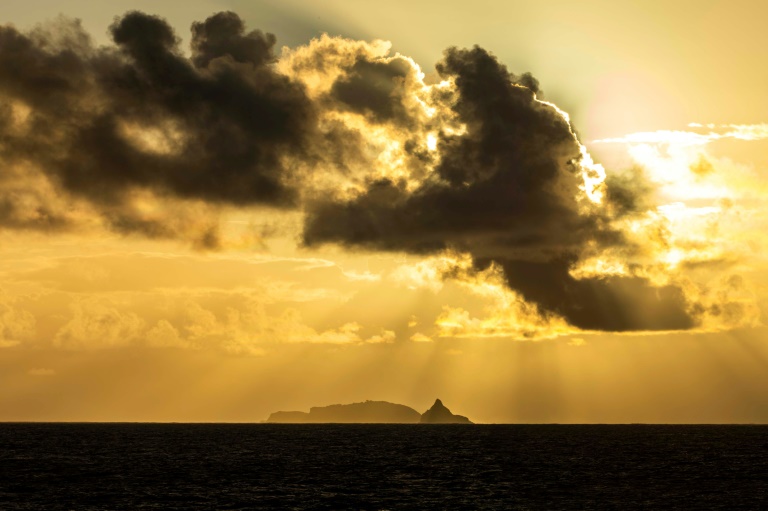
Tonga’s telecommunications system has been severely restricted since January 15 when a violent volcanic eruption and tsunami severed its underwater fibre-optic cable. 

Musk’s Space X corporation is providing 50 very-small-aperture terminals (VSAT) “and we are looking at how we can best utilize it,” Prime Minister Siaosi Sovaleni said Friday. 

The tiny South Pacific kingdom was also considering offers to increase Tonga’s internet capacity, which has been operating on a very small bandwidth since the cable was broken. 

“It’s something we are testing right now,” he said. 

Technical staff from SpaceX and the Tonga Government were working on installing the equipment to have it operational from next week. 

The volcanic eruption, so powerful it was heard as far away as Alaska and triggered a tsunami that flooded coastlines around the Pacific, shredded an 80-kilometre (50 miles) stretch of Tonga’s undersea telecommunications cable.

Sovaleni said he expected temporary repairs to be completed early next week.

Biden says Putin has decided to invade Ukraine

President Joe Biden said Friday he is “convinced” that Vladimir Putin has decided to invade Ukraine within the week, an event that would trigger Western sanctions set to turn Russia into what a US official called a “pariah.”

“As of this moment I’m convinced he’s made the decision,” Biden said in televised remarks at the White House.

Biden said the attack could come in the next “week” or “days” and that targets would include the capital Kyiv, “a city of 2.8 million innocent people.”

The US leader insisted it was “not too late to de-escalate and return to the negotiating table,” but warned that if an attack comes, the Russian president will have “slammed the door shut on diplomacy.”

The Kremlin insists it has no plans to attack its neighbor, which has angered Russia by seeking long-term integration with NATO and the European Union.

However, the United States says that with an estimated 149,000 Russian troops on Ukraine’s borders — as many as 190,000, when including the Russian-backed separatist forces in the east — it’s only a matter of when.

Adding to jitters, Russia’s defense ministry announced that Putin would personally oversee previously scheduled drills involving nuclear-capable missiles on Saturday.

And on the ground in Ukraine’s disputed east, sporadic clashes fed a growing sense of dread.

An AFP reporter near the front between Ukrainian government forces and the pro-Russian territory in the Lugansk region heard explosions and saw damaged civilian buildings on Kyiv’s side of the line.

There were growing fears that only a spark — which Washington warns could be a deliberate “false flag” incident created by the Russians — might now be needed to set off the largest military confrontation in Europe since World War II.

A US defense official said that more than 40 percent of the troops surrounding Ukraine were now “uncoiled” in a position to go on the offensive.

– ‘Pariah’ –

Biden spoke on Friday with fellow NATO allies in a conference call to cement plans for Western economic sanctions against Russia should its troops attack Ukraine.

“We continue to remain in lockstep,” Biden said afterward.

According to a senior official, the sanctions package will be devastating. 

“If Russia invades Ukraine, it would become a pariah to the international community,” the deputy US national security advisor for international economics Daleep Singh told reporters. “It will become isolated from global financial markets and be deprived of the most sophisticated technological inputs.”

Singh predicted “intense capital outflows, mounting pressure on its currency, surging inflation, higher borrowing costs, economic contraction, and the erosion of its productive capacity.”

– ‘False flags?’ –

In the eastern separatist areas of Donetsk and Lugansk, Moscow-backed leaders sought to flip the narrative of Russia being the aggressor.

Accusing Kyiv of planning its own offensive to retake the eastern territories, they said the government’s forces were carrying out sabotage missions. Civilians were ordered to evacuate.

But US Secretary of State Antony Blinken accused the Kremlin of mounting a propaganda campaign to create an excuse for war.

Blinken told the Munich conference what has happened “in the last 24 to 48 hours is part of a scenario that is already in place of creating false provocations, of then having to respond to those provocations and then ultimately committing new aggression against Ukraine.”

Ukraine’s foreign minister said “Russian disinformation” about a supposed Ukrainian attack was being spread to fuel the war fever.

Biden praised Ukraine’s military for showing “restraint” and “great judgement,” saying the allegation that they were the ones preparing aggression “defies basic logic.”

– Putin sees ‘deterioration’ –

Both sides in the east of Ukraine claimed the other was stepping up the violence amid low-level exchanges of fire.

Videos circulating on Russian-language social media showed sirens sounding in Donetsk as Moscow-backed separatist militia leaders ordered the civilian evacuation over the border to Russia.

Denis Pushilin, head of the so-called Donetsk People’s Republic (DPR), said Ukrainian President Volodymyr Zelensky would order “soldiers to go on the offensive.”

In Moscow, Putin met with the authoritarian leader of Belarus, which is hosting tens of thousands of Russian troops on the Ukrainian border, and said he saw a “deterioration of the situation.”

But the Ukrainian command said the Russian-backed separatist forces had violated a ceasefire 53 times between midnight and 5:00 pm Friday.

Twenty children and 18 adults at a kindergarten in the government-held village of Stanytsia Luganska were lucky to escape almost completely unharmed on Thursday when an artillery shell struck the building.

– Russian ‘strategic’ forces –

The Russian defense ministry sent a chilling reminder of the stakes in any East-West confrontation when it announced that Putin would oversee Saturday’s “exercise of strategic deterrence forces… during which ballistic and cruise missiles will be launched.”

The air force, units of the southern military district, as well as the Northern and Black Sea fleets would be involved in the nuclear-capable missile tests.

Russia says that it will not back away from Ukraine unless Western countries agree never to allow Ukraine into NATO and to pull US forces back from eastern Europe, effectively creating a new version of the continent’s Cold War-era spheres of influence.

The conflict between the heavily armed pro-Russian rebels and Ukrainian government forces in the country’s east has already rumbled on for eight years, claiming the lives of more than 14,000 people and forcing more than 1.5 million from their homes.

burs-sms/ec

Close Bitnami banner
Bitnami