World

Millions take shelter in UK as Storm Eunice threatens Europe

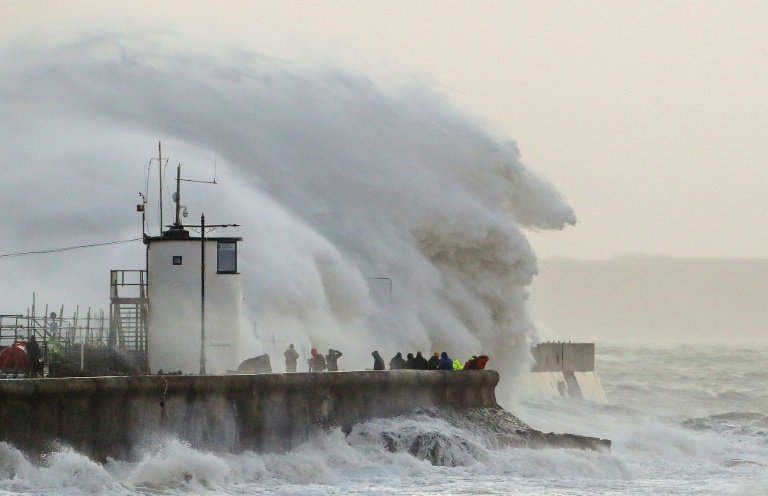
Millions hunkered down as Storm Eunice pummelled Britain with record-breaking winds on Friday, leaving the streets of London eerily empty and disrupting flights, trains and ferries across Western Europe.

The UK capital was placed under its first ever “red” weather warning, meaning there is “danger to life”. The same level of alert was in place across southern England and South Wales, where schools were closed and transport paralysed.

Eunice knocked out power to 80,000 homes and businesses in Ireland and more than 5,000 in Cornwall and Devon, southwest England, as towering waves breached sea walls along the coast.

One wind gust of 122 miles (196 kilometres) per hour was measured on the Isle of Wight off southern England, “provisionally the highest gust ever recorded in England”, the Met Office said.

A large section of the roof on the Millennium Dome in southeast London was shredded by the high winds, while all trains in Wales, western England and Kent in southeast England were cancelled.

Britain’s meteorological service also forecast heavy snow in Scotland and northern England. 

At the Tan Hill Inn, Britain’s highest pub in Yorkshire, staff were busy preparing even if the winds remained merely blustery in the region of northern England.

“But with the snow coming in now, the wind’s increasing, we’re battening down the hatches, getting ready for a bad day and worse night,” pub maintenance worker Angus Leslie told AFP.

Eunice accrued potency in a “sting jet”, a rarely seen meteorological phenomenon that brought havoc to Britain in the “Great Storm” of 1987, and sparked a red alert also in the Netherlands.

High waves battered the Brittany coast in northwest France. Long-distance and regional trains were being gradually halted in northern Germany, while warnings were also in place in Belgium, Denmark and Sweden.

Ferries across the Channel, the world’s busiest shipping lane, were cancelled, as were flights from northern Europe’s aviation hubs. Hundreds were cancelled or delayed at Heathrow and Gatwick in London, and Schiphol in Amsterdam.

One easyJet flight from Bordeaux endured two aborted landings at Gatwick before being forced to return to the French city.

Prime Minister Boris Johnson, who has placed the British army on standby, tweeted: “We should all follow the advice and take precautions to keep safe.”

The Met Office warned that roofs could be blown off, trees uprooted and power lines brought down across southern Britain. Widespread delays and cancellations were reported on bus and ferry services, with high bridges closed to traffic.

– Climate impact? –

Environment Agency official Roy Stokes warned weather watchers and amateur photographers against heading to Britain’s southern coastline in search of dramatic footage, calling it “probably the most stupid thing you can do”.

London’s rush-hour streets, where activity has been slowly returning to pre-pandemic levels, were virtually deserted as many heeded the advice to stay home.

Trains into the capital were already running limited services during the morning commute, with speed limits in place.

The RAC breakdown service said it was receiving unusually low numbers of callouts on Britain’s main roads, indicating that motorists are “taking the weather warnings seriously and not setting out”.

The arriving storm forced Prince Charles, the heir to the throne, to postpone a trip to South Wales on Friday “in the interests of public safety”, his office said.

Another storm, Dudley, caused transport disruption and power outages when it hit Britain on Wednesday, although damage was not widespread.

Experts said the frequency and intensity of the storms could not be linked necessarily to climate change, but that storms were causing more damage as a result.

“There is very little evidence that winds in these winter storms have gotten stronger with climate change,” said Richard Allan, professor of climate science at the University of Reading. 

“Yet with more intense rainfall and higher sea levels as human-caused climate change continues to heat the planet, flooding from coastal storm surges and prolonged deluges will worsen still further when these rare, explosive storms hit us in a warmer world.”
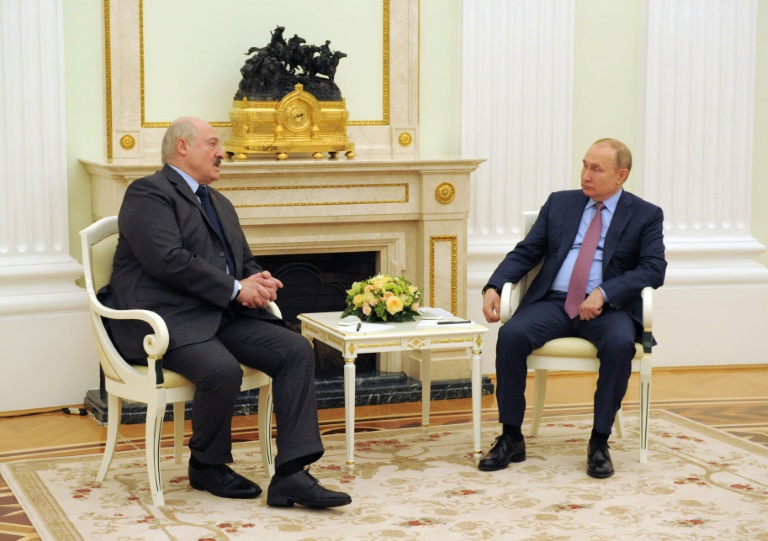

Putin hosts Belarus strongman for security talks, drills

Russian President Vladimir Putin welcomed his close ally Belarusian strongman Alexander Lukashenko to the Kremlin on Friday, announcing the leaders would discuss military cooperation and oversee upcoming war games.

Lukashenko’s visit to Russia comes as Moscow is facing off against the West over European and Ukrainian security, tensions worsened by large Russian drills in Belarus. 

“We will of course talk about the situation in the region, assess how military cooperation is going, including the ongoing military drills,” Putin told Lukashenko ahead of talks.

“Tomorrow we will even participate in one of the most significant events in this complex of military cooperation,” the Russian leader said.

The Russian defence ministry announced earlier Friday that Putin would oversee military exercises the following day that would involve the launch of cruise and ballistic missiles.

Belarus, wedged between Russia and European Union member states, became more closely aligned with Russia in the wake of historic anti-Lukashenko protests in 2020.

“Our Western partners — as you call them — have brought the military-political spectrum to the forefront, and we have to react to it, including by holding military exercises and through diplomacy,” Lukashenko told Putin in Moscow.

He also accused Western leaders of “scaring the world by saying that ‘tomorrow’ we will attack, encircle, destroy Ukraine”.

Washington has estimated that some 30,000 Russian troops have deployed to neighbouring Belarus as part of joint exercises that are due to run until Sunday.

Those drills as well as other large-scale exercises near Ukraine have fuelled concerns in European capitals and Washington that Moscow is preparing an attack on its neighbour.

Russia has denied developing plans and accused Ukraine of breaching ceasefire agreements in the east of the country, where the army is fighting pro-Moscow separatists.

Lukashenko said Thursday his country could host nuclear weapons if it faces any external threats, as tensions soar between his ally Putin and Western leaders.

A fisherman's life on the high seas: harsh, risky and badly paid

“It’s very tough, you make a lot of sacrifices and they don’t pay you what they should,” shrugs Jeronimo Martinez, a fisherman from Marin, home port of the shipwrecked Spanish trawler. 

The tragedy — Spain’s worst fishing accident in nearly 40 years which claimed 21 lives and left only three survivors when their ship foundered in stormy waters off Newfoundland — has thrown into sharp relief the risks and harsh working conditions faced by fishermen. 

The death toll has sent shock waves across the northwestern region of Galicia where fishing is hugely important and which accounts for some 10 percent of all of the European Union’s fresh fish landings, regional figures show. 

Often these deep-sea fishermen will spend months at sea, far from their families. 

“You’re away for so long: you go out to sea when your child’s just been born and when you come back, he’s already doing his first communion,” jokes Martinez as he takes a coffee at a bar popular with fishermen in Marin. 

He used to spend six-month stints at sea fishing for cod off Newfoundland but is currently not working after having a hernia operation. 

“For most sailors, the head of the family is the mother, who is the one who’s at home. The fathers are all away, working,” said the 51-year-old, who is missing part of a finger due to an accident while working on a trawler.

– Long hours, low pay –

“This is what happens when you’re a fisherman: you get home and your child doesn’t recognise you anymore,” agrees Makhtar Diakhate, a retired trawler worker who has lived and worked in Marin since 2004. 

Originally from Dakar in Senegal, his job on the high seas means he’s only been able to get home to see his wife and kids once a year. 

“I felt bad because sometimes stuff happened at home and I couldn’t be there to help out,” admits Diakhate, who is 64. 

In Marin, like at other Galician ports, there are other African and Latin American migrants working the fishing trawlers, most of them from Ghana and Peru. 

Onboard the Villa Pitanxo which sank off Canada on Tuesday, there were 16 Spaniards, five Peruvians and three Ghanaians. 

“Working at sea is a bit dangerous but you have to do it,” shrugs Ghanaian John Okutu, whose uncle Edemon Okutu is one of the missing crew members. 

Migrants form an important part of the workforce in a trade that has little appeal for youngsters in Galicia. 

Fran Sola, 49, who stopped working on trawlers more than 20 years ago and has since worked as a mechanic, said a crew member can earn around 1,500 euros ($1,700) a month. 

“That’s why young people don’t do it, they prefer to be bricklayers because they earn the same and by 9:00 pm, they’re at home with their families,” he said. 

– Hard work and isolation –

At sea “you have to work every day, 60 hours a week, there is no respect for the workers, you have to do what the boss says,” said Sola, who almost lost a finger in one of the trailers heavy doors. 

Although fishermen earned a good salary in the past, that is no longer the case. 

“Twenty years ago, you would go out to sea and five years later you could buy a house, a car,” he said. 

Onboard the trawlers, living conditions are cramped with four to eight crew members sharing a room on some boats.

On most boats there is no television reception and Internet and mobile network coverage is patchy, meaning a stint on the high seas can be very lonely. 

But although conditions on board are hard, those who have worked on these deep-sea fishing boats say shipwrecks are rare, thanks to the modernisation of trawler fleets. 

“You are never completely safe because the sea is the sea,” said Martinez. 

He would rather not go back on the boats after recovering from his hernia operation.

“I have no desire to return, although I will if I don’t have a choice. But I’d rather not go back out to sea because it is very hard,” said this father of two young children, aged four and three.

Shellfire as Putin turns up heat on Ukraine and West

Shellfire rang out in eastern Ukraine on Friday as the army and Moscow-backed separatists accused each other of provocations and US warnings of an imminent Russian invasion stoked international tension.

An AFP reporter near the frontline between government forces and rebel-held territory in the Lugansk region heard the thud of explosions and saw damaged civilian buildings.

All eyes were on Russian President Vladimir Putin’s next move as Moscow announced he will oversee a weekend drill of “strategic forces” — ballistic and cruise missiles.

Russia has demanded that the United States withdraw all forces from NATO members in central and eastern Europe and is turning up the pressure on Ukraine.

US President Joe Biden is to hold video talks with Western allies, including the leaders of Britain, Canada, France, Germany and NATO, later on Friday to discuss the crisis.

On Thursday, US Secretary of State Antony Blinken told the United Nations that Washington has intelligence showing that Moscow could order an invasion in the “coming days”.

Russia has denied it has any such plan and claims to have begun withdrawing some of the 149,000 troops that Ukraine now says are on its borders.

But Putin has done nothing to dial down tensions, ordering the missile drills even as there are reports of an increase in shelling from Russian-backed rebels in eastern Ukraine.

Visiting Poland, US Defense Secretary Lloyd Austin said Washington was seeing “more” Russian forces moving into the Ukraine border region despite Moscow’s announcements.

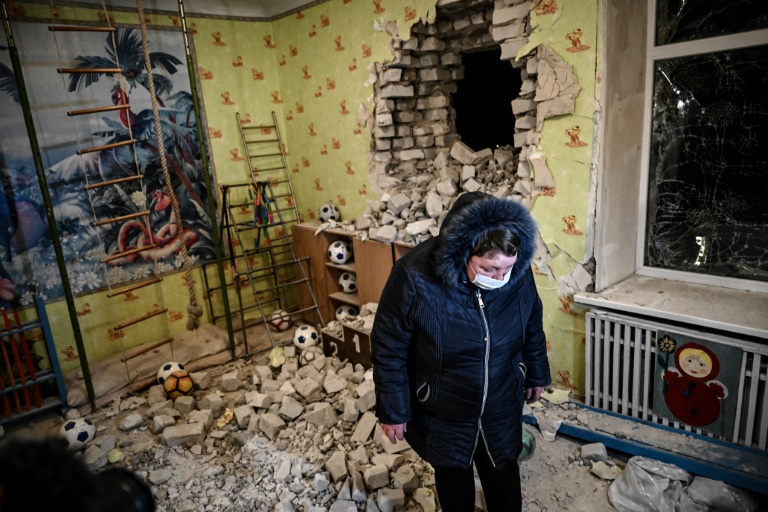
On Thursday, a shell punched a hole in the wall of a kindergarten in government-held territory near the frontline in the Ukrainian village of Stanytsia Luganska.

– Invasion pretext –

The 20 children and 18 adults inside escaped serious injury but the attack sparked international howls of protest.

“The children were eating breakfast when it hit,” school laundry worker Natalia Slesareva told AFP at the scene.

“It hit the gym. After breakfast, the children had gym class. So, another 15 minutes, and everything could have been much, much worse.”

On Friday, part of the village remained without electricity. Konstantin Reutsky, director of the Vostok SOS aid agency, told AFP that houses and a shop had been damaged. 

The Ukrainian joint command centre said the rebels had violated the ceasefire 20 times between midnight and 9:00 am Friday, while the Donetsk and Lugansk separatist groups said the army had fired 27 times.

The conflict in Ukraine’s east has rumbled on for eight years, claiming the lives of more than 14,000 people and forcing more than 1.5 million from their homes.

But now, after Russia surrounded its neighbour with armoured battle groups, missile batteries and warships, there are fears that Ukraine will be drawn into a clash that Russia could use as a pretext for invasion.

Speaking in parliament, Ukraine’s defence minister Oleksiy Reznikov insisted government forces would keep their cool.  

“Ukraine is stepping up its defences. But we have no intention of conducting military operations” against the separatists of Russian-annexed Crimea, he said.

– Serious steps –

“Our mission is not to do any of the things the Russians are trying to provoke us into doing,” Reznikov added. “We have to push back but keep a cool head.”

From the opposing camp, Kremlin spokesman Dmitry Peskov said: “What is happening in the Donbas is very concerning news and potentially very dangerous.”

Meanwhile, Putin was to host his ally Belarus strongman Alexander Lukashenko, who this week said his country cold host Russian nuclear weapons aimed at the West.

And the Russian defence ministry further upped the ante by announcing that Putin would on Saturday oversee an “exercise of strategic deterrence forces… during which ballistic and cruise missiles will be launched.”

The air force, units of the southern military district, as well as the Northern and Black Sea fleets would be involved.

Russia’s aggressive stance has sent diplomatic shockwaves through the West, scrambling to counter an unpredictable foe during what has been described as the worst threat to European security since the Cold War.

Leaders of the Group of Seven wealthy nations will hold a virtual conference next Thursday with the Ukraine crisis high on the agenda, Germany, which holds the group’s rotating presidency, said Friday.

German Foreign Minister Annalena Baerbock said Moscow needed to show “serious steps towards de-escalation”.

“With an unprecedented deployment of troops on the border with Ukraine and Cold War demands, Russia is challenging fundamental principles of the European peace order,” Baerbock said.

burs-dc/mm/jm/ach 

Boy trapped for three days in Afghan well dies after rescue

A five-year-old boy trapped for three days down a remote Afghan village well died minutes after being pulled out on Friday, following a rescue effort the country’s new Taliban rulers said showed they would spare nothing for their citizens.

The child, named Haidar, on Tuesday slipped and fell to the bottom of a well being dug in Shokak, a parched village in Zabul province, about 400 kilometres (250 miles) southwest of the capital Kabul.

“With great sorrow, young Haidar is separated from us forever,” said Taliban interior ministry senior adviser Anas Haqqani, in a tweet echoed by several of his colleagues.

“This is another day of mourning and grief for our country.”

Zabul police spokesman Zabiullah Jawhar told AFP that Haidar was clinging to life when rescuers reached him.

“In the first minutes after the rescue operation was completed, he was breathing, and the medical team gave him oxygen,” he said.

“When the medical team tried to carry him to the helicopter, he lost his life.”

The operation comes around two weeks after a similar attempt to rescue a boy from a Moroccan well gripped the world — but ended with the child found dead.

Haidar’s grandfather, 50-year-old Haji Abdul Hadi, told AFP the boy fell down the well when he was trying to “help” adults dig a borehole in the drought-ravaged village.

Officials said he fell to the bottom of the narrow 25-metre (80-foot) shaft, then was pulled by rope to within about 10 metres of the surface before becoming stuck.

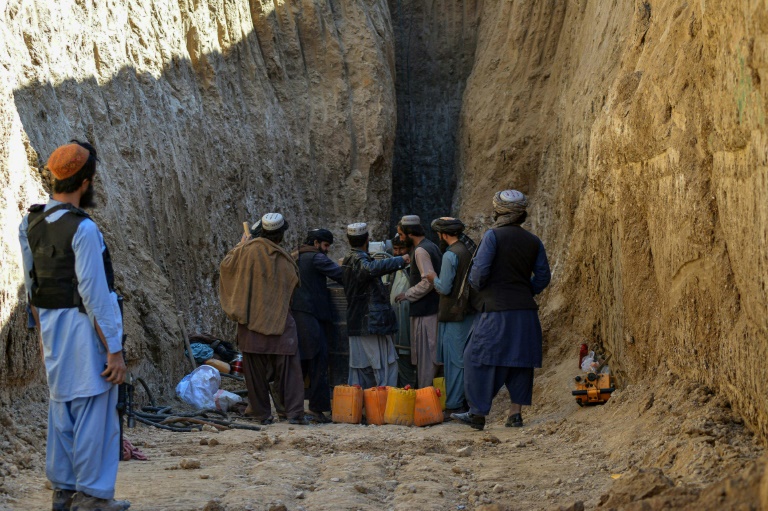
Senior officials from the Taliban’s newly installed government oversaw the rescue operation in Shokak, which was watched by hundreds of villagersmany related to the child.

– ‘Prayers not enough’ –

They despatched bulldozers and other earth-moving equipment to the site, as well as one of the country’s few airworthy helicopters in case he required medical evacuation to hospital.

Some Taliban officials posted videos of the tricky operation, saying it showed how the new regime — widely criticised for rights abuses — would spare nothing to care for its citizens.

“Our prayers weren’t enough, but it brought everyone together, and we showed to everyone that all Afghan lives are precious,” tweeted one Taliban official.

Video shared Thursday on social media showed the boy wedged in the well but able to move his arms and upper body.

“Are you OK my son?” his father can be heard saying. “Talk with me and don’t cry, we are working to get you out.”

“OK, I’ll keep talking,” the boy replies in a plaintive voice.

The video was obtained by rescuers who lowered a light and camera down the narrow well by rope.

Engineers using bulldozers dug an open slit trench from an angle at the surface to reach the point where Haidar was trapped.

A large rock blocked the final few metres, which workers used pickaxes to break through on Friday morning.

The operation employed similar engineering to the rescue attempt in Morocco earlier this month, when a boy fell down a 32-metre well and was pulled out dead five days later.

The ordeal of “little Rayan” gained global attention and sparked an outpouring of sympathy online, with the Arabic Twitter hashtag #SaveRayan trending.

Olympic chief Bach hits out at 'chilling' reaction of Valieva coach

Thomas Bach said Friday it was “chilling” to see how Kamila Valieva’s coach treated the Russian teenager after a doping scandal engulfing the skater culminated in an error-strewn performance at the Beijing Olympics.

The International Olympic Committee president said he was “very disturbed” to see the 15-year-old fall several times and sob in the women’s figure skating final on Thursday.

The World Anti-Doping Agency (WADA) is looking into Valieva’s entourage, after the doping controversy tarnished the second week of the Games in the Chinese capital and thrust the young skater into the glare of the global spotlight.

“I was very disturbed when I watched it on TV,” Bach said, adding Valieva was treated with “a tremendous coldness” by her coaches after the calamitous free skate routine which saw her finish fourth and miss out on a medal. 

The pre-Games favourite for gold was distraught afterwards but Russian coach Eteri Tutberidze was seen demanding to know what had gone wrong as Valieva came off the ice, her head bowed and looking pale.

“Why did you let it go? Why did you let it go? Tell me,” Tutberidze can be heard saying.

Bach told a news conference: “When I afterwards saw how she was received by her closest entourage with what appeared to be such a tremendous coldness, it was chilling to see this.”

The doping affair will rumble on long after the Games have ended and Valieva could yet be punished.

The teenager was controversially cleared to carry on at the Games despite failing a test in December for trimetazidine, a drug used to treat angina but which is banned for athletes by WADA because it can boost endurance.

Bach said that seeing Valieva’s Russian teammate Alexandra Trusova also highly agitated after her silver medal-winning routine confirmed his concerns about the team around the teenage skaters.

“I was pondering about whether you can be really so cold but when I saw and read today how Alexandra Trusova was being treated, I am afraid that this impression I had last night was not the wrong one,” said Bach.

“All of this does not give me much confidence in this close entourage of Kamila.”

– Minimum age proposal –

Valieva’s predicament has also focused attention once more on Russian athletes at Olympic Games and the IOC’s decision to allow Russians supposedly deemed clean of doping to participate.

They are taking part in Beijing under the banner of the Russian Olympic Committee because Russia as a country is serving a two-year ban as punishment for a state-sponsored doping programme.

Bach said that Valieva had “a drug in her body which obviously should not be in her body.

“The ones who have administered this drug in her body, these are the ones who are guilty,” he said, while also defending the IOC’s actions.

Russia’s sports minister was unimpressed by Bach’s intervention.

“It’s debatable to say the least to determine and judge the behaviour of a coach and judge the relationship with an athlete from TV,” Oleg Matytsin told TASS news agency.

Figure skating’s governing body, the ISU, said in an email to AFP that it will vote later this year on a proposal to raise the minimum age at which figure skaters can take part in senior competitions.

– Another gold for Gu –

Californian-born Chinese freeskier Eileen Gu won her second gold medal of the Olympics and third medal overall.

The 18-year-old’s scintillating victory in the halfpipe confirmed her as the face of the Olympics and was the antidote the Games were crying out for after Valieva’s distress.

Gu, who switched allegiance from the United States to China in 2019, won halfpipe gold with another commanding performance.

She had the title wrapped up before she even started her third and final run, and celebrated with her coaches at the top of the halfpipe before making her way down with a joyous victory lap.

“It has been two straight weeks of the most intense highs and lows I’ve ever experienced in my life,” Gu said of her Games. 

“It has changed my life forever.” 

Finland charged into the final of the men’s ice hockey for the first time in 16 years with a 2-0 win over Slovakia.

The Finns will play the winner of Friday’s later semi-final between defending champions the Russian Olympic Committee and Sweden.

Meanwhile, Bach said the IOC had held a meeting with Chinese organisers to remind them to keep politics out of the Olympics, after a local spokeswoman hit back at “lies” about Xinjiang, where China is accused of widespread rights abuses.

“Both organisations, BOCOG and the IOC, have restated the unequivocal commitment to remain politically neutral, as it is required by the Olympic Charter,” Bach said.

Shellfire as Putin turns up heat on Ukraine and West

Shellfire rang out in eastern Ukraine on Friday as the army and Moscow-backed separatists accused each other of provocations and US warnings of an imminent Russian invasion stoked international tension.

An AFP reporter near the frontline between government forces and rebel-held territory in Lugansk region heard the thud of explosions and saw damaged civilian buildings.

All eyes were on Russian President Vladimir Putin’s next move as Moscow announced he will oversee a weekend drill of “strategic forces” — ballistic and cruise missiles.

Russia has demanded that the United States withdraw all forces from NATO members in central and eastern Europe and is turning up the pressure on Ukraine.

On Thursday, US Secretary of State Antony Blinken told the United Nations that Washington has intelligence showing that Moscow could order an invasion in the “coming days”.

Russia has denied it has any such plan and claims to have begun withdrawing some of the 149,000 troops that Ukraine now says are on its borders.

But Putin has done nothing to dial down tensions, ordering the missile drills even as there are reports of an increase in shelling from Russian-backed rebels in eastern Ukraine.

On Thursday, a shell punched a hole in the wall of a kindergarten in government-held territory near the frontline in the Ukrainian village of Stanytsia Luganska.

The 20 children and 18 adults inside escaped serious injury but the attack sparked international howls of protest.

“The children were eating breakfast when it hit,” school laundry worker Natalia Slesareva told AFP at the scene.

“It hit the gym. After breakfast, the children had gym class. So another 15 minutes, and everything could have been much, much worse.”

On Friday, part if the village remained without electricity. Konstantin Reutsky, director of the Vostok SOS aid agency, told AFP that houses and a shop had been damaged. 

– Invasion pretext –

The Ukrainian joint command centre said the rebels had violated the ceasefire 20 times between midnight and 9:00 am Friday, while the Donetsk and Lugansk separatist groups said the army had fired 27 times.

The conflict in Ukraine’s east has rumbled on for eight years, claiming the lives of more than 14,000 people and forcing more than 1.5 million from their homes.

But now, after Russia surrounded its neighbour with armoured battle groups, missile batteries and warships, there are fears that Ukraine will be drawn into a clash that Russia could use as a pretext for invasion.

Speaking in parliament, Ukraine’s defence minister Oleksiy Reznikov insisted government forces would keep their cool.  

“Ukraine is stepping up its defences. But we have no intention of conducting military operations” against the separatists of Russian-annexed Crimea, he said.

“Our mission is not to do any of the things the Russians are trying to provoke us into doing,” Reznikov added. “We have to push back but keep a cool head.”

From the opposing camp, Kremlin spokesman Dmitry Peskov said: “What is happening in the Donbas is very concerning news and potentially very dangerous.”

Meanwhile, Putin was to host his ally Belarus strongman Alexander Lukashenko, who this week said his country cold host Russian nuclear weapons aimed at the West.

– Serious steps –

And the Russian defence ministry further upped the ante by announcing that Putin would oversee an “exercise of strategic deterrence forces… during which ballistic and cruise missiles will be launched.”

The air force, units of the southern military district, as well as the Northern and Black Sea fleets would be involved.

Russia’s aggressive stance has sent diplomatic shockwaves through the West, scrambling to counter an unpredictable foe during what has been described as the worst threat to European security since the Cold War.

German Foreign Minister Annalena Baerbock said Moscow needed to show “serious steps towards de-escalation”.

“With an unprecedented deployment of troops on the border with Ukraine and Cold War demands, Russia is challenging fundamental principles of the European peace order,” Baerbock said.

burs-dc/mm/jm

Mysteries and music: listening in to underwater life

When marine researchers started recording sounds in the seagrass meadows of the Mediterranean Sea they picked up a mysterious sound, like the croak of a frog, that resounded within the dense foliage — and nowhere else.   

“We recorded over 30 seagrasses and it was always there and no-one knew the species that was producing this kwa! kwa! kwa!” said Lucia Di Iorio, a researcher in ecoacoustics at France’s CEFREM.  

“It took us three years to find out the species that was producing that sound.”

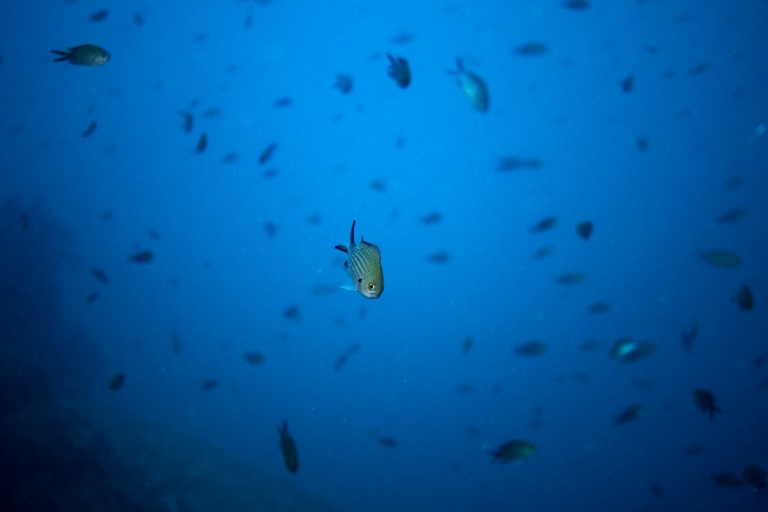
The melodious songs of whales might be familiar music of the world’s underwater habitats but few people will have heard the hoarse growl of a streaked gurnard or the rhythmical drumbeat of a red piranha. 

Scientists are now calling for those sounds and many thousands more to become more widely accessible. 

They say a global database of the booms, whistles and chatter of the sea will help to monitor diversity in aquatic life — and help put a name to mystery sounds like the one Di Iorio and her colleagues investigated. 

Experts from nine countries are working to create what they have dubbed the Global Library of Underwater Biological Sounds — or “GLUBS”. 

This would gather together recordings held all over the world and open them up to artificial intelligence learning and mobile phone apps used by citizen scientists.

While experts have been listening to life underwater for decades, the team behind GLUBS say that audio collections tend to be narrowly focused on a specific species or geographical area. 

Their initiative is part of burgeoning work on marine “soundscapes” — collecting all the sounds in a particular area to discern information about species types, behaviour and overall biological diversity.  

Scientists say these soundscapes are a non-invasive way to “spy on” life underwater. 

In a paper published recently in the journal Frontiers in Ecology and Evolution, the GLUBS team said many fish and aquatic invertebrates are mainly nocturnal or hard to find, so acoustic monitoring could help conservation efforts. 

“With biodiversity in decline worldwide and humans relentlessly altering underwater soundscapes, there is a need to document, quantify and understand the sources of underwater animal sounds before they potentially disappear,” said lead author Miles Parsons of the Australian Institute of Marine Science.

– Sonic ‘barcode’ –

Scientists believe that all 126 marine mammal species emit sounds, as do at least 100 aquatic invertebrates and some 1,000 fish species.

The sounds can convey a wide range of messages — acting as a defence mechanism, to warn others of danger, as part of mating and reproduction — or just be the passive noise of an animal munching a meal. 

Di Iorio, a co-author on the GLUBS paper, said while marine mammals, like humans, learn their language of communication, the sounds made by invertebrates and fish are “just their anatomy”. 

Many fish produce a distinctive drumming sound using a muscle that contracts around their swim bladder.     

“This dum-dum-dum-dum-dum, the frequency, the rhythm and the number of pulses vary from one species to another. It’s very specific,” Di Iorio told AFP. 

“It’s like a barcode.”

Scientists can recognise families of fish just from these sounds, so with a global library they might be able to compare, for example, the thrumming calls of different grouper fish in the Mediterranean to those off the coast of Florida. 

But another key use for the library, they say, could be to help identify the many unknown sounds in the world’s seas and freshwater habitats. 

– Mystery music –

After many months investigating the strange seagrass croaker, Di Iorio and her colleagues were able to point the finger of suspicion at the scorpionfish. 

But they struggled to explain how it was making such an unusual noise — and it refused to perform for them. 

They tried catching the fish and recording it in a carrier. They sunk sound equipment onto the seabed next to the fish. They even listened in to aquariums that contained scorpionfish.   

“Nothing,” she said. 

Eventually colleagues from Belgium took a camera that could record at low light and staked out some seagrass in Corsica. 

They were able to capture the kwa! kwa! sound as well as video of the fish making a shimmying motion. 

Back in the lab, they dissected a scorpionfish and found that they have tendons strung along their bodies. 

Their hypothesis is that the fish contracts these muscles to produce the sound.    

“It’s a guitar, an underwater guitar,” said Di Iorio. 

But there are many more mysteries where that came from.

Di Iorio said in the Mediterranean, up to 90 percent of noises in a given recording might be unknown.  

“Every time we put a hydrophone in the water we’re discovering new sounds,” she added.  

Close Bitnami banner
Bitnami