World

Transgender US swimmer wins Ivy League 500-yard women's freestyle

Transgender US swimmer Lia Thomas won the 500-yard freestyle race at the 2022 Ivy League women’s championships Thursday, defying critics who have called for her to be barred from competing.

Thomas has dominated US collegiate women’s swimming recently as a student athlete at Penn State, where just a few years ago she competed as a man.

Her case has divided opinion, with some arguing she has an unfair physiological advantage while others say she should be allowed to compete freely as a woman.

This month the governing body of swimming in the United States, USA Swimming, unveiled new guidelines which include a more stringent threshold for athletes’ testosterone levels — widely seen as making it harder for Thomas to be able to compete in major meets.

But she got the go-ahead to compete in the prestigious Ivy League championships, and came in first place with a time of 04 mins 37.32 secs Thursday — a record for Harvard University’s Blodgett Pool.

She was among three swimmers from Penn State to make the finals.

Thomas beamed and flashed a peace sign as she received the medal. 

Also competing Thursday was fellow transgender swimmer Iszac Henig, who won first place in the women’s 50-yard freestyle race.

IAEA wraps up first trip to monitor Fukushima water release

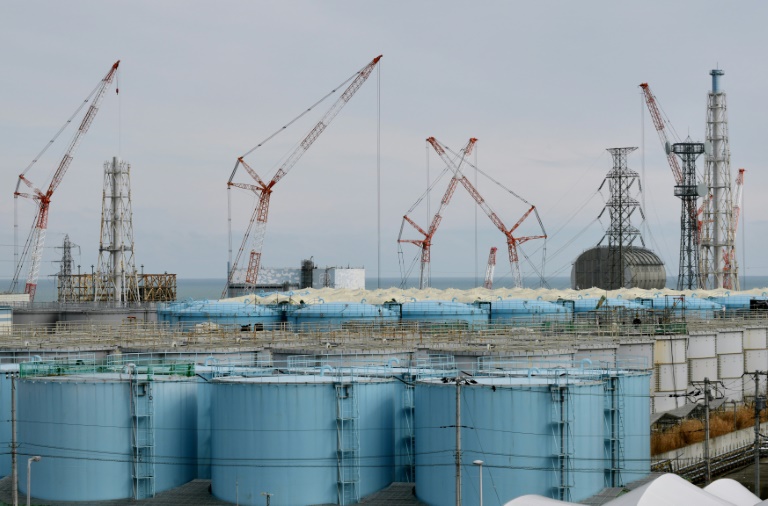
The International Atomic Energy Agency said Friday it made “significant progress” on its first mission to review the planned release of treated water from Japan’s Fukushima nuclear plant.

Since Monday, an IAEA taskforce has been in Japan to assess the country’s plan to gradually release the water, which has been processed to remove most radioactive elements, into the ocean.

The organisation’s deputy director general Lydie Evrard said the international team including non-IAEA experts had examined early preparations at the site for the release, expected to begin as soon as March next year.

“The IAEA taskforce made significant progress in its work this week to get a better understanding of Japan’s operational and regulatory plans for the discharge of the treated water,” she told reporters.

More than a million tonnes of liquid, including rain, groundwater and water used for cooling, has accumulated in tanks at the crippled Fukushima plant since it went into meltdown after a tsunami in 2011, and space is running out.

The IAEA has already endorsed the release, which it says is similar to wastewater disposal at nuclear plants elsewhere.

But neighbouring countries have expressed environmental and safety concerns, and local fishing communities are opposed, fearing it will undermine years of work to restore their reputation.

The water is treated but some radioactive elements including tritium remain. Experts say there is no evidence that would pose any danger, but opponents want the plan blocked.

Evrard said the taskforce collected water samples and gathered technical information on the trip and will release its findings in late April, the first of several reports in a multi-year review.

Ahead of the press conference on Friday, Greenpeace said it had “low expectations” for the taskforce’s investigation, calling for alternative options to the release to be explored.

“The IAEA is incapable of protecting the environment, human health or human rights from radiation risks — that’s not its job,” Shaun Burnie, senior nuclear specialist for Greenpeace East Asia, said in a statement.

Evrard said the UN-affiliated organisation is listening to concerns over the plans and takes them “very seriously”, and the review was “aimed at providing an objective and science-based approach”.

Six African countries to get own mRNA jab production

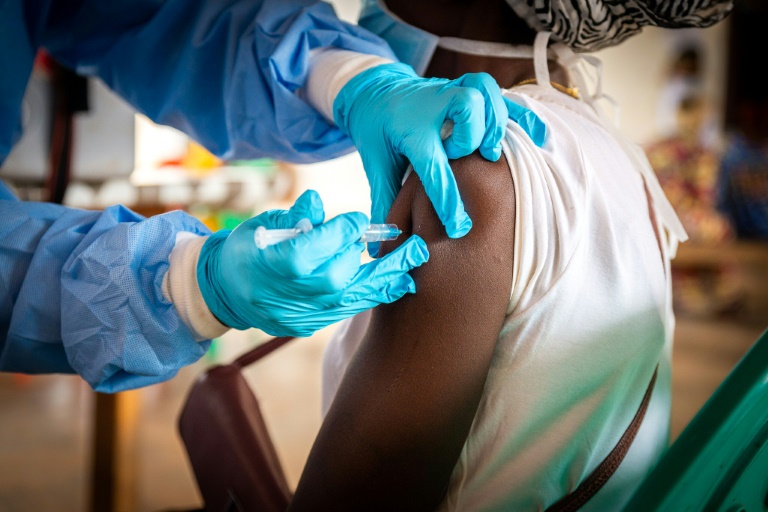
Six African countries have been chosen to establish their own mRNA vaccine production, the World Health Organization said Friday, with the continent largely shut out of access to Covid jabs.

Egypt, Kenya, Nigeria, Senegal, South Africa and Tunisia were selected as the first recipients of technology from the WHO’s global mRNA vaccine hub, in a push to ensure Africa can make its own jabs to fight the Covid and other diseases. 

“No other event like the Covid-19 pandemic has shown that reliance on a few companies to supply global public goods is limiting, and dangerous,” WHO chief Tedros Adhanom Ghebreyesus said.

“The best way to address health emergencies and reach universal health coverage is to significantly increase the capacity of all regions to manufacture the health products they need.”

Tedros has continually called for equitable access to vaccines in order to beat the pandemic, and rails against the way wealthy nations have hogged doses, leaving Africa lagging behind other continents in the global vaccination effort.

A ceremony marking the mRNA tech transfer announcement was to be held Friday in Brussels at the summit between the European Union and the African Union.

European Commission chief Ursula von der Leyen said: “We have been talking a lot about producing mRNA vaccines in Africa. But this goes even beyond. This is mRNA technology designed in Africa, led by Africa and owned by Africa.”

– Self-reliance –

Currently only one percent of the vaccines used in Africa are produced on the continent of some 1.3 billion people.

The WHO set up a global mRNA technology transfer hub in South Africa last year to support manufacturers in low- and middle-income countries to produce their own vaccines.

The global hub’s role is to ensure that manufacturers in those nations have the know-how to make mRNA vaccines at scale and according to international standards.

As used in the Pfizer/BioNTech and Moderna Covid-19 vaccines, mRNA technology provokes an immune response by delivering genetic molecules containing the code for key parts of a pathogen into human cells.

Primarily set up to address the Covid-19 pandemic, the global hub has the potential to expand manufacturing capacity for other vaccines and products, such as insulin to treat diabetes, cancer medicines and, potentially, vaccines for diseases such as malaria, tuberculosis and HIV.

The scheme’s ultimate goal is to spread capacity for national and regional production to all health technologies.

– ‘Mutual respect’ –

The WHO said it would work with the first six countries chosen to develop a roadmap of training and support so they can start producing vaccines as soon as possible. Training will begin in March.

The South African hub is already producing mRNA vaccines at laboratory scale and is currently scaling up towards commercial scale.

South African President Cyril Ramaphosa said Friday’s announcement “means mutual respect, mutual recognition of what we can all bring to the party, investment in our economies, infrastructure investment and, in many ways, giving back to the continent”.

French President Emmanuel Macron said supporting African health sovereignty was one of the key goals of starting up local production, “to empower regions and countries to fend for themselves, during crises, and in peace time”.

More than 10.4 billion Covid-19 vaccine doses have been administered around the world, with nearly 62 percent of the global population having received at least one shot.

However, just 11.3 percent of Africans had been fully immunised by the start of February.

Olympic sponsor Airbnb profits from Xinjiang, Tibet listings

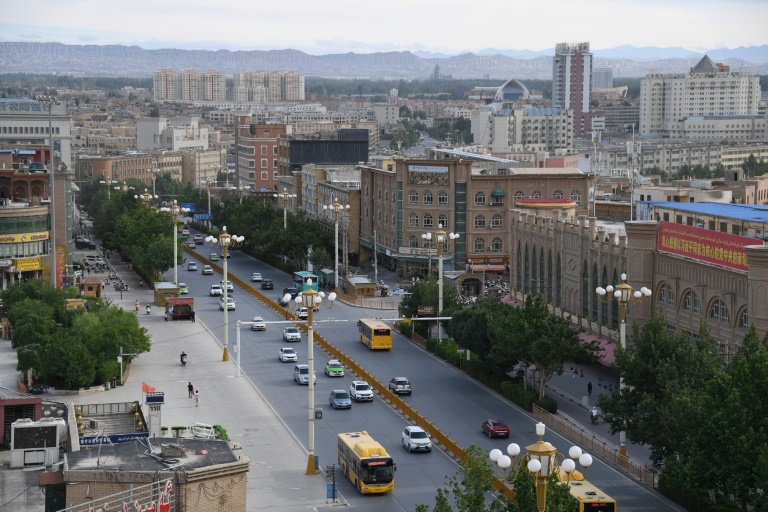
Olympic sponsor Airbnb has hundreds of listings in Xinjiang and Tibet, two regions where China stands accused of widespread human rights abuses and forced cultural assimilation, new research reveals.

Beijing is hosting the Winter Games amid international alarm over rights violations against minority groups, particularly its mostly Muslim Uyghur population.

Airbnb is one of the Olympics’ biggest backers with a reported $500 million sponsorship deal running until 2028.

The online platform’s steady growth in China is partly driven by around 700 accommodation listings in the troubled far west, according to data compiled by the London-based nonprofit Free Tibet that was exclusively obtained and verified by AFP.

They include about 380 listings in the northwestern Xinjiang region, where Beijing has allegedly imprisoned some one million Uyghurs as part of a crackdown on religious extremism.

A further 300 are in neighbouring Tibet, where campaigners have long accused the government of religious repression and cultural erasure.

Nasdaq-listed Airbnb links travellers with hosts willing to rent accommodation and makes money by charging service fees.

The San Francisco-based firm has vocally embraced progressive political issues like the Black Lives Matter racial justice movement in the US.

In a statement to AFP, Airbnb said it operates “where the US government allows us to” and “has a “rigorous process… to help ensure we follow applicable rules”.

The company said that it had a “long-term partnership” spanning several Olympics and had spoken to the International Olympic Committee about “the importance of human rights”.

It said China was “an important part of our purpose to connect people from around the world”, but that it only accounted for around one percent of its revenue in recent years.

-‘Mysterious and romantic’-

China has promoted Xinjiang as a vibrant tourist destination and more recently a winter sports hub.

But the region is in the grip of a years-long “anti-terrorism” campaign that has swept large numbers of Uyghurs and other Muslims into a sprawling network of “re-education” camps.

Beijing is also accused of forcibly sterilising Uyghur women, imposing forced labour and destroying cultural sites in what the US and lawmakers in multiple Western nations have described as a genocide.

China vociferously denies the allegations.

After initially dismissing the existence of camps, Beijing has said the facilities are voluntary vocational training centres to root out extremism.

On Airbnb’s Chinese website, hosts in Xinjiang trumpet “ethnic-style” rooms in “mysterious and romantic” settings.

“More and more” tourists were flocking to the “beautiful” region, said a landlady surnamed Yu in the ancient Silk Road city of Kashgar.

“There’s absolutely no need to worry about any public security problems,” she told AFP, describing herself as a member of China’s Han ethnic majority.

Another Kashgar-based host who declined to be named brushed off a question about ethnic discrimination, saying Western countries had “twisted the facts”.

-‘Ghost town’-

Experts and Uyghurs outside China say Xinjiang’s tourism boom conceals a darker reality.

Former residents described longtime curbs on religious and cultural expression, while many of Kashgar’s historic buildings were demolished to make way for tourist-friendly new developments.

One US-based Kashgar native said tourists arrived in droves only after waves of arrests from 2017 cleared many neighbourhoods of Uyghur inhabitants.

Speaking on condition of anonymity, he said those detained included his brother, whom he has not heard from since.

The remaining Uyghurs are pushed to “perform” state-approved cultural differences relating to food, dance or music, said Darren Byler, an assistant professor of international studies at Canada’s Simon Fraser University.

But other practices are strictly controlled and tourists may not be aware that they are “in a kind of ghost town, where the people who really lived on that street are missing”, he told AFP.

-‘Genocidal processes’-

Airbnb has rebounded from the global tourism slump caused by the coronavirus pandemic, with revenues last year 25 percent higher than 2019.

The company operates in 220 countries and regions, and is increasingly popular in China where its name translates to “welcome each other with love”.

Its Chinese business has drawn scrutiny before, with news reports revealing that some listings discriminated against Uyghurs and Tibetans while others were located on land owned by a US-sanctioned paramilitary group.

Western companies including fashion giant H&M have previously faced consumer boycotts in China for pulling out of Xinjiang.

David Tobin, a lecturer in East Asian Studies at Britain’s University of Sheffield, said companies that profit from tourism in areas cleared of Uyghur populations are “complicit in genocidal processes”.

Norway-based Uyghur language activist Abduweli Ayup said companies like Airbnb could be listing homes that were once owned by Uyghurs.

“(They) have a responsibility to check where the owners are, and why so many houses are empty,” he said.


Hong Kong foreign domestic workers 'abandoned' in virus crisis

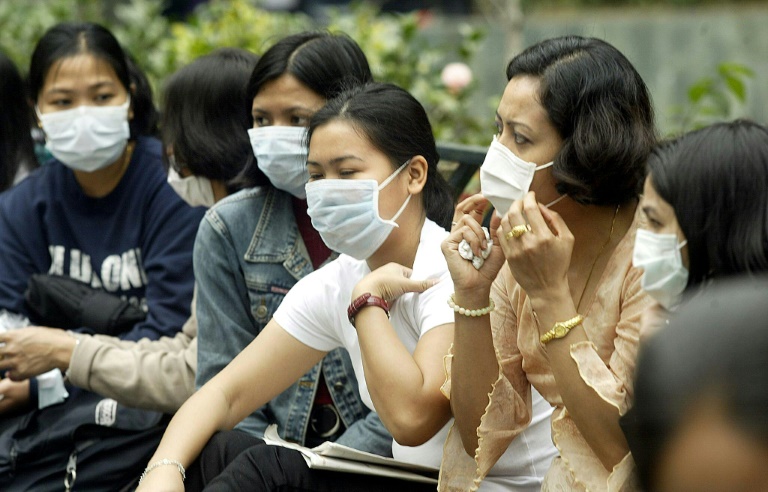
Hong Kong’s foreign domestic workers are being “abandoned” in the current coronavirus wave sweeping the city, with some forced to sleep rough or being denied treatment after testing positive, charities warned Friday.

The Chinese financial hub is currently in the throes of its worst-ever coronavirus outbreak, registering thousands of confirmed cases a day as hospitals reach breaking point.

Hong Kongers live in one of the world’s most densely packed cities and rely on some 370,000 foreign domestic workers, the vast majority women from the Philippines and Indonesia who cook, clean, and look after their families.

Foreign domestic workers must live with their employers, cannot swap jobs easily, and are only entitled to one day off a week.

On Friday a coalition of groups representing migrant workers said the already grim pandemic conditions have plunged further in the current outbreak.

Some workers had been sacked by employers after testing positive, forcing them to sleep outdoors. Others found themselves denied treatment at hospitals because they had lost their jobs.

Eni Lestari, an Indonesian domestic worker and activist, said her peers had been on the “frontlines” helping families throughout the pandemic.

“Now we are being neglected, we are being denied services, we are being abandoned,” she told reporters.  

“We are very alarmed and we are very angry,” she added.

– Calls for compassion –

Activists said many Hong Kong employers were refusing to let their domestic workers leave often cramped apartments even on their day off, while some had been fired for taking their rest day. 

“For us staying home means we have to work,” said Dolores Balladares Pallaez from the Asian Migrants Coordinating Body, adding workers needed “compassion and help” from both the government and wider society.

The coalition said Hong Kong police had also ramped up social distancing fines each weekend for domestic workers, adding that penalties can be higher than their monthly wage. 

Like mainland China, Hong Kong has stuck to a rigid zero-Covid policy that largely kept the virus out but left the international business hub cut off the last two years.

Those defences have now come crashing down after the highly infectious Omicron variant entered the local community after infected flight crew and residents returned from overseas.

On Thursday authorities announced more than 12,000 positive cases. Prior to the current outbreak, Hong Kong recorded just 12,000 infections for the whole pandemic.

The current outbreak has caught the government off guard with few preparations in place for dealing with zero-Covid being breached.

Authorities have since scrambled to locate thousands of hotel rooms and unused public housing blocks to isolate the infected as well as a location to build a temporary hospital.

Hong Kong leader Carrie Lam, who has currently ruled out a China-style citywide lockdown, said some 20,000 hotel rooms had now been located.

Boy trapped three days down Afghan well dies after rescue

A five-year-old boy trapped for three days down a remote Afghan village well died moments after being pulled out alive, officials said Friday.

The child, named Haidar, slipped Tuesday to the bottom of a well being dug in Shokak, a parched village in Zabul province, around 400 kilometres (250 miles) southwest of the capital Kabul.

“With great sorrow, young Haidar is separated from us forever,” said Taliban interior ministry senior adviser Anas Haqqani, in a tweet echoed by several of his colleagues.

Zabul police spokesman Zabiullah Jawhar told AFP that Haidar was clinging to life when rescuers reached him.

“In the first minutes after the rescue operation was completed he was breathing, and the medical team gave him oxygen,” he said.

“When the medical team tried to carry him to the helicopter, he lost his life.”

The operation comes around two weeks after a similar attempt to rescue a boy from a Moroccan well gripped the world — but ended with the child found dead.

Haidar’s grandfather, 50-year-old Haji Abdul Hadi, told AFP the boy fell down the well when he was trying to “help” adults dig a new borehole in the drought-ravaged village.

Officials said he slipped to the bottom of the narrow 25-metre (80-foot) shaft, and was pulled by rope to about 10-metres before becoming stuck.

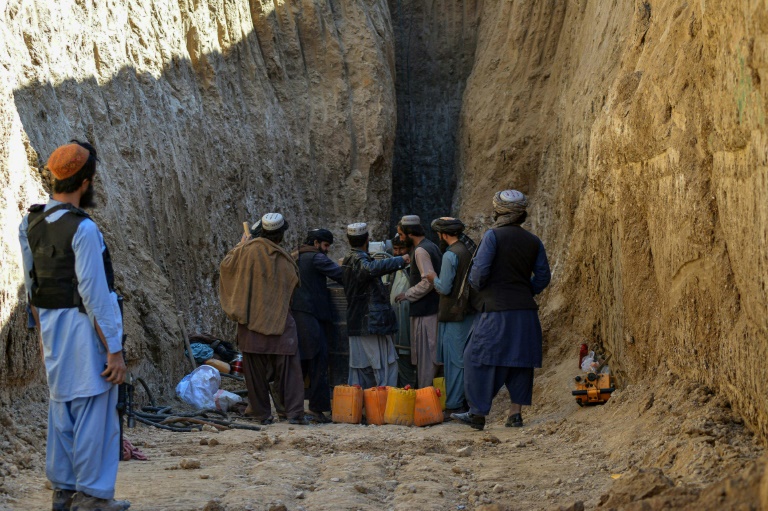
Senior officials from the Taliban’s newly installed government oversaw the rescue operation in Shokak, watched by hundreds of curious villagers.

Some Taliban officials posted videos of the tricky operation saying it was an example of how the new regime — widely criticised for rights abuses — would spare nothing to care for citizens.

Video shared Thursday on social media showed the boy wedged in the well but able to move his arms and upper body.

“Are you okay my son?” his father can be heard saying. “Talk with me and don’t cry, we are working to get you out.”

“Okay, I’ll keep talking,” the boy replies in a plaintive voice.

The video was obtained by rescuers lowering a light and a camera down the narrow well by rope.

Engineers using bulldozers dug an open slit trench from an angle at the surface to reach the point where Haidar was trapped.

A large rock blocked the final few metres, which workers used pickaxes to break on Friday morning.

The operation employed similar engineering to what rescuers attempted in Morocco in early February, when a boy fell down a 32-metre well, but was pulled out dead five days later.

The ordeal of “little Rayan” gained global attention and sparked an outpouring of sympathy online, with the Arabic Twitter hashtag #SaveRayan trending.

India court sentences 38 to death over 2008 bombings

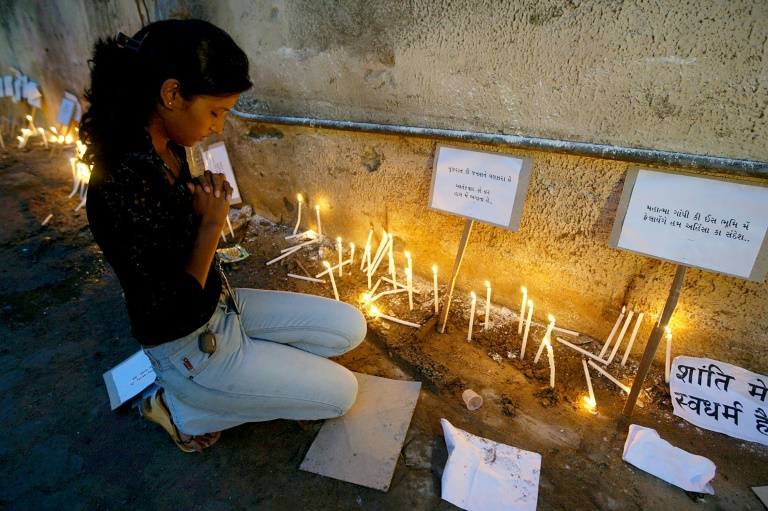
An Indian court sentenced 38 people to death on Friday over a string of bomb blasts in 2008 that killed dozens in the city of Ahmedabad, in one of the country’s biggest mass death sentences.

Coordinated attacks in western Gujarat state’s commercial hub in 2008 killed 56, launching shrapnel through markets, buses and other public places.

An Islamist group calling itself the Indian Mujahideen claimed responsibility, saying the blasts were revenge for 2002 religious riots in Gujarat that left some 1,000 people dead.

The court on Friday convicted 49 people over the attacks, in which more than 200 were injured.

“Special court judge A R Patel awarded death sentence to 38 out of the 49 convicted,” public prosecutor Amit Patel said.

“Eleven of the convicted were sentenced to life imprisonment till death… The court has considered the case as rarest of the rare,” he said.

The convicted were all found guilty of murder and criminal conspiracy. Nearly 80 people were charged but 28 were acquitted.

The marathon trial lasted over a decade thanks to India’s labyrinthine legal system, with more than 1,100 witnesses called to testify.

It was dragged out by procedural delays, including a legal battle by four of the accused to retract confessions.

Police also foiled a 2013 attempt by more than a dozen of the defendants to tunnel their way out of jail using food plates as digging tools.

All 77 accused have been held in custody for years, with the exception of one who was bailed after a schizophrenia diagnosis.

– 1,000 dead –

Ahmedabad was the centre of deadly 2002 religious riots that saw at least 1,000 people — mostly Muslims — hacked, shot and burned to death in an orgy of sectarian violence that sent shock waves around the world.

It was prompted by the killing of 59 Hindus in a train fire — a case in which 31 Muslims were convicted for criminal conspiracy and murder — on the way back from one of Hinduism’s most sacred sites.

Prime Minister Narendra Modi was at the time head of the Gujarat state government and has subsequently been dogged by accusations that he turned a blind eye to the unrest.

Modi, from the Hindu nationalist Bharatiya Janata Party (BJP), was cleared of conspiracy but for a time was subject to travel bans imposed by the United States and others.

India was rocked by several lethal bomb attacks in 2008 claimed by the Indian Mujahideen group — with dozens killed in the capital New Delhi and northern tourist city of Jaipur. 

In November of that year, 166 people were killed by gunmen armed with explosive devices, in a coordinated assault on hotels and other high-profile targets in Mumbai that was blamed on Pakistan-based militants.

– Death row –

Capital punishment remains an integral part of the Indian criminal justice system. 

The number of prisoners on death row at the end of 2021 stood at 488, according to a report by Project 39A, a law reforms advocacy group. 

The last execution was in March 2020, when four men convicted of the rape and murder of a student on a bus in Delhi were hanged.

Sri Lanka clears police, defence chiefs over Easter bombings

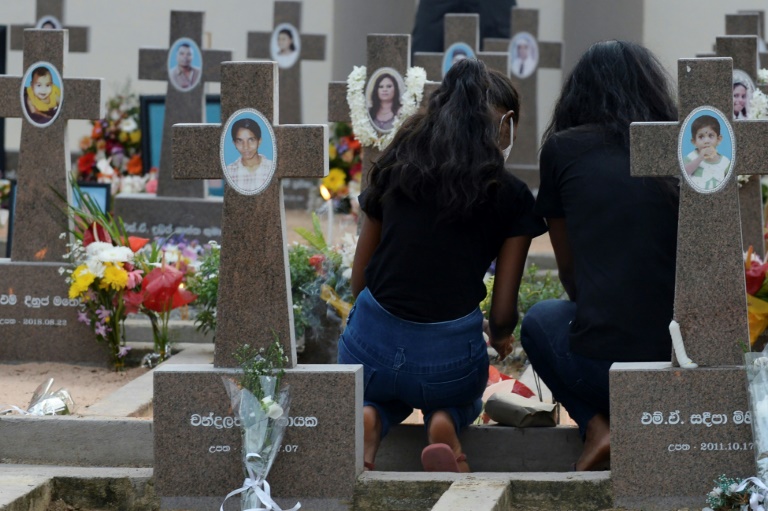
Sri Lanka’s High Court on Friday acquitted two top officials accused of “crimes against humanity” for failing to prevent the 2019 Easter Sunday bombings that killed 279 people.

The state had indicted the two men in November for failing to act on early warnings from an Indian intelligence agency that local jihadists were planning a string of suicide bombings in April 2019.

The three-judge panel dismissed all 855 charges against Hemasiri Fernando, then secretary to the ministry of defence, as well as then inspector general of police Pujith Jayasundara.

A court official said the judges in a unanimous decision exonerated the suspects and released them without calling defence witnesses.

The attacks, blamed on a homegrown Islamic extremist group, targeted three churches and three hotels in the capital and killed 279 people, including 45 foreigners, leaving more than 500 wounded.

Fernando and Jayasundara were arrested in 2019 and held in custody for four months before being released on bail.

Jayasundara was the most senior police official to be arrested in the 155-year history of the force.

The then chief prosecutor Dappula de Livera had told the court that “negligence” by the two top officials amounted to “grave crimes against humanity” and laid murder charges against them.

A lower court had earlier refused to charge them with murder as prosecutors were unable to establish any links with the bombers, or a motive.

The first Indian intelligence warning was given on April 4, nearly three weeks before the bombings. The Islamic State group said it had backed the attackers.

Local Muslim groups had also alerted police and intelligence units over the threat posed by radical cleric Zahran Hashim, who led the suicide bombings.

Jayasundara and Fernando have testified to a parliamentary inquiry that then-president Maithripala Sirisena failed to follow established protocols in assessing national security threats ahead of the bombings.

They also alleged that Sirisena — who was also minister of defence as well as law and order – did not take the threats seriously.

Sri Lanka’s Roman Catholic church is pressing for action against Sirisena, a key ally of his successor, Gotabaya Rajapaksa, who came to power in November 2019 pledging to end extremist attacks on the island.

Rescuers near boy trapped in Afghan well, but rock blocks progress

Rescuers worked through the night to try to reach a five-year-old boy trapped for three days in an Afghan well, but an official said Friday a large rock was blocking their final access to the shaft.

The child, named Haidar, slipped Tuesday to the bottom of a well being dug in Shokak, a parched village in Zabul province, around 400 kilometres (250 miles) southwest of the capital Kabul.

The operation comes around two weeks after a similar attempt to rescue a boy from a Moroccan well gripped the world — but ended with the child found dead.

“The rescue operation continued all night,” Zabul police spokesman Zabiullah Jawhar told AFP Friday.

“The rescue team has faced a new obstacle and a rock is preventing them from digging more. We are concerned that dust could fall on the boy, and probably we would lose him, so we are working carefully.”

The boy’s grandfather, 50-year-old Haji Abdul Hadi, told AFP Haidar fell down the well when he was trying to “help” the adults dig a new borehole in the drought-ravaged village.

Officials said the boy slipped to the bottom of the 25-metre (80-foot) shaft, but was pulled by rope to about 10-metres before becoming stuck.

Senior officials from the Taliban’s newly installed government were overseeing rescue operations in Shokak, watched by hundreds of curious villagers.

Some Taliban officials were posting videos of the tricky rescue operation as an example of how the new regime — widely criticised for rights abuses — would spare nothing to care for citizens.

“At present, the child is alive,” Taliban spokesman Zabihullah Mujahid said in a video message to reporters, adding workers were using pickaxes in the final approach to avoid disturbing the soil.

Video shared Thursday on social media showed the boy wedged in the well but able to move his arms and upper body.

“Are you okay my son?” his father can be heard saying. “Talk with me and don’t cry, we are working to get you out.”

“Okay, I’ll keep talking,” the boy replies in a plaintive voice.

The video was obtained by rescuers lowering a light and a camera down the narrow well by rope.

Engineers using bulldozers have dug an open slit trench from an angle at the surface to try to reach the point where Haidar is trapped.

The operation employed similar engineering to what rescuers attempted in Morocco in early February, when a boy fell down a 32-metre well, but was found dead five days later.

The ordeal of “little Rayan” gained global attention and sparked an outpouring of sympathy online, with the Arabic Twitter hashtag #SaveRayan trending.

Germany accuses Russia of 'Cold War demands' before security conference

Germany accused Russia on Friday of endangering Europe’s security with demands that recall the Cold War, as Western leaders arrived for a Munich Security Conference set to be dominated by the Ukraine crisis.

Fears are growing in the West that Russia is on the verge of invading its neighbour, with the United States warning of a possible attack in the “coming days”.

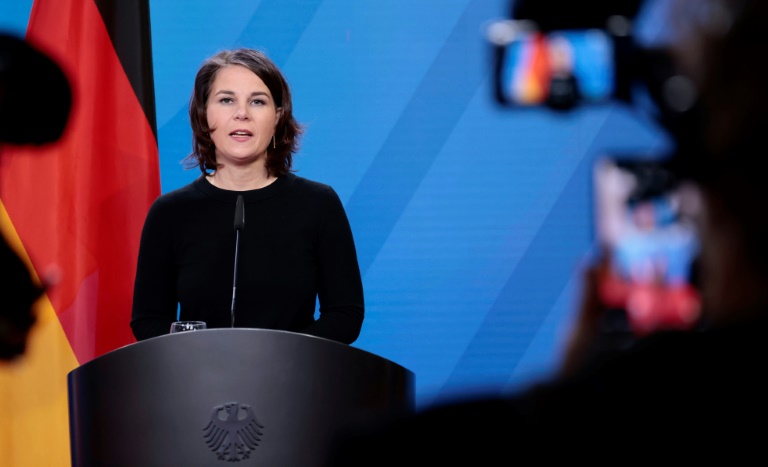
Ahead of the annual, three-day conference’s opening ceremony, German Foreign Minister Annalena Baerbock said Moscow needed to show “serious steps towards de-escalation”.

“With an unprecedented deployment of troops on the border with Ukraine and Cold War demands, Russia is challenging fundamental principles of the European peace order,” Baerbock said in a statement.

Russian troops have all but encircled Ukraine during the Kremlin’s stand-off with the West over NATO’s expansion into eastern Europe.

Before travelling to Munich, US Secretary of State Antony Blinken told the United Nations to expect an offensive in the “coming days”, likely preceded by a pretext to justify military action.

Some feared such a moment had arrived on Thursday, when a spike in shellings on the front line damaged an eastern Ukrainian kindergarten and Russian-backed separatists blamed Kyiv for escalating hostilities.

Russia has denied any invasion plans. But the Kremlin has also said it could be forced to respond militarily if Washington does not meet certain security demands.

Moscow has so far declined to attend the Munich gathering, but the United States said Blinken would meet his Russian counterpart Sergei Lavrov next week — provided no invasion had occurred before then.

“It is a loss that Russia is not taking advantage of this opportunity,” Baerbock said.

She added that the conference offered a chance “to discuss how we can still counter the logic of threats of violence and military escalation with the logic of dialogue”.

– Evacuation plans –

Also travelling to Munich are US Vice President Kamala Harris, UN chief Antonio Guterres, EU Commission head Ursula von der Leyen, NATO chief Jens Stoltenberg and Ukrainian President Volodymyr Zelensky.

Foreign ministers from the Group of Seven club of rich nations — including France, Britain, the US and Japan — will discuss the Ukraine crisis on the conference sidelines Saturday.

The talks will be hosted by Baerbock, whose country currently holds the G7 presidency.

“Even tiny steps towards peace are better than big steps towards war. But we also need serious steps towards de-escalation from Russia,” she said.

“Declarations of willingness to talk must be backed up by real offers to talk. Declarations of troop withdrawals must be backed up by verifiable troop withdrawals.”

Moscow has made several announcements of troop withdrawals this week, but the United States, NATO and Ukraine all said they had seen no evidence of a pullback.

Instead, Washington says Russia has moved 7,000 additional troops to near the Ukrainian border.

Citing “possible aggravation”, Ukraine’s armed forces announced late Thursday that evacuations were planned for some communities along the conflict-ridden border, particularly from the separatist-held city Donetsk.

Violence has ebbed and flowed along the eastern front line, where Kyiv has been locked in conflict with Moscow-backed rebels for almost eight years.

Following Thursday’s artillery fire at the kindergarten, Ukrainian and Western leaders reiterated calls for Russia not to exploit the border tensions to launch its feared offensive.

President Vladimir Putin has made clear that the price for removing any threat would be Ukraine agreeing never to join NATO and for the Western alliance to pull back from a swath of eastern Europe, effectively splitting the continent into Cold War-style spheres of influence.

Ukraine is far from being ready to join NATO but has set this as part of a broader goal to integrate with the democracies of western Europe, making a historic break from Russia’s orbit.

Close Bitnami banner
Bitnami