World

Colombian police interrupt drug kingpin hearing, cite escape plans

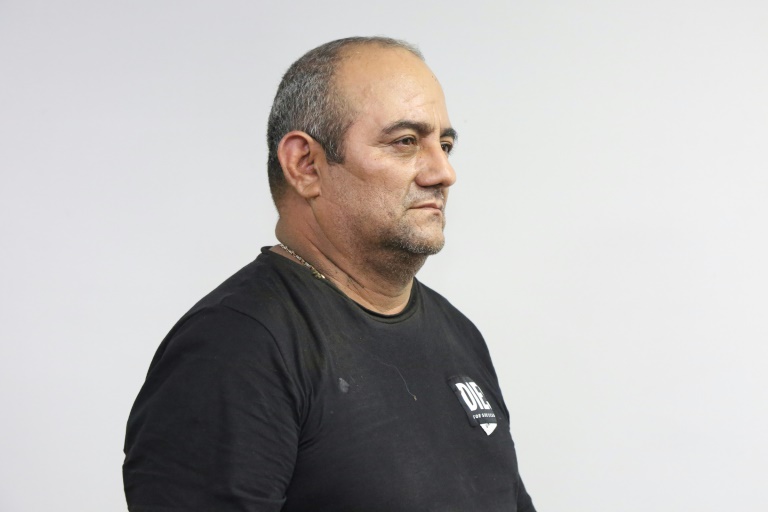
Colombian police halted a hearing Thursday for a notorious drug trafficker who was arrested late last year, saying they had found plans for a possible escape.

According to an official statement, the police ordered the “temporary suspension” of the hearing of Dairo Antonio Usuga, also known as “Otoniel,” before the Truth Commission, an extrajudicial body investigating a decades-long conflict between the government and the Revolutionary Armed Forces of Colombia (FARC) that ended with a 2016 peace agreement.

The statement said police were forced to take this unusual step because, “irresponsibly, the exact description of the place of detention of this individual was made public.”

In addition, “human sources and information gathered by the intelligence services… warned of plans by the Clan del Golfo to try to organize his escape,” the statement said, referring to the drug trafficking group Otoniel led before his capture.

However, some believe that the move was to prevent Otoniel from exposing government corruption in his testimony. 

Gustavo Petro, a leftist senator and leading contender for the next presidential election, called the police move a “seditious act against the truth.

“The government does not want Otoniel to speak,” he said on Twitter.

Otoniel, 50, was arrested in October in northwest Colombia’s dense jungle during an operation involving some 700 uniformed agents backed by 18 helicopters.

He is currently being held in an ultra-high security facility in Bogota, awaiting extradition to the United States. 

The FARC guerrillas laid down their arms after signing a historic peace pact in 2016, bringing an end to more than half-a-century of armed conflict.

But Colombia has been gripped by violence, particularly in recent months, as fighting continues over territory and resources between dissident FARC guerrillas, the ELN rebel group, paramilitary forces and drug cartels.

Colombia remains the world’s leading cocaine producer, with the United States its biggest buyer.

Sirens alert more rain in Brazilian city where 117 have died in flooding

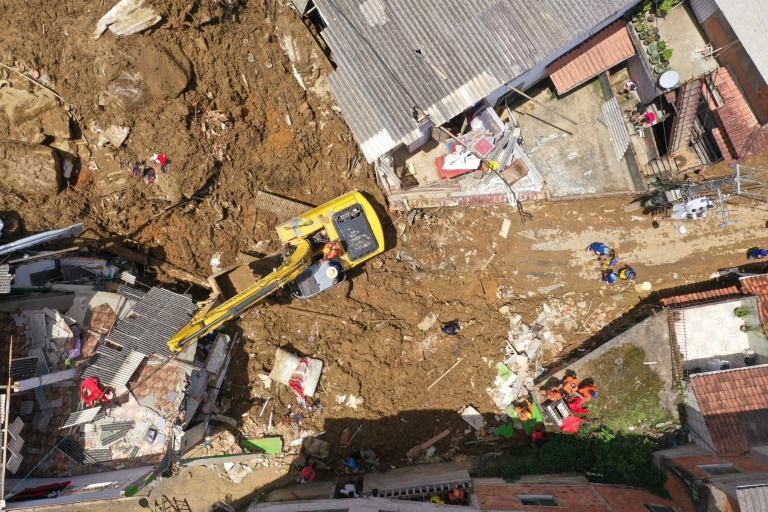
Ahead of more heavy rain, residents of several neighborhoods in the devastated Brazilian city of Petropolis were called to evacuate Thursday, just two days after flash floods and landslides killed 117 people.

Sirens warned neighborhoods in the hillside tourist town to leave, with residents still shocked from the rivers of mud that buried homes and swept away cars and trees. At least two streets were already closed after landslides containing “rocky blocks.”

The new rainfall comes with dozens still reported missing in the city, located some 60 kilometers (37 miles) north of Rio de Janeiro, and as the first funerals of identified victims took place.

Text messages warned residents to take refuge at relatives’ homes or in public shelters “due to the volume of rain affecting the city, which will continue, with an intensity between moderate to strong, in the next few hours,” the local Civil Defense said.

“I feel scared when I see that it’s raining again, because the ground is still soaked,” said 45-year-old Petropolis resident Rodne Montesso, whose house was not at risk from the latest rains. “I think of the families who live in neighborhoods where many people have already died and I get desperate.”

Amid fears that the toll could climb, firefighters and volunteers scrambled through the remains of houses Thursday — many of them impoverished slums.

As rescue helicopters flew overhead, residents shared stories about loved ones or neighbors swept away.

“Unfortunately, it is going to be difficult to find survivors,” Luciano Goncalves, a 26-year-old volunteer, told AFP, completely covered in mud.

“Given the situation, it is practically impossible. But we must do our utmost, to be able to return the bodies to the families. We have to be very careful because there are still areas at risk” of fresh landslides, he added.

– ‘Scene from a war’ –

A total of 24 people have been rescued, while the number of missing is murky due to many of the dead bodies not yet having been identified. Globo TV has reported the number of missing at 41.

So far, 850 displaced people have been relocated to makeshift shelters, the vast majority of them in public schools.

Some 500 firefighters, with the help of hundreds of volunteers, dogs, bulldozers and dozens of aircraft participated in the rescue.

The rains were the latest in a series of deadly storms — which experts say are made worse by climate change — to hit Brazil in the past three months.

Charities have called for donations of mattresses, food, water, clothing and face masks.

Governor Claudio Castro of Rio de Janeiro state said the streets of Petropolis resembled “a scene from a war,” adding these were the heaviest rains to hit the region since 1932.

The “historic tragedy” was made worse, Castro said, by “deficits” in urban planning and housing infrastructure.

The effects of uncontrolled urban expansion, said meteorologist Estael Sias, hit the poor hardest when disaster strikes.

“Those who live in these regions at risk are the most vulnerable,” he said.

City hall declared a state of disaster and three days of mourning.

– ‘Tragedy’ –

Petropolis — the 19th-century summer capital of the Brazilian empire — is a popular destination for tourists fleeing the heat of Rio.

It is known for its leafy streets, stately homes, imperial palace — today a museum — and the natural beauty of surrounding mountains.

President Jair Bolsonaro, on an official trip to Russia and Hungary, will travel to Petropolis on his return Friday to inspect the damage, the government announced.

Experts say rainy season downpours are being augmented by La Nina — the cyclical cooling of the Pacific Ocean — and by climate change.

Because a warmer atmosphere holds more water, global warming increases the risk and intensity of flooding from extreme rainfall.

Last month, torrential downpours triggered floods and landslides that killed at least 28 people in southeastern Brazil, mainly in Sao Paulo state.

There have also been heavy rains in the northeastern state of Bahia, where 24 people died in December.

Petropolis and the surrounding region were previously hit by severe storms in January 2011, when more than 900 people died in flooding and landslides.

jhb-pt-lg-pt/mm/mlr/bfm//to

Sirens alert more rain in Brazilian city where 117 have died in flooding

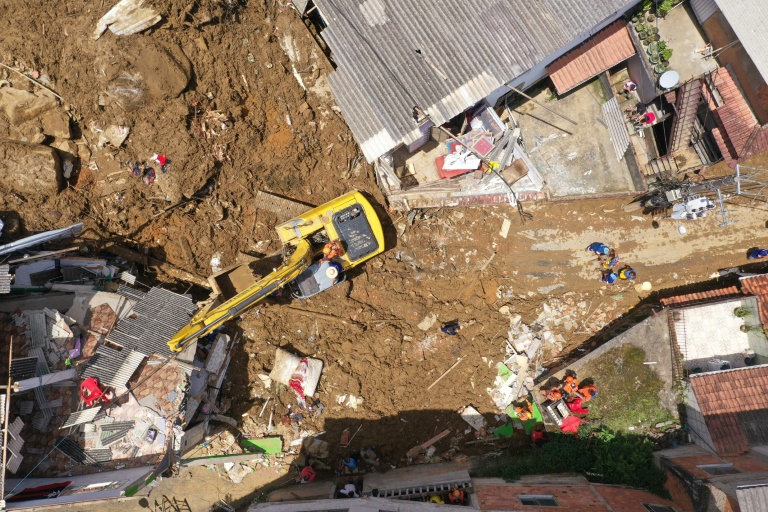
Ahead of more heavy rain, residents of several neighborhoods in the devastated Brazilian city of Petropolis were called to evacuate Thursday, just two days after flash floods and landslides killed 117 people.

Sirens warned neighborhoods in the hillside tourist town to leave, with residents still shocked from the rivers of mud that buried homes and swept away cars and trees. At least two streets were already closed after landslides containing “rocky blocks.”

The new rainfall comes with dozens still reported missing in the city, located some 60 kilometers (37 miles) north of Rio de Janeiro, and as the first funerals of identified victims took place.

Text messages warned residents to take refuge at relatives’ homes or in public shelters “due to the volume of rain affecting the city, which will continue, with an intensity between moderate to strong, in the next few hours,” the local Civil Defense said.

“I feel scared when I see that it’s raining again, because the ground is still soaked,” said 45-year-old Petropolis resident Rodne Montesso, whose house was not at risk from the latest rains. “I think of the families who live in neighborhoods where many people have already died and I get desperate.”

Amid fears that the toll could climb, firefighters and volunteers scrambled through the remains of houses Thursday — many of them impoverished slums.

As rescue helicopters flew overhead, residents shared stories about loved ones or neighbors swept away.

“Unfortunately, it is going to be difficult to find survivors,” Luciano Goncalves, a 26-year-old volunteer, told AFP, completely covered in mud.

“Given the situation, it is practically impossible. But we must do our utmost, to be able to return the bodies to the families. We have to be very careful because there are still areas at risk” of fresh landslides, he added.

– ‘Scene from a war’ –

A total of 24 people have been rescued, while the number of missing is murky due to many of the dead bodies not yet having been identified. Globo TV has reported the number of missing at 41.

So far, 850 displaced people have been relocated to makeshift shelters, the vast majority of them in public schools.

Some 500 firefighters, with the help of hundreds of volunteers, dogs, bulldozers and dozens of aircraft participated in the rescue.

The rains were the latest in a series of deadly storms — which experts say are made worse by climate change — to hit Brazil in the past three months.

Charities have called for donations of mattresses, food, water, clothing and face masks.

Governor Claudio Castro of Rio de Janeiro state said the streets of Petropolis resembled “a scene from a war,” adding these were the heaviest rains to hit the region since 1932.

The “historic tragedy” was made worse, Castro said, by “deficits” in urban planning and housing infrastructure.

The effects of uncontrolled urban expansion, said meteorologist Estael Sias, hit the poor hardest when disaster strikes.

“Those who live in these regions at risk are the most vulnerable,” he said.

City hall declared a state of disaster and three days of mourning.

– ‘Tragedy’ –

Petropolis — the 19th-century summer capital of the Brazilian empire — is a popular destination for tourists fleeing the heat of Rio.

It is known for its leafy streets, stately homes, imperial palace — today a museum — and the natural beauty of surrounding mountains.

President Jair Bolsonaro, on an official trip to Russia and Hungary, will travel to Petropolis on his return Friday to inspect the damage, the government announced.

Experts say rainy season downpours are being augmented by La Nina — the cyclical cooling of the Pacific Ocean — and by climate change.

Because a warmer atmosphere holds more water, global warming increases the risk and intensity of flooding from extreme rainfall.

Last month, torrential downpours triggered floods and landslides that killed at least 28 people in southeastern Brazil, mainly in Sao Paulo state.

There have also been heavy rains in the northeastern state of Bahia, where 24 people died in December.

Petropolis and the surrounding region were previously hit by severe storms in January 2011, when more than 900 people died in flooding and landslides.

jhb-pt-lg-pt/mm/mlr/bfm//to

Censorship row as India army blocks film on gay soldier

Critically-acclaimed Indian filmmaker Onir wanted to direct a movie inspired by a gay army major who resigned and came out in a blaze of publicity — but despite the country’s democratic status the military stopped it being made.

Prime Minister Narendra Modi’s Hindu-nationalist government has been repeatedly accused of ramping up censorship in a systematic attack on dissent — including clampdowns on human rights activists, journalists and NGOs — since coming to power eight years ago.

In 2020 it issued an order advising filmmakers to seek prior clearance for any military-themed script, a decision described by free speech campaigners as both Orwellian and unconstitutional in the world’s largest democracy.

Onir, who uses only one name, is gay himself and was among the first major Bollywood figures to openly acknowledge his sexuality.

He is known for his movies about the lives of socially marginalised groups, and his creative eye was caught by the case of Major J. Suresh, who hit national headlines in 2020 after he quit the army and announced: “Out!! Proud!! Liberated!!”

“I’m gay — and I’m very proud that I’m gay,” the ex-army officer — who had served in some of India’s most turbulent regions including Kashmir — wrote on his blog. 

He later gave a ground-breaking interview on national television that went viral in the socially conservative country.

Onir’s script, “We Are”, narrates four stories, those of a trans woman, a lesbian, a bisexual man and a fictitious account of love between a gay officer and a Kashmiri boy.

But when he approached the defence ministry for a “no objection certificate” — which most studios, streaming platforms and producers now insist on to ensure there are no legal or administrative hurdles — he was rejected. 

“They told me… the fact that I have portrayed the army man as gay is illegal,” he told AFP.

-‘Barometer of patriotism’ –

India only decriminalised gay sex in a 2018 Supreme Court ruling, but both homosexuality and adultery remain punishable offences under the Army Act, with jail terms of up to 10 years.

At the same time, India also has a long history of post-production film censorship, and concerns over freedom of expression were raised by new social media regulations last year.

The country’s junior defence minister Ajay Bhatt confirmed to parliament last week that Onir’s film had been refused permission because of “the portrayal of a romantic relationship between an army soldier serving in Kashmir and a local boy which casts (the) Indian army in poor light and raises security concerns”.

He insisted the pre-screening process was neither unconstitutional nor a denial of free speech, and said the government considered factors including national security, popular sentiment and the image of the armed forces to ensure the military “isn’t depicted in a manner which brings disrepute”. 

But Mumbai-based Onir, 52, pointed out that movies where officers fall in love with women were never rejected. 

“Why is one’s sexuality being made the barometer for one’s patriotism or ability to defend the nation?” he asked.

“Everyone seems to get offended over the slightest things but what about the artists’ creativity or sentiments?” he added. “We don’t matter.”

Several of his films have addressed gay themes, including “My Brother… Nikhil”, the story of Indian swimming champion Dominic D’Souza who was arrested in the 1980s after testing HIV positive.

“I Am” combined four stories examining same-sex relationships and other taboo subjects such as sperm donation and child abuse. 

It was named the best Hindi film in the 2012 National Film Awards, the country’s equivalent of the Oscars, but even then satellite channels declined to broadcast it.

In his own life, he said, “I have always been out. I have never had any one moment of coming out or crisis about who I am.”

– ‘Patriotic chest-thumping’ –

Some of the most popular military-themed movies and web series in India in recent years have been nationalistic, all-guns-blazing stories of heroics by soldiers, including “Uri: The Surgical Strike”, inspired by a Modi-ordered 2016 operation into Pakistani-controlled Kashmir.

The prime minister’s populist vision of a muscular India dominated by the Hindu majority has brought him multiple election wins, and he enjoys strong support in the armed forces, whose budgets and benefits he has significantly improved.

But critics say giving the military control over how it is portrayed is fundamentally inappropriate in a democratic country.

“It’s problematic,” said Hartosh Singh Bal, political editor of Caravan magazine. “How can the army decide how it is depicted, seen or criticised by the people?”

India’s military has traditionally stayed well clear of domestic politics, unlike those of neighbouring Pakistan, Bangladesh and Myanmar, all of which have seen multiple coups.

But Modi’s government has “repeatedly invoked the army with its patriotic chest-thumping for domestic politics”, Bal said, and now senior generals have “started making political comments”.

“I can think of one democratic parallel where the military is allowed control over free speech: across the border, in Pakistan,” he added. “But no one in this government likes that comparison.”

New Zealand police reject calls to clear anti-vax camp

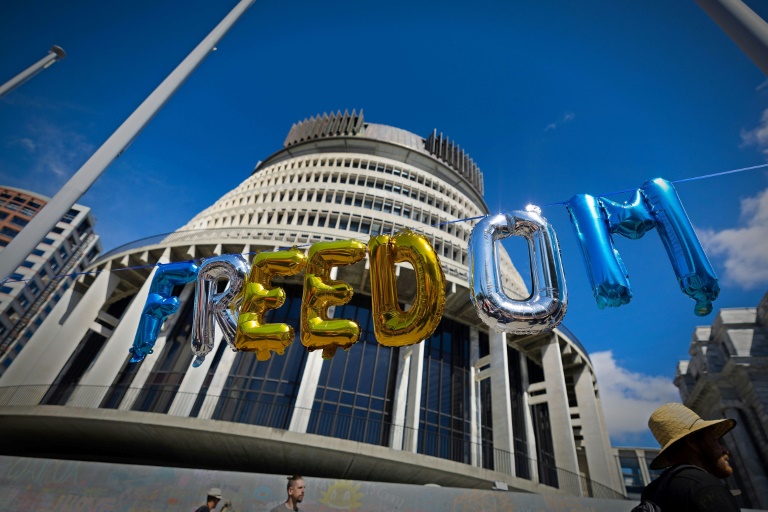
New Zealand police ruled out forcibly clearing anti-vaccination protesters camped around parliament in Wellington on Friday, saying they did not want to provoke violence on the streets of the capital.

Police have taken a hands-off approach after an attempt to take control of the lawns late last week resulted in violent clashes and 120 arrests.

Commissioner Andrew Coster acknowledged growing frustration among Wellington residents and business owners as protest vehicles blocked downtown streets for the 11th day.

But he insisted dialogue with the demonstration’s leaders was yielding positive results, even though the number of people squatting outside the legislature continues to swell.

“Enforcement action taken by police runs the real risk of injury to the public, escalation in numbers of people, and a transition away from a largely peaceful protest to violence,” Coster said.

“In our assessment, the only safe option at the present point in time is a continued focus on de-escalation.”

The protesters, inspired by Canada’s “Freedom Convoy”, jammed roads with cars, trucks and campervans early last week, then set up camp on the lawns of parliament.

They have erected tents and shelters, and organised portable toilets, food distribution points and childcare facilities.

New Zealand’s largest news website said police had “seemingly ceded control” of the parliamentary precinct, pointing to the presence of protesters acting as self-styled security guards to monitor access to the grounds.

Coster said about 800 people were at the camp, with more than 450 vehicles obstructing roads, and predicted numbers would increase over the weekend.

Police threatened to use the military to tow vehicles this week but backed off after protesters put out a call on social media for reinforcements.

Wellington residents have complained about being abused for wearing masks and noted some far-right messaging among the anti-government and anti-media slogans displayed by protesters.

A group of local mayors, business leaders, unionists and lawmakers issued a statement Friday saying the action had “gone well beyond” peaceful protest.

“The people of Wellington have had enough of this illegal activity, harassment and disruption, we ask that it end immediately,” they said.

Parliamentary officials tried to clear the grounds last weekend by playing pop music and children’s song “Baby Shark” on a loop and activating the lawn’s sprinkler system to soak the camp.

Tunisians fear more economic pain as IMF talks loom

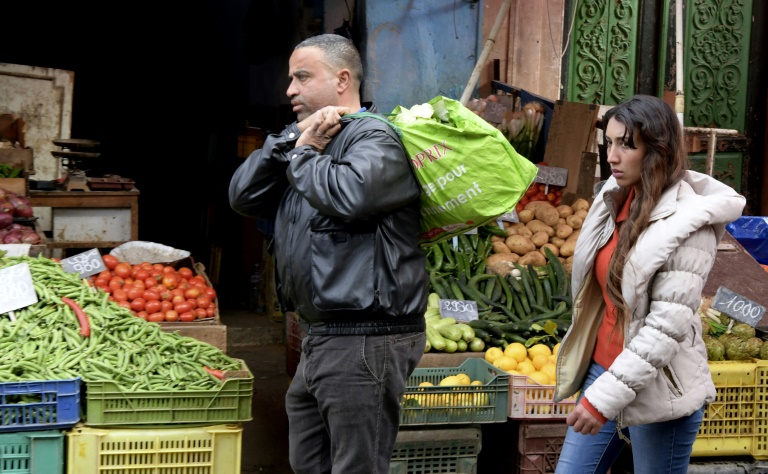
Every day at the family grocery stall in a Tunis market, Bilel Jani sees the reality of a biting economic crisis, which for many has overshadowed Tunisia’s latest political turmoil.

“People here are poor,” he said, handing a meagre bag of olives to a customer. “Most of our customers are living day-to-day. Monthly salaries these days don’t even cover a week.”

The small North African country, roiled by years of political turmoil that deepened with President Kais Saied’s power grab last July, is also mired in a deep recession.  

Surging prices and job losses have hurt families that were already struggling before the coronavirus pandemic. 

This week, Tunisia started preliminary talks with the International Monetary Fund over a bailout package. 

Such a deal would likely mean cuts to subsidies and public sector wages, which many fear would spell more suffering for the most vulnerable.

That could fuel the same kind of grievances that sparked a revolution a decade ago and brought down autocrat Zine El Abidine Ben Ali after 23 years in power.

The economic crisis since then has pushed tens of thousands of Tunisians to seek better lives overseas.

– Arab Spring’s birthplace –

At the Halfaouine market in a winding street near central Tunis, Jani’s customers are already feeling the pain.

“People used to buy by the kilogram,” he said. “Now they just buy the absolute necessities.”

His customer Delila Dridi said life was a struggle on her salary from the education ministry.

“I earn 1,000 dinars ($348, 305 euros) a month and I used to have 100 or 60 dinars left over at the end,” she said. “Now I have to borrow to get to the end of the month.”

Asked when things had started to deteriorate, she said “since Zine left”.

Ben Ali had ruled with an iron fist. But in late 2010, in the neglected town of Sidi Bouzid, vegetable salesman Mohamed Bouazizi set himself on fire in desperate protest against police harassment.

That sparked a revolt which forced Ben Ali into exile and sparked the Arab Spring uprisings around the region.

But rather than addressing corruption and structural economic problems, the dysfunctional democracy that followed was torn by an ideological showdown between Islamists and secularists.

Successive governments staged hiring sprees to tamp down social unrest, inadvertently tripling the wage cost of Tunisia’s public sector, one of the world’s most bloated.

– Battling inflation –

Little was done to help poorer regions in a country with vast wealth disparities, said Romdhane Ben Amor of the Tunisian Forum for Economic and Social Rights. 

Then, in 2020, the pandemic hit and Tunisia’s economy shrank by more than nine percent while public debt spiralled.

The International Crisis Group think-tank warned last month that the debt-burdened treasury “can barely cover the salaries owed to public-sector workers or honour commitments to repay external loans”.

With both the government and private banks reluctant to lend to the private sector, about 80,000 small and medium-sized companies have either declared bankruptcy or left the country since early 2020.

“The economy is in a deep recession, debt is at unprecedented levels and unemployment is at 18 percent,” and much higher among the youth, said economist Ezzedine Saidane.

Inflation has remained stubbornly high, in December hitting 6.6 percent on an annualised basis.

Those rising costs have spelled misery for people relying on stagnant salaries, pushing many of Tunisia’s once large middle class towards poverty.

“I’ve stopped buying lots of things because my salary doesn’t cover it,” said Dridi.

– ‘Waiting for a spark’ –

All this poses a looming challenge for President Saied, who last year sacked the government and seized wide-ranging powers, vowing to “cleanse” state institutions and rewrite the constitution.

Ben Amor worries that Saied, an austere constitutional law professor, “doesn’t have an economic or social programme”.

“He doesn’t meet any economic experts. He meets legal experts. But our problem is not legal,” he said. “There’s a crisis, but it’s an economic and social one.”

Ben Amor said that going to the IMF, with the austerity that would likely follow, should be Tunisia’s last option after domestic solutions were exhausted.

For example, the country’s large informal sector and companies that benefited from the pandemic all represent untapped sources of tax revenue, he said.

“The IMF looks at citizens and their needs as numbers: the public wage bill, interest rates, debt rates etc,” he said. “It doesn’t look at them as people who have needs — to eat, have health care, travel.”

Ben Amor believes that the economic crisis could easily spark major social unrest.

“This seems like the calm before the storm,” he said. “Society is waiting for a spark. Just as happened in 2010.”

Police arrest Canadian protest leaders

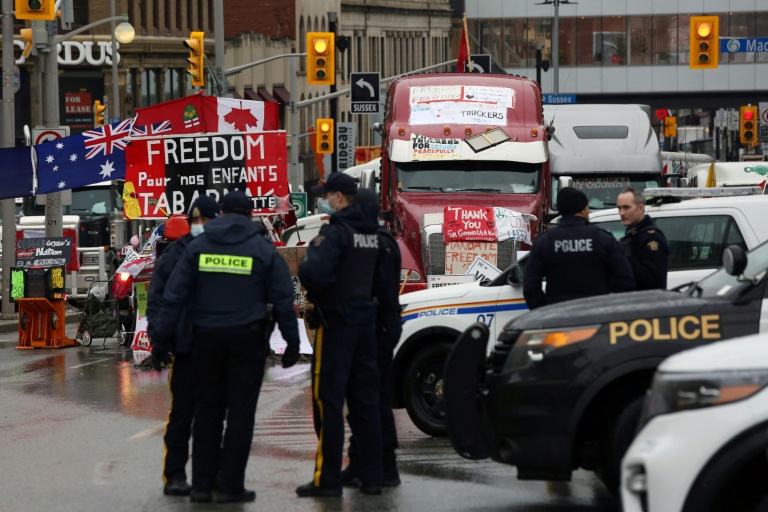
Canadian police on Thursday began arresting leaders of the trucker-led protest that has choked the capital’s streets for three weeks and provoked the government into calling on rarely used emergency powers.

A video posted to the Twitter account for the so-called “Freedom Convoy” showed Tamara Lich, one of the organizers, being taken into police custody on Thursday night.

The earlier arrest of another leader, Chris Barber, was also captured in a video shared on the same account.

The convoy had started with truckers protesting against mandatory Covid vaccines to cross the US border, but its demands have grown to include an end to all pandemic restrictions and, for many, a wider anti-establishment agenda.

At its peak, the movement also included blockades of a half-dozen US-Canada border crossings — including the key route between Windsor, Ontario and Detroit, Michigan.

Earlier on Thursday, Lich posted a tearful video to say she was expecting to be arrested.

She called on supporters to flood the capital, saying truckers already in place “are gonna stay and fight for your freedom.”

“If you can come to Ottawa and stand with us, that would be fantastic,” she said.

But city police chief Steve Bell said access to downtown Ottawa would be restricted to prevent people joining the demonstration, and he warned of “imminent” action against those already there.

“I implore anyone that’s there: Get in your truck… and leave our city streets,” Bell told reporters.

– ‘They have to stop’ –

Criticized for failing to act decisively, Prime Minister Justin Trudeau this week invoked the Emergencies Act, which gives the government sweeping powers to deal with a major crisis.

It is only the second time such powers have been invoked in peacetime.

Police were deployed in force into the area around the Canadian parliament, where hundreds of big rigs remained parked.

“We’ve begun to harden the perimeter around the protests,” Bell said.

“What I can tell you is this weekend will look very different than the past three weekends.”

Trudeau defended his decision to resort to the Emergencies Act, saying the act was not being used to call in the military, and denied restricting freedom of expression.

The objective was simply to “deal with the current threat and to get the situation fully under control,” he told the House of Commons.

“Illegal blockades and occupations are not peaceful protests… They have to stop,” he said.

Public Safety Minister Marco Mendicino said the situation in Ottawa was “precarious.”

The demonstrators had been given an ultimatum late Wednesday by Bell to leave or risk arrest and truck seizures.

In a statement, he pledged “to take back the entirety of the downtown core and every occupied space,” while warning that “some of the techniques we are lawfully able and prepared to use are not what we are used to seeing in Ottawa.”

Truckers responded by blaring horns, waving Canadian flags on the ends of hockey sticks, and chanting “Freedom!”

– ‘Risk of serious violence’ –

Emergency powers have been invoked in Canada only once before, in 1970 by Trudeau’s father, former prime minister Pierre Trudeau, to crush Quebec separatists who had kidnapped two officials and set off bombs in Montreal.

Officials had announced Wednesday a negotiated peaceful end to the last of the border blockades, which Mendicino said had cost the economy billions of dollars. 

In documents filed to the Commons, the government laid out its rationale for invoking the Emergencies Act, saying the trucker convoy has created a critical and urgent situation that cannot be dealt with under any other Canadian laws.

It cited “a risk of serious violence and the potential for lone actor attackers to conduct terrorism attacks.”

In a letter to provincial premiers, Trudeau decried the protests as “a threat to our democracy.”

Police this week arrested dozens of protesters, including four people charged with conspiracy to murder police officers at a checkpoint between Coutts, Alberta and Sweet Grass, Montana.

They also seized dozens of vehicles, as well as a cache of weapons that included rifles, handguns, body armor and ammunition.

Authorities have also moved to freeze bank accounts, and choke off crowdfunding and cryptocurrency transactions supporting the protesters.

US challenges Russia to step back from Ukraine attack

The United States said Thursday that Russia is on the verge of unleashing a massive military attack against Ukraine, dismissing Moscow’s claim to be pulling forces back, as artillery fire hit a Ukrainian kindergarten.

In a dramatic, previously unscheduled speech to the United Nations in New York, US Secretary of State Antony Blinken said intelligence showed Moscow could order an assault on its neighbor in the “coming days.”

With US and other Western governments saying they see no evidence of Russia’s claim to be withdrawing, Blinken challenged the Kremlin to “announce today with no qualification, equivocation or deflection that Russia will not invade Ukraine.”

“Demonstrate it by sending your troops, your tanks, your planes, back to their barracks and hangers,” he said.

Russia denies any invasion plans but warned of “military-technical measures” if its far-reaching demands for a US and NATO pullback from eastern Europe aren’t satisfied.

The United States said late Thursday that Blinken and his Moscow counterpart Sergei Lavrov had agreed to meet next week — provided there was no invasion before then.

Keeping up the pressure, President Joe Biden accused Moscow of preparing a “false flag operation” as a pretext for an attack.

“They have not moved any of their troops out. They’ve moved more troops in,” Biden said. “Every indication we have is that they’re prepared to go into Ukraine.”

He added, however, that diplomacy is not dead. “There is a path. There is a way through this,” he said.

Biden will hold a phone meeting Friday with the leaders of Germany, Britain, France, the European Union and NATO to discuss the Ukraine crisis.

– ‘Forced to respond’ –

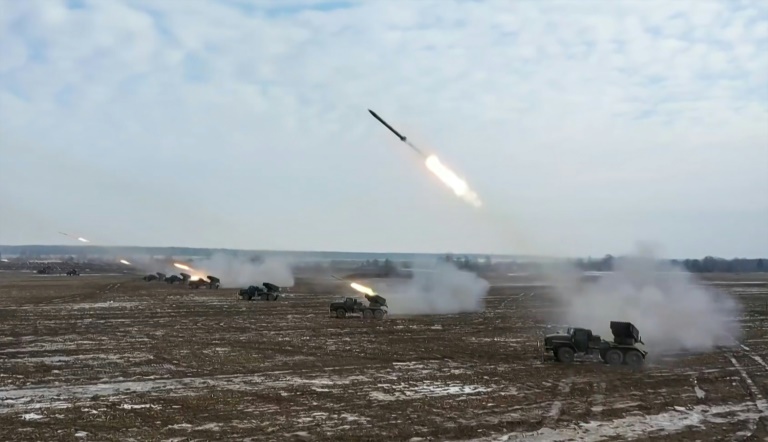
Russia has massed enormous air, land and sea forces around Ukraine. President Vladimir Putin and officials say the troops are only conducting practice exercises.

However, Putin has made clear that the price for removing any threat would be Ukraine agreeing never to join NATO and for the Western alliance to pull back from a swath of eastern Europe, effectively splitting the continent into Cold War-style spheres of influence.

The United States said that it had received Putin’s response to its offers of a diplomatic solution to the crisis, but did not give any reaction to the contents.

The Russian foreign ministry indicated that there was little to discuss.

“In the absence of will on the American side to negotiate firm and legally binding guarantees on our security from the United States and its allies, Russia will be forced to respond, including with military-technical measures,” the foreign ministry said.

“We insist on the withdrawal of all US armed forces in Central Europe, Eastern Europe and the Baltics.”

Russia also expelled the number two US diplomat in Moscow, the US State Department said, condemning the “unprovoked” action.

– Artillery fire on kindergarten –

Russia took over Ukraine’s Crimea region and began backing heavily armed separatists in the eastern Donetsk and Lugansk regions in 2014, sparking a war that has already cost thousands of lives.

Sporadic fighting remains common in the east, and the Ukrainian army accused the pro-Russian separatists of 34 ceasefire breaches on Thursday, 28 of them using heavy weapons.

The potentially most serious incident — an example of the kind of spark that many fear could ignite far more intense fighting — was the shelling of a kindergarten in the village of Stanytsia-Luganska. Children were inside but none were hit.

Ukrainian President Volodymyr Zelensky tweeted that the attack “by pro-Russian forces is a big provocation.”

Russian news agencies quoted authorities in the separatist Lugansk region saying they blamed Kyiv after the situation on the frontline “escalated significantly.”

Western capitals say they are also concerned by the Russian parliament’s request that Putin grant unilateral recognition of independence for the separatists in eastern Ukraine.

“If this request were accepted, it would… demonstrate a Russian decision to choose a path of confrontation over dialogue,” British Foreign Secretary Liz Truss said. 

Putin earlier this week claimed with no evidence that Ukraine is committing “genocide” in the eastern region.

– Disputed withdrawal –

Moscow has made several announcements of troop withdrawals this week and on Thursday said that tank units had begun returning to their bases from near Ukraine.

The United States, NATO and Ukraine all said they had seen no evidence of a pullback, with Washington saying Russia had in fact moved 7,000 more troops near the border.

According to US officials, there are now about 150,000 Russian troops arrayed in offensive groupings on the southern, eastern and northern borders of Ukraine.

burs-sms/bfm/to/bgs

Sydney reopens beaches after fatal shark attack

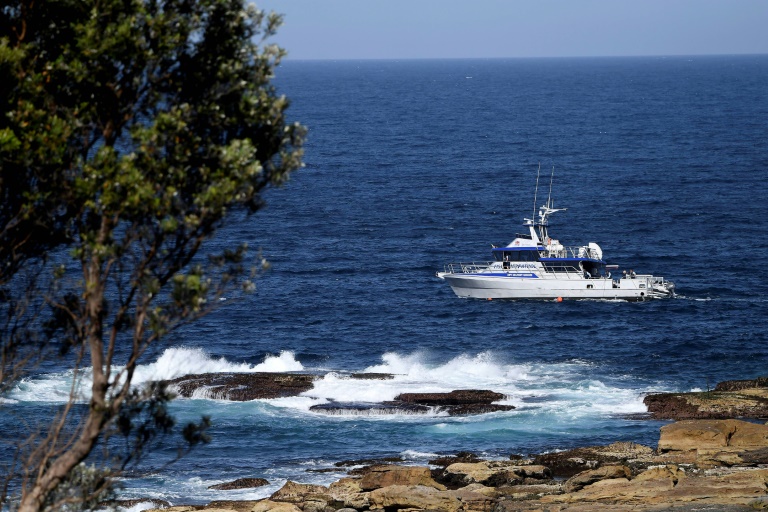
Sydney reopened beaches to surfers and swimmers on Friday after failing to find a large, great white shark that devoured a swimmer in the Australian city’s first such attack since 1963.

A 35-year-old British diving instructor, Simon Nellist, was identified by national broadcaster ABC and other media as the victim of Wednesday’s attack, which led the authorities to close a string of beaches including the iconic Bondi Beach.

Fishermen and golfers watched helplessly from nearby cliffs as a shark mauled the swimmer to death in a horrific attack off Sydney’s Little Bay Beach. 

Emergency responders described his injuries as “catastrophic”.

After the attack, drones scoured the ocean from the air, spotters launched on boats and six drum lines were set to try to catch the creature, which is believed to be at least three metres (10 feet) in length.

But no shark was seen.

“There have been no further sighting of sharks in the area, so beaches have been cleared to re-open on Friday 18 February 2022,” the mayor of Sydney’s Randwick local government area, Dylan Parker, said on the eve of the reopening.

Shortly after dawn on Friday, about a hundred swimmers at Bondi Beach stood in a circle on the sand and heads-bowed paid their respects to Nellist.

They then entered the surf on mass, and after a ritual swim beyond the breaking waves, regrouped to form another vast circle in moving tribute. 

“Ocean swimming is a special sport that has given me so much and I’m proud to be a part of this beautiful community,” said Bondi lifeguard and local celebrity Andrew ‘Reidy’ Reid. “Rest In Peace Simon.”  

“Everything that is connected to Simon is connected to the ocean,” Della Ross, a reported friend of the victim, told Australia’s Channel Seven news.

“The news hit us like a truck because he was one of the people who make this earth lighter.”

The man’s former employers before he moved to Australia, the Queens Hotel in Penzance, Cornwall, said they were “shocked” by his death.

“Our thoughts and prayers go out to Simon Nellist and his family, fiance and friends at this sad time,” the hotel said on Facebook, describing him as a “wonderful man”.

Sydney reopens beaches after fatal shark attack

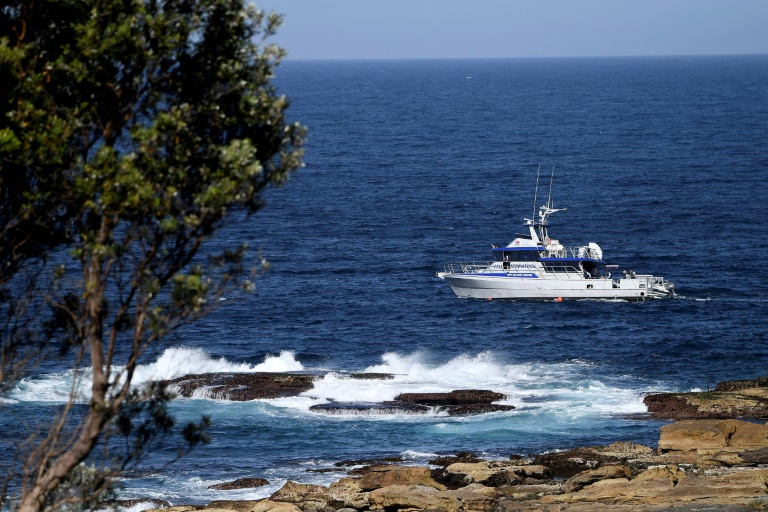
Sydney reopened beaches to surfers and swimmers on Friday after failing to find a large, great white shark that devoured a swimmer in the Australian city’s first such attack since 1963.

A 35-year-old British diving instructor, Simon Nellist, was identified by national broadcaster ABC and other media as the victim of Wednesday’s attack, which led the authorities to close a string of beaches including the iconic Bondi Beach.

Fishermen and golfers watched helplessly from nearby cliffs as a shark mauled the swimmer to death in a horrific attack off Sydney’s Little Bay Beach. 

Emergency responders described his injuries as “catastrophic”.

After the attack, drones scoured the ocean from the air, spotters launched on boats and six drum lines were set to try to catch the creature, which is believed to be at least three metres (10 feet) in length.

But no shark was seen.

“There have been no further sighting of sharks in the area, so beaches have been cleared to re-open on Friday 18 February 2022,” the mayor of Sydney’s Randwick local government area, Dylan Parker, said on the eve of the reopening.

Shortly after dawn on Friday, about a hundred swimmers at Bondi Beach stood in a circle on the sand and heads-bowed paid their respects to Nellist.

They then entered the surf on mass, and after a ritual swim beyond the breaking waves, regrouped to form another vast circle in moving tribute. 

“Ocean swimming is a special sport that has given me so much and I’m proud to be a part of this beautiful community,” said Bondi lifeguard and local celebrity Andrew ‘Reidy’ Reid. “Rest In Peace Simon.”  

“Everything that is connected to Simon is connected to the ocean,” Della Ross, a reported friend of the victim, told Australia’s Channel Seven news.

“The news hit us like a truck because he was one of the people who make this earth lighter.”

The man’s former employers before he moved to Australia, the Queens Hotel in Penzance, Cornwall, said they were “shocked” by his death.

“Our thoughts and prayers go out to Simon Nellist and his family, fiance and friends at this sad time,” the hotel said on Facebook, describing him as a “wonderful man”.

Close Bitnami banner
Bitnami