World

World funds own destruction with $1.8 tn subsidies: study

The world must by 2030 slash $1.8 trillion in annual subsidies that destroy the environment, in order to “finance a net-zero global economy”, according to a study Thursday from business groups including one founded by tycoon Richard Branson.

The report, estimating the value of damaging state subsidies, was commissioned by Branson’s nonprofit initiative The B Team and global coalition Business for Nature, which comprises academic, corporate and environmental organisations.

The vast subsidies, totalling two percent of global gross domestic product, fund the “global destruction of nature” and governments worldwide must act, the two organisations said in a statement.

The study “finds the fossil fuel, agriculture and water industries receive more than 80 percent of all environmentally harmful subsidies per year”, the organisations concluded.

And they called upon governments to “redirect, repurpose or eliminate” those subsidies by 2030 to help “finance a net-zero global economy”.

At least 20 nations were subsidising the price of gasoline or petrol, sparking higher emissions of carbon and other dangerous air pollutants, the research suggested.

Beef and soy production were also stimulated by “significant” subsidy flows that are a cause of tropical rainforest loss in Brazil, the report found.

European policies on biofuel blending biofuels with motor fuel meanwhile ramped up pressure for new cropland, often at the expense of tropical biodiversity hotspots, the study added.

And illegal logging, often via corruption and favouritism over lumbering concessions, contributed to climate change, deforestation and ecosystem destruction.

“Nature is declining at an alarming rate, and we have never lived on a planet with so little biodiversity,” said Christiana Figueres, head of The B Team’s climate group.

“At least $1.8 trillion is funding the destruction of nature and changing our climate, while creating huge risks for the very businesses who are receiving the subsidies.”

Governments across the world pay an estimated $640 billion in support to the fossil fuel industry, contributing to climate change, air and water pollution and land subsidence, the study found.

Agriculture receives some $520 billion in subsidies that contribute towards soil erosion, water pollution, deforestation, greenhouse gas emissions and loss of biodiversity and natural habitats, it claimed.

And another $350 billion in subsidies for the water industry is said to help fund water pollution and risk ocean and waterway ecosystems. 

Figueres said that “harmful subsidies must be redirected towards protecting the climate and nature, rather than financing our own extinction”.

The study was published one month before the next phase of the UN biodiversity summit COP15 in Geneva.

The research was based on data from the International Energy Agency watchdog and the Organisation for Economic Co-operation and Development, which is a club of industrialised economies that includes wealthy G20 members.
Race to find survivors after Brazil floods, landslides kill 104

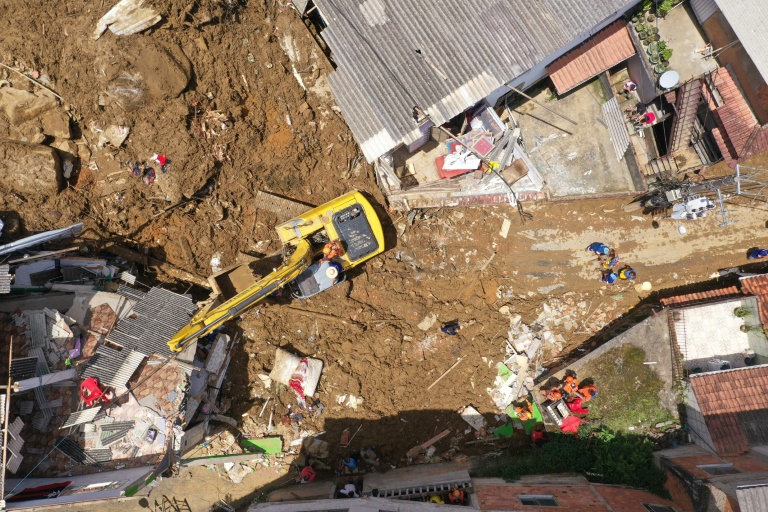
Rescuers raced against the clock Thursday to find survivors among the mud and wreckage caused by devastating flash floods and landslides that killed 104 people in the picturesque Brazilian city of Petropolis.

Streets were turned into torrential rivers of mud burying houses and sweeping away cars, trees and just about everything in their path in the hillside tourist town north of Rio de Janeiro.

With dozens still reported missing and more rain looming, fears that the toll could climb sent firefighters and volunteers scrambling through the remains of houses — many of them in impoverished hillside slums.

As rescue helicopters flew overhead, residents shared stories about loved ones or neighbors swept away.

“Unfortunately, it is going to be difficult to find survivors,” Luciano Goncalves, a 26-year-old volunteer, told AFP, completely covered in mud.

“Given the situation, it is practically impossible. But we must do our utmost, to be able to return the bodies to the families. We have to be very careful because there are still areas at risk” of fresh landslides, he added.

Sansao de Santo Domingo, a military policeman aiding the effort, managed to save a small grey dog from the rubble of a house.

“He was scared, he tried to bite me when I arrived. He was defending his territory, because he knew that his masters had been buried below, in the mud,” he said.

– ‘Scene from a war’ –

Some 500 firefighters resumed the search early Thursday after breaking for a few hours due to the instability of the water-soaked soil in the city of 300,000 inhabitants some 60 kilometers (37 miles) north of Rio de Janeiro.

Civil defense authorities have warned of more heavy rains later Thursday, and the government has said there is a high risk of new landslides.

This was the latest in a series of deadly storms — which experts say are made worse by climate change — to hit Brazil in the past three months.

About two dozen people have been rescued alive, but dozens remain missing, possibly more than 130.

About 700 people have been moved to shelters, mainly in schools, officials said.

Charities have called for donations of mattresses, food, water, clothing and face masks.

Governor Claudio Castro of Rio de Janeiro state said the streets of Petropolis resembled “a scene from a war,” adding these were the heaviest rains to hit the region since 1932.

The “historic tragedy” was made worse, Castro added, by “deficits” in urban planning and housing infrastructure.

The effects of uncontrolled urban expansion, said meteorologist Estael Sias, hit the poor hardest when disaster strikes.

“Those who live in these regions at risk are the most vulnerable,” he said.

“Not to mention that we are experiencing an economic crisis as a result of the pandemic that made everything worse because the number of people who left areas that were not at risk to settle in areas of risk undoubtedly increased,” he explained.

City hall declared a “state of disaster and declared three days of mourning.

– ‘Tragedy’ –

Petropolis — the 19th-century summer capital of the Brazilian empire — is a popular destination for tourists fleeing the summer heat of Rio.

It is known for its leafy streets, stately homes, imperial palace — today a museum — and the natural beauty of the surrounding mountains.

President Jair Bolsonaro, on an official trip to Russia, said on Twitter he was keeping abreast of the “tragedy.”

Experts say rainy season downpours are being augmented by La Nina — the cyclical cooling of the Pacific Ocean — and by climate change.

Because a warmer atmosphere holds more water, global warming increases the risk and intensity of flooding from extreme rainfall.

Last month, torrential downpours triggered floods and landslides that killed at least 28 people in southeastern Brazil, mainly in Sao Paulo state.

There have also been heavy rains in the northeastern state of Bahia, where 24 people died in December.

Petropolis and the surrounding region were previously hit by severe storms in January 2011, when more than 900 people died in flooding and landslides.

jhb-pt-lg-pt/mm/mlr/st

Witnesses reel after Ukraine kindergarten shelling

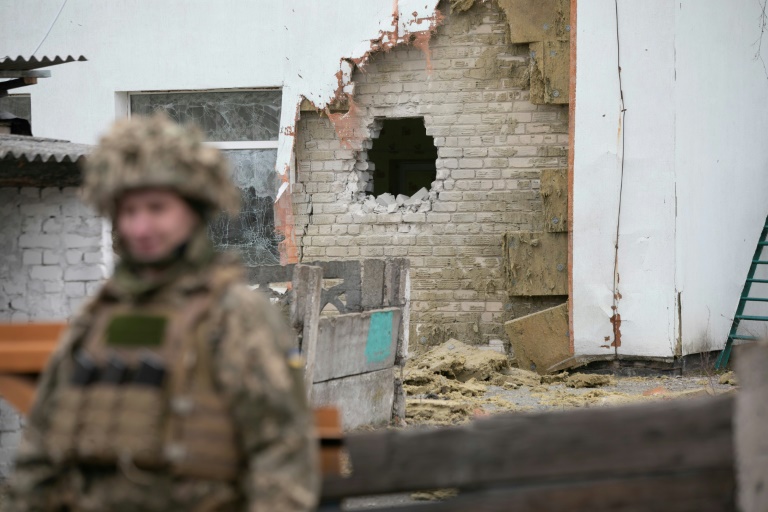
Kindergarten worker Natalia Slesareva’s ears were ringing after she was thrown against a door by a shell blast during an attack that has sent tensions soaring, amid fears that Russia will invade Ukraine.

The projectile blew a hole in the wall of a two-storey building being used by 20 children and 18 staff in the government-held eastern Ukrainian village of Stanytsia-Luganska.

It was a close call.

Everyone escaped relatively unharmed after rushing to the other side of the building and cowering against the walls on the ground floor.

“The children were eating breakfast when it hit,” Slesareva told AFP. “It hit the gym. After breakfast, the children had gym class. So another 15 minutes, and everything could have been much, much worse.”

Both Kyiv and the Russian-backed rebels fighting each other across Ukraine’s southeast for the past eight years accused the other side of launching a dangerous wave of new attacks across the front.

– ‘Everything was ringing’ –

Slesareva was still trying to make sense of what happened as she examined the piles of brick scattered across the damaged gym room.

“I was at my usual place at work, in the laundry room,” the 58-year-old laundress said. “The explosion wave blew me back against the door. Then — smoke, dust, broken windows.”

“I could not feel the right side of my head. Everything was ringing.”

A series of Ukrainian and Western leaders have expressed alarm and urged Russia not to exploit the tensions on the front line as a pretext to launch its feared offensive against Ukraine.

More than 100,000 Russian troops have all but encircled Ukraine during the Kremlin’s standoff with the West over NATO’s expansion into eastern Europe.

Polish Foreign Minister Zbigniew Rau — the acting chairman of the OSCE European security body monitoring the east Ukraine conflict — strongly condemned the attack and called for cooler heads to prevail.

“The indiscriminate shelling of civilian areas constitutes a clear violation of the ceasefire and the Minsk agreements,” Rau said, referring to an international accord designed to end the war

“We call for the immediate prevention of further escalation.”

– ‘I can’t calm down’ –

Thirty-seven other children who would have otherwise been in the class were at home because of coronavirus rules.

Another missile left a small crater near the children’s slides in the garden playground.

Local residents said the number of daily attacks in their part of the conflict zone began to rise around the time Russia launched new military drills near Ukraine’s border last month.

One woman who agreed to identify herself only as Natalia out of fear for her personal safety said that she and her husband rushed to the kindergarten in panic the moment they heard about the strike.

“I heard that they were shooting — they rang me from the kindergarten — and my husband and I rushed there by car to pick up our child,” she said.

“I was very scared. The kindergarten has no bomb shelter. It only has thick walls. But they even managed to puncture those,” she said. “I still can’t calm down.”

Slesareva sounded shaken hours after the dust had settled and the cleanup had begun.

“What happened today was a tragedy,” the laundry woman said. “Thankfully, no one was killed. I only have one wish: for this war to end.”

US 'candy bomber' pilot dead at 101

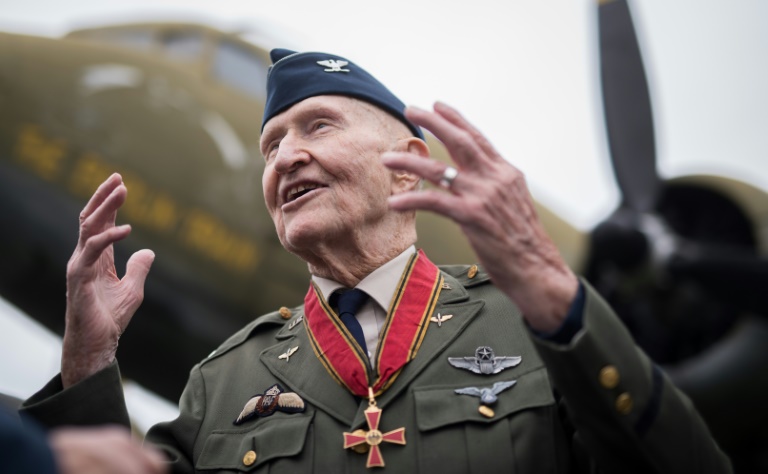
Gail Halvorsen, the former US pilot who thought up the idea of dropping tiny improvised parachutes loaded with sweets for children into Berlin during the Soviet blockade, has died at the age of 101.

The Allied Museum dedicated to Cold War history in Berlin’s former American sector confirmed media reports of Halvorsen’s death on Wednesday.

“Gail Halvorsen died in Utah in a hospital, surrounded by his family,” a museum spokeswoman told AFP on Thursday.

A lifelong ambassador for German-American friendship, Halvorsen became famous in the embattled city as the first American pilot to drop bundles of chocolate and chewing gum from his plane to local youngsters waiting below.

Fans nicknamed him “the candy bomber” and “Uncle Wiggly Wings” for the way he manoeuvred his plane so the children, still traumatised by the war, would know to look out for incoming treats.

He inspired many imitators in the ranks of the airforce.

“Even though I flew day and night, ice and snow… I was happy because of the look on the faces of the children when they would see parachutes coming out of the sky,” he told AFP in 2009. 

“They would just go crazy.”

Halvorsen rose to the rank of colonel and eventually ended up commander of the Tempelhof airfield, the staging ground for the 1948-49 Berlin Airlift.

Pilots flew supplies to West Berlin’s 2.5 million people, still reeling from the Second World War.

– ‘A father-figure’ –

Operating almost non-stop and through a harsh German winter, the airlift brought in more than two million tonnes of supplies on more than 277,000 flights, mainly into Tempelhof.

At least 78 US, British and German pilots and ground crew lost their lives in accidents in the air and on the ground, as the Allies delivered fuel and food to prevent Berlin’s population from starving.

Officially known as “Operation Vittles”, it was the first major salvo of the Cold War. 

Mercedes Wild recalled in 2019 how she as a seven-year-old girl had protested that the constant drone of airlift planes disturbed her chickens at a time when eggs were a valuable commodity.

Halvorsen wrote back, enclosing sticks of chewing gum and a lollipop with his letter.

His gesture sparked a long-lasting friendship between Halvorsen, Wild and their families which mirrored the post-war ties between their countries.

“It wasn’t the sweets that impressed me, it was the letter,” she told AFP.

“I grew up fatherless, like a lot of (German) children at that time, so knowing that someone outside of Berlin was thinking of me gave me hope.”

Wild called the tall, lanky pilot with the broad grin “a father-figure” and “the best ambassador we could have for German-American friendship”.

Halvorsen said the same year on one of his many visits to the German capital, even well into his 90s, how impressed he was with Berliners’ hunger for freedom.

“The heroes were the Germans — the parents and children on the ground,” the airforce veteran said, calling them “the stalwarts of the confrontation with the Soviet Union”.

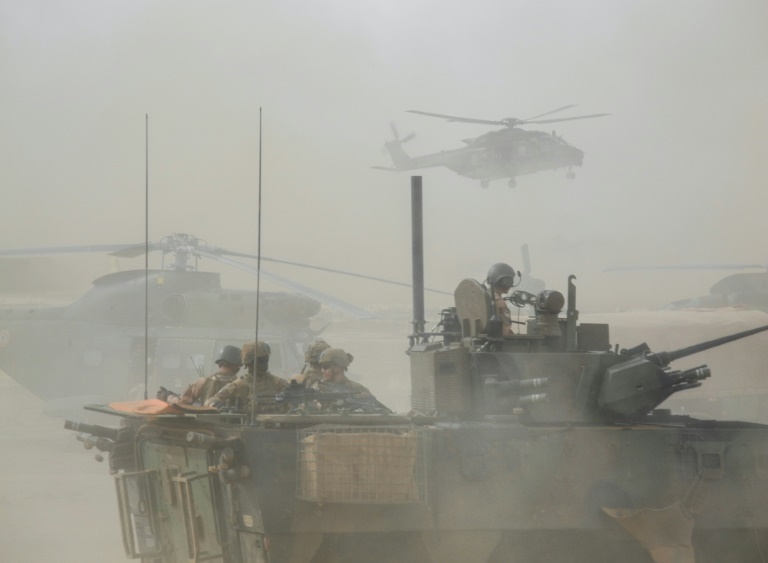
France announces Mali withdrawal after decade-long jihadist fight

France announced Thursday that it was withdrawing its troops from Mali after a breakdown in relations with the country’s ruling junta, ending a near 10-year deployment against jihadist groups that pose a growing threat in West Africa.

France sent soldiers to its former colony in 2013 to beat back advancing Islamic extremists, but its initial battlefield success was followed by a grinding anti-insurgency operation and rising hostility from Malians. 

Anger in Paris about the alleged arrival of Russian mercenaries from the Wagner group, as well as deepening ties between the Malian regime and Moscow, also hastened the French departure.

“We cannot remain militarily engaged alongside de facto authorities whose strategy and hidden aims we do not share,” President Emmanuel Macron told a news conference.

The French decision will see the departure of 2,400 troops from Mali, but fellow EU nations also announced that they would withdraw several hundred soldiers in the smaller European Takuba force that was created in 2020.

Macron “completely” rejected the idea that France had failed in its mission in Mali that has cost the lives of 48 soldiers, with another five dead across the wider Sahel region. 

“What would have happened in 2013 if France had not chosen to intervene? You would for sure have had the collapse of the Malian state,” he said, adding that French troops had also killed the leaders of local al-Qaeda and Islamic State-affilated groups.

France’s bases in Gossi, Menaka and Gao in Mali would be closed within the next four to six months in an “orderly” withdrawal, he vowed.

The announcement comes at a critical time for the 44-year-old French leader, just days before he is expected to make a long-awaited declaration that he will stand for a second term at elections in April.

Macron’s priority will now be to ensure that the withdrawal does not invite comparisons with the chaotic US departure from Afghanistan last year.

“The big question is how we leave, and what we put in place to enable our forces to leave in the best possible security conditions,” Macron’s far-right opponent Marine Le Pen said. 

– Spreading threat –

France and its European allies vowed to remain engaged in fighting terror in the Sahel, a vast and arid region below the Sahara desert that Macron has long argued is crucial for European security. 

The French leader warned that Al-Qaeda and the Islamic State group had made this part of Africa “a priority for their strategy of expansion,” and said the European Takuba forces in Mali would be shifted to neighbouring Niger.

Since the 2013 French deployment, rebels based in the inhospitable north of Mali have regrouped and moved into the centre, while also launching raids on neighbouring Burkina Faso and Niger.

New fears have emerged of a jihadist push toward the Gulf of Guinea, threatening Ghana, Ivory Coast, Togo and Benin.

Speaking alongside the French leader, Senegalese President Macky Sall said fighting “terrorism in the Sahel cannot be the business of African countries alone.”

Richard Moncrieff, an expert on the Sahel region for the International Crisis Group, a think-tank, said that France’s decision to leave Mali was “far from a surprise given the tensions whch have intensified these last few months between France and Mali.”

“In these circumstances, it was more about France leaving Mali rather than being forced out by Bamako,” he added.

French daily Le Monde called the withdrawal “an inglorious end to an armed intervention that began in euphoria.” 

Relations between France and Mali plunged after a coup in 2020 and current strongman Assimi Goita refused to stick to a calendar to return the country to civilian rule.

The West also accuses Mali of turning to the shadowy Wagner group to shore up its position amid growing Russian influence in the region.

– Wider impact –

Around 25,000 foreign troops are currently deployed in the Sahel.

They include around 4,600 French soldiers in a regional mission known as Barkhane that France was already planning on winding down. 

French army spokesman Colonel Pascal Ianni said that French forces in the region would fall to 2,500-3,000 in the next six months. 

In Mali, the UN peacekeeping mission MINUSMA and EUTM Mali, an EU military training mission, operate alongside Malian forces, but French soldiers backed by air power have long been seen as the most effective fighting force.

Macron said France would still provide air and medical support for MINUSMA in the coming months before transferring these responsibilities.

Olivier Salgado, the spokesman for MINUSMA, told AFP that France’s pullout was “bound to impact” the mission and the UN would “take the necessary steps to adapt.”

In Berlin, German Defence Minister Christine Lambrecht said she was “very sceptical” that the country’s mission in the EUTM could continue in the light of the French decision.

EU foreign policy chief Josep Borrell said the bloc was awaiting “guarantees” from Mali’s military rulers as it weighs the future of its military and civilian training missions.

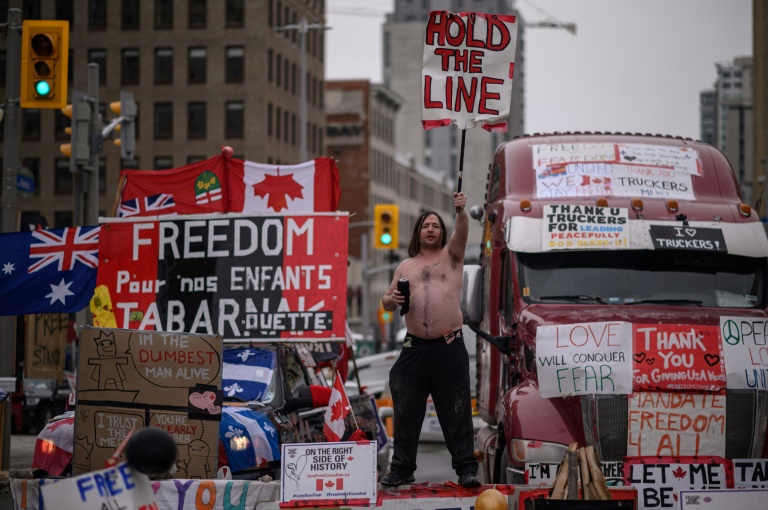
Canada police ready to move in to clear trucker-led protests

Canadian police massed in the capital Thursday, readying to clear a trucker-led protest that has choked Ottawa’s streets and provoked the government to call on rarely-used emergency powers.

With barricades going up overnight and a heavy police presence forming in the area where hundreds of big rigs remain parked, Prime Minister Justin Trudeau was in Parliament nearby defending his decision to invoke the Emergencies Act for only the second time in peacetime. 

“Illegal blockades and occupations are not peaceful protests,” Trudeau told the House of Commons, adding: “They have to stop.”

In response to critics, he said the Act was not being used to call in the military against the protesters, and denied restricting freedom of expression.

The objective was simply to “deal with the current threat and to get the situation fully under control,” he said.

Early Thursday groups of police officers could be seen unloading from buses and filing into the parliamentary precinct in Ottawa where the trucks have been parked for weeks.

Truckers had been given an ultimatum late Wednesday by the capital city’s interim police chief to “leave the area now,” or risk arrest and truck seizures.

In a statement, Chief Steve Bell said “a methodical and well-resourced plan” would be carried out over the coming days “to take back the entirety of the downtown core and every occupied space.”

“Some of the techniques we are lawfully able and prepared to use are not what we are used to seeing in Ottawa,” he said. “But we are prepared to use them… to restore order.”

Truckers responded by blaring horns well into the night — despite an extension Wednesday of a court order against the deafening noises, obtained by an area resident fed up with the disruptions.

One of the protest leaders, Tamara Lich posted a tearful video to say she was expecting to be arrested. “I think it’s inevitable at this point… I’m okay with that,” she said.

She also called on supporters to flood the capital, saying truckers already in place “are gonna stay and fight for your freedom.”

“If you can come to Ottawa and stand with us, that would be fantastic,” she said. “I want you to keep fighting the good fight.”

– Potential for ‘terrorist attacks’ –

Facing growing pressure to dislodge the protesters, Trudeau this week invoked rare emergency powers to end the demonstrations occupying Ottawa and until recently blocking border crossings to the United States. 

The move marked only the second time in Canadian history such emergency powers have been invoked in peacetime; the last was nearly 50 years ago, by his father, former prime minister Pierre Trudeau.

Justin Trudeau told reporters Wednesday that with police getting help from various other law enforcement units, they should now “be able to begin their actions.”

“It’s time for this to end,” he said.

In documents filed to the Commons, the government laid out its rational for invoking the emergency powers, saying the trucker convoy has created a critical and urgent situation that cannot be dealt with under any other Canadian laws.

It cited “a risk of serious violence and the potential for lone actor attackers to conduct terrorism attacks.”

In a letter to provincial premiers, Trudeau decried the protests as “a threat to our democracy.”

“It is affecting Canada’s reputation internationally, hurting trade and commerce, and undermining confidence and trust in our institutions,” he added.

The so-called “Freedom Convoy” started with truckers protesting against mandatory Covid vaccines to cross the US border, but its demands have since grown to include an end to all pandemic health rules and, for many, a wider anti-establishment agenda.

At its peak, the movement also included blockades of a half-dozen border crossings — including a key trade route across the Ambassador Bridge between Windsor, Ontario and Detroit, Michigan.

The last border blockade in Manitoba was lifted Wednesday when demonstrators voluntarily left. 

At other crossings, police this week arrested dozens of protesters, including four people charged with conspiracy to murder police officers at the border checkpoint between Coutts, Alberta and Sweet Grass, Montana.

They also seized dozens of vehicles, as well as a cache of weapons that included rifles, handguns, body armor and ammunition.

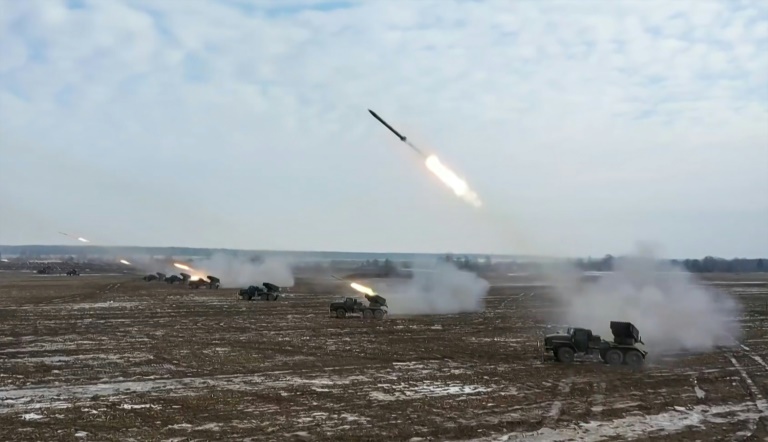
US steps up invasion warnings as Ukraine tensions soar

The United States stepped up warnings of an imminent Russian invasion of Ukraine on Thursday, despite Moscow’s continued denials and announcements of troop withdrawals from near the border.

Adding to the already fierce tensions, Ukraine and Moscow-backed separatists traded accusations of intensifying shell fire across their frontline, with Western officials saying Moscow was looking to create a pretext for an invasion.

The threat of an invasion is “very high, because they have not moved any of their troops out. They’ve moved more troops in,” US President Joe Biden told reporters at the White House. 

“Every indication we have is that they’re prepared to go into Ukraine,” he said, accusing Moscow of preparing a “false flag operation” as a pretext to invade.

“My sense is it will happen in the next several days,” Biden said.

At the United Nations, where the Security Council was set for a heated meeting on the crisis, the US envoy said Washington wanted to make clear that risk of a war in Europe was growing.

“Our goal is to convey the gravity of the situation. The evidence on the ground is that Russia is moving toward an imminent invasion. This is a crucial moment,” Linda Thomas-Greenfield tweeted ahead of the meeting.

– ‘Forced to respond’ –

Russia meanwhile responded to previous US security proposals aimed at defusing the crisis, insisting it was not planning any invasion but making clear that it felt its key demands were being ignored.

“In the absence of will on the American side to negotiate firm and legally binding guarantees on our security from the United States and its allies, Russia will be forced to respond, including with military-technical measures,” the foreign ministry said.

“We insist on the withdrawal of all US armed forces in Central Europe, Eastern Europe and the Baltics,” it added.

Russia also expelled the number two US diplomat in Moscow, the US State Department said, condemning what it called an “unprovoked” action.

Ukraine has been in conflict with Moscow-backed rebels in the eastern Donetsk and Lugansk regions since 2014, in a war that has cost thousands of lives

The Ukrainian army accused Russian-backed separatists of 34 ceasefire breaches on Thursday, 28 of them using heavy weapons.

It said that two Ukrainian soldiers and five civilians had been injured, including three adults wounded by artillery fire that hit a kindergarten in the village of Stanytsia-Luganska while children were inside.

“The shelling of a kindergarten… by pro-Russian forces is a big provocation,” President Volodymyr Zelensky said on Twitter.

Russian news agencies meanwhile quoted authorities in the separatist Lugansk region saying they blamed Kyiv after the situation on the frontline “escalated significantly”.

– ‘Troubling’ escalation –

There were no immediate reports of deaths, and clashes involving artillery and sniper fire are common along the frontline, but any significant increase in fighting could be the spark to ignite a wider conflict.

The United States has claimed Moscow could be looking for a pretext to invade and earlier this week Russian President Vladimir Putin claimed that Kyiv was committing “genocide” in the eastern Donbas region.

US Defense Secretary Lloyd Austin described Thursday’s reports as “troubling”.

“We’ve said for some time that the Russians might do something like this in order to justify a military conflict. So we’ll be watching this very closely,” Austin told journalists after a meeting with NATO counterparts. 

“We have been warning of the likelihood of a false flag operation and that is what we are seeing taking place,” British Foreign Secretary Liz Truss said on a visit to Kyiv.

“Russia can still take the path of diplomacy. They can de-escalate, they can move their troops away from the border,” she said.

British Prime Minister Boris Johnson said the kindergarten shelling was “a false flag operation designed to discredit the Ukrainians,” without explaining how an alleged attack by separatists on Ukrainian soil could discredit Kyiv.

Western officials say Russia has amassed well over 100,000 troops and significant military hardware near Ukraine’s borders in preparation for a potential invasion.

Russia has said “large-scale” military exercises are taking place in various areas, including near Ukraine, but has not provided any specific numbers and has repeatedly denied any plans for an attack.

Moscow has made several announcements of troop withdrawals this week and on Thursday said that units of the southern and western military districts, including tank units, had begun returning to their bases from near Ukraine.

Defence ministry spokesman Igor Konashenkov said some troops had returned to their garrisons in several areas far from the border, including Chechnya and Dagestan in the North Caucasus, and near Nizhny Novgorod, some 300 kilometres (185 miles) east of Moscow.

After previously announced withdrawals earlier this week, the United States, NATO and Ukraine all said they had seen no evidence of a pullback, with Washington saying Russia had in fact moved 7,000 more troops near the border.

Russia has blamed the West for provoking the tensions, saying Washington and its European allies have for too long ignored Moscow’s security concerns on its doorstep.

Putin has demanded that Ukraine be forever banned from fulfilling its hopes of joining NATO and for the alliance to roll back its deployments near Russia’s borders.

Zelensky said Thursday his country was not looking for foreign forces within its borders.

“We have no need for soldiers with foreign flags on our territory. We are not asking for that. Otherwise, the entire world would be destabilised,” he told the RBK Ukraine website.

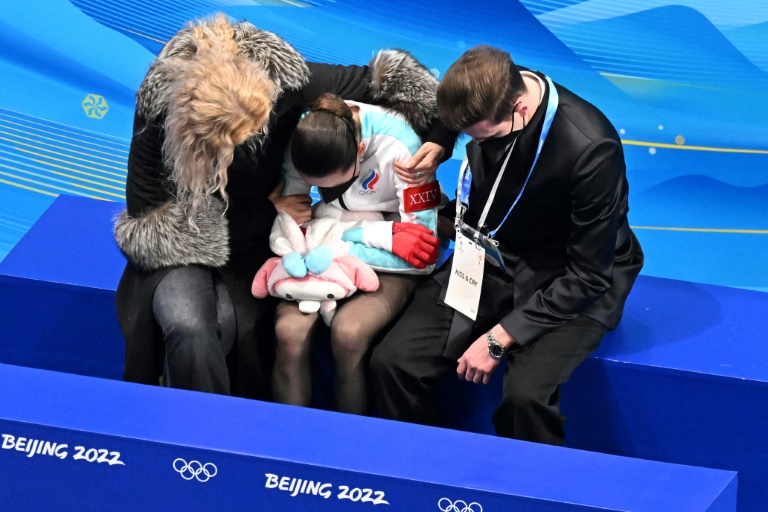
Broken Valieva falls out of medal places as team-mate wins gold

Teenager Kamila Valieva finished fourth in the women’s figure skating at the Beijing Olympics on Thursday as a doping scandal engulfing the pre-Games favourite appeared to take its toll.

Her Russian team-mate Anna Shcherbakova took gold after the 15-year-old Valieva produced an error-filled performance and was left distraught at the end of her free programme. 

Another Russian, Alexandra Trusova, took silver, and Japan’s Kaori Sakamoto won bronze.

“The importance of this is so huge that I cannot fully understand it yet,” said Shcherbakova, herself only 17.

All eyes had been on Valieva, who was in pole position after topping the short programme on Tuesday and had been expected to add the singles title to the team crown she led Russia to before the doping controversy erupted.

The International Olympic Committee had said that for the first time in Olympic history, no medals would be awarded if Valieva finished in the top three because she could yet be punished for taking the banned substance trimetazidine.

In the end, that was not a factor as Valieva, dressed in black and red, fell several times. The teenager had her head in her heads on the ice and then seemed to break down as she waited to hear her score.

It was the latest chapter in a saga which began when a sample from December 25 tested positive for trimetazidine, a drug used to treat angina but which is banned for athletes by the World Anti-Doping Agency (WADA) because it can boost endurance.

The Court of Arbitration for Sport (CAS) ruled during the Games that Valieva could continue to skate in the Olympics, but it did not absolve her of doping and the investigation looks set to rumble on well after the action ends in Beijing.

There will be no medal ceremony during these Games for the team event because of Valieva’s involvement.

The doping affair has focused attention once more on Russian athletes’ at Olympic Games.

They are taking part in Beijing under the banner of the Russian Olympic Committee because Russia as a country is serving a two-year ban as punishment for a state-sponsored doping programme.

– ‘Mind-boggling’ for Shiffrin –

Valieva’s closely watched appearance was the climax of a colourful day at the Olympics featuring a judging controversy, a dramatic crash and more disappointment for US ski ace Mikaela Shiffrin.

A forlorn Shiffrin saw her last chance of winning an individual medal at these Olympics vanish.

The American crashed out of the alpine combined event, meaning she has failed to complete three races and finished out of the medals in two others — an almost unthinkable disappointment for one of the world’s best skiers.

Michelle Gisin of Switzerland went on to win the alpine combined, retaining her title from four years ago.

The 26-year-old Shiffrin had seemed perfectly placed after posting the fifth-fastest downhill time.

But in the slalom, a discipline in which she was Olympic gold medallist in 2014, the American went wide on one turn and could not get back on course.

Shiffrin’s only chance of any kind of medal is now Saturday’s programme-ending mixed team parallel.

“I didn’t make it to the finish again and that’s like 60 percent of my DNF (did not finish) rate from my entire career has happened at this Olympic Games,” she said, describing her performance as “mind-boggling”.

– Camera collision –

There was more US disappointment in the women’s ice hockey, where Canada beat the Americans 3-2 to avenge a loss in the final four years ago.

Canada raced out to a lead 3-0 in the second period and held on to win to collect the country’s fifth Olympic gold in the event.

“It’s just so good, it’s a great feeling,” said Marie-Philip Poulin, who scored twice.

“It was one hell of an effort. This is redemption.”

It was all happening meanwhile in freestyle skiing.

Finland’s Jon Sallinen had an unfortunate cameraman to thank after flying out of the halfpipe and colliding into him.

The 21-year-old Sallinen said he thought he had broken his collarbone but he was “lucky not to land on my head”.

“I maybe got a little cushion from the camera guy,” he said.

In the women’s ski cross final, Switzerland’s Fanny Smith lost out on a bronze medal when she was penalised for kicking a rival.

Swiss head coach Ralph Pfaeffli said the 29-year-old Smith was too distraught to speak to reporters after the race, but he said he believed the contact was “clearly incidental and not intentional”.

With the Games wrapping up on Sunday, Norway top the medals table on 14 golds, Germany have 10 and the United States have eight.

Four dead as storms pummel Europe

At least four people were killed as severe storms lashed central Europe on Thursday, with winds of up to 181 kilometres per hour causing widespread travel disruption.

In Poland, gusts of up to 125 kilometres per hour (80 miles per hour) seriously damaged more than 500 homes, felled hundreds of trees and left 324,000 households across the country without power overnight.

Police said two people died and two were injured after storms toppled a large crane at a construction site in Krakow.

Another person was killed by a tree that fell on his car in the west of the country.

In northern Germany, a 37-year-old driver was killed by a falling tree near the town of Bad Bevensen.

The Czech Republic was also hit, with more than 300,000 households left without power and extensive traffic disruptions as fallen trees blocked roads and railways.

The strongest winds with gusts of 181 kph were recorded on Snezka, the highest Czech mountain, in the north.

Three children were taken to hospital with injuries after a car accident in the southwest of the country. Wind lifted the bonnet of a car, causing the driver to swerve and crash into another car head-on.

Gales also damaged or destroyed roofs across the country.

In the Netherlands, the high winds injured three people including a police officer.

The officer was injured by roofing that had blown off a commercial building in Duiven, near Arnhem, public broadcaster NOS said.

– Flights grounded –

Firefighters also had to cut two people from a car after a tree fell on it in the southern town of Maasluis. They were later taken to hospital.

Amsterdam’s Schiphol Airport reported flight delays of up to 45 minutes, while some rail services were cancelled.

Britain’s meteorological service issued a rare “red weather” alert for Thursday and Friday, warning of “danger to life” from severe gusts in southwestern England and south Wales.

Ireland also warned of “severe and damaging winds” and the possibility of coastal flooding.

In Germany, dramatic images of a wave smashing through the windows of a ferry on the Elbe River circulated widely on social media.

The operator said no-one was injured. 

Schools were closed in several states and police warned residents to stay at home and avoid parks or forests.

The strongest winds were felt on Brocken, the highest point in the Harz highlands in central Germany, with speeds of up to 152 kph.

Long-distance trains were halted throughout northern Germany, including in Hamburg, Berlin and Bremen, until midday on Thursday at the earliest, national rail operator Deutsche Bahn said.

Airline Lufthansa cancelled 20 flights destined for Hamburg, Berlin and Munich, departing from Frankfurt, the country’s largest airport.

The storms are expected to persist through Friday and into Saturday, with hurricane-force gales expected in many areas.

Belgium said it was placing its coastal regions on orange-level alert, the second highest level after red.

burs-dt/amj/ah

World funds own destruction with $1.8 tn subsidies: study

The world must slash $1.8 trillion in annual subsidies that destroy the environment, according to a study Thursday from business groups including one founded by tycoon Richard Branson.

The report, estimating the value of damaging state subsidies, was commissioned by Branson’s nonprofit initiative The B Team and global coalition Business for Nature, which comprises academic, corporate and environmental organisations.

The vast subsidies, totalling two percent of global GDP, fund the “global destruction of nature” and governments worldwide must act, the two organisations added in a statement.

The study “finds the fossil fuel, agriculture and water industries receive more than 80 percent of all environmentally harmful subsidies per year”, the organisations concluded.

And they called upon governments to “redirect, repurpose or eliminate” those subsidies by 2030 to help “finance a net zero global economy”.

Governments across the world pay an estimated $640 billion in support to the fossil fuel industry, contributing to climate change, air and water pollution and land subsidence, the study found.

Agriculture receives some $520 billion in subsidies that contribute towards soil erosion, water pollution, deforestation, greenhouse gas emissions and loss of biodiversity and natural habitats, it claimed.

And another $350 billion in subsidies for the water industry is said to help fund water pollution and risk ocean and waterway ecosystems. 

“Nature is declining at an alarming rate, and we have never lived on a planet with so little biodiversity,” said Christiana Figueres, head of The B Team’s climate working group.

“At least $1.8 trillion is funding the destruction of nature and changing our climate, while creating huge risks for the very businesses who are receiving the subsidies.”

She added that “harmful subsidies must be redirected towards protecting the climate and nature, rather than financing our own extinction”.

The study was published one month before the next phase of the UN biodiversity summit COP15 in Geneva.

The research was based on data from the International Energy Agency watchdog and the Organisation for Economic Co-operation and Development, which is a club of industrialised economies that includes wealthy G20 members.
Close Bitnami banner
Bitnami