World

Macron warns of 'predatory' Russian mercenaries in Mali

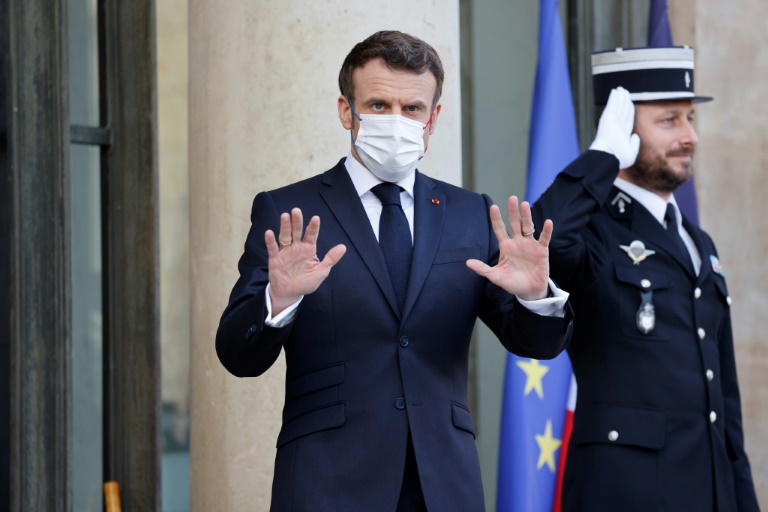
While announcing on Thursday that France would withdraw its troops from Mali, President Emmanuel Macron made his strongest condemnation yet of the shadowy Russian mercenary group Wagner whose alleged arrival in West Africa has infuriated Paris.

The French leader made clear that a suspected deal between the Malian military regime and Wagner was a crucial factor in pushing Paris to withdraw its 2,400 troops after a nine-year deployment against local jihadist groups. 

Macron said that Wagner was “arriving in Mali with predatory intentions, but why?” 

“Because the junta which is in power after two coups d’etats considers them to be the best partners they can find to protect their power, not to fight against terrorism,” Macron said. 

He said Wagner was previously guilty of “taking resources that should belong to the Libyan people” after their deployment in Libya and had also been responsible for “awful abuses against the civilian population” in the Central African Republic. 

In Mali, they were “essentially there to secure their own business interests and protect the junta itself,” Macron added, calling on Mali’s leaders to explain how they were paying the secretive organisation reportedly founded by oligarch Yevgeny Prigozhin.

Stephen Townsend, head of the US Africa command, said earlier this month that he believed Mali was paying Wagner $10 million a month, partly in gold and gemstones.

Mali’s military rulers, who seized power in 2020, have always denied any such deal, but Macron said that the Russian group had deployed “around 800” fighters in the landlocked country that is home to growing al-Qaeda and Islamic State-aligned groups. 

UK Defence Minister Ben Wallace said Thursday that Wagner was “effectively in bed with the junta.” 

– Russian denials – 

Mali’s leaders admit to having relations with the Russian state, which they say has provided military trainers. 

Mali was “only involved in a state-to-state partnership with the Russian Federation, its historical partner”, according to a statement from the government in Bamako at the end of December.

The regime has also stressed that they were left with no choice but to look for new security partners after Macron announced in 2021 that France would be drawing down its forces in the Sahel region.

Malia’s interim Prime Minister Choguel Kokalla Maiga accused Paris of a “sort of abandonment” at the UN general assembly in September last year. 

Western officials have claimed for months that Russian transport planes have been spotted delivering Wagner fighters and arms, as well as Russian geologists known for their association with the group.

Russian President Vladmir Putin denies any link with Wagner despite Western suspicions that it is a Trojan Horse used to advance Moscow’s interests, including in Ukraine.

“The Russian Federation has nothing to do with private military organisations that are operating in Mali,” Putin told a press conference with Macron in Moscow on February 7.

– Abuses – 

The existence of Wagner is hard to pin down, with investigators unable to find formal traces such as company registration, tax returns or an organisational chart.

When the EU wanted to sanction it in 2020 for “serious human rights abuses”, it targeted Prigozhin, an oligarch nicknamed “Putin’s chef” because his company once catered for the Kremlin.

Jason Blazakis from the New York-based Soufan Group think-tank said that Wagner was following in the footsteps of other mercenary operators in Africa, notably South Africans.

“The Wagner folks are walking through a door that has long been open to their ilk,” he added.

The Center for Strategic and International Studies (CSIS), a think-tank in Washington, has found evidence since 2016 of Russian soldiers of fortune in more than a dozen countries including Sudan, Madagascar, Botswana, Burundi and the Democratic Republic of Congo.

Macron had previously condemned Wagner’s role in the Central African Republic (CAR), saying last May that it was exploiting mines and that CAR President Faustin-Archange Touadera was now a “hostage”.

UN chief Antonio Guterres this week denounced “human rights abuses” by CAR’s army and its foreign supporters, an allusion to Wagner.

Djallil Lounnas, a researcher at Morocco’s Al Akhawayn university, said that part of the appeal of Wagner is that there is less concern about the scrutiny that comes with working for Western partners.

“Russia has its interests. It doesn’t ask questions,” he told AFP.

But Wagner’s results do not always measure up to the hopes invested in them.

In Libya, its mercenaries are thought to have suffered heavy losses while working for warlord Khalifa Haftar during his unsuccessful attempt to conquer the capital Tripoli.

And in Mozambique, they retreated in the face jihadists linked to the Islamic State.
Shelling accusations fuel tensions in Ukraine crisis

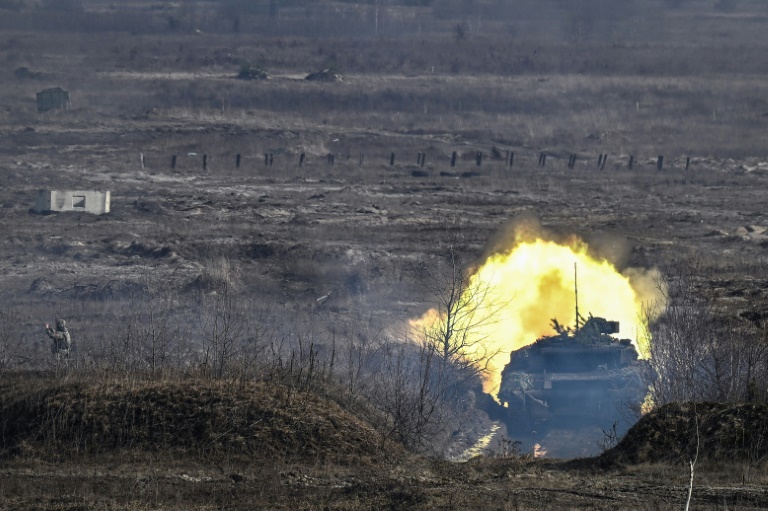
Ukraine and Moscow-backed separatists traded accusations Thursday of intensifying shell fire across their frontline, fuelling fears of a potential Russian invasion of its pro-Western neighbour.

Ukraine has been in conflict with rebels in the eastern Donetsk and Lugansk regions since 2014, in a war that has cost thousands of lives.

But the new reports of intense shelling came as fears grow that the situation could escalate into a wider conflict.

Tensions between Russia and the West have reached a post-Cold War high over claims Moscow is planning an invasion of Ukraine, despite Russia saying again Thursday that it was pulling back more troops from near the border.

The Ukrainian army accused Russian-backed separatists of 34 ceasefire breaches on Thursday, 28 of them using heavy weapons.

It said that two Ukrainian soldiers and five civilians had been injured, including three adults wounded by artillery fire that hit a kindergarten in the village of Stanytsia-Luganska while children were inside.

“The shelling of a kindergarten… by pro-Russian forces is a big provocation,” President Volodymyr Zelensky said on Twitter, calling for international observers to remain in Ukraine to monitor a fragile ceasefire.

Russian news agencies meanwhile quoted authorities in the separatist Lugansk region saying they blamed Kyiv after the situation on the frontline “escalated significantly”.

In Moscow, Kremlin spokesman Dmitry Peskov described the allegation against Kyiv as “disturbing” and “a matter of very deep concern”.

– ‘Kremlin playbook’ –

There were no immediate reports of deaths, and clashes involving artillery and sniper fire are common along the frontline, but any significant increase in fighting could be the spark to ignite a wider conflict.

The United States has claimed Moscow could be looking for a pretext to invade and earlier this week Russian President Vladimir Putin claimed that Kyiv was committing “genocide” in the eastern Donbas region.

US Defense Secretary Lloyd Austin described Thursday’s reports as “troubling”.

“We’ve said for some time that the Russians might do something like this in order to justify a military conflict. So we’ll be watching this very closely,” Austin told journalists after a meeting with NATO counterparts. 

On her way to Kyiv Thursday for talks, British Foreign Secretary Liz Truss said claims of increased Ukrainian military activity on the front were “a blatant attempt by the Russian government to fabricate pretexts for invasion”.

“This is straight out of the Kremlin playbook,” she said.

Western officials say Russia has amassed well over 100,000 troops and significant military hardware near Ukraine’s borders in preparation for a potential invasion, which Washington says could take place “at any time”.

Russia has said “large-scale” military exercises are taking place in various areas, including near Ukraine, but has not provided any specific numbers and has repeatedly denied any plans for an attack.

Moscow has made several announcements of troop withdrawals this week and on Thursday said that units of the southern and western military districts, including tank units, had begun returning to their bases from near Ukraine.

Defence ministry spokesman Igor Konashenkov said some troops had returned to their garrisons in several areas far from the border, including Chechnya and Dagestan in the North Caucasus, and near Nizhny Novgorod, some 300 kilometres (185 miles) east of Moscow.

After previously announced withdrawals earlier this week, the United States, NATO and Ukraine all said they had seen no evidence of a pullback, with Washington saying Russia had in fact moved 7,000 more troops near the border.

“This is a process that will take some time,” Kremlin spokesman Peskov said.

Russian officials have accused the West of provoking “hysteria” with claims of a planned invasion.

– ‘Ukraine just a field of battle’ – 

At the border of Ukraine and Belarus — where Russian and Belarusian forces are carrying out major joint exercises — residents feared being caught in the middle of a clash of great powers.

“The Ukrainians could start something, thanks to the Americans and the British, who brought all their weapons here,” 87-year-old Lidiya Silina told AFP in her green wooden shack close to the border.

“For them, Ukraine is just a field of battle with Russia.”

The joint drills in Belarus — which the US says involves some 30,000 Russian troops — are set to end on Sunday.

Russia insists its forces will go back to bases after the exercises so a significant withdrawal early next week could set the stage for the crisis to ease.

Belarusian leader Alexander Lukashenko, who will be in Moscow for talks with Putin on Friday, said his country could host nuclear weapons if it faces any external threats.

Russia has blamed the West for provoking the tensions, saying Washington and its European allies have for too long ignored Moscow’s security concerns on its doorstep.

Putin has demanded that Ukraine be forever banned from fulfilling its hopes of joining NATO and for the alliance to roll back its deployments near Russia’s borders.

Russian Foreign Minister Sergei Lavrov said Thursday that Moscow would send a reply to US proposals about European security later in the day.

Spanish port devastated by Canada shipwreck tragedy

Flags at half-mast, black ribbons everywhere and families devastated by grief: the Spanish port town of Marin was left reeling after a deadly shipwreck left 21 sailors dead or missing at sea. 

The fishing trawler which sank off eastern Canada early on Tuesday was based in this small port in Spain’s northwestern Galicia region and several members of its 24-strong crew lived here. 

“All our solidarity with the Villa de Pitanxo” reads a huge banner strung up along the main road, referring to the vessel which went down 250 nautical miles east of Newfoundland in Spain’s worst fishing tragedy in nearly 40 years. 

Onboard were 16 Spaniards, five Peruvians and three Ghanaians. 

Only three survived, two Spaniards and a Ghanaian national. 

Rescuers have only managed to recover nine bodies, leaving 12 missing, presumed drowned, with the Canadian authorities ending their rescue operation on Wednesday evening after an “exhaustive” 36-hour search in which they combed 900 nautical square miles.

The news caused further anguish for the families, who begged them to continue. 

“We have to keep looking for the bodies, we can’t leave 12 people stranded at sea!” said John Okutu, whose Ghanaian uncle Edemon Okutu is among the missing. 

“If Canada can’t keep on looking, the Spanish must go, that’s what the families want,” he told journalists in Marin.  

Galician regional leader Alberto Nunez Feijoo also urged the authorities in Spain and Canada to resume the search, at least for another 24 hours.

“There are many missing bodies and they deserve a final effort,” he told reporters.

– ‘Children in shock’ –

“My children are devastated,” said Carolina, wife of Jonathan Calderon, a 39-year-old Peruvian fisherman who had been living and working on boats in Marin for more than a decade. 

Speaking to AFP, she said it was very important “that they find all the bodies, more than anything else, because that’s very important for the families”. 

Her husband, she said, “knew the sea well because he had worked in Uruguay, then in the Falkland Islands and had spent 12 years working on the Pitanxo”.

Carolina, who is from Chiclayo, a city in northern Peru, said the last time she spoke to him was Monday and he didn’t mention anything about bad weather. 

At her side, Carolina’s mother is in tears as she talks about the impact on the couple’s 16-year-old son and daughter, 10.

“My grandson is in shock, he thinks his Dad is coming home but my granddaughter seems to have accepted it because she says: ‘Daddy’s dead’,” she sobs. 

– ‘Uncertainty part of our DNA’ –

With very little news about the fate of their loved ones, several families were gathered at the headquarters of Manuel Nores, the firm that owned the Villa de Pitanxo. 

The firm was only letting in immediate family members who were being supported by therapists from the Red Cross, an AFP correspondent said. 

Opposite the port, where several buildings were draped with large black mourning banners, the flags on Marin’s town hall had all been lowered to half-mast.

On Wednesday evening, the town of 24,000 residents, which sits on a river that flows into the Atlantic Ocean, observed a minute’s silence for the victims.

“As people of the sea, we know what it is to live with uncertainty, it is part of our DNA, just like saltwater, fishing and the seafaring culture,” a town hall statement said. 

“We can hardly imagine the sense of shock, the immense sorrow and the pain that the families of the Villa de Pitanxo are experiencing. We just aren’t able,” it added. 

The pain felt in Marin is etched in the face of Maria Dolores Polo, a 52-year-old legal adviser as she walks past the port in the pouring rain.

“I feel a huge sense of sorrow because these people went out to sea like that and haven’t been able to come home,” she told AFP. 

“Let’s just see if they manage to recover the bodies,” she said.

France to pull troops from Mali after decade-long jihadist fight

France announced Thursday that it would withdraw its troops from Mali over a breakdown in relations with the country’s ruling junta, after nearly 10 years of fighting a jihadist insurgency that still poses a major threat to the West African nation and beyond.

The deployment has been fraught with problems for France — of the 53 French soldiers killed serving in West Africa’s Sahel region, 48 died in Mali.

“Multiple obstructions” by the military junta that took power in August 2020 meant the conditions were no longer in place to operate in Mali, said a statement signed by France and its African and European allies.

The decision applies to both the 2,400 French troops in Mali, where France first deployed in 2013, and a smaller European force of several hundred soldiers, called Takuba, that was created in 2020 with the aim of taking the burden off French forces.

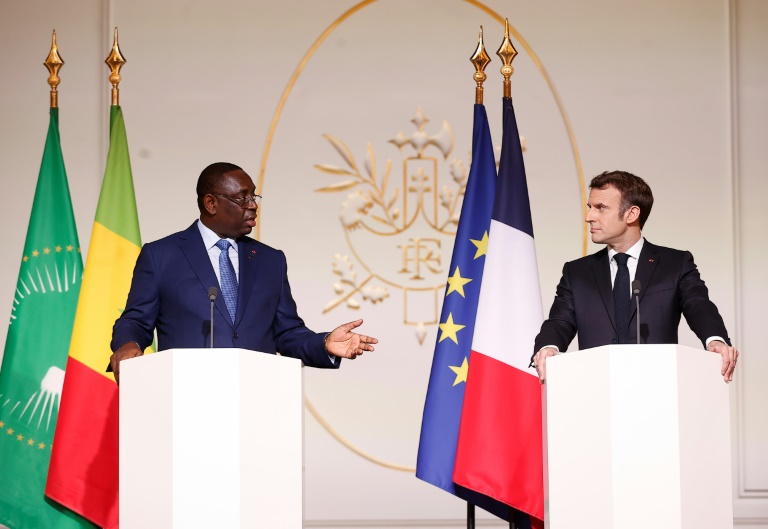
“We cannot remain militarily engaged alongside de facto authorities whose strategy and hidden aims we do not share,” President Emmanuel Macron told a news conference, saying that he “completely” rejected the idea that France had failed its mission in the country.

He said that France’s bases in Gossi, Menaka and Gao in Mali would be closed within the next four to six months.

The withdrawal would be carried out in an “orderly” manner, he vowed.

The announcement comes at a critical time for Macron, just days before he is expected to make a long-awaited declaration that he will stand for a second term at elections in April.

Macron’s priority will now be to ensure that the withdrawal does not invite comparisons with the chaotic US departure from Afghanistan last year.

– ‘Collapse of state’ –

France first deployed the troops at Mali’s request in 2013, and while the insurgents were prevented from reaching the capital Bamako, the insurgency was never fully quelled.

Two years later the rebels regrouped and moved into the centre of Mali, an ethnic powder keg, before launching raids on neighbouring Burkina Faso and Niger.

Now, new fears have emerged of a jihadist push toward the Gulf of Guinea.

“It is an inglorious end to an armed intervention that began in euphoria and which ends, nine years later, against a backdrop of crisis between Mali and France,” wrote French daily Le Monde.

Macron denied that the intervention had been in vain.

“What would have happened in 2013 if France had not chosen to intervene? You would for sure have had the collapse of the Malian state,” he said, hailing the decision of his predecessor Francois Hollande to deploy troops.

France and its allies vowed to remain engaged in fighting terror in the region, including in Niger and the Gulf of Guinea, he said, adding that the outline of this action would be made clear in June.

Macron warned that Al-Qaeda and the Islamic State group had made the Sahel and the Gulf of Guinea nations “a priority for their strategy of expansion,” and said the Takuba forces in Mali would be shifted to neighbouring Niger.

Speaking alongside Macron, Senegalese President Macky Sall said fighting “terrorism in the Sahel cannot be the business of African countries alone.”

The announcement on Mali came ahead of a two-day summit of EU and African leaders in Brussels starting Thursday, which seeks to strengthen ties with pledges of new investments for a continent where China and Russia are making inroads.

– Wider impact –

Around 25,000 foreign troops are currently deployed in the Sahel.

They include around 4,600 French soldiers in the mission known as Barkhane, though France last year had already announced the start of a drawdown of the force, which at its peak comprised 5,400 troops. 

Army chief of staff spokesman Colonel Pascal Ianni said the Mali withdrawal would mean that within six months there would be 2,500 to 3,000 French soldiers deployed across the region. 

In Mali specifically, there is also the UN peacekeeping mission MINUSMA, established in 2013, and EUTM Mali, an EU military training mission for the Malian army.

Macron said France would still provide air and medical support for MINUSMA in the coming months before transferring these responsibilities.

Olivier Salgado, the spokesman for MINUSMA, told AFP that France’s pullout was “bound to impact” the mission and the UN would “take the necessary steps to adapt.”

In Berlin, German Defence Minister Christine Lambrecht said she was “very sceptical” that the country’s mission in the EUTM could continue in the light of the French decision.

EU foreign policy chief Josep Borrell said the bloc was awaiting “guarantees” from Mali’s military rulers as it weighs the future of its military and civilian training missions.

Relations between France and Mali plunged after the junta led by strongman Assimi Goita refused to stick to a calendar to a return to civilian rule.

The West also accuses Mali of using the services of the hugely controversial Russian mercenary group Wagner to shore up its position, a move that gives Moscow a new foothold in the region.

Macron accused Wagner of sending more than 800 fighters to the country for the sake of its own “business interests” and shoring up the junta.

Cardinal slams abuse cover-ups at Vatican priest forum

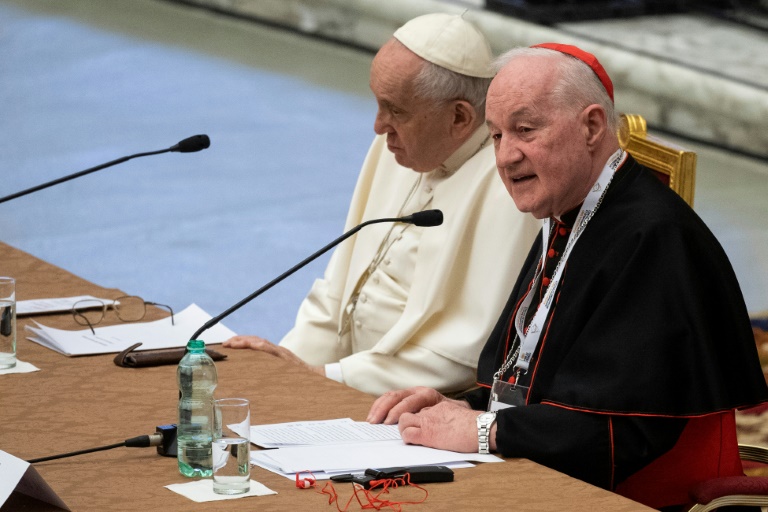
An influential cardinal opened a Vatican symposium on the priesthood Thursday apologising for “unworthy ministers” and the cover-up of child sexual abuse by Catholic clergy, before an audience that included Pope Francis.

Canadian Cardinal Marc Ouellet acknowledged that “we are all torn and humbled by these crucial questions that every day question us as members of the Church”, with Francis at his side in the Vatican’s vast Paul VI Hall.

“Should we not rather refrain from talking about the priesthood when the sins and crimes of unworthy ministers are on the front pages of the international press for betraying their commitment or for shamefully covering up?”

A string of recent investigations exposing paedophile priests have been front page news in recent months, exposing the scale of the problem and the decades-long Church cover-up.

Ouellet is a prefect of the Congregation for Bishops, one of the most important functions within the Curia, the government of the Vatican.

He said the symposium was an opportunity to express regret and ask victims for forgiveness after their lives were “destroyed by abusive and criminal behaviour” hidden or treated lightly to protect the institution and perpetrators.

The symposium would be a “painful and yet necessary exercise” of conscience to analyse the historical, cultural and theological causes of what Francis has referred to as “clericalism”, he added.

Ouellet, the main organiser of the three-day symposium, defined it as “abuses of power, spiritual abuses, abuses of conscience, of which sexual abuses are but the tip of the iceberg”.

“This symposium takes note of the clamour and anger of the people of God, so we are here to unite our voices with those who are calling for truth and justice,” he added. 

Francis did not mention the subject of abuse, instead sharing what he considered four “pillars” of the priesthood, drawn from his personal experience. 

The symposium — which is expected to attract 500 people — comes two days after victims groups in Italy launched an unprecedented campaign to demand an independent investigation into priest abuse, in the wake of similar inquiries in Germany and France. 

A report published last month criticised former pope Benedict XVI for turning a blind eye to abusive priests while he was the Archbishop of Munich from 1977 to 1982. He has denied any wrongdoing. 

Since becoming pope in 2013, Francis has striven to tackle the decades-long sexual abuse scandals, although many activists against paedophilia insist much more needs to be done. 

The Argentine pontiff convened an unprecedented summit on clerical sex abuse in 2019, lifted secrecy rules that hindered investigations of abusing priests, and hardened the punishment of abusers under Vatican law, among other measures. 

Japan eases virus border rules for visaholders, tourists still banned

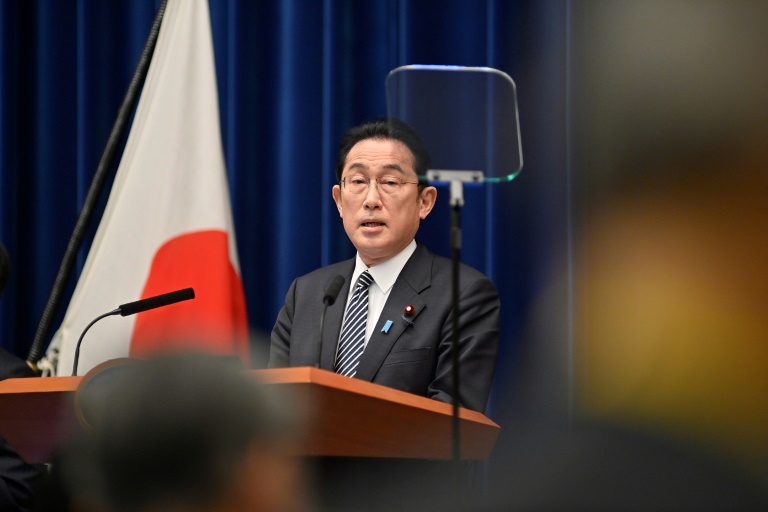
Japan will ease its strict virus border rules to allow students and businesspeople into the country from March, but tourists will still be barred, Prime Minister Fumio Kishida said Thursday.

The move comes with growing pressure on Japan from the business community and academics to loosen the border restrictions, which are the toughest in the G7 but have broad support from Japanese voters.

Japan has barred tourists since the early days of the pandemic, and has in some cases prevented even existing foreign residents from entering the country.

Last November, the government slightly loosened the rules to allow some students and businesspeople to enter, but then quickly reversed the plan weeks later as the Omicron strain emerged.

After an Omicron-driven spike in infections, cases in Japan now appear to have peaked, experts say.

From March 1, Kishida said “we will allow new visitors, except those coming for tourism”, adding that a cap on daily entrants will be raised from the current 3,500 to 5,000.

More than 400,000 people whose visas have already been approved by authorities were waiting to enter Japan as of January 4, an immigration agency official told AFP.

More than 150,000 of those are students, with another 129,000 workers hired to take part in a technical training programme that is a key source of foreign labour for several industries in the country.

While Japan has not pursued a zero-Covid policy and has avoided strict lockdowns, it has made tough border measures a centrepiece of its pandemic response.

Even citizens and returning residents able to enter have been subject to quarantines of up to two weeks, with testing before and after entering the country.

Kishida said quarantine requirements would now be eased, going from seven to three days, if arrivals test negative.

Quarantine will be removed altogether for those with three vaccine doses coming from countries judged low-risk, he added, without specifying particular nations.

But asked about tourism, Kishida said the issue was still being discussed, with no timeframe in place for a full reopening.

Japan has recorded more than 20,950 deaths in the pandemic and polls show Japanese broadly favour the tough restrictions, with nearly 60 percent of respondents in a recent survey by public broadcaster NHK backing a continued ban on entry.

Davide Rossi, an Italian entrepreneur living in Japan who campaigns for students stuck outside the country, said the news was a light at the end of the tunnel, and many now hope they can enter Japan before the new semester in April.

“There is a very high sense of urgency. People are really on the verge of quitting, but now, with this announcement, they have some hope,” he told AFP.

But he recalled the way the border restrictions were tightened in November, just weeks after being eased.

“Hopefully this is a lesson, too, and the borders won’t close again like they did in November, because that really hurt a lot of people so much. I hope things will get better from today.”

Despair, solidarity for Brazil storm victims

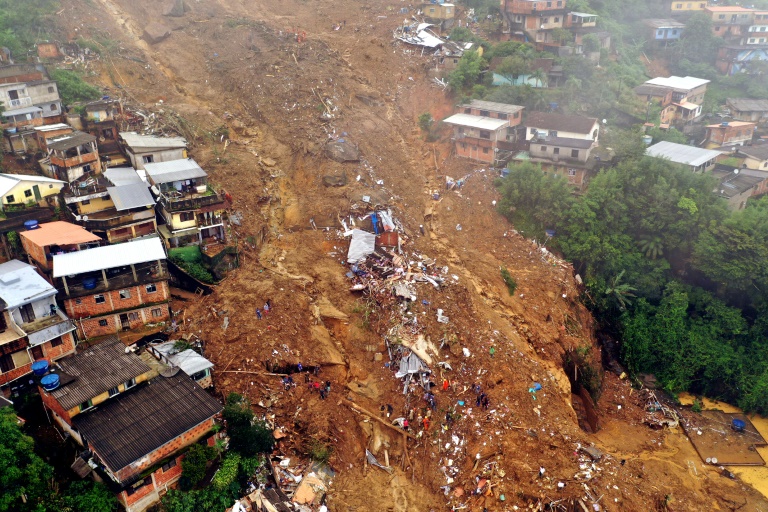
Holding the few possessions they are able to carry, families stream down the slopes of the hillside neighborhood of Alto da Serra, many in tears, fleeing the devastation left by deadly landslides in the Brazilian city of Petropolis.

Their modest neighborhood was one of the hardest hit by Tuesday’s storms, which dumped a month’s worth of rain on this scenic tourist town in a matter of hours, triggering flash floods and torrents of mud that gushed violently through the city.

“It’s devastating. We never could have imagined something like this,” says one fleeing resident, Elisabeth Lourenco, clutching two bags in which she stuffed some clothing when emergency officials ordered everyone in the neighborhood to evacuate.

“When the rain was falling hardest, a huge amount of mud came pouring down the hillside, and some tree branches fell on my house,” says the 32-year-old manicurist, on the verge of tears.

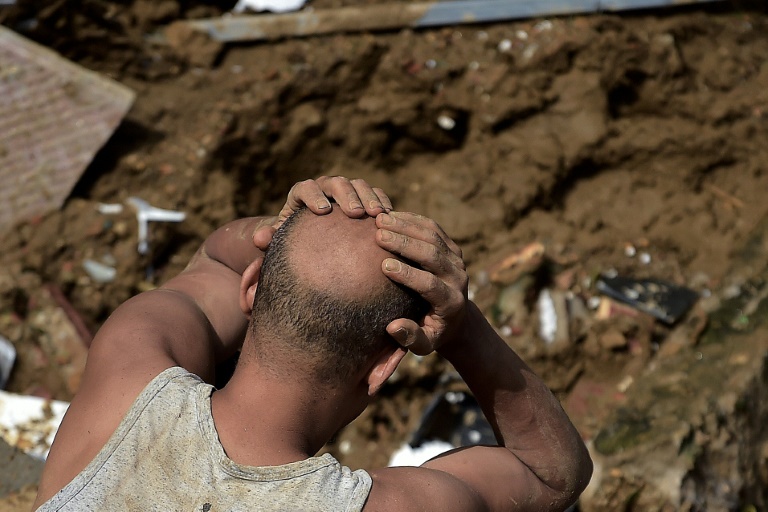
Nearby is a scene of total chaos. A giant swathe of hillside is covered in mud and strewn with the remains of shattered houses.

Authorities say the disaster killed at least 104 people across the city. There are fears the death toll, which rose steadily Wednesday, could climb further still as rescue workers continue digging through the mud and ruins.

Watching the rescue operation in disbelief, residents shudder with each deafening pass of the helicopters hovering overhead.

“I was eating dinner when the storm started. My brother came in and said, ‘We need to get out of here, the hillside is collapsing,'” says Jeronimo Leonardo, 47, whose home sits at the edge of the area wiped out by the landslide.

– ‘Up to our waists’ –

Residents of Alto da Serra have been evacuated to a church that sits atop another hill nearby.

From the square outside the small blue building, they can see the disaster zone through the mist.

Dozens of families swarm the church, carting their belongings in bags.

Outside, volunteers unload a truck of bottled water, as others sort through donated clothing.

“Can I have some shoes?” asks a little boy standing barefoot, his clothes stained with mud.

Inside, mattresses line the floor.

“We started taking people in as soon as the tragedy started Tuesday evening. We’re hosting around 150 to 200 people, including a lot of children,” says Father Celestino, a parish priest.

Yasmin Kennia Narciso, a 26-year-old teacher’s assistant, is sitting on a mattress nursing her nine-month-old baby.

“I didn’t sleep all night,” she says.

She tells the story of how she fled with her two daughters around 11:00 pm.

“We tried to leave earlier, but there were boulders strewn across the path and everything was flooded. We were in water up to our waists. We had no choice but to wait until it went down,” she says.

She adds that she is still waiting for news on several neighbors.

“An older lady and her three grandchildren who lived just above us were buried in the mud.”

Survivors know they likely face a long wait to learn if and when they can return home — for those who still have homes left.

Rescuers scour for survivors after Brazil floods, landslides kill 104

Rescue workers raced against the clock searching for any remaining survivors among mud and wreckage after devastating flash floods and landslides hit the picturesque Brazilian city of Petropolis, as authorities said Thursday the death toll had risen to 104.

Streets were turned into torrential rivers and houses swept away when heavy storms dumped a month’s worth of rain in three hours on the scenic tourist town in the hills north of Rio de Janeiro.

With dozens still reported missing, fears that the death toll could climb further sent firefighters and volunteers scrambling through the remains of houses washed away in torrents of mud, many of them in impoverished hillside slums.

It is the latest in a series of deadly storms to hit Brazil in the past three months, which experts say are being made worse by climate change.

The state government said at least 24 people had been rescued alive.

Using dogs, excavators and helicopters, rescue workers were urgently searching for more before it was too late, with the Rio Public Prosecutor’s office reporting that 35 missing people had been registered.

Around 300 people were being housed in shelters, mostly in schools, officials said. Charities called for donations of mattresses, food, water, clothing and face masks for victims.

Wendel Pio Lourenco, a 24-year-old resident, was walking through the street with a television in his arms, heading to a local church in search of shelter.

He said he was trying to save a few possessions, after spending a sleepless night helping search for victims.

“I found a girl who was buried alive,” he said.

“Everyone is saying it looks like a war zone.”

Governor Claudio Castro said the same after visiting the scene.

“It looks like a scene from a war. It’s incredible,” he said, adding that it was the worst rain since 1932.

He praised rescue workers for managing “to save a large number of people before it was too late.”

Videos posted on social media from Tuesday’s rains showed streets in Petropolis, the 19th-century summer capital of the Brazilian empire, fill with violent floods that swept away cars, trees and nearly everything else in their paths.

Many shops were completely inundated by the rising water, which gushed down the streets of the historic city center, leaving jumbled piles of overturned cars in its wake.

Officials said more than 180 firefighters and other rescue workers were responding to the emergency, aided by 400 soldiers sent in as reinforcements.

City hall declared a “state of disaster” in the city of 300,000 people, which sits 68 kilometers (42 miles) north of Rio.

The city council declared three days of mourning for victims.

– ‘Tragedy’ –

Petropolis is a popular destination for tourists fleeing the summer heat of Rio.

The area is known for its leafy streets, stately homes, imperial palace — today a museum — and the natural beauty of the surrounding mountains.

Tuesday’s storms dumped 258 millimeters (10 inches) of rain on the city in three hours, nearly equal to all the rainfall from the previous month, the mayor’s office said.

The heaviest downpour had passed, but more moderate rain was expected to continue on and off for several days, authorities said.

President Jair Bolsonaro, on an official trip to Russia, said on Twitter he was keeping abreast of the “tragedy.”

“Thank you for your words of solidarity with the people of Petropolis,” he told President Vladimir Putin after meeting the Russian leader.

“May God comfort (the victims’) families.”

Brazil has been swept by heavy rains since December that have caused a series of deadly floods and landslides.

Experts say rainy season downpours are being augmented by La Nina — the cyclical cooling of the Pacific Ocean — and by the impact of climate change.

Because a warmer atmosphere holds more water, global warming increases the risk and intensity of flooding from extreme rainfall.

Last month, torrential rain triggered floods and landslides that killed at least 28 people in southeastern Brazil, mostly in Sao Paulo state.

There have also been heavy rains in the northeastern state of Bahia, where 24 people died in December.

Petropolis and the surrounding region were previously hit by severe storms in January 2011, when more than 900 people died in flooding and landslides.

'Afar has been raided': Suffering stalks Ethiopia's forgotten front

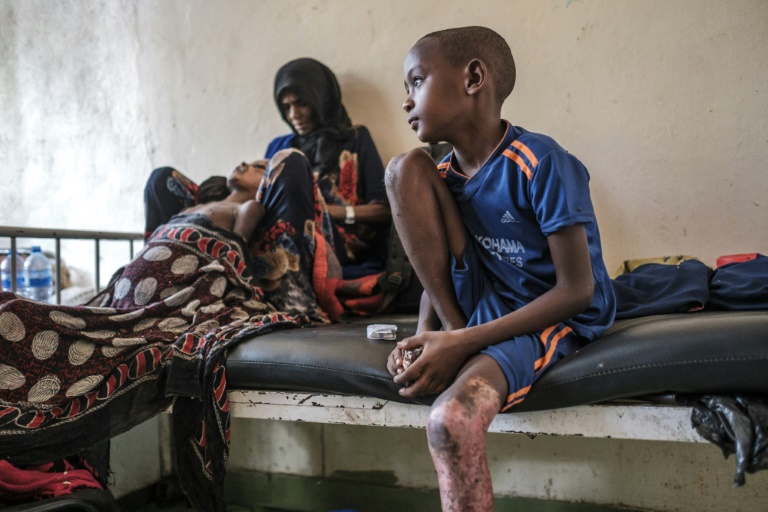
The shell crashed through Aicha Nur’s flimsy hut just as she was serving a lunch of bread and milk to her nine-year-old son Tahir.

His slim body quickly became engulfed in flames. 

She grabbed Tahir and another son before fleeing on foot to safety, dodging an artillery assault allegedly carried out by Tigrayan rebels on her village in northern Ethiopia’s Afar region. 

They managed to escape, but Aicha’s six other children remain unaccounted for.

She worries she has lost them forever to what has quietly emerged as the most active front in Ethiopia’s grinding war. 

More than 15 months since the first shots rang out, foreign envoys are talking up paths to peace for Ethiopia and Prime Minister Abiy Ahmed publicly refers to the conflict in the past tense. 

But Afar is enduring its roughest period yet, sparked by a fresh rebel offensive that has yielded massive destruction and displacement, according to officials and residents. 

Across the arid, punishingly hot region, shell-shocked survivors await food handouts at schools that have been transformed into makeshift displacement sites. 

Afar’s only referral hospital is stretched well beyond its bed capacity, with doctors running low on anaesthesia amid a seemingly endless influx of civilians with fractured limbs. 

All the while, patients wonder aloud why no one seems to be paying attention, complaining that “their voices haven’t been heard”, said hospital CEO Hussein Aden.

“We’ve been dying for a long time now, but nobody has listened to us,” Aicha told AFP as she propped Tahir up on his hospital bed, fanning away flies from his burned and blistered face. 

– Outgunned –

The war erupted in Ethiopia’s northernmost Tigray region in November 2020, but Afar did not see combat until July 2021 when the Tigray People’s Liberation Front (TPLF) rebel group expanded its operations.

Late last year, fighting intensified in Afar before Abiy, winner of the 2019 Nobel Peace Prize, deployed to the region as part of a counter-offensive that ultimately pushed the rebels back into Tigray. 

Those bouts of hostilities pale in comparison to what Afar residents say has unfolded in recent weeks: unremitting attacks involving many more Tigrayan fighters and much heavier weapons, including tanks and automated cannons. 

Afar forces, armed with Kalashnikov rifles and lacking military backing, have been thoroughly outgunned. 

“You can’t defeat mortars with a Kalashnikov,” said Ibrahim Abdala, a militia fighter who was shot in the chest in Afar’s Kuneba district this month. 

– ‘Not even a rug to sleep on’ –

Afar civilians fleeing the latest attacks describe harrowing, days-long journeys on foot towards towns that are more secure but woefully ill-equipped to feed and shelter them. 

Regional government documents seen by AFP indicate 294,000 people were displaced in January, and a regional spokesman said the number is now up to 350,000 since the start of the year.

It’s unclear when or even if they will be able to return home, with Afar’s western border reportedly occupied by the TPLF.

“All the schools, clinics, hospitals that were constructed in this space of time are now gone on the western border. The whole lot,” said Valerie Browning, an aid worker who has lived in Afar for more than three decades. 

“Afar has been raided, vandalised, and there is not that much left.” 

Her claims could not be independently verified.

On a recent afternoon, scores of women and children sat in a sweltering dried-out riverbed, clustered under shade provided by acacia trees and sharing food handouts as boys struggled to play football using a plastic water bottle. 

“You see the truth with your own eyes. We have been evicted from our homes and are eating biscuits,” said Mohammad Adem Endrisi, a 32-year-old schoolteacher from Kuneba.

“There are pregnant women among us… There is not even a rug to sleep on here.” 

– ‘Path of destruction’ –

Aid workers are also worried about sky-high malnutrition rates in Tigray. 

The UN says recent fighting has made it impossible for humanitarian convoys to enter Tigray via the Afar capital Semera — currently the only functioning overland route. 

The TPLF has defended its push into Afar, saying it was provoked by attacks on its positions within Tigray and claiming it “does not have a plan to remain in Afar for long.” 

It also points out that Tigray has been under what the UN terms a “de facto humanitarian blockade” since long before the latest clashes erupted in Afar, while maintaining that its fighters have never prevented aid trucks from passing.

But that argument does not resonate with Afar residents.

“The TPLF has chosen the path of destruction, not the path of peace,” said Ahmed Nuro, a local official in the border town of Abala. 

“They will never stop firing.”

G20 warned of Ukraine threat to global recovery

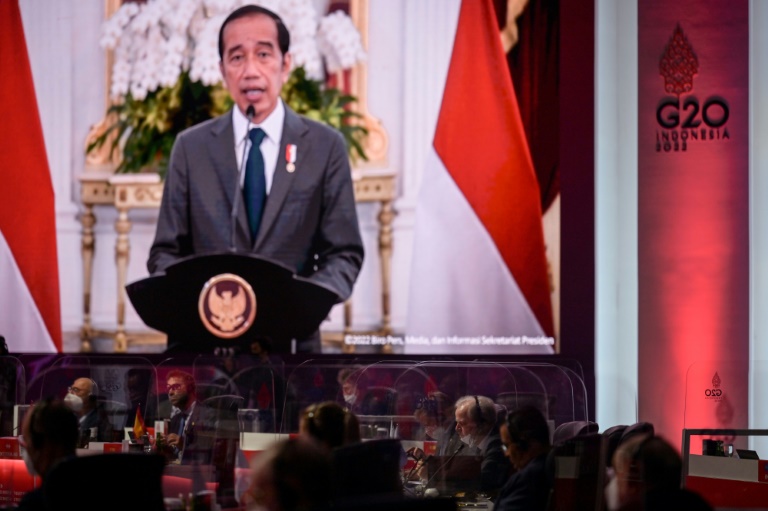
The crisis in Ukraine is a serious threat to the global economy’s post-pandemic recovery, Indonesia’s leader on Thursday warned a meeting of finance chiefs from the G20 nations.

The Group of 20 –- which brings together the world’s top economies including the US, China and some European nations — is holding talks in hybrid format in the Indonesian capital Jakarta. 

Opening the two-day meeting, Indonesian President Joko Widodo warned of the risks to the fragile recovery from the crisis in Ukraine, where fears are growing that Russia is set to invade.

“This is not the time for rivalries and creating new tensions that disrupt the… recovery, let alone endanger the safety of the world, as is happening in Ukraine,” said Widodo, whose country currently holds the G20 presidency.

“All parties must stop the rivalry and tension.”

He urged the G20, which includes Russia, to instead focus on “collaborating” to help boost the global economy.

The threat of a Russian invasion of its ex-Soviet neighbour presents a fresh challenge for a world already struggling to keep a recovery from the coronavirus pandemic on track as inflation surges.

Also on the agenda at the meeting — originally due to take place on holiday island Bali before being moved due to an Omicron virus wave — was how to reform global health systems to be better prepared for future pandemics.

– ‘Mobilise funds’ –

US Treasury Secretary Janet Yellen, speaking via video-link, said that “we must act urgently to strengthen the global health architecture so that we have the tools to prevent, prepare for, and respond to future health crises”.

“We must also focus on mobilising the funding needed to address gaps in the system.”

Calls have been growing for new funding systems, especially following the challenges in producing and distributing Covid vaccines.

Financing needs are “undeniable”, with estimates of the amount required running to $75 billion over the next five years, Yellen said.

Indonesian Finance Minister Sri Mulyani Indrawati said the G20 was discussing establishing a fund to combat future health crises, which would be coordinated by the World Health Organization.

Efforts to strengthen the global health architecture can only succeed if they bolster the WHO’s role, the body’s chief Tedros Adhanom Ghebreyesus stressed.

“It’s clear that at the centre of this architecture, the world needs a strong and sustainably financed WHO… with its unique mandate, unique technical expertise and unique global legitimacy,” Tedros told the talks.

Another key topic was skyrocketing global inflation, and how central banks in developed nations proceed with hiking rates and withdrawing massive pandemic stimulus without causing shocks in developing countries.

Withdrawing stimulus will “potentially create tighter global financial conditions and may induce capital outflows from emerging markets,” warned Perry Warjiyo, governor of the Indonesian central bank.

Close Bitnami banner
Bitnami