World

Spanish port devastated by Canada shipwreck tragedy

Flags at half-mast, black ribbons everywhere and families devastated by grief: the Spanish port town of Marin was left reeling after a deadly shipwreck left 21 sailors dead or missing at sea. 

The fishing trawler which sank off eastern Canada early on Tuesday was based in this small port in Spain’s northwestern Galicia region and several members of its 24-strong crew lived here. 

“All our solidarity with the Villa de Pitanxo” reads a huge banner strung up along the main road, referring to the vessel which went down 250 nautical miles east of Newfoundland in Spain’s worst fishing tragedy in nearly 40 years. 

Onboard were 16 Spaniards, five Peruvians and three Ghanaians. 

Only three people survived.

Rescuers only managed to recover nine bodies, leaving 12 missing, presumed drowned, with the Canadian authorities ending their search of the freezing waters at 2000 GMT after an “exhaustive” 36-hour operation in which they combed 900 nautical square miles. 

– ‘Children in shock’ –

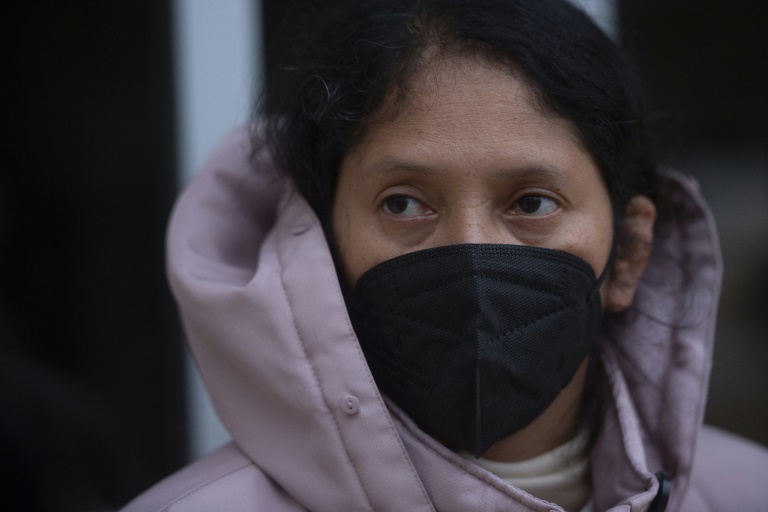
“My children are devastated,” said Carolina, wife of Jonathan Calderon, a 39-year-old Peruvian fisherman who had been living and working on boats in Marin for more than a decade. 

Speaking to AFP, she said it was very important “that they find all the bodies, more than anything else, because that’s very important for the families”. 

Her husband, she said, “knew the sea well because he had worked in Uruguay, then in the Falkland Islands and had spent 12 years working on the Pitanxo”.

Carolina, who is from Chiclayo, a city in northern Peru, said the last time she spoke to him was Monday and he didn’t mention anything about bad weather. 

At her side, Carolina’s mother is in tears as she talks about the impact on the couple’s 16-year-old son and daughter, 10.

“My grandson is in shock, he thinks his Dad is coming home but my granddaughter seems to have accepted it because she says: ‘Daddy’s dead’,” she sobs. 

– ‘Uncertainty part of our DNA’ –

With very little news about the fate of their loved ones, several families were gathered at the headquarters of Manuel Nores, the firm that owned the Villa de Pitanxo. 

The firm was only letting in immediate family members who were being supported by therapists from the Red Cross, an AFP correspondent said. 

Opposite the port, where several buildings were draped with large black mourning banners, the flags on Marin’s town hall had all been lowered to half mast.

On Wednesday evening, the town of 24,000 residents, which sits on a river that flows into the Atlantic Ocean, observed a minute’s silence for the victims.

“As people of the sea, we know what it is to live with uncertainty, it is part of our DNA, just like salt water, fishing and the seafaring culture,” town hall said in a statement. 

“We can hardly imagine the sense of shock, the immense sorrow and the pain that the families of the Villa de Pitanxo are experiencing. We just aren’t able,” it added. 

The pain felt in Marin is etched in the face of Maria Dolores Polo, a 52-year-old legal adviser as she walks past the port in the pouring rain.

“I feel a huge sense of sorrow because these people went out to sea like that and haven’t been able to come home,” she told AFP. 

“Let’s just see if they manage to recover the bodies,” she said.
EU summit looks to boost strained ties with Africa

EU and African leaders meet for a two-day summit starting Thursday, seeking to reboot ties with pledges of major investment in the face of competition from China and Russia.

Relations have been hampered by a raft of problems: from disputes over coronavirus vaccine supplies, to curbing illegal migration, a wave of coups in Africa, and the growing clout of Russian mercenaries in Africa.

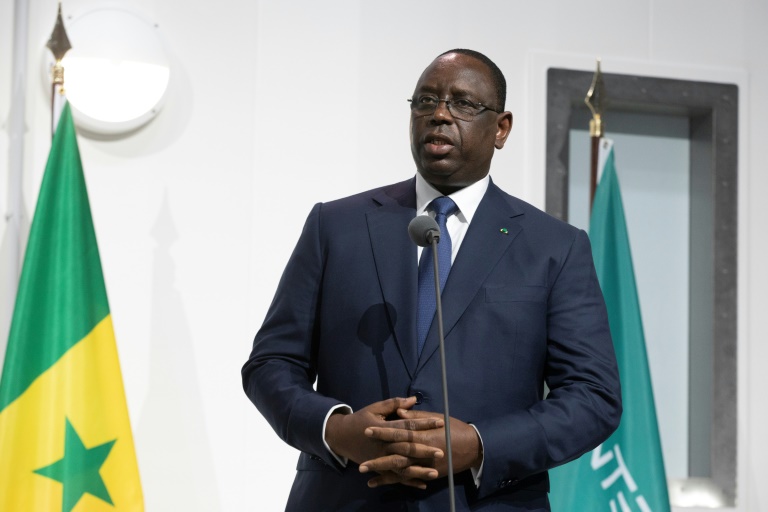
“Our common ambition, Africans and Europeans, for this summit, is to achieve a renewed, modernised and more action-oriented partnership,” said Senegal’s President Macky Sall, who currently chairs the African Union.

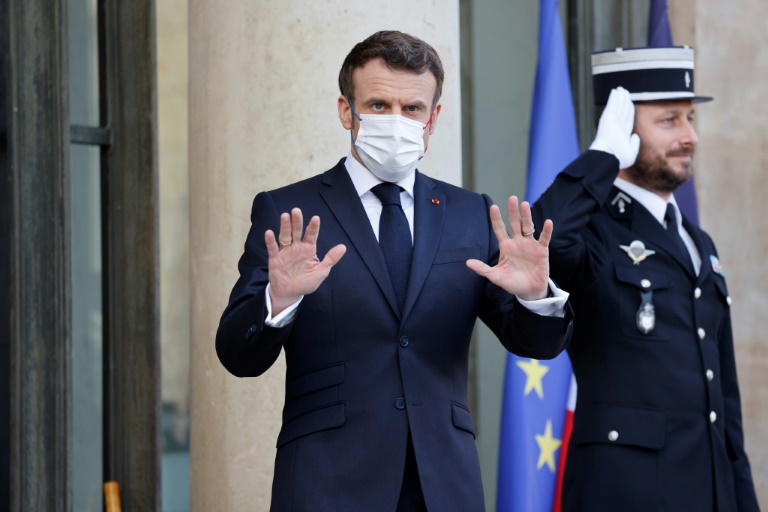
President Emmanuel Macron of France, whose country holds the European Union’s rotating presidency, hopes the first joint summit since 2017 can burnish his grand ambition of forging an “economic and financial New Deal with Africa”.

The EU is aiming to convince the 40 African leaders in Brussels that Europe is their “most reliable partner” by fleshing out an investment initiative that aims to mobilise 150 billion euros ($170 billion) of public and private funds over the next seven years.

The scheme is the first regional part of the EU’s Global Gateway — a $300-billion-euro worldwide investment blueprint meant to rival China’s Belt and Road initiative.

The EU is eyeing an initial dozen ambitious projects to bolster internet access, transport links and renewable energy as it seeks to provide an alternative to cheap loans from Beijing.

But details on funding remain vague, and the projects are still to be agreed on with the African side.

African leaders are instead pushing for a far more concrete step of getting EU nations to allow the International Monetary Fund to allocate tens of billions of dollars in further aid. 

– Coups, mercenaries, Mali –

The summit, involving a series of roundtable discussions, comes at a worrying time for Africa after a wave of military coups and as regional powerhouse Ethiopia is wracked by conflict.  

Burkina Faso last month joined Guinea, Mali and Sudan as the fourth country frozen out by the AU after disgruntled soldiers toppled the elected president.

Those four will not be represented in Brussels. 

As Europe grapples with a feared Russian invasion of Ukraine, it is also unsettled by the rising clout of Russian mercenaries in some of Africa’s most volatile hotspots.

Shadowy paramilitary outfit Wagner, alleged to have close ties to the Kremlin, is accused of bolstering Moscow’s geopolitical ambitions. 

Western nations have condemned the reported arrival of its mercenaries in Mali’s capital Bamako to help protect a junta that seized power last year. Mali’s rulers deny hiring Wagner. 

France announced on Thursday that it was withdrawing troops from Mali due to a breakdown in relations with the junta, after nearly 10 years of fighting a jihadist insurgency.

European governments fear turmoil in the region risks leaving a vacuum that movements tied to Al-Qaeda and the Islamic State group could exploit.

EU foreign policy chief Josep Borrell said the bloc was weighing up the future of its military training mission in Mali.  

An EU official said that in a bid to bolster broader stability, Brussels planned to increase funding for African peacekeeping missions across the continent. 

– Vaccines –

The fight against the Covid-19 pandemic is also set to be a major topic at the summit.

Africa has been angered by what it sees as the unfair distribution of coronavirus vaccines worldwide that has left it lagging woefully behind.  

South Africa’s Cyril Ramaphosa has accused the West of giving his continent only the “crumbs from their table” as the EU has rebuffed a push for a temporary patent waiver to allow the generic production of vaccines.

The EU — the world’s biggest vaccine exporter — points to over 400 million jabs it has contributed to the global Covax vaccine-sharing initiative and is promising to give Africa 450 million doses by mid-2022.

It says it will increase funding to help health systems on the continent get jabs into arms, and has pledged one billion euros to bolster future vaccine production in Africa. 

Russia says pulling back more troops despite US claims

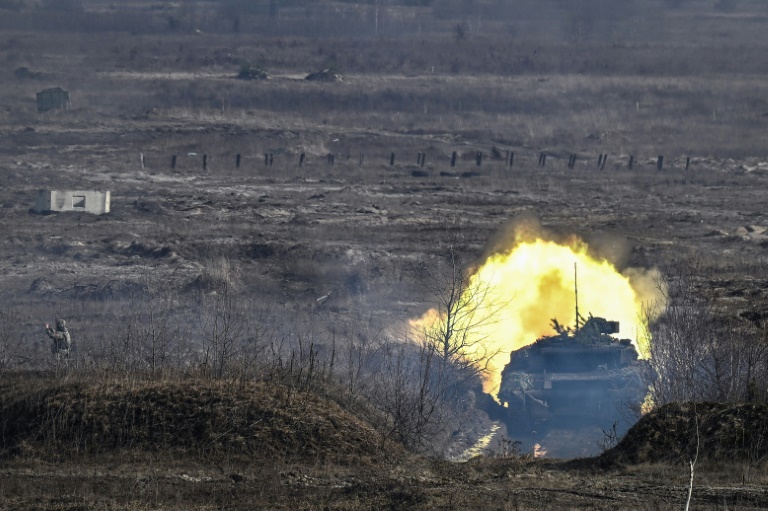
Russia on Thursday announced more troop pullbacks from the Ukrainian border as  Washington insisted that Moscow is still building up forces for a potential invasion of its pro-Western neighbour.

After previously announced withdrawals earlier this week, the United States, NATO and Ukraine all said they had seen no evidence of a pullback.

The Russian defence ministry said units of the southern military district were returning to bases from Moscow-annexed Crimea and that tank units of the western military district had departed on a military train for their bases 1,000 kilometres (620 miles) away.

It did not provide details on the specific amount of troops or equipment involved.

Western officials say Russia has amassed well over 100,000 troops and significant military hardware near Ukraine’s borders in preparation for a potential invasion, which Washington says could take place “at any time”.

Russia has said “large-scale” military exercises are taking place in various areas, including near Ukraine, but has not provided any specific numbers and has repeatedly denied any plans for an attack.

– US says pullback claims ‘false’ –

The troop build-up and Western threats to respond to an invasion with painful economic sanctions have brought tensions between Moscow and the West to their highest since the end of the Cold War. 

Intense diplomatic efforts — including meetings and repeated phone calls between President Vladimir Putin and Western leaders — have done little to ease the crisis.

British Foreign Secretary Liz Truss, who was due in Kyiv on Thursday warned that the crisis risked becoming “a running sore”.

Moscow “could drag this out much longer in a brazen ploy to spend weeks more – if not months – subverting Ukraine and challenging Western unity,” she wrote in the Daily Telegraph.

A senior White House official on Wednesday said Russian announcements of withdrawal were “false”, accusing Moscow of increasing its presence on the border by “as many as 7,000 troops”. 

NATO chief Jens Stoltenberg and other Western officials also said they saw no sign of a drawdown, and Ukrainian President Volodymyr Zelensky said Kyiv had observed only “small rotations” that did not signify any real change.

Presiding over a national “Day of Unity” he declared on Wednesday, Zelensky watched Ukrainian soldiers train with new Western-supplied anti-tank weapons and visited the frontline city of Mariupol.

“We are not afraid of anyone, of any enemies,” Zelensky said. “We will defend ourselves.”

Russian officials have accused the West of provoking “hysteria” with claims of a planned invasion. 

Even Ukrainian officials have warned that some Western moves — including the US relocating its embassy from Kyiv to the western city of Lviv – are unjustified and helping to spread panic.

– ‘Ukraine just a field of battle’ – 

At the border of Ukraine and Belarus — where Russian and Belarusian forces are carrying out major joint exercises — residents feared being caught in the middle of a clash of great powers.

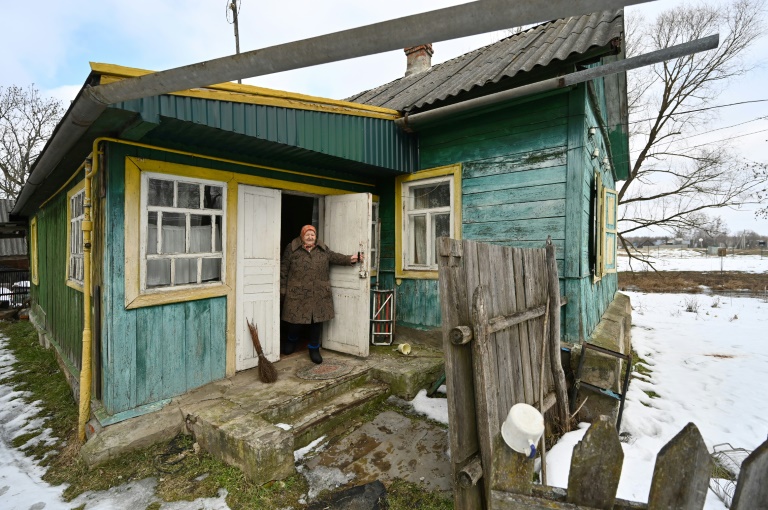
“The Ukrainians could start something, thanks to the Americans and the British, who brought all their weapons here,” 87-year-old Lidiya Silina told AFP in her green wooden shack close to the border.

“For them, Ukraine is just a field of battle with Russia.”

The joint drills in Belarus — which the US says involves some 30,000 Russian troops — are set to end on Sunday.

Russia insists its forces will go back to bases after the exercises so a significant withdrawal early next week could set the stage for the crisis to ease.

Russia has blamed the West for provoking the tensions, saying Washington and its European allies have for too long ignored Moscow’s security concerns on its doorstep.

Putin has demanded that Ukraine be forever banned from fulfilling its hopes of joining NATO and for the alliance to roll back its deployments near Russia’s borders.

Russian Foreign Minister Sergei Lavrov said Thursday that Moscow would send a reply to US proposals about European security later in the day.

European Union leaders, already gathered in Brussels for a summit with their African counterparts, were to hold impromptu crisis talks Thursday on Russia and Ukraine.

A UN Security Council meeting is also set Thursday to discuss the crisis.

US Vice President Kamala Harris will also meet with Zelensky on the sidelines of the annual Munich Security Conference this weekend, a senior White House official said.

France announces Mali troop pullout after decade

France announced on Thursday that it was withdrawing troops from Mali due to a breakdown in relations with the ruling junta, after nearly 10 years of fighting a jihadist insurgency.

The Mali deployment has been fraught with problems for France. Of the country’s 53 soldiers killed serving in West Africa, 48 of them died in Mali.

“Multiple obstructions” by the ruling junta meant that the conditions were no longer in place to operate in Mali, said a statement signed by France and its African and European allies.

The decision applies to both 2,400 French troops in Mali, where France first deployed in 2013, and a smaller European force of several hundred which was created in 2020 with the aim of taking the burden off the French forces.

“We cannot remain militarily engaged alongside de-facto authorities whose strategy and hidden aims we do not share,” President Emmanuel Macron told a news conference, saying that he “completely” rejected the idea that France had failed in the country.

Macron said that French bases in Gossi, Menaka and Gao in Mali would close but vowed that the withdrawal would be carried out in an “orderly” manner.

The announcement of the withdrawal comes at a critical time for Macron, just days before the president is expected to make a long-awaited declaration that he will stand for a second term at elections in April.

Macron’s priority will now be to ensure that the withdrawal does not invite comparisons with the chaotic US departure from Afghanistan last year.

France initially deployed troops against jihadists in Mali in 2013 but the insurgency was never fully quelled, and now new fears have emerged of a jihadist push to the Gulf of Guinea.

– ‘Collapse of state’ –

“It is an inglorious end to an armed intervention that began in euphoria and which ends, nine years later, against a backdrop of crisis between Mali and France,” wrote the Le Monde daily.

Macron denied that the intervention had been in vain.

“What would have happened in 2013 if France had not chosen to intervene? You would for sure have had the collapse of the Malian state,” said Macron, hailing the decision of his predecessor Francois Hollande to order troops in.

Even after the pull-out from Mali, however, the allies vowed to remain engaged in fighting terror in other countries including Niger.

“They agreed nonetheless to continue their joint action against terrorism in the Sahel region, including in Niger and in the Gulf of Guinea,” their statement said, adding that the outline of this action would be made clear in June.

Speaking alongside Macron, Senegalese President Macky Sall said fighting “terrorism in the Sahel cannot be the business of African countries alone.”

Macron warned that Al-Qaeda and the Islamic State group have made the Sahel region of West Africa and the Gulf of Guinea nations “a priority for their strategy of expansion.”

Macron on Wednesday prepared the ground for the announcement with a dinner bringing together the leaders of France’s key allies in the Sahel region — Chad, Mauritania and Niger.

– ‘A void’ –

Around 25,000 foreign troops are currently deployed in the Sahel region of West Africa.

They include around 4,300 French soldiers, which under a reduction announced last year are due to fall to around 2,500 in 2023 from a peak of 5,400.

In Mali specifically, there is also the UN peacekeeping mission MINUSMA established in 2013 and the EUTM Mali, an EU military training mission that aims to improve the Malian military’s capacity in fighting terrorists.

Macron said after the departure, France will still provide support for MINUSMA, without giving details.

But Paris’ withdrawal could set the stage for other European powers like Britain or Germany to abandon their roles in the multinational missions.

Ivorian President Alassane Ouattara said Wednesday that the departure “creates a void”.

In the Sahel and Gulf of Guinea, “national armies will have to deal with problems on our national territories, and that’s our philosophy”, he told broadcasters RFI and France 24.

Relations between France and Mali plunged to new lows after the junta led by strongman Assimi Goita refused to stick to a calendar to a return to civilian rule.

The West also accuses Mali of using the services of the hugely controversial Russian mercenary group Wagner to shore up its position, a move that gives Moscow a new foothold in the region.

Macron accused Wagner of sending more than 800 fighters to the country for the sake of its own “business interests” and shoring up the junta.

'No basis': Beijing dismisses US's WTO criticism

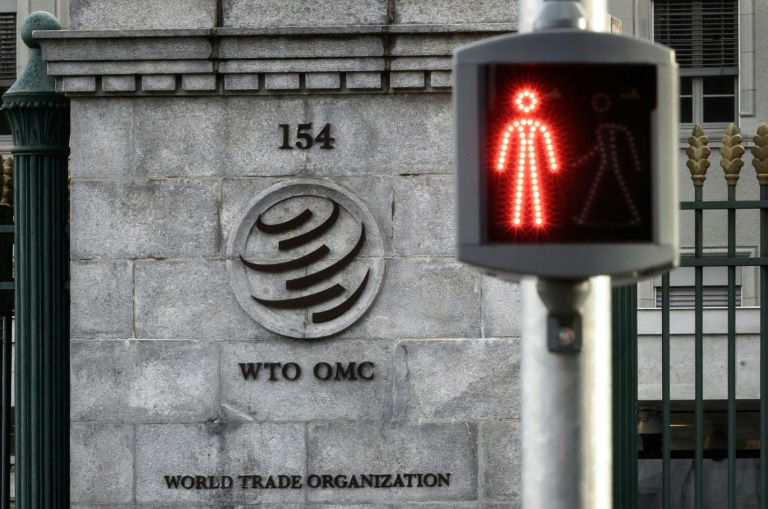
Beijing on Thursday dismissed the United States’ assessment of China’s World Trade Organization membership, saying its criticism had “no basis in international economic and trade rules”.

The commerce ministry’s retort came a day after Washington said China, 20 years after its accession, had not adopted the rules of the WTO, retaining and expanding its state-led approach, to the detriment of businesses and workers globally.

The annual report to Congress by the office of the US Trade Representative Ambassador Katherine Tai also said China had a “long history of violating, disregarding and circumventing WTO rules to achieve its industrial policy objectives”.

Commerce ministry spokesman Gao Feng noted that the US labelled China as non-market-oriented, but added that “these remarks have no basis according to international economic and trade rules, and are completely inconsistent with the facts”.

He also urged the US to ensure its trade tools “comply with WTO rules instead of waging unilateralism, protectionism, and bullying in the name of seeking a new strategy”.

Gao said China hoped the US would “adopt rational and pragmatic economic and trade policies toward China”.

Based in Geneva, Switzerland, the WTO works to enforce rules governing international trade, including promoting fair competition and open trade.

When it joined in December 2001, Beijing said it would embrace those principles, Tai said, but added that China has since widened its state-led, non-market approach to the economy and trade.

The US has long denounced Chinese practices such as its subsidies for public companies, and Beijing is also accused of stealing intellectual property and forcibly transferring know-how and technology from foreign companies in exchange for market access.

Russian tanks at Belarus-Ukraine border stir up anger … at US

Ukrainian pensioner Lidiya Silina would take her trash out on the Belarusian side of the border opposite the twisty stream. That was until trouble started and the Russian tanks came.

But the 87-year-old has a clear idea about who is to blame for the most dangerous standoff between the Kremlin and the West since the Cold War.

“The Ukrainians could start something, thanks to the Americans and the British, who brought all their weapons here,” she says in the green wooden shack she calls home.

“For them, Ukraine is just a field of battle with Russia.”

Silina’s snow-covered vegetable garden starts on the northern edge of Ukraine and ends at what has become one the world’s most militarised frontiers, and the western edge of Russia sits just 20 kilometres (12 miles) east of her picket fence.

The Kremlin says it is pulling back some of its forces and winding down weeks of war games –- a crucial part of which was staged just across the 420-kilometre border between Ukraine and Belarus.

But Silina is not too bothered that Russian President Vladimir Putin and Belarusian strongman Alexander Lukashenko have decided to rattle their sabres by her backyard.

She says both men have their good sides.

“Lukashenko is a dictator, but look at how well they live in Belarus. Many don’t like Putin, but at least they have some semblance of order in Russia,” she said.

“The Ukrainians, Belarusians and the Russian people –- they don’t want war. Only our government does,” she said of Kyiv’s Western-backed administration.

– ‘Used to it’ –

Washington does not accept Russia’s claims it has started to withdraw the troops its has amassed around Ukraine, including 30,000 which took part in the exercise in Belarus. 

US officials say Russia is deploying more forces while moving others around over small distances to support its claims that a planned drawdown has begun.

Some NATO allies have supplied weapons to the Ukrainian government, but say they are to deter Russian aggression against its smaller neighbour.

Washington’s worst-case scenario projects Russia launching a lighting strike aimed at seizing the capital Kyiv within two days.

The shortest path to Kyiv not involving a run through the radioactive fields of Chernobyl’s stricken power plant would take the Russians down a nicely paved highway starting on the edge of Silina’s rusted gate.

But the locals have been hearing about the Russian danger ever since it kicked off a first wave of exercises in March 2021.

Some seem more exhausted than frightened by all the war talk.

“A year ago we had the same situation. It got very heated,” said truck driver Ruslan Muratov.

“I don’t know, perhaps we’ve just gotten used to it, that there are constantly these escalations.” he shrugged.

“Of course you still want this all to end as soon as possible.”

– ‘Three sisters’  –

Ukraine’s border with Belarus closed after Lukashenko accused Kyiv of funnelling arms to protesters rising up against his authoritarian rule last July.

That forced Silina to find a new place to toss her garbage.

It also severed links between friends and families whose ties stretch back to the days when the three countries were part of the Soviet Union and opposed to the West.

These familial links still lead some Ukrainians living in the frontier region trust to the Russian and Belarusian leaders more than those in the West.

“We watch the news and they tell us that Russia is attacking Ukraine. It’s all a lie! It’s a provocation. There will be no war and I don’t want to believe there will be one,” said retiree Nadezhda Bronfilova.

“They are just spreading lies, that Putin will attack Ukraine. It could never happen in this lifetime. Why would he attack us? Honestly, if you think about it, why?” she demanded.

Her friend Lidiya Titova paused for thought while reclining on her beat-up bicycle and agreed.

“We need to live like three sisters — Ukraine, Belarus and Russia,” she said.

G20 finance leaders' meeting begins with Ukraine warning

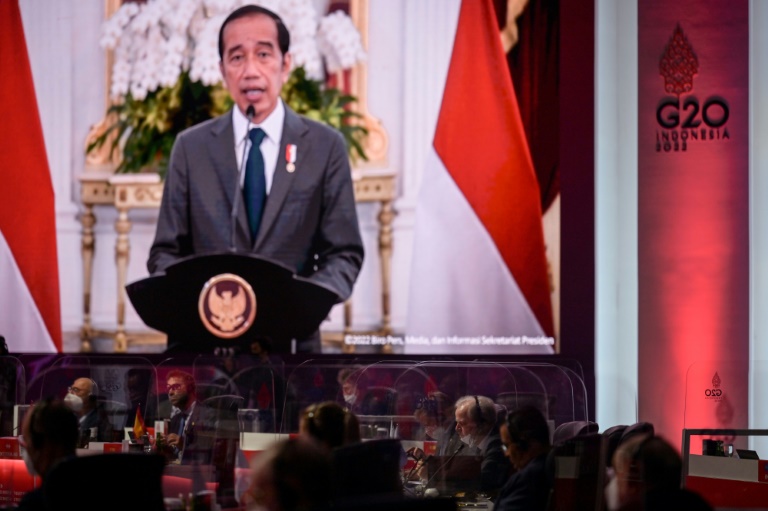
Finance ministers and central bank governors of G20 nations began a two-day meeting Thursday with Indonesia’s leader warning the Ukraine crisis was a threat to the post-pandemic recovery.

The Group of 20 — which brings together the world’s biggest economies including the US, China and some European nations — is holding the talks in hybrid format in the Indonesian capital Jakarta.

Opening the meeting, Indonesian President Joko Widodo warned of the risks to the global economy of the crisis in Ukraine, where fears are growing that Russia is poised to invade.

“This is not the time for rivalries and creating new tensions that disrupt the… recovery, let alone endanger the safety of the world, as is happening in Ukraine,” he said. 

“All parties must stop the rivalry and tension.”

The threat of a Russian invasion of its ex-Soviet neighbour presents a fresh challenge for a world already struggling to keep a recovery from the coronavirus pandemic on track as inflation surges.

Ahead of the talks, US Treasury Secretary Janet Yellen warned in an interview with AFP of further “global fallout” if the West moves ahead with punishing sanctions on Russia over the crisis.

Rocketing global inflation will also be in focus at the meeting, as central banks begin tightening rates and withdrawing massive stimulus introduced during the pandemic.

Other issues on the agenda at the talks — which were originally due to take place in Bali but were moved due to an Omicron virus wave — include debt restructuring for poor countries and reform of global health systems. 

Treasured trash: UK waste gets new lease of life

From facial scrubs using coffee grounds to clothes made from plastic bottles and furniture decorated with agave fibres, efforts to upcycle or repurpose waste products are gaining traction in Britain.

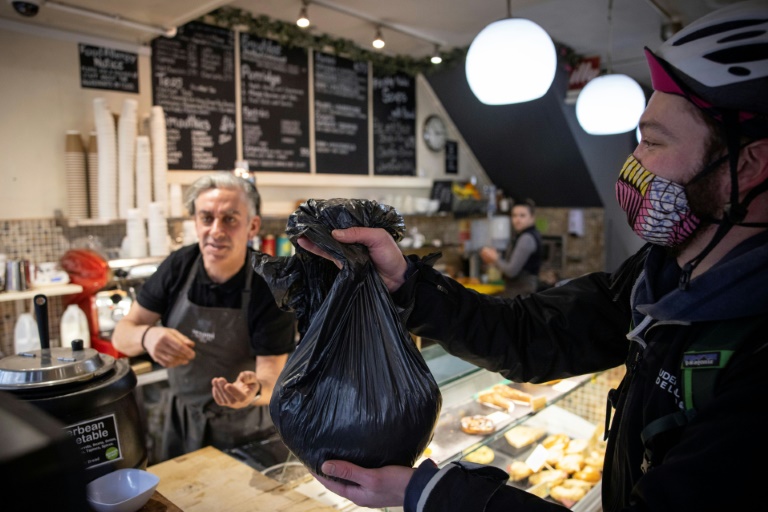
Every day a bike courier for the skincare brand Upcircle visits 25 cafes in London and collects some 100 kg (220 pounds) of coffee grounds that would otherwise be thrown away.

Set up six years ago by Anna Brightman and her brother Will Brightman, Upcircle reuses the coffee grounds to make beauty products, adding ingredients such as camomile infusions or a powder made from olive stones.

The siblings took the plunge to set up their own business after working for multinational companies. 

“I wanted to do something that was closer to my heart,” Anna Brightman told AFP.

“It was my brother who had the initial inspiration when asking out of curiosity at the coffee shop where he was going every day what happened to the coffee grounds,” she said.

“He was shocked to learn the coffee was disposed of at a landfill and they had to pay on top for it.”

She joked that she and her brother have since “made a name (for themselves) as the crazy siblings collecting coffee around London and making cosmetics”.

Once the coffee collections got going, “people started to contact us with all types of by-products,” Anna said, noting more than 15 of them are now incorporated into their range.

Among these are water from making concentrated fruit juices, fading flowers that get thrown away by florists and leftover chai spices.

– ‘Not gross’ –

Upcircle pay for some of these ingredients, though the coffee grounds, for example, are free. But the logistics involved in collecting them can be complex and costly.

Every year, half a million tonnes of coffee grounds are thrown away in the UK and the firm claims to have recycled 400 tonnes to date.

Nevertheless, the idea of marketing a beauty product made from “trash” initially got a thumbs-down from industry insiders, Anna Brightman admitted.

She said they have to work to get the message across that “these ingredients we are working with are not gross, old or unclean”.

Younger people are “more open to the idea of the circular economy”, she added.

“For obvious reasons, they are concerned about the future of our planet”.

Used coffee grounds work better as a skin care ingredient than dry ones, said Barbara Scott-Atkinson, the formulator for Upcircle’s products.

“It’s been heated and it’s damp. This makes it more suitable to use than plain ground coffee and the level of antioxidants increases.”

The company sends the ingredients for repurposing at its factory in Bridport on the southwest coast of England.

The smell of citrus essential oils wafts through the factory as they are being used to make a scrub. 

The production process is simple: coffee grounds are mixed with sugar and essential oils, then whipped shea butter and a natural preservative is added.

The exfoliant is then poured into glass jars, 3,000 of which are distributed around the UK every week.

Demand is growing rapidly, particularly in the United States, according to the company, which is reluctant to give figures on its sales or growth.

The burgeoning interest in repurposing food waste puts Upcircle in competition with other brands of natural cosmetics, such as Britain’s Wildefruit or Australia’s Frank Body, or even the UK giant Body Shop.

– ‘Put in landfill’-

As a result, coffee grounds are starting to become sought-after, Anna Brightman said.

“Some cafes tell us they… would like if we could split the week: they get the coffee waste Monday and Tuesday, and us the rest of the week,” she added.

To combat ravaging the planet’s resources, entrepreneurs and designers are increasingly coming up with new ways to create value from waste.

An exhibition called “Waste Age” at London’s Design Museum (until February 20) showcases the use of agave, or sisal fibres, by Mexican designer Fernando Laposse, who studied at London’s Central St Martin art school. 

Laposse turns the natural fibres of the plant — used to make tequila — into avant-garde furniture such as tables, benches and hammocks.

He also uses colourful corncobs from his country of birth to make furniture and veneer, helping boost the “circular economy” and create jobs.

“In the UK, we recycle 15 percent of our waste, the rest is incinerated or put in landfill”, said the exhibition’s curator Gemma Curtin.

The Design Museum exhibition also shows chairs made from old fridges, baskets decorated with fishnets recovered from the ocean and creations by fashion designers, such as Stella McCartney and Phoebe English, who use recycling.

Curtin added this prompts visitors to question what is really “luxury”?

The exhibition’s final room shows furniture and building blocks made of takeaway coffee cups. In Britain alone, 2.5 billion of these are thrown away each year, with their thin plastic coating making them impossible to recycle.

The huge amounts of plastics being made and then thrown away globally have prompted scientists to call for urgent production caps.

The United Nations will hold a meeting on tackling plastic pollution in Nairobi later this month, a potential prelude to talks on a worldwide plastics treaty.

Hunt on for great white shark that killed Sydney swimmer

Sydney authorities on Thursday deployed baited lines to try to catch a giant great white shark that devoured an ocean swimmer, as beach communities in Australia’s largest city were rocked by the first such attack in decades.

Drones scoured the ocean from the air, spotters launched on boats and six drum lines were set to try to catch the creature, which is believed to be at least three metres (10 feet) in length.

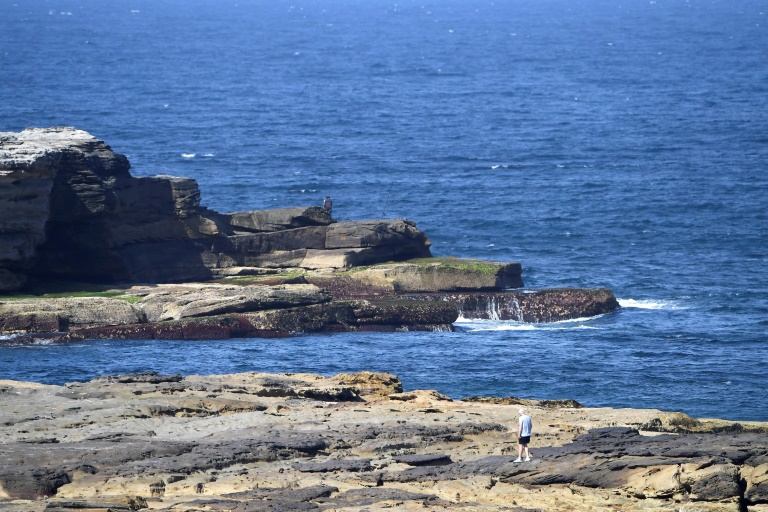
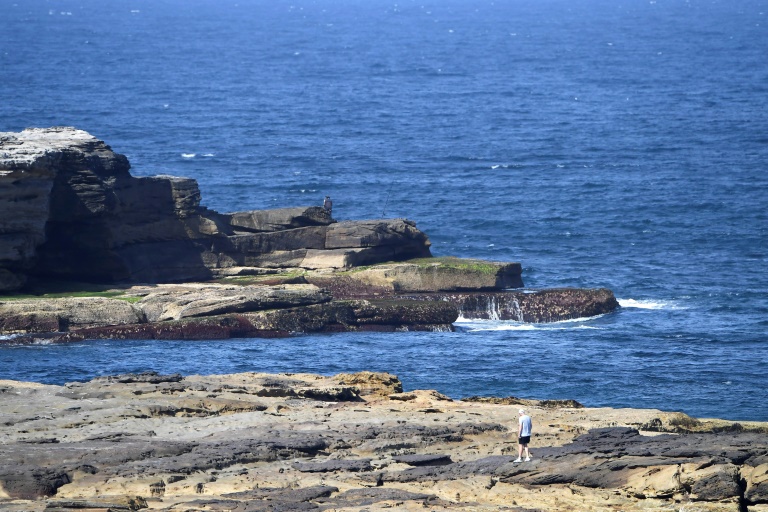
Police believe they have identified the victim, a 35-year-old ocean swimmer who was attacked on a sunny Wednesday afternoon, leaving shocked fishermen and golfers to watch helplessly from nearby cliffs.

A rescue helicopter and four ambulances were dispatched, but the victim perished after suffering what emergency responders described as “catastrophic injuries”.

It was the first fatal shark attack in Sydney since 1963.

“Based on footage provided by the public including eyewitness accounts… shark biologists believe that a White Shark, at least three metres in length, was likely responsible,” the state government’s Department of Primary Industries said.

The department announced it was deploying “six SMART drumlines” around Little Bay Beach, near where the attack occurred in the city’s east.

Drum lines feature hooks loaded with bait and are used to trap sharks that can then be tagged and moved to deeper ocean away from the coast.

Their use is controversial because hooked animals have been known to die before being moved, and non-target species can become snagged.

– ‘We all know the risks’ –

The attack has rocked beach communities in Sydney’s east, where being in the water is a part of everyday life.

Each morning before dawn and later as the sun sets, surfers, swimmers and paddleboarders flock to the waves to work out or take a break from the strains of work life.

According to Sports Australia, 4.5 million Aussies swim regularly and at least 500,000 surf.

Whales, dolphins, rays and several species of shark live along the coast and it is not uncommon to spot animals in the water, or to hear the ringing of shark alarms urging everyone back to the beach.

But most Sydneysiders take the risk in their stride.

“We all know that we take a risk every time we get in the water,” said 45-year-old Kim Miller, who took up ocean swimming when she returned to Sydney in 2020. 

At the beginning, she admitted “I was scared of seaweed, and fish. I did have a real fear around it.”

“When I first started seeing grey nurse sharks at (nearby) Maroubra, I thought I’d run on water. But it was such a peaceful, beautiful experience that I found myself diving down to get closer to them.” 

On Thursday, as 13 beaches across the city were closed, swimmers’ WhatsApp groups filled with graphic images of the attack and messages to check if friends were safe and well.

An 800-competitor ocean swimming race scheduled for the area on Sunday has been postponed.

“It’s hit a little bit closer today when we heard it was a long-distance ocean swimmer, knowing it’s a route that we’ve done so many times,” Miller said. “I feel a little bit sick this afternoon.”

Her morning swim on Thursday was confined to an ocean pool, but she insisted “eventually we’ll all have the courage to get back in”.

“I know it’s going to take a while to get those images out of my head. A lot of the time when I’m swimming it is with the hope of seeing beautiful sea life, or not even thinking about it. It’s going to take some time to get back to that.”

Hunt on for great white shark that killed Sydney swimmer

Sydney authorities on Thursday deployed baited lines to try to catch a giant great white shark that devoured an ocean swimmer, as beach communities in Australia’s largest city were rocked by the first such attack in decades.

Drones scoured the ocean from the air, spotters launched on boats and six drum lines were set to try to catch the creature, which is believed to be at least three metres (10 feet) in length.

Police believe they have identified the victim, a 35-year-old ocean swimmer who was attacked on a sunny Wednesday afternoon, leaving shocked fishermen and golfers to watch helplessly from nearby cliffs.

A rescue helicopter and four ambulances were dispatched, but the victim perished after suffering what emergency responders described as “catastrophic injuries”.

It was the first fatal shark attack in Sydney since 1963.

“Based on footage provided by the public including eyewitness accounts… shark biologists believe that a White Shark, at least three metres in length, was likely responsible,” the state government’s Department of Primary Industries said.

The department announced it was deploying “six SMART drumlines” around Little Bay Beach, near where the attack occurred in the city’s east.

Drum lines feature hooks loaded with bait and are used to trap sharks that can then be tagged and moved to deeper ocean away from the coast.

Their use is controversial because hooked animals have been known to die before being moved, and non-target species can become snagged.

– ‘We all know the risks’ –

The attack has rocked beach communities in Sydney’s east, where being in the water is a part of everyday life.

Each morning before dawn and later as the sun sets, surfers, swimmers and paddleboarders flock to the waves to work out or take a break from the strains of work life.

According to Sports Australia, 4.5 million Aussies swim regularly and at least 500,000 surf.

Whales, dolphins, rays and several species of shark live along the coast and it is not uncommon to spot animals in the water, or to hear the ringing of shark alarms urging everyone back to the beach.

But most Sydneysiders take the risk in their stride.

“We all know that we take a risk every time we get in the water,” said 45-year-old Kim Miller, who took up ocean swimming when she returned to Sydney in 2020. 

At the beginning, she admitted “I was scared of seaweed, and fish. I did have a real fear around it.”

“When I first started seeing grey nurse sharks at (nearby) Maroubra, I thought I’d run on water. But it was such a peaceful, beautiful experience that I found myself diving down to get closer to them.” 

On Thursday, as 13 beaches across the city were closed, swimmers’ WhatsApp groups filled with graphic images of the attack and messages to check if friends were safe and well.

An 800-competitor ocean swimming race scheduled for the area on Sunday has been postponed.

“It’s hit a little bit closer today when we heard it was a long-distance ocean swimmer, knowing it’s a route that we’ve done so many times,” Miller said. “I feel a little bit sick this afternoon.”

Her morning swim on Thursday was confined to an ocean pool, but she insisted “eventually we’ll all have the courage to get back in”.

“I know it’s going to take a while to get those images out of my head. A lot of the time when I’m swimming it is with the hope of seeing beautiful sea life, or not even thinking about it. It’s going to take some time to get back to that.”

Close Bitnami banner
Bitnami