World

Chile's last Yaghan speaker dies aged 93

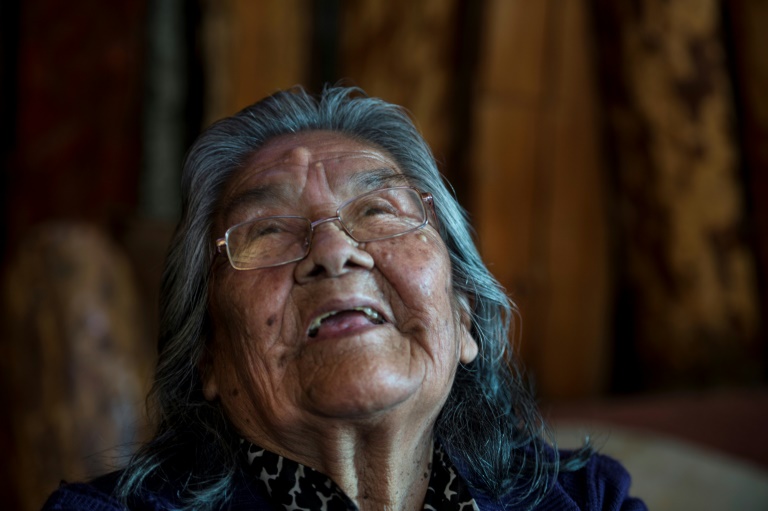
Cristina Calderon, the last native speaker of Chile’s indigenous Yaghan language, has died at the age of 93, her family said Wednesday, in a blow for a dwindling culture at South America’s extreme southern tip.

Calderon, known locally as “Grandma Cristina,” was recognized in 2009 by the Chilean government as a “living human treasure” for her work in preserving a culture at risk of extinction.

Until near the end of her long life, she spent her days making traditional reed baskets and other handicrafts, and imparting the language and culture of her people to her descendents.

The melodic Yaghan language has no written form.

“I’m the last speaker of Yaghan. Others can understand it but don’t speak it or know it like I do,” Calderon told journalists in 2017 in Villa Ukika, where the last few dozen of her people live.

Her daughter Lidia Gonzalez Calderon announced the death on Twitter Wednesday as “sad news for the Yaghan.”

“Everything I do in my work will be in your name. And in it will also be reflected your people,” she added.

The younger Calderon is vice president of the Constitutional Convention writing a new founding law for Chile.

– ‘Alive for ever’ –

The Yaghan once lived off fishing, paddling their canoes along coastal waterways, but mostly rely on tourism now, making handicrafts and working as seasonal laborers.

“The younger generation know the language but not to the same degree that Cristina does,” Maurice van de Maele, an anthropologist living in the region, warned five years ago.

Chile’s President-elect Gabriel Boric, who is from Punta Arenas in Chile’s extreme south, said on Twitter that Calderon’s “teachings and struggles from the south of the world, where everything begins, will remain alive for ever.”

The Yaghan have lived in the “End of the World” region at the tip of South America for some 6,000 years and numbered about 3,000 before the arrival of European settlers about 150 years ago. 

They fished the region’s notoriously dangerous waters, wearing little clothing and smearing their bodies in seal fat, only donning seal skins when temperatures plummeted.

The presence of the settlers changed the Yaghan, causing them to adopt a more sedentary lifestyle and to start wearing clothes.

While they retain some of their customs, such as weaving baskets with reeds, the Yaghan are losing their tribal legends as well as knowledge of ancient trails.

Calderon was long a symbol of cultural resistance for Chile’s indigenous communities.

Macron hosts African leaders ahead of expected Mali withdrawal

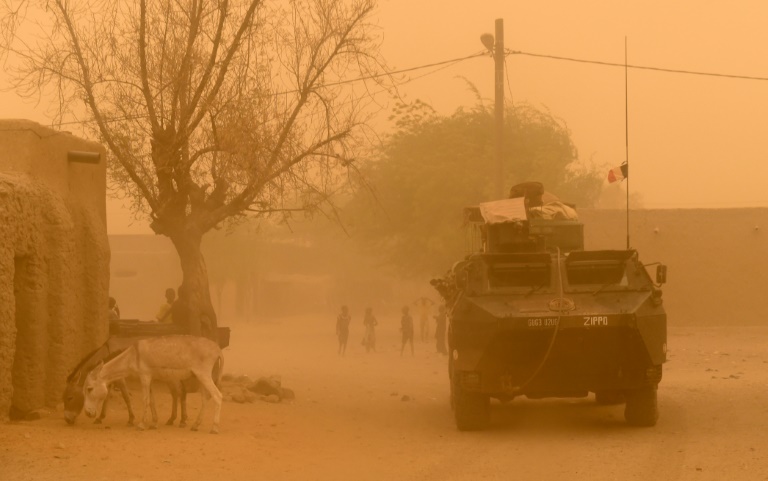
President Emmanuel Macron welcomed African leaders for dinner in Paris Wednesday ahead of an expected announcement that France is withdrawing its troops from Mali after nearly 10 years fighting a jihadist insurgency.

Multiple sources have told AFP that Macron will announce that French forces will leave Mali and redeploy elsewhere in the Sahel region, following a breakdown in relations with the ruling junta.

Macron is to travel to Brussels Thursday for a two-day EU-Africa summit. But the French presidency announced he would hold an 0800 GMT press conference at the Elysee on the “engagement of France in the Sahel”, where he is likely to make the formal announcement.

The Mali deployment has been fraught with problems for France. Of the 53 soldiers killed serving in its Barkhane mission in West Africa, 48 of them died in Mali.

France initially deployed troops against jihadists in Mali in 2013 but the insurgency was never fully quelled, and now new fears have emerged of a jihadist push to the Gulf of Guinea.

The deployment in Mali of a European force known as Takuba — a project driven by Macron to spread the security burden in the troubled region — will also end, the sources said.

The expected announcement of the withdrawal comes at a critical time for Macron, just days ahead of a long-awaited declaration from the president that he will stand for a new term in April elections.

It also coincides with Macron seeking to take a lead role in international diplomacy as he presses Russia to de-escalate in the standoff over Ukraine.

– Multiple missions –

The working dinner hosted by Macron on Wednesday, starting at 1930 GMT, will bring together the leaders of France’s key allies in the Sahel region — Chad, Mauritania and Niger. 

Officials from Mali and Burkina Faso, which also recently experienced a coup, have not been invited.

Other African leaders will also be present along with European Council President Charles Michel and European Commission chief Ursula von der Leyen, and Italian Prime Minister Mario Draghi.

There are a total of 25,000 foreign troops currently deployed in the Sahel region.

They include around 4,300 French soldiers, which under a reduction announced last year are due to fall to around 2,500 in 2023 from a peak of 5,400.

Other forces deployed in Mali are the UN peacekeeping mission MINUSMA established in 2013 and the EUTM Mali, an EU military training mission that aims to improve the Malian military’s capacity in fighting terrorists.

Some 2,400 French soldiers are deployed in Mali as part of the Barkhane operation as well as the EU Takuba force set up in 2020, which was intended to increase in numbers as French deployment was scaled back.

According to a French source, who asked not to be identified by name, even after departure France will for a period provide MINUSMA and EUTM with air support and medical back-up.

But Paris’ withdrawal could set the stage for other European powers like Britain or Germany to abandon their roles in the multinational missions.

“The departure of Barkhane and Takuba creates a void,” Ivorian President Alassane Ouattara said Wednesday.

In the Sahel and Gulf of Guinea, “national armies will have to deal with problems on our national territories, and that’s our philosophy”, he told broadcasters RFI and France 24.

– ‘Reinvent partnership’ –

Relations between France and Mali have plunged to new lows after the junta led by strongman Assimi Goita refused to stick to a calendar to a return to civilian rule.

The West also accuses Mali of using the services of the hugely controversial Russian mercenary group Wagner to shore up its position, a move that gives Moscow a new foothold in the region.

Especially with the French elections looming, Macron’s priority is to ensure that any withdrawal does not invite comparisons with the chaotic American departure from Afghanistan last year.

Paris, however, intends to continue the anti-jihadist fight in the wider region, where movements affiliated with Al-Qaeda or the Islamic State group have retained an ability to attack despite the elimination of key leaders. 

“We need to reinvent our military partnership with these countries,” said a French presidential source.

“It is not a question of moving what is being done in Mali elsewhere, but of reinforcing what is being done in Niger and of supporting the south more.”

Spain mourns trawler victims as rescue hopes fade

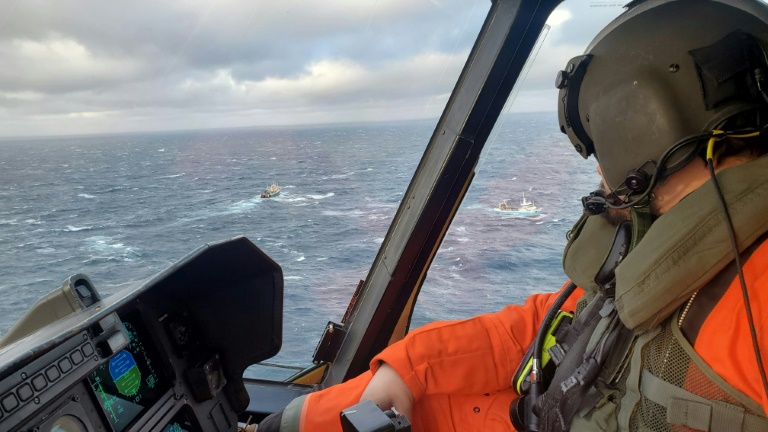
Spain was in mourning Wednesday after its worst fishing tragedy in decades, as rescue teams off Canada warned it was unlikely they would find any of the missing 12 crew members alive.

Rescuers have so far confirmed nine dead and have found three survivors.

“Although we still hope to find (crew members) alive, it is now unlikely that other survivors will be found,” Lieutenant Nicolas Plourde-Fleury of the Canadian military told AFP, saying searches for the missing men were ongoing.

After initially indicating that 10 bodies had been recovered, on Wednesday Canadian officials corrected the death toll to nine. 

Spain’s agriculture and fisheries minister, Luis Planas, said “this shipwreck… is the worst tragedy we’ve had in the fishing sector in 38 years”.

The last time Spain suffered a major fishing disaster was in July 1984 when a sardine boat called the Islamar III sank off the Canary Islands, claiming 26 lives.

“This is a job which not only is very hard but is also very dangerous,” Planas added.

In Madrid, lawmakers observed a minute of silence in parliament for the dead and the missing from the trawler, which went down some 250 nautical miles (463 kilometres) east of Newfoundland.

Of the 24 crew members, 16 are Spanish, five Peruvians and three Ghanaians.

– Three days of mourning –

“Once again the people of the sea have been hit very hard,” said Alberto Nunez Feijoo, head of Spain’s northwestern Galicia region where the boat was based.

“Galicia is a big family and when a family is struck by a tragic event, it unites in grief to seek comfort,” he said, announcing three days of mourning for the victims.

Planas said eight vessels, among them Spanish and Portuguese fishing boats, had joined the search for survivors from the Villa de Pitanxo, after the 50-metre (164-foot) fishing vessel sent out a distress signal at 0424 GMT on Tuesday. 

By Wednesday morning, hopes of finding the missing crew members were fading.

“We are talking about a rescue… in extremely difficult sea conditions, with water temperatures that mean as soon as a person falls in they won’t last long,” said Feijoo.

Brian Owens of the Joint Rescue Coordination Centre (JRCC) in Halifax, Canada, said the vessels involved in the rescue efforts faced “10-metre waves” and strong winds. A plane and helicopter have also joined the search.

It was not immediately clear what caused the boat to founder but Javier Touza, head of the Shipowner’s Cooperative in the northwestern Spanish city of Vigo, said it was likely struck by a wave.

“This would cause a massive entry of water into the ship, and cause it to sink almost immediately,” he told TV station Antena 3.

“Although we may not be able to find survivors, it is very important for the families to collect the bodies so they can rest in peace.”

– ‘I am devastated’ –

In Galicia, the families of the crew were awaiting news of their loved ones.

Luzmar, a mother-of-four whose 29-year-old husband Edwin Cordoba is among the missing, said the children kept asking when their dad would come home. 

“I am devastated, I can’t bear it,” she told reporters.

“In front of them, I can’t show how I am really feeling because they don’t know yet,” she added before breaking down in tears. 

She and her husband are both from Peru. 

The three survivors were found on a life raft by a Spanish fishing boat five hours after the Villa de Pitanxo sent out a distress call. 

Suffering from hypothermia, they were airlifted to safety by a Canadian helicopter. 

Among the survivors was the ship’s captain, Juan Padin Costa and his nephew Eduardo Rial Padin, whose mother expressed her relief in remarks to Spain’s public television. 

“I am relieved because he is alive, thank God, but I’m so sorry this can’t be said for so many of his colleagues,” said Gloria Padin Costas, breaking down in tears.

Russian planes intercepted US Navy aircraft over Mediterranean: Pentagon

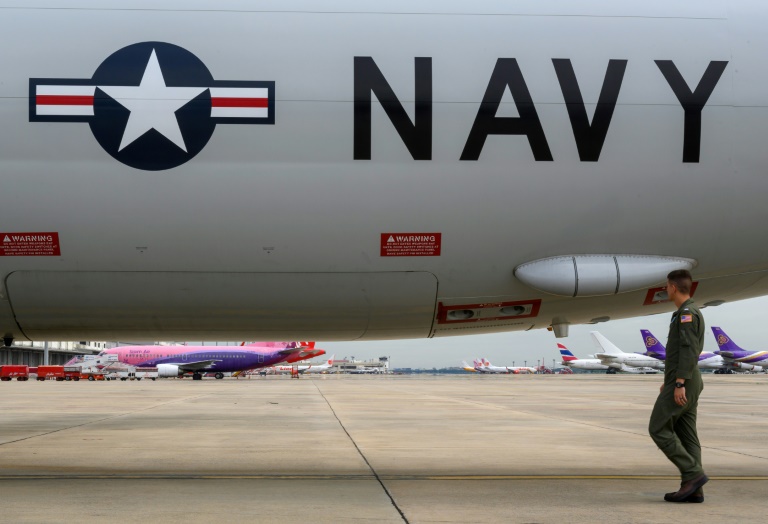
Three US Navy aircraft were intercepted by Russian planes in an “unprofessional” manner over the Mediterranean Sea last weekend, the Pentagon said Wednesday.

“While no one was hurt, interactions such as these could result in miscalculations and mistakes that lead to more dangerous outcomes,” US Navy Captain Mike Kafka said in a statement. 

The three P-8A maritime patrol and reconnaissance aircraft “experienced unprofessional intercepts by Russian aircraft” while “flying in international airspace over the Mediterranean Sea,” Kafka said.

He said the United States has “made our concerns known to Russian officials through diplomatic channels.

“The US will continue to operate safely, professionally and consistent with international law in international waters and airspace,” Kafka said. “We expect Russia to do the same.”

According to a US official who asked to remain anonymous, one of the Russian planes came dangerously close to a US aircraft.

The incidents come amid heightened tensions over Russia’s huge build-up of military forces along the border with Ukraine.

Russia’s deployment of troops, missiles and warships around Ukraine has being described as Europe’s worst security crisis since the Cold War.

Police issue warning to protesters to leave Canada capital

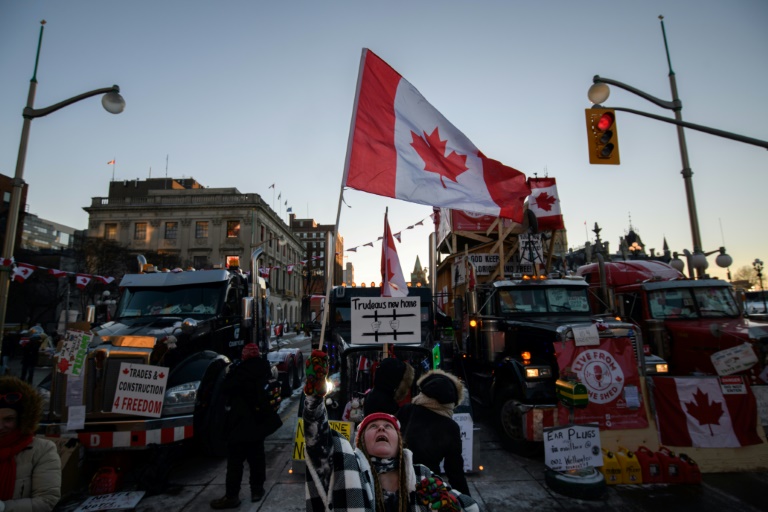
Canadian police on Wednesday warned demonstrators opposed to Covid rules who have been clogging Ottawa streets for nearly three weeks to leave or face arrest, fines and seizure of their trucks.

Federal authorities, meanwhile, negotiated a peaceful end to the last of several recent blockades by protesters of border crossings between Canada and the United States.

“You must leave the area now,” Ottawa police said in a notice distributed to truckers outside parliament. 

Anyone blocking streets or assisting others in doing so will be arrested and face charges, the statement said.

Police also warned that anyone charged or convicted for taking part in the illegal demonstration may, in addition to criminal penalties, be barred from travelling to the United States.

As the notices were handed out, AFP journalists saw hundreds of trucks continuing to occupy streets in the parliamentary precinct, intermittently honking horns — despite an extension Wednesday of a court order against the deafening noises, obtained by an area resident fed up with the disruptions.

“We’re still a lot of trucks holding the line,” trucker David Shaw, 65, told AFP. If arrested, he added: “I’ll keep coming back.”

Fellow Trucker Jan Grouin, 42, decried Prime Minister Justin Trudeau’s decision earlier this week to impose a state of emergency, calling it “a little overreacting maybe to think that we are terrorists.”

– ‘Time for this to end’ –

Unable to dislodge the protesters, Trudeau invoked the Emergencies Act, which gives the government wide new powers to end their weeks-long protest over Covid restrictions. The move marked only the second time in Canadian history such emergency powers have been invoked in peacetime.

Trudeau told reporters on Wednesday that with police now getting help from various other law enforcement units, they should now “be able to begin their actions.”

“It’s time for this to end,” he said, adding that it was up to “police to decide when and how.”

On Tuesday, Ottawa’s interim police Chief Steve Bell said a “turning point” has been reached.

“I believe we now have the resources and partners to bring a safe end to this occupation,” he said. 

Ball replaced chief Peter Sloly who abruptly resigned after facing intense criticism over his failure to dislodge the protesters.

The so-called “Freedom Convoy” started with truckers protesting against mandatory Covid vaccines to cross the US border, but its demands have since grown to include an end to all pandemic health rules and, for many, a wider anti-establishment agenda.

At its peak, the movement also included blockades of a half dozen border crossings — including a key trade route across the Ambassador Bridge between Windsor, Ontario and Detroit.

Dozens of protesters were arrested and several vehicles seized during police operations at the border, and in Coutts, Alberta federal police charged four people with conspiracy to murder police officers. They were among 13 arrested with a cache of weapons that included rifles, handguns, body armor and ammunition.

On Wednesday, Royal Canadian Mounted Police Sergeant Paul Manaigre said the last blocked crossing — between Manitoba and the US state of North Dakota — would be open soon, after protesters agreed to leave.

“In a short time they’ll be on their way,” Manaigre told reporters. “The outcome is what we wanted. No one got hurt. We have a highway that’s going to open, and trade can resume.”

Russian teenager Valieva set to go for second Beijing Olympic title

Teenage Russian figure skater Kamila Valieva will go for a second Beijing Olympics title on Thursday, the next chapter in a damaging doping scandal which has overshadowed the Games.

The 15-year-old burst into tears after topping Tuesday’s first half of the women’s singles competition to put herself in prime position ahead of the all-important free skate.

Valieva has dominated the second week of the Games in the Chinese capital after the Court of Arbitration for Sport ruled that she should not be thrown out of the Olympics despite failing a drugs test in December.

Valieva played a central role in propelling the Russians to skating team gold last week, before news of her test broke, but no medal ceremony ever took place and will not during these Olympics — unprecedented for a Games.

There will also be no medal ceremony if Valieva — the pre-Games favourite for gold — comes in the top three on Thursday.

CAS cleared her to stay at the Games, citing her age as one of the “exceptional circumstances”, but she has not been absolved of doping and still faces further investigation in a case that looks set to rumble on well after the action ends in Beijing.

Games testing authorities said last week that the teenager tested positive for trimetazidine, a drug used to treat angina but which is banned for athletes by the World Anti-Doping Agency (WADA) because it can boost endurance.

In a fresh twist, The New York Times reported that her sample also contained the substances Hypoxen and L-Carnitine, which are also used to treat heart conditions. They are not on WADA’s prohibited list.

Senior IOC member Denis Oswald said Tuesday that Valieva informed the CAS panel that she tested positive because of “contamination” from her grandfather’s medicine.

The New York Times report said the grandfather provided a pre-recorded video message to a hearing with Russian anti-doping officials on February 9 in which he said he used trimetazidine.

Valieva’s mother told the same hearing her daughter took Hypoxen for heart “variations”, the Times said.

The affair puts the spotlight once more on doping by Russian athletes, who are not allowed to take part at these Games under their flag because of a state-sponsored doping programme that reached its peak at its home 2014 Sochi Olympics.

Some of Valieva’s fellow skaters made plain their anger that they had to compete against her.

“I don’t know every detail of the case, but from the big picture obviously a doping athlete competing against clean athletes is not fair,” the 16-year-old American skater Alysa Liu said.

In another doping case, Games’ testers announced Wednesday that Ukrainian cross-country skier Valentyna Kaminska had tested positive for an anabolic steroid and two other banned substances.

Her highest placing in two individual events was 70th.

– Gold for France –

Clement Noel claimed France’s first alpine skiing gold medal of these Games when he won the men’s slalom.

Noel’s lightning-quick second run gave him a combined total of 1min 44.09sec to hold off Johannes Strolz, the Austrian former traffic policeman who had already won a gold in the alpine combined event.

“That was one of the most important races in my career,” said 24-year-old Noel. “It’s one shot — one minute and 40 seconds every four years.”

In the men’s ice hockey, Slovakia eliminated the United States in the quarterfinals, stunning the Americans with a tying goal in the final minute of regulation before winning 3-2 in a shootout.

Deprived of its National Hockey League (NHL) stars by the pandemic, the USA squad of relative unknowns had inspired comparisons to the overachieving 1980 gold-medal winning “Miracle on Ice” team as they went 3-0 in group play.

They were 44 seconds from clinching a spot in the Beijing semifinals when Slovakia’s captain Marek Hrivik slotted home to tie it 2-2 and send the game into overtime.

Slovakia scored once in the penalty shootout, leaving USA captain Andy Miele with one last shot, but his effort was smothered by goalie Patrik Rybar.

Also eliminated in the quarter-finals were Canada, winners of three of the last five Olympic golds, who lost 2-0 to Sweden.

There was better news for the US with Alexander Hall winning the men’s freeski slopestyle gold, taking the title ahead of countryman Nick Goepper.

In cross-country skiing, Germany triumphed in the women’s team sprint classic and Norway took the men’s honours.

With four days of competition remaining, Norway top the medals table with 13 golds, Germany have 10 and the United States have eight.

Netanyahu prosecutors say witness phone was hacked with 'spyware'

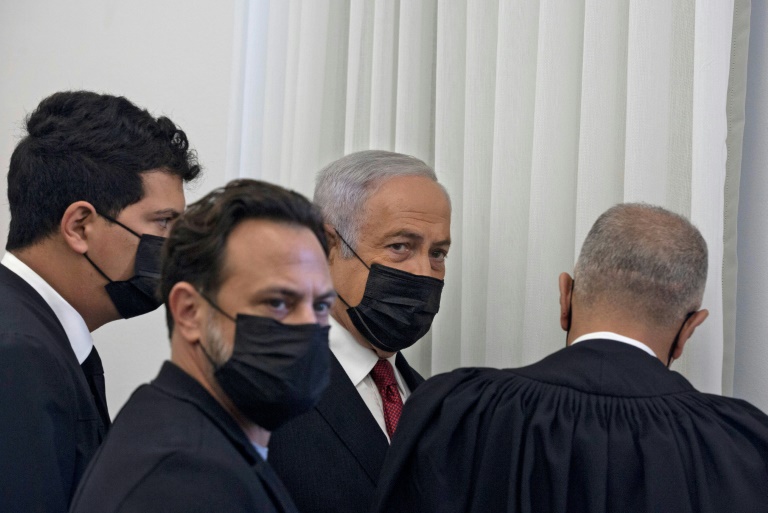
Prosecutors in former Israeli premier Benjamin Netanyahu’s corruption trial said Wednesday that “spyware” hacked one witness’s phone but no relevant material was uncovered and urged the trial to go ahead.

The Jerusalem district court had ordered prosecutors to conduct an audit on the potential use by investigators of the controversial Pegasus malware, made by Israel’s NSO group, following media reports Pegasus has been used against multiple figures in the case. 

The prosecution’s disclosure did not directly mention Pegasus, the programme reportedly used on journalists, dissidents and activists worldwide. It can switch on a phone’s camera or microphone and harvest its data.

According to the disclosure, the phone of former communications ministry director general Shlomo Filber had been penetrated with judicial approval. 

Filber is accused of mediating between Netanyahu and the controlling shareholder of the Bezeq telecom firm, Shaul Elovitch, as the sides reportedly plotted to exchange regulatory favours for positive coverage on a news site owned by the firm.

Filber, once a close Netanyahu ally, agreed to testify against the former prime minister, in what was seen a crucial development in the police investigation. 

Netanyahu’s defence lawyers reacted angrily to the prosecution disclosure, condemning “illegal investigative actions carried out against witnesses” in the trial. 

It described Filber as an “essential witness” against Netanyahu, and demanded to know what “private and personal information” was extracted from his phone by investigators before he agreed to testify. 

Prosecutors also said an unsuccessful attempt was made, with proper authorisation, to plant a spyware on the phone of Shaul Elovitch’s wife, Iris. The couple are co-defendants in the Netanyahu case. 

Netanyahu, prime minister from 2009 until last year, has been charged with bribery, fraud and breach of trust, allegations he denies. 

His high-profile trial has been rocked by the allegations of Pegasus spying on witnesses, while the reported use of the malware across Israeli society had sparked domestic outrage. 

The business daily Calcalist has reported that Pegasus was used against dozens of prominent figures, including powerful bureaucrats, activists, mayors and business leaders.

Prime Minister Naftali Bennett has promised a full investigation into all alleged espionage against Israeli citizens. 

Ukraine defies invasion threat, as NATO sees no Russian pullback

Ukraine’s leader vowed Wednesday that his country would stand tall against any invasion, as both he and NATO warned they could see no sign that Russia is withdrawing its forces.

President Volodymyr Zelensky watched troops training with some of their new Western-supplied anti-tank weapons on a range near Rivne, west of the capital.

Then he travelled to the frontline port city of Mariupol, and gave a speech to mark what he had declared Ukraine’s “Day of Unity”, wearing a military-style olive green coat and vowing resistance.

“We are not afraid of forecasts, we are not afraid of anyone, of any enemies,” Zelensky said. “We will defend ourselves.”

The demonstration of Ukrainian firepower and rhetoric contrasted with images on Russian state media that were said to show Moscow’s forces bringing an end to a major exercise in occupied Crimea.

But Zelensky denied that this was a sign of a Russian pullback.

“We are seeing small rotations. I would not call these rotations the withdrawal of forces by Russia. We cannot say that,” he said in televised comments, adding: “We see no change.”

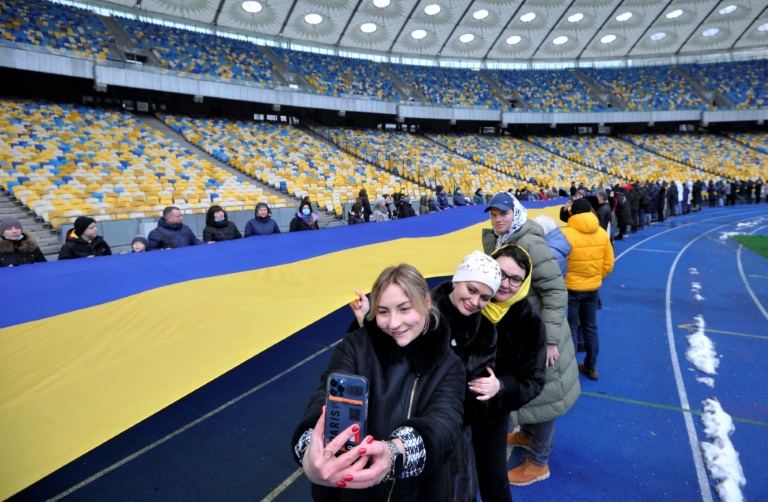
In Rivne, missiles pounded targets and armoured vehicles manoeuvred and fired on the yellowing moorland, while in Kyiv hundreds of civilians marched in a stadium with an enormous national banner.

The “Day of Unity” displays came as the Kremlin called for “serious negotiations” with Washington, and European leaders pushed hard for a diplomatic resolution to the crisis.

But NATO chief Jens Stoltenberg, who hosted a meeting of the alliance’s defence ministers in Brussels, dismissed suggestions that the threat on the border had diminished.

He said the alliance would shore up its eastern defences with forward deployments in member states bordering Ukraine.

“Moscow has made it clear that it is prepared to contest the fundamental principles that have underpinned our security for decades and to do so by using force,” he said.

“I regret to say that this is the new normal in Europe.”

And on reported Russian troop movements, he said: “So far we do not see any sign of de-escalation on the ground; no withdrawals of troops or equipment.

“Russia maintains a massive invasion force ready to attack with high-end capabilities from Crimea to Belarus.”

– ‘Signals give us hope’ – 

Russia’s huge build-up of troops, missiles and warships around Ukraine is being billed as Europe’s worst security crisis since the Cold War.

Russian President Vladimir Putin has demanded Ukraine be forbidden from pursuing its ambition to join NATO and wants to redraw the security map of eastern Europe, rolling back Western influence.

But, backed by a threat of crippling US and EU economic sanctions, Western leaders are pushing for a negotiated settlement, and Moscow has signalled it will start to pull forces back.

In the latest such move, on Wednesday the Russian defence ministry said military drills in Crimea — a Ukrainian region Moscow annexed in 2014 — had ended and that troops were returning to their garrisons.

Washington has demanded more verifiable evidence of de-escalation, but US President Joe Biden has nevertheless vowed to push for a diplomatic solution.

Kremlin spokesman Dmitry Peskov welcomed this, telling reporters: “It is positive that the US president is also noting his readiness to start serious negotiations.”

German Defence Minister Christine Lambrecht, arriving at the NATO talks, said reports of a partial Russian pullback “are signals that at least give us hope. But it is important to observe closely whether these words are followed by deeds.”

EU leaders, already gathered in Brussels for a summit with their African counterparts, are now to hold impromptu crisis talks on Russia and Ukraine on Thursday.

Zelensky has downplayed threats of an immediate Russian invasion, but is attempting to rally his people with the “Day of Unity” celebrations under Ukraine’s blue and gold banner.

On Wednesday, after the Rivne drills, he visited Mariupol, a frontline port city near a breakaway region held by Russian-backed separatists.

Ambassadors from the European Union, Germany, Estonia, Poland and Spain headed to Mariupol with the president.

– Rich return –

Meanwhile, some wealthy business leaders who had been urged bby the government to show sold country announced their return.

Ukraine’s richest man, 55-year-old billionaire industrialist Rinat Akmetov, who was born in Donetsk in an area now held by separatists, was in Mariupol.

“We continue to build, we continue to invest,” he said, promising his firm would boost salaries and support a local university.

On Tuesday, Ukraine said the websites of the country’s defence ministry and armed forces as well as private banks had been hit by a cyberattack of the kind that US intelligence fears would precede a Russian attack.

“It cannot be excluded that the aggressor is resorting to dirty tricks,” Ukraine’s communications watchdog said, in reference to Russia.

Peskov denied that Moscow had any role in the cyber assault. “We do not know anything. As expected, Ukraine continues blaming Russia for everything,” he said.

burs-dc/jbr/har

Torrential rain kills 55 in Brazil tourist town

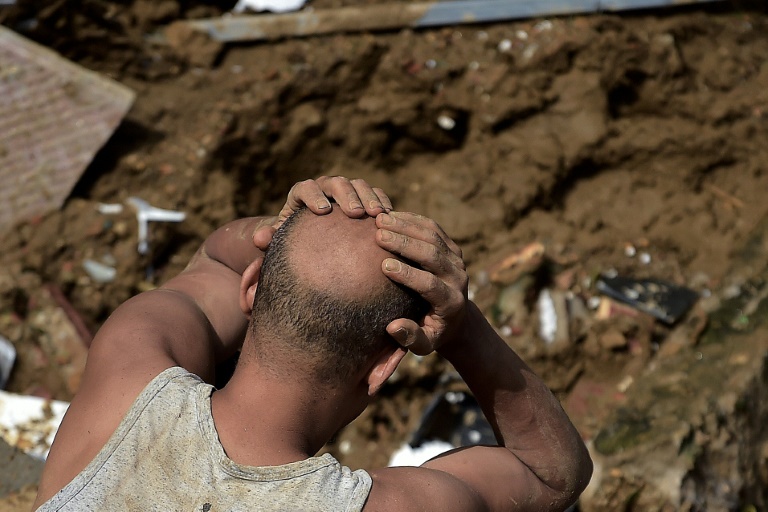
At least 55 people were killed in devastating flash floods and landslides that hit the picturesque Brazilian city of Petropolis, turning streets into torrential rivers and sweeping away houses, officials said Wednesday.

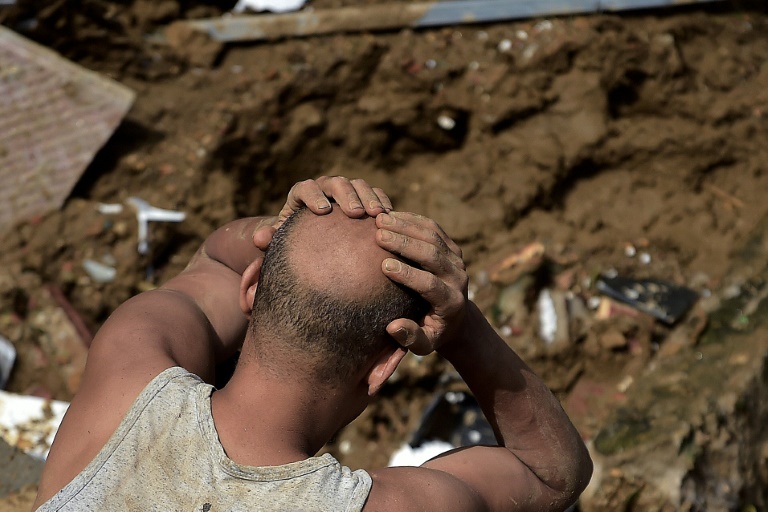
Rescue workers raced to find survivors buried in the mud and wreckage after heavy storms Tuesday dumped a month’s worth of rain in three hours on the scenic tourist town in the hills north of Rio de Janeiro.

There were fears the death toll could rise further as firefighters and volunteer rescue workers dug through the remains of houses washed away in torrents of mud, many of them in impoverished hillside slums.

At least 21 people have been so far been rescued alive in the effort, according to the state government.

Around 300 people were being housed in shelters, mostly in schools, officials said. Charities called for donations of mattresses, blankets, food, water, clothing and face masks for victims.

Wendel Pio Lourenco, a 24-year-old resident, was walking through the street with a television in his arms, heading to a local church in search of shelter.

He said he was trying to save a few possessions, after spending a sleepless night helping search for victims.

“I found a girl who was buried alive,” he said.

“Everyone is saying it looks like a war zone.”

Governor Claudio Castro said much the same after visiting the scene.

“It’s almost a war situation. We’ve mobilized our entire team,” he said.

Videos posted on social media from Tuesday’s rains showed streets in Petropolis, the 19th-century summer capital of the Brazilian empire, fill with gushing floods that swept away cars, trees and nearly everything else in their paths.

Many shops were completely inundated by the rising waters, which gushed down the streets of the historic city center.

Officials said more than 180 firefighters and other rescue workers were responding to the emergency, aided by 400 soldiers sent in as reinforcements.

City hall declared a “state of disaster” in the city of 300,000 people, which sits 68 kilometers (42 miles) north of Rio.

The city council declared three days of mourning for victims.

– ‘Tragedy’ –

Petropolis is a popular destination for tourists fleeing the summer heat of Rio, known for its leafy streets, stately homes, imperial palace — today a museum — and the natural beauty of the surrounding mountains.

Tuesday’s storms dumped 258 millimeters (10 inches) of rain on the city in three hours, nearly equal to all the rainfall from the previous month, the mayor’s office said.

The heaviest downpour had passed, but more moderate rain was expected to continue on and off for several days, authorities said.

President Jair Bolsonaro, on an official trip to Russia, said on Twitter he was keeping abreast of “the tragedy.”

“Thank you for your words of solidarity with the people of Petropolis,” he told President Vladimir Putin after meeting the Russian leader.

“May God comfort (the victims’) families.”

Brazil has been swept by heavy rains in the past several months that have caused a series of deadly floods and landslides.

Experts say rainy season downpours are being augmented by La Nina — the cyclical cooling of the Pacific Ocean — and by the impact of climate change.

Because a warmer atmosphere holds more water, global warming increases the risk and intensity of flooding from extreme rainfall.

Last month, torrential rain triggered floods and landslides that killed at least 28 people in southeastern Brazil, mostly in Sao Paulo state.

There have also been heavy rains in the northeastern state of Bahia, where 24 people died in December.

It is not the first time the mountains around Rio have been the scene of deadly storms.

In January 2011, more than 900 people died in the region due to heavy rains that caused flooding and landslides in a large area, including Petropolis and neighboring cities Nova Friburgo and Teresopolis.

Torrential rain kills 55 in Brazil tourist town

At least 55 people were killed in devastating flash floods and landslides that hit the picturesque Brazilian city of Petropolis, turning streets into torrential rivers and sweeping away houses, officials said Wednesday.

Rescue workers raced to find survivors buried in the mud and wreckage after heavy storms Tuesday dumped a month’s worth of rain in three hours on the scenic tourist town in the hills north of Rio de Janeiro.

There were fears the death toll could rise further as firefighters and volunteer rescue workers dug through the remains of houses washed away in torrents of mud, many of them in impoverished hillside slums.

At least 21 people have been so far been rescued alive in the effort, according to the state government.

Around 300 people were being housed in shelters, mostly in schools, officials said. Charities called for donations of mattresses, blankets, food, water, clothing and face masks for victims.

Wendel Pio Lourenco, a 24-year-old resident, was walking through the street with a television in his arms, heading to a local church in search of shelter.

He said he was trying to save a few possessions, after spending a sleepless night helping search for victims.

“I found a girl who was buried alive,” he said.

“Everyone is saying it looks like a war zone.”

Governor Claudio Castro said much the same after visiting the scene.

“It’s almost a war situation. We’ve mobilized our entire team,” he said.

Videos posted on social media from Tuesday’s rains showed streets in Petropolis, the 19th-century summer capital of the Brazilian empire, fill with gushing floods that swept away cars, trees and nearly everything else in their paths.

Many shops were completely inundated by the rising waters, which gushed down the streets of the historic city center.

Officials said more than 180 firefighters and other rescue workers were responding to the emergency, aided by 400 soldiers sent in as reinforcements.

City hall declared a “state of disaster” in the city of 300,000 people, which sits 68 kilometers (42 miles) north of Rio.

The city council declared three days of mourning for victims.

– ‘Tragedy’ –

Petropolis is a popular destination for tourists fleeing the summer heat of Rio, known for its leafy streets, stately homes, imperial palace — today a museum — and the natural beauty of the surrounding mountains.

Tuesday’s storms dumped 258 millimeters (10 inches) of rain on the city in three hours, nearly equal to all the rainfall from the previous month, the mayor’s office said.

The heaviest downpour had passed, but more moderate rain was expected to continue on and off for several days, authorities said.

President Jair Bolsonaro, on an official trip to Russia, said on Twitter he was keeping abreast of “the tragedy.”

“Thank you for your words of solidarity with the people of Petropolis,” he told President Vladimir Putin after meeting the Russian leader.

“May God comfort (the victims’) families.”

Brazil has been swept by heavy rains in the past several months that have caused a series of deadly floods and landslides.

Experts say rainy season downpours are being augmented by La Nina — the cyclical cooling of the Pacific Ocean — and by the impact of climate change.

Because a warmer atmosphere holds more water, global warming increases the risk and intensity of flooding from extreme rainfall.

Last month, torrential rain triggered floods and landslides that killed at least 28 people in southeastern Brazil, mostly in Sao Paulo state.

There have also been heavy rains in the northeastern state of Bahia, where 24 people died in December.

It is not the first time the mountains around Rio have been the scene of deadly storms.

In January 2011, more than 900 people died in the region due to heavy rains that caused flooding and landslides in a large area, including Petropolis and neighboring cities Nova Friburgo and Teresopolis.

Close Bitnami banner
Bitnami