World

Despair, solidarity for Brazil storm victims

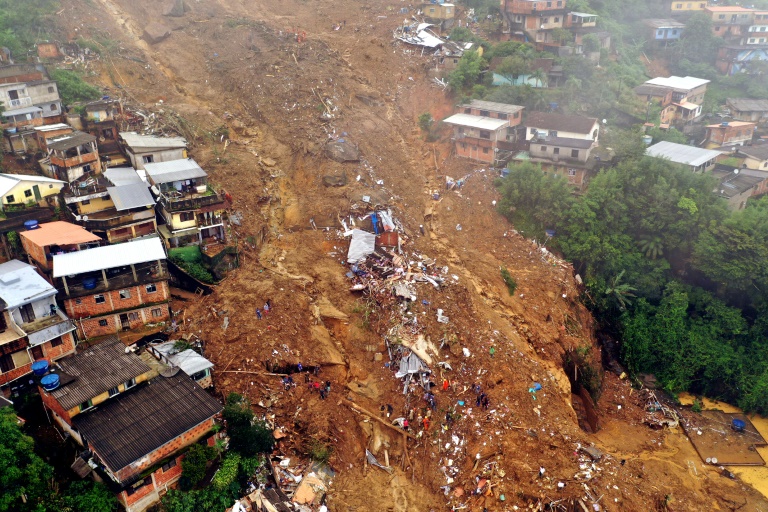
Holding the few possessions they are able to carry, families stream down the slopes of the hillside neighborhood of Alto da Serra, many in tears, fleeing the devastation left by deadly landslides in the Brazilian city of Petropolis.

Their modest neighborhood was one of the hardest hit by Tuesday’s storms, which dumped a month’s worth of rain on this scenic tourist town in a matter of hours, triggering flash floods and torrents of mud that gushed violently through the city.

“It’s devastating. We never could have imagined something like this,” says one fleeing resident, Elisabeth Lourenco, clutching two bags in which she stuffed some clothing when emergency officials ordered everyone in the neighborhood to evacuate.

“When the rain was falling hardest, a huge amount of mud came pouring down the hillside, and some tree branches fell on my house,” says the 32-year-old manicurist, on the verge of tears.

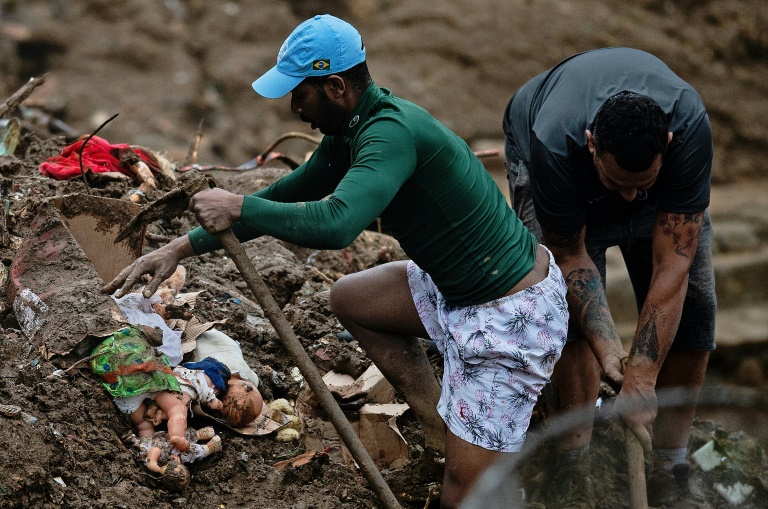
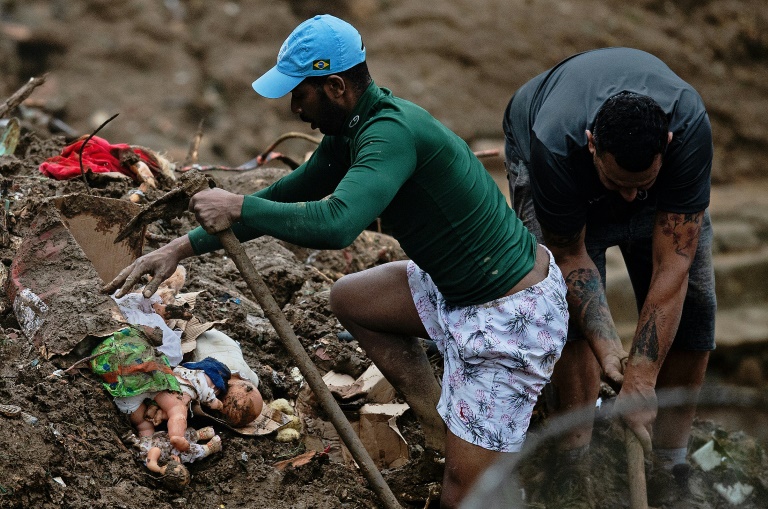
Nearby is a scene of total chaos. A giant swathe of hillside is covered in mud and strewn with the remains of shattered houses.

Authorities say the disaster killed at least 50 people across the city. There are fears the death toll could rise further as rescue workers continue digging through the mud and ruins.

Watching the rescue operation in disbelief, residents shudder with each deafening pass of the helicopters hovering overhead.

“I was eating dinner when the storm started. My brother came in and said, ‘We need to get out of here, the hillside is collapsing,'” says Jeronimo Leonardo, 47, whose home sits at the edge of the area wiped out by the landslide.

– ‘Up to our waists’ –

Residents of Alto da Serra have been evacuated to a church that sits atop another hill nearby.

From the square outside the small blue building, they can see the disaster zone through the mist.

Dozens of families swarm the church, carting their belongings in bags.

Outside, volunteers unload a truck of bottled water, as others sort through donated clothing.

“Can I have some shoes?” asks a little boy standing barefoot, his clothes stained with mud.

Inside, mattresses line the floor.

“We started taking people in as soon as the tragedy started Tuesday evening. We’re hosting around 150 to 200 people, including a lot of children,” says Father Celestino, a parish priest.

Yasmin Kennia Narciso, a 26-year-old teacher’s assistant, is sitting on a mattress nursing her nine-month-old baby.

“I didn’t sleep all night,” she says.

She tells the story of how she fled with her two daughters around 11:00 pm.

“We tried to leave earlier, but there were boulders strewn across the path and everything was flooded. We were in water up to our waists. We had no choice but to wait until it went down,” she says.

She adds that she is still waiting for news on several neighbors.

“An older lady and her three grandchildren who lived just above us were buried in the mud.”

Survivors know they likely face a long wait to learn if and when they can return home — for those who still have homes left.

How world's most precise clock could transform fundamental physics

US scientists have measured Albert Einstein’s theory of general relativity — which holds that gravity slows time down — at the smallest scale ever, demonstrating that clocks tick at different rates when separated by fractions of a millimeter.

Jun Ye, of the National Institute of Standards and Technology (NIST) and the University of Colorado Boulder, told AFP it was “by far” the most precise clock ever built — and could pave the way for new discoveries in quantum mechanics, the rulebook for the subatomic world.

Ye and colleagues published their findings in the prestigious journal Nature on Wednesday, describing the engineering advances that enabled them to build a device 50 times more precise than their previous best clock, itself a record-breaker, built in 2010.

It was more than a century ago, in 1915, that Einstein put forward his theory of general relativity, which held that the gravitational field of a massive object distorts space-time.

This causes time to move more slowly as one approaches closer to the object.

But it wasn’t until the invention of atomic clocks — which keep time by detecting the transition between two energy states inside an atom exposed to a particular frequency — that scientists could prove the theory.

Early experiments included the Gravity Probe A of 1976, which involved a spacecraft six thousand miles (10,000 kilometers) above Earth’s surface and showed that an onboard clock was faster than an equivalent on Earth by one second every 73 years.

Since then, clocks have become more and more precise, and thus better able to detect the effects of relativity.

A decade ago, Ye’s team set a record by observing time moving at different rates when their clock was moved 33 centimeters (just over a foot) higher.

– Theory of everything –

Ye’s key breakthrough was working with webs of light, known as optical lattices, to trap atoms in orderly arrangements. This is to stop the atoms from falling due to gravity or otherwise moving, resulting in a loss of accuracy.

Inside Ye’s new clock are 100,000 strontium atoms, layered on top of each other like a stack of pancakes, in total about a millimeter high.

The clock is so precise that when the scientists divided the stack into two, they could detect differences in time in the top and bottom halves.

At this level of accuracy, clocks essentially act as sensors.

“Space and time are connected,” said Ye. “And with time measurement so precise, you can actually see how space is changing in real time — Earth is a lively, living body.”

Such clocks spread out over a volcanically-active region could tell geologists the difference between solid rock and lava, helping predict eruptions. 

Or, for example, study how global warming is causing glaciers to melt and oceans to rise.

What excites Ye most, however, is how future clocks could usher in a completely new realm of physics. 

The current clock can detect time differences across 200 microns — but if that was brought down to 20 microns, it could start to probe the quantum world, helping bridge gaps in theory.

While relativity beautifully explains how large objects like planets and galaxies behave, it is famously incompatible with quantum mechanics, which deals with the very small, and holds that everything can behave like a particle and a wave.

The intersection of the two fields would bring physics a step closer to a unifying “theory of everything” that explains all physical phenomena of the cosmos.

Spain mourns worst fishing tragedy in 40 years

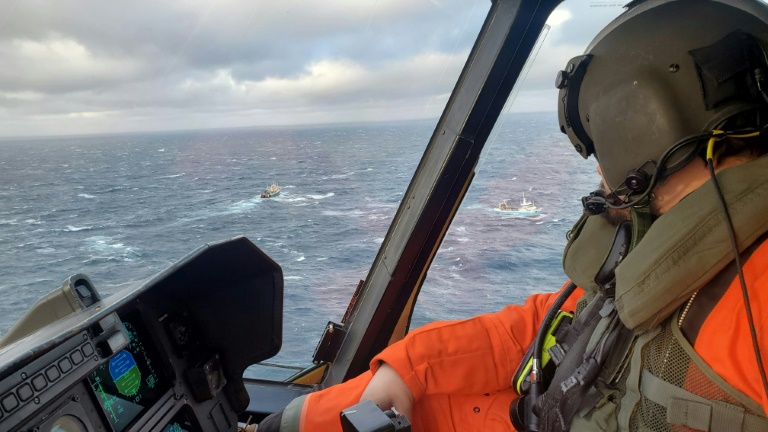
Spain was in mourning Wednesday for its worst fishing tragedy in almost 40 years, as Canadian rescuers warned it was unlikely they would find any of the missing 11 crew members alive.

Search teams have so far confirmed 10 dead, rescued three survivors from a life raft, and the search continues for those unaccounted for.

“Once again the people of the sea have been hit very hard,” said Alberto Nunez Feijoo, head of Spain’s northwestern Galicia region where the boat was based.

“Galicia is a big family and when a family is struck by a tragic event, it unites in grief to seek comfort,” he said in announcing three days of mourning for the victims.

In Madrid, lawmakers observed a minute of silence in parliament for the dead and the missing from the trawler, which went down some 250 nautical miles (463 kilometres) east of Newfoundland, leaving just three confirmed survivors. 

Of the 24 crew members, 16 were Spanish, five Peruvians and three Ghanaians. 

Luis Planas, Spain’s agriculture and fisheries minister, described it as “the biggest tragedy in the fishing sector in the last 38 years” — a reference to the Islamar III, a sardine boat that sank off the Canary Islands in July 1984, claiming 26 lives. 

“This is a job which not only is very hard but is also very dangerous,” he added.

Planas said eight vessels, among them Spanish and Portuguese fishing boats, had joined the search for survivors from the Villa de Pitanxo, after the 50-metre (164-foot) fishing vessel sent out a distress signal at 0424 GMT on Tuesday. 

– Challenging weather –

By Wednesday morning, hopes of finding the 11 missing crew members were fading.

“Although we still hope to find survivors alive, it is now unlikely that other survivors will be found,” Canadian military Lieutenant Nicolas Plourde-Fleury told AFP in an email, adding that the search continued.

“We are talking about a rescue.. in extremely difficult sea conditions, with water temperatures that mean as soon as a person falls in they won’t last long,” said the Galician leader Feijoo.  

Writing on Twitter, Spain’s sea rescue service said rescuers were battling very rough seas with “6-7 metre high waves” that were “complicating the search operation and making visibility difficult”. 

It was not immediately clear what caused the boat to founder.

Planas said it was operating in a fishing ground “of immense value but which also has very significant climatological problems”. 

Among the survivors was the ship’s captain, Juan Padín Costa and his nephew Eduardo Rial Padin, whose mother expressed her relief in remarks to Spain’s public television. 

“I am relieved because he is alive, thank God, but sad because that can’t be said for many of his colleagues,” said Gloria Padin Costas. 

So far, there has been no information publicly released about the victims or those still missing at sea.

“Although we may not be able to find survivors, it is very important for the families to collect the bodies,” the head of the Shipowner’s Cooperative in the northwestern Spanish city of Vigo, Javier Touza, told TV station Antena 3.

– ‘Survival a matter of minutes’ –

Back in Galicia, families of the crew were desperately awaiting news about their loved ones. 

“We just want to know if he is dead or alive,” Carlos Ordonez told La Voz de Galicia newspaper, referring to his nephew William Arevalo. 

“We already know what happens when you fall into waters like those around Newfoundland. Survival is a matter of minutes.”

The survivors were found on a life raft by a Spanish fishing boat five hours after the Villa de Pitanxo sent out a distress call. 

Suffering from hypothermia, they were airlifted to safety by a Canadian helicopter. 

“No one is emotionally prepared to receive such shocking news,” said Galician leader Feijoo, vowing “to honour those who lost their lives at sea”.

Torrential rain kills 44 in Brazil tourist town

At least 44 people were killed in devastating flash floods and landslides that hit the picturesque Brazilian city of Petropolis, turning streets into torrential rivers and sweeping away houses, officials said Wednesday.

Rescue workers raced to find survivors buried in the mud and wreckage after heavy storms Tuesday dumped a month’s worth of rain in three hours on the scenic tourist town in the hills north of Rio de Janeiro.

There were fears the death toll could rise as firefighters and volunteer rescue workers dug through the remains of houses washed away in torrents of mud, many of them in impoverished hillside slums.

At least 21 people have been so far been rescued alive in the effort, according to the state government.

Around 300 people were being housed in shelters, mostly in schools, officials said. Charities called for donations of mattresses, blankets, food, water, clothing and face masks for victims.

Wendel Pio Lourenco, a 24-year-old resident, was walking through the streets with a television in his arms, heading to a local church in search of shelter.

He said he was trying to save a few possessions, after spending a sleepless night helping search for victims.

“I found a girl who was buried alive,” he said.

“Everyone is saying it looks like a war zone.”

Governor Claudio Castro said much the same after visiting the scene.

“It’s almost a war situation. We’ve mobilized our entire team,” he said.

Videos posted on social media from Tuesday’s rains showed streets in Petropolis, the 19th-century summer capital of the Brazilian empire, fill with gushing floods that swept away cars, trees and nearly everything else in their paths.

Many shops were completely inundated by the rising waters, which gushed down the streets of the historic city center.

Officials said more than 180 firefighters and other rescue workers were responding to the emergency, aided by 400 soldiers sent in as reinforcements.

City hall declared a “state of disaster” in the city of 300,000 people, which sits 68 kilometers (42 miles) north of Rio.

The city council declared three days of mourning for victims.

– ‘Tragedy’ –

Petropolis is a popular destination for tourists fleeing the summer heat of Rio, known for its leafy streets, stately homes, imperial palace — today a museum — and the natural beauty of the surrounding mountains.

Tuesday’s storms dumped 258 millimeters (10 inches) of rain on the city in three hours, nearly equal to all the rainfall from the previous month, the mayor’s office said.

The heaviest downpour had passed, but more moderate rain was expected to continue on and off for several days, authorities said.

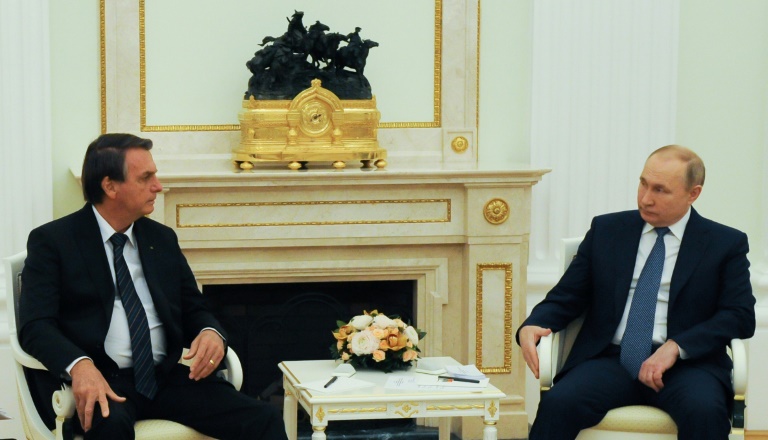
President Jair Bolsonaro, on an official trip to Russia, said on Twitter he was keeping abreast of “the tragedy.”

“Thank you for your words of solidarity with the people of Petropolis,” he told President Vladimir Putin after meeting the Russian leader.

“May God comfort (the victims’) families.”

Brazil has been swept by heavy rains in the past several months that have caused a series of deadly floods and landslides.

Experts say rainy season downpours are being augmented by La Nina — the cyclical cooling of the Pacific Ocean — and by the impact of climate change.

Because a warmer atmosphere holds more water, global warming increases the risk and intensity of flooding from extreme rainfall.

Last month, torrential rain triggered floods and landslides that killed at least 28 people in southeastern Brazil, mostly in Sao Paulo state.

There have also been heavy rains in the northeastern state of Bahia, where 24 people died in December.

It is not the first time the mountains around Rio have been the scene of deadly storms.

In January 2011, more than 900 people died in the region due to heavy rains that caused flooding and landslides in a large area, including Petropolis and neighboring cities Nova Friburgo and Teresopolis.

Torrential rain kills 44 in Brazil tourist town

At least 44 people were killed in devastating flash floods and landslides that hit the picturesque Brazilian city of Petropolis, turning streets into torrential rivers and sweeping away houses, officials said Wednesday.

Rescue workers raced to find survivors buried in the mud and wreckage after heavy storms Tuesday dumped a month’s worth of rain in three hours on the scenic tourist town in the hills north of Rio de Janeiro.

There were fears the death toll could rise as firefighters and volunteer rescue workers dug through the remains of houses washed away in torrents of mud, many of them in impoverished hillside slums.

At least 21 people have been so far been rescued alive in the effort, according to the state government.

Around 300 people were being housed in shelters, mostly in schools, officials said. Charities called for donations of mattresses, blankets, food, water, clothing and face masks for victims.

Wendel Pio Lourenco, a 24-year-old resident, was walking through the streets with a television in his arms, heading to a local church in search of shelter.

He said he was trying to save a few possessions, after spending a sleepless night helping search for victims.

“I found a girl who was buried alive,” he said.

“Everyone is saying it looks like a war zone.”

Governor Claudio Castro said much the same after visiting the scene.

“It’s almost a war situation. We’ve mobilized our entire team,” he said.

Videos posted on social media from Tuesday’s rains showed streets in Petropolis, the 19th-century summer capital of the Brazilian empire, fill with gushing floods that swept away cars, trees and nearly everything else in their paths.

Many shops were completely inundated by the rising waters, which gushed down the streets of the historic city center.

Officials said more than 180 firefighters and other rescue workers were responding to the emergency, aided by 400 soldiers sent in as reinforcements.

City hall declared a “state of disaster” in the city of 300,000 people, which sits 68 kilometers (42 miles) north of Rio.

The city council declared three days of mourning for victims.

– ‘Tragedy’ –

Petropolis is a popular destination for tourists fleeing the summer heat of Rio, known for its leafy streets, stately homes, imperial palace — today a museum — and the natural beauty of the surrounding mountains.

Tuesday’s storms dumped 258 millimeters (10 inches) of rain on the city in three hours, nearly equal to all the rainfall from the previous month, the mayor’s office said.

The heaviest downpour had passed, but more moderate rain was expected to continue on and off for several days, authorities said.

President Jair Bolsonaro, on an official trip to Russia, said on Twitter he was keeping abreast of “the tragedy.”

“Thank you for your words of solidarity with the people of Petropolis,” he told President Vladimir Putin after meeting the Russian leader.

“May God comfort (the victims’) families.”

Brazil has been swept by heavy rains in the past several months that have caused a series of deadly floods and landslides.

Experts say rainy season downpours are being augmented by La Nina — the cyclical cooling of the Pacific Ocean — and by the impact of climate change.

Because a warmer atmosphere holds more water, global warming increases the risk and intensity of flooding from extreme rainfall.

Last month, torrential rain triggered floods and landslides that killed at least 28 people in southeastern Brazil, mostly in Sao Paulo state.

There have also been heavy rains in the northeastern state of Bahia, where 24 people died in December.

It is not the first time the mountains around Rio have been the scene of deadly storms.

In January 2011, more than 900 people died in the region due to heavy rains that caused flooding and landslides in a large area, including Petropolis and neighboring cities Nova Friburgo and Teresopolis.

Honduran ex-president brought before judge as US seeks extradition

Honduran ex-president Juan Orlando Hernandez, detained pending a decision on his extradition to the United States on drug trafficking charges, will appear Wednesday before a judge in Tegucigalpa assigned to determine his fate.

Hernandez surrendered to police Tuesday, hours after the judge — whose name authorities are withholding for his own protection — issued a warrant for his arrest.

The former president is wanted in the United States over claims that he facilitated the trafficking of 500 tons of cocaine.

In power for eight years until three weeks ago, when leftist Xiomara Castro was sworn in as Honduras’s first woman president, Hernandez spent Tuesday night in the custody of the police special forces.

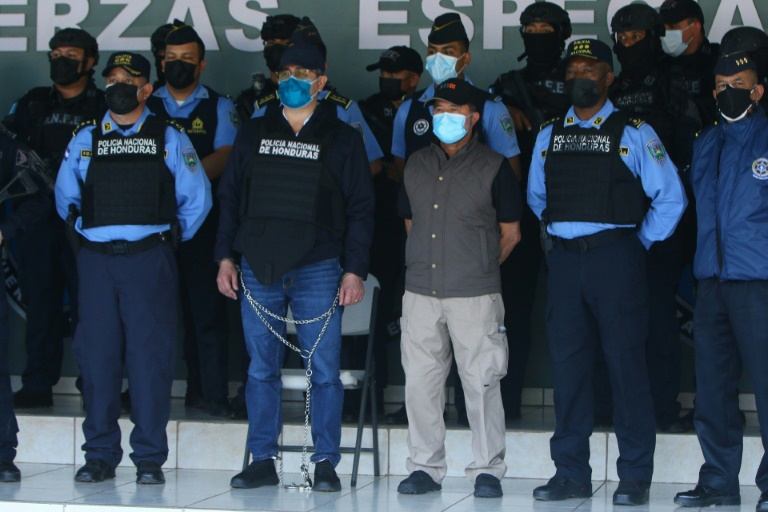
The 53-year-old rightwing politician, who served two successive terms clouded by corruption claims, was arrested hours earlier at his house in the capital Tegucigalpa by Honduran police in coordination with American agencies including the Drug Enforcement Administration.

He offered no resistance, and allowed officers to cuff his hands and feet and fit him out in a bullet-proof vest.

Dozens of people with banners celebrated outside Hernandez’s home, while in other cities, people took to the streets with loudspeakers singing “Juancho goes to New York,” using his nickname.

The US embassy in Tegucigalpa said in a statement Hernandez is accused of trafficking some 500 tons of cocaine through Honduras, knowing it would end up in the United States.

– ‘Defend myself’ –

The ex-president faces three charges: conspiracy to import a controlled substance into the United States, using or carrying firearms including machine guns, and conspiracy to use or carry firearms in support of the conspiracy to traffic narcotics.

Hernandez is accused of having conspired with his brother, former Honduran congressman Tony Hernandez, who was in March 2021 given life in prison in the United States for drug trafficking.

Spokesman Melvin Duarte said Hernandez’s appearance Tuesday was to start the process for the judge to weigh information received from the United States.

Previous extradition requests had taken no more than four months to adjudicate, he added.

Hernandez vowed Tuesday to cooperate with domestic authorities, saying in an audio message on Twitter he was ready to appear in court and “defend myself.”

Though Hernandez had portrayed himself as an ally of the US war on drugs during his tenure, traffickers caught in the United States claimed to have paid bribes to the president’s inner circle.

Alleged associate Geovanny Fuentes Ramirez was sentenced in the United States last week to life in prison and a fine of $151.7 million for smuggling tons of cocaine into the country — with Hernandez’s aid, according to prosecutors.

In that trial, a prosecutor said the then-president had received millions of dollars from drug traffickers for protection — including from Mexican narco kingpin Joaquin “Chapo” Guzman.

Last week, US Secretary of State Antony Blinken said that “according to multiple, credible media reports,” Hernandez “has engaged in significant corruption by committing or facilitating acts of corruption and narco-trafficking and using the proceeds of illicit activity to facilitate political campaigns.”

Hernandez denies the claims, which he said were part of a revenge plot by traffickers that his government had captured or extradited to the United States.

– ‘Bankrupt’ state –

His lawyer, Hermes Ramirez insisted Monday that his client enjoyed immunity from prosecution as a member of the Guatemala-based Central American Parliament, Parlacen.

Hernandez joined Parlacen hours after leaving office on January 27.

But some analysts told AFP the Parlacen charter gives members, in their country of origin, the same immunity they would have enjoyed as members of their own parliament, which in Honduras, does not exist.

They also said that any immunity conferred by Parlacen membership could be waived at the request of a national government.

During his term, Hernandez was accused of unjustly expanding presidential powers, including over the justice system and the country’s election tribunal.

His re-election in 2017 was met with widespread protests against an alleged fraudulent campaign in the poverty- and violence-ridden country.

Ukraine stages drills as NATO and US see no Russia pullback

Ukraine staged military drills and defiant displays of flag-waving patriotism on Wednesday as Western powers warned Russia is continuing to mass forces for a possible invasion.

Ukraine’s President Volodymyr Zelensky watched troops training with some of their new Western-supplied anti-tank weapons on a range near Rivne, west of the capital.

The demonstration of Ukrainian firepower contrasted with images on Russian state media that were said to show Moscow’s forces bringing an end to a major exercise in occupied Crimea.

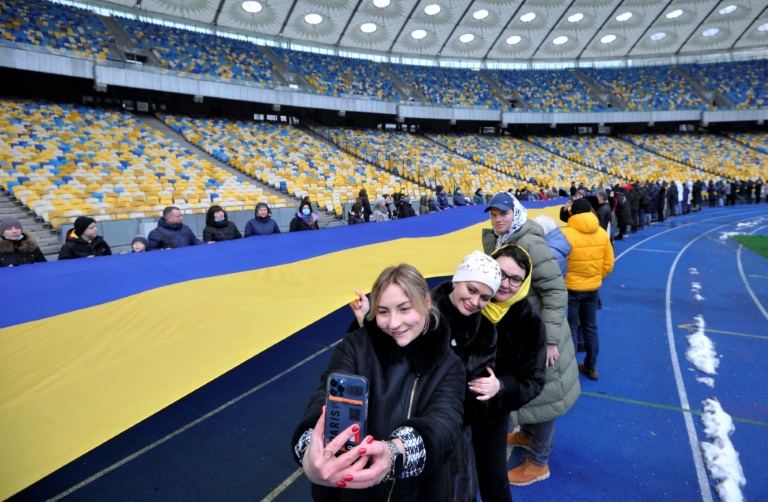
In Rivne, a row of vehicles was destroyed by simultaneous missile test strikes and armoured vehicles manoeuvred and fired on the yellowing moorland, while in Kyiv hundreds of civilians marched in a stadium with an enormous national banner.

“I see beautiful manoeuvres,” Zelensky told officers. “I thank you for defending our state. When I see you I have confidence in the future and in our present moment.”

The “Day of Unity” displays came as the Kremlin called for “serious negotiations” with Washington, and European leaders pushed hard for a diplomatic resolution to the crisis.

But NATO chief Jens Stoltenberg, hosting the alliance’s defence ministers in Brussels, dismissed suggestions that the threat on the border had diminished.

“We are of course monitoring very closely what Russia does in and around Ukraine. What we see is that they have increased the number of troops and more troops are on their way,” he said.

And US Secretary of State Antony Blinken told ABC News: “What we’re seeing is no meaningful pullback.”

– ‘Signals give us hope’ – 

Russia’s huge build-up of troops, missiles and warships around Ukraine — which US intelligence warns could turn quickly into an invasion — is being billed as Europe’s worst security crisis since the Cold War. 

Russian President Vladimir Putin has demanded Ukraine be forbidden from pursuing its ambition to join NATO and wants to redraw the security map of eastern Europe, rolling back Western influence.

But, backed by a threat of crippling US and EU economic sanctions, Western leaders have launched a drive to seek a negotiated settlement, and Moscow has signalled it will start to pull forces back.

In the latest such move, on Wednesday the Russian defence ministry said military drills in Crimea — a Ukrainian region Moscow annexed in 2014 — had ended and that troops were returning to their garrisons.

Washington has demanded more verifiable evidence of de-escalation, but US President Joe Biden has nevertheless vowed to push for a diplomatic solution.

Kremlin spokesman Dmitry Peskov welcomed this, telling reporters: “It is positive that the US president is also noting his readiness to start serious negotiations.”

German Defence Minister Christine Lambrecht, arriving at the NATO talks, said reports of a partial Russian pullback “are signals that at least give us hope. But it is important to observe closely whether these words are followed by deeds.”

EU leaders, already gathered in Brussels for a summit with their African counterparts, are now to hold impromptu crisis talks on Russia and Ukraine on Thursday.

Zelensky has downplayed threats of an immediate Russian invasion, but is attempting to rally his people with the “Day of Unity” celebrations under Ukraine’s blue and gold banner.

On Wednesday, after the Rivne drills, he was to visit Mariupol, a frontline port city near a breakaway region held by Russian-backed separatists.

In a video message, the 44-year-old former television actor said flags would fly across the country and that the national anthem “Ukraine has not yet died” would be sung.

“Great people of great Ukraine! This day is ours,” he declared.

The European Union ambassador to Ukraine, Matti Maasikas, along with the German, Estonian, Polish and Spanish envoys were headed to Mariupol with the president in solidarity.  

Maasikas also said that he had raised the Ukrainian flag alongside the EU one at his embassy, adding: “Not sure it’s fully according to the rules, but these are extraordinary times.”

In Kyiv, the capital’s deputy mayor Valentyn Mondryivsky said headteachers have been given guidance on “emergency situations” and that bomb shelters would be available at all schools.

– Rich return –

In another sign of Ukraine’s most powerful figures coming together, some wealthy business leaders who had been urged to come back to the country announced their return.

Ukraine’s richest man, 55-year-old billionaire industrialist Rinat Akmetov, who was born in Donetsk in an area now held by separatists, was in Mariupol.

“We continue to build, we continue to invest,” he said, promising his firm would boost salaries and support a local university.

On Tuesday, Ukraine said the websites of the country’s defence ministry and armed forces as well as two banks had been hit by a cyberattack of the kind that US intelligence fears would precede a Russian attack.

“It cannot be excluded that the aggressor is resorting to dirty tricks,” Ukraine’s communications watchdog said, in reference to Russia.

Peskov denied that Moscow had any role in the cyber assault. “We do not know anything. As expected, Ukraine continues blaming Russia for everything,” he said.

burs-dc/jbr/cb

Putin hails Brazil ties after Bolsonaro talks in Moscow

Russian leader President Vladimir Putin welcomed “constructive” talks Wednesday with Brazilian President Jair Bolsonaro, who was on his first official trip to Moscow, defying US concerns amid the Ukraine crisis.

Bolsonaro was hosted at the Kremlin as Western leaders remain fearful of a Russian attack on its neighbour Ukraine.

Brazil is Russia’s “leading partner” in South America, Putin said, and the countries are bound by “friendship and mutual understanding”.

Following talks Putin described as “thorough and constructive”, the Kremlin released a statement saying the leaders had agreed deeper cooperation in energy and trade. 

It added that the two leaders “share the opinion that conflicts should be resolved through peaceful and diplomatic means”. 

Bolsonaro had brushed off pressure from Washington, Brazil’s traditional ally, and his own cabinet to cancel the trip, justifying the focus on trade. 

Brazil’s foreign and defence ministers were also in Moscow for talks with their Russian counterparts.

Before the South American set off for Russia, Brazil publicly reaffirmed its diplomatic ties with Kyiv. 

“The Minister of Foreign Affairs, Carlos Franca, spoke by phone today with the Ukrainian Foreign Minister Dmytro Kuleba,” the foreign ministry said on Twitter ahead of the trip.

Russia had made the invitation in late November, when tension over Ukraine was already building.

Bolsonaro accepted, deciding to combine it with a Thursday visit to fellow far-right leader Viktor Orban in Hungary, who also recently met Putin. 

He has expressed admiration for “strong man” Putin.

Anger in UK over Prince Andrew's '£12 mn' settlement

Disgraced British royal Prince Andrew was urged Wednesday to disappear forever from public life after settling a sexual assault lawsuit at vast cost, as Queen Elizabeth II suffered further indignity in her Platinum Jubilee year.

The 95-year-old monarch, who is reportedly helping to foot the bill for the cash-strapped Andrew’s settlement, also saw her elder son and heir Prince Charles embroiled in fresh controversy over a “cash for honours” scandal.

Police in London said they were investigating claims that an aide to Charles offered UK honours and even citizenship to a Saudi tycoon, in return for donations to Charles’s charitable foundation. 

The office of the Prince of Wales reiterated that he “had no knowledge of the alleged offer” by Michael Fawcett, who for decades was one of Charles’s closest confidants.

The revelation came a day after Charles’s younger brother Andrew settled the lawsuit brought by US accuser Virginia Giuffre, sparing him the public humiliation of a trial. 

Details of the deal were not made public, and Andrew’s representatives told AFP they would not comment on the contents.

The Daily Telegraph put the settlement at a whopping £12 million ($16.3 million, 14.3 million euros) — £10 million for Giuffre and £2 million to a charity for victims of sex trafficking.

The newspaper said the money would come from one of the private estates belonging to Queen Elizabeth. Commentators demanded transparency on the source, in case the British taxpayer ends up on the hook.

– ‘Swept under the carpet’ –

“I just think it’s awful that it’s all been swept under the carpet, as if it never even happened,” Yasmine Ollive, a 34-year-old account manager, said in London.

After other controversies over Prince Harry and his wife Meghan Markle, she said that if the royals “keep on carrying on with the things that they’re doing, then it could be the end of them”.

Giuffre, 38, has said she had sex with Andrew when she was 17 and a minor under US law, after meeting him through US financier Jeffrey Epstein. He took his own life in prison while awaiting trial for sex crimes.

The prince, 61, has not been criminally charged and has denied the allegations.

Mark Stephens, a media specialist at law firm Howard Kennedy, told AFP that Andrew had “preserved some measure of dignity for the wider royal family” by agreeing to settle.

But, Stephens added, “he’s not going to see the light of day in public service ever again”.

The scandal hanging over Andrew has threatened to overshadow the queen’s Platinum Jubilee this year, marking her 70 years on the throne. Any jury trial could have coincided with nationwide jubilee celebrations due to take place in the summer.

The queen on Wednesday resumed in-person meetings, having isolated for a week after Charles and his wife both tested positive for Covid-19, suggesting she has avoided the disease.

– ‘No way back’ –

British media called on Andrew to withdraw entirely from public life, after he was already stripped of his honorary military ranks and the title of “His Royal Highness”.

“Andrew is finished — undone by his insufferable arrogance, entitlement and staggering naivety,” popular tabloid The Sun said in its editorial.

“He must retreat entirely from public life and live out his retirement in ignominy.”

Opposition Labour MP Rachael Maskell demanded that Andrew also lose his Duke of York title to show “respect” for the people of the northern English city, which she represents.

The staunchly royalist Daily Mail said in its front-page headline that there was “no way back” for Andrew, who withdrew from royal duties in 2019 after a widely panned BBC interview.

Inside, the paper slammed Andrew for a “vile smear campaign” against Giuffre.

British commentators and social media users also mocked Andrew for claiming he had never met Giuffre, querying why he had agreed in that case to settle for such an apparently large amount.

Many pointed to a photograph of the pair together when she was 17. His lawyers had questioned the authenticity of the photo, which also showed socialite and Epstein friend Ghislaine Maxwell.

In December, Maxwell was convicted of recruiting and grooming young girls to be sexually abused by Epstein.

Nepal arrests dozens in protest against US grant

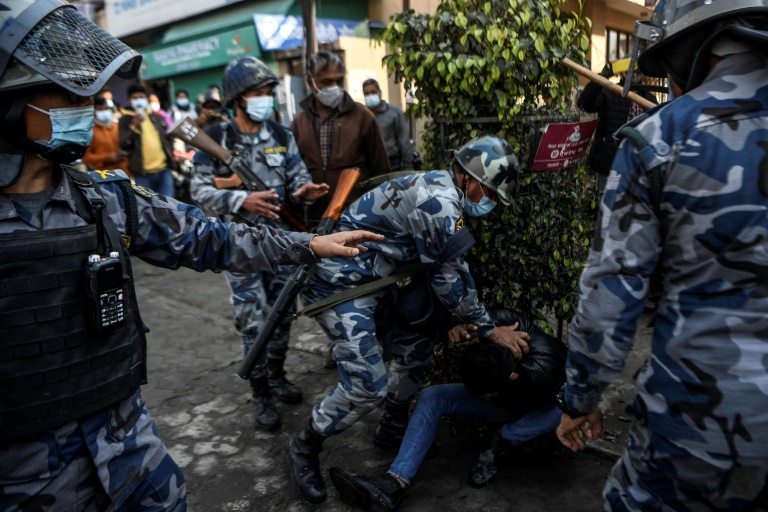
Nepali police fired tear gas and water cannon and arrested 77 demonstrators in the capital Kathmandu as several hundred people protested against a $500-million US grant, authorities said.

“The protestors were arrested after they pelted stones and tried to push into the restricted area (near parliament),” police spokesman Bishnu Kumar KC told AFP.

Nepal signed the Millenium Challenge Corporation (MCC) pact in 2017 to fund infrastructure projects but the government is struggling to get parliament to ratify it by a February 28 deadline.

Major opposition comes from Prime Minister Sher Bahadur Deuba’s own coalition partners including Maoist politicians — seen as traditionally close to China — who say it undermines Nepal’s sovereignty.

Local media has reported that Chinese officials have lobbied Nepali politicians about their concerns, seeing the grant as a covert US push to increase Washington’s influence.

Indian daily the Hindustan Times reported on Tuesday that Washington believes that China is behind a disinformation campaign against the pact.

“Should outside influence and corruption cause parliament not to ratify, it would be deeply concerning for the US, and a loss for the people of Nepal,” the paper quoted a US State Department spokesperson as saying.

Prakash Sharan Mahat, spokesperson of the ruling Nepali Congress party said that backtracking from the commitment will only erode Nepal’s credibility.    

“This grant is expected to help spur the economic growth in Nepal… We will continue to hold dialogue with other coalition partners as well as other political parties to mobilise their support to present the MCC Compact in the next session of the parliament,” he said.

The Millennium Challenge, created by the US Congress in 2004, offers large-scale grants to support economic growth and reduce poverty, according to Washington.

Close Bitnami banner
Bitnami