World

Bali welcomes back tourists with first international flight

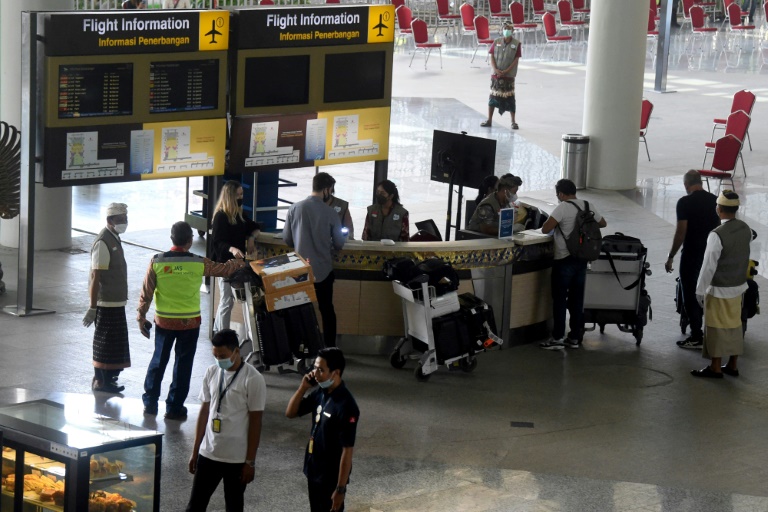
Bali began a tentative re-opening to foreign tourists on Wednesday with the first international passenger flight to the Indonesian holiday island in nearly two years.

The resumption of flights comes as the Southeast Asian archipelago loosens quarantine rules even as it battles a surge in Covid cases fuelled by the Omicron variant.

A Singapore Airlines plane carrying 109 international travellers and 47 Indonesians landed in Bali on Wednesday, the island’s governor Wayan Koster told a press conference.

The foreign visitors must stay in a quarantine bubble at one of 27 designated hotels for three to seven days, depending on the number of vaccine doses received, according to new nationwide rules published Wednesday.

“I hope that in early March, there will be no more quarantine obligation for tourists as long as they comply with health protocol requirements and show negative test results on departure and arrival,” the governor said.

Arriving at Bali airport, Australian holidaymaker James said the re-opening was a “great sign” for tourism.

Swiss national Manuela, a frequent visitor to Bali before the pandemic, said she had been eagerly anticipating the first flight to the “Island of the Gods”.

“Two years not going to Bali is a long time. After my friend wrote me that Bali would open, I immediately looked for the first flight,” she said.

Singapore Airlines said it will operate daily flights between the city-state and Bali to meet “good demand”.

Other airlines including Australia-based Jetstar Airways could resume flights to the holiday hotspot as early as next month, Bali’s governor added.

“We are aware of the increasing and fluctuating Omicron variant cases, but as long as we are strictly implementing health protocols, we should not be worried,” said Bali Hotel and Restaurant Association chair Rai Wijaya.

Bali authorities trialled a limited re-opening in October for a group of select countries but the response was tepid due to strict quarantine requirements and the absence of direct flights.

Indonesia reported a record number of new coronavirus cases on Tuesday.

Daily infections topped 57,000, according to the government’s Covid-19 taskforce, surpassing the previous peak in July last year during the country’s Delta wave.

Elsewhere in the region, the Philippines re-opened for international tourism last week while Vietnam is planning to welcome back foreign tourists from March 15.
Burkina junta chief sworn in as president

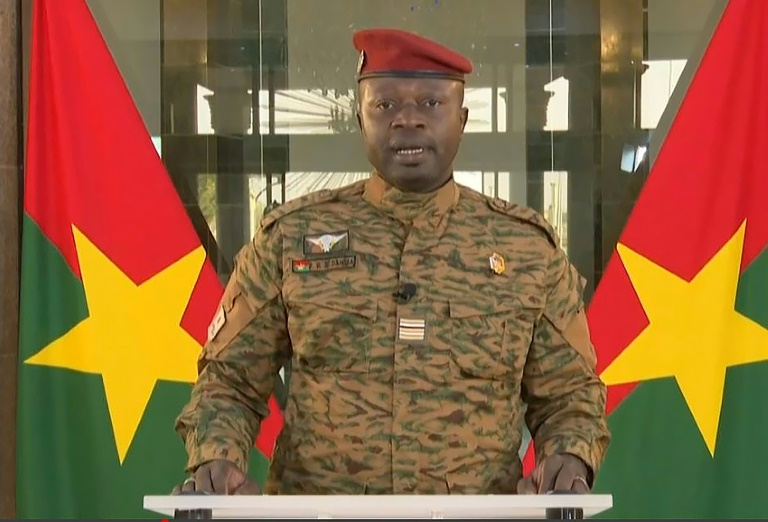
Burkina Faso strongman Lieutenant-Colonel Paul-Henri Sandaogo Damiba was inaugurated as president on Wednesday, just over three weeks after he led a coup to topple elected head of state Roch Marc Christian Kabore.

In a televised ceremony, Damiba swore an oath before the country’s top constitutional body to “preserve, respect, uphold and defend the Constitution”, the nation’s laws and a “fundamental act” of key decisions approved by the junta.

Damiba was dressed in camouflage uniform and a red beret, and wore a sash in the colours of Burkina’s national flag.

The press, but no foreign representatives, attended the ceremony in a small room at the offices of the Constitutional Council.

On January 24, Damiba, 41, led disgruntled officers to force out Kabore following public anger over his handling of a bloody jihadist insurgency.

Last week, the Constitutional Council formally determined that Damiba was president, head of state and supreme commander of the armed forces.

The move confirmed an announcement by the junta on January 31 that Damiba would be appointed to those roles for a transitional period, and be assisted by two vice presidents.

Burkina Faso is one of the world’s poorest countries and one of the most volatile in Africa.

The landlocked Sahel state has experienced repeated coups since gaining independence from France in 1960.

Since the first jihadist attacks in 2015, more than 2,000 people have died, according to an AFP tally, while the country’s emergencies agency says more than 1.5 million people have fled their homes.

– Election issue –

The ceremony observed a minute’s silence for the victims.

Damiba paid tribute to “the Burkinabe people, who have been enduring the scars of terrorism for more than six years” and called for “collective awareness about the effort and sacrifice” that were needed for the fight.

The junta suspended the constitution immediately on taking power on January 24, but later reversed this in the face of pressure from neighbours in West Africa demanding a return to civilian rule.

The military authorities have promised to re-establish “constitutional order” within a “reasonable time” but the issue of a date for elections remains unsettled.

On February 5, the junta announced that a 15-member commission would be tasked with “drawing up a draft charter and agenda, together with a proposal for the duration of the transition period.”

Burkina was suspended on February 3 from the West African bloc ECOWAS, the 15-nation Economic Community of West African States.

But ECOWAS envoys came back with positive news from talks with the junta.

The bloc decided against punishing Burkina with further sanctions — unlike coup-hit Guinea and Mali, which have been hit with border closures, an embargo on trade and financial transactions and sanctions against individuals for perceived foot-dragging over holding elections.

Instead, ECOWAS called for “the speedy creation of a reasonable timetable” for the return to civilian rule. 

– Jihadist fighter –

“At these difficult moments, our country has not been abandoned by its partners,” Damiba said on Wednesday.

“Burkina Faso reiterates its readiness to work in full sovereignty with all partners in mutual respect.”

On January 31, Burkina was also suspended by the African Union “until the effective restoration of constitutional order.”

The UN Security Council on February 9 expressed “serious concern” over the country’s “unconstitutional change of government,” but chose not to describe it as a military coup or even condemn it outright.

Damiba has had first-hand experience of the jihadist insurgency.

Before seizing power, he was commander of the 3rd Military Region, which covers eastern Burkina Faso — one of the worst-hit areas.

A military source, speaking after the coup, described Damiba as “a tough commander who has been on the front line with his men”.

Before the coup, Damiba criticised prevailing strategies to fight the jihadists, publishing a book last June called “West African Armies and Terrorism: Uncertain Answers?”

Anger in UK over Prince Andrew's '£12 mn' settlement

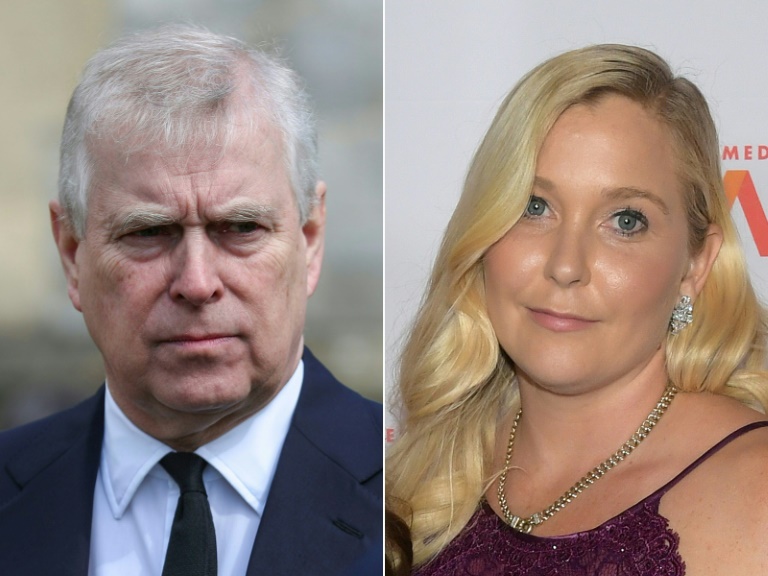
Disgraced British royal Prince Andrew was urged Wednesday to “live out his retirement in ignominy” after reportedly settling a sexual assault lawsuit for a whopping £12 million ($16.3 million, 14.3 million euros).

The lawyer for US accuser Virginia Giuffre said on Tuesday that both parties had settled out of court, sparing Andrew the public humiliation of a trial. The details were not revealed.

Giuffre, 38, has said she had sex with Andrew when she was 17 and a minor under US law, after meeting him through US financier Jeffrey Epstein. He took his own life in prison while awaiting trial for sex crimes.

The prince, 61, has not been criminally charged and has denied the allegations.

Mark Stephens, a media specialist at law firm Howard Kennedy, told AFP that Andrew had “preserved some measure of dignity for the wider royal family” by agreeing to settle.

But, Stephens added, “he’s not going to see the light of day in public service ever again”.

The Daily Telegraph newspaper reported that Andrew was to pay £10 million to Giuffre and £2 million to a charity for victims of sex trafficking.

His team told AFP they would not comment on the contents of the deal.

The deal raised questions of who is footing the bill for the perennially cash-strapped prince, who is said to be selling a Swiss ski chalet at a knockdown price to help meet his US legal bills.

The Telegraph said the settlement money would come from one of the private estates belonging to his mother Queen Elizabeth II. Commentators demanded transparency on the source, in case the British taxpayer ends up on the hook.

– ‘Swept under the carpet’ –

“I just think it’s awful that it’s all been swept under the carpet, as if it never even happened,” Yasmine Ollive, a 34-year-old account manager, said in London.

After other controversies over Prince Harry and his wife Meghan Markle, she said that if the royals “keep on carrying on with the things that they’re doing, then it could be the end of them”.

Separately on Wednesday, police in London confirmed they were investigating allegations that an aide to Prince Charles, the queen’s heir, had offered UK honours to a Saudi businessman in return for donations to the prince’s charitable foundation.

The scandal hanging over Andrew has threatened to overshadow the queen’s Platinum Jubilee this year, marking her 70 years on the throne. Any jury trial could have coincided with nationwide jubilee celebrations due to take place in the summer.

But Andrew will now no longer be questioned under oath by Giuffre’s lawyers, who had been due to travel to London next month.

The court filing said Andrew “regrets his association with Epstein, and commends the bravery of Ms. Giuffre and other survivors in standing up for themselves and others”.

“He pledges to demonstrate his regret for his association with Epstein by supporting the fight against the evils of sex trafficking, and by supporting its victims,” it added.

– ‘No way back’ –

But British media called on Andrew to withdraw entirely from public life, after he was already stripped of his honorary military ranks and the title of “His Royal Highness”.

“Andrew is finished — undone by his insufferable arrogance, entitlement and staggering naivety,” popular tabloid The Sun said in its editorial.

“He must retreat entirely from public life and live out his retirement in ignominy,” it added.

Opposition Labour MP Rachael Maskell demanded that Andrew also lose his Duke of York title to show “respect” for the people of the northern English city, which she represents.

The staunchly royalist Daily Mail said in its front-page headline that there was “no way back” for Andrew, who withdrew from royal duties in 2019 after a widely ridiculed BBC interview.

Inside, the paper slammed Andrew for a “vile smear campaign” against Giuffre.

British commentators also mocked Andrew for claiming he had never met Giuffre, querying why he had agreed in that case to settle for such an apparently large amount, and pointing to a photograph of the pair together when she was 17. 

His lawyers had questioned the authenticity of the photo, which also showed socialite and Epstein friend Ghislaine Maxwell.

In December, Maxwell was convicted of recruiting and grooming young girls to be sexually abused by Epstein.

China's Xi orders Hong Kong to suppress outbreak 'above everything else'

Chinese leader Xi Jinping has called for Hong Kong to take “all necessary measures” to control an Omicron-fuelled Covid-19 outbreak, Beijing-affiliated newspapers in the city said Wednesday, a day after leader Carrie Lam ruled out a China-style hard lockdown.

Hong Kong is currently in the throes of its worst-ever coronavirus outbreak, registering over a thousand confirmed cases a day as hospitals reach their breaking point.

Lam this week insisted a hard “wholesale” lockdown — which the mainland has imposed on various cities in order to stamp out cases — will not be imposed on Hong Kongers. 

By Wednesday, local newspapers Ta Kung Pao and Wen Wei Po — which answer to Beijing’s office in the city — reported Xi had called on authorities to “implement every necessary measure to ensure the protection” of public health. 

Hong Kong needs “to prioritise stabilising and controlling the Covid situation above everything else”, the papers reported China’s leader as saying. 

Following the publication of Xi’s remarks, Lam expressed “gratitude” for his concern. 

“The government will, in accordance with the important instruction of President Xi Jinping, assume the main responsibility to… adopt all necessary measures to safeguard the lives and health of Hong Kong people,” she said in a press release Wednesday.

Authoritarian China remains one of the few places in the world sticking to a “zero-Covid” policy — stamping out any sign of an outbreak with weeks-long lockdowns of entire cities, widespread contact-tracing and testing.

But it is unclear whether Hong Kong, one of the world’s most densely-packed cities, could ever make it back to zero-Covid even with a full lockdown, given the sheer number of Omicron infections it now faces.

The emergence of the extremely contagious Omicron variant sent authorities scrambling in 2022 — upping social distancing measures, shuttering schools and night-time restaurant dining, and even culling hamsters when some rodents tested positive for the virus.

– ‘Strong, positive energy’ –

Lam’s administration had already sought aid from Chinese officials — specifically with testing capacities and the need for the brisk construction of more quarantine facilities — during a weekend meeting.

Beijing’s Liaison Office in Hong Kong said that Xi’s Wednesday proclamation had “injected strong, positive energy” into the virus-wracked city. 

“Various sectors in the society are greatly encouraged and expressed one after another that President Xi’s important instructions have made Hong Kong people feel extraordinarily warm,” it said in a statement.

In recent days the city had resembled the early phase of the pandemic, with shoppers clearing out supermarket shelves to stock up on food and essentials.

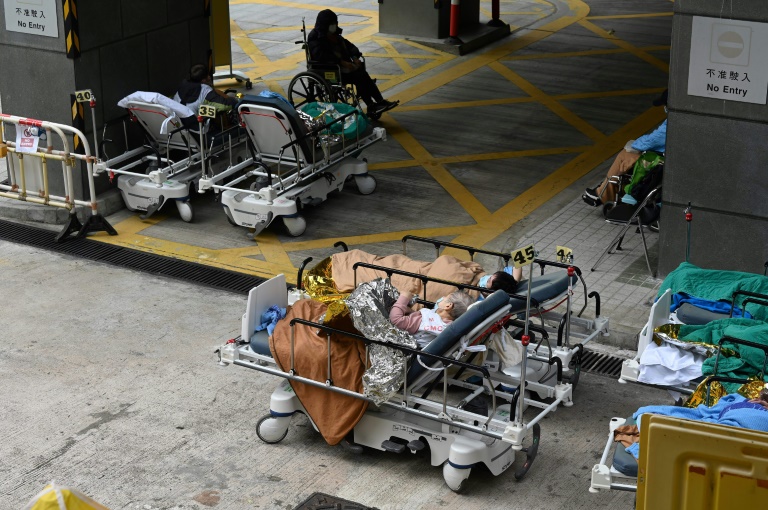
This week hospitals buckled under the strain of rising infections, with at least two facilities placing patients in beds in the open air. 

As temperatures dropped Wednesday, many of the elderly in beds outside Caritas Medical Centre were huddled under multiple layers of blankets and aluminium thermal shields. 

The city has some of the lowest vaccination rates for the elderly in the industrialised world — a government website puts it at about 43 percent for those aged 70-79, and 26 percent for those aged 80 and above.

Hong Kong on Wednesday reported 4,280 confirmed cases, a new record. So far, most of the Covid deaths recorded in the past week have been patients above the age of 70. 

Ukraine marks 'Day of Unity' as NATO warns on Russia pullback

Ukraine staged military drills and defiant displays of flag-waving patriotism on Wednesday as NATO warned Russia is continuing to mass forces for a possible invasion.

Ukraine’s President Volodymyr Zelensky watched troops training with some of their new Western-supplied anti-tank weapons on a range near Rivne, west of the capital.

The demonstration of Ukrainian firepower contrasted with images on Russian state media that were said to show Moscow’s forces bringing an end to a major exercise in occupied Crimea.

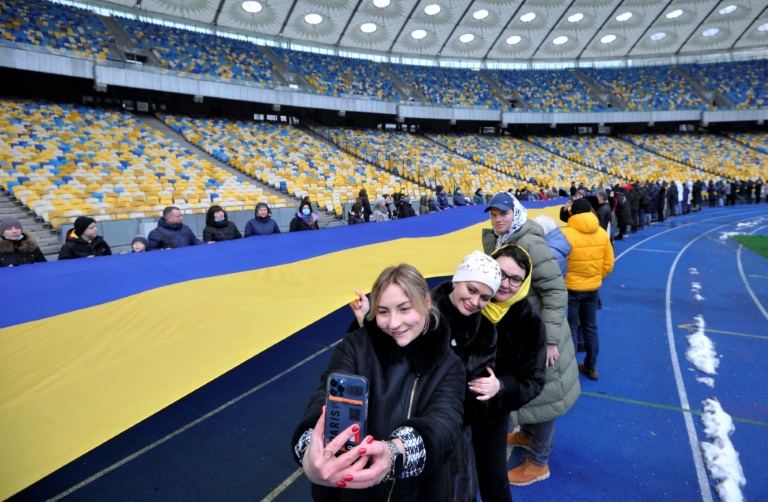
In Rivne, a row of vehicles was destroyed by simultaneous missile test strikes and armoured vehicles manoeuvred and fired on the yellowing moorland, while in Kyiv hundreds of civilians marched in a stadium with an enormous national banner.

The “Day of Unity” displays came as the Kremlin called for “serious negotiations” with Washington, and European leaders pushed hard for a diplomatic resolution to the crisis.

NATO chief Jens Stoltenberg, hosting the alliance’s defence ministers in Brussels, dismissed suggestions that the threat on the border had diminished.

“It remains to be seen whether there is a Russian withdrawal,” he said. 

“We are of course monitoring very closely what Russia does in and around Ukraine. What we see is that they have increased the number of troops and more troops are on their way.” 

– ‘Signals give us hope’ – 

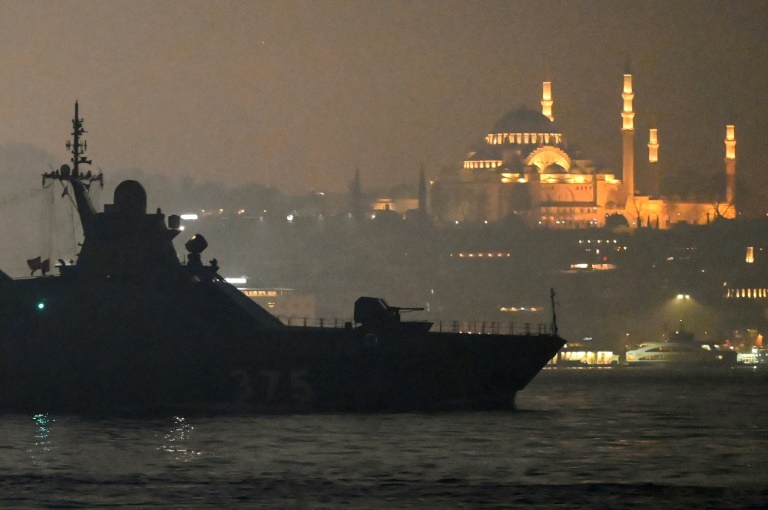
Russia’s huge build-up of troops, missiles and warships around Ukraine — which US intelligence warns could turn quickly into an invasion — has been called Europe’s worst security crisis since the Cold War. 

Russian President Vladimir Putin has demanded Ukraine be forbidden from pursuing its ambition to join NATO and wants to redraw the security map of eastern Europe, rolling back Western influence.   

But, backed by a threat of crippling US and EU economic sanctions, Western leaders have launched a drive to seek a negotiated settlement, and Moscow has signalled it will start to pull forces back.

In the latest such move, on Wednesday the Russian defence ministry said military drills in Crimea — a Ukrainian region Moscow annexed in 2014 — had ended and that troops were returning to their garrisons.

Washington has demanded more verifiable evidence of de-escalation, but US President Joe Biden on Tuesday nevertheless vowed to push for a diplomatic solution.

Kremlin spokesman Dmitry Peskov told reporters: “It is positive that the US president is also noting his readiness to start serious negotiations.”

German Defence Minister Christine Lambrecht, arriving at the NATO talks, said reports of a partial Russian pullback “are signals that at least give us hope. But it is important to observe closely whether these words are followed by deeds.” 

Zelensky has downplayed threats of an immediate Russian invasion, but is attempting to rally  his people with “Day of Unity” celebrations under Ukraine’s blue and gold banner.

On Wednesday, after the Rivne drills, he was to visit Mariupol, a frontline port city near a breakaway region held by Russian-backed separatists.

In a video message, the 44-year-old former television actor turned leader said the flag would fly across the country and that the national anthem “Ukraine has not yet died” would be sung.

“Great people of great Ukraine! This day is ours,” he declared.

The European Union ambassador to Ukraine, Matti Maasikas, along with the German, Estonian, Polish and Spanish envoys were headed to Mariupol with the president in solidarity.  

Maasikas also said that he had raised the Ukrainian flag alongside the EU one at his embassy, adding: “Not sure it’s fully according to the rules, but these are extraordinary times.”

In Kyiv, the capital’s deputy mayor Valentyn Mondryivsky said headteachers have been given guidance on “emergency situations” and that bomb shelters would be available at all schools.

– Rich return –

In another sign of Ukraine’s most powerful figures coming together, some wealthy business leaders who had been urged to come back to the country announced their return.

Ukraine’s richest man, 55-year-old billionaire industrialist Rinat Akmetov, who was born in Donetsk in an area now held by separatists, was in Mariupol.

“We continue to build, we continue to invest. This year, Metinvest will invest $1 billion in new production,” he said, referring to his company, promising to boost salaries and support a local university.

On Tuesday, Ukraine said the websites of the country’s defence ministry and armed forces as well as two banks had been hit by a cyberattack of the kind that US intelligence fears would precede a Russian attack.

“It cannot be excluded that the aggressor is resorting to dirty tricks,” Ukraine’s communications watchdog said, in reference to Russia.

Peskov denied that Moscow had any role in the cyber assault. “We do not know anything. As expected, Ukraine continues blaming Russia for everything,” he said.

burs-dc/mm/jv

Vietnam to re-open to tourists after two-year closure

Vietnam will re-open to international tourists on March 15 after a two-year border closure due to the pandemic, the government said Wednesday.

The Southeast Asian nation of 97 million people largely closed itself in March 2020 — a move that clobbered its burgeoning tourism sector which was worth $32 billion a year before Covid.

Authorities said in a statement Wednesday they would begin issuing visas and accepting foreign arrivals from the middle of next month.

The announcement comes a day after the communist country lifted all restrictions on international flights.

The government has slowly eased pandemic curbs in recent months, with visitors trickling back in since November under a bubble arrangement to play golf at resorts.

Tourists must be fully vaccinated and produce a negative coronavirus test before departure and upon arrival.

Each traveller must also buy Covid-19 medical insurance coverage worth $10,000, the government statement said.

It is unclear whether people entering Vietnam will have to abide by the country’s three-day quarantine rule in hotels or homes.

Hotel owner Nguyen Dinh Toi was forced to close his businesses in Sapa, Ha Long Bay and Hanoi and lay off 300 staff because of the pandemic and border restrictions.

“They all had to switch to other jobs as I could not pay them since September 2020,” he told AFP.

“We have been waiting for this.”

He called on authorities to provide clear guidelines on re-opening and hygiene procedures.

Vietnam is registering more than 20,000 new coronavirus cases daily and has recorded more than 2.5 million infections with nearly 40,000 deaths since the beginning of the pandemic.

More than 90 percent of adults have received two Covid-19 vaccine doses.

The government is currently considering inoculating young teenagers as it accelerates the rollout of booster shots.

Poland, Hungary risk funding slashes after EU rule-of-law decision

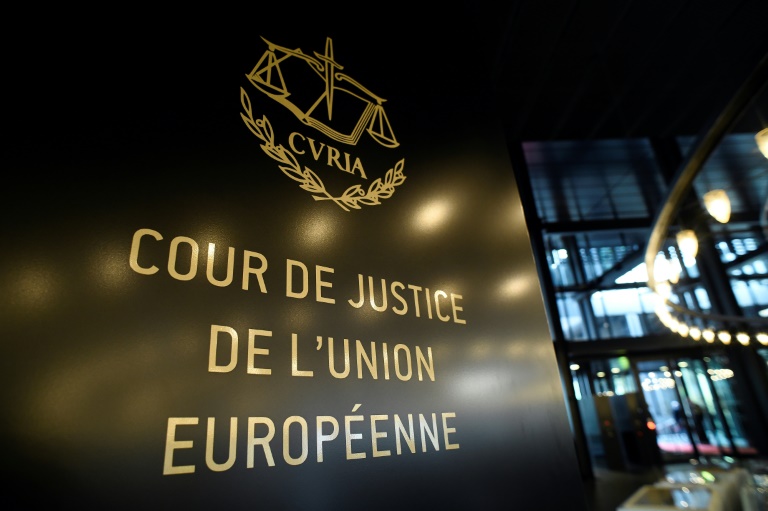
The EU’s top court on Wednesday rejected a challenge by Poland and Hungary to a mechanism allowing Brussels to slash funding to member states that flout democratic standards.

The judgment exposes Poland and Hungary — seen as democratic backsliders in the 27-nation bloc — to the risk of seeing money cut from the billions in EU funding they receive.

The two countries responded immediately with fury. Both are expected to mount further legal battles against it.

Poland called it “an attack on our sovereignty” while Hungary slammed it as a “political decision”.

In its judgment, the European Court of Justice (ECJ) said that all EU member states had signed up to the bloc’s “common values… such as the rule of law and solidarity” and that the European Union “must be able to defend those values”.

It dismissed Poland and Hungary’s arguments that their rights under EU treaties were being violated by a “conditionality mechanism” that came into force just over a year ago.

Instead it stated that the EU’s budget — which covers seven-year stretches and amounts to two trillion euros ($2.3 trillion) for 2021-2027, including 800 billion euros in coronavirus recovery spending — “is one of the principal instruments for giving practical effect” to EU solidarity.

The conditionality mechanism, it said, “is intended to protect the Union budget from effects resulting… from breaches of the principles of the rule of law” and was thus allowed under EU treaties.

– Commission welcomes ruling –

The European Commission, which acts as the guardian of the EU treaties and distributes EU money, was not expected to quickly wield the ruling in any application of the conditionality mechanism.

It needs a qualified majority of member states to approve the mechanism’s use. 

The commission has said it intends to build any cases step-by-step, so they are airtight.

EU Commission chief Ursula von der Leyen issued a statement welcoming the ruling, saying it confirms “that we are on the right track” and would now be studied.

The mechanism, she said, “enables us to protect better the EU budget and the financial interests of the Union against breaches of the principles of the rule of law”.

“Taking into account these judgments, we will adopt in the following weeks guidelines providing further clarity about how we apply the mechanism in practice,” von der Leyen said.

The commission has been under pressure from the European Parliament to apply the conditionality mechanism against Poland and Hungary. The legislature launched legal action to make the commission act.

But Poland and Hungary have been fiercely fighting back against the use of the mechanism.

After Wednesday’s ruling Poland’s Deputy Justice Minister Sebastian Kaleta tweeted that “we need to stand together in the face of this attack on our sovereignty”. 

“Poland needs to defend its democracy from blackmail that aims to take away our right to self-determination,” he added. 

Hungary’s justice minister, Judit Varga, said in a Facebook post that “the decision is living proof that Brussels is abusing its power” and called the ruling “politically motivated”.

– Democratic shortcomings –

The commission has already put Warsaw and Budapest on notice, sending them formal letters last November setting out what it sees as their democratic shortfalls.

For Poland, the commission criticises judicial reforms it believes undermine judges’ independence and a refusal to accept the primacy of EU law over Polish law.

For Hungary, it is about public procurement, conflict of interests and corruption.

In the conditionality case, 10 member states spoke in support of the mechanism, including France, Germany, the Netherlands, Ireland and Sweden.

In a sign of how anticipated Wednesday’s judgment was, the court for the first time broadcast the pronouncement of the ruling.

Poland’s Constitutional Court was due to study the EU conditionality mechanism on Wednesday, but delayed its decision to an unspecified date. 

The court is considered to be close to the ruling Law and Justice party that continues to defy Brussels.

The conditionality mechanism was created in 2020, after a summit at the height of the coronavirus pandemic that agreed common borrowing to build 800-billion-euro in grants and loans for EU countries to recover.

China has expanded statist economic policies over 20 years in WTO: US

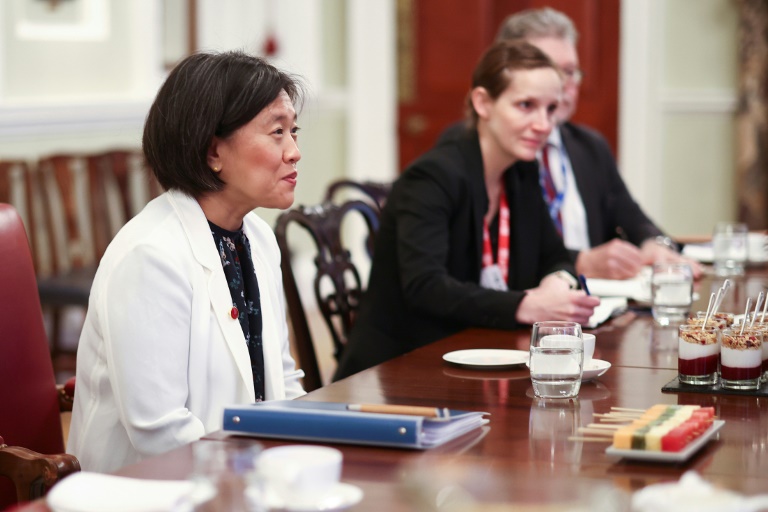
China has not adopted the rules of the World Trade Organization even after 20 years’ membership, the United States said Wednesday, adding that the world’s second-biggest economy had “retained and expanded” its statist approach to the detriment of businesses and workers globally.

“China also has a long history of violating, disregarding and circumventing WTO rules to achieve its industrial policy objectives,” said an annual report to Congress by the office of the US Trade Representative (USTR) Ambassador Katherine Tai, laying out the Biden administration’s assessment of China’s WTO membership.

Based in Geneva, Switzerland, the WTO works to enforce rules governing international trade, including promoting fair competition and open trade.

When it joined in December 2001, Beijing said it would embrace those principles, Tai said.

“China has instead retained and expanded its state-led, non-market approach to the economy and trade,” she said.

“It is clear that in pursuing that approach, China’s policies and practices challenge the premise of the WTO’s rules and cause serious harm to workers and businesses around the world, particularly in industries targeted by China’s industrial plans.”

The United States has long denounced Chinese practices, such as its subsidies for public companies.

Beijing is also accused of stealing intellectual property and forcibly transferring know-how and technology from foreign companies in exchange for market access.

These were among practices cited by former US president Donald Trump when he launched a trade war against China in 2018 with punitive customs duties.

The USTR noted Wednesday that the United States had also pushed China to comply with the standards in bilateral discussions.

However, the 72-page report pointed to only “isolated” progress and lamented that China’s commitments to fundamentally change its approach had not borne fruit.

Its commitments in January 2020, part of phase one of the bilateral treaty concluded with Trump, have not been respected either, it said.

“China has not yet implemented some of the more significant commitments that it made in the Phase One Agreement, such as commitments in the area of agricultural biotechnology,” the report details.

It is also far from having met its commitments to purchase American goods and services in 2020 and 2021.

Further, “the reality is that this Agreement did not meaningfully address the more fundamental concerns that the United States has with China’s state-led, non-market policies and practices and their harmful impact on the U.S. economy and U.S. workers and businesses,” the report added.

Among the sectors affected by China’s practices deemed unfair, Washington cites steel, aluminum, solar energy and fishing.

The USTR stressed that the United States was pursuing “a multi-faceted strategic approach” by abandoning neither dialogue nor possible retaliatory measures.

“China is an important trading partner, and every avenue for obtaining real change in its economic and trade regime must be utilized,” it said.

Finally, it added that if China “fully” implemented the 2020 agreement, it would lay a more solid foundation for tackling the unresolved issues.

Prince Andrew's settlement 'worth £12 mn' as anger mounts in UK

Disgraced British royal Prince Andrew faced a call Wednesday to “live out his retirement in ignominy” after reportedly settling a sexual assault lawsuit for a whopping £12 million ($16.3 million, 14.3 million euros).

The lawyer for US accuser Virginia Giuffre revealed on Tuesday that both parties had settled out of court, sparing Andrew the public humiliation of a trial. The details were not revealed.

Giuffre has said she had sex with Andrew when she was 17 and a minor under US law, after meeting him through the late US financier Jeffrey Epstein, who took his own life in prison while awaiting trial for sex crimes.

The prince has not been criminally charged and has denied the allegations.

The Daily Telegraph newspaper reported that Andrew was to pay £10 million to Giuffre and £2 million to a charity for victims of sex trafficking.

His team told AFP they would not comment on the contents of the deal.

The settlement raised questions of who is footing the bill for the perennially cash-strapped prince, with the Telegraph reporting it would come from one of the private estates belonging to his mother Queen Elizabeth II.

The scandal has threatened to overshadow the queen’s Platinum Jubilee this year, marking her 70 years on the throne. Any jury trial could have coincided with nationwide jubilee celebrations due to take place in the summer.

It also means Andrew, 61, will no longer be questioned under oath by Giuffre’s lawyers, who had been due to travel to London next month.

The court filing said Andrew “regrets his association with Epstein, and commends the bravery of Ms. Giuffre and other survivors in standing up for themselves and others”.

“He pledges to demonstrate his regret for his association with Epstein by supporting the fight against the evils of sex trafficking, and by supporting its victims,” it added.

– ‘Finished’ –

But British media said the prince was now “finished”, and called on him to withdraw entirely from public life, after he was already stripped of his honorary military ranks and the title of “His Royal Highness”.

“A man truly determined to clear his name of such heinous allegations would have fought tooth and nail… and then, if he won, tried to rebuild his life,” said an editorial in The Sun.

“That is all over. Andrew is finished — undone by his insufferable arrogance, entitlement and staggering naivety.

“He must retreat entirely from public life and live out his retirement in ignominy,” it added.

British commentators also ridiculed Andrew for claiming he had never met Giuffre, querying why he had agreed in that case to settle for such an apparently large amount, and pointing to a photograph of the pair together when she was 17. 

His lawyers had questioned the authenticity of the photo, which also showed socialite and Epstein friend Ghislaine Maxwell.

Others called for transparency on where the settlement money is coming from, whether from the queen’s private income or from official sources effectively backed by British taxpayers.

Mark Stephens, a media specialist at law firm Howard Kennedy, told BBC television that “Andrew is going to have to confirm that the public hasn’t paid this, because that threatens to have wider implications for the royal family”.

Giuffre, now 38, alleged that Andrew sexually assaulted her at Maxwell’s London home after a night out dancing in March 2001.

In December, Maxwell was convicted of recruiting and grooming young girls to be sexually abused by Epstein.

Giuffre also said Andrew assaulted her at Epstein’s home in New York, and on Epstein’s private island in the US Virgin Islands.

Andrew, the queen’s second son, withdrew from royal duties in 2019 after a widely ridiculed BBC interview where he defended his relationship with Epstein and sought to rebut Giuffre’s accusations.

Ukraine marks 'Day of Unity' as Russia says ends Crimea drill

Ukrainian leaders were to stage a “Day of Unity” on Wednesday to rally patriotic support and defy fears of a Russian invasion, as Moscow announced an end to military manoeuvres in occupied Crimea.

Russia’s huge build-up of troops, missiles and warships around Ukraine — which US intelligence warns could turn quickly into an invasion — has been called Europe’s worst security crisis since the Cold War. 

Russian President Vladimir Putin has demanded Ukraine be forbidden from pursuing its ambition to join NATO and wants to redraw the security map of eastern Europe, rolling back Western influence.   

But, backed by a threat of crippling US and EU economic sanctions, Western leaders have launched a drive to seek a negotiated settlement, and Moscow has signalled it will start to pull forces back.

In the latest such move, on Wednesday the Russian defence ministry said military drills in Crimea — a Ukrainian region Moscow annexed in 2014 — had ended and that troops were returning to their garrisons.

Washington has demanded more verifiable evidence of de-escalation and NATO defence ministers were meeting Wednesday in Brussels to discuss a crisis that US intelligence still warns could see a Russian invasion.

President Volodymyr Zelensky has downplayed threats of an immediate Russian invasion, but is attempting to rally  his people with “Day of Unity” celebrations under Ukraine’s blue and gold banner.

On Wednesday, he was to inspect military drills in the west of the country, before travelling southeast to Mariupol, a frontline port city near a breakaway region held by Russian-backed separatists.

In an Instagram video, the 44-year-old former television actor turned crisis leader declared that the flag would fly across the country and that the national anthem “Ukraine has not yet died” would be sung.

“Great people of great Ukraine! This day is ours,” he declared.

“Those who live on the right and left banks of the Dnipro, in cities and villages, near the Carpathians and the slag heaps, on the coasts of the Black and Azov Seas.”

– Richest man –

In another sign of Ukraine’s most powerful figures coming together, some wealthy business leaders who had been urged to come back to the country announced their return.

Ukraine’s richest man, 55-year-old billionaire industrialist Rinat Akmetov, who was born in Donetsk in an area now held by separatists, was to be in Mariupol, his press secretary said.

Southwest of the port across the Azov sea, in Crimea, Russian state television showed images of military units crossing a bridge linking the Russia-controlled peninsula to the mainland.  

A defence ministry statement said tanks, infantry vehicles and artillery were leaving Crimea by rail. 

It comes a day after Moscow said it was pulling back some of the troops deployed on its neighbour’s borders, and with Belarus saying Wednesday that “not a single” Russian soldier would remain on its territory at the end of joint military drills later this month.

On Tuesday, there were hopes for a breakthrough as Putin met Germany’s Chancellor Olaf Scholz to explore a route to a negotiated solution.

But US President Joe Biden — who has ordered Washington’s embassy in Kyiv closed and urged Americans to leave Ukraine — demanded Russia prove its good intentions with a verifiable withdrawal.

“Analysts indicate that they remain very much in a threatening position,” Biden said, in an address on the crisis. “The United States is prepared no matter what happens. We are ready with diplomacy,” he said.

“And we are ready to respond decisively to Russian attack on Ukraine, which is still very much a possibility,” he said, warning of “powerful sanctions”.

In Brussels, NATO chief Jens Stoltenberg said ahead of his meeting with allied ministers that, while there was not yet “any sign of de-escalation on the ground”, there were “grounds for cautious optimism”.

– ‘Dirty tricks’?  –

On Tuesday, Ukraine said the websites of the country’s defence ministry and armed forces as well as two banks had been hit by a cyberattack that could have Russian origins.

“It cannot be excluded that the aggressor is resorting to dirty tricks,” Ukraine’s communications watchdog said, in reference to Russia.

In a separate move likely to anger Kyiv, Russian lawmakers on Tuesday voted to urge Putin to recognise two breakaway regions in eastern Ukraine as “sovereign and independent states”.

This would allow Russia to abandon the Minsk agreements peace plan for eastern Ukraine and potentially move in Russian troops — giving Putin a strong hand to play in any future negotiations with Kyiv.

burs-dc/mm/bp

Close Bitnami banner
Bitnami