World

Sandy Hook families settle with gunmaker for $73 mn over school massacre

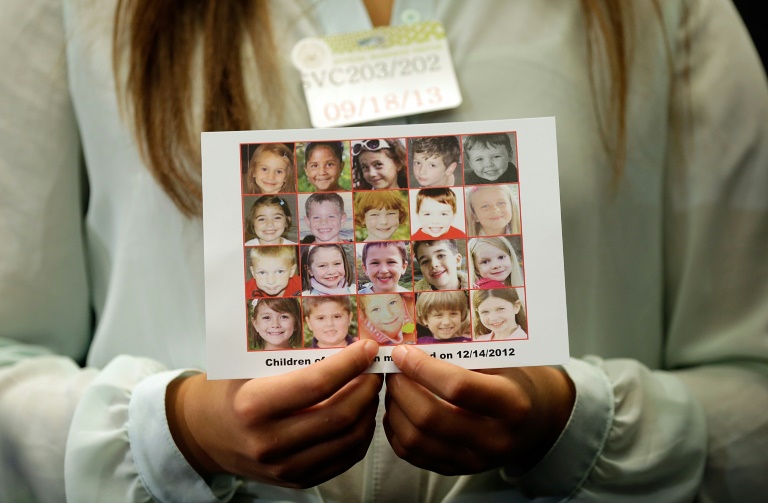
Families of nine victims of the Sandy Hook school shooting have reached a $73 million settlement with US gunmaker Remington, in a landmark deal for a country traumatized by campus massacres.

Lawyers for the plaintiffs said the settlement marks the first time a gun maker has been held liable for a mass shooting in the United States.

Twenty-six children and teachers were shot dead in 2012 at the elementary school in Newtown, Connecticut by Adam Lanza, a 20-year-old with known developmental disabilities.

The killings — the second-deadliest school massacre in US history — stunned Americans, with many thinking they would mark a watershed moment that would lead lawmakers to tighten gun control.

A “settlement agreement has been executed between the parties,” a notice from lawyers for the families said Tuesday.

Calling the move “historic,” US President Joe Biden said it begins “the necessary work of holding gun manufacturers accountable.”

Manufacturers and dealers must either change their business models or “bear the financial cost of their complicity,” he said in a statement.

Lanza’s mother, a gun enthusiast, had bought him an AR-15-style Bushmaster XM15-E2S semi-automatic rifle more than two years before the shooting. 

Lanza murdered his mother before attacking the school, and killed himself afterward.

The lawsuit alleged that Remington and the other two defendants are culpable because they knowingly marketed a military grade weapon that is “grossly unsuited” for civilian use yet had become the gun most used in mass shootings.

An AR-15 was also used to kill 58 people at a mass shooting in Las Vegas in 2017, and 17 at a school in Parkland, Florida in 2018. 

Remington, the oldest gunmaker in the United States and which has since filed for bankruptcy, had denied the allegations.

The plaintiffs alleged that the gun was marketed immorally and unscrupulously and sold on its war-fighting capabilities to civilians.

Marketing, they charged, popularized the AR-15 in combat and mass shooting-type situations through the type of violent video games that Lanza was known to play.

They specifically cited Remington’s marketing of high-capacity magazines, which have only combat utility, for use with the gun.

The gun “was used not by a highly trained soldier but by a deeply troubled kid, not on a battlefield abroad but in an elementary school at home, and not to preserve freedom, but to eviscerate them,” Joshua Koskoff, a lawyer for the Sandy Hook families, told a press conference Tuesday.

Christopher Boehning, another lawyer for the plaintiffs, told AFP the settlement “sends a strong warning signal to other gun manufacturers regarding their role in these unthinkable tragedies.”

AFP has sought comment from Remington.

– Popular in mass shootings –

The United States leads the world in mass shootings by civilians, with many schools undergoing live shooter drills as a matter of routine.

But the grief and trauma of Lanza’s rampage was underscored by the youth of his victims. He killed 20 six- and seven-year-olds along with six staff members.

Nearly four years later, the shooting was still so visceral that it moved then-president Barack Obama to tears during a speech on gun control. 

Hopes that revulsion ignited by the massacre would finally prompt Congress to follow through on wildly popular demands for greater restrictions on weapons, however, fell flat.

Instead, the powerful gun lobby has repeatedly stamped out any efforts to further change the famed Second Amendment to the country’s constitution, which allows for the right to bear arms.

But the settlement deal between the Sandy Hook families and Remington could help pave the way for further accountability in such massacres.

The US Congress passed a law in 2005 that explicitly immunized gunmakers when their products are used in crimes.

But the Connecticut Supreme Court said that Remington could still be sued on the grounds that its marketing violated Connecticut’s unfair trade practice laws.

“The gun manufacturers knew that they were advertising a dangerous product and they exploited these dangers,” Matthew Soto, brother of first grade teacher Vicki Soto, who was among the victims, said at Tuesday’s press conference.

Nicole Hockley, the mother of victim Dylan, six, told the press conference that her family had moved from Britain “because of our belief in the American dream.”

But that “turned into the American nightmare, where for too many the right to bear arms is a higher priority than the right to life.”

Prince Andrew settles sex assault lawsuit with Virginia Giuffre

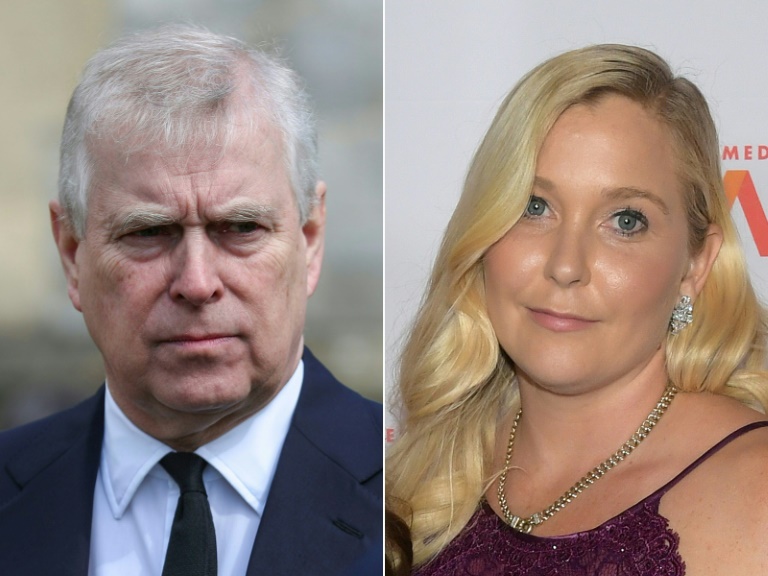
Prince Andrew and his longtime accuser Virginia Giuffre have settled a sexual assault lawsuit for an undisclosed sum, a US court filing showed Tuesday, sparing the disgraced British royal the public humiliation of a trial.

In a letter sent to a New York judge on behalf of both parties, Giuffre’s lawyer David Boies wrote that they “have reached an out of court settlement,” without revealing the financial terms.

As part of the agreement, the British royal will make a “substantial donation” to a charity established by Giuffre that supports sex trafficking victims, Boies said.

Giuffre has said she had sex with Andrew when she was 17 and a minor under US law after meeting him through the late US financier Jeffrey Epstein, who committed suicide in prison while awaiting trial for sex crimes.

The prince has not been criminally charged and has denied the allegations.

The settlement means the civil case will not go to a jury trial. It also means Andrew, 61, will no longer be questioned under oath by Giuffre’s lawyers, who had been due to travel to London next month.

Boies said in the document filed in a Manhattan court that the respective parties would file a stipulation dismissing the case within 30 days upon “receipt of the settlement.”

The letter makes no mention of Giuffre’s accusations. Neither does it admit any guilt on behalf of Andrew or refer to the repeated denials he has made.

It said that Andrew “regrets his association with Epstein, and commends the bravery of Ms. Giuffre and other survivors in standing up for themselves and others.”

“Prince Andrew has never intended to malign Ms. Giuffre’s character, and he accepts that she has suffered both as an established victim of abuse and as a result of unfair public attacks.

“He pledges to demonstrate his regret for his association with Epstein by supporting the fight against the evils of sex trafficking, and by supporting its victims,” the letter added.

The controversy has embarrassed the British monarchy and overshadowed Queen Elizabeth II’s Platinum Jubilee year in which she marks 70 years on the throne.

Last month, Andrew was stripped of his honorary military titles and charitable roles after US judge Lewis Kaplan denied his plea to dismiss Giuffre’s case.

Former prosecutor-turned law professor Bennett Gershman said the settlement was “very good news” for Andrew because it gets him out of testifying while not having to acknowledge any improper conduct towards Giuffre.

“His relief must be palpable,” Gershman told AFP.

Lawyer Lisa Bloom, who represents eight of Epstein’s victims, hailed the settlement as a “victory” for Giuffre, however.

“She has accomplished what no one else could: getting Prince Andrew to stop his nonsense and side with sexual abuse victims,” Bloom tweeted.

– Private island –

Giuffre, now 38, alleged that Andrew sexually assaulted her at the London home of socialite and Epstein friend Ghislaine Maxwell after a night out dancing in March 2001.

She sued the prince last year for unspecified damages under New York’s Child Victims’ Act, alleging that she was trafficked to him by Epstein and Maxwell.

In December, Maxwell was convicted of recruiting and grooming young girls to be sexually abused by Epstein, exposing a murky world of sex trafficking among the rich and powerful.

As well as the London allegations, Giuffre also said Andrew assaulted her at Epstein’s home in New York, and on Epstein’s private island in the US Virgin Islands.

Epstein, 66, was a high-profile financier who befriended countless celebrities. 

His death in a Manhattan jail in August 2019 was ruled a suicide by New York’s chief medical examiner but sparked conspiracy theories that he had been killed to protect wealthy associates.

Andrew, Queen Elizabeth II’s second son, withdrew from public life as a royal in 2019 after a widely ridiculed BBC interview where he defended his relationship with Epstein and sought to vindicate himself of Giuffre’s accusation.

The conciliatory language in Tuesday’s statement was in stark contrast to October, when Andrew’s lawyers accused Giuffre of seeking to profit from a “baseless lawsuit.”

A spokesperson for Andrew said he would not be commenting beyond the court documents.

Fresh twist in Valieva doping scandal after three substances claim

Kamila Valieva’s Beijing Olympics doping controversy took a fresh twist Wednesday after media reported that the Russian skater had three substances used to treat heart conditions in the sample which triggered the scandal.

The 15-year-old figure skater topped the short programme on Tuesday to put herself in prime position to win the women’s singles competition when it concludes on Thursday, bursting into tears afterwards and refusing to talk to journalists.

Valieva’s case has overshadowed the Olympics after the Court of Arbitration for Sport ruled that she should not be suspended despite failing a drugs test in December, although she has not been cleared of doping and still faces further investigation.

Games testing authorities said last week that the teenager tested positive for trimetazidine, a drug used to treat angina but which is banned for athletes by the World Anti-Doping Agency (WADA) because it can boost endurance.

The New York Times reported that her sample also contained the substances Hypoxen and L-Carnitine. They are not on WADA’s prohibited list.

The report said the disclosures concerning the different substances were contained in a document submitted at the CAS hearing that ended with the controversial decision to allow Valieva to continue competing in Beijing.

Senior IOC member Denis Oswald said Tuesday that Valieva informed the CAS panel that she tested positive because of “contamination” from her grandfather’s medicine.

The New York Times report said the grandfather provided a pre-recorded video message to a hearing with Russian anti-doping officials on February 9 in which he said he used trimetazidine.

Valieva’s mother told the same hearing her daughter took Hypoxen for heart “variations”, the Times said.

– ‘Not fair’ –

Valieva has already won one gold in Beijing, playing a starring role to lead Russia to the team title last week, before the doping controversy erupted.

The medals ceremony for that will not take place in Beijing because of the saga. Likewise, if Valieva finishes in the top three of the singles competition there will also be no ceremony — unprecedented in Olympic history.

It puts the spotlight once more on doping by Russian athletes, who are not allowed to take part at these Games under their flag because of a state-sponsored doping programme that reached its peak at its home 2014 Sochi Olympics.

Some of Valieva’s fellow skaters made plain their unhappiness that they had to compete against her.

“I don’t know every detail of the case, but from the big picture obviously a doping athlete competing against clean athletes is not fair,” the 16-year-old American skater Alysa Liu said.

International Olympic Committee spokesman Mark Adams expressed sympathy for Valieva.

“She is at the centre of a lot of speculation and it must be very tough for her,” he said.

– Gold for France –

Clement Noel claimed France’s first alpine skiing gold medal of these Games when he won the men’s slalom on Wednesday.

Noel was sixth fastest after the first run but his lightning-quick second run gave him a combined total of 1min 44.09sec to hold off Johannes Strolz, the Austrian former traffic policeman who had already won a gold in the alpine combined event.

“That was one of the most important races in my career. It’s not often that you are able to win a medal in the Olympic Games,” said 24-year-old Noel.

“It’s one shot — one minute and 40 seconds every four years.”

In the men’s ice hockey, Slovakia knocked out a weakened USA squad in a shootout at the quarter-final stage.

The pandemic-driven decision by the National Hockey League, the world’s top pro league, to refuse to release its superstars for the Games has deprived the Olympics of a best-on-best competition and left the USA with the youngest squad in Beijing.

Slovakia scored 44sec from time to force overtime and their captain Marek Hrivik got the only goal of the final penalty shootout.

Alexander Hall of the United States won the men’s freeski slopestyle gold, taking the title ahead of countryman Nick Goepper.

Other golds up for grabs on Wednesday were in women’s biathlon relay, another in freestyle skiing and two each in cross-country and short track speed skating. 

After Wednesday’s early action, Norway top the medals table with 12 golds, ahead of Germany on nine and the United States on eight.

The Games end on Sunday.

At least 18 dead in storms near Rio de Janeiro

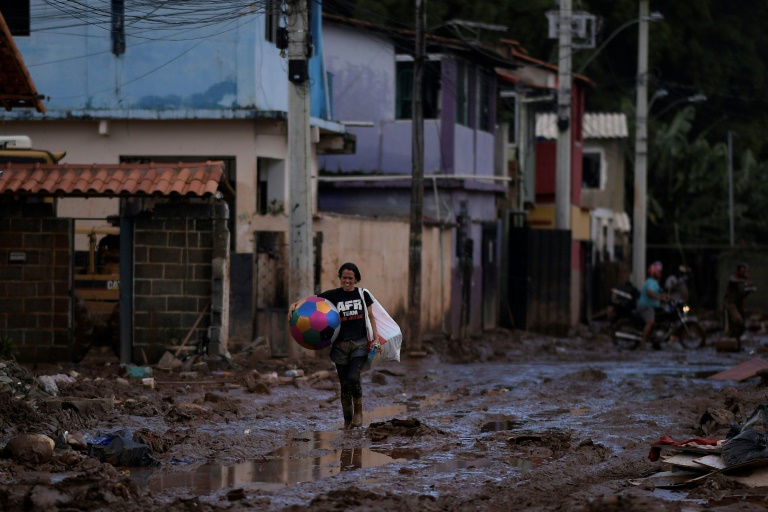
Landslides and flooding triggered by heavy rainfall killed at least 18 people Tuesday in a tourist town in the hills above Rio de Janeiro, Brazilian firefighters said.

“So far, 18 deaths caused by landslides and floods have been confirmed” in recent hours, the Rio de Janeiro Fire Department said in a statement.

The department did not provide figures for those injured or missing.

It said more than 180 firefighters and other rescue workers were at the scene in the picturesque hill town of Petropolis, where Brazil’s last emperor Pedro II is buried, 68 kilometers (42 miles) north of the city of Rio.

“Specialized search-and-rescue teams have been sent to reinforce the rescue operations, with the support of 4×4 vehicles and boats,” it added.

City hall declared a “state of disaster” as images spread on social media of destroyed houses and cars swept away by floodwater.

Many shops were completely inundated by the rising waters which gushed down the streets of the historic city center. 

Some parts of Petropolis received up to 260 millimeters (10 inches) of water in less than six hours, more than was expected for the whole month of February, according to the meteorological agency MetSul. 

The heaviest downpour had passed but more moderate rainfall was expected to continue for several hours, authorities said.

Global warming has increased the risk of heavy storms and flooding, as the atmosphere retains more water and rainfall patterns are disrupted.  

President Jair Bolsonaro, on an official trip to Russia, said on Twitter that he was keeping abreast of “the tragedy” and asked his ministers to provide “immediate aid to the victims.”

Earlier this month, floods and landslides caused by torrential rain killed at least 28 people in the southeast of the country, mostly in Sao Paulo state and the region north of Rio.

In January 2011, more than 900 people died in the mountainous region of Rio due to heavy rains that caused flooding and landslides in a large area including Petropolis and neighboring cities Nova Friburgo and Teresopolis.

Petropolis, the summer residence of the former imperial court, is a tourist destination that attracts a large number of visitors.

Because of its altitude, it has a cooler climate than the coast of Rio.

China govt to help run coal power plants at full capacity

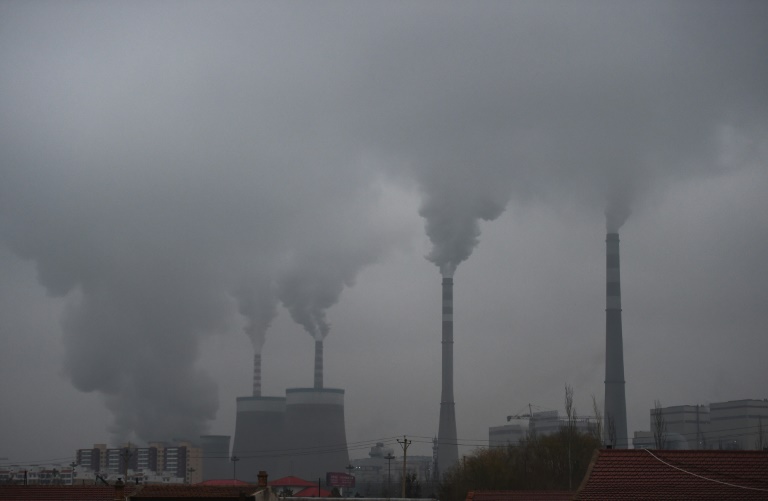
China will help its coal-fired power plants run at full capacity, the government has announced, raising further alarm about the fate of Beijing’s climate pledges.

Swathes of the world’s second-biggest economy were paralysed last year because of power shortages, partly caused by a drop in coal supply as global prices of the fossil fuel soared.

China is the world’s biggest emitter of the greenhouse gases responsible for climate change, and has pledged to peak emissions by 2030 and become carbon neutral by 2060.

But coal production has been ramped up since last year’s energy shortages, sparking uncertainty and concern about those targets.

The focus on energy security and economic growth was reiterated at a high-level meeting of China’s State Council, chaired by Premier Li Keqiang, state news agency Xinhua reported Tuesday.

It was decided in the Monday meeting that “coal supply will be increased and coal-fired power plants will be supported in running at full capacity and generating more electricity” to meet industrial and residential demand, according to Xinhua.

The move comes weeks after President Xi Jinping told top policymakers to ensure that emissions reductions do not hurt economic growth and energy security — widely seen as a signal to limit restrictions on the coal sector.

Following the energy crunch last year, China reopened dozens of coal mines and scrapped production quotas, unravelling earlier steps to curb emissions.

The country’s coal output hit a record of over four billion metric tons last year — the highest in a decade — after imports were disrupted by the pandemic.

Two-thirds of China’s economy is fuelled by coal, and it generates an estimated 29 percent of the world’s greenhouse gas emissions, double the US share and three times that of the European Union.

The Chinese government’s measures to curb emissions are considered crucial to keeping global temperature rises to under 1.5 degrees Celsius as agreed in the landmark Paris climate accord.

“We are pivoting back to the model of supporting the economy at all costs,” said Li Shuo, a campaigner for Greenpeace China. 

“China is losing time for crucial climate action.”

China govt to help run coal power plants at full capacity

China will help its coal-fired power plants run at full capacity, the government has announced, raising further alarm about the fate of Beijing’s climate pledges.

Swathes of the world’s second-biggest economy were paralysed last year because of power shortages, partly caused by a drop in coal supply as global prices of the fossil fuel soared.

China is the world’s biggest emitter of the greenhouse gases responsible for climate change, and has pledged to peak emissions by 2030 and become carbon neutral by 2060.

But coal production has been ramped up since last year’s energy shortages, sparking uncertainty and concern about those targets.

The focus on energy security and economic growth was reiterated at a high-level meeting of China’s State Council, chaired by Premier Li Keqiang, state news agency Xinhua reported Tuesday.

It was decided in the Monday meeting that “coal supply will be increased and coal-fired power plants will be supported in running at full capacity and generating more electricity” to meet industrial and residential demand, according to Xinhua.

The move comes weeks after President Xi Jinping told top policymakers to ensure that emissions reductions do not hurt economic growth and energy security — widely seen as a signal to limit restrictions on the coal sector.

Following the energy crunch last year, China reopened dozens of coal mines and scrapped production quotas, unravelling earlier steps to curb emissions.

The country’s coal output hit a record of over four billion metric tons last year — the highest in a decade — after imports were disrupted by the pandemic.

Two-thirds of China’s economy is fuelled by coal, and it generates an estimated 29 percent of the world’s greenhouse gas emissions, double the US share and three times that of the European Union.

The Chinese government’s measures to curb emissions are considered crucial to keeping global temperature rises to under 1.5 degrees Celsius as agreed in the landmark Paris climate accord.

“We are pivoting back to the model of supporting the economy at all costs,” said Li Shuo, a campaigner for Greenpeace China. 

“China is losing time for crucial climate action.”

Chainsaws, ice and a sauna in India's frozen north

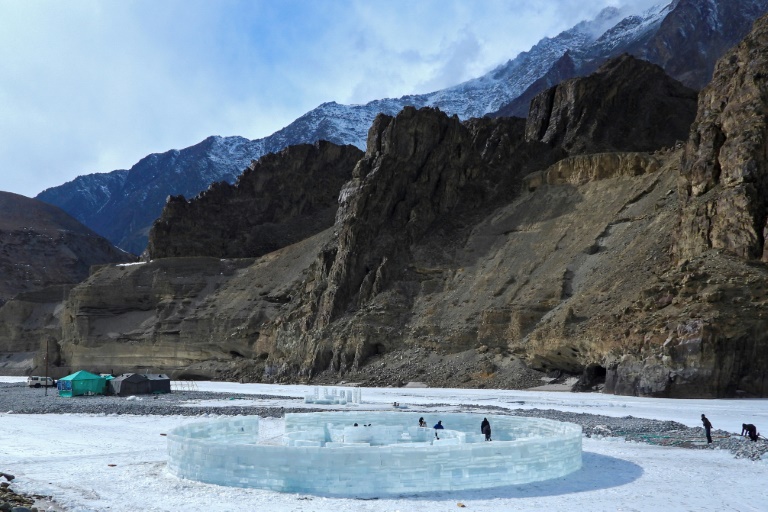
High in the barren Indian Himalayas, artists are chainsawing blocks of ice from a frozen river creating what they hope will be the beginnings of India’s answer to China’s Harbin International Ice Festival.

So far the Kangsing collective have created what they call a “mini-colosseum”, a cafeteria and a sauna near the appropriately named village of Chilling in the northern region of Ladakh.

The installation at 11,000 feet (3,350 metres) serves as the take-off point for the popular seven-day Chadar Trek along the surface of the frozen Zanskar river through breathtaking “frozen desert” scenery that has been shut for two years due to the pandemic.

“We’re thinking we might have a festival big enough, grand enough like Harbin International Festival, something where we can ask artists from all over the world to come and participate,” group member Tashi, who uses only one name, told AFP.

For now the mini-colosseum stands just a little higher than the average person.

But one day its creators hope to emulate the famous ice hotel in Jukkasjarvi, Sweden.

The spot was selected for its lack of sunshine that might melt the ice and where whistling icy winds keep temperatures at a bone-chilling minus 17-20 degrees Celsius (plus 1.5 to minus 4 Fahrenheit) throughout the day.

With some support from the local government the group, which includes a doctor, has also built a sauna at the bank of the frozen river, where they manage to raise the temperature up to 60 degrees Celsius.

A hardy handful in their underpants then plunge straight into a pit outside, dug into the frozen Zanskar, to take an ice bath lasting about a minute — if they can take it.

“Its extraordinary and rejuvenating,” said an invigorated Tundup Gyaltsan, a local policeman.

“You don’t feel the cold at all.”

New Zealand virus cases spike as anti-vaccine protesters claim win

New Zealand Covid-19 infections reached a record high Wednesday as anti-vaccine protesters claimed victory after police failed to clear vehicles blocking the streets around parliament.

Health authorities reported 1,160 new coronavirus cases, the most since the pandemic began, as the Omicron variant continues to spread in a country that was largely virus-free until August.

While there have only been 53 virus deaths in the nation of five million, some protesters have taken to the streets railing against Covid-related restrictions and a government vaccination drive.

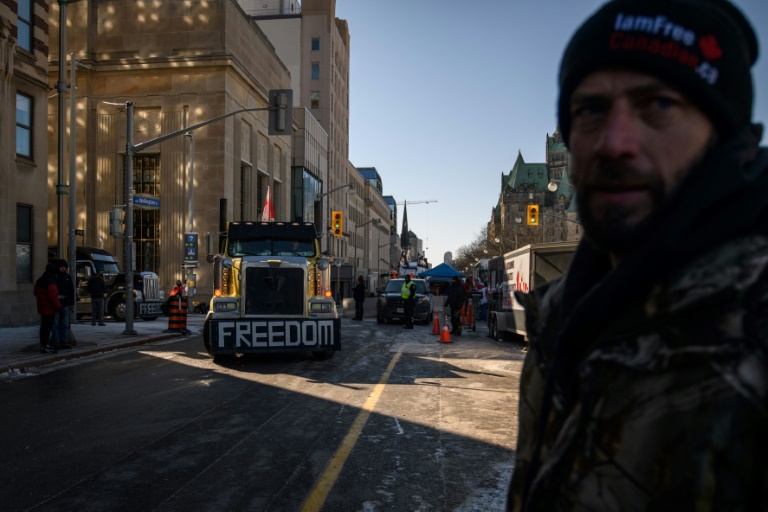
Demonstrators inspired by Canada’s “Freedom Convoy” jammed roads with cars, trucks and campervans last week, then set up camp on the lawns of parliament in the capital Wellington.

A tense stand-off in the city centre has stretched for nine days, with police largely taking a hand-off approach, aside from violent clashes last Thursday that led to the arrest of 122 protesters.

But law enforcement officials ramped up the rhetoric late Tuesday, describing the protests as “untenable” and saying tow trucks would be used to clear the streets.

Police Commissioner Andrew Coster said he had asked for the military’s help, warning anyone who obstructed the “imminent” operation that they faced arrest.

However, no tow trucks were deployed Wednesday, and when a line of police tried to take control of an area near the parked vehicles, they were met by massed demonstrators chanting “whose streets, our streets”.

The protesters cheered when police withdrew behind barricades a short time later.

Assistant Commissioner Richard Chambers defended the cautious approach taken by police.

“This remains an incredibly challenging and complex situation to manage, and police are taking care not to escalate matters unnecessarily,” he said.

Police have previously expressed concern about the large number of children in the protest camp, accusing demonstrators of trying to use them as human shields to avoid arrest.

Parliamentary speaker Trevor Mallard, who is responsible for running the legislature, took matters into his own hands over the weekend, blasting pop music at the demonstrators on a loop.

Mallard subjected the protesters to “Baby Shark” and Barry Manilow’s “Mandy”, also activating the lawn’s sprinkler system to soak the camp.

Police said they did not condone the tactics.

Fresh twist in Valieva doping scandal after three substances claim

The Beijing Olympics doping controversy engulfing Russian skater Kamila Valieva took a fresh twist Wednesday after a US media report said she had three substances used to treat heart conditions in the sample which triggered the scandal.

The 15-year-old figure skater topped the short programme on Tuesday to put herself in prime position to win the women’s singles competition when it concludes on Thursday, bursting into tears afterwards and refusing to talk to journalists.

Valieva took centre stage at the Olympics after the Court of Arbitration for Sport ruled she should not be suspended despite failing a drugs test in December, although she has not been cleared of doping and still faces further investigation.

Games testing authorities said last week that the teenager tested positive for trimetazidine, a drug used to treat angina but which is banned for athletes by the World Anti-Doping Agency (WADA) because it can boost endurance.

The New York Times reported that her sample also contained the subtances Hypoxen and L-Carnitine. They are not on WADA’s prohibited list.

The report said the disclosures concerning the different substances were contained in a document submitted at Sunday’s CAS hearing that ended with the controversial decision to allow Valieva to continue competing in Beijing.

Senior IOC member Denis Oswald had told reporters on Tuesday that Valieva informed the CAS panel that she tested positive because of “contamination” from her grandfather’s medicine.

The New York Times report said the grandfather provided a pre-recorded video message to a hearing with Russian anti-doping officials on February 9 in which he said he used trimetazidine.

Valieva’s mother told the same hearing her daughter took Hypoxen for heart “variations”, the Times said.

Russia’s anti-doping agency RUSADA suspended the young skater after the February 9 hearing, only for her to win an appeal. CAS then agreed that she should be able to carry on at the Olympics, citing “exceptional circumstances” including her age.

– ‘Not fair’ –

Valieva has already won one gold in Beijing, playing a starring role to lead Russia to team gold last week, before the doping controversy erupted.

The medals ceremony for that will not take place in Beijing because of the saga. Likewise, if Valieva comes in the top three after Thursday’s second half of the singles competition there will also be no ceremony — unprecedented in Olympic history.

It puts the spotlight once more on doping by Russian athletes, who are not allowed to take part at these Games under their flag because of a state-sponsored doping programme that reached its peak at its home 2014 Sochi Olympics.

Some of Valieva’s fellow skaters made plain their unhappiness that they had to compete against her.

“I don’t know every detail of the case, but from the big picture obviously a doping athlete competing against clean athletes is not fair,” the 16-year-old American skater Alysa Liu said.

There was also sympathy.

Alexia Paganini, competing for Switzerland, said: “I definitely feel sorry for her. She is pretty much a product of the adults around her.”

But she added: “Rules are rules and they should be followed.” 

International Olympic Committee spokesman Mark Adams said: “She is at the centre of a lot speculation and it must be very tough for her.”

– Strolz in pole –

Austria’s Johannes Strolz meanwhile sat in pole position of the men’s slalom after topping times for the first leg. The decisive second leg is scheduled for 1:45pm (0545 GMT).

Alexander Hall of the United States won the men’s freeski slopestyle gold, taking the title ahead of countryman Nick Goepper.

Other golds up for grabs on Wednesday were in women’s biathlon relay, another in freestyle skiing and two each in cross-country and short track speed skating. 

After Wednesday’s early action, Norway top the medals table with 12 golds, ahead of Germany on nine and the United States on eight. 

The Games end on Sunday/

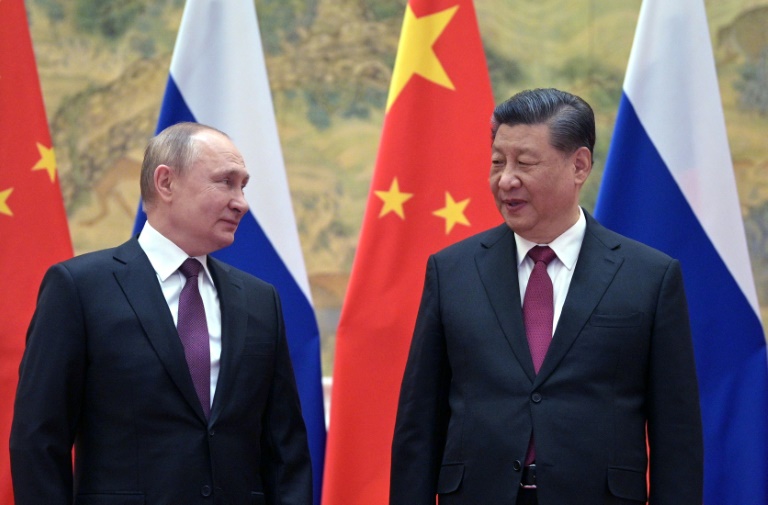
China may take advantage of Ukraine crisis: US general

China may take advantage of the Ukraine crisis and do something “provocative” in Asia while Western powers are focused on defusing tensions with Russia, a US general warned Wednesday.

Russia’s deployment of more than 100,000 troops on Ukraine’s border has triggered fears in Washington and other Western capitals of a looming invasion.

General Kenneth Wilsbach, the head of US Pacific Air Forces, noted that China had aligned itself with Russia in the crisis, raising questions about own intentions in Asia.

“From the standpoint of will China see what’s happening in Europe and… try to do something here in the Indo-Pacific — absolutely yes, that’s a concern,” Wilsbach said, using an alternative term for the Asia-Pacific region.

“I do have my concerns that they would want to take advantage,” he added, speaking to reporters on the sidelines of the Singapore Airshow.

“It won’t be surprising if they tried something that may be provocative, and see how the international community reacts.”

Wilsbach said that when Beijing expressed support for Russia in the Ukraine standoff, he held talks with his staff and other “entities” in the region about its implications.

Based in Hawaii, Wilsbach’s command would play a central role if conflict erupts in the Pacific.

Over the years, Beijing has been blamed for stoking tensions in the region as it has steadily cemented control of key islands and atolls in the South China Sea.

Beijing claims almost the entirety of the sea, but that overlaps with those of Taiwan and four Southeast Asian countries — Brunei, Malaysia, the Philippines and Vietnam.

While the United States and other Western nations have no claims there, they fear Chinese control would infringe on freedom of navigation in the strategic waterway.

In recent months, China has also ramped up pressure on Taiwan — which it sees as its territory — by sending fighter jets into the island’s air defence identification zone.

Wilsbach said that when China looks at crises, it considers whether “this is an opportunity for gain”.

He did not go into specifics about what China might do during the Ukraine crisis, saying only that there were “probably a number of options” for Beijing.

Close Bitnami banner
Bitnami