World

Germany takes tougher line before Kyiv, Moscow visits

Germany’s president on Sunday said “responsibility” for the risk of “war” in Ukraine lay with Russia, bringing greater clarity to Berlin’s position on the crisis which has been criticised as too lenient towards Moscow.

Chancellor Olaf Scholz added on the eve of a trip to Kyiv and Moscow that Western allies would respond “immediately” with sanctions in the event of a Russian invasion.

The continent was confronted with the “danger of a military conflict, of war in eastern Europe — and Russia carries the responsibility for that,” Frank-Walter Steinmeier said after being re-elected for a second five-year term.

The president called on Germany to show resolve in the face of Russian aggression.

“Peace cannot be taken for granted. It must be worked on in dialogue and when necessary, with clear words, deterrence and determination,” the former foreign minister and Scholz’s Social Democrat colleague said.

Speaking shortly afterwards, the chancellor echoed Steinmeier, saying there was a “serious threat to peace in Europe”.

“In the event of a military aggression against Ukraine that threatens its territorial integrity and sovereignty, that will lead to tough sanctions that we have carefully prepared and which we can immediately put into force, together with our allies in NATO and Europe,” Scholz said.

Scholz will travel to Kyiv on Monday, where he will meet with the Ukranian President Volodymyr Zelensky. He will then move on to Moscow on Tuesday for talks with Russian President Vladimir Putin, in the latest diplomatic push to avoid a conflict.

Scholz’s trip comes after weeks of rising tensions that have seen Russia nearly surround its western neighbour with more than 100,000 troops.

The crisis entered a new phase after Washington warned that an all-out invasion could begin “any day”.

– ‘Critical’ moment – 

Tensions between Russia and Ukraine have reached a “critical” point, a German government source said earlier on Sunday. 

“Our concerns have grown… we asses the situation as very critical, very dangerous”, the source told journalists.

While Germany continued to rule out delivering arms to Ukraine, it was considering delivering more financial support to Ukraine, the source indicated.

Berlin, which has already delivered 2 billion euros ($2.3 billion) in aid to Ukraine since the annexation of Crimea by Russia in 2014, was examining “whether there are still bilateral possibilities to contribute to economic support”, the source said. 

Germany has been criticised in recent weeks by Kyiv and some European allies for not taking a hard enough line against Russia during the crisis.

Earlier on Sunday, Ukraine’s ambassador to Berlin used an interview with public radio to call for Germany to “remove the Russian glasses from its Ukraine policy, because they are blurring its vision”.

– Diplomatic credentials –

The presidential election, normally held in the Bundestag building, took place at Paul Loebe Haus, a post-modern office complex opposite the Chancellery in central Berlin, in order to meet pandemic distancing requirements.

The president, 66, who has gained a reputation as a tireless defender of democratic values during his first term in office, secured an overwhelming majority in the first round of voting among delegates to the Federal Convention.

In all, Steinmeier received 1,045 votes from the 1,472 delegates present at the one-off assembly, made up of MPs and an equal number of state delegates.

Steinmeier served twice as foreign minister in Merkel’s cabinet, stepping back from his duties as Germany’s top diplomat to take on the ceremonial role as head of state in 2017.

The president’s role in Germany is mostly symbolic, with the office holder acting as a constitutional counterpart to the head of government, currently Chancellor Olaf Scholz, also a Social Democrat.
Canada police arrest protesters in bid to clear border bridge

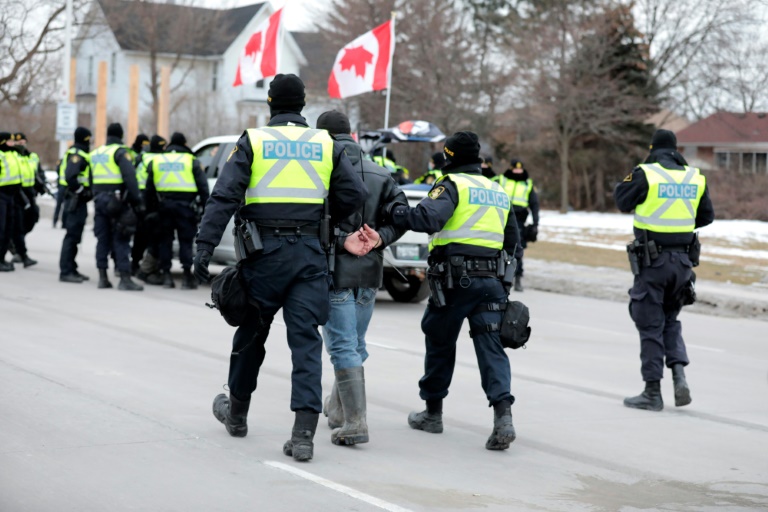
Canadian police resumed operations Sunday to clear a key US border bridge occupied by trucker-led demonstrators angry over Covid-19 restrictions, as authorities began making arrests in their bid to quell a movement that has also paralyzed downtown Ottawa.

“Enforcement actions continue” at the Ambassador Bridge, police in the city of Windsor, Ontario said in a tweet, adding that authorities have also begun towing vehicles. 

“There will be zero tolerance for illegal activity,” they added.

Police had begun their operation on Saturday, moving deliberately as they worked to clear the major border crossing to the US city of Detroit, Michigan. 

They succeeded in clearing one major intersection. But some demonstrators remained, extending the protracted standoff and preventing traffic from flowing.

Early Sunday, police were seen placing a bridge protester in handcuffs and leading him away.

The demonstrations have inspired copycat protests around the globe, including in France, the Netherlands, Switzerland and Australia, and with some US truckers discussing a protest for March.

In Ontario, where authorities have declared a state of emergency, the provincial supreme court had ordered truckers to end their blockade of the Ambassador Bridge. 

The protest has forced major automakers in both countries to halt or scale back production.

Canada’s Prime Minister Justin Trudeau has promised that “this conflict must end,” but he has faced mounting criticism for failing to act more decisively.

The clearing operation on the bridge has involved Canadian police, backed by armored vehicles. 

Initially, no arrests were made; but drivers were warned that they potentially face major fines, jail time and loss of their driver’s licenses if they continued blocking traffic.

– 4,000 protesters –

But by Saturday evening, the police had not completely cleared the span.

The Ambassador Bridge is vital to the US and Canadian auto industries, carrying more than 25 percent of merchandise exported by both countries.

Truckers originally converged on Ottawa to press their demand for an end to a vaccination requirement affecting truckers crossing the international border.

But the movement has spread, as the protesters now seek an end to all vaccine mandates, whether imposed by the federal or provincial governments.

Ottawa has been the epicenter of protests. Police on Saturday estimated that some 4,000 demonstrators were still occupying the center city, in the third weekend of the movement.

The atmosphere among protesters has been festive, with music, dancing and constant sounding of air horns — but the noise, obstruction and sometimes rude and aggressive behavior of demonstrators has harmed area businesses and infuriated many locals.

The truckers’ message, however, has resonated more widely than authorities expected. 

One opinion survey found that a third of Canadians support the protest movement.

The truckers have also found support among conservatives and vaccine mandate opponents across the globe, even as Covid measures are being rolled back in many places.

In Paris on Saturday, police fired tear gas and issued hundreds of fines in an effort to break up convoys of vehicles coming from across France. 

A vehicle convoy in the Netherlands brought The Hague’s city center to a standstill in another Canada-style protest.

In Switzerland, hundreds of protesters marched in Zurich to protest Covid-19 restrictions, while several thousand others rallied against them, Swiss media reported. Police used tear gas, water cannons and rubber bullets to disperse the crowds. 

An estimated 10,000 Australian protesters marched through the capital Canberra to decry vaccine mandates. 

And in New Zealand, anti-mandate activists have been camped near the parliament in Wellington for days in a protest inspired by the Canadian convoy.

Ukraine crisis overshadows Blinken bridgebuilding trip to Asia

US Secretary of State Antony Blinken and his Japanese and South Korean counterparts declared their unity on confronting security threats in the Asia-Pacific Saturday, even as Washington was intensely occupied by the possibility of war in Eastern Europe.

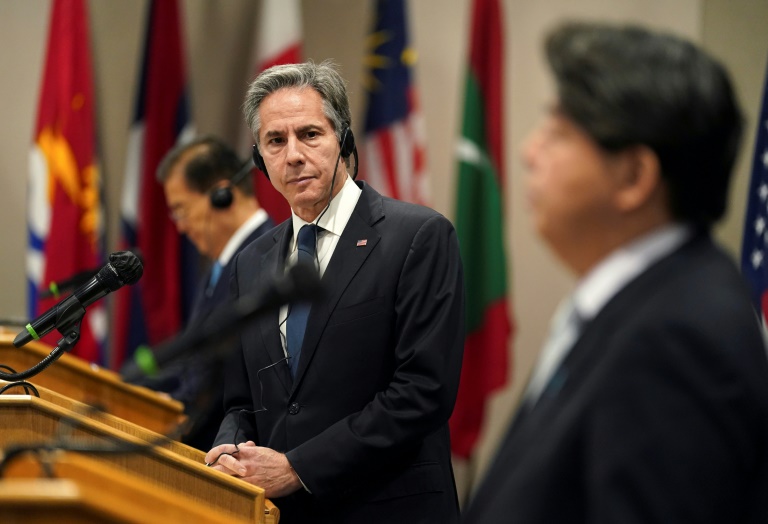
Blinken, South Korean Foreign Minister Chung Eui-yong, and Japanese Foreign Minister Hayashi Yoshimasa met in Honolulu for a day of talks focused on North Korea’s nuclear threat as well as the China challenge.

Washington organized the meeting as the third stop of a pan-Pacific round of diplomacy meant to reassert the on-off US “pivot” to Asia in politics and security.

Blinken first attended a meeting of the Quad in Melbourne, the alliance of Australia, Japan, India, and the United States aimed at blunting Beijing’s expansive military policy in the Asia-Pacific.

The top US envoy then traveled to Fiji for a virtual meeting of representatives of 17 Pacific Island nations who are also experiencing China’s economic, political and military ambitions.

US officials said the trip was to assure countries across the region that Washington is still deeply attentive to their issues.

During the weeklong trip, the White House released its strategy for what it has rebranded the “Indo Pacific region,” an 18-page document that stresses the centrality of the region in US policy.

“That strategy reflects the fundamental truth that more than any other part of the world, what happens in this region is going to shape the lives of Americans and people around the world,” Blinken said in Honolulu Saturday to close out the week.

– Ukraine, Ukraine, Ukraine –

At every stop, however, the threat of a Russian invasion of Ukraine had nearly all of Washington’s attention, and drew concerns from its counterparts.

Blinken spent much of his travel time liaising with allies and his Russian counterpart, Sergei Lavrov, on the crisis.

And at each press conference, meant to showcase the US’ dedication to Asia-Pacific affairs, attention instead fixed on Blinken’s statement that Russia could attack Ukraine within days.

– Rise of the Quad –

Yet Blinken’s message was well-received. 

In Melbourne, four Quad countries sought to deepen their alliance, expanding it from the original Malabar naval exercises and Covid vaccine distribution to other areas including climate change, cyber security, infrastructure and disaster relief.

They also underscored in repeated statements that they were ready to work with ASEAN, the Association of Southeast Asian Nations, right in the center of the Chinese advance.

In Fiji, Blinken said the US was ready to spend more money to support the Pacific Islands, and announced the restoration of a US Embassy in the Solomon Islands, where China is now embroiled in politics and local security.

The US closed its embassy in the Solomons in 1993, and reopening it would serve as a statement that America will pay more attention to the often overlooked region.

The Pacific islands stop, said Jonathan Pryke of Australia’s Lowy Institute, is “a reflection that the US just doesn’t have a significant presence in the Pacific.”

“The US is clearly anxious about China’s growing presence in the region,” he said, calling Blinken’s visit “pretty significant.”

The possibility of a Russian invasion of Ukraine also filtered into the tripartite talks in Honolulu.

The war would cause economic disruptions that could reach Asia. Japan has already been asked to allow some of its LNG supplies to be diverted to Europe in the case that Russian natural gas to Europe is cut off.

But Japan and South Korea want Washington to put more effort into bringing North Korea’s Kim Jong Un to the table, after his seven recent test launches of ballistic missiles.

Blinken said Kim was in “a phase of provocation.”

“I want to underscore we have no hostile intent for the DPRK. We remain open to dialogue without preconditions,” he said.

Four missing Afghan women activists released

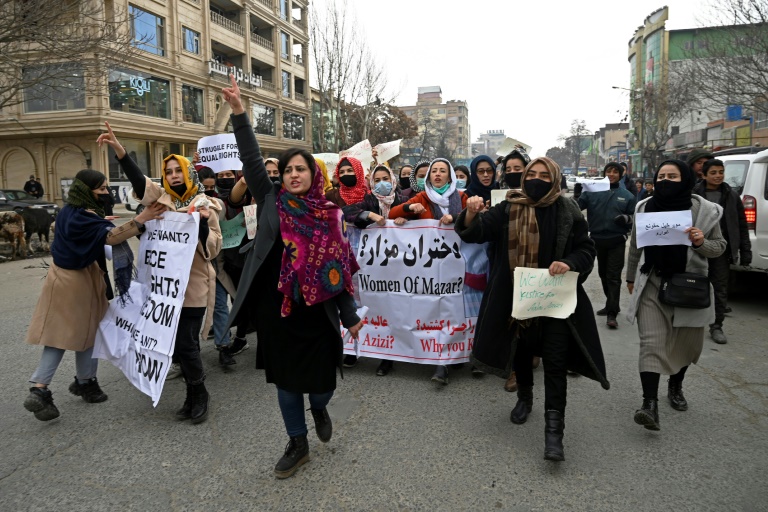
Four women activists in Afghanistan have been released by the country’s “de facto authorities” after going missing weeks ago, the United Nations said Sunday.

Since storming back to power in August, the Taliban have cracked down on dissent by forcefully dispersing women’s rallies, detaining critics and often beating local journalists covering unsanctioned protests.

Tamana Zaryabi Paryani, Parwana Ibrahimkhel, Zahra Mohammadi and Mursal Ayar went missing after participating in an anti-Taliban rally, but Afghanistan’s hardline Islamist rulers — whose government is still not recognised by any country — had consistently denied detaining them.

“After a long period of uncertainty about their whereabouts and safety, the four ‘disappeared’ Afghan women activists, as well as their relatives who also went missing, have all been released by the de facto authorities,” the United Nations Assistance Mission in Afghanistan (UNAMA) said on Twitter.

AFP reported the release of Ibrahimkhel on Friday. She went missing along with Paryani on January 19, days after taking part in a rally in Kabul calling for women’s right to work and education.

Weeks later, Mohammadi and Ayar went missing. Some relatives of the four women protesters had also gone missing.

Shortly before she disappeared, footage of Paryani was shared on social media showing her in distress, warning of Taliban fighters at her door.

In the video, Paryani calls out: “Kindly help! Taliban have come to our home in Parwan 2. My sisters are at home.” 

It shows her telling the men behind the door: “If you want to talk, we’ll talk tomorrow. I cannot meet you in the night with these girls. I don’t want to (open the door)… Please! help, help!”

– Dissidents warned –

Taliban government spokesman Zabihullah Mujahid had told AFP in an interview recently that the authorities had the right “to arrest and detain dissidents or those who break the law”, after the government banned unsanctioned protests soon after coming to power. 

The Taliban have promised a softer version of the harsh rule that characterised their first stint in power from 1996 to 2001.

But provincial authorities have imposed several restrictions on women and have issued regular guidelines on how they should live.

The new authorities have effectively barred women from working in several government sectors and most girls’ secondary schools remain shut.

The Taliban have also issued an order that women cannot travel between cities and towns unless accompanied by a close male relative.

They have put up posters in many shops across Kabul and in other cities encouraging women to wear the all-covering burqa.

Earlier this month the Taliban detained two foreign journalists working for the UN refugee agency, the UNHCR.

Former BBC correspondent Andrew North and another foreign journalist were released on Friday after days in detention, the UNHCR said.

Mujahid said they had been detained because they did not possess valid identity cards and documents.

A “number” of British nationals are also being detained in Afghanistan, the UK government told AFP on Saturday, adding that it had raised the issue with officials there.

The Taliban are however under pressure from the international community to respect human rights as the group engages in talks with Western countries and global donors to secure aid for tackling Afghanistan’s humanitarian crisis.

“UNAMA calls for the rights of every Afghan to be respected,” the UN mission said on Sunday.

Iraq ex-foreign minister Zebari ruled out of presidential race

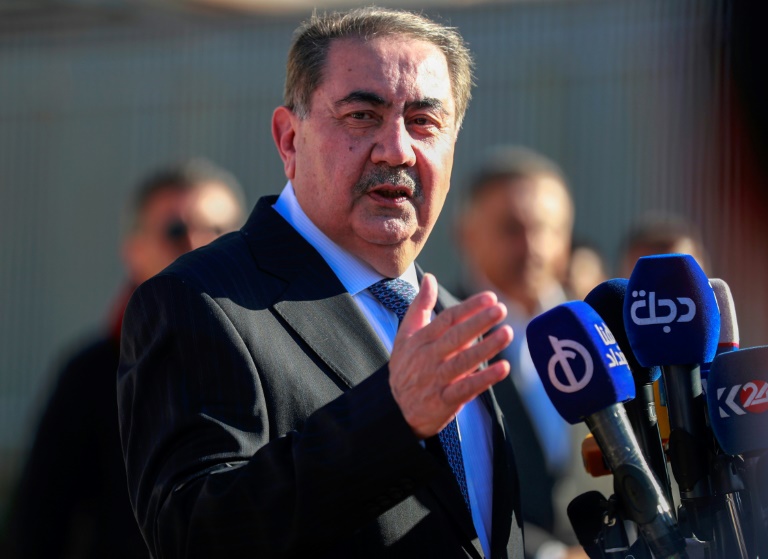
Iraq’s supreme court on Sunday ruled out a bid by veteran politician Hoshyar Zebari to run for president after a complaint filed against him over corruption charges.

Zebari, 68, who served as foreign minister for a decade after the 2003 US-led invasion that toppled dictator Saddam Hussein, had already been suspended temporarily from the contest on February 6, the eve of the scheduled presidential vote in parliament. He was one of two frontrunner candidates.

Postponement of that vote exacerbates war-scarred Iraq’s political uncertainty because the president — a largely ceremonial post — names a prime minister from the largest bloc in parliament. Months after legislative elections, the head of government still hasn’t been named.

Following the court’s decision, Zebari on Sunday protested what he called an “injustice” based on a political decision to keep him out of the race, and stressed his innocence.

“Our behaviour and good conduct are cleaner and purer than the snow on Iraq’s highest summit,” he told a news conference.

Iraq’s highest judicial body made its ruling after MPs submitted a complaint against Zebari. The complaint said his participation would have been “unconstitutional” because of the outstanding corruption charges, leaving him without the required “good reputation and integrity.”

“The federal court decided in its verdict to invalidate the candidacy of Hoshyar Zebari to the post of president of the republic,” state news agency INA announced.

– Controversial history –

The February 7 voting session was not held due to lack of a quorum after several  political blocs and parties announced boycotts — against the backdrop of competing claims to a parliamentary majority.

Zebari was initially tipped as a favourite, along with incumbent President Barham Saleh, out of a total of roughly 25 candidates.

The complainants to the court cited Zebari’s 2016 dismissal from the post of finance minister by parliament “over charges linked to financial and administrative corruption”.

Public funds worth $1.8 million were allegedly diverted to pay for airline tickets for his personal security detail.

The complaint also cited at least two other judicial cases linked to Zebari.

“I have not been convicted in any court,” Zebari said in an earlier television interview, as the charges resurfaced on the eve of the scheduled parliamentary vote, alongside forecasts that he would unseat Saleh for the four-year posting.

On Tuesday, parliament announced the reopening of registration for presidential candidates, a post reserved for Iraq’s Kurds.

Zebari said Sunday that his movement, the Kurdistan Democratic Party which runs the autonomous Kurdish region in northern Iraq, does not for the moment have an alternative candidate. 

Controversially, Zebari was a keen supporter of Iraqi Kurdistan’s ill-fated 2017 referendum on independence which sparked a crisis between Baghdad and the KDP, almost resulting in bloodshed between the two camps.

Iraqi politics have been in turmoil since general elections were held in October. The polls were marred by a record-low turnout, post-election threats and violence, and a delay of months until final results were confirmed.

Intense negotiations among political groups have since failed to form a majority parliamentary coalition to name a new prime minister to succeed Mustafa al-Kadhemi.

$80 billion in Aramco shares moved to Saudi sovereign fund

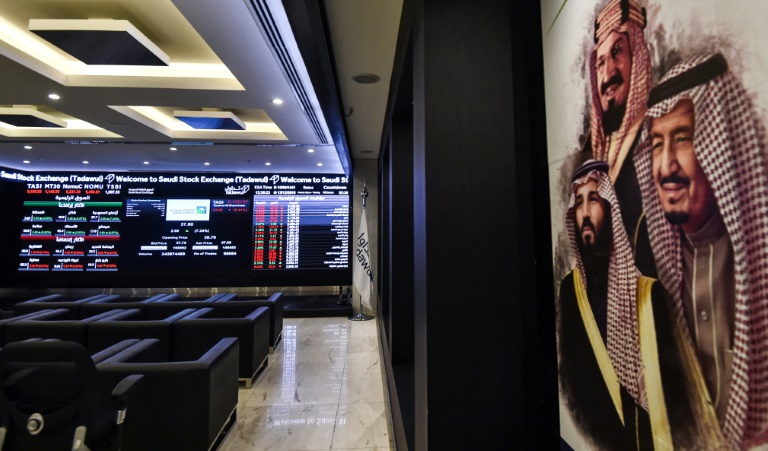
Saudi Arabia has moved four percent of Aramco shares worth $80 billion in the world’s biggest oil exporter to the kingdom’s sovereign wealth fund, authorities said on Sunday.

Crown Prince Mohammed bin Salman, Saudi Arabia’s de facto ruler, announced the move as part of efforts to recalibrate the oil-dominated economy.

The transfer is also the latest sign that Saudi Arabia wants to open up the oil giant and “crown jewel” of the Saudi economy, the Arab world’s largest.

The “transfer of four percent of Aramco shares to the Public Investment Fund (PIF)… is part of the kingdom’s long-term strategy to support the restructuring of its economy,” the crown prince was quoted as saying by the official Saudi Press Agency.

Crown Prince Mohammed said he wants the investment fund to have one trillion dollars in assets by the end of 2025. The fund, the centrepiece of official moves to end economic reliance on oil, has less than half that amount before this deal.

“The shares will bolster the fund’s strong financial position and high credit ratings in the medium term, as the PIF relies on the value of its assets and the returns on its assets under management for its funding strategy,” he said.

The crown prince stressed that the Saudi state would remain the dominant Aramco shareholder with a 94 percent stake. Crown Prince Mohammed is also head of the PIF sovereign fund.

Aramco shares finished down by 0.6 percent in trading Sunday after the announcement. But experts said the share switch would strengthen the sovereign fund.

Mazen al-Sudairi, head of Research at Al Rajhi Capital, said it would “give the fund flexibility” if it wants to launch shares on the local or international market.

Ibrahim al-Ghitani, head of energy studies at the Future for Advanced Research and Studies think tank, predicted that it would a “preparatory step” toward an international sale of shares.

– ‘Financial reform process’ – 

The crown prince said in April last year that Aramco was in talks to sell a one percent stake to a foreign energy giant.

“There is a discussion on the acquisition of one percent (of Aramco) by one of the world’s leading energy companies, and this will be a very important deal to boost Aramco’s sales in that country,” the crown prince said at the time.

Aramco previously sold 1.7 percent of its shares on the Saudi bourse in December 2019, generating $29.4 billion in the world’s biggest initial public offering.

It raised six billion dollars in Islamic bonds in June last year, so that it could pay dividends to the new shareholders.

But Aramco announced $30.4 billion in profits for the third quarter of 2021, a massive rise from $18.8 billion for the same quarter the previous year, as oil prices took off again.

In December, Aramco said it had signed a $15.5 billion lease agreement for its gas pipeline network with a consortium led by BlackRock Real Estate of the United States and Hassana Investment Company, a Saudi-state-backed investment management firm.

Aramco and its assets were once kept under a vice-like government control, long off-limits to outside investment.

But with the rise of Crown Prince Mohammed, who has been pushing his “Vision 2030” reform programme since 2016, the kingdom has shown readiness to cede some control.

Ukraine's star author Kurkov says his native Russian should be curbed

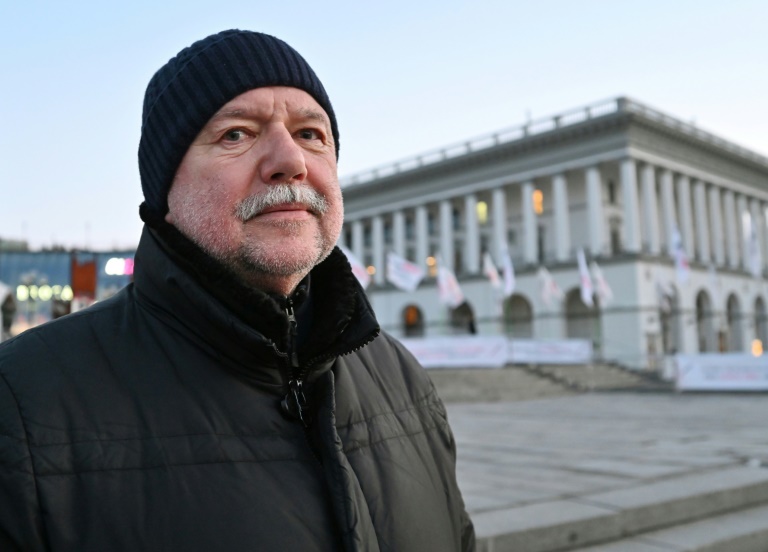
Ukraine’s bestselling Russian-speaking author Andrey Kurkov says it is “immoral” to defend the Russian language in the ex-Soviet republic during soaring tensions with Moscow.

Kurkov’s often absurdist works — tinged with humour about the misplaced oddities of life — have been translated into more than 30 languages and become international hits.

He is most famous for the early post-Soviet “Death and the Penguin” novel about a despondent obituary writer.

But he is also a popular political commentator who has strong views on a Ukrainian language law that Russian President Vladimir Putin is using in his attempts to cast Kyiv’s pro-Western leaders as persecutors of ethnic Russians.

“In the context of our current relations with Russia, it is immoral to talk about the privileged place of the Russian language,” Kurkov told AFP in Russian.

The 60-year-old native of Russia’s Leningrad region outside Saint Petersburg speaks Ukrainian without an accent and has written some of his film scripts and children’s books in Ukrainian.

But he views Russian as his native language and uses it for most of his works.

“I write in Russia, I speak on TV in Russian or Ukrainian. It does not create problems,” he said.

“At the moment, the firm language policy is justified.” 

– ‘Balance’ –

The new language law requires Russian-language publications to be accompanied by Ukrainian versions of equal size and circulation as of last month.

Newsstands must also offer at least half their content in Ukrainian.

Human Rights Watch believes the law raises “concerns”.

“The Ukrainian government has every right to promote its state language and strengthen its national identity,” the New York-based rights group said.

“But it should ensure a balance in its language policy, to avoid discrimination against linguistic minorities.”

Kurkov views the law as a natural progression of Ukraine’s society. He also has no qualms about Russian no longer being taught in schools.

“The next generation of Ukrainians will be bilingual, but will not be able to write in Russian,” he predicts.

The Soviet Union tried to build a socialist society out of 15 multi-ethnic republics that were all forced to learn Russian in schools.

“The process of Ukraine’s Russification lasted for 70 years,” Kurkov says. “We are witnessing the return of Ukrainian to its territories, a process that can take between 50 and 100 years.”

– Collective vs individual –

Kurkov is now working on the third part of a historical detective novel about life in Kyiv in 1919.

Ukraine gained fleeting independence that year before being swallowed up by the Bolshevik Revolution.

He views the current threat of an invasion by more than 100,000 Russian troops who have surrounded Ukraine from nearly every side as one of the hard realities of life that will not permanently alter his country’s course.

“There might be a war, but not a total loss of independence,” he said.

Kurkov thinks Ukraine and Russia are so fundamentally different they cannot coexist.

“Russians like tsars and the one-party system, like in Soviet times or with (Putin’s ruling) United Russia party now,” he said.

“In Ukraine, we have 400 registered political parties. Every Ukranian wants to found his own political party because he does not agree with others.”

Russians subscribe to the “collective mentality,” he said. “Ukrainians are individuals.”

– ‘Accustomed to war’ –

Kurkov’s most recent translated work — called “Grey Bees” in English — follows the path of a beekeeper through the simmering conflict that has claimed more than 14,000 lives across swaths of Ukraine’s Russian-backed separatist east.

Ukrainians have been living with this war since a 2014 pro-EU revolution toppled a government backed by Moscow that was ranked as one of the 30 most corrupt in the world.

Kurkov believes the years of tumult have steeled Ukrainians’ resolve.

“There is neither psychosis nor panic. Everyone just gets on with their lives,” he said.

“The real shock was in March 2014, when everyone in Ukraine watched a session of the Russian parliament overwhelmingly vote in favour of allowing the Russian army to wage war on foreign territories,” he said.

The vote gave Putin the political cover needed to back the insurgency in eastern Ukraine.

“Today, people are accustomed to the fact that there is a war,” he said.

Swiss vote on banning tobacco advertising, animal testing

The Swiss were voting Sunday on whether to ban almost all advertising of tobacco products and separately on a blanket ban on all animal testing.

In-person voting on those and other topics as part of Switzerland’s direct democracy system began at 10:00 am (0900 GMT), with polls due to close just two hours later.

Since most people vote in advance by post, the final results were expected by late afternoon. 

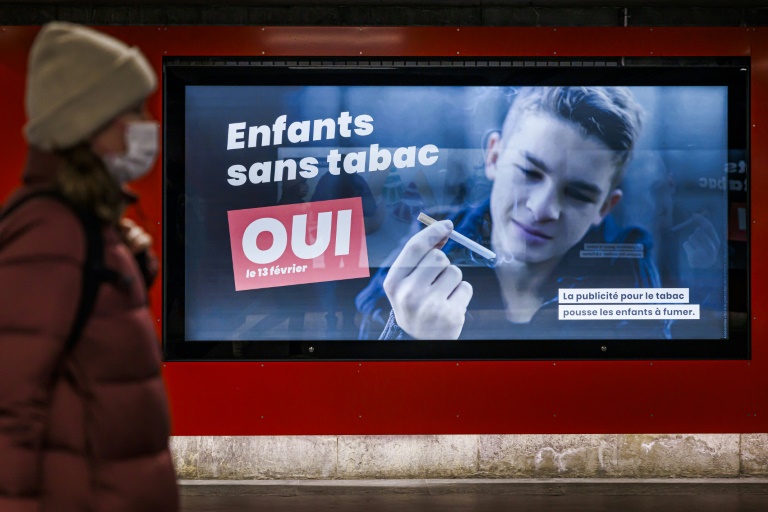
Recent polls indicate that the initiative to tighten Switzerland’s notoriously lax tobacco laws by banning all advertising of the health-hazardous products wherever minors might see it — effectively nearly all settings — is the most likely to pass.

Switzerland lags far behind most wealthy nations in restricting tobacco advertising — a situation widely blamed on hefty lobbying by some of the world’s biggest tobacco companies headquartered in the country.

Currently, most tobacco advertising remains legal at a national level, except on television and radio, or ads that specifically target minors.

Some Swiss cantons have introduced stricter regional legislation and a new national law is pending, but campaigners gathered enough signatures to spur a vote towards a significantly tighter country-wide law.

– ‘Kills half of all users’ –

Opponents of the initiative, which include the Swiss government and parliament, say it goes too far.

The world’s largest tobacco company Philip Morris International (PMI), which, like British American Tobacco and Japan Tobacco, is headquartered in Switzerland and has helped fund the “No” campaign, described the initiative as “extreme”.

“This is a slippery slope as far as individual freedom is concerned,” a spokesman for PMI’s Swiss section told AFP, warning that it “paves the way for further advertising bans on products such as alcohol or sugar”.

Jean-Paul Humair, who heads a Geneva addiction prevention centre and serves as a spokesman for the “Yes” campaign, flatly rejected that comparison.

“There is no other consumer product that kills half of all users,” he told AFP.  

Campaigners claim lax advertising laws have stymied efforts to bring down smoking rates in the Alpine nation of 8.6 million people, where more than a quarter of adults consume tobacco products. There are around 9,500 tobacco-linked deaths each year.

The latest gfs.bern poll hinted that 63 percent of voters favoured the tobacco advertising ban, but it will also need backing from a majority of Switzerland’s 26 cantons to pass.

– Animal testing –

However there is little chance that a bid to ban all animal and human testing will go through, with only a quarter of those questioned in the latest survey backing the move.

All political parties, parliament and the government oppose it, warning it goes too far and would have dire consequences for medical research.

Switzerland has rejected three similar initiatives by large margins since 1985.

Researchers insist medical progress is impossible without experimentation, and even the Swiss Animal Protection group has warned against the initiative’s “radical” demands.

Swiss authorities say the country already has among the world’s strictest laws regulating animal testing.

As the laws have tightened, the number of animals used has fallen sharply in recent decades, from nearly two million per year in the early 1980s to around 560,000 today.

In another animal-themed vote, inhabitants in the northern Basel-Stadt canton will decide whether non-human primates should be granted some of the same basic fundamental rights as their human cousins.

Among the other issues on Sunday’s slate, there will also be a national referendum on a new law aimed at providing additional state funding to media companies, which have seen their advertising revenues evaporate in recent years.

The government argues the extra funding could secure the survival of many small, regional papers which are in peril, and also assist with their costly digital transition.

But the latest poll indicates a win for the “No” campaign, backed by right-wing parties, who charge the subsidy would mainly benefit large media groups and would be a waste of public funds.

Cyprus minister pins blame for migration 'emergency' on Turkey

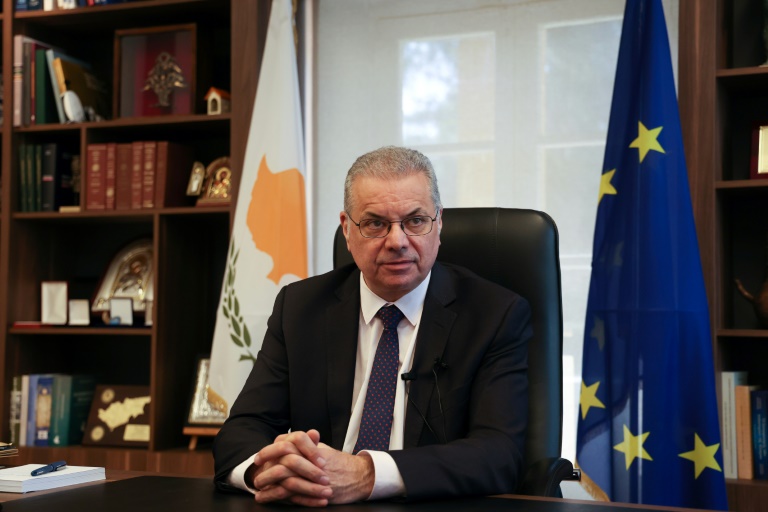
The small Mediterranean island of Cyprus has an outsized problem with irregular migration, says the interior minister of the EU member state located closest to the Middle East.

“For us, this is a state of emergency,” Nicos Nouris told AFP, adding that 4.6 percent of the country’s population now are asylum seekers or beneficiaries of protection, the highest ratio in the EU.

The Greek Cypriot minister accused Turkey, whose troops have since 1974 occupied the island’s northern third, of encouraging much of the influx of Syrian refugees and arrivals from sub-Saharan Africa.

Rights groups and observers have criticised Cyprus for squalid conditions in its overcrowded main migrant camp, which was rocked by clashes this month, and for alleged brutal treatment of some arrivals.

But Nouris shot back that “brutal is what Turkey has been doing to us” as new asylum applications had multiplied to over 13,000 last year in the country of 850,000.

“The migration issue in Cyprus is a huge problem because it’s been instrumentalised by Turkey,” the minister from the conservative Democratic Rally party charged.

The Republic of Cyrus remains sharply at odds with Turkey, which under a deal with the EU hosts millions of Syrian refugees, and which contests potential offshore oil and gas reserves claimed by Cyprus.

Nouris charged that every day some 60 to 80 irregular migrants, guided by smugglers, cross the UN-patrolled 184-kilometre (114-mile) long Green Line that dissects the island, with 85 percent of asylum seekers last year having arrived in this way.

– ‘Trapped on island’ –

The top country of origin for pending asylum applications in 2021 remained Syria, but next came Cameroon, the Democratic Republic of Congo, Nigeria and Somalia, according to the ministry.  

Many of the newcomers, Nouris said, fly via Istanbul to the northern breakaway statelet recognised only by Ankara. “From there, with the smugglers, they find a way through the Green Line.”

It is only once they have crossed south that many discover they are not inside the European Union’s visa-free Schengen area.

“They are trapped on the island,” said Nouris. “They cannot travel to Germany or to France, where they want to go, because Cyprus is not a member of the Schengen zone.”

Cyprus stresses that the Green Line is not a border but merely the ceasefire line, beyond which lie “areas not under government control”.

Nonetheless, said Nouris, his government — having recently fortified one section of the line with razor wire — will soon build fencing, step up patrols and, from the summer, install an Israeli-made surveillance system.

The head of EU border agency Frontex, Fabrice Leggeri, is due to visit Cyprus Wednesday, the minister said.

Nouris said Cyprus would like Frontex to patrol waters south of Turkey, “from where every night, especially during summertime, we had illegal departures of migrants” — but he acknowledged that this would require Ankara’s approval.

– Migrant camp violence –

Cyprus is also asking the EU to expand the list of so-called safe countries of origin for migrants, and to strike deals to facilitate repatriations.

Nicosia recently sent back more than 250 Vietnamese migrants on a special flight, and cooperated with Belgium to repatriate 17 Congolese. 

A joint flight with Germany is planned for March 8 to take back a group of Pakistanis, Nouris said, in what would be a “forced” rather than voluntary return.

Human Rights Watch and other groups have accused Cyprus of sometimes heavy-handed methods against migrants, including pushing back asylum seekers at sea. 

Nouris insisted that “Cyprus has never, never made a pushback” but had exercised its right to intercept boats, which were usually escorted to Lebanon.

A flashpoint site of the Cyprus migration issue has been the Pournara reception centre outside Nicosia, where tents and prefabricated structures initially set up for several hundred people now house around 2,500.

Tensions exploded last week into violence involving Nigerian, Congolese and Somali men, leaving dozens injured. Police were also searching for a 15-year-old boy accused of stabbing a 17-year-old.

The incident proved that Cyprus needs EU “solidarity” and assistance, said Nouris.

“In a place that is overcrowded with so many people, and especially so many nationalities, it’s something that was expected,” he said. 

Ukraine crisis overshadows Blinken bridgebuilding trip to Asia

US Secretary of State Antony Blinken and his Japanese and South Korean counterparts declared their unity on confronting security threats in the Asia-Pacific Saturday, even as Washington was intensely occupied by the possibility of war in Eastern Europe.

Blinken, South Korean Foreign Minister Chung Eui-yong, and Japanese Foreign Minister Hayashi Yoshimasa met in Honolulu for a day of talks focused on North Korea’s nuclear threat as well as the China challenge.

Washington organized the meeting as the third stop of a pan-Pacific round of diplomacy meant to reassert the on-off US “pivot” to Asia in politics and security.

Blinken first attended a meeting of the Quad in Melbourne, the alliance of Australia, Japan, India, and the United States aimed at blunting Beijing’s expansive military policy in the Asia-Pacific.

The top US envoy then traveled to Fiji for a virtual meeting of representatives of 17 Pacific Island nations who are also experiencing China’s economic, political and military ambitions.

US officials said the trip was to assure countries across the region that Washington is still deeply attentive to their issues.

During the weeklong trip, the White House released its strategy for what it has rebranded the “Indo Pacific region,” an 18-page document that stresses the centrality of the region in US policy.

“That strategy reflects the fundamental truth that more than any other part of the world, what happens in this region is going to shape the lives of Americans and people around the world,” Blinken said in Honolulu Saturday to close out the week.

– Ukraine, Ukraine, Ukraine –

At every stop, however, the threat of a Russian invasion of Ukraine had nearly all of Washington’s attention, and drew concerns from its counterparts.

Blinken spent much of his travel time liaising with allies and his Russian counterpart, Sergei Lavrov, on the crisis.

And at each press conference, meant to showcase the US’ dedication to Asia-Pacific affairs, attention instead fixed on Blinken’s statement that Russia could attack Ukraine within days.

– Rise of the Quad –

Yet Blinken’s message was well-received. 

In Melbourne, four Quad countries sought to deepen their alliance, expanding it from the original Malabar naval exercises and Covid vaccine distribution to other areas including climate change, cyber security, infrastructure and disaster relief.

They also underscored in repeated statements that they were ready to work with ASEAN, the Association of Southeast Asian Nations, right in the center of the Chinese advance.

In Fiji, Blinken said the US was ready to spend more money to support the Pacific Islands, and announced the restoration of a US Embassy in the Solomon Islands, where China is now embroiled in politics and local security.

The US closed its embassy in the Solomons in 1993, and reopening it would serve as a statement that America will pay more attention to the often overlooked region.

The Pacific islands stop, said Jonathan Pryke of Australia’s Lowy Institute, is “a reflection that the US just doesn’t have a significant presence in the Pacific.”

“The US is clearly anxious about China’s growing presence in the region,” he said, calling Blinken’s visit “pretty significant.”

The possibility of a Russian invasion of Ukraine also filtered into the tripartite talks in Honolulu.

The war would cause economic disruptions that could reach Asia. Japan has already been asked to allow some of its LNG supplies to be diverted to Europe in the case that Russian natural gas to Europe is cut off.

But Japan and North Korea want Washington to put more effort into bringing North Korea’s Kim Jong Un to the table, after his seven recent test launches of ballistic missiles.

Blinken said Kim was in “a phase of provocation.”

“I want to underscore we have no hostile intent for the DPRK. We remain open to dialogue without preconditions,” he said.

Close Bitnami banner
Bitnami