World

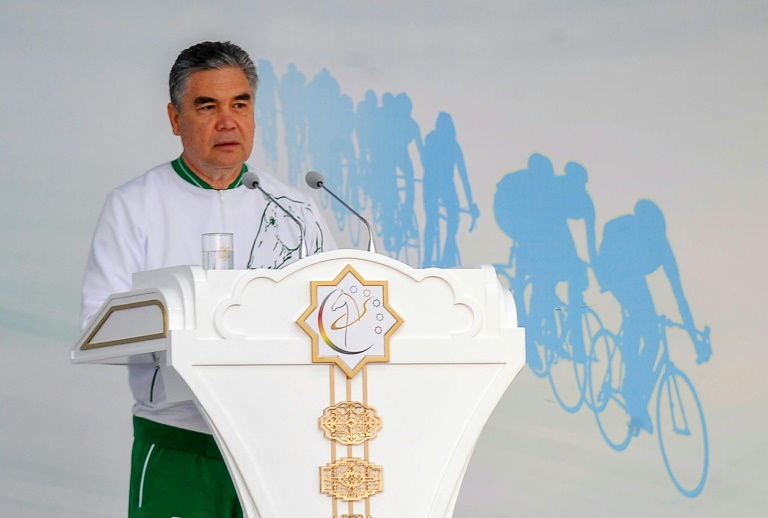
Berdymukhamedov, Turkmenistan's horse-loving autocrat

Turkmenistan’s autocrat Gurbanguly Berdymukhamedov, who has signalled his intention to step down as president, went from personal dentist of the country’s eccentric former leader to head of state, before recreating much of his predecessor’s personality cult.

Horse-mad Berdymukhamedov, 64, took control over the Central Asian state in 2006 after the death of Saparmurat Niyazov, who had styled himself as “father of the Turkmen people.”

At the time, there were hopes that Berdymukhamedov might open up his isolated, gas-rich ex-Soviet homeland to the wider world.

He moved to strip away some of Niyazov’s excesses but did not loosen the authorities’ iron grip — and eventually erected a glitzy monument to himself.

Now he has said it is time for “young leaders” to take power in the country, amid strong speculation that his son Serdar Berdymukhamedov, a vice premier, will run in snap leadership elections set for March 12. 

But the family patriarch is likely to continue to influence politics in his capacity as chair of the upper house, a role he said he will retain. 

– From teeth to the top –

Born on June 29, 1957, the only son in a family of eight children, Berdymukhamedov was a career dentist before being appointed health minister in 1997.

After the sudden death in 2006 of the strongman who dominated Turkmenistan since independence from the Soviet Union in 1991, Berdymukhamedov ascended to the throne almost immediately with backing from the security services.

Niyazov had made the desert-bound country one of the world’s most reclusive nations, building a cult of personality that saw him rename a month after his mother and erect a golden statue of himself that rotated with the sun.

Berdymukhamedov returned the months to their traditional names, but very quickly became yet another authoritarian leader in Central Asia, earning the moniker Arkadag, or “Protector”, and lapping up praise from court poets. 

Then, in 2015, authorities honoured him with his own gold statue, which depicted Berdymukhamedov atop one of his beloved stallions, a dove perched on his hand.

There is no free media in Turkmenistan and Berdymukhamedov enjoys fawning coverage on state television where he is regularly shown hectoring subordinates, indulging in sporting pastimes and performing musical duets with his favourite grandson. 

The wall-to-wall coverage meant that when he disappeared from the nation’s screens for several weeks a few years ago, speculation over his health ran wild. 

Berdymukhamedov quelled the rumours in style by taking a rally car for a spin next to a flaming gas pit — known locally as “the gate to hell” — in the inhospitable Karakum desert.  

But he could not avoid embarrassment in 2013 when a video surfaced online of him tumbling from his favourite mount after winning a horse race. 

While state media blanked the news, footage smuggled out of the country proved an internet sensation.

“(Berdymukhamedov) likes horses. But do horses like him? The answer is neigh!” crowed British comedian John Oliver some six years after the fall on Last Week Tonight, a popular US cable television show. 

Niyazov kept his family mostly invisible from the public, and Berdymukhamedov followed suit during the first half of his reign.

But in recent years his only son, Serdar Berdymukhamedov, has received plenty of screen time after rising from mid-ranking officialdom to key power player in Turkmenistan’s cabinet. 

Berdymukhamedov’s wife’s Ogulgerek rarely appears in public but was last year shown posing alongside her husband for a photograph with Turkish leader Recep Tayyip Erdogan and spouse Emine.   

– Zero Covid, zero poverty –

With government mouthpieces relentlessly trumpeting Berdymukhamedov’s brilliance, bad news is in short supply. 

Turkmenistan remains one of only a handful of states in the world yet to officially acknowledge a case of the coronavirus. 

Berdymukhamedov has hailed zero Covid as “a big achievement”, even as foreign-based media reported deaths with the disease of Turkmen notables and a Turkish diplomat who was posted in Ashgabat.

In 2017, the country hosted in lavish style the Asian Indoor and Martial Arts Games in Ashgabat.  

A new bird-shaped airport for the capital worth over $2 billion was built in time for the showpiece, but has seen few tourists since. 

Against the backdrop of extravagant spending, rights groups have warned that the government has been unable to secure affordable food for a population struggling from hyperinflation.

Berdymukhamedov has retained Niyazov’s “positive neutrality” position in foreign affairs, but the policy often looks like self-imposed isolation.     

If Turkmenistan was once almost wholly reliant on Russian demand for its natural gas, that role has fallen in the past decade to China, which now accounts for at least three-quarters of exports.   
Biden to sound out Putin as US warns of Ukraine war 'any day'

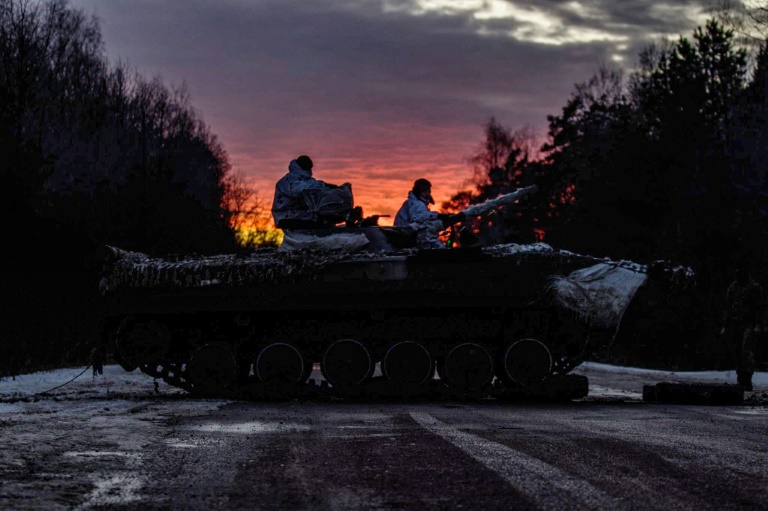
US President Joe Biden and France’s Emmanuel Macron prepared to sound out Russia’s Vladimir Putin on Saturday and Ukraine urged its citizens not to panic after Washington warned that an all-out invasion could begin “any day”.

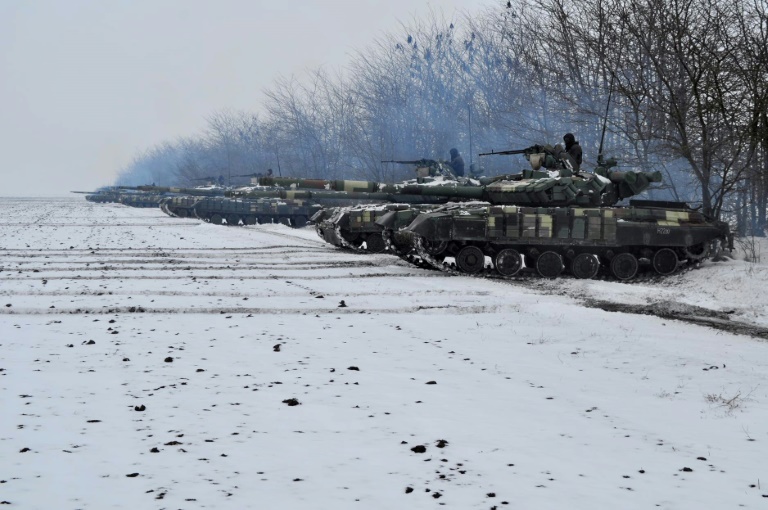
Weeks of tensions that have seen Russia surround its western neighbour with more than 100,000 troops revved up another notch when the Kremlin launched its biggest naval drills in years across the Black Sea.

The exercises off the coast of Ukraine’s Odessa added urgency to a hastily arranged call Saturday between Biden and Putin aimed at defusing one of the gravest crises in East-West relations since the Cold War.

The Russian leader is also due to speak later Saturday with Macron. The talks come after a week of frantic shuttle diplomacy by the French leader and European officials did little to ease fears of war breaking out in eastern Europe.

Russia on Saturday added to the ominous tone by pulling some of its diplomatic staff out of Ukraine.

The foreign ministry in Moscow said its decision was prompted by fears of “possible provocations from the Kyiv regime”.

But Washington and a host of European countries cited the growing threat of a Russian invasion as they called on their citizens to leave Ukraine as soon possible.

Germany became the latest European country to advise its citizens to leave Ukraine while the US embassy in Kyiv ordered non-emergency staff to leave Ukraine. 

The prospect of frightened Westerners fleeing their country prompted Ukraine’s foreign ministry to issue an appeal to its citizens to keep calm.

“At the moment, it is critically important to remain calm, to consolidate inside the country, to avoid destabilising actions and those that sow panic,” the ministry said.

“Ukrainian diplomats are in constant contact with all its key partners, swiftly receiving the information needed to prepare a well-timed response.”

– ‘Any day now’ –

Washington on Friday issued its most dire warning yet that Russia had assembled enough forces to launch a serious assault at any moment.

“Our view that military action could occur any day now, and could occur before the end of the Olympics, is only growing in terms of its robustness,” US National Security Advisor Jake Sullivan warned.

US military assessments had earlier said the Kremlin may want to wait for the Beijing Winter Olympic Games to end on February 20 before launching an offensive so as not to offend Russia’s ally China.

Sullivan stopped short of saying that the United States has concluded that Putin has made the decision to attack. 

But some US media cited intelligence sources and officials as saying that Washington believes that a war could begin at some point after Putin concludes talks with German Chancellor Olaf Scholz in Moscow on Tuesday.

The German leader is due to travel to Kyiv on Monday and then visit Putin as part of Europe’s efforts to keep the lines of communication open with Moscow.

Russia is demanding binding security guarantees from the West that includes a pledge to roll NATO forces out of eastern Europe and to never expand into Ukraine.

Washington has flatly rejected the demands while offering to discuss a new European disarmament agreement with Moscow.

Russia has called the US proposal woefully insufficient.

– ‘Pivotal moment’ –

The diplomatic push will continue on Saturday with talks between US Secretary of State Antony Blinken and Russian Foreign Minister Sergei Lavrov.

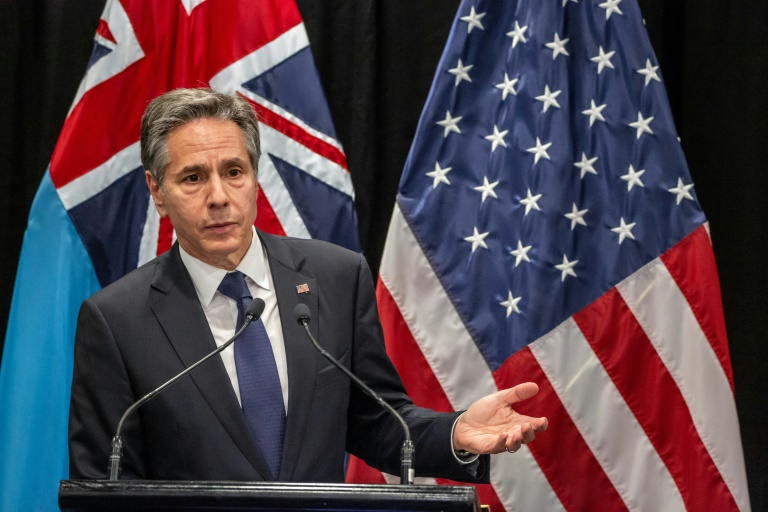
Blinken told a press conference in Fiji that the crisis had entered “a pivotal moment”.

“If Russia is genuinely interested in resolving this crisis of its own making through diplomacy and dialogue, we’re prepared to do that,” Blinken said.

He added that dialogue would only be possible if accompanied by “de-escalation.”

“So far, we’ve only seen escalation from Moscow,” he said.

Blinken said the United States was also still waiting for a response to “some of the ideas” floated by Washington.

Macron’s talks with Putin came after a visit to Moscow last Monday during which he said he had secured a pledge “that there will be no degradation nor escalation” from the Kremlin.

– Western, NATO unity –

Sullivan repeated warnings that Russia risks severe Western sanctions and said that NATO is now “more cohesive, more purposeful, more dynamic than any time in recent memory.”

The Pentagon announced it was sending 3,000 more troops to bolster ally Poland.

European leaders also resolved to punish Russia with severe economic sanctions if it attacks.

“The aim is to prevent a war in Europe,” Scholz’s spokesman said after a call between US and European leaders.

EU chief Ursula von der Leyen said the sanctions would target the financial and energy sectors.

Sullivan spoke to von der Leyen’s chief of staff by video call to coordinate “the details of a potential transatlantic response, including both financial sanctions and export controls,” the White House said.

burs-zak/as/gw

Paris police clamp down on Canada-style 'freedom convoy'

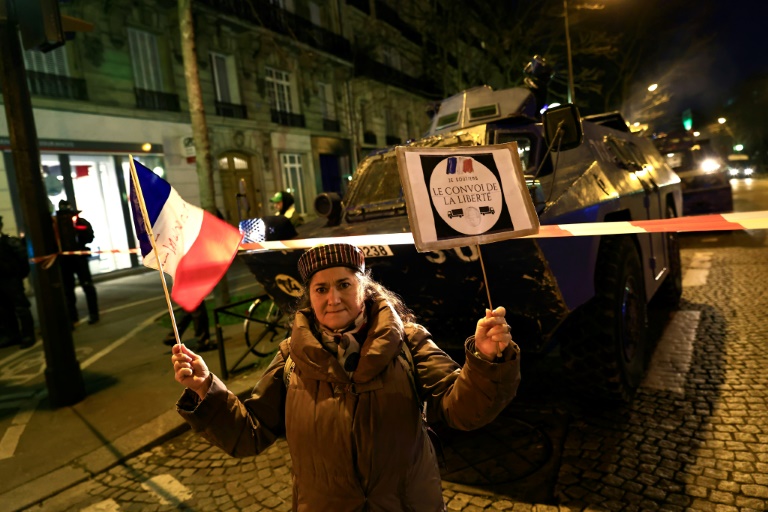
A French “freedom convoy” of cars and vans began arriving in Paris on Saturday for a protest over coronavirus restrictions, but the police moved quickly to prevent a Canadian-style blockade of the capital by issuing hundreds of fines.

Inspired by the truckers that shut down the Canadian capital Ottawa, thousands of demonstrators from across France said they planned to form “a mass of vehicles that the security forces would find impossible to contain”.

Several hundred vehicles, mostly vans, mobile-homes and cars, converged on the main ring road around the city after spending the night camped on the outskirts of the capital.

But the police acted quickly, issuing 283 fines for “participation in an unauthorised protest” by mid-morning.

The demonstrators include anti-Covid vaccination activists, but also people angry at fast-rising energy prices, some of whom took part in the “Yellow Vest” protest movement of 2018/2019.

Just two months ahead of presidential elections and with the government desperate to avoid a repeat of the “Yellow Vest” riots that shook the capital, Macron said Friday he understood the “fatigue” linked to the Covid-19 pandemic.

– ‘Fatigue leads to anger’ –

“This fatigue also leads to anger. I understand it and I respect it. But I call for the utmost calm,” he told the Ouest-France newspaper. 

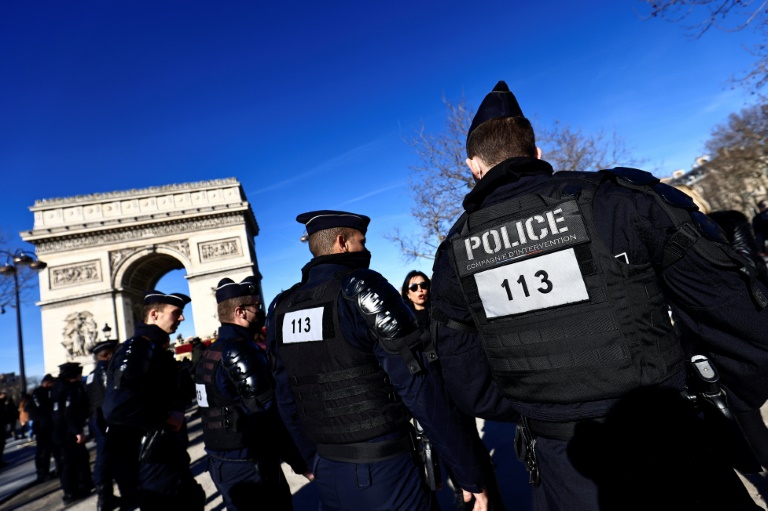
Nearly 7,200 officers have been deployed to prevent a blockade, with the Champs-Elysees avenue, which was the epicentre of the “Yellow Vest” protests, under particularly heavy guard.

Police showed off their anti-blockage arsenal on Twitter, publishing photographs of loader tractors for the removal of barricades as well as trucks equipped with cranes or water cannon.

Gendarmerie armoured vehicles have also been deployed in the streets of the capital for the first time since the “Yellow Vest” protests.

Prime Minister Jean Castex vowed to remain steadfast.

“If they block traffic or if they try to block the capital, we must be very firm about this,” he told France 2 television.

The convoys set out from Nice in the south, Lille and Vimy in the north, Strasbourg in the east and Chateaubourg in the west.

– ‘It’s a betrayal’ –

They are demanding the withdrawal of the government’s vaccine pass, which is required for access to many public spaces, and more help with their energy bills.

“People need to see us, and to listen to the people who just want to live a normal and free life,” said Lisa, a 62-year-old retired health worker travelling in the Chateaubourg convoy, who did not want to give her surname.

Paris police banned the gathering saying it posed a threat to public order and said protesters who tried to block roads would face fines or arrest.

The order prohibiting the assembly of convoys was upheld on Friday by the courts, which rejected two appeals.

“It’s a betrayal. The basis of the order is not respectful of the law, of the freedom to demonstrate,” anti-vaccine and “yellow vest” activist Sophie Tissier told AFP.

The prime minister defended the clampdown.

“The right to demonstrate and to have an opinion are a constitutionally guaranteed right in our republic and in our democracy. The right to block others or to prevent coming and going is not,” he said.

From Paris, some of the protesters plan to travel on to Brussels for a “European convergence” of protesters planned there for Monday. 

Phil, a 58-year-old on his way by truck from Brittany, said his refusal to get vaccinated had created “upheaval” in his family and work relations.

“When you join a demonstration you feel less alone,” he told AFP.

burs-ao/cb/ach 

Three Nicaraguan opposition figures guilty of 'undermining national integrity'

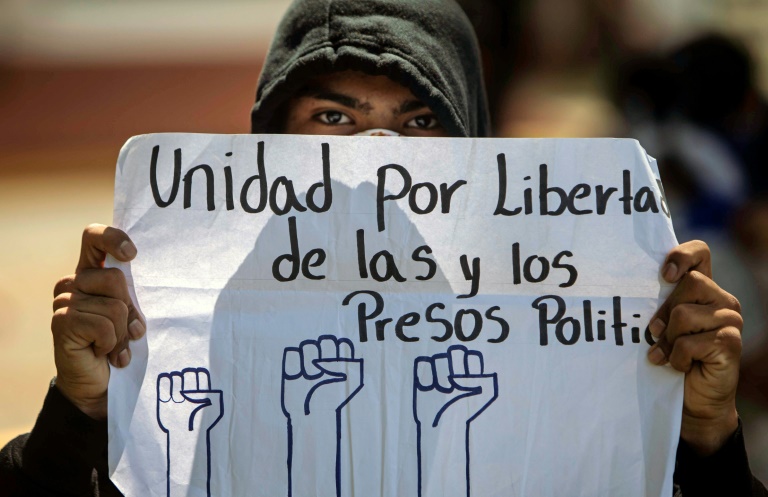
Three key opposition figures in Nicaragua including a former deputy foreign minister have been found guilty of “undermining national integrity,” a rights group said Friday, in a continuing crackdown on opponents of President Daniel Ortega.

A total of 46 opposition figures, including seven former presidential candidates, were jailed last year before a fraught presidential election that saw Ortega re-elected for a fourth consecutive term.

The Nicaraguan president has accused them of plotting to overthrow him with the support of Washington.

Victor Tinoco, an ex-guerrilla and former deputy foreign minister in Ortega’s Sandinista National Liberation Front, was among the latest group convicted but has yet to be sentenced, the Nicaraguan Center for Human Rights said.

Academic Max Jerez and opposition leader Nidia Barbosa were also found guilty of the same charge, taking to 18 the number of opposition figures convicted of crimes against national integrity or “conspiracy.”

The prosecution is seeking 13 years in prison for Tinoco and Jerez, and 11 for Barbosa.

Tinoco joined the Sandinista guerrillas in the 1970s, becoming ambassador to the United Nations after the triumph of the Nicaraguan revolution in 1979.

He served as deputy foreign minister between 1981 and 1990.

Jerez, a political science student at the Polytechnic University of Nicaragua, was involved in negotiations to end a political crisis triggered by mass protests in 2018 against tax hikes imposed by Ortega. 

The demonstrations left 355 people dead, according to the Inter-American Commission on Human Rights. The government labeled the protests an attempted coup.

Spain, Portugal hit by winter drought

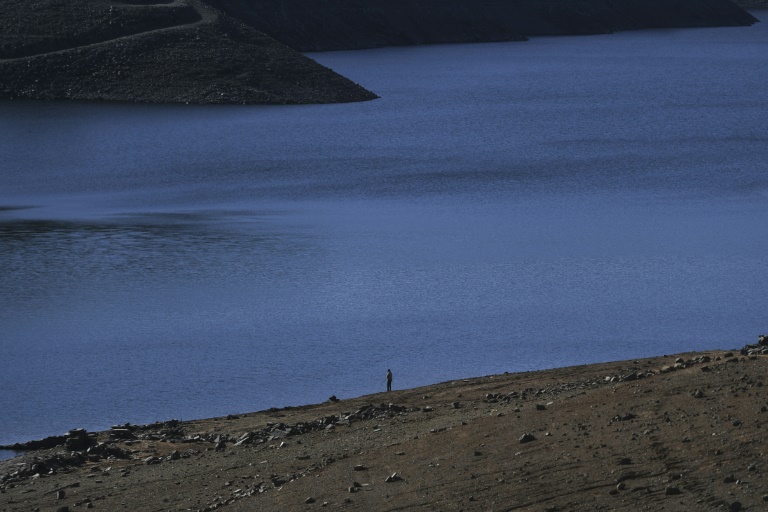
In central Portugal, a sustained drought has revealed the ruins of a village that was totally submerged underwater when a large reservoir was created nearly 70 years ago.

“I have never seen that!” says Carlos Perdigao, 76, as he gazes at the ruined stone houses of Vilar which were swallowed up by the Zezere river when a dam was opened in 1954.

Vilar stands on the banks of the river, surrounded by cracked yellow earth, another sign of the ongoing dry spell during what is normally a rainy winter season, with the drought also hitting neighbouring Spain.

Weather services in both countries say it was the second driest January on record since the year 2000.

The current drought is extraordinary because of “its intensity, scale and length”, says climate scientist Ricardo Deus of Portugal’s meteorology agency IPMA.

Of Portugal’s 55 dams, 24 are only holding half of their water capacity, and five are below 20 per cent, according to the European Union’s Copernicus Earth observation service.

The  Algarve, Portugal’s southernmost province, and one of Europe’s top tourism destinations, is one of those most affected by the drought.

Meanwhile Spain only got a quarter of the precipitation it normally gets in January, said the AEMET weather service. 

The dry spell, which began at the end of 2021, is ruining crops, leaving farmers struggling to feed livestock and hampering hydroelectricity production.

– ‘It’s a disaster’ –

Earlier this month, Portugal ordered five of its hydropower dams to suspend water use for electricity production in order to prioritise human consumption.

Nearly 30 percent of Portugal’s electricity comes from hydropower dams.

And in Spain, Agriculture Minister Luis Planas on Tuesday said the government was “concerned” about the drought and would adopt the “necessary measures” depending on how the situation evolves.

Spain’s water reserves are currently at less than 45 percent of their capacity, officials say, with the southern Andalusia region and Catalonia in the northeast worst hit. 

Farmers in both countries are worried.

“Look! The grass isn’t growing to feed the animals,” says Antonio Estevao, a cheese producer who owns a herd of around 30 goats in Portela de Fojo Machio, a village in central Portugal near the town of Pampilhosa da Serra.

“If it doesn’t rain in the coming days, it’s going to be very complicated,” he sighs, gazing at his drought-stressed pastures.

The lack of rain is also jeopardising the town’s efforts to draw tourists inland with a floating pool structure set up for bathers in the Zezere river.

But the pool’s plastic lining lies slumped on the ground, with the drought forcing the river to recede.

“For us, it’s a disaster,” says the town’s mayor, Henrique Fernandes Marques.

The same area was badly hit by a wave of wildfires that raged through parched farmlands and forests in 2017, claiming over 100 lives.

– No end in sight –

More frequent and intense droughts are expected to put enormous strain on climate-vulnerable regions as temperatures rise, and will likely heighten the risk of related natural disasters such as wildfires, scientists say.

While the alternation between dry and wet years is normal in southern Europe, “we have observed a decline in the percentage of rainy years lately,” said Filipe Duarte Santos, an environment specialist at Lisbon University.

These droughts are “one of the most serious consequences of climate change,” he added.

“Until greenhouse gas emissions are drastically reduced, the problem will continue.”

The situation is not likely to improve in the coming weeks as forecasters expect rainfall in both countries to be below the seasonal average.

Faced with this reality, the Portuguese government on Thursday said it would boost its cooperation with Spain to fight the drought.

Canada truckers defy order to clear key bridge as protests swell

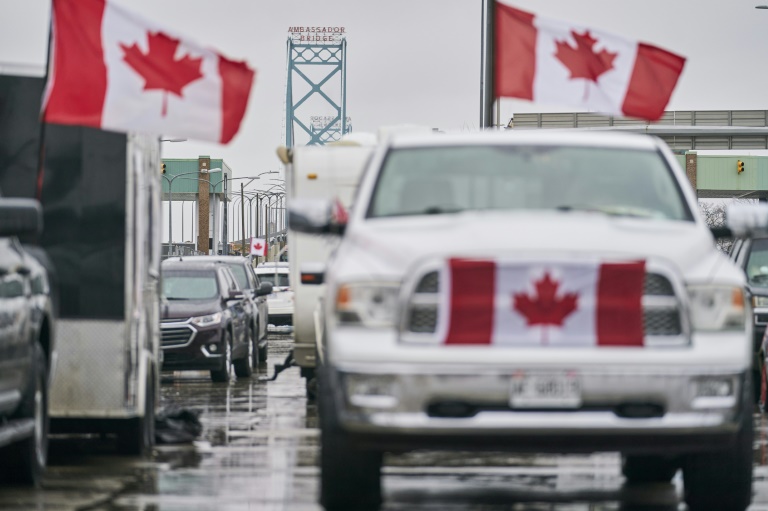
Truckers snarling a key bridge between Canada and the United States over vaccination rules defied a judge’s order to leave Friday night, with snowballing protests piling pressure on Prime Minister Justin Trudeau.

The days-long blockade of the Ambassador Bridge — connecting Windsor, Ontario, and the US city of Detroit — has paralyzed a key North American trade route, with Trudeau looking to resolve a crisis that has threatened to morph into a populist movement.

Protesters have defied a Canadian judge’s order to clear the suspension bridge as many others piled into the capital Ottawa — where the streets have been clogged with hundreds of big rigs for a fortnight — and copycat demonstrations as far away as France and New Zealand continued.

Windsor mayor Drew Dilkens had said a court order required the truckers to clear roads by 7:00 pm local time (0000 GMT) but their numbers continued to swell as the deadline came and went.

Two other border crossings are also blocked: the first, at Emerson, connects the province of Manitoba to North Dakota, while the second is in Alberta.

Upping the stakes, US President Joe Biden Friday reiterated his “concern” to Trudeau, telling him the blockades were having serious effects on US firms.

The actions have already had significant economic impact, with automakers forced to cut production on both sides of the border, triggering fears it could undermine Canada’s recovery from the coronavirus pandemic.

The Ambassador Bridge is used daily by more than 40,000 people, along with trucks carrying $323 million worth of goods on average — about one-quarter of all Canada-US trade.

Authorities are under increasing pressure to crack down on the demonstrations that have paralyzed Ottawa.

Trudeau said all options were “on the table” for ending the protests. But speaking to reporters in the capital, he reiterated that calling in the military was a distant final resort, and “something to avoid having to do at all costs.”

“This unlawful activity has to end and it will end,” the prime minister said, adding that it was up to police to “enforce the law and protect public order.”

Ottawa police have said they are “not in a position” to end the demonstration without reinforcements.

The premier of Ontario province — which includes both Ottawa and Windsor — announced a state of emergency on Friday, threatening steep fines of up to 100,000 Canadian dollars ($80,000) and jail unless protesters end their “illegal occupation.”

Doug Ford said he understood “frustrations have reached a boiling point for many Canadians” but warned “this is no longer a protest.”

He has accused the truckers of “targeting our lifeline for food, fuel and goods across our borders” while “trying to force a political agenda through disruption, intimidation, and chaos.”

The self-styled “Freedom Convoy” began in the country’s west in anger at requirements that truckers either be vaccinated or test and isolate when crossing the US-Canada border — but has morphed into a broader protest against pandemic health rules and Trudeau’s government.

– Protests in Paris –

Inspired by the Canadian truckers, thousands of protesters encamped on the outskirts of Paris early Saturday resumed their way to the French capital in convoys of vehicles, defying a ban by authorities who are determined to prevent any blockade of the city.

The demonstrators included opponents of Covid-19 vaccinations as well as people angry at fast-rising energy prices — in an echo of the “yellow vest” grievances that sparked widespread protests in 2018 and 2019.

Nearly 7,200 police and gendarmes “are being deployed over the next three days to enforce the ban on vehicle convoys,” Paris police headquarters said.

A makeshift camp has similarly sprung up outside New Zealand’s parliament, the scene of violent clashes earlier this week as police sought to clear anti-vaccine demonstrators.

– ‘Intimidation’ –

Ottawa is expecting another influx of protesters Saturday, with a stage set up in front of parliament and crowds growing larger than they have been in recent days, an AFP journalist said.

On Thursday evening, Ford’s government separately obtained a court order barring anyone from tapping the millions of dollars raised by the convoy through the platform GiveSendGo after their fundraising efforts on GoFundMe were terminated. The site said the campaign violated its terms of service.

Trudeau said Friday: “Canadian banks are monitoring financial activity very closely and taking action as necessary.”

But sitting across from Ottawa’s Gothic revival parliament buildings, Matt Lehner said he was “not worried.”

“We are standing up for what we believe in, we are not breaking any laws,” he told AFP, a Canadian flag hanging from the end of his hockey stick as he waited for the “thousands” of Canadians who will join the protests this weekend.

Biden and Putin to speak as US warns Russia could attack Ukraine 'any day'

Russian President Vladimir Putin is set to speak with his US and French counterparts on Saturday after the United States warned that Moscow could invade Ukraine in days.

The United States had dramatically raised the alarm over Ukraine on Friday, saying a Russian invasion starting with civilians caught under aerial bombing could begin in days and telling US citizens to leave within 48 hours.

In a diplomatic flurry to head off a possible invasion, Putin will speak with Joe Biden and Emmanuel Macron on Saturday.

US Secretary of State Antony Blinken said he will also speak to Russian counterpart Sergei Lavrov the same day, terming this “a pivotal moment” in the crisis and that his government was “prepared for whatever should happen.”

“We continue to see very troubling signs of Russian escalation, including new forces arriving around Ukraine’s borders,” Blinken said at a press conference in Fiji.

“If Russia is genuinely interested in resolving this crisis of its own making through diplomacy and dialogue, we’re prepared to do that,” he said.

The White House had earlier warned of an attack by the more than 100,000 Russian troops currently massed next to Ukraine, even while the Beijing Olympics were still underway. 

Blinken added that dialogue would only be possible if accompanied by “de-escalation.”

“So far, we’ve only seen escalation from Moscow,” he said, adding Russia has yet to respond to “some of the ideas” floated by Washington. “I’ll be asking Mr Lavrov if we can anticipate a response in the coming days, to see if we can carry the dialogue forward.”

Blinken declined to confirm whether the United States would be evacuating its embassy staff from Kyiv: “We’ll have more to say about that in the coming hours,” he said.

On Friday, White House National Security Advisor Jake Sullivan called on Americans to immediately leave Ukraine, warning a Russian attack “is likely to begin with aerial bombing and missile attacks that could obviously kill civilians.”

While stressing that it was not yet known whether Putin had taken a decision, saying “we can’t predict the exact determination,” Sullivan made clear the United States was bracing for the worst, including a “rapid assault” on the capital Kyiv.

Sullivan spoke shortly after President Joe Biden and six European leaders, the heads of NATO and the European Union held talks on the worst crisis between the West and Russia since the end of the Cold War.

A US official said Biden would speak with Putin on Saturday, while Paris said Macron would also be calling the Russian leader on Saturday.

Underlining the bleak outlook, a string of countries joined the exodus of diplomats and citizens from Ukraine, while oil prices surged and US equities tumbled.

– Western, NATO unity –

Sullivan repeated warnings that Russia risks severe Western sanctions and said that NATO, which Putin wants to push back from eastern Europe, is now “more cohesive, more purposeful, more dynamic than any time in recent memory.”

The Pentagon announced it was sending 3,000 more troops to bolster ally Poland.

Following the earlier group phone call between US and European leaders, German Chancellor Olaf Scholz’s spokesman said “the aim is to prevent a war in Europe.” But if Moscow fails to pull back, “the allies are determined to jointly take swift and deep sanctions against Russia.”

These sanctions would target the financial and energy sectors, EU chief Ursula von der Leyen said.

Sullivan spoke to der Leyen’s chief of staff Bjoern Seibert by video call on Friday to coordinate “the details of a potential transatlantic response, including both financial sanctions and export controls,” according to a White House statement.

– Russia surrounding Ukraine –

Russian naval forces and troops, including units brought in from all over the vast country, now surround Ukraine to the south, east and north.

Russia, which denies any plan to attack Ukraine, already controls the Crimea territory seized in 2014 and supports separatist forces controlling Ukraine’s Donbas region in the east.

The Kremlin says its goal is to get NATO to agree to never give Ukraine membership and also to withdraw from eastern European countries already in the alliance, effectively carving Europe into Cold War-style spheres of influence. 

The United States and its European allies reject the demands, insisting that NATO poses no threat to Russia.

Adding to tensions, large-scale Russian military drills were underway Friday with authoritarian ally Belarus, which lies just north of Kyiv and also borders the European Union.

Russia’s defence ministry said Friday it was also holding military exercises near Ukraine’s border in the Black Sea. 

According to the head of Norway’s military intelligence service, Russia is operationally ready to conduct a wide range of military operations in Ukraine and the Kremlin just needs to make the call.

Top US general Mark Milley and his Russian counterpart Valery Gerasimov talked Friday by phone, the Pentagon said, giving no details of the discussion.

burs-sms/md/dw/ssy/rbu

Myanmar junta says to free over 800 prisoners

Myanmar’s junta on Saturday announced an amnesty for more than 800 prisoners, as it held a parade and show of force in the capital to mark the country’s Union Day.

The country has been in turmoil since last year’s coup, with mass protests and a subsequent military crackdown that has killed more than 1,500 civilians, according to the UN’s human rights office.

Junta chief Min Aung Hlaing issued the “pardon order” — a regular feature of major holidays in the country — for 814 prisoners, state media said, marking the 75th Union Day.

The annual holiday commemorates an agreement between independence hero Aung San and several ethnic groups to form a Union of Burma independent of British rule.

Those given amnesty will be mostly from prisons in commercial hub Yangon, junta spokesperson Zaw Min Tun told AFP. 

He did not say whether Australian academic Sean Turnell — who has been detained for more than a year — would be among those released.

The economics professor was working as an adviser to civilian leader Aung San Suu Kyi when he was arrested last February, days after she was ousted by the military.

He has been charged with violating Myanmar’s official secrets law and faces a maximum penalty of 14 years in prison if found guilty.

About 100 people gathered outside Yangon’s Insein prison on Saturday morning hoping to be reunited with loved ones, AFP correspondents said.

Four minibuses left the prison around noon local time (0530 GMT) and drove away, with those inside waving as people in the crowd shouted the names of relatives.

Thin Thin Aye, 46, waited in the hope her son — jailed last year for incitement against the military — would be among those freed.

She kept waiting even after the last bus pulled away and prison staff said no other prisoners would be released.

“I hope my son will be released as soon as possible and I want him to stay with our family,” she told AFP through tears. 

– ‘Where was the union?’ –

The junta marked Union Day with a show of force in the military-built capital Naypyidaw.

Hundreds of troops paraded alongside civil servants waving national flags in unison, and there were choreographed dances.

Helicopters carrying the country’s yellow, green and red flag flew overhead, followed by jets trailing the same colours in smoke.

In a speech to troops, Min Aung Hlaing repeated the military’s claim of massive fraud in 2020 elections won by Suu Kyi’s party.

He also invited the myriad ethnic armed organisations that have been fighting Myanmar’s military — and each other — for decades to sit for peace talks.

The Karen National Union, whose fighters have clashed repeatedly with junta troops in the east, said it would not attend talks.

“They say it was union day, but where was the union?” spokesman Padoh Saw Taw Nee told AFP. “They stole power from the civilian government. They are not the official government.”

“The message for Union Day is at complete odds with the reality that is Myanmar,” said independent analyst David Mathieson, adding the junta was not sincere about peace.

“It’s pretty absurd that on the 75th anniversary of Union Day the country is more divided than at any point in its history.”

Protest convoy approaches Paris defying police deployment

Thousands of opponents of coronavirus rules encamped on the outskirts of Paris early Saturday resumed their way to the French capital in convoys of vehicles, defying a ban by authorities who are determined to prevent any blockade of the city.

Inspired by Canadian truckers paralysing border traffic with the United States, the demonstrators include anti-Covid vaccination activists, but also people angry at fast-rising energy prices.

Some drivers parked on the fringes of Chartres, about 80 kilometres (50 miles) from Paris, left at around 5:00 am (0400 GMT), according to messages seen by AFP.

Messages said the aim was to “create a mass of vehicles that the forces of order would find impossible to contain”.

“Faced with several thousand vehicles capable of stopping or being on the move” the police would not be able to do much, one message said.

Nearly 7,200 police and gendarmes “are being deployed over the next three days to enforce the ban on vehicle convoys,” Paris police headquarters said.

The prefect of the Paris police, Didier Lallement, said they had created a temporary car pound which, together with dozens of tow trucks, “will … put an end to any blockage”.

Police showed off their anti-blockage arsenal on Twitter, publishing photographs of loader tractors for the removal of barricades as well as trucks equipped with cranes or water cannon.

Gendarmerie armoured vehicles have also been deployed in the streets of the capital for the first time since the “yellow vest” protests at the end of 2018.

Prime Minister Jean Castex vowed to remain steadfast.

“If they block traffic or if they try to block the capital, we must be very firm about this,” he said.

Hundreds of cars, motorhomes and vans from Lille, Strasbourg, Chateaubourg and elsewhere stopped Friday evening at the gates of Paris, but a police source said no convoy had entered the capital.

They are demanding a withdrawal of the government’s vaccine pass, which is required for access to many public spaces, and more help with their energy bills.

“People need to see us, and to listen to the people who just want to live a normal and free life,” said Lisa, a 62-year-old retired health worker who joined a convoy of more than 1,000 vehicles leaving Chateaubourg in the western Brittany region early Friday.

Like other protesters, Lisa has been active in the “yellow vest” movement that erupted over a fuel tax hike before becoming a platform for other complaints against President Emmanuel Macron.

Just two months ahead of presidential elections and with the government desperate to avoid violent scenes in the capital, Macron said Friday he understood the “fatigue” linked to the Covid-19 pandemic.

“This fatigue also leads to anger. I understand it and I respect it. But I call for the utmost calm,” he told the Ouest-France newspaper. 

– ‘It’s a betrayal’ –

Police estimated 3,300 vehicles were involved in the various convoys by Friday afternoon.

Paris police banned the gathering because of feared “public order disturbances” and said protesters who tried to block roads would face fines or arrest.

The order prohibiting the assembly of convoys was upheld on Friday by the courts, which rejected two appeals.

“It’s a betrayal. The basis of the order is not respectful of the law, of the freedom to demonstrate,” anti-vaccine and “yellow vest” activist Sophie Tissier told AFP.

“The right to demonstrate and to have an opinion are a constitutionally guaranteed right in our republic and in our democracy. The right to block others or to prevent coming and going is not,” the prime minister said.

Refuting any desire to block the capital, the demonstrators were hoping to swell the ranks of the regular Saturday protests against the government’s vaccine pass.

“It’s important that we don’t interfere with other people on the roads,” said one activist, Robin, on his way from Illkirch-Graffenstaden in the eastern Alsace region. “That way we’ll keep the population on our side, like they did in Canada.” 

Some then want to travel on to Brussels for a “European convergence” of protesters planned there for Monday. 

Phil, a 58-year-old on his way by truck from Brittany, said his refusal to get vaccinated had created “upheaval” in his family and work relations.

“When you join a demonstration you feel less alone,” he told AFP.

burs-ao/ach/ssy

US to reopen Solomon Islands embassy to counter Chinese influence

The United States will re-establish an embassy in the Solomon Islands, Secretary of State Antony Blinken said Saturday, in an effort to counter China’s influence in the politically troubled Pacific island.

Blinken announced the move during a visit to nearby Fiji, where he met virtually with around 18 Pacific island leaders to stress Washington’s attention to the region in an attempt to curb Beijing’s push for greater influence.

The United States closed its embassy in the Solomons Island capital Honiara in 1993 and is now represented by a consulate there, directed from the US embassy in Papua New Guinea.

The move comes just a few months after riots in the island chain of 800,000 people in November when protesters tried to storm parliament and then went on a three-day rampage, torching much of Honiara’s Chinatown.

The unrest was sparked by opposition to veteran Prime Minister Manasseh Sogavare and partly fuelled by poverty, unemployment and inter-island rivalries, but anti-China sentiment also played a role.

– Pushing back against Beijing –

US officials said they were particularly concerned about China’s growing influence in the Solomons.

Beijing said in December it would send police advisors and riot gear to the country as foreign peacekeepers began leaving the Pacific nation after being deployed during the deadly protests.

A subplot to November’s unrest was Sogavare’s efforts to forge closer ties with Beijing after abruptly breaking off the island’s long-time ties with Taiwan in 2019.

China baulks at any official exchanges between other countries and self-ruled Taiwan, which it sees as its own territory awaiting reunification.

The Solomons government said in December it had accepted Beijing’s offer of six “liaison officers” to train its police force and equipment including shields, helmets, batons and other “non-lethal” gear.

– First visit in 37 years –

The decision on the embassy was revealed on Blinken’s visit to Fiji, the first US Secretary of State to arrive on the island in 37 years.

The administration of President Joe Biden says despite its current preoccupation with the Russian threat to Ukraine, it sees the “Indo-Pacific” — where China is increasingly expanding its footprint — as the crucial focus of future security, political and economic strategy.

“What we’re increasingly going to have to do is put forward a multi-faceted strategy that’s economic, that’s strategic, that involves diplomacy, that goes to far-flung places like Fiji,” a senior administration official told reporters ahead of the visit.

In Fiji, Blinken had two-way talks with Acting Prime Minister Aiyaz Sayed-Khaiyum, as Frank Bainimarama, who has led the country since a 2000 coup, remains out of sight recovering from cardiac surgery in Australia.

Blinken also held a video conference with 17 other Pacific Island nations, stressing greater attention on regional problems like illegal fishing and climate change, pledging more support from Washington.

“China clearly has ambitions in the Pacific and it’s playing out regularly and some of what they’re doing is causing real concerns,” the official said.

“We have practical, historic, moral ties and obligations to our partners in the region. We intend to live up to those,” they added.

Washington’s effort coincided with five Micronesian nations — Kiribati, Marshall Islands, Nauru and Palau — suspending plans to break away from the Pacific Islands Forum, a crucial regional bloc of 18 island states.

– Australia worried –

Jonathan Pryke, a Pacific Islands specialist at Australia’s Lowy Institute, called Blinken’s visit “pretty significant” for the region.

“The US is clearly anxious about China’s growing presence in the region,” he said, adding that the US “just doesn’t have a significant presence in the Pacific.”

Wesley Morgan, an expert in Pacific security at Australia’s Griffith University, said the United States was in part reacting to Canberra’s own concerns about the potential for China’s military to establish its presence on Pacific Islands.

“Australia has been trying to get the US to pay more attention to the region because of those worries,” he said.

Morgan said China is helping to build airports and seaports in the region that could serve both commercial and military purposes.

China has also actively courted leaders from the region, inviting them to Beijing for one-on-one meetings with leader Xi Jinping, something the United States has not offered.

“This is about Washington reaffirming their position as security partners of choice,” he said.

Close Bitnami banner
Bitnami