World

C.African army and Russian paramilitary spark panic in two villages: UN source

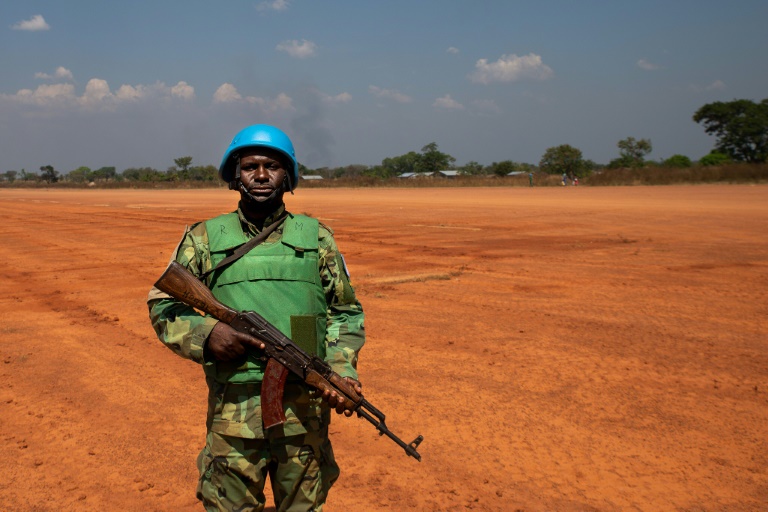
The Central African Republic’s army, accompanied by a Russian paramilitary group, sparked panic earlier this week in the center of the country which prompted some of the population to flee, a UN source in New York told AFP on Friday.

The source, who requested to remain anonymous, added that a contingency of the UN peacekeeping mission in the Central African Republic (MINUSCA) was “blocked” on their way to “investigate and ensure the protection of civilians.”

MINUSCA reported on Wednesday that it had “observed movements of Central African armed forces and other security personnel” around the town of Bria, heading toward the nearby villages of Mouka and Samo-Ouandja, the source told AFP.

The UN uses the term “other security personnel” to refer to the hundreds of Russian paramilitary forces who fight alongside the army, and who have helped them over the past year push back rebels from their strongholds.

Western countries as well as the UN have claimed that the paramilitary forces are “mercenaries” working for the Wagner group, a private security company based in Russia, which has been accused multiple times over the past few months of committing human rights violations against civilian populations.

The presence of the military forces “triggered panic and fear among the civilian population, causing displacement,” the UN source explained.

On January 21, the UN launched an investigation into a mass killing near Bria in which 30 people were killed during a similar operation to Wednesday’s actions by the Central African army and Russian paramilitary forces.

At the end of 2020, a coalition of armed groups — which at the time controlled nearly two thirds of the Central African Republic’s territory — launched an advance towards the capital Bangui, seeking to oust the president, Faustin Archange Touadera, just before the presidential election.

Touadera narrowly won reelection and called on Moscow to send reinforcements for his fledgling army.

Shortly after, hundreds of paramilitary forces arrived in the war-torn country, which the UN identified as Wagner combatants, but which Moscow has described as “non-armed instructors.”

Since then, the Central African army and their allies have taken back most of the country, pushing rebels out of the major cities and their primary footholds.

The rebels frequently unleash guerilla assaults against the security forces as well as civilians.

Biden seeks to split Afghan assets between aid and 9/11 victims

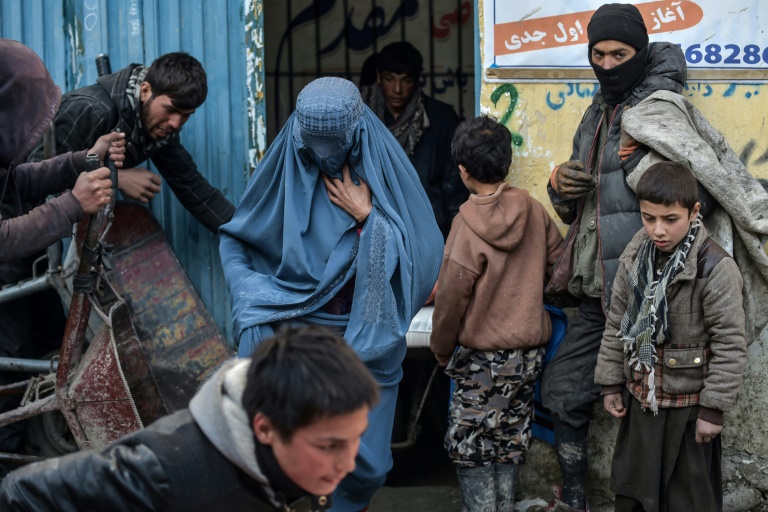
US President Joe Biden seized $7 billion in assets belonging to the previous Afghan government Friday, aiming to split the funds between victims of the 9/11 attacks and desperately needed aid for post-war Afghanistan.

The move drew an angry response from the country’s new leaders the Taliban, which branded the seizure a “theft” and a sign of US “moral decay.”

Biden’s unusual action saw the conflicting, highly sensitive issues of a humanitarian tragedy in Afghanistan, the fundamentalist Taliban fight for recognition, and the push for justice from families impacted by the September 11, 2001 attacks collide, with billions of dollars at stake.

The first stage was simple: Biden formally blocked the assets in an executive order signed Friday.

The money — which a US official said largely stems from foreign assistance once sent to help the now defunct Western-backed Afghan government — had been stuck in the New York Federal Reserve ever since last year’s Taliban victory.

The insurgency, which fought US-led forces for 20 years and now controls the whole country, has not been recognized by Washington or any Western countries, mostly over its human rights record.

However, with appalling poverty gripping Afghanistan, Washington is seeking ways to assist, while side-stepping the Taliban.

The White House said Biden will seek to funnel $3.5 billion of the frozen funds into a humanitarian aid trust “for the benefit of the Afghan people and for Afghanistan’s future.”

The trust fund will manage the aid in a way that bypasses Taliban authorities, a senior US official told reporters, countering likely criticism in Washington that Biden’s administration is inadvertently boosting its former enemy.

Aside from the new plan, “the United States remains the single largest donor of humanitarian aid in Afghanistan,” the senior official said.

More than $516 million has been donated since mid-August last year, the official said. The money is distributed among non-governmental organizations.

The Taliban fumed over Washington’s move.

“The theft and seizure of money held/frozen by the United States of the Afghan people represents the lowest level of human and moral decay of a country and a nation,” Taliban spokesman Mohammad Naeem said on Twitter.

Failure and victory are common throughout history, “but the greatest and most shameful defeat is when moral defeat combines with military defeat,” Naeem added.

– 9/11 victims seek compensation –

The fate of the other $3.5 billion is also complex.

Families of people killed or injured in the 9/11 attacks on New York, the Pentagon and a fourth hijacked airliner that crashed in Pennsylvania have long struggled to find ways to extract compensation from Al-Qaeda and others responsible.

In US lawsuits, groups of victims won default judgements against Al-Qaeda and the Taliban, which hosted the shadowy terrorist group at the time of the attacks, but were unable to collect any money. They will now have the opportunity to sue for access to the frozen Afghan assets.

Those “assets would remain in the United States and are subject to ongoing litigation by US victims of terrorism. Plaintiffs will have a full opportunity to have their claims heard in court,” the White House said.

A senior official called the situation “unprecedented.”

There are “$7 billion of assets in the United States that are owned by a country where there is no government that we recognize. I think we’re acting responsibly to ensure that a portion of that money be used to benefit the people of the country,” he said.

And the US plaintiffs related to 9/11 will “have their day in court.”

Some relatives of 9/11 attack victims however expressed disappointment with Biden’s move, saying Afghanistan should retain access to the money.

“Their country has been devastated. As a 9/11 family member I believe all available funds should go to Afghan relief,” Sandra Bodley, whose 20-year-old niece Deora died on hijacked Flight 93 which crashed in a field in Pennsylvania, told AFP.

Bodley, 78, said going to war in Afghanistan and Iraq was not the correct response to the al-Qaeda attacks.

“Twenty years later I think the world can see that these two wars didn’t make the world safer. They just caused more havoc, chaos and sorrow” in the region, she said.

Western allies vow 'swift, deep sanctions' if Russia invades Ukraine

Western leaders on Friday vowed to take “swift and deep sanctions” against Moscow should Russia march on Ukraine, Berlin said after talks, as Washington warned that a Russian invasion could be just days away.

US President Joe Biden joined six leaders, the heads of NATO and the European Union in crucial talks in a bid to defuse the worst crisis between the West and Russia since the end of the Cold War.

“All diplomatic efforts are aimed at persuading Moscow to de-escalate. The aim is to prevent a war in Europe,” German Chancellor Olaf Scholz’s spokesman tweeted following the phone call.

But if Moscow failed to pull back, Berlin said “the allies are determined to jointly take swift and deep sanctions against Russia, should there be further violations of Ukraine’s territorial integrity and sovereignty”.

These sanctions would target the financial and energy sectors, EU chief Ursula von der Leyen said.

At the talks, “she reaffirmed the fact that all options were on the table and that sanctions would concern the financial and energy sectors, as well as exports of high-tech products,” the European Commission said in a statement, quoting von der Leyen.

Several rounds of diplomacy have failed to ease tensions on Europe’s doorstep.

NATO Secretary General Jens Stoltenberg on Friday warned anew of the “real risk for a new armed conflict in Europe”, while US Secretary of State Antony Blinken said a Russian invasion could come “any time”. 

Russia is operationally ready to conduct a wide range of military operations in Ukraine and the Kremlin just needs to make the call, the head of Norway’s military intelligence service said.

Putting it bluntly in the call with Western leaders, British Prime Minister Boris Johnson told them “he feared for the security of Europe”, his Downing Street office said.

Britain and Norway on Friday joined the United States in asking their nationals to leave Ukraine. 

NATO allies have for months raised the alarm over a possible invasion of Ukraine as tens of thousands of Russian troops mass along the border.

Russia has denied any plan to invade.

It says it is seeking written guarantees from NATO that the alliance will withdraw its presence from eastern Europe and never expand into Ukraine.

The United States and its European allies have rejected those demands.

– Fresh military drills –

Fuelling concerns, Russia is holding large-scale military drills with ally Belarus, which borders Ukraine and the European Union.

Moscow and Minsk have not disclosed how many troops are participating, but the United States has said around 30,000 soldiers were being dispatched to Belarus from locations including Russia’s Far East.

In addition, Russia’s defence ministry said Friday it will also hold fresh military exercises near Ukraine’s border and in the Black Sea. 

Moscow, which controls the Crimea peninsula after annexing it from Ukraine in 2014, has made the Black Sea a strategic priority.  

Macron shuttled between Moscow and Kyiv earlier this week in the search for a diplomatic solution, and Scholz is expected to do the same in the coming days.

Scholz will also hold his first in-person meeting with Russian President Vladimir Putin in Moscow. 

British Defence Secretary Ben Wallace was in Moscow Friday for rare talks with his Russian counterpart Sergei Shoigu. 

He was accompanied by the UK’s Chief of Defence Staff Tony Radakin, and the pair will also meet Russia’s top army general Valery Gerasimov. 

Wallace’s visit comes a day after Britain’s Foreign Secretary Liz Truss met with her Russian counterpart Sergei Lavrov in Moscow for talks that appeared fruitless and ended in mutual recriminations. 

– ‘Difficult’ talks –

Disappointment ensued after a meeting between Russian and Ukrainian negotiators, under the mediation of Germany and France. 

Sources described the meeting as “difficult” and said it lasted for more than nine hours. 

After the talks, the Kremlin once again accused Ukraine of not adhering to the 2015 Minsk agreements between Kyiv and Moscow on the separatist conflict in the east of the country. 

Kyiv’s negotiator Andriy Yermak, however, told a late night briefing after that “everyone is determined to reach a result”. 

The four-way “Normandy” format was launched in 2014 in a bid to end fighting between Ukraine and Russia-backed separatists that has claimed more than 14,000 lives. 

According to Germany, the next Normandy talks will take place in March.

On the other side of the Atlantic, Biden issued a stark warning to his citizens, urging them to leave Ukraine as soon as possible. 

“American citizens should leave, should leave now,” Biden told NBC News. “We’re dealing with one of the largest armies in the world.

He added that “things could go crazy quickly.”

But Ukraine, which has frequently downplayed warnings from Washington, dismissed the order as “nothing new”.

Washington has warned Moscow of unprecedented sanctions if its tanks roll into Ukraine, in particular promising an end to the controversial new Nord Stream 2 gas pipeline from Russia to Europe.

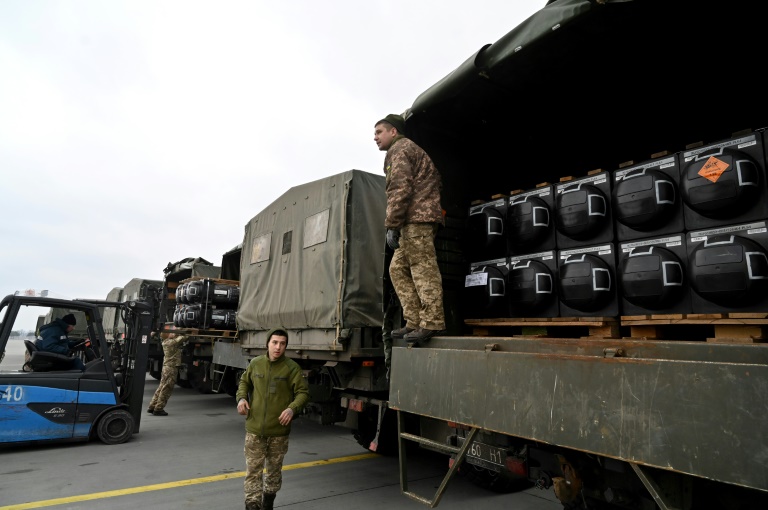
The United State has also announced the deployment of several thousand troops to bolster NATO forces in eastern Europe.

Webb telescope spots its first star — and takes a selfie

Star light, star bright, the James Webb Space Telescope has seen its first star (though it wasn’t quite tonight) — and even taken a selfie, NASA announced Friday.

The steps are part of the months-long process of aligning the observatory’s enormous golden mirror that astronomers hope will begin unraveling the mysteries of the early Universe by this summer.

The first picture sent back of the cosmos is far from stunning: 18 blurry white dots on a black background, all showing the same object: HD 84406 a bright, isolated star in the constellation Ursa Major.

But in fact it represents a major milestone. The 18 dots were captured by the primary mirror’s 18 individual segments — and the image is now the basis for aligning and focusing those hexagonal pieces.

The light bounced off the segments to Webb’s secondary mirror, a round object located at the end of long booms, and then to the Near Infrared Camera (NIRCam) instrument — Webb’s main imaging device.

“The entire Webb team is ecstatic at how well the first steps of taking images and aligning the telescope are proceeding,” said Marcia Rieke, principal investigator for the NIRCam instrument and regents professor of astronomy, University of Arizona, in a statement.

“We were so happy to see that light make its way into NIRCam.”

The image capturing process began on February 2, with Webb pointing at different positions around the predicted location of the star.

Though Webb’s initial search covered an area of the sky about equal to the size of the full Moon, the dots were all located near the center portion, meaning the observatory is already relatively well positioned for final alignment.

To aid the process, the team also captured a “selfie” taken not through an externally mounted camera but through a special lens on board NIRCam. 

NASA had previously said a selfie wasn’t possible, so the news comes as a welcome bonus for space fans.

“I think pretty much the reaction was holy cow,” Lee Feinberg, Webb optical telescope element manager, told reporters in a call, explaining that the team wasn’t sure it was possible to obtain such an image using starlight alone.

The $10 billion observatory launched from French Guiana on December 25 and is now in an orbit that is aligned with the Earth’s around the Sun, one million miles (1.5 million kilometers away) from our planet, in a region of space called the second Lagrange point.

Webb will begin its science mission by summer, which includes using its high resolution instruments to peer back in time 13.5 billion years to the first generation of galaxies that formed after the Big Bang.

Visible and ultraviolet light emitted by the very first luminous objects has been stretched by the Universe’s expansion, and arrives today in the form of infrared, which Webb is equipped to detect with unprecedented clarity.

Its mission also includes the study of distant planets, known as exoplanets, to determine their origin, evolution and habitability.

Biden seeks to split Afghan assets between aid and 9/11 victims

US President Joe Biden seized $7 billion in assets belonging to the previous Afghan government Friday, aiming to split the funds between victims of the 9/11 attacks and desperately needed aid for post-war Afghanistan.

The seizure drew an angry response from the country’s new leaders the Taliban, which branded the seizure a “theft” and a sign of US “moral decay.”

Biden’s unusual move saw the conflicting, highly sensitive issues of a humanitarian tragedy in Afghanistan, the fundamentalist Taliban fight for recognition, and the push for justice from families impacted by the September 11, 2001 attacks collide, with billions of dollars at stake.

The first stage was simple: Biden formally blocked the assets in an executive order signed Friday.

The money — which a US official said largely stems from foreign assistance once sent to help the now defunct Western-backed Afghan government — had been stuck in the New York Federal Reserve ever since last year’s Taliban victory.

The insurgency, which fought US-led forces for 20 years and now controls the whole country, has not been recognized by the United States or any other Western countries, mostly over its human rights record.

However, with appalling poverty gripping the country after decades of war and the previous government’s rampant corruption, Washington is trying to find ways to assist, while side-stepping the Taliban.

The White House said Biden will seek to funnel $3.5 billion of the frozen funds into a humanitarian aid trust “for the benefit of the Afghan people and for Afghanistan’s future.”

The trust fund will manage the aid in a way that bypasses the Taliban authorities, a senior US official told reporters, countering likely criticism in Washington that the Biden administration is inadvertently boosting its former enemy.

Aside from the new plan, “the United States remains the single largest donor of humanitarian aid in Afghanistan,” the senior official said.

More than $516 million has been donated since mid-August last year, the official said. The money is distributed among non-governmental organizations.

The Taliban fumed over Washington’s move.

“The theft and seizure of money held/frozen by the United States of the Afghan people represents the lowest level of human and moral decay of a country and a nation,” Taliban spokesman Mohammad Naeem said on Twitter.

Failure and victory are common throughout history, “but the greatest and most shameful defeat is when moral defeat combines with military defeat,” Naeem added.

– 9/11 victims seek compensation –

The fate of the other $3.5 billion is also complex.

Families of people killed or injured in the 9/11 attacks on New York, the Pentagon and a fourth hijacked airliner that crashed in Pennsylvania have long struggled to find ways to extract compensation from Al-Qaeda and others responsible.

In US lawsuits, groups of victims won default judgements against Al-Qaeda and the Taliban, which hosted the shadowy terrorist group at the time of the attacks, but were unable to collect any money. They will now have the opportunity to sue for access to the frozen Afghan assets.

Those “assets would remain in the United States and are subject to ongoing litigation by US victims of terrorism. Plaintiffs will have a full opportunity to have their claims heard in court,” the White House said.

A senior official called the situation “unprecedented.”

There are “$7 billion of assets in the United States that are owned by a country where there is no government that we recognize. I think we’re acting responsibly to ensure that a portion of that money be used to benefit the people of the country,” he said.

And the US plaintiffs related to 9/11 will “have their day in court.”

Pressure on Trudeau as trucker protests spark Ontario emergency

Canadian leader Justin Trudeau faced mounting pressure from Washington Friday to bring an end to snowballing trucker-led blockades over Covid rules, as the protest epicenter of Ontario province declared a state of emergency.

The capital Ottawa has been clogged with hundreds of big rigs for two weeks, while three US border crossings have been shut down by truckers — paralyzing a key North American trade route.

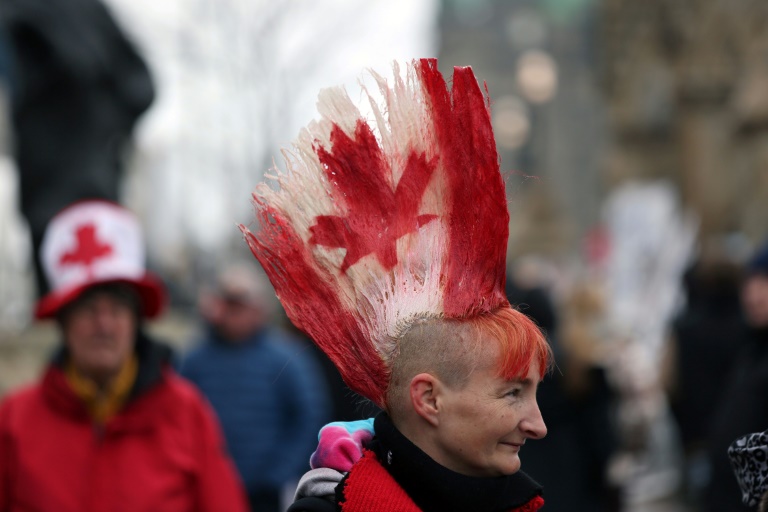
The snowballing movement has morphed into a broader protest against pandemic health rules and Trudeau’s government — and sparked solidarity rallies from France to New Zealand.

Accused by the opposition of taking a backseat in the crisis, Prime Minister Trudeau was to address the House of Commons at 2 pm (1900 GMT) — a day after Washington urged its northern neighbor to use federal powers to bring the situation under control.

The days-long border obstructions have already had significant economic impact, with several automakers forced to cut back production, triggering fears they could impact Canada’s recovery from the pandemic.

The premier of Ontario province, Doug Ford, who like Trudeau has been accused of inaction, Friday declared a state of emergency and vowed to take “whatever steps are necessary” to end the border blockades.

Truckers have “taken a city of one million people hostage for the past two weeks,” Ford told a news conference, threatening steep fines of up to Can$100,000 ($80,000) and jail unless protesters end their “illegal occupation.”

“To the people of Ottawa under siege, I say we will ensure you’re able to resume life and business as soon as possible,” Ford said.

Canada’s self-styled “Freedom Convoy” began last month in the country’s west — launched in anger at requirements that truckers either be vaccinated, or test and isolate, when crossing the US-Canada border.

The Ontario emergency came as thousands of protesters were headed toward Paris in similar convoys from across France, despite police warnings to back off.

The French protesters included opponents of Covid vaccination, but also people angry at fast-rising energy prices — in an echo of the “yellow vest” grievances that sparked widespread protests in 2018 and 2019.

Protesters have likewise set up a makeshift camp outside New Zealand’s parliament, scene of violent clashes earlier this week as police sought to clear anti-vaccine demonstrators.

– ‘Intimidation’ –

The Ontario premier acknowledged that Canadians have the “right to peacefully protest when they disagree with what our government is doing” to stem the pandemic, adding: “I know these frustrations have reached a boiling point for many Canadians.” 

But he warned: “This is no longer a protest.”

Ford accused the protesters of “targeting our lifeline for food, fuel and goods across our borders” while “trying to force a political agenda through disruption, intimidation, and chaos.”

“We’re in a critical situation worldwide economically… the last thing we need is an anchor around our neck,” he said. 

The vital Ambassador Bridge connecting Windsor, Ontario and the US city of Detroit, is used daily by more than 40,000 commuters and tourists, along with trucks carrying $323 million worth of goods each day on average — about one-quarter of all Canada-US trade.

On Thursday evening, Ford’s government separately obtained a court order barring anyone from tapping the millions of dollars raised by the convoy through the fundraising platform GiveSendGo. 

The protesters switched their fundraising efforts to the platform after GoFundMe terminated their original campaign, claiming it violated terms of service that “prohibit user content that reflects or promotes behavior in support of violence.” 

Paris braces for Canada-style convoys against Covid rules

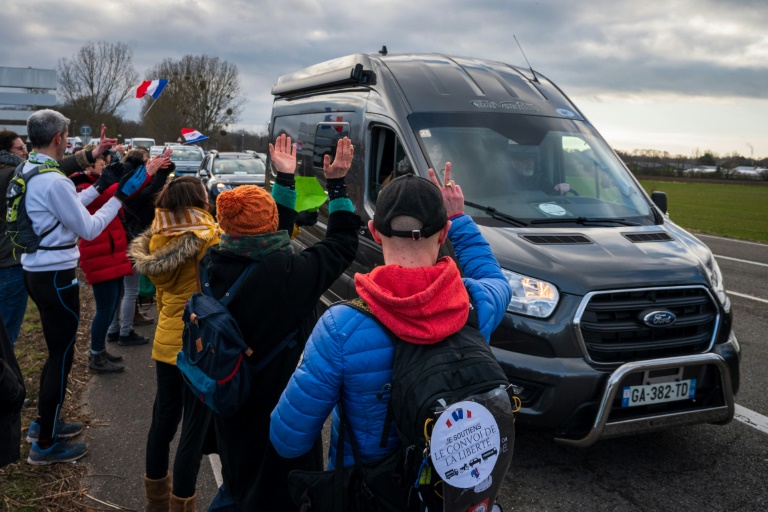
Thousands of people drove towards Paris on Friday in convoys from across France, with many hoping to blockade the capital to protest Covid vaccination rules and other restrictions despite police warnings to back off.

Inspired by Canadian truckers paralysing border traffic with the US, the French protesters set off from Bayonne, Perpignan, Lyon, Lille, Strasbourg and elsewhere with the aim of converging on Paris by Friday evening.

A police source said around 1,800 vehicles were estimated to be closing in on the capital.

The demonstrators include anti-Covid vaccination activists, but also people angry at fast-rising energy prices they say have devastated the finances of low-income families — an echo of the “yellow vest” grievances that sparked widespread protests in 2018 and 2019.

They are demanding a withdrawal of the government’s vaccine pass, which is required for access to many public spaces, and more help with their energy bills. 

“People need to see us, and to listen to the people who just want to live a normal and free life,” said Lisa, a 62-year-old retired health worker who joined a convoy of more than 1,000 vehicles leaving Chateaubourg in the western Brittany region early Friday.

Like other protesters, Lisa has been active in the “yellow vest” movement that erupted over a fuel tax hike before becoming a platform for other complaints against President Emmanuel Macron.

Just two months ahead of presidential elections and with the government desperate to avoid violent scenes in the capital, Macron said Friday he understood the “fatigue” linked to the Covid-19 pandemic. 

“This fatigue also leads to anger. I understand it and I respect it. But I call for the utmost calm,” he told the Ouest-France newspaper. 

– ‘United against the government’ –

The yellow vests often clashed with police, but Lisa said she hoped the protests on Friday would go off peacefully. “It would really annoy me if things got out of hand,” she told AFP.

After spending a cold night in a parking lot, the drivers in Chateaubourg set off in a long single file of trucks, passenger cars and campers as sympathetic passers-by waved from bridges.

“All kinds of people are part of this,” said Sarah, a 40-year-old tattoo artist from the northern city of Lens. “We’re citizens, we have families, we work and we’re all united against the government.”

Paris police banned the gathering because of feared “public order disturbances” and said protesters who tried to block roads would face fines or arrest.

“We must be very firm about this,” Prime Minister Jean Castex said.

An administrative court was, however, to rule on the legality of the police ban later on Friday. 

Police showed off their anti-blockage arsenal on Twitter, publishing photographs of loader tractors for the removal of barricades as well trucks equipped with cranes or watercannon.

The protesters meanwhile shared information about police deployments around Paris, often via the encrypted Telegram messaging service, and exchanged tips about the easiest access routes.

“It’s important that we don’t interfere with other people on the roads,” said one activist, Robin, on his way from Illkirch-Graffenstaden in the eastern Alsace region. “That way we’ll keep the population on our side, like they did in Canada.”

– ‘You feel less alone’ –

Many demonstrators are planning to stay in Paris overnight, and then join one of the regular Saturday protests against the government’s vaccine pass.

Some then want to travel on to Brussels for a “European convergence” of protesters planned there for Monday.

Phil, a 58-year-old on his way by truck from Brittany, said his refusal to get vaccinated had created “upheaval” in his family and work relations.

“When you join a demonstration you feel less alone,” he told AFP.

The government has expressed some sympathy for the protesters, with spokesman Gabriel Attal attributing their anger to “fatigue and weariness” after long-lasting Covid restrictions.

But opposition parties should not be allowed to hijack the movement for their own aims, he said Friday.

“They are looking to gain political capital from this weariness and this fatigue,” he said.

The government also announced Friday a further easing of Covid rules, with indoor mask wearing set to go at the end of this month, except on public transport.

Attal also said this week that the vaccine pass could be scrapped in late March or early April, which would be just before the first round of elections on April 10, when Macron is expected to seek a new term.

burs-jh/js/bsp/har/imm

Mexico president vows no impunity for journalist murder

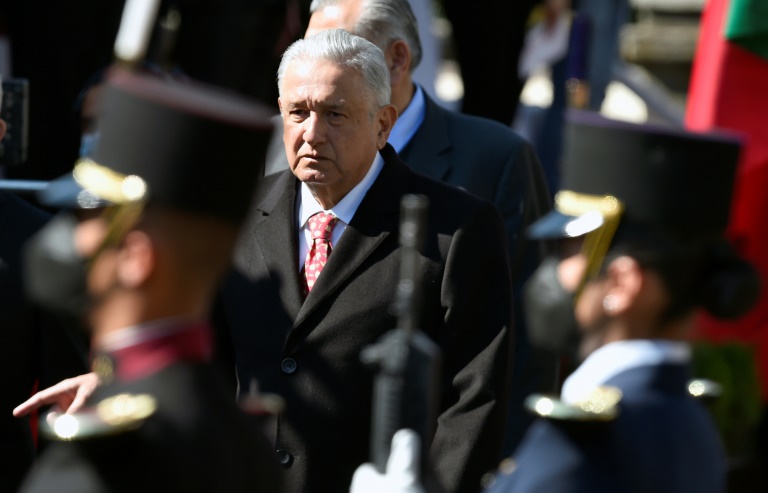
Mexican President Andres Manuel Lopez Obrador on Friday promised “zero impunity” for the fifth murder of a journalist this year in one of the world’s most dangerous countries for reporters.

Heber Lopez Vazquez, who ran a news website called Noticias Web in the southern state of Oaxaca, was shot dead in his car on Thursday.

Two suspects were arrested as they tried to flee the scene of the crime, according to prosecutors.

“There’s no impunity — zero impunity,” Lopez Obrador told reporters.

“And this is a message for those who are dedicated to crime, both organized and the white collar,” he said.

Deputy Security Minister Ricardo Mejia said that “all lines of investigation are being pursued” to determine the motive behind the murder.

Lopez was not receiving protection under a government program for journalists in danger, he said.

His death brings the number of journalists killed in Mexico this year to five, according to press rights groups, a particularly bloody start to the year.

At least seven journalists were murdered in Mexico last year, according to media watchdog Reporters Without Borders (RSF), although it is not known whether all of the killings were linked to their work.

Mexican authorities said Wednesday that three men had been arrested over the murder of journalist Lourdes Maldonado last month in Tijuana that sparked calls for the government to do more to protect media workers.

Her death came in the wake of the shooting of photographer Margarito Martinez in the same northwestern border city.

Roberto Toledo, who worked with a news site in the central state of Michoacan, as well as Jose Luis Gamboa, a journalist and social media activist in eastern Veracruz state, were also killed in January.

Double trouble: Fears of violence over Libya's 2 PMs

Libyans found themselves with two prime ministers on Friday, raising the spectre of renewed violence in a country where elites have ignored the wishes of citizens to choose their leaders, analysts say.

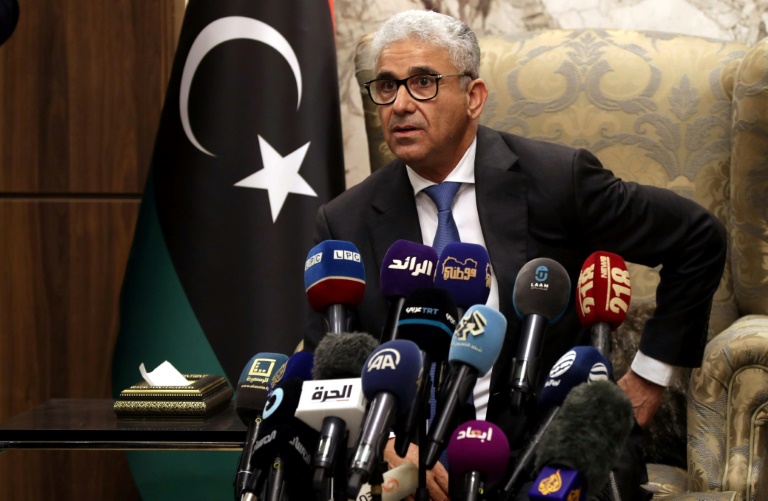
After weeks of manoeuvering since December 24 elections were indefinitely postponed, the House of Representatives in the country’s east on Thursday picked former interior minister and ex-fighter pilot Fathi Bashagha to replace interim prime minister Abdulhamid Dbeibah.

But Dbeibah, a construction tycoon appointed a year ago as part of United Nations-led peace efforts, has vowed only to hand power to an elected government.

Peter Millett, a former British ambassador to the country, told AFP the main division now “is between the Libyan people — who want elections — and the political elite, who don’t.”

He noted that more than two million Libyans, out of a total population of seven million, had collected voter cards last year, showing a desire to pick new representatives in December when both parliamentary and presidential polls were supposed to be held.

“The motivation of many MPs is to hang on to jobs and privileges rather than allow for a smooth process leading to elections,” Millett said.

It is not the first time the oil-rich North African country has found itself with two premiers.

Torn apart by a decade of strife since a 2011 NATO-backed uprising toppled dictator Moamer Kadhafi, Libya had two rival heads of government between 2014 and 2016.

The UN has been working to reunite the country’s divided institutions since the end of the last major fighting in 2020, but many analysts have accused the entrenched political elite of blocking reconciliation efforts.

– Militias –

The country’s infrastructure is ruined and its economy battered, meaning that for ordinary Libyans, the stakes couldn’t be higher.

“The cost of living is obscene,” said Abdul Mawla al-Kaseh, a resident of Shahat in eastern Libya.

Salem Bakkar, also from Shahat, said it doesn’t matter who heads the government as long as they “stress the importance of reconciliation and urge the holding of elections.”

Libya has seen months of relative stability since an October 2020 ceasefire formally ended eastern military chief Khalifa Haftar’s bid to seize by force the capital Tripoli in the west.

But a patchwork of local militias, with foreign backing and linked to political figures, continue to vie for control.

Dbeibah and his unity government were appointed with a mandate to steer the country to the polls, which were eventually derailed by differences over their legal basis and contentious candidates.

That left question marks over the UN roadmap.

The eastern-led parliament — whose own mandate ended in 2015 — argued that Dbeibah’s administration was past its sell-by date, and stepped up efforts to remove him.

With Bashagha now challenging his power, backed by Haftar’s forces, some analysts fear a return to conflict. 

Yet that could look very different from the previous rounds of violence fuelled by the country’s geographic divisions.

“There really isn’t an east-west division as there was a year ago,” said Amanda Kadlec, a former member of the UN panel of experts on Libya. 

“What is potentially dangerous is violence in Tripoli, as Bashagha and Dbeibah both have deep connections across western Libya,” she added.

Millett also warned of “potential instability in Tripoli” and said: “The international community should aim for a clear and transparent process that sets out a clear roadmap to elections.”

– ‘A lot can happen’ –

The UN said Thursday it still recognised Dbeibah’s administration.

Secretary General Antonio Guterres on Friday urged “all parties to continue to preserve stability in Libya as a top priority” and reminded them of the importance of “holding national elections as soon possible”.

But on the ground, the delicate balance of power could easily shift, Kadlec said.

“The militias will move with whomever they perceive as having power,” she said.

Kadlec added that armed groups backing Dbeibah could easily shift behind Bashagha, providing he is “willing to give them positions in government, keep paying their salaries and giving them weapons”.

Claudia Gazzini, senior Libya analyst with the International Crisis Group, wrote on Twitter that the parliament was set to hold a vote of confidence on Bashagha’s proposed cabinet two weeks from now. 

“As recent events in Libya showed us, a lot can happen in two weeks,” she said.

Just hours before the parliamentary vote to replace him, gunmen fired on Dbeibah’s convoy in Tripoli. 

The interior ministry said nobody was hurt — but there are fears it could be the opening volley of another ruinous battle.

State of emergency in Canada's Ontario over 'illegal' trucker protest

Canada’s Ontario province Friday declared a state of emergency over trucker-led protests paralyzing the capital and disrupting trade with the United States, as Premier Doug Ford vowed to do whatever it takes to end the blockades.

The capital Ottawa has been clogged with hundreds of big rigs for two weeks, while three border crossings have been shut down by truckers demanding an end to all Covid health restrictions.

“We will take whatever steps are necessary to ensure the border is reopened,” Ford told a news conference, threatening steep fines of up to Can$100,000 ($80,000) and jail unless protesters end their “illegal occupation.”

“To the people of Ottawa under siege, I say we will ensure you’re able to resume life and business as soon as possible.”

The vital Ambassador Bridge connecting Windsor, Ontario and the US city of Detroit, is used daily by more than 40,000 commuters and tourists, along with trucks carrying $323 million worth of goods each day on average — about one-quarter of all Canada-US trade.

The days-long border obstructions have already have major impact, with several automakers forced to cut back production as a result, triggering fears it could impact Canada’s economic recovery from the  pandemic.

Canadian Prime Minister Justin Trudeau is under mounting pressure to get the situation under control, with Washington calling on its northern neighbor to use federal powers to end the blockades.

Ford, who faces elections in June, has likewise been under fire for several days over his inaction to bring an end to the trucker-led disruptions.

The snowballing trucker movement has morphed over the past weeks into a broader protest against Covid-19 health restrictions and Trudeau’s government — and sparked solidarity rallies across the nation and abroad.

– ‘Intimidation’ –

Ford premier acknowledged that Canadians have the “right to peacefully protest when they disagree with what our government is doing” to stem the pandemic, adding: “I know these frustrations have reached a boiling point for many Canadians.” 

But he warned: “This is no longer a protest.”

Truckers have “taken a city of one million people hostage for the past two weeks” and have been “targeting our lifeline for food, fuel and goods across our borders” while “trying to force a political agenda through disruption, intimidation, and chaos.”

“We’re in a critical situation worldwide economically… the last thing we need is an anchor around our neck,” he said.

Canada’s self-styled “Freedom Convoy” began last month in the country’s west — launched in anger at requirements that truckers either be vaccinated, or test and isolate, when crossing the US-Canada border.

The Ontario state of emergency came as thousands of protesters were headed toward Paris in similar convoys from across France, despite police warnings to back off.

The French protesters included opponents of Covid vaccination, but also people angry at fast-rising energy prices — in an echo of the “yellow vest” grievances that sparked widespread protests in 2018 and 2019.

Protesters have likewise set up a makeshift camp outside New Zealand’s parliament, scene of violent clashes earlier this week as police sought to clear anti-vaccine demonstrators.

Close Bitnami banner
Bitnami