World

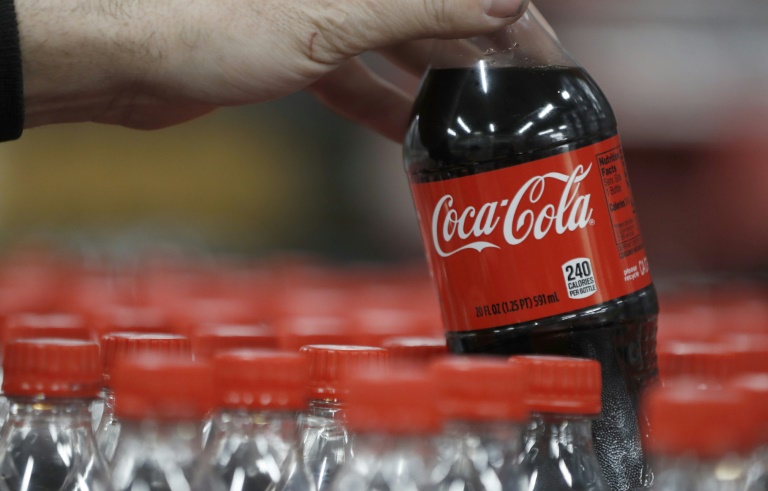
Coca-Cola says 25% of packaging will be reusable by 2030

Coca-Cola, under pressure from environmentalists over its packaging policies, has pledged to use reusable containers for at least 25 percent of its beverages by 2030.

The soda giant announced the pledge Thursday, saying it would be implemented globally through the glass and plastic bottles it sells to consumers and through the containers used at soda fountains and dispensers.

Refillable containers accounted for about 16 percent of total volumes in 2020, Coca-Cola said.

“Reusable packaging is among the most effective ways to reduce waste, use fewer resources and lower our carbon footprint in support of a circular economy,” said Ben Jordan, senior director of packaging and climate at Coca-Cola.

But the coalition #Breakfreefromplastics, which has rated the company the world’s top plastic polluter because of its historic use of single-use plastic containers, offered only measured praise.

“Coke’s announcement that they are expanding their reusable packaging target globally is definitely a step in the right direction,” said Emma Priestland, global corporate campaigns coordinator for the group. 

“The company’s string of broken promises in the past, however, compels us to welcome this announcement with some skepticism.”

The advocacy group As You Sow, which has drafted a shareholder proposal urging greater use of refillable bottles, praised the announcement.

Conrad MacKerron, the group’s senior vice president, said he was “pleased” by Coca-Cola’s commitment, adding that, “this action has the potential to substantially reduce the amount of single-use plastic bottles used, many of which end up as ocean plastic pollution.”

As You Sow said it will undertake additional analysis of the pledge to determine whether to withdraw its shareholder proposal.

Paris braces for Canada-style convoys against Covid rules

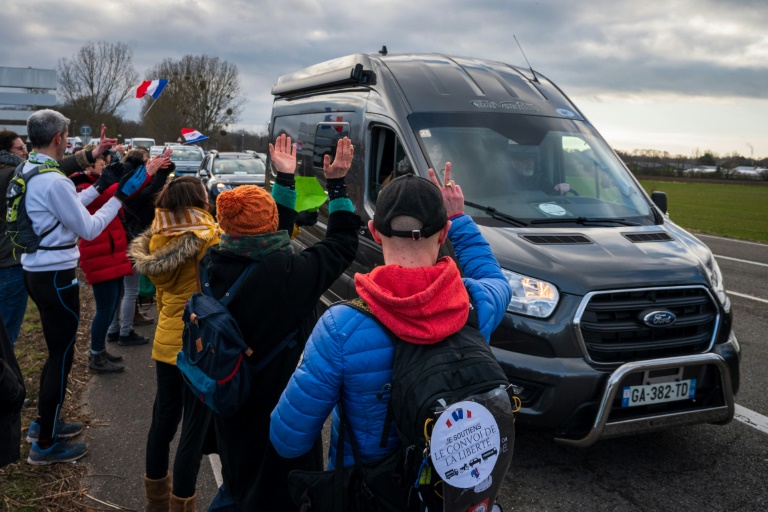
Thousands of protesters headed toward Paris on Friday in convoys from across France, with many hoping to blockade the capital in opposition to Covid vaccination rules and other restrictions despite police warnings to back off.

Inspired by Canadian truckers paralysing border traffic with the US, the French protesters set off from Bayonne, Perpignan, Lyon, Lille, Strasbourg and elsewhere with the aim of converging on Paris by Friday evening.

A police source said around 1,800 vehicles were estimated to be closing in on the capital.

The demonstrators include anti-Covid vaccination activists, but also people angry at fast-rising energy prices that they say have been a devastating blow to the finances of low-income families — an echo of the “yellow vest” grievances that sparked widespread protests in 2018 and 2019.

They are demanding a withdrawal of the government’s vaccine pass, which is required for access to many public spaces, and more help with their energy bills. 

“People need to see us, and to listen to the people who just want to live a normal and free life,” said Lisa, a 62-year-old retired health worker who joined a convoy of over 1,000 vehicles leaving Chateaubourg in the western Brittany region early Friday.

Like other protesters, Lisa has been active in the “yellow vest” movement that erupted over a fuel tax hike before becoming a platform for other complaints against President Emmanuel Macron.

– ‘United against the government’ –

The yellow vests often clashed with police, but Lisa said she hoped the protests on Friday would go off peacefully. “It would really annoy me if things got out of hand,” she told AFP.

After spending a cold night in a parking lot, the drivers in Chateaubourg set off in a long single file of trucks, passenger cars and campers as sympathetic passers-by waved from bridges.

“All kinds of people are part of this,” said Sarah, a 40-year-old tattoo artist from the northern city of Lens. “We’re citizens, we have families, we work and we’re all united against the government.”

Paris police banned the gathering because of feared “public order disturbances,” and said protesters who tried to block roads would face fines or arrest.

“We must be very firm about this,” Prime Minister Jean Castex said.

An administrative court was, however, to rule on the legality of the police ban later on Friday. 

Police showed off their anti-blockage arsenal on Twitter, publishing photographs of loader tractors for the removal of barricades as well trucks equipped with cranes or watercannon.

The protesters meanwhile shared information about police deployments around Paris, often via the encrypted Telegram messaging service, and exchanged tips about the easiest access routes.

“It’s important that we don’t interfere with other people on the roads,” said one activist, Robin, on his way from Illkirch-Graffenstaden in the eastern Alsace region. “That way we’ll keep the population on our side, like they did in Canada.”

– ‘You feel less alone’ –

Many demonstrators are planning to stay in Paris overnight, and then join one of the regular Saturday protests against the government’s vaccine pass.

Some then want to travel on to Brussels for a “European convergence” of protesters planned there for Monday.

Phil, a 58-year-old on his way by truck from Brittany, said his refusal to get vaccinated had created “upheaval” in his family and work relations.

“When you join a demonstration you feel less alone,” he told AFP.

The government has expressed some sympathy for the protesters, with spokesman Gabriel Attal attributing their anger to “fatigue and weariness” after long-lasting Covid restrictions.

But opposition parties should not be allowed to hijack the movement for their own aims, he said Friday.

“They are looking to gain political capital from this weariness and this fatigue,” he said.

The government also announced Friday a further easing of Covid rules, with indoor mask wearing set to go at the end of this month, except on public transport.

Attal also said this week that the vaccine pass could be scrapped in late March or early April, which would be just before the first round of elections on April 10, when President Emmanuel Macron is expected to seek a new term.

burs-jh/js/bsp/har

US court reinstates gray wolf endangered species protections

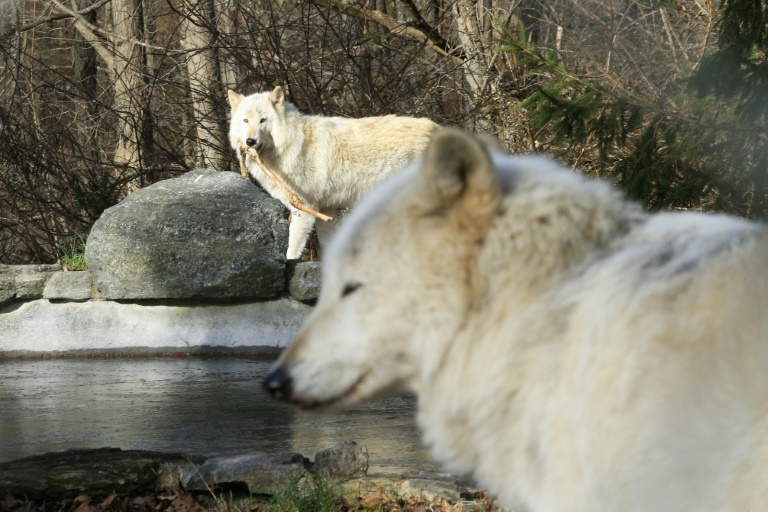
A US court has struck down a Trump-era decision to remove federal protections for gray wolves across much of the country, in a move hailed by conservationists who said the listing was vital for the species’ recovery.

A 26-page ruling issued Thursday by Judge Jeffrey White in a case brought by wildlife groups found the Fish and Wildlife Service (FWS) had erred in its October 2020 decision to remove the apex predators from the Endangered Species Act (ESA), where they were first listed in the 1970s.

Though the decision to delist gray wolves across most of the lower-48 states was taken by the administration of former president Donald Trump, Joe Biden’s government had continued to defend the move in court.

“It really is a win for wolves across the country,” Collette Adkins of the Center for Biological Diversity, told AFP.

“And I hope it finally convinces the Fish and Wildlife Service to really focus on recovering wolves instead of prematurely removing their protections.”

A quarter million gray wolves — long a symbol of the free spirit of the American wilderness — once roamed from coast to coast before the arrival of European settlers and eradication campaigns that endured into the 20th Century.

At the time of the decision to de-list them, the wolves had recovered from a low of 1,000 to around 6,000 — but hundreds were subsequently legally killed, either through hunting or conflicts with livestock operators.

In one egregious example, hunters in Wisconsin killed over 218 wolves in less than three days in February 2021, using packs of dogs, snares and leg-hold traps — well beyond the state’s own limit of killing 119 wolves.

The 2020 decision to remove the species’ protections had been opposed by 1.8 million Americans in public comments, as well as hundreds of scientists, veterinary professionals, and the iconic conservationist Jane Goodall.

Even the researchers commissioned by the FWS to carry out a review of the science found it did not support de-listing.

“Both under Democratic and Republican administrations, there has been this year-to-year desire to just be done recovering wolves,” said Adkins. 

“It’s been frustrating because the Endangered Species Act envisions a recovery of these animals so that they can fulfill their ecosystem role,” she added.

Research has confirmed the wolf’s importance in thinning over-browsing herds of elk, which in turn prevents destruction of habitat, for example. And a recent study from Wisconsin found that wolves kept deer away from roads, reducing collisions between deer and cars.

Adkins said she was hopeful of a change in policy after interior secretary Deb Haaland this week penned an op-ed in USA Today criticizing some western States in the northern Rocky mountain range, which have stepped up hunting campaigns in recent months.

The gray wolves of the northern Rockies haven’t been covered by the Endangered Species Act since a 2011 Congressional act, but Halaand wrote she could reinstate federal protections specifically for them if necessary.

Biden seeks to split Afghan assets between aid and 9/11 victims

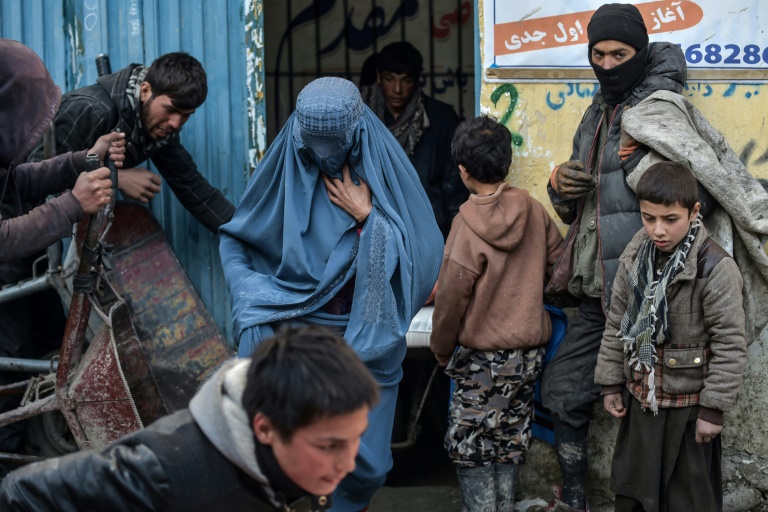
President Joe Biden seized $7 billion in assets belonging to the previous Afghan government on Friday with the aim of splitting the funds between victims of the 9/11 attacks and desperately needed aid for post-war Afghanistan.

The unusual move saw the conflicting, highly sensitive issues of a humanitarian tragedy in Afghanistan, the Taliban fight for recognition, and the push for justice from families impacted by the September 11, 2001 attacks collide, with billions of dollars at stake.

The first stage was simple: Biden formally blocked the assets in an executive order signed Friday.

The money — which a US official said largely stems from foreign assistance once sent to help the now defunct Western-backed Afghan government — had been stuck in the New York Federal Reserve ever since last year’s Taliban victory.

The insurgency, which fought US-led forces for 20 years and now controls the whole country, has not been recognized by the United States or any other Western countries, mostly over its human rights record.

However, with appalling poverty gripping the country after decades of war and the previous government’s rampant corruption, Washington is trying to find ways to assist, while side-stepping the Taliban.

The White House said Biden will seek to funnel $3.5 billion of the frozen funds into a humanitarian aid trust “for the benefit of the Afghan people and for Afghanistan’s future.”

The trust fund will manage the aid in a way that bypasses the Taliban authorities, a senior US official told reporters, countering likely criticism in Washington that the Biden administration is inadvertently boosting its former enemy.

Aside from the new plan, “the United States remains the single largest donor of humanitarian aid in Afghanistan,” the senior official said.

More than $516 million has been donated since mid-August last year, the official said. The money is distributed among non-governmental organizations.

– 9/11 victims seek compensation –

The fate of the other $3.5 billion is also complex.

Families of people killed or injured in the 9/11 attacks on New York, the Pentagon and a fourth hijacked airliner that crashed in Pennsylvania have long struggled to find ways to extract compensation from Al-Qaeda and others responsible.

In US lawsuits, groups of victims won default judgements against Al-Qaeda and the Taliban, which hosted the shadowy terrorist group at the time of the attacks, but were unable to collect any money. They will now have the opportunity to sue for access to the frozen Afghan assets.

Those “assets would remain in the United States and are subject to ongoing litigation by US victims of terrorism. Plaintiffs will have a full opportunity to have their claims heard in court,” the White House said.

A senior official called the situation “unprecedented.”

There are “$7 billion of assets in the United States that are owned by a country where there is no government that we recognize. I think we’re acting responsibly to ensure that a portion of that money be used to benefit the people of the country,” he said.

And the US plaintiffs related to 9/11 will “have their day in court.”

Western leaders to confer on Ukraine amid war fears

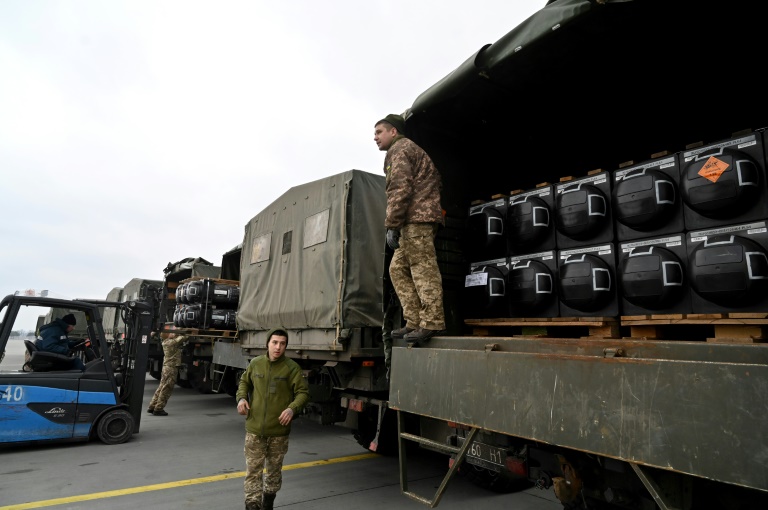
Western leaders are to hold talks on Friday over the Ukraine crisis, German sources said, as the United States warned that a Russian invasion of its ex-Soviet neighbour could be days away.

US President Joe Biden, who has urged Americans to leave Ukraine, will hold a telephone conference on the crisis with six leaders and the heads of NATO and the European Union, German government sources told AFP.

The talks are set to begin at 1600 GMT.

NATO Secretary General Jens Stoltenberg on Friday warned anew of the “real risk for a new armed conflict in Europe”, while US Secretary of State Antony Blinken said a Russian invasion could come “any time”. 

Russia is operationally ready to conduct a wide range of military operations in Ukraine and the Kremlin just needs to make the call, the head of Norway’s military intelligence service said.

Several rounds of diplomacy have failed to ease tensions on Europe’s doorstep that some describe as the continent’s worst crisis since the end of the Cold War.

The Kremlin said Friday there were “no results” from the most recent diplomatic foray — a four-way meeting of political advisors from Russia, Ukraine, Germany and France in Berlin.

Biden will confer over the telephone with German Chancellor Olaf Scholz, French President Emmanuel Macron and the prime ministers of Italy, Britain and Canada and the president of Poland, the German sources said.

NATO chief Stoltenberg and European Union leaders will take part, they added.

Western leaders have for months raised the alarm over a possible invasion of Ukraine as tens of thousands of Russian troops mass along the border.

Russia has denied any plan to invade.

It says it is seeking written guarantees from NATO that the alliance will withdraw its presence from eastern Europe and never expand into Ukraine.

The United States and its European allies have rejected those demands.

– Fresh military drills –

Fuelling concerns, Russia is holding large-scale military drills with ally Belarus, which borders Ukraine and the European Union.

Moscow and Minsk have not disclosed how many troops are participating, but the United States has said around 30,000 soldiers were being dispatched to Belarus from locations including Russia’s Far East.

In addition, Russia’s defense ministry said Friday it will also hold fresh military exercises near Ukraine’s border and in the Black Sea. 

Moscow, which controls the Crimea peninsula after annexing it from Ukraine in 2014, has made the Black Sea a strategic priority.  

Macron shuttled between Moscow and Kyiv earlier this week in the search for a diplomatic solution, and Scholz is expected to do the same in the coming days.

Scholz will also hold his first in-person meeting with Russian President Vladimir Putin in Moscow. 

British Defence Secretary Ben Wallace was in Moscow Friday for rare talks with his Russian counterpart Sergei Shoigu. 

He was accompanied by the UK’s Chief of Defence Staff Tony Radakin, and the pair will also meet Russia’s top army general Valery Gerasimov. 

Wallace’s visit comes a day after Britain’s Foreign Secretary Liz Truss met with her Russian counterpart Sergei Lavrov in Moscow for talks that appeared fruitless and ended in mutual accusations. 

– ‘Difficult’ talks –

Disappointment ensued after a meeting between Russian and Ukrainian negotiators, under the mediation of Germany and France. 

Sources described the meeting as “difficult” and said it lasted for more than nine hours. 

After the talks, the Kremlin once again accused Ukraine of not adhering to the 2015 Minsk agreements between Kyiv and Moscow on the separatist conflict in the east of the country. 

Kyiv’s negotiator Andriy Yermak, however, told a late night briefing after that “everyone is determined to reach a result”. 

The four-way “Normandy” format was launched in 2014 in a bid to end fighting between Ukraine and Russia-backed separatists that has claimed more than 14,000 lives. 

According to Germany, the next Normandy talks will take place in March.

On the other side of the Atlantic, Biden issued a stark warning to his citizens, urging them to leave Ukraine as soon as possible. 

“American citizens should leave, should leave now,” Biden told NBC News. “We’re dealing with one of the largest armies in the world.

“He added that “things could go crazy quickly.”

But Ukraine, which has frequently downplayed warnings from Washington, dismissed the order as “nothing new”.

Washington has warned Moscow of unprecedented sanctions if its tanks roll into Ukraine, in particular promising an end to the controversial new Nord Stream 2 gas pipeline from Russia to Europe.

The United State has also announced the deployment of several thousand troops to bolster NATO forces in eastern Europe.

Paris braces for Canada-style convoys against Covid rules

Thousands of protesters headed toward Paris on Friday in convoys from across France, with many hoping to blockade the capital in opposition to Covid vaccination rules and other restrictions despite police warnings to back off.

Inspired by Canadian truckers paralysing border traffic with the US, the French protesters set off from Bayonne, Perpignan, Lyon, Lille, Strasbourg and elsewhere with the aim of converging on Paris by Friday evening.

A police source said around 1,800 vehicles were estimated to be closing in on the capital.

The demonstrators include anti-Covid vaccination activists, but also people angry at fast-rising energy prices that they say have been a devastating blow to the finances of low-income families — an echo of the “yellow vest” grievances that sparked widespread protests in 2018 and 2019.

They are demanding a withdrawal of the government’s vaccine pass, which is required for access to many public spaces, and more help with their energy bills. 

“People need to see us, and to listen to the people who just want to live a normal and free life,” said Lisa, a 62-year-old retired health worker who joined a convoy of over 1,000 vehicles leaving Chateaubourg in the western Brittany region early Friday.

Like other protesters, Lisa has been active in the “yellow vest” movement that erupted over a fuel tax hike before becoming a platform for other complaints against President Emmanuel Macron.

– ‘United against the government’ –

The yellow vests often clashed with police, but Lisa said she hoped the protests on Friday would go off peacefully. “It would really annoy me if things got out of hand,” she told AFP.

After spending a cold night in a parking lot, the drivers in Chateaubourg set off in a long single file of trucks, passenger cars and campers as sympathetic passers-by waved from bridges.

“All kinds of people are part of this,” said Sarah, a 40-year-old tattoo artist from the northern city of Lens. “We’re citizens, we have families, we work and we’re all united against the government.”

Paris police banned the gathering because of feared “public order disturbances,” and said protesters who tried to block roads would face fines or arrest.

“We must be very firm about this,” Prime Minister Jean Castex said.

An administrative court was, however, to rule on the legality of the police ban later on Friday. 

Police showed off their anti-blockage arsenal on Twitter, publishing photographs of loader tractors for the removal of barricades as well trucks equipped with cranes or watercannon.

The protesters meanwhile shared information about police deployments around Paris, often via the encrypted Telegram messaging service, and exchanged tips about the easiest access routes.

“It’s important that we don’t interfere with other people on the roads,” said one activist, Robin, on his way from Illkirch-Graffenstaden in the eastern Alsace region. “That way we’ll keep the population on our side, like they did in Canada.”

– ‘You feel less alone’ –

Many demonstrators are planning to stay in Paris overnight, and then join one of the regular Saturday protests against the government’s vaccine pass.

Some then want to travel on to Brussels for a “European convergence” of protesters planned there for Monday.

Phil, a 58-year-old on his way by truck from Brittany, said his refusal to get vaccinated had created “upheaval” in his family and work relations.

“When you join a demonstration you feel less alone,” he told AFP.

The government has expressed some sympathy for the protesters, with spokesman Gabriel Attal attributing their anger to “fatigue and weariness” after long-lasting Covid restrictions.

But opposition parties should not be allowed to hijack the movement for their own aims, he said Friday.

“They are looking to gain political capital from this weariness and this fatigue,” he said.

The government also announced Friday a further easing of Covid rules, with indoor mask wearing set to go at the end of this month, except on public transport.

Attal also said this week that the vaccine pass could be scrapped in late March or early April, which would be just before the first round of elections on April 10, when President Emmanuel Macron is expected to seek a new term.

burs-jh/js/bsp

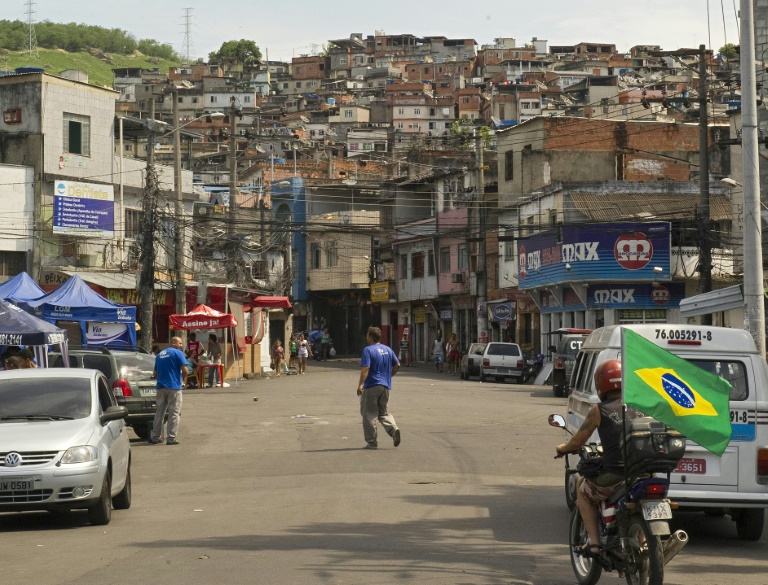
Eight killed in Rio police raid on slum

A police raid on a Rio de Janeiro slum erupted into an intense firefight Friday, leaving eight alleged drug traffickers dead, authorities said.

Police said the pre-dawn raid in the neighborhood of Vila Cruzeiro, on Rio’s north side, targeted drug traffickers believed to have fled there from another slum nearby, Jacarezinho, where authorities have mounted a major anti-drug trafficking operation.

The Rio state police force said on Twitter the Vila Cruzeiro raid had led to clashes that left eight “criminals” fatally wounded.

“We ran into a lot of resistance moving forward to carry out our operation. Those individuals were probably part of that resistance,” police colonel Luiz Henrique Marinho told news site G1.

Police said they had seized firearms, grenades and “a large amount of drugs” in the raid.

Videos posted on social media showed armored police vehicles advancing through the favela’s narrow streets as shots rang out.

Rio’s hundreds of slums, or favelas, are often under the de facto rule of drug gangs and militias.

Rio state Governor Claudio Castro is looking to change that with the pilot program to “reconquer” Jacarezinho, a bastion for the Comando Vermelho (Red Command), one of Brazil’s biggest drug gangs.

Last month, more than 1,000 heavily armed police raided Jacarezinho to retake the favela, where the state government now plans to implement social programs and infrastructure projects to improve life for residents.

But residents, many of whom were left cowering in their homes by last month’s raid, are not all convinced.

On Thursday, protesters blocked one of the favela’s main streets to condemn the police killing of an alleged drug trafficker.

Jacarezinho has been the scene of some of the worst violence between police and drug gangs recently.

Last May, a police raid on the favela left 28 people dead, some allegedly killed in cold blood.

Brazil’s Supreme Court last week ordered the Rio state government to present a plan within 90 days to reduce the violence of often deadly police raids in the favelas.

The court also gave the police 180 days to adopt body and vehicle cameras and GPS trackers to help hold officers accountable for their actions during such raids.

Don't just blame climate change for weather disasters

As a pioneer in so-called attribution science — establishing a link between extreme weather and climate change — Friederike Otto is adamant that the rising toll of heatwaves and hurricanes cannot be explained by global warming alone.

AFP spoke to Otto, a physicist at the Grantham Institute for Climate Change at Imperial College London, ahead of the release of a major UN climate report on climate change impacts and how humanity can adapt to them.

Q. Is ‘natural disaster’ a contradiction in terms?

To talk about natural disasters the way that we usually do is not very helpful because it turns the attention away from the agency that we have as humans. 

You have to search very hard to find climate disasters that are purely natural. Even without climate change, if humans are involved, such disasters occur for the most part when vulnerability and exposure meet extreme weather events. Global warming just makes it worse.

Q. Can you give an example?

Last year there were major floods in western Germany which led to lots of lost lives, damaged property. 

Yes, climate change made the rainfall more intense. But even without global warming there would have been a huge, heavy rainfall event. And it would have landed in a densely populated geography where the rivers flood very easily and the water has nowhere to go. 

Q. Has attribution science led to blaming disasters just on climate change?

When we started to do attribution, everyone -– we, the media –- were excited to finally have an answer to the question: what is the role of climate change in these disasters? It was a breakthrough to be able to say an individual event was made, say, 10 times more likely.  

But if we ignore vulnerability, then we also ignore to a large degree what we can actually do to cope with and protect ourselves from climate change.

Q. How do we assess responsibility for a natural disaster?

The goal… is not so much to pinpoint fault or blame, but to understand the causes. The next step is to ask: what do we need to change? Who has the agency to do that? Then you can ask about responsibility. 

We know now that building mansions on the beach or cliffs of Malibu is probably a stupid idea. It is deliberately exposing oneself to risk. 

A 1,000-year-old city built on what has now become a flood plain is different. But we still have to adapt: educate people not to build there anymore, build in a way -– on stilts, for example — that can withstand floods. We also need better flood forecasting.  

Q. Is it also an equity issue?

It’s the vulnerable in society who suffer the greatest loss and damages. They live in houses that can’t withstand natural hazards; they live in floodplains; they can’t afford insurance. And it’s not just Global North vs Global South. Who’s still suffering today from the consequences of Hurricane Katrina, that devastated New Orleans in 2005? It’s not the rich and white. It’s the poor, and people of colour.

Q. What is ‘maladaptation’, and where does that fit in?

Just blaming climate for disasters can lead to maladaptation. If you think of climate disasters purely as a physical problem, you’re likely to favour a technical solution, like building a dam. That may result in less flooding in a small part of a city but have bad consequences along the rest of the river.  

If the measure you put in place to adapt makes things worse in the long run or for the majority of people, that’s maladaptation. Adaptation also means education, governance, and so on. But investing in those things is harder, and it can take decades to see results.

Q. Have disasters been incorrectly blamed on climate change?

The drought and famine in Madagascar. Climate change is really not playing a role there. The population is extremely dependent on rain-fed agriculture, but the rains are just naturally not terribly reliable. 

And there’s a very high rate of poverty. Outside disaster assistance has been very short-term. Lots of things that have gone really wrong on the vulnerability side. But climate change is not really a driver.

Q. The UN identified Madagascar at the world’s first climate-driven famine

Even without doing an attribution study, just from everything that we knew before from IPCC reports, it should have been clear that climate change is not the only, and not even a major driver of the drought in southern Madagascar.  

I can see why they do that -– to raise funds and so on. But it’s just not helpful to say, “everything is tickety-boo and then the big, bad climate change monster comes and eats us all”. That’s not how it works.

UN science report to sound deafening alarm on climate

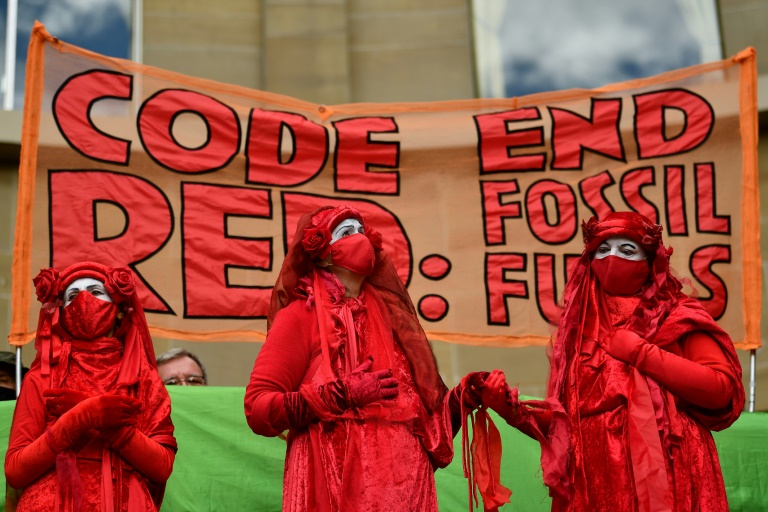
Nearly 200 nations kick off a virtual meeting Monday to finalise what promises to be a harrowing scientific overview of accelerating climate impacts that will highlight the urgent need to cut emissions — and prepare for the challenges ahead.

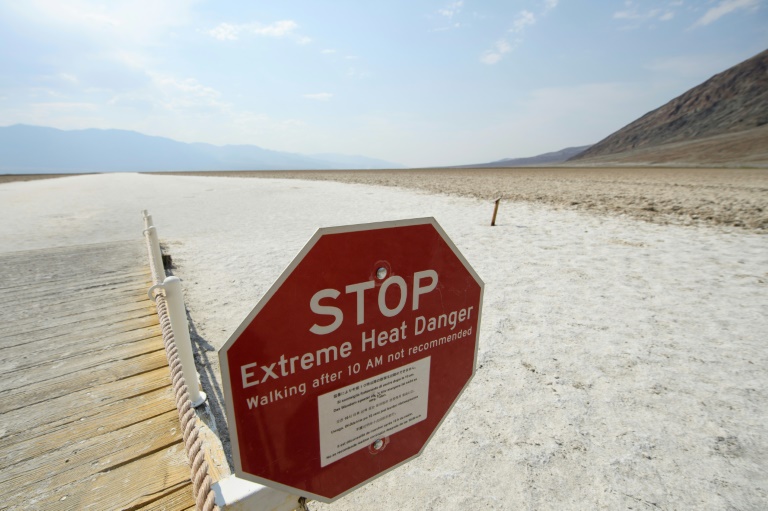
The world is already feeling the effects of global warming, driven largely by the burning of fossil fuels, with last year seeing a cascade of deadly floods, heatwaves and wildfires across four continents. 

The upcoming update from the Intergovernmental Panel on Climate Change (IPCC) is set to outline in stark detail what the best available science tells us are the impacts of the changing climate — past, present and future.   

During a two-week gathering, diplomats and scientists will vet, line-by-line, an all-important Summary for Policymakers, boiling down an underlying report thousands of pages long.

An early draft of the IPCC review seen by AFP in 2021 makes clear the extent to which devastating climate impacts are a here-and-now reality.

In some cases this means that adapting to intolerably hot days, flash flooding and storm surges has become a matter of life and death.

“Even if we find solutions for reducing carbon emissions, we will still need solutions to help us adapt,” said Alexandre Magnan, a researcher at the Institute for Sustainable Development and International Relations in Paris and a co-author of the report, without commenting on the report’s findings. 

Species extinction, ecosystem collapse, crippling health impacts from disease and heat, water shortages — all will accelerate in the coming decades even if the carbon emissions that drive global warming are drawn down, the report is likely to find.

“This is a real moment of reckoning,” said Rachel Cleetus, Climate and energy policy director at the Union of Concerned Scientists.

“This not just more scientific projections about the future,” she told AFP. “This is about extreme events and slow-onset disasters that people are experience right now.”

– Planning ahead –

The report comes three months after pledges at the COP26 climate summit in Glasgow to halt deforestation, curb methane emissions, phase down coal-fired power and boost financial aid to developing countries. 

IPCC assessments are divided into three sections, each with its own volunteer “working group” of hundreds of scientists.

In August 2021, the first instalment on physical science found that global heating is virtually certain to pass 1.5 degrees Celsius (2.7 degrees Fahrenheit), probably within a decade. 

That is the heating limit envisioned in the Paris Agreement, beyond which impacts become more severe.   

This second report on impacts and adaptation, due for release after the two-week meeting, is likely to underscore that vulnerability to extreme weather events — even when they are made worse by global warming — can be reduced by better planning.

This is not only true in the developing world, noted Imperial College professor Friederike Otto, pointing to massive flooding in Germany last year that killed scores and caused billions in damage. 

“Even without global warming there would have been a huge rainfall event in a densely populated geography where the rivers flood very easily,” said Otto, a pioneer in the science of quantifying the extent to which climate change makes extreme weather events more likely or intense.

– Hard choices –

The latest report will also likely zero in on how climate change is widening already yawning gaps in inequality, both between regions and within nations. 

This means that the people least responsible for climate change are the ones suffering the most from its impacts.

Not only is this unjust, experts and advocates say, it is a barrier to tackling the problem.

“I do not think there are pathways to sustainable development that do not substantively address equity issues,” said Clark University professor Edward Clark, a lead author of one of the reports chapters.

Earth’s surface has warmed 1.1 degrees Celsius since the 19th century. 

The 2015 Paris deal calls for capping global warming at “well below” 2C, and ideally the more ambitious limit of 1.5C.

This report is sure to reinforce that goal.

“There are limits — for ecosystems and human systems — to adaptation,” said Cleetus. “We cannot adjust to runaway climate change.”

Indeed, the report will probably emphasise more than ever before dangerous “tipping points”, invisible temperature trip wires in the climate system for irreversible and potentially catastrophic change.

Some of them — such as the melting of permafrost housing twice as much carbon as in the atmosphere — could fuel global warming all on their own.

At the same time, scientists are only just beginning to get a handle on so-called cascading and compound impacts — how Greenland’s melting ice sheet, for example, affects ocean currents across the globe.

“There is a finite set of choices we can make that would move us productively into the future,” said Carr. “Every day we wait and delay, some of those choices get harder or go away.”

Iranians get behind wheel to mark Islamic revolution

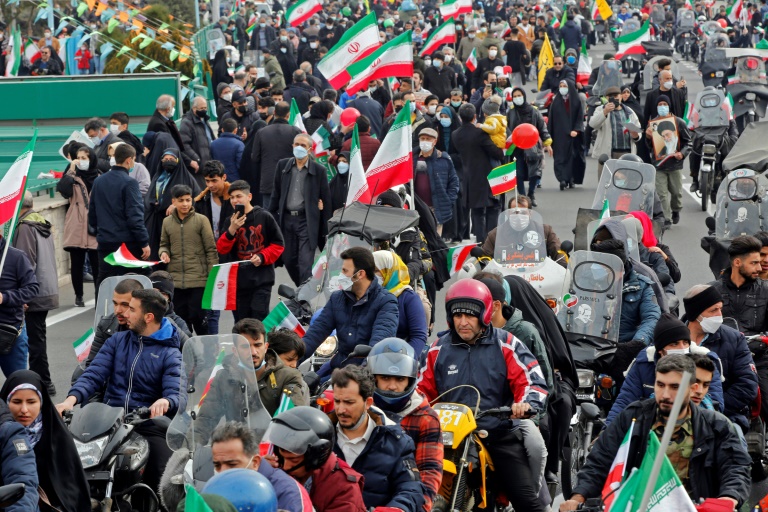
Tens of thousands of Iranians drove through Tehran on Friday to mark the 43rd anniversary of the country’s Islamic Revolution, staying in vehicles rather than marching on foot because of Covid restrictions.

Due to the pandemic, state television said that — again this year — there should be “no gathering or marching” by those celebrating the 1979 overthrow of the shah’s regime.

Instead, people travelled by car, motorcycle and bicycle, to converge on the capital’s iconic Azadi (Freedom) Square, despite chilly temperatures.

Some had draped the red, white and green Iranian flag over their cars. Others chanted slogans of “Death to America” and “We will resist until the end” from windows as they drove by.

They looped around the roundabout, before some got out of their vehicles to let loose balloons and take selfies in front of Azadi Tower, a massive monument at the city’s western entrance.

A number of US flags were also burned by people chanting “We will not surrender”, said an AFP photographer at the square.

State television broadcast footage of similar rallies in other major cities, including Isfahan, Mashhad, Tabriz and Shiraz.

Demonstrators bore portraits of Iran’s supreme leader Ayatollah Ali Khamenei as well as the late Ayatollah Ruhollah Khomeini, founder of the Islamic republic, and revered general Qasem Soleimani, killed by a US air strike at Baghdad airport in January 2020.

This year’s anniversary is the first since ultraconservative President Ebrahim Raisi took office in August.

The celebrations mark the day that the shah’s government fell after Shiite cleric Khomeini returned from exile.

Shah Mohammad Reza Pahlavi had already fled Iran after months of protests against his rule.

The coronavirus has infected more than 6.7 million people in Iran and killed more than 133,000, according to official figures.

Iran, which has a population of around 85 million, is the Middle East country hardest hit by the pandemic.

Nearly 55 million people have so far received two doses of anti-Covid vaccines.

Alongside the pandemic, Iran’s economy has been battered by sanctions reimposed by the United States since 2018, when then-president Donald Trump unilaterally withdrew from a landmark nuclear deal.

Iran is currently engaged in negotiations with Britain, China, France, Germany and Russia directly and with the United States indirectly to revive the agreement formally called the Joint Comprehensive Plan of Action, or JCPOA.

Close Bitnami banner
Bitnami