World

13 million face hunger as Horn of Africa drought worsens: UN

An estimated 13 million people in Kenya, Somalia and Ethiopia are facing severe hunger as the Horn of Africa experiences its worst drought in decades, the United Nations said Tuesday.

Three consecutive rainy seasons have failed as the region has recorded its driest conditions since 1981, the UN’s World Food Programme said.

The drought has destroyed crops and inflicted “abnormally” high livestock deaths, forcing rural families who rely on herding and farming to abandon their homes.

Water and grazing land is in short supply and forecasts of below-average rainfall in the coming months only threaten more misery, said Michael Dunford, WFP’s regional director in East Africa.

“Harvests are ruined, livestock are dying, and hunger is growing as recurrent droughts affect the Horn of Africa,” he said in a statement.

“The situation requires immediate humanitarian action” to avoid a repeat of a crisis like that of Somalia in 2011, when 250,000 died of hunger during a prolonged drought.

Speaking to journalists in Geneva, WFP spokesman Tomson Phiri described the scene he witnessed during a recent trip to northeastern Kenya.

“While it’s common to see dead livestock by the roadside… this time, they have not been hit by passing vehicles: they have died from thirst and starvation, and died in large numbers,” he said.

“The drought is widespread, severe and likely to grow worse.”

Food aid is being distributed across an arid swathe of Kenya, Ethiopia and Somalia where malnutrition rates are high and some 13 million people are at risk of severe hunger in the first quarter of this year.

– ‘Catastrophe’ –

The UN children’s agency meanwhile assesses that as many as 20 million people in those three countries, plus Eritrea, will need water and food assistance over the next six months.

Mohamed Fall, UNICEF’s regional director for eastern and southern Africa, said the situation was particularly dire for children and families.

Nearly 5.5 million children in the four countries are threatened by acute malnutrition, while 1.4 million risked falling into severe acute malnutrition, which can lead to death.

“UNICEF fears this number will increase by 50 percent if rains don’t come in the next three months,” Fall told reporters in Geneva via video-link.

“The needs are massive and urgent, and they are quickly outpacing the available funds to respond,” he said.

“We need to act now to prevent a catastrophe.”

According to WFP, some 5.7 million already need food assistance in southern and southeastern Ethiopia, including half a million malnourished children and mothers.

In Somalia, the number of people classified as seriously hungry is expected to rise from 3.5 million to 4.6 million by May unless urgent interventions are taken.

Another 2.8 million people need assistance in southeastern and northern Kenya, where a drought emergency was declared in September.

WFP said $327 million was required to respond to immediate needs over the next six months and support pastoral communities to become more resilient against recurring climate shocks.

UNICEF meanwhile is appealing for $123 million to cover life-saving needs in Ethiopia, Eritrea, Somalia and Kenya through to the end of June.

In 2011, failed rains led to the driest year since 1951 in arid regions of Kenya, Somalia, Ethiopia, Djibouti and Uganda.

Experts say extreme weather events are happening with increased frequency and intensity due to climate change — with Africa, which contributes the least to global warming, bearing the brunt.


Indonesian croc freed after five years trapped in tyre

A wild crocodile in Indonesia who was trapped in a tyre for more than five years has been rescued, freed from its rubber vice and released back into the wild, officials and residents said Tuesday.

Conservation workers have been trying to lure the stricken saltwater crocodile from a river since 2016 after residents of Palu city on Sulawesi island spotted the animal with a motorbike tyre wrapped around its neck.

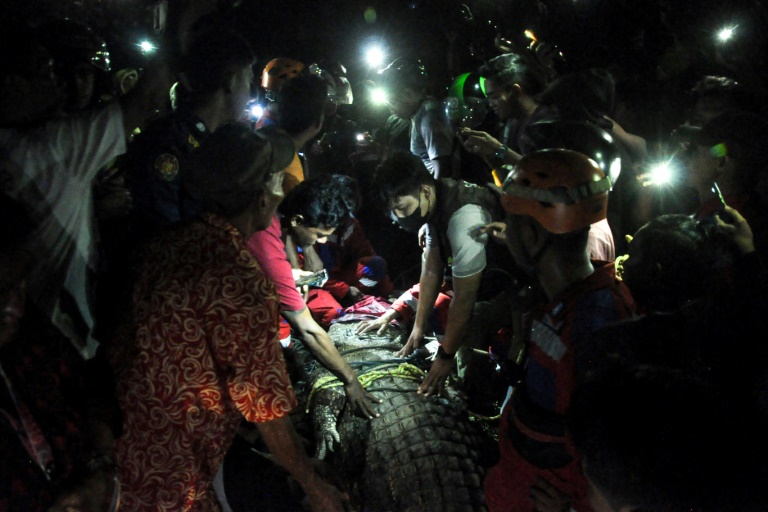
But it was a local resident who snared the 5.2-metre (17 foot) long reptile — who was regularly seen sunbathing in the Palu river in Central Sulawesi — from its tight squeeze late on Monday.

Tili, a 34-year-old bird-seller, used chicken as bait and ropes to catch the beast at the end of what he said was a three-week rescue effort, before dozens of locals helped to drag the crocodile to shore and cut the tyre around its neck.

“I just wanted to help, I hate seeing animals trapped and suffering,” Tili, who like many Indonesians uses only one name, told AFP. 

His first two attempts to rescue the croc failed because the ropes were not strong enough to contend with its weight, he said, before turning to nylon ropes used for tugging boats.

“I was already exhausted so I let them finish the rescue, the crocodile was unbelievably heavy, everybody was sweating and getting very tired.”  

The crocodile was released back into the water immediately after the rescue to relieved cheers from locals. 

Conservationists believe someone may have deliberately placed the tyre around the croc’s neck in a failed attempt to trap it as a pet in the archipelago nation that is home to several species of the animal. 

Tili beat the authorities to the capture because they lacked the proper equipment for a rescue in the river that houses more than 30 other crocodiles.

“Yesterday was a historical day for us, we are grateful the crocodile was finally rescued and we appreciate the locals who showed concern for the wildlife,” Hasmuni Hasmar, head of the local conservation agency, told AFP.

The reptile made headlines in early 2020 when the local government promised a reward to anyone who caught the croc and removed the tyre, but later called off the contest over fears it could endanger its safety. 

But the local conservation agency said Tili is in line for a prize after his daring plan paid off.

“We will award Tili for his effort in rescuing the wildlife,” Hasmar said.

Humanitarian crisis feared as cyclone kills 20 in Madagascar

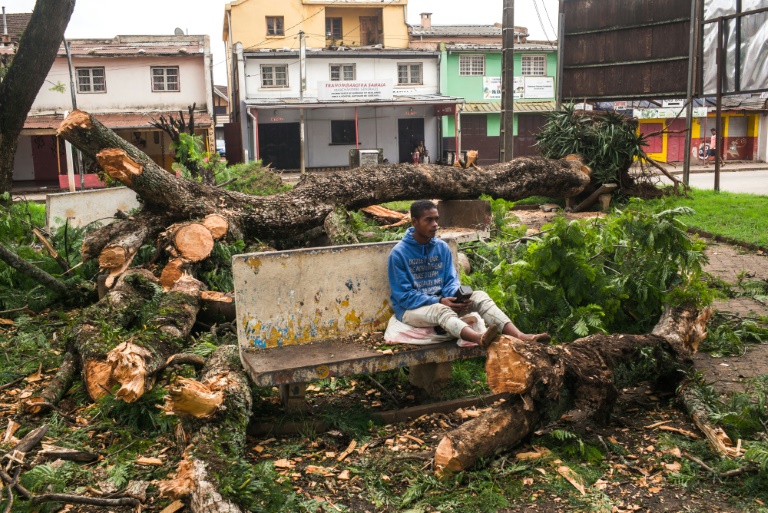
Cyclone Batsirai swept out of Madagascar on Monday after killing 20 people, displacing 55,000 and devastating the drought-hit island’s agricultural heartland, leading the UN to warn of a worsening humanitarian crisis.

Madagascar was already reeling from a tropical storm which killed 55 people weeks earlier, and the latest extreme weather event came as South African President Cyril Ramaphosa said the continent is “bearing both the brunt and the cost” of global warming.

Batsirai made landfall on the Indian Ocean island’s east on Saturday evening bringing heavy rain and winds of 165 kilometres (102 miles) per hour, after drenching the French island of La Reunion.

Jean Benoit Manhes, a representative of UN children’s agency UNICEF in the country, told AFP on Monday that “Batsirai left Madagascar this morning at 7 am (0400 GMT) heading out into the Mozambique Channel.”

Madagascar’s disaster management agency said that Batsirai had left 20 people dead and forced 55,000 from their homes.

UNICEF warned that many of the victims were likely to be children, which make up more than 50 percent of the country’s population.

The cyclone first hit a sparsely populated agricultural area in the country’s east on Saturday, before later weakening. The eastern city of Mananjary was “completely destroyed,” a resident named Faby said. 

– ‘Constant humanitarian crisis’ – 

Batsirai then moved west inland, causing flooding that ravaged rice fields in the country’s central “breadbasket,” UNICEF said.

“The impact of the cyclone does not end today, it will last for several months, particularly the impact on agriculture,” Manhes said.

“The roofs of several schools and health centres were blown off” in the affected areas, UNICEF said.

Batsirai spared the capital Antanarivo and the island’s main port Tamatave, which led to a lower death toll than had been initially feared by the authorities and aid organisations, who had warned that nearly 600,000 people could be affected and 140,000 displaced.

Some 77 percent of Madagascar’s population live below the poverty line and the latest blow comes during a severe drought in the south which has plunged more than a million people into acute malnutrition, some facing famine.

The cyclone partly destroyed the main road linking the island’s north and south, “which will make it difficult to provide access and reinforcements to villages, including in drought-hit areas,” Manhes said.

“Madagascar is in a constant humanitarian crisis,” he added.

Some 10,000 people on La Reunion were left without electricity on Sunday, three days after Batsirai passed through the island, injuring 12 people on its path.

Tropical Storm Ana affected at least 131,000 people across Madagascar in late January, with most of the 55 deaths coming in Antananarivo. Ana also hit Malawi, Mozambique and Zimbabwe, causing dozens of deaths.

South Africa’s President Ramaphosa told a summit of African leaders on Sunday that the continent was “experiencing the worst impacts of phenomena associated with global warming such as droughts, floods and cyclones”. 

“Despite not being responsible for causing climate change, it is Africans who are bearing both the brunt and the cost,” he said.

Morocco to bury little Rayan who died trapped in well

Moroccans were preparing Monday to bury Rayan, a five-year-old boy who spent five days trapped down a well, sparking a vast rescue operation that gripped the world but ended in tragedy.

The boy had fallen down a narrow, 32-metre (100-foot) dry well last Tuesday, sparking a complex earth-moving operation to try to reach him without triggering a landslide.

Well-wishers had flooded social media with messages of sympathy and prayers that he would be extracted alive.

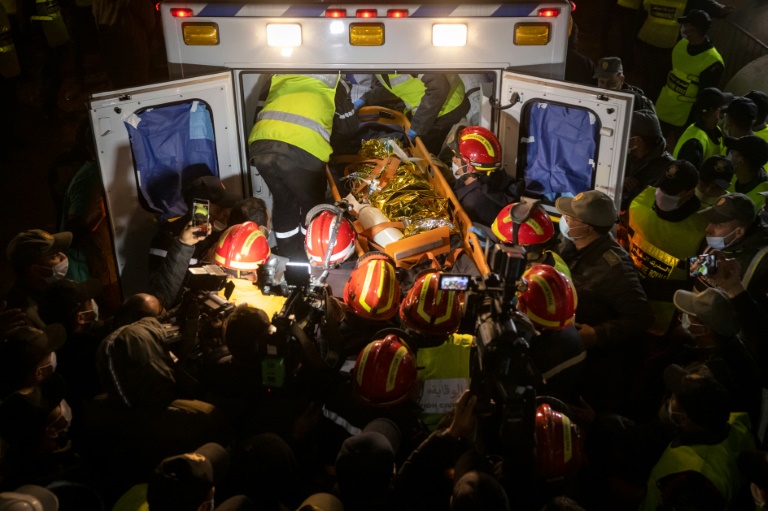
On Saturday night, crowds had cheered as rescue workers cleared away the final handfuls of soil to reach him after the marathon digging operation. 

But grief replaced hope when it turned out that the boy was dead, news announced by the royal cabinet of the North African nation.

King Mohammed VI called the parents to voice his condolences.

The child’s body was taken to a military hospital in the capital Rabat, accompanied by his parents, as villagers started preparing the area around the Douar Zaouia cemetary near Ighrane in anticipation of a large crowd of mourners.

His funeral is to be held on Monday afternoon in his home village of Ighrane, in the impoverished Rif mountains of northern Morocco, a local official and a relative told AFP.

– Nation in shock –

Rayan’s father Khaled Aourram said he had been repairing the well when his son fell in, close to the family home.

The shaft, just 45 centimetres (18 inches) across, was too narrow for Rayan to be reached directly, and widening it was deemed too risky — so earth movers dug a wide slope into the hill.

Rescue crews, using bulldozers and front-end loaders, excavated the surrounding red earth down to the level where the boy was trapped, before drill teams carefully dug a horizontal tunnel to reach him from the side to avoid causing a landslide.

Vast crowds came to offer their support, singing and praying to encourage the rescuers who worked around the clock.

But the boy’s death left Moroccans in shock.

Mourad Fazoui in the capital Rabat mourned what he said was a disaster. “May his soul rest in peace and may God open the gates of heaven to him,” the salesman said.

The Arabic daily newspaper Assabah criticised the digging of unauthorised wells, saying many were used to irrigate cannabis widely grown in Morocco’s north.

Social media across the Arab world were flooded with messages of support, grief, and praise for rescue workers.

“He has brought people together around him,” one Twitter user said.

But one deplored a “dystopic world” where “Arab nations are moved by the rescue of a child in Morocco” while other infants in Yemen and Syria die in famine or conflict.

hic-fs-isb-agr/ezz/par/hkb

Close Bitnami banner
Bitnami