World

Macron heads to Moscow in bid to ease Ukraine tensions

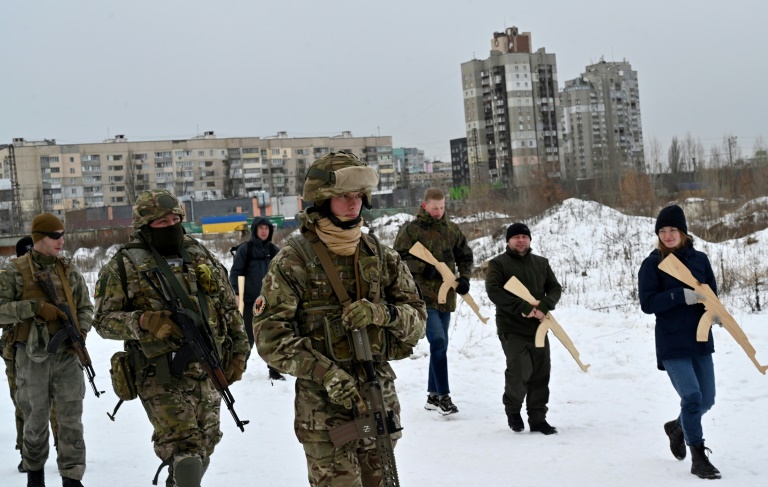
French President Emmanuel Macron heads to Moscow on Monday hoping to reach a deal with Vladimir Putin over Ukraine, at the start of a week of intense diplomacy over fears Russia is preparing an invasion of its pro-Western neighbour.

With tens of thousands of Russian troops camped on the border with Ukraine, Macron will be the first top Western leader to meet with Putin since the crisis kicked off in December.

German Chancellor Olaf Scholz will also meet Monday with US President Joe Biden in Washington, as Western leaders look to maintain a united front in their biggest showdown with Russia since the end of the Cold War.

US officials say Russia has assembled 110,000 troops on the border with Ukraine and is on track to amass a large enough force — some 150,000 soldiers — for a full-scale invasion by mid-February.

Russia insists it has no plans to attack and has instead put forward its own demands for security guarantees that it says would ease tensions.

Macron, who will head to Kyiv on Tuesday for talks with Ukrainian President Volodymyr Zelensky, said before leaving Paris that he would be looking to find “historic solutions” with Putin.

“We will discuss the terms of de-escalation,” Macron told newspaper Le Journal Du Dimanche, saying Russia’s objective was “clearly not Ukraine” but new agreements on security with NATO and the European Union.

“The security and sovereignty of Ukraine or any other European state cannot be compromised, just as it is legitimate for Russia to raise the question of its own security,” Macron said.

– ‘Very important’ talks –

Moscow has accused the West, in particular Washington and NATO, of ignoring what it says are legitimate concerns for its security.

It is demanding a permanent ban on Ukraine, a former Soviet republic, joining the US-led NATO military alliance and that the bloc roll back its military presence in eastern Europe.

Kremlin spokesman Dmitry Peskov said Monday’s talks between Macron and Putin were “very important” but suggested no one should expect a major step forward.

“The situation is too complex to expect decisive breakthroughs in one meeting,” Peskov told reporters.

Macron, whose country currently heads the European Union and who is facing a re-election challenge in April, has tried to position himself as the key European figure in negotiations with Russia.

He has spoken to Putin by phone several times over the past week and held a 40-minute call with Biden on Sunday.

Macron is expected to push forward a stalled peace plan for the festering conflict with Russia-backed separatists in eastern Ukraine, and could make offers to Russia for consultations on arms control and NATO expansion.

The United States have taken the lead in warnings about an invasion, with officials in Washington citing intelligence assessments this weekend that Russia has stepped up preparations for an invasion.

– ‘Apocalyptic predictions’ – 

Such a force would be capable of taking Kyiv in a matter of 48 hours in an onslaught that would kill up to 50,000 civilians, 25,000 Ukrainian soldiers and 10,000 Russian troops and trigger a refugee flood of up to five million people, mainly into Poland, the officials said.

Kyiv has consistently tried to tone down the warnings, with Foreign Minister Dmytro Kuleba saying on Sunday: “Do not believe the apocalyptic predictions. Different capitals have different scenarios, but Ukraine is ready for any development.”

An advisor to Zelensky also said the chance of finding a diplomatic solution was “substantially higher” than that of a war.

Biden has reacted to the Russian troop build-up by offering 3,000 American forces to bolster NATO’s eastern flank, with a batch of the troops promised arriving in Poland on Sunday.

Scholz told the Washington Post ahead of his talks with Biden that the West has “worked hard to send a clear message to Russia that it will have a high price if they were to intervene into Ukraine.”

Western leaders have repeatedly warned of severe consequences if Russia invades, including wide-ranging economic sanctions.

While Scholz is in Washington, his foreign minister, Annalena Baerbock, will be in Kyiv along with her Czech, Slovak and Austrian counterparts for a two-day visit.

Scholz himself will be in Moscow and Kyiv next week for talks with Putin and Zelensky. 
Livelihoods lost as climate disaster woes mount in Kenya

Dabaso Galgalo is now used to the smell and grisly spectacle of rotting flesh festering in the scorching heat as Kenya reels from a spate of climate disasters.

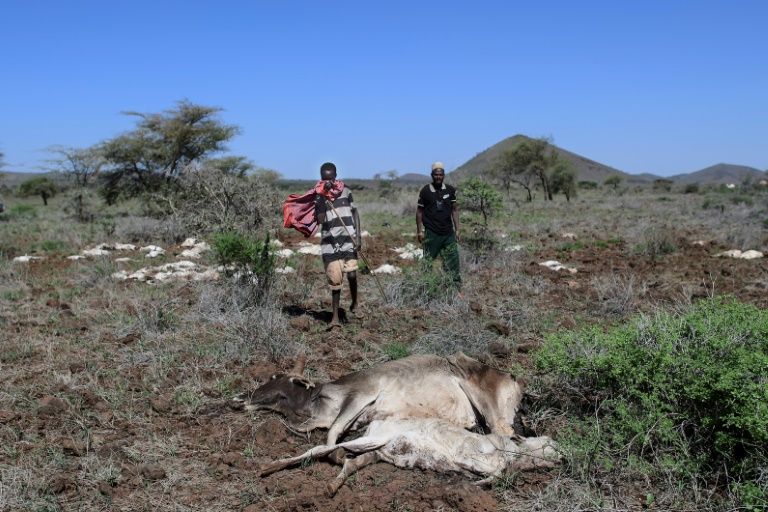
Surrounded by barren scrubland littered with withered carcasses of sheep and goats, the 56-year-old pastoralist is struggling to keep his beloved animals, and himself, alive.

What was left of his herd after a months-long dry spell was decimated by once-in-a-generation floods that hit northern Kenya, the latest in a series of unforgiving climate shocks lashing the region. 

“We recently had heavy rains and strong winds that ended up killing livestock that had gathered at this water point,” he told AFP, outside a settlement called ‘kambi ya nyoka’ (snake camp) in Marsabit.  

The semi-arid region has been the scene of a prolonged drought. Then, when the rains finally came, the deluge pushed communities, who rely exclusively on livestock for their survival, to the edge of disaster.

“This is a very huge loss because we have lost lots of resources following this tragedy,” said Galgalo.

“If one had 500 goats (earlier), they have between five and 20 goats left.”

Nomadic livestock herders in East Africa’s drylands have learnt to cope with the vagaries of weather over decades, driving their relentless search for water and pasture in some of the world’s most inhospitable terrain.

But their resilience is being severely tested by climate change. 

– Fight for resources – 

Poor rainfall in the last quarter of 2021 — the third consecutive failed rainy season — followed a devastating locust invasion a year earlier, with animals now too weak to produce milk or too skinny to be sold. 

There are growing fears that as the situation worsens, tensions among communities could sharpen as they compete for access to meagre resources.

Marsabit is particularly vulnerable because of a perennial conflict between the Borana and Gabra pastoralist communities.

President Uhuru Kenyatta declared the drought a natural disaster last September, with 2.1 million people — four percent of Kenya’s population — already grappling with hunger, according to government figures.

The government said last week that 23 of the country’s 47 counties faced “food and water stress” while the meteorological department has warned of a potential increase in “human-to-human and human-to-wildlife conflicts”.

The authorities have invested 450 million shillings ($3.9 million, 3.4 million euros) to buy 11,250 cattle and 3,200 goats from farmers in the worst-hit counties.

The UN’s Food and Agricultural Organization (FAO) on Monday called for “aggressive” efforts to address the situation, warning it was concerned about “the realities on the ground.”

“We must stay committed to doing things differently,” FAO Deputy General Beth Bechdol told a press conference in Nairobi before embarking on a trip to the drought-hit north.

“We have seen too many efforts that have taken too many years, that have been repeated and tried over and over again with often times the same disappointing outcomes.” 

– Africa hardest-hit –

East Africa endured a harrowing drought in 2017 which also brought neighbouring Somalia to the brink of famine.

In 2011, two successive failed rainy seasons in 12 months led to the driest year since 1951 in arid regions of Kenya, Somalia, Ethiopia, Djibouti and Uganda.

With conflicts raging in Ethiopia and Somalia, aid agencies are struggling to assess the true extent of the current crisis.

Experts say extreme weather events are happening with increased frequency and intensity due to climate change — with Africa, which contributes the least to global warming, bearing the brunt.

For Galgalo, the race is on to save his remaining animals and protect his only source of income. 

But he is losing hope.

“They are suffering from pneumonia and are still dying,” he said. 

Myanmar junta denies detained Australian academic released

Myanmar’s junta has denied freeing an Australian academic detained for almost a year after Cambodia’s leader on Monday took credit for arranging the release.

Economist Sean Turnell was working as an advisor to Myanmar civilian leader Aung San Suu Kyi when he was detained shortly after the coup in February last year.

He has been charged with violating Myanmar’s official secrets law and faces a maximum penalty of 14 years in prison if found guilty.

On Monday, Cambodian Prime Minister Hun Sen said Turnell had “been released” the previous day. 

The Cambodian strongman, who met with Myanmar’s junta chief last month, claimed the release had happened after he passed on a request from Australia’s government.

“At that time, I made the request to Min Aung Hlaing and Min Aung Hlaing said he would consider it positively,” Hun Sen said, responding to questions about his trip to Myanmar.

“Yesterday, he was released,” he added, referring to Turnell.

Junta spokesman Zaw Min Tun denied that Turnell had been released, but acknowledged that Hun Sen had brought up the matter during his visit — the first to Myanmar by any foreign leader since last year’s coup. 

“Regarding this matter, Senior General Ming Aung Hlaing said he would think about it after his legal case is finished,” he told AFP.

Turnell has appeared in court every Thursday in the military capital Naypyidaw for his trial — where he is co-accused alongside Suu Kyi. 

Human rights groups have raised concerns about his prosecution, particularly after the Australian embassy was denied access to his court hearing in September.

The exact details of Turnell’s alleged offence have not been made public, although state television has said he had access to “secret state financial information” and had tried to flee the country.

Livelihoods lost as climate disaster woes mount in Kenya

Dabaso Galgalo is now used to the smell and grisly spectacle of rotting flesh festering in the scorching heat as Kenya reels from a spate of climate disasters.

Surrounded by barren scrubland littered with withered carcasses of sheep and goats, the 56-year-old pastoralist is struggling to keep his beloved animals, and himself, alive.

What was left of his herd after a months-long dry spell was decimated by once-in-a-generation floods that hit northern Kenya, the latest in a series of unforgiving climate shocks lashing the region. 

“We recently had heavy rains and strong winds that ended up killing livestock that had gathered at this water point,” he told AFP, outside a settlement called ‘kambi ya nyoka’ (snake camp) in Marsabit.  

The semi-arid region has been the scene of a prolonged drought. Then, when the rains finally came, the deluge pushed communities, who rely exclusively on livestock for their survival, to the edge of disaster.

“This is a very huge loss because we have lost lots of resources following this tragedy,” said Galgalo.

“If one had 500 goats (earlier), they have between five and 20 goats left.”

Nomadic livestock herders in East Africa’s drylands have learnt to cope with the vagaries of weather over decades, driving their relentless search for water and pasture in some of the world’s most inhospitable terrain.

But their resilience is being severely tested by climate change. 

– Fight for resources – 

Poor rainfall in the last quarter of 2021 — the third consecutive failed rainy season — followed a devastating locust invasion a year earlier, with animals now too weak to produce milk or too skinny to be sold. 

There are growing fears that as the situation worsens, tensions among communities could sharpen as they compete for access to meagre resources.

Marsabit is particularly vulnerable because of a perennial conflict between the Borana and Gabra pastoralist communities.

President Uhuru Kenyatta declared the drought a natural disaster last September, with 2.1 million people — four percent of Kenya’s population — already grappling with hunger, according to government figures.

The government said last week that 23 of the country’s 47 counties faced “food and water stress” while the meteorological department has warned of a potential increase in “human-to-human and human-to-wildlife conflicts”.

The authorities have invested 450 million shillings ($3.9 million, 3.4 million euros) to buy 11,250 cattle and 3,200 goats from farmers in the worst-hit counties.

– Africa hardest-hit –

East Africa endured a harrowing drought in 2017 which also brought neighbouring Somalia to the brink of famine.

In 2011, two successive failed rainy seasons in 12 months led to the driest year since 1951 in arid regions of Kenya, Somalia, Ethiopia, Djibouti and Uganda.

With conflicts raging in Ethiopia and Somalia, aid agencies are struggling to assess the true extent of the current crisis.

Experts say extreme weather events are happening with increased frequency and intensity due to climate change — with Africa, which contributes the least to global warming, bearing the brunt.

For Galgalo, the race is on to save his remaining animals and protect his only source of income. 

But he is losing hope.

“They are suffering from pneumonia and are still dying,” he said. 

Morocco to bury 'little Rayan' who died trapped in well

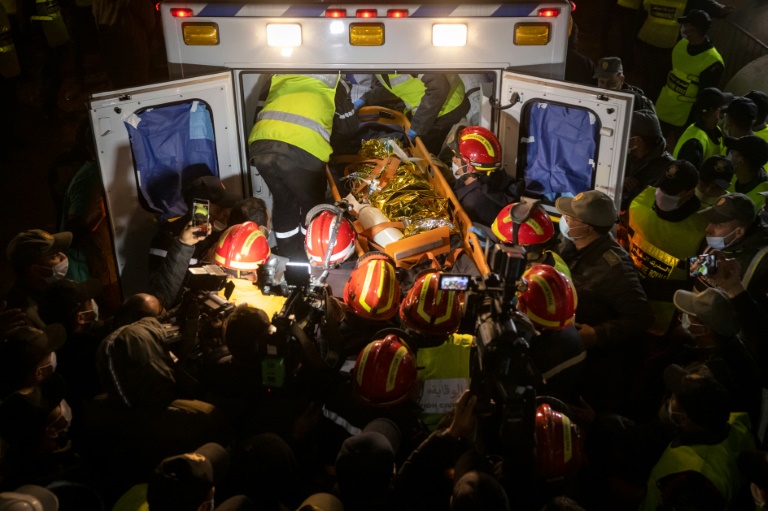
Morocco prepared Monday to bury “little Rayan”, the five-year-old boy who died trapped in a well despite a days-long rescue operation that gripped the world.

The child’s fate drew global attention after he fell down a narrow, 32-metre (100-foot) dry well last Tuesday, and sparked an outpouring of sympathy online.

His funeral is to be held in his home village of Ighrane, in the impoverished Rif mountains of northern Morocco where the tragedy took place, a local official and a relative told AFP.

On Saturday night, crowds had cheered in joy when rescue workers reached Rayan after a round-the-clock digging operation, clearing away the final handfuls of dirt.

But hope turned to grief as news spread that the rescue was too late, and Rayan was dead.

“The silence is terrible this morning in the village,” a relative said.

The news was announced by the royal cabinet of the North African nation, after King Mohammed VI called the parents with his condolences.

“We thank his majesty the king, the authorities and all those who have helped us,” Rayan’s father Khaled Aourram said on Saturday evening. “Praise God, have mercy on the dead.”

Rayan’s body was taken to a military hospital in Rabat, according to a cousin, although no report has been given of any autopsy.

The race to rescue Rayan was followed live across the world, and as soon as the tragic conclusion was announced, tributes poured in.

Pope Francis, while mourning the boy’s loss, praised the “beautiful” sight of “how all the people gathered together” to try to save a child.

– Nation in shock –

Aourram said he had been repairing the well when the boy fell in, close to the family home.

The shaft, just 45 centimetres (18 inches) across, was too narrow for Rayan to be reached directly, and widening it was deemed too risky — so earth movers dug a wide slope into the hill.

Rescue crews, using bulldozers and front-end loaders, excavated the surrounding red earth down to the level where the boy was trapped, before drill teams created a horizontal tunnel to reach him from the side to avoid causing a landslide.

Vast crowds came to offer their support, singing and praying to encourage the rescuers who worked around the clock.

Moroccans were in shock after the news of the boy’s death.

Mourad Fazoui in the capital Rabat called it a disaster. “May his soul rest in peace and may God open the gates of heaven to him,” the salesman said.

Social media users from regional rival Algeria to France and the United States flooded the internet with messages of support and grief, along with praise for the rescue workers.

“He has brought people together around him,” a Twitter user said.

But some saw the situation differently, with one internet user deploring a “dystopic world” where “Arab nations are moved by the rescue of a child in Morocco” while others die due to famine or conflict in Yemen and Syria.

The boy’s ordeal echoed a tragedy in Spain in early 2019 when a two-year-old child died after falling into an abandoned well more than 70 metres deep.

Julen Rosello’s body was recovered after a search and rescue operation that lasted 13 days.

Embattled rappers fight to speak out in troubled DR Congo

“I don’t sing to avenge my family, but because other innocent people who know nothing about politics continue to die,” says imprisoned Congolese rapper Idengo.

“I wanted to change the country with my music — it will help me to create a new Congo,” he adds.

Idengo — real name Delphin Katembo — is the only surviving member of a family of five devastated by conflict in eastern Democratic Republic of Congo, and exemplifies the challenges faced by dissenting artists as the bloodshed knows no end.

A military tribunal in December convicted Idengo and fellow rapper Muyisa Nzanzu Makasi over song lyrics deemed dangerous and detrimental to President Felix Tshisekedi and the DR Congo’s army.

Tshisekedi placed the eastern provinces of North Kivu and Ituri under a “state of siege” last May, aiming to intensify a military offensive against rebels, with soldiers replacing civil servants in key positions.

But the measures have not stemmed the killings, stoking anger among the local population and driving the two rappers’ emotionally and politically charged music.

The men, who hail from North Kivu, spoke with AFP from their prison in the provincial capital Goma where they are awaiting an appeal hearing.

– ‘Tired of their promises’ –

Idengo, now 25, had a precocious passion for politically conscious rapping. 

He says he was only around 10 years old when he produced his first song, “Droits de l’Homme (Human Rights), and gave his first concert at 14 in his hometown of Beni.

He was first imprisoned for his songs in 2019 and ended up behind bars again early last year for the track “Politicien Escroc” (Cheating Politician).

Another single, “Effacer le Tableau” (Wipe the Slate Clean), prompted his latest arrest in October and led to his 10-year jail term on accusations of urging people to kill soldiers, police officers and UN peacekeepers.

A YouTube music video shows Idengo dressed in torn fatigues, pretending to lop off heads with a bush cutter.

“They sacrifice us for money, we’re tired of their promises,” he sings, alternating between French and Swahili. 

Idengo’s lawyers argued in court that psychological trauma explained the explosive lyrics.

His friend Bienvenu Sondu says Idengo’s mother was killed in 2013 or 2014 and his father was killed “sometime later”. 

“Several other” relatives were “massacred” by the Allied Democratic Forces (ADF) rebel group, he says, adding that Idengo’s brothers are dead.

The ADF is the fiercest among dozens of armed groups operating in the mineral-rich east of the DRC.

– ‘Awaken consciences’ –

Muyisa, for his part, never got to know his father following the massacres, living with his mother and failing to finish university studies in IT management.

Younger sister Wivine remembers how he started singing at their local Catholic church when still in primary school.

“He loves peace, so he began searching for peace,” she says.

Muyisa, 29, recounts starting music — “the revolution” — in 2020.

“If things change tomorrow, I’ll move on to something else. But what’s happening here pushes me to make my voice heard,” he says.

“Bob Marley used to say music can change anything. I don’t want to be a saviour, a hero, but I’m trying to awaken consciences.”

Muyisa received a two-year prison sentence for insulting the head of state.

Speaking at his trial with Idengo, Muyisa said “nothing” had changed despite Tshisekedi’s promises to put an end to the killings.

“That’s why I say that the people in government are louts, idiots. But I didn’t insult the president, I reminded him of his work,” he insists.

– ‘Shameful’ –

Portraits of Patrice Lumumba, independent DR Congo’s first prime minister who was assassinated in 1961, and of Laurent-Desire Kabila, the president who met the same fate in 2001, adorn the walls outside Idengo’s recording studio in Beni.

“His conviction is shameful. The Grand Nord population is behind him!” Cesar Mutukufu Mukombozi, a 30-year-old fan, told AFP near the recording studio.

Inside, three young musicians work with a synthesiser, aiming to create new songs to show that the fight for freedom continues.

“Everything he sings about is reality. They want us to die en masse without speaking out,” said 19-year-old student Francine Soki.

“He’s innocent! It’s a farce,” said one of them, known as “Barareddy Zero”.

Idengo hoped to host a concert in prison to honour his heroes Lumumba and Kabila.

But the prison director refused, fearing the event would help detainees escape.

Chinese tennis star Peng Shuai repeats sexual assault denial

Chinese tennis star Peng Shuai said she never accused anyone of sexual assault, in an interview published Monday, again walking back an allegation that sparked what she described as a “huge misunderstanding”.

The former doubles world number one alleged in a social media post in November that former Chinese vice-premier Zhang Gaoli forced her into sex during a years-long relationship.

The post was swiftly deleted and Peng was not heard from for nearly three weeks, prompting concern around the world about her safety. She has since appeared at some public events, and denied ever making the accusation.

“I never said anyone had sexually assaulted me in any way,” Peng told the French sports daily L’Equipe on Sunday, reiterating a similar comment she gave to a Singaporean newspaper in December.

The 36-year-old said she was the one who deleted her allegation from Weibo, China’s Twitter-like platform.

It was widely suspected that China’s strict internet censors, sensitive about any criticism of the ruling Communist Party, had removed it.

When L’Equipe asked why she deleted it, Peng said: “Because I wanted to.”

“There was a huge misunderstanding in the outside world following this post,” she said during the interview in the Beijing Winter Olympics bubble.

“I don’t want the meaning of this post to be twisted anymore. And I don’t want any further media hype around it.”

Peng also told L’Equipe that she was retiring from professional tennis, citing a major injury and disruptions to travel and treatment during the pandemic.

– ‘Never disappeared’ –

Some of the world’s biggest tennis stars, including Serena Williams, Naomi Osaka and Novak Djokovic, spoke out about the Peng case. The United Nations and the White House also expressed concern.

The Women’s Tennis Association (WTA) suspended its tournaments in China over the matter.

When asked about the worries her absence sparked, Peng said she had “never disappeared”.

“It’s just that many people, like my friends or people from the IOC messaged me, and it was simply impossible to answer so many messages.”

Peng was accompanied by Chinese Olympic Committee chief of staff Wang Kan during the interview.

Concerns have swirled about Peng’s safety despite her appearances following the three-week absence, which showed her attending sporting events.

After she denied making any sexual assault allegations in December, the WTA said it was still not convinced of her well-being.

At the Australian Open last month, activists handed out 1,000 “Where is Peng Shuai?” T-shirts to spectators ahead women’s final to highlight the case.

– Bach meeting –

International Olympic Committee (IOC) President Thomas Bach held a video conference with Peng on November 21, but that led to accusations that he was trying to protect the hosts of the 2022 Winter Games.

Bach said ahead of the Games that the IOC would back an inquiry into her allegations if she wanted one, saying he would hold a meeting with Peng to “know better about her physical integrity and her mental state”.

Bach, along with IOC member Kirsty Coventry, met Peng over dinner at the Olympic Club in Beijing on Saturday, the body said in a statement.

“We had dinner together on Saturday and we had a nice discussion and exchange,” Peng told L’Equipe.

“He asked me whether I am considering competing again, what my projects are, what I’m planning to do, and so on.”

The IOC said Peng shared with Bach and Coventry “her intention to travel to Europe when the COVID-19 pandemic is over”.

“All three agreed that any further communication about the content of the meeting would be left to her discretion,” the IOC statement added.

There was no mention in it of Peng’s wellbeing, if she could move freely inside China or travel abroad.

“I don’t think it is for us to judge one way or another,” IOC spokesman Mark Adams said at a daily briefing in Beijing, when asked if he believed Peng spoke freely during the L’Equipe interview.

'Fortress Australia' reopens borders to tourists on February 21

Australia will reopen its borders to tourists from February 21, Prime Minister Scott Morrison announced Monday, ending some of the world’s strictest and longest-running pandemic travel restrictions.

“It’s almost two years since we took the decision to close the borders to Australia,” Morrison said, announcing borders will reopen to all visa holders “on the 21st of February of this year”. 

“If you’re double vaccinated, we look forward to welcoming you back to Australia,” he said.

Australia’s ports and airports slammed shut to tourists in March 2020 with the aim of protecting the island continent against the surging global pandemic.

Since then, Australians have mostly been barred from leaving and only a handful of visitors have been granted exemptions to enter.

The rules have stranded nationals overseas, split families, hammered the country’s multi-billion-dollar tourist industry and prompted often bitter debates about Australia’s openness to the rest of the world.

“Bout time,” said Melbourne resident Marshall McDonald. “It’s exciting. It almost feels like the end of a period of hermit kingdom-ness ending.”

Every month of “Fortress Australia” policies has cost businesses an estimated US$2.6 billion, according to the Australian Chamber of Commerce and Industry.

“Our borders will have been closed to international tourists for 704 days,” the chamber said in a statement. “This decision will allow our flailing tourism sector to recover, saving businesses and saving livelihoods.”

In recent months, rules have been gradually relaxed for Australians, long-term residents and students.

The latest decision will see almost all remaining caps lifted.

It comes after the country’s long-standing “Covid-zero” policy was abandoned, vaccination rates rose and the once stellar track-and-trace system collapsed under a wave of Omicron cases.

Only a handful of countries remain closed to tourists — among them Japan, China, New Zealand and several Pacific Island nations.

– ‘Come visit’ –

For Australia’s travel and tourism sector — which struggled as visitor numbers fell almost 98 percent compared to pre-pandemic levels — the news brought elation.

“We’re very excited about being able to reopen,” said Tony Walker, managing director of the Quicksilver Group, which operates cruises, diving and resorts across the Great Barrier Reef.

“The last couple of years have been incredibly difficult for us,” he told AFP, urging people overseas to “come visit”.

Over the course of the pandemic, the firm went from 650 employees down to the 300 it has today.

Walker said he expected “it will take some time to recover” from the past two years. 

Many tourism operators around Australia are experiencing staff shortages, given how few backpackers and working holidaymakers are coming.

Despite the announcement, travel within Australia will still be restricted.

The vast state of Western Australia remains closed to most non-residents. It is currently easier to travel from Sydney to Paris than from Sydney to Perth.

Forest fire rages across Kenya national park

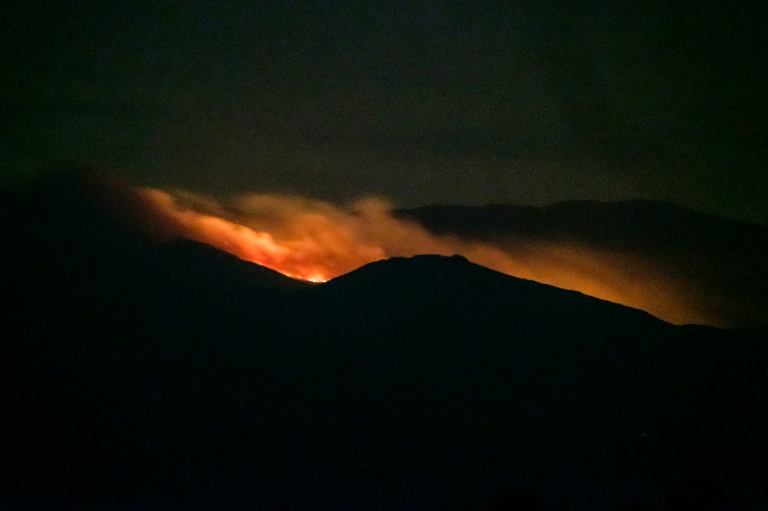
Forest rangers and volunteers battled flames and strong winds on Sunday to stop a fierce fire raging across Kenya’s Aberdare national park for nearly 24 hours.

The blaze broke out on Saturday night, according to an official working for Kenya Wildlife Service (KWS), the government body in charge of national parks, who said the fire was “moving very fast”.

“It is on the grasses, it is spreading and very windy,” the official told AFP on condition of anonymity, explaining that he was not authorised to speak to media.

“We have mobilised the community and staff around and today they have really tried their best… it is only that they were overwhelmed.”

The park’s name was etched in history when Britain’s Elizabeth II, then a princess on a visit to Kenya, received news of her father’s death while staying at the Treetops hotel, a remote game-watching lodge built high into a tree in the Aberdare forest.

Rhino Ark, a conservation charity in Kenya, said on Twitter that it had deployed helicopters to conduct aerial surveys of the area to estimate the extent of damage to the forest cover.

The Mount Kenya Trust, a body set up to conserve the country’s forests, said Sunday that a team had “headed up to help with the bushfires in the Aberdares.

“They will camp and hit the fires at first light,” it said on Twitter.

The park lies some 100 kilometres (60 miles) north of the capital Nairobi.

Located in the Aberdare mountain range, the park is home to spectacular waterfalls and lush bamboo jungles as well as a variety of wildlife including leopards, elephants and critically endangered black rhinos.

The Aberdares are the third highest mountain range in Kenya, reaching a summit of just over 4.000 metres (over 13,100 feet).

In recent days, concern has grown over a contentious proposal before parliament which could allow politicians to determine if public forest can be carved out and handed over to private interests.

The amendment to the Forest Conservation and Management Act –- reforms passed after decades of rampant land clearing — has roused significant community anger and sparked fears that it could result in unchecked logging and environmental destruction.

Original 'Fight Club' ending restored in China after online backlash

The original, iconic ending of cult US film Fight Club has been restored to screens in China after a censored version that brought all criminals to book sparked outrage online.

Beijing has some of the world’s most restrictive censorship rules with authorities only approving a handful of foreign films for release each year — sometimes with major cuts.

But reversing endings is rare, and there was widespread anger after censors replaced the original finale of Fight Club on a version streaming on platform Tencent Video.

In the original closing scenes, star Edward Norton’s narrator kills his imaginary alter-ego Tyler Durden, played by Brad Pitt, before watching multiple buildings explode, suggesting his character’s plan to bring down modern civilisation.

But the version on Tencent instead closed with a line of text on a black screen to say the police “rapidly figured out the whole plan and arrested all criminals”.

In a rare censorship reversal, however, Tencent this week began to air the original conclusion of David Fincher’s film, including the iconic explosive ending that was trimmed last month.

The ending in which the state triumphs had sparked head scratching and outrage among some Chinese viewers — many of whom would likely have seen pirated versions of the unadulterated film.

Human Rights Watch described the cuts as “dystopian”.

Author Chuck Palahniuk, who wrote the 1996 novel that Fight Club was adapted from, tweeted that China had “done the right thing”.

Tencent did not reply to questions on what led to the censorship, nor its abrupt reversal, which prompted more debate online.

“Now, I’m speechless!” wrote one Chinese film fan, with the sentiment echoed across social media.

Close Bitnami banner
Bitnami