World

Joe Rogan apologizes for using racist 'N word'

US podcaster Joe Rogan apologized Saturday for his past use of racist language including the “N word” and said streaming giant Spotify had deleted some of the most offensive episodes of his show.

“My sincere and humble apologies,” Rogan said in a nearly-six-minute Instagram post addressing what he called “the most regretful and shameful thing that I’ve ever had to talk about publicly.”

Rogan addressing his own incendiary language is the latest explosive development to roil Spotify and its flagship star, who have both faced a popular backlash over Covid-19 misinformation on his shows.

The 54-year-old acknowledged he had a particular podcast episode removed which referred to his seeing a movie in a Black neighborhood where he said “it was like we were in ‘Planet of the Apes’.”

The New York Times reported Saturday that as many as 70 episodes of “The Joe Rogan Experience” show had been quietly taken off Spotify. The streaming service had yet to respond to queries from AFP.

Rogan said his use of the “N word” over a 12-year period — highlighted in a recently uncovered compilation video of him using the word — looks “horrible, even to me.”

He said he believed at the time that as long as he was using it in context that people would understand his actions.

“I never used it to be racist, because I’m not racist,” he said.

But there is “no context where a white person is ever allowed to say that word, nevermind publicly on a podcast,” he added.

“If a white person says that word it’s racist and toxic, but a Black person can use it and it can be a punchline, it can be a term of endearment, it could be lyrics to a rap song, it could be a positive affirmation,” Rogan went on.

“It’s a very unusual word, but it’s not my word to use. I’m well aware of that now.”

Spotify’s stock fell sharply Thursday amid controversy over Rogan’s show, which garners up to 11 million listeners per episode.

Music legends Neil Young and Joni Mitchell as well as other artists asked that their songs be removed from the platform in protest of Rogan, who has been accused of spouting misinformation about Covid-19 and vaccinations, either directly or through the guests he interviews on his show.

As for his racist language, Rogan said he was offering “since and humble apologies.”

“I can’t go back in time and change what I said…. but I do hope that this can be a teachable moment for anybody that doesn’t realize how offensive that word can be coming out of a white person’s mouth — in context or out of context,” he said.

Sculpture of Algerian hero vandalised in France

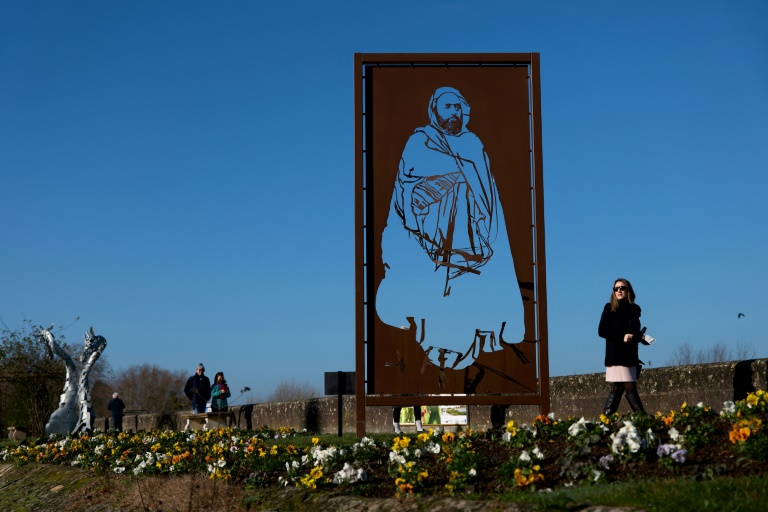
Vandals in central France attacked a sculpture of an Algerian military hero who resisted France’s colonisation of the North African country, just hours before it was inaugurated Saturday as a symbol of Franco-Algerian reconciliation.

The lower part of the steel sculpture in the town of Amboise, where Emir Abdelkader was imprisoned from 1848 to 1852, was badly damaged in the attack which comes in the midst of an election campaign dominated by harsh rhetoric on immigration and Islam.

French President Emmanuel Macron said in a statement: “Let us remember what unites us. The Republic will not erase any trace or name from its history. It will not forget any of its works. It will not tear down any statues.”

Meanwhile Interior Minister Gerald Darmanin, speaking at the Paris launch of he Forum of Islam in France, condemned the “profoundly stupid” act.

Amboise mayor Thierry Boutard said he was “ashamed” of those responsible and decided to proceed with the inauguration ceremony regardless.

Police said no one had claimed responsibility for the vandalism.

– ‘Unspeakable baseness’ –

The sculpture was commissioned to coincide with the 60th anniversary of Algeria’s independence from France, won after a brutal eight-year liberation war that continues to poison relations between the two countries.

It was proposed by historian Benjamin Stora, who was tasked by President Macron with coming up with ways to heal the memories of the war and 132 years of French rule in Algeria. 

The silhouette of the Islamic-scholar-turned-military-leader, who resisted French rule but was later feted as a hero in France for his defence of Christians in the Middle East, looks across the Loire river at the castle where he was imprisoned. 

Amboise police said they were investigating the incident, which comes two months ahead of a presidential election in which an upstart far-right candidate, Eric Zemmour, has repeatedly grabbed headlines with a campaign bashing Islam and immigration from Africa, including Algeria.

Algeria’s ambassador to France Mohamed Antar Daoud, who attended the inauguration, condemned the attack as an act of “unspeakable baseness”.

“We have to get beyond that,” he said, adding that attempts to mend fences between France and Algeria would continue because “there is momentum and a desire on both sides to move forward.”

The artist Michel Audiard spoke of his sorrow at seeing his work partly destroyed, calling it an intolerant “act of cowardice”.

– ‘A friend of France’ –

Ouassila Soum, a 37-year-old French woman of Algerian heritage who also attended the inauguration, said the vandalism left her “with a knot in my stomach”.

“It’s a shame and yet it’s not surprising with the rhetoric of hate and the nauseating current atmosphere,” said Soum, hailing the sculpture as “a symbol of the reconciliation between peoples and civilisations”.

Seen as one of France’s worst enemies in the late 19th century, Emir Abdelkader is considered one of the founders of modern-day Algeria for his role in mobilising resistance to French rule.

The rebellion he led failed however and he surrendered to French forces who shipped him to France, where he and his family spent four years under guard in Amboise castle.

He later moved to Syria where he won international acclaim for defending Christians during sectarian attacks. 

He was awarded the Legion of Honour, France’s highest award for his role in trying to end the persecution.

Stora, the historian behind the idea of the sculpture of Abdelkader, condemned the “ignorance” of those who vandalised it. 

“Emir Abdelkader had several lives. He fought France but he was also a friend of France. Those who committed this act know nothing about French history,” he told AFP.

French far-right hope Zemmour attacks welfare handouts

French far-right presidential candidate Eric Zemmour on Saturday used a meeting in the northern city of Lille to launch a tirade against welfare handouts.

Zemmour, looking to outmanouevre fellow far-right rival Marine Le Pen, holding a first campaign rally at Reims, north east of Paris, said he was on the side of “the France that works”.

As Zemmour addressed 6,000 supporters, around 3,000 turned out to back their choice in Reims, where the general view was that Le Pen represents a less “extremist” view of the world.

Choosing Reims, a city where numerous French kings were crowned down the centuries, Le Pen beamed as one backer, 58-year-old businesswoman Annick, said she would get her vote.

“I am doing well economically but with Marine Le Pen there are values — attachment to our French identity, an image of firmness,” said Annick.

She dubbed Zemmour “an extremist in his attitude and words” who “has no sincerity”.

Both far-right candidates are looking to sweep up support in their bid to reach a presidential run-off vote in the industrial north of the country which is a traditional hotbed of support.

France goes to the polls in presidential elections in April.

The north is also a region, Zemmour suggested, where “handouts are an insult”.

Promising to tackle low salaries, he scoffed: “When you get up every morning to go and work … you don’t accept that your neighbour lives better than you do thanks to welfare without having to work.”

Lille’s Socialist mayor Martine Aubry had earlier said Zemmour was not welcome in the town and joined a demonstration against “hate” organised by anti-racism group SOS Racisme. 

During Zemmour’s rally one journalist with private broadcaster LCI told AFP one of his supporters had spat in her face.

More protesters against Covid measures enter Canada capital

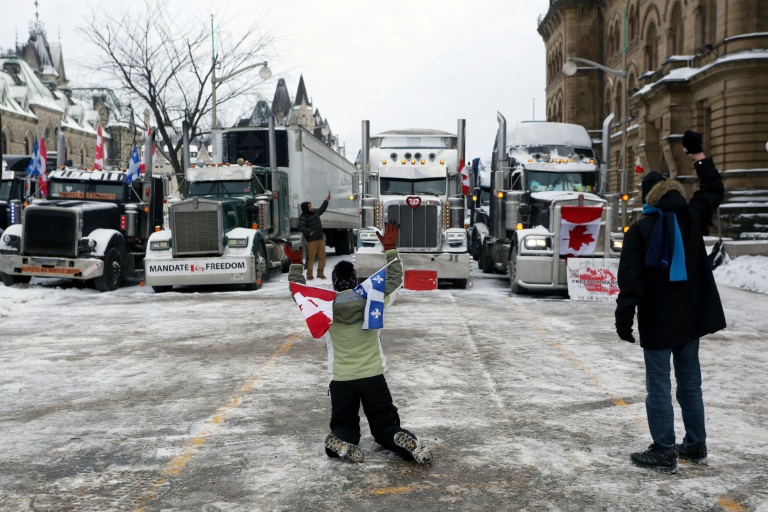
Protesters again poured into Canada’s capital early Saturday to join a convoy of truckers whose occupation of Ottawa to denounce Covid vaccine mandates is now in its second week.

Individuals and families huddled around campfires in bone-chilling weather and erected bouncy castles for children outside Parliament, while waving Canadian flags and anti-government placards.

Police, who were out in force and erected barriers overnight to limit vehicle access to the city center, said they were expecting up to 2,000 protesters — as well as 1,000 counterprotesters — to join hundreds of truckers already clogging Ottawa streets.

But organizers of the so-called “Freedom Convoy” told AFP they expected their numbers to swell into the tens of thousands.

Similar protests were planned for Toronto, Quebec City and Winnipeg.

The atmosphere early Saturday appeared more festive than a week earlier, when some protesters waved Confederate flags and Nazi symbols — which were condemned by government officials — and clashed with locals.

Police have vowed to end the “unlawful” occupation as soon as possible. 

But on Saturday, there were signs the protesters were digging in. They had erected a wooden shed and tents to house food supplies for demonstrators and fuel for the big rigs.

One woman offered passersby hand-warmers as temperatures were forecast to plunge to -30 degrees Celsius (-22 Fahrenheit).

Kimberly Ball and her husband had driven five hours from a small town west of Toronto to join the demonstration.

“It’s not about whether you get the vaccine or not,” she insisted. “It’s about our freedom.”

Holding back tears, she added: “It’s really, really tough. A couple of people we know, friends, also lost their jobs because of these mandates.”

Ball has had Covid-19 and said she is not convinced the vaccines are safe and effective.

She is, however, in the minority in Canada, where 90 percent of adults are fully vaccinated.

The Freedom Convoy started on Canada’s Pacific coast in late January and picked up supporters along the trek to the capital. The protest has drawn more than 10 million Canadian dollars ($8 million) in online donations.

The number of protesters in Ottawa had peaked at several thousand last Saturday, according to officials, before dwindling to a few hundred by midweek.

This weekend Ottawa police worked to contain the protests to the parliamentary precinct, after widespread complaints of harassment, threats and sleeplessness caused by incessant honking.

Cyclone Batsirai nears Madagascar, 'widespread damage' feared

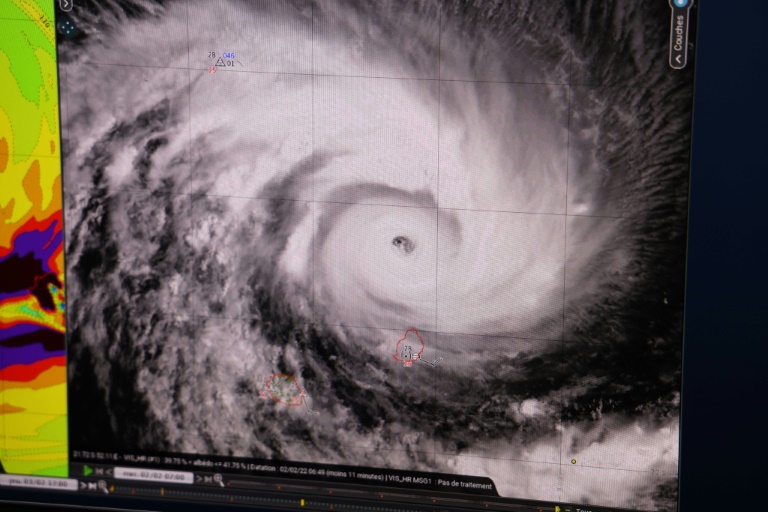
Powerful Cyclone Batsirai was closing in on eastern Madagascar Saturday as residents sought secure shelter or reinforced their roofs with sandbags after warnings that “widespread damage” was feared.

Batsirai is expected to lash the eastern parts of the cyclone-prone Indian ocean island with powerful winds and torrential rains at around 8pm (1700 GMT) on Saturday, according to the country’s national weather forecasters.

It will make landfall in Mananjary district, more than 530 kilometres (310 miles) southeast of the capital Antananarivo, as a “tropical cyclone or intense cyclone at around 8pm local time,” said Meteo Madagascar.

By that time, the wind speed is forecast to be 165 kilometres per hour (102 miles per hour). 

“Significant and widespread damage is therefore feared,” warned the metereological services.

The Meteo-France weather service had earlier warned of winds of up to 260 kilometres per hour (162 miles per hour) and waves as high as 15 metres (50 feet).

It said Batsirai would likely make landfall as an intense tropical cyclone, “presenting a very serious threat to the area” after passing Mauritius and drenching the French island of La Reunion with torrential rain for two days.

Residents hunkered down before the storm made landfall in the impoverished country still recovering from the deadly Tropical Storm Ana late last month.

– ‘Help us’ –

In the eastern coastal town of Vatomandry more than 200 people were crammed in one room in a Chinese-owned concrete building while waiting for Batsirai to hit. 

Families slept on mats or mattresses.

Community leader Thierry Louison Leaby lamented the lack of clean water after the water utility company turned off supplies ahead of the cyclone.

“People are cooking with dirty water,” he said, amid fears of a diarrhoea outbreak.

Outside plastic dishes and buckets were placed in a line to catch rainwater dripping from the corrugated roofing sheets.

“The government must absolutely help us. We have not been given anything,” he said.

Residents who chose to remain in their homes used sandbags and yellow jerrycans to buttress their roofs.

Other residents of Vatomandry were stockpiling supplies in preparation for the storm.

“We have been stocking up for a week, rice but also grains because with the electricity cuts we can not keep meat or fish,” said Odette Nirina, 65, a hotelier in Vatomandry. 

“I have also stocked up on coal. Here we are used to cyclones,” she told AFP.

Gusts of winds of more than 50km/h pummelled Vatomandry Saturday morning, accompanied by intermittent rain.

– ‘We are very nervous’ –

The United Nations said it was ramping up its preparedness with aid agencies, placing rescue aircraft on standby and stockpiling humanitarian supplies.

The impact of Batsirai on Madagascar is expected to be “considerable”, Jens Laerke, spokesman for the UN’s humanitarian organisation OCHA, told reporters in Geneva on Friday.

At least 131,000 people were affected by Ana across Madagascar in late January. At least 58 people were killed, mostly in the capital Antananarivo. The storm also hit Malawi, Mozambique and Zimbabwe, causing dozens of deaths.

The UN’s World Food Programme (WFP) pointed to estimates from national authorities that some 595,000 people could risk being directly affected by Batsirai, and 150,000 more might be displaced due to new landslides and flooding.

“We are very nervous,” Pasqualina Di Sirio, who heads the WFP’s programme in Madagascar, told reporters by video-link from the island.

Search and rescue teams have been placed on alert.

Inland in Ampasipotsy Gare, sitting on top of his house, Tsarafidy Ben Ali, a 23-year-old coal seller, held down corrugated iron sheets on the roof with large bags filled with soil.

“The gusts of wind are going to be very strong. That’s why we’re reinforcing the roofs,” he told AFP.

The storm poses a risk to at least 4.4 million people in one way or another, the International Federation of Red Cross and Red Crescent Societies said.

burs-str-sn/dl

A year after it vanished, famed 'Guernica' tapestry returns to UN

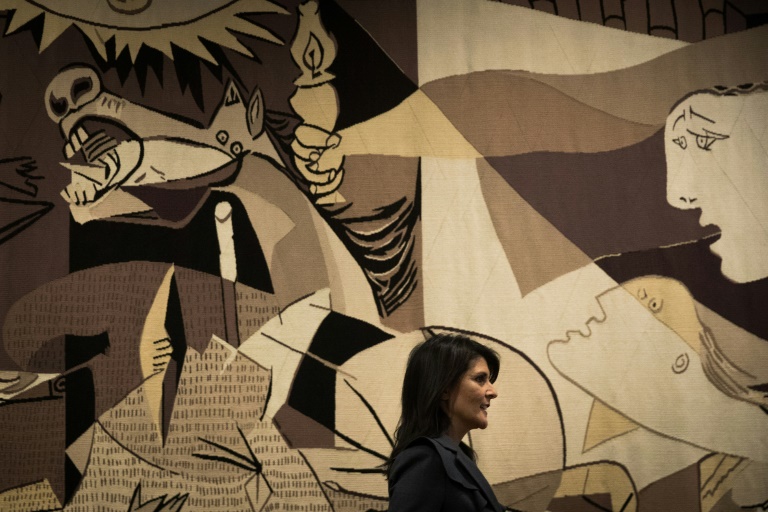
One year after its sudden and disconcerting disappearance from a wall at the United Nations, a vast tapestry representing Picasso’s iconic “Guernica” has been returned by owners the Rockefeller family to its prominent place at the global body.

The rehanging of the immense weaving was underway Saturday morning, a UN source said, as diplomats expressed relief about the return of the 25-foot-wide (7.5-meter) work which hung outside the Security Council chambers, where presidents, prime ministers and ambassadors would regularly pass.

The tapestry was commissioned by Nelson A. Rockefeller in 1955 and woven in a French studio in consultation with Picasso, who did his original “Guernica” painting during the Spanish Civil War. It represents the bombardment of the Spanish city of that name on April 26, 1937 by German Nazi and Italian fascist forces.

“The Guernica tapestry with its probing symbolism -– its depiction of horrific aspects of human nature — wrestles with the cruelty, darkness, and also a seed of hope within humanity,” Nelson Rockefeller Jr. said in a UN statement announcing the artwork’s return.

“I am grateful that the tapestry will be able to continue to reach a broader segment of the world’s population and magnify its ability to touch lives and educate.”

On loan to the UN by the Rockefellers, it was meant to serve as a powerful reminder to UN diplomats of the horrors of war. Screaming women, a dead baby and a dismembered soldier are rendered in ominous shades of brown and black.

But in February 2021, as the Covid-19 crisis was sweeping the globe and thousands of UN employees were forced to work from home, the tapestry vanished without explanation.

“It’s horrible, horrible, that it is gone,” said UN Secretary-General Antonio Guterres, himself surprised by the sudden disappearance.

In a letter to the Rockefellers in December, Guterres welcomed the upcoming reinstallment at the UN.

“We are honored to serve as careful stewards of this one-of-a-kind iconic work — as we draw inspiration from its message,” he wrote, according to the UN statement.

In an interview published Saturday in The New York Times, Nelson Rockefeller Jr. acknowledged a “miscommunication” — indicating that the tapestry had needed cleaning and preservation work.

“Guernica” is on loan to the UN with the provision that the family can reclaim it to be shown in exhibits in the United States or elsewhere for up to six months. 

Israel dispute erupts at African Union summit

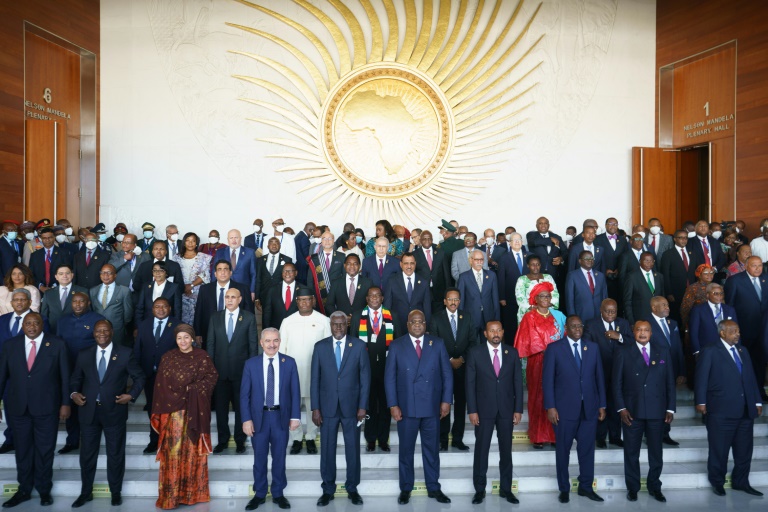
Palestinian prime minister Mohammed Shtayyeh on Saturday urged the African Union to withdraw Israel’s accreditation, bringing simmering tensions to a head as the 55-member bloc opened a two-day summit in Addis Ababa.

Even as the continent reels from a spate of military coups and the Covid-19 pandemic, the relationship with Israel is expected to figure prominently during the summit this weekend.

The row broke out last July when Moussa Faki Mahamat, chair of the African Union Commission, accepted Israel’s accreditation to the bloc, triggering a rare dispute within a body that values consensus.

As heads of state gathered in Ethiopia’s capital on Saturday, Shtayyeh called on the body to reject Faki’s move.

“Israel should never be rewarded for its violation and for the apartheid regime it does impose on the Palestinian people,” he said.

“Your excellencies, I’m sorry to report to you that the situation of the Palestinian people has only grown more precarious.”

The summit may see a vote on whether to back or reject Faki’s decision, which could yield an unprecedented split in the bloc.

Israel’s accreditation last year drew protest from powerful members, including South Africa and Algeria which argued that it flew in the face of AU statements supporting the Palestinian territories. 

Earlier Saturday Faki said the AU’s commitment to the Palestinian push for independence was “unchanging and can only continue to go stronger”.

He defended Israel’s accreditation, saying it could be “an instrument in the service of peace” while calling for “a serene debate” on the issue.

– War in Ethiopia –

The summit comes as the AU faces mounting pressure to push for a ceasefire in host country Ethiopia, where a 15-month war has killed thousands of people and, the UN says, driven hundreds of thousands to the brink of starvation. 

The conflict pits Prime Minister Abiy Ahmed’s government against the Tigray People’s Liberation Front (TPLF) rebel group.

It has precipitated a rapid deterioration in ties between Abiy, the 2019 Nobel Peace Prize winner, and Western powers who once saw him as a reformer but have condemned alleged massacres and mass rape committed during the conflict by Ethiopian and allied forces.

The fact that Ethiopia hosts the AU has made any intervention by the bloc especially delicate, and Faki waited until last August — nine months after fighting began — to appoint Nigeria’s former president Olusegun Obasanjo as a special envoy tasked with trying to broker a ceasefire. 

On Saturday, Abiy praised his fellow African leaders for what he described as their “support”. 

“Ethiopia’s challenge was internal in nature and a matter of maintaining law and order. But the solution of our internal matters was made exceedingly difficult by the role played by external actors,” Abiy said.

“I wish to take this opportunity to thank you all for your support, solidarity and understanding as we underwent these trying times.”

TPLF spokesman Getachew Reda accused Abiy of asking African leaders to “turn a blind eye… or worse still, to praise him to the skies for killing his people at will”.

“Africa needs to say no to this carnage!” Getachew said on Twitter.

Abiy also proposed the creation of “an African Union continental media house”, criticising “negative” international media coverage of Ethiopia and the continent at large.

– Coup ‘resurgence’ –

African leaders are also preoccupied with a recent string of military coups.

Four member states have been suspended by the AU’s Peace and Security Council since mid-2021 because of unconstitutional changes of government — most recently Burkina Faso, where soldiers ousted president Roch Marc Christian Kabore last month. 

Addressing African foreign ministers this week, Faki denounced a “worrying resurgence” of such putsches. 

But the AU has been accused of an inconsistent response, notably by not suspending Chad after a military council took over following the death of longtime President Idriss Deby Itno on the battlefield last April.

Attendees will also discuss the coronavirus pandemic, with South African President Cyril Ramaphosa, who is participating in the summit virtually, expected to provide an update on Africa’s response to Covid-19, nearly two years after the continent’s first case was detected in Egypt. 

As of January 26, only 11 percent of Africa’s more than one billion people had been fully vaccinated, according to the Africa Centres for Disease Control and Prevention. 

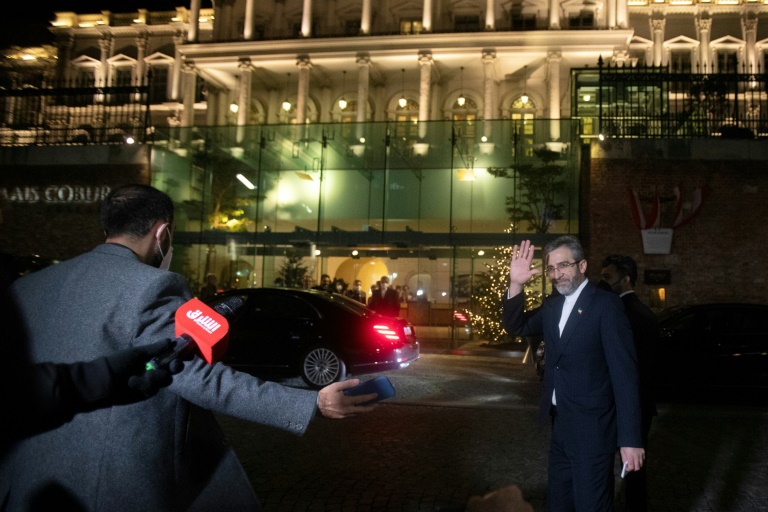
Iran says US sanctions move 'good but not enough'

US steps on lifting sanctions are “good but not enough”, Iran said Saturday, following Washington’s announcement it was waiving sanctions on Iran’s civil nuclear programme.

The US action came as talks to restore a 2015 deal between Tehran and world powers over its nuclear programme reached an advanced stage, with the issue of sanctions relief a major issue.

“The lifting of some sanctions can, in the true sense of the word, translate into their good will. Americans talk about it, but it should be known that what happens on paper is good but not enough,” Iranian Foreign Minister Hossein Amir-Abdollahian said, quoted by ISNA news agency.

The secretary of Iran’s Supreme National Security Council also reflected Tehran’s view that the US move falls short.

“Real, effective and verifiable economic benefit for Iran is a necessary condition for the formation of an agreement,” Ali Shamkhani said in a tweet.

“The show of lifting sanctions is not considered a constructive effort.”

The US State Department said Friday it was waiving sanctions on Iran’s civil nuclear programme in a technical step necessary to return to the 2015 Joint Comprehensive Plan of Action, or JCPOA. 

Former president Donald Trump withdrew from the pact in 2018 and reimposed crippling sanctions on Iran, prompting the Islamic republic to begin pulling back from its commitments under the deal.

The waiver allows other countries and companies to participate in Iran’s civil nuclear programme without triggering US sanctions on them, in the name of promoting safety and non-proliferation.

Iran’s civil programme includes growing stockpiles of enriched uranium.

– ‘Right direction’ –

Amir-Abdollahian reiterated that one of the “main issues” in the JCPOA talks is obtaining guarantees that the US will not withdraw from the 2015 deal again.

“We seek and demand guarantees in the political, legal and economic sectors,” he said, adding that “agreements have been reached in some areas”.

Iran is negotiating with Britain, China, France, Germany and Russia directly and with the US indirectly in the Vienna talks, which different parties say have reached a stage where the sides have to make important “political decisions”.

“Our negotiating team in the Vienna talks is seriously pursuing obtaining tangible guarantees from the West to fulfil their commitments,” Amir-Abdollahian said.

Foreign ministry spokesman Saeed Khatibzadeh said Iran is “carefully considering any action that is in the right direction of fulfilling the obligations of the JCPOA”, Iranian media reported.

The European parties to the talks urged Iran to seize the “opportunity” of the US waivers. 

“This should facilitate technical discussions necessary to support talks on JCPOA return in Vienna,” negotiators of Britain, France and Germany said in a joint statement Saturday.

“We urge Iran to take quick advantage of this opportunity, because the timing of the waiver underscores the view we share with the US: we have very little time left to bring JCPOA talks to a successful conclusion.”

Moscow’s ambassador to the UN in Vienna, Mikhail Ulyanov, welcomed the US waiver decision as “a move in the right direction”.

“It will help expedite restoration of #JCPOA and mutual return of #US and #Iran to compliance with 2015 deal.It also can be seen as an indication that the #ViennaTalks have entered the final stage,” he wrote on Twitter.

– Consultations –

Talks on reviving the nuclear deal were halted last week and the negotiators returned to their capitals for consultations.

Experts say the talks could resume next week.

US President Joe Biden moved quickly to seek a return to the agreement after he succeeded Trump a year ago, but Western parties say Iran in the meantime has moved closer to producing enough fissile material for a nuclear weapon — which the JCPOA aimed to avoid.

Iran has always denied seeking an atomic bomb.

“The technical discussions facilitated by the waiver are necessary in the final weeks of JCPOA talks,” a State Department official said Friday. 

The US official insisted that the move was not “part of a quid pro quo”, as the partners in the JCPOA talks await Iran’s response on key issues.

State Department spokesman Ned Price insisted this US step is a sanctions waiver for the civil nuclear program and not broader sanctions relief.

Barbara Slavin, an Iran expert at the Atlantic Council, said the resumption of the waiver was a positive step.

“It’s a necessary prerequisite to restoring the JCPOA and thus a good sign that this can be accomplished,” she told AFP.

“These sanctions were among the dumbest and most counterproductive imposed by the former administration,” she added.

Cyclone Batsirai closes in on eastern Madagascar

As powerful Cyclone Batsirai closed in on eastern Madagascar on Saturday people sought shelter in more secure concrete buildings while others reinforced their roofs with large sandbags.

Batsirai is expected to lash the eastern parts of the cyclone-prone Indian ocean island with powerful winds and torrential rains on Saturday.

The Meteo-France weather service warned of winds of up to 260 kilometres per hour (162 miles per hour) and waves as high as 15 metres (50 feet).

It said Batsirai would likely make landfall in the late afternoon as an intense tropical cyclone, “presenting a very serious threat to the area” after passing Mauritius and drenching the French island of La Reunion with torrential rain for two days.

Residents hunkered down before the storm made landfall in the impoverished country still recovering from the deadly Tropical Storm Ana late last month.

In the eastern coastal town of Vatomandry more than 200 people were crammed in one room in a Chinese-owned concrete building while waiting for Batsirai to hit. 

Families slept on mats or mattresses.

Community leader Thierry Louison Leaby lamented the lack of clean water after the water utility company turned off supplies ahead of the cyclone.

“People are cooking with dirty water,” he said, amid fears of a diarrhoea outbreak.

Outside plastic dishes and buckets were placed in a line to catch rainwater dripping from the corrugated roofing sheets.

“The government must absolutely help us. We have not been given anything,” he said.

Residents who chose to remain in their homes used sandbags to buttress their roofs.

– ‘We are very nervous’ –

Other residents of Vatomandry were stockpiling supplies in preparation for the storm.

“We have been stocking up for a week, rice but also grains because with the electricity cuts we can not keep meat or fish,” said Odette Nirina, 65, a hotelier in Vatomandry. 

“I have also stocked up on coal. Here we are used to cyclones,” she told AFP.

Gusts of winds of more than 50km/h pummelled Vatomandry Saturday morning, accompanied by intermittent rain.

The United Nations said it was ramping up its preparedness with aid agencies, placing rescue aircraft on standby and stockpiling humanitarian supplies.

The impact of Batsirai on Madagascar is expected to be “considerable”, Jens Laerke, spokesman for the UN’s humanitarian organisation OCHA, told reporters in Geneva Friday.

At least 131,000 people were affected by Ana across Madagascar in late January. At least 58 people were killed, mostly in the capital Antananarivo. The storm also hit Malawi, Mozambique and Zimbabwe, causing dozens of deaths.

The UN’s World Food Programme (WFP) pointed to estimates from national authorities that some 595,000 people could risk being directly affected by Batsirai, and 150,000 more might be displaced due to new landslides and flooding.

“We are very nervous,” Pasqualina Di Sirio, who heads the WFP’s programme in Madagascar, told reporters by video-link from the island.

Search and rescue teams have been placed on alert.

Inland in Ampasipotsy Gare, sitting on top of his house, Tsarafidy Ben Ali, a 23-year-old coal seller, held down corrugated iron sheets on the roof with large bags filled with soil.

“The gusts of wind are going to be very strong. That’s why we’re reinforcing the roofs,” he told AFP.

The storm poses a risk to at least 4.4 million people in one way or another, the International Federation of Red Cross and Red Crescent Societies said.

burs-str-sn/dl

Cyclone Batsirai closes in on eastern Madagascar

As powerful Cyclone Batsirai closed in on eastern Madagascar on Saturday people sought shelter in more secure concrete buildings while others reinforced their roofs with large sandbags.

Batsirai is expected to lash the eastern parts of the cyclone-prone Indian ocean island with powerful winds and torrential rains on Saturday.

The Meteo-France weather service warned of winds of up to 260 kilometres per hour (162 miles per hour) and waves as high as 15 metres (50 feet).

It said Batsirai would likely make landfall in the late afternoon as an intense tropical cyclone, “presenting a very serious threat to the area” after passing Mauritius and drenching the French island of La Reunion with torrential rain for two days.

Residents hunkered down before the storm made landfall in the impoverished country still recovering from the deadly Tropical Storm Ana late last month.

In the eastern coastal town of Vatomandry more than 200 people were crammed in one room in a Chinese-owned concrete building while waiting for Batsirai to hit. 

Families slept on mats or mattresses.

Community leader Thierry Louison Leaby lamented the lack of clean water after the water utility company turned off supplies ahead of the cyclone.

“People are cooking with dirty water,” he said, amid fears of a diarrhoea outbreak.

Outside plastic dishes and buckets were placed in a line to catch rainwater dripping from the corrugated roofing sheets.

“The government must absolutely help us. We have not been given anything,” he said.

Residents who chose to remain in their homes used sandbags to buttress their roofs.

– ‘We are very nervous’ –

Other residents of Vatomandry were stockpiling supplies in preparation for the storm.

“We have been stocking up for a week, rice but also grains because with the electricity cuts we can not keep meat or fish,” said Odette Nirina, 65, a hotelier in Vatomandry. 

“I have also stocked up on coal. Here we are used to cyclones,” she told AFP.

Gusts of winds of more than 50km/h pummelled Vatomandry Saturday morning, accompanied by intermittent rain.

The United Nations said it was ramping up its preparedness with aid agencies, placing rescue aircraft on standby and stockpiling humanitarian supplies.

The impact of Batsirai on Madagascar is expected to be “considerable”, Jens Laerke, spokesman for the UN’s humanitarian organisation OCHA, told reporters in Geneva Friday.

At least 131,000 people were affected by Ana across Madagascar in late January. At least 58 people were killed, mostly in the capital Antananarivo. The storm also hit Malawi, Mozambique and Zimbabwe, causing dozens of deaths.

The UN’s World Food Programme (WFP) pointed to estimates from national authorities that some 595,000 people could risk being directly affected by Batsirai, and 150,000 more might be displaced due to new landslides and flooding.

“We are very nervous,” Pasqualina Di Sirio, who heads the WFP’s programme in Madagascar, told reporters by video-link from the island.

Search and rescue teams have been placed on alert.

Inland in Ampasipotsy Gare, sitting on top of his house, Tsarafidy Ben Ali, a 23-year-old coal seller, held down corrugated iron sheets on the roof with large bags filled with soil.

“The gusts of wind are going to be very strong. That’s why we’re reinforcing the roofs,” he told AFP.

The storm poses a risk to at least 4.4 million people in one way or another, the International Federation of Red Cross and Red Crescent Societies said.

burs-str-sn/dl

Close Bitnami banner
Bitnami