World

Sculpture of Algerian hero vandalised in France

Vandals in central France attacked a sculpture of an Algerian military hero who resisted France’s colonisation of the North African country, just hours before it was inaugurated Saturday as a symbol of Franco-Algerian reconciliation.

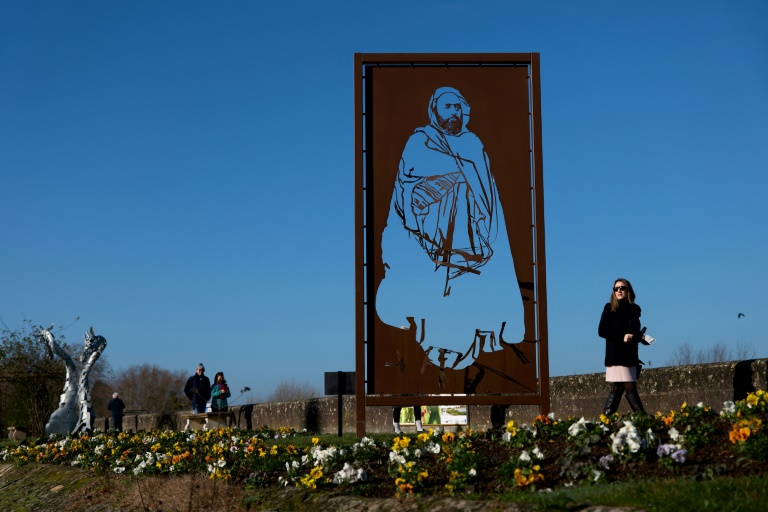
The lower part of the steel sculpture in the town of Amboise, where Emir Abdelkader was imprisoned from 1848 to 1852, was badly damaged in the attack which comes in the midst of an election campaign dominated by harsh rhetoric on immigration and Islam.

Amboise mayor Thierry Boutard said he was “ashamed” of those responsible and decided to proceed with the inauguration ceremony regardless.

“My second sentiment is of course one of indignation,” he told AFP. “This is a day of harmony and unity and this kind of behaviour is unspeakable,” he said.

The sculpture was commissioned to coincide with the 60th anniversary of Algeria’s independence from France, won after a brutal eight-year liberation war that continues to poison relations between the two countries.

It was proposed by historian Benjamin Stora, who was tasked by President Emmanuel Macron with coming up with ways to heal the memories of the war and 132 years of French rule in Algeria. 

The silhouette of the Islamic-scholar-turned-military-leader, who resisted French rule but was later feted as a hero in France for his defence of Christians in the Middle East, looks across the Loire river at the castle where he was imprisoned. 

Amboise police said they were investigating the incident, which comes two months ahead of a presidential election in which an upstart far-right candidate, Eric Zemmour, has repeatedly grabbed headlines with a campaign bashing Islam and immigration from Africa, including Algeria.

– ‘Nauseating atmosphere’ –

Algeria’s ambassador to France Mohamed Antar Daoud, who attended the inauguration, condemned the attack as an act of “unspeakable baseness”.

“We have to get beyond that,” he said, assuring that attempts to mend fences between France and Algeria would continue because “there is momentum and a desire on both sides to move forward.”

Ouassila Soum, a 37-year-old French woman of Algerian background who also attended the inauguration, said the vandalism left her “with a knot in my stomach.”

“It’s a shame and yet it’s not surprising with the rhetoric of hate and the nauseating current atmosphere,” said Soum, hailing the sculpture as “a symbol of the reconciliation between peoples and civilisations.”

Seen as one of France’s worst enemies in the late 19th century, Emir Abdelkader is considered one of the founders of modern-day Algeria for his role in mobilising resistance to French rule.

The rebellion he led failed however and he surrendered to French forces who shipped him to France, where he and his family spent four years under guard in Amboise castle.

He later moved to Syria where he won international acclaim for defending Christians during sectarian attacks. 

He was awarded the Legion of Honour, France’s highest award for his role in trying to end the persecution.

Stora, the historian behind the idea of the sculpture of Abdelkader, slammed the “ignorance” of those who vandalised it. 

“Emir Abdelkader had several lives. He fought France but he was also a friend of France. Those who committed this act know nothing about French history,” he told AFP.
Iran says US sanctions move 'good but not enough'

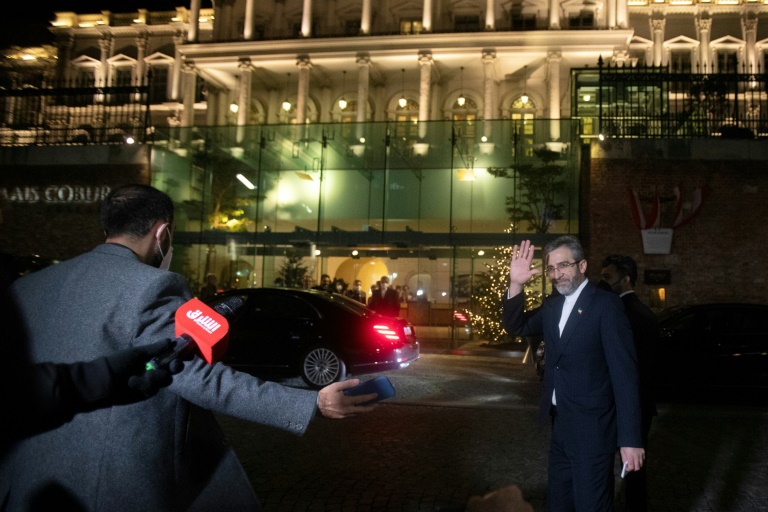
US steps on lifting sanctions are “good but not enough”, Iran said on Saturday, following Washington’s announcement it was waiving sanctions on Iran’s civilian nuclear programme.

The US action came as talks to restore a 2015 deal between Tehran and world powers over its nuclear programme reached an advanced stage, with the issue of sanctions relief a major issue.

“The lifting of some sanctions can, in the true sense of the word, translate into their good will. Americans talk about it, but it should be known that what happens on paper is good but not enough,” Iranian Foreign Minister Hossein Amir-Abdollahian said, quoted by ISNA news agency.

The secretary of Iran’s Supreme National Security Council also reflected Tehran’s view that the US move falls short.

“Real, effective and verifiable economic benefit for Iran is a necessary condition for the formation of an agreement,” Ali Shamkhani said in a tweet.

“The show of lifting sanctions is not considered a constructive effort,” he added.

The US State Department on Friday said it was waiving sanctions on Iran’s civilian nuclear programme in a technical step necessary to return to the 2015 Joint Comprehensive Plan of Action, or JCPOA. 

Former president Donald Trump withdrew from the pact in 2018 and reimposed crippling sanctions on Iran, prompting the Islamic republic to begin pulling back from its commitments under the deal.

The waiver allows other countries and companies to participate in Iran’s civilian nuclear programme without triggering US sanctions on them, in the name of promoting safety and non-proliferation.

Iran’s civilian programme includes increasing stockpiles of enriched uranium.

– ‘Right direction’ –

Amir-Abdollahian reiterated that one of the “main issues” in the JCPOA talks is obtaining guarantees that the US will not withdraw from the 2015 deal again.

“We seek and demand guarantees in the political, legal and economic sectors,” he said, adding that “agreements have been reached in some areas”.

Iran is negotiating with the UK, France, Germany, China and Russia directly and with the US indirectly in the Vienna talks which different parties say have reached a stage where the sides have to make important “political decisions”.

“Our negotiating team in the Vienna talks is seriously pursuing obtaining tangible guarantees from the West to fulfil their commitments,” Amir-Abdollahian said.

Earlier on Saturday, foreign ministry spokesman Saeed Khatibzadeh said: “Naturally, Tehran is carefully considering any action that is in the right direction of fulfilling the obligations of the JCPOA”, local media reported.

Moscow’s ambassador to the UN in Vienna, Mikhail Ulyanov, on Saturday welcomed the US waiver decision as “a move in the right direction”.

“It will help expedite restoration of #JCPOA and mutual return of #US and #Iran to compliance with 2015 deal.It also can be seen as an indication that the #ViennaTalks have entered the final stage,” he wrote on Twitter.

– Consultations –

Talks on reviving the nuclear deal were halted last week and the negotiators returned to their capitals for consultations.

Experts say the JCPOA talks could resume next week.

US President Joe Biden moved quickly to seek a return to the agreement after he succeeded Trump a year ago, but Western parties say Iran in the meantime has moved increasingly closer to producing enough fissile material for a nuclear weapon — which the JCPOA aimed to avoid.

Iran has always denied seeking an atomic bomb.

“The technical discussions facilitated by the waiver are necessary in the final weeks of JCPOA talks,” a State Department official said Friday. 

The US official insisted that the move was not “part of a quid pro quo”, as the partners in the JCPOA talks await Iran’s response on key issues.

State Department spokesman Ned Price insisted this US step is a sanctions waiver for the civilian nuclear program and not broader sanctions relief.

Barbara Slavin, an Iran expert at the Atlantic Council, said the resumption of the waiver was a positive step.

“It’s a necessary prerequisite to restoring the JCPOA and thus a good sign that this can be accomplished,” she told AFP.

“These sanctions were among the dumbest and most counterproductive imposed by the former administration,” she added.

Covid vaccination compulsory in Austria, in EU first

It’s official: Austrians over the age of 18 must be vaccinated against Covid-19 from Saturday or face the possibility of a heavy fine, an unprecedented measure in the European Union.

The new measure, adopted on January 20 by Parliament, came into force on Saturday, the culmination of a process that began in November in the face of the rapid spread of the Omicron variant.

The government decided to pursue its new, tougher approach despite criticism within the country.

“No other country in Europe is following us on compulsory vaccines,” said Manuel Krautgartner, who has campaigned against the new approach. 

In neighbouring Germany, a similar  proposal championed by the new Social Democrat Chancellor Olaf Scholz was debated last month in the lower house of parliament but many MPs still oppose the idea.

– Checks from mid-March –

Despite the threat of such a drastic measure, the vaccination rate in Austria has still failed to take off, languishing below the levels seen in France or Spain.

The humanitarian association Arbeiter Samariter Bund, which oversees some vaccination sites in the capital Vienna, said there had an uptick in turnout this week.

“We recorded a small increase of around nine percent compared to last week,” the organisation’s manager, Michael Hausmann, told AFP.

From the average of around 7,000 injections administered every day in the capital, only 10 percent are a first dose, he said.

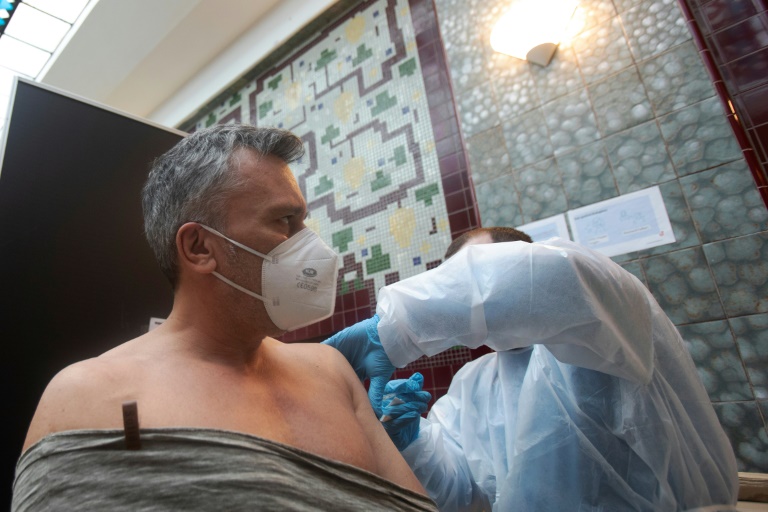
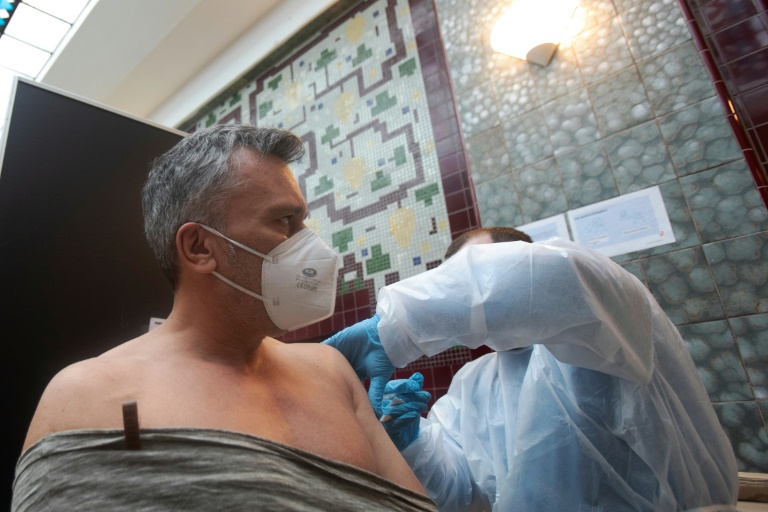
Erika Viskancove, a 33-year-old accountant, said she came to a vaccination centre situated next to an Art Deco swimming pool to receive her third booster dose.

“I sincerely believe that the law is the best way” to defeat the pandemic, she said, calling on other countries to follow Austria’s lead.

Melanie, a 23-year-old waitress who preferred not to give her second name, said she was mainly there to avoid ending up “locked up at home”.

Non-vaccinated people are currently excluded from restaurants, sports and cultural venues. 

But from now on they will also be subject to fines, which Melanie said was “unhealthy”.

The law applies to all adult residents with the exception of pregnant women, those who have contracted the virus within the past 180 days and those with medical exemptions.

Checks will begin from mid-March, with fines ranging from 600 to 3,600 euros ($690-$4,100).

They will, however, be lifted if the person fined gets vaccinated within two weeks.

– Protect against new variants – 

More than 60 percent of Austrians support the measure, according to a recent survey, but large swathes of the population remain strongly opposed.

For several weeks after the announcement of the new law, tens of thousands of people took to the streets to protest against what they regard as a draconian policy.

Critics have also questioned the need for compulsion given the milder nature of the Omicron variant.

Conservative Chancellor Karl Nehammer, who leads the Alpine country with the environmentalist Greens, also announced at the same time a relaxation of earlier Covid-19 restrictions.

But for Health Minister Wolfgang Mueckstein, compulsory vaccination is aimed at both protecting the country against new waves and fighting new variants.

Vaccination passes are now a reality in an increasing number of countries for certain professions or activities.

In Ecuador, it is compulsory, including for children over the age of five, a world first.

Before that, two authoritarian states in Central Asia — Tajikistan and Turkmenistan — mandated vaccination, as did Indonesia, even if less than half its population is actually vaccinated.

Covid vaccination compulsory in Austria, in EU first

It’s official: Austrians over the age of 18 must be vaccinated against Covid-19 from Saturday or face the possibility of a heavy fine, an unprecedented measure in the European Union.

The new measure, adopted on January 20 by Parliament, came into force on Saturday, the culmination of a process that began in November in the face of the rapid spread of the Omicron variant.

The government decided to pursue its new, tougher approach despite criticism within the country.

“No other country in Europe is following us on compulsory vaccines,” said Manuel Krautgartner, who has campaigned against the new approach. 

In neighbouring Germany, a similar  proposal championed by the new Social Democrat Chancellor Olaf Scholz was debated last month in the lower house of parliament but many MPs still oppose the idea.

– Checks from mid-March –

Despite the threat of such a drastic measure, the vaccination rate in Austria has still failed to take off, languishing below the levels seen in France or Spain.

The humanitarian association Arbeiter Samariter Bund, which oversees some vaccination sites in the capital Vienna, said there had an uptick in turnout this week.

“We recorded a small increase of around nine percent compared to last week,” the organisation’s manager, Michael Hausmann, told AFP.

From the average of around 7,000 injections administered every day in the capital, only 10 percent are a first dose, he said.

Erika Viskancove, a 33-year-old accountant, said she came to a vaccination centre situated next to an Art Deco swimming pool to receive her third booster dose.

“I sincerely believe that the law is the best way” to defeat the pandemic, she said, calling on other countries to follow Austria’s lead.

Melanie, a 23-year-old waitress who preferred not to give her second name, said she was mainly there to avoid ending up “locked up at home”.

Non-vaccinated people are currently excluded from restaurants, sports and cultural venues. 

But from now on they will also be subject to fines, which Melanie said was “unhealthy”.

The law applies to all adult residents with the exception of pregnant women, those who have contracted the virus within the past 180 days and those with medical exemptions.

Checks will begin from mid-March, with fines ranging from 600 to 3,600 euros ($690-$4,100).

They will, however, be lifted if the person fined gets vaccinated within two weeks.

– Protect against new variants – 

More than 60 percent of Austrians support the measure, according to a recent survey, but large swathes of the population remain strongly opposed.

For several weeks after the announcement of the new law, tens of thousands of people took to the streets to protest against what they regard as a draconian policy.

Critics have also questioned the need for compulsion given the milder nature of the Omicron variant.

Conservative Chancellor Karl Nehammer, who leads the Alpine country with the environmentalist Greens, also announced at the same time a relaxation of earlier Covid-19 restrictions.

But for Health Minister Wolfgang Mueckstein, compulsory vaccination is aimed at both protecting the country against new waves and fighting new variants.

Vaccination passes are now a reality in an increasing number of countries for certain professions or activities.

In Ecuador, it is compulsory, including for children over the age of five, a world first.

Before that, two authoritarian states in Central Asia — Tajikistan and Turkmenistan — mandated vaccination, as did Indonesia, even if less than half its population is actually vaccinated.

Sculpture of Algerian hero vandalised in France

Vandals in central France damaged a sculpture of an Algerian military hero who resisted France’s colonisation of the North African country, just hours before it was inaugurated Saturday, AFP journalists reported.

The lower part of the steel sculpture in the town of Amboise, where Emir Abdelkader was imprisoned from 1848 to 1852, was badly damaged in the attack which comes in the midst of an election campaign dominated by harsh rhetoric on immigration and Islam.

Amboise mayor Thierry Boutard said he was “ashamed” of those responsible and decided to proceed with the inauguration ceremony regardless.

“I was ashamed that someone would treat an artwork and an artist in this way,” he told AFP.

“My second sentiment is of course one of indignation. This is a day of harmony and unity and this kind of behaviour is unspeakable,” he said.

Police said they were investigating the incident.

The sculpture was commissioned to coincide with the 60th anniversary of Algeria’s independence from France, won after a brutal eight-year liberation war that continues to poison relations between the two countries.

It was suggested by a historian tasked by President Emmanuel Macron with coming up with ways to heal the memories of the war and 132 years of French rule in Algeria.

The sculpture of Abdelkader, an Islamic-scholar-turned-military-leader who resisted French rule but was feted as a hero in France for his later defence of Christians in the Middle East, looks across the Loire river at the castle where he was imprisoned. 

– ‘Nauseating atmosphere’ –

Algeria’s ambassador to France Mohamed Antar Daoud, who attended the inauguration, condemned the attack as an act of “unspeakable baseness” and said he was confident that the halting process of reconciliation underway between the two countries would endure.

Ouassila Soum, a 37-year-old French woman of Algerian background who attended the inauguration, said the vandalism left her “with a knot in my stomach.”

“It’s a shame and yet it’s not surprising with the rhetoric of hate and the nauseating current atmosphere,” said Soum, hailing the sculpture as “a symbol of the reconciliation between peoples and civilisations.”

Dubbed “France’s worst enemy” in the late 19th century, Emir Abdelkader is considered one of the founders of modern-day Algeria for his role in mobilising resistance to French rule.

The rebellion he led failed however and he surrendered to French forces who shipped him to France, where he and his family spent four years under guard in Amboise castle.

He later moved to Syria where he won international acclaim for defending Christians during sectarian attacks. 

He was awarded the Legion of Honour, France’s highest award for his role in trying to end the persecution.

Sculpture of Algerian hero vandalised in France

Vandals in central France damaged a sculpture of an Algerian military hero who resisted France’s colonisation of the North African country, just hours before it was inaugurated Saturday, AFP journalists reported.

The lower part of the steel sculpture in the town of Amboise, where Emir Abdelkader was imprisoned from 1848 to 1952, was badly damaged in the attack which comes in the midst of an election campaign dominated by harsh rhetoric on immigration and Islam.

Amboise mayor Thierry Boutard said he was “ashamed” of those responsible and decided to proceed with the inauguration ceremony regardless.

“I was ashamed that someone would treat an artwork and an artist in this way,” he told AFP.

“My second sentiment is of course one of indignation. This is a day of harmony and unity and this kind of behaviour is unspeakable,” he said.

Police said they were investigating the incident.

The sculpture was commissioned to coincide with the 60th anniversary of Algeria’s independence from France, won after a brutal eight-year liberation war that continues to poison relations between the two countries.

It was suggested by a historian tasked by President Emmanuel Macron with coming up with ways to heal the memories of the war and 132 years of French rule in Algeria.

The sculpture of Abdelkader, an Islamic-scholar-turned-military-leader who resisted French rule but was feted as a hero in France for his later defence of Christians in the Middle East, looks across the Loire river at the castle where he was imprisoned. 

– ‘Nauseating atmosphere’ –

Algeria’s ambassador to France Mohamed Antar Daoud, who attended the inauguration, condemned the attack as an act of “unspeakable baseness” and said he was confident that the halting process of reconciliation underway between the two countries would endure.

Ouassila Soum, a 37-year-old French woman of Algerian background who attended the inauguration, said the vandalism left her “with a knot in my stomach.”

“It’s a shame and yet it’s not surprising with the rhetoric of hate and the nauseating current atmosphere,” said Soum, hailing the sculpture as “a symbol of the reconciliation between peoples and civilisations.”

Dubbed “France’s worst enemy” in the late 19th century, Emir Abdelkader is considered one of the founders of modern-day Algeria for his role in mobilising resistance to French rule.

The rebellion he led failed however and he surrendered to French forces who shipped him to France, where he and his family spent four years under guard in Amboise castle.

He later moved to Syria where he won international acclaim for defending Christians during sectarian attacks. 

He was awarded the Legion of Honour, France’s highest award for his role in trying to end the persecution.

Israel dispute erupts at African Union summit

Palestinian prime minister Mohammed Shtayyeh on Saturday urged the African Union to withdraw Israel’s accreditation, bringing simmering tensions to a head as the 55-member bloc opened a two-day summit in Addis Ababa.

Even as the continent reels from a spate of military coups and the coronavirus pandemic, the relationship with Israel is expected to figure prominently during the summit this weekend.

The dispute was set in motion last July when Moussa Faki Mahamat, chair of the African Union Commission, accepted Israel’s accreditation to the bloc, triggering a rare dispute within a body that values consensus.

As heads of state gathered in Ethiopia’s capital on Saturday, Shtayyeh called on the body to reject Faki’s move.

“Israel should never be rewarded for its violation and for the apartheid regime it does impose on the Palestinian people,” he said.

“Your excellencies, I’m sorry to report to you that the situation of the Palestinian people has only grown more precarious.”

The summit may see a vote on whether to back or reject Faki’s decision, which could yield an unprecedented split in the bloc.

Israel’s accreditation last year drew quick protest from powerful members, including South Africa and Algeria which argued that it flew in the face of AU statements supporting the Palestinian Territories. 

Earlier Saturday Faki said the AU’s commitment to the Palestinian push for independence was “unchanging and can only continue to go stronger”.

He defended Israel’s accreditation, however, saying it could be “an instrument in the service of peace” while calling for “a serene debate” on the issue.

– War in Ethiopia –

This year’s summit comes as the AU faces mounting pressure to push for a ceasefire in host country Ethiopia, where a 15-month war has killed thousands of people and, the UN says, driven hundreds of thousands to the brink of starvation. 

The conflict pits Prime Minister Abiy Ahmed’s government against fighters from the northern Tigray region.

It has precipitated a rapid deterioration in ties between Abiy, the 2019 Nobel Peace Prize winner, and Western powers who once saw him as a reformer but have condemned alleged massacres and mass rape committed during the conflict by Ethiopian and allied forces.

The fact that Ethiopia hosts the AU has made any intervention by the bloc especially delicate, and Faki waited until last August — nine months after fighting began — to appoint Nigeria’s former president Olusegun Obasanjo as a special envoy tasked with trying to broker a ceasefire. 

On Saturday, Abiy praised his fellow African leaders for what he described as their “support”. 

“Ethiopia’s challenge was internal in nature and a matter of maintaining law and order. But the solution of our internal matters was made exceedingly difficult by the role played by external actors,” Abiy said.

“I wish to take this opportunity to thank you all for your support, solidarity and understanding as we underwent these trying times.” 

Abiy also proposed the creation of “an African Union continental media house”, renewing his criticism of international media coverage of Ethiopia and the continent at large.

“Negative media representation of Africa not only disinforms the rest of the world about our continent, but also shapes the way we see ourselves as Africans,” he said. 

– Coup ‘resurgence’ –

African leaders are also preoccupied with a recent string of military coups.

Four member states have been suspended by the AU’s Peace and Security Council since mid-2021 because of unconstitutional changes of government — most recently Burkina Faso, where soldiers ousted President Roch Marc Christian Kabore last month. 

Addressing African foreign ministers this week, Faki denounced a “worrying resurgence” of such putsches. 

But the AU has been accused of an inconsistent response, notably by not suspending Chad after a military council took over following the death of longtime President Idriss Deby Itno on the battlefield last April.

Attendees will also discuss the coronavirus pandemic, with South African President Cyril Ramaphosa, who is participating in the summit virtually, expected to provide an update on Africa’s response to Covid-19, nearly two years after the continent’s first case was detected in Egypt. 

As of January 26, only 11 percent of Africa’s more than one billion people had been fully vaccinated, according to the Africa Centres for Disease Control and Prevention. 

Record heat, forest fires in Colombia's Amazon in January

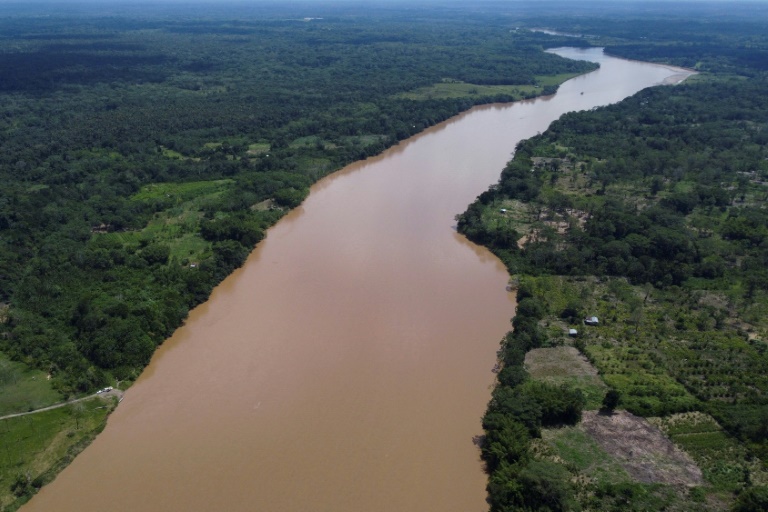
January of this year was the hottest month in the Colombian Amazon in a decade, leading to an increase in forest fires in the southeastern region and very likely impacting air quality in the capital Bogota, according to an Environment Ministry report seen by AFP Friday.

It said the month of January recorded the “highest hot spot values in the last 10 years” in the Colombian Amazon.

The phenomenon occurs, the ministry said, when the country goes through a season of low rainfall, and is due to human activity, of which “the most important is associated with deforestation fronts.” 

At least 80 percent of the “hot spots” were forest fires, a ministry spokesman told AFP. At the end of January, the ministry identified more than 3,300 “hot spots” in the six departments that make up the Colombian Amazon, including 1,300 in the Guaviare region alone.

According to testimony collected by AFP in October in the region, peasants and landowners take advantage of the dry season, from January to April, to burn or cut down trees and plant coca plants in their place, or to let cattle graze there.

The Serrania del Chiribiquete National Park, listed as a UNESCO World Heritage Site, is particularly threatened, as is the Nukak National Nature Reserve, a vast territory of jungle inhabited by the last nomadic indigenous people of Colombia.

The Foundation for Conservation and Sustainable Development (FCDS), which keeps its own count and regularly flies over the areas concerned, recorded at least 938 forest fires, the highest monthly January figure since 2012.

“Thousands of hectares of Amazon jungle, cut in recent months, are on fire today. These massive fires are now being felt as far away as Bogota,” FCDS director Rodrigo Botero warned on Twitter.

“There are public health decisions to be made quickly. What are the air indicators saying in Bogota?”

Bogota mayor Claudia Lopez decried “the inability” of the government “to control the territory and guarantee security.”

She described the fires as “arson attacks … which, due to the direction of the wind, end up arriving and deteriorating the quality of the air” in the capital, almost 500 km away.

In Medellin, the country’s second most populous city, officials have warned of a deterioration in air quality to a level “harmful to the health” of children and the elderly.

According to data from the Colombian government, deforestation has exploded in recent years in the country’s Amazonian regions, notably as a result of the historic peace deal signed in 2016 with the Marxist guerrillas of the FARC, which then abandoned large swaths of territory which they previously controlled.

Record heat, forest fires in Colombia's Amazon in January

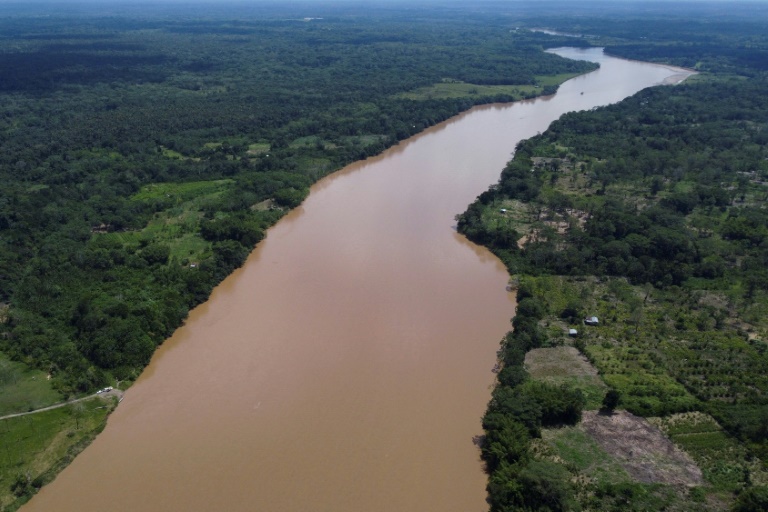
January of this year was the hottest month in the Colombian Amazon in a decade, leading to an increase in forest fires in the southeastern region and very likely impacting air quality in the capital Bogota, according to an Environment Ministry report seen by AFP Friday.

It said the month of January recorded the “highest hot spot values in the last 10 years” in the Colombian Amazon.

The phenomenon occurs, the ministry said, when the country goes through a season of low rainfall, and is due to human activity, of which “the most important is associated with deforestation fronts.” 

At least 80 percent of the “hot spots” were forest fires, a ministry spokesman told AFP. At the end of January, the ministry identified more than 3,300 “hot spots” in the six departments that make up the Colombian Amazon, including 1,300 in the Guaviare region alone.

According to testimony collected by AFP in October in the region, peasants and landowners take advantage of the dry season, from January to April, to burn or cut down trees and plant coca plants in their place, or to let cattle graze there.

The Serrania del Chiribiquete National Park, listed as a UNESCO World Heritage Site, is particularly threatened, as is the Nukak National Nature Reserve, a vast territory of jungle inhabited by the last nomadic indigenous people of Colombia.

The Foundation for Conservation and Sustainable Development (FCDS), which keeps its own count and regularly flies over the areas concerned, recorded at least 938 forest fires, the highest monthly January figure since 2012.

“Thousands of hectares of Amazon jungle, cut in recent months, are on fire today. These massive fires are now being felt as far away as Bogota,” FCDS director Rodrigo Botero warned on Twitter.

“There are public health decisions to be made quickly. What are the air indicators saying in Bogota?”

Bogota mayor Claudia Lopez decried “the inability” of the government “to control the territory and guarantee security.”

She described the fires as “arson attacks … which, due to the direction of the wind, end up arriving and deteriorating the quality of the air” in the capital, almost 500 km away.

In Medellin, the country’s second most populous city, officials have warned of a deterioration in air quality to a level “harmful to the health” of children and the elderly.

According to data from the Colombian government, deforestation has exploded in recent years in the country’s Amazonian regions, notably as a result of the historic peace deal signed in 2016 with the Marxist guerrillas of the FARC, which then abandoned large swaths of territory which they previously controlled.

Israel dispute erupts at African Union summit

Palestinian prime minister Mohammed Shtayyeh on Saturday urged the African Union to withdraw Israel’s accreditation, bringing simmering tensions to a head as the 55-member bloc opened a two-day summit in Addis Ababa.

Even as the continent reels from a spate of military coups and the coronavirus pandemic, the relationship with Israel is expected to figure prominently during the summit this weekend.

The dispute was set in motion last July when Moussa Faki Mahamat, chair of the African Union Commission, accepted Israel’s accreditation to the bloc, triggering a rare dispute within a body that values consensus.

As heads of state gathered in Ethiopia’s capital on Saturday, Shtayyeh called on the body to reject Faki’s move.

“Israel should never be rewarded for its violation and for the apartheid regime it does impose on the Palestinian people,” he said.

“Your excellencies, I’m sorry to report to you that the situation of the Palestinian people has only grown more precarious.”

The summit may see a vote on whether to back or reject Faki’s decision, which could yield an unprecedented split in the bloc.

Israel’s accreditation last year drew quick protest from powerful members, including South Africa and Algeria which argued that it flew in the face of AU statements supporting the Palestinian Territories. 

Earlier Saturday Faki said the AU’s commitment to the Palestinian push for independence was “unchanging and can only continue to go stronger”.

He defended Israel’s accreditation, however, saying it could be “an instrument in the service of peace” while calling for “a serene debate” on the issue.

– ‘Resurgence of military coups’ –

This year’s summit comes as the continent grapples with a string of military coups and the fallout from the coronavirus pandemic. 

Four member states have been suspended by the AU’s Peace and Security Council since mid-2021 because of unconstitutional changes of government — most recently Burkina Faso, where soldiers ousted President Roch Marc Christian Kabore last month. 

Addressing African foreign ministers this week, AU Commission chair Moussa Faki Mahamat denounced a “worrying resurgence of military coups”. 

But the AU has been accused of an inconsistent response to the putsches, notably by not suspending Chad after a military council took over following the death of longtime President Idriss Deby Itno on the battlefield last April.

The summit should discuss how to be more proactive in addressing factors that spark coups, including terrorism-related instability and frustration over constitutional revisions that extend leaders’ time in power, said Solomon Dersso, founder of the AU-focused Amani Africa think tank. 

“It is only when crisis hits that we say, ‘Gosh, how come this country is falling apart like this so quickly?'” Solomon said.

– Disease and diplomacy –

On Saturday, South African President Cyril Ramaphosa, who is attending the summit virtually, is expected to provide an update on Africa’s response to the coronavirus pandemic, nearly two years after the continent’s first case was detected in Egypt. 

As of January 26, only 11 percent of Africa’s more than one billion people had been fully vaccinated, according to the Africa Centres for Disease Control and Prevention. 

The African Union is also facing pressure to push for a ceasefire in Ethiopia, where a 15-month war has killed thousands of people and, the UN says, driven hundreds of thousands to the brink of starvation. 

It is unclear whether and how leaders will address the conflict, which pits Prime Minister Abiy Ahmed’s government against fighters from the northern Tigray region. 

The fact that Ethiopia hosts the AU makes any intervention by the bloc especially delicate, and Faki waited until last August — nine months after fighting began — to appoint Nigeria’s former president Olusegun Obasanjo as a special envoy tasked with trying to broker a ceasefire. 

Ethiopia has also held a seat on the Peace and Security Council, though it failed in a bid to stay on the 15-member body this week, diplomats said.

“AU member states should not ignore the serious crimes committed by all warring parties, including federal government forces, in Ethiopia’s conflict,” Carine Kaneza Nantulya, Africa advocacy director at Human Rights Watch, said in a statement Friday.

Close Bitnami banner
Bitnami