World

Cyclone Batsirai approaches Madagascar, poses 'very serious threat'

Madagascar braced up for Cyclone Batsirai set to hit the eastern parts of the Indian Ocean island on Saturday, with powerful winds and torrential rains posing a “very serious threat” to millions.

Residents hunkered down before the storm makes landfall in an impoverished country still recovering from the deadly Tropical Storm Ana in late January.

The Meteo-France weather service warned of winds of up to 260 kilometres per hour (162 miles per hour) and waves as high as 15 metres (50 feet).

It said Batsirai would likely make landfall Saturday afternoon as an intense tropical cyclone, “presenting a very serious threat to the area” after passing Mauritius and drenching the French island of La Reunion for two days with torrential rain.

Residents in the eastern coastal town of Vatomandry were stockpiling supplies in preparation for the storm.

“We have been stocking up for a week, rice but also grains because with the electricity cuts we can not keep meat or fish,” said Odette Nirina, 65, a hotelier in the seafront town of Vatomandry. 

“I have also stocked up on coal. Here we are used to cyclones,” she told AFP.

Gusts of winds of more than 50km/h were pummelling Vatomandry town Saturday morning accompanied by intermittent rain. 

Residents have reinforced corrugated iron roofs with sandbags.

– ‘We are very nervous’ –

The United Nations said it was ramping up its preparedness with aid agencies, placing rescue aircraft on standby and stockpiling humanitarian supplies.

The impact of Batsirai on Madagascar is expected to be “considerable”, Jens Laerke, spokesman for the UN’s humanitarian organisation OCHA, told reporters in Geneva Friday.

At least 131,000 people were affected by Ana across Madagascar in late January. At least 58 people were killed, mostly in the capital Antananarivo. The storm also hit Malawi, Mozambique and Zimbabwe, causing dozens of deaths.

The UN’s World Food Programme (WFP) pointed to estimates from national authorities that some 595,000 people could risk being directly affected by Batsirai, and 150,000 more might be displaced due to new landslides and flooding.

“We are very nervous,” Pasqualina Di Sirio, who heads the WFP’s programme in Madagascar, told reporters by video-link from the Indian Ocean island.

Search and rescue teams on the island have been placed on alert and residents reinforced their homes.

Inland in Ampasipotsy Gare, sitting on top of his house, Tsarafidy Ben Ali, a 23-year-old coal seller, held down corrugated iron sheets on the roof with large bags filled with soil.

“The gusts of wind are going to be very strong. That’s why we’re reinforcing the roofs,” he told AFP.

The storm poses a risk to at least 4.4 million people in one way or another, the International Federation of Red Cross and Red Crescent Societies said.

burs-str-sn/cb

Cyclone Batsirai approaches Madagascar, poses 'very serious threat'

Madagascar braced up for Cyclone Batsirai set to hit the eastern parts of the Indian Ocean island on Saturday, with powerful winds and torrential rains posing a “very serious threat” to millions.

Residents hunkered down before the storm makes landfall in an impoverished country still recovering from the deadly Tropical Storm Ana in late January.

The Meteo-France weather service warned of winds of up to 260 kilometres per hour (162 miles per hour) and waves as high as 15 metres (50 feet).

It said Batsirai would likely make landfall Saturday afternoon as an intense tropical cyclone, “presenting a very serious threat to the area” after passing Mauritius and drenching the French island of La Reunion for two days with torrential rain.

Residents in the eastern coastal town of Vatomandry were stockpiling supplies in preparation for the storm.

“We have been stocking up for a week, rice but also grains because with the electricity cuts we can not keep meat or fish,” said Odette Nirina, 65, a hotelier in the seafront town of Vatomandry. 

“I have also stocked up on coal. Here we are used to cyclones,” she told AFP.

Gusts of winds of more than 50km/h were pummelling Vatomandry town Saturday morning accompanied by intermittent rain. 

Residents have reinforced corrugated iron roofs with sandbags.

– ‘We are very nervous’ –

The United Nations said it was ramping up its preparedness with aid agencies, placing rescue aircraft on standby and stockpiling humanitarian supplies.

The impact of Batsirai on Madagascar is expected to be “considerable”, Jens Laerke, spokesman for the UN’s humanitarian organisation OCHA, told reporters in Geneva Friday.

At least 131,000 people were affected by Ana across Madagascar in late January. At least 58 people were killed, mostly in the capital Antananarivo. The storm also hit Malawi, Mozambique and Zimbabwe, causing dozens of deaths.

The UN’s World Food Programme (WFP) pointed to estimates from national authorities that some 595,000 people could risk being directly affected by Batsirai, and 150,000 more might be displaced due to new landslides and flooding.

“We are very nervous,” Pasqualina Di Sirio, who heads the WFP’s programme in Madagascar, told reporters by video-link from the Indian Ocean island.

Search and rescue teams on the island have been placed on alert and residents reinforced their homes.

Inland in Ampasipotsy Gare, sitting on top of his house, Tsarafidy Ben Ali, a 23-year-old coal seller, held down corrugated iron sheets on the roof with large bags filled with soil.

“The gusts of wind are going to be very strong. That’s why we’re reinforcing the roofs,” he told AFP.

The storm poses a risk to at least 4.4 million people in one way or another, the International Federation of Red Cross and Red Crescent Societies said.

burs-str-sn/cb
China's Xi hosts world leader banquet after two years of isolation

Chinese President Xi Jinping hosted a banquet on Saturday for heads of state and international organisations attending the Winter Olympics, part of a diplomatic blitz following nearly two years without face-to-face meetings due to the pandemic.

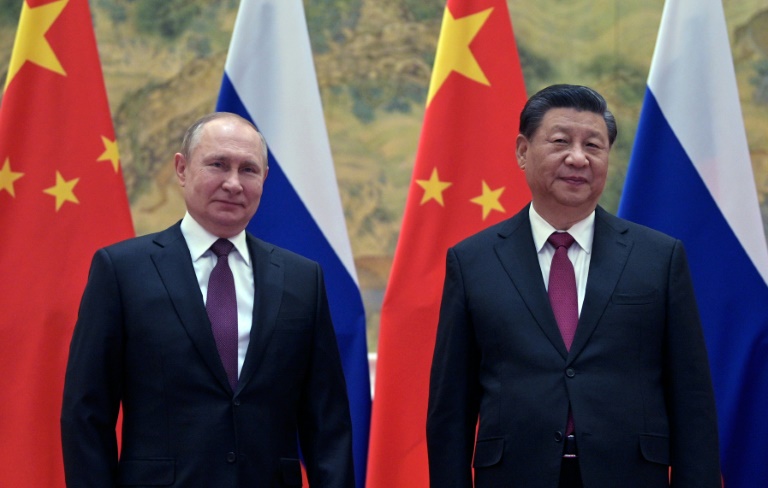
Xi has launched a diplomatic marathon in the leadup to the Games, meeting with Russian president and “old friend” Vladimir Putin on Friday and attending the Olympics opening ceremony later in the day with dozens of foreign guests.

Beijing is keen to shore up international support and pull off a Games that will burnish its reputation, despite multiple countries including the United States, Australia, Britain and Canada announcing diplomatic boycotts over China’s rights record.

Dozens of dignitaries — many from autocratic nations friendly to Beijing — were treated to musical performances and a traditional handicrafts display alongside the meal at the Great Hall of the People, state media reported.

This week’s meetings are a striking change for Xi, who has avoided travelling abroad or meeting foreign visitors face-to-face since the start of the Covid-19 pandemic in 2020.

China has largely closed its borders for the last two years in a zero-Covid strategy that has seen daily infections dwindle.

Besides Putin, the banquet guestlist included Kazakhstan President Kassym-Jomart Tokayev, Pakistan Prime Minister Imran Khan, Egypt’s President Abdel Fattah al-Sisi and Saudi Arabia’s Crown Prince Mohammed bin Salman, as well as a handful of leaders from Europe and Asia Pacific, according to Chinese state media.

Heads of international bodies including the World Health Organization’s Tedros Adhanom Ghebreyesus, whom state media said was among the Olympic torchbearers, were also invited.

Xi gave a toast at the banquet calling for all present to “work together for a world of durable peace,” according to an official transcript.

State broadcaster CCTV said International Olympic Committee President Thomas Bach and UN Secretary General Antonio Guterres also gave speeches praising China’s management of the Olympics and handling of the pandemic.

CCTV showed a massive banquet table featuring a miniature winter landscape dotted with replicas of the Olympic venues as its centrepiece, lit from above by crystal chandeliers. 

Chefs also recreated scenes from nature using food, including a group of frolicking panda figurines.

The Chinese president had individual meetings on the sidelines of the banquet on Saturday, including reaffirming his support for the Kazakh president, state broadcaster CCTV reported.

Beijing in January praised Tokayev’s “strong measures” against protesters after the Kazakh leader took a hardline approach to quell demonstrations — including authorising his forces to shoot to kill.

On Saturday, Xi told his Kazakh counterpart that China “is ready to help Kazakhstan maintain stability,” according to a readout after the meeting.

Xi was photographed greeting Putin on Friday with both men going maskless, even though the Russian leader had skipped the lengthy quarantine normally required in China for people arriving from overseas.

The two signed a joint statement criticising the United States’ global influence and opposing the further expansion of NATO, amid a diplomatic standoff between Moscow and Washington over Ukraine.

China's Xi hosts world leader banquet after two years of isolation

Chinese President Xi Jinping hosted a banquet on Saturday for heads of state and international organisations attending the Winter Olympics, part of a diplomatic blitz following nearly two years without face-to-face meetings due to the pandemic.

Dozens of dignitaries — many from autocratic nations friendly to Beijing — were treated to musical performances and a traditional handicrafts display alongside the meal at the Great Hall of the People, state media reported.

Xi has launched a diplomatic marathon in the leadup to the Games, meeting with Russian president and “old friend” Vladimir Putin on Friday and attending the Olympics opening ceremony later in the day with dozens of foreign guests.

This week’s meetings are a striking change for Xi, who has avoided travelling abroad or meeting foreign visitors face-to-face since the start of the Covid-19 pandemic in 2020.

China has largely closed its borders for the last two years in a zero-Covid strategy that has seen daily infections dwindle.

Beijing is keen to shore up international support and pull off a Games that will burnish its reputation, despite multiple countries including the United States, Australia, Britain and Canada announcing diplomatic boycotts over China’ rights record.

Besides Putin, the banquet guestlist included Egypt’s President Abdel Fattah al-Sisi and Saudi Arabia’s Crown Prince Mohammed bin Salman, as well as a handful of leaders from Europe and Asia Pacific, according to Chinese state media.

Heads of international bodies including the World Health Organization’s Tedros Adhanom Ghebreyesus, whom state media said was among the Olympic torchbearers, were also invited.

The Chinese president had individual meetings with leaders on the sidelines of the banquet on Saturday, reaffirming his support for Kazakhstan’s President Kassym-Jomart Tokayev, state broadcaster CCTV reported.

Beijing praised Tokayev’s “strong measures” against protesters earlier this year after the Kazakh leader took a hardline approach to quell demonstrations — including authorising his forces to shoot to kill.

Official photos showed a massive banquet table featuring a miniature winter landscape as its centrepiece, lit from above by crystal chandeliers.

CCTV showed masked guests including International Olympic Committee president Thomas Bach inspecting traditional clay figurines and painted kites in the Great Hall of the People as a Chinese musical group played.

Xi was photographed greeting and posing for photographs with Putin on Friday with both men going maskless, even though the Russian leader had skipped the lengthy quarantine period normally required in China for people arriving from overseas.

Germany's Scholz seeks to build trust in Washington debut

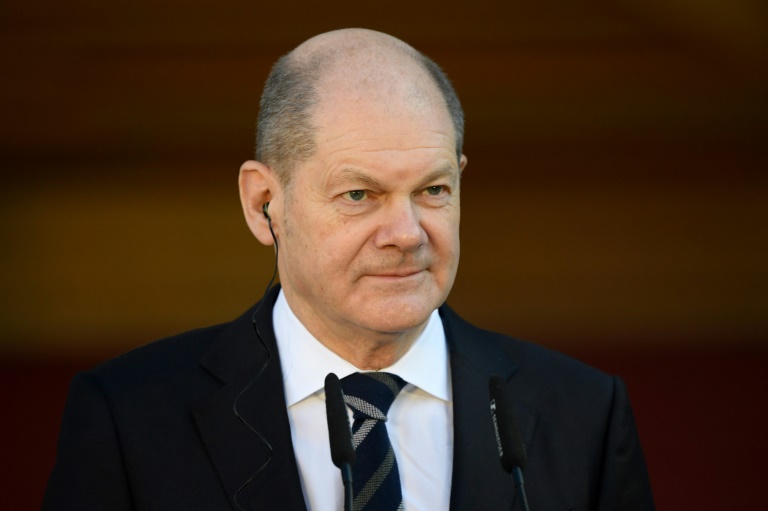
Olaf Scholz makes his Washington debut as German chancellor on Monday, trying to dispel doubts over Berlin’s resolve to stand up to Russia in the standoff over Ukraine.

As Scholz seeks to emerge from the long shadow of his veteran predecessor Angela Merkel, the new German leader will meet US President Joe Biden with several points of friction on the table.

While the US under Barack Obama relied heavily on Merkel’s unique rapport with Russian President Vladimir Putin after Moscow’s annexation of Crimea, Scholz has come under fire on both sides of the Atlantic for his vague stance in the current crisis.

Biden has taken pains to restore relations with Europe after the mutual recriminations of the Donald Trump years, but critics say Scholz has made that task more complicated.

Berlin’s refusal to consent to shipping arms to Ukraine, its often muddled messaging on potential sanctions and above all its refusal to call off the Nord Stream 2 pipeline project to provide cheap Russian gas to Germany have all vexed Washington.

Analyst Constanze Stelzenmueller at the US think tank Brookings Institution said “contradictory statements” from Berlin on Russia had sparked “confusion, disappointment and harsh criticism” in Washington.

“Scholz’s visit to Washington is an opportunity to fix his coalition’s battered image,” she told AFP.

– ‘Lost their marbles’ –

The chairwoman of the German parliament’s defence affairs committee, Marie-Agnes Strack-Zimmermann, was even more alarmist about the young government’s standing in Washington.

“In some quarters in the US there is the impression that the Germans have lost their marbles,” she told AFP.

Scholz took office in December at the helm of a complex three-way coalition between his Social Democrats, the ecologist Greens and the pro-business Free Democrats.

They have turned in a shaky start faced with surging coronavirus infections and the looming prospect of a Russian invasion of Ukraine.

Scholz has often struggled with his messaging given divisions within the government and the influence of “Putinversteher” (Putin sympathisers) in his own party who tend to view Washington more suspiciously than Moscow.

The German coalition agreement sets out a “restrictive” arms export policy, arguing that sending weapons into conflict zones is more likely to fuel than resolve them.

But several European partners as well as the US administration have argued this leaves Ukraine particularly vulnerable as tens of thousands of Russian troops mass on its borders, and could tempt Putin rather than placate him.

– ‘Stand up for security’ –

Despite occasional rifts, close transatlantic ties have remained a cornerstone of German foreign policy since World War II.

It is for this reason that the sour tone with Washington has opened Scholz up to stinging rebukes.

Johann Wadephul, a leading MP with Merkel’s Christian Democrats, told AFP he had received emails from colleagues in Washington “raising doubts about Germany’s reliability”. 

John Kornblum, a former US ambassador to Germany, noted Berlin and Washington had long fostered different notions of stability.

“Germany is a country which does not like to take risks, it’s a country which feels very uncomfortable if other people take risks,” he told a Johns Hopkins foreign policy podcast recently.

On several major issues, he said, “Germany has in fact not been very much in line with its European partners for some time. And this Russia threat, the Putin strategy of course is the most dramatic.”

On the thorny issue of Nord Stream 2, Scholz’s language has evolved and he now concedes that the project would be axed should Russia invade.

However security experts on both sides of the Atlantic say Moscow’s moves may be far less cut-and-dried than that and Scholz and Biden will have to discuss other red lines.

The German leader has also committed to diplomacy and will travel to Ukraine and Russia later this month after close consultations with European partners.

Michael Roth, head of the German parliament’s foreign affairs committee and a close SPD ally of Scholz’s, said he suspects that some criticism of Scholz is rooted in Republican efforts to “discredit” Biden’s rapprochement drive.

“The most important thing is that we show President Biden that Europeans are willing to stand up for security, peace and stability in all of Europe,” he told AFP. 

Canada protests against Covid measures set to ramp up

A week-long occupation of Canada’s capital by truckers opposed to vaccine mandates was set to ramp up Saturday with thousands of demonstrators expected to pile into Ottawa while other cities also braced for protests.

Police said they were expecting up to 2,000 protesters as well as 1,000 counter-protesters to join the hundreds already parked in front of parliament, but organizers said tens of thousands were headed to Ottawa.

Similar protests are also planned for Toronto, Quebec City and Winnipeg.

“This remains… an increasingly volatile and increasingly dangerous demonstration,” Ottawa police Chief Peter Sloly told a news conference Friday.

Following thousands of complaints from local residents of threats and harassment by protesters who have made even sleep difficult with incessant honking, and an online petition signed by 40,000 demanding action, Sloly vowed to crack down on what he called an “unlawful” protest.

But he did not offer a timeline.

Reached for comment by AFP, protest coordinator Jim Torma said on behalf of organizers that the protesters would not back down.

“They’re not going to hide us,” Torma said. “We’re going to be in (politicians’) faces as long as it takes” to force an end to public health restrictions aimed at slowing the spread of Covid-19.

With tensions already high and counter-protesters expected to now converge on the city, however, “the prospects for confrontation remain high,” warned federal Public Safety Minister Marco Mendicino.

– Trump backs ‘Freedom Convoy’ –

The so-called Freedom Convoy started on Canada’s Pacific coast in late January and picked up supporters along its 4,400-kilometer (2,700 miles) trek to the capital, as well as more than 10 million Canadian dollars ($8 million) in online donations.

However, the online fundraising platform GoFundMe said Friday that it had removed the Freedom Convoy fundraiser from its site after receiving evidence from law enforcement that the demonstration “has become an occupation, with police reports of violence and other unlawful activity.”

The number of protesters in Ottawa had peaked at several thousand last Saturday, according to officials, before dwindling to a few hundred by midweek.

Donald Trump Jr. and Elon Musk have both tweeted support for the truckers.

On Friday, former US president Donald Trump encouraged them too, saying in a statement that the “harsh policies of far left lunatic Justin Trudeau… has destroyed Canada with insane Covid mandates.”

A recent Abacus poll showed 32 percent of Canadians supported the protesters, although only 10 percent of Canadian adults are unvaccinated.

Prime Minister Justin Trudeau, who is isolating after contracting Covid, has refused to meet with the truckers, as others stepped up criticisms of the protesters, accusing them of racism and even terrorism — labels organizers reject.

This weekend, bridges and roadways into Ottawa will be blocked, with protesters asked to park in lots on the outskirts and walk or use city transit to downtown.

In Toronto, Mayor John Tory said officials were doing “everything we can to avoid the situation that we’re seeing in Ottawa.”

Toronto police started closing off streets late Friday and installing CCTV cameras to help keep an eye on the planned demonstrations.

Ontario Premier Doug Ford, meanwhile, urged the truckers in Ottawa to go home, echoing the protesters’ dislike of pandemic restrictions but insisting they are “necessary” to keep the population safe.

“It’s not a protest anymore,” he told a joint news conference with Canada’s 12 other provincial and territorial leaders. “It’s become an occupation that is not only hurting families, it’s hurting businesses.”

– Saskatchewan lifting restrictions –

Premier Jason Kenney of Alberta — where protesters blocked a border crossing into the US state of Montana — urged the federal government to start easing travel restrictions and pre-flight Covid tests notably.

“There are many jurisdictions around the world that have adopted more common-sense travel protocols than we have now in place in Canada,” he lamented.

Requiring people to wear face masks for indoor activities such as shopping, vaccine mandates and most other Covid measures are provincial responsibilities.

Saskatchewan province this week became the first jurisdiction in Canada to announce an imminent lifting of all those pandemic restrictions — despite pushback from doctors.

“What’s necessary is your freedom,” Saskatchewan Premier Scott Moe said in a video address. “What’s necessary is getting your life back to normal.”

US panel recommends release of mentally ill Guantanamo detainee

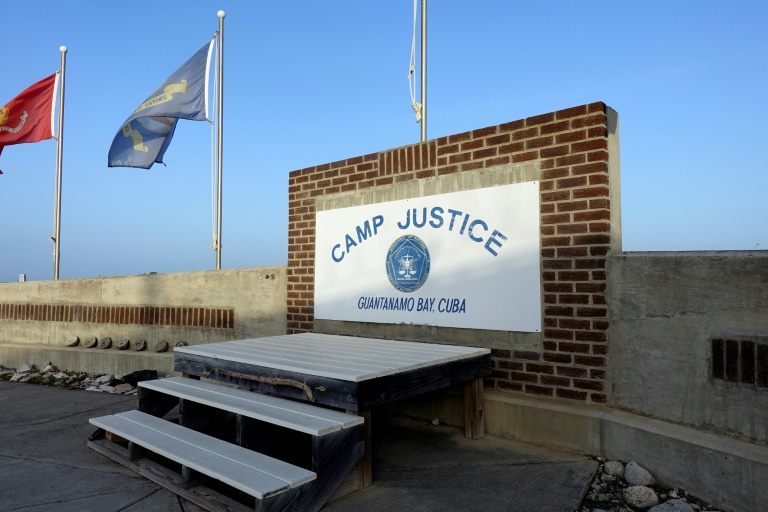
American authorities have recommended releasing a mentally ill inmate from Guantanamo Bay and repatriating him to Saudi Arabia, according to a government document published Friday. 

Suspected of being Al Qaeda’s intended 20th hijacker for the September 11, 2001 attacks against the United States, Mohammed al-Qahtani was tortured by interrogators at the US military base in Cuba where he has been detained for nearly two decades. 

The government dropped its case against him in 2008 due to the abuse he experienced at the prison. 

The detention of  al-Qahtani is “no longer necessary to protect against a continuing significant threat to the security of the United States,” the Periodic Review Board, a panel composed of several US national security agencies, said in a summary of its decision.

In its final determination dated February 4, the board said al-Qahtani was “eligible for transfer” and recommended that he be repatriated to Saudi Arabia where he could receive comprehensive mental health care and be enrolled in a rehabilitation center for extremists.

The body noted his “significantly compromised mental health condition and available family support.”

Security measures, including surveillance and travel restrictions, were also recommended.

Al-Qahtani was one of the first prisoners sent to Guantanamo in January 2002. 

He had flown to Orlando, Florida on August 4, 2001, but was denied entry to the country and sent back to Dubai.

He was eventually captured in Afghanistan in December 2001.

His torture at the prison was widely documented and spurred on international human rights groups’ calls for the site to be shut down. He was subjected to prolonged isolation, sleep deprivation, sexual humiliation and other abuses.

“We tortured Qahtani,” Susan Crawford, a top judicial official in the Bush administration said in 2009, according to a Washington Post article.

In January, the United States approved the release of five of the remaining 39 men still at Guantanamo.

Ten others, including the alleged mastermind of the September 11 attacks, Khalid Sheikh Mohammed, known as “KSM”, are awaiting trial by a military commission.

The detention center, run by the US Navy, was created after the 2001 attacks to house detainees in the US “war on terror” and has been called a site of “unparallelled notoriety” by UN rights experts.

Cyclone Batsirai nears Madagascar, poses 'very serious threat'

Cyclone Batsirai was expected to reach eastern Madagascar on Saturday, posing a “very serious threat” to millions with powerful winds and torrential rains set to batter the large Indian Ocean island.

Residents hunkered down before the storm’s arrival and winds of more than 200 kilometres per hour (124 miles per hour) were forecast as it bore down on the country still recovering from the deadly Tropical Storm Ana in late January.

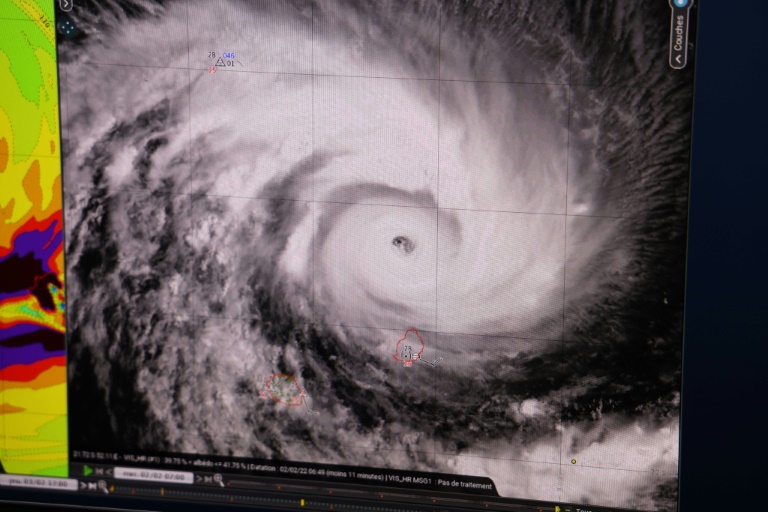
After passing Mauritius and drenching the French island of La Reunion for two days with torrential rain, Batsirai was about 250 kilometres east of Madagascar early Saturday, the Meteo-France weather agency said.

Batsirai should make landfall between late afternoon and evening Saturday as an intense tropical cyclone, “presenting a very serious threat to the area”, the forecaster said in its morning bulletin Saturday.

The eye of the storm was forecast to cross the centre of the island overnight into Sunday, before leaving its western shores by Monday.

Winds could reach “more than 200 or even 250 km/h… at the point of impact” and waves could reach as high as 15 metres (50 feet), Meteo-France said. 

The United Nations said it was ramping up its preparedness with aid agencies, placing rescue aircraft on standby and stockpiling humanitarian supplies.

The impact of Batsirai on Madagascar is expected to be “considerable”, Jens Laerke, spokesman for the UN’s humanitarian organisation OCHA, told reporters in Geneva Friday.

At least 131,000 people were affected by Ana across Madagascar in late January. At least 58 people were killed, mostly in the capital Antananarivo. The storm also hit Malawi, Mozambique and Zimbabwe, causing dozens of deaths.

The UN’s World Food Programme (WFP) pointed to estimates from national authorities that some 595,000 people could risk being directly affected by Batsirai, and 150,000 more might be displaced due to new landslides and flooding.

“We are very nervous,” Pasqualina Di Sirio, who heads the WFP’s programme in Madagascar, told reporters by video-link from the Indian Ocean island.

Search and rescue teams on the island have been placed on alert and residents reinforced their homes.

Sitting on top of his house, Tsarafidy Ben Ali, a 23-year-old coal seller, held down corrugated iron sheets on the roof with large bags filled with soil.

“The gusts of wind are going to be very strong. That’s why we’re reinforcing the roofs,” he told AFP.

The storm poses a risk to at least 4.4 million people in one way or another, the International Federation of Red Cross and Red Crescent Societies said.

mah-etr-apo-str-cld/ayv/am/jfx/mtp

Cyclone Batsirai nears Madagascar, poses 'very serious threat'

Cyclone Batsirai was expected to reach eastern Madagascar on Saturday, posing a “very serious threat” to millions with powerful winds and torrential rains set to batter the large Indian Ocean island.

Residents hunkered down before the storm’s arrival and winds of more than 200 kilometres per hour (124 miles per hour) were forecast as it bore down on the country still recovering from the deadly Tropical Storm Ana in late January.

After passing Mauritius and drenching the French island of La Reunion for two days with torrential rain, Batsirai was about 250 kilometres east of Madagascar early Saturday, the Meteo-France weather agency said.

Batsirai should make landfall between late afternoon and evening Saturday as an intense tropical cyclone, “presenting a very serious threat to the area”, the forecaster said in its morning bulletin Saturday.

The eye of the storm was forecast to cross the centre of the island overnight into Sunday, before leaving its western shores by Monday.

Winds could reach “more than 200 or even 250 km/h… at the point of impact” and waves could reach as high as 15 metres (50 feet), Meteo-France said. 

The United Nations said it was ramping up its preparedness with aid agencies, placing rescue aircraft on standby and stockpiling humanitarian supplies.

The impact of Batsirai on Madagascar is expected to be “considerable”, Jens Laerke, spokesman for the UN’s humanitarian organisation OCHA, told reporters in Geneva Friday.

At least 131,000 people were affected by Ana across Madagascar in late January. At least 58 people were killed, mostly in the capital Antananarivo. The storm also hit Malawi, Mozambique and Zimbabwe, causing dozens of deaths.

The UN’s World Food Programme (WFP) pointed to estimates from national authorities that some 595,000 people could risk being directly affected by Batsirai, and 150,000 more might be displaced due to new landslides and flooding.

“We are very nervous,” Pasqualina Di Sirio, who heads the WFP’s programme in Madagascar, told reporters by video-link from the Indian Ocean island.

Search and rescue teams on the island have been placed on alert and residents reinforced their homes.

Sitting on top of his house, Tsarafidy Ben Ali, a 23-year-old coal seller, held down corrugated iron sheets on the roof with large bags filled with soil.

“The gusts of wind are going to be very strong. That’s why we’re reinforcing the roofs,” he told AFP.

The storm poses a risk to at least 4.4 million people in one way or another, the International Federation of Red Cross and Red Crescent Societies said.

mah-etr-apo-str-cld/ayv/am/jfx/mtp

Coups and Covid loom large at African Union summit

Heads of state gathered Saturday at the African Union headquarters to kick off a two-day summit as the continent reels from a spate of military coups and the coronavirus pandemic. 

The summit also comes as the 55-member bloc faces pressure to push for a ceasefire in host country Ethiopia, where a 15-month war has killed thousands of people and, the UN says, driven hundreds of thousands to the brink of starvation. 

Four member states have been suspended by the AU’s Peace and Security Council since mid-2021 because of unconstitutional changes of government, most recently Burkina Faso, where soldiers ousted President Roch Marc Christian Kabore last month. 

Addressing African foreign ministers this week, AU Commission chair Moussa Faki Mahamat denounced a “worrying resurgence of military coups”. 

But the AU has been accused of an inconsistent response to the putsches, notably by not suspending Chad after a military council took over following the death of longtime President Idriss Deby Itno on the battlefield last April.

The two-day summit should discuss how to be more proactive in addressing factors that give rise to coups, including terrorism-related instability and frustration over constitutional revisions that extend leaders’ time in power, said Solomon Dersso, founder of the AU-focused Amani Africa think tank. 

“It is only when crisis hits that we say, ‘Gosh, how come this country is falling apart like this so quickly?'” Solomon said.

– Disease and diplomacy –

On Saturday, South African President Cyril Ramaphosa is expected to provide an update on Africa’s response to the pandemic, nearly two years after the continent’s first Covid-19 case was detected in Egypt. 

As of January 26, only 11 percent of Africa’s more than one billion people had been fully vaccinated, according to the Africa Centres for Disease Control and Prevention. 

A draft agenda seen by AFP also includes a discussion of Faki’s decision last year to accept Israel’s accreditation at the AU.

Faki’s move drew quick, vocal protest from powerful members including South Africa and Algeria, which argued that it flew in the face of AU statements supporting the Palestinian Territories. 

Analysts say a vote on the issue could yield an unprecedented split in the bloc.

Meanwhile, it is unclear whether and how leaders will address the war in Ethiopia, which pits Prime Minister Abiy Ahmed’s government against fighters from the northern Tigray region. 

The fact that Ethiopia hosts the AU makes any intervention by the bloc especially delicate, and Faki waited until last August — nine months after fighting began — to appoint Olusegun Obasanjo as a special envoy tasked with trying to broker a ceasefire. 

Ethiopia has also held a seat on the Peace and Security Council, though it failed in a bid to stay on the 15-member body this week, diplomats said.

“AU member states should not ignore the serious crimes committed by all warring parties, including federal government forces, in Ethiopia’s conflict,” Carine Kaneza Nantulya, Africa advocacy director at Human Rights Watch, said in a statement Friday.

Close Bitnami banner
Bitnami