World

Death toll from laced cocaine in Argentina climbs to 24

The death toll among dozens of people who consumed cocaine likely laced with opioids in Buenos Aires rose to 24 on Friday, with 23 still in hospital, health officials said.

Eight of the hospitalized are in serious condition and on mechanical ventilation.

Officials said 24 people, aged between 21 and 58, have died since Tuesday night from adulterated cocaine bought from dealers in the poor neighborhood of Loma Hermosa, some 40 kilometers (25 miles) from the Buenos Aires city center.

Most died far from the point of sale, 12 of them at home and two on the road, unable to make it to a hospital on time because of the sudden effects of the tainted drug. Many suffered heart attacks. 

Twenty-three remained hospitalized Friday, according to a provincial government update.

Three of them had been discharged but had to be re-hospitalized after taking more of the cocaine, provincial health minister Nicolas Kreplak said.

More than 200 other people sought medical intervention after consuming the substance, presenting symptoms of varying degrees of gravity.

– Arrests and seizures –

Thirteen people rounded up in a police operation to establish the origins of the tainted drug were due to appear before magistrates as part of the ongoing investigation, according to the Telam news agency.

They include the well-known leader of a drug trafficking network in greater Buenos Aires, a 33-year-old nicknamed “El Paisa.”

The substance with which the cocaine was laced has not yet been confirmed, but authorities say it is likely an opioid.

Police have seized more than 20,000 doses of cocaine in a crackdown, but have not revealed how many of these were from the laced batch.

The incident has brought to light the dangers of illegal drug use, especially of cheap, low-quality cocaine sold and consumed in Buenos Aires’s poorest communities.

According to security chief Sergio Berni, at least 250,000 doses of cocaine are sold daily in Buenos Aires province, home to some 40 percent of the Argentine population of 45 million and with high poverty rates.

Officials said Thursday that things were under control, but urged recent buyers of cocaine in and around the capital city to throw it away.

“Every dealer that buys cocaine cuts it. Some do it with non-toxic substances such as starch. Others put hallucinogens in it, and if there is no form of control, this kind of thing happens,” Berni said.

– ‘Absolutely exceptional’ –

San Martin public prosecutor Marcelo Lapargo has said what happened was “absolutely exceptional” and there was “no precedent” in Argentina.

Illegal drug use has been on the rise in the South American country.

In the mid-1980s, half a ton of cocaine was seized every year — a decade later, it was four times that, official data shows.

In 2017, a record 12.1 tons of cocaine were seized in the country, but in 2020, the number fell to about 2.7 tons as consumption dropped during the pandemic.
Compulsory vaccination rules come into force in Austria

It’s official: From Saturday, Austrians over the age of 18 must be vaccinated against Covid-19 or face the possibility of a heavy fine, an unprecedented measure in the European Union.

The new measure, adopted on January 20 by Parliament, was signed into law by President Alexander Van der Bellen on Friday, the culmination of a process that began in November in the face of the rapid spread of the Omicron variant.

The government decided to pursue its new tougher approach despite criticism within the country.

“No other country in Europe is following us on compulsory vaccines,” said Manuel Krautgartner, who has campaigned against the new approach.

In neighbouring Germany, a similar law championed by the new Social Democrat Chancellor Olaf Scholz was debated last month in the Bundestag, or lower house of parliament, but has not made progress yet due to divisions within the political class.

– Checks from mid-March –

Despite the threat of such a drastic measure, the vaccination rate in Austria has still failed to take off, languishing below the levels seen in France or Spain.

Vienna vaccination centres remain relatively quiet.

“We are far from reaching maximum capacity, things are completely stagnating,” Stefanie Kurzweil, of the humanitarian association, Arbeiter Samariter Bund, which oversees one of these sites, told AFP a few days ago. 

Melanie, a 23-year-old waitress who preferred not to give her second name at the centre to get her booster jab, said she was mainly there to avoid ending up “locked up at home”.

Non-vaccinated people are currently excluded from restaurants, sports and cultural venues. 

But from now on they will also be subject to fines, which Melanie said was “unhealthy”.

The law applies to all adult residents with the exception of pregnant women, those who have contracted the virus within the past 180 days and those with medical exemptions.

Checks will begin from mid-March, with sanctions ranging from 600 to 3,600 euros ($690-$4,100).

They will, however, be lifted if the person fined gets vaccinated within two weeks.

– Protect against new variants – 

Waiting in the queue, others say they are in favour of vaccination for all.

“We would have finished a long time ago (with the pandemic) if everyone had been vaccinated”, said legal worker, Angelika Altmann.

More than 60 percent of Austrians support the measure, according to a recent survey, but large swathes of the population remain strongly opposed.

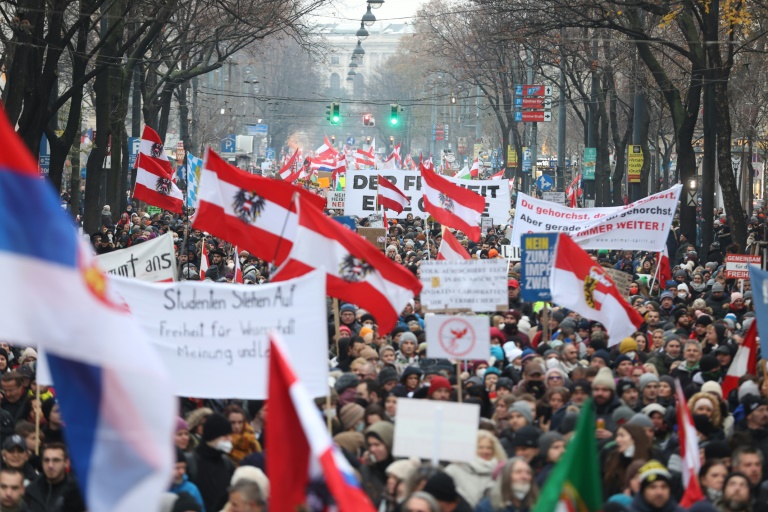
For several weeks after the announcement of the new law, tens of thousands of people took to the streets to protest against what they regard as a radical and draconian policy.

Critics have also questioned the need for compulsion given the far milder nature of the Omicron variant.

Conservative Chancellor Karl Nehammer, who leads the Alpine country with the environmentalist Greens, also announced at the same time a relaxation of earlier Covid-19 restrictions.

But for Health Minister Wolfgang Mueckstein, compulsory vaccination is aimed at both protecting the country against new waves and fighting new variants.

Vaccination passes are now a reality in an increasing number of countries for certain professions or activities.

In Ecuador, it is compulsory, including for children over the age of five, a world first.

Before that, two authoritarian states in Central Asia — Tajikistan and Turkmenistan — mandated vaccination, as did Indonesia, even if less than half the population is actually vaccinated.

Compulsory vaccination rules come into force in Austria

It’s official: From Saturday, Austrians over the age of 18 must be vaccinated against Covid-19 or face the possibility of a heavy fine, an unprecedented measure in the European Union.

The new measure, adopted on January 20 by Parliament, was signed into law by President Alexander Van der Bellen on Friday, the culmination of a process that began in November in the face of the rapid spread of the Omicron variant.

The government decided to pursue its new tougher approach despite criticism within the country.

“No other country in Europe is following us on compulsory vaccines,” said Manuel Krautgartner, who has campaigned against the new approach.

In neighbouring Germany, a similar law championed by the new Social Democrat Chancellor Olaf Scholz was debated last month in the Bundestag, or lower house of parliament, but has not made progress yet due to divisions within the political class.

– Checks from mid-March –

Despite the threat of such a drastic measure, the vaccination rate in Austria has still failed to take off, languishing below the levels seen in France or Spain.

Vienna vaccination centres remain relatively quiet.

“We are far from reaching maximum capacity, things are completely stagnating,” Stefanie Kurzweil, of the humanitarian association, Arbeiter Samariter Bund, which oversees one of these sites, told AFP a few days ago. 

Melanie, a 23-year-old waitress who preferred not to give her second name at the centre to get her booster jab, said she was mainly there to avoid ending up “locked up at home”.

Non-vaccinated people are currently excluded from restaurants, sports and cultural venues. 

But from now on they will also be subject to fines, which Melanie said was “unhealthy”.

The law applies to all adult residents with the exception of pregnant women, those who have contracted the virus within the past 180 days and those with medical exemptions.

Checks will begin from mid-March, with sanctions ranging from 600 to 3,600 euros ($690-$4,100).

They will, however, be lifted if the person fined gets vaccinated within two weeks.

– Protect against new variants – 

Waiting in the queue, others say they are in favour of vaccination for all.

“We would have finished a long time ago (with the pandemic) if everyone had been vaccinated”, said legal worker, Angelika Altmann.

More than 60 percent of Austrians support the measure, according to a recent survey, but large swathes of the population remain strongly opposed.

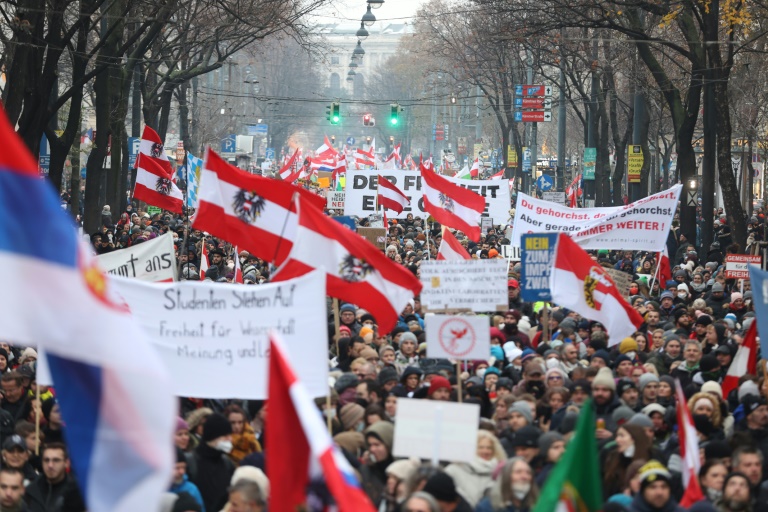
For several weeks after the announcement of the new law, tens of thousands of people took to the streets to protest against what they regard as a radical and draconian policy.

Critics have also questioned the need for compulsion given the far milder nature of the Omicron variant.

Conservative Chancellor Karl Nehammer, who leads the Alpine country with the environmentalist Greens, also announced at the same time a relaxation of earlier Covid-19 restrictions.

But for Health Minister Wolfgang Mueckstein, compulsory vaccination is aimed at both protecting the country against new waves and fighting new variants.

Vaccination passes are now a reality in an increasing number of countries for certain professions or activities.

In Ecuador, it is compulsory, including for children over the age of five, a world first.

Before that, two authoritarian states in Central Asia — Tajikistan and Turkmenistan — mandated vaccination, as did Indonesia, even if less than half the population is actually vaccinated.

Peru president sacks PM accused of domestic violence

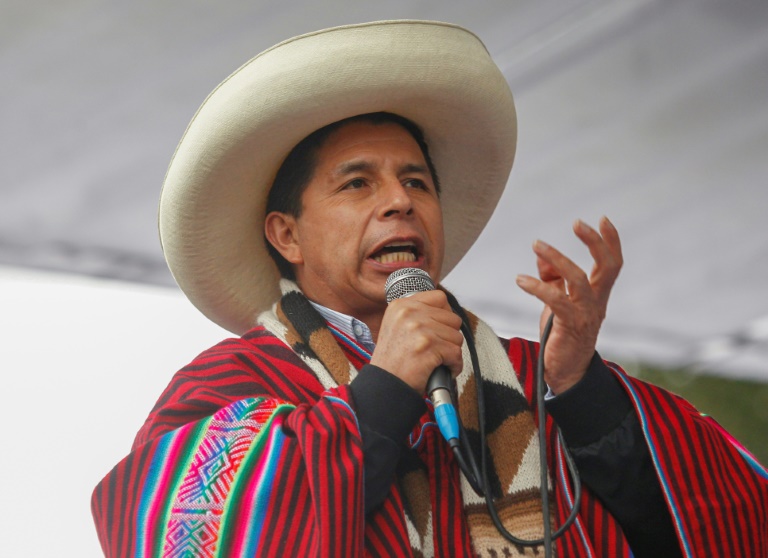
Peruvian President Pedro Castillo dumped his prime minister Friday just three days after appointing him, amid outrage over revelations he was accused of domestic violence in 2016.

“I have decided to recompose the cabinet,” the president said, meaning Prime Minister Hector Valer Pinto is out.

The leftist Castillo announced the change in a brief television address in which he did not mention Valer Pinto by name.

The opposition and even some cabinet ministers were up in arms about Valer Pinto’s continued presence in the government.

When the president names a new cabinet, it will be his fourth since taking power six months ago.

Valer Pinto, 62, first came under pressure Thursday when newspapers reported that in 2016 his wife and university-age daughter reported him for domestic violence.

On Friday, before the president pushed him out, the speaker of congress urged the prime minister to resign.

Three ministers also challenged him, with Foreign Minister Cesar Landa writing on Twitter that “public service requires officials free of such accusations.”

Valer Pinto responded to the news reports by denying he was an “abuser” and said he was never convicted of domestic violence. 

He insisted he would stay on in his job unless congress passed a no confidence motion.

Peru president sacks PM accused of domestic violence

Peruvian President Pedro Castillo dumped his prime minister Friday just three days after appointing him, amid outrage over revelations he was accused of domestic violence in 2016.

Castillo said he had decided to “recompose” his cabinet, which means Prime Minister Hector Valer Pinto is out.

The leftist Castillo announced the change in a brief television address in which he did not mention Valer Pinto by name.

The opposition and even some cabinet ministers were up in arms about Valer Pinto’s presence in the government.

When the president names a new cabinet it will be his fourth since taking power six months ago.

Record heat, forest fires in Colombia's Amazon in January

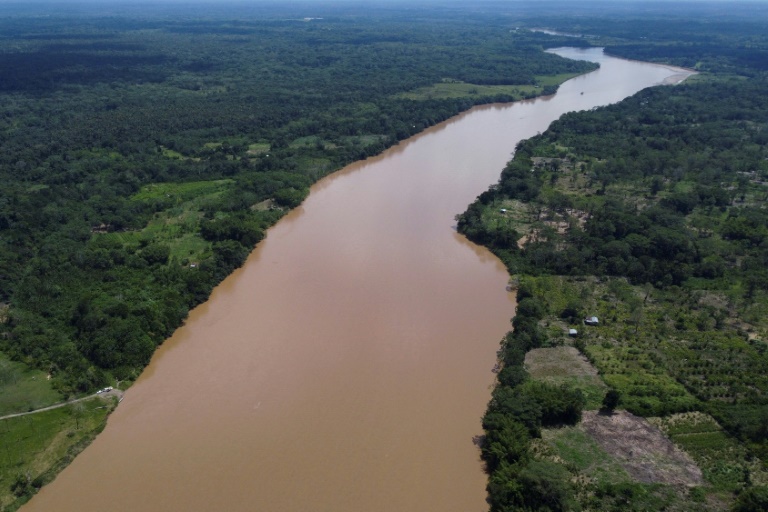
January of this year was the hottest month in the Colombian Amazon in a decade, leading to an increase in forest fires in the southeastern region and very likely impacting air quality in the capital Bogota, according to an Environment Ministry report seen by AFP Friday.

It said the month of January recorded the “highest hot spot values in the last 10 years” in the Colombian Amazon. 

The phenomenon occurs, the ministry said, when the country goes through a season of low rainfall, and is due to “anthropic activities,” that is to say human activities, of which “the most important is associated with deforestation fronts.” 

At least 80 percent of the “hot spots” were forest fires, a ministry spokesman told AFP. At the end of January, the ministry identified more than 3,300 “hot spots” in the six departments that make up the Colombian Amazon, including 1,300 in the Guaviare region alone.

According to testimonies collected by AFP in October in the region, peasants and landowners take advantage of the dry season, from January to April, to burn or cut down trees and plant coca plants in their place, or to let cattle graze there. 

The Serrania del Chiribiquete National Park, listed as a UNESCO World Heritage Site, is particularly threatened, as is the Nukak National Nature Reserve, a vast territory of jungle inhabited by the last nomadic indigenous people of Colombia. 

The Foundation for Conservation and Sustainable Development (FCDS), which keeps its own count and regularly flies over the areas concerned, recorded at least 938 forest fires, the highest monthly January figure since 2012.

Seven dead as tourist plane crashes near Peru's Nazca lines: ministry

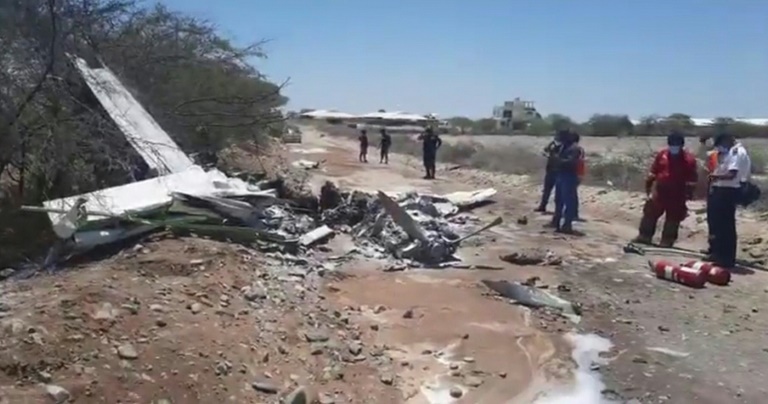
Five tourists and two crew died Friday when their plane crashed on a trip to view Peru’s famous Nazca lines, the transport ministry said.

The Cessna 207 single-engine plane belonging to the Aerosantos tourism company came down shortly after takeoff from the small airport of Maria Reiche in Nazca around noon, it said in a statement.

There were no survivors among the seven on board. The tourists were two Chileans and three people from the Netherlands, the civil defense office in Nazca said.

Dozens of planes operate from the Maria Reiche airfield, flying tourists — mainly foreigners — over the Nazca lines, a UNESCO World Heritage site.

The fabled lines — one of Peru’s top tourist attractions — were etched into the desert floor some 220 miles (350 kilometers) south of Lima between 500 BC and 500 AD, according to UNESCO, and depict animals, plants, imaginary beings and geometric figures several kilometers long. 

They are believed to have had ritual astronomical function or to have served as a calendar. Most are only visible from the sky.

The Cessna crashed as it was beginning its aerial tour of the site, falling at the edge of a road, radio station RPP said.

The plane exploded on impact and burst into flames, leaving the bodies charred beyond recognition, said Canal N, which published video of the smoking remains of the aircraft.

The cause of the crash will be investigated the transport ministry said.

In October 2010, four British tourists and two Peruvian crew members were killed when an AirNasca aircraft crashed over the lines.

Russia wins Chinese backing in showdown over Ukraine

Russia won China’s backing in its showdown with the West over Ukraine on Friday, as Beijing agreed with Moscow that the US-led NATO military alliance should not admit new members.

The demand for NATO to stop expanding came after a meeting between Russian President Vladimir Putin and Chinese counterpart Xi Jinping in Beijing that saw Putin hail the two countries’ “dignified relationship”.

In a long strategy document, Moscow and Beijing hit out at what they said was Washington’s destabilising role in global security.

“The parties oppose the further expansion of NATO and call on the North Atlantic Alliance to abandon the ideological approaches of the Cold War era,” the document read, urging respect for the “sovereignty, security and interests of other countries.” 

The call echoes demands from Russia that have been at the centre of weeks of intensive negotiations between Moscow and the West, under the shadow of a potential conflict.

NATO Secretary General Jens Stoltenberg hit back at the Russo-Chinese claims. 

“This is fundamentally not about NATO expansion. This is about respecting the right of every sovereign nation to choose their own path,” he told MSNBC’s Morning Joe. 

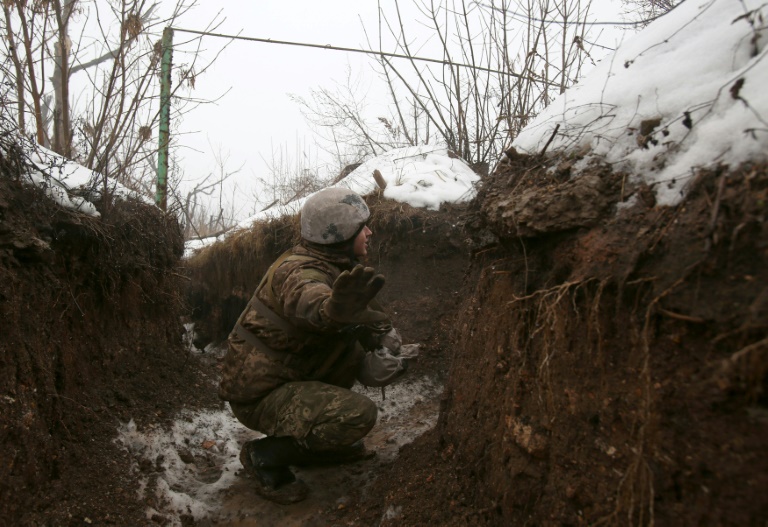
Western capitals have accused Russia of amassing some 100,000 troops on the borders of pro-Western Ukraine in preparation for an invasion and have vowed to impose devastating sanctions on Moscow if it attacks.

The document released by Beijing and Moscow Friday also set out criticisms of Washington’s “negative impact on peace and stability” in the Asia-Pacific region.

Russia and China also said they were “seriously concerned” by the AUKUS defence alliance including Australia, the UK and the United States.

German Chancellor Olaf Scholz was the latest European leader to announce a visit to the region on Friday, saying he would go to Ukraine on February 14 and Russia the next day.

Later Friday, the first US soldiers of the 3,000 announced by President Joe Biden this week arrived in Germany at the Wiesbaden military base.

The US is sending 2,000 troops stationed in the US. They are being flown to Germany and Poland. Another 1,000 already in Germany are being sent to Romania.

– ‘Delusional’ false flag claims –

French President Emmanuel Macron will visit Moscow on Monday and Kyiv on Tuesday for talks with his Russian and Ukrainian counterparts.

Putin’s meeting with Xi — hours ahead of the opening ceremony of the Winter Olympic Games — came after the United States said it had evidence of a plan by Moscow to film a fake Ukrainian attack on Russians to justify an attack on its neighbour.

Pentagon spokesperson John Kirby said the US had “information that the Russians are likely to want to fabricate a pretext for an invasion”, but did not provide evidence.

Russia, which has repeatedly denied any invasion plans, said the US claims were absurd.

“The delusional nature of such fabrications — and there are more and more of them every day — is obvious,” Foreign Minister Sergei Lavrov said.  

Washington’s claim came on the back of visits from European leaders to shore up their backing for Kyiv, including from British Prime Minister Boris Johnson and Turkish President Recep Tayyip Erdogan. 

Ukraine’s Foreign Minister Dmytro Kuleba on Friday welcomed the displays of support, saying they had prevented Russia from “further aggravating the security situation”.

– ‘Intimidation strategy’ –

“Our partners believe in Ukraine and that means Moscow’s intimidation strategy is not working. Russia has lost this round,” Kuleba said.

During Erdogan’s visit Thursday he and Ukrainian President Volodymyr Zelensky signed an agreement expanding the production of parts in Ukraine for a Turkish combat drone whose sale to Kyiv has angered Moscow.

Erdogan has tried to position Turkey, which is a member of NATO, as a neutral mediator close to both Moscow and Kyiv.

Following his trip, Erdogan accused the West of making the crisis “worse”.

“Unfortunately, the West until now has not made any contribution to resolving this issue,” he said in comments published by local media Friday.

“They are only making things worse,” Erdogan said, adding that Joe Biden “has not yet been able to demonstrate a positive approach”.

Russia’s relationship with the West was severely damaged in 2014 when it annexed the Crimean peninsula from Ukraine and threw its political weight behind armed separatists in the east the country.

Nearly eight years of fighting between Kyiv and the pro-Moscow fighters have cost more than 13,000 lives and seen the West and Russia exchange waves of tit-for-tat sanctions.

In the most recent diplomatic flare-up, Putin has demanded guarantees that Ukraine will not join NATO and has implicitly threatened the former Soviet state with the massive military build-up.

Russia also wants NATO and the United States to foreswear the deployment of missile systems near Russia’s borders and to pull back NATO forces in eastern Europe.

These tensions have been aggravated by plans for joint military exercises between Russia and neighbouring Belarus, where Washington claims Moscow is preparing to send 30,000 troops.

Seven dead as tourist plane crashes near Peru's Nazca lines: ministry

Five tourists and two crew died Friday when their plane crashed on a trip to view Peru’s famous Nazca lines, the transport ministry said.

The Cessna 207 single-engine plane belonging to the Aerosantos tourism company came down shortly after takeoff from the small airport of Maria Reiche in Nazca around noon, it said in a statement.

There were no survivors among the seven on board, which a diplomatic source told AFP included two Chilean tourists.

Dozens of planes operate from the Maria Reiche airfield, flying tourists — mainly foreigners — over the Nazca lines, a UNESCO World Heritage site.

The lines were etched into the desert floor some 220 miles (350 kilometers) south of Lima between 500 BC and 500 AD, according to UNESCO, and depict animals, plants, imaginary beings and geometric figures several kilometers long. 

They are believed to have had ritual astronomical function or to have served as a calendar. Most are only visible from the sky.

In October 2010, four British tourists and two Peruvian crew members were killed when an AirNasca aircraft crashed over the lines.

Russia rejects Colombian 'foreign interference' claims

Russia on Friday dismissed Colombian claims of “foreign interference” on the side of Venezuela as the South American neighbors quarrel over deadly fighting on their common border.

On Thursday, Colombian Defense Minister Diego Molano cited intelligence that Venezuelan military units had been “mobilized to the border with the support and technical strength of Russia.”

The minister denounced “foreign interference” on the part of Moscow in the border area, where two Colombian guerrilla groups are fighting a deadly battle that has intensified since the beginning of the year.

Bogota has repeatedly accused Caracas of giving protection to the armed groups. 

In a statement Friday, the Russian embassy in Colombia dismissed Molano’s accusations as “irresponsible” and accused him of seeking out “fictitious enemies.”

Colombian President Ivan Duque, in response, invited the embassy to a “frank conversation” to “understand the scope and objective” of its “military presence.”

In May last year, in the midst of unprecedented anti-government protests, Colombia accused Russia of involvement in cyber attacks against official websites.

Moscow also rejected these claims.

Fighters of the National Liberation Army (ELN) are battling dissidents of the FARC guerrilla group that disarmed in a 2016 peace deal ending a near six-decade civil war.

They are fighting for control of the Arauca region, separated from Venezuela by a river, and a crucial drug trafficking route. 

Colombia is the world’s largest cocaine exporter.

The rivalry has claimed nearly 70 lives in the region in a month and displaced more than 1,200 people, according to Colombia’s rights ombudsman.

Colombia is an important ally of the United States in South America, while Venezuela’s Nicolas Maduro is close to Russia.

In December, Russian Deputy Foreign Minister Sergei Ryabkov said he would not rule out Moscow sending forces to allies Venezuela or Cuba if diplomacy failed with the United States over Ukraine, where Moscow has massed tens of thousands of troops.

Colombia and Venezuela severed ties in 2018, shortly after Duque took office. 

Close Bitnami banner
Bitnami