World

Xi meets Putin as tensions rise with West

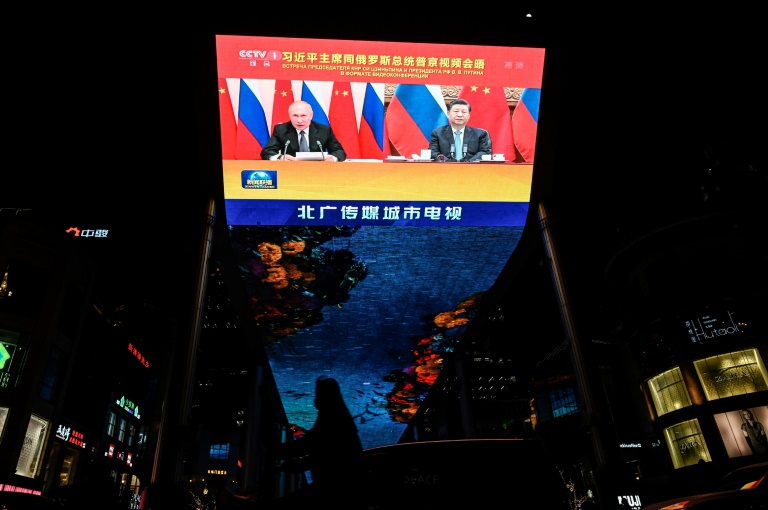
China’s President Xi Jinping held his first face-to-face talks with a world leader in nearly two years on Friday, meeting Russia’s Vladimir Putin who hailed “unprecedented” ties between the neighbours as tensions grow with the West.

Xi has not left China since January 2020, when the country was grappling with its initial Covid-19 outbreak and locked down the central city of Wuhan where the virus was first detected.

He is now embarking on a sudden flurry of diplomatic activity as more than 20 world leaders fly in for the Winter Olympics, an event China hopes will be a soft-power triumph and a shift away from a build-up blighted by a diplomatic boycott and Covid fears.

The two leaders met in the Chinese capital as their countries seek to deepen relations in the face of increasing criticism from the West.

Moscow’s ties with Beijing are “developing progressively along the path of friendship and strategic partnership, they are of a truly unprecedented nature”, Putin said in televised remarks at the start of their meeting.

Russia and China are an “example of a dignified relationship”, Putin added. 

He said that ahead of the meeting Moscow prepared a new contract for the supply of 10 billion cubic metres of natural gas to China from Russia’s Far East. 

The two strongmen will attend the Olympic opening ceremony later in the evening.

While Russian officials are banned from attending international sporting competitions over a doping scandal, they may attend if invited by the head of state of the host country. 

Spiralling tensions with the West have bolstered ties between the world’s largest nation and its most populous, and Putin was the first foreign leader to confirm his presence at the Olympics.

“I have known President Xi Jinping for a long time,” CCTV quoted Putin as saying in a report on Friday. 

“As good friends and politicians who share many common views on solving world problems, we have always maintained close communication.”

– Article by Putin –

China’s state-run Xinhua news agency also carried an article from Putin on Thursday in which the Russian leader painted a portrait of two neighbours with increasingly shared global goals.

He also hit out at the US-led Western diplomatic boycott of the Olympics that was sparked by China’s human rights record. 

“Sadly, attempts by a number of countries to politicise sports for their selfish interests have recently intensified,” Putin wrote, calling such moves “fundamentally wrong”.

For its part, China has become more vocal in backing Russia in its dispute with NATO powers over Ukraine.

Last week, China’s foreign minister Wang Yi called Russia’s security concerns “legitimate”, saying they should be “taken seriously and addressed”.

Moscow is looking for support after its deployment of 100,000 troops near its border with Ukraine prompted Western nations to warn of an invasion and threaten “severe consequences” in response to any Russian attack.

China enjoyed plentiful support from the Soviet Union — the precursor to the modern Russian state — after the establishment of Communist rule in 1949, but the two socialist powers later fell out over ideological differences.

Relations got back on track as the Cold War ended in the 1990s, and the pair have pursued a strategic partnership in recent years that has seen them work closely on trade, military and geopolitical issues.

Those bonds have strengthened further during the Xi era, at a time when Russia and China find themselves increasingly at odds with Western powers.

Other leaders set to enjoy Xi’s hospitality during the Games include Egypt’s Abdel Fattah al-Sisi, Saudi Arabia’s Mohammed bin Salman, Kazakhstan’s Kassym-Jomart Tokayev and Poland’s Andrzej Duda.

In total around 21 world leaders are expected to attend the Games.

A majority of those leaders rule over non-democratic regimes, according to the Economist Intelligence Unit’s Democracy Index, with 12 labelled either “authoritarian” or a “hybrid regime”.
US claims evidence of Moscow plan for 'false flag' Ukrainian attack

The Pentagon said Thursday it had evidence of a plan by Moscow to film a fake Ukrainian attack on Russians to justify a real assault on its pro-West neighbor.

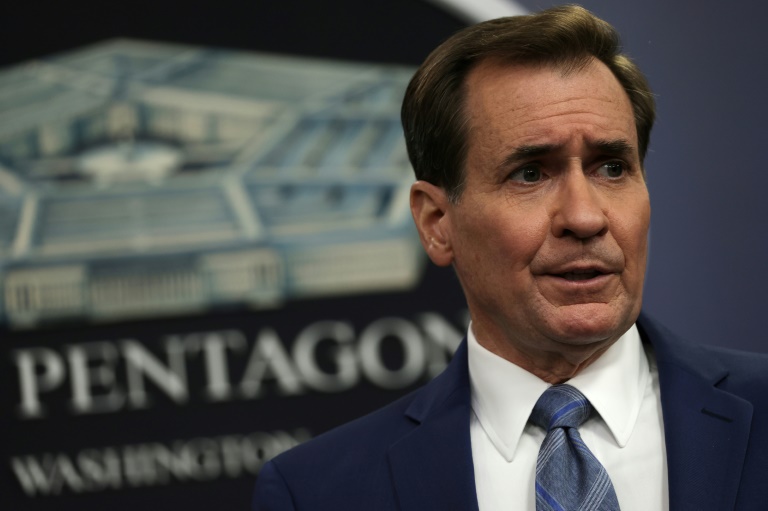
“We do have information that the Russians are likely to want to fabricate a pretext for an invasion,” said Pentagon spokesperson John Kirby.

He told reporters that Washington believed the Russian government plans to stage an attack by the Ukraine military or intelligence forces “against Russian sovereign territory, or against Russian speaking people.”

The latter could refer to the sizeable Russian-speaking population inside Ukraine.

“As part of this fake attack, we believe that Russia would produce a very graphic propaganda video, which would include corpses and actors that would be depicting mourners and images of destroyed locations,” he said.

That could allow Moscow, which has amassed more than 100,000 troops and heavy offensive arms on Ukraine’s border, with an excuse for invading.

– Question of evidence –

Neither Kirby nor State Department Spokesperson Ned Price, who also commented on the alleged plan, offered evidence to back the claim.

Kirby said part of the plan would be to make the Ukrainian military equipment used in it appear to be supplied by the West, he said, further justifying Russian reprisals against Ukraine.

“We’ve seen these kinds of activity by the Russians in the past and we believe it’s important when we see it like this that we can call it out,” Kirby said.

“I would just say that our experience is that very little of this nature is not approved at the highest levels of the Russian government,” Kirby said about the purported plan.

Price said the alleged plan is “one of a number of options that the Russian government is developing as a fake pretext to initiate and potentially justify military aggression against Ukraine.”

He said the United States did not know if Moscow has decided to go through with the plan.

“Russia has signaled it’s willing to continue diplomatic talks as a means to de-escalate, but actions such as these suggests otherwise,” Price said.

Pressed on whether there was evidence of such a plan, Price said it came from US intelligence, but offered no more details.

“I’m not going to spell out what is in our possession but I will leave that to your judgement,” he told reporters.

Asked later Thursday if the United States might be adding fuel to the fire by sending troops and aid, Kirby said Washington was trying to reassure NATO allies.

“One, we continue to flow security assistance to Ukraine, so that they can better defend themselves against this threat,” Kirby said during an interview on Fox News.

“And, number two, and this is really important: to make sure we are reassuring our allies, allies to whom we have significant security commitments.”

British Foreign Secretary Liz Truss called the US claim of Moscow’s false flag operations “clear and shocking evidence of Russia’s unprovoked aggression and underhand activity to destabilize Ukraine.”

“The only way forward is for Russia to de-escalate, desist and commit to a diplomatic pathway,” she said in a tweeted statement.

Sri Lanka calls for diaspora investment on independence day

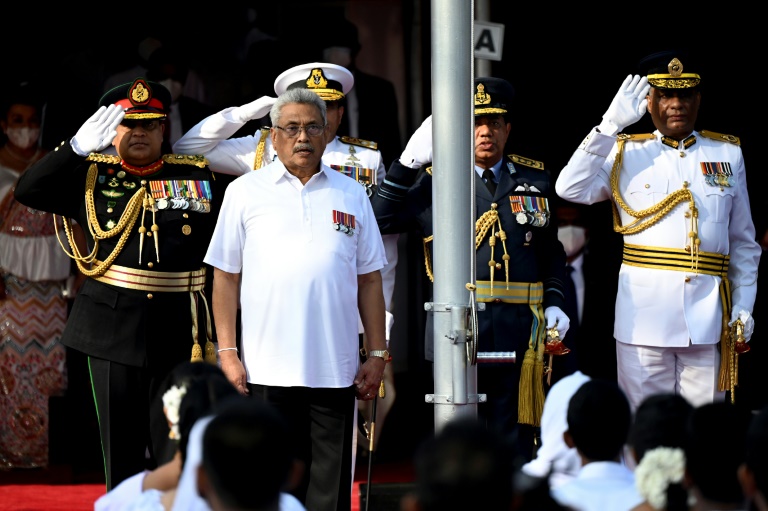
Sri Lanka marked its independence day on Friday with an appeal to its diaspora to send money home to overcome the island’s worsening economic crisis and a pledge to protect foreign investments.

President Gotabaya Rajapaksa urged millions of Sri Lankans abroad to invest their savings in their home country, which is facing its worst debt crisis since independence from Britain 74 years ago.

“Expatriate Sri Lankans who provide foreign exchange to the country are a major resource to us,” Rajapaksa said.

“I invite all expatriate Sri Lankans to invest in their homeland.”

Colombo’s foreign reserves, which stood at $7.5 billion when Rajapaksa took office in November 2019, have fallen by more than half, to $3.1 billion.

Worker remittances, Sri Lanka’s number one foreign currency source, fell nearly 60 percent in December. For 2021 as a whole, the figure dropped a record 22.7 percent, to $5.49 billion.

Tourism, another key source of income for the country, has been battered by the coronavirus pandemic.

The government imposed a broad import ban in March 2020 in a bid to save foreign currency, leading to shortages of food and fuel as well as raw materials needed for manufacturing and export-oriented industries.

Rajapaksa, who came to power two years ago pledging to “retake” all state enterprises either leased or partly sold to foreign companies by the previous administration, called for greater foreign involvement in Sri Lanka’s economy.

“Foreign investment is especially important for large-scale projects, industries requiring modern technological know-how and new ventures that open up global market opportunities for us,” he said.

He criticised “those who attempt to propagate incorrect public opinion against foreign investments, based on political motives”.

His own coalition cabinet is divided on a move to sell a stake in a state electricity utility to a US company.

Faced with record inflation, falling reserves and warnings from international rating agencies about Sri Lanka’s ability to service its $35 billion external debt, Rajapaksa’s finance minister brother Basil announced Wednesday that he had sought technical advice from the International Monetary Fund.

The IMF responded by saying it was ready to discuss “options” if the government asked for financial support.

“While the IMF has not received a request for financial support from Sri Lanka, the staff stands ready to discuss options if requested,” mission chief Masahiro Nozaki said in a written statement to AFP in Washington.

In an address to the nation ahead of a military parade, Rajapaksa made no reference to seeking IMF help, but said he was focused on finding both short- and long-term solutions and called for an “optimistic approach”.

Nicaragua court finds activists guilty of 'conspiracy'

A Nicaraguan court Thursday found two prominent opposition figures guilty of “conspiracy,” according to a human rights organization which condemned the trial as “null and void” for taking place behind closed doors.

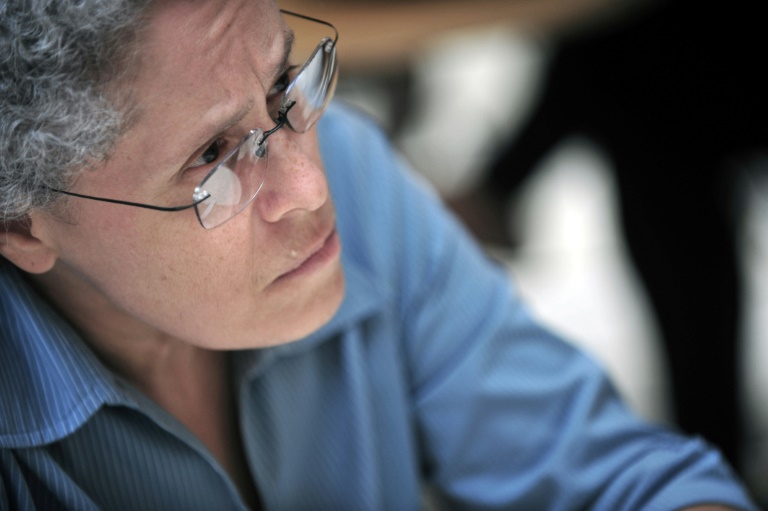
Former guerrilla Dora Maria Tellez and student leader Lesther Aleman were tried at El Chipote — one of the country’s most notorious prisons where dozens of activists detained in the run-up to last year’s election are being held.

The trial of the Tellez  — a former leftist guerrilla who fought alongside President Daniel Ortega during Nicaragua’s civil war — and Aleman took place behind closed doors, with only a sole family member of each in attendance.

“They were found guilty of forming an association of wrongdoers undermining national integrity,” the independent Nicaraguan Center for Human Rights said.

“The process was null and void because it violated the constitutional guarantees that stipulate that trials must be public and that the press must be able to attend,” it added.

It was not clear what the sentence was, but a member of the opposition Blue and White National Unity party told AFP that magistrates had asked for a 15-year jail term for the 66-year-old Tellez, a historian and one of the founders of the dissident Sandinista Renovation Movement.

Student leader Aleman, 24, rose to fame after publicly calling for Ortega’s resignation during a dialogue between the government and activists involved in 2018 protests.

“His only crime is to have spoken in the name of everyone in 2018, confronting Mr. Ortega with his crimes and demanding he leave office,” journalist Carlos Fernando Chamorro, speaking from exile in Costa Rica, said on Twitter.

Family of the dozens of activists held since last year have said the opposition figures are suffering from serious health issues, experiencing blackouts and loss of teeth.

Last month the United Nations human rights body urged Nicaragua — Central America’s poorest country — to free people who had been arbitrarily detained and to stop prosecutions and harassment of political opponents, journalists and human rights defenders.

UN demands Taliban provide info on two more missing women activists

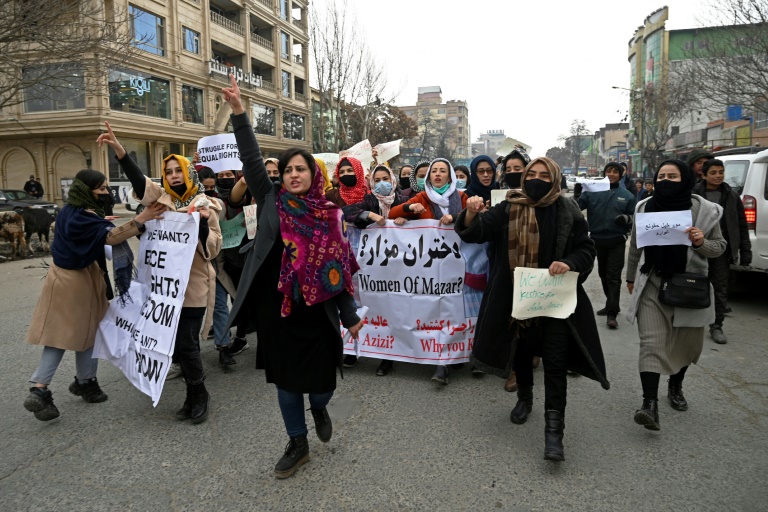
The United Nations has demanded the Taliban provide information on two more women activists allegedly detained by the group this week — bringing to four the number missing in Afghanistan this year.

Since their August return to power, the Taliban have cracked down on dissent by forcefully dispersing women’s rallies, detaining critics and beating local journalists covering protests.

The United Nations Assistance Mission in Afghanistan (UNAMA) said late Thursday it had sought “urgent information” on the reported detention of two more women activists by the Taliban in the capital Kabul this week.

“UN repeats its call for all ‘disappeared’ women activists & relatives to be released,” it said on Twitter.

US special envoy to Afghanistan Rina Amiri also called on the Taliban to respect women’s rights.

“If the Taliban seek legitimacy from the Afghan people & the world, they must respect Afghans’ human rights — especially for women,” she said on Twitter.

UNAMA did not reveal the names of the two women activists gone missing this week, but another rights advocate told AFP that Zahra Mohammadi and Mursal Ayar had been arrested by the Taliban.

“Zahra, a dentist, used to work in a clinic. She has been arrested,” the activist said, on condition of anonymity.

Ayar was arrested on Wednesday after a male colleague asked for her address so he could come to hand over her salary, the activist said.

“That’s how she was trapped. The Taliban found her and arrested her,” she said.

She said Ayar’s father had also been arrested, after mistakenly identifying Mohammadi’s father as the man detained in an earlier interview.

The latest detentions come less than a month after activists Tamana Zaryabi Paryani and Parwana Ibrahimkhel went missing after participating in a Kabul protest.

The UN High Commissioner for Human Rights has expressed concern for the two women and four of their relatives, who all remain missing.

The Taliban have denied any knowledge of their whereabouts and say they are investigating the matter.

The hardline Islamists have promised a softer version of the harsh rule that characterised their first stint in power from 1996 to 2001.

But the new regime has been swift to bar women from most government jobs and close most girls’ secondary schools.

Hong Kong activist arrested ahead of planned Olympics protest

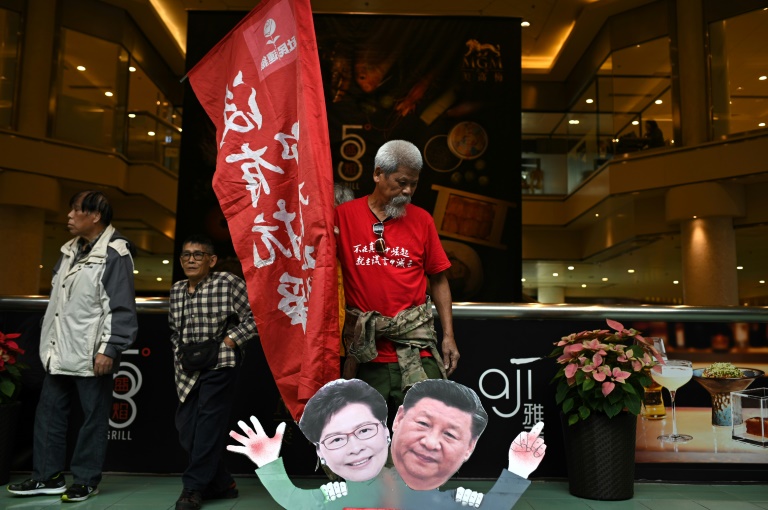
A veteran Hong Kong activist was arrested for “incitement to subversion” on Friday ahead of a planned protest against Beijing’s hosting of the Winter Olympics, hours before the opening ceremony was due to kick off.

China has embarked on a crackdown in Hong Kong following massive and at times violent pro-democracy protests, imposing a sweeping national security law that criminalised much dissent.

Wen Wei Po, a newspaper that answers to Beijing’s Liaison Office in Hong Kong, said Koo Sze-yiu was arrested on Friday morning by national security police.

A senior police source confirmed to AFP that Koo had been detained for “incitement to subversion” and that four others had been taken in to assist with their investigation.  

The arrest comes days after Hong Kong journalists received a media invitation bearing Koo’s name saying he was planning to protest on Friday outside Beijing’s Liaison Office in Hong Kong ahead of the start of the Olympics. 

“Many political activists and Hong Kong citizens have been jailed and cannot spend Lunar New Year with their families because of abuses of Hong Kong’s national security law,” read the invitation, dated January 31.

“The central government is only concerned with hosting the Winter Olympics to whitewash the situation, and does not care about miscarriages of justice in Hong Kong,” it said.

Koo could not be reached for comment to confirm if he had organised a protest, which was slated to be held at 10 am Friday morning.

The septuagenarian activist, who is terminally ill with cancer, has been jailed multiple times — most notably in 2013 for burning China’s flag to protest against Beijing’s treatment of dissidents on the Chinese mainland.

Protest has been all but outlawed in Hong Kong since the 2019 unrest.

The national security law, enacted in 2020, criminalises “secession, subversion, terrorism and foreign collusion”, and carries a maximum sentence of life in prison.

Hong Kong police have arrested more than 160 people under the law, with about 100 formally charged. Most are denied bail until trial.

The city has also kept strict anti-coronavirus measures that ban gatherings of more than four people for the past two years.

The Olympics opening ceremony kicks off at 8 pm (1200 GMT).

Beijing’s hosting of the global sporting event has largely been overshadowed by a Western diplomatic boycott over China’s human rights record.

Xi to meet Putin as tensions rise with West

China’s President Xi Jinping is poised for his first face-to-face meeting with a world leader in nearly two years on Friday when he hosts Russia’s Vladimir Putin, with the pair drawing closer as tensions grow with the West.

Xi has not left China since January 2020, when the country was grappling with its initial Covid-19 outbreak and locked down the central city of Wuhan where the virus was first detected.

He is now readying to meet more than 20 leaders as Beijing kicks off a Winter Olympics it hopes will be a soft-power triumph and shift focus away from a build-up blighted by a diplomatic boycott and Covid fears.

Putin’s jet touched down in the Chinese capital on Friday afternoon, state broadcaster CCTV reported.

He will meet with Xi before their nations release a joint statement reflecting their “common views” on security and other issues, a top Kremlin adviser said at a Wednesday press briefing.

The two strongmen will then attend the Olympic opening ceremony in the evening.

Spiralling tensions with the West have bolstered ties between the world’s largest nation and its most populous, and Putin was the first foreign leader to confirm his presence at the Olympics.

“I have known President Xi Jinping for a long time,” CCTV quoted Putin as saying in a report on Friday. 

“As good friends and politicians who share many common views on solving world problems, we have always maintained close communication.”

– Article by Putin –

China’s state-run Xinhua news agency also carried an article from Putin on Thursday in which the Russian leader painted a portrait of two neighbours with increasingly shared global goals.

“Foreign policy coordination between Russia and China is based on close and coinciding approaches to solving global and regional issues,” Putin wrote.

He also hit out at US-led Western diplomatic boycotts of the Beijing Olympics that were sparked by China’s human rights record. 

“Sadly, attempts by a number of countries to politicise sports for their selfish interests have recently intensified,” Putin wrote, calling such moves “fundamentally wrong”.

For its part, China has become more vocal in backing Russia in its dispute with NATO powers over Ukraine.

Last week, China’s foreign minister Wang Yi called Russia’s security concerns “legitimate”, saying they should be “taken seriously and addressed”.

Moscow is looking for support after its deployment of 100,000 troops near its border with Ukraine prompted Western nations to warn of an invasion and threaten “severe consequences” in response to any Russian attack.

China enjoyed plentiful support from the Soviet Union — the precursor to the modern Russian state — after the establishment of Communist rule in 1949, but the two socialist powers later fell out over ideological differences.

Relations got back on track as the Cold War ended in the 1990s, and the pair have pursued a strategic partnership in recent years that has seen them work closely on trade, military and geopolitical issues.

Those bonds have strengthened further during the Xi Jinping era, at a time when Russia and China find themselves increasingly at odds with Western powers.

Other leaders set to enjoy Xi’s hospitality during the Games include Egypt’s Abdel Fattah al-Sisi, Saudi Arabia’s Mohammed bin Salman, Kazakhstan’s Kassym-Jomart Tokayev and Poland’s Andrzej Duda.

In total around 21 world leaders are expected to attend the Games.

A majority of those leaders rule over non-democratic regimes, according to the Economist Intelligence Unit’s Democracy Index, with 12 labelled either “authoritarian” or a “hybrid regime”.
Sailors stranded off France's La Reunion by Cyclone Batsirai saved

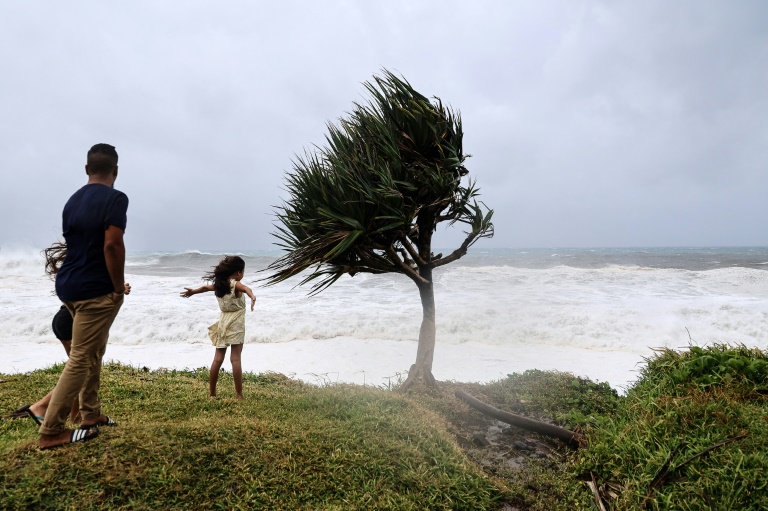
The crew of an oil tanker stranded near the coast of the Indian Ocean island of La Reunion after Cyclone Batsirai swept the region were rescued and brought ashore Friday, officials said.

“The perilous, very technical and unprecedented operation to rescue” the 11 Indian and Bangladeshi sailors on the Mauritian vessel TrestaStar was completed in “very unfavourable weather conditions”, the French territory’s prefecture said in a statement.

The cyclone is now heading away from the island, Emmanuel Cloppet, regional head of national weather agency Meteo-France, said Thursday, after it caused power cuts, felled trees and left several injured but with no major damage reported.

But “we are facing the worst weather conditions since the start of the episode”, he warned, with winds of up to 150 kilometres (90 miles) an hour still battering the island.

The French minister in charge of overseas territories, Sebastien Lecornu, said the tanker was travelling empty and dismissed any risk of serious maritime pollution.

The French island was placed on red alert as the cyclone approached Wednesday, forcing its 860,000 inhabitants to barricade themselves indoors, with the eye of the storm passing nearly 200 kilometres (120 miles) from the coast early Thursday.

But that alert was lifted Friday at 9 am (0500 GMT), authorities said, while still expressing caution about the dangers posed by the cyclone.

The storm was then 250 kilometres (155 miles) northwest of the island, moving at a speed of 12 kilometres per hour.

– Flooding risks –

The lifting of the alert “does not mean a return to normal”, said the island’s top official Jacques Billant, calling on residents to remain vigilant as several rivers remained at risk of flooding due to heavy rain.

“The consequences of the passage of the cyclone will still present dangers for the population.”

He said travel was still discouraged as emergency services worked to clear roads, and restore electricity, phone networks and water supplies.

Access to the island’s main coastal road, which connects the capital Saint-Denis to the island’s other cities, remains cut off.

Earlier Billant had reported 12 people injured onshore by the storm, including 10 who had carbon monoxide poisoning, a firefighter who was electrocuted attending a roof fire and another who was injured after a fall from a roof.

Many across the island suffered water and power cuts.

The island is regularly threatened by tropical cyclones. One caused heavy flooding in 2018, while the last devastating cyclone to hit the island came in 2007, killing two people and causing extensive damage. 

After passing La Reunion, Batsirai is set to touch the east coast of Madagascar in southern Africa by the end of the week, Meteo-France forecast, potentially at the level of an “intense tropical cyclone” which could cause a “major” impact for the region.

Other tropical storms and torrential rains have wreaked havoc in southern Africa in recent days, leaving a trail of destruction in their wake.

Tropical Storm Ana claimed the lives of 86 people in Mozambique, Madagascar and Malawi last week.

str-burs/ah/cb/jfx/leg

UN demands Taliban provide info on two more missing women activists

The United Nations has demanded the Taliban provide information on two more women activists allegedly detained by the group this week — bringing to four the number missing this year.

Since returning to power in August the Taliban have cracked down on dissent by forcefully dispersing women’s rallies, detaining critics and beating local journalists covering protests.

The United Nations Assistance Mission in Afghanistan (UNAMA) said late on Thursday it had sought “urgent information” on the reported detentions of two more women activists by the Taliban in Kabul this week.

“UN repeats its call for all ‘disappeared’ women activists & relatives to be released,” it said on Twitter.

US special envoy to Afghanistan Rina Amiri also called on the Taliban to respect women’s rights.

“If the Taliban seek legitimacy from the Afghan people & the world, they must respect Afghans’ human rights — especially for women,” she said on Twitter. 

UNAMA did not reveal the names of the two women activists missing this week, but another rights advocate told AFP that Zahra Mohammadi and Mursal Ayar had been arrested by the Taliban.

“Zahra, a dentist, used to work in a clinic. She has been arrested along with her father,” the activist said, asking AFP not to reveal her name.

Ayar was arrested on Wednesday after a male colleague asked her for her address so he could come to hand over her salary, the activist said.

“That’s how she was trapped. The Taliban found her and arrested her.”

The latest detentions come less than a month after a pair of women activists — Tamana Zaryabi Paryani and Parwana Ibrahimkhel — went missing after participating in a Kabul protest.

The UN High Commissioner for Human Rights has expressed concern for them and four of their relatives, who all remain missing.

The Taliban have denied any knowledge of their whereabouts and say they are investigating the matter.

The Taliban have promised a softer version of the harsh rule that characterised their first stint in power from 1996 until 2001.

But the new regime has been swift to bar women from most government jobs and close the majority of girls’ secondary schools.

Beijing Olympics set to open under cloud of Covid, rights fears

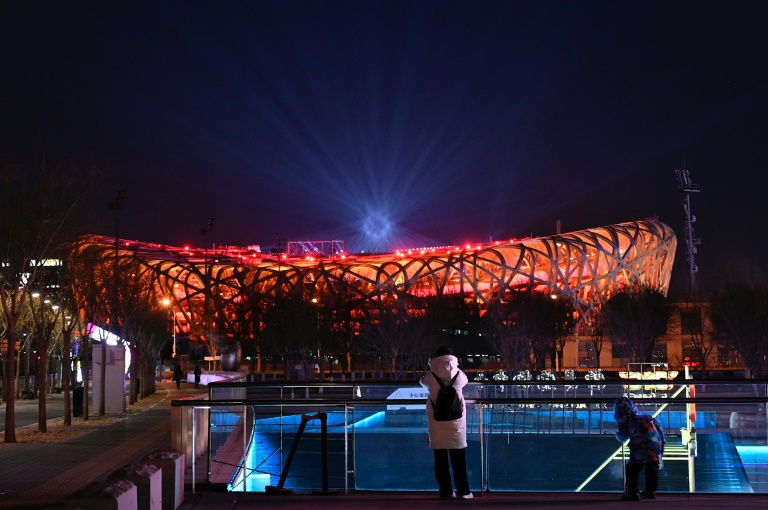
A Winter Olympics overshadowed by rights concerns and taking place inside a strict Covid-secure bubble will officially begin in Beijing on Friday with an opening ceremony at the “Bird’s Nest” stadium.

The distinctive lattice-shaped arena took centre stage at the 2008 Games — seen as China’s coming-out party to the world — and will do so again as Beijing becomes the first city to host both a Summer and Winter Olympics.

Friday’s opening ceremony starts at 8:00pm (1200 GMT) and will be attended by President Xi Jinping, under whose rule China has become a much more belligerent proposition in global affairs compared to 14 years ago.

Xi, who will announce the Games are officially open, will be joined by leaders including his Russian counterpart Vladimir Putin but the United States, Britain, Canada and Australia are among countries staging a diplomatic boycott over China’s human rights record, particularly the fate of the Muslim Uyghur minority in Xinjiang.

Other countries cited the coronavirus pandemic for not sending officials.

Their athletes will still compete at the Games, which run until February 20 and are taking place inside a vast “closed loop” designed to thwart the virus.

Some spectators will be present at the opening ceremony but it is unclear how many and, like sports events at the Games, tickets were not sold to the general public because of the pandemic.

World Health Organization head Tedros Adhanom Ghebreyesus and United Nations Secretary-General Antonio Guterres will be among leaders of global institutions at the ceremony.

The show is the mastermind of acclaimed Chinese film director Zhang Yimou, who was behind the 2008 extravaganza.

Zhang has promised a “totally innovative” ceremony but conceded that the pandemic and freezing weather will limit its scale compared to the Summer Games, when 15,000 performers took part in a lavish gala featuring opera singers, acrobats and drummers.

This time there will be about 3,000 performers and themes will include “environmental protection and low carbon emission”, Zhang previously told state media.

But China’s assertion that these will be a “green Games” has been challenged by some experts because they are taking place in one of the driest places in the country and on almost entirely man-made snow. 

– ‘Not well suited’ –

There are other concerns, including warnings from some Western nations about surveillance of their athletes and what will happen to them if they make anti-China comments or other displays of protest against local authorities.

Gus Kenworthy, a British freestyle skier, said he would not be silenced and called China “not well suited” to be hosts.

“In my opinion I don’t think any country should be allowed to host the Games if they have appalling human rights stances,” he told the BBC.

On Thursday’s eve of the Olympics, about 500 Tibetans marched outside the International Olympic Committee headquarters in Lausanne, Switzerland.

They held banners reading “Boycott Beijing Winter Olympics”, “Stop human rights violations in Tibet” and “Games of shame”.

There were also small-scale demonstrations in Los Angeles and San Francisco.

Tibet has alternated over the centuries between independence and control by China, which says it “peacefully liberated” the rugged plateau in 1951 and brought infrastructure and education to the previously underdeveloped region.

But many exiled Tibetans accuse China’s ruling Communist Party of religious repression, torture and eroding their culture.

– Watching from afar –

Concerns about Covid loom large at these Games. The nearly 3,000 athletes and tens of thousands of support staff, volunteers and media have been cut off from Beijing’s general population.

China, where the virus emerged in late 2019, has pursued a no-nonsense zero-Covid policy nationwide and has adopted the same approach to the Games, with everyone cocooned inside the bubble having daily tests and required to wear a mask at all times.

They cannot leave the “closed loop” until the Games are over.

There have been more than 300 Covid cases in the bubble, among them an unknown number of athletes.

Germany said Thursday six members of its team had tested positive on arrival in Beijing, without saying if those concerned were athletes or support staff.

Unlike the huge celebration that greeted the 2008 opening ceremony, locals this time will have to enjoy it on television.

Zhang Tao, a 43-year-old property developer, said he hoped the Games would have meaning beyond sport.

“I really hope the Olympics can sweep away the gloom of Covid,” he told AFP.

Close Bitnami banner
Bitnami