World

North Korean Olympics message may signal halt to missile tests: analysts

North Korea sent “warm congratulations” Friday to ally China ahead of the opening of the Beijing Winter Olympics, a message analysts said likely signals it will stop test-firing missiles during the event.

Pyongyang conducted an unprecedented seven weapons tests in January, including launching its most powerful missile since 2017 as it hinted it could restart long-range and nuclear testing.

The sabre-rattling raised tensions on the Korean peninsula and forced Beijing — Pyongyang’s main diplomatic ally and economic benefactor — to block a US push for new UN sanctions over the barrage.

North Korea is barred from competing at the Beijing Games, which have been clouded by human rights and coronavirus concerns and subject to a diplomatic boycott by Washington and its allies.

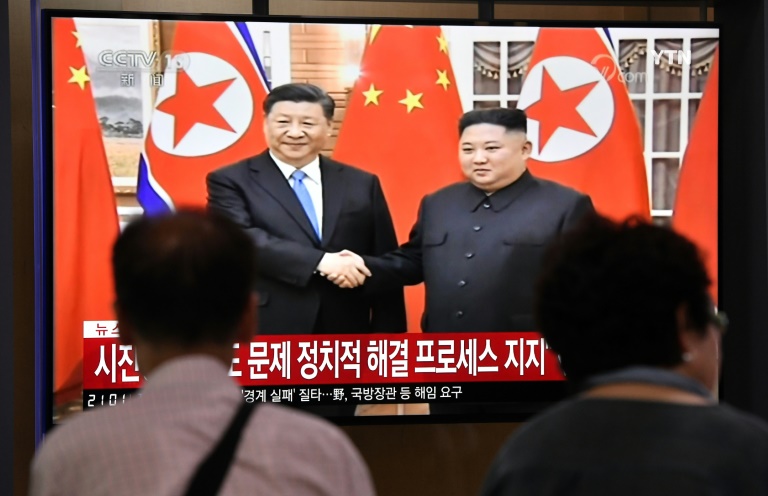
On Friday, state media in North Korea reported leader Kim Jong Un “warmly congratulated” China’s President Xi Jinping on successfully opening the Beijing Winter Olympics “despite the worldwide health crisis and unprecedented severe circumstances”.

“The Olympic torch flaring up in Beijing clearly proves that no difficulty and challenge can ever prevent the Chinese people from vigorously advancing,” Kim’s message said, according to state-run KCNA.

North Korea’s string of sanctions-busting weapons tests in January would have made Beijing “very uncomfortable”, Cheong Seong-chang of the Center for North Korea Studies at Sejong Institute told AFP.

“But as Kim Jong Un sent a congratulatory message to Xi Jinping today, China can now expect that Pyongyang will refrain from weapons tests during the Olympics,” he said.

It is “highly unlikely” Pyongyang would “annoy” Beijing by test-firing a missile during the Olympics, said Yang Moo-jin, a professor at the University of North Korean Studies.

“China clearly doesn’t want any military tension during the Games. Also, the UN has urged all countries to observe a truce during the Olympics — which adds another layer of pressure,” he said.

– IOC suspension –

North Korea stayed away from last year’s pandemic-delayed Tokyo Olympics, refusing to send its athletes over Covid-19 concerns.

The International Olympic Committee punished the no-show by suspending it from competing in the Beijing Winter Games.

Despite being barred, North Korea has depicted its absence as the result of the pandemic and “hostile forces”.

The IOC said in September 2021, when announcing the punishment, that Pyongyang had rejected all coronavirus safety proposals — including the provision of vaccines — ahead of the Tokyo Olympics.

North Korea imposed a rigid Covid-19 blockade — among the strictest in the world — in the early days of the pandemic and has barely eased it since.

The country’s absence from Beijing marks a huge shift from the 2018 Winter Olympics in South Korea, where it had the attention of the world.

Leader Kim Jong Un’s sister attended the Pyeongchang Games as his envoy in a blaze of publicity, and South Korean President Moon Jae-in seized the opportunity to broker talks between Pyongyang and Washington.

But negotiations between Kim and then US president Donald Trump collapsed in 2019 and have languished ever since, as Pyongyang doubles down on efforts to modernise its military.
Xi to meet Putin as tensions rise with West

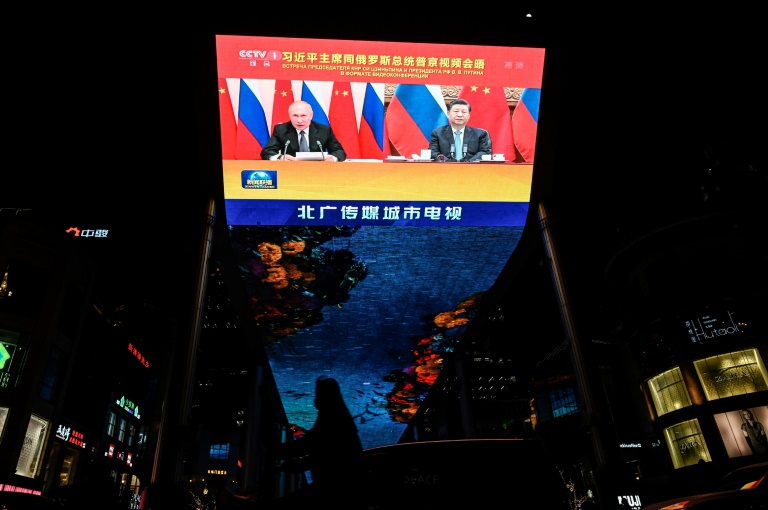
China’s President Xi Jinping is poised for his first face-to-face meeting with a world leader in nearly two years on Friday when he hosts Russia’s Vladimir Putin, with the pair drawing closer as tensions grow with the West.

Xi has not left China since January 2020, when the country was grappling with its initial Covid-19 outbreak and locked down the central city of Wuhan where the virus was first detected.

He is now readying to meet more than 20 leaders as Beijing kicks off a Winter Olympics it hopes will be a soft-power triumph and shift focus away from a build-up blighted by a diplomatic boycott and Covid fears.

Xi and Putin will meet in the Chinese capital before their nations release a joint statement reflecting their “common views” on security and other issues, a top Kremlin adviser said at a Wednesday press briefing.

The two strongmen will then attend the Olympic opening ceremony on Friday evening.

Spiralling tensions with the West have bolstered ties between the world’s largest nation and its most populous, and Putin was the first foreign leader to confirm his presence at Friday’s opening ceremony.

He hailed Russia’s “model” relations with Beijing in a December phone call with Xi, calling his Chinese counterpart a “dear friend”.

– Article by Putin –

China’s state-run Xinhua news agency carried an article from Putin on Thursday in which the Russian leader painted a portrait of two neighbours with increasingly shared global goals. 

“Foreign policy coordination between Russia and China is based on close and coinciding approaches to solving global and regional issues,” Putin wrote.

He also hit out at US-led western diplomatic boycotts of the Beijing Olympics that were sparked by China’s human rights record. 

“Sadly, attempts by a number of countries to politicise sports for their selfish interests have recently intensified,” Putin wrote, calling such moves “fundamentally wrong”.

For its part, China has become more vocal in backing Russia in its dispute with NATO powers over Ukraine.

Last week, China’s foreign minister Wang Yi called Russia’s security concerns “legitimate”, saying they should be “taken seriously and addressed”.

Moscow is looking for support after its deployment of 100,000 troops near its border with Ukraine prompted Western nations to warn of an invasion and threaten “severe consequences” in response to any Russian attack.

China enjoyed plentiful support from the Soviet Union — the precursor to the modern Russian state — after the establishment of Communist rule in 1949, but the two socialist powers later fell out over ideological differences.

Relations got back on track as the Cold War ended in the 1990s, and the pair have pursued a strategic partnership in recent years that has seen them work closely on trade, military and geopolitical issues.

Those bonds have strengthened further during the Xi Jinping era at a time when Russia and China find themselves increasingly at odds with western powers.

Other leaders set to enjoy Xi’s hospitality during the Games include Egypt’s Abdel Fattah al-Sisi, Saudi Arabia’s Mohammed bin Salman, Kazakhstan’s Kassym-Jomart Tokayev and Poland’s Andrzej Duda.

In total around 21 world leaders are expected to attend the Games.

A majority of those leaders rule over non-democratic regimes, according to the Economist Intelligence Unit’s Democracy Index, with 12 labelled either “authoritarian” or a “hybrid regime”.

Rotterdam says no decision on dismantling bridge for Bezos superyacht

The Dutch port city of Rotterdam has not received a request for a permit to temporarily dismantle an historic bridge to allow a superyacht built for Amazon founder Jeff Bezos to pass, local media reported Thursday.

The city’s mayor denied any decision had been made, a day after a municipality spokeswoman told AFP that officials had green-lighted the shipbuilder’s request to remove the central section of the iconic Koningshaven Bridge, sparking widespread criticism on social media.

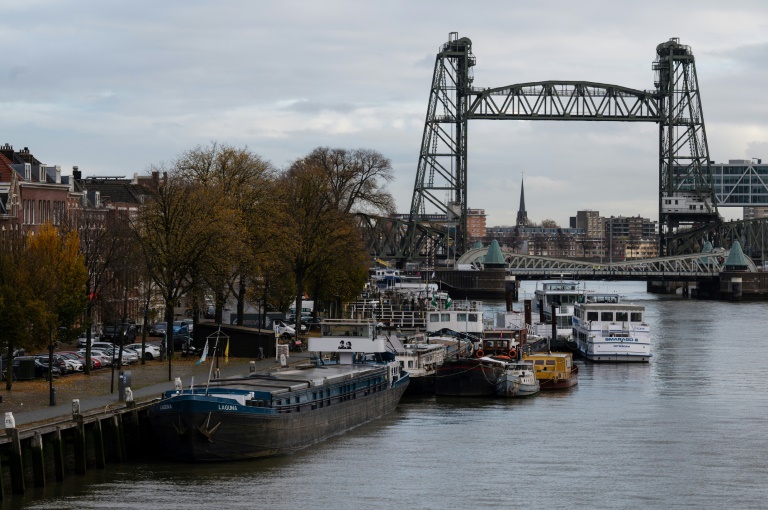
Bezos’s gigantic, 430-million-euro ($485 million) three-masted yacht — built in Alblasserdam near Rotterdam — is too big to pass under the bridge, which dates from 1878 and was rebuilt after being bombed by the Nazis in 1940 during World War II.

“I find the turmoil quite peculiar. No decision has yet been taken, not even an application for a permit,” Dutch newspaper Algemeen Dagblad quoted Mayor Ahmed Aboutaleb saying on Thursday.

The municipality will make its decision after a permit application is filed and the impact has been assessed, including if it can be done without damaging the bridge and whether Bezos will foot the bill, the mayor said.

“It’s about the facts. I want to know them first,” he told the daily.

His remarks in Colombia, where he is on a visit, were confirmed by his spokesperson to Dutch news agency ANP.

Initial comments suggesting the move had already been approved angered some in the Netherlands, as the local council promised after a major 2017 renovation that it would never again dismantle the bridge, known to Rotterdammers as De Hef.

Bezos, 57, is one of the world’s richest men after transforming online bookseller Amazon into a global shopping giant.

When not travelling by sea on superyachts, he can be found blasting into space on his Blue Origin capsule.

Rotterdam says no decision on dismantling bridge for Bezos superyacht

The Dutch port city of Rotterdam has not received a request for a permit to temporarily dismantle an historic bridge to allow a superyacht built for Amazon founder Jeff Bezos to pass, local media reported Thursday.

The city’s mayor denied any decision had been made, a day after a municipality spokeswoman told AFP that officials had green-lighted the shipbuilder’s request to remove the central section of the iconic Koningshaven Bridge, sparking widespread criticism on social media.

Bezos’s gigantic, 430-million-euro ($485 million) three-masted yacht — built in Alblasserdam near Rotterdam — is too big to pass under the bridge, which dates from 1878 and was rebuilt after being bombed by the Nazis in 1940 during World War II.

“I find the turmoil quite peculiar. No decision has yet been taken, not even an application for a permit,” Dutch newspaper Algemeen Dagblad quoted Mayor Ahmed Aboutaleb saying on Thursday.

The municipality will make its decision after a permit application is filed and the impact has been assessed, including if it can be done without damaging the bridge and whether Bezos will foot the bill, the mayor said.

“It’s about the facts. I want to know them first,” he told the daily.

His remarks in Colombia, where he is on a visit, were confirmed by his spokesperson to Dutch news agency ANP.

Initial comments suggesting the move had already been approved angered some in the Netherlands, as the local council promised after a major 2017 renovation that it would never again dismantle the bridge, known to Rotterdammers as De Hef.

Bezos, 57, is one of the world’s richest men after transforming online bookseller Amazon into a global shopping giant.

When not travelling by sea on superyachts, he can be found blasting into space on his Blue Origin capsule.

Morocco rescuers dig for boy trapped in well

Moroccans waited anxiously Thursday as authorities said a dramatic operation to rescue a young boy trapped in a deep well for over two days was nearing its end.

The five-year-old, named as Rayan, fell down the narrow 32-metre (100-foot) deep well on Tuesday evening in his home village near Bab Berred in the rural northern province of Chefchaouen, local media said.

“The child’s rescue is approaching,” government spokesman Mustapha Baitas said Thursday. “Our hearts are with the family, and we are praying that he will back with them as soon as possible.”

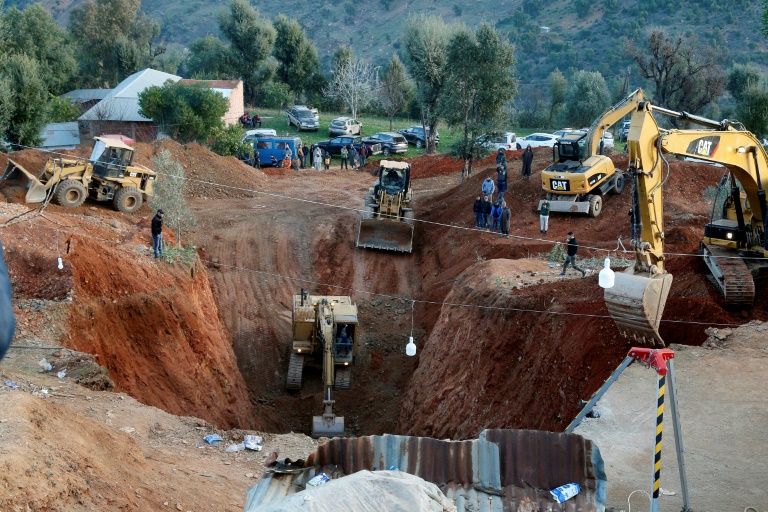
The shaft was too narrow for rescuers to reach the bottom, so heavy diggers were dispatched to dig a hole alongside it.

Relief operations intensified as darkness fell for a third night with the boy deep down in the well, with diggers clawing out dirt under floodlights.

Rescuers reported they had dug down some 24 meters, but that around six metres still remained to reach the child.

The MAP news agency said rescuers had been able to send him oxygen and water via pipes.

Rayan’s father told Le360 news website he had been repairing the well when the boy fell into it.

Lead rescuer Abdelhabi Temrani told Al Oula television that the diameter of the well was less than 45 centimetres.

Baitas said the nature of the soil meant it was too dangerous to try to widen the hole, meaning major excavations around it were the only solution.

The drama has sparked an outpouring of sympathy online, with the Arabic hashtag #SaveRayan going viral across the North African region, including in neighbouring Algeria.

Moroccan footballer and PSG star Achraf Hakimi mentioned the rescue efforts on social media, alongside emojis of a broken heart and hands together in prayer.

The boy’s fate has also attracted crowds of people to the site of the operation, putting pressure on rescuers operating in “difficult conditions”, Baitas said.

“We call on citizens to let the rescuers do their job and save this child,” he said.

Authorities have also prepared a helicopter to take the child to hospital once he is extracted, national news channel 2M said.

New 'highly virulent' HIV strain discovered in the Netherlands

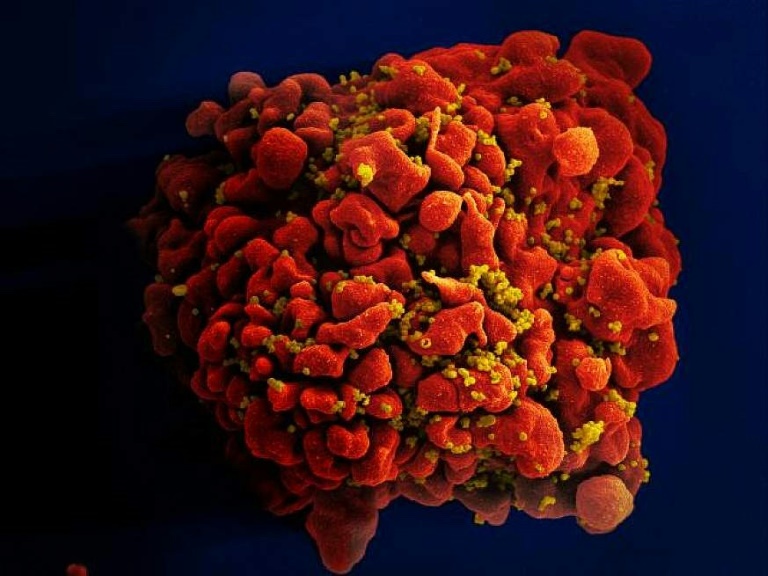
Oxford researchers announced Thursday the discovery of a highly virulent strain of HIV that has been lurking in the Netherlands for decades, but because of the effectiveness of modern treatments, is “no cause for alarm.”

Their analysis, published Thursday in the journal “Science,” showed that patients infected with what they call the “VB variant” had 3.5 to 5.5 times higher levels of the virus in their blood than those infected with other variants, as well as a more rapidly fading immune system.

However, the study also found that after starting treatment, individuals with the VB variant had similar immune system recovery and survival to individuals with other HIV variants.

“There’s no cause for alarm with this new viral variant,” said Oxford epidemiologist Chris Wymant, the lead author on the paper, in an interview with AFP.

The variant likely arose in the late 1980s and early 1990s in the Netherlands, according to the researchers, but began to decline around 2010.

Since modern interventions still seem to work on the variant, the research team believes that widespread HIV treatment in the Netherlands did not contribute to the virus’s evolution, and that early detection and treatment are paramount. 

“Our findings emphasize the importance of World Health Organization guidance that individuals at risk of acquiring HIV have access to regular testing to allow early diagnosis, followed by immediate treatment,” said co-author Christophe Fraser, also an Oxford researcher, in a press release announcing the findings.

The work also supports the theory that viruses can evolve to become more virulent, a widely-hypothesized idea for which few real-world examples have been found.

The Delta variant of the novel coronavirus was another recent example.

The discovery of the HIV variant should therefore “be a warning that we should never be overconfident about saying viruses will just evolve to become milder,” said Wymant to AFP.

In total, the team found 109 people infected with the VB variant, with only four living outside the Netherlands, but still in western Europe.

– 500 mutations –

The HIV virus is constantly evolving, so much so that each person infected has a slightly different version.

The VB variant, however, was found to have over 500 mutations.

“Finding a new variant is normal, but finding a new variant with unusual properties is not — especially one with increased virulence,” Wyman explained.

The research team first identified the VB variant in 17 HIV positive individuals by parsing a broad data set from the BEEHIVE project, a data collection and analysis initiative in Europe and Uganda.

Because 15 of the 17 were from the Netherlands, they further studied data from 6,700 HIV-positive Dutch individuals, identifying 92 others.

The earliest appearance of the VB variant in their data was found in someone diagnosed in 1992 who had an early version of the variant, and the most recent in 2014.

Other researchers have since found other individuals with the variant diagnosed after 2014.

Doctors usually measure HIV’s deterioration of the immune system by monitoring the decline of CD4 T-cells, which are targeted by the HIV virus and pivotal for protecting the body against infections.

In patients infected with the VB variant, CD4 decline occurred twice as fast compared to other variants, “placing them at risk of developing AIDS much more rapidly,” the researchers said. 

In addition to its increased impact on the immune system, the team also found the VB variant to be more highly transmissible.

They came to that conclusion after comparing the different versions of the VB variant drawn from infected patients.

The fact that they were so similar suggests that the virus passed rapidly to someone else before it could accumulate many mutations.

– ‘Critical’ to diagnose and treat early –

“Because the VB variant causes a more rapid decline in immune system strength, this makes it critical that individuals are diagnosed early and start treatment as soon as possible,” the press statement noted.

“This limits the amount of time HIV can damage an individual’s immune system and jeopardize their health,” added Fraser.

Fraser is also the principal investigator of the BEEHIVE project, which was launched in 2014 to gather data on how mutations in the HIV virus can lead to varying degrees of severity among patients.

Those differences have previously been thought to mostly relate to the strength of individuals’ own immune systems.

The researchers said they could not identify which genetic mutation in the VB variant caused its virulence, but they hope future studies will be able to.

Argentine police race to eradicate laced cocaine that killed 22

Argentine police on Thursday seized vast quantities of cocaine likely laced with opioids and made several arrests after 22 people died and dozens ended up in hospital poisoned in Buenos Aires.

Officials said the incident, which highlighted the dangers of illegal drug use, had been brought under control — but recent buyers of cocaine in and around the capital city were nevertheless urged to throw it away.

“It could have been a worse tragedy,” said provincial government official Carlos Bianco, had officials not seized “a large quantity” of cocaine after the mass hospitalization event and taken it off the streets.

Provincial health minister Nicolas Kreplak said 20,000 doses of the adulterated substance were confiscated from the area of Buenos Aires where it had been sold.

Health authorities issued an “epidemiological alert” Wednesday after a flurry of deaths in three poor, western suburbs of Buenos Aires among people who had taken what they thought was cocaine.

More than 80 were admitted to 10 hospitals, some in critical condition, and 20 remained on mechanical ventilation on Thursday.

Police arrested three members of a drug gang in the poor suburb of San Martin accused of having distributed the drug mix.

In front of the nearby Bocalandro Hospital, a mother waited for updates on her 28-year-old son.

“He’s a good son … but he’s addicted. I don’t know how to help him,” said Sandra, who only wished to give her first name for fear of repercussions, to AFP.

– Hoping for a ‘miracle’ –

Buenos Aires provincial security chief Sergio Berni said the lethal additive, still being analyzed, was likely an opioid as many of the patients had reacted well to treatment for opioid poisoning.

Beatriz Mercado, who lives in the suburb of Hurlingham, told AFP she had found her 31-year-old son lying on the kitchen floor in the dark.

“He was almost not breathing, his eyes were rolling back,” she said. She took him to the hospital, where he was put on life support.

“I hope for a miracle,” said Mercado.

Some of the victims, several of them men in their 30s and 40s, suffered violent convulsions and heart attacks.

The alarm was first raised when four people arrived at a hospital together, saying they had taken cocaine at the same event. All four died.

“We are desperate, we want to know why one person is dying after another here,” Maria Morales told AFP outside the hospital where her brother-in-law was on life support.

A friend who had taken cocaine at the same gathering is dead.

At a house in the precarious suburb of Tres de Febrero, where the drug was allegedly sold, police found packets of the substance similar to those described by the victims’ families.

– ‘No precedent’ –

Berni told the Telefe channel the as-yet unknown additive was “attacking the central nervous system” of users.

“Every dealer that buys cocaine cuts it. Some do it with non-toxic substances such as starch. Others put hallucinogens in it, and if there is no form of control, this kind of thing happens,” said Berni.

He said the adulteration was unlikely the result of gang warfare — a lab mix-up was the more probable cause.

San Martin public prosecutor Marcelo Lapargo said what happened was “absolutely exceptional” and there was “no precedent” in Argentina.

The priority, he added, was “to communicate so that those who are in possession of this poison know that they should not consume it.”

But Kreplak told the TN channel that three people already discharged from hospital “returned on Thursday because they started consuming again.”

For his part, Security Minister Anibal Fernandez, blamed “over-production and over-supply” of low-cost, low-quality drugs.

– Drug use rising –

Berni said that in Buenos Aires province, home to some 40 percent of the Argentine population of 45 million and with high poverty rates, about 250,000 doses of cocaine are sold daily.

Illegal drug use has been on the rise in Argentina. In the mid-1980s, half a ton of cocaine was seized every year — a decade later it was four times that, official data showed.

In 2017, a record 12.1 tons of cocaine were seized in the country, but in 2020, the number fell to about 2.7 tons as consumption dropped during the pandemic.

Row over 'machismo' in song by Brazil icon Chico Buarque

In 1966, the late bossa nova singer Nara Leao asked Brazilian music icon Chico Buarque to write her a song about a long-suffering woman waiting on her man.

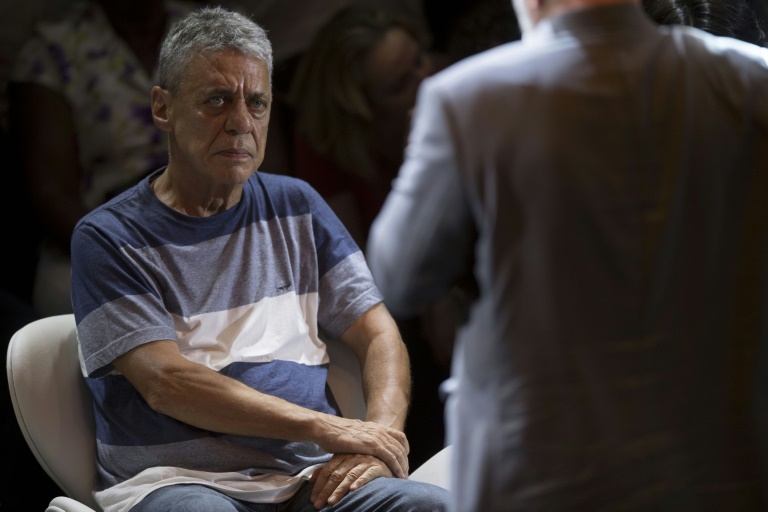
Fifty-six years later, the widely loved song, “Com Acucar, Com Afeto” (With Sugar and Affection), is at the center of a firestorm in Brazil after Buarque said he had decided to stop singing it over criticism of machismo in its lyrics.

“The feminists are right,” Buarque said in a documentary series on Leao’s life that debuted on January 7 on Brazilian streaming platform Globoplay.

“I’m always going to agree with the feminists,” added the singer, now a 77-year-old living legend of Brazilian popular music.

That triggered a tempest over “cancel culture,” political correctness and feminism in a Brazil that is deeply divided heading into elections in October that will decide whether polemical far-right President Jair Bolsonaro gets a new term.

“This has reached the height of craziness! All because of the Feminists. CRAZINESS!” read one typical reaction on Twitter.

“That took a long time, didn’t it?” went a typical reaction from the opposite camp.

“I always hated that shitty machismo-filled song. I think people who romanticize it are bizarre.”

The song is written from the perspective of a woman who has prepared her man’s “favorite sweet, with sugar and affection,” but is stuck waiting for him to come home while he is out carousing at bars and ogling other women.

Despite it all, when he finally gets home, she sings, “I’ll warm up your favorite dish… and open my arms for you.”

– ‘Suffering woman’s song’ –

“You have to understand that in those days, it never crossed our minds that that was a form of oppression, that women shouldn’t be treated like that,” said Buarque, an adored singer-songwriter known for his satin voice, blue-green eyes, heartthrob smile and a storied career spanning six decades.

“I’m not going to sing ‘With Sugar and Affection’ anymore, and if Nara were here, I’m sure she wouldn’t sing it either,” added Buarque, whose repertoire includes numerous songs written from a woman’s perspective.

Leao, who died in 1989 at age 47, is considered one of the founders of bossa nova, the silky smooth musical genre that evolved from the Brazilian samba in 1950s Rio de Janeiro.

Buarque said she had asked him for a “suffering woman’s song.” He complied, and went on to sing it himself, as well.

But some commentators pointed out Buarque had not sung the song live since at least the 1980s, dismissing the row that erupted in the media, on social networks and in cultural circles as a trumped-up controversy.

“We need to pay attention to the fact that this episode was used to rail against feminism and social movements, supposedly responsible for censoring artistic creations and impose political correctness,” columnist Amara Moira wrote on website BuzzFeed.

“None of that actually happened. But in these times of fake news and hair-trigger reactions, it hardly matters.”

Whether the song and surrounding controversy are ancient history or not, they gave rise to a new musical creation this week.

On Wednesday, singer Viviane Davoglio and songwriter Iavora Cappa posted a revised version of the song to YouTube, called “Com Ternura e Com Afeto” (With Tenderness and Affection).

In their version, it is the female protagonist who goes out for a night on the town, then comes home to her crying man — who warms up her favorite dish.

Costa Rica: Central America's green pin-up

Costa Rica, which elects a new president Sunday, is a small country thriving on ecotourism. Its neutrality, strong democracy and political stability have earned it the nickname of Central America’s Switzerland.

Here are four facts about the country of more than five million people:

– Beacon of peace –

Independent since 1821, Costa Rica is considered a model of democracy in Central America.

A short civil war in 1948 led to the abolition of the army and helped put in place the country’s political stability.

In the 1980s, when several other Central American countries were mired in civil wars, neutral Costa Rica acted as peace broker, earning then-president Oscar Arias Sanchez the Nobel Peace Prize in 1987.

It saw a political shift in 2014, when the two rightwing parties that had shared power since the 1960s — the PLN and PUSC — suffered an historic defeat as centrist Luis Guillermo Solis was elected president. 

Outgoing president Carlos Alvarado is from the same party.

On the international stage Costa Rica has fought for disarmament and for a total end to nuclear weapons and the strengthening of the non-proliferation regime.

Over recent years it has seen an increase in organised crime, largely due to the drug trafficking that has ravaged its neighbours.

– Green paradise –

With its stunning beaches on the Pacific and Caribbean coasts, its lush rainforests and imposing volcanoes, Costa Rica has become known as a green democracy and global leader for its environmental policies.

Nature reserves cover a quarter of Costa Rica’s 51,000 square kilometres (19,700 square miles), territory that hosts five percent of the world’s biodiversity.

It is one of the few countries to have banned blood sports and to have shunned exploitation by the mining and oil giants, which are the main source of income for many Latin American countries.

Over the last decade the environment has nevertheless come under strain from economic development, with a poor administration of protected areas, increasing air, ground and water pollution, and damage caused by the cultivation of pineapples.

Costa Rica is nevertheless the only tropical country which has managed to reverse deforestation, according to the World Bank.

It has invested heavily in clean energy, passing the threshold of generating electricity exclusively from renewable energy 300 days in one year, in 2017.

The nation has vowed to eliminate the use of fossil fuels by 2050.

– Decades of growth –

Costa Rica has seen 25 years of regular economic growth, thanks to the opening up to foreign investment and a gradual liberalisation of foreign trade.

Its main exports are bananas, pineapples and coffee. It is also the world’s biggest exporter of butterflies.

GDP per capita has tripled since 1960, but in 2020 it contracted by 4.1 percent due to the Covid pandemic. 

In 2021 growth was expected to reach 3.8 percent, according to the World Bank.

The poverty rate that year rose to 23 percent, according to official statistics.

Costa Rica has a top-notch social security system and has invested heavily in education.

It is ranked 62nd out of 189 countries on the UN’s Human Development Index.

The tourism sector represents eight percent of GDP, but was hammered by the pandemic.

A member of the OECD since 2021, the country has been trying to attract digital nomads to boost its economy.

– Land of asylum –

More than 100,000 Nicaraguans, fleeing the violent crackdown on anti-government protests, have taken refuge in Costa Rica.

A conservative, religious country, but with a long tradition of opening its arms to asylum seekers, Costa Rica has taken in hundreds of lesbians, gays, bisexuals and transgender people who were persecuted in their home countries in Central America.

Ex-heavyweights resurrected in Costa Rica polls, but election still unclear

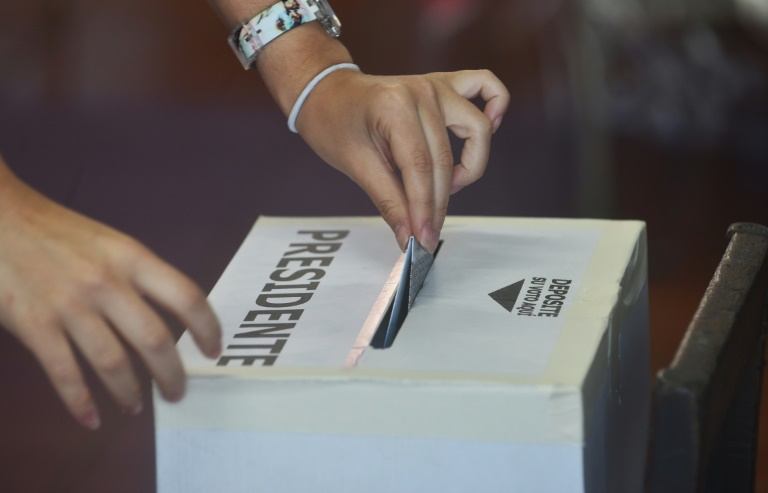
There is a feeling of uncertainty hanging over one of Latin America’s most stable democracies as Costa Rica heads to the polls on Sunday with a crowded presidential field and no clear favorite.

Often referred to as the region’s “happiest” country, Costa Rica is nonetheless grappling with a growing economic crisis and the ruling Citizen’s Action Party (PAC) is set for a bruising defeat.

The economy has tanked under the progressive program of President Carlos Alvarado Quesada and the PAC candidate, former economy minister Welmer Ramos, seems to be paying the price for sky-high anti-government feeling, polling just 0.3 percent.

“The ruling party is completely weakened and has no chance” after two successive terms of office, said political analyst Eugenia Aguirre.

“The presidential unpopularity figure of 72 percent is the highest since the number was first recorded in 2013,” she added.

It means the country’s traditional political heavyweights — the centrist National Liberation Party (PLN) and the right-wing Social Christian Unity Party (PUSC) — could return to the fore.

According to one poll published this month, former president Jose Maria Figueres (1994-98) of the PLN leads with just over 17 percent, while PUSC’s Lineth Saborio is on just under 13 percent.

Until PAC’s Otton Solis reached the second round run-off in 2006, the PLN and PUSC had enjoyed decades of a near political duopoly.

To win outright in Sunday’s first round, a candidate needs 40 percent of the vote, otherwise there will be a run-off on April 3 between the top two.

Costa Rica is known for its eco-tourism and green policies: its energy grid is 100 percent run on renewable sources.

Unlike many of its volatile neighbors, Costa Rica has no army, has had no armed conflicts since 1948 and no dictator since 1919.

But the worsening economic situation has hit confidence in the political class. And with 25 presidential candidates, more than 30 percent of the 3.5 million voters are undecided.

Despite the country’s stable reputation, voters under 40 have only known “periods in which not only problems have not been resolved, but they have worsened,” university student Edgardo Soto, who says he does not know who to vote for, told AFP.

Unemployment has been steadily rising for more than a decade and sat at 14.4 percent in 2021.

Poverty reached 23 percent in 2021 with debt now a staggering 70 percent of GDP.

“If someone expects to find a bed of roses, that won’t be the case with this government,” Saborio, 61, told AFP.

“Costa Rica is in a moment of social, economic and political crisis.”

– Pent-up frustrations –

Apathy and abstentionism have always been issues in Costa Rica’s elections. In 2018 the abstention rate was over 34 percent.

With so many undecided, Costa Rica’s opinion polls can be notoriously poor reflections of what will happen in an election.

In 2018, Alvarado Quesada was running sixth with 5.6 percent in polls but ended up beating evangelical Christian singer Fabricio Alvarado Munoz by 20 points in the run-off. Quesada cannot stand for re-election.

Alvarado Munoz, of the right-wing New Republic Party (PNR), was third in this month’s poll with a little over 10 percent.

He commands loyal support from the Christian community, which makes up around 20 percent of Costa Rica’s five million population.

In fourth is economist Rodrigo Chaves of the newly formed centrist Social Democratic Progress Party, on eight percent, with the top left-wing candidate Jose Maria Villalta of the Broad Front on 7.5 percent. 

Figueres, 67, says the crowded field “is a reflection of this whole frustration that has built up.”

“If there are 25 options it is because the parties are not understanding the needs of a society that is changing before their eyes.”

Not everyone is feeling blue ahead of the poll.

“I understand why the people are distrustful … they have been cheated for years. But this time there is more hope,” said Chaves.

Close Bitnami banner
Bitnami