World

Mexican kayaker on mission to clean up floating gardens

As dawn breaks over Mexico City’s floating gardens, Omar Menchaca paddles his kayak through a maze of canals collecting garbage left by visitors to one of the last vestiges of the ancient Aztec capital.

In the silence of the early morning, before the hordes of tourists arrive, the 66-year-old retiree fishes plastic bottles and other debris from the waters of Xochimilco.

“I came here to train for my competitions,” says the former athletics champion.

“Over time, unfortunately, I started noticing that these canals were full of garbage.”

As his single-seater kayak glides by, herons and pelicans take flight in the morning mist. 

In the distance, the Popocatepetl volcano, Mexico’s second highest summit, rises more than 5,400 meters (17,700 feet) above sea level.

Menchaca seems to be far from the network of congested roads that serve Mexico City and its nine million inhabitants.

In fact, “the ring road is only 600 meters away,” he says with a smile.

Menchaca regularly puts down his paddle and uses his bare hands to pick up garbage floating on the surface of the water amid aquatic flowers.

Xochimilco is a magnet for tourists who ride colorful gondolas through its network of canals and artificial islands created centuries ago by the area’s indigenous peoples.

On weekends in particular, couples, families and groups of friends come to eat, drink and dance to the sound of mariachi music.

The reserve is home to endemic species including the critically endangered axolotl, a salamander-like amphibian.

Cleaning up the waste left by visitors is a constant battle for Menchaca, who offers tours during which he recounts the history of the UNESCO World Heritage Site.

He likes nothing more than to see children copy him by collecting waste.

“Xochimilco is visited by around 6,000 people on weekends. Unfortunately, these people don’t take care of the place,” he says.

Conservationists also worry about the impact of development encroaching on the area, which is listed as a Wetlands of International Importance under an intergovernmental conservation treaty.

– ‘If we do nothing’ –

Menchaca curses when sees boats equipped with outboard motors.

“The canals are not very deep, barely half a meter,” he says.

“A boat with an engine that carries up to 40 people causes noise and pollutes the wetlands with oil and gasoline.”

At midday, Menchaca returns to the pier from which he set off through a vast canal with a breathtaking view of Mount Ajusco, which rises to some 3,900 meters within the city limits.

His kayak is overflowing with garbage. 

On the way he greets a man shoveling mud from the canal to use as a natural fertilizer.

“The people at the pier should pick up all the garbage and not Don Omar,” says the 69-year-old, Noe Coquis Salcedo.

Back on dry land, Menchaca deposes of the debris in a dumpster near the parking lot.

He believes his efforts make a small difference helping to preserve the place for future generations, in addition to the work of the city authorities who say they are “constantly” maintaining the canals.

“The canals are paths,” says Menchaca, enjoying a beer and enchilada in the January sunshine after his hours of physical exercise. 

“That’s why when I see this garbage, I try to collect it so that whoever passes afterward can enjoy a clean path,” he adds.

Nearby young people in swimsuits dive from the top of a gondola moored at the pier.

“If we do nothing for our planet there will come a time when…” Menchaca says before pausing, his hands outstretched like a gesture of helplessness.

“There won’t be much left for us to enjoy,” he concludes.

Moscow to shut down Deutsche Welle bureau in Russia

Russia said Thursday it is closing the Moscow bureau of German broadcaster Deutsche Welle and revoking staff accreditations in Russia, in response to Berlin’s ban on the German-language channel of Russian state TV network RT. 

Deutsche Welle called the decision “absurd” and a “complete overreaction”. 

The German government said the move was unacceptable and had “no basis of comparison whatsoever” with Berlin’s ruling on RT. 

“I urgently appeal to the Russian side not to abuse RT’s licensing problems for a political reaction,” Germany’s Culture Minister Claudia Roth said. 

The announcement comes with tensions mounting between Russia and the West, particularly over fears of a Russian invasion of Europe’s ally Ukraine. 

The closure also highlights the Kremlin’s increasingly hostile position towards foreign media in the wake of several high-profile expulsions of prominent foreign journalists. 

The Russian foreign ministry said in a statement Thursday it will also “terminate the satellite and other broadcasting (output) of Deutsche Welle” on Russian territory.

It added that it was initiating the process of designating the German media a “foreign agent” and said that further reciprocal measures will be announced in the future.

Deutsche Welle — a German state-owned broadcaster — has services in 30 languages, including Russian. 

The moves comes after Germany’s broadcasting regulator on Wednesday announced it was banning the transmission of the channel “RT DE” over the lack of a broadcasting licence. 

– ‘We are shocked’ –

Deutsche Welle’s chief Peter Limbourg said the order was an “absurd reaction of the Russian government”.

“Even if we were to close it eventually, that will not affect our coverage of Russia — rather, we will significantly boost our coverage,” said Limbourg. 

Deutsche Welle’s Moscow bureau chief Juri Rescheto said he had been ordered to close the bureau by Friday morning.

“We are shocked. For all of us here, this news is very personal,” he said, in comments published on the media’s website. 

Russian officials and pro-Kremlin media, meanwhile, welcomed the move. 

Russian senator Andrei Klimov called Moscow’s reaction “adequate”.

“It is a responsive measure to the unfriendly acts from the German side,” Klimov, who leads a committee on international affairs in the upper house of the Russian parliament, told the Ekho Moskvy radio station.

RT DE — the German-language branch of RT — was blocked from Europe’s satellite network on December 22 at the request of German authorities, less than a week after going on air. But it was still available over the internet and via a mobile app.

In its response to the suspension, RT DE said it was broadcast from Moscow and had a Serbian broadcasting licence, which it said gives it the right to broadcast in Germany under European law.

But the German regulator said the channel was based in Berlin and did not have a “legitimate permit under European law”.

Launched in 2005 as “Russia Today”, state-funded RT has expanded with channels and websites in languages including English, French, Spanish and Arabic.

It has been accused by Western countries of distributing disinformation and Kremlin-friendly propaganda.

It has generated controversy in many countries, including the United States, where it was required to register as a “foreign agent”, and in Britain, where authorities have threatened to revoke its broadcasting licence.

The channel has been banned in several countries, including the ex-Soviet republics Lithuania and Latvia.

In September, Google-owned YouTube issued a warning to RT DE for violating its coronavirus disinformation guidelines and then shuttered two channels for breaching user terms.

A third channel was blocked in December for trying to circumvent the earlier terminations.

In August, Moscow expelled a veteran BBC correspondent in retaliation for a Russian correspondent being denied accreditation by London. 

Three months later, a Dutch correspondent was expelled on years-old administrative violations.

The decision to shut down the German media outlet comes following months of unprecedented pressure on independent media from Russian authorities. 

Russia last year slapped a number of media outlets and journalists with the “foreign agent” label that requires them to carry out tedious administrative procedures.

Round-the-clock care for Peru's oil-stained sea birds

Hand fed fish and given gentle yet rigorous baths, penguins and other sea birds are slowly regaining their strength at a Peruvian zoo after a major oil spill that claimed many of their friends.

Of about 150 oil-stained birds rescued alive after the January 15 spill of some 12,000 barrels of oil, half later died.

The survivors — penguins, cormorants and pelicans — are being nursed back to health and independence at the Parque de Las Leyendas zoo in Lima. 

With oil on their wings, birds cannot fly or feed, and they lose the insulation they need to keep warm.

Even birds not directly contaminated with crude fell ill or died after eating fish that were.

– ‘Very stressed’ –

At the zoo, the rescued birds are fed fish — for the penguins it is their preferred prey of silverside and anchovies.

They are given a special rehydration mixture through a tube, bathed, and dried with a towel.

“Many of them arrived in very bad condition, which makes it difficult for us to handle them,” said Giovanna Yepez, one of the rescuers at the zoo.

“The animals were very contaminated… were very stressed,” she added. “It is a very hard job.”

But after two weeks of intensive care, the penguins at least “have tripled their food consumption,” said Yepez.

“I believe the penguins are on the right track, they are clean and waiting for the impermeability of their feathers to return so they can be released.”

Even when the feathers appear clean, the slightest vestige of crude inside the beak “can affect (the bird) through the digestive system, the liver,” added veterinarian Giancarlo Inga Diaz, hence the need for patience and thoroughness.

– ‘Disaster’ –

The spill, described as an “ecological disaster” by the Peruvian government, happened when an Italian-flagged tanker was unloading oil at a refinery off Peru’s coast.

Spanish oil company Repsol said the tanker was hit by freak waves triggered by a tsunami after a massive volcanic eruption near Tonga, thousands of kilometers away.

The oil slick was dragged by ocean currents about 140 kilometers (87 miles) north of the refinery, prosecutors said, killing countless fish and birds, polluting tourist beaches and robbing fishermen of their livelihood.

The Humbold penguin — a species classified as “vulnerable” by the International Union for Conservation of Nature — lives in colonies on the Peruvian and Chilean coasts, feeding in the cold, nutrient-rich waters of the Humboldt Current which flows north from Antarctica.

Some 9,000 of the black-and-white flightless birds are known to exist in Peru.

They stand about 50 centimeters tall.

Peru has demanded compensation from Repsol for the spill at its refinery.

Private military contractors bolster Russian influence in Africa

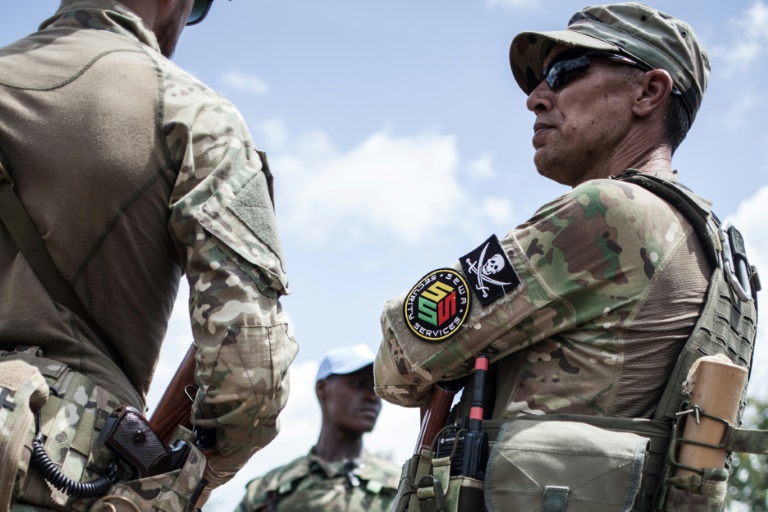
Russia’s geopolitical ambitions in Africa have in recent years been backed by private military contractors, often described as belonging to the “Wagner group” — an entity with no known legal status.

Most recently, Western nations have condemned the alleged arrival of Russian mercenaries in Mali’s capital Bamako, a claim denied by the junta that seized power in 2020.

As relations with France worsen, the military rulers may be looking for ways to make up for shrinking numbers of European troops fighting Mali’s years-old jihadist insurgency.

“Mercs (mercenaries) working in Africa is an established norm” thanks in part to decades of operations by contractors from South Africa, said Jason Blazakis of the New York-based Soufan Group think-tank.

“The Wagner folks are walking through a door that has long been open to their ilk,” he added.

No information is publicly available about the group’s size or finances.

But around Africa, the Center for Strategic and International Studies (CSIS) in Washington has found evidence since 2016 of Russian soldiers of fortune in Sudan, South Sudan, Libya, the Central African Republic (CAR), Madagascar and Mozambique.

Botswana, Burundi, Chad, the Comoros, the Democratic Republic of Congo, Congo-Brazzaville, Guinea, Guinea-Bissau, Nigeria and Zimbabwe are also on the CSIS’s list.

In Africa “there is a convergence of many states’ interests, including China’s,” Alexey Mukhin of the Moscow-based Centre for Political Information told AFP.

“Every state has the right to defend its business assets,” he added.

– ‘Hysteria’ –

Wagner does not officially exist, with no company registration, tax returns or organisational chart to be found.

When the EU wanted to sanction the group in 2020, it targeted Russian oligarch Yevgeny Prigozhin, an ally of President Vladimir Putin who is suspected of running Wagner.

It imposed further sanctions in December last year when mercenaries’ arrival in Mali appeared certain — drawing accusations of “hysteria” from Moscow.

Western experts say military contractors are embedded in Russia’s official forces like intelligence agencies and the army, providing plausible deniability for Moscow.

Their deployment to African countries aims to “enable Russia to… regain this sphere of influence” that fell away with the collapse of the Soviet Union, said CSIS researcher Catrina Doxsee.

The mercenaries’ presence has been growing even faster since a 2019 Russia-Africa summit.

Moscow has been active “especially in what has traditionally been France’s zone of influence” in former colonies like CAR and Mali, said Djallil Lounnas, a researcher at Morocco’s Al Akhawayn university.

While military contractors sometimes shepherd Russian arms sales, the revenue “really pales compared with the profit they are able to generate from mining concessions and access to natural resources”, Doxsee said.

That makes unstable countries with mineral or hydrocarbon wealth prime customers — such as in Syria where the mercenaries first became known to the wider public.

– No questions asked –

Lounnas said that another advantage for clients is a lack of friction over human rights and democracy that might come with Western partners.

“Russia has its interests. It doesn’t ask questions,” he added.

Reports of violence and abuse on the ground suggest that same latitude may extend to the mercenaries themselves.

In the CAR, the United Nations is probing an alleged massacre during a joint operation by government forces and Wagner fighters.

One military source told AFP that more than 50 people died, some in “summary executions”.

On Thursday, the European Union said it would not resume military training in the CAR — suspended since mid-December — unless the country’s soldiers stop working for Wagner.

Meanwhile the mercenaries’ results do not always measure up to the hopes of the governments that hire them.

In Libya, Russian mercenaries suffered heavy losses in Marshal Khalifa Haftar’s year-long attempt to conquer the capital Tripoli, which was ultimately unsuccessful.

And in Mozambique, the Russians retreated in the face of Islamic State group jihadists, ultimately losing out to South African competitors.

Although lacking language skills and experience with the terrain, Wagner “were picked because they were the cheapest”, Doxsee said.

“They didn’t have what it took to succeed,” she added, noting that “they’ve had a fair few failures” across Africa.

Succeeding completely might actually harm the mercenaries’ business model, which thrives on unrest, conflict and crisis.

“If a country such as the CAR hires them to train forces, to help them in their military efforts, it’s in their interest to accomplish that just well enough to continue to be employed,” Doxsee said.

“If they actually were to do it well enough to resolve the conflict, they would no longer be needed”.

Teammates of transgender swimmer seek bar from women's competition

Sixteen teammates of transgender swimmer Lia Thomas on Thursday urged US college sport authorities to follow new USA Swimming rules which could bar her from competing at upcoming championships.

In a letter sent to the University of Pennsylvania and the Ivy League athletic conference by former Olympic swimmer Nancy Hogshead-Makar, the 16 University of Pennsylvania swimmers argue that Thomas should not be allowed to compete in women’s competition.

Thomas has dominated US collegiate women’s swimming recently as a student athlete at Penn, where just a few years ago, she competed as a man.

Her case has divided opinion, with some arguing she has an unfair physiological advantage while others saying she should be allowed to compete freely as a woman.

On Tuesday, the governing body of swimming in the United States, USA Swimming, unveiled new guidelines which include a more stringent threshold for testosterone.

The new guidelines did not mention Thomas by name, but were widely seen as making it harder for her to be able to compete in major meets such as the Ivy League and National Collegiate Athletic Association championships.

Although some members of the Penn swimming team voiced support for Thomas’s right to compete in a statement late Tuesday, a separate faction of the squad on Thursday said she should not be allowed to compete in women’s competition.

The names of the 16 Penn swimmers were not included in the letter sent by Hogshead-Makar, the chief executive of Champion Women, a non-profit which provides legal advocacy for girls and women.

The swimmers argued that while they supported Thomas’s gender identity, “the biology of sex is a separate issue from someone’s gender identity” in sport.

“Biologically, Lia holds an unfair advantage over competition in the women’s category,” the letter read, noting that Thomas’s rankings have surged from 462nd as a male swimmer to 1st as a female.

“If she were to be eligible to compete against us, she could now break Penn, Ivy, and NCAA Women’s Swimming records; feats she could never have done as a male athlete,” the swimmers said.

The swimmers added they had been warned that if they spoke out against Thomas, they would be kicked off the team. 

“We support Lia’s mental health, and we ask Penn and the Ivy League to support ours as well,” the letter reads.

“Sport is competitive by definition, and Lia’s wins, records, and honors should not come at our expense, the women who have worked their entire lives to earn a spot on the Penn Women’s Swimming Team.” 

The letter urged the University of Pennsylvania and Ivy League not to attempt a legal challenge to the new USA Swimming rules “so that we are able to finish our swimming season with distinction and pride.”

Hogshead-Makar and the University of Pennsylvania did not respond to requests for comment. 

A spokesperson for the Ivy League said the organization did not comment on letters submitted to the body.

Repsol says Peru oil spill will be cleaned up in March

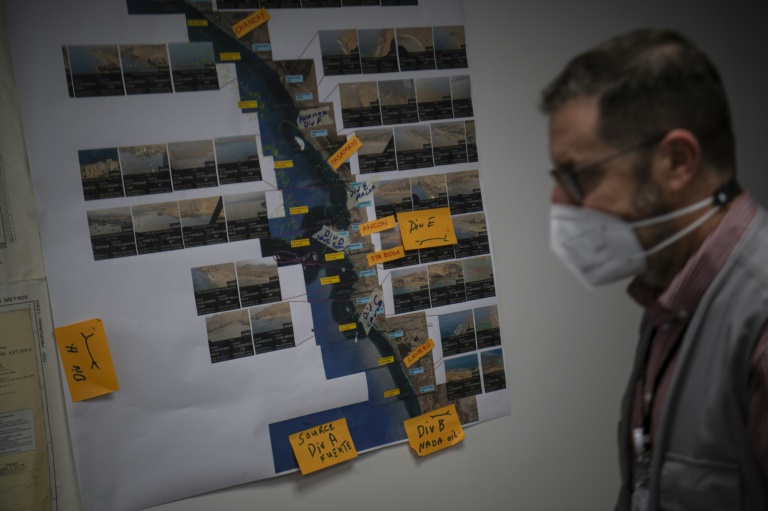
Spanish energy giant Repsol on Thursday vowed to finish by March cleaning up a devastating oil spill that has polluted beaches and killed wildlife.

Almost 12,000 barrels of crude spilled into the sea off Peru on January 15 as a tanker unloaded oil at a Repsol owned refinery.

“We expect that if the weather allows us then, in mid-March” the cleaning of beaches and islands off the coast will be completed, Repsol’s environmental security director Jose Terol told reporters.

However, he warned that it would take a little longer to finish cleaning cliffs and rocks that are difficult to access.

“By mid-February, there will already be no more slicks in the sea. In an optimistic scenario, work on the difficult to access areas will be finished by the end of March,” said Terol.

Peru’s government described the spill — which Repsol blamed on freak waves caused by a volcanic eruption more than 10,000 kilometers away near Tonga — as an “ecological disaster.”

The oil slick has been dragged by ocean currents about 140 kilometers north of the refinery, prosecutors said, causing the death of an undetermined number of fish and seabirds. 

Peru has demanded compensation from Repsol, and the energy giant faces a potential $34.5 million fine, the Environment Ministry has said.

Even as the Repsol spokesman spoke, a group of protesters from the hard-hit nearby beach town of Ancon gathered with signs and chanted demands outside the plant.

“Repsol accept responsibility”, and “Repsol murderer, the beaches of Ancon are in mourning” were among their signs.

“The reason for the protest is that (the oil spill) has left us without work because of this contamination of the sea in Ancon,” Miguel Basurto, a 53-year-old motorcycle taxi driver, told AFP. 

“We feel outraged because we have no support from the Repsol company. They clean their hands of it, and go away and leave us with all this pollution that affects children and the elderly,” said merchant Ana Garrido, 40.

It was the first time since the spill that Repsol let journalists  visit its La Pampilla refinery — to see how 90 specialists  there are managing the 3,000 people who are cleaning up the spill.

US claims evidence of Moscow plan for 'false flag' Ukrainian attack

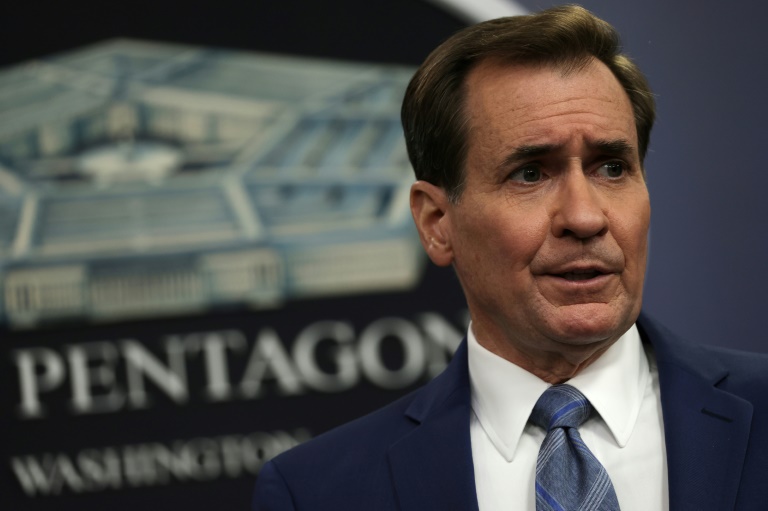
The Pentagon said Thursday it had evidence of a plan by Moscow to film a fake Ukrainian attack on Russians to justify a real assault on its pro-West neighbor.

“We do have information that the Russians are likely to want to fabricate a pretext for an invasion,” said Pentagon spokesperson John Kirby.

He told reporters that Washington believed the Russian government plans to stage an attack by the Ukraine military or intelligence forces “against Russian sovereign territory, or against Russian speaking people.”

The latter could refer to the sizeable Russian-speaking population inside Ukraine.

“As part of this fake attack, we believe that Russia would produce a very graphic propaganda video, which would include corpses and actors that would be depicting mourners and images of destroyed locations,” he said.

That could allow Moscow, which has amassed more than 100,000 troops and heavy offensive arms on Ukraine’s border, with an excuse for invading.

– Question of evidence –

Neither Kirby nor State Department Spokesperson Ned Price, who also commented on the alleged plan, offered evidence to back the claim.

Kirby said part of the plan would be to make the Ukrainian military equipment used in it appear to be supplied by the West, he said, further justifying Russian reprisals against Ukraine.

“We’ve seen these kinds of activity by the Russians in the past and we believe it’s important when we see it like this that we can call it out,” Kirby said.

“I would just say that our experience is that very little of this nature is not approved at the highest levels of the Russian government,” Kirby said about the purported plan.

Price said the alleged plan is “one of a number of options that the Russian government is developing as a fake pretext to initiate and potentially justify military aggression against Ukraine.”

He said the United States did not know if Moscow has decided to go through with the plan.

“Russia has signaled it’s willing to continue diplomatic talks as a means to de-escalate, but actions such as these suggests otherwise,” Price said.

Pressed on whether there was evidence of such a plan, Price said it came from US intelligence, but offered no more details.

“I’m not going to spell out what is in our possession but I will leave that to your judgement,” he told reporters.

Asked later Thursday if the United States might be adding fuel to the fire by sending troops and aid, Kirby said Washington was trying to reassure NATO allies.

“One, we continue to flow security assistance to Ukraine, so that they can better defend themselves against this threat,” Kirby said during an interview on Fox News.

“And, number two, and this is really important: to make sure we are reassuring our allies, allies to whom we have significant security commitments.”

British Foreign Secretary Liz Truss called the US claim of Moscow’s false flag operations “clear and shocking evidence of Russia’s unprovoked aggression and underhand activity to destabilize Ukraine.”

“The only way forward is for Russia to de-escalate, desist and commit to a diplomatic pathway,” she said in a tweeted statement.

Using military to end trucker protest 'not in the cards': Trudeau

Canadian Prime Minister Justin Trudeau on Thursday poured cold water on sending in the military to clear protestors opposed to Covid vaccine mandates, whose convoy of big trucks are clogging Ottawa’s downtown.

The city’s police chief, under pressure from locals weary of harassment and incessant honking, had pitched the idea during a briefing the previous day.

“That is not in the cards right now,” Trudeau told a news conference, adding that governments must be “very, very cautious before deploying the military in situations against Canadians.”

Since Saturday, Canada’s capital has been beset by protestors led by truckers opposed to mandatory Covid vaccines for traveling between Canada and the United States.

By midweek, their numbers had dwindled to several hundred from a peak of 15,000 over the weekend, but they continued to make their case against public health measures loudly.

Trudeau, who’s isolating after contracting Covid, said it was up to police to deal with them, but added that the federal government is ready to provide support from federal police and intelligence services.

At the same time he urged protestors to go home, saying locals had had enough of the “significant disruptions” caused by the protestors.

– Honking at parliament –

Outside parliament, protestors — whose leaders vowed at a news conference Thursday to stay until all Covid restrictions are lifted — strolled between the big rigs, Canadian flags draped over their shoulders and waving anti-Trudeau placards.

“I am here supporting the protest for my children,” Caroline Leader, who lives a two-hour drive from the capital, told AFP.

“They’re six and eight, and I believe they deserve full freedom, bodily autonomy. They should be free to move around, to travel regardless of their medical choices or status,” she said.

Manning a grill on the street and serving pancakes, scrambled eggs and sausages to protestors, local resident Shannon Laurent agreed that people “should be allowed to choose whether or not to get vaccinated.”

The so-called “Freedom Convoy” set out from Canada’s Pacific coast in late January, with supporters along the way joining them for the 4,400-kilometers (2,700-miles) drive.

Bal Tiwana, from Calgary, lamented not being able to travel as much as he used to, due to pandemic restrictions.

“Me and my wife used to travel all the time, and now can’t get on a plane or drive across the (Canada-US) border to leave the country,” he said.

Since November, anyone traveling by train or plane within Canada or departing from a Canadian airport must present proof of vaccination against Covid-19.

– ‘Fatigue has set in’ –

Although most Canadians (68 percent, according to an Abacus poll) do not support the protest, it’s clear that many are growing increasingly frustrated by public health restrictions on their daily lives.

“Fatigue has set in,” explained Roxane de la Sablonniere, a psychologist at the University of Montreal.

In Canada, most measures enacted by provincial governments remain very restrictive, among the toughest in the West — including lockdowns, a curfew in Quebec that has now been lifted, and capacity limits on restaurants, bars and other public venues.

“The majority of the population does not support the truckers in Ottawa, but there is still a significant minority who identify with it,” Daniel Beland, a politics professor at McGill University in Montreal.

And it’s much higher than the 10 percent of Canadian adults who have not received Covid jabs, he noted.

This upcoming weekend, the Ottawa protest is expected to swell again, while similar demonstrations are planned in other cities including Quebec City and Toronto.

“Our movement has grown in Canada and across the world because common people are tired of the mandates and restrictions in their lives that now seem to be doing more harm than good,” convoy organizer Tamara Lich told a news conference.

“We will continue our protest until we see a clear plan for their elimination,” she said.

Meanwhile in Alberta, a group of truckers and farmers protesting vaccine mandates at a border crossing to the US state of Montana allowed traffic to partially resume Thursday.

Cyclone Batsurai injures 12, strands ship in France's La Reunion

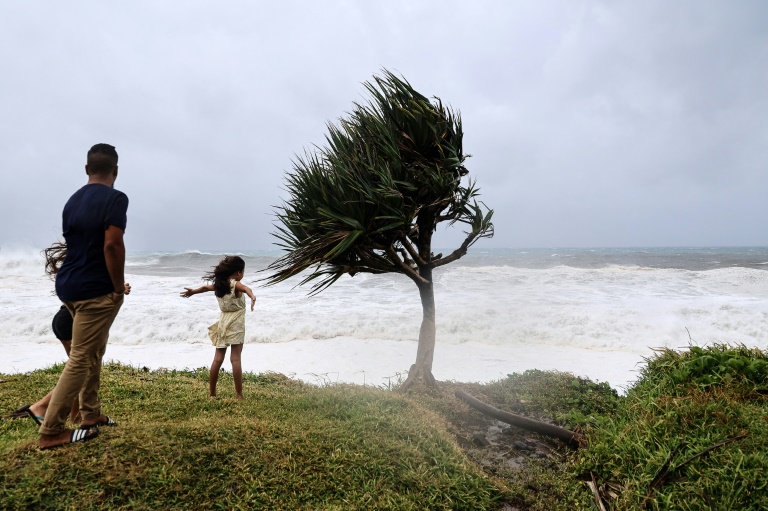
Tropical cyclone Batsirai swept past the Indian Ocean island of Reunion Thursday, leaving at least 12 people injured and causing an empty oil tanker to run aground, with 11 crew members onboard.

The French island was placed on red alert on Wednesday, forcing its 860,000 inhabitants to barricade themselves indoors, with the eye of the cyclone passing nearly 200 kilometres (120 miles) from the coast early Thursday.

Emmanuel Cloppet, regional head of national weather agency Meteo-France, said in the early evening that the cyclone was heading away from the island.

But “we are facing the worst weather conditions since the start of the episode”, he warned, with winds of up to 150 kilometres (90 miles) an hour.

A rescue team was sent to help 11 Indian and Bangladeshi sailors stranded on an oil tanker that ran aground 30 metres (yards) off the coast, local authorities said Thursday evening.

The French state’s top representative on the island, Jacques Billant, assured in a tweet that the seamen were “safe and sound” but that they were still onboard the vessel.

The French minister in charge of overseas territories, Sebastien Lecornu, said the tanker was travelling empty and dismissed any risk of serious maritime pollution.

Earlier Billant had reported 12 people injured onshore by the storm, included 10 who had carbon monoxide poisoning, a firefighter who was electrocuted attending a roof fire and another who was injured after a fall from a roof.

Many across the island suffered water and power cuts.

In Mauritius to the east, Batsirai on Wednesday also left thousands of homes without power but passed over the island without inflicting major damage despite cyclone winds bringing life to a standstill.

The cyclone passed within 130 kilometres (80 miles) of the popular holiday destination, bringing heavy downpours and winds of 120 kilometres per hour before it moved on with La Reunion in its sights.

Heavy rain has hit the island since midday Wednesday, with the majority falling to the south, including a metre within 24 hours in the uninhabited region of Piton de la Fournaise, Meteo-France said earlier.

The island is regularly threatened by tropical cyclones. One caused heavy flooding in 2018, while the last devastating cyclone to hit the island came in 2007, killing two people and causing extensive damage. 

After passing La Reunion, Batsirai is set to touch the east coast of Madagascar in southern Africa by the end of the week, Meteo-France forecast, potentially at the level of an “intense tropical cyclone” which could cause a “major” impact for the region.

Other tropical storms and torrential rains have wreaked havoc in southern Africa in recent days, leaving a trail of destruction in their wake.

Tropical Storm Ana claimed the lives of 86 people in Mozambique, Madagascar and Malawi last week.

str-burs/ah/cb

US claims evidence of Moscow plan for 'false flag' Ukrainian attack

The Pentagon said Thursday it had evidence of a plan by Moscow to film a fake Ukrainian attack on Russians to justify a real assault on its pro-West neighbor.

“We do have information that the Russians are likely to want to fabricate a pretext for an invasion,” said Pentagon spokesperson John Kirby.

He told reporters that Washington believed the Russian government plans to stage an attack by the Ukraine military or intelligence forces “against Russian sovereign territory, or against Russian speaking people.”

The latter could refer to the sizeable Russian-speaking population inside Ukraine.

“As part of this fake attack, we believe that Russia would produce a very graphic propaganda video, which would include corpses and actors that would be depicting mourners and images of destroyed locations,” he said.

That could allow Moscow, which has amassed more than 100,000 troops and heavy offensive arms on Ukraine’s border, with an excuse for invading.

– Question of evidence –

Neither Kirby nor State Department Spokesperson Ned Price, who also commented on the alleged plan, offered evidence to back the claim.

Kirby said part of the plan would be to make the Ukrainian military equipment used in it appear to be supplied by the West, he said, further justifying Russian reprisals against Ukraine.

“We’ve seen these kinds of activity by the Russians in the past and we believe it’s important when we see it like this that we can call it out,” Kirby said.

“I would just say that our experience is that very little of this nature is not approved at the highest levels of the Russian government,” Kirby said about the purported plan.

Price said the alleged plan is “one of a number of options that the Russian government is developing as a fake pretext to initiate and potentially justify military aggression against Ukraine.”

He said the United States did not know if Moscow has decided to go through with the plan.

“Russia has signaled it’s willing to continue diplomatic talks as a means to de-escalate, but actions such as these suggests otherwise,” Price said.

Pressed on whether there was evidence of such a plan, Price said it came from US intelligence, but offered no more details.

“I’m not going to spell out what is in our possession but I will leave that to your judgement,” he told reporters.

British Foreign Secretary Liz Truss called the US claim of Moscow’s false flag operations “clear and shocking evidence of Russia’s unprovoked aggression and underhand activity to destabilize Ukraine.”

“The only way forward is for Russia to de-escalate, desist and commit to a diplomatic pathway,” she said in a tweeted statement.

Close Bitnami banner
Bitnami