World

Myanmar junta slams 'dictating' UN rights chief

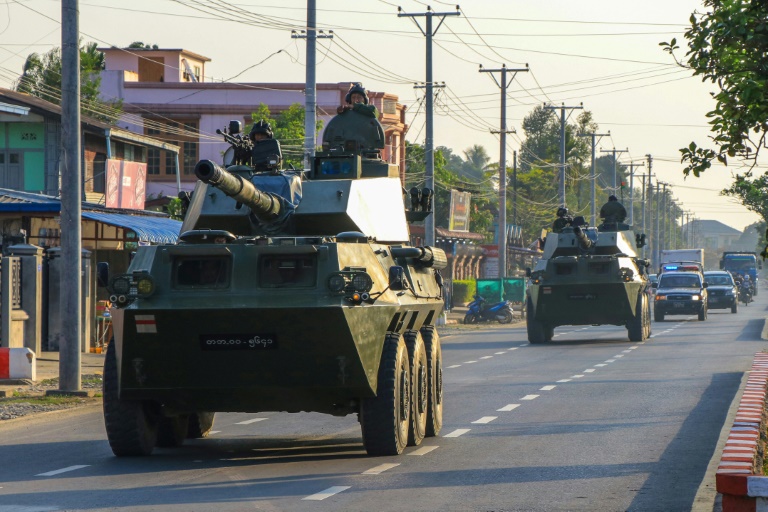
Myanmar’s junta on Thursday slammed “dictating” remarks by the United Nations human rights chief and accused the body of interfering in its affairs after it called for the world to ramp up pressure on the generals.

The Southeast Asian country on Tuesday marked a year since the military seized power in a coup that ousted Aung San Suu Kyi and sparked huge pro-democracy protests and a bloody military crackdown.

Days earlier Michelle Bachelet urged the world to ramp up the pressure on the junta to compel it to cease violence and “ensure that perpetrators of systemic human rights violations and abuses” were held to account.

The junta slammed the “provoking” release and accused the world body of interfering in its internal affairs, according to a statement released by its ministry of foreign affairs.

Myanmar “cannot accept dictating comments and criticism by foreign countries”, it added.

The statement also accused UN Special Rapporteur on the situation of human rights in Myanmar Tom Andrews of making “unethical and inciting remarks”.

On the anniversary of the coup, Andrews also called for more international action against the military and said he was preparing to release a report exposing where the ruling junta have been getting their weapons from.

Myanmar is increasingly isolated on the international stage, with Cambodian strongman ruler Hun Sen’s January visit the only one by any foreign leader since the generals seized power.

The junta’s latest diplomatic blow came Thursday, as regional bloc ASEAN barred its top diplomat from attending an upcoming meeting of foreign ministers.

Earlier this week the its main allies Russia and China endorsed a UN Security Council resolution calling for an “immediate cessation of all forms of violence” in the country and expressed hopes an envoy would be able to travel to Myanmar and mediate.

In a speech marking the coup anniversary on Tuesday, Min Aung Hlaing said the junta had discussed prospective visits by ASEAN and UN special envoys to the country, according to state newspaper Global New Light of Myanmar.

But he added any cooperation with the international community would be done “without harming the sovereignty of the State, national interests and the future plans of the government”. 

More than 1,500 people have been killed by security forces and over 11,000 arrested since the coup, according to a local monitoring group.

IS chief blows himself up during US raid in Syria

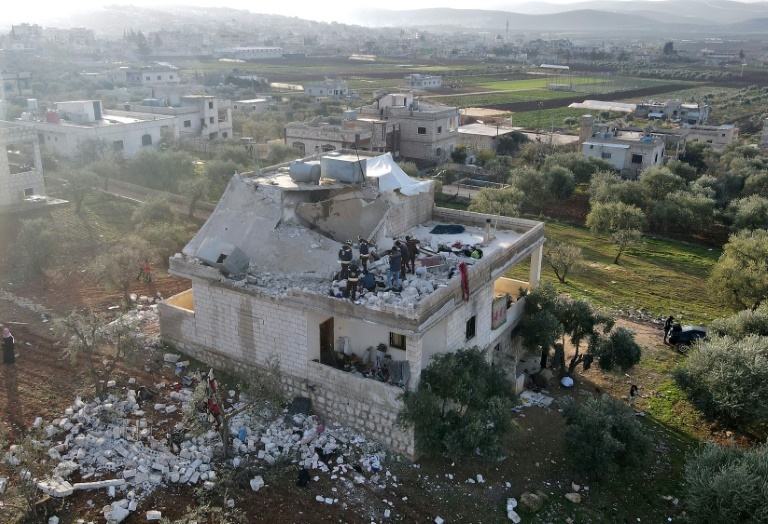
US special forces carried out a nighttime airborne raid Thursday in northwestern Syria during which the head of the Islamic State group blew himself and his family up, the White House said.

The operation was the biggest blow to the jihadist organisation since his predecessor, the better-known Abu Bakr al-Baghdadi, was killed in a similar raid in the same region of Idlib in 2019.

“Thanks to the skill and bravery of our Armed Forces, we have taken off the battlefield Abu Ibrahim al-Hashimi al-Qurashi — the leader of ISIS,” US President Joe Biden said in a statement, using another acronym for IS.

A senior White House official speaking on condition of anonymity ahead of an address by Biden said Qurashi detonated a bomb during the raid on the house where he was staying in the town of Atme.

In doing so, he also killed members of his own family, including women and children, the official said.

Qurashi, an Iraqi from the Turkmen-majority city of Tal Afar who was also known as Amir Mohammed Said Abd al-Rahman al-Mawla, replaced Baghdadi after his death in a US raid in October 2019.

The US government had offered a $10 million reward for information leading to Qurashi, who was one of the world’s most wanted men.

The Syrian Observatory for Human Rights war monitor had said civilians were among at least 13 people killed in the operation, which saw elite US forces make a perilous helicopter landing near Atme.

“Thirteen people at least were killed, among them four children and three women, during the operation,” Observatory chief Rami Abdel Rahman told AFP.

– Rent paid –

Initial reports that followed the operation near the town of Atme had suggested the target might have been a senior jihadist close to IS’ rival group Al-Qaeda.

AFP correspondents were able to visit the house thought to be where Qurashi blew himself up.

Before the identity of the raid’s target emerged, the owner of the building where Qurashi was staying described his tenant as leading an ordinary life.

“This guy lived here for 11 months. I didn’t see anything suspicious or notice anything,” the landlord, who gave his name only as Abu Ahmad, told AFP.

“He would come and pay the rent and leave. He lived with his three children and his wife. His widowed sister and her daughter were living above them,” he said.

A witness told AFP he woke to the sound of helicopters.

“Then we heard small explosions. Then we heard stronger explosions,” Abu Ali, a displaced Syrian living in Atme said, adding that US forces told residents “not to worry”.

“We’re just coming to this house… to rid you of the terrorists,” the man quoted the US forces as saying in their loudspeaker messages.

The American helicopters took off from a military base in the Kurdish-controlled city of Kobani, Abdel Rahman said.

Elite, US-trained members of the Kurdish-led Syrian Democratic Forces joined the operation, he added.

Farhad Shami, who heads the media office of the US-backed SDF, said the operation targeted “the most dangerous international terrorists”.

Kurdish forces had also taken part in the raid against Baghdadi in 2019.

– Fierce battle –

The two-storey building of raw cinder blocks bore the scars of an intense battle, with torn window frames, charred ceilings and a partly collapsed roof.

In some of the rooms, blood was splattered high on the walls and stained the floor, littered with foam mattresses and shards from smashed doors.

US special forces have carried out several operations against high-value jihadist targets in the Idlib area in recent months.

The area, the last enclave to actively oppose the government of Bashar al-Assad, is home to more than three million people and is dominated by jihadists.

The region is mostly administered by a body loyal to Hayat Tahrir al-Sham, a group led by former members of what was once Al-Qaeda’s franchise in Syria.

Atme is home to a huge camp for families displaced by the decade-old conflict and which experts have warned was being used by jihadists as a place to hide among civilians.

On October 23, the US military announced the killing of senior Al-Qaeda leader Abdul Hamid al-Matar.

“Al-Qaeda uses Syria as a safe haven to rebuild, coordinate with external affiliates, and plan external operations,” Central Command spokesman Army Major John Rigsbee said at the time.

Syrian government forces and their main military backer Russia have carried out repeated attacks against jihadist and other rebel groups in the Idlib region.

However a ceasefire deal which was brokered by Moscow and Ankara, the two main foreign powers in the area, almost two years ago is still officially in place.

Assad has long insisted his goal was to recapture the whole of Syria, including Idlib province, but the contours of the jihadist-run enclave have remained largely unchanged since early 2020.

The death of the jihadist group’s top leader comes two weeks after the group had staged a huge attack to spring IS fighters from a Kurdish-run prison in northeastern Syria.

Hundreds of people were killed in what was IS’s most high-profile operation since the demise of its “caliphate” nearly three years earlier.

Brazil's Bolsonaro tweets support for podcaster Rogan

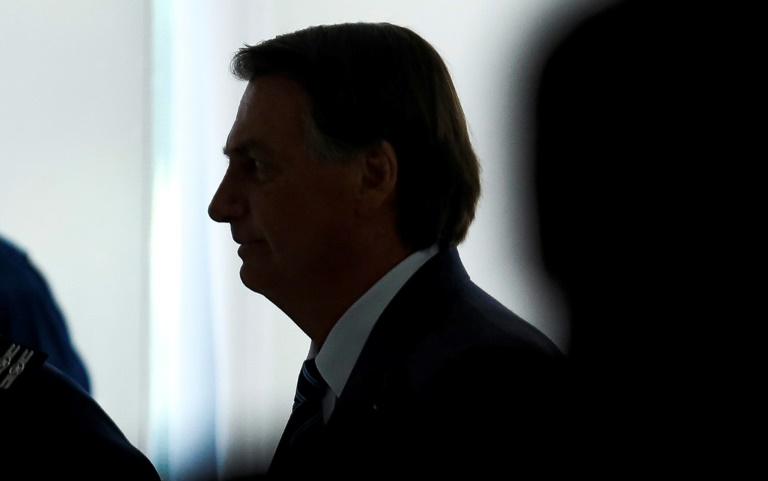
Brazil’s far-right President Jair Bolsonaro tweeted his support for embattled American podcast host Joe Rogan, whose spreading of disinformation about Covid-19 has caused a firestorm of controversy on streaming service Spotify.

The leader known as the “Tropical Trump,” who has himself been accused of spreading disinformation on the pandemic, waded into the Rogan row with a rare English-language post on Twitter Wednesday.

“I’m not sure what @joerogan thinks about me or about my government, but it doesn’t matter. If freedom of speech means anything, it means that people should be free to say what they think, no matter if they agree or disagree with us,” Bolsonaro wrote.

“Stand your ground! Hugs from Brazil.”

Rogan is at the center of an entertainment-world storm after several music superstars, including Neil Young and Joni Mitchell, ditched Spotify over its handling of Rogan’s controversial statements on Covid-19 vaccines.

Rogan, an ex-martial arts champ turned hugely popular talk show host, has discouraged Covid-19 vaccination in young people and promoted the off-label use of the anti-parasitic drug ivermectin to treat the disease.

Facing a spreading backlash, Spotify announced Sunday it would start guiding podcast listeners toward factual information on the pandemic.

But it has not cut ties with Rogan, whose show, “The Joe Rogan Experience,” has been broadcast exclusively on the platform since 2020, under a deal worth an estimated $100 million.

The podcast draws 11 million listeners per episode on average.

Bolsonaro has himself questioned Covid-19 vaccines, joking they could “turn you into an alligator,” and touted treatments such as anti-malarial drugs chloroquine and hydroxychloroquine despite research showing they are ineffective against the disease.

European oil port terminals hit by cyberattack

Major oil terminals in some of Western Europe’s biggest ports have fallen victim to a cyberattack at a time when energy prices are already soaring, sources confirmed on Thursday.

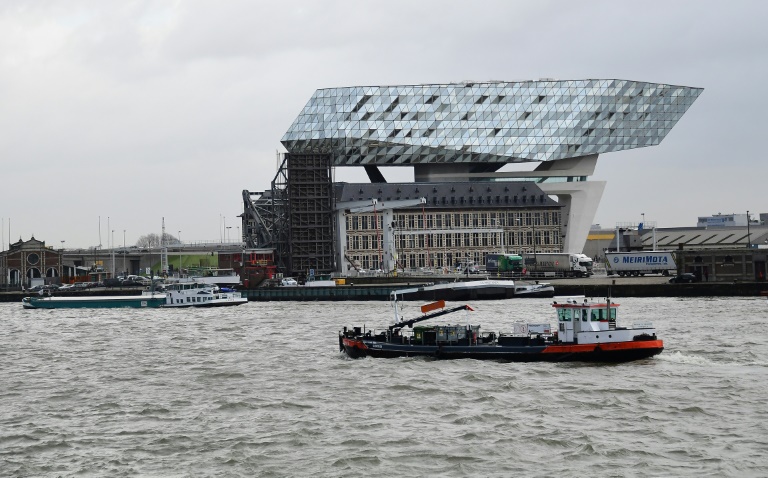
Belgian prosecutors have launched an investigation into the hacking of oil facilities in the country’s maritime entryways, including Antwerp, Europe’s second biggest port after Rotterdam.

In Germany, prosecutors said they were investigating a cyberattack targeting oil facilities in what was described as a possible ransomware strike, in which hackers demand money to reopen hijacked networks.

Oil prices hit a seven-year high last month amid diplomatic tensions with gas supplier Russia, and energy bills are fuelling a rise in inflation that has spooked European policymakers.

According to a specialised broker, the alleged hacking is affecting several European ports and is disrupting the unloading of barges in this already strained market.

“There was a cyberattack at various terminals, quite some terminals are disrupted,” said Jelle Vreeman, senior broker at Riverlake in Rotterdam.

“Their software is being hijacked and they can’t process barges. Basically, the operational system is down,” he said.

The EU’s Europol police agency said it was aware of the incidents in Germany and had offered support to authorities.

“At this stage the investigation is ongoing and in a sensitive stage,” Europol spokeswoman Claire Georges said.

One of the main victims seems to be the cross-border Dutch and Belgian Amsterdam-Rotterdam-Antwerp oil trading hub, where company IT systems were affected by the attack.

SEA-Tank Terminal, which has storage facilities in Antwerp, was hit, Belgian daily De Morgen reported.

The Dutch National Cyber Security Centre said the attacks were “probably committed with a criminal motive” and pledged to take further action “if necessary”.

– ‘Not grave’ –

In Germany, two oil supply companies said they were victim to the cyberattack since Saturday January 29.

Both Oiltanking Deutschland GmbH and Mabanaft declared force majeure, an emergency legal clause that is used when a company cannot fulfil its supply contracts because of an unforeseeable event, a joint statement said.

“We are committed to resolving the issue and minimising the impact as quickly and effectively as possible,” they said.

The head of Germany’s IT security agency, Arne Schoenbohm, said at a conference on Tuesday that the incident was serious but “not grave”, German media reports said.

According to the German newspaper Handelsblatt, an initial report from German security services identifies the BlackCat ransomware as the tool used in the cyberattack in Germany.

BlackCat emerged in mid-November 2021 as a software tool to allow hackers to seize control of target systems and has quickly gained notoriety for its sophistication and innovation. 

According to US cybersecurity firm PaloAlto, BlackCat has the added advantage of being more lucrative than its rivals for the hackers who use it — other ransomware platforms usually take a higher commission. 

The experts also note that BlackCat’s programmers use the Russian language, but this clue could be misleading since hackers often leave false clues to cover their tracks.

Recent ransomware attacks against targets in the United States and other western countries have been blamed on Russian-speaking hacker groups or those operating from Russian territory.

In June, US authorities said they had recovered a ransom payment paid by Colonial Pipeline to Russia-based ransomware extortionists Darkside, who had forced the shutdown of a major fuel network.

The attack caused short-term fuel shortages and drew attention to the broader threat that ransomware posed to essential infrastructure and services.

Pakistan says 7 troops killed in southwest, rebels claim dozens

Seven Pakistani soldiers and at least 13 militants were killed in clashes in restive Balochistan province, the army said Thursday, while separatists claimed dozens more had died in fighting that was still ongoing.

Baloch separatists have stepped up attacks against Pakistan forces in recent weeks — including with a deadly bomb blast in the eastern megacity of Lahore last month.

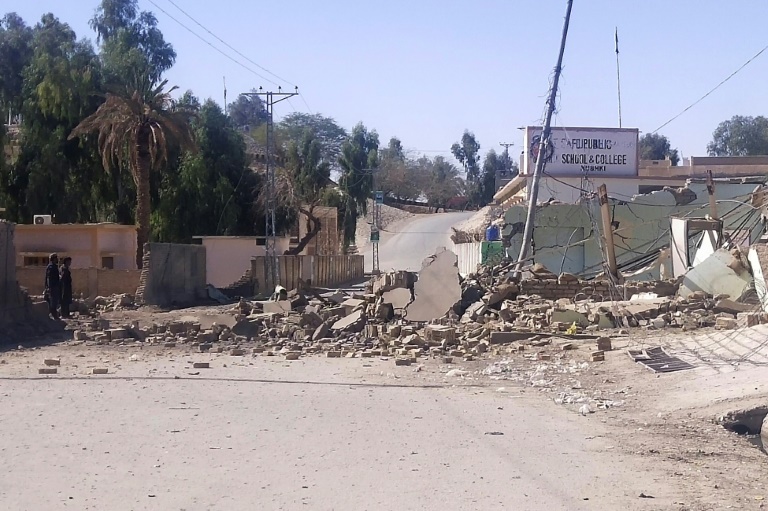
Interior Minister Sheikh Rashid Ahmad said Pakistan forces came under attack late Wednesday in the Naushki and Panjgur districts of Balochistan, an oil- and gas-rich province bordering Iran and Afghanistan.

A total of seven soldiers and 13 militants were killed in the twin assaults, the army said.

In a statement on their Telegram channel, however, the Baloch Liberation Army (BLA) claimed to have killed dozens of Pakistani troops in attacks on security personnel camps.

Late Thursday afternoon the BLA said its assault on state forces in Naushki was “successfully completed” and had “eliminated at least 100 personnel of Pakistani military including an officer”.

A senior Pakistan army official called the claim “a lie”.

The BLA said nine of its members were killed “after several hours of continuous battle”, and clashes were still ongoing in Panjgur.

The army said it has encircled four or five militants there, and also released images showing dead fighters with assault rifles, grenades and night-vision goggles.

Baloch separatists frequently exaggerate their battlefield successes, while the Pakistan military’s public relations department also plays down losses, or delays reporting them.

Balochistan home minister Zia Lango told reporters that the death toll of state forces could be as high as 12, including paramilitary personnel.

At the site of the attack in Naushki shops were shuttered on Thursday morning, with streets deserted.

One local reporter told AFP the mobile phone network was also shut off as police and paramilitary patrols took place.

Prime minister Imran Khan said on Twitter that Pakistan “stands united behind our security forces who continue to give great sacrifices to protect us”.

The latest attacks come a week after ten Pakistani troops were slain in a checkpoint firefight in the Kech district of Balochistan.

Balochistan is the largest, least populous and poorest province in Pakistan.

It has abundant natural resources, but locals have long harboured resentment, claiming they do not receive a fair share of its riches.

Tensions have been stoked further by a flood of Chinese investment under Beijing’s Belt and Road Initiative, which locals say has not reached them.

China is investing in the area under a $54-billion project known as the China-Pakistan Economic Corridor, upgrading infrastructure, power and transport links between its far-western Xinjiang region and Pakistan’s Gwadar port.

Pakistani forces in Balochistan also face attacks from the domestic chapter of the Taliban, Tehreek-e-Taliban Pakistan.

IS chief blows himself up during US raid in Syria

US special forces carried out a nighttime airborne raid Thursday in northwestern Syria during which the head of the Islamic State group blew himself and his family up, the White House said.

The operation was the biggest blow to the jihadist organisation since his predecessor, the better-known Abu Bakr al-Baghdadi, was killed in a similar raid in the same region of Idlib in 2019.

“Thanks to the skill and bravery of our Armed Forces, we have taken off the battlefield Abu Ibrahim al-Hashimi al-Qurashi — the leader of ISIS,” US President Joe Biden said in a statement, using another acronym for IS.

A senior White House official speaking on condition of anonymity ahead of an address by Biden said Qurashi detonated a bomb during the raid on the house where he was staying in the town of Atme.

In doing so, he also killed members of his own family, including women and children, the official said.

Qurashi, an Iraqi from the Turkmen-majority city of Tal Afar who was also known as Amir Mohammed Said Abd al-Rahman al-Mawla, replaced Baghdadi after his death in a US raid in October 2019.

The US government had offered a $10 million reward for information leading to Qurashi, who was one of the world’s most wanted men.

The Syrian Observatory for Human Rights war monitor had said civilians were among at least 13 people killed in the operation, which saw elite US forces make a perilous helicopter landing near Atme.

“Thirteen people at least were killed, among them four children and three women, during the operation,” Observatory chief Rami Abdel Rahman told AFP.

– Rent paid –

Initial reports that followed the operation near the town of Atme had suggested the target might have been a senior jihadist close to IS’ rival group Al-Qaeda.

AFP correspondents were able to visit the house thought to be where Qurashi blew himself.

Before the identity of the raid’s target emerged, the owner of the building where Qurashi was staying described his tenant as leading an ordinary life.

“This guy lived here for 11 months. I didn’t see anything suspicious or notice anything,” the landlord, who gave his name only as Abu Ahmad, told AFP.

“He would come and pay the rent and leave. He lived with his three children and his wife. His widowed sister and her daughter were living above them,” he said.

A witness told AFP he woke to the sound of helicopters.

“Then we heard small explosions. Then we heard stronger explosions,” Abu Ali, a displaced Syrian living in Atme said, adding that US forces told residents “not to worry”.

“We’re just coming to this house… to rid you of the terrorists,” the man quoted the US forces as saying in their loudspeaker messages.

The American helicopters took off from a military base in the Kurdish-controlled city of Kobani, Abdel Rahman said.

Elite, US-trained members of the Kurdish-led Syrian Democratic Forces joined the operation, he added.

Farhad Shami, who heads the media office of the US-backed SDF, said the operation targeted “the most dangerous international terrorists”.

Kurdish forces had also taken part in the raid against Baghdadi in 2019.

– Fierce battle –

The two-storey building of raw cinder blocks bore the scars of an intense battle, with torn window frames, charred ceilings and a partly collapsed roof.

In some of the rooms, blood was splattered high on the walls and stained the floor, littered with foam mattresses and shards from smashed doors.

US special forces have carried out several operations against high-value jihadist targets in the Idlib area in recent months.

The area, the last enclave to actively oppose the government of Bashar al-Assad, is home to more than three million people and is dominated by jihadists.

The region is mostly administered by a body loyal to Hayat Tahrir al-Sham, a group led by former members of what was once Al-Qaeda’s franchise in Syria.

Atme is home to a huge camp for families displaced by the decade-old conflict and which experts have warned was being used by jihadists as a place to hide among civilians.

On October 23, the US military announced the killing of senior Al-Qaeda leader Abdul Hamid al-Matar.

“Al-Qaeda uses Syria as a safe haven to rebuild, coordinate with external affiliates, and plan external operations,” Central Command spokesman Army Major John Rigsbee said at the time.

Syrian government forces and their main military backer Russia have carried out repeated attacks against jihadist and other rebel groups in the Idlib region.

However a ceasefire deal which was brokered by Moscow and Ankara, the two main foreign powers in the area, almost two years ago is still officially in place.

Assad has long insisted his goal was to recapture the whole of Syria, including Idlib province, but the contours of the jihadist-run enclave have remained largely unchanged since early 2020.

The death of the jihadist group’s top leader comes two weeks after the group had staged a huge attack to spring IS fighters from a Kurdish-run prison in northeastern Syria.

Hundreds of people were killed in what was IS’s most high-profile operation since the demise of its “caliphate” nearly three years earlier.
Top India diplomat to boycott Beijing Games over torchbearer

India’s top diplomat in Beijing will skip the Winter Games after a Chinese soldier involved in a deadly Himalayan skirmish took part in the Olympic torch relay, officials said Thursday.

Qi Fabao, a regiment commander for the People’s Liberation Army, was among the troops present in 2020 during a high-altitude clash in the Galwan Valley, which is disputed between the world’s two most populous nations.

On Wednesday he was revealed as one of 1,200 torchbearers for the Games by Chinese state media, which feted him as a “hero”.

But his inclusion provoked consternation in India, and the foreign ministry said its senior representative at the Beijing embassy would sit out the opening and closing ceremonies as a result.

“It is indeed regrettable that the Chinese side has chosen to politicise an event like the Olympics,” ministry spokesman Arindam Bagchi told a press briefing. 

Soon after Bagchi’s announcement, India’s public broadcaster said the channel would not live telecast the ceremonies.  

The Galwan Valley battle saw troops locked in hand-to-hand combat that left at least 20 Indians and four Chinese soldiers dead — though it took Beijing eight months to acknowledge the casualties on its own side.

Both countries poured tens of thousands of extra troops into the area after the clash, and high-level talks late last year failed to ease tensions in the region.

Qi was wounded in the incident but appeared on Chinese state broadcaster CCTV at the end of last year and said he was “ready to return to the battlefield and fight again”. 

The Winter Olympics open on Friday but have been dogged by politics and Covid-19 fears. 

The United States and several other nations are staging a diplomatic boycott of the Games over human rights concerns relating to the treatment of Uyghurs in the region of Xinjiang.

Skier Arif Mohammad Khan is India’s lone entry in the Winter Games, with spectators limited by Covid-19 protocols.

Close Bitnami banner
Bitnami