World

Round-the-clock care for Peru's oil-stained sea birds

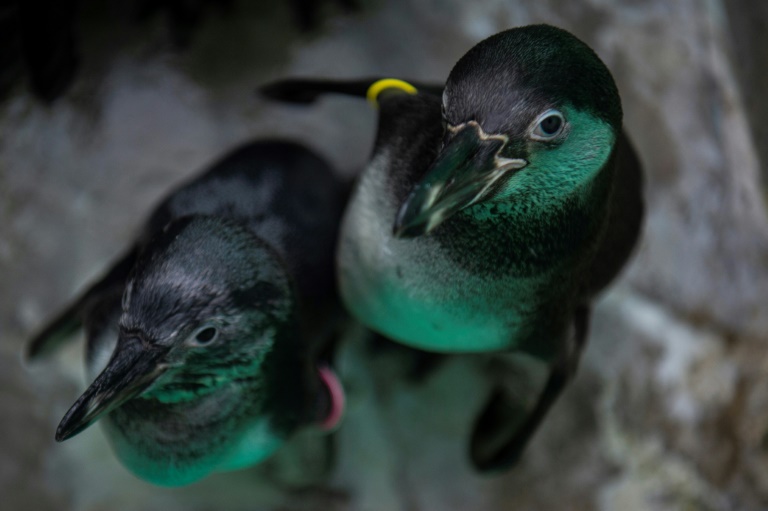
Hand fed fish and given gentle yet rigorous baths, penguins and other sea birds are slowly regaining their strength at a Peruvian zoo after a major oil spill that claimed many of their friends.

Of about 150 oil-stained birds rescued alive after the January 15 spill of some 12,000 barrels of oil, half later died.

The survivors — penguins, cormorants and pelicans — are being nursed back to health and independence at the Parque de Las Leyendas zoo in Lima. 

With oil on their wings, birds cannot fly or feed, and they lose the insulation they need to keep warm.

Even birds not directly contaminated with crude fell ill or died after eating fish that were.

– ‘Very stressed’ –

At the zoo, the rescued birds are fed fish — for the penguins it is their preferred prey of silverside and anchovies.

They are given a special rehydration mixture through a tube, bathed, and dried with a towel.

“Many of them arrived in very bad condition, which makes it difficult for us to handle them,” said Giovanna Yepez, one of the rescuers at the zoo.

“The animals were very contaminated… were very stressed,” she added. “It is a very hard job.”

But after two weeks of intensive care, the penguins at least “have tripled their food consumption,” said Yepez.

“I believe the penguins are on the right track, they are clean and waiting for the impermeability of their feathers to return so they can be released.”

Even when the feathers appear clean, the slightest vestige of crude inside the beak “can affect (the bird) through the digestive system, the liver,” added veterinarian Giancarlo Inga Diaz, hence the need for patience and thoroughness.

– ‘Disaster’ –

The spill, described as an “ecological disaster” by the Peruvian government, happened when an Italian-flagged tanker was unloading oil at a refinery off Peru’s coast.

Spanish oil company Repsol said the tanker was hit by freak waves triggered by a tsunami after a massive volcanic eruption near Tonga, thousands of kilometers away.

The oil slick was dragged by ocean currents about 140 kilometers (87 miles) north of the refinery, prosecutors said, killing countless fish and birds, polluting tourist beaches and robbing fishermen of their livelihood.

The Humbold penguin — a species classified as “vulnerable” by the International Union for Conservation of Nature — lives in colonies on the Peruvian and Chilean coasts, feeding in the cold, nutrient-rich waters of the Humboldt Current which flows north from Antarctica.

Some 9,000 of the black-and-white flightless birds are known to exist in Peru.

They stand about 50 centimeters tall.

Peru has demanded compensation from Repsol for the spill at its refinery.
N.Ireland leader resigns over Brexit protocol

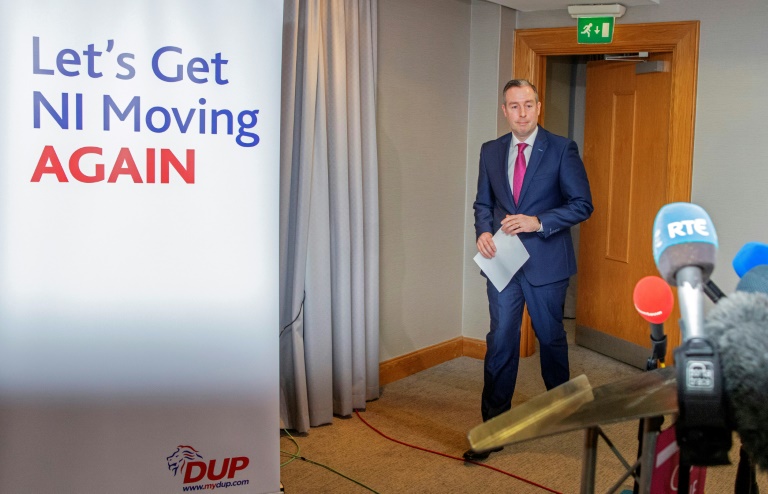
Northern Ireland’s unionist chief minister quit on Thursday in a row over post-Brexit trade, prompting calls for early elections in the tense British province.

“Today marks the end of what has been the privilege of my lifetime,” First Minister Paul Givan told reporters, as a new dispute over the post-Brexit movement of goods between northern Ireland and mainland Britain broke out.

Givan’s departure had been anticipated with the leader of his Democratic Unionist Party (DUP), Jeffrey Donaldson, threatening to collapse the devolved government in Belfast in protest at the trading arrangements agreed between London and Brussels.

The so-called Northern Ireland Protocol is designed to prevent unchecked goods from the mainland entering the European single market by the back door via neighbouring Ireland, which is a member of the European Union.

But the DUP and other pro-British unionist parties are implacably opposed to it, arguing that an effective Irish Sea border has weakened Northern Ireland’s affiliation with the UK.

With Givan gone, his deputy Michelle O’Neill, from the pro-Irish nationalist party Sinn Fein, is also forced to resign under the terms of a 1998 peace deal that ended three decades of sectarian violence in northern Ireland.

The development comes not long before local elections in May that Sinn Fein looks poised to win, and critics have accused the DUP of growing increasingly desperate to shore up its own support.

– ‘Political deadlock’ –

“We cannot stagger on for months without a functioning executive. Sinn Fein will not facilitate this,” said the party’s leader, Mary Lou McDonald.

“In the absence of a functioning executive, an early election must be called and the people must have their say,” she told reporters.

Northern Ireland’s upcoming polls are being keenly watched given Sinn Fein’s lead in opinion polls, which could make it the biggest party by popular support in the whole island of Ireland.

It would also put the issue of a united Ireland back on the table, a century after Northern Ireland was carved out by Britain as a separate statelet in deference to its Protestant majority.

Other ministers in the devolved administration in Belfast can stay in place. But the executive is now unable to make any significant decisions, including on its budget.

The UK secretary of state for Northern Ireland, Brandon Lewis, described Givan’s resignation as “extremely disappointing” and called for him to rethink.

“We must not return to a state of political deadlock and inertia,” Lewis said, referring to previous rows that saw the executive suspended.

Irish Foreign Minister Simon Coveney said Givan’s decision was “deeply regrettable”, urging all leaders in Northern Ireland to avoid “any new cliff edges or instability”.

But the DUP’s Donaldson reaffirmed his position that the protocol was an “existential threat” to Northern Ireland’s place in the UK, and was harming business.

“The longer the protocol remains, the more it will harm the Union itself. I think now is the moment when we say, ‘enough’.”

– ‘Unhelpful’ –

Edwin Poots, a DUP minister who holds the assembly’s agriculture portfolio, triggered a fresh row about the protocol on Wednesday night by ordering a halt on port checks of goods from mainland Great Britain.

Poots’ move came ahead of UK Foreign Secretary Liz Truss’s latest talks with European Commission vice-president Maros Sefcovic about reforming the protocol.

Brussels described the Poots directive as “unhelpful”, saying it “creates further uncertainty and unpredictability for businesses and citizens in Northern Ireland”.

A European Commission spokesperson said the border agreement was “the one and only solution” to safeguard the 1998 Good Friday Agreement.

As part of that deal, an open land border was mandated between Northern Ireland and Ireland to the south.

Truss said she had had a “good discussion” about proposed changes to the protocol with Sefcovic.

“My priority remains maintaining peace and stability in Northern Ireland,” Truss tweeted, adding that further talks were pencilled in for next week in London.

'Incredibly complex': the raid that killed IS chief

By early December, US intelligence was certain of it: the man occupying the top floor of a nondescript house in Atme, northern Syria — who never left the premises, emerging only to bathe on the roof — was the head of the Islamic State group.

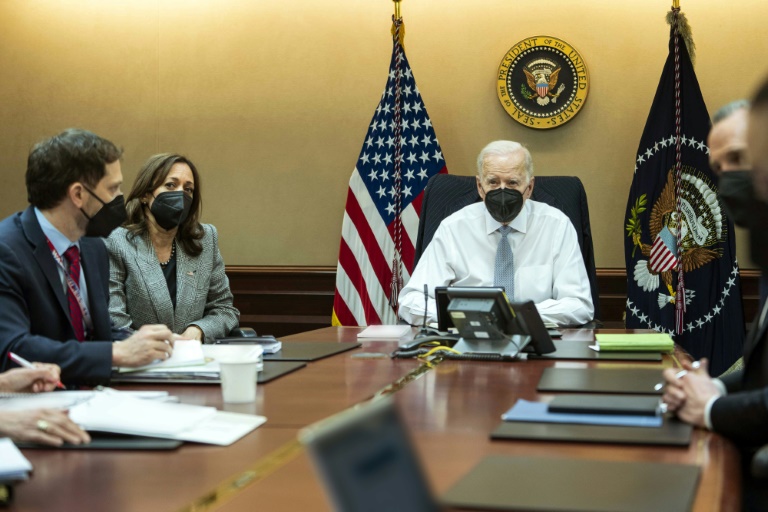
In the White House Situation room, a table-top model of the house was set up, and President Joe Biden was briefed on his options to neutralize Abu Ibrahim al-Hashimi al-Qurashi, one of America’s most wanted jihadist targets.

US officials say they could have easily killed Qurashi — whose location they had narrowed down last year before pinpointing it — with a precision missile.

Biden chose a riskier course, said a senior US official briefing reporters on the raid, to reduce the possibility of killing the civilians also living in the three-level cinderblock home, set amid olive trees near the border with Turkey.

The Special Operations Forces assault launched in the early hours of Thursday was “incredibly complex,” the official said, given the number of nearby homes and the presence of women and multiple children in the building.

In the end, as elite US troops surrounded the house calling for all inside to come out, Qurashi blew himself up along with his wife and two children — an outcome US forces had prepared for but hoped against.

The operation had been rehearsed in detail several times, the official said.

Special forces trained for everything from a surrender to a firefight. One possibility was that Qurashi would blow himself up.

“One of our main concerns was that he would kill himself and the structure would collapse killing everyone else in the building,” said a senior military official.

The official said the operation team consulted engineers on the strength of the concrete building. They concluded with “high confidence” that an explosion would only destroy the top floor.

The hideout’s location in Idlib province was just 15 kilometers (nine miles) north of where Qurashi’s IS predecessor, Abu Bakr al-Baghdadi, likewise killed himself in October 2019 to avoid capture in a US commando raid. 

The United States had placed a $10 million reward on Qurashi’s head soon after he took over at the helm of IS. 

At the beginning of this week Biden was briefed on the situation, and gave the operational go-ahead Tuesday morning at the White House.

– Questions on civilian deaths –

The operation went almost all according to plan. 

As Biden, Vice President Kamala Harris, and other officials monitored in real time in the Situation Room, helicopters flew in US commandos, reportedly about two dozen, who surrounded the building and warned neighbors to stay away.

The team called on everyone to exit the building, and a couple and their children living on the first level emerged and were taken to safety, the senior official explained.

Moments later, the top floor erupted with an explosion, tearing off half of the structure, but leaving the level below intact.

US forces began moving in, but a couple on the second floor barricaded themselves in their residence and began firing on them.

“The ISIS lieutenant and his wife were killed,” the official said, without offering details, adding that four children had emerged to be taken to safety.

After the raid open questions remained about how many people actually died. 

The Syrian Observatory for Human Rights said seven civilians were among at least 13 people killed in the operation, four of them children. 

Pentagon spokesman John Kirby said at least three civilians died — Qurashi’s wife and their two children.

The US military official meanwhile said eight children and two adults were saved. But the official allowed that it was not clear how many children were on the top floor when it exploded, and that a couple on the floor below may have had more children with them.

In operational terms, officials said, the only mishap was that one of the helicopters that delivered the commandos to the location developed mechanical problems and landed in a nearby field, where it was destroyed.

That echoed the 2011 raid on the Pakistan compound of Al-Qaeda leader Osama bin Laden, where a Special Operations helicopter crash-landed and also had to be destroyed, due to sensitive technology it carried.

In addition, unknown local gunmen began firing on the US troops late in the operation, and US troops fired back. The official said at least two of them were killed, with no Americans injured.

N.Ireland leader resigns over Brexit protocol

Northern Ireland’s unionist chief minister quit on Thursday, forcing his nationalist deputy also to stand down and prompting calls for early elections in the tense province.

“Today marks the end of what has been the privilege of my lifetime,” First Minister Paul Givan told reporters, as a new row broke about post-Brexit trade arrangements in the British territory.

Givan’s departure had been anticipated, as the leader of his Democratic Unionist Party (DUP), Jeffrey Donaldson, last year threatened to collapse the devolved government in Belfast in protest at the arrangements.

The so-called Northern Ireland Protocol is designed to prevent unchecked goods from the British mainland entering the European single market by the back door via neighbouring Ireland.

But the DUP and other pro-British unionist parties are implacably opposed to it, arguing that an effective Irish Sea border has weakened Northern Ireland’s affiliation with the UK.

With Givan gone, his deputy Michelle O’Neill, from the pro-Irish nationalist party Sinn Fein, is also forced to resign under the terms of a 1998 peace deal that ended three decades of sectarian violence.

The development comes not long before local elections in May that Sinn Fein looks poised to win, and critics have accused the DUP of growing increasingly desperate to shore up its own support.

– ‘Enough’ –

“We cannot stagger on for months without a functioning executive. Sinn Fein will not facilitate this,” said the party’s leader, Mary Lou McDonald.

“In the absence of a functioning executive, an early election must be called and the people must have their say,” she told reporters.

Northern Ireland’s upcoming polls are being keenly watched given Sinn Fein’s lead in opinion polls, which could make it the biggest party by popular support in the whole island of Ireland.

It would also put the issue of a united Ireland back on the table, a century after Northern Ireland was carved out by Britain as a separate statelet in deference to its Protestant majority.

Other ministers in the devolved administration in Belfast can stay in place. But the executive is now unable to make any significant decisions, including on its budget.

The UK secretary of state for Northern Ireland, Brandon Lewis, described Givan’s resignation as “extremely disappointing” and called for him to rethink.

“We must not return to a state of political deadlock and inertia,” Lewis said, referring to previous rows that saw the executive suspended.

The DUP’s Donaldson reaffirmed his position that the protocol was an “existential threat” to Northern Ireland’s place in the UK, and was harming business.

“The longer the protocol remains, the more it will harm the Union itself. I think now is the moment when we say, ‘enough’.”

– ‘Unhelpful’ –

Edwin Poots, a DUP minister who holds the assembly’s agriculture portfolio, triggered a fresh row about the protocol on Wednesday night by ordering a halt on port checks of goods from mainland Great Britain.

Poots’ move — branded a “stunt” by opponents — came ahead of UK Foreign Secretary Liz Truss’s latest talks with European Commission vice-president Maros Sefcovic about reforming the protocol.

Brussels described the Poots directive as “unhelpful”, saying it “creates further uncertainty and unpredictability for businesses and citizens in Northern Ireland”.

A European Commission spokesperson said the border agreement was “the one and only solution” to safeguard the 1998 Good Friday Agreement.

As part of that deal, an open land border was mandated between Northern Ireland and EU member Ireland to the south.

Truss said she had had a “good discussion” about proposed changes to the protocol with Sefcovic.

“My priority remains maintaining peace and stability in Northern Ireland,” Truss tweeted, adding that further talks were pencilled in for next week in London.

US raid on IS leader boosts Biden's foreign policy stature

The daring US helicopter raid deep in Syria that ended in the death of one of the world’s most wanted men gives Joe Biden the kind of dramatic military win presidents crave — and one the Democrat particularly needed.

“A major terrorist threat to the world” was extinguished, Biden said Thursday, unveiling details of the death of “horrible” Islamic State leader Ibrahim al-Hashimi al-Qurashi.

Facing simultaneously a showdown with Russia over Ukraine, a flurry of North Korean missile tests, an ever-diminishing window of opportunity to control Iran’s nuclear program and Chinese sabre-rattling over Taiwan, Biden’s foreign policy To Do list is daunting.

And Republican critics have worked hard to generate a narrative that Biden is weak, making the world a more dangerous place.

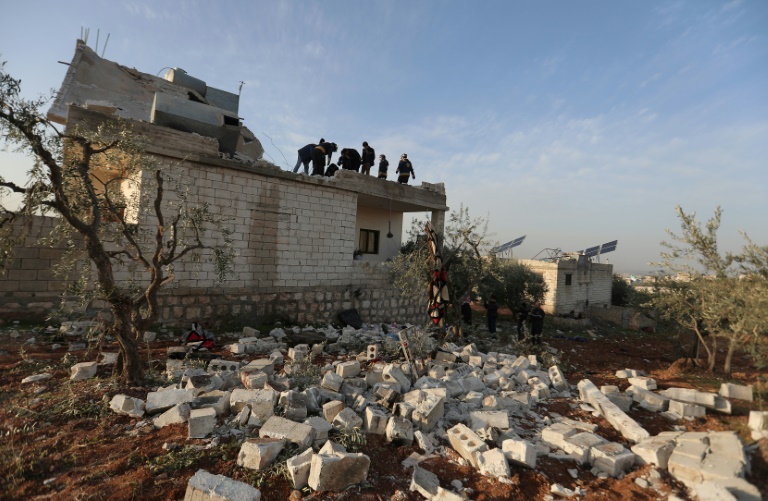
Biden’s answer? Pictures of the devastated house in Syria’s Idlib region, where Qurashi blew himself up, and a White House-issued photo of Biden and Vice President Kamala Harris in the Situation Room during the operation.

The raid, which saw no US losses, is “a strong message to terrorists around the world: We will come after you and find you,” Biden said.

In the post-9/11 world, killing far-flung jihadist leaders has become almost an expected display of strength for presidents.

Under Barack Obama, Americans cheered the rivetting news in 2011 that Al-Qaeda founder Osama Bin Laden, the man behind the September 11, 2001 attacks on the United States, had finally been killed by US special forces in Pakistan.

Donald Trump, who repeatedly claimed to be the greatest president on many fronts, was if anything even more triumphant after the 2019 US operation in Syria killing Qurashi’s predecessor as head of the IS — Abu Bakr al-Baghdadi.

In eyebrow-raising comments, Trump used a national address to describe how Baghdadi “died like a dog… in utter fear, in total panic and dread, terrified of the American forces bearing down on him.”

Biden’s record as commander in chief, until now, was associated mostly with the humiliating retreat from Afghanistan — even if the White House argues that the chaos was unavoidable in exiting a failed, 20-year war.

Now he has a clearcut victory.

“This operation is testament to America’s reach and capability,” he said in his own address to the nation.

– Grudging applause –

Even Republicans who have been pounding Biden over Russia, Iran and China, could not avoid applauding the apparently textbook military strike carried out in the dead of night.

“Very good news,” Senator Mitt Romney said.

“I really appreciate the counterterrorism operation,” said Senator Lindsey Graham, although he tempered his appreciation by claiming the administration “is deaf, dumb and blind when it comes to the growing radical Islamic threats emerging from Afghanistan.”

Biden will next have to return to the higher-stakes tussles with the likes of Moscow and Beijing, which critics say are exploiting signs of American indecision.

“Is it any surprise that Chinese planes are flying over Taiwan? Or that North Korea is testing missiles again? Or that Iran is ramping up its nuclear program? They all sense Biden’s weakness,” Nikki Haley, who served as UN ambassador under Trump, tweeted this week.

Biden, who has decades of foreign policy experience from his time in the Senate, lays out a very different picture.

On Ukraine, for example, he is sending US troops to bolster NATO forces in Europe and leading intensive diplomatic efforts to maintain Western unity against Russia, with threats of “devastating” sanctions, levied in coordination with EU powers, should Moscow launch an invasion.

But whatever he does is unlikely to get support from opponents in a brutally divided Washington.

On one side, Republican hawks are hammering Biden for not imposing preemptive sanctions against Russia. At another extreme, the right’s isolationist wing is questioning why the United States should want to defend Ukraine from Russia at all.

Celia Belin, a researcher at the Brookings Institution think tank, said US foreign policy debates often revolve around a “trial of weakness” between hawks and leaders who want more gradual approaches.

Biden is doing a “pretty good job of balancing the competing demands,” said Kori Schake, director of foreign policy studies at the right-leaning American Enterprise Institute. 

Biden says IS leader killed, removing 'major terrorist' threat

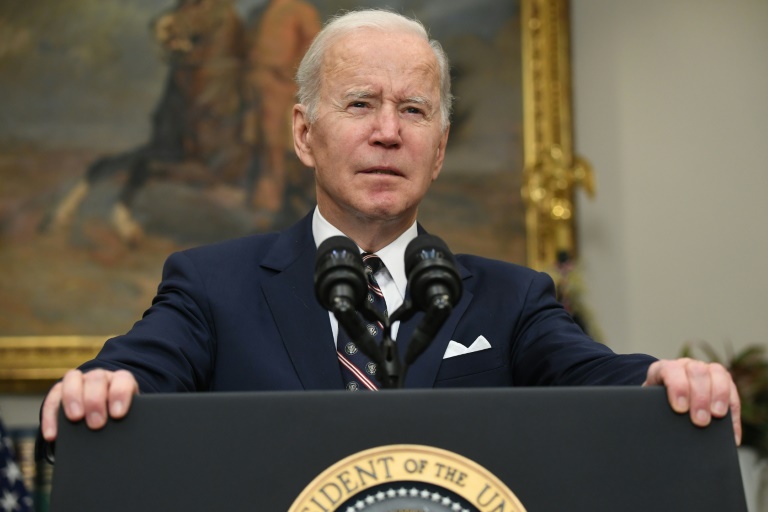
President Joe Biden said Thursday a global “terrorist threat” was removed when the head of the Islamic State blew himself up after US special forces swooped on his Syrian hideout in an “incredibly challenging” nighttime helicopter raid.

Biden said he had ordered an assault by troops rather than an air strike in order to minimize civilian casualties, even though this meant “much greater risk to our own people.” There were no casualties among the US forces.

The death of Abu Ibrahim al-Hashimi al-Qurashi is the biggest setback to the IS jihadist group since his predecessor, the better-known Abu Bakr al-Baghdadi, was killed in a US commando raid in the same Syrian region of Idlib in 2019.

“Last night’s operation took a major terrorist leader off the battlefield. And sent a strong message to terrorists around the world. We will come after you and find you,” Biden said in nationally televised remarks.

In the brief, somber address from the White House’s Roosevelt Room, Biden said the house targeted overnight in the town of Atme contained “families, including children.”

“As our troops approached to capture the terrorist, in a final act of desperate cowardice, with no regard to the lives of his own family or others in the building, he chose to blow himself up,” Biden said.

Qurashi detonated the entire top floor, Biden said, “taking several members of his family with him.”

The three-level building of raw cinder blocks bore the scars of an intense battle, with torn window frames, charred ceilings and a partly collapsed roof. 

AFP correspondents shot photographs that show a simple room with little more than foam mattresses, blankets, colorful clothes and children’s toys.

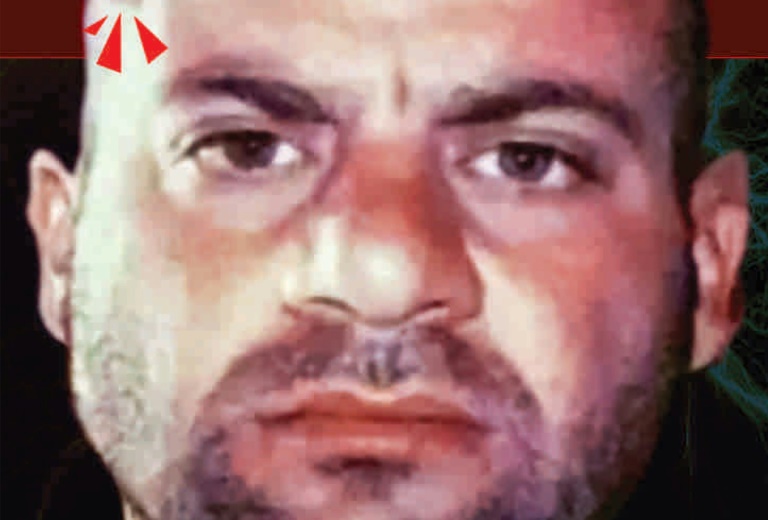
An Iraqi from the Turkmen-majority city of Tal Afar, Qurashi was also known as Amir Mohammed Said Abd al-Rahman al-Mawla. He replaced Baghdadi after he too blew himself up in a US raid in October 2019.

The US government had offered a $10 million reward for information leading to Qurashi.

The Syrian Observatory for Human Rights said seven civilians were among at least 13 people killed in the operation, four of them children. 

Pentagon spokesman John Kirby said at least three civilians died — Qurashi’s wife and their two children.

– Rent paid –

Atme residents were shocked to hear that their neighbor in the modest house surrounded by olive trees was in fact the leader of the Islamic State.

One of the world’s most wanted men was living there with his family and his sister. 

Even his landlord, Mohamed al-Sheikh, was perplexed by the news. He thought he had leased the house to a cab driver.

“This man lived here for 11 months. I did not notice anything strange about him,” al-Sheikh said. “He would pay me rent and leave.”

Footage after the operation showed a black plume of smoke billowing out of the damaged house. Inside, blood was splattered on the wall and the floor.

A witness told AFP he woke to the sound of helicopters.

“Then we heard small explosions. Then we heard stronger explosions,” said Abu Ali, a displaced Syrian living in Atme, adding the United States blasted messages to reassure residents.

He heard American forces say “don’t worry. We’re just coming to this house… to rid you of the terrorists.”

The American helicopters took off from a military base in the Kurdish-controlled city of Kobani, Abdel Rahman said.

Elite, US-trained members of the Kurdish-led Syrian Democratic Forces joined the operation, Rahman said.

One of the helicopters had to be destroyed after developing mechanical problems, according to a senior US official, and its smouldering remains were photographed in the village of Jinderes in northern Aleppo province.

Farhad Shami, who heads the media office of the US-backed SDF, said the operation targeted “the most dangerous international terrorists.”

Kurdish forces had also taken part in the raid against Baghdadi in 2019.

– Fierce battle –

Atme is home to a huge camp for families displaced by the decade-old conflict and which experts have warned was being used by jihadists as a place to hide among civilians.

US special forces have carried out several operations against high-value jihadist targets in the area in recent months, with the military on October 23 announcing the killing of senior Al-Qaeda leader Abdul Hamid al-Matar.

The area, the last enclave to actively oppose the government of Bashar al-Assad, is mostly administered by a body loyal to Hayat Tahrir al-Sham, a group led by former members of what was once Al-Qaeda’s franchise in Syria.

The death of the IS leader comes two weeks after the group staged a huge attack to spring its fighters from a Kurdish-run prison in northeastern Syria.

Hundreds were killed in what was IS’s most high-profile operation since the demise of its “caliphate” nearly three years earlier.

bur-jmm-sms-ec/sw

Moscow to shut down Deutsche Welle bureau in Russia

Russia said Thursday it is closing the Moscow bureau of German broadcaster Deutsche Welle and revoking staff accreditations in Russia, in response to Berlin’s ban on the German-language channel of Russian state TV network RT. 

Deutsche Welle called the decision “absurd” and a “complete overreaction”. 

The German government said the move was unacceptable and had “no basis of comparison whatsoever” with Berlin’s ruling on RT. 

“I urgently appeal to the Russian side not to abuse RT’s licensing problems for a political reaction,” Germany’s Culture Minister Claudia Roth said. 

The announcement comes with tensions mounting between Russia and the West, particularly over fears of a Russian invasion of Europe’s ally Ukraine. 

The closure also highlights the Kremlin’s increasingly hostile position towards foreign media in the wake of several high-profile expulsions of prominent foreign journalists. 

The Russian foreign ministry said in a statement Thursday it will also “terminate the satellite and other broadcasting (output) of Deutsche Welle” on Russian territory.

It added that it was initiating the process of designating the German media a “foreign agent” and said that further reciprocal measures will be announced in the future.

Deutsche Welle — a German state-owned broadcaster — has services in 30 languages, including Russian. 

The moves comes after Germany’s broadcasting regulator on Wednesday announced it was banning the transmission of the channel “RT DE” over the lack of a broadcasting licence. 

– ‘We are shocked’ –

Deutsche Welle’s chief Peter Limbourg said the order was an “absurd reaction of the Russian government”.

“Even if we were to close it eventually, that will not affect our coverage of Russia — rather, we will significantly boost our coverage,” said Limbourg. 

Deutsche Welle’s Moscow bureau chief Juri Rescheto said he had been ordered to close the bureau by Friday morning.

“We are shocked. For all of us here, this news is very personal,” he said, in comments published on the media’s website. 

Russian officials and pro-Kremlin media, meanwhile, welcomed the move. 

Russian senator Andrei Klimov called Moscow’s reaction “adequate”.

“It is a responsive measure to the unfriendly acts from the German side,” Klimov, who leads a committee on international affairs in the upper house of the Russian parliament, told the Ekho Moskvy radio station.

RT DE — the German-language branch of RT — was blocked from Europe’s satellite network on December 22 at the request of German authorities, less than a week after going on air. But it was still available over the internet and via a mobile app.

In its response to the suspension, RT DE said it was broadcast from Moscow and had a Serbian broadcasting licence, which it said gives it the right to broadcast in Germany under European law.

But the German regulator said the channel was based in Berlin and did not have a “legitimate permit under European law”.

Launched in 2005 as “Russia Today”, state-funded RT has expanded with channels and websites in languages including English, French, Spanish and Arabic.

It has been accused by Western countries of distributing disinformation and Kremlin-friendly propaganda.

It has generated controversy in many countries, including the United States, where it was required to register as a “foreign agent”, and in Britain, where authorities have threatened to revoke its broadcasting licence.

The channel has been banned in several countries, including the ex-Soviet republics Lithuania and Latvia.

In September, Google-owned YouTube issued a warning to RT DE for violating its coronavirus disinformation guidelines and then shuttered two channels for breaching user terms.

A third channel was blocked in December for trying to circumvent the earlier terminations.

In August, Moscow expelled a veteran BBC correspondent in retaliation for a Russian correspondent being denied accreditation by London. 

Three months later, a Dutch correspondent was expelled on years-old administrative violations.

The decision to shut down the German media outlet comes following months of unprecedented pressure on independent media from Russian authorities. 

Russia last year slapped a number of media outlets and journalists with the “foreign agent” label that requires them to carry out tedious administrative procedures.

Dead IS chief was Iraqi ex-officer nicknamed 'Destroyer'

The head of Islamic State group, whom the US declared dead in a special-forces raid Thursday, was nicknamed the “Destroyer” and presided over massacres of Yazidis before assuming the leadership.

Abu Ibrahim al-Hashimi al-Qurashi, also known as Amir Mohammed Said Abd al-Rahman al-Mawla, took over the jihadist network two years ago after founder Abu Bakr al-Baghdadi blew himself up in a US special forces raid in October 2019.

Considered a low-profile but brutal operator, Qurashi had largely flown under the radar of Iraqi and US intelligence until that point. 

He took over at a time when IS had been weakened by years of US-led assaults and the loss of its self-proclaimed “caliphate” in Syria and northern Iraq.

The US State Department slapped a $10 million bounty on his head and placed him on its “Specially Designated Global Terrorist” list.

Born in the northern Iraq town of Tal Afar and thought to be in his mid-40s, his ascension in the ranks of the extremist group was rare for a non-Arab, born into a Turkmen family.

Serving in the Iraqi army under Saddam Hussein, the late dictator toppled by the US-led invasion of Iraq in 2003, Qurashi joined the ranks of Al-Qaeda after Hussein was captured by US troops in 2003, according to the Counter Extremism Project (CEP) think-tank.

In 2004, he was detained by US forces at the infamous Camp Bucca prison in southern Iraq, where Baghdadi and host of future Islamic State figures met.

– ‘Brutal policymaker’ –

After both men were freed, Qurashi remained at Baghdadi’s side as he took the reins of the Iraqi branch of Al-Qaeda in 2010, then defected to create the Islamic State of Iraq (ISI), later the Islamic State of Iraq and Syria (ISIS).

In 2014, Qurashi helped Baghdadi take control of the northern city of Mosul, the CEP said.

The think-tank said Qurashi “quickly established himself among the insurgency’s senior ranks and was nicknamed the ‘Professor’ and the ‘Destroyer'”.

He was well respected among IS members as a “brutal policymaker” and was responsible for “eliminating those who opposed Baghdadi’s leadership”, it said.

He is probably best known for playing “a major role in the jihadist campaign of liquidation of the Yazidi minority (of Iraq) through massacres, expulsion and sexual slavery,” said Jean-Pierre Filiu, a jihadism analyst at the Sciences Po university in Paris.

On Thursday, US President Joe Biden said that a global “terrorist threat” had been removed when Qurashi blew himself up after US special forces swooped on his Syrian hideout in an “incredibly challenging” night-time helicopter raid.

Hans-Jakob Schindler, a former UN official and director of CEP, called his death a “a major setback for ISIS” in terms of losing a second leader, but doubted it would be a game changer.

IS is thought to prepare for the killings of its leaders with plans for who will take over. 

– Global spread –

Schindler said Quraishi “was not a very transformational leader” because IS had already started to shift from a group that controlled territory in Iraq and Syria to an international network of jihadist organisations under Baghdadi.

But Filiu argued that Qurashi’s assassination could be “harder to overcome” than Baghdadi’s.

He was “a genuine operational chief whose elimination risks preventing the resurgence of the jihadist group, at least temporarily.” 

Damien Ferre, director of the Jihad Analytics consultancy, said that Qurashi’s legacy would be the reinforcement of the Afghan branch of IS, which has been increasingly active since the United States agreed in 2020 to withdraw its troops from the country.

Other researchers also see the rise of an IS branch around Lake Chad in west Africa as significant, with the group managing to draw fighters from the ranks of the Nigerian terror group Boko Haram.

“On the operational front during his time, Islamic State regained momentum in 2020 before seeing the quality and the quantity of its attacks fall last year,” said Ferre. 

On January 20, IS fighters launched their biggest assault since the loss of their caliphate nearly three years ago, attacking the Ghwayran prison in the Kurdish-controlled northeast Syrian city of Hasakeh to free fellow jihadists, sparking battles that left over 370 dead.

UK's Kew tribute to Costa Rica at annual orchid fest

Britain’s Royal Botanic Gardens at Kew unveiled its annual orchid festival Thursday, turning a sliver of southwest London into a riot of tropical colour and flora celebrating biodiversity hotspot Costa Rica.

Kew’s 26th orchid showcase, opening Saturday, has this year been themed around the central American country hailed for conservation and features more than 5,000 orchids, some native to the nation on the Panama isthmus.

They include the national flower, a critically endangered orchid — named Guarianthe skinneri — bearing pink-purple petals and found in humid forests on tree trunks and branches or on granite cliff banks at some altitudes. 

The month-long exhibition, housed in Kew conservatory set to tropical temperatures and conditions, also promotes Costa Rica’s famed fauna, with handcrafted sculptures of some of animals made from natural materials and nestled in amongst the plants.

“Through the glass house we tried to bring in as much colour to just transport people into that sort of feel good world of Costa Rica… to make it really pretty and smashing,” florist and Kew volunteer Henck Roling told AFP.

The Dutchman, who in keeping with the orchid theme had dyed his hair and beard bright colours and was adorned with an orange garland, said the team had spent much of the past two years thinking about the festival.

It is returning to Kew after a one-year hiatus due to the coronavirus pandemic.

Around 6,000 plants have been brought in for the showcase, including the 5,000 orchids originating from around the world.

– ‘Amazing array’ –

Various individual displays of the different orchid types are dotted around Kew’s expansive and misty Princess of Wales conservatory, interspersed between water features, ferns, monsteras and other greenery.

The colourful host of plants began arriving in January and took dozens of volunteers and staff weeks to assemble by hand into their immaculate displays, said Alberto Trinco, acting supervisor of the conservatory.

“It’s one of the biggest plant families and they are such an amazing array of shapes, colours, and other adaptations and co-evolution with their pollinators, which is quite mind-blowing sometimes,” he added.

A section of the exhibition delves deeper into orchids, explaining everything from family tree and anatomy to their use for celebrations in Costa Rica.

Trinco noted the organisers chose the country, which is home to more than 1,600 orchid species, to “celebrate its biodiversity, its effort towards conservation and its culture”.

The Central American nation covers just 0.03 percent of the planet but is home to six percent of the world’s flora and fauna species and has been praised for how it manages the natural environment.

Costa Rica was last year one of the inaugural winners of Prince William’s UN-backed Earthshot Prize, in recognition of its efforts to tackle environmental degradation and promote sustainability.

Alex Munro, a botanist at Kew specialising in discovering new plant species in the tropics, said he and colleagues had worked with the Costa Rican ambassador in London to help inform some of the science behind the exhibits.

“They have lots of species in Costa Rica which you wouldn’t find anywhere else,” he told AFP.

“They capture fully the diversity of orchids in the Americas,” he added, stood aside one of the main displays.

Other countries previously as a theme for the yearly showcase include Indonesia, India and Colombia.

Biden says 'major terrorist' blew himself up in US raid

President Joe Biden said Thursday a global “terrorist threat” was removed when the head of the Islamic State group blew himself up after US special forces swooped on his Syrian hideout in an “incredibly challenging” nighttime helicopter raid.

“The United States military forces successfully removed a major terrorist threat to the world, the global leader of ISIS,” Abu Ibrahim al-Hashimi al-Qurashi, Biden said in nationally televised remarks.

The operation dealt the biggest setback to the jihadist IS organization since Qurashi’s predecessor, the better-known Abu Bakr al-Baghdadi, was killed in a US commando raid in the same Syrian region of Idlib in 2019.

In brief, somber remarks delivered in the White House’s Roosevelt Room, Biden said he ordered an assault by troops, rather than merely bombing the house where the IS leader was located, in order to minimize civilian casualties, even though this meant ” much greater risk to our own people.”

The house contained “families, including children” and “as our troops approached to capture the terrorist, in a final act of desperate cowardice, with no regard to the lives of his own family or others in the building, he chose to blow himself up,” Biden said.

Qurashi did not merely set off a suicide vest to kill himself, but detonated the entire “third floor” of the residence in the town of Atme, Biden said, “taking several members of his family with him.”

An Iraqi from the Turkmen-majority city of Tal Afar, Qurashi was also known as Amir Mohammed Said Abd al-Rahman al-Mawla. He replaced Baghdadi after his death in a US raid in October 2019, which also ended when Baghdadi blew himself up.

The US government had offered a $10 million reward for information leading to Qurashi, one of the world’s most wanted fugitives.

The head of the Syrian Observatory for Human Rights, Rami Abdel Rahman, told AFP that “13 people at least were killed, among them four children and three women, during the operation.”

– Rent paid –

Initial reports that followed the operation near the town of Atme had suggested the target might have been a senior jihadist close to IS’ rival group Al-Qaeda.

AFP correspondents were able to visit the house thought to be where Qurashi blew himself up.

Before the identity of the raid’s target emerged, the owner of the building where Qurashi was staying described his tenant as leading an ordinary life.

“This guy lived here for 11 months. I didn’t see anything suspicious or notice anything,” the landlord, who gave his name only as Abu Ahmad, told AFP.

“He would come and pay the rent and leave. He lived with his three children and his wife. His widowed sister and her daughter were living above them,” he said.

A witness told AFP he woke to the sound of helicopters.

“Then we heard small explosions. Then we heard stronger explosions,” Abu Ali, a displaced Syrian living in Atme said, adding that US forces told residents “not to worry”.

“We’re just coming to this house… to rid you of the terrorists,” the man quoted the US forces as saying in their loudspeaker messages.

The American helicopters took off from a military base in the Kurdish-controlled city of Kobani, Abdel Rahman said.

Elite, US-trained members of the Kurdish-led Syrian Democratic Forces joined the operation, he added.

Farhad Shami, who heads the media office of the US-backed SDF, said the operation targeted “the most dangerous international terrorists”.

Kurdish forces had also taken part in the raid against Baghdadi in 2019.

– Fierce battle –

The two-story building of raw cinder blocks bore the scars of an intense battle, with torn window frames, charred ceilings and a partly collapsed roof.

In some of the rooms, blood was splattered high on the walls and stained the floor, littered with foam mattresses and shards from smashed doors.

US special forces have carried out several operations against high-value jihadist targets in the Idlib area in recent months.

The area, the last enclave to actively oppose the government of Bashar al-Assad, is home to more than three million people and is dominated by jihadists.

The region is mostly administered by a body loyal to Hayat Tahrir al-Sham, a group led by former members of what was once Al-Qaeda’s franchise in Syria.

Atme is home to a huge camp for families displaced by the decade-old conflict and which experts have warned was being used by jihadists as a place to hide among civilians.

On October 23, the US military announced the killing of senior Al-Qaeda leader Abdul Hamid al-Matar.

The death of the jihadist group’s top leader comes two weeks after the group staged a huge attack to spring IS fighters from a Kurdish-run prison in northeastern Syria.

Hundreds were killed in what was IS’s most high-profile operation since the demise of its “caliphate” nearly three years earlier.

Close Bitnami banner
Bitnami