World

Ghana suspends part of foreign debt payments

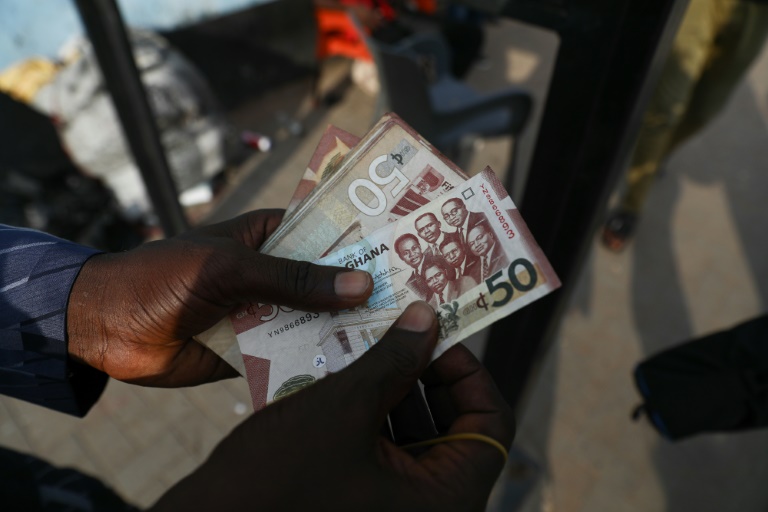
Ghana suspended payments on part of its foreign debt on Monday as the country undertakes debt restructuring in line with a bailout deal with the International Monetary Fund (IMF).

The West African state is facing an economic crisis with inflation at more than 50 percent and its cedi currency down sharply, hit by the adverse effects of the global pandemic and Ukraine crisis. 

“That is why we are announcing today a suspension of all debt service payments under certain categories of our external debt, pending an orderly restructuring of the affected obligations,” the finance ministry said in a statement.

“This suspension will include the payments on: our Eurobonds; our commercial term loans; and on most of our bilateral debt,” it said.

The government however said the suspension would exclude payments of multilateral debt, new debt (whether multilateral or otherwise) contracted after December 19, 2022 or debts related to certain short-term trade facilities.

“We are also evaluating certain specific debts related to projects with the highest socio-economic impact for Ghana which may have to be excluded,” it said.

– Debt troubles –

Once seen as an investor favourite, Ghana struggled recently with its debt burden. The government spends more than half of its revenues on debt servicing. The fall in the cedi increased debt values by $6 billion just this year.

The government said the foreign debt payment suspension was an interim emergency measure pending future agreements with the country’s creditors.

It also promised to engage with all of its external creditors to make Ghana’s debt sustainable.

Ghanaian economist Daniel Anim Amarteye said the government move could erode investors’ confidence in the economy.

“It could affect our credibility in the eyes of the investor community globally and our ability to go to the market in the near future could be affected,” Amarteye told AFP. 

“This move will lead to a further downgrade by the international rating organisations.”

Three major international rating agencies have all downgraded Ghana’s debt, in a sign of investor worries over its potential for defaulting.

“The ministry is yet to engage creditors. Whether or not they will agree to the terms from the ministry of finance is another issue. We are moving on very difficult turf,” he added.

Last week, Ghana agreed on a $3 billion credit deal with the IMF to tackle its economic crisis.

Although the three-year loan has yet to be approved by the fund’s board, the programme aims to reduce inflation, strengthen the economy’s resilience to external shocks and improve market confidence in the country.

A top cocoa and gold producer, Ghana also has oil and gas reserves, but its debt has soared and like the rest of sub-Saharan Africa it has been hit hard by fallout from the Covid pandemic and the Ukraine war.

The economic woes have caused social tension in the West African nation of 30 million people. There have been street protests against rising costs of living and the opposition has called for the removal of the finance minister.

The crisis forced President Nana Akufo-Addo’s government to reverse its position earlier this year and seek IMF help as economists warned of a default on debt payments.

The government has already announced a domestic debt swap as part of the programme to ease a crunch in payments and was soon expected to release details about restructuring foreign debt.
European stocks attempt pre-Christmas rebound

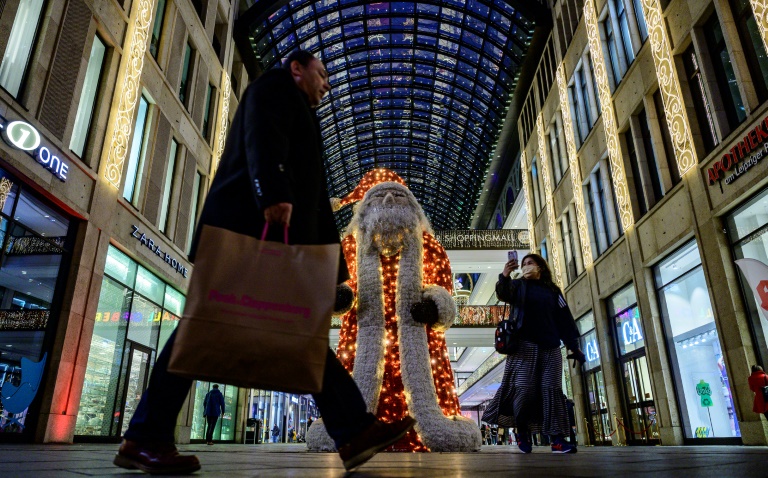
Europe equities rose Monday in light pre-Christmas trade with many traders away for the festive break, rebounding gently from last week’s losses that followed bumper interest rate hikes.

“We really don’t have much volume in markets as traders are away for holidays,” AvaTrade analyst Naeem Aslam told AFP.

“Markets are grinding higher as some traders are optimistic about valuations which seem to them somewhat attractive.”

Heading into the afternoon, London rose 0.5 percent, while Frankfurt and Paris each won 0.4 percent in value.

“Overall I think it’s going to be pretty subdued trading, given the lack of significant data to react to,” noted analyst Susannah Streeter at stockbroker Hargreaves Lansdown.

Asian indices however fell on lingering concern over a possible global recession caused by moves to fight inflation from top central banks.

Equities took a turn south last week after monetary policymakers around the world signalled that while price rises appeared to be stabilising, more work would be needed to get them under control.

All three main indexes on Wall Street ended sharply lower Friday after the Federal Reserve warned it would continue tightening monetary policy into 2023.

That was followed by similar warnings from the European Central Bank and Bank of England, while data suggested economies were feeling the pinch, dealing a blow to sentiment heading into the Christmas break.

“With no shortage of economic headwinds, investors struggle to find something cheerful about this holiday week after the two most dominant central banks cast a pall over the proceedings,” said SPI Asset Management’s Stephen Innes.

The US sell-off fed through to Asia, where Tokyo shed more than one percent, while Hong Kong, Shanghai, Taipei, Manila, Bangkok, Jakarta and Wellington were in negative territory, but Singapore and Mumbai edged up.

Adding to the downbeat mood was a spike in Covid-19 cases in China following the country’s reopening after almost three years of strict containment measures.

While the move is expected to boost the world’s number two economy, there is a worry that businesses and China’s health system will be hit in the near term.

Still, Beijing flagged a number of measures aimed at kickstarting growth next year, including support for the beleaguered property sector.

An expected pick-up in Chinese demand helped propel oil prices moderately higher.

– Key figures around 1200 GMT –

London – FTSE 100: UP 0.5 percent at 7,365.99 points

Frankfurt – DAX: UP 0.4 percent at 13,945.14

Paris – CAC 40: UP 0.4 percent at 6,481.03

EURO STOXX 50: UP 0.3 percent at 3,815.94

Tokyo – Nikkei 225: DOWN 1.1 percent at 27,237.64 (close)

Hong Kong – Hang Seng Index: DOWN 0.5 percent at 19,352.81 (close)

Shanghai – Composite: DOWN 1.9 percent at 3,107.11 (close)

New York – Dow: DOWN 0.9 percent at 32,920.46 (close)

Euro/dollar: UP at $1.0607 from $1.0586 on Friday

Pound/dollar: UP at $1.2189 from $1.2148

Euro/pound: DOWN at 87.02 pence from 87.14 pence

Dollar/yen: DOWN at 136.24 yen from 136.60 yen

West Texas Intermediate: UP 0.6 percent at $74.74 per barrel

Brent North Sea crude: UP 0.7 percent at $79.62 per barrel

S.Africa's ruling ANC re-elects Ramaphosa as party chief

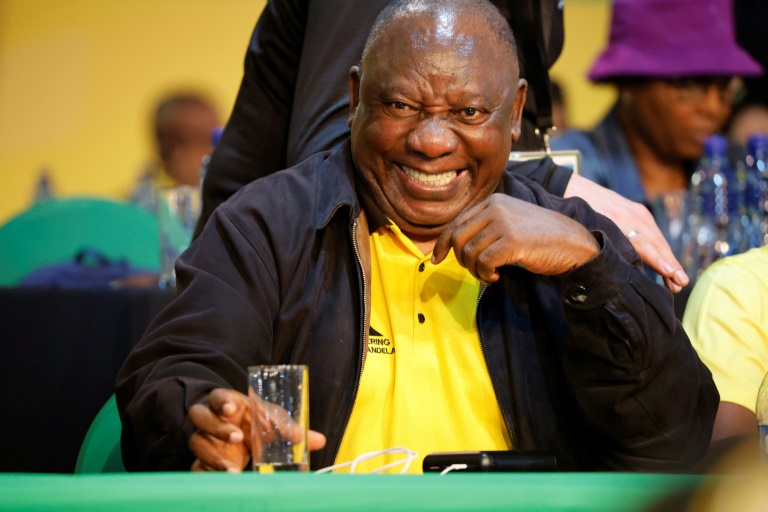
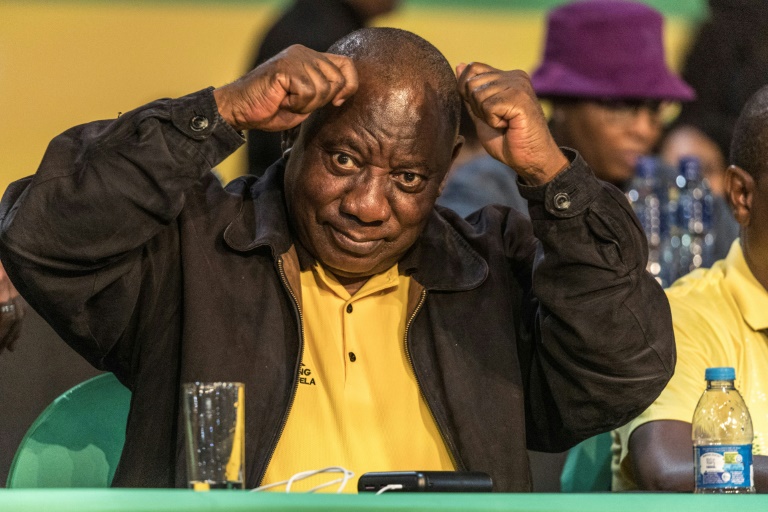
South Africa’s ruling ANC party on Monday re-elected President Cyril Ramaphosa as its leader for a second five-year term, despite a brewing scandal over a huge cash theft at his farm.

Ramaphosa garnered 2,476 votes for the post of party president against 1,897 for former health minister Zweli Mkhize, the African National Congress’ elections chief, Kgalema Motlanthe, announced.

“It’s a good outcome not only for the governing party… it’s a good outcome for the country,” Ramaphosa’s spokesman Vincent Magwenya told reporters.

“The president is quite energised,” he added.

Ramaphosa’s comfortable victory opens the way for him to a second term as South African president if the ANC win the next general elections, due in 2024. 

Under the constitution, the head of state is chosen by parliament.

More than 4,300 delegates, gathered at a conference near Johannesburg, cast their ballots on Sunday to appoint top officials, including party president, deputy president, chair and secretary general, 

The party’s former treasurer, Paul Mashatile, emerged deputy president.

Most of the delegates erupted in celebration, standing on chairs, chanting and clapping hands when the results were announced. 

Ramaphosa’s opponent Mkhize, walked up to the stage and took off his cap to congratulate Ramaphosa. The pair hugged and shook hands.

– Burglary scandal –

Ramaphosa, 70, won the contest despite being mired in accusations that he concealed the burglary of a huge amount of cash at his upmarket cattle farm.

As the nation’s vice president, he ascended to the ANC’s top job in December 2017 as his boss Jacob Zuma battled a mounting corruption scandal.

The following February, Zuma was forced out by the ANC.

Ramaphosa took office vowing to weed out endemic corruption and renew the party.

But his clean-hands image has been dented by the burglary scandal.

The affair has raised questions as to why he was in the possession of so much cash, and why he failed to report the theft to the authorities.

He won a reprieve ahead of the conference when the ANC used its majority in parliament to block a possible impeachment inquiry.

Sipho Mthembu, 41, chairman of an ANC branch in Gauteng, South Africa’s most populous province, told AFP he was “very disappointed” by the election outcome. 

“We all know that under Ramaphosa a lot of wrong things have happened and the image of the ANC has been compromised,” said Mthembu.

Ramaphosa’s rival Mkhize, a 66-year-old doctor, hails from the same region as Zuma, the southeastern KwaZulu-Natal province.

He was lauded for his handling of the coronavirus pandemic.

But his tenure ended abruptly in August 2021 when he resigned amid allegations his son and associates benefited from a multi-million-dollar contract for a Covid awareness campaign. He denies any wrongdoing.

– ANC crisis –

The ANC has a storied history, renowned throughout the world for its decades-long struggle, led by Nelson Mandela, against apartheid.

The 110-year-old party has governed the country continuously since the advent of democracy in 1994. 

But it has been battered by graft, cronyism, internal rifts and a moribund economy.

An organisational report presented at the conference showed that party membership had dropped by a third over the past five years. 

Ramaphosa’s long-running plans to overhaul the ANC are likely to meet resistance among the party’s newly-elected leaders, commentators said.

He “has regained the presidency of the ANC but it may be a Pyrrhic victory, because the top seven is even more unfriendly to him,” Richard Calland, law professor and political analyst, told AFP.

“So to escape the drag factor of his own party he will need to be bolder and show greater courage.” 

But an “ecstatic” Home Affairs Minister Aaron Motsoaledi, told AFP “that is the best team the ANC can ever have”.

The conference is taking place while the country is buckling under a power crisis blamed on sabotage, theft and decrepit infrastructure.

The government on Saturday said it had begun deploying the military to protect power plants.

Twitter users vote to oust Elon Musk as CEO

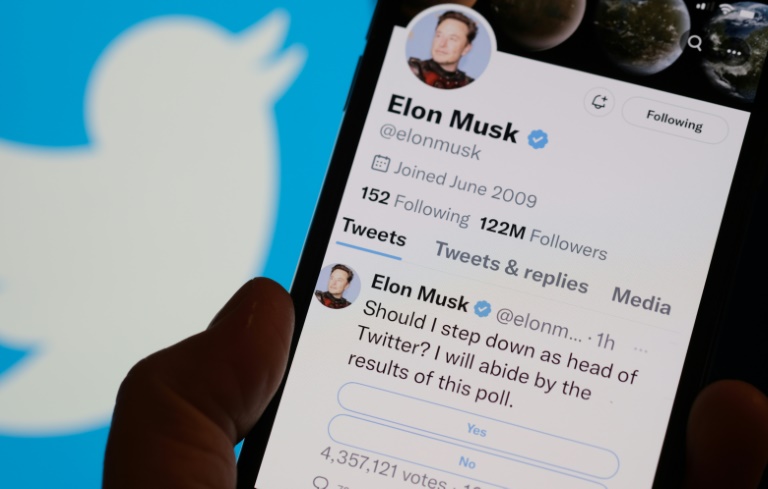
Twitter users voted on Monday to oust controversial owner Elon Musk as CEO in a poll he organized and promised to honor, just weeks after he took charge of the social media giant.

A total of 57.5 percent of more than 17 million accounts voted for him to step down. Musk, who is also the boss of car maker Tesla and rocket firm SpaceX, has not yet responded.

He took over Twitter on October 27 and has repeatedly courted controversy, sacking half of its staff, readmitting far-right figures to the platform, banning journalists and trying to charge for previously free services.

Analysts have also pointed out that the stock price of Tesla has slumped by one-third since the Twitter takeover.

“It’s hard to ignore the numbers since [Twitter] deal closed,” tweeted investment expert Gary Black, saying he reckoned Tesla’s board was putting pressure on Musk to quit his Twitter role.

In discussions with users after posting his latest poll, Musk claimed he had no successor in mind and renewed his warnings that the platform could be heading for bankruptcy.

– Dorsey bemused –

The unpredictable billionaire posted the poll shortly after trying to extricate himself from yet another controversy.

On Sunday, Twitter users were told they would no longer be able to promote content from other social media sites.

But Musk seemed to reverse course a few hours later, writing that the policy would be limited to “suspending accounts only when that account’s *primary* purpose is promotion of competitors”.

“Going forward, there will be a vote for major policy changes. My apologies. Won’t happen again,” he tweeted.

The attempted ban had prompted howls of disapproval and even bemused Twitter co-founder Jack Dorsey, who had backed Musk’s takeover.

He questioned the new policy with a one-word tweet: “Why?”

– ‘Perfect storm’ –

Musk has generated a series of controversies in his short reign.

Analyst Dan Ives from Wedbush called his tenure a “perfect storm”. 

He flagged that “advertisers have run for the hills and left Twitter squarely in the red ink potentially on track to lose roughly $4 billion per year we estimate”.

Shortly after taking over the platform, Musk announced the site would charge $8 a month to verify account holders’ identities, but had to suspend the “Twitter Blue” plan after an embarrassing rash of fake accounts. It has since been relaunched.

On November 4, with Musk saying the company was losing $4 million a day, Twitter laid off half of its 7,500-strong staff.

Musk also reinstated the account of Donald Trump — though the former US president indicated he had no interest in the platform — and said Twitter would no longer work to combat Covid-19 disinformation.

In recent days, he suspended the accounts of several journalists after complaining some had published details about the movements of his private jet, which he claimed could endanger his family.

Employees of CNN, The New York Times and The Washington Post were among those affected in a move that drew sharp criticism, including from the European Union and the United Nations.

The Washington Post’s executive editor Sally Buzbee said the suspension of journalist Taylor Lorenz’s account “further undermines Elon Musk’s claim that he intends to run Twitter as a platform dedicated to free speech”.

Some of the suspended accounts have since been reactivated.

Sweden blocks extradition of journalist sought by Erdogan

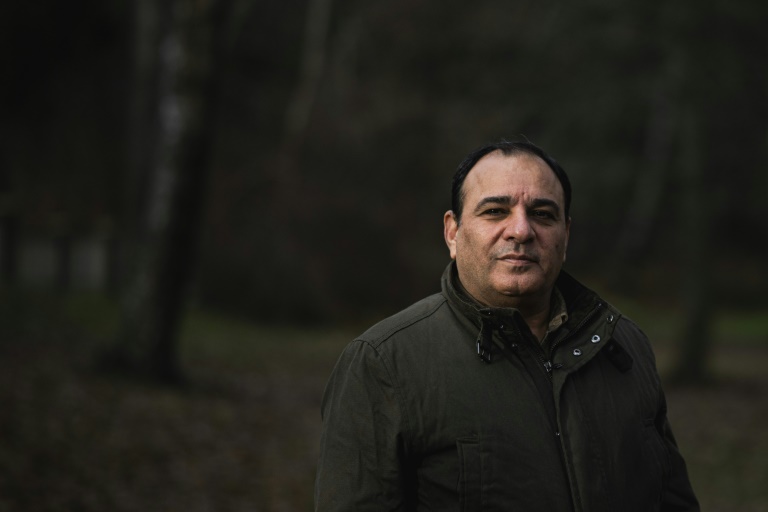
Sweden’s Supreme Court on Monday blocked the extradition of exiled Turkish journalist Bulent Kenes, a key demand by Ankara to ratify Stockholm’s NATO membership.

There were “several hindrances” to sending back the former editor-in-chief of the Zaman daily, who Turkey accuses of being involved in a 2016 attempt to topple President Recep Tayyip Erdogan, the court said.

Some of the accusations against Kenes are not crimes in Sweden, which along with the political nature of the case and his refugee status, made extradition impossible, the court added.

“There is also a risk of persecution based on this person’s political beliefs. An extradition can thusly not take place,” judge Petter Asp said in a statement.

As a result, “the government… is not able to grant the extradition request.”

Kenes is the only person Erdogan has identified by name among dozens of people Ankara wants extradited in exchange for approving Sweden’s NATO membership.

Following decades — or in Sweden’s case centuries — of staying out of a military alliance, the two countries made the historic decision to apply to join NATO after Russia invaded Ukraine.

Apart from Hungary, which is due to ratify Sweden’s and Finland’s membership in early 2023, Turkey is the only country to threaten to prevent the two countries from joining NATO.

Turkey, which has accused Sweden especially of providing a safe haven for outlawed Kurdish groups it deems “terrorists” has held back on ratifying their NATO applications despite reaching an agreement with Sweden and Finland in June.

Ankara says it expects Stockholm in particular to take tougher action on several issues, including the extradition of criminals.

Swedish Prime Minister Ulf Kristersson travelled to Turkey in November to meet Erdogan to discuss the issues.

When pressed about “terrorists” he wants extradited from Sweden during a joint press conference, Erdogan only named Kenes as one on the list.

– Growing list –

Stockholm has repeatedly stressed that its judiciary is independent and has the final say in extraditions.

In early December, Sweden extradited to Turkey a convicted member of the outlawed Kurdistan Workers’ Party (PKK), who had fled to Sweden in 2015 but  had his asylum request denied.

Kenes, who now works for the Stockholm Center for Freedom — an association founded by other Turkish dissidents in exile — told AFP Monday that he was “happy” with the decision, saying the allegations against him were “fabricated by the Erdogan regime.”

“I’m sure that the Erdogan regime will produce some other methods against me here in Sweden and make my life difficult as it can be,” he added. 

Ankara has over time increased the number of people it wants extradited: first 33, then 45, then 73, in unofficial lists published by media close to the Turkish government.

Speaking to AFP in November, Kenes said he believed he was singled out by Erdogan “because he has known me for decades” due to his long career as a journalist, and because it was the first name he came up with off the top of his head.

France bans disposable packaging, utensils in fast-food restaurants

Fast-food eateries in France will soon no longer be able to use disposable containers, plates, cups and tableware for clients eating in, the latest measure from a 2020 law to combat waste and encourage recycling.

Restaurants have been preparing for months to implement a rule that comes into force on January 1, which for many has upended business models based on single-use packaging and utensils, both for eating in and for take-out.

The roughly 30,000 fast-food outlets in France serve six billion meals a year, generating an estimated 180,000 tons of waste.

“It’s an emblematic measure that if properly implemented will make a very concrete difference for people — it definitely goes in the right direction,” said Moira Tourneur of non-profit Zero Waste France.

But the law has drawn criticism from the European Paper Packaging Alliance (EPPA), which argues that most single-use containers are made of renewable resources and have a recycling rate of 82 percent across the European Union.

It also says making and washing durable items consumes more energy and water, defeating a purpose of the environmental cause.

Restaurants have noted as well that clients often take reusable cups with them after a meal or end up throwing plates and cutlery in the trash instead of returning them.

– ‘Rethink everything’ –

After several months of testing, the Subway sandwich chain found it needed to mount a “public awareness effort” with franchise operators that included new posters to inform clients to reuse tableware, a spokeswoman told AFP.

At a McDonald’s in the Paris suburb of Levallois-Perret, manager Maria Varela said they needed to hire an additional dishwasher and more hosts to explain that plates, knives and forks must now be separated from trash.

“At first it was very complicated, both at the counter and with table service,” she said, noting that the kitchen had to be remodelled to cope with the new requirements.

“Everything that was in cardboard is now in reusable plastic. We had to rethink everything in the kitchen, separate take-out from on-site orders, create new storage space.”

Pressure groups worry the additional requirements might lead fast-food operators to resist.

Several including Surfrider, Zero Waste France and No Plastic in My Sea have urged clients to “sanction the chains that don’t respect the law” by taking their business elsewhere.

“I didn’t know about this but it’s good that it’s mandatory,” said Tom Fresneau, 16, who was eating a burger with a friend at the McDonald’s outside the French capital.

“But it does cost more than paper and cardboard, so I understand if it’s problematic for the smaller fast-food restaurants that might have to raise their prices,” he said.

France bans disposable packaging, utensils in fast-food restaurants

Fast-food eateries in France will soon no longer be able to use disposable containers, plates, cups and tableware for clients eating in, the latest measure from a 2020 law to combat waste and encourage recycling.

Restaurants have been preparing for months to implement a rule that comes into force on January 1, which for many has upended business models based on single-use packaging and utensils, both for eating in and for take-out.

The roughly 30,000 fast-food outlets in France serve six billion meals a year, generating an estimated 180,000 tons of waste.

“It’s an emblematic measure that if properly implemented will make a very concrete difference for people — it definitely goes in the right direction,” said Moira Tourneur of non-profit Zero Waste France.

But the law has drawn criticism from the European Paper Packaging Alliance (EPPA), which argues that most single-use containers are made of renewable resources and have a recycling rate of 82 percent across the European Union.

It also says making and washing durable items consumes more energy and water, defeating a purpose of the environmental cause.

Restaurants have noted as well that clients often take reusable cups with them after a meal or end up throwing plates and cutlery in the trash instead of returning them.

– ‘Rethink everything’ –

After several months of testing, the Subway sandwich chain found it needed to mount a “public awareness effort” with franchise operators that included new posters to inform clients to reuse tableware, a spokeswoman told AFP.

At a McDonald’s in the Paris suburb of Levallois-Perret, manager Maria Varela said they needed to hire an additional dishwasher and more hosts to explain that plates, knives and forks must now be separated from trash.

“At first it was very complicated, both at the counter and with table service,” she said, noting that the kitchen had to be remodelled to cope with the new requirements.

“Everything that was in cardboard is now in reusable plastic. We had to rethink everything in the kitchen, separate take-out from on-site orders, create new storage space.”

Pressure groups worry the additional requirements might lead fast-food operators to resist.

Several including Surfrider, Zero Waste France and No Plastic in My Sea have urged clients to “sanction the chains that don’t respect the law” by taking their business elsewhere.

“I didn’t know about this but it’s good that it’s mandatory,” said Tom Fresneau, 16, who was eating a burger with a friend at the McDonald’s outside the French capital.

“But it does cost more than paper and cardboard, so I understand if it’s problematic for the smaller fast-food restaurants that might have to raise their prices,” he said.

Things to know about a landmark biodiversity agreement

After years of negotiations, the world has agreed a landmark deal to protect vanishing species and ecosystems, dubbed a “peace pact with nature” at the UN meeting in Montreal called COP15.

Here are some of its strengths, as well as where it fell short.

– ’30 by 30′ –

The cornerstone of the agreement is the so-called 30 by 30 goal — a pledge to protect 30 percent of the world’s land and seas by 2030.

Currently, only about 17 percent of land and seven percent of oceans are protected. The oceans target had reportedly been opposed by some countries but made it into the final text.

And some experts had said 30 percent is a low aim, insisting that protecting 50 percent would be better. 

– Indigenous rights –

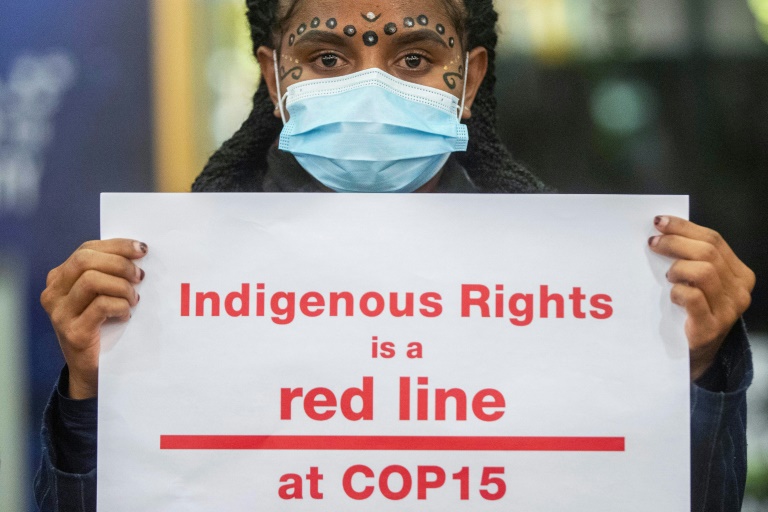
About 80 percent of the Earth’s remaining biodiverse land is currently managed by Indigenous people, and it’s broadly recognized that biodiversity is better respected on Indigenous territory.

Activists wanted to make sure their rights are not trampled in the name of conservation — previous efforts to safeguard land have seen Indigenous communities marginalized or displaced in what has been dubbed “green colonialism.”

In the end, Indigenous rights were addressed throughout the text, including in areas covered by the 30 by 30 pledge — safeguarding Indigenous peoples’ right to remain stewards of land they use and ensuring they are not subject to mass evictions.

The International Indigenous Forum on Biodiversity praised the text for its “strong language on respect for the rights of Indigenous Peoples and local communities.”

– Finance – 

Finance remained the overriding question.

Developing countries say developed nations grew rich by exploiting their resources and the South should be paid to preserve its ecosystems.

In the end, the text approves the objective for rich countries to provide “at least US$20 billion per year by 2025, and … at least US$30 billion per year by 2030,” approximately double and then triple the current international aid for biodiversity.

It also includes new language that mentions funding from “developed countries, and from countries that voluntarily assume obligations of developed country parties,” which a Western source told AFP was meant to involve the United States.

Washington is not formally a part of the Convention on Biological Diversity but supportive of its goals.

Developing countries were also seeking a new funding mechanism, as a signal of the rich world’s commitment to this goal, but developed nations said it would take several years to create. 

In the end, a halfway solution was adopted: creating a “trust fund” within an existing financial mechanism called the Global Environment Facility, as a stepping stone to a new fund in the future.

– What was missing –

An overriding concern by campaigners was that the final text did not contain enough “milestones” — key statistical measures countries should achieve before the year 2050. 

For example, the text says human-induced extinction of known threatened species is halted, and, by 2050, extinction rate and risk of all species are reduced tenfold — but there aren’t targets that countries must hit before that year.

Also watered down was a mandate for businesses to assess and report on the biodiversity impacts — instead they are merely “encouraged” to do so.

Countries agree historic deal to protect nature

Countries approved a historic deal to reverse decades of environmental destruction threatening the world’s species and ecosystems at a marathon UN biodiversity summit early Monday.

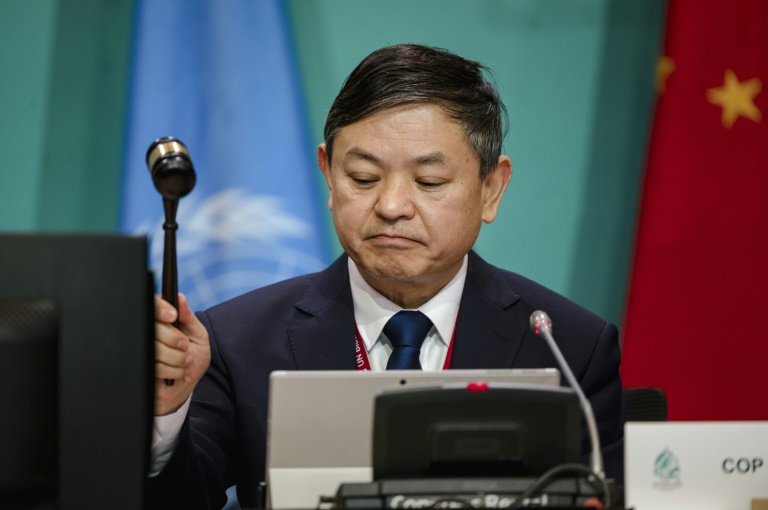
The chair of the COP15 nature summit, Chinese Environment Minister Huang Runqiu, declared the deal adopted at a plenary session in Montreal that ran into the wee hours and banged his gavel, sparking loud applause from assembled delegates.

In doing so he overruled an objection from the Democratic Republic of Congo, which had refused to back the text, demanding greater funding for developing countries as part of the accord.

After four years of fraught negotiations, more than 190 other states rallied behind the Chinese-brokered accord aimed at saving Earth’s lands, oceans and species from pollution, degradation and the climate crisis.

“We have in our hands a package which I think can guide us all to work together to hold and reverse biodiversity loss, to put biodiversity on the path of recovery for the benefit of all people in the world,” Huang told the assembly.

His Canadian counterpart and host Steven Guilbeault called it a “historic step.”

– Biggest conservation deal ever –

The deal pledges to secure 30 percent of the planet as a protected zone by 2030, stump up $30 billion in yearly conservation aid for the developing world and halt human-caused extinctions of threatened species.

Environmentalists have compared it to the landmark plan to limit global warming to 1.5C under the Paris agreement, though some warned that it did not go far enough.

Brian O’Donnell of the Campaign for Nature called it “the largest land and ocean conservation commitment in history.”

“The international community has come together for a landmark global biodiversity agreement that provides some hope that the crisis facing nature is starting to get the attention it deserves,” he said.

“Moose, sea turtles, parrots, rhinos, rare ferns and ancient trees, butterflies, rays, and dolphins are among the million species that will see a significantly improved outlook for their survival and abundance if this agreement is implemented effectively.”

The CEO of campaign group Avaaz, Bert Wander, cautioned: “It’s a significant step forward in the fight to protect life on Earth, but on its own it won’t be enough. Governments should listen to what science is saying and rapidly scale up ambition to protect half the Earth by 2030.”

– Indigenous rights –

The text pledges to safeguard the rights of Indigenous people as stewards of their lands, a key demand of campaigners.

But observers noted it pulled punches in other areas — for example, only encouraging businesses to report their biodiversity impacts rather than mandating them to do so.

The 23 targets in the accord also include saving hundreds of billions of dollars by cutting environmentally destructive farming subsidies, reducing the risk from pesticides and tackling invasive species.

– Funding fight –

At times, the talks looked at risk of collapsing as countries squabbled over money.

How much the rich countries will send to the developing world, home to most of the planet’s biodiversity, was the biggest sticking point.

Developing countries had been seeking the creation of a new, bigger fund for aid from the Global North. But the draft text instead suggested a compromise: creating a fund under the existing Global Environment Facility (GEF).

That concern was echoed by the Democratic Republic of Congo, home to the Congo Basin, a rich haven of biodiversity.

Current financial flows for nature to the developing world are estimated at around $10 billion per year.

A DRC delegate spoke up in the plenary to demand annual funding rise to $100 billion — but Huang passed the accord, angering DRC’s allies.

The United States is not a signatory to the biodiversity convention due to resistance from Republican senators. US President Joe Biden supports the deal and launched his own “30 by 30” plan domestically, while the United States pays into the GEF to assist developing countries.

Ramaphosa: the Mandela protege re-elected to lead S.Africa's ANC

Pragmatic, wealthy and ambitious, Cyril Ramaphosa was re-elected leader of South Africa’s ruling ANC party on Monday, despite being badly damaged by a cash-heist scandal that has dogged him for months.

Ascendancy to the helm of the African National Congress (ANC), in power for almost three decades, is a stepping stone to a second term as head of state. 

But the 70-year-old is on much shakier ground than when he was first elected party leader in 2017, amid deep divisions within the ANC — the party shaped by Nelson Mandela to spearhead the struggle to end apartheid.

Ramaphosa promised a “new dawn” for South Africa when he became president in 2018, but his image has been dented by scandal and a lacklustre economy. 

Earlier this month, he survived an opposition-led attempt to open impeachment proceedings against him over accusations he attempted to conceal a burglary at his farmhouse.

Details about the huge cash haul, stolen from under sofa cushions, have dealt a massive reputational blow to the man who took the reins of Africa’s most industrialised economy on a pledge to root out graft.

“Previously he was this icon of the clean-up struggle, (a) paragon of virtue… with this (scandal) came so much doubt on his credentials and a reminder that this is not a superhuman (man),” said political analyst and author Susan Booysen.

Born on November 17, 1952 in Johannesburg’s Soweto township — the cradle of the anti-apartheid struggle — to a policeman and a stay-at-home mother, Ramaphosa had long eyed South Africa’s top job, but only came to it after a long detour. 

– From Mandela to Coca-Cola –

He took up activism while studying law in the 1970s and spent 11 months in solitary confinement in 1974.

Ramaphosa turned to trade unionism, one of the few legal ways of protesting the white-minority regime. 

A protege of Mandela, who once described him as one of the most gifted leaders of the “new generation,” Ramaphosa stood alongside the anti-apartheid icon when he walked out of jail in 1990.

He was a key member of the task force that steered the transition to democracy.

But after missing out on becoming Mandela’s successor, Ramaphosa swapped politics for a foray into business that made him one of the wealthiest people in Africa.

He held stakes in McDonald’s and Coca-Cola, making millions in deals that required investors to partner with non-white shareholders. 

Ramaphosa developed a passion for breeding rare buffalos and cattle, a business that would come back to haunt him. 

The opposition once nicknamed him “The Buffalo” after he bid for an 18-million-rand ($104,000) beast in 2012.

He later apologised for making the glitzy bid “in a sea of poverty.” 

– Covid-19 –

In 2012, his image was badly tarnished when police killed 34 striking workers at a platinum mine, where he was then a non-executive director and had called for a crackdown on the miners.

He became Zuma’s vice president in 2014, often drawing criticism for failing to speak out against government corruption.

Renowned for his patience and strategic thinking, Ramaphosa narrowly defeated pro-Zuma rivals to take over leadership of the ANC party in 2017 and then the presidency when Zuma was forced out two months later.

Relaxed at public appearances, he attracts a support base that crosses South Africa’s racial and class divides, but still faces strong opposition from inside the ANC.

His anti-corruption drive has yielded some results, with charges being brought against some high-profile figures.

His handling of the Covid health crisis also won praise internationally. But the pandemic dealt a heavy blow to plans to revive South Africa’s sagging economy.

Unemployment remains stratospherically high and prolonged power cuts are a deep source of anger.

Ramaphosa’s native tongue is Venda, one of South Africa’s 11 official languages — most of which he is now said to speak fluently. 

Married three times, Ramaphosa has four children. His current wife Tshepo Motsepe, a doctor, is the sister of African football chief Patrice Motsepe.  

Close Bitnami banner
Bitnami