World

S.Africa's ruling ANC re-elects Ramaphosa as party chief

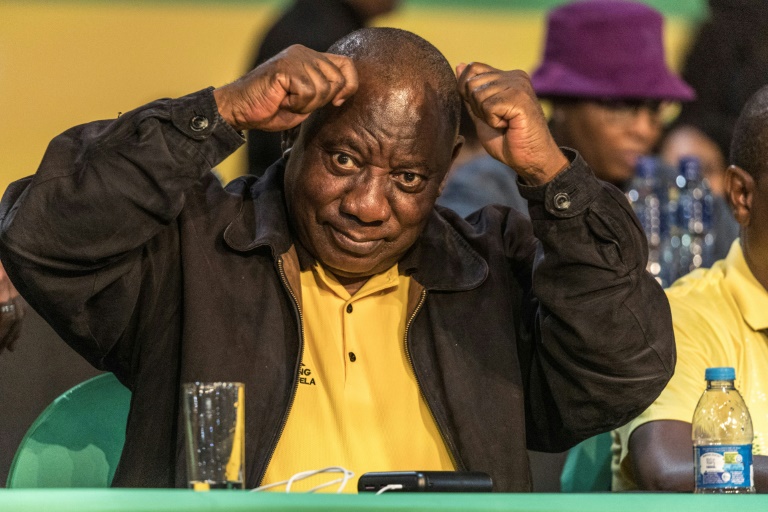
South Africa’s ruling ANC party on Monday re-elected President Cyril Ramaphosa as its leader for a second five-year term, despite a brewing scandal over a huge cash theft at his farm.

Ramaphosa garnered 2,476 votes for the post of party president against 1,897 for former health minister Zweli Mkhize, the African National Congress’ elections chief, Kgalema Motlanthe, announced.

Ramaphosa’s re-election opens the way to a second term as South Africa’s president, as the ANC have an absolute majority in parliament, which selects the head of state.

More than 4,300 delegates, gathered at a conference near Johannesburg, cast their ballots on Sunday to appoint top officials, including party president, deputy president, chair and secretary general, 

The party’s former treasurer, Paul Mashatile, emerged deputy president.

Ramaphosa, 70, won the contest despite being mired in accusations that he concealed the burglary of a huge amount of cash at his upmarket cattle farm.

As the nation’s vice president, he ascended to the ANC’s top job in December 2017 as his boss Jacob Zuma battled a mounting corruption scandal.

The following February, Zuma was forced out by the ANC.

Ramaphosa took office vowing to be weed out endemic corruption and renew the party.

But his clean-hands image has been dented by the burglary scandal.

The affair has raised questions as to why he was in the possession of so much cash, and why he failed to report the theft to the authorities.

He won a reprieve ahead of the conference when the ANC used its majority in parliament to block a possible impeachment inquiry.

His rival Mkhize hails from the same region as Zuma, the southeastern KwaZulu-Natal province which has the largest number of party delegates.

As health minister, the 66-year-old doctor was lauded for his handling of the coronavirus pandemic.

But his tenure ended abruptly when he resigned amid allegations his son and associates benefited from a 150-million-rand ($10.4-million) contract for a Covid awareness campaign. He denies any wrongdoing.

– ANC crisis –

The ANC has a storied history, renowned throughout the world for its decades-long struggle, led by Nelson Mandela, against apartheid.

The 110-year-old party has governed the country continuously since the advent of democracy in 1994.

But it has been battered by graft, cronyism, internal rifts and a moribund economy.

An organisational report presented at the conference showed that party membership had dropped by a third over the past five years. The next elections are due in 2024.

The conference is taking place while the country is buckling under a power crisis blamed on sabotage, theft and decrepit generating infrastructure.

The government on Saturday said it had begun deploying the military to protect power plants.

Countries agree historic deal to protect nature

Countries approved a historic deal to reverse decades of environmental destruction threatening the world’s species and ecosystems at a marathon UN biodiversity summit early Monday.

The chair of the COP15 nature summit, Chinese Environment Minister Huang Runqiu, declared the deal adopted at a late-night plenary session in Montreal and struck his gavel, sparking loud applause from assembled delegates.

In doing so he overruled an objection from the Democratic Republic of Congo, which had refused to back the text, demanding greater funding for developing countries as part of the accord.

After four years of fraught negotiations, more than 190 other states rallied behind the Chinese-brokered accord aimed at saving the lands, oceans and species from pollution, degradation and the climate crisis.

The deal pledges to secure 30 percent of the planet as a protected zone by 2030 and to stump up $30 billion in yearly conservation aid for the developing world.

Environmentalists have compared the accord to the landmark plan to limit global warming to 1.5C under the Paris agreement, though some earlier warned that it did not go far enough.

Brian O’Donnell of the Campaign for Nature called it “the largest land and ocean conservation commitment in history.”

“The international community has come together for a landmark global biodiversity agreement that provides some hope that the crisis facing nature is starting to get the attention it deserves,” he said.

“Moose, sea turtles, parrots, rhinos, rare ferns and ancient trees, butterflies, rays, and dolphins are among the million species that will see a significantly improved outlook for their survival and abundance if this agreement is implemented effectively.”

Marco Lambertini, head of the Worldwide Fund for Nature, said ahead of the approval sessions: “It is the equivalent to 1.5C in climate and vital to catalyzing action toward a nature-positive world and holding everyone accountable.

“However, there still remain several loopholes, weak language, and timelines around actions that aren’t commensurate with the scale of the nature crisis we’re all witnessing, and importantly may not add up to achieve this shared global goal.”

– Aid boost –

The text calls on wealthy countries to increase financial aid to the developing world to $20 billion annually by 2025, rising to $30 billion per year by 2030, while ensuring 30 percent of land and sea areas are effectively conserved and managed by the end of this decade.

It pledges to safeguard the rights of Indigenous people as stewards of their lands, a key demand of campaigners.

But it pulled punches in other areas — for example, only encouraging businesses to report their biodiversity impacts rather than mandating them to do so.

The 23 targets in the accord also include cutting environmentally destructive farming subsidies, reducing the risk from pesticides and tackling invasive species.

– Funding dispute –

At times, the talks looked at risk of collapsing as countries squabbled over money.

The issue of how much money the rich countries will send to the developing world, home to most of the planet’s biodiversity, was the biggest sticking point.

Developing countries, spearheaded by Brazil, had been seeking the creation of a new fund to signal the Global North’s commitment to the cause. But the draft text instead suggested a compromise: creating a fund within an existing mechanism, called the Global Environment Facility (GEF).

Brazilian delegate Braulio Dias, speaking on behalf of the incoming government of Luiz Inacio Lula da Silva, had called for “better resource mobilization” — technical speak for more aid to developing countries, a concern echoed by the Democratic Republic of Congo.

Current financial flows for nature to the developing world are estimated at around $10 billion per year.

Beyond the moral implications, there is the question of self-interest: $44 trillion of economic value generation — more than half the world’s total GDP — depends on nature and its services.

The United States is not a signatory to the biodiversity convention due to resistance from Republican senators. US President Joe Biden supports the deal and launched his own “30 by 30” plan domestically, while the United States pays into the GEF to assist developing countries.

China chaired the conference but it was held in Canada because of China’s strict Covid rules.

Asian markets track US losses on recession worries

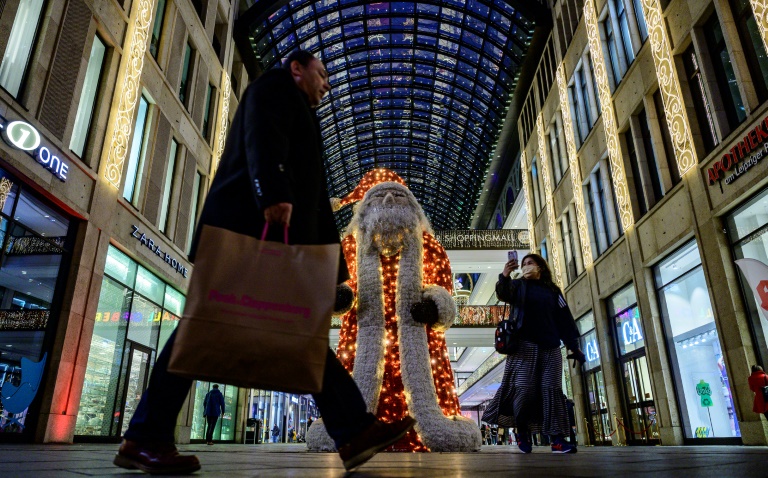
Asian markets fell on Monday as traders weighed the prospect of a global recession caused by central bank moves to fight inflation.

Equities took a turn south last week after monetary policymakers around the world signalled that while price rises appeared to be stabilising, more work would be needed to get them under control.

All three main indexes on Wall Street ended sharply lower Friday after the Federal Reserve warned that it would continue tightening monetary policy into 2023.

That was followed by similar warnings from the European Central Bank and Bank of England, while data suggested economies were feeling the pinch, dealing a blow to sentiment heading into the Christmas break.

“With no shortage of economic headwinds, investors struggle to find something cheerful about this holiday week after the two most dominant central banks cast a pall over the proceedings,” said SPI Asset Management’s Stephen Innes.

The sell-off in New York fed through to Asia, where Tokyo shed more than one percent, while Hong Kong, Shanghai, Taipei, Manila, Bangkok, Jakarta and Wellington were all in negative territory.

However, Singapore and Mumbai edged up, while London, Paris and Frankfurt opened higher.

“A Santa rally looks doubtful given elevated growth risks and hawkish central banks rhetoric,” said National Australia Bank’s Tapas Strickland.

Adding to the downbeat mood was a spike in Covid-19 cases in China following the country’s reopening after almost three years of strict containment measures.

While the move is expected to boost the world’s number two economy, there is a worry that businesses and China’s health system will be hit in the near term.

Still, Beijing flagged a number of measures aimed at kickstarting growth next year, including support for the beleaguered property sector.

Sylvia Jablonski of Defiance ETFs had an upbeat outlook.

She told Bloomberg Radio that “the market will look through the expectations of a future recession at some point and come back in because equities are starting to look cheaper and cheaper as we go along here”.

An expected pick-up in demand from the country helped drive a rally in oil prices, with both main contracts up more than one percent.

– Key figures around 0820 GMT –

Tokyo – Nikkei 225: DOWN 1.1 percent at 27,237.64 (close)

Hong Kong – Hang Seng Index: DOWN 0.5 percent at 19,352.81 (close)

Shanghai – Composite: DOWN 1.9 percent at 3,107.11 (close)

London – FTSE 100: UP 0.4 percent at 7,355.10

Euro/dollar: UP at $1.0633 from $1.0589 on Friday

Pound/dollar: UP at $1.2201 from $1.2140

Euro/pound: DOWN at 87.13 pence from 87.22 pence

Dollar/yen: DOWN at 135.83 yen from 136.68 yen

West Texas Intermediate: UP 0.4 percent at $74.58 per barrel

Brent North Sea crude: UP 0.5 percent at $79.46 per barrel

New York – Dow: DOWN 0.9 percent at 32,920.46 (close)

Musk polls Twitter users on his future as CEO

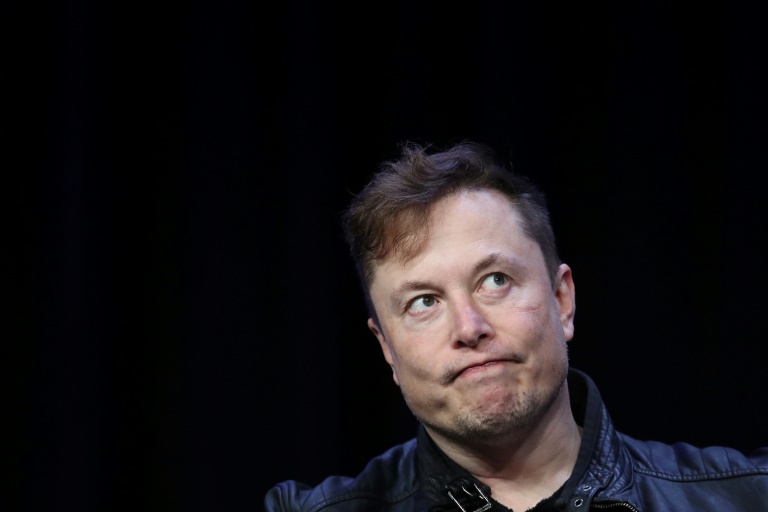
Elon Musk appeared to put his future in charge of Twitter on the line, posting a poll asking whether he should step down and vowing to abide by the results.

“Should I step down as head of Twitter?” he tweeted, asking the site’s users to click yes or no.

“I will abide by the results of this poll.”

With four hours until the end of the poll on Monday, 56.7 percent of nearly 14 million respondents had voted yes.

In Twitter exchanges with followers, Musk said he did not have a replacement lined up.

“No one wants the job who can actually keep Twitter alive. There is no successor,” he said.

Making a “fun suggestion” to Musk, MIT research scientist Lex Fridman offered to run the platform for a bit for no salary.

In a downbeat response, Musk said Twitter was “in the fast lane to bankruptcy.”

“You must like pain a lot. One catch: you have to invest your life savings in Twitter and it has been in the fast lane to bankruptcy since May. Still want the job?” Musk asked.

The unpredictable billionaire posted the poll shortly after apparently acknowledging he had made a mistake banning Twitter users from promoting their accounts on rival social media platforms.

“Going forward, there will be a vote for major policy changes. My apologies. Won’t happen again,” he tweeted.

The sudden shift in the rules was the latest in a series of controversial changes made by Musk since he took over the company in October — upheaval that has led a growing number of users to encourage followers to view their posts on other sites.

Twitter had announced that the company would “no longer allow free promotion of specific social media platforms.”

Users would thus be barred, for example, from posting “Follow me @username on Instagram,” Twitter said.

Twitter co-founder Jack Dorsey questioned the new policy with a one-word tweet: “Why?”

After some notable accounts were suspended under the new policy, including tech investor Paul Graham, Musk tweeted that instead of considering individual tweets, the policy would be limited to “suspending accounts only when that account’s *primary* purpose is promotion of competitors.”

– Series of controversies –

Musk has generated a series of controversies in his short tenure at the helm of Twitter, including layoffs, reinstatement of some far-right accounts and the suspension of several journalists.

Shortly after taking over the platform, he announced the site would charge $8 per month to verify account holders’ identities, but had to suspend the “Twitter Blue” plan after an embarrassing rash of fake accounts. It has since been relaunched.

On November 4, with Musk saying the company was losing $4 million a day, Twitter laid off half its 7,500-strong staff.

Musk also reinstated the account of former president Donald Trump and said Twitter would no longer work to combat Covid-19 disinformation.

In recent days, he suspended the accounts of several journalists — most recently, Washington Post reporter Taylor Lorenz — after complaining some had divulged details about the movements of his private jet that could endanger his family.

The suspension of the journalists — employees of CNN, The New York Times and The Washington Post were among those affected — has drawn sharp criticism, including from the European Union and the United Nations.

The US Federal Trade Commission said it was tracking developments at Twitter “with deep concern.”

The Washington Post’s executive editor Sally Buzbee said the suspension of Lorenz’s account “further undermines Elon Musk’s claim that he intends to run Twitter as a platform dedicated to free speech.”

Some of the suspended accounts have since been reactivated.

Drones attack Kyiv as Ukraine watches Belarus border

Drones attacked Kyiv early Monday, days after the Ukrainian capital withstood one of the biggest missile attacks since the start of Russia’s February invasion. 

The latest strikes came as Russian President Vladimir Putin travels to Belarus, Ukraine’s neighbour in the north, where Moscow’s troops stationed as part of a regional force are due to hold military exercises.

“During the air alert, 23 enemy UAVs were recorded in the sky above the capital. Air defence destroyed 18 drones,” the Kyiv city military administration said on social media. 

It added that the Russian forces were using barrage ammunition from “Shaheds”, Iranian-made weapons that have pummelled the capital in recent weeks.

Kyiv’s civil administration announced an initial air alert at 1:56 am (2356 GMT) which lasted for just over three hours. A second siren at 5:24 am (0324 GMT) was called off within a half hour.

Mayor Vitali Klitschko confirmed that “explosions” had occurred in the capital’s central Shevchenkivskyi and the Solomianskyi district in the west.

He said a critical infrastructure facilities were “damaged” but there were no known casualties. 

Ukrainian energy operator DTEK said emergency power cuts will be carried out in the capital following the attack.

Ukraine has been subjected to frequent and deadly aerial attacks in the 10 months since Russia’s invasion in late February.

After a series of key battlefield setbacks and lost territory this summer and autumn, Moscow pivoted strategies and stepped up its aerial campaign.

But with temperatures dropping, the missile and drone attacks have plunged cities around the country into darkness, and severed water and heat supplies to millions of Ukrainians.

– Putin to visit Belarus –

France and the European Union have said Russia’s assault on civilian infrastructure constitutes war crimes, with the bloc’s foreign policy chief calling the bombings “barbaric”.

After a major assault on multiple cities involving more than 70 missiles on Friday, the national electricity operator was forced to impose emergency rolling blackouts as it raced to repair the battered energy grid. 

Ukrainian President Volodymyr Zelensky said as of Sunday evening, nine million people have had their energy restored. 

In his nightly address, Zelensky also said the situation on Ukraine’s border with Russia and Belarus was a “constant priority”. 

“We are preparing for all possible defence scenarios,” Zelensky said, adding that the border situation was discussed at a meeting with his military commanders. 

Belarus President Alexander Lukashenko, who has been in power since 1994, is a long-time Kremlin ally and allowed Russian troops to use Belarusian territory as a launchpad for Moscow’s invasion. 

Lukashenko is hosting Putin in the capital Minsk on Monday, in what will be the Russian leader’s first visit to Belarus in over three years. 

Earlier on Monday, the Interfax news agency cited the defence ministry in Moscow as saying that Russian troops will conduct military exercises in Belarus.

In October, Belarus announced the formation of a joint regional force with Moscow with several thousand Russian servicemen arriving in the ex-Soviet country.  

It did not say when and where the drills will take place and how long they will last.

The deployment of Russian troops in Belarus had raised fears that Belarusian troops could join them in their offensive in Ukraine.

Jailed Pakistan Taliban take hostages after seizing police station

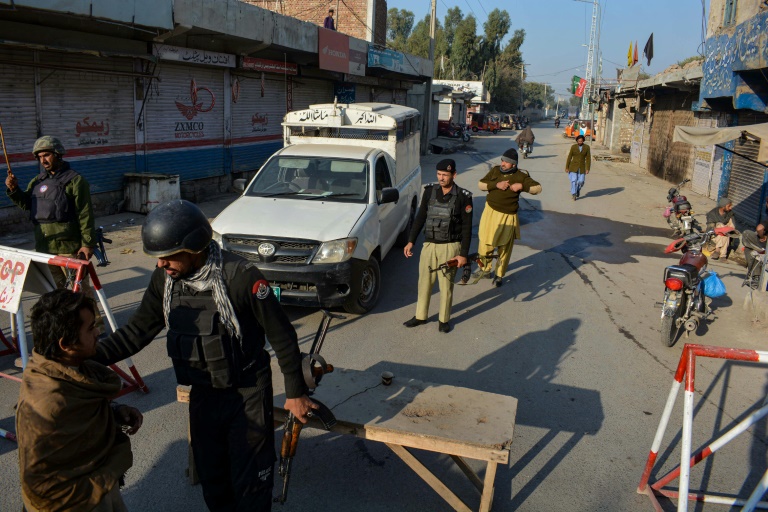
More than 30 Pakistan Taliban militants were holding several officers hostage on Monday after breaking free from custody and seizing a police station, officials said.

Members of the Tehreek–e-Taliban Pakistan (TTP) group — separate from the Afghan Taliban but with a similar hardline Islamist ideology — overpowered their jailers on Sunday and snatched weapons.

The militants, held on suspicion of terrorism, are demanding safe passage to Afghanistan, Muhammad Ali Saif, a spokesman for the provincial Khyber Pakhtunkhwa government, said in a statement late Sunday. 

A senior government official in Bannu, where the incident is unfolding near the border with Afghanistan and Pakistan’s former self-governed tribal areas, said hostages were still being held after a failed operation to free them. 

“During the interrogation, some of them snatched guns from the policemen and later took the entire staff hostage,” he told AFP, on condition of anonymity. 

“They want us to provide them safe passage via a ground route or by air. They want to take all the hostages with them and to release them later on the Afghan border or inside Afghanistan.”

The TTP claimed responsibility for the incident and demanded authorities provide safe passage to border areas.

“Otherwise, the entire responsibility of the situation will be on the military,” the TTP said in a statement.

A video posted to social media, which the government official confirmed to be from the scene, showed a group of armed men with long beards, with one threatening to kill all the hostages.

He said they had at least eight hostages, including police and military staff.

The TTP emerged in 2007 and carried out a horrific wave of violence in Pakistan that ended with a military crackdown from 2014.

Attacks are on the rise again since the Afghan Taliban seized control of Kabul last year but have mostly targeted security forces.

A shaky months-long ceasefire agreed with Islamabad ended last month.

In 2012 and 2013, dozens of heavily armed Taliban fighters freed more than 600 prisoners, including hardcore militants, during two sophisticated overnight attacks on a jail in Bannu town. 

31 Thai sailors missing after vessel sinks: Navy

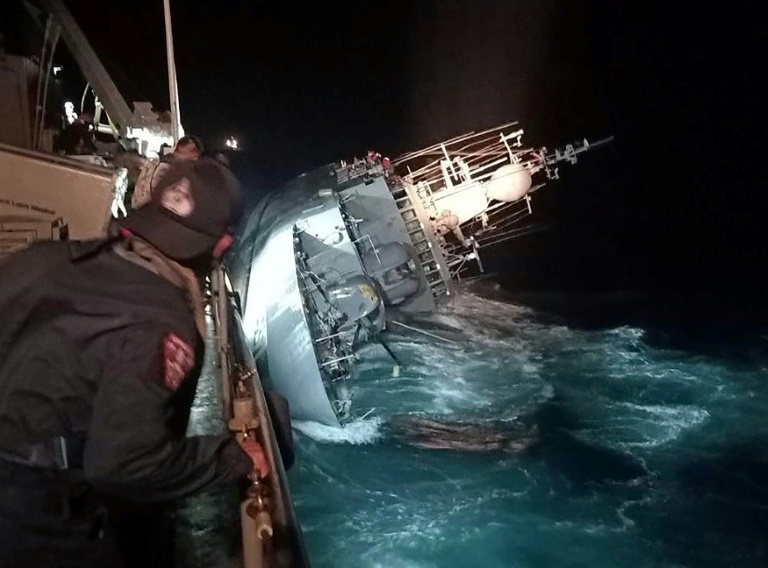
At least 31 Thai Navy sailors were missing on Monday after their vessel sank off the southeastern coast of Thailand, a naval spokesperson said.

The HTMS Sukhothai was patrolling the Gulf of Thailand, roughly 20 nautical miles from Bang Saphan pier in southern Prachuap Khiri Khan, when it ran into strong tides and took on water late Sunday night.

A rescue mission was launched after the vessel’s electronic system was damaged, with pictures shared by the navy showing the ship dramatically heeling to one side.

“We are still looking for 31 missing,” said navy spokesperson Admiral Pogkrong Montradpalin, adding that the ship sank shortly after midnight.

“The ship’s operating systems stopped working, causing the ship to lose control,” he said earlier Monday morning.

A statement said 75 of 106 personnel on board were pulled from the waters in a rescue operation involving two seahawk helicopters, two frigates and one amphibious ship.

The search-and-rescue operation, which started at 7 am, was ongoing, the statement added.

Around 11 naval personnel were being treated at Bang Saphan hospital, while some 40 others were being housed at shelters.

Women lack basics in crisis-hit Lebanon's crowded prisons

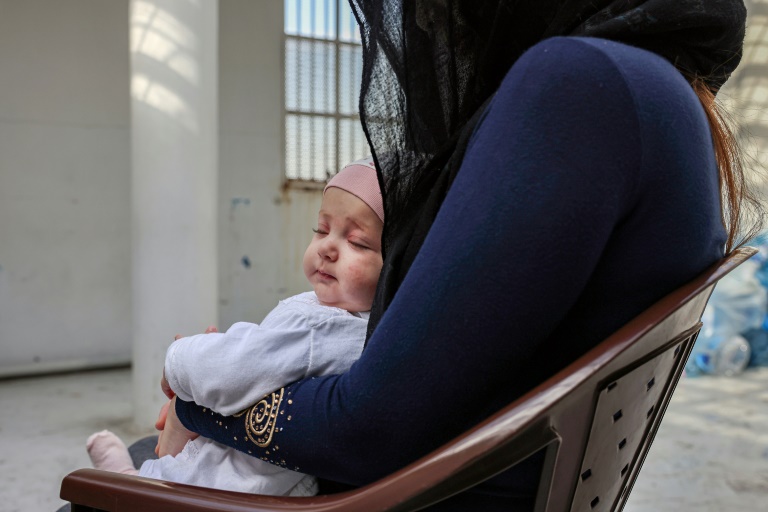
Nour is raising her four-month-old daughter in Lebanon’s most overpopulated women’s prison, struggling to get formula and nappies for her baby as the country’s economy lies in tatters.

“I don’t have enough milk to breastfeed, and baby formula isn’t readily available,” said the 25-year-old, who was detained eight months ago on drug-related accusations.

“Sometimes my daughter doesn’t have formula for three days,” she added, as green-eyed Amar wriggled on her lap.

Lebanese authorities have long struggled to care for the more than 8,000 people stuck in the country’s jails.

But three years of an unprecedented economic crisis mean even basics like medicines are lacking, while cash-strapped families struggle to support their jailed relatives.

Essentials like baby formula have become luxuries for many Lebanese, as the financial collapse — dubbed by the World Bank as one of the worst in recent world history — has pushed most of the population into poverty.

A months-long judges’ strike has exacerbated the situation in prisons, contributing to overcrowding.

Nour said she and her daughter shared a cell at the Baabda women’s prison with another 23 people, including two other babies.

She said she sometimes kept Amar in the same nappy overnight while waiting for her parents to bring fresh supplies, but said even they can “barely help with one percent of my baby’s needs”.

In a hushed voice, she said the shower water gave her and her daughter rashes, but that Amar had never been examined by a prison doctor.

“We all make mistakes, but the punishment we get here is double,” Nour said.

– ‘We need basics’ –

Inmates at the prison, located outside the capital Beirut, spoke to AFP in the presence of the prison director and declined to provide their surnames.

Around them, in the facility’s breakroom, paint peeled off the walls and water dripped from the ceiling.

Rampant inflation and higher fuel prices have also prevented families from visiting their jailed relatives regularly.

Bushra, another inmate, said she had not seen her teenage daughter for nine months because her family could not afford transportation.

She was detained earlier this year on slander allegations and has been in jail ever since.

“I miss my daughter,” said the tattooed 28-year-old, as her eyes welled up with tears.

“So many mothers here cannot even see their children,” she added.

Interior Minister Bassam Mawlawi said in September that Lebanon’s economic crisis had “multiplied the suffering of inmates”.

His ministry has appealed for more international support for the prison system, citing overcrowding, poor maintenance and shortages of food and medications.

Inmate Tatiana, 32, expressed helplessness at her and her family’s situation. She said her mother had slipped into poverty and was living on just $1 a day.

Prisoners “need basics: shampoo, deodorant, clothes,” said Tatiana, who has been waiting for a court hearing for nearly three years.

“But our parents cannot afford them for themselves, how can they buy those things for us?” she added, dark circles lining her eyes.

– ‘Absent state’ –

Tatiana is among the nearly 80 percent of Lebanon’s prison population languishing in pre-trial detention, according to interior ministry figures. Prison occupancy stands at 323 percent nationwide.

The country’s already slow judiciary has been paralysed since August, when judges started an open-ended strike to demand better wages.

Inmates told AFP they slept on dirty mattresses strewn on the floor in a one-toilet cell shared between more than 20 people.

Baabda women’s prison director Nancy Ibrahim said more than 105 detainees were crammed into the jail’s five cells, compared to around 80 before the economic collapse.

Non-governmental organisations help with everything from food to “medications, vaccinations for the children” and maintenance, she told AFP from her office at the facility.

Rana Younes, 25, a social worker at Dar Al Amal, said her organisation helps women prisoners get the basics including sanitary pads, and also provides legal assistance and even funding for cancer treatments.

She said prisoners sometimes missed court hearings because authorities failed to secure fuel or transportation for them.

Dar Al Amal has spent thousands of dollars on repairs for worn-out pipes and trucked-in water supplies at the Baabda prison, said organisation director Hoda Kara.

“Parents can no longer help, the state is absent, so we try to fill the gap,” she said.

Drones attack Kyiv as Ukraine struggles to restore power

Drones attacked the Ukrainian capital early Monday morning, the Kyiv city military administration said, urging people to heed air alerts. 

“The enemy is attacking the capital,” the administration posted on Telegram. 

“At the moment, 9 enemy UAVs (unmanned aerial vehicles) have already been shot down in the airspace of Kyiv.”

It added that the Russian forces were using barrage ammunition from “Shaheds”, Iran-made weapons that have pummelled the capital in recent weeks.

The city’s civil administration announced an initial air alert at 1:56 am (2356 GMT) which lasted for just over three hours. A second siren at 5:24 am (0324 GMT) was called off within a half hour.

Kyiv mayor Vitali Klitschko confirmed on Monday that “explosions” had occurred in the capital.

“Several explosions were heard in the Solomianskyi and Shevchenkivskyi districts of the capital,” he said. “All services work on the ground. More details later.”

Ukraine has been subjected to frequent and deadly aerial attacks in the 10 months since Russia’s invasion in February.

After a series of key battlefield setbacks and lost territory this summer and autumn, Moscow pivoted strategies and stepped up its aerial campaign.

Russia’s defence ministry says its strikes are targeting Ukraine’s military and energy facilities, while also disrupting “the transfer of weapons and ammunition of foreign production”.

– ‘Barbaric’ bombings –

But with temperatures dropping, the missile and drone attacks have plunged cities around the country into darkness, and severed water and heat supplies to millions of Ukrainians.

France and the European Union have said Russia’s assault on civilian infrastructure constitutes war crimes, with the bloc’s foreign policy chief calling the bombings “barbaric”.

After a major assault on multiple cities involving more than 70 missiles on Friday, the national electricity operator was forced to impose emergency rolling blackouts as it raced to repair the battered energy grid. 

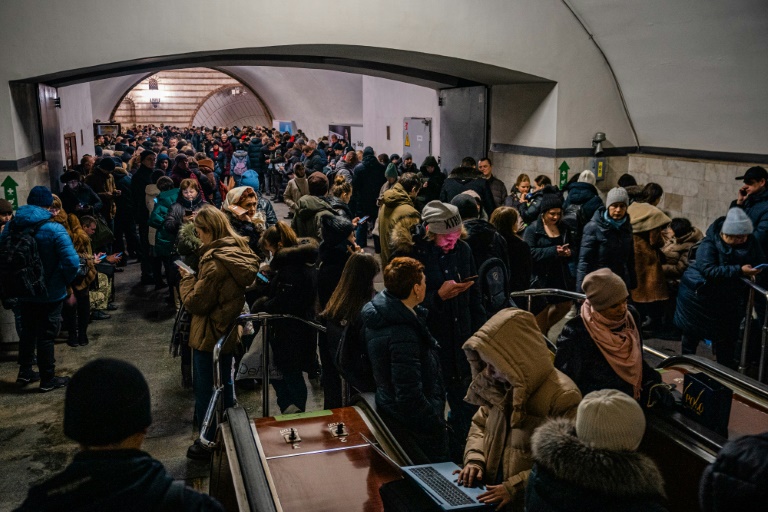
In the capital, people had bundled into metro stations seeking heat and shelter while officials scrambled to restore power.

Ukrainian President Volodymyr Zelensky said as of Sunday night, nine million people have had their energy restored. 

“In most cities, the work of transport is being normalised,” he said in his nightly address.

Last week, Ukraine’s Western allies pledged an additional 1 billion euros ($1.1 billion) in emergency winter aid for Ukraine

Zelensky had said the high sum was needed to secure spare parts for repairs, high-capacity generators, extra gas and increased electricity imports.

Meanwhile, Russian President Vladimir Putin has sought proposals from his top military brass on how to proceed with the invasion. He asked for “short- and medium-term” plans in footage broadcast on state TV. 

Ukrainian military leaders have warned that Moscow is gearing up for a major winter offensive, including an attempt to seize Kyiv. 

Countries poised for historic deal to protect nature

Countries closed in on a historic deal to reverse decades of environmental destruction threatening the world’s species and ecosystems at a marathon UN biodiversity summit on Sunday.

After four years of fraught negotiations, more than 190 states were called on to rally behind a Chinese-brokered accord aimed at saving the lands, oceans and species from pollution, degradation and the climate crisis.

China tabled a plan to secure 30 percent of the planet as a protected zone by 2030 and to stump up $30 billion in yearly conservation aid for the developing world.

A plenary session was scheduled late Sunday at which the countries would be called upon to approve the deal.

Environmentalists have compared the accord to the landmark plan to limit global warming to 1.5C under the Paris agreement, though some conservationists commenting on an earlier draft of the plan Sunday warned that it did not go far enough.

Brian O’Donnell with the Campaign for Nature, remarked that if the draft were enacted, it would be “the largest commitment to ocean and land conservation in history.”

Marco Lambertini, head of the Worldwide Fund for Nature, said “it is the equivalent to 1.5C in climate and vital to catalyzing action toward a nature-positive world and holding everyone accountable.

“However, there still remain several loopholes, weak language, and timelines around actions that aren’t commensurate with the scale of the nature crisis we’re all witnessing, and importantly may not add up to achieve this shared global goal,” he added.

– Aid boost –

The text calls on wealthy countries to increase financial aid to the developing world to $20 billion annually by 2025, rising to $30 billion per year by 2030, while ensuring 30 percent of land and sea areas are effectively conserved and managed by the end of this decade.

The draft published earlier Sunday includes language safeguarding the rights of Indigenous people as stewards of their lands, a key demand of campaigners.

But it pulled punches in other areas — for example, only encouraging businesses to report their biodiversity impacts rather than mandating them to do so.

The more than 20 targets in the accord also include cutting environmentally destructive farming subsidies, reducing pesticide use and tackling invasive species.

At Sunday night’s session at the COP15 summit, the draft will be put to the nearly 200 signatories to the Convention on Biological Diversity.

China chaired the conference but it was held in Canada because of China’s strict Covid rules.

– Funding dispute –

At times, the talks looked at risk of collapsing as countries squabbled over money.

The issue of how much money the rich countries will send to the developing world, home to most of the planet’s biodiversity, was the biggest sticking point.

Developing countries, spearheaded by Brazil, had been seeking the creation of a new fund to signal the Global North’s commitment to the cause. But the draft text instead suggested a compromise: a “trust fund” within an existing mechanism, called the Global Environment Facility (GEF).

Brazilian delegate Braulio Dias, speaking on behalf of the incoming government of Luiz Inacio Lula da Silva, called for “better resource mobilization” — technical speak for more aid to developing countries, a concern echoed by the Democratic Republic of Congo.

Current financial flows for nature to the developing world are estimated at around $10 billion per year.

Beyond the moral implications, there is the question of self-interest: $44 trillion of economic value generation — more than half the world’s total GDP — depends on nature and its services.

The United States is not a signatory to the biodiversity convention due to resistance from Republican senators. US President Joe Biden supports the deal and launched his own “30 by 30” plan domestically, while the United States pays into the GEF to assist developing countries.

Close Bitnami banner
Bitnami