World

Countries poised for historic deal to protect nature

Countries closed in on a historic deal to reverse decades of environmental destruction threatening the world’s species and ecosystems at a marathon UN biodiversity summit on Sunday.

After four years of fraught negotiations, more than 190 states were called on to rally behind a Chinese-brokered accord aimed at saving the lands, oceans and species from pollution, degradation and the climate crisis.

China tabled a plan to secure 30 percent of the planet as a protected zone by 2030 and to stump up $30 billion in yearly conservation aid for the developing world.

A plenary session was scheduled late Sunday at which the countries would be called upon to approve the deal.

Environmentalists have compared the accord to the landmark plan to limit global warming to 1.5C under the Paris agreement, though some conservationists commenting on an earlier draft of the plan Sunday warned that it did not go far enough.

Brian O’Donnell with the Campaign for Nature, remarked that if the draft were enacted, it would be “the largest commitment to ocean and land conservation in history.”

Marco Lambertini, head of the Worldwide Fund for Nature, said “it is the equivalent to 1.5C in climate and vital to catalyzing action toward a nature-positive world and holding everyone accountable.

“However, there still remain several loopholes, weak language, and timelines around actions that aren’t commensurate with the scale of the nature crisis we’re all witnessing, and importantly may not add up to achieve this shared global goal,” he added.

– Aid boost –

The text calls on wealthy countries to increase financial aid to the developing world to $20 billion annually by 2025, rising to $30 billion per year by 2030, while ensuring 30 percent of land and sea areas are effectively conserved and managed by the end of this decade.

The draft published earlier Sunday includes language safeguarding the rights of Indigenous people as stewards of their lands, a key demand of campaigners.

But it pulled punches in other areas — for example, only encouraging businesses to report their biodiversity impacts rather than mandating them to do so.

The more than 20 targets in the accord also include cutting environmentally destructive farming subsidies, reducing pesticide use and tackling invasive species.

At Sunday night’s session at the COP15 summit, the draft will be put to the nearly 200 signatories to the Convention on Biological Diversity.

China chaired the conference but it was held in Canada because of China’s strict Covid rules.

– Funding dispute –

At times, the talks looked at risk of collapsing as countries squabbled over money.

The issue of how much money the rich countries will send to the developing world, home to most of the planet’s biodiversity, was the biggest sticking point.

Developing countries, spearheaded by Brazil, had been seeking the creation of a new fund to signal the Global North’s commitment to the cause. But the draft text instead suggested a compromise: a “trust fund” within an existing mechanism, called the Global Environment Facility (GEF).

Brazilian delegate Braulio Dias, speaking on behalf of the incoming government of Luiz Inacio Lula da Silva, called for “better resource mobilization” — technical speak for more aid to developing countries, a concern echoed by the Democratic Republic of Congo.

Current financial flows for nature to the developing world are estimated at around $10 billion per year.

Beyond the moral implications, there is the question of self-interest: $44 trillion of economic value generation — more than half the world’s total GDP — depends on nature and its services.

The United States is not a signatory to the biodiversity convention due to resistance from Republican senators. US President Joe Biden supports the deal and launched his own “30 by 30” plan domestically, while the United States pays into the GEF to assist developing countries.

Asian markets track US losses on recession worries

Asian markets fell on Monday as traders weighed the prospect of a global recession caused by central bank moves to fight inflation.

Equities took a turn south last week after monetary policymakers around the world signalled that while price rises appeared to be stabilising, more work would be needed to get them under control.

All three main indexes on Wall Street ended sharply lower Friday after the Federal Reserve warned that it would continue tightening monetary policy into 2023.

That was followed by similar warnings from the European Central Bank and Bank of England, while data suggested economies were feeling the pinch, dealing a blow to sentiment heading into the Christmas break.

“With no shortage of economic headwinds, investors struggle to find something cheerful about this holiday week after the two most dominant central banks cast a pall over the proceedings,” said SPI Asset Management’s Stephen Innes.

The sell-off in New York fed through to Asia, where Tokyo shed more than one percent, while Hong Kong, Shanghai, Taipei, Seoul, Manila, Jakarta and Wellington were all in negative territory.

“A Santa rally looks doubtful given elevated growth risks and hawkish central banks rhetoric,” said National Australia Bank’s Tapas Strickland.

Adding to the downbeat mood was a spike in Covid-19 cases in China following the country’s reopening after almost three years of strict containment measures.

While the move is expected to boost the world’s number two economy, there is a worry that businesses and the country’s health system will be hit in the near term.

Still, Beijing flagged a number of measures aimed at kickstarting growth next year, including support for the beleaguered property sector.

However, Sylvia Jablonski of Defiance ETFs had an upbeat outlook.

She told Bloomberg Radio that “the market will look through the expectations of a future recession at some point and come back in because equities are starting to look cheaper and cheaper as we go along here”.

An expected pick-up in demand from the country helped drive a rally in oil prices, with both main contracts up more than one percent.

– Key figures around 0230 GMT –

Tokyo – Nikkei 225: DOWN 1.1 percent at 27,221.29 (break)

Hong Kong – Hang Seng Index: DOWN 0.9 percent at 19,282.35

Shanghai – Composite: DOWN 1.1 percent at 3,134.33

Euro/dollar: UP at $1.0607 from $1.0589 on Friday

Pound/dollar: UP at $1.2186 from $1.2140

Euro/pound: DOWN at 87.02 pence from 87.22 pence

Dollar/yen: DOWN at 136.06 yen from 136.68 yen

West Texas Intermediate: UP 1.4 percent at $75.32 per barrel

Brent North Sea crude: UP 1.4 percent at $80.17 per barrel

New York – Dow: DOWN 0.9 percent at 32,920.46 (close)

London – FTSE 100: DOWN 1.3 percent at 7,332.12 (closing)

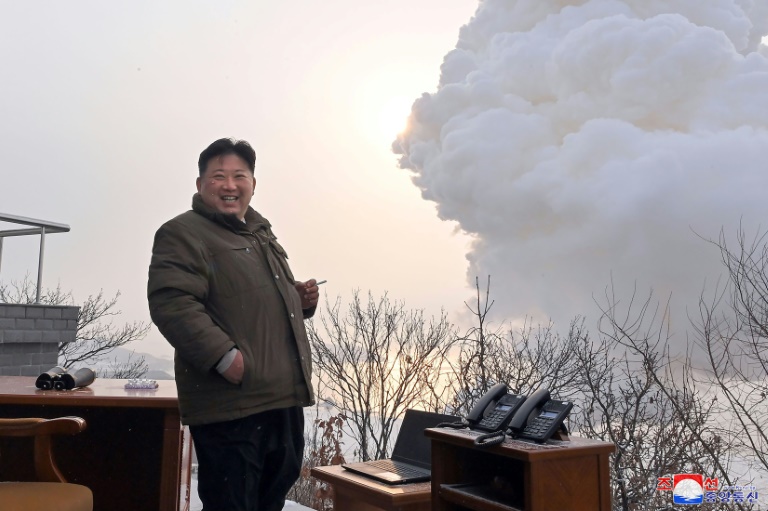
North Korea conducts 'final-stage test' for spy satellite: state media

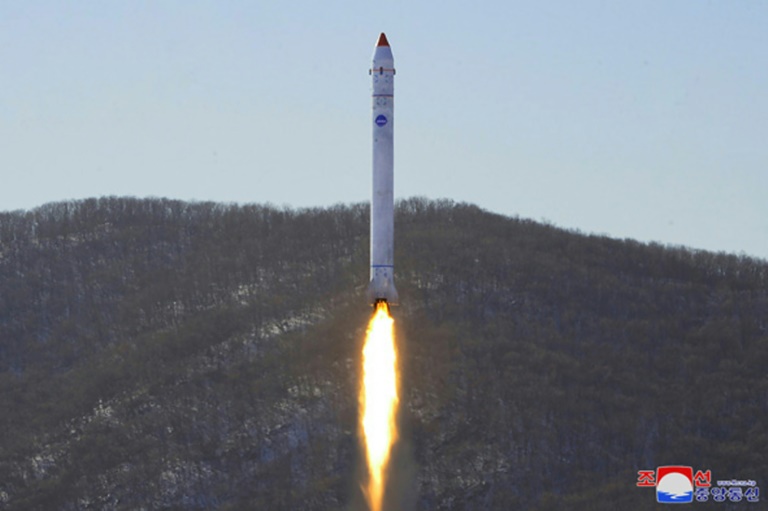
North Korea carried out an “important final-stage test” for the development of a spy satellite, which it will complete by April next year, state media said on Monday.

The report comes a day after Seoul’s military said it had detected launches by Pyongyang of two medium-range ballistic missiles, the North’s latest in a year of unprecedented weapons tests.

Analysts say developing such a satellite would provide North Korea with cover for testing banned intercontinental ballistic missiles (ICBMs), as they share much of the same technology.

The launches were “an important final-stage test for the development of (a) reconnaissance satellite”, a spokesperson with the North’s National Aerospace Development Administration (NADA) said, according to the official Korean Central News Agency on Monday. 

Conducted from Sohae Satellite Launching Ground in Tongchang-ri, Sunday’s test confirmed “important technical indices” including camera operation in space, and data processing and transmission capabilities of communication devices.

State media also said the vehicle carrying the “test-piece” satellite — which included cameras, image transmitters and receivers, control devices and batteries — reached an altitude of 500 kilometres (311 miles) when it was fired at a high angle.

“The NADA said this is an important success which has gone through the final gateway process of the launch of (a) reconnaissance satellite,” the spokesman said, adding that preparations will be completed by April.

Rodong Sinmun, the official newspaper of North Korea’s ruling Workers’ Party, carried two black-and-white photographs that appeared to show South Korea seen from space.

The development of a military reconnaissance satellite was one of Pyongyang’s key defence projects outlined by North Korean leader Kim Jong Un last year.

Pyongyang carried out two launches earlier this year, claiming it was testing components for a reconnaissance satellite, which the United States and South Korea said likely involved components of its new Hwasong-17 intercontinental ballistic missile.

– Nuclear state –

On Thursday, the North tested a “high-thrust solid-fuel motor” at the Sohae launch site, which analysts say would allow quicker and more mobile launches of ballistic missiles.

All of Pyongyang’s known ICBMs are liquid-fuelled, and solid-fuel ICBMs that can be launched from land or submarines are on Kim’s wish list revealed last year.

Kim, who has doubled down on his banned weapons programmes since nuclear talks collapsed in 2019, said this year he wants the North to have the world’s most powerful nuclear force, and declared his country an “irreversible” nuclear state.

The United States and South Korea have warned for months that Pyongyang is preparing to conduct its seventh nuclear test.

North Korea is under multiple UN Security Council sanctions over its nuclear and missile activity since 2006.

UK set for ruling on plan to deport migrants to Rwanda

UK high court judges were on Monday due to rule on challenges to the British government’s controversial policy of deporting migrants and asylum-seekers to Rwanda.

Irregular migration is a thorny political issue for the UK government which promised to tighten borders after the country left the European Union.

It is currently grappling with how to deal with a record over 40,000 migrants who have crossed the Channel from its European neighbours in small boats this year alone.

In a bid to deal with the unprecedented number of arrivals, former prime minister Boris Johnson’s Conservative government in April announced a scheme to deport migrants thousands of miles away to Rwanda, provoking a storm of outrage.

According to the arrangement, the British government had hoped to send anyone entering the UK illegally, as well as those who have arrived illegally since January 1, to Rwanda.

But deportation flights were stymied by a series of legal challenges in the UK courts and at the European Court of Human Rights.

A first flight of a small group of asylum-seekers had been due to take off from the UK in June but it was halted following a last-minute injunction by the European Court of Human Rights in Strasbourg.

In the UK, one court challenge was brought by individual asylum-seekers, the PCS union whose members would have to implement the removals, and migrant support groups Care4Calais and Detention Action.

Before the first full hearing of that challenge in September, PCS General Secretary Mark Serwotka said sending asylum-seekers to Rwanda was “not only immoral and unlawful — our members tell us it’s unworkable too”.

– ‘Global migration crisis’ –  

Lawyers for the parties argued that the policy was unlawful on multiple grounds including the assessment of Rwanda as a safe third country.

A second challenge was brought by the charity Asylum Aid.

Johnson defended the policy as vital to resolving the problem of “illegal cross-Channel trafficking of people whose lives are being put at risk by the gangs”.

Four people died last week after a small boat packed with migrants capsized in the Channel in freezing weather conditions.

After Johnson was ousted, both his successors as party leader and prime minister — first Liz Truss and then Rishi Sunak — pledged to continue the policy.

Sunak’s Home Secretary Suella Braverman has said it is her “dream” to finally see a plane carrying migrants take off for Kigali.

In an interview published on Saturday, Braverman suggested that the European Convention on Human Rights and the UN refugee convention, both of which have thrown up obstacles to the Rwanda policy, were outdated when dealing with modern-day migration.

“There are legitimate questions about whether that international framework is fit for purpose when we’re seeing a global migration crisis,” she told The Times daily.

Such conventions and international agreements had been struck in the aftermath of World War II and “designed for a world where travel was not cheap, numbers were much lower, flows of people were much smaller”, she said, adding that the government was pursuing similar agreements to the Rwanda one with other countries.

Justice Lewis and Justice Swift are due to give judgments in both challenges before the court on Monday.

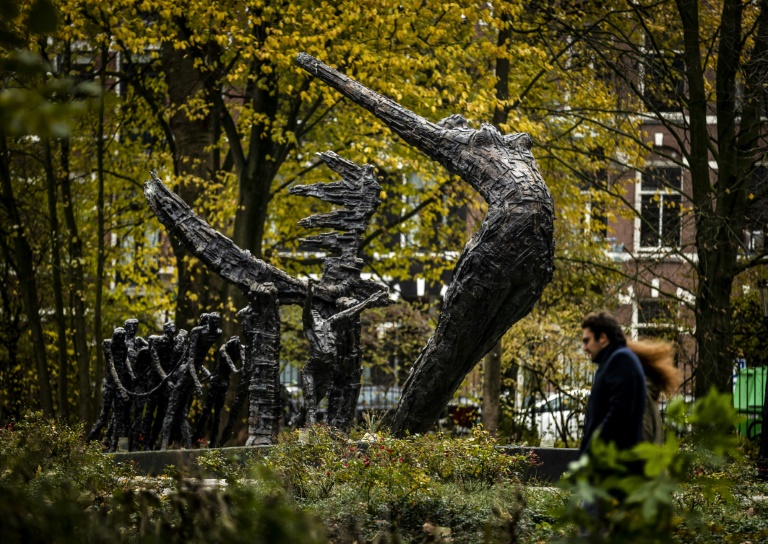
Dutch expected to apologise for 250 years of slavery

The Netherlands looks set Monday to finally embark on a path leading to a formal apology for its tainted 250-year history of slavery.

Prime Minister Mark Rutte is giving a speech on slavery in The Hague in what he has called a “meaningful moment” while Dutch ministers are travelling to seven former colonies in South America and the Caribbean for the event.

Sigrid Kaag, the Dutch finance minister and deputy prime minister, said on an official visit to Suriname last week that a “process” would begin leading up to “another incredibly important moment on July 1 next year”.

Descendants of Dutch slavery will then celebrate 150 years of liberation from slavery in an annual celebration called “Keti Koti” (Breaking the Chains) in Surinamese.

But the plan has caused controversy, with groups and some of the affected countries criticising the move as rushed, and saying the lack of consultation by the Netherlands smacked of a still-colonial attitude.

As a result, Rutte has still not yet confirmed he will actually apologise, saying last week that details of his speech are “something that I would really like to keep under wraps until Monday”. 

Local media said “everything points to the fact that he will indeed apologise” for the Dutch role in a trade that caused centuries of untold misery, but it remained unsure.

– ‘Golden’ Age? –

The Dutch funded their “Golden Age” of empire and culture in the 16th and 17th centuries by shipping around 600,000 Africans as part of the slave trade, mostly to South America and the Caribbean.

At the height of its colonial empire, the United Provinces known today as the Netherlands possessed colonies like Suriname, the Caribbean island of Curacao, South Africa and Indonesia, where the Dutch East India Company was based in the 17th century.

In recent years, the Netherlands has been grappling with the fact that its Rembrandt and Vermeer-filled museums and historic towns were largely built on the back of that brutality.

Spurred by the Black Lives Matter movement in the United States, it has also raised questions about the racism in Dutch society.

Pressure has been growing at home with the cities of Amsterdam, Rotterdam, The Hague and Utrecht formally apologising for the slave trade.

Rutte had long resisted, previously saying the period of slavery was too far back and that an apology would ignite tensions in a country where the far-right remains strong.

He has now changed tack, but that has not pleased everyone.

– ‘Enslaved people’ –

Sint Maarten’s Prime Minister Silveria Jacobs told Dutch media on Saturday the island would not accept a Dutch apology if made on Monday.

“Let me be clear that we won’t accept an apology until our advisory committee has discussed it and we as a country discussed it,” she said.  

The fact that another Dutch minister sent to Suriname, Franc Weerwind, is himself of Surinamese descent sparked criticism from the slavery restitution group there on the grounds that he is a “descendant of enslaved people”.

On Monday, Dutch cabinet ministers would be in Suriname, Bonaire, Sint Maarten, Aruba, Curacao, Saba, St. Eustatius to “discuss the cabinet response and its significance on location with those present” after the Dutch PM speaks, the government said.

Slavery was formally abolished in Suriname and other Dutch-held lands on July 1, 1863, but the practice only really ended in 1873 after a 10-year “transition” period.

Slavery commemoration groups say any apology should come on the 150th anniversary of that date, in 2023, instead of the “arbitrary” date of December 19 this year.

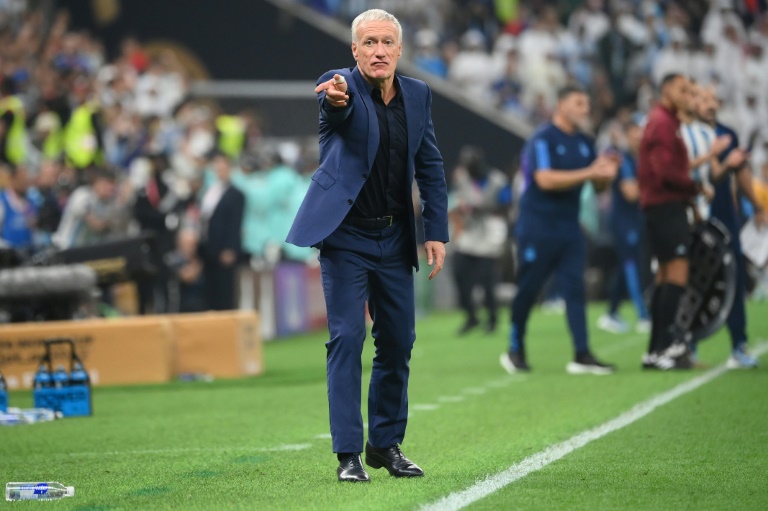
Deschamps to decide on future but outlook bright for Mbappe's France

Didier Deschamps said he would wait before deciding whether to remain as coach of France in the wake of their World Cup final defeat, but the future prospects remain bright for a side brimming with young talent and led by Kylian Mbappe.

Deschamps was hoping to lead the 2018 world champions to back-to-back titles in Qatar, and they came agonisingly close, losing the final to Argentina on penalties following a thrilling 3-3 draw after extra time.

The shoot-out defeat prevented Deschamps -– who captained Les Bleus to glory in 1998 –- from becoming the first coach to win the World Cup twice since Vittorio Pozzo in the 1930s.

The 54-year-old, in charge since 2012, is now out of contract but French Football Federation President Noel Le Graet had said Deschamps would be offered new terms if he reached the semi-finals.

Asked whether the result of the final would influence a decision on his future, Deschamps said: “Even with a different result I would not have given an answer today.”

“Obviously I am very sad. I will have a meeting with the president at the start of the new year and you will know after that,” he added.

Once the dust has settled on a draining campaign, France must turn their attentions to qualifying for Euro 2024, which begins in March against the Netherlands.  

France will be expected to qualify without too many problems for the tournament in Germany, which is just 18 months away.

Their recent record is remarkable, with Deschamps having led them to the Euro 2016 final and then to glory in Russia four years ago. They also won the Nations League last year.

France’s campaign in Qatar had appeared cursed before it started with injuries depriving them of Paul Pogba and N’Golo Kante while Karim Benzema also withdrew just before the tournament began.

– ‘Huge pool of talent’ –

However, it has been a breakthrough campaign for some young stars, with Aurelien Tchouameni, Theo Hernandez, Jules Kounde and Ibrahima Konate all aged 25 or under.

Randal Kolo Muani had won just two caps before being brought in as a last-minute replacement for the injured Christopher Nkunku.

The Eintracht Frankfurt forward, who comes from the same Paris suburb as Mbappe and is just two weeks older, ended up having a big impact.

He scored against Morocco in the semi-finals and in the final was only denied an incredible late winner in extra time by a brilliant save from Argentina goalkeeper Emiliano Martinez.

“Some of the young players showed they are good enough for this level. There are others who were not here but will be involved in future,” said Deschamps, who must have been thinking of the 25-year-old Nkunku, the best player in the Bundesliga last season with RB Leipzig.

“We always need experienced players to lead the younger ones but we have a huge pool of talent.”

Some of France’s distinguished veterans will now be considering their futures after what were record-breaking World Cup campaigns.

Olivier Giroud overtook Thierry Henry as his country’s all-time top scorer, while goalkeeper Hugo Lloris surpassed Lilian Thuram to become France’s record cap-holder.

Both, however, will be 36 by the end of this month.

But one player set to lead Les Bleus for years to come is the astonishing Mbappe.

He only turns 24 on Tuesday and yet has already won one World Cup and become the first player in 60 years to score in successive finals.

Given his age, his peak may still be to come as France eye the European Championship and, beyond that, the 2026 World Cup.

This World Cup has been “a passing of the baton between one generation coming to the final stage of their careers to a new generation led by Mbappe,” said Lloris.

And Raphael Varane, one of five French players who started on Sunday having also played in the 2018 final, said defeat in Doha would make the new generation stronger.

“It is a very young group. We have also built our successes on defeats and so this group of players will bounce back. There is enormous potential,” he said.

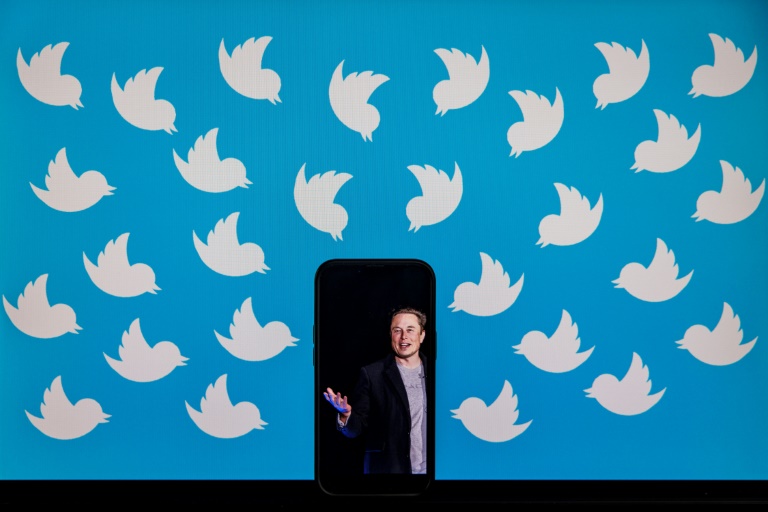
Twitter to ban users from promoting rival social platforms

Twitter announced Sunday it would no longer allow users to promote their accounts on several rival social media platforms including Facebook and Instagram, but the site’s mercurial owner Elon Musk appeared to backtrack on the new policy just hours later.

The sudden shift in the rules was the latest in a series of controversial changes made by Musk since he took over the company in October — upheaval that has led a growing number of users to encourage followers to view their posts on other sites.

The unpredictable billionaire even put his future as Twitter’s CEO to a vote.

“Should I step down as head of Twitter?” he tweeted, asking the site’s users to click yes or no. 

“I will abide by the results of this poll,” he added, with the vote open until the early hours of Monday.

Twitter had announced that the company would “no longer allow free promotion of specific social media platforms.”

“At both the Tweet level and the account level, we will remove any free promotion of prohibited 3rd-party social media platforms, such as linking out (i.e. using URLs) to any of the below platforms on Twitter, or providing your handle without a URL,” the company explained in a statement.

Users would thus be barred, for example, from posting “Follow me @username on Instagram,” Twitter said.

Twitter co-founder Jack Dorsey questioned the new policy with a one-word tweet: “Why?”

After some notable accounts were suspended under the new policy, including tech investor Paul Graham, Musk tweeted that instead of considering individual tweets, the policy would be limited to “suspending accounts only when that account’s *primary* purpose is promotion of competitors.”

He later said: “Going forward, there will be a vote for major policy changes. My apologies. Won’t happen again.”

– Changes under Musk –

The move was the latest in a growing series of controversies generated by Musk in his short tenure at the helm of Twitter, including layoffs, reinstatement of some far-right accounts and the suspension of several journalists.

Shortly after taking over the platform, he announced the site would charge $8 per month to verify account holders’ identities, but had to suspend the “Twitter Blue” plan after an embarrassing rash of fake accounts. It has since been relaunched.

On November 4, with Musk saying the company was losing $4 million a day, Twitter laid off half its 7,500-strong staff.

Musk also reinstated the account of former president Donald Trump and said Twitter would no longer work to combat Covid-19 disinformation.

In recent days, he suspended the accounts of several journalists — most recently, Washington Post reporter Taylor Lorenz — after complaining some had divulged details about the movements of his private jet that could endanger his family.

The suspension of the journalists — employees of CNN, The New York Times and The Washington Post were among those affected — has drawn sharp criticism, including from the European Union and the United Nations.

The US Federal Trade Commission said it was tracking developments at Twitter “with deep concern.”

Washington Post executive editor Sally Buzbee said the suspension of Lorenz’s account “further undermines Elon Musk’s claim that he intends to run Twitter as a platform dedicated to free speech.”

Some of the suspended accounts have since been reactivated.

North Korea fires two ballistic missiles: Seoul's military

North Korea fired two medium-range ballistic missiles Sunday, Seoul’s military said, days after Pyongyang announced a successful test of a solid-fuel motor for a new weapons system.

Military tensions on the Korean peninsula have risen sharply this year as Pyongyang has carried out an unprecedented blitz of weapons tests, including the launch of its most advanced intercontinental ballistic missile ever last month.

South Korea’s Joint Chiefs of Staff said it detected two medium-range ballistic missiles that had been fired from the Tongchang-ri area in North Pyongan province.

The missiles were fired from 11:13 am (0213 GMT) to 12:05 pm into the East Sea, it said, referring to the body of water also known as the Sea of Japan.

They were fired on a “lofted” trajectory and flew around 500 kilometres (311 miles), JCS said in a statement, adding South Korean and US intelligence were analysing the launch “in consideration of recent trends related to North Korea’s missile development”.

Early Monday, North Korean state media said it had conducted an “important final-stage test for the development of (a) reconnaissance satellite” at the Sohae Satellite Launch Ground, which is located in Tongchang-ri.

The North tested a “high-thrust solid-fuel motor” at Sohae on Thursday, with state media describing it as an important test “for the development of another new-type strategic weapon system”.

“Given that the missiles launched today are medium-range ballistic missiles, it is assessed to be test-firings of a new ballistic missile equipped with the solid-fuel engine tested on December 15,” said Cheong Seong-chang, a researcher at the Sejong Institute.

The South’s military “strongly” condemned Sunday’s launch, calling it a “serious provocation” and a “clear violation” of UN Security Council resolutions.

“Our military will maintain a firm readiness posture based on the ability to carry out an overwhelming response to any provocations by North Korea,” it added.

– Kim’s wish list –

Despite heavy international sanctions over its weapons programmes, Pyongyang has built up an arsenal of intercontinental ballistic missiles (ICBMs).

All its known ICBMs are liquid-fuelled, however, and North Korean leader Kim Jong Un has placed strategic priority on developing solid-fuel engines for more advanced missiles.

Liquid-fuel rockets are notoriously difficult to operate and take a long time to prepare for launch, making them slower and easier for the enemy to spot and destroy.

The more mobile solid-fuel missiles have a much shorter prep time, and are harder to detect before launch.

A wish list Kim revealed last year included solid-fuel ICBMs that could be launched from land or submarines.

The latest motor test was a step towards that goal, but it is not clear how far North Korea has come in the development of such a missile, analysts said.

– Key party meeting –

The isolated country’s policy direction for next year will be laid out at a key party meeting later this month, and the official Korean Central News Agency earlier reported Kim saying that 2023 would be a “historic year”.

In past years, Kim had delivered a speech every January 1, but he recently dropped the tradition in favour of making announcements at the year-end plenary meeting.

In his most recent address to the meeting, which was released to the public last New Year’s Day, Kim focused on domestic affairs.

Experts say while Kim refrained from directly addressing the United States last year, he could change his tone this time around.

Kim said this year that he wants the North to have the world’s most powerful nuclear force, and declared his country an “irreversible” nuclear state.

The United States and South Korea have warned for months that Pyongyang is preparing to conduct its seventh nuclear test.

North Korea is under multiple UN Security Council sanctions over its nuclear and missile activity since 2006.

Draft UN biodiversity deal calls to protect 30% of planet by 2030

Countries gathered at a UN meeting on biodiversity in Montreal were inching closer Sunday to a deal to protect 30 percent of the planet by 2030 and to stump up $30 billion in yearly aid for the developing world to save their ecosystems.

Fraught talks to seal a “peace pact for nature” came to a head as summit chair China presented a long-awaited compromise text that was cautiously welcomed by many, though some nations said more work was needed.

The plan maps out action for the next decade to roll back habitat destruction, pollution and the climate crisis that scientists say threaten a million plant and animal species with extinction.

It calls on wealthy countries to increase financial aid to the developing world to $20 billion annually by 2025, rising to $30 billion per year by 2030, while ensuring 30 percent of land and sea areas are effectively conserved and managed by the end of this decade.

The text includes language safeguarding the rights of Indigenous people as stewards of their lands, a key demand of campaigners, but was watered down in other areas — for example, only encouraging businesses to report their biodiversity impacts rather than mandating them to do so. 

The draft still needs to be agreed upon by the 196 signatories to the Convention on Biological Diversity before it is finalized.

Environmentalists say the “30 by 30” goal is the biodiversity equivalent of the Paris Agreement, which seeks to limit long-term global warming to 1.5 degrees Celsius.

The meeting, called COP15, is being held in Canada because of China’s strict Covid rules.

– Risk of pushback –

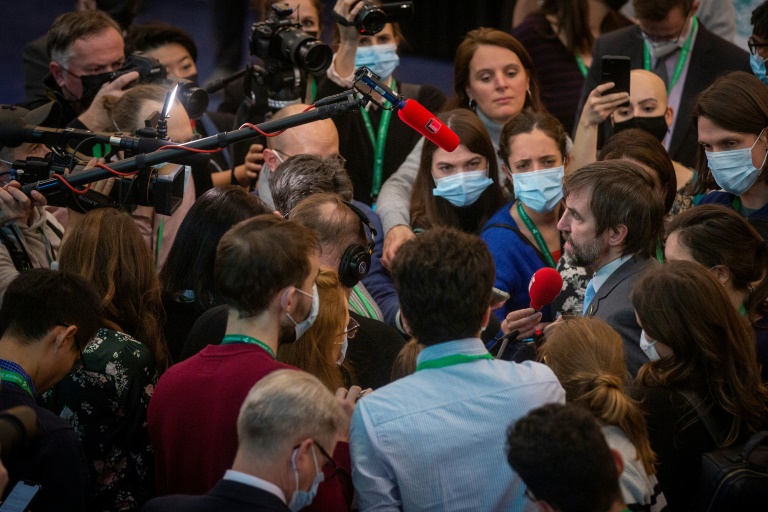
“Six months ago, we didn’t even know if we would have a COP this year, let alone a Paris moment for biodiversity, and that sincerely is where I think we’re heading,” said Canada’s environment minister Steven Guilbeault in enthusiastic remarks.

But European commissioner for environment Virginijus Sinkevicius struck a more cautious note, signaling that the funding figures being discussed could be problematic.

“If we have other countries committing to fulfill those goals, such as China, I think that can be realistic,” he said, also calling on Arab states to play their part.

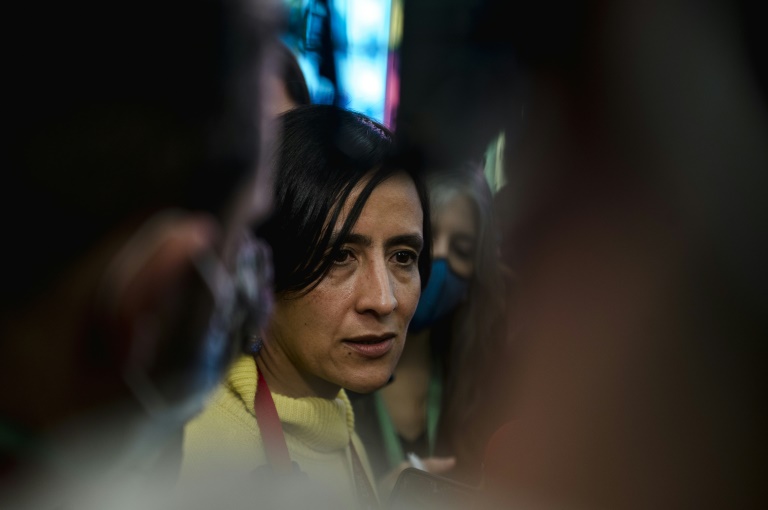
Colombia’s environment minister Susana Muhamad said she was “optimistic that the main goals have been landed,” calling the draft an “important step forward.”

Braulio Dias, however, speaking on behalf of the incoming Brazilian government of Luiz Inacio Lula da Silva, called for “better resource mobilization” — technical speak for more aid to developing countries, a concern echoed by the Democratic Republic of Congo.

Conservation groups said the text was a mixed bag.

“The draft text makes the largest commitment to ocean and land conservation in history,” said Brian O’Donnell, of the Campaign for Nature.

But Georgina Chandler, of Britain’s Royal Society for the Protection of Birds, said she was worried about a lack of numeric “milestones” for restoring ecosystems on the way to 2050.

“We’re basically not measuring progress until 28 years’ time, which is madness,” she said.

– Funding dispute –

Developing countries, spearheaded by Brazil, had been seeking the creation of a new fund to signal the Global North’s commitment to the cause. But the draft text instead suggests a compromise: a “trust fund” within the existing mechanism, called the Global Environment Facility.

Colombia’s Muhamad said her country would accept this as a stopgap measure.

The more than 20 targets also include cutting environmentally destructive farming subsidies, reducing pesticide use and tackling invasive species.

But the issue of how much money the rich countries will send to the developing world, home to most of the planet’s biodiversity, has been the biggest sticking point.

Lower income nations point out developed countries grew rich by exploiting their natural resources and therefore demand to be paid well to protect their own.

Current financial flows for nature to the developing world are estimated at around $10 billion per year.

Beyond the moral implications, there is the question of self-interest: $44 trillion of economic value generation — more than half the world’s total GDP — depends on nature and its services.

Chants of 'Messi, Messi' as Bangladeshis celebrate Argentina's World Cup triumph

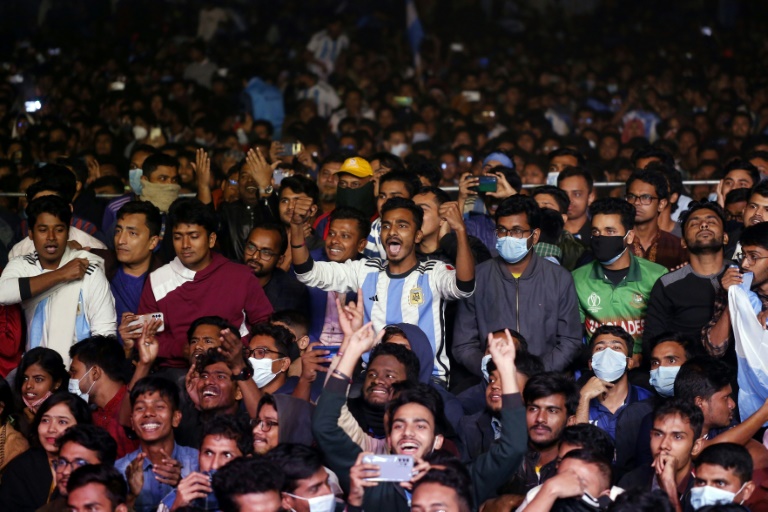
Bangladeshi football fans chanted “Messi, Messi,” shedding tears of joy and dancing in the streets to celebrate the triumph of Argentina — a country half a world away — over France in the World Cup final Sunday.

According to police, hundreds of thousands of people defied chilly temperatures to watch the match on giant screens set up in the capital Dhaka’s key squares, roads and football grounds.

Many wore Argentina’s sky blue and white national colours and sported Lionel Messi’s iconic number 10 jersey.

“I don’t know why I am crying, but I am crying for him,” Nafiun Rahman Zian, an 18-year old Messi fan, told AFP.

“Years of wait (is over) to see the love of my life, the little magician, hold the most prestigious trophy which he desired so much,” he said.

Bangladesh, a Muslim-majority country of 170 million people, is cricket mad, with its national team one of the best in the world.

It is, however, ranked among the bottom in global football.

But every four years during the World Cup, the country renews its love affair with the sport, as many young people divide themselves largely into two rival groups — one supporting Argentina, the other Brazil.

Sunday’s biggest crowd gathered at the Dhaka University campus at the heart of the city, as many people painted the Argentinian flag on their cheeks to watch the proceedings from Qatar.

The crowd became ecstatic when Messi scored the first goal of the game, with a penalty.

“I just can’t express how happy I am,” said Imon Gazi, wiping his eyes after Argentina’s Angel Di Maria scored to make it 2-0.

– ‘Greatest player in the world’ – 

The throng fell into an eerie silence as a brace from France’s Kylian Mbappe took the match into extra time at 2-2. 

“I felt like I would suffer a heart attack,” said Abdus Sabur, a 40-year-old motorbike driver, who says he is a Brazil supporter but switched to Argentina in the final because of Messi.

“Mbappe is 23. He can play three more World Cups. This time the Cup should go to Messi,” he said, as another Mbappe penalty took the match into the a shootout, with the score at 3-3.

But when Argentina’s Gonzalo Montiel slotted in the winning penalty, the horde at the university burst into wild celebrations. 

“Many of my friends, especially those who support Brazil, taunted me and fellow Argentina supporters that we did not win anything since the 1986 World Cup, when I was not even born,” said Mohammad Hasan, 19.

“Messi has proved he is the greatest player in the world. He is even greater than Diego Maradona or his rival Cristiano Ronaldo. The debate is over,” he said.

Bangladesh’s Argentina-Brazil rivalry sees supporters in rural towns paint their houses in the countries’ respective colors, and at least seven people have died trying to display the national flags over their homes, according to police — after being electrocuted and falling off rooftops. 

At least three people have also died after rival football fans clashed in rural towns, police said.

Close Bitnami banner
Bitnami