World

Tunisia uncertainty after poll snub, calls for president to quit

Tunisia plunged into political uncertainty Sunday after voters overwhelming snubbed elections for a neutered parliament, as the main opposition alliance called on President Kais Saied to “leave immediately”.

The move comes as Saied’s government negotiates a nearly $2-billion package from the International Monetary Fund to bail out the North African country’s crippled public finances.

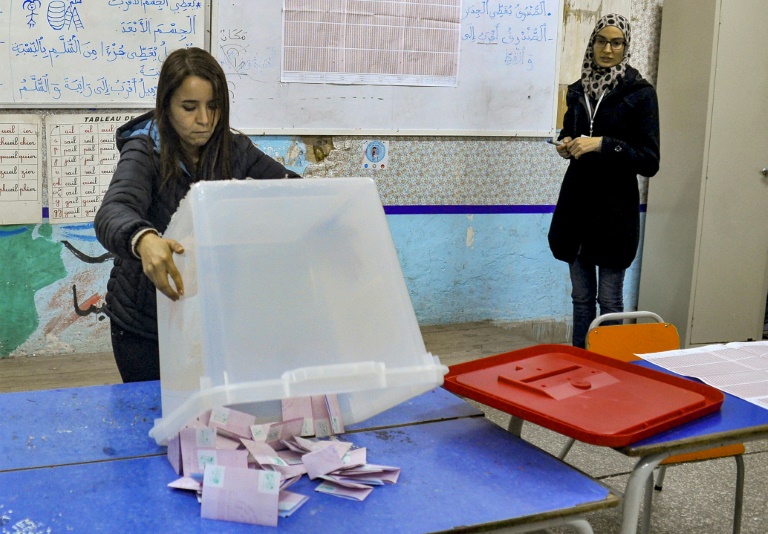
The electoral board said 8.8 percent of the nine-million-strong electorate had turned out for Saturday’s polls, the culmination of a power grab by Saied in the only democracy to have emerged from the Arab Spring uprisings.

Ahmed Nejib Chebbi, president of the National Salvation Front alliance, said Saied had “lost all legal legitimacy”.

An abstention rate of more than 91 percent “shows that very, very few Tunisians support Kais Saied’s approach”, Chebbi told AFP.

He said the result showed “great popular disavowal” of the process that began when Saied, elected in 2019, seized executive powers last year.

The president in July 2021 sacked the government, froze parliament and surrounded it with military vehicles, following months of political deadlock and economic crisis exacerbated by the coronavirus pandemic.

Saied, a former law professor, followed up by seizing control of the judiciary and pushing through a constitution that consolidated his near-absolute power in a widely boycotted referendum in July.

His moves, a decade after the ouster of dictator Zine El Abidine Ben Ali, have sparked fears of a return to autocracy.

– ‘Isolated’ –

Political analyst Slaheddine Jourchi said Saturday’s “shock” low turnout had left Saied “more isolated from the elite, the parties — and now the people too”.

“This turnout, the lowest ever recorded, shows that the people have no trust” in the president, Jourchi added.

The National Salvation Front — which includes the Islamist-inspired Ennahdha party, Saied’s nemesis — boycotted Saturday’s election, saying it was part of a “coup” against Tunisia’s democracy.

“The situation is critical,” Chebbi said. 

“We should agree on a high-ranking judge” who could “oversee immediate presidential elections”, he added.

Political scientist Hamadi Redissi called the turnout “a personal disavowal for Mr. Saied”, adding that the president’s “legitimacy is in question”.

But he said the opposition was “weak and divided”, and that many Tunisians blame Ennahdha for the country’s woes over the past decade.

There is also “no legal mechanism to dismiss the president” under the new constitution, Redissi said.

Abir Moussi, who heads the anti-Islamist Free Destourian Party, which also boycotted the vote, joined calls Sunday for Saied’s resignation.

US State Department spokesman Ned Price said the “low voter turnout reinforces the need to further expand political participation”, urging “inclusive and transparent reforms”.

– Broken promises –

The ballot for the new 161-seat assembly followed three weeks of barely noticeable campaigning, with few posters in the streets and no serious debate among a public preoccupied with day-to-day economic survival.

“The people are angry at the economic situation and the high cost of living,” said Hamdi Belgacem, a 37-year-old unemployed man in the capital Tunis.

He said he had backed Saied’s takeover last year but had been left disillusioned.

“He (Saied) promised us investments, and he didn’t keep his promises,” Belgacem said. “He promised us to fight corruption and he didn’t — he promised us a lot of things that he didn’t deliver.” 

Saied’s moves were initially supported by some Tunisians tired of the messy and sometimes corrupt democratic system installed after the revolution.

But almost a year and half on, the country’s economic woes have gone from bad to worse and inflation, at around 10 percent, is higher than Saturday’s voter turnout.

The previous Ennahdha-dominated legislature had far-reaching powers in the mixed presidential-parliamentary system, enshrined in Tunisia’s post-revolution constitution.

But the new chamber “won’t be able to appoint a government or censure it, except under draconian conditions that are almost impossible to meet,” analyst Redissi said.

Candidates were required to stand as individuals, in a system that neuters political parties.

Hamza Meddeb, a fellow at the Carnegie Middle East Center, said the election was a “formality to complete the political system imposed by Kais Saied and concentrate power in his hands”.
Brussels urges Belgians to quit Iran over arrest risk

Belgium’s government called Sunday for Belgians in Iran to leave the country, mired in a violent crackdown on nationwide protests, because of the risk of arbitrary arrest and imprisonment.

“All Belgian visitors, including (dual) nationals, are at high risk of arrest, arbitrary detention and unfair trial. This risk also applies to people who are simply visiting Iran for tourism,” the government said in a statement.

“In the event of arrest or detention, respect for fundamental rights and the safety of individuals are not guaranteed,” the statement added.

“In this context, the capacity of the Belgian embassy in Tehran to provide consular protection to nationals arrested or detained in Iran is very limited.”

Explaining the new advice, the ministry said: “Recently, a Belgian national and several other Westerners were arbitrarily arrested and are currently imprisoned in Iran.”

Belgian nationals in Iran were advised to limit their movements and to “avoid any type of gathering”.

There were 200 Belgian nationals registered this summer with the country’s consular service in Iran.

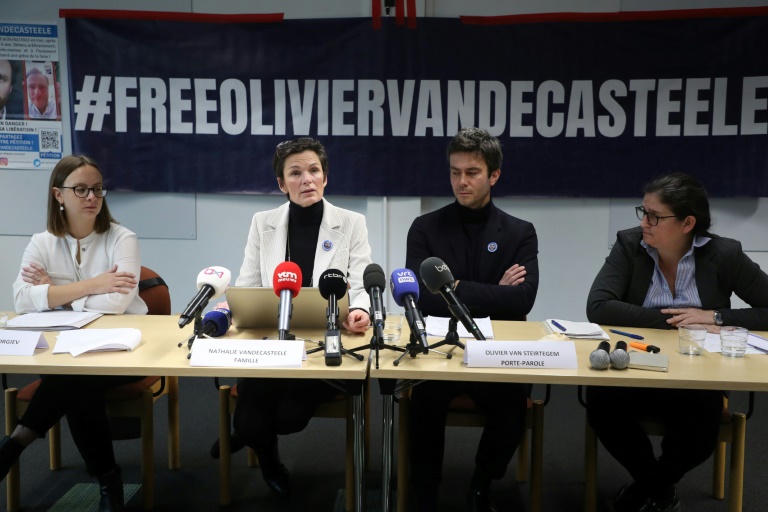
The ministry statement comes after Brussels officials said Wednesday that Iran had imposed a 28-year jail term on a Belgian aid worker, stirring an already bitter debate over a stalled prisoner exchange treaty.

Olivier Vandecasteele was arrested in February and is reportedly being held in Tehran’s notorious Evin prison, in conditions that Belgian justice minister Vincent Van Quickenborne has described as “inhumane”.

– Prisoner exchange dispute –

Belgium insists he is innocent, effectively held as a hostage in Tehran’s efforts to force Belgium to release an Iranian agent convicted of terrorism.

News of Vandecasteele’s sentence has revived debate in Belgium over a prisoner exchange treaty with Iran.

Prime Minister Alexander De Croo’s government has described this in the past as the only option for a transfer.

The treaty was signed with Iran earlier this year and, while not tailored explicitly for Vandecasteele, Brussels confirmed that he would have been eligible for exchange.

But last week, Belgium’s constitutional court suspended the implementation of the treaty pending a final ruling on its legality within the next three months.

Opponents of the Iranian government have challenged the deal, which they argue was “tailor-made” to permit the release of Assadollah Assadi, an Iranian diplomat sentenced last year to 20 years in prison.

An Antwerp court convicted Assadi of supplying explosives to a couple from Belgium who were to travel to Paris to target a meeting of Iran’s exiled opposition.

In Spain on Sunday, relatives and friends of Spanish football fan Santiago Sanchez, arrested in Iran on his way to the World Cup, demanded his release during a rally outside Tehran’s embassy in Madrid.

19 killed as oil tanker catches fire in Afghanistan's Salang pass

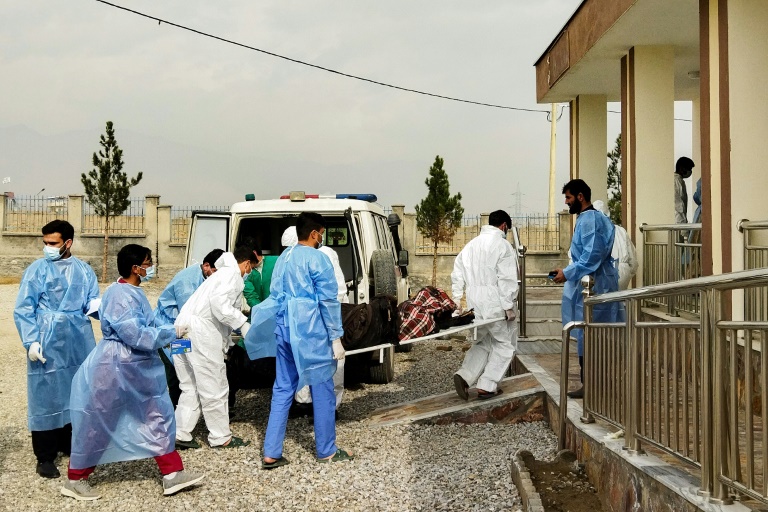
An oil tanker overturned and caught fire in Afghanistan’s high-altitude Salang pass, killing at least 19 people and injuring dozens, officials said on Sunday.

The incident happened late on Saturday in the province of Parwan, north of Kabul, leaving travellers on both sides of the mountainous pass stranded.

At least 19 people were killed and 32 were injured in the incident, Hekmatullah Shamim, spokesman for the governor of Parwan, told reporters.

“An oil tanker overturned and caught fire in the Salang tunnel, which then set several other vehicles on fire,” Hamidullah Misbah, spokesman for the Ministry of Public Works had earlier told AFP.

Abdullah Afghan Mal, a senior health official in Parwan, said many of the dead included women and children who were badly burned.

“Among the dead it was very hard to identify who was a male and who was a female,” he said.

The pass was now closed for traffic as rescue teams in helicopters deployed at the site, officials said.

The Salang pass, one of the highest mountain highways in the world at around 3,650 metres (12,000 feet) was built by Soviet-era specialists in the 50s and includes a 2.6-kilometre tunnel.

The pass runs through the Hindu Kush mountain range that connects capital Kabul to the north.

Hailed as an engineering feat upon completion, the Salang pass is often shut for days because of accidents, heavy snowfalls and avalanches during the winter.

In 2010, avalanches killed more than 150 people in the Salang pass.

Draft UN nature deal calls to protect 30% of planet by 2030

A UN nature deal proposed Sunday calls to protect at least 30 percent of the planet by 2030 and asks rich countries to stump up $30 billion in yearly aid for developing nations to save their ecosystems.

Fraught talks seeking an agreement to save the species and ecosystems on which life depends came to a head as summit chair China presented a long-awaited compromise text.

Mapping out action for the next decade to reverse destruction that scientists say threatens a million species, the proposal called on wealthy countries to increase financial aid to the developing world to $20 billion annually by 2025, rising to $30 billion per year by 2030.

It also called on countries to “ensure and enable that by 2030 at least 30 percent of terrestrial, inland water, and coastal and marine areas” are effectively conserved and managed.

The text includes language safeguarding the rights of Indigenous people as stewards of their lands, a key demand of campaigners.

The compromise text was largely welcomed by conservationists, but still needs to be agreed upon by the 196 signatories to the Convention on Biological Diversity before it is finalized.

– Risk of pushback –

Opening the talks in Montreal, UN chief Antonio Guterres warned humanity had become a “weapon of mass extinction” and called on parties to forge a “peace pact with nature.”

The COP15 meeting is being held in Canada because of China’s strict Covid rules.

Delegates began examining the draft agreement just as the football World Cup between France and Argentina kicked off in Qatar.

A plenary session was scheduled for Sunday evening when countries will have the opportunity to approve the deal. Negotiations over the past 10 days have been slow however and observers warned the talks, scheduled to end on Monday, could run over.

“The Chinese presidency’s draft final paper is courageous,” said Germany’s environment minister Steffi Lemke. “By protecting nature, we protect ourselves.”

“By including a target to protect and conserve at least 30 percent of the world’s lands and oceans, the draft text makes the largest commitment to ocean and land conservation in history,” said Brian O’Donnell, of the Campaign for Nature.

But there was also concern that some areas of the text had been watered down.

Georgina Chandler, of Britain’s Royal Society for the Protection of Birds, said she was worried about a lack of numeric “milestones” for restoring ecosystems by 2050.

“We’re basically not measuring progress until 28 years’ time, which is madness,” she said.

– Funding dispute –

Another major issue of contention is the funding mechanism. 

Developing countries, spearheaded by Brazil, were seeking the creation of a new fund to signal the Global North’s commitment to the cause. But the draft text instead suggests a compromise: a “trust fund” within the existing Global Environment Facility.

Observers had warned the COP15 conference risked collapse as countries squabbled over how much the rich world should pay to fund the efforts, with developing nations walking out of talks at one point.

But Chinese environment minister Huang Runqiu said Saturday he was “greatly confident” of a consensus and his Canadian counterpart Steven Guilbeault said “tremendous progress” had been made.

The more than 20 targets also include reducing environmentally destructive farming subsidies, asking businesses to assess and report on their biodiversity impacts, and tackling the scourge of invasive species.

But the issue of how much money the rich countries will send to the developing world, home to most of the planet’s biodiversity, has been the biggest sticking point.

Lower income nations point out developed countries grew rich by exploiting their natural resources and therefore they should be paid well to protect their own.

Current financial flows to the developing world are estimated at around $10 billion per year.

Several countries have recently made new commitments. The European Union has committed seven billion euros ($7.4 billion) for the period until 2027, double its prior pledge.

Ukraine Jews mark 'Festival of Lights' amid blackouts

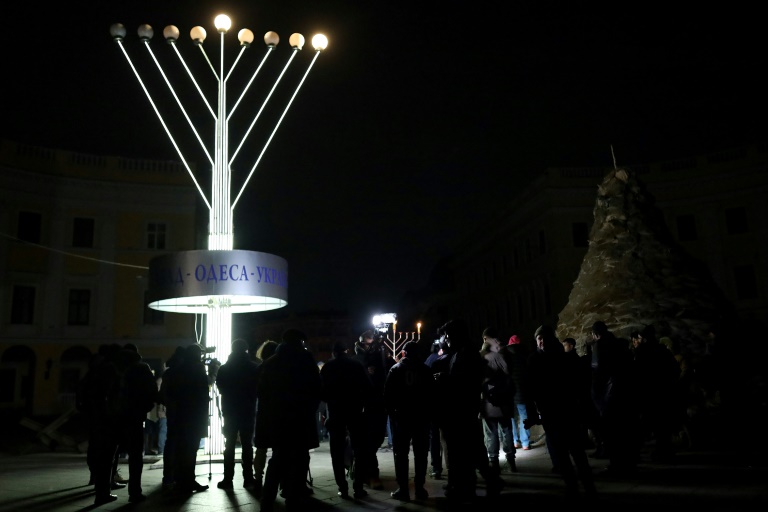
War-weary Ukrainian Jews gathered on Sunday for prayer and candle-lighting ceremonies to kick off Hannukah, the so-called Festival of Lights, vowing to overcome blackouts caused by persistent Russian bombardment. 

In the capital’s iconic Independence Square, known as the Maidan, worshippers huddled together for warmth near what officials claimed was the largest Hannukah menorah — a nine-branched candelabrum — in Europe. 

The annual, eight-night “Festival of Lights” commemorates the rebellion of Maccabee Jews against formidable Greek-Syrian forces beginning in 167 BC, an event that some believers say included a number of miracles pointing to divine providence. 

The chief rabbi of Ukraine and Kyiv, Moshe Reuven Azman, told AFP the story behind the wintertime festival held “valuable lessons” for Ukraine in its resistance to ongoing Russian attacks. 

“We light one small candle, but if you light it in the darkest room a small candle will push [out] a lot of darkness,” he said. 

“I say to Ukrainian people every day, we are the light and we push [out] a lot of darkness.” 

Sunday’s celebrations came two days after Russia’s latest wave of attacks left multiple cities without power and forced millions to endure sub-zero temperatures without heating or running water. 

Ukrainian President Volodymyr Zelensky said late Saturday that electricity had been restored to almost six million Ukrainians, but noted ongoing problems with heat and water supplies and “large-scale outages” in many regions. 

Kyiv mayor Vitali Klitschko denounced the aerial assaults in remarks on Sunday. 

“The enemy wanted to leave us two days ago without light, without water, without heating,” he said, while dismissing Russian President Vladimir Putin’s claim that Ukraine is led by fascists and Nazis. 

“It’s a symbol for the Russians, because it does not make any sense for a fascist regime to put up the biggest menorah and celebrate Hannukah.”

– Menorah ‘miracles’ –

Before Russia invaded in February, Ukraine was home to roughly 300,000 Jews, 50,000 of them in the capital, Rabbi Azman said. 

To mark the beginning of Hannukah last year, Azman welcomed hundreds of worshippers into his synagogue in the city centre. 

But this year, with authorities discouraging large gatherings amid the threat of missile attacks, he organised a humbler ceremony, lighting a menorah as eight men lined up behind him and joined him in prayer. 

He told AFP he had spent time earlier in the day delivering food parcels and medicine, driving around the city in a van stocked with power banks and USB cables for those still without electricity. 

The Russians “send us ballistic rockets, so we will send them kabbalistic rockets”, he said, in a joking reference to Kabbalah, or Jewish mysticism. 

In Independence Square, Volodymir Pankoff, a Ukrainian Jew who turned out for the menorah-lighting ceremony, said it gave him hope for a Ukrainian victory. 

“The menorah shows miracles in the past and it will show miracles in the future as well. I’m sure that it will show miracles in Ukraine,” said the 55-year-old who has volunteered to make camouflage nets for the military. 

“We are volunteering, the guys are at the front, we are praying also — and we hope that the war will finish as soon as possible.”

Iran urged to free top actor who backed protests

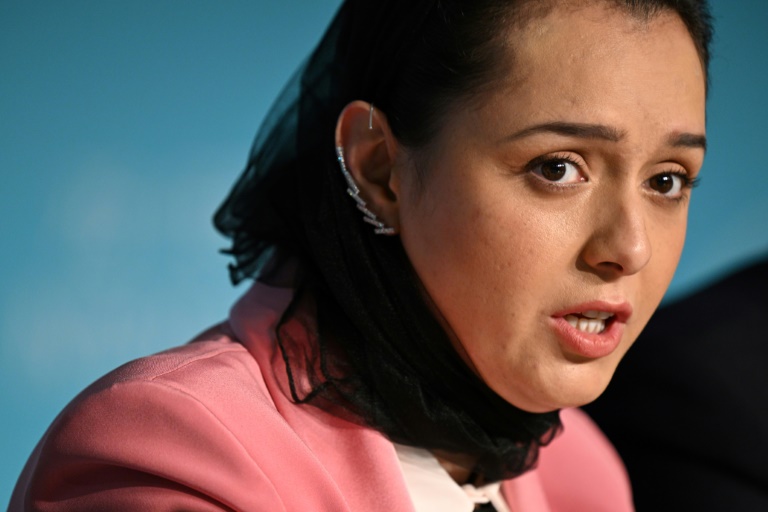
Celebrities and rights groups called on Iran on Sunday to free actor Taraneh Alidoosti, one of the most prominent figures yet arrested in its three-month crackdown on protests.

Alidoosti, 38, was arrested on Saturday, official media said, after making a string of social media posts supporting the protest movement — including removing her headscarf and condemning the execution of protesters.

The unrest was sparked by the September 16 death in custody of Mahsa Amini, 22, whom the morality police accused of violating the Islamic republic’s strict dress code for women.

Iran blames the United States and other “enemies” for trying to destabilise the country by fuelling the demonstrations.

Several prominent figures — including other actors and footballers — have been detained in connection with the protests.

Alidoosti has considerable international renown, performing in award-winning films by director Asghar Farhadi, including the Oscar-winning 2016 film “The Salesman”.

Somayeh Mirshamsi, assistant director on “The Salesman”, said Alidoosti had called her father to say she was being held in Tehran’s notorious Evin prison, run by the intelligence ministry.

Alidoosti asked her father for the delivery of medicines, and her family are “worried” and her health, Mirshamsi wrote on Twitter.

– ‘Power of women’s voices’ –

Prominent Iranian cinema figures gathered outside Evin prison, Iranian daily Shargh reported, including co-stars from “Leila’s Brothers”, a film which Alidoosti went to Cannes Film Festival earlier this year to promote.

The group included actor Payman Maadi and director Saeed Roustayi, as well as her father Hamid, who played football for Iran in the 1970s.

Her arrest also generated anger on social media, with exiled actor Golshifteh Farahani calling her “the brave actress of Iran” and demanding her release.

On November 9, Alidoosti posted an image of herself without a headscarf, holding a paper with the main slogan of the protests: “Woman, life, freedom”.

In a show of support after her arrest, former French football star turned actor Eric Cantona reposted that image on Instagram with the hashtag “#freedom”.

In Canada, Cameron Bailey, head of the Toronto International Film Festival, called Alidoosti “one of Iran’s most talented and acclaimed actors”.

“I hope she’s free to keep representing the strength of Iranian cinema soon”, Bailey wrote.

The New York-based Center for Human Rights in Iran said women including Alidoosti “are being arrested and jailed in Iran for refusing to wear forced hijabs”.

“The power of women’s voices terrify the Islamic republic’s ruler”, it added.

– ‘Any price’ –

During the street protests, banners of supreme leader Ayatollah Ali Khamenei have been set alight, women have openly walked down streets without headscarves, and demonstrators have at times sought to challenge the security forces.

Authorities in Tehran on Sunday also questioned 26-year-old singer Amir Maghare of the hugely popular Macan Band pop group.

The judiciary’s Mizan Online news website said Maghare had “left the prosecutor’s office after providing explanations, receiving a warning and making a commitment”.

Daily sports newspaper Khabar Varzeshi reported Sunday that Ashkan Dejagah, 36, a former Iran national football player who also has German citizenship, has been barred from leaving the country “after being seen in protests… in Germany”.

Alidoosti’s most recent social media post was on December 8, the same day Mohsen Shekari, 23, became the first person executed by authorities over the protests.

“Your silence means the support of the oppression and the oppressor”, she wrote on Instagram.

Images have also circulated on social media of Alidoosti shopping in Tehran without a headscarf.

She had vowed not to leave Iran and said she was prepared to “pay any price to stand up for my rights.”

Mizan Online said the actor was arrested “by order of the judicial authority” as she “did not provide documentation for some of her claims” about the protests.

Her Instagram account with more than eight million followers was no longer accessible on Sunday.

The Oslo-based monitor Iran Human Rights said Saturday that Iran’s security forces had killed at least 469 people in the protests while at least 14,000 people have been arrested, according to the UN.

France slams Israel's expulsion of French-Palestinian lawyer

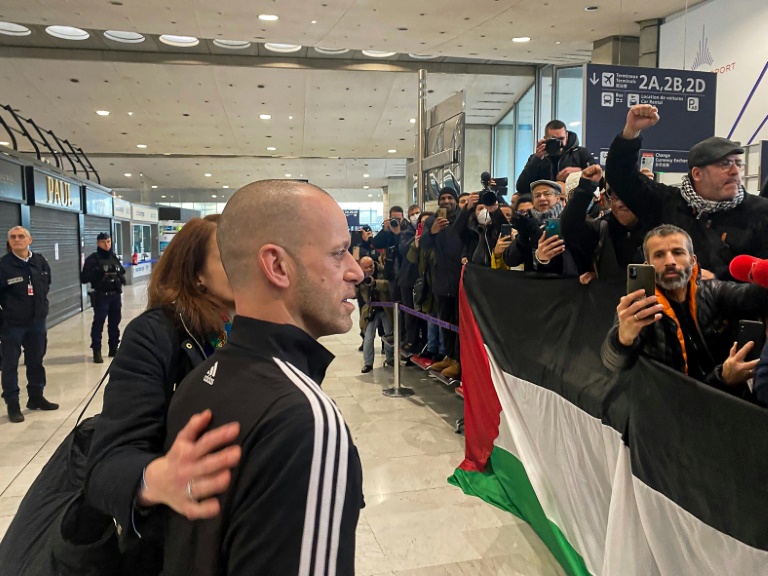
French-Palestinian human rights lawyer Salah Hamouri, held without charge in Israeli prisons since March accused of security offences, arrived in Paris on Sunday following his expulsion from Israel condemned by Paris.

Hamouri, 37, had been held in Israel under a controversial practice known as administrative detention, which allows suspects to be detained for renewable periods of up to six months.

He arrived at the French capital’s Charles de Gaulle airport on Sunday morning, an AFP correspondent saw, the culmination of a lengthy judicial saga after his deportation.

“I have changed location but the fight continues,” an emotional Hamouri said at the airport, where he was welcomed by his wife Elsa, politicians, NGO representatives and supporters of the Palestinian cause. 

“I have an enormous responsibility to my cause and people. We can’t abandon Palestine. Resistance is our right.”

Israel’s interior ministry earlier on Sunday announced the deportation following Interior Minister Ayelet Shaked’s decision to withdraw his residency status.

“We condemn today the Israeli authorities’ decision, against the law, to expel Salah Hamouri to France,” the French foreign ministry said in a statement.

An Israeli military court has accused Hamouri of being a member of the Popular Front for the Liberation of Palestine (PFLP), and said he “endangers security in the region”.

Hamouri holds French citizenship and was ordered into administrative detention in March.

Israel, the United States and the European Union consider the PFLP a “terrorist group”. It has been implicated in several deadly attacks on Israelis.

Hamouri denies links to the PFLP.

– ‘Illegal’ deportation –

The French foreign ministry said Paris had been “fully mobilised, including at the highest level of the state”, to enable Hamouri to defend his rights, benefit from all possible assistance and lead a normal life in his native east Jerusalem.

“France also took several steps to communicate to the Israeli authorities in the clearest way its opposition to this expulsion of a Palestinian resident of east Jerusalem, an occupied territory under the Fourth Geneva Convention,” it added.

“It’s a happy day for a family reunited but for the Palestinian people, it’s a sad day,” Amnesty International’s France chief, Jean-Claude Samouiller, told AFP.

He described the expulsion as a “crime of apartheid”.

Supporters said Hamouri’s deportation from his birthplace by an “occupying power” was illegal.

Amnesty International and French NGOs said Hamouri’s deportation aimed to hinder his human rights work and was part of Israel’s “long-term political objective to diminish the Palestinian population” of annexed east Jerusalem, which Palestinians want as the capital of a future state.

Hamouri has been arrested and jailed by Israeli authorities on several occasions, including in 2005.

Following that arrest he was tried and convicted by an Israeli court on charges of plotting to assassinate Ovadia Yosef, a prominent rabbi and spiritual leader of the ultra-Orthodox Shas political party.

Hamouri was released in December 2011 as part of a prisoner swap.

He has always maintained his innocence.

Born in east Jerusalem, Hamouri does not have Israeli nationality, but he held a residency permit that Israeli authorities revoked. 

“We didn’t think it was possible to deport somebody from his birthplace,” Hamouri’s mother Denise said earlier.

Israel has occupied the West Bank and east Jerusalem since the 1967 Six-Day War.

Last month, he was informed he would be deported, but the expulsion was delayed as his lawyers contested the case.

– ‘A great achievement’ –

Earlier this month, Israeli authorities confirmed the revocation of his residency, paving the way for Hamouri’s imminent expulsion despite a new administrative detention hearing scheduled for January 1.

“It is a great achievement to have been able to cause, just before the end of my term, his expulsion,” Interior Minister Shaked said on Sunday. 

Benjamin Netanyahu, winner of the November 1 legislative elections, is expected to form a new Israeli government with allies from ultra-Orthodox and far-right parties.

Hamouri worked for the prisoner support group Addameer. In November 2021 it was among six Palestinian civil society groups that Israel’s army said could no longer operate legally in the West Bank, after Defence Minister Benny Gantz said they were collaborating with the PFLP.

In April Hamouri, along with rights groups, filed a complaint in France against Israeli surveillance firm NSO Group for having “illegally infiltrated” his mobile phone with the spyware Pegasus.

He is one of several Palestinian activists whose phones were hacked using the Pegasus malware, according to a report in November by human rights groups.

Tunisia uncertainty after poll snub, calls for president to quit

Tunisia plunged into political uncertainty Sunday after voters overwhelming snubbed elections for a neutered parliament, as the main opposition alliance called on President Kais Saied to “leave immediately”.

The move comes as Saied’s government negotiates a nearly $2-billion package from the International Monetary Fund to bail out the North African country’s crippled public finances.

The electoral board said 8.8 percent of the nine-million-strong electorate had turned out for Saturday’s polls, the culmination of a power grab by Saied in the only democracy to have emerged from the Arab Spring uprisings.

Ahmed Nejib Chebbi, president of the National Salvation Front alliance, said Saied had “lost all legal legitimacy”.

An abstention rate of more than 91 percent “shows that very, very few Tunisians support Kais Saied’s approach”, Chebbi told AFP.

He said the result showed “great popular disavowal” of the process that began when Saied, elected in 2019, seized executive powers last year.

The president in July 2021 sacked the government, froze parliament and surrounded it with military vehicles, following months of political deadlock and economic crisis exacerbated by the coronavirus pandemic.

Saied, a former law professor, followed up by seizing control of the judiciary and pushing through a constitution that consolidated his near-absolute power in a widely boycotted referendum in July.

His moves, a decade after the ouster of dictator Zine El Abidine Ben Ali, have sparked fears of a return to autocracy.

– ‘Isolated’ –

Political analyst Slaheddine Jourchi said Saturday’s “shock” low turnout had left Saied “more isolated from the elite, the parties — and now the people too”.

“This turnout, the lowest ever recorded, shows that the people have no trust” in the president, Jourchi added.

The National Salvation Front — which includes the Islamist-inspired Ennahdha party, Saied’s nemesis — boycotted Saturday’s election, saying it was part of a “coup” against Tunisia’s democracy.

“The situation is critical,” Chebbi said. 

“We should agree on a high-ranking judge” who could “oversee immediate presidential elections”, he added.

Political scientist Hamadi Redissi called the turnout “a personal disavowal for Mr. Saied”, adding that the president’s “legitimacy is in question”.

But he said the opposition was “weak and divided”, and that many Tunisians blame Ennahdha for the country’s woes over the past decade.

There is also “no legal mechanism to dismiss the president” under the new constitution, Redissi said.

Abir Moussi, who heads the anti-Islamist Free Destourian Party, which also boycotted the vote, joined calls Sunday for Saied’s resignation.

– Broken promises –

The ballot for the new 161-seat assembly followed three weeks of barely noticeable campaigning, with few posters in the streets and no serious debate among a public preoccupied with day-to-day economic survival.

“The people are angry at the economic situation and the high cost of living,” said Hamdi Belgacem, a 37-year-old unemployed man in the capital Tunis.

He said he had backed Saied’s takeover last year but had been left disillusioned.

“He (Saied) promised us investments, and he didn’t keep his promises,” Belgacem said. “He promised us to fight corruption and he didn’t — he promised us a lot of things that he didn’t deliver.” 

Saied’s moves were initially supported by some Tunisians tired of the messy and sometimes corrupt democratic system installed after the revolution.

But almost a year and half on, the country’s economic woes have gone from bad to worse and inflation, at around 10 percent, is higher than Saturday’s voter turnout.

The previous Ennahdha-dominated legislature had far-reaching powers in the mixed presidential-parliamentary system, enshrined in Tunisia’s post-revolution constitution.

But the new chamber “won’t be able to appoint a government or censure it, except under draconian conditions that are almost impossible to meet,” analyst Redissi said.

Candidates were required to stand as individuals, in a system that neuters political parties.

Hamza Meddeb, a fellow at the Carnegie Middle East Center, said the election was a “formality to complete the political system imposed by Kais Saied and concentrate power in his hands”.

Memorial as Irish peacekeeper killed in Lebanon flown home

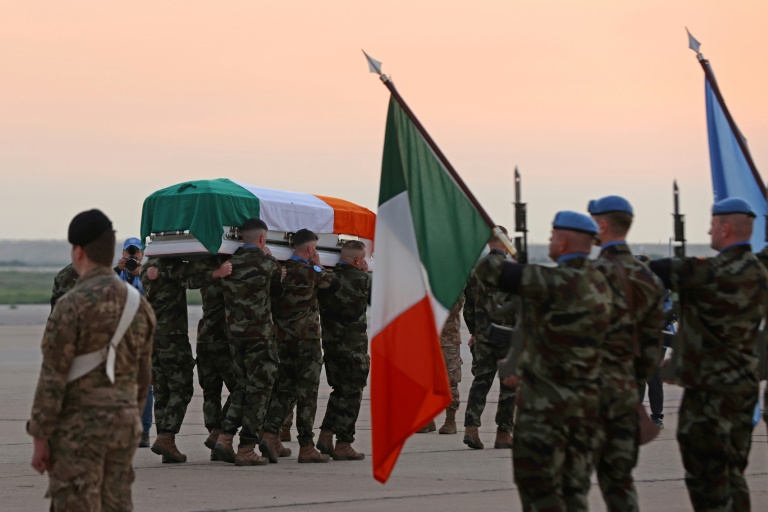
United Nations peacekeepers in Lebanon took part in a memorial service Sunday as the body of their slain Irish comrade was repatriated, days after being shot dead in an attack.

Private Sean Rooney, 23, was killed and three others were wounded Wednesday after the UN Interim Force in Lebanon (UNIFIL) convoy came under fire near the village of Al-Aqbiya in the south of the Mediterranean country.

“Sean Rooney made the hardest sacrifice a soldier can do: giving his life while serving lasting peace in Lebanon,” UNIFIL commander Major General Aroldo Lazaro Saenz said.

UNIFIL has demanded a “speedy” investigation into the attack, the motivations of which remain unclear.

Dozens of peacekeepers wearing blue berets as well as Lebanese soldiers paid respects as Rooney’s coffin — draped in both Irish and UN flags — was carried onto a plane by comrades in the capital Beirut.

UNIFIL acts as a buffer between Lebanon and Israel, neighbours which remain technically at war. The force operates in the south near the border, a stronghold of Iran-backed group Hezbollah.

Hezbollah security chief Wafic Safa has said the killing was “unintentional”.

A Lebanese defence ministry spokesman said Beirut was determined to “bring to justice” those responsible for the attack.

It is the first death of a UNIFIL member in a violent incident in Lebanon since January 2015, when a Spanish peacekeeper was killed by Israeli fire.

Witnesses said villagers in the Al-Aqbiya area blocked Rooney’s vehicle after it took a road along the Mediterranean coast not normally used by the UN force.

Al-Aqbiya is just outside UNIFIL’s area of operations, the force said.

A Lebanese judicial source told AFP the driver was killed by a bullet to the head, one of seven that penetrated the vehicle.

The three passengers were wounded when the vehicle hit a pylon and overturned.

UNIFIL was set up in 1978 to monitor the withdrawal of Israeli forces after they invaded Lebanon in reprisal for a Palestinian attack.

Israel withdrew from south Lebanon in 2000 but fought a devastating 2006 war with Hezbollah and its allies.

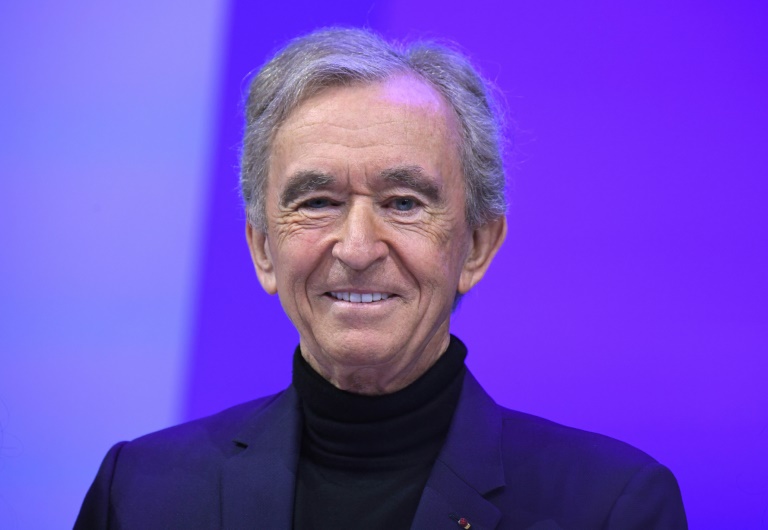
Bernard Arnault, emperor of luxury and world's top fortune

Bernard Arnault — who with his family now tops the wealth of Elon Musk — gradually built LVMH into a global luxury empire by buying up iconic brands, sealing his reputation as a formidable and insatiable businessman.

With $184 billion on Thursday, the 73-year-old Frenchman and his family moved to the top of Forbes’ billionaire list, knocking the Tesla, SpaceX and Twitter boss off the top spot.

LVMH — the world’s leading luxury group — boasts more than 75 brands, acquired over time.

They include some of the most recognisable names in fashion and prestige goods, from Louis Vuitton and Kenzo to Moet Hennessy and Tiffany.

“An essential quality in our family is patience,” Arnault acknowledged in a 2012 TV profile of him.

A decade later — by which time LVMH’s annual sales had more than doubled to over 64 billion euros ($68 billion) — he told France’s Radio Classique: “We can continue to progress — but let’s be patient. 

“No rush,” he said.

The businessman has also invested in the French media, a move he described during a Senate hearing in January 2022 as “more on the patronage side”.

During a hearing in the French Senate earlier this year Arnault said he had intervened to stop LVMH advertising in the Liberation newspaper, after it irked him with a front-page article.

– ‘Invest in something promising’ – 

Arnault was born in the northern French city of Roubaix on March 5, 1949 and joined his father’s public works building company at the age of 22.

He had just left the elite Ecole Polytechnique and convinced his father to transform the construction business into real-estate development instead.

In 1981, after socialist Francois Mitterrand was elected president, Arnault left France for the United States.

On his return three years later, he bought the debt-ridden textiles company Boussac, prevailing against several serious competitors with a promise to save jobs.

However, he embarked on a drastic reorganisation of the firm, only retaining some of its businesses, including the fashion house Christian Dior.

By then, Arnault was 35 years old.

“My father was surprised when I went to see him saying: ‘We’re going to redirect the family group and try to invest in something more promising, Christian Dior’,” the businessman recalled recently on Radio Classique.

It would be the foundation stone for his luxury empire.

LVMH was born out of the merger in 1987 of trunk-maker Louis Vuitton and the wines and spirits group Moet Hennessy.

Rivalry between the families owning the two companies aided Arnault’s ascendancy and he took control of the group in 1989 after no fewer than 17 legal proceedings.

“He’s a tough negotiator but unmatched, a visionary who knows how to surround himself with good people and who in the end always gets his way one way or another,” Arnaud Cadart, portfolio manager at financial services firm Flornoy, told AFP.

Arnault’s rise, however, has not been without some failures.

– Corporate criticisms – 

He lost Italian fashion and leather goods house Gucci to his French rival Francois Pinault, head of the PPR group, in 1999.

Arnault also tried in vain to take over Hermes, known for its silk scarves and leather handbags, by secretly building up a stake in the firm.

He rarely speaks publicly and does not like the limelight.

When the use of private jets by celebrities was being tracked on social media earlier this year, Arnault sold the LVMH jet.

“The upshot now is that no one else can know where I’m going because I lease planes,” he said on Radio Classique.

“It’s the French businessman’s lot to embody — sometimes in a totally unjustified way — the criticisms of the day since the mindset has for a few years now been a bit anti-corporate,” he lamented on France 2 in 2016.

That same year he was skewered in a satirical documentary entitled “Merci Patron!” (Thank you Boss!) by filmmaker and now politician Francois Ruffin, who often has Arnault in his crosshairs.

– Obama, Putin, Trump, Macron… –

Last year, LVMH paid a 10-million-euro fine to settle a case as part of a probe into spying.

Arnault abandoned his bid to secure Belgian nationality in 2013 issuing a mea culpa after it whipped up a storm of controversy which rumbled on for months amid public debate over the tax arrangements of the wealthy.

In 2011, he was received at the White House by president Barack Obama; Russian President Vladimir Putin welcomed him to Moscow five years later; former French president Francois Hollande cut the ribbon on his Louis Vuitton Foundation, while Donald Trump did the same for a Vuitton workshop in Texas.

And when the historic Samaritaine department store, owned by LVMH, reopened last year, French President Emmanuel Macron was a guest at the inauguration.

In Japan, China and the Middle East, the luxury mogul has access to top leaders.

Arnault has five children, all of whom work for LVMH, but shows little sign of slowing down — or handing over the reins just yet.

Every week he makes a point of touring all the group’s Paris-based companies.

At its last general meeting, the age limit for his role as LVMH chief executive was extended to 80 years old, ensuring the luxury conglomerate stays in family hands.

Married to a pianist and art lover, Arnault also created the Louis Vuitton Foundation, one of Paris’ most prestigious exhibition locations for contemporary art.

Close Bitnami banner
Bitnami